Keystone Lodge in Colorado with Zeb the Duck

You probably know that we have had a lot of spring snow in the Colorado Rocky Mountains.   I, Zeb the Duck, knew it, but I wanted to see it.   We drove west on I-70, through the Eisenhower Tunnel and then went to Keystone Resort.   Parking in the lot across the road from the resort, we saw this building marking the entrance to the pedestrian tunnel.
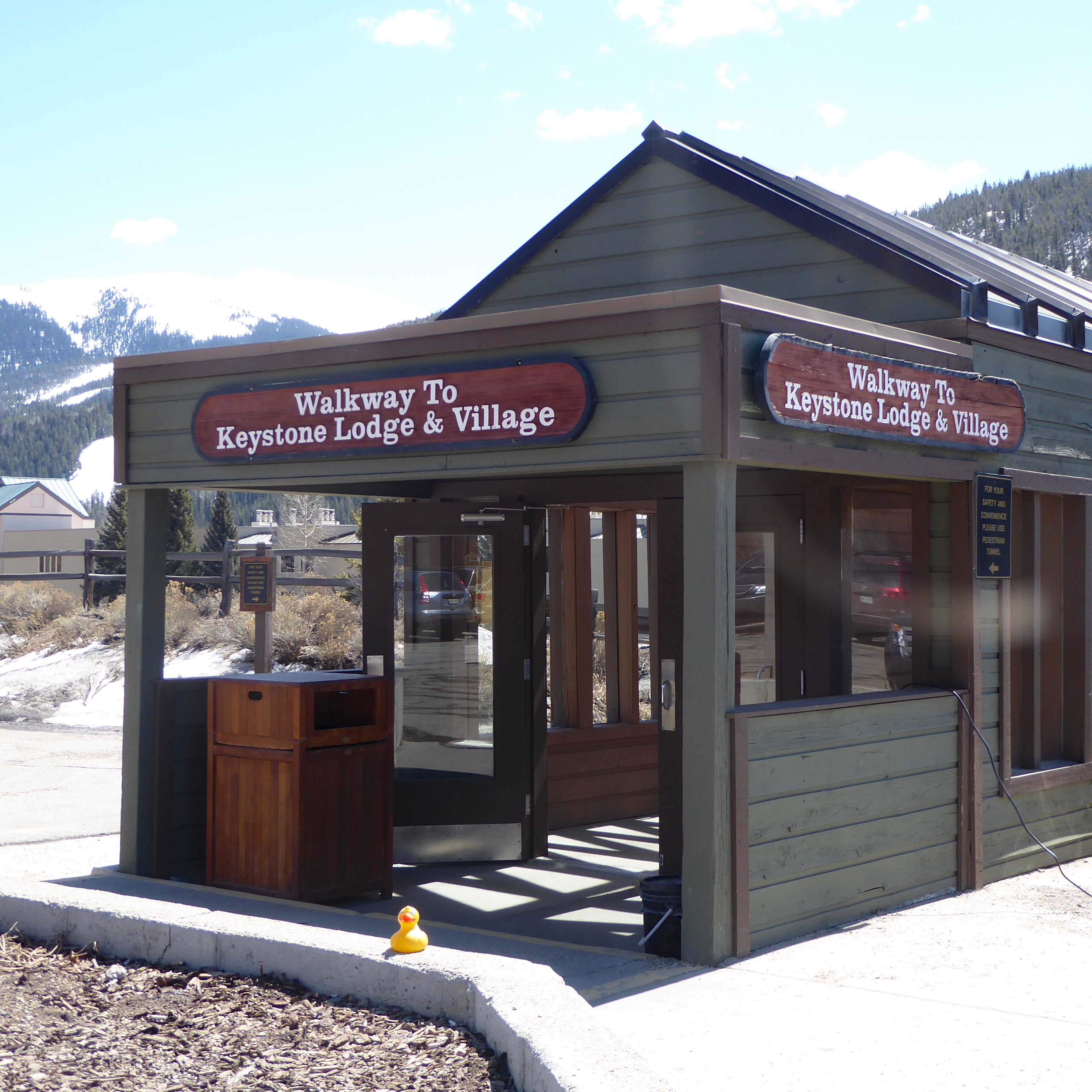
Let's take the pedestrian tunnel

Let’s take the pedestrian tunnel

We walked inside and these are the stairs to descend into the tunnel.
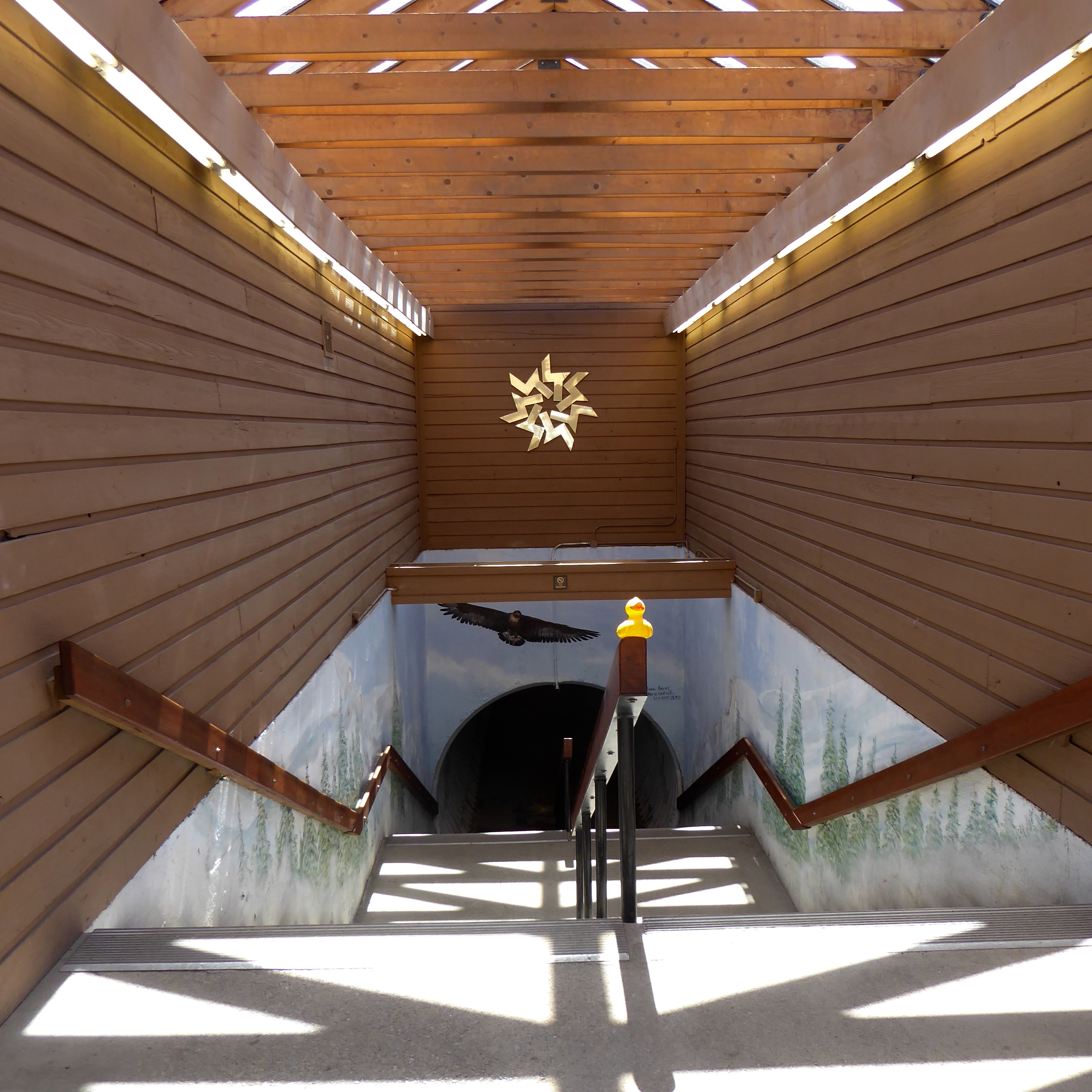
Stairs down to the tunnel

Stairs down to the tunnel

And, inside the tunnel, it looked like a sunny mountain day.
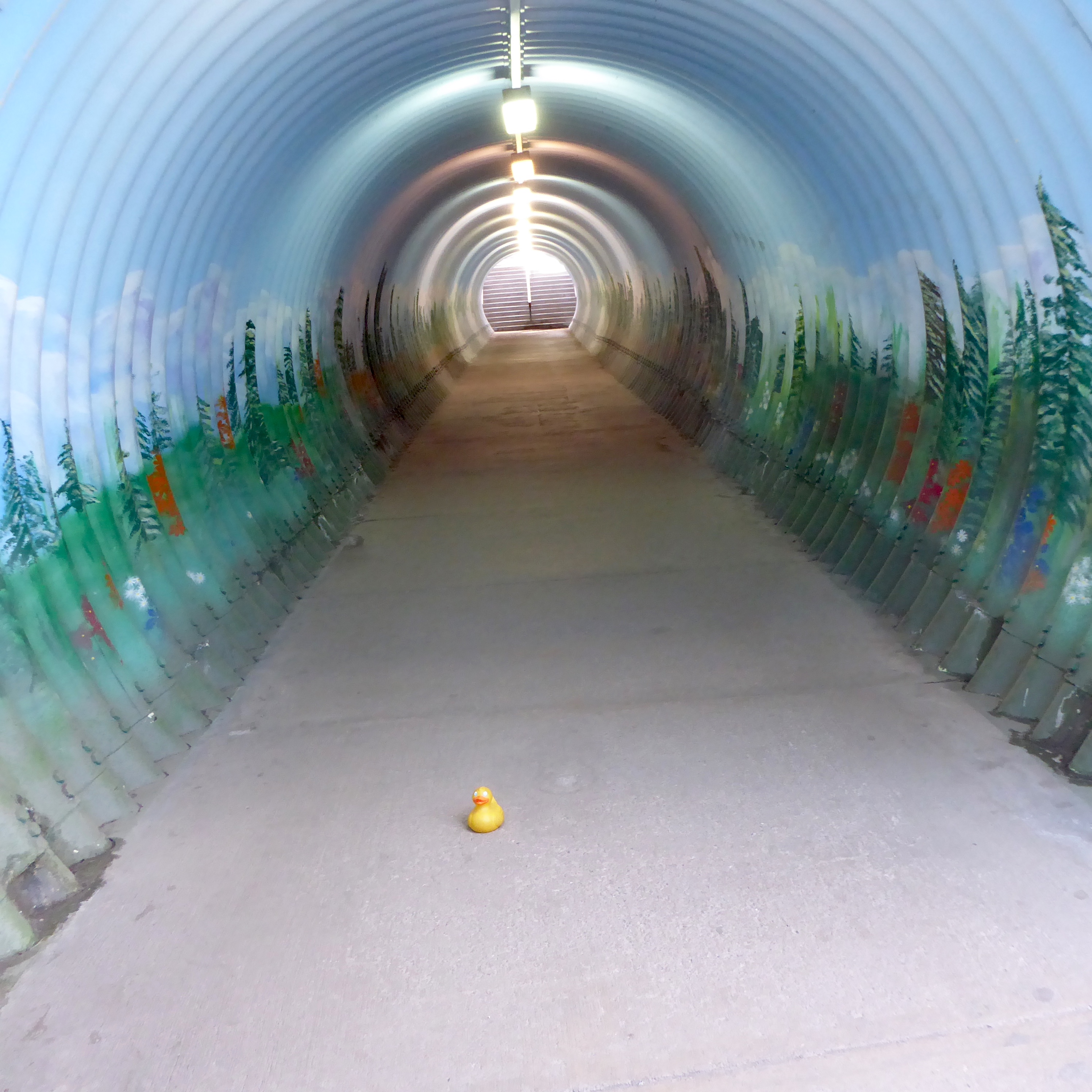
Inside the pedestrian tunnel

Inside the pedestrian tunnel

I like this tunnel.   It is cheery and bright.   Up the stairs at the end of the tunnel, we entered Keystone Lodge.
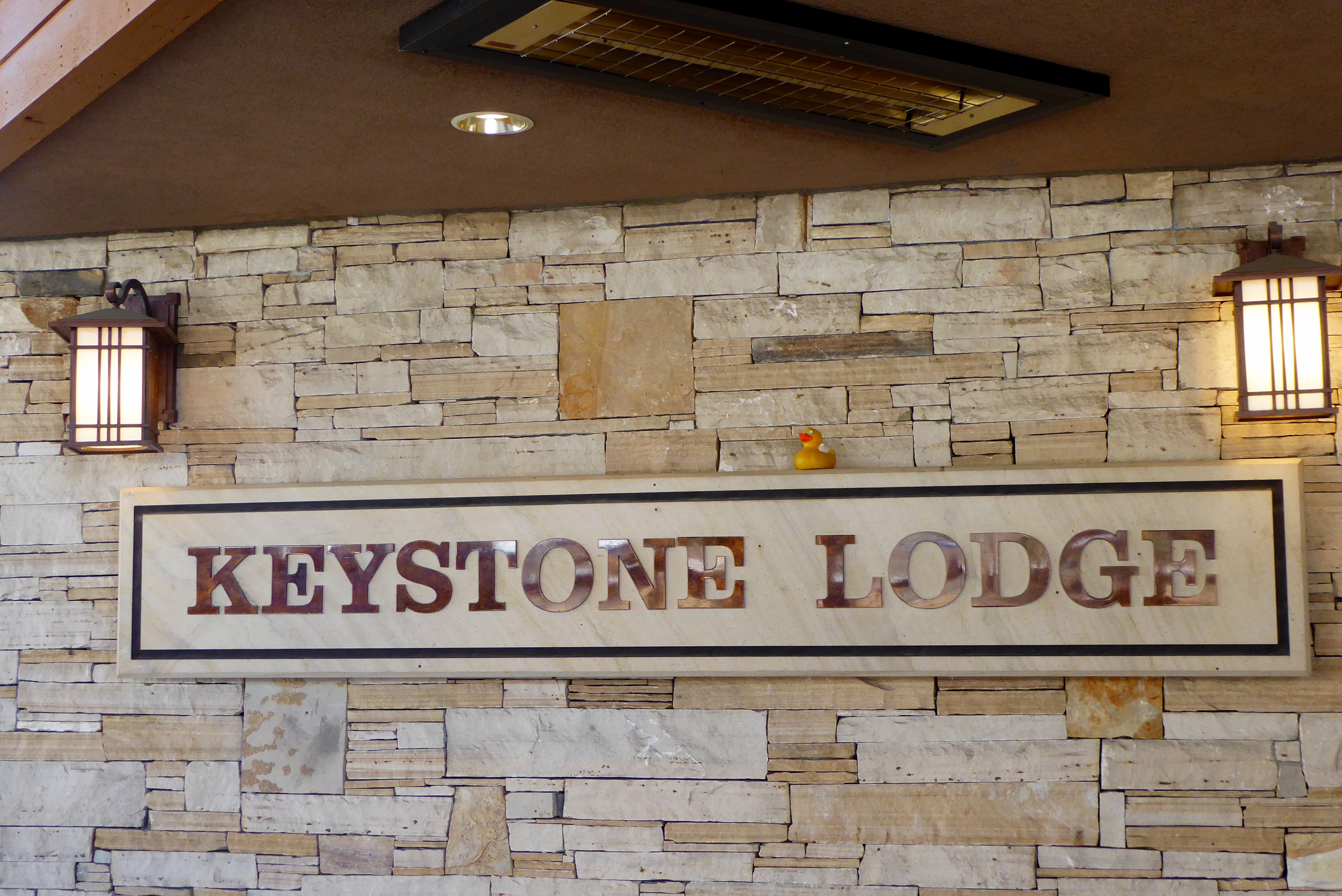
Keystone Lodge

Keystone Lodge

Lodges are nice, but it was sunny and fairly warm, so let’s stay outside.   Down some more stairs and we were at the lake.
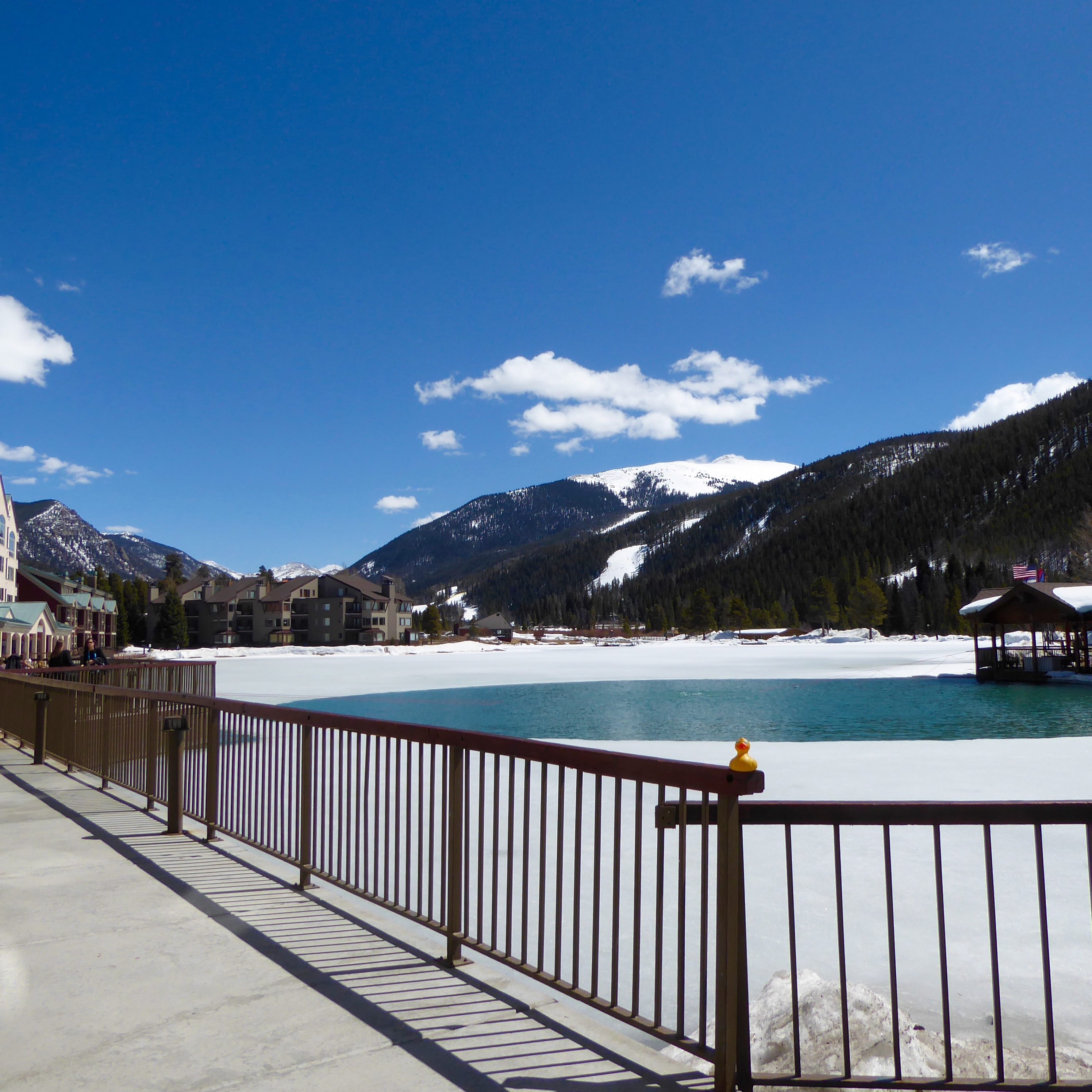
Lake at Keystone Village

Lake at Keystone Village

This 5 acre lake was not frozen deep enough, but when it is, this is Keystone Village Ice Rink and it is 9,321 feet above sea level.   We were not hungry, but there are restaurants here and this is our favorite table by the lake.
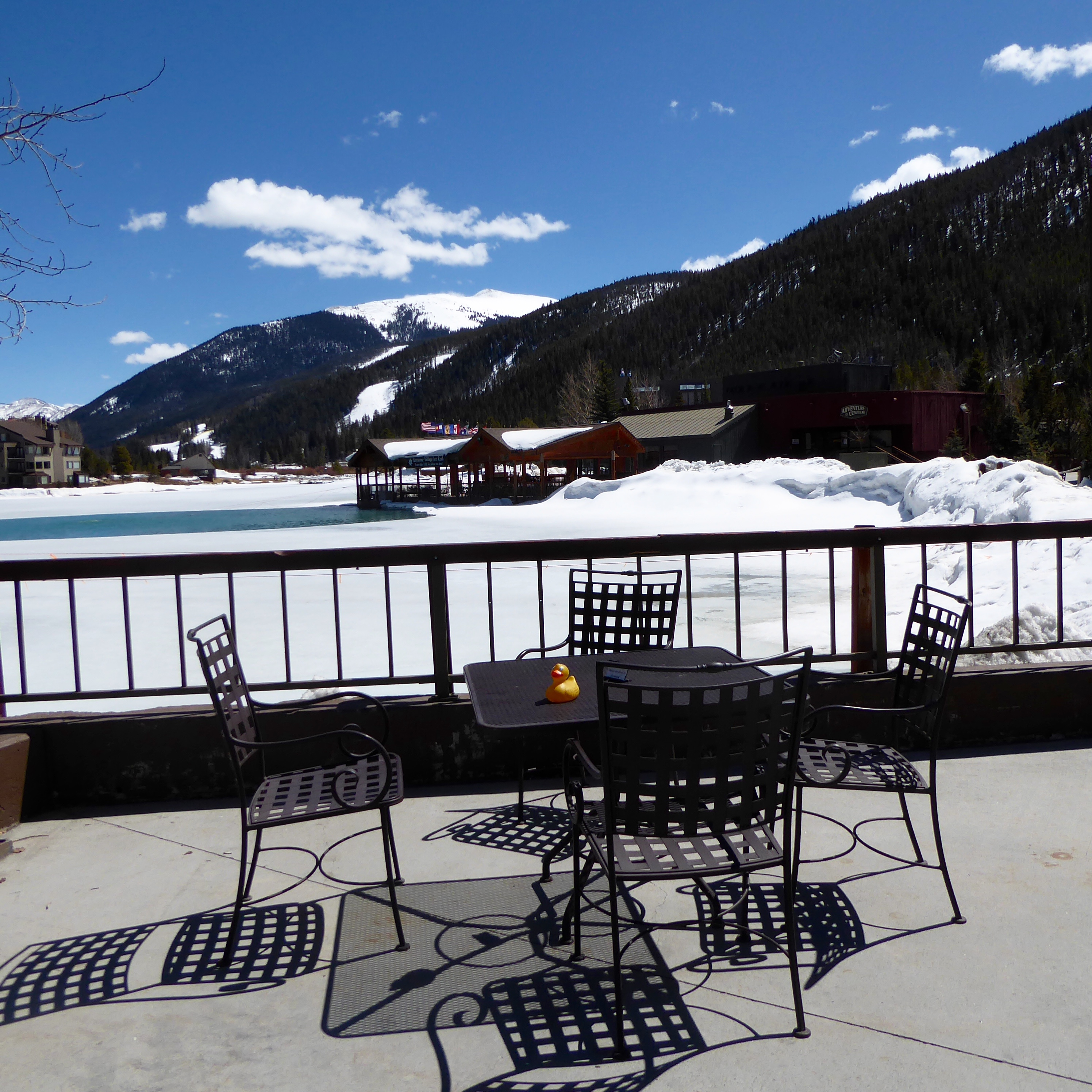
Our favorite lunch table

Our favorite lunch table

Maybe next time for lunch.   They do have really good food here.   This store was closed…for “mud season”.
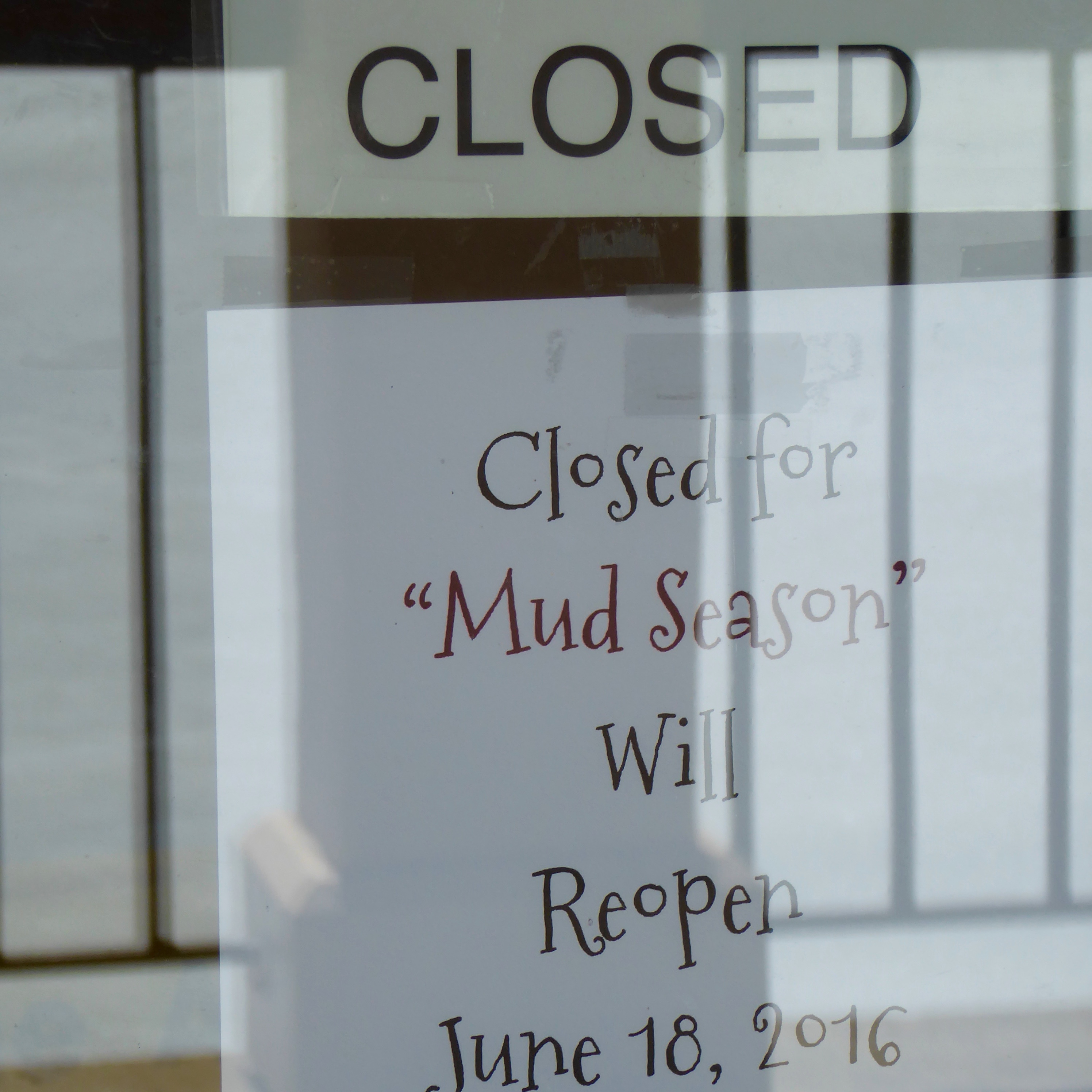
Mud season??

Mud season??

What is mud season?   Oh, now I get it.
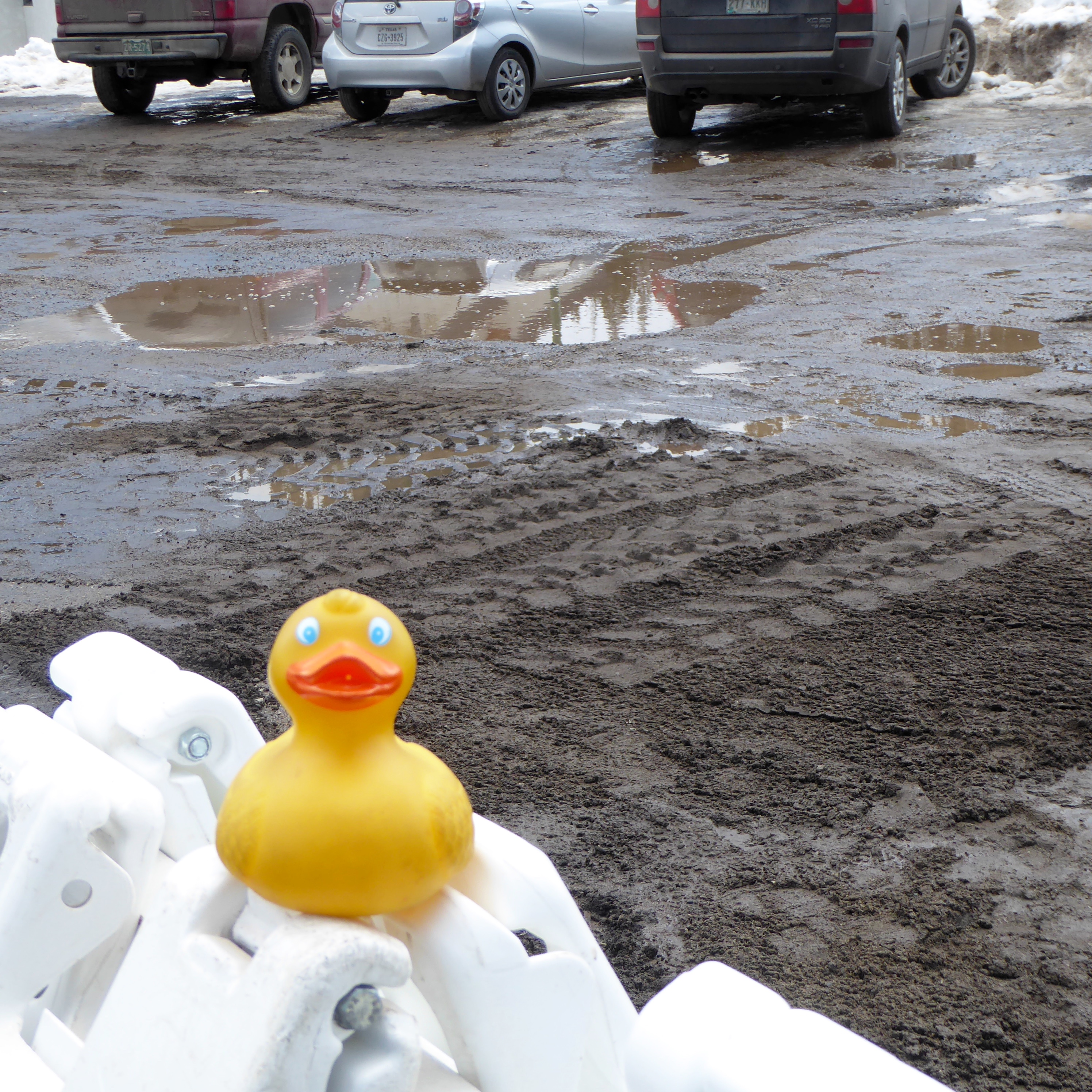
Oh. Mud Season

Oh. Mud Season

Mud season.   The spring sun is so intense things melt during the day, and at over 9,000 feet elevation, everything freezes at night.     We went to this ski lift.
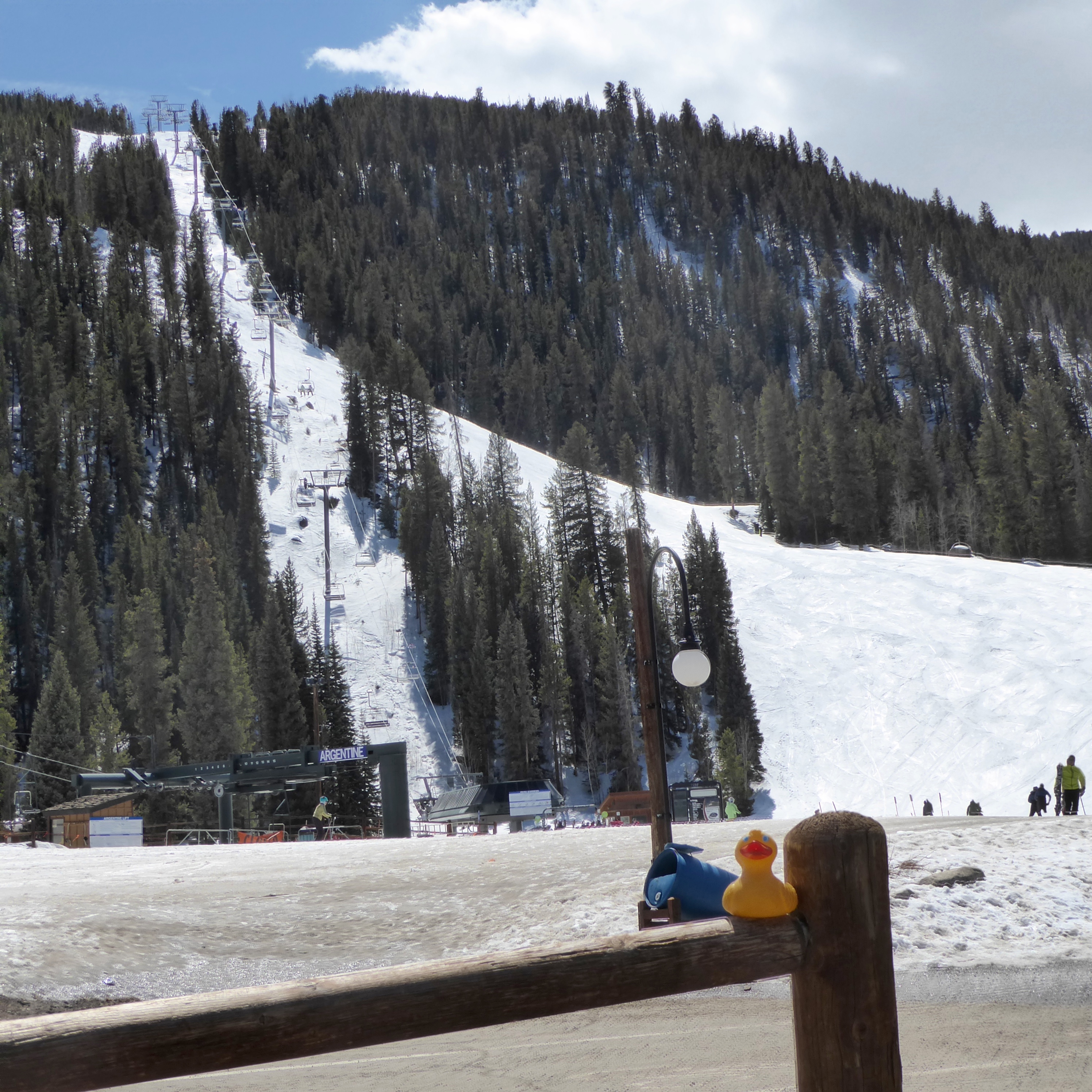
Too tall for a small duck

Too tall for a small duck

I, Zeb the Duck, decided not to ski.   This is too high and too steep for a small duck.   These humans are riding on a chair lift, going to the top of the mountain.
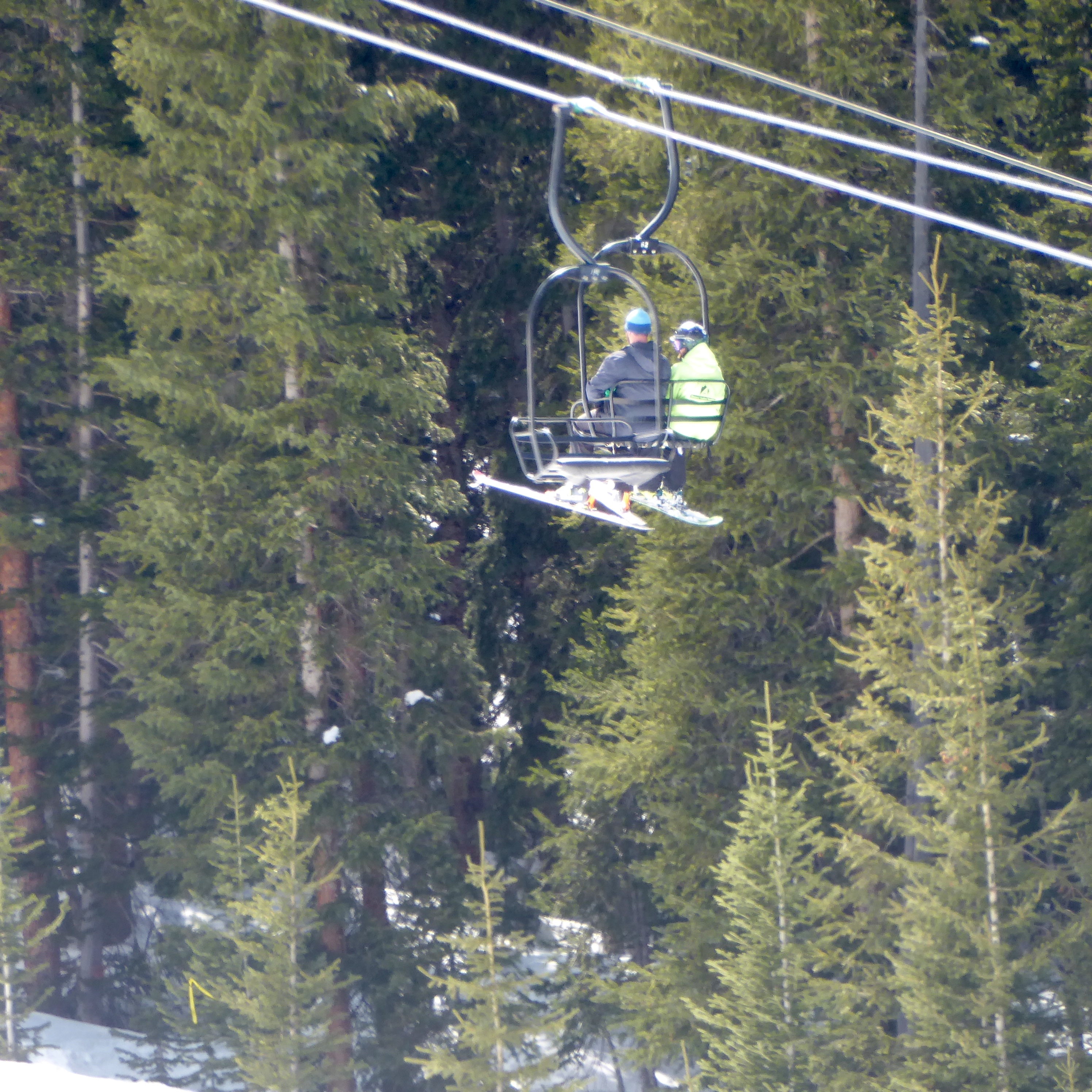
Going up on the chair lift

Going up on the chair lift

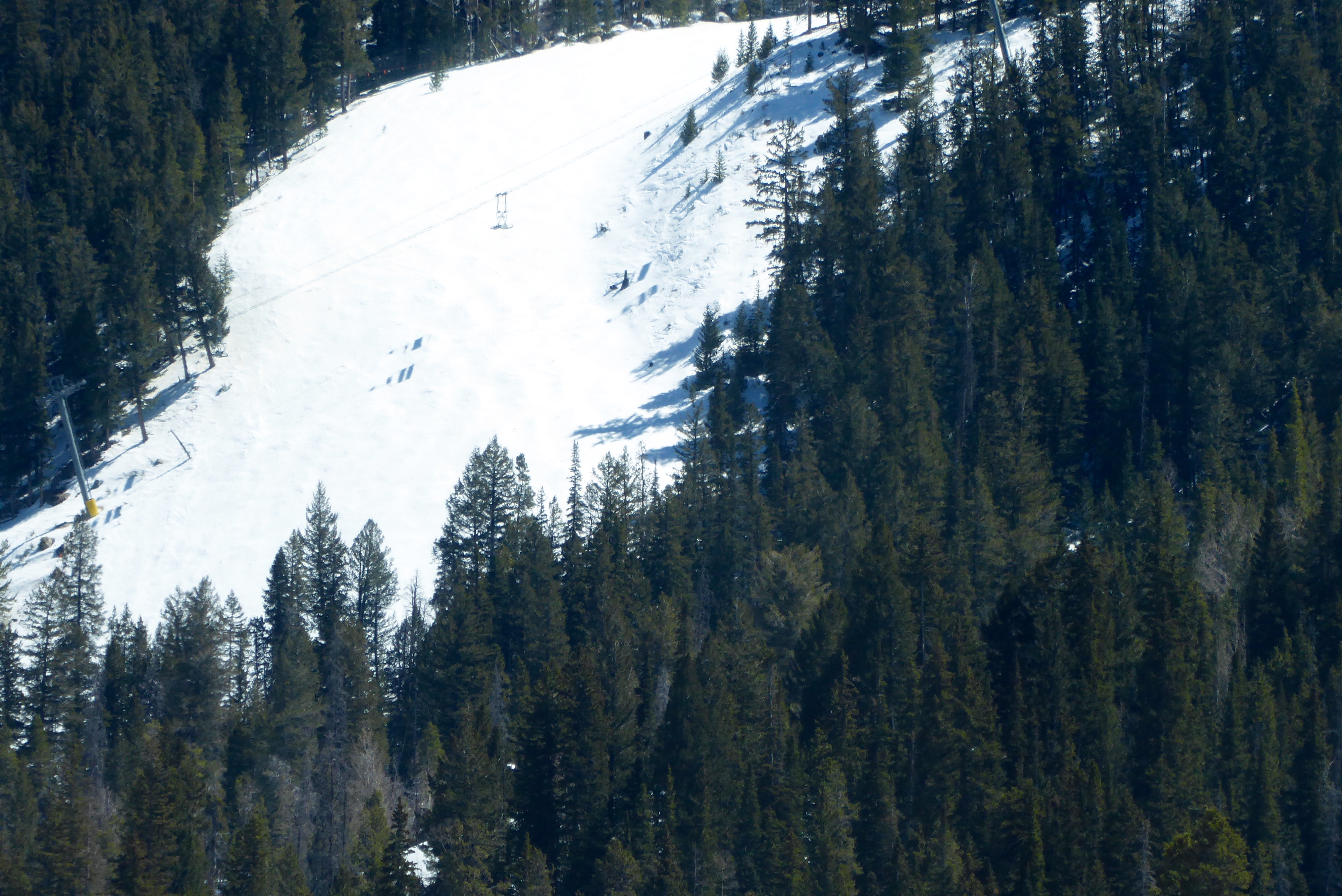
And, if they go up, they must come down.
You must come down the mountain

You must come down the mountain

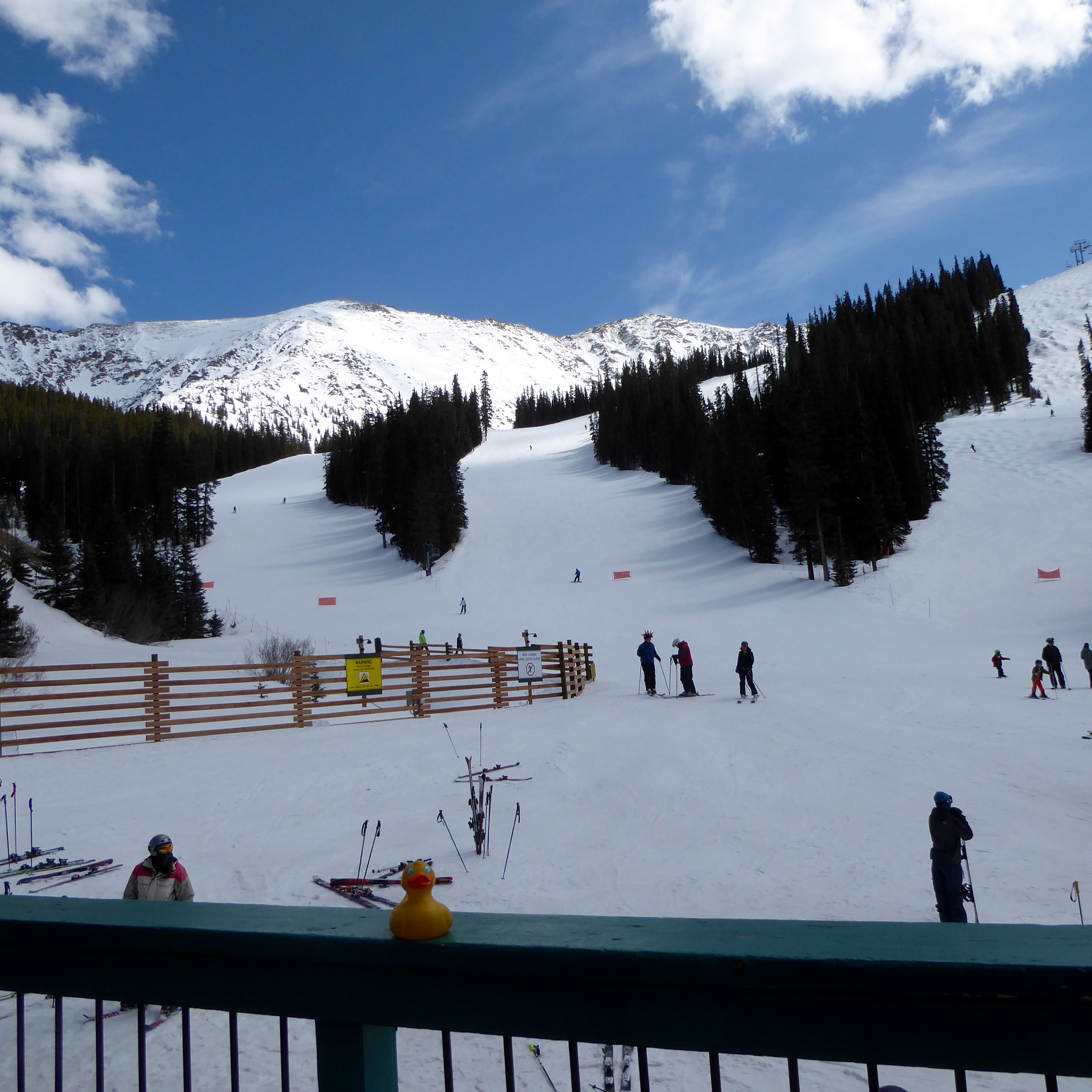
Sometimes skiing under the chair lift.   Here they are at the end of the run.
End of the ski run

End of the ski run

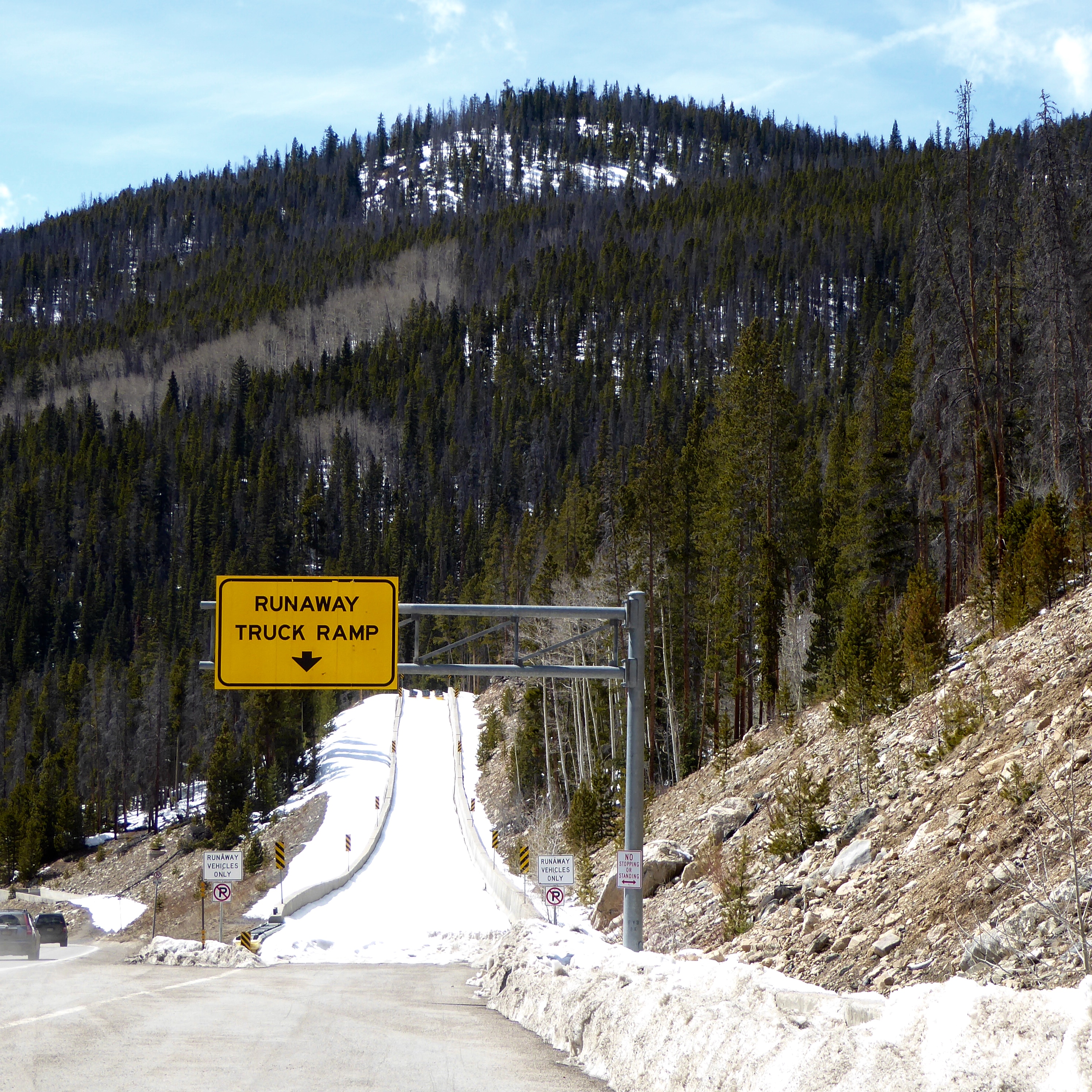
You can see that it is not very crowded today.   We come to the mountains during the week to avoid crowds.   This is one of the best sights to see on the highways.
Run away truck ramp

Run away truck ramp

This is a run away truck ramp.   The trucks come down steep grades and can burn out their brakes.   If that happens, they enter a run away truck ramp, going up hill with a foot or two of loose sand to slow them down.   We like this one because we can see from the snow that it has not been used.   That is good that nobody had a problem.   I, Zeb the Duck, liked the spring snow in the mountains.   It was really warm when the sun was shining but rather cool when clouds came.   We really like Colorado.

Sandhill Cranes and Colorado Traveling Ducks Visit Kearney, Nebraska

600,000 Sandhill Cranes migrate through Kearney, Nebraska every year.   600,000?!?   We had to see this.

We are in Nebraska

We are in Nebraska

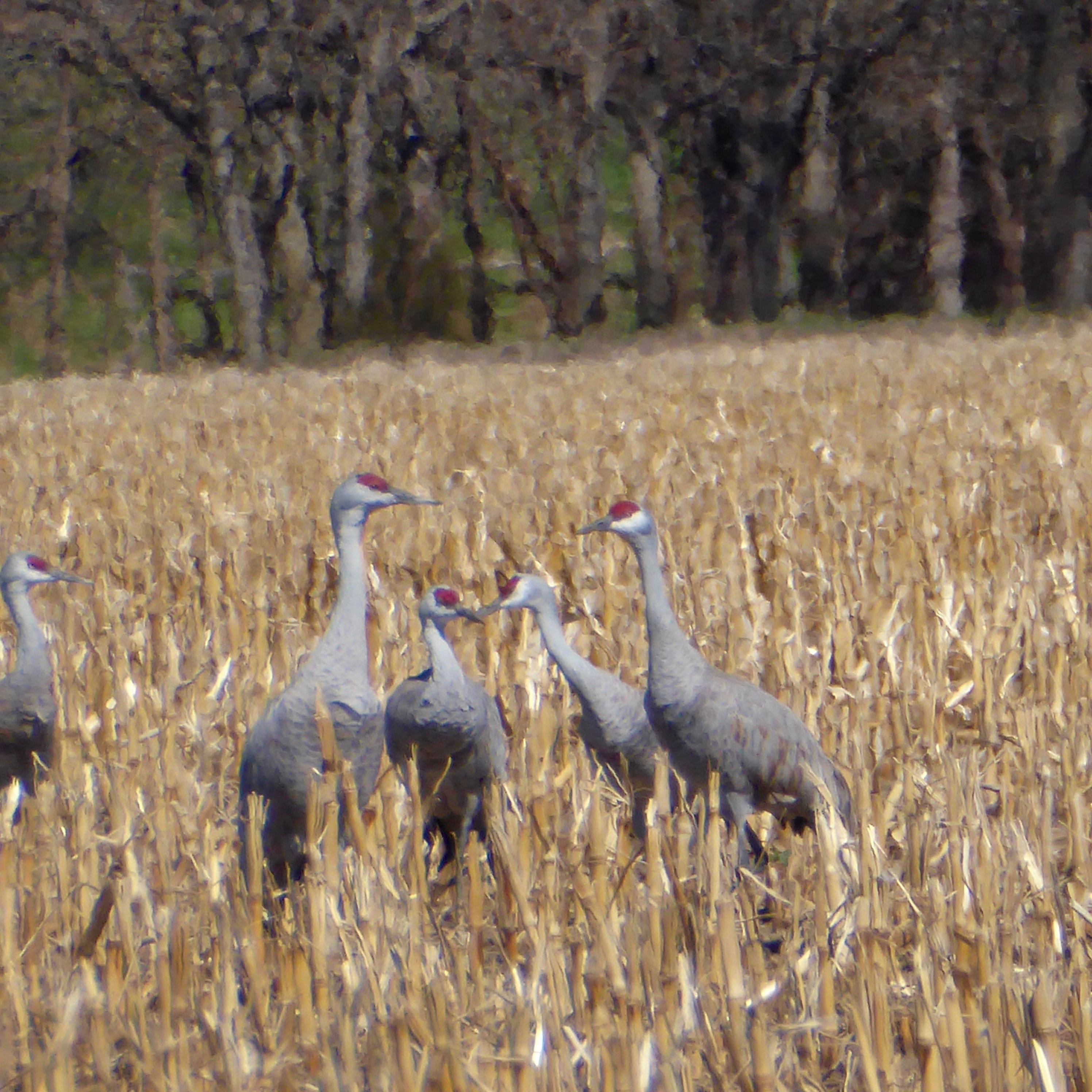
So, we drove to Nebraska Saturday and this is what we learned.   The majority of the Sandhill Cranes are there the third weekend of March, so many had already left when we arrived.   And the man at Fort Kearney said almost all the cranes will be gone by this weekend.   If we go again, it will be in mid March.       The cranes migrate to Kearney to eat.   They normally weigh 8-12 pounds.   The Sandhill cranes try to gain at least 1 1/2 pounds in Kearney.    So we saw groups of cranes in last years corn fields.

Groups of Sandhill Cranes eating in corn fields

Groups of Sandhill Cranes eating in corn fields

The cranes stay along the Platte River between Kearney and Grand Island and feast in the corn fields a few miles north and south of the river.   They are afraid, or at least wary of humans, so they stay in the middle of the fields, making photos difficult.   This is a small group, showing the pink on the heads.

Sandhill cranes watching us

Sandhill cranes watching us

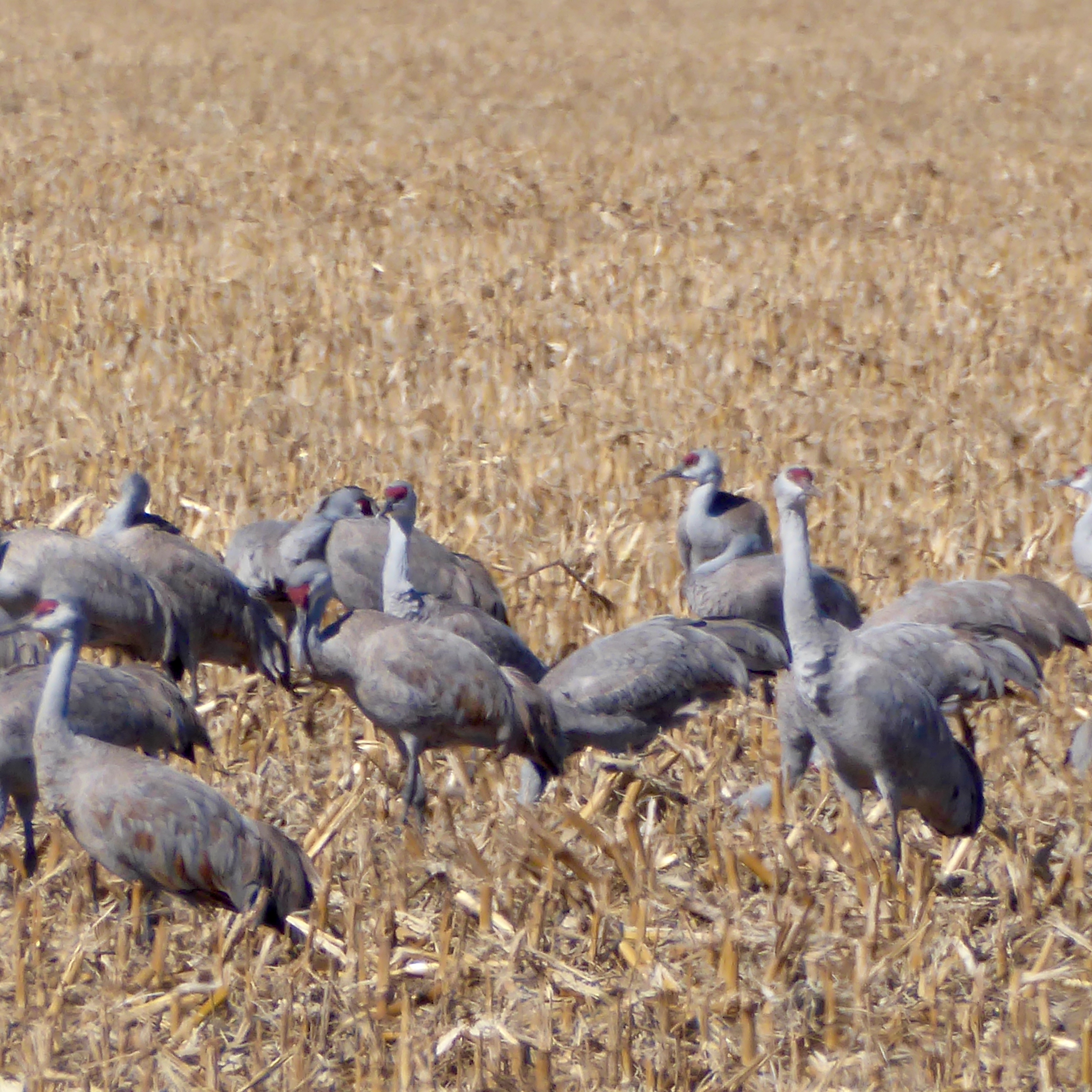
The man at Fort Kearney said the cranes are hunted in parts of south Texas and northern Mexico.   There is a hunting season to control the population.   If they over populate, they will starve either here or in the arctic where they spend the summer.   While a  group is eating in the corn fields, there are a few looking for any threat.

Some cranes eat and some cranes watch for threats

Some cranes eat and some cranes watch for threats

Our stopped car could be considered a threat to them.   We were told to take photos from the car, not to get out of the car as that scares them.    These cranes are about 3 feet tall, but look smaller due to the distance.   We just thought they were so cute, with the pink on their heads.

Aren't they cute?

Aren’t they cute?

They spend the day eating in corn fields and as the sun gets lower, they head to the Platte River where they spend the night in 2-4 inches of water.   These cranes were flying either to another field or to the river.   They make a much softer noise than geese and are a delight to hear as they fly over.

Cranes flying to river

Cranes flying to river

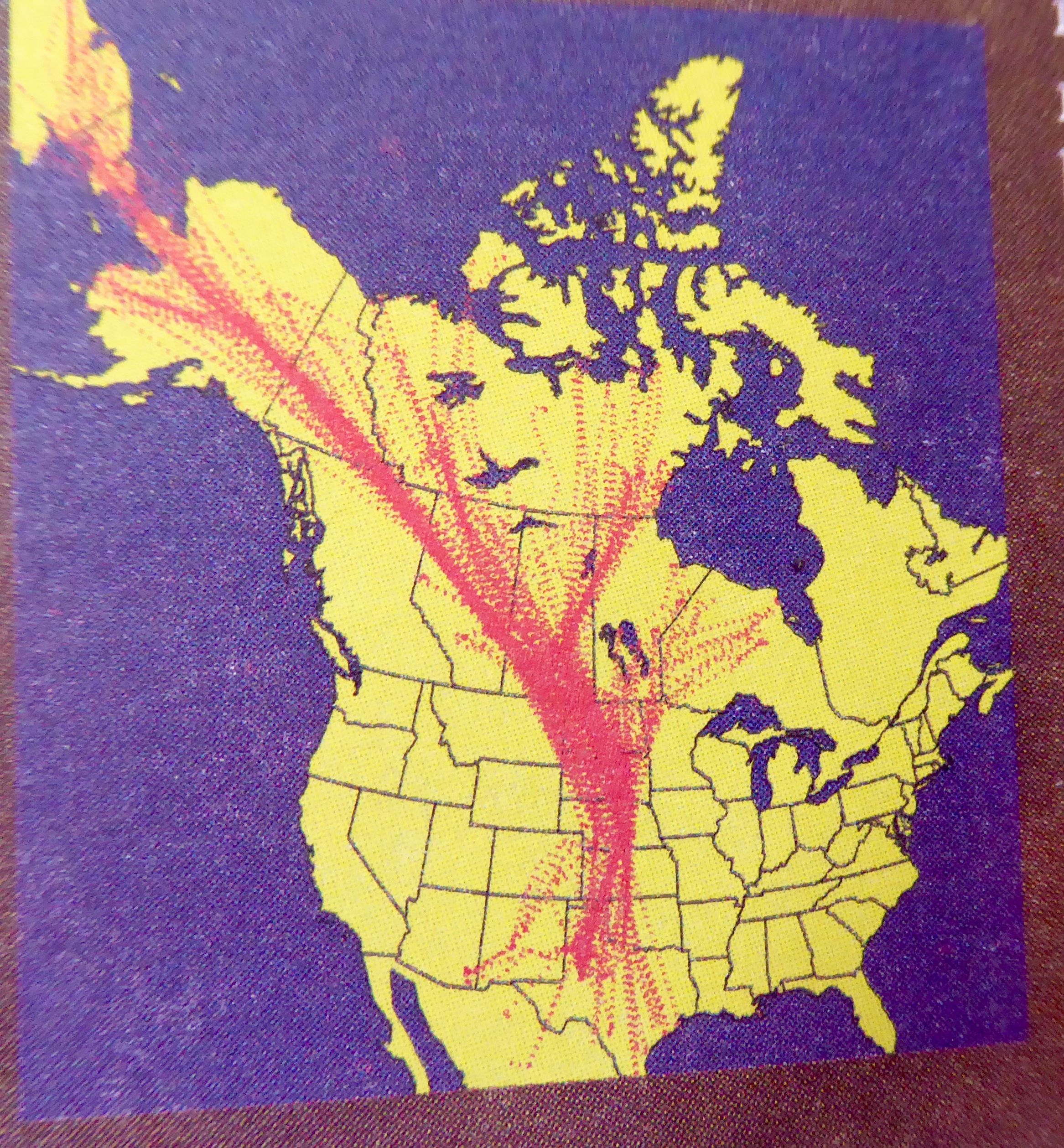
The Sandhill cranes come through here in March every year.   This is one of the few places with so many of them at one time.   This is their general migration path for the trip north.

Sandhill Crane migration path

Sandhill Crane migration path

They mate and spend the summer in Alaska and Siberia.   Since we were in the farm land of Nebraska, we saw much farm equipment, but this tall vehicle driving on the road fascinated us.

Tall piece of farm equipment

Tall piece of farm equipment

In the spring many young animals are born, so here are cows with small calves.

Small calves with mom in field

Small calves with moms in a field

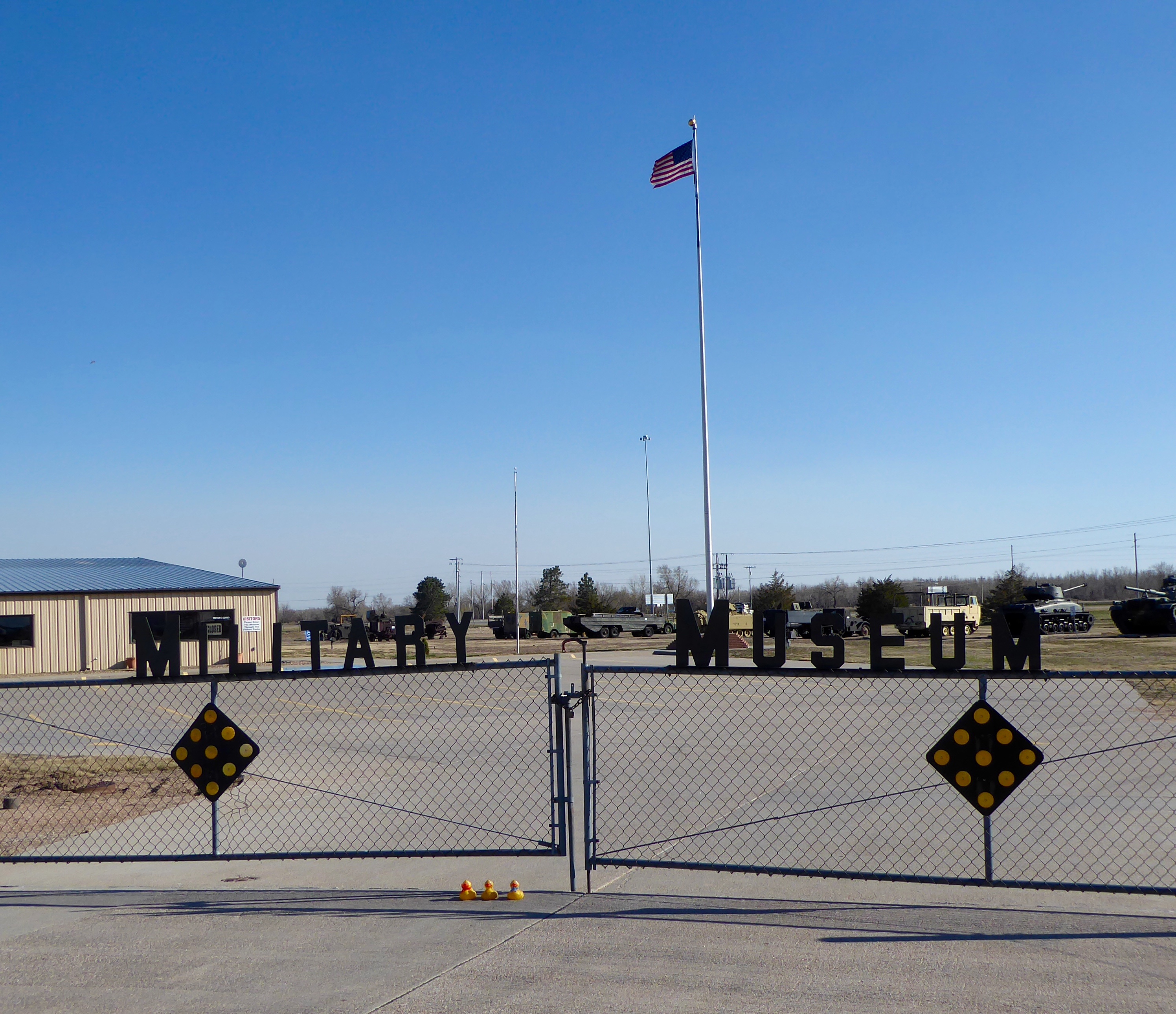
In Lexington, Nebraska, we stopped at Heartland Museum of Military Vehicles.   Unfortunately it was closed.

Heartland Museum of Military Vehicles in Lexington, Nebraska

Heartland Museum of Military Vehicles in Lexington, Nebraska

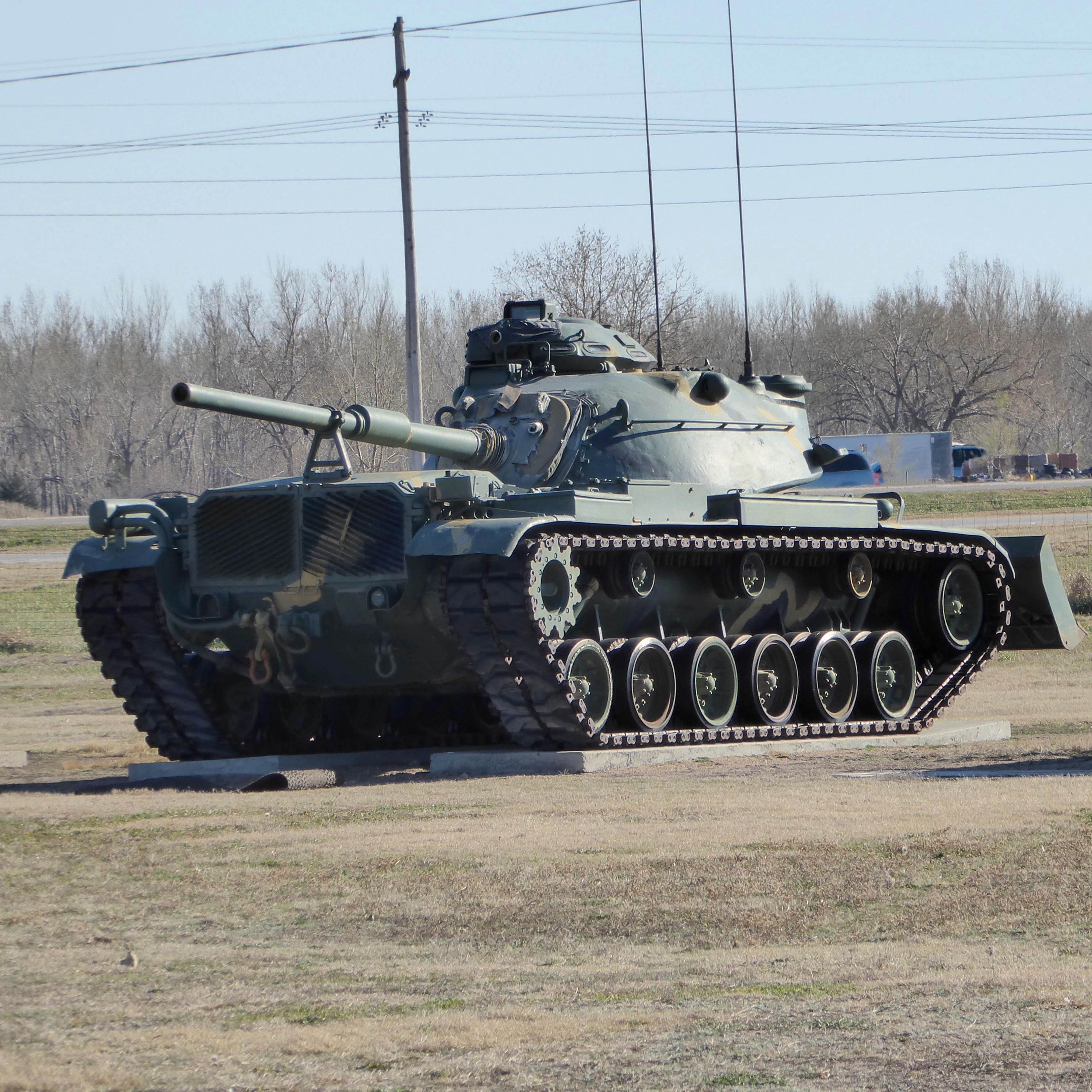
Over the fence we saw this tank.

Military tank

Military tank

This vehicle also caught our attention.

Military vehicle

Military vehicle

At the westbound rest area at mile 270, we were intrigued by this sculpture.

Sculpture at westbound rest area mile post 270

Sculpture at westbound rest area mile post 270

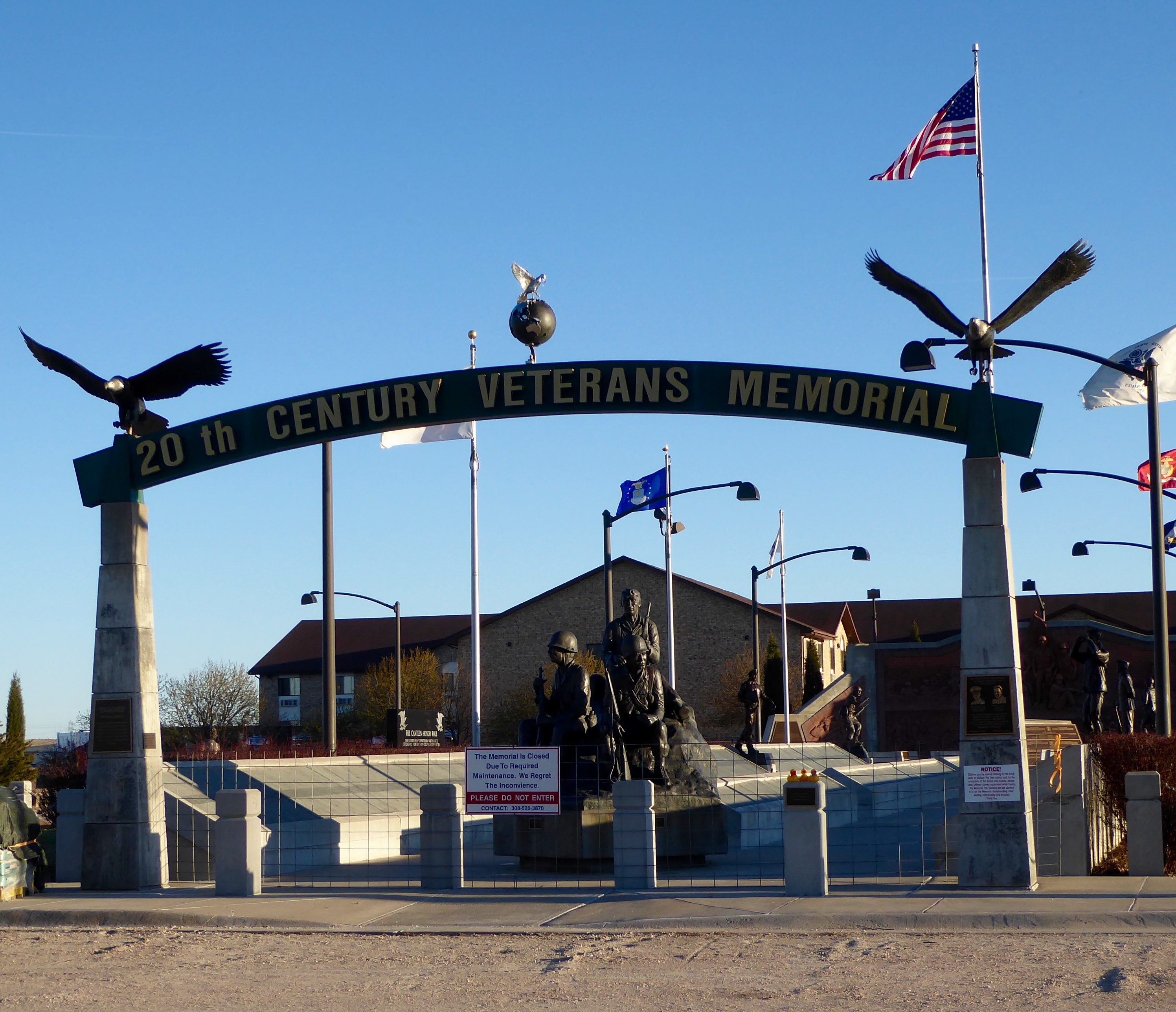
Our last stop was North Platte.   There were several things we wanted to see, but the booklet said everything we wanted either closed at 5:00 p.m. on Saturday, or was still closed for the winter.   However the Veteran Memorial was always open.   So we went, and guess what?   It was closed for required repairs.

Veterans Memorial in North Platte, Nebraska

Veterans Memorial in North Platte, Nebraska

But, we could still see some sculptures.   We like driving across Nebraska.   They have many attractions and most are clearly marked.   Even if they are closed, as most were today, you can still see some of the things.   We drive through Nebraska frequently, so we will stop again.   If you drive across Nebraska, stop often to see things.   There are so many things relating to the pioneer days, you never need to be bored or wonder what you should see.   We always find something interesting driving through Nebraska and we think you will too.

Colorado’s Geographic Center: Hartsel with Zeb the Duck

The Heart of Colorado has mountains, pastures, wildlife and buffalo ranches.   Hartsel, Colorado is near the geographic center of our state.   Hartsel, founded in 1880 sits at the intersection of Hwy 24 and Hwy 9 on the banks of the South Platte River.    Approaching Hartsel we watched the buffalo on this ranch.

Buffalo Ranch

Buffalo Ranch

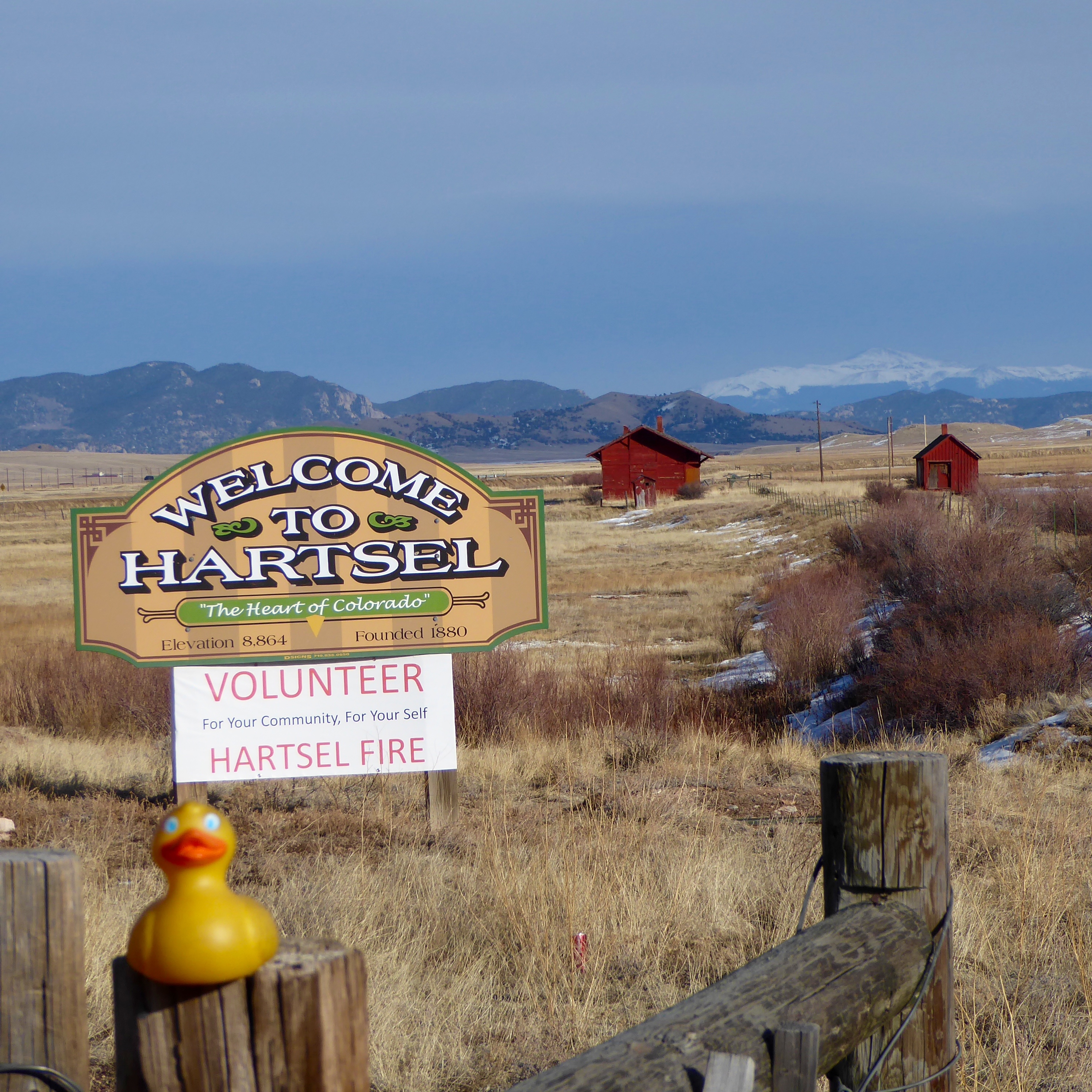
A number of ranchers are raising buffalo in the area.   I, Zeb the Duck, am now in Hartsel, Colorado.
Welcome to Hartsel

Welcome to Hartsel

This antique shop, or barn, certainly has a lot of stuff.

Barn is antique store

Barn is antique store

We loved this weather vane on the barn.

Love the weather vane

Love the weather vane

When you are in Hartsel be sure to stop at Bayou Salado Trading Post.

Bayou Salado Trading Post

Bayou Salado Trading Post

You will find a great selection of rocks and jewelry.   The source of their Aquamarine crystals is Mount Antero, visible from town.   Local Blue Agate is also used in the handcrafted jewelry.    This shop also offers coffee, ice cream and grass fed beef.    A good place for browsing, but a better place for shopping.   This library

Hartsel library

Hartsel library

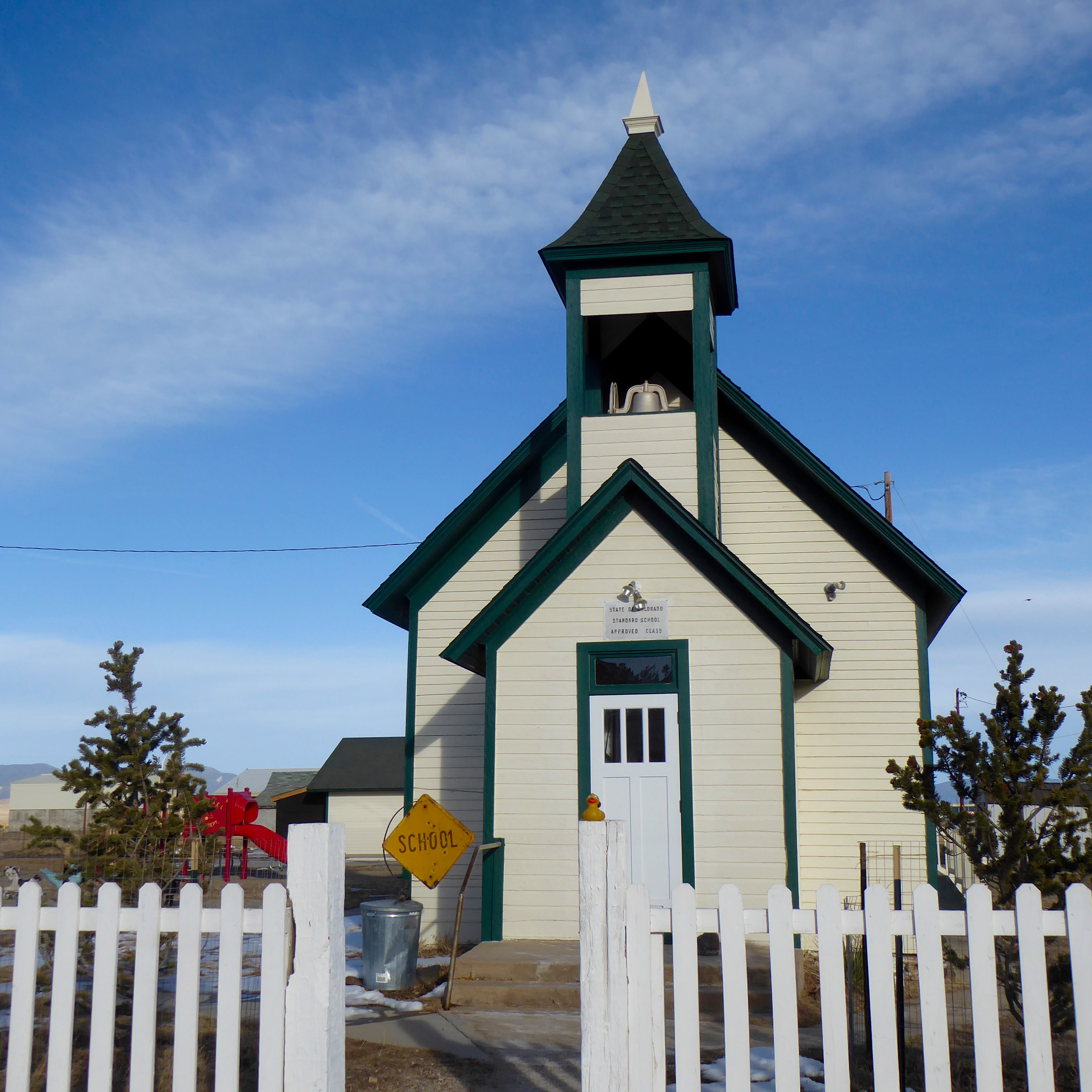
is conveniently located near the school.

Hartsel school

Hartsel school

We think it is great that the school and library are so close together.   While Hartsel has a modern fire station and fire trucks, we loved this old fire tanker sitting by the side of the fire station.

Old fire tank by fire station

Old fire tank by fire station

Nearby, you can enjoy all outdoor activities.   Rafting, skiing, hunting, game viewing, and fishing are all here.   Enjoy the outdoors, and then return to Hartsel for a meal.

Highline Cafe and Saloon

Highline Cafe and Saloon

Everything was good at Highline Cafe and Saloon, but mom really liked the hamburgers.    Hartsel, being at or near the geographic center of Colorado, is often referred to as  “the heart of Colorado”.   Stop in and experience Colorado’s heart.

My 40 Foot Tall Brazilian Cousin

There is really big rubber duck in Brazil.   Must be one of my distant cousins.   Many of the rich and  upper middle class citizens of Brazil are protesting against the President, Dilma Rousseff.    They are protesting against raising taxes and fiscal irresponsibility.   In Brazilian Portuguese, “to pay the duck” means to unfairly pay for someone else’s mistakes.    The symbol of the protest is a 40 foot rubber duck.

Brazil's 40 foot rubber duck

Brazil’s 40 foot rubber duck and ducklings

When my friend, Deborah, informed us of this duck, it was in Sao Paulo.   The duck and ducklings were previously in the capital, Brasilia.   The duck and ducklings were also seen on the sand of Copacabana Beach in Rio de Janeiro.    We like to know about other traveling ducks, so thanks for telling us, Deborah.

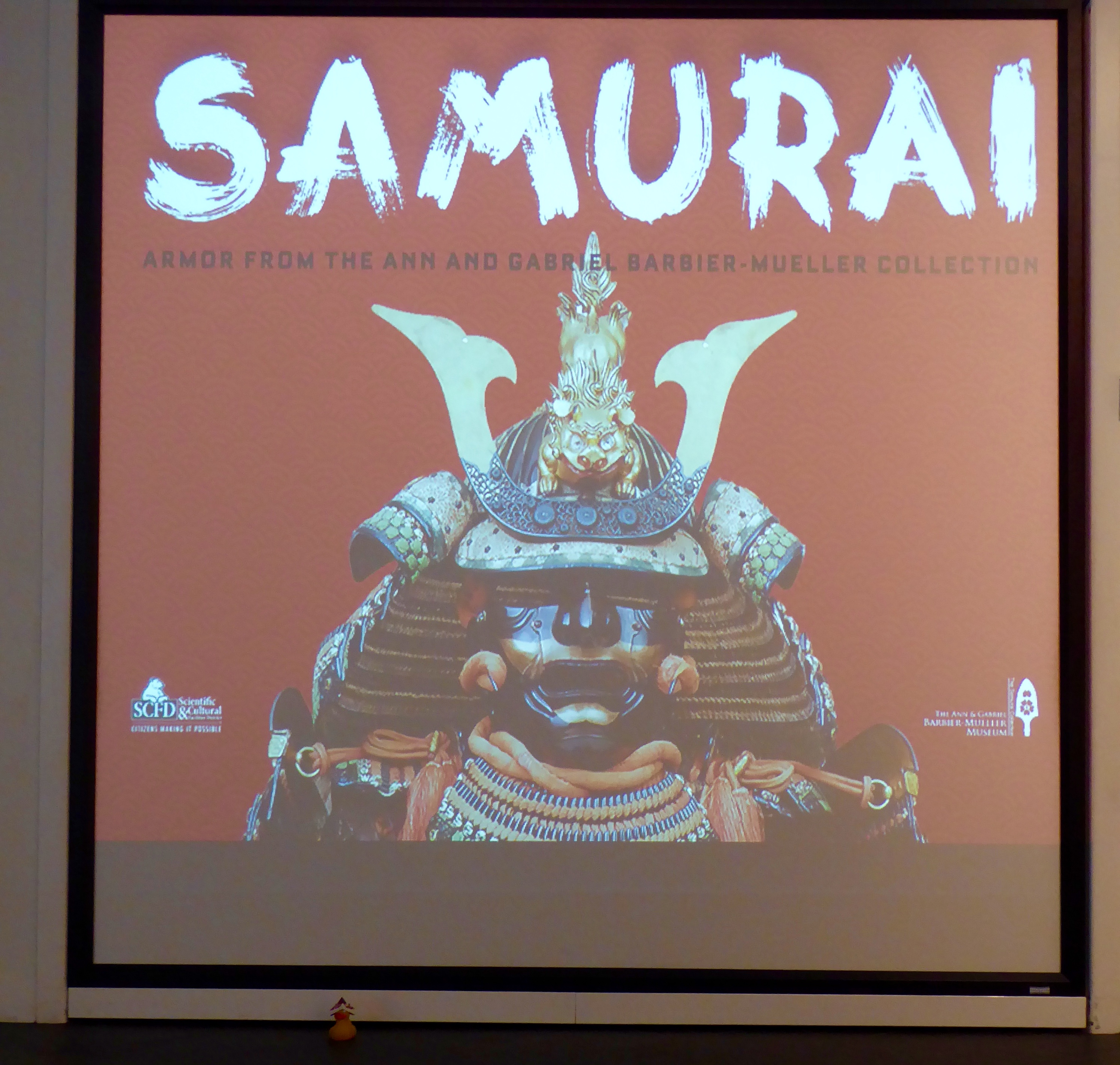
Zeb the Duck Visits the Samurai at the Denver Art Museum

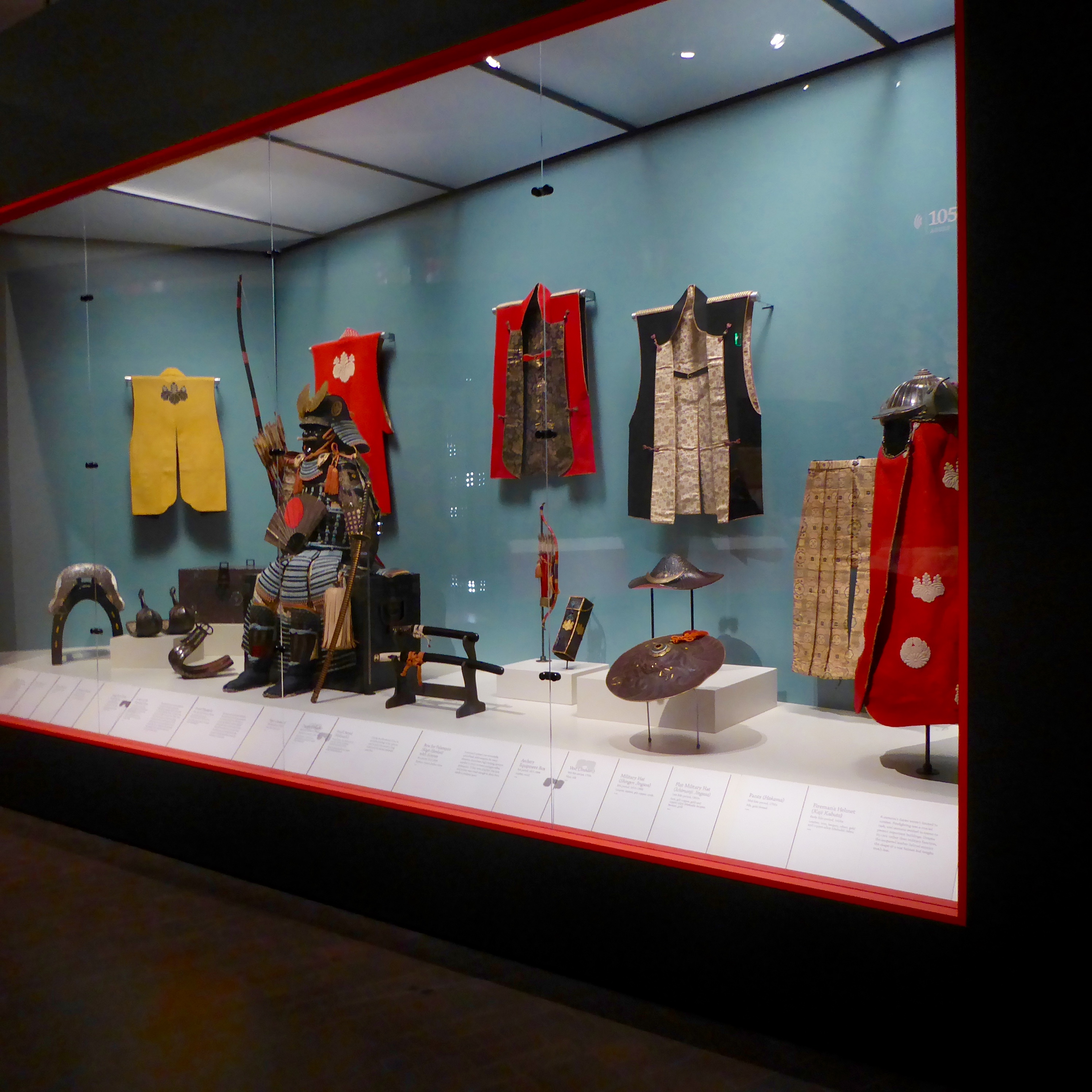
Between the late 1100’s and the late 1800’s, the Samurai controlled Japan.   The samurai formed the top tier of a strictly hierarchical society.     And, I, Zeb the Duck, am at the Denver Art Museum exploring the special exhibit about The Samurai.

Let's visit the Samurai

Let’s visit the Samurai

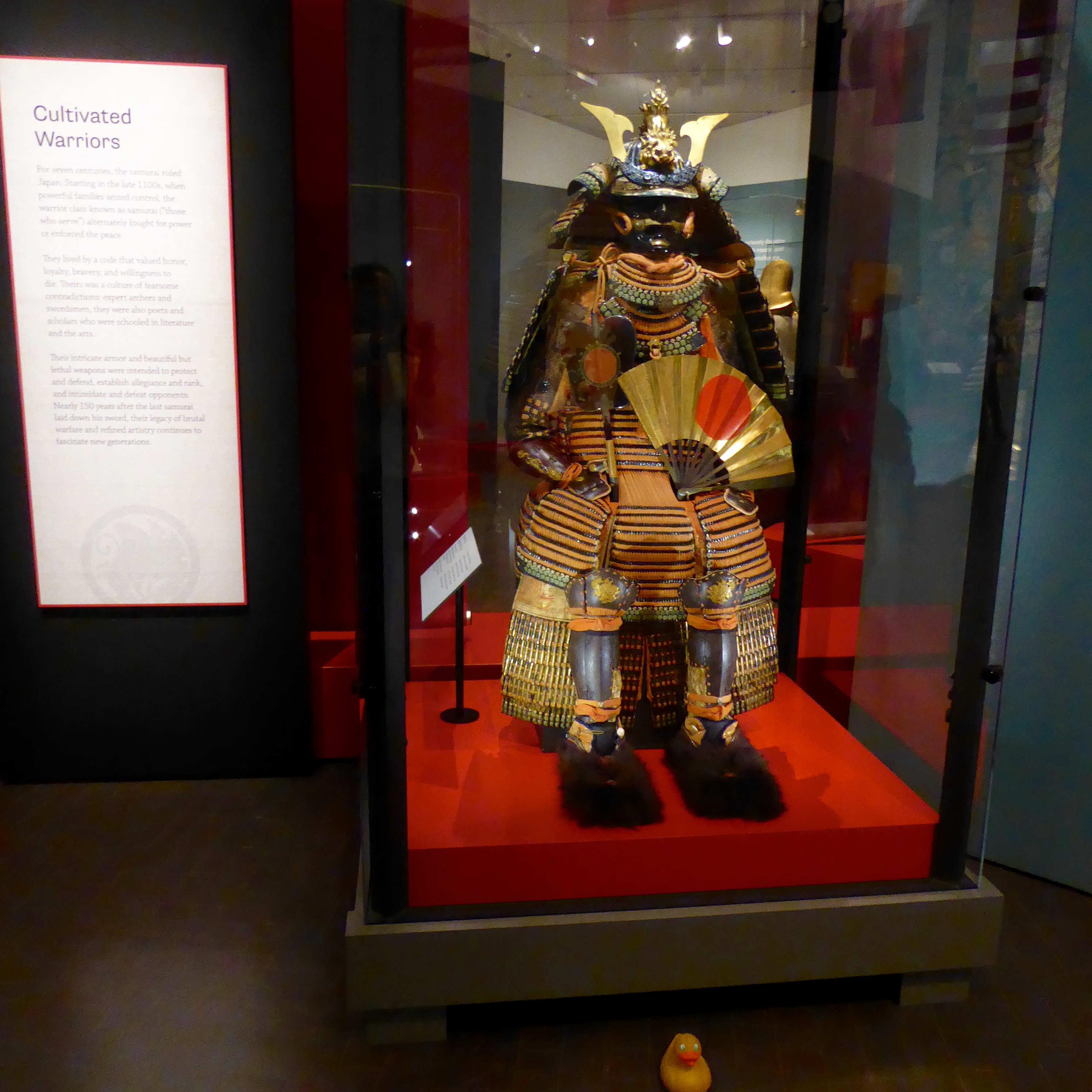
Look at this suit of armor.

Samurai armor

Samurai armor

It looks too heavy for a small duck to wear.   But, who were these Samurai?   Good guys or bad guys?

Who are the Samurai?

Who are the Samurai?

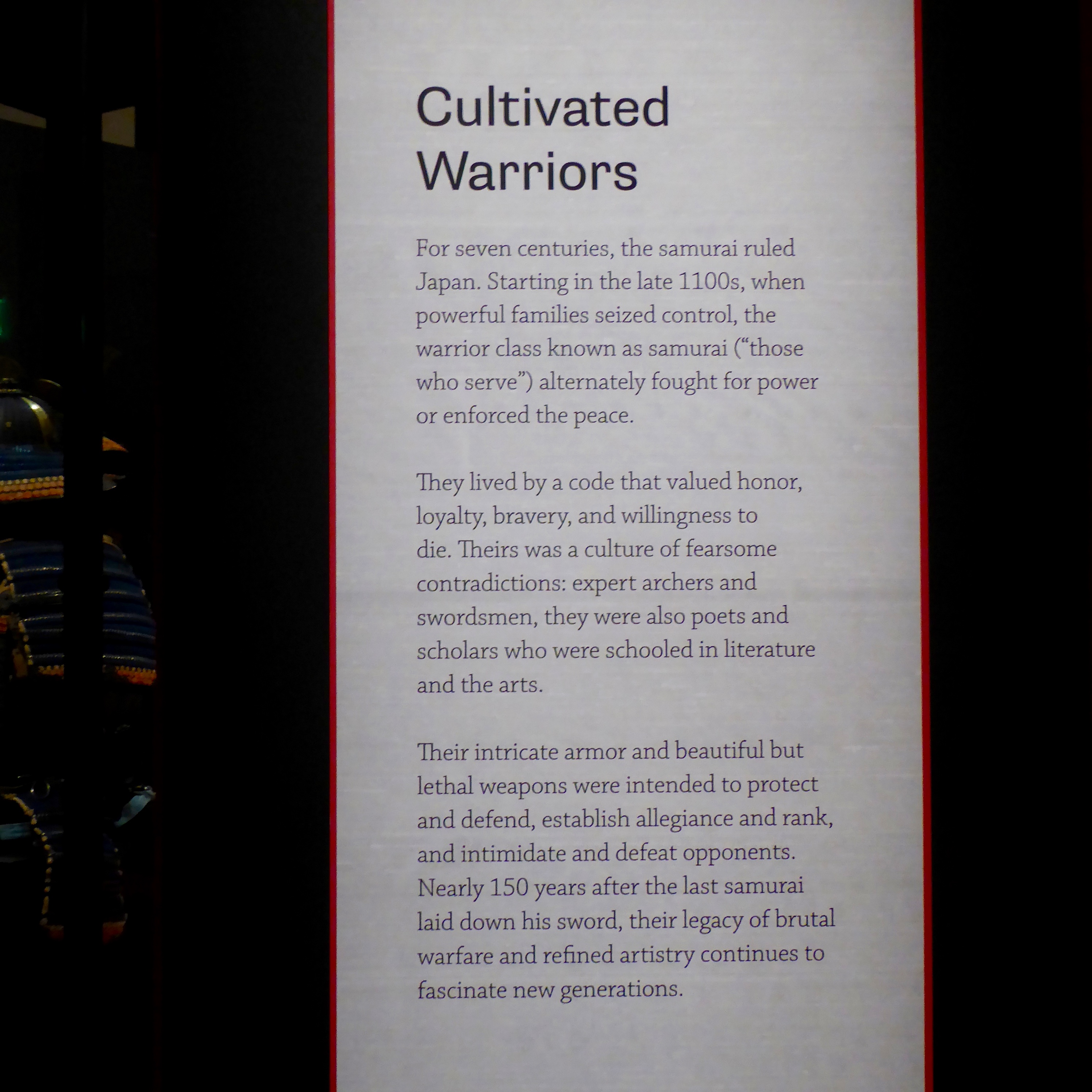
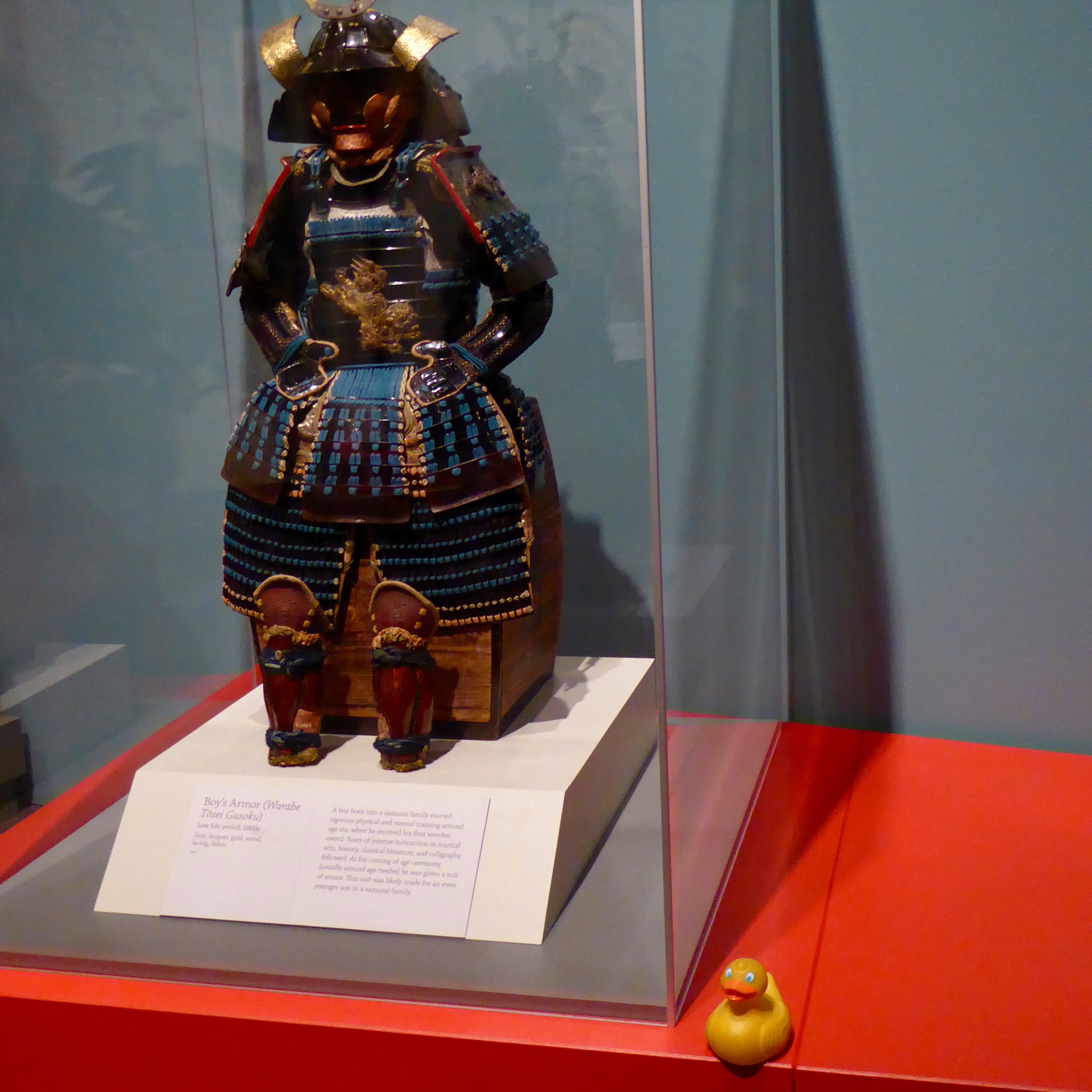
They were the good guys.   They were great warriors, but also very educated.   They were trained to be exceptional gentlemen in all phases of life.   They had to keep their lives balanced.   The boys of the Samurai families began training when they were about 6 years old.   They were given their first wooden sword to begin training.   They also became skilled in martial arts, learned history, classical literature and calligraphy.

Boy's first armor

Boy’s first armor

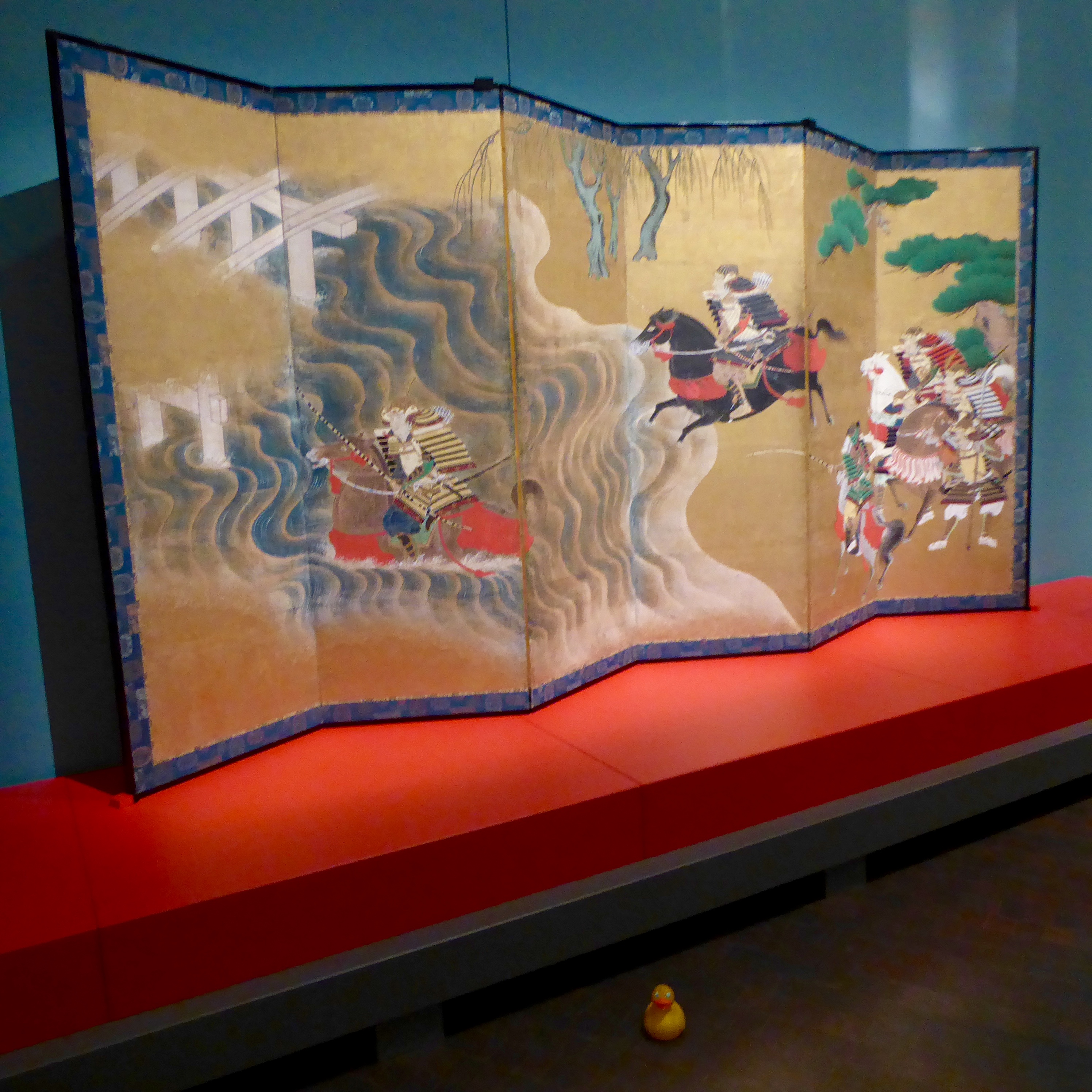
The boys earned the first suit of armor when they were about 12 years old.   This one, from the 1800’s, is of iron, lacquer, gold, wood, lacing and fabric.    I liked this silk screen.

Silk screen

Silk screen

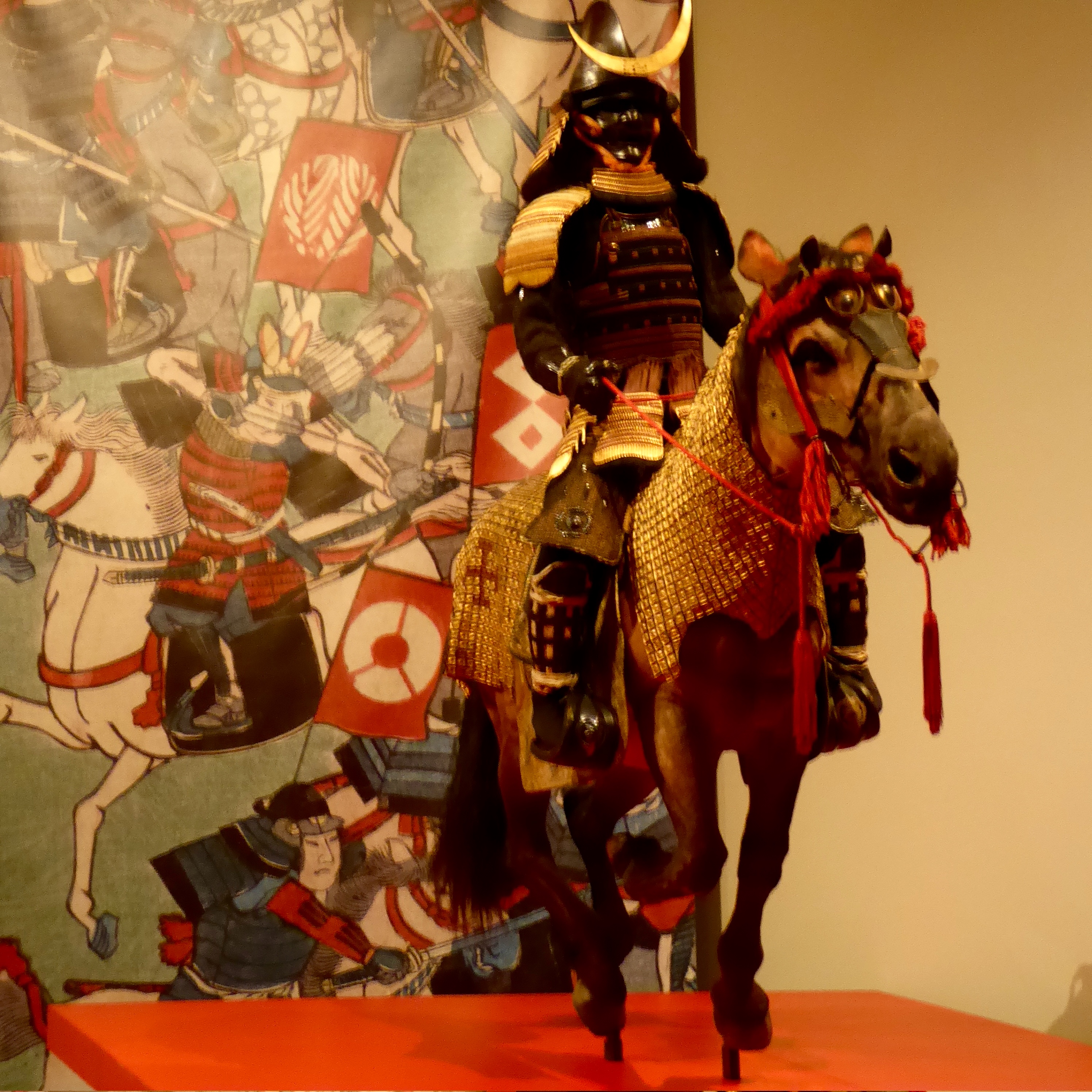
It recounts an episode during the Genpei War (1180-85) when the Minamoto family’s defeat of the Taira family ushered in the era of Samurai rule.   This Samurai warrior looks very formidable on his horse.

Samurai and horse with armor

Samurai and horse with armor

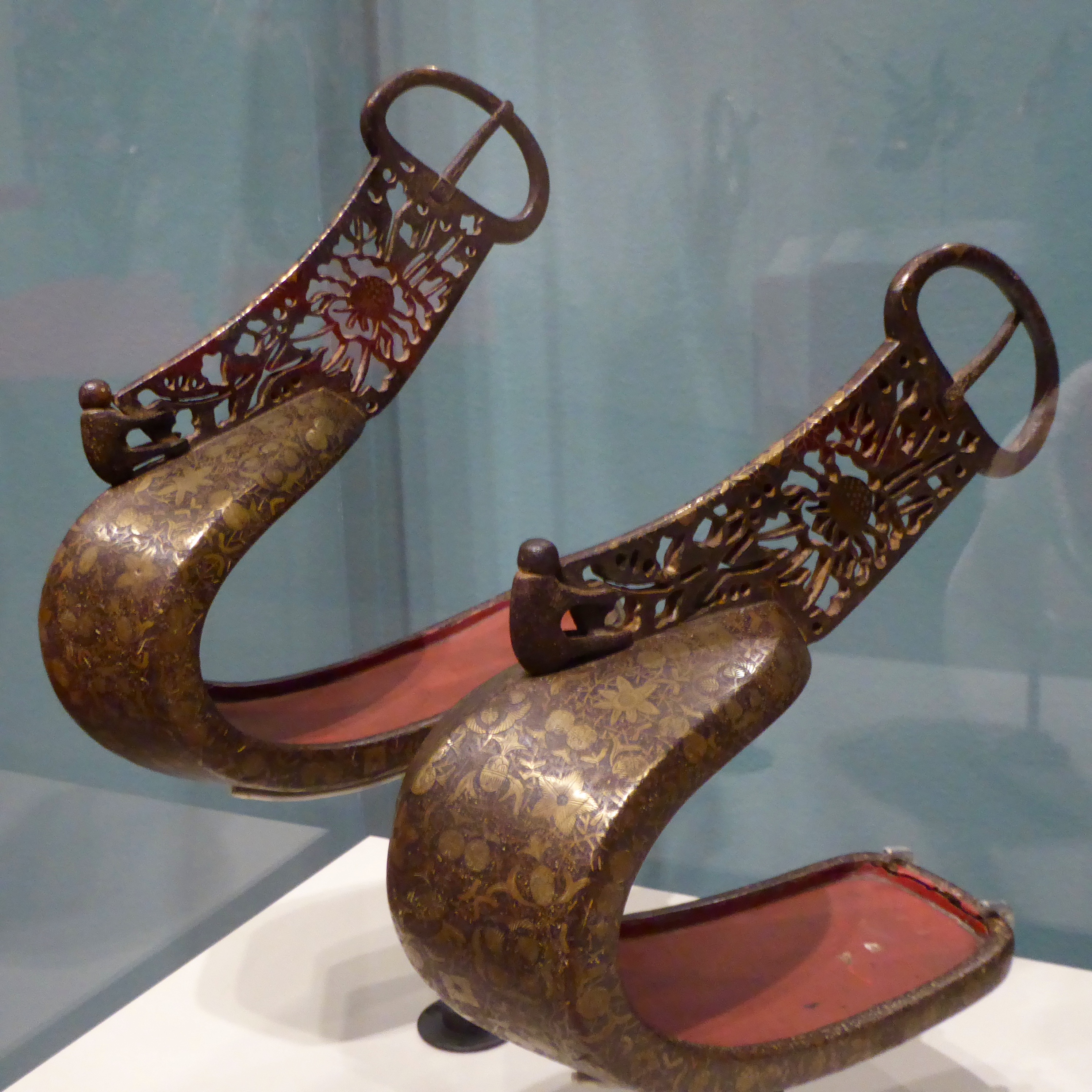
He is wearing armor of the Tachido Type from the 1600’s made of iron, gold, lacing, bear fur, silver, and wood.   His horse is wearing armor with a horse mask from the 1600’s or 1700’s, made of leather, wood, silk, lacquer, fabric, gold, and horsehair.   The horse tack from the 1600’s or 1700’s is also made of leather, wood, iron and lacquer.    Stirrups were very important.

Stirrups with monkey

Stirrups with monkey

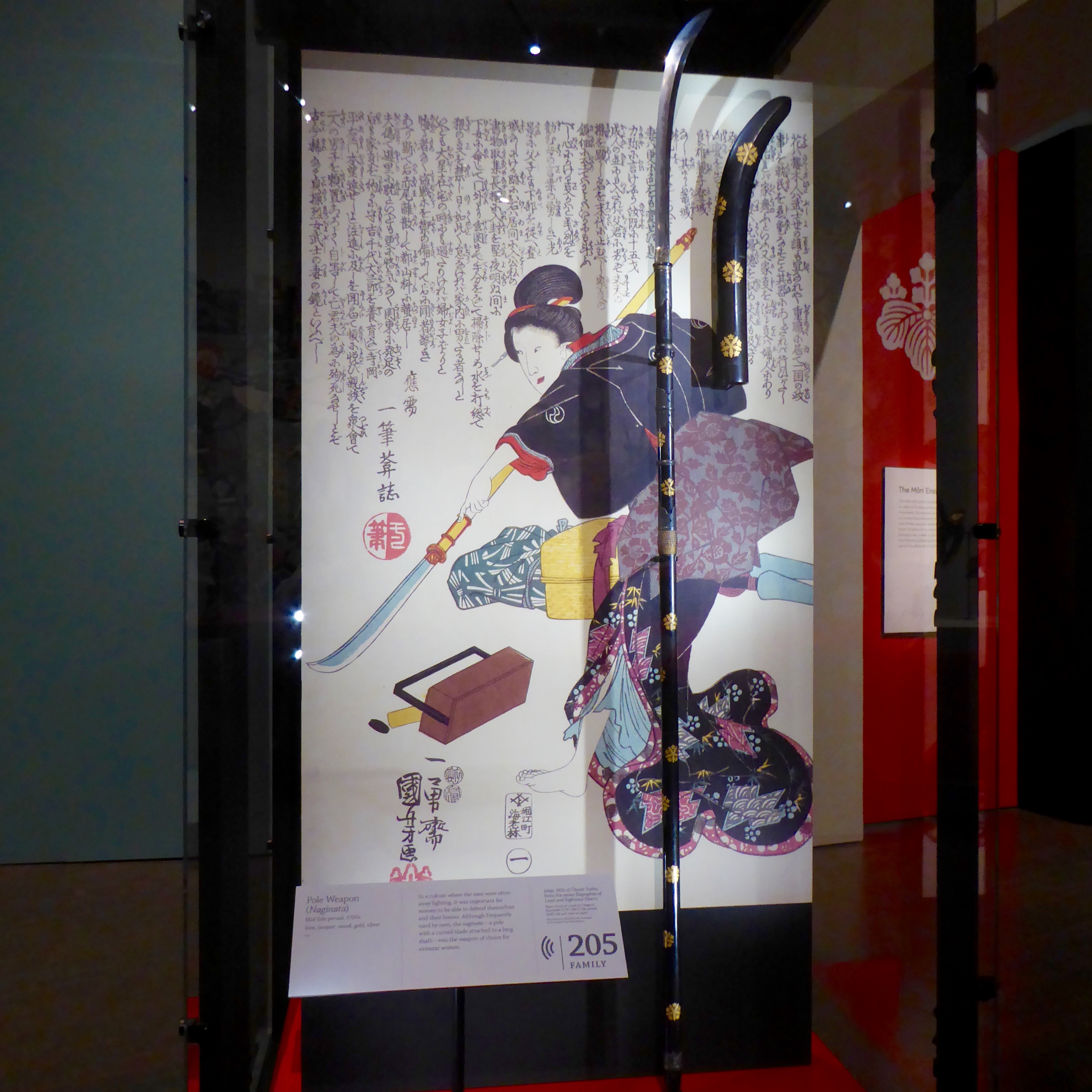
These are of iron, wood and copper.   Notice the seated monkey at the front of each stirrup.   Monkeys were considered to be protective figures for horses and were often housed in stables alongside horses to keep them calm.  The Samurai men were often away fighting, so the women were trained to defend themselves and their homes.

Women samurai defend their home

Women samurai defend their home

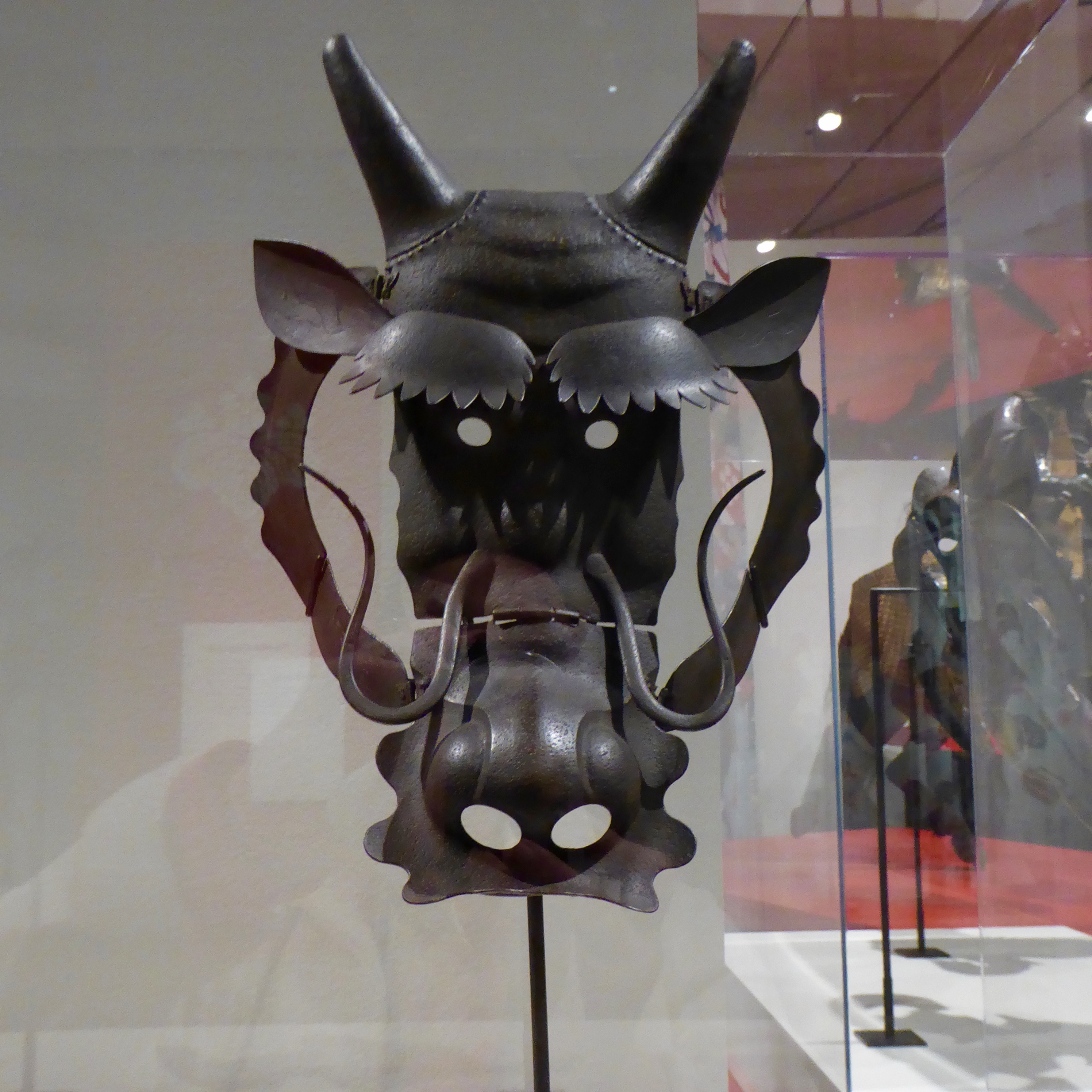
She is using the naginata, a pole with a curved blade attached to a long shaft.   This was the weapon of choice for Samurai women.   Horse masks were often made of paper maché, but not this one.

Mask for horse

Rare iron mask for horse

This is a rare example of a horse mask made of iron.   The mask, often worn in a parade or procession, transformed the horse into a creature of mythical power.   Here is the Mōri Ensemble.

Mōri Ensemble

Mōri Ensemble

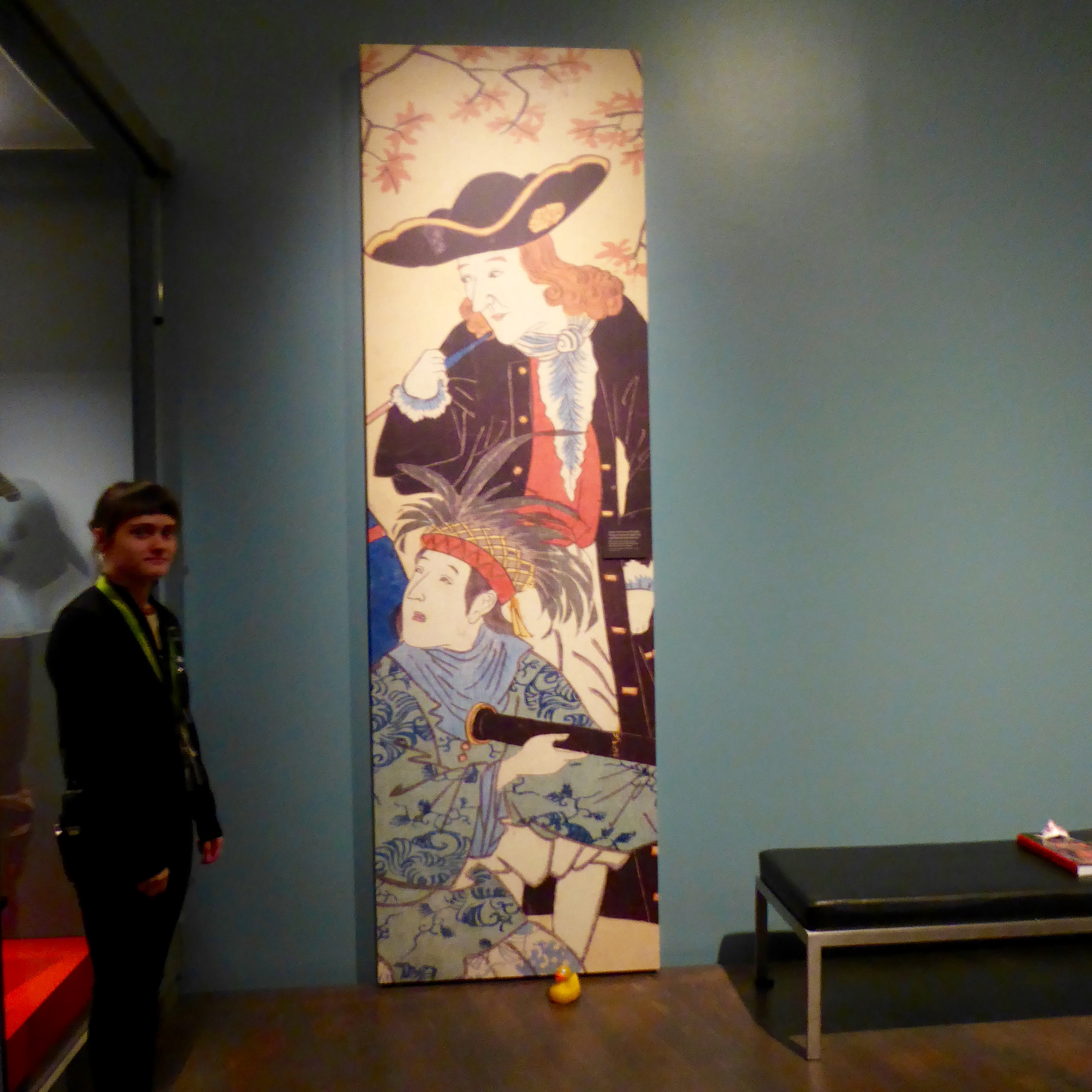
You are viewing the only known example, outside Asia, of an entire set of armor and accessories belonging to one family.   This panel shows daily life of a samurai.

Panel with Zeb's friend

Panel with Zeb’s friend

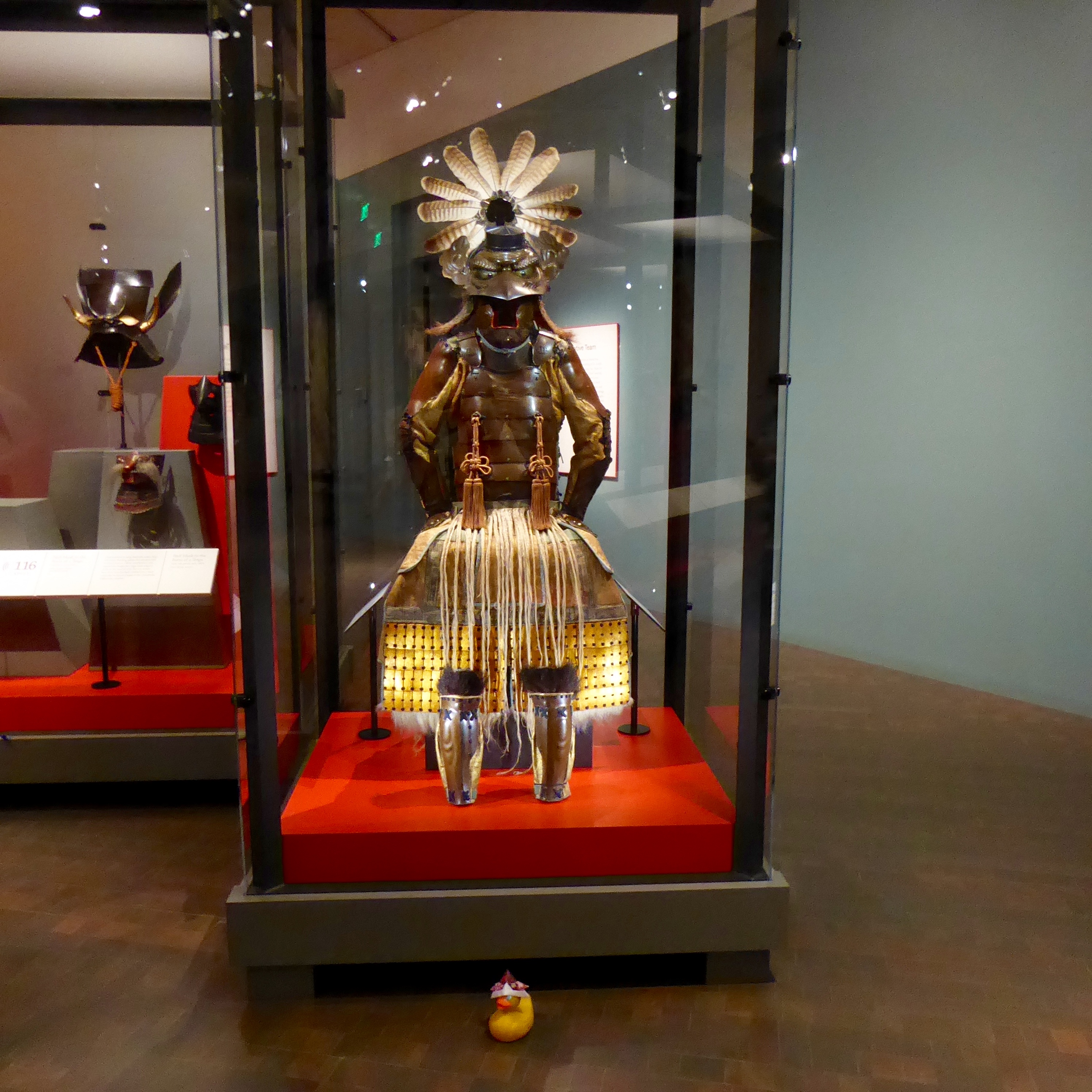
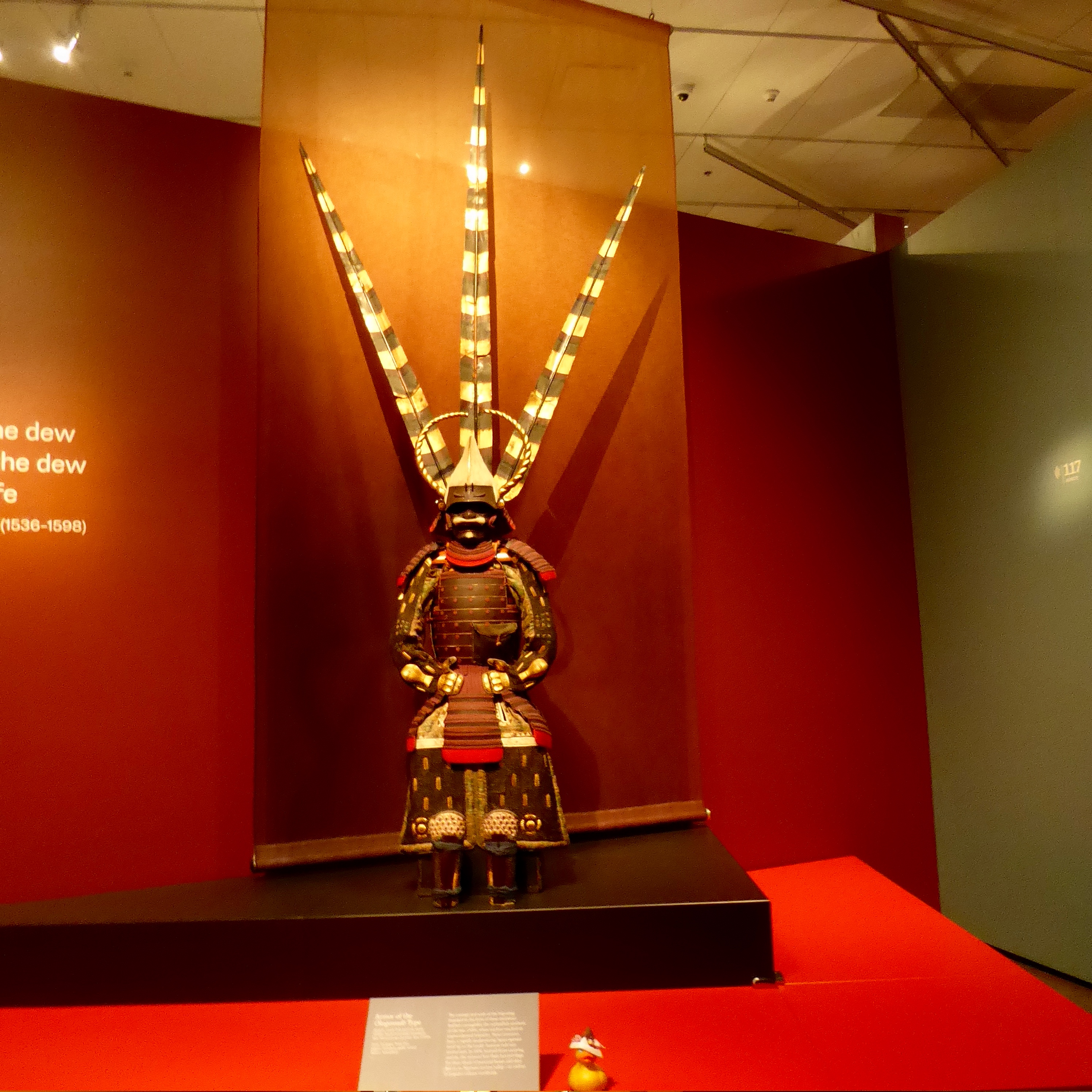
The docent near the panel is my new friend.  You will notice I am in front of the armor and I am wearing a samurai hat.

Armor

Armor

My new friend made it for me.   I like it!   This armor is from the early 1600’s

Fancy armor

Fancy armor

Made of iron, lacquer, bear fur, paper, bamboo, gold, wood, fabric and horsehair, this is very fancy.   My humans and I really liked this exhibit.   Since it is a special exhibit, it will only be at the Denver Art Museum until June 5, 2016.   If you visit this exhibit, you will like it.   There is so much to learn and so much to see.   Of course, I could not show you everything.   When you enter the exhibit, you receive an audio guide that will explain various displays to you.   We really like the audio guides that we use for special exhibits here.   We hope to see you there soon.

An Ice Cave in New Mexico with Zeb, Soapy Smith and JB Duck

We are going inside a 10,000 year old lava tube to see an ice cave.   Wow!   We have never done anything like this.   Grants, New Mexico is a few miles south of I-40, and home to the Ice Cave and Bandera Volcano.

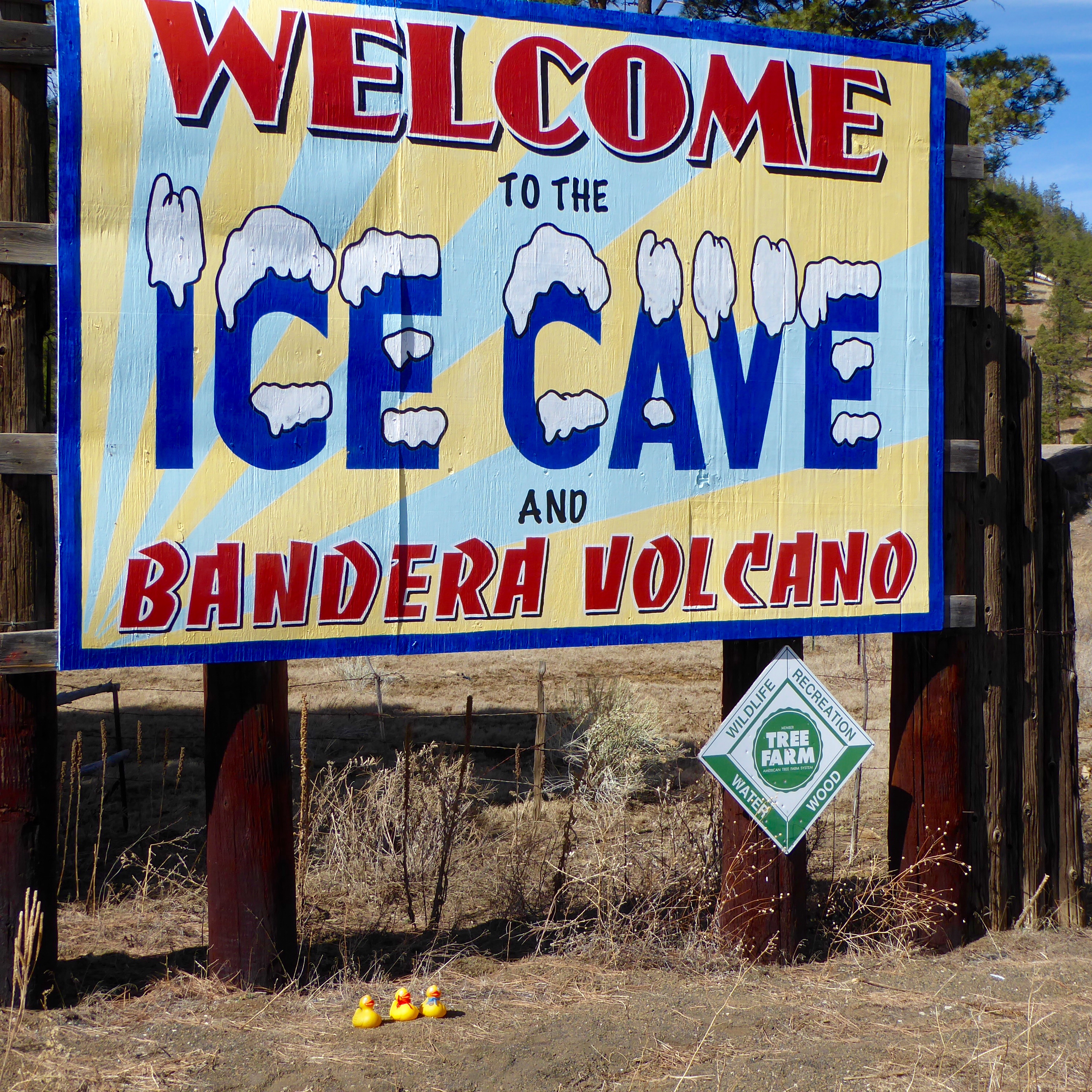
Here we are at the entrance to the ice cave and Bandera volcano.

Here we are at the entrance to the ice cave and Bandera volcano.

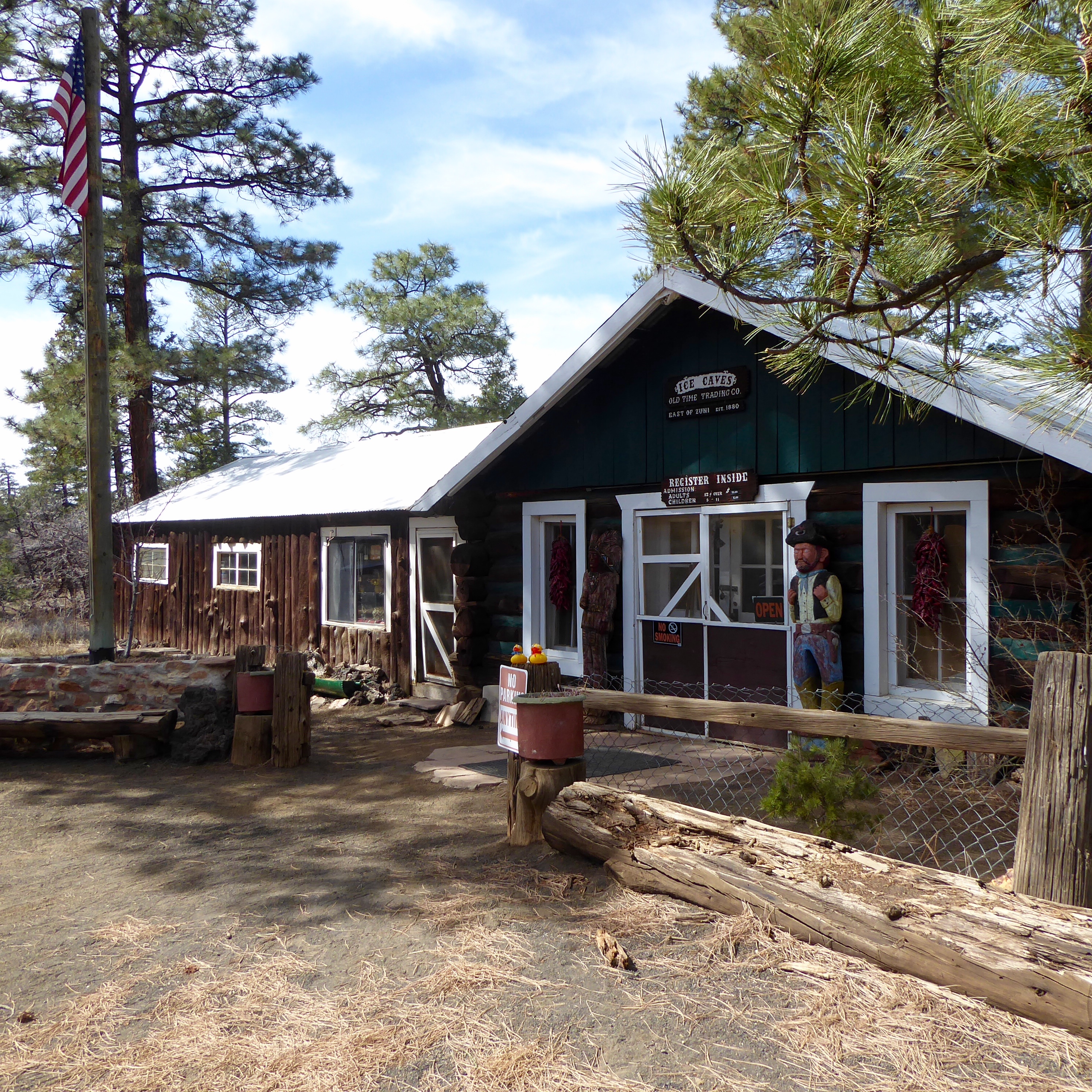
We are in the West Central Zuni Mountain Range, on the continental divide.   First we stop at the Ice Cave Trading Post.

The Ice Cave Trading Post

The Ice Cave Trading Post

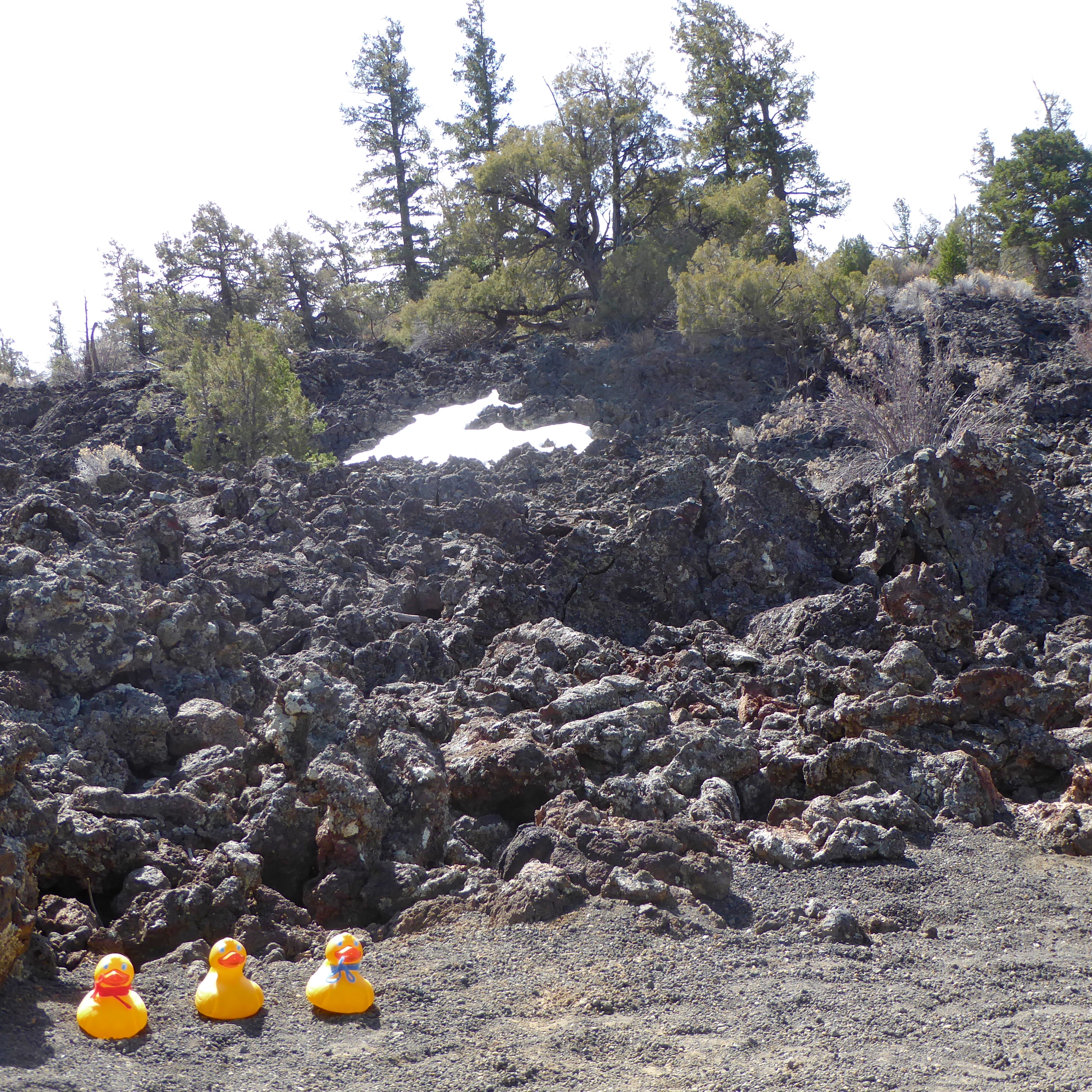
This is a combination museum, gift shop, information station and where we pay and register to visit the ice cave.   The artifacts and ancient pottery on display are 800-1,200 year old.   This is privately owned property, so we are happy they let tourists visit the ice cave.   The Bandera Volcano erupted about 10,000 years ago, creating lava tubes, leaving volcanic rock and making conditions right for the ice cave.   We are following an ancient lava trail to the ice cave.   This lava rock was tossed all over the ground.

Scattered lava rocks

Scattered lava rocks

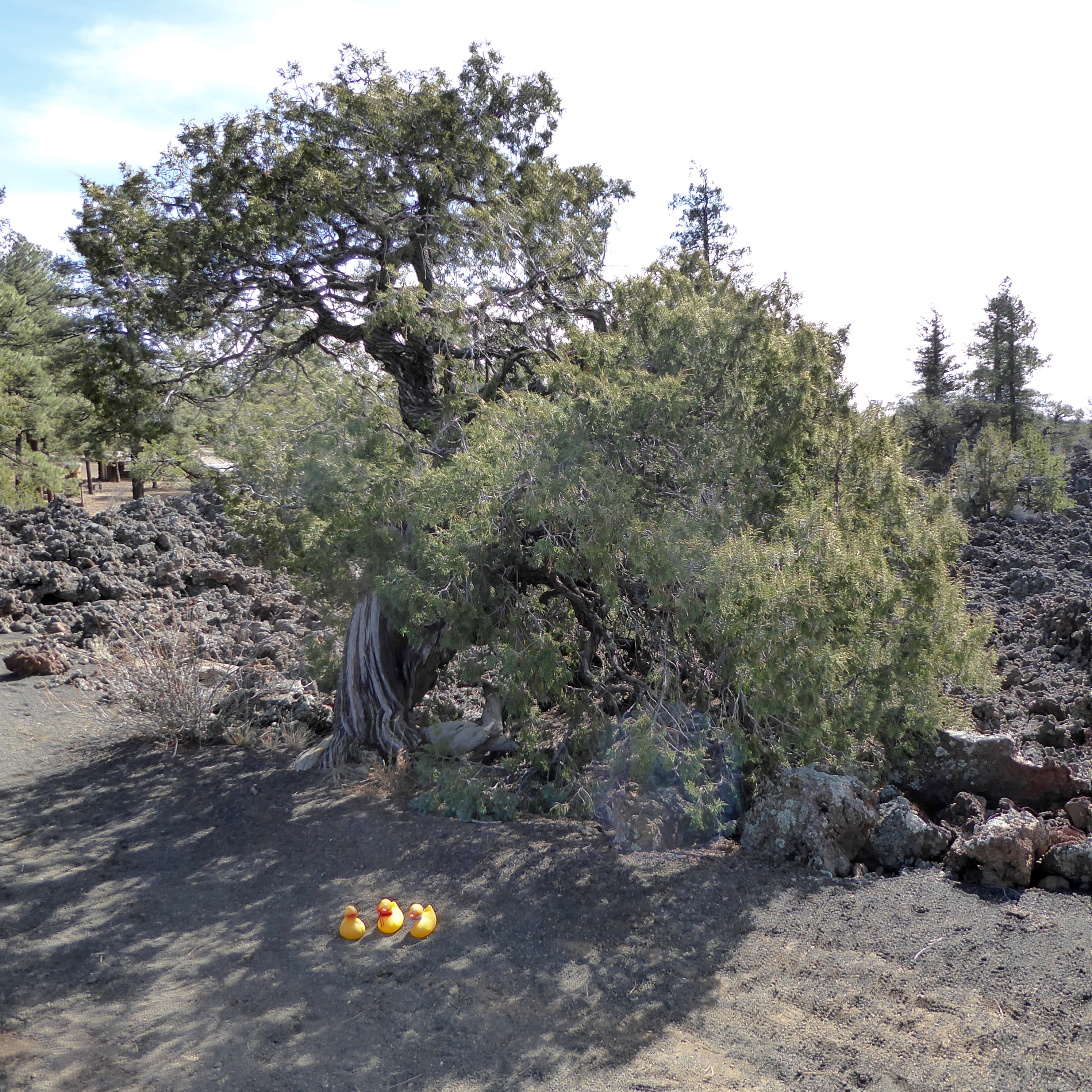
Along the way, we are enthralled by these ancient twisted trees.

Ancient twisted tree

Ancient twisted tree

This hole in the ground, insulated by lava rock, served as a natural underground refrigerator, before electricity was available here.

Natural underground refrigerator

Natural underground refrigerator

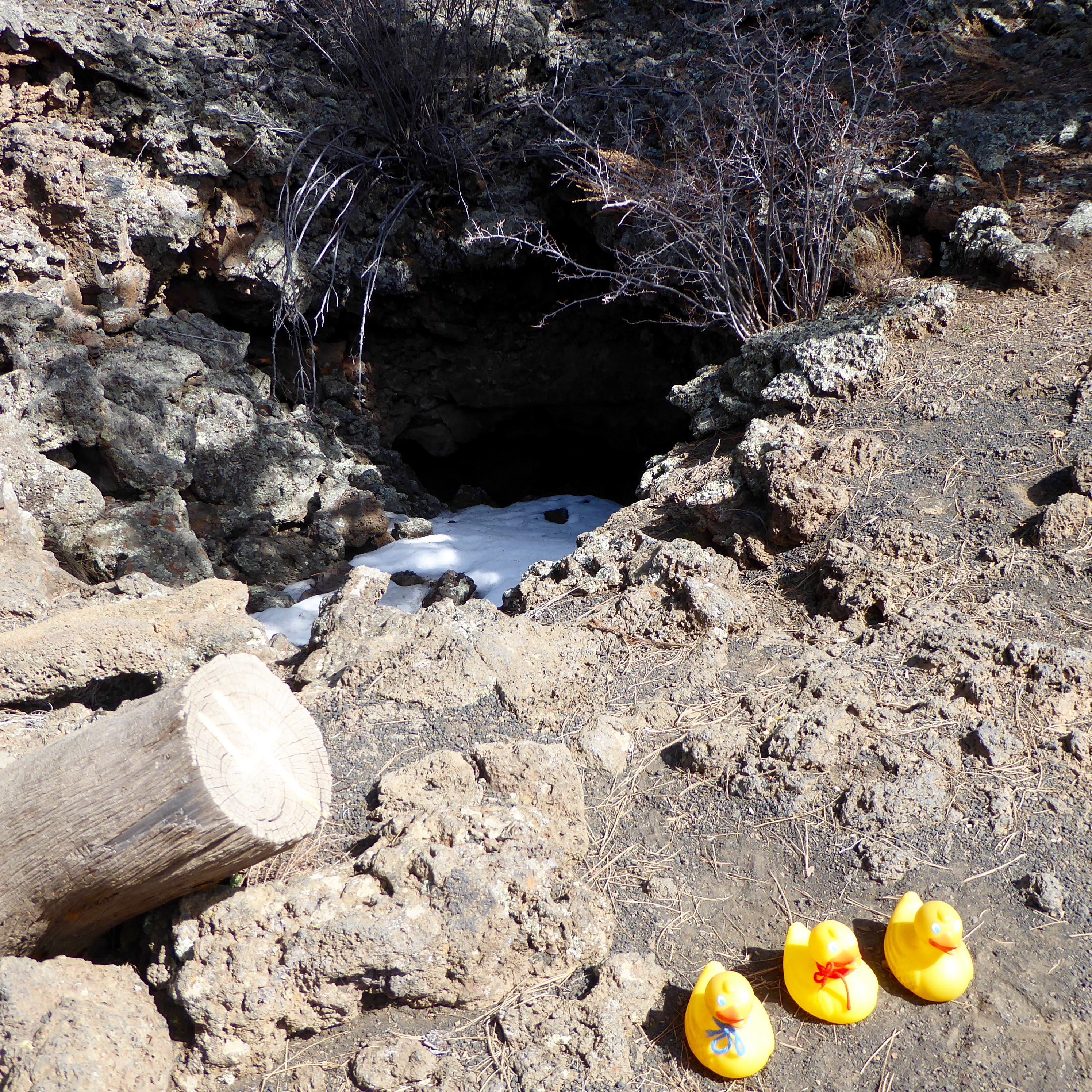
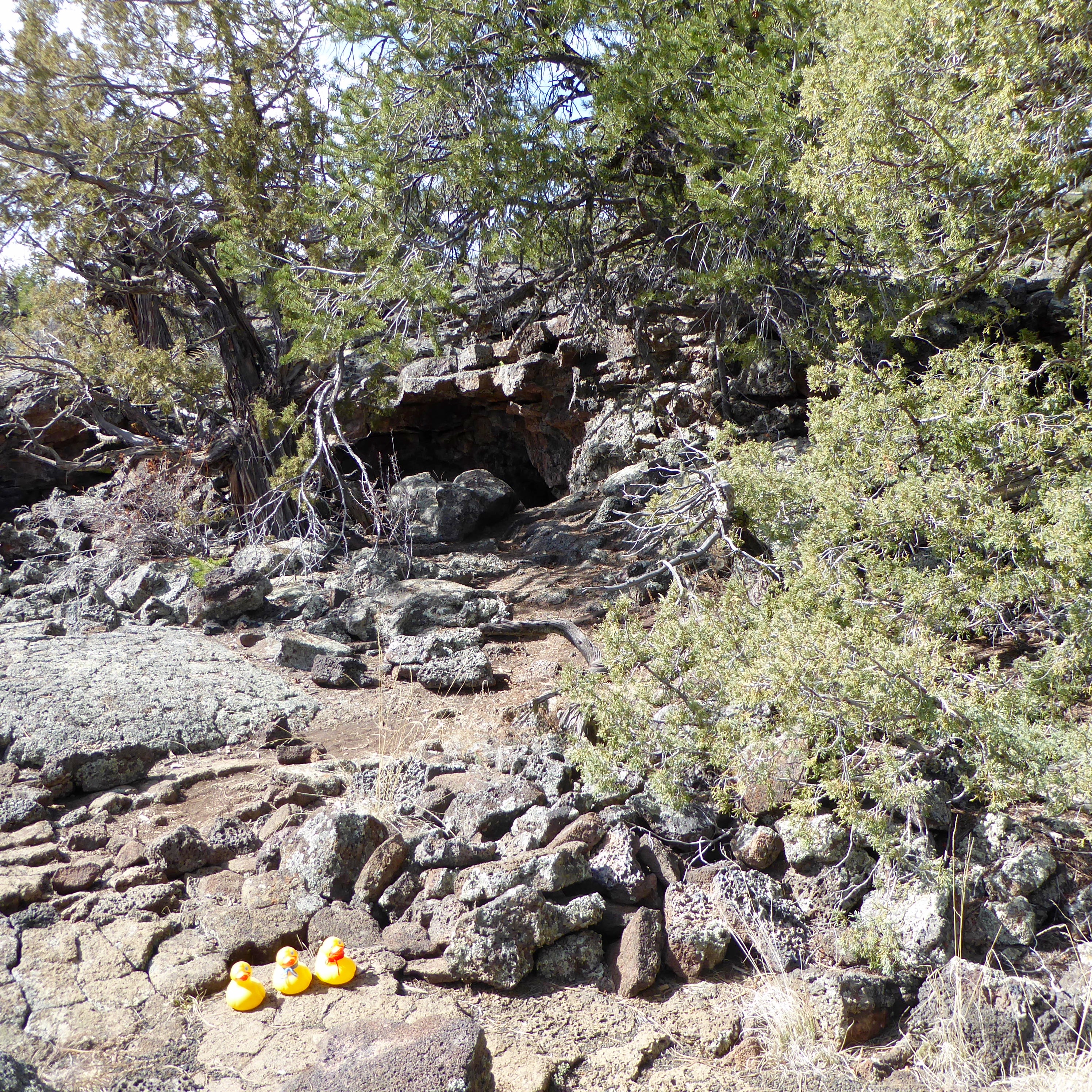
The native American Indians occupied this land for years.   This cave entrance in the back of the photo, is really an entrance to a lava tube.

Native American Indians used the lava tube like a cave.

Native American Indians used the lava tube like a cave.

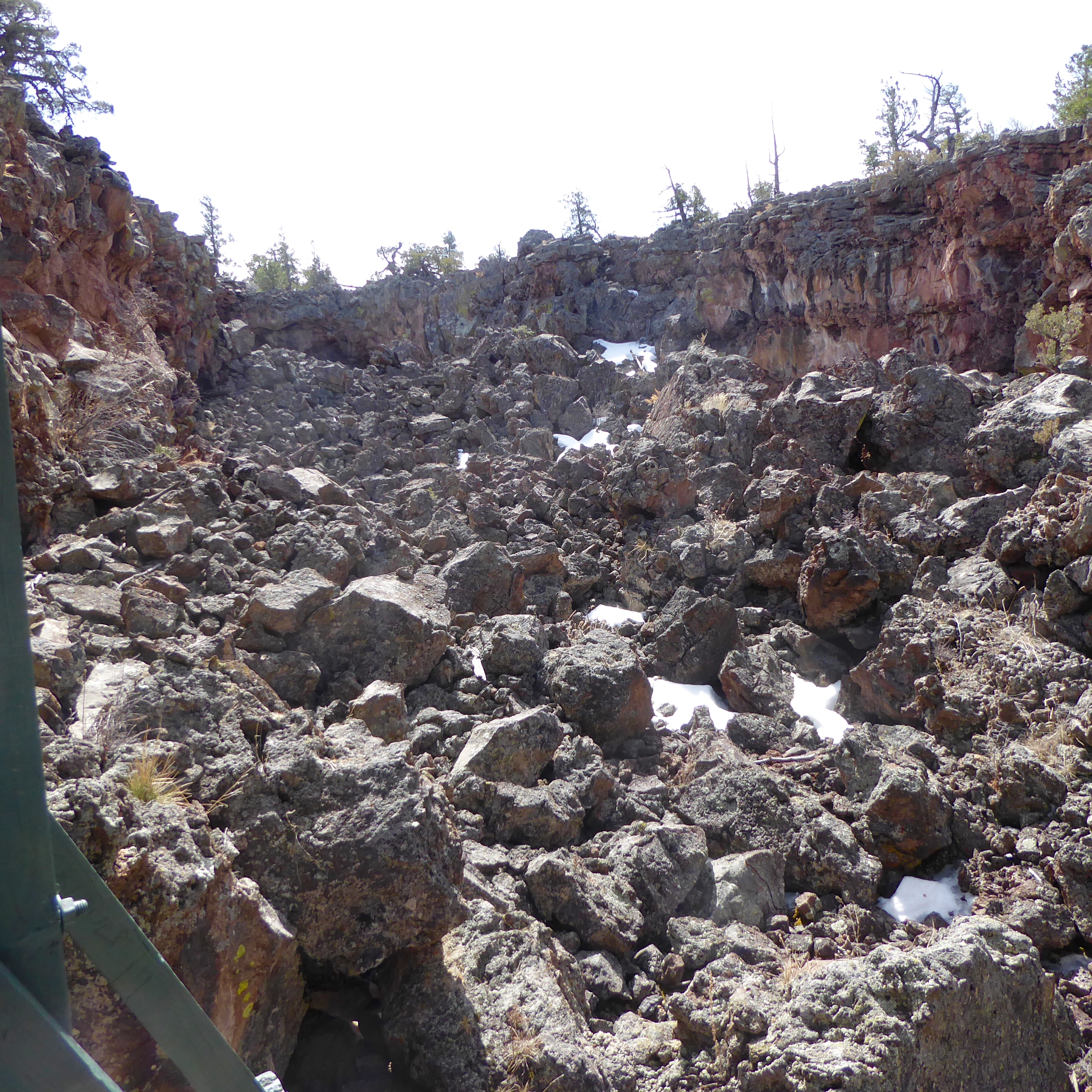
Continuing along the lava trail, we go down 3 flights of open stairs for a total of 69 steps.   We are going into the partially destroyed lava tube.

Lave tube with top collapsed. Stair railing on the left

Lave tube with top collapsed. Stair railing on the left

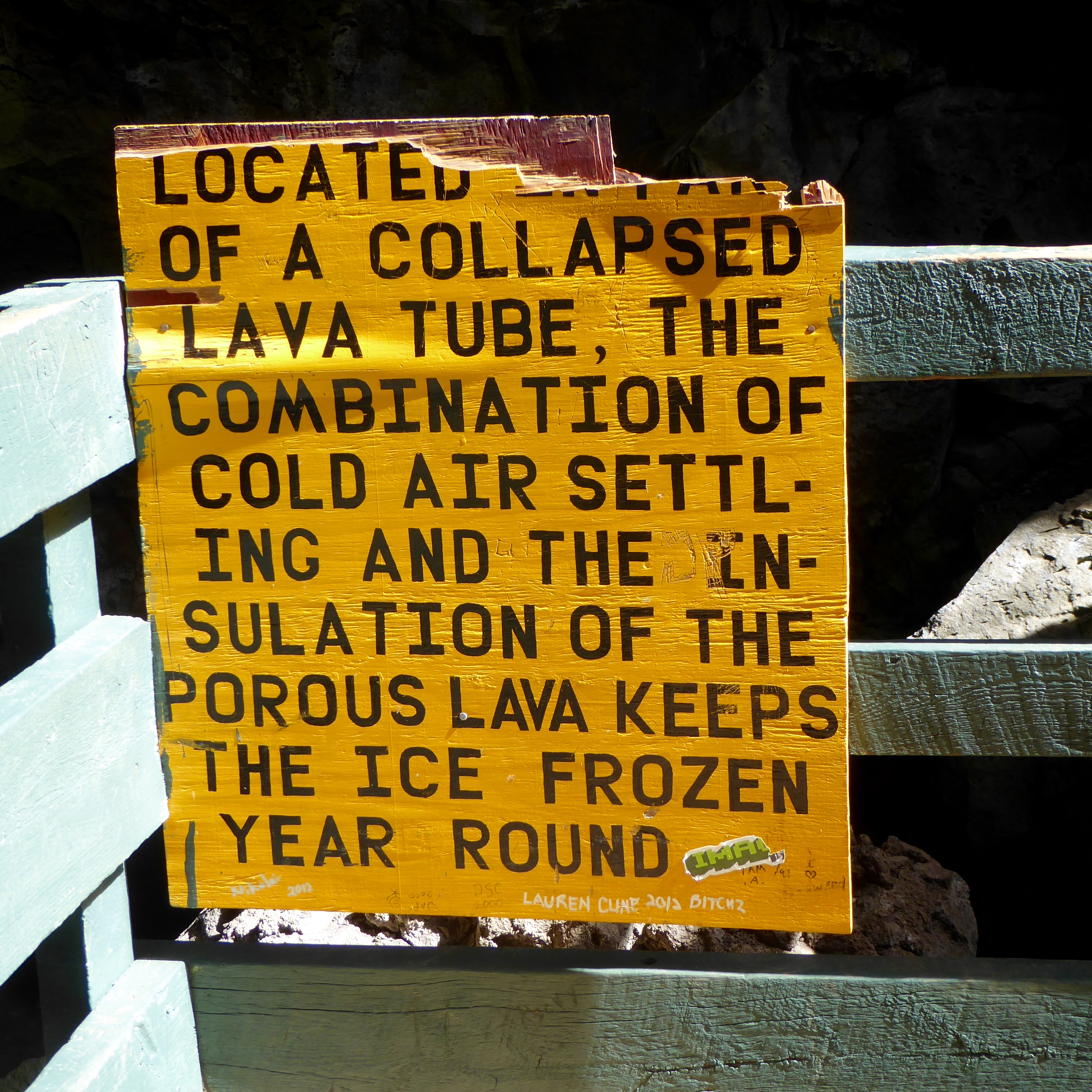
We will never be completely underground and in the dark, as the top of the lava tube is partially collapsed.   We are almost at the ice cave.   This sign explains what we are seeing.   The temperature on the ice never exceeds 31 degrees F.

Why does it stay frozen?

Why does it stay frozen?

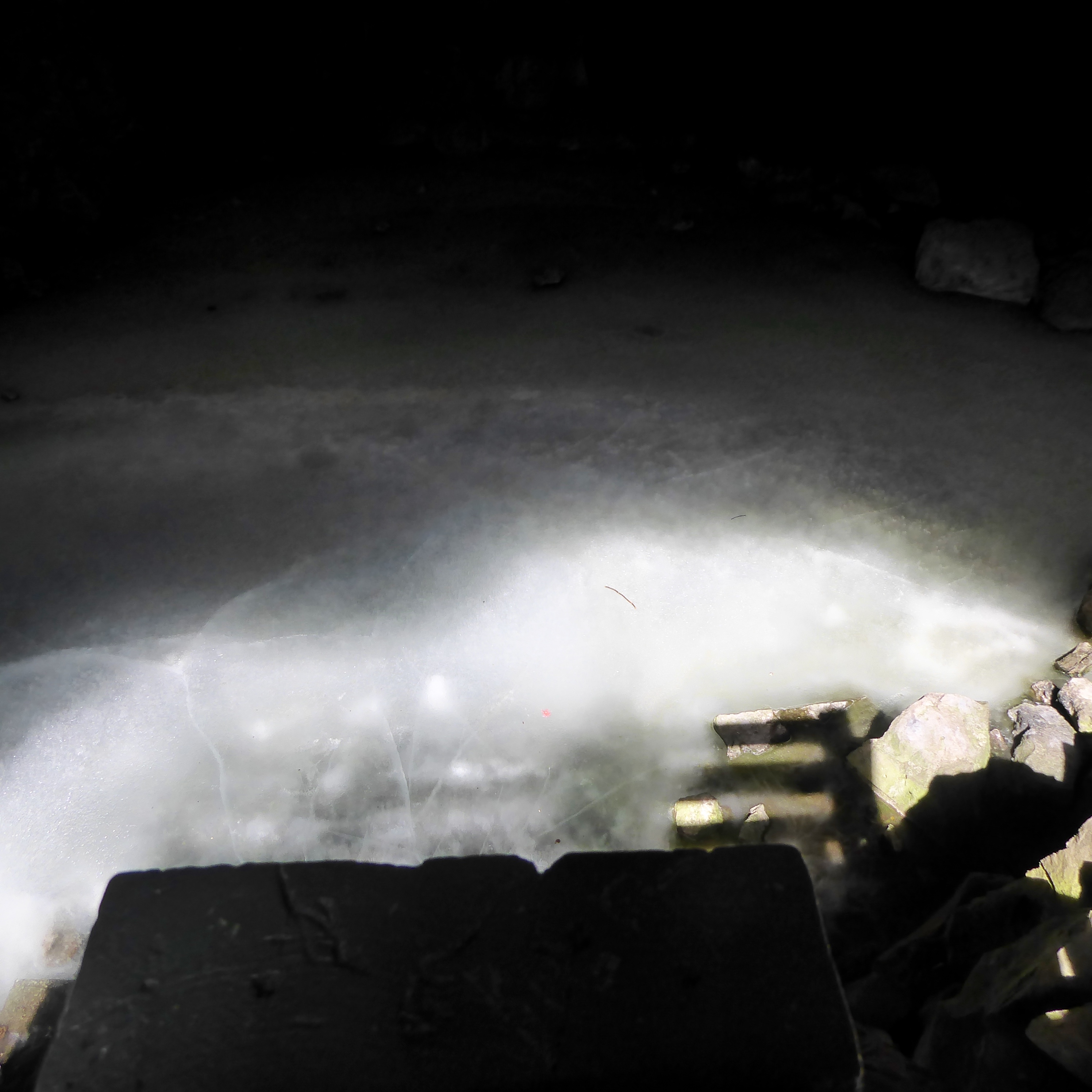
And it gets hot here in the New Mexico desert during the summer.   This is the ice of the ice cave.

Ice is very old and never gets above freezing.

Ice is very old and never gets above freezing.

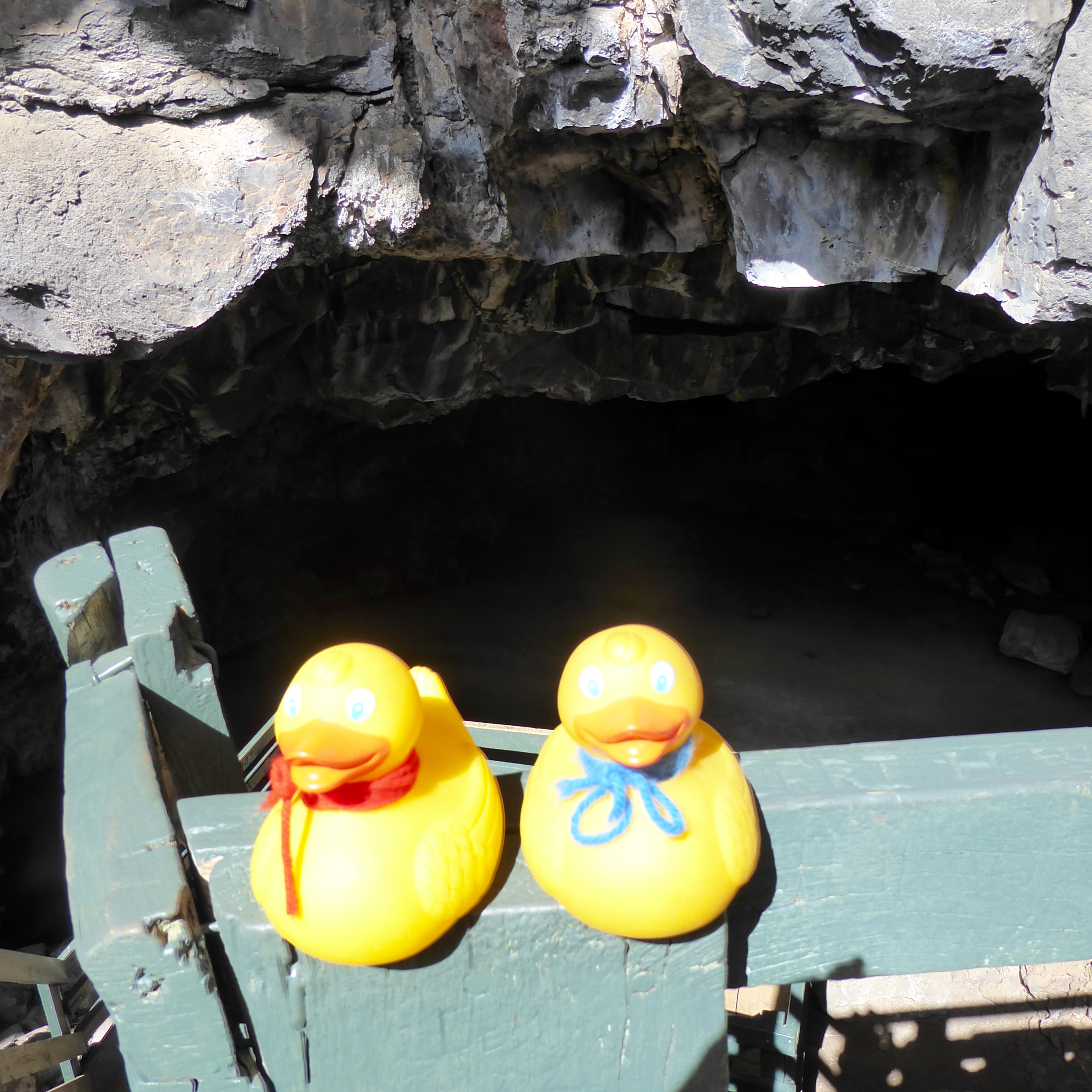
We are here, but mom could not get good photos of us and the ice.

Soapy and JB Duck at the Ice Cave

Soapy and JB Duck at the Ice Cave

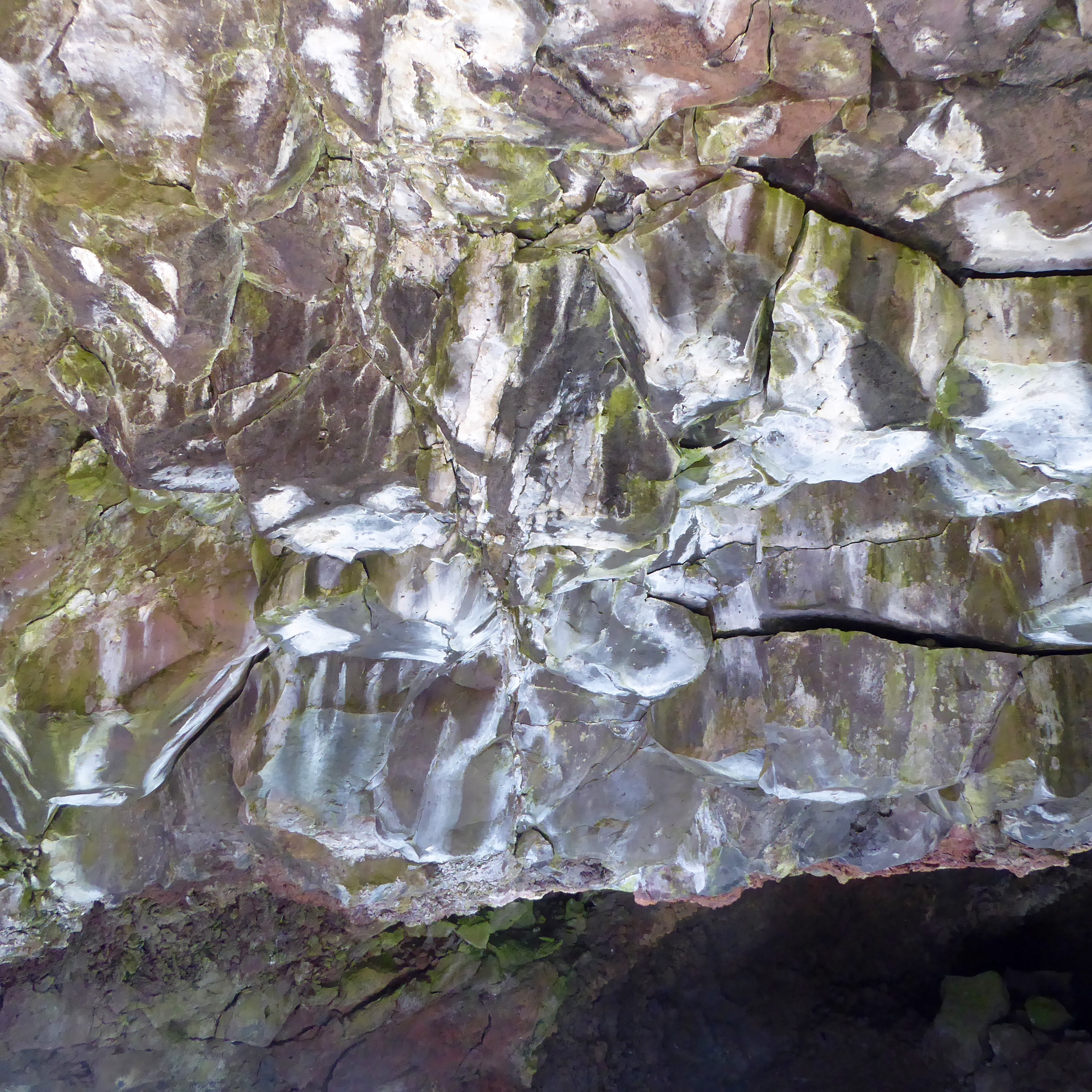
The ice shows blue and green colors, reflected from the sun.

Colors reflect on ice and on rocks

Colors reflect on ice and on rocks

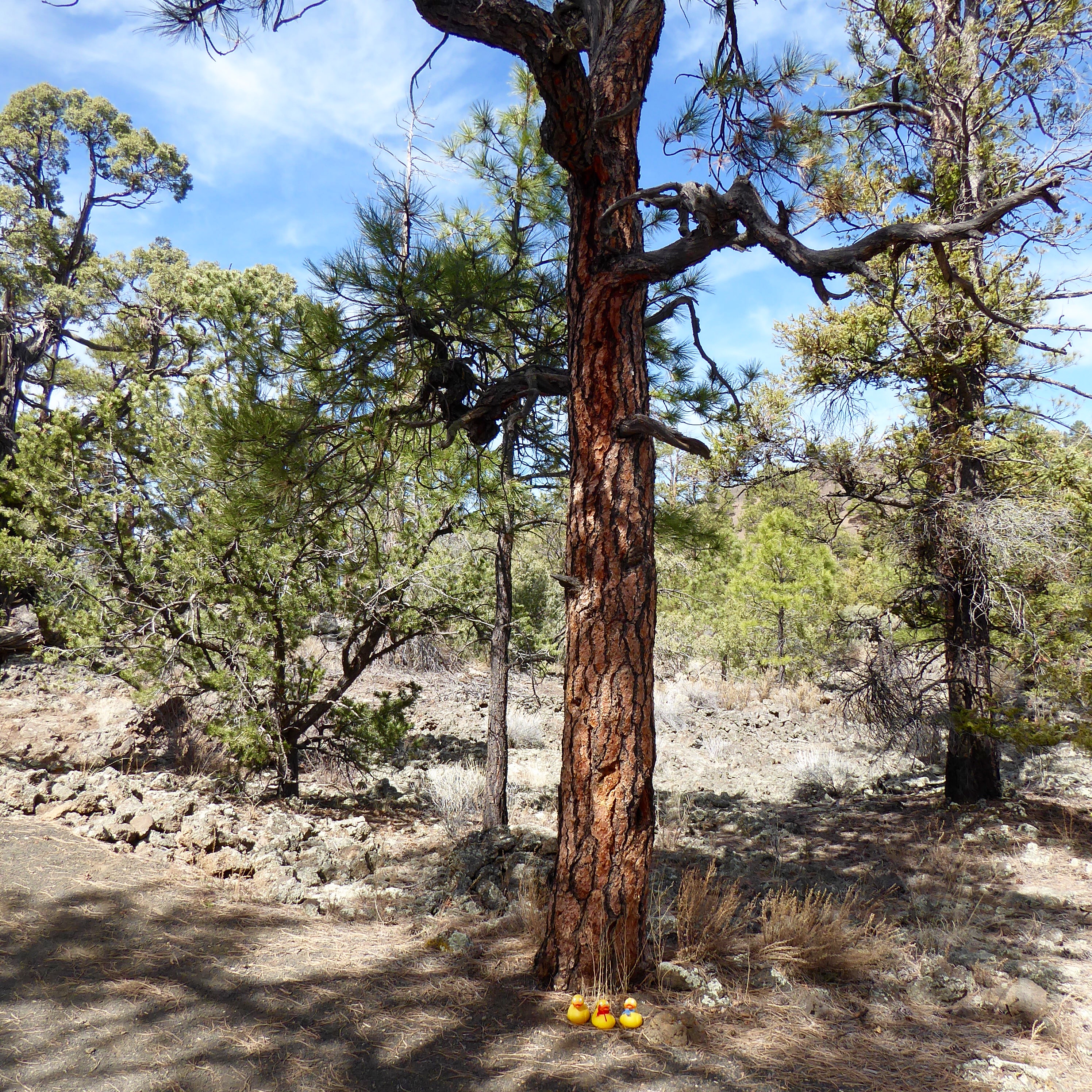
This is the first time we were in a lava tube and this is our first ice cave.   Leaving the ice cave, we appreciated the red bark on these trees.

Love the red bark on this tree

Love the red bark on this tree

We hope you will visit an ice cave soon.   It is really interesting to see.   When you come here, you can also walk to the top of the volcano.   It was very windy when we were there and we have seen volcanos, so we did not walk to the top this time.   Maybe next time if it is not so windy.   This is the last stop on our desert road trip.   We really enjoyed all the places we visited and the things we saw.   We hope  you also enjoyed seeing this part of the United States with us.

Happy Easter 2016

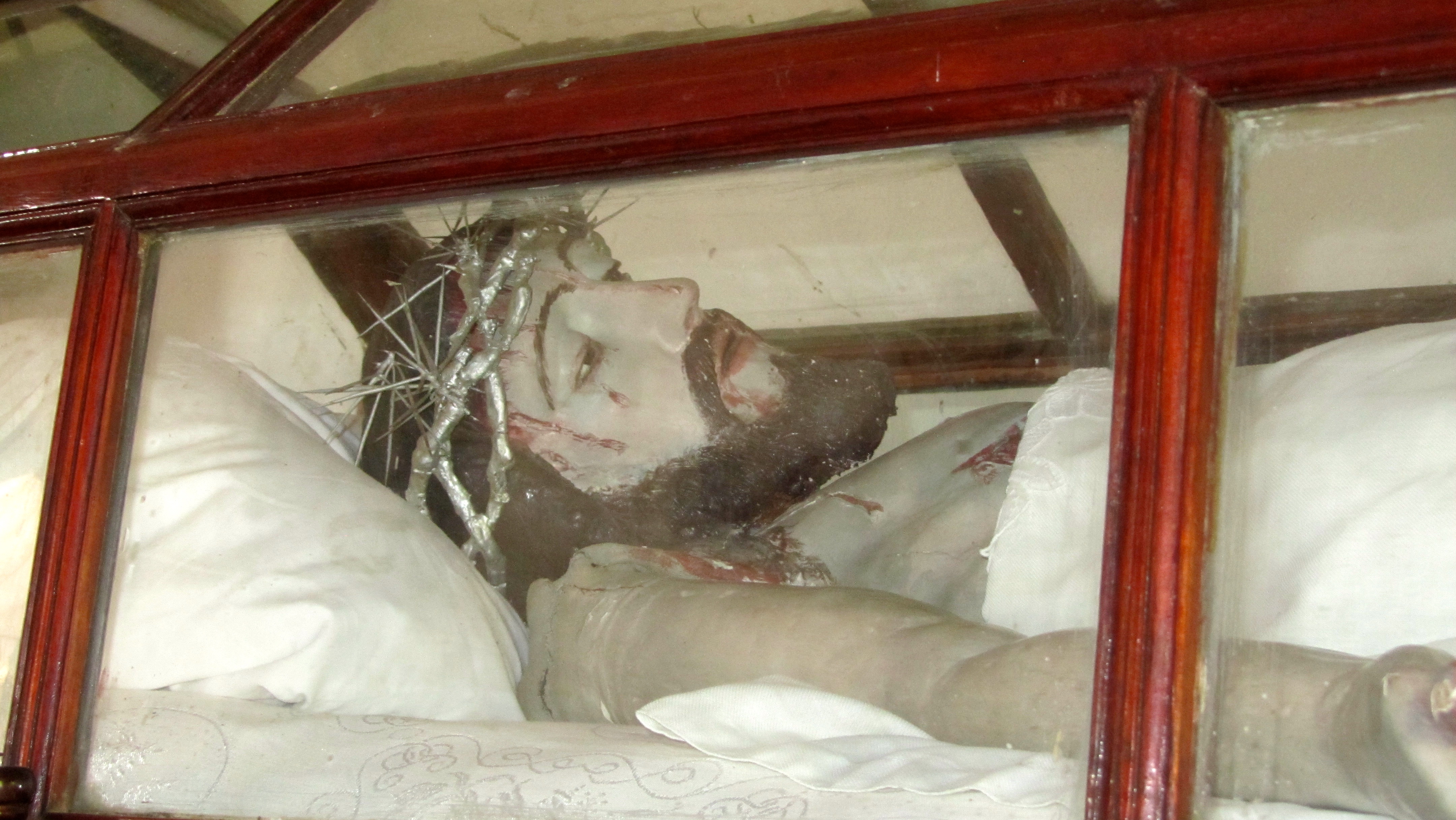
Today is Easter Sunday.   The reason for today is the Resurrection of Jesus.

The Resurrection

The Resurrection

Easter is a very serious holiday, but we also have a lot of fun with it also.  The Easter Bunny comes to our houses and brings us colored Easter eggs, soft toys in the form of bunnies, ducks and chickens,  and every Easter basket also includes some of our favorite candy.

Easter basket with toys and candy

Easter basket with toys and candy

Often the Easter Bunny brings other favorite treats for our enjoyment.   Flowers are a popular Easter gift also.   We, the Colorado Traveling Ducks, wish you all a very Happy Easter.

The Wind Blew and the Snow Came and Kept Coming

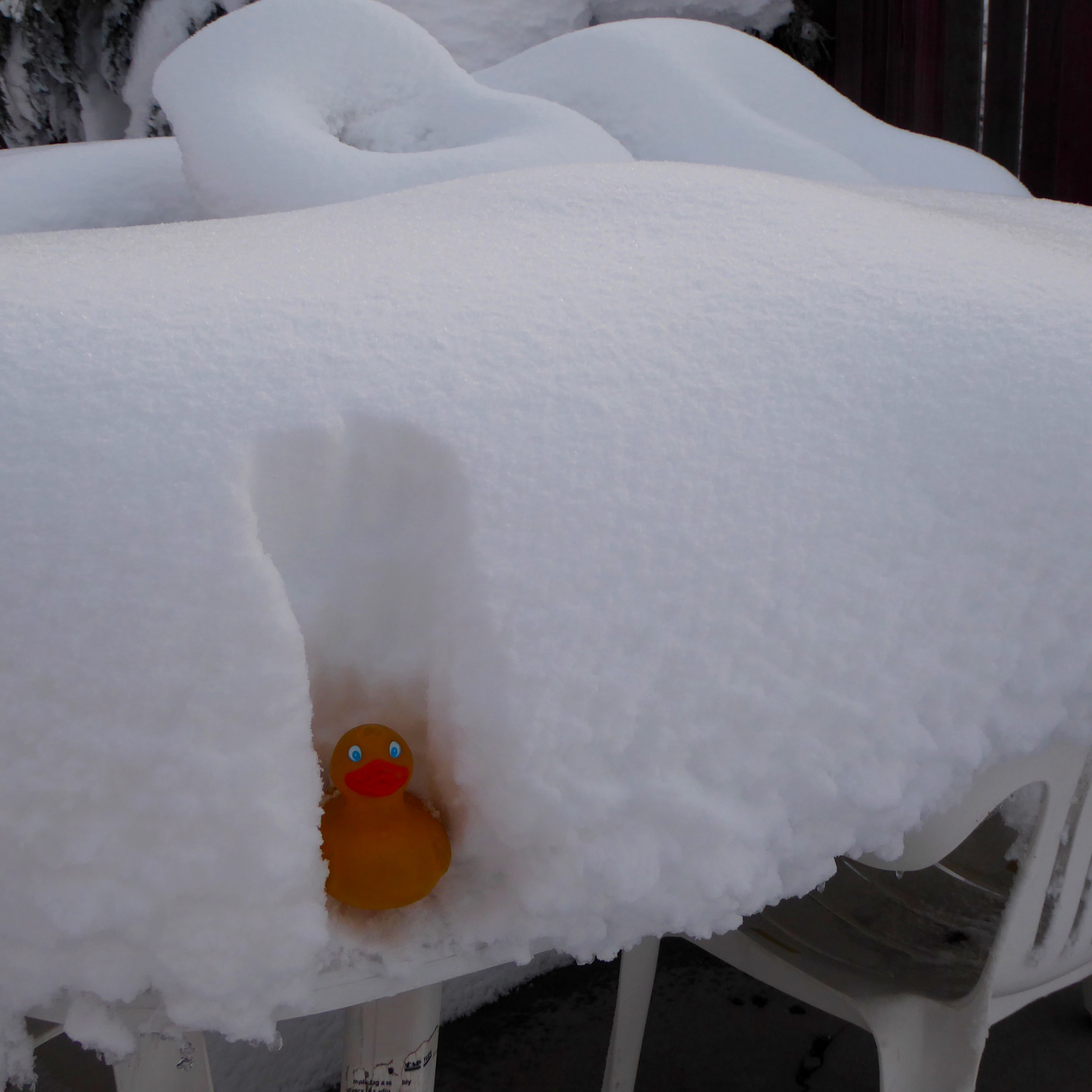
Snow and wind started while it was still dark.   When we woke up we could not see out our north windows.   The wet snow was plastered on the glass, on fences, on walls, and on trees.   This was Denver, Wednesday morning.   What happened?   Monday and Tuesday it was 70 degrees here and sunny.   Snow and wind dominated Denver until about 5:00 p.m.   During the day we stayed inside.   The snow flakes drifted in the air, then swirled in the wind, twisted in all directions and then floated to the ground.   The visibility was very limited.   But looking through the patio windows was beautiful.   The world seemed so fresh, silent and clean.   Like we were isolated from the world.   And we were.   We could not leave Denver.   All our interstate highways were closed.   All our roads through the canyons were closed.   Many major city roads were closed.   Our city and county government offices were closed.   Our Denver International Airport was closed.   Yes, it really was quiet.   We stayed inside; baked chocolate chip cookies.   Then, we ate cookies and drank lots of herbal tea.   We like snow days, but this was a lot of snow.   When the snow stopped, we had two feet of beautiful heavy wet snow on our backyard table.   We did not go outside until Thursday morning.   The wet snow had been compressing since it stopped falling.    I, Zeb the Duck, am surrounded by so much snow here.

In the snow on my backyard table

In the snow on my backyard table

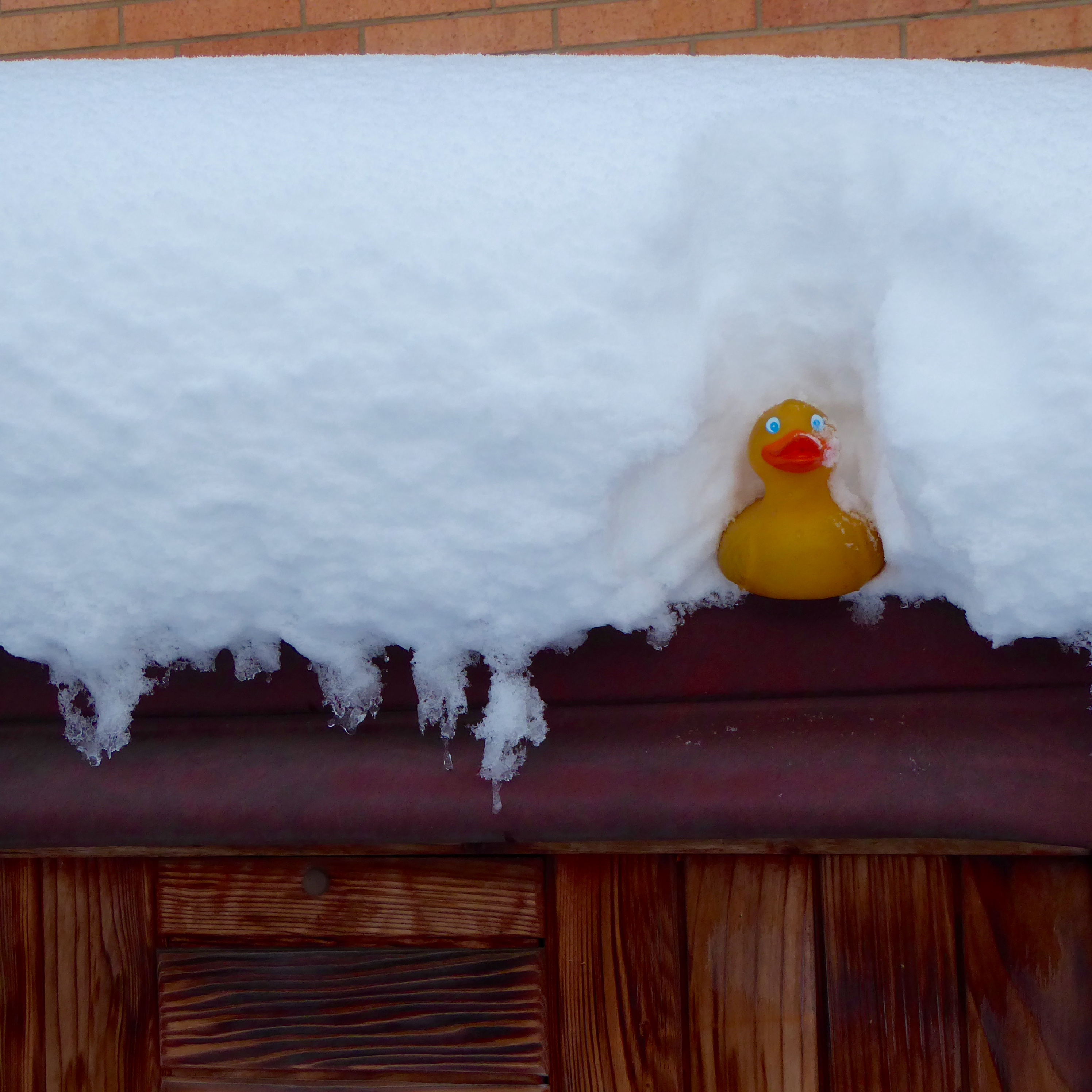
Even the hot tub, which is against the house, has a lot of snow.

Hot tub cover

Hot tub cover

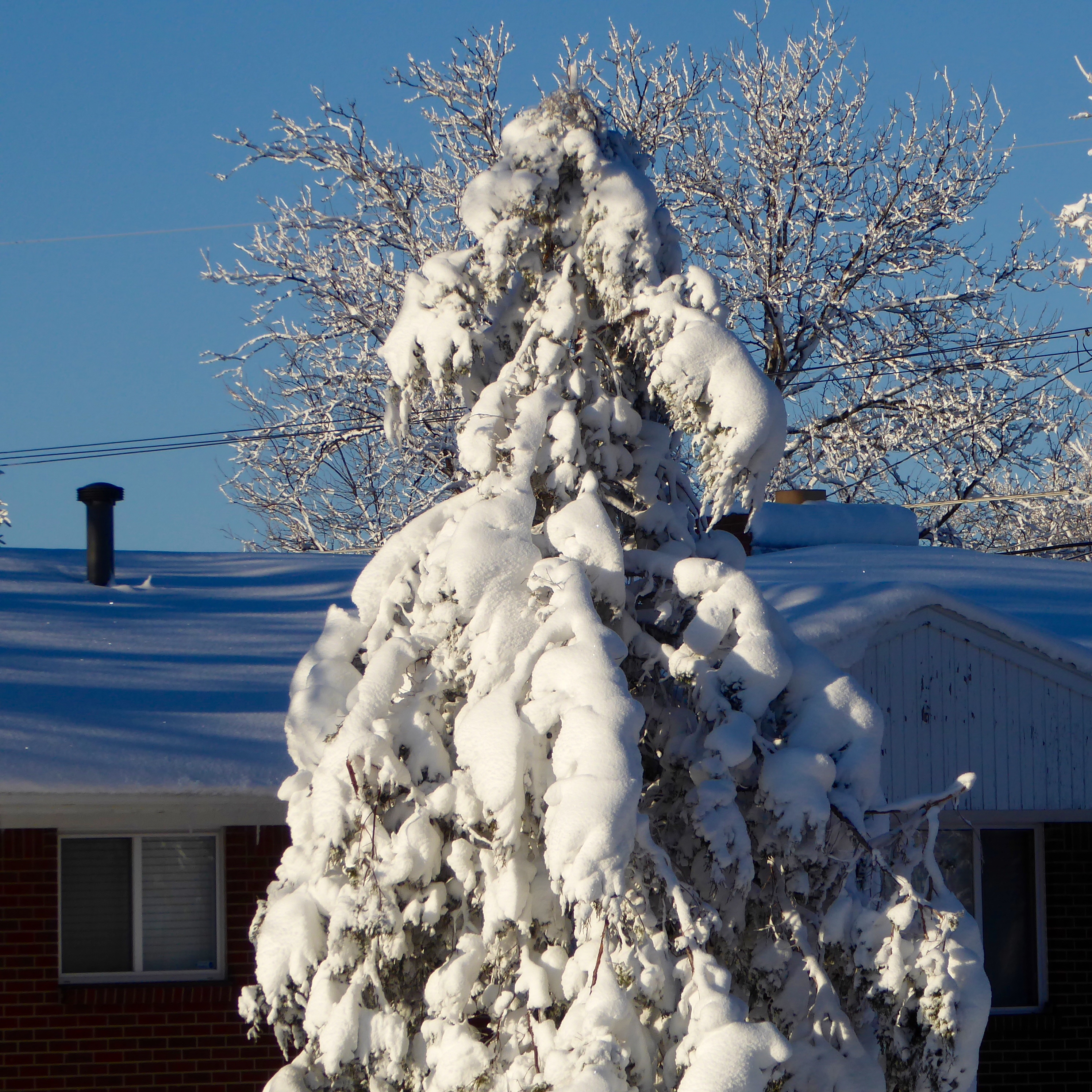
The wet snow clung to the trees.   Our neighbor’s tree if fine, but many trees broke.

Tree blanketed in wet snow

Tree blanketed in wet snow

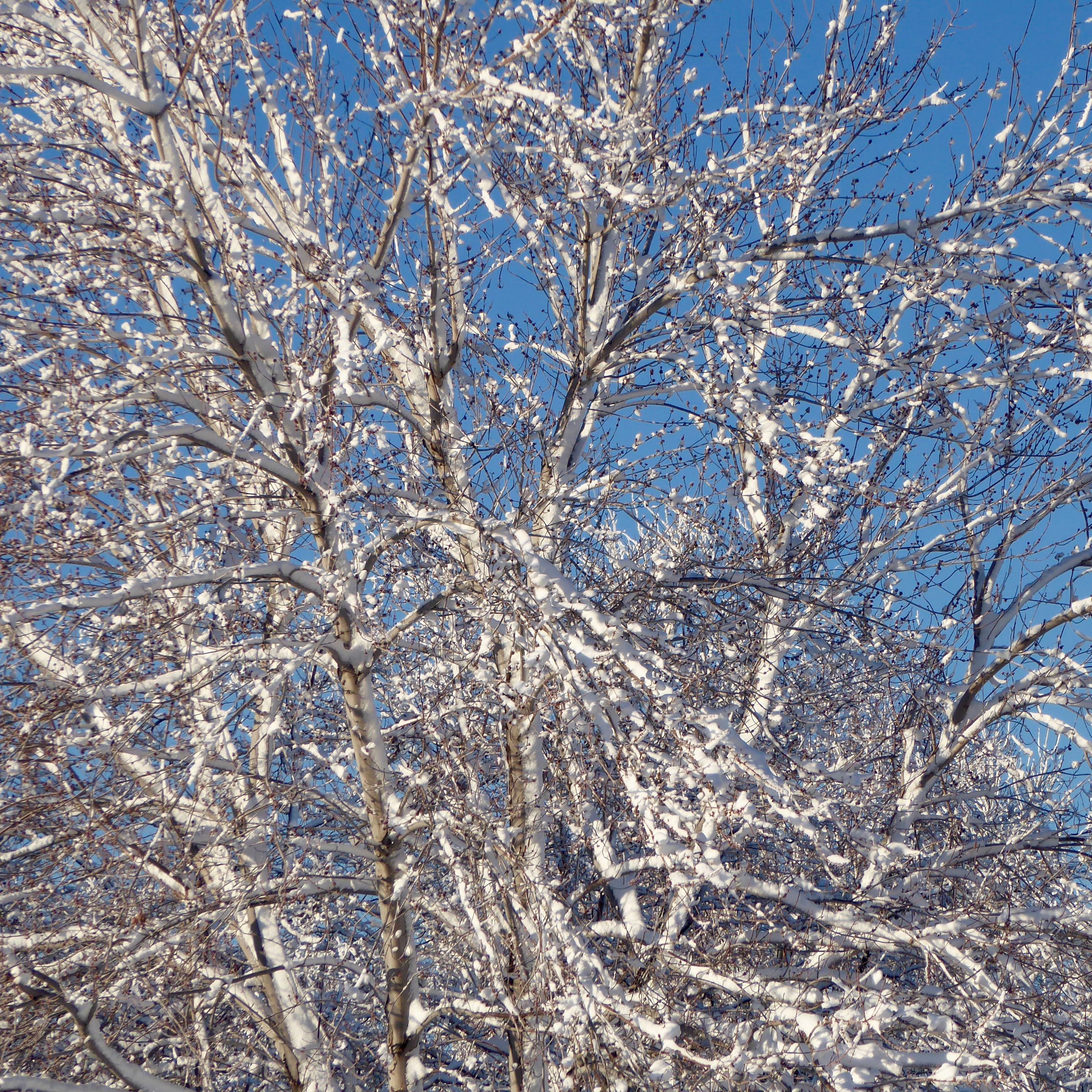
Many of them fell on power lines.   About 200,000 people were without power.     Many schools were still closed Thursday.   The roads were a mess.   Early melting and then freezing resulted in so many accidents.   Thousands of people were stranded in their vehicles.   Police and National Guard were trying to help them get home.   As our intense Colorado sun came out Thursday morning, the snow covered trees glistened.

Snow covered trees glisten in Colorado sun

Snow covered trees glisten in Colorado sun

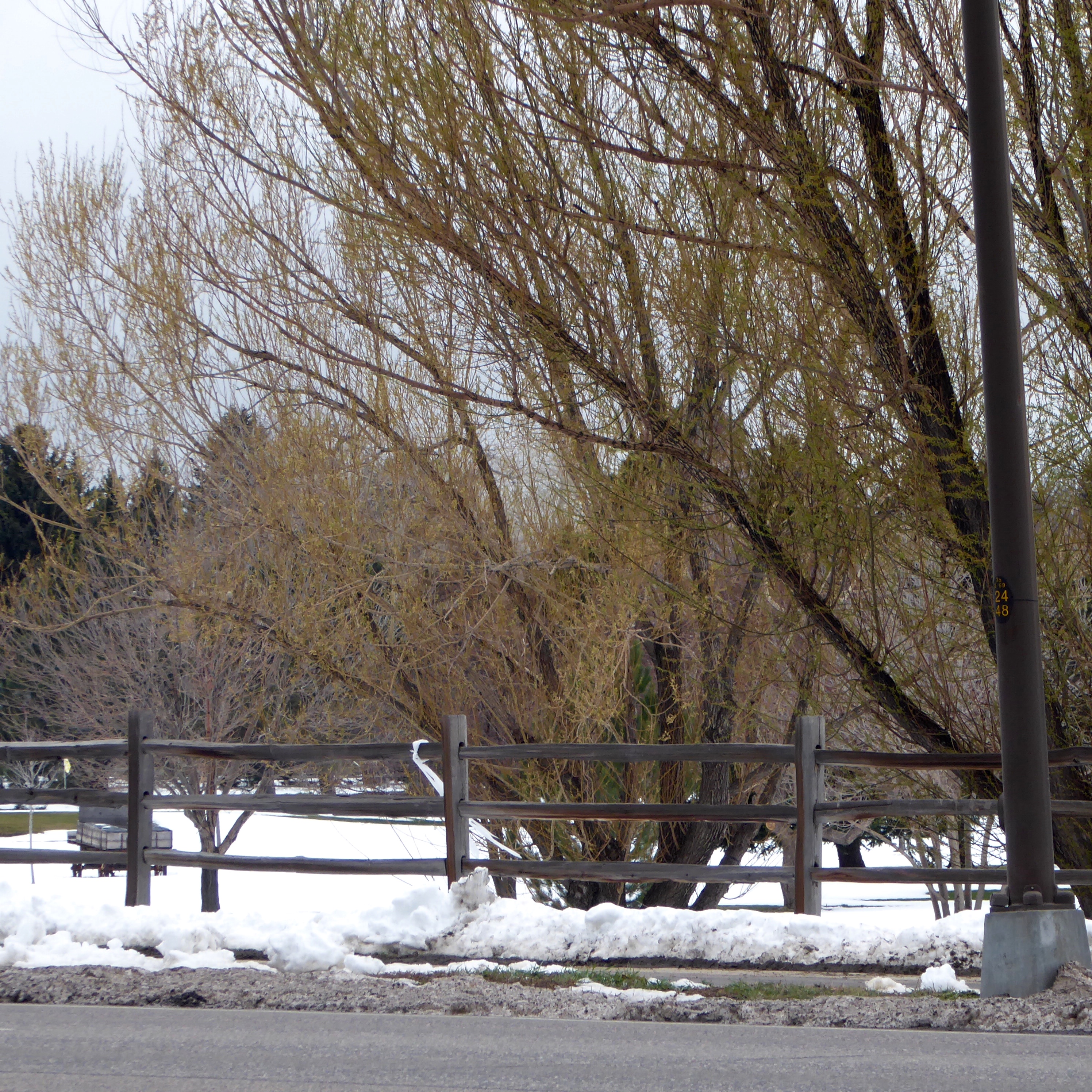
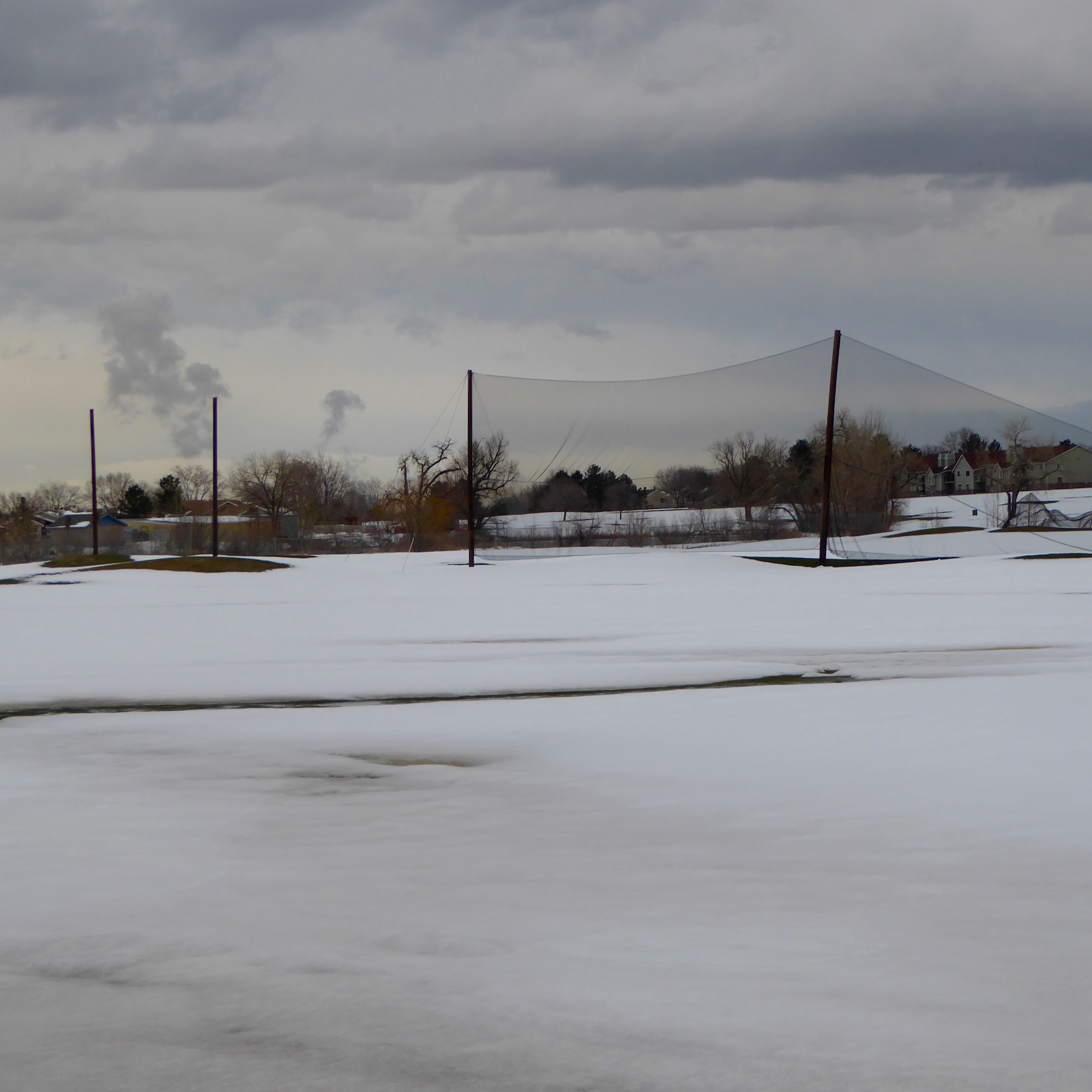
Then the snow began falling from the trees.   Our spring snow was fast, fierce, and of short duration.   Snow is so pretty and so quickly melted.   We hope everybody loves where they live.   We do.   Our intense sun is one of the reasons.   Remember, when we went to bed Wednesday night, there was 24 inches of new snow in our backyard.   These photos were taken last evening, Friday, less than 48 hours after the snow storm.
We see grass on this golf course

We see grass on this golf course

You can see patches of green grass on this golf course near our house.   This sports field also has patches of green grass.

Can you see more grass here?

Can you see more grass here?

Of course we have  lot of snow still on the ground, but a lot of melting occurred in less than 48 hours.   The sky is dark and we are expecting a couple more inches of snow Friday night and Saturday morning.   But, we do love our Colorado.