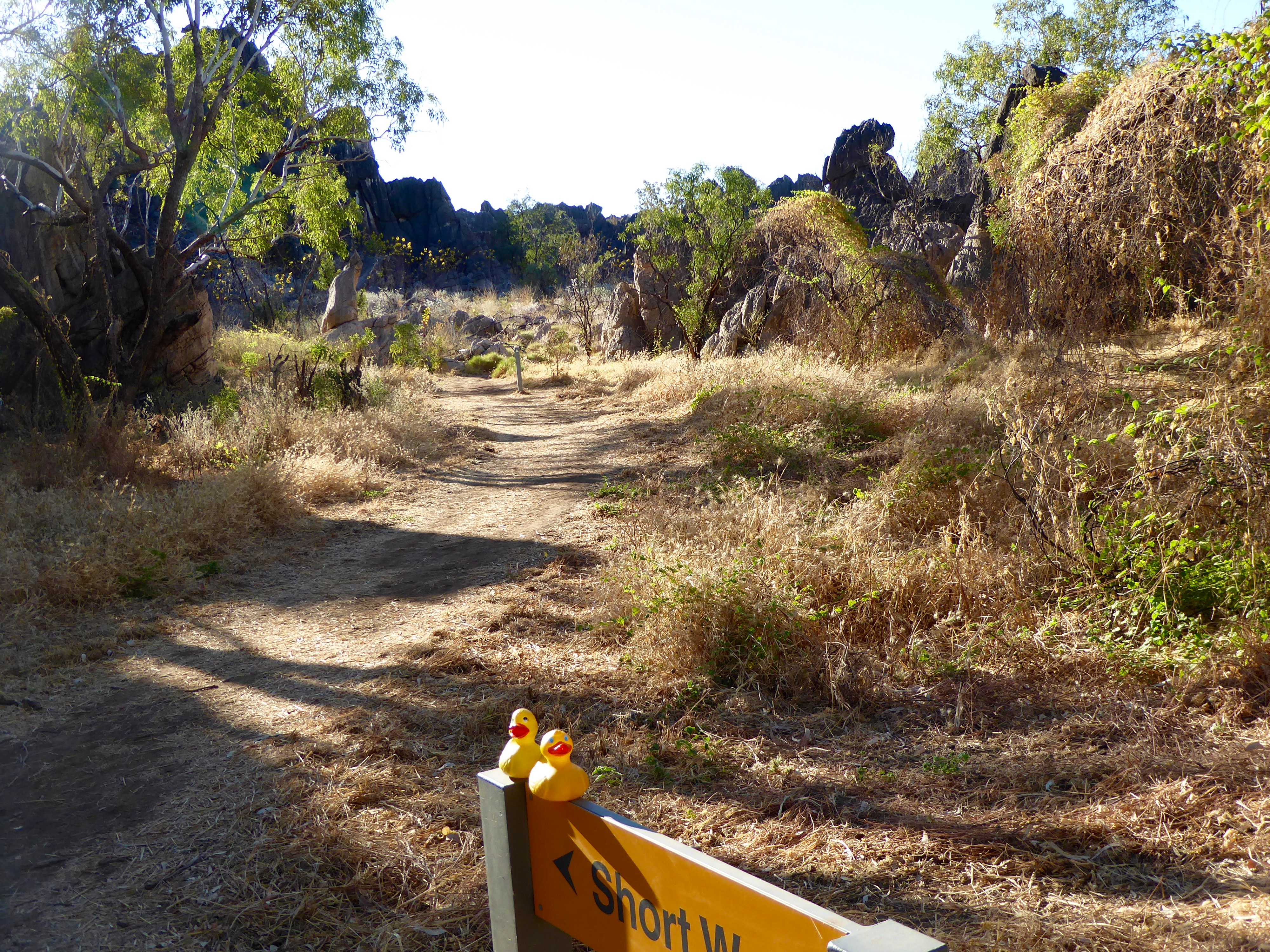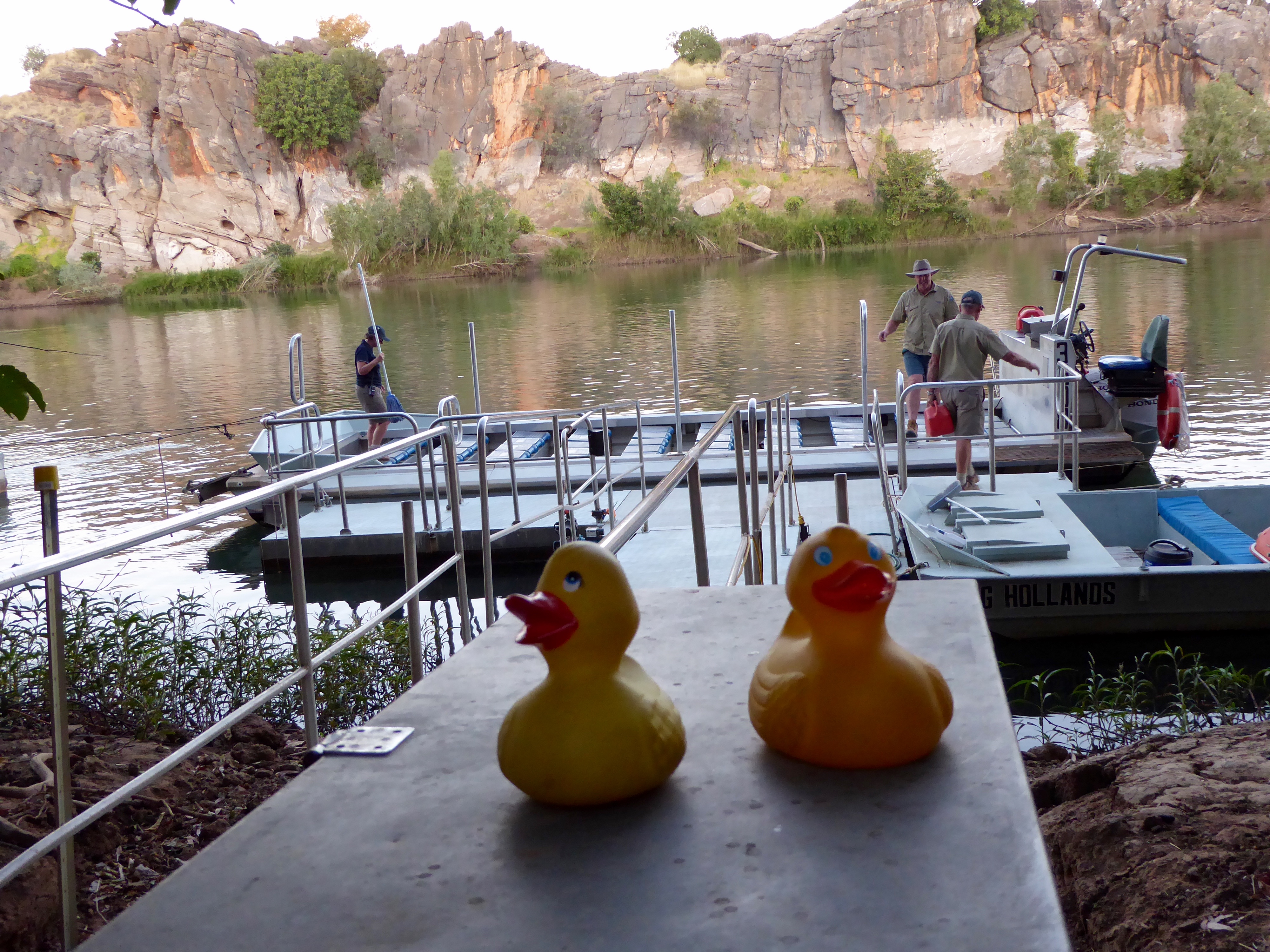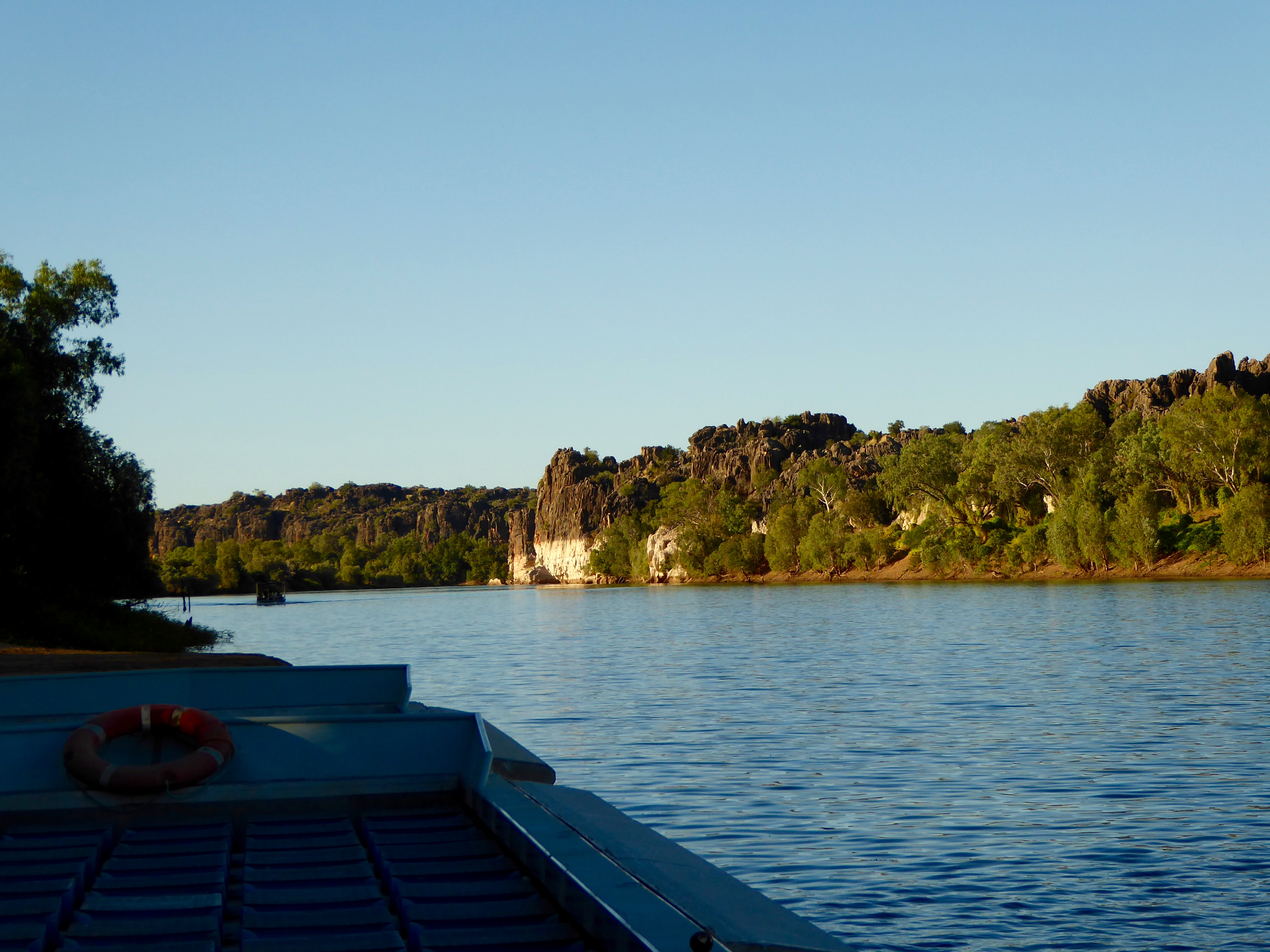
The Kimberley by Bus with Zeb and Eider Duck

There are two major roads through the Kimberley of Australia.   This part of Australia has little or no access during The Wet, or rainy season.   Flooding frequently closes the roads.   We drove to Derby earlier and took a couple day tour in the Kimberley, but we wanted to see more.   We took a Greyhound Bus from Broome, Western Australia, to Darwin, in the Northern Territory.
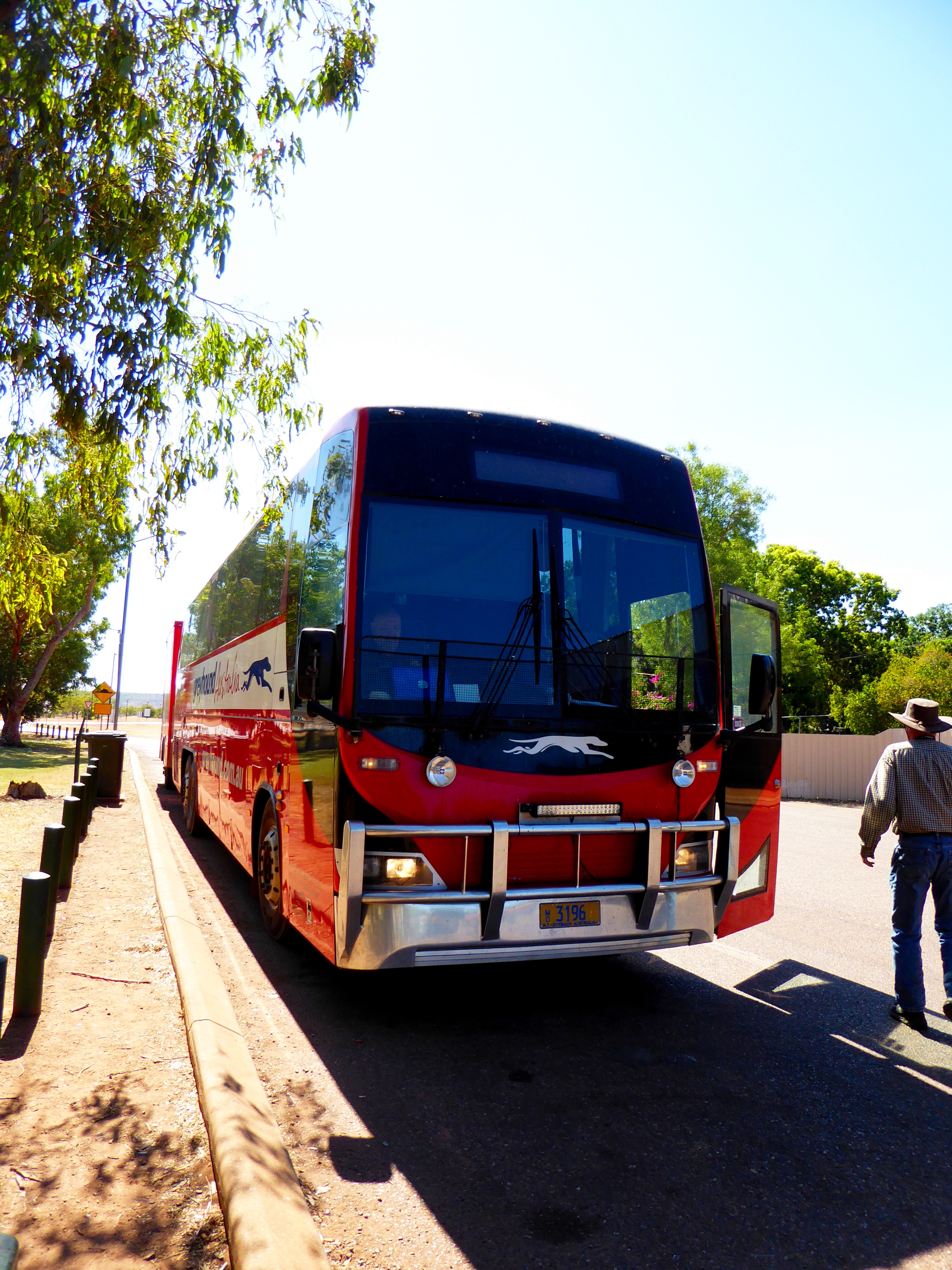
Grayhound Bus was great transportation. Large, clean windows and not crowded

Grayhound Bus was great transportation. Large, clean windows and not crowded

We also took bus tours to Nitmiluk National Park and to Kakadu National Park.   Today we will show you some of what we saw from the bus.   We already showed you Derby, and our Kimberley Wild Tour.   Soon we will show you parts of Nitmiluk National Park and also Kakadu National Park.   Through the Kimberley, we crossed several rivers.

Beautiful rivers

Beautiful rivers

We also stopped at the Ord River Roadhouse.
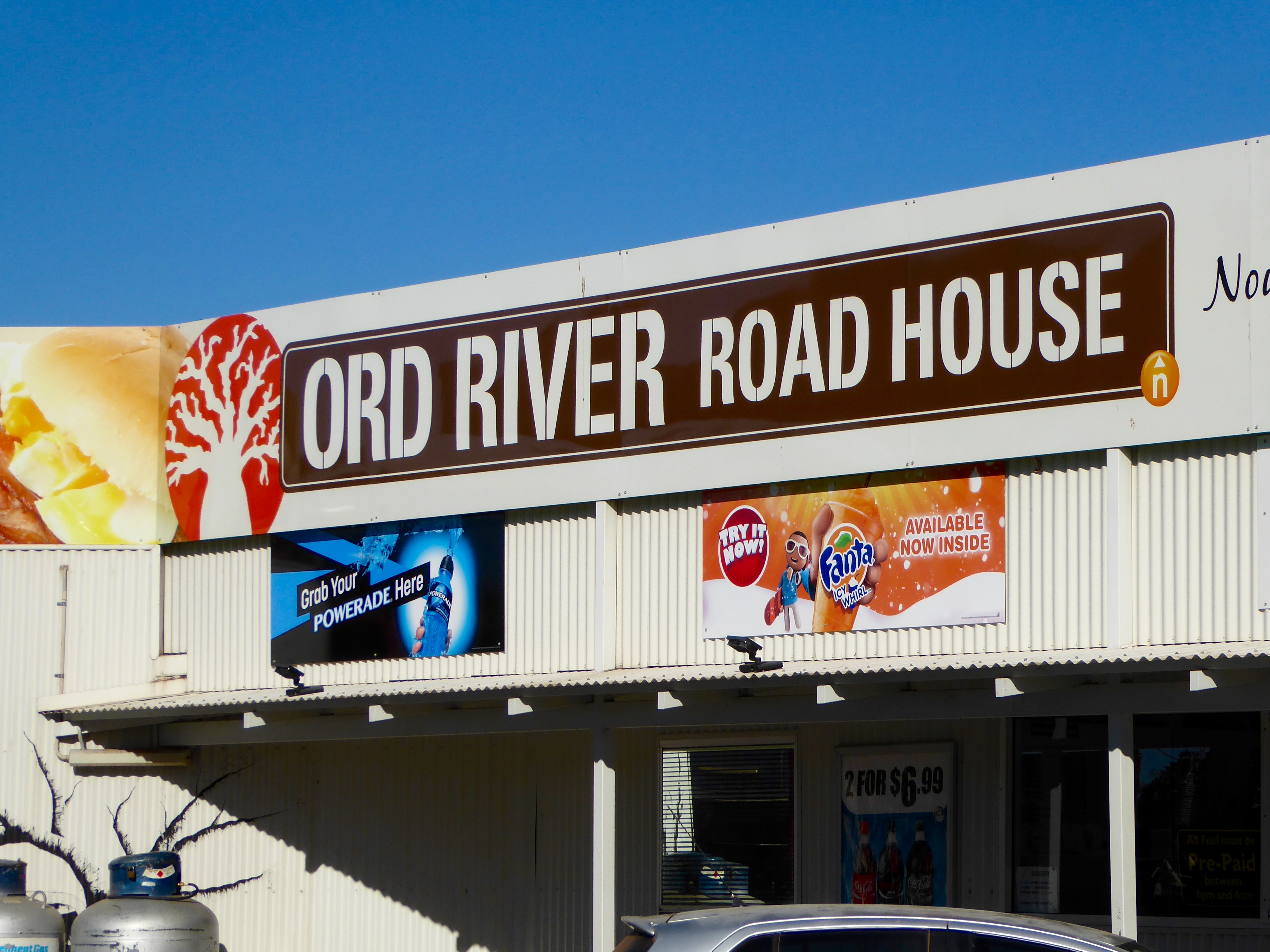
Ord River Roadhouse was one of our stops

Ord River Roadhouse was one of our stops

Of course we needed a snack after our meal, and this satisfied us.
Perfect for out dessert

Perfect for out dessert

These rock cliffs were beautiful.
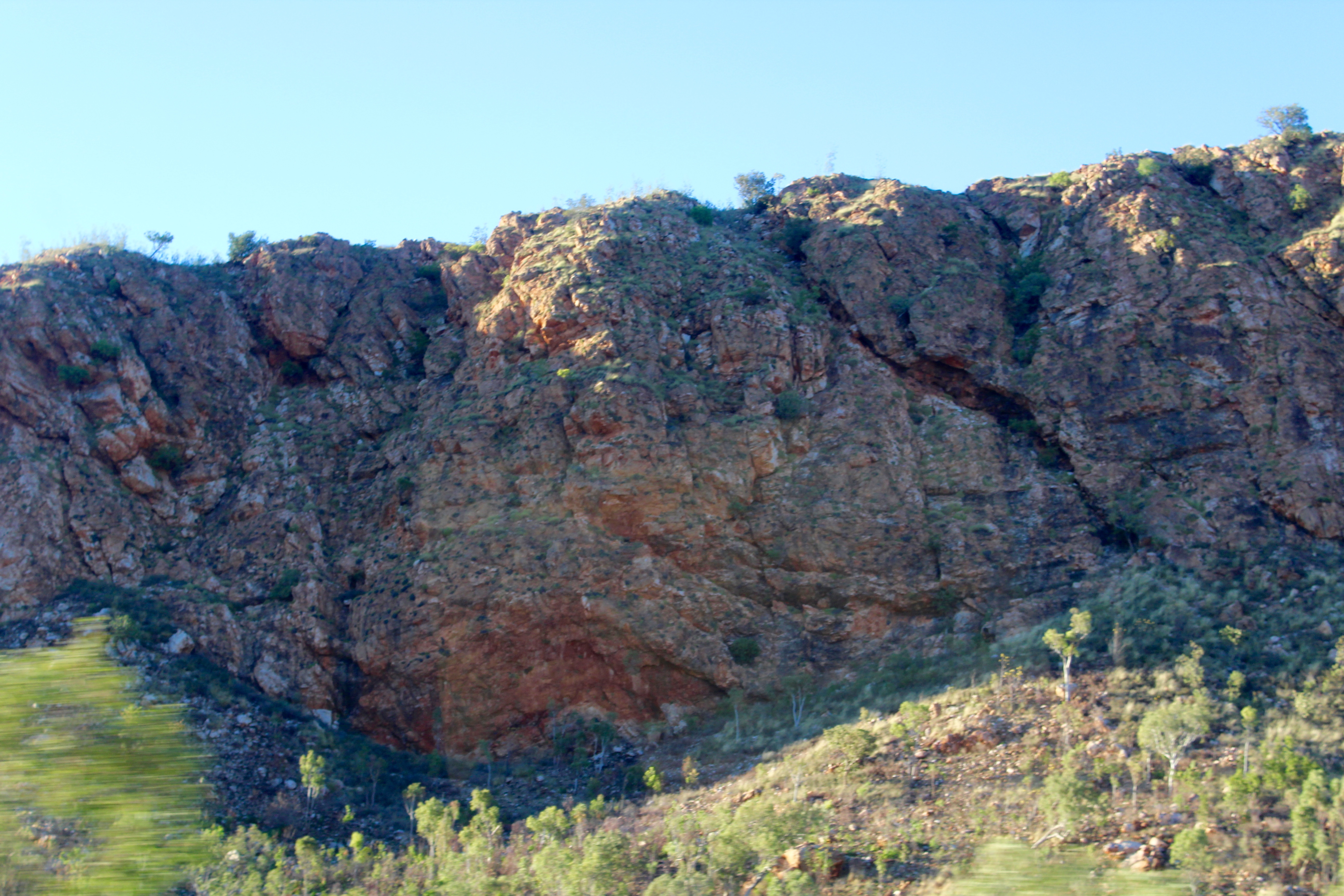
Rock wall

Rock wall

We decided to ride the Greyhound Bus because we have seen much of the world from 30,000 feet.   Of course, at that altitude, we saw nothing.   Also, we were the only foreign tourists on the bus, so we were able to talk to many Australian natives, many of them aboriginals.   Everyone was very nice to us.   Even when mom got stuck in a restroom stall.   One of the beautiful young girls that sat across from us on the bus, helped her get out.   Mom was very grateful for the help.   Getting stuck in the bathroom was not fun and not part of our travel plans.   So thank you again to that very nice girl.   On another bus to Nitmiluk National Park, we stopped in the town of Adelaide River to visit the War Cemetery.
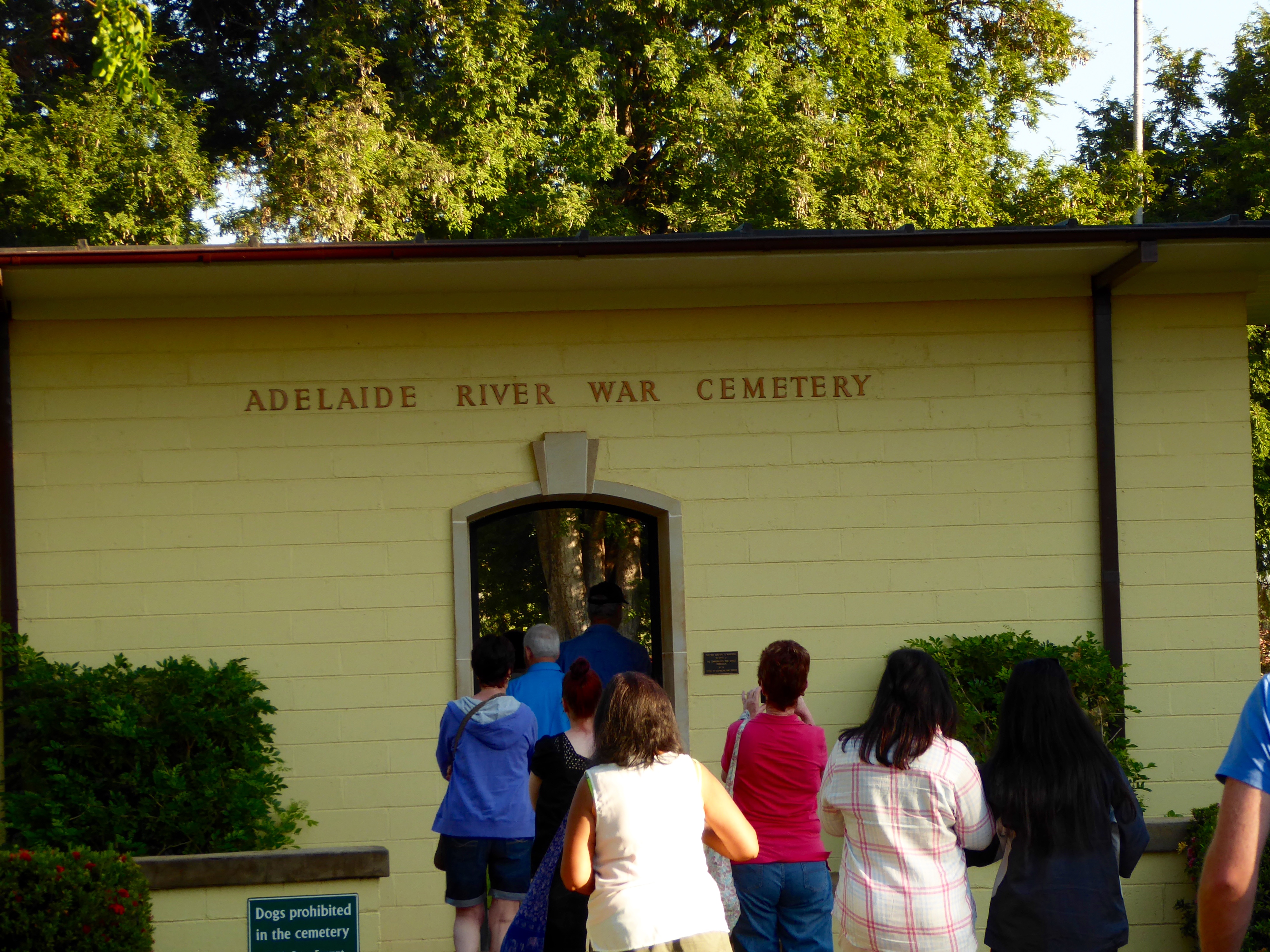
Adelaide River War Cemetery

Adelaide River War Cemetery

This monument with a white cross was very nice.
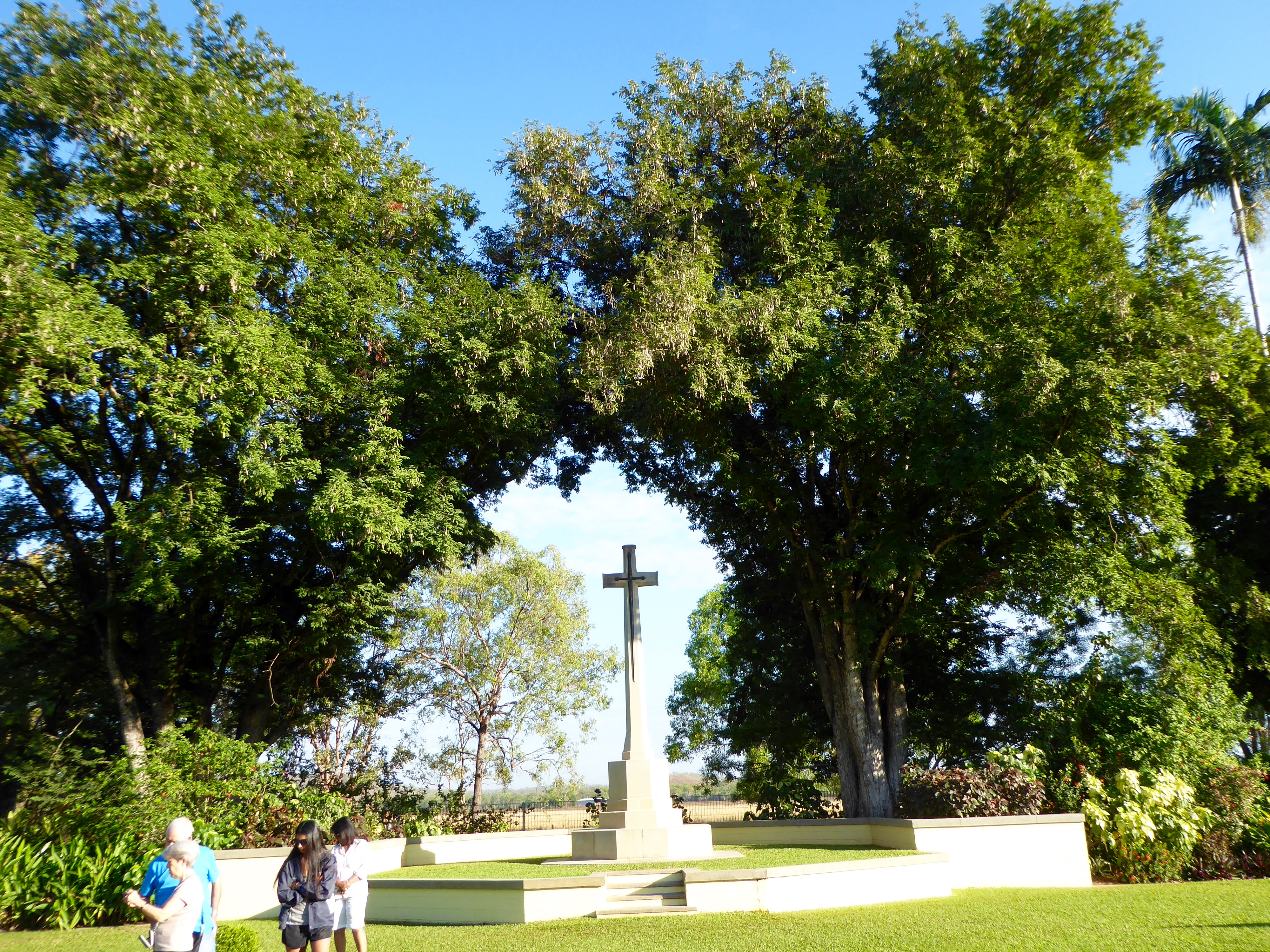
Monument in War Cemetery

Monument in War Cemetery

Many of those buried here were killed February 19, 1942 during air raids on Darwin.   We loved this tree.

Great tree

Great tree

Further down the road, we stopped for a break near Emerald Springs Roadhouse.
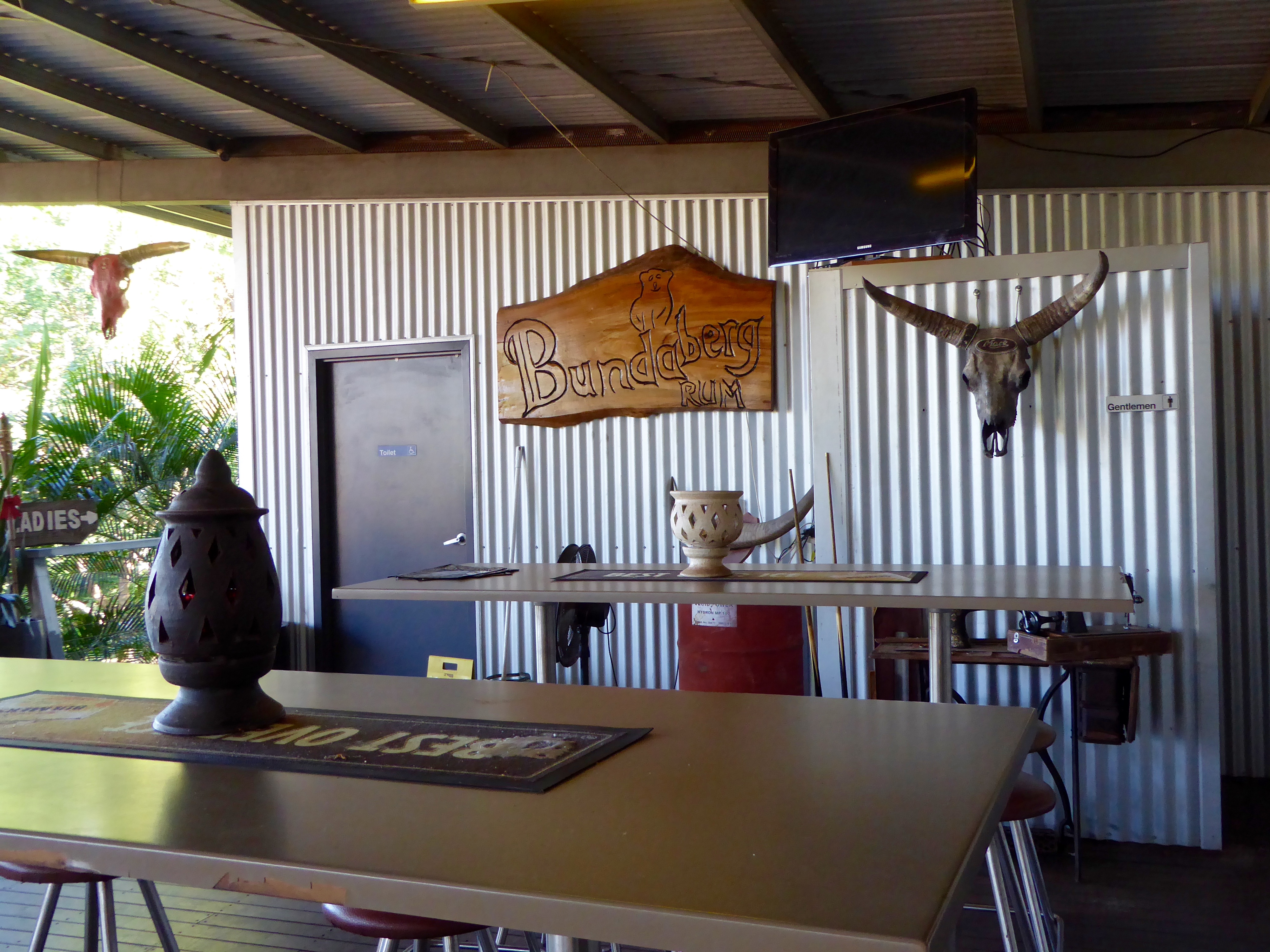
Rest stop near Emerald Springs Roadhouse. Heading to Nitmiluk National Park

Rest stop near Emerald Springs Roadhouse. Heading to Nitmiluk National Park

Another bus to Kakadu National Park stopped for our break at Bark Hut.
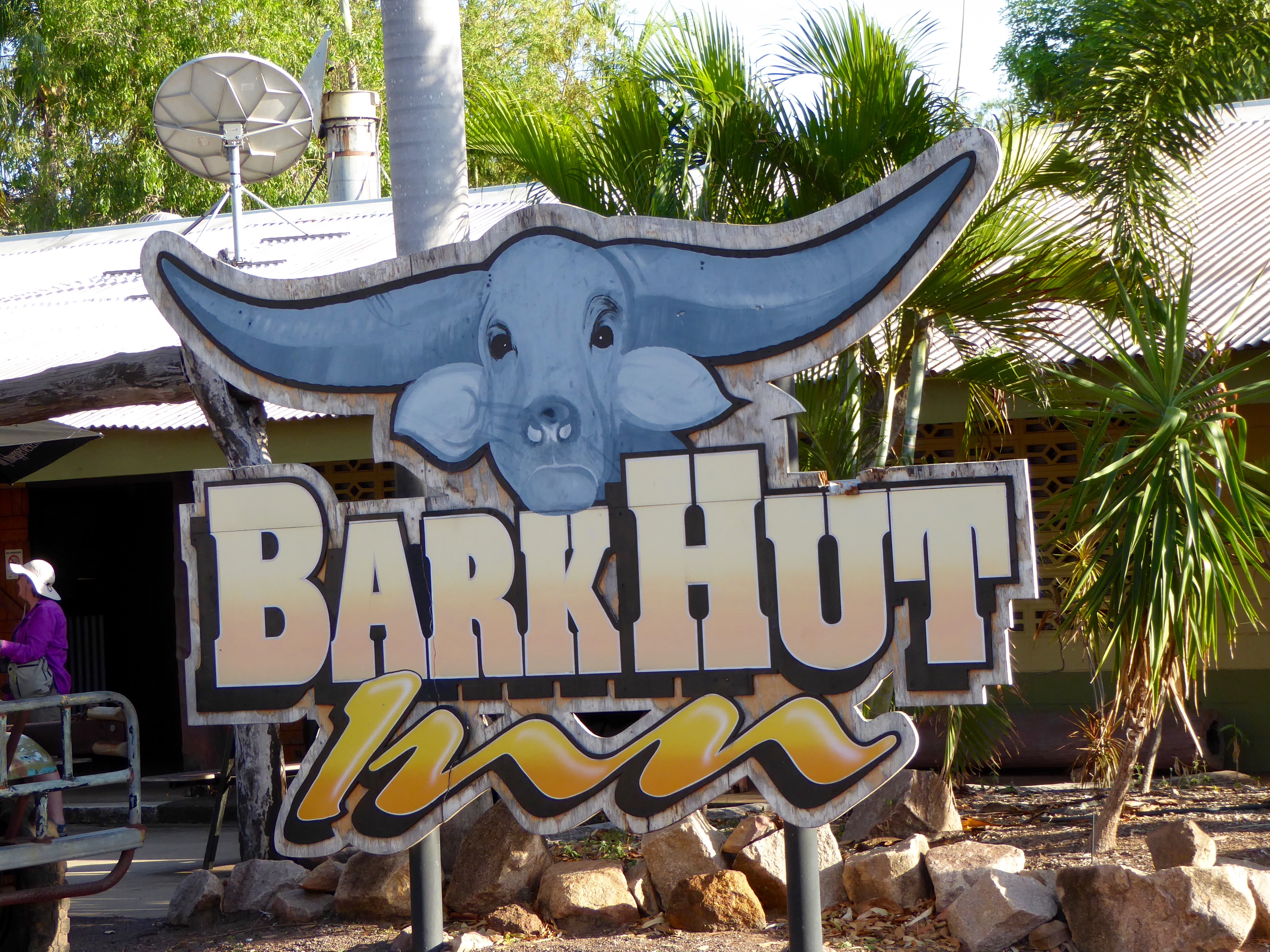
A stop at Bark Hut driving to Kakadu National Park

A stop at Bark Hut driving to Kakadu National Park

This is where we saw an early model Toyota Landcruiser station wagon.

Modified Toyota Land Cruiser

Modified Toyota Land Cruiser

This vehicle has been modified as a “Yard Truck” or “Push up Truck” to push, or herd, buffalo into yards and pens.   The door panels were re-enforced after a man, sitting in the truck, was gored through his thigh.   The buffalo horn came right through the door.   There are still wild buffalo in the Northern Territory.
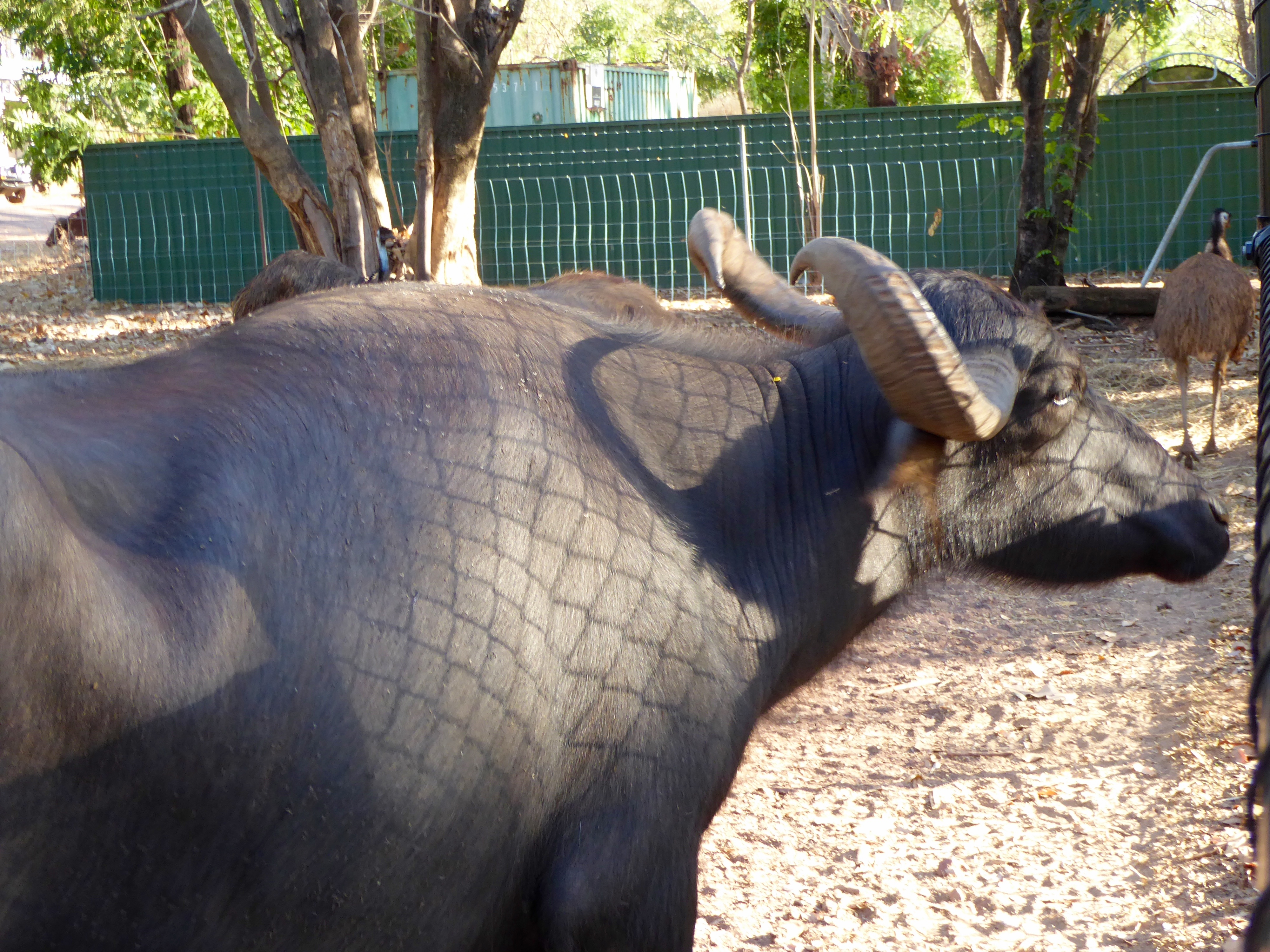
Native Australian Buffalo

Native Australian Buffalo

When we drove past a buffalo herd, the humans did not have their cameras ready.   We hope you experience foreign travel in a public bus.   You will see so much more and we learned so much from the local people sharing the bus.

Theodore Roosevelt National Park with Zeb and Soapy Smith Duck

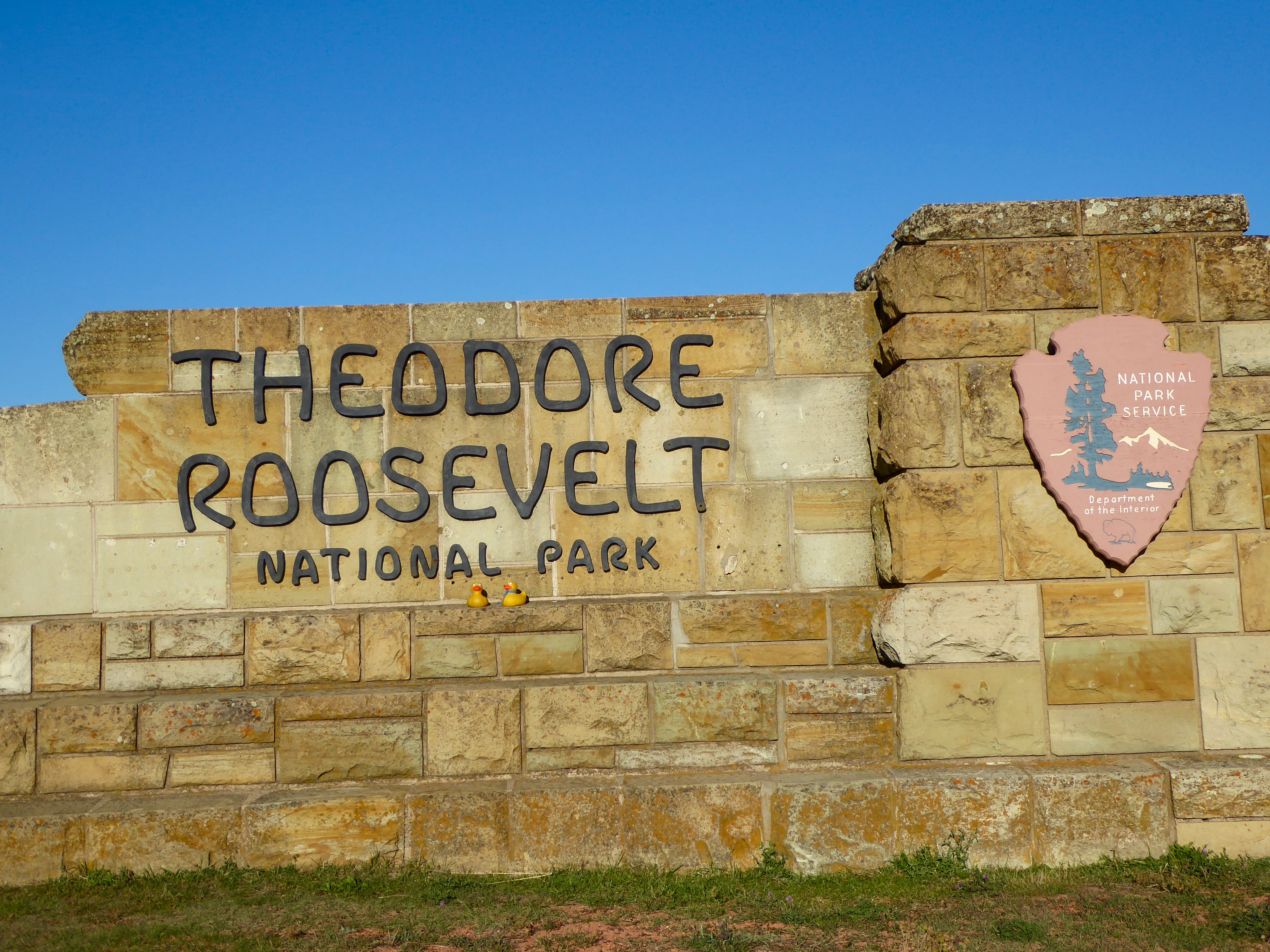
We love National Parks!   We are in western North Dakota on I-94.   Theodore Roosevelt National Park is here.

Welcome to Theodore Roosevelt National Park in western North Dakota

Welcome to Theodore Roosevelt National Park in western North Dakota

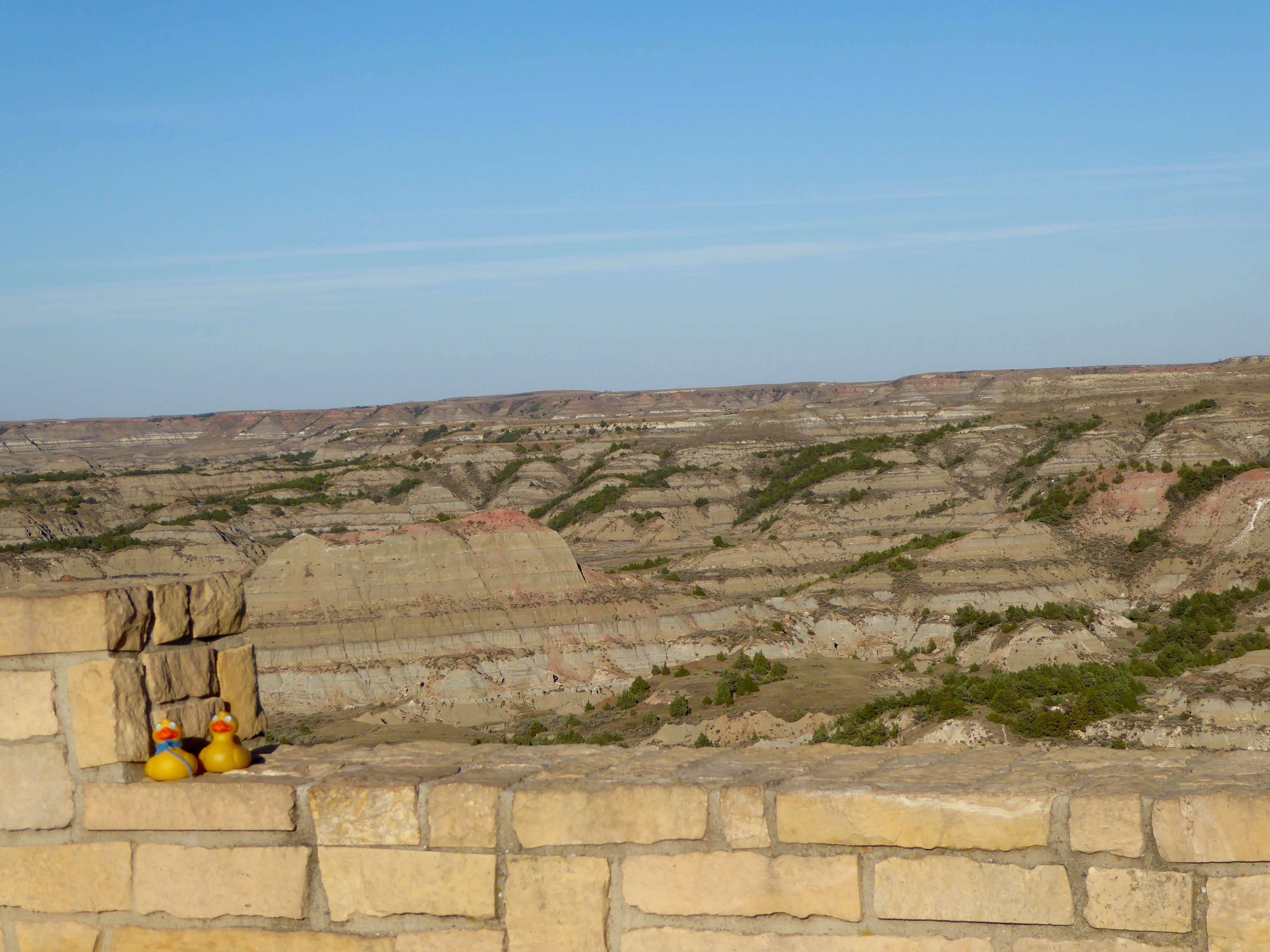
First we stop at the Painted Canyon Overlook.   This is part of the North Dakota Badlands.

Pink in the Painted Canyon

Pink in the Painted Canyon

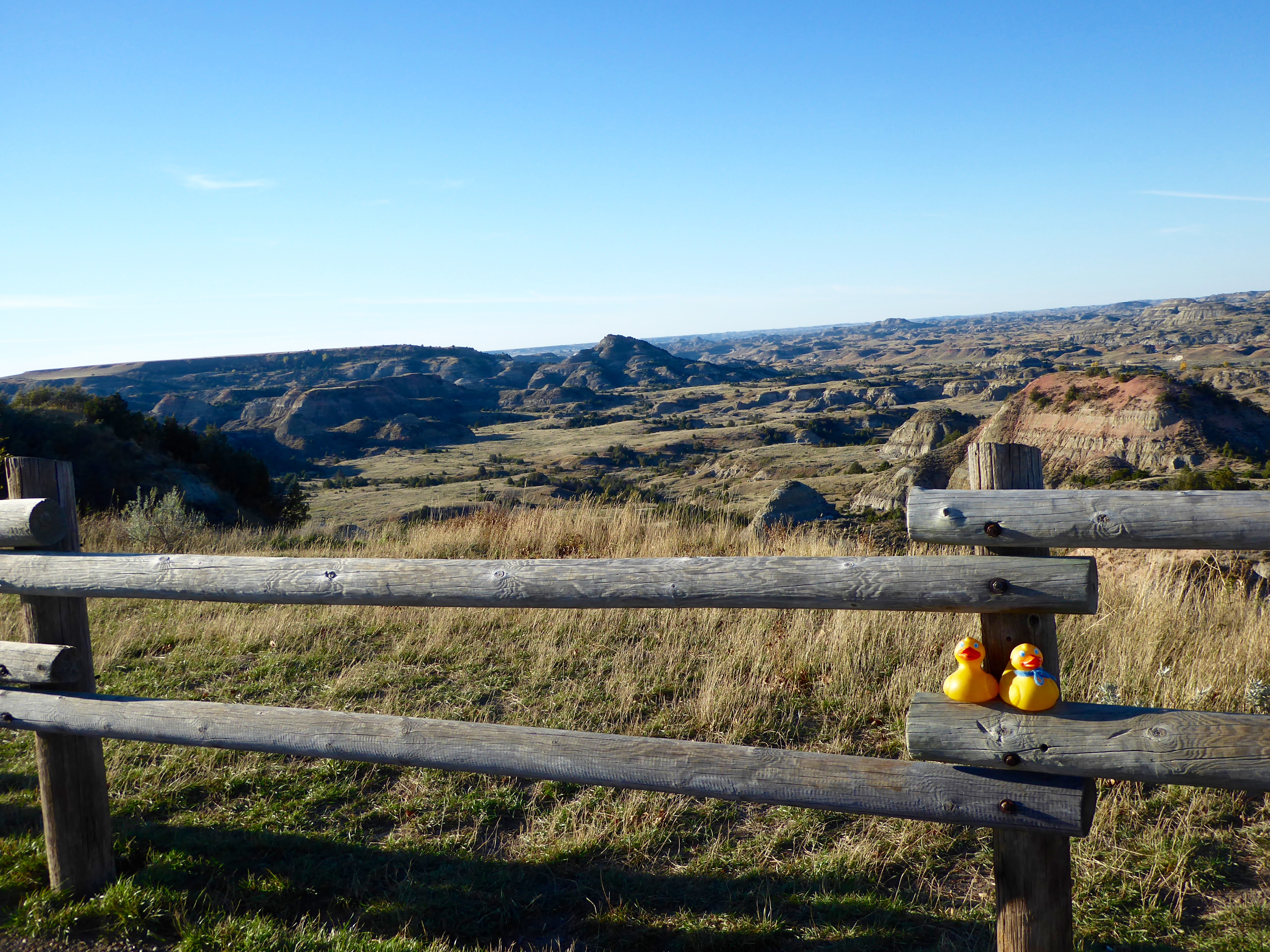
The pink shows why this is called a painted canyon.   This place takes your breath away.

Painted Canyon has many moods

Painted Canyon has many moods

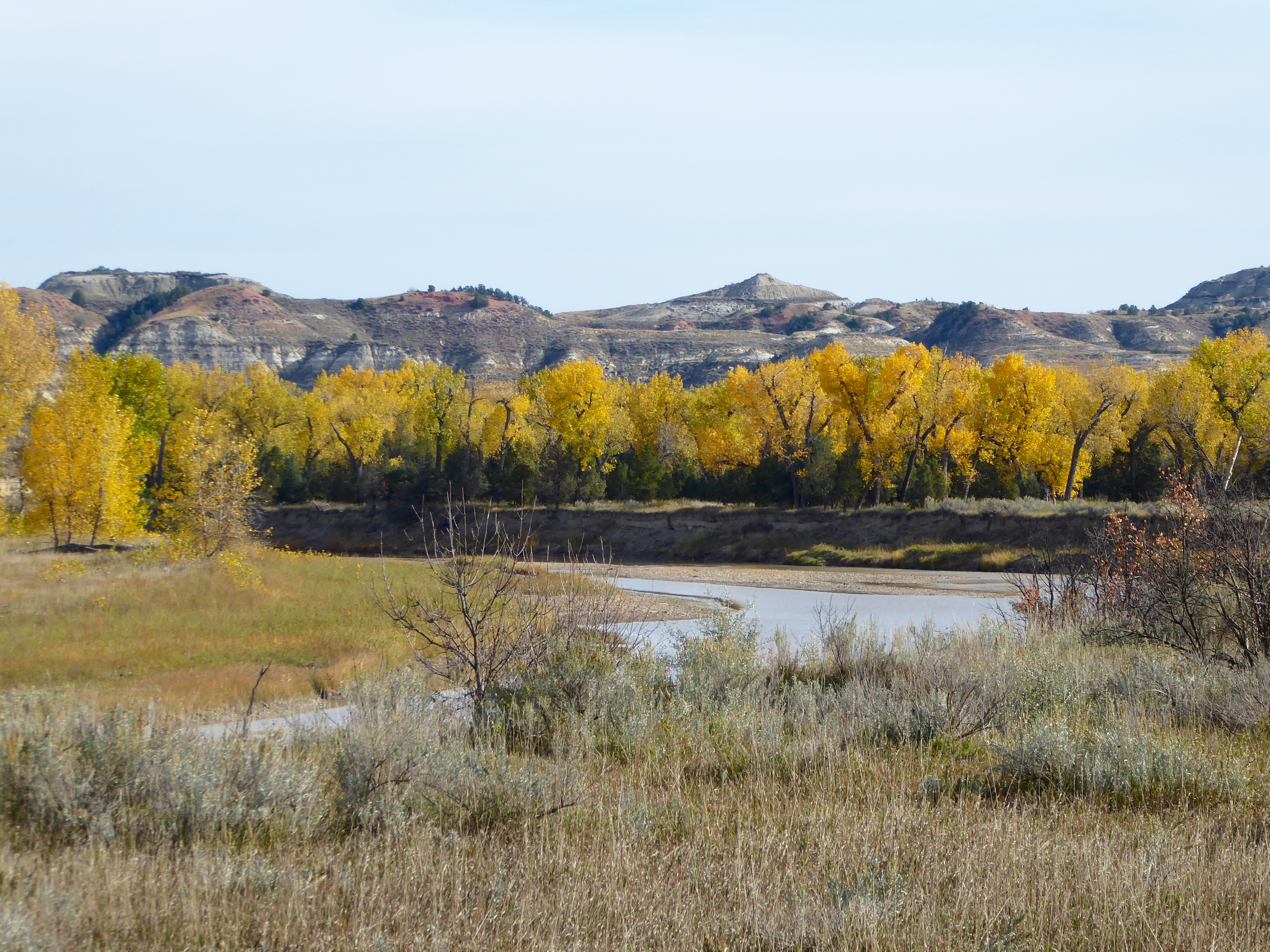
Don’t you just love it?   Next we went to the Visitor’s Center, received our map, and drove through the South Unit of Theodore Roosevelt National Park.   First stop is the Little Missouri River Bottomlands.

Little Missouri River

Little Missouri River

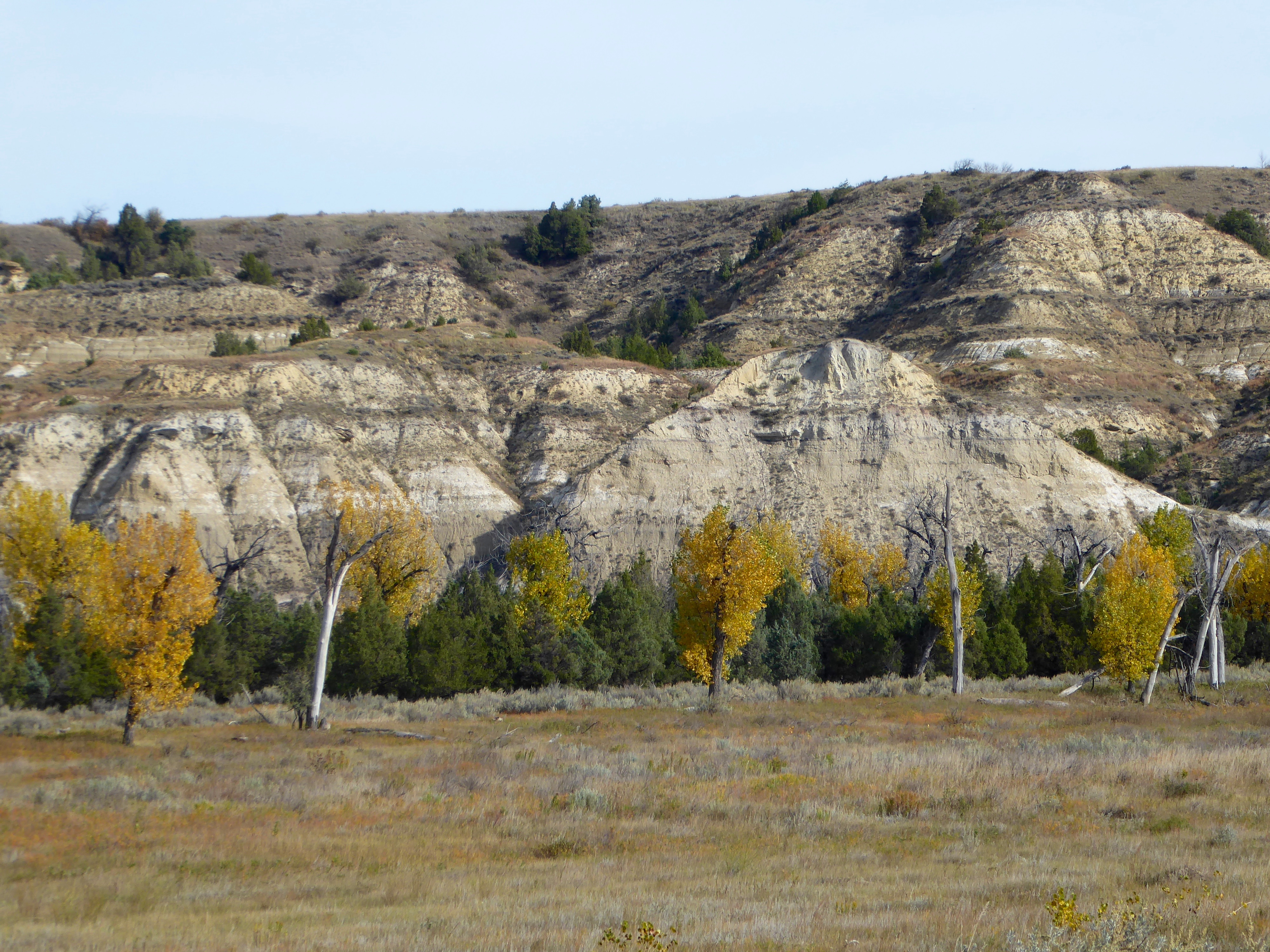
Very pretty.   The sign said these are Cottonwood trees, dark green jumpers and dwarf sagebrush.

Overlooking Little Missouri River

Overlooking Little Missouri River

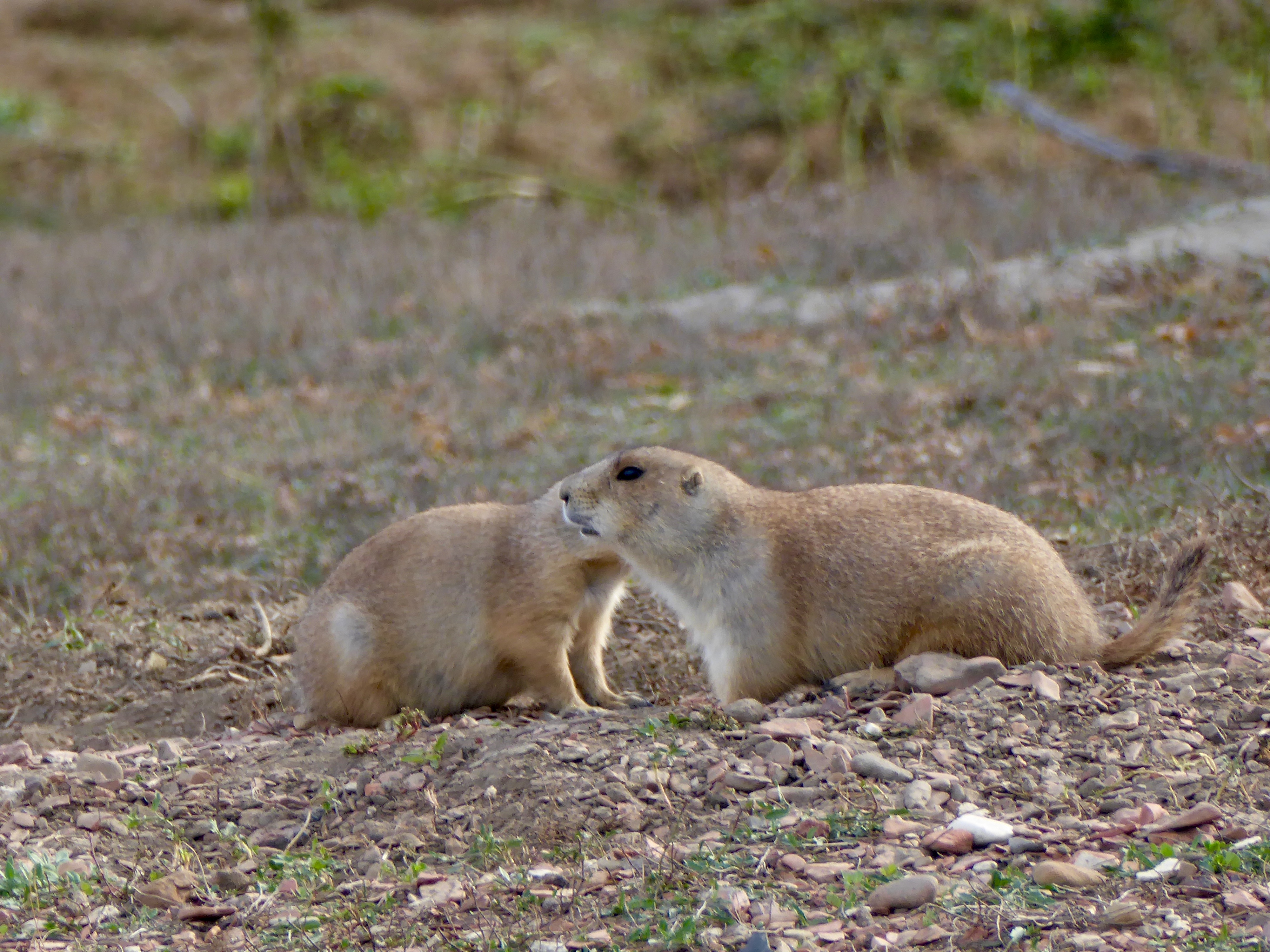
We ducks, like humans, enjoy seeing this beautiful, tranquil scenery.   There are thousands of prairie dogs at various areas of the park.

Prairie dogs. Talking about us?

Prairie dogs.   Talking about us?

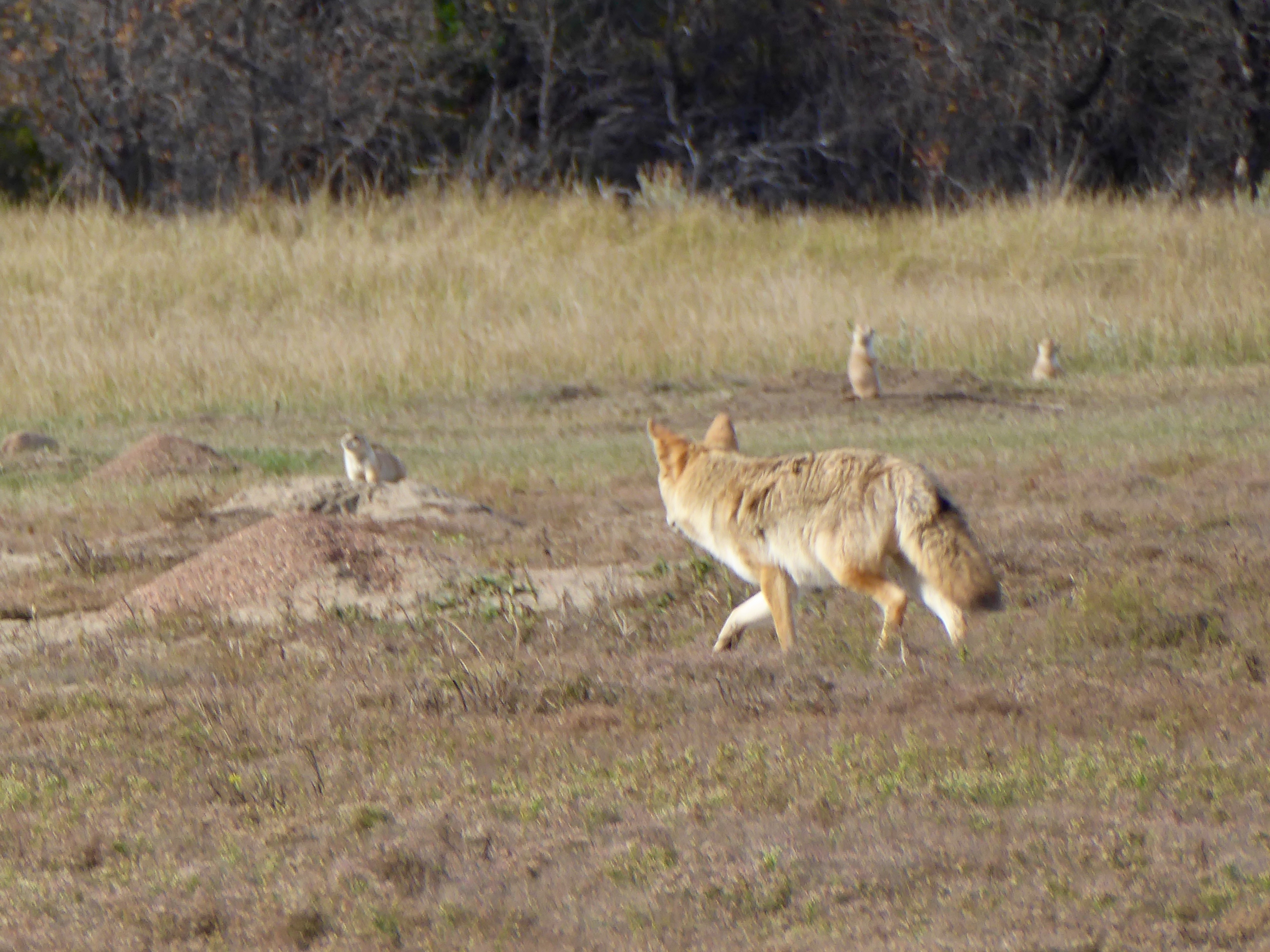
They are so cute.   We do not want them in our yards, but we love to see them in parks.   Oh no!   This could be trouble.

Could this be trouble?

Could this be trouble?

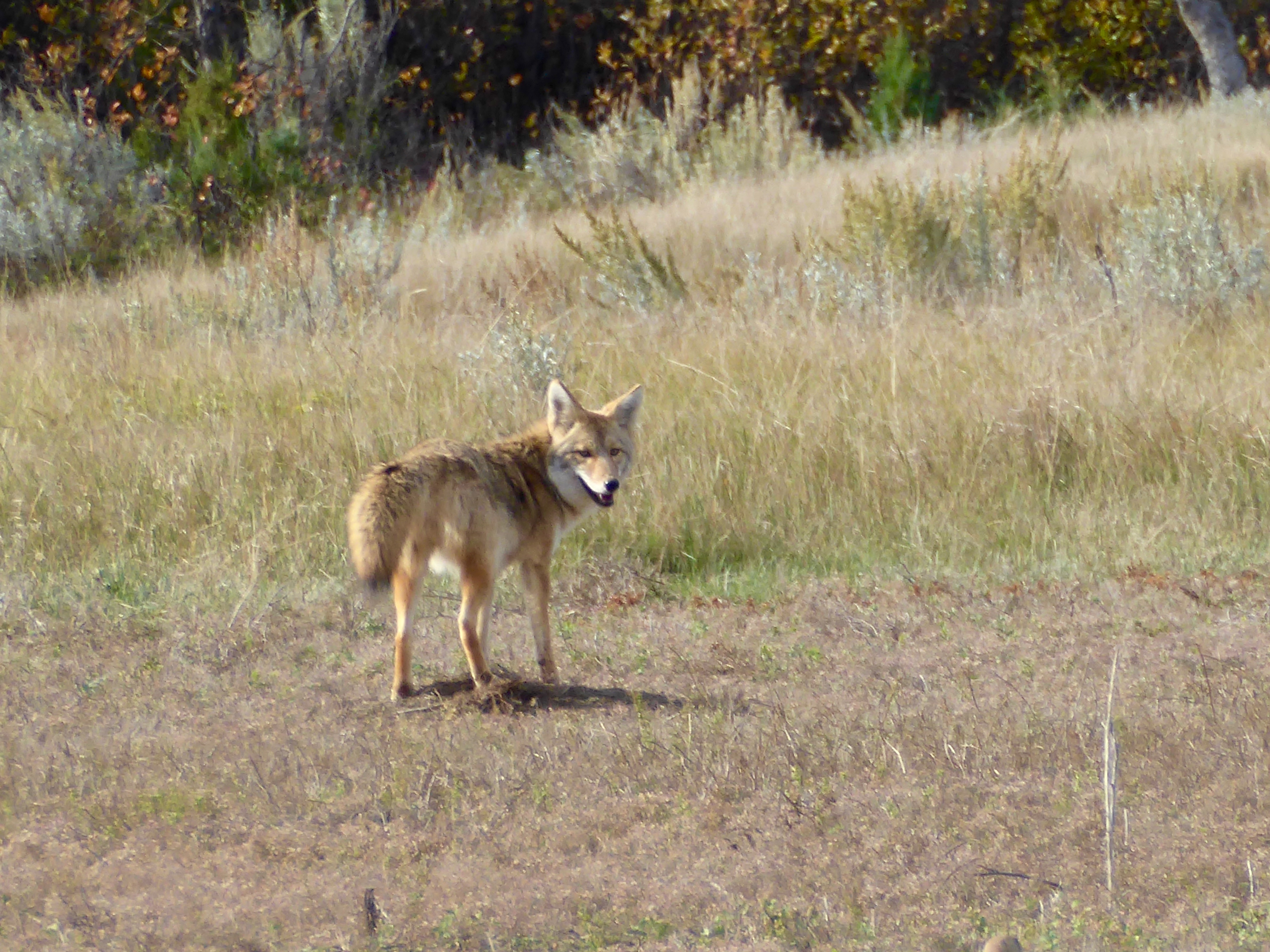
The coyote is walking among the prairie dogs.   We hope it is not time for him to eat.

Coyote says to relax

Coyote says to relax

Looks like he is saying, “I told you I was not hungry”   Some of the road are paved, and some are not.

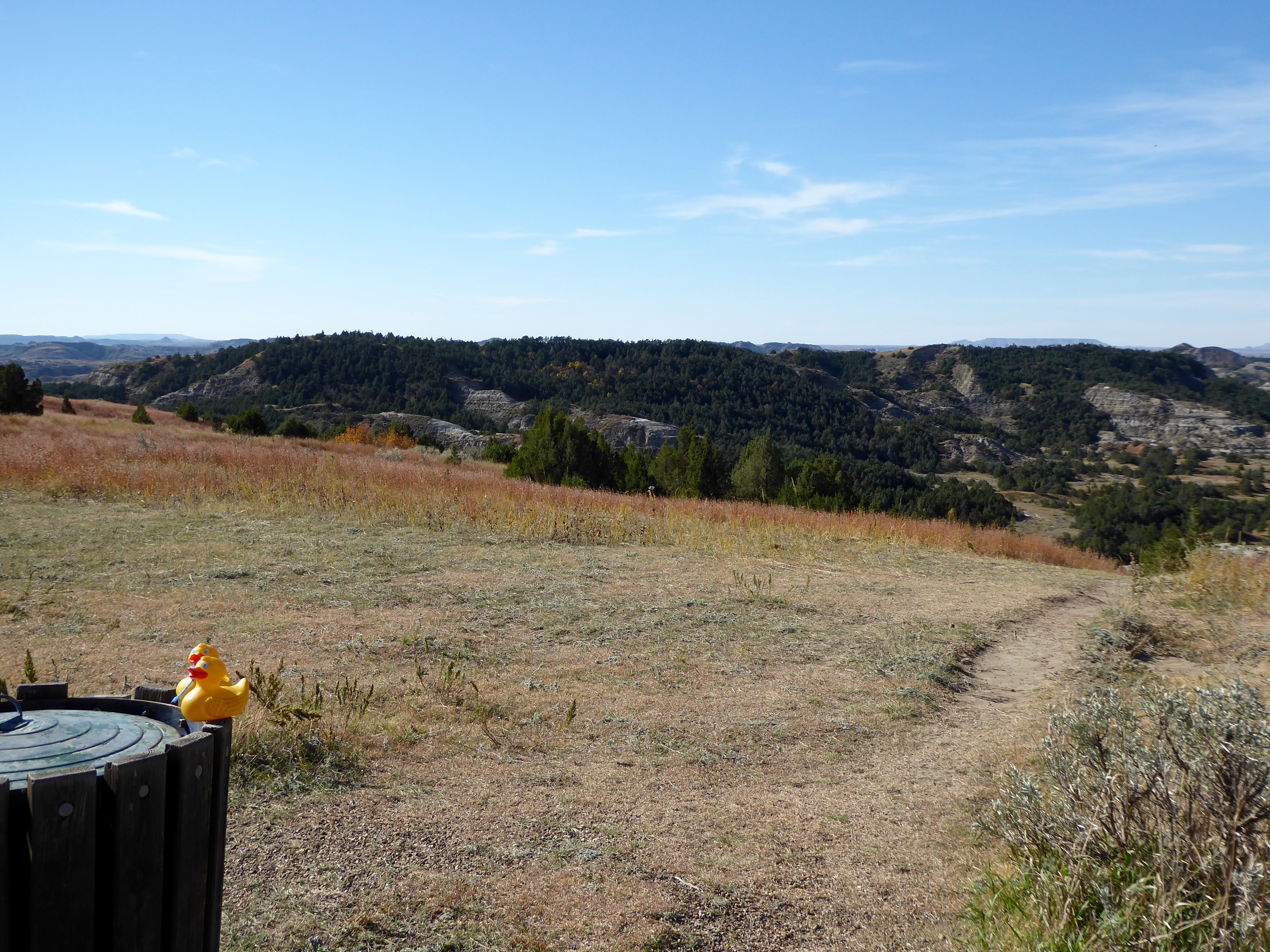
Quiet road in park

Quiet road in park

We are fortunate that there is very little traffic in the park now.   This area is known as Beef Corral Bottom.

Beef Corral Bottom

Beef Corral Bottom.   Today we see prairie dogs, not cattle here

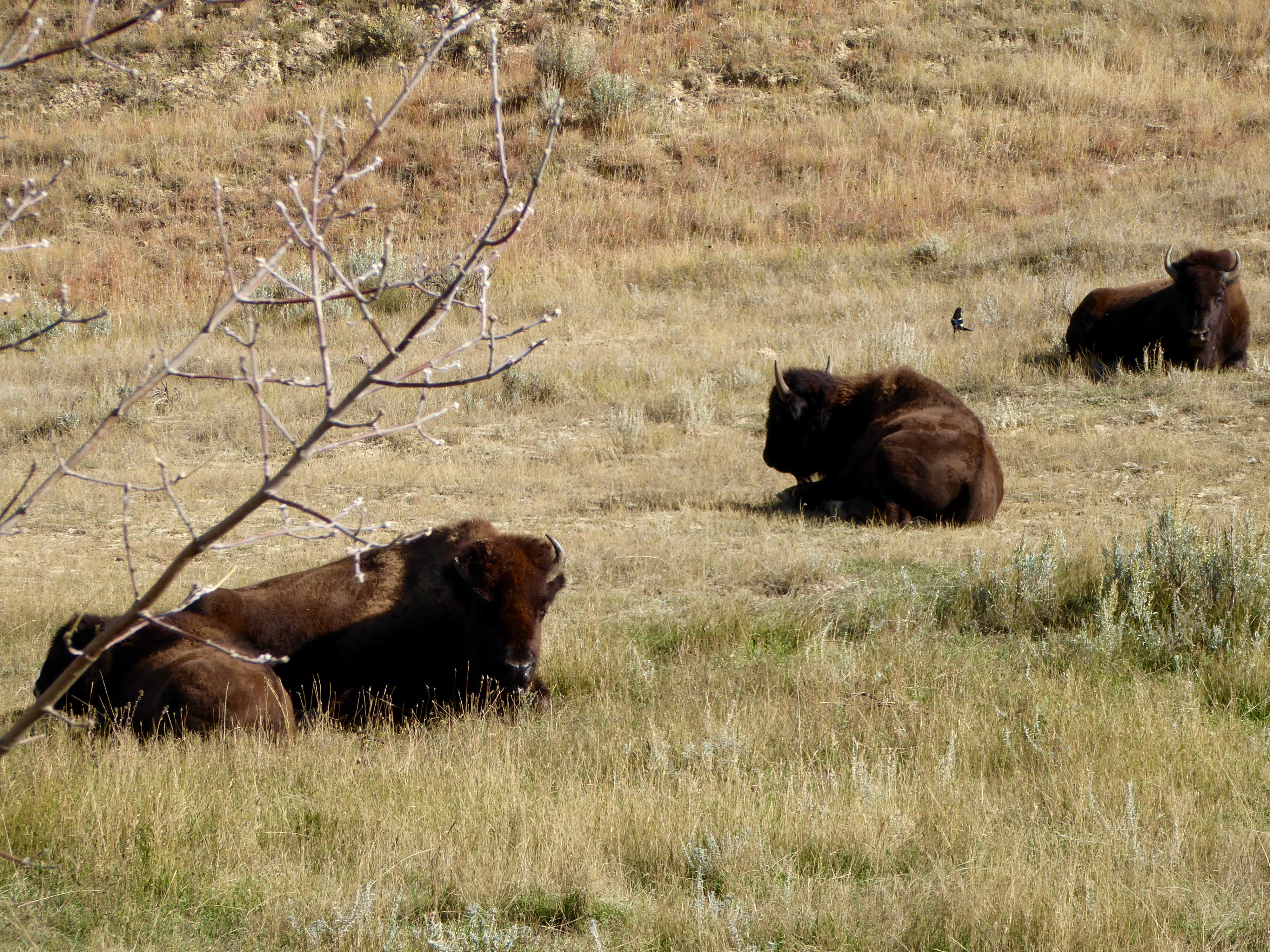
Years ago during the free range cattle round up, the cattle were brought here.   Then the owners could check the brand and take their cattle home to prepare for sale.   These buffalo are lounging by the side of the road.

Enjoying the sunny day.

Enjoying the sunny day.

We did not get out of our car here.   No reason to be foolish.   This is the home of the buffalo, not the home of tourists.   The color of the rock varies here.   Whitish in some areas.

Lighter rocks

Lighter rocks

Darker rock is other areas.

Darker rocks

Darker rocks

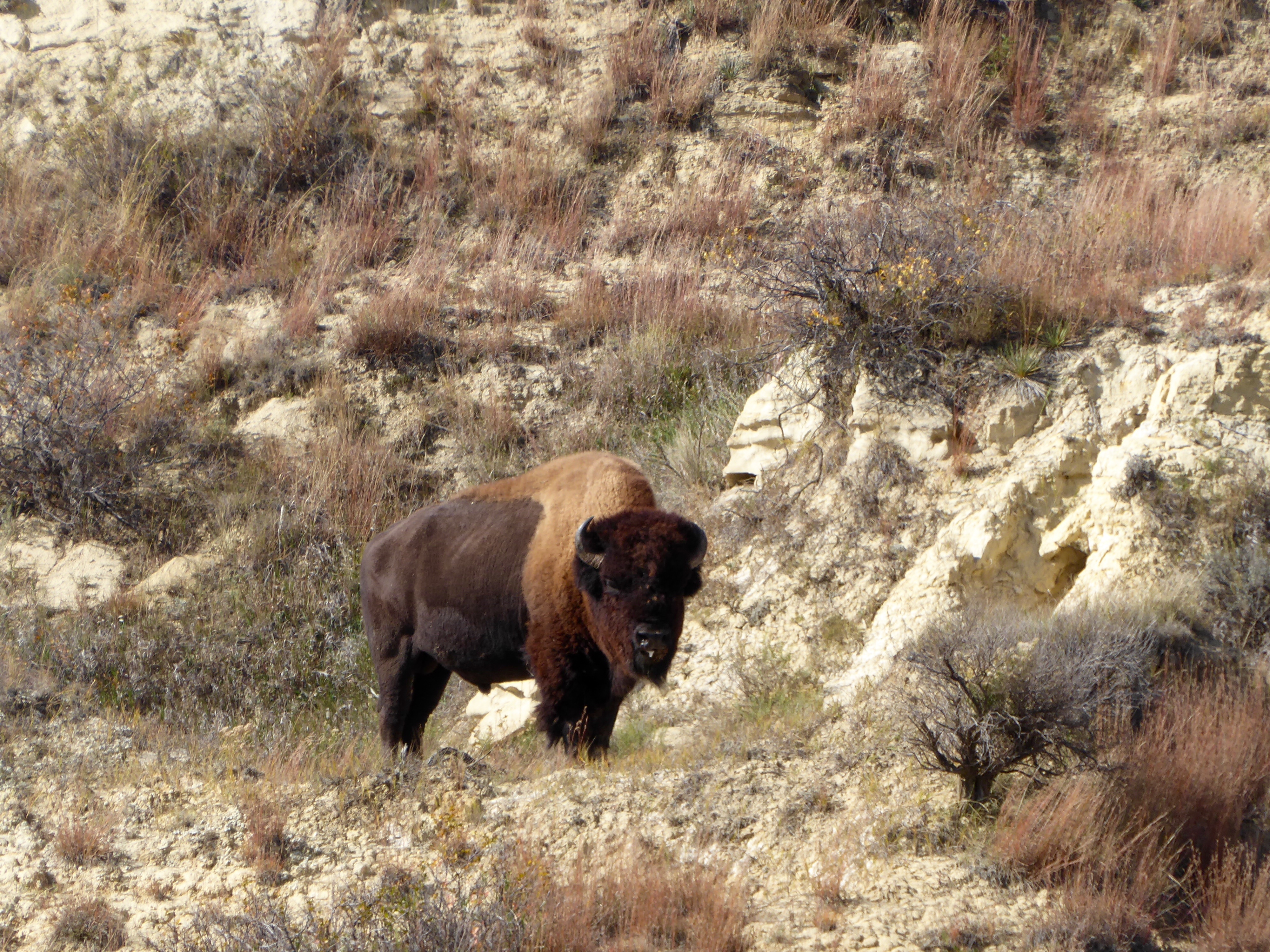
We like the open lands also.   The minerals in the soil effect the color of rocks.   This lone buffalo stood on a hill surveying his land.

Buffalo watching us admire him

Buffalo watching us admire him

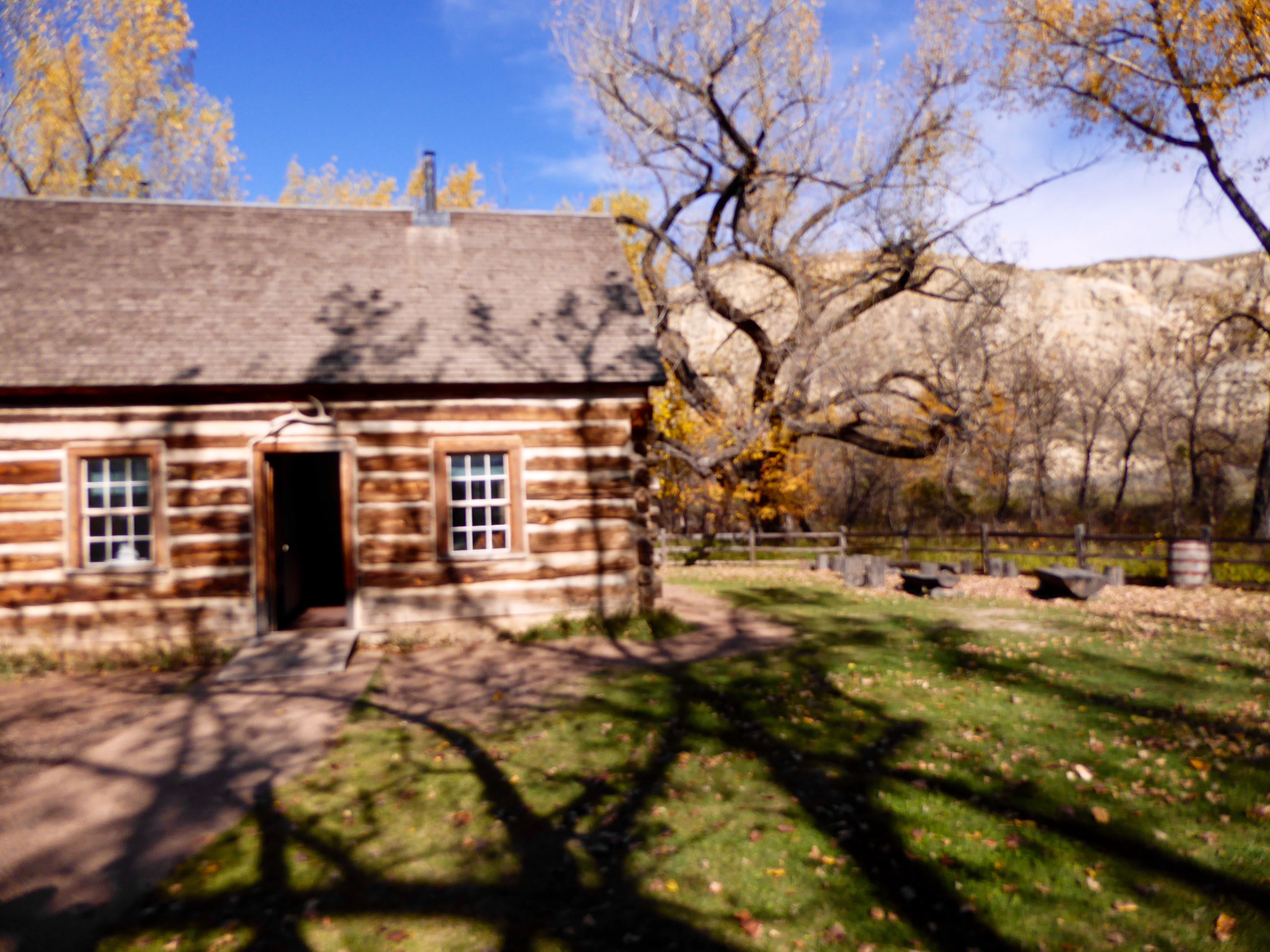
He was so still at first, we were not sure if he was real, but he did begin to turn his head and walk away.   Behind the Visitor’s Center, is the Maltese Cross Ranch House.

Maltese Cross Ranch House. Theodore Roosevelt lived here summer of 1884

Maltese Cross Ranch House. Theodore Roosevelt lived here summer of 1884

In September, 1883 Theodore Roosevelt part an interest in the Maltese Cross Ranch.   He loved the Badlands of North and South Dakota.   The following winter his wife and his mother died with hours of each other.   When the weather permitted, here came back to North Dakota and lived in the Maltese Cross Ranch House.    Here he was able to find peace and renewed strength of spirit and body.   This ranch house was later moved to its present location in the National Park.   We hope you also have beautiful sunny weather when you visit Theodore Roosevelt National Park.

North Dakota with Zeb and Soapy Smith Duck

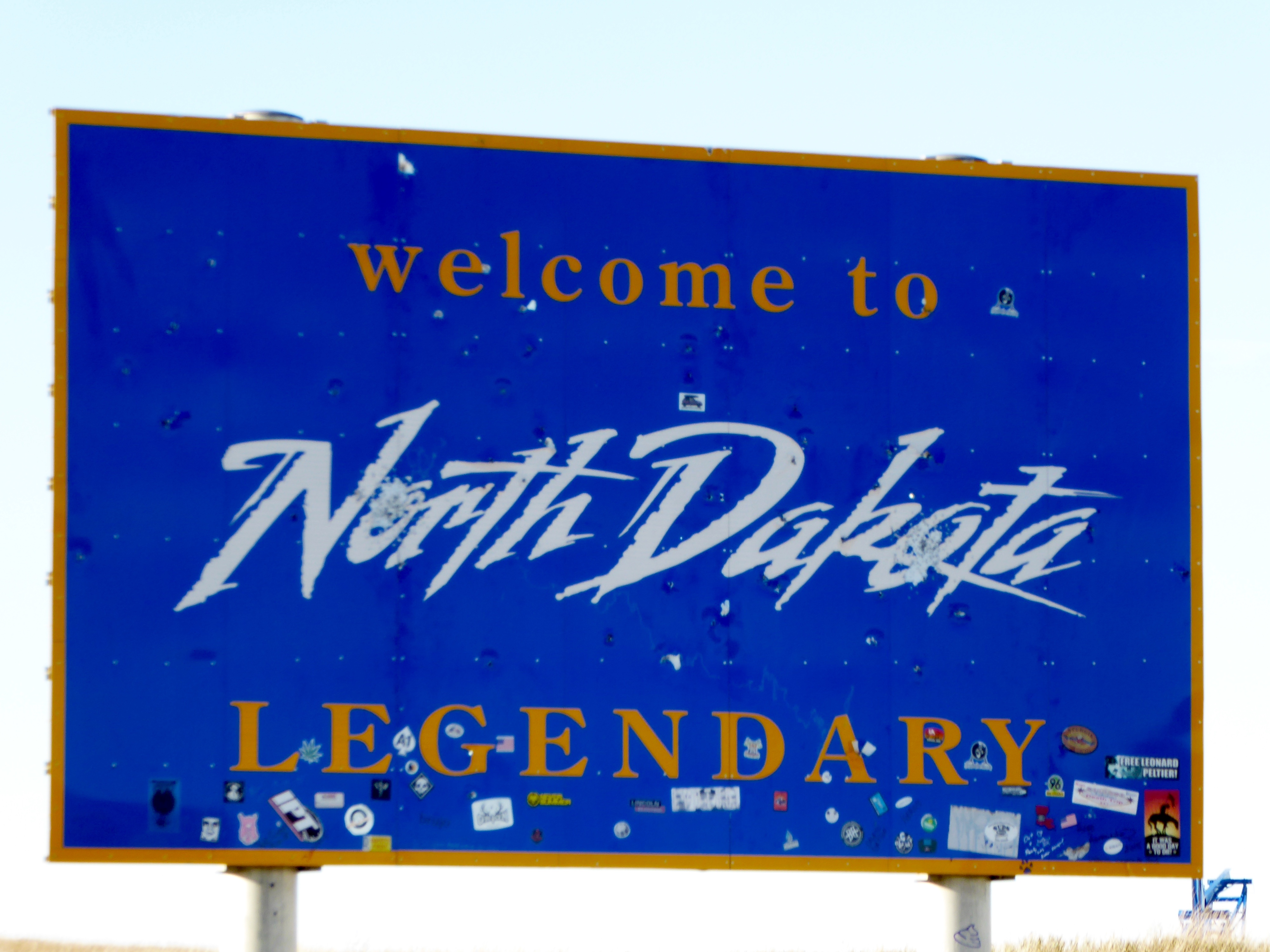
We, the Colorado Traveling Ducks, are in North Dakota.

Welcome to North Dakota

Welcome to North Dakota

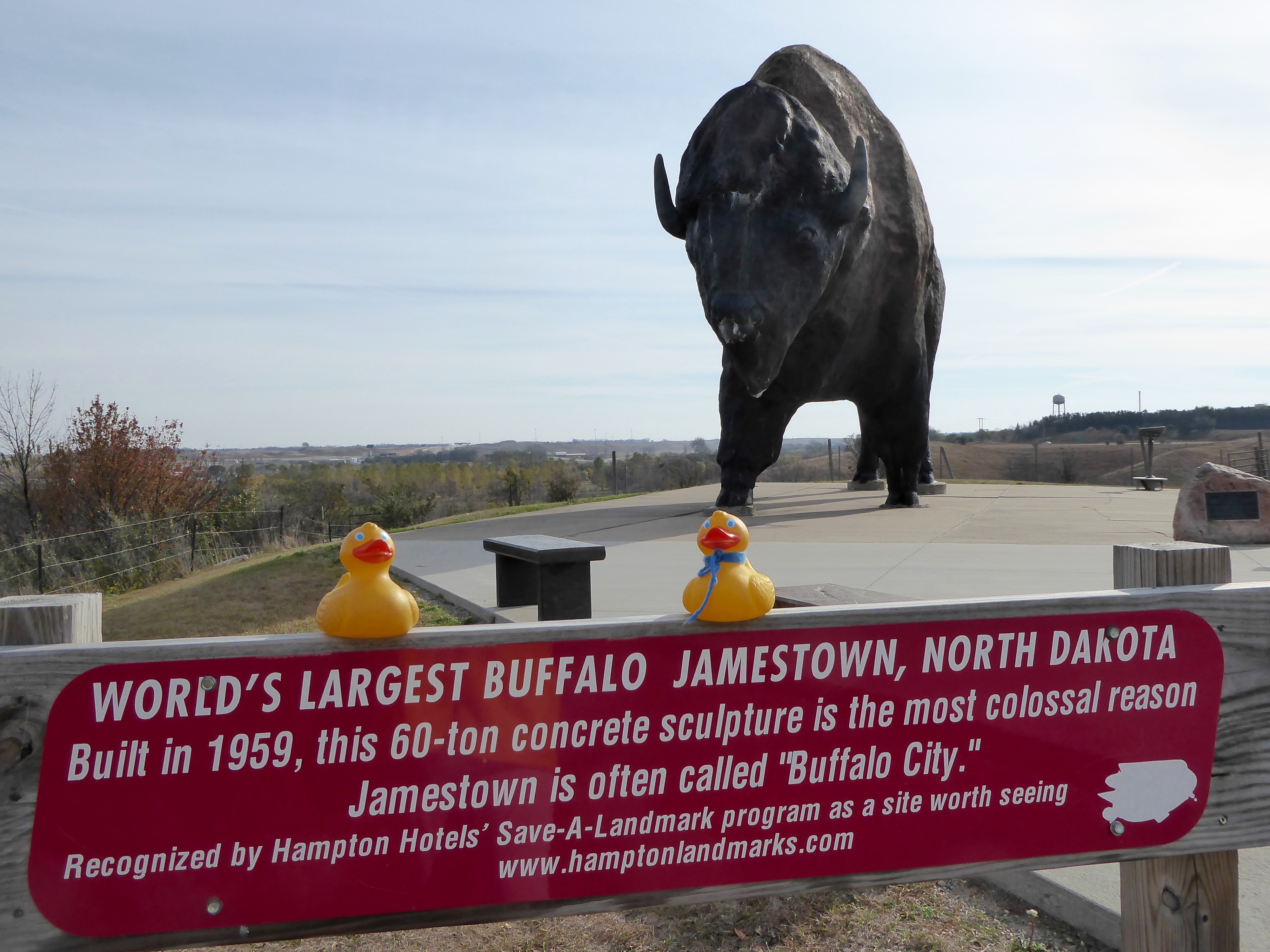
We are driving on  I-94.   Our first stop is Jamestown.   This is the World’s Largest Buffalo.

A really big buffalo

A really big buffalo

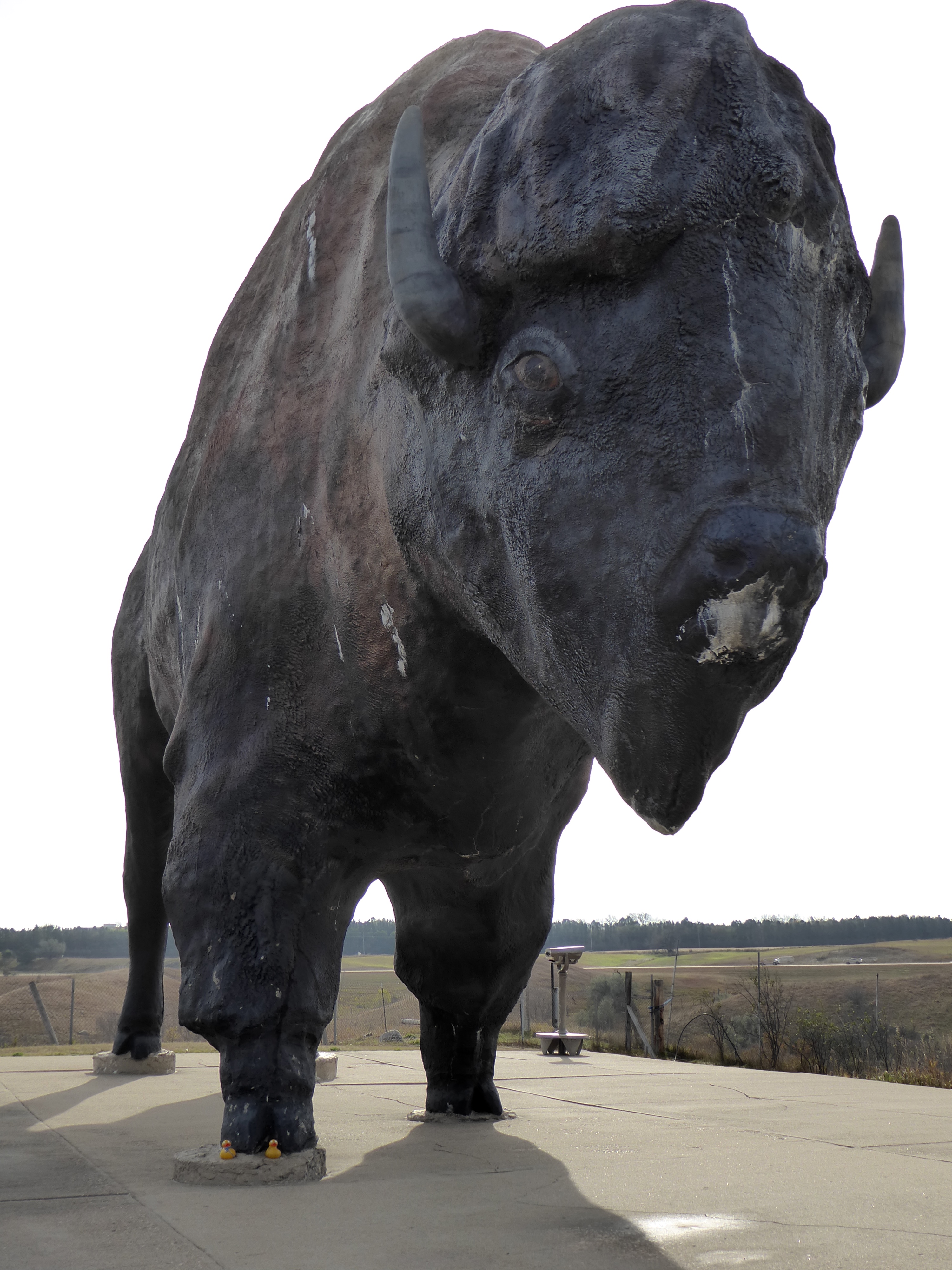
This buffalo is 26 feet tall, 46 feet long and weighs 60 tons.   On July 24, 2010 he was named Dakota Thunder.

Dakota Thunder

Dakota Thunder

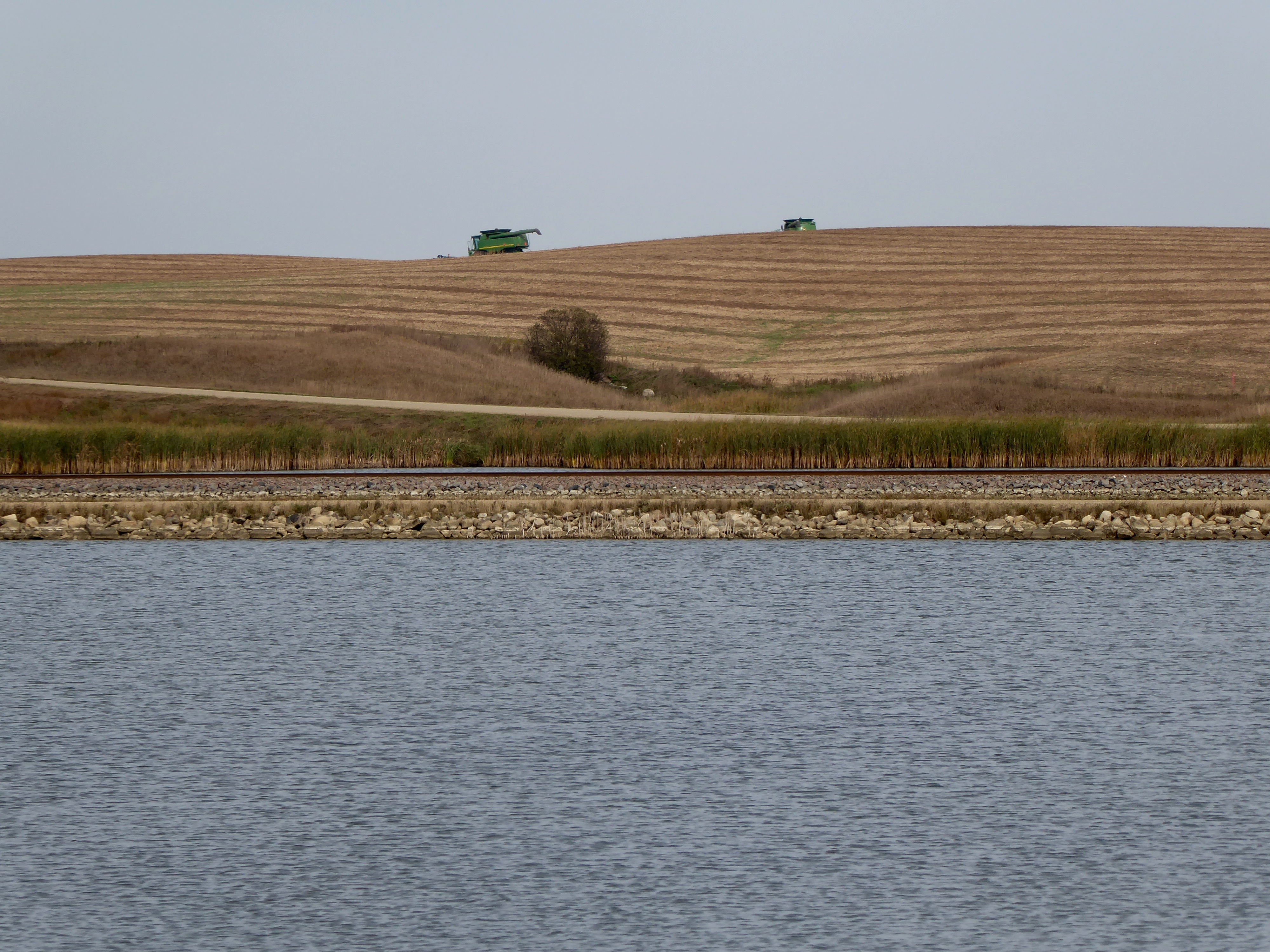
We are on his foot.   Dakota Thunder sure is big!    This farm in North Dakota looks harvested and ready for winter.

North Dakota farm and lake

North Dakota farm and lake

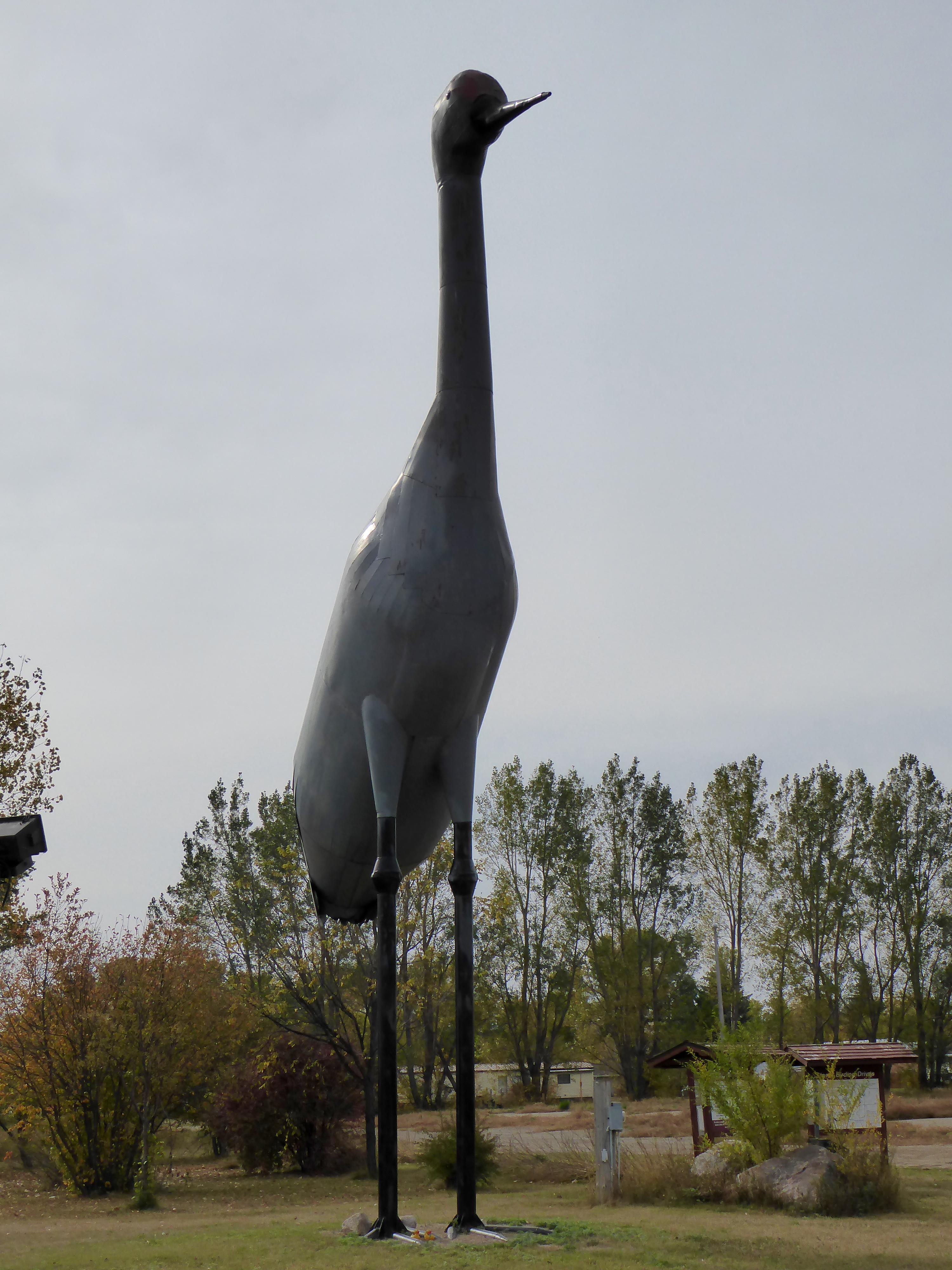
Our next stop is Steele, North Dakota where we met Sandy.   Sandy is the World’s Largest Sandhill Crane.   Sandy is 40 feet tall and made of steel.   We are on Sandy’s foot.   Can you see us?

Sandy the Sandhill Crane

Sandy the Sandhill Crane

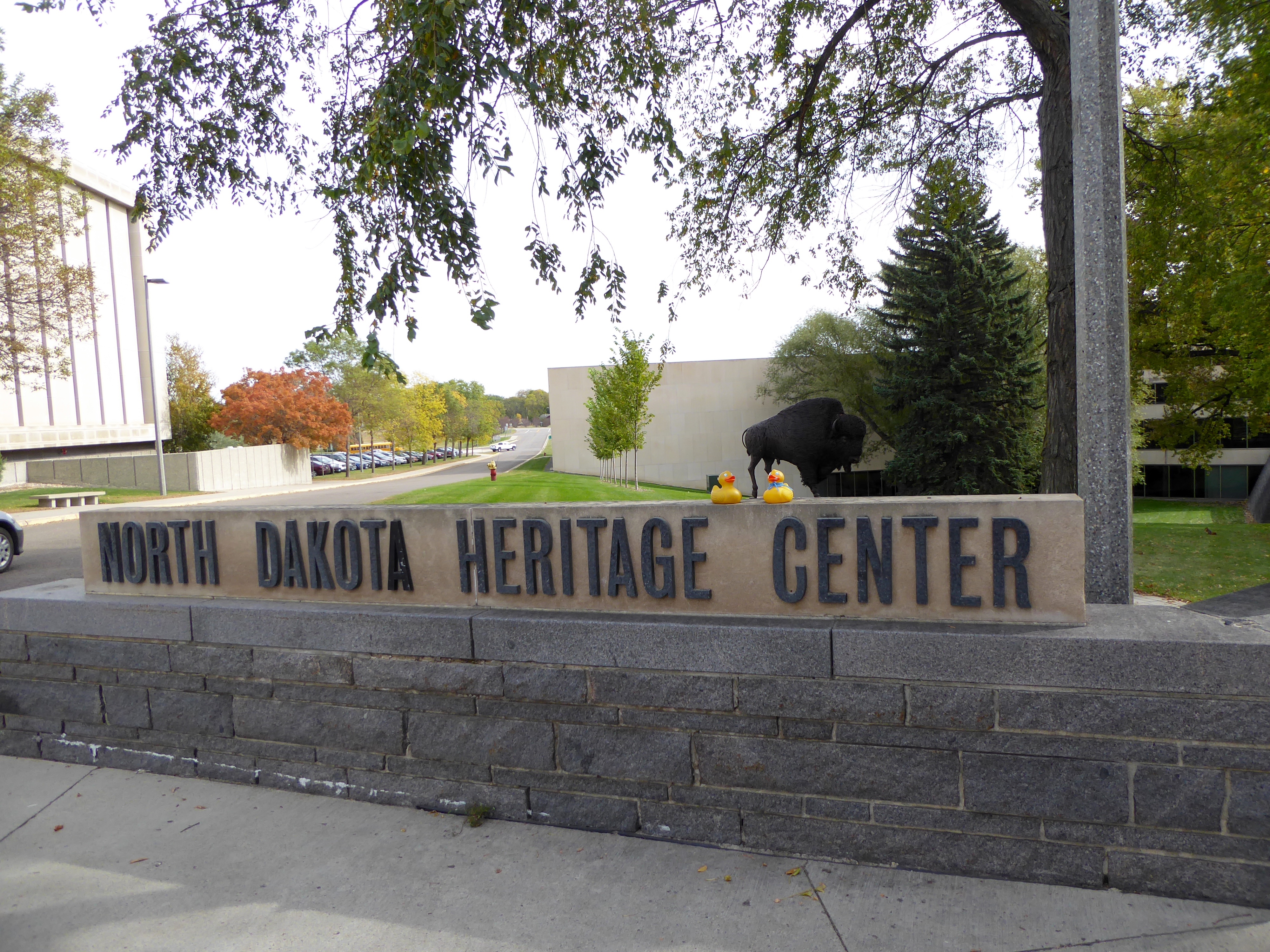
The information at the kiosk says the crane is the oldest existing bird in the world.   Cranes have remained unchanged for 2.5 million years.   Sandy was made by James Miller.    Our next stop is the capital of North Dakota.   Bismarck is home to the North Dakota Heritage Center.

We are at the North Dakota Heritage Center

We are at the North Dakota Heritage Center

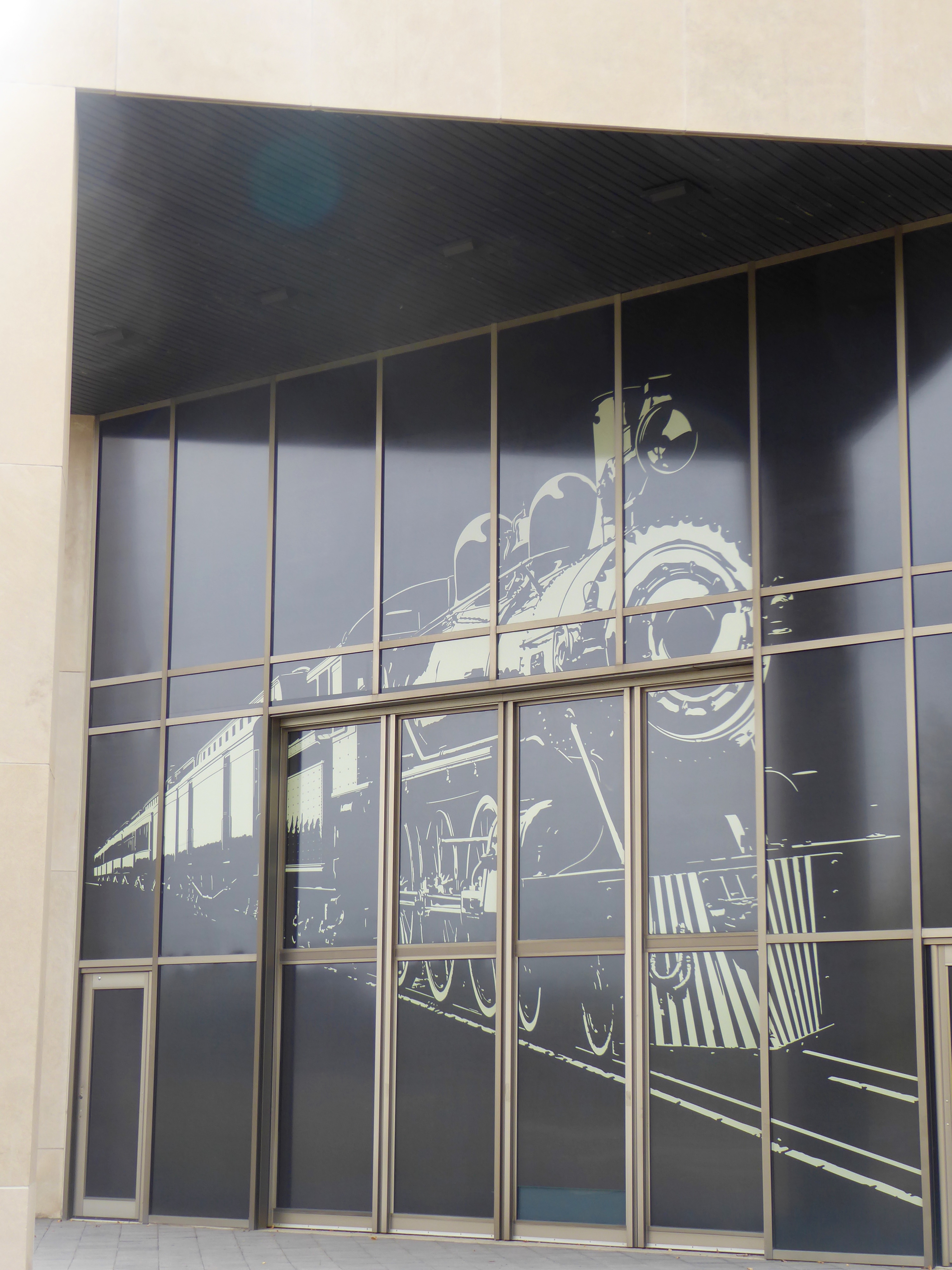
The building has great art.   We like this train.

Train on North Dakota Heritage Center

Train on North Dakota Heritage Center

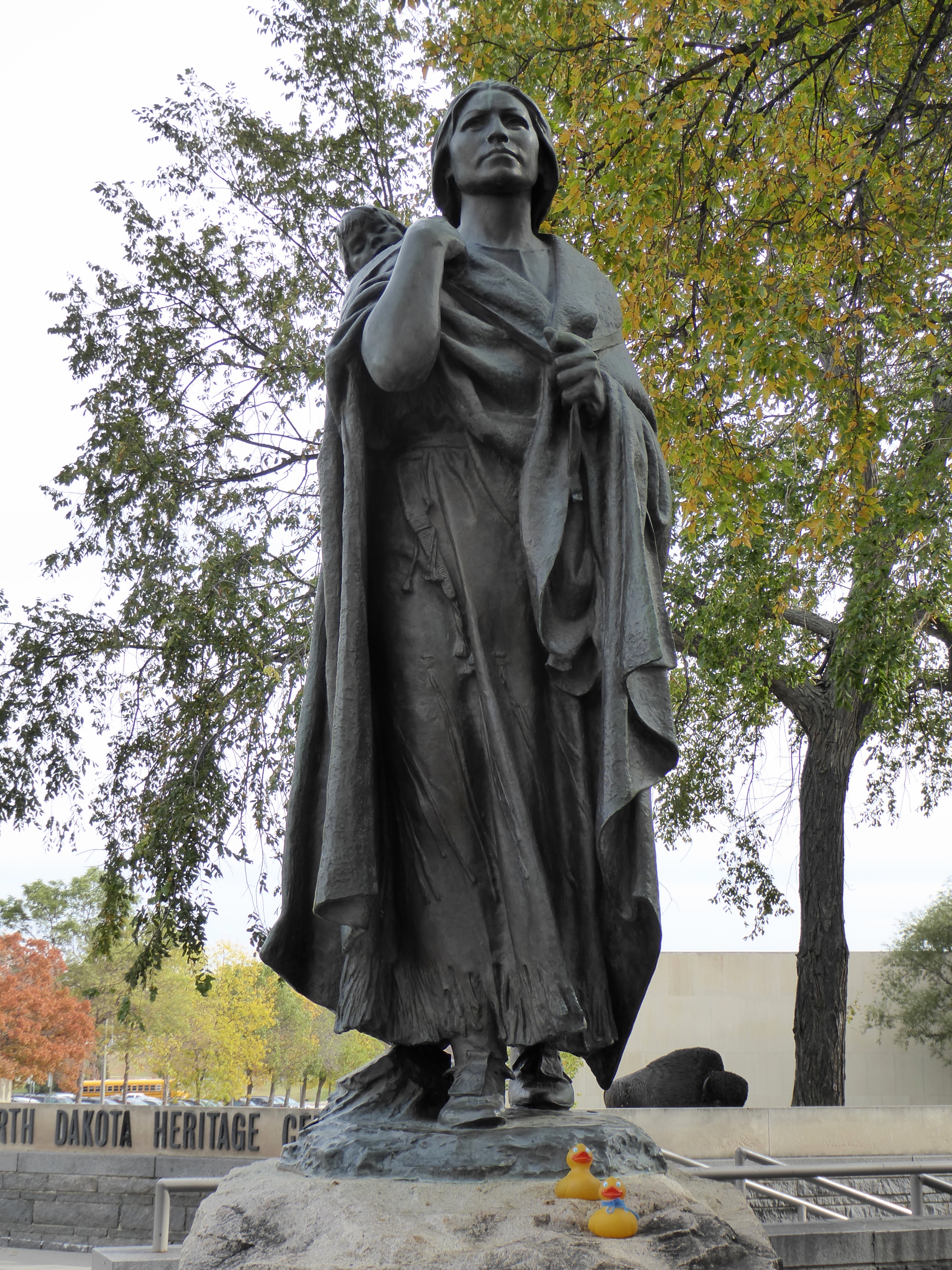
This statue, a 12 foot tall bronze, was dedicated in 1910.   It honors Sakakawea, the Indian interpreter for Lewis and Clark.

Sakakawea and her son

Sakakawea and her son

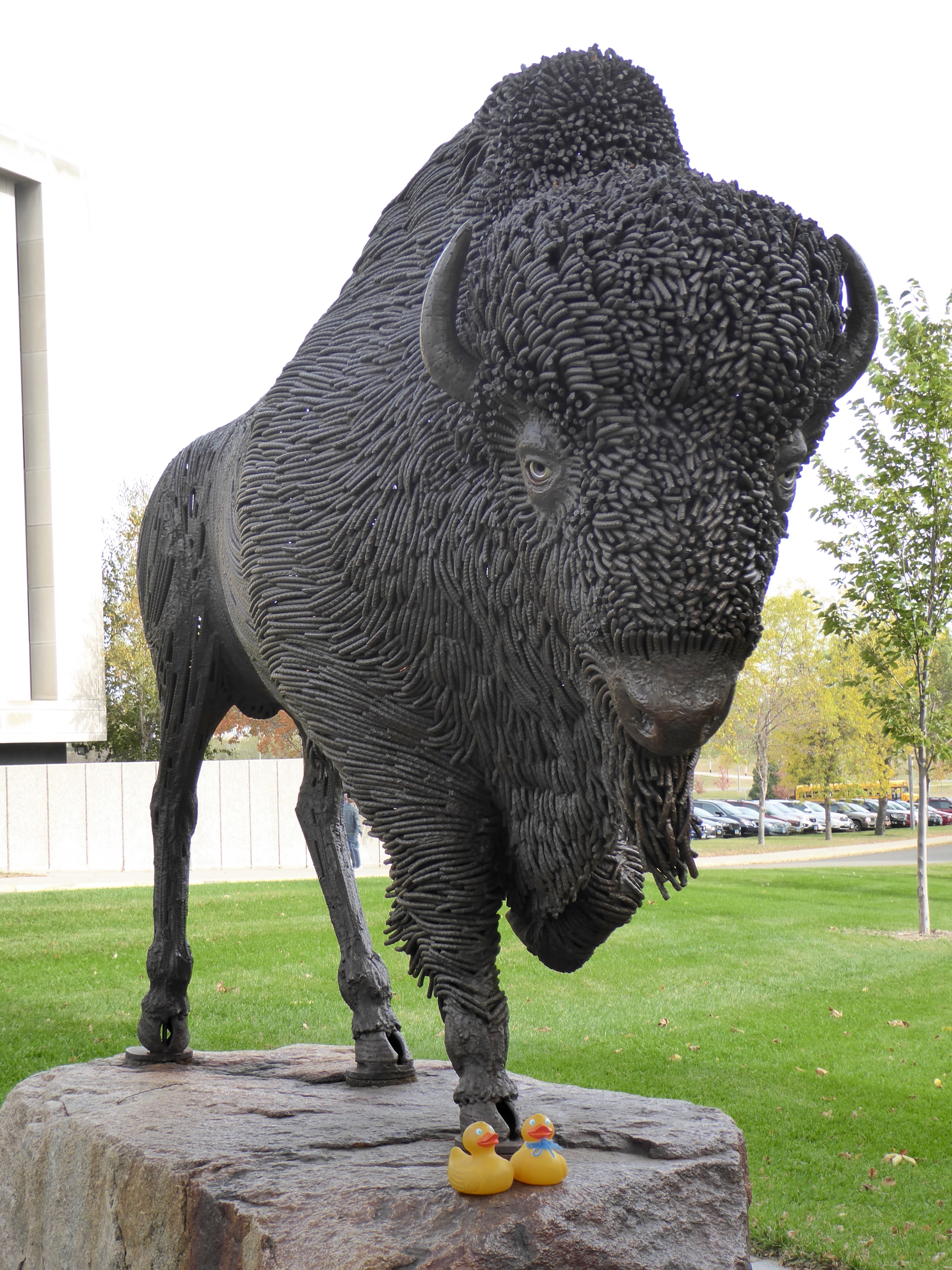
There are a few spellings of her name, but North Dakota uses this spelling.  The statue was made by Leonard Crunelle.   We like it!   Nearby is this buffalo.

We are at the foot of this buffalo. Mom, careful we don't want to get stepped on

We are at the foot of this buffalo.   Mom, careful we don’t want to get stepped on

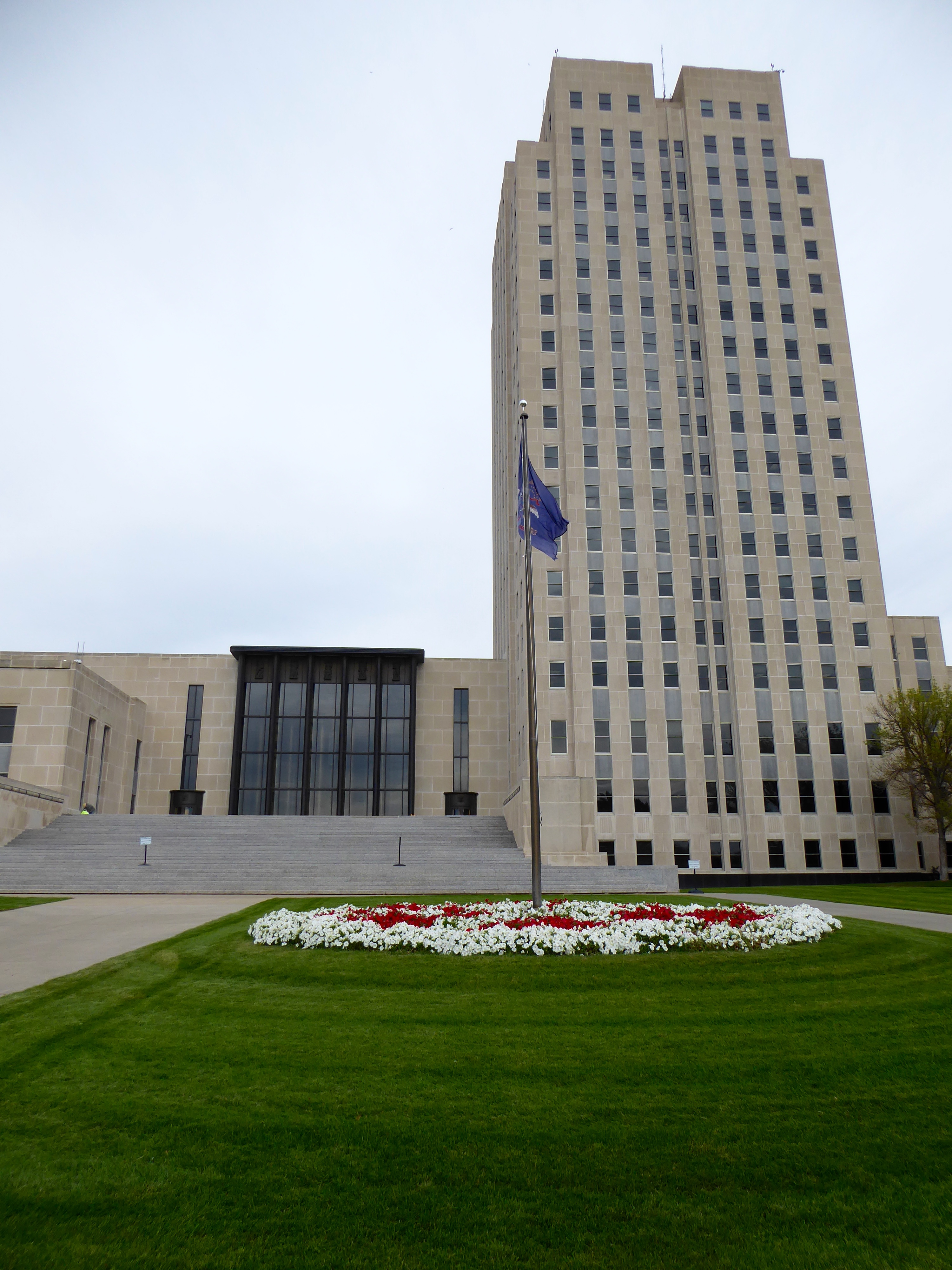
The artist is Bennett Brien.   The statue was given to the state in 1986.   This is the capitol building in Bismarck, North Dakota.   We like this different design for a capitol building.

North Dakota State Capitol Building

North Dakota State Capitol Building

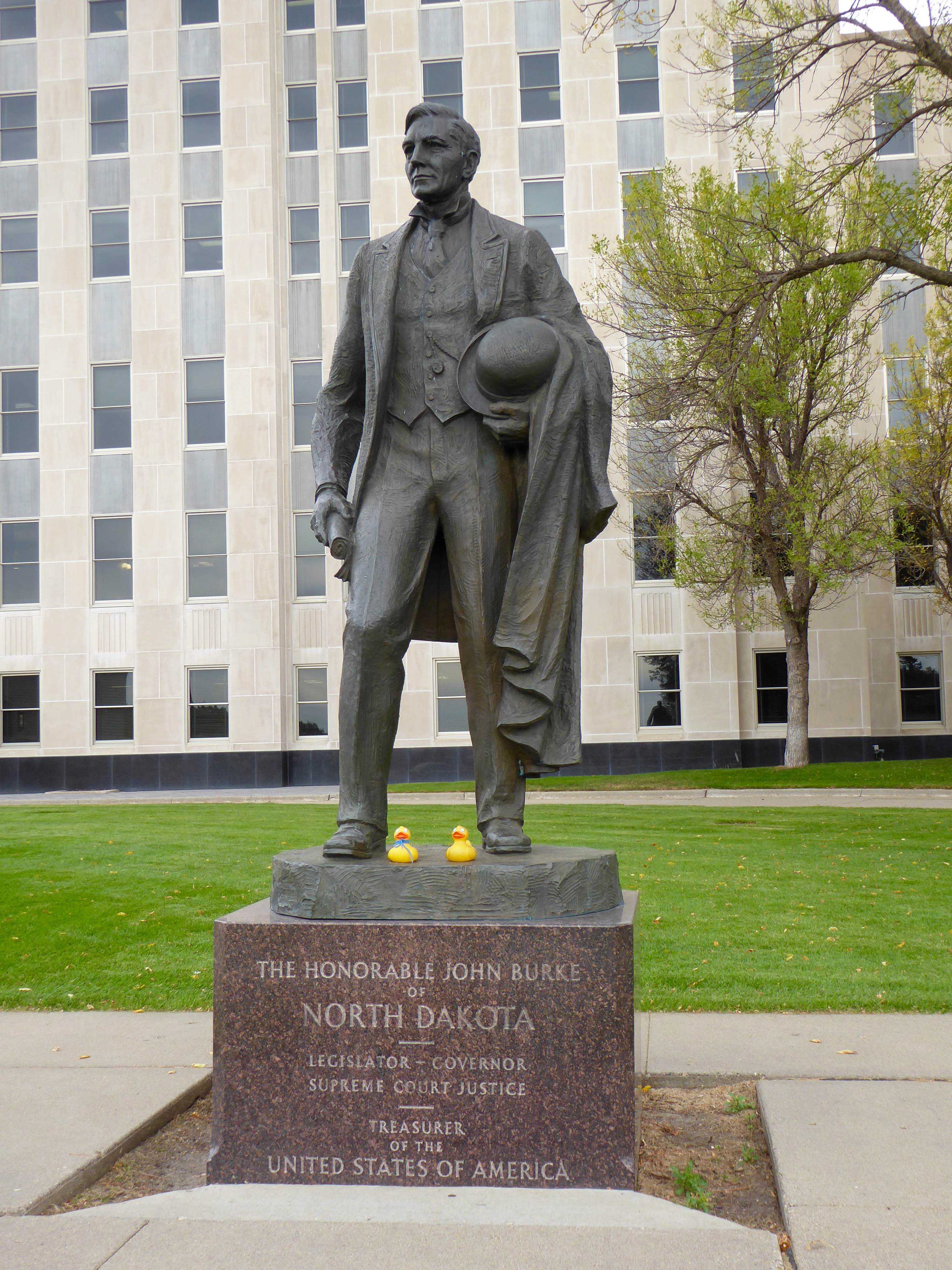
Close to the capitol we admired the statue of the Honorable John Burke.

The Honorable John Burke

The Honorable John Burke

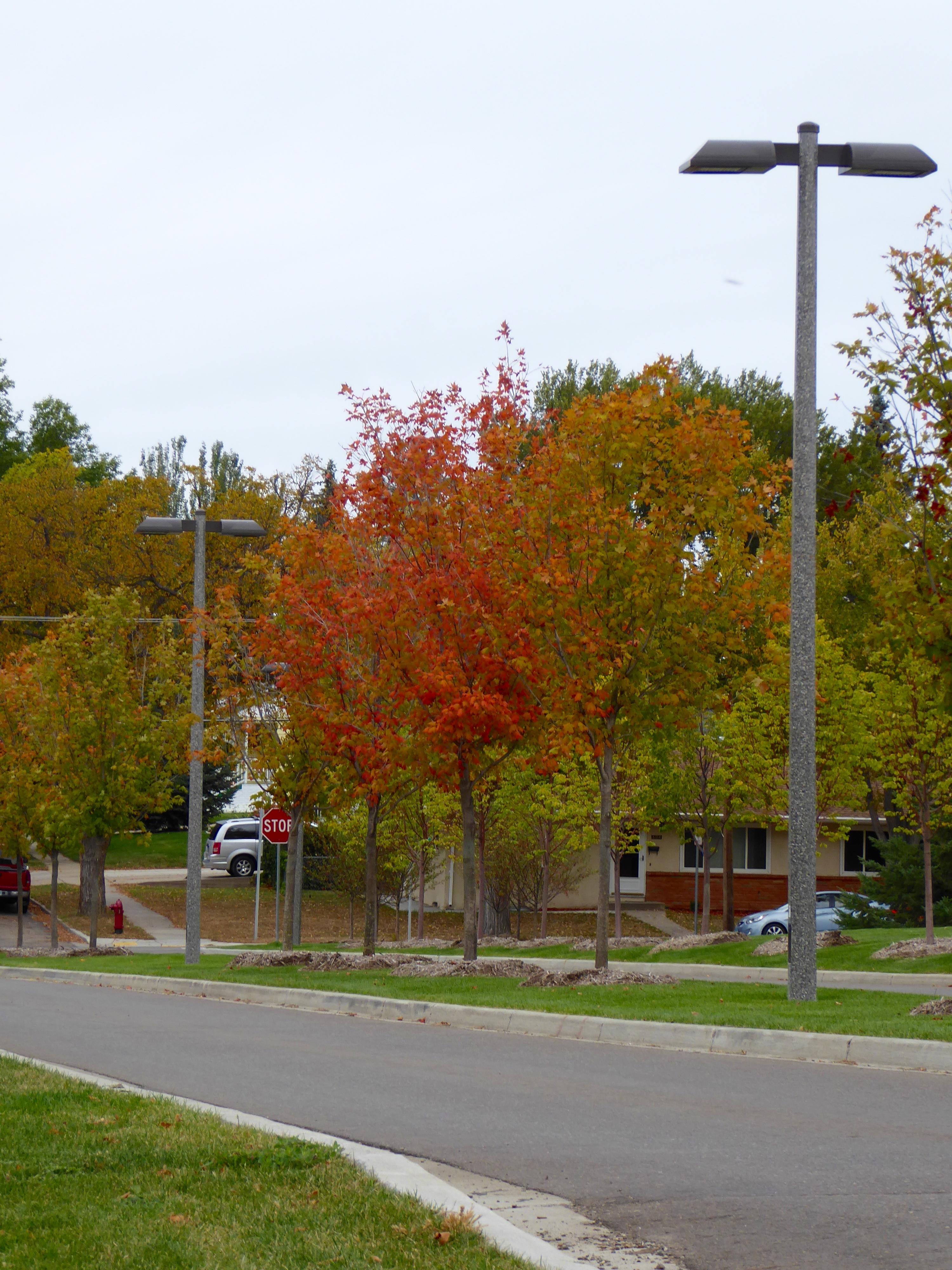
In North Dakota, he was a Legislator, a Governor, and a Supreme Court Justice.   In 1913 he was appointed Treasurer of the United States of America by President Woodrow Wilson.    We enjoyed the autumn color on this tree in Bismarck, North Dakota.

Fall color in Bismarck, North Dakota

Fall color in Bismarck, North Dakota

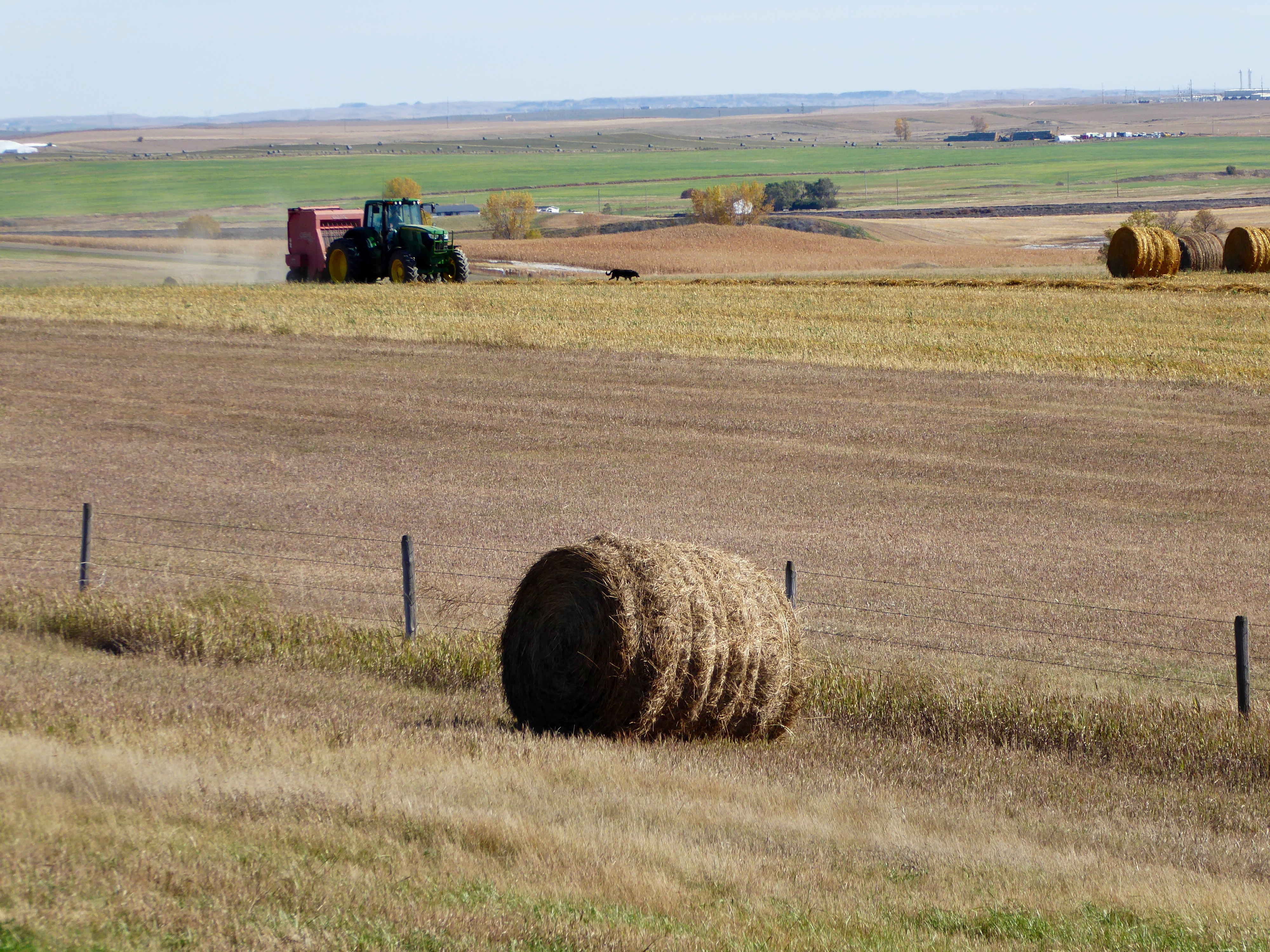
Here we can see that the work of the American farmer is never done.

A farmers work is never done

A farmers work is never done

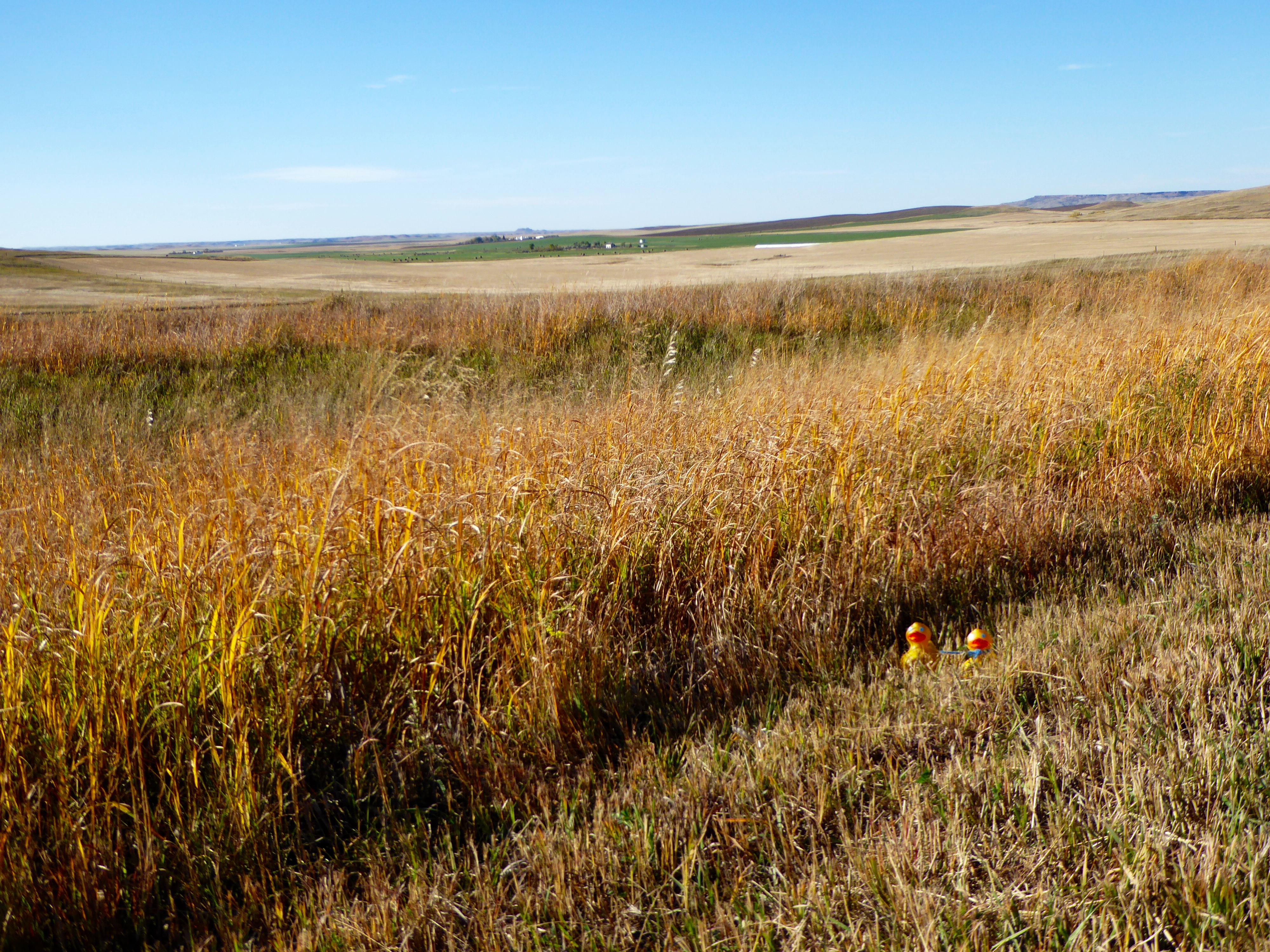
We think a well cared for farm is beautiful.   In southern North Dakota, we liked the golden wild grass by the road and the farm in the background.

Zeb and Soapy by golden wild grass

Zeb and Soapy by golden wild grass and a clear blue sky.

North Dakota was a nice place to visit.   We had wonderful sunny days, but we have heard that North Dakota has severe winters.   We are glad we did not see that weather.   We really enjoyed our time in North Dakota.   We hope you visit during nice sunny weather also.

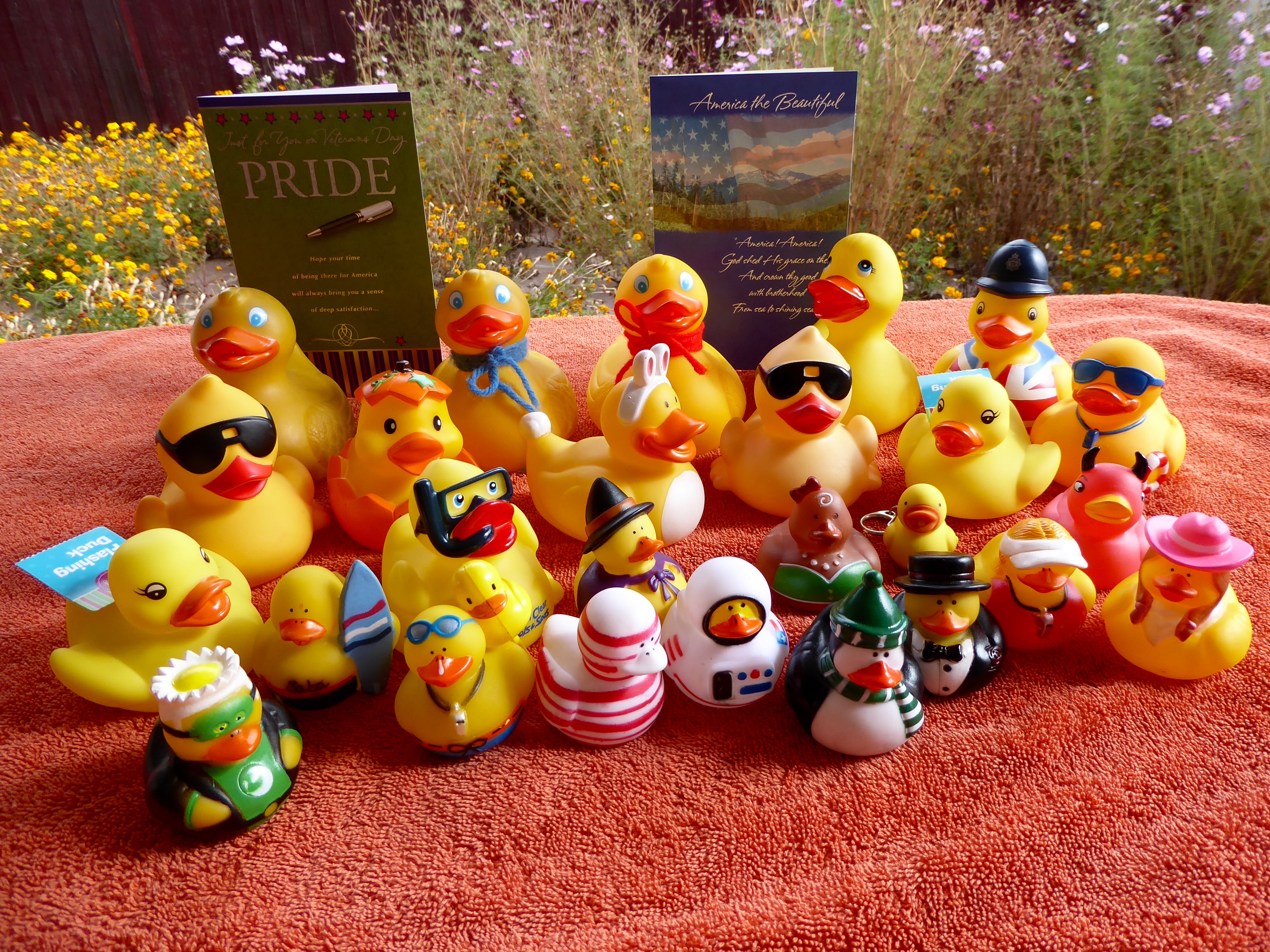
Happy Veteran’s Day 2015

Happy Veteran’s Day.    We, the Colorado Traveling Ducks and our humans, thank all veterans for their service.    You, the veterans and active military, keep our country free and we are forever grateful.   All of you know a veteran or active military person.   Today, please thank them.   Send them a card.   Call or e-mail or text to thank them.   Buy them a beverage.   Acknowledge their service.   We thank cousin Eider Duck’s dad.   He served in the U.S. Army for over 25 years.

Happy Veteran's Day from all the Colorado Traveling Ducks

Happy Veteran’s Day from all the Colorado Traveling Ducks

Beautiful Northern Minnesota with Zeb and Soapy Smith Duck

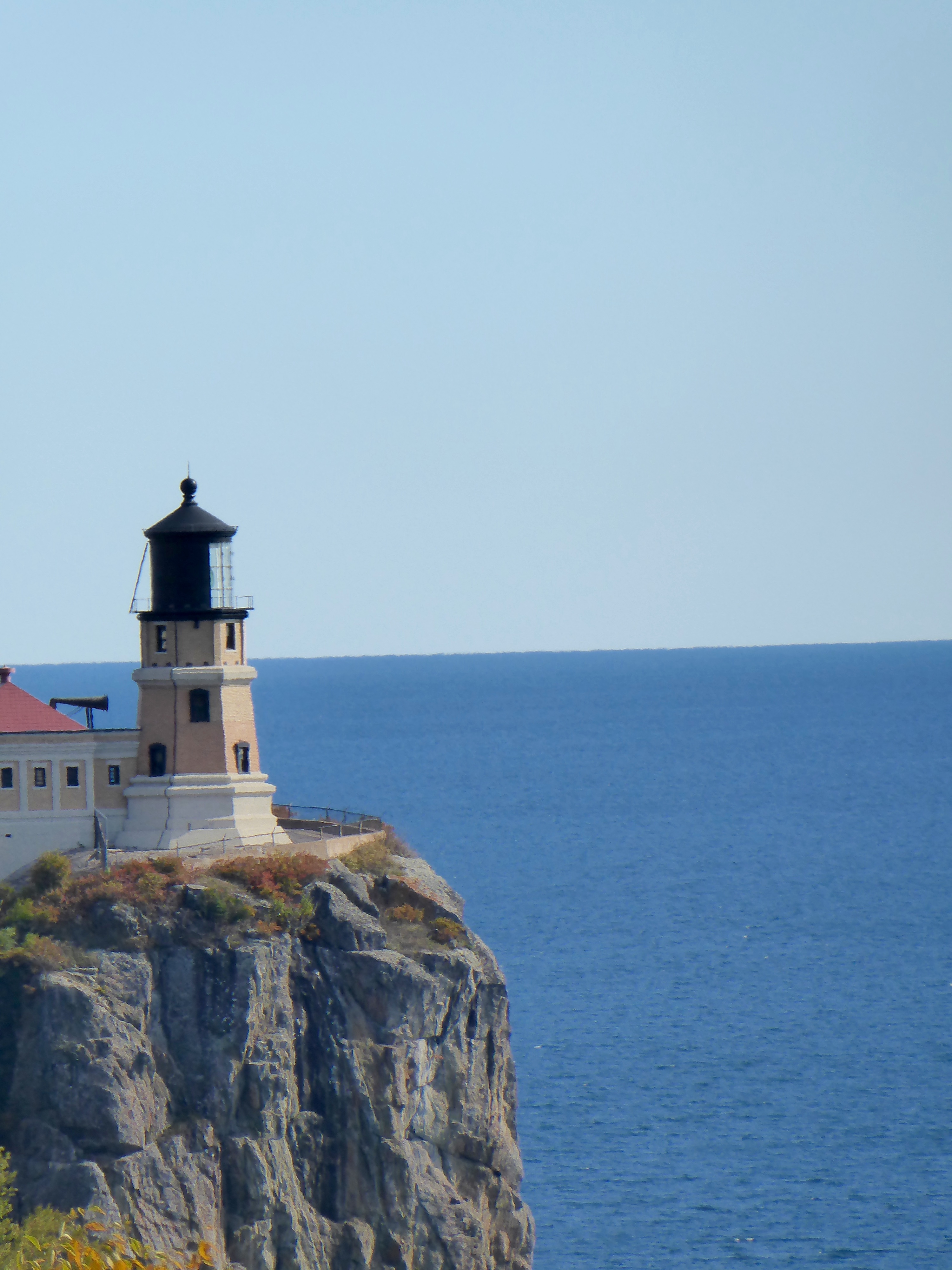
Zeb and Soapy Smith Duck drove over another bridge from Superior, Wisconsin back to Duluth, Minnesota.   We love driving through this part of the United States.    We are driving north from Duluth along Lake Superior.    Split Rock Lighthouse is magnificent.

Split Rock Lighthouse

Split Rock Lighthouse

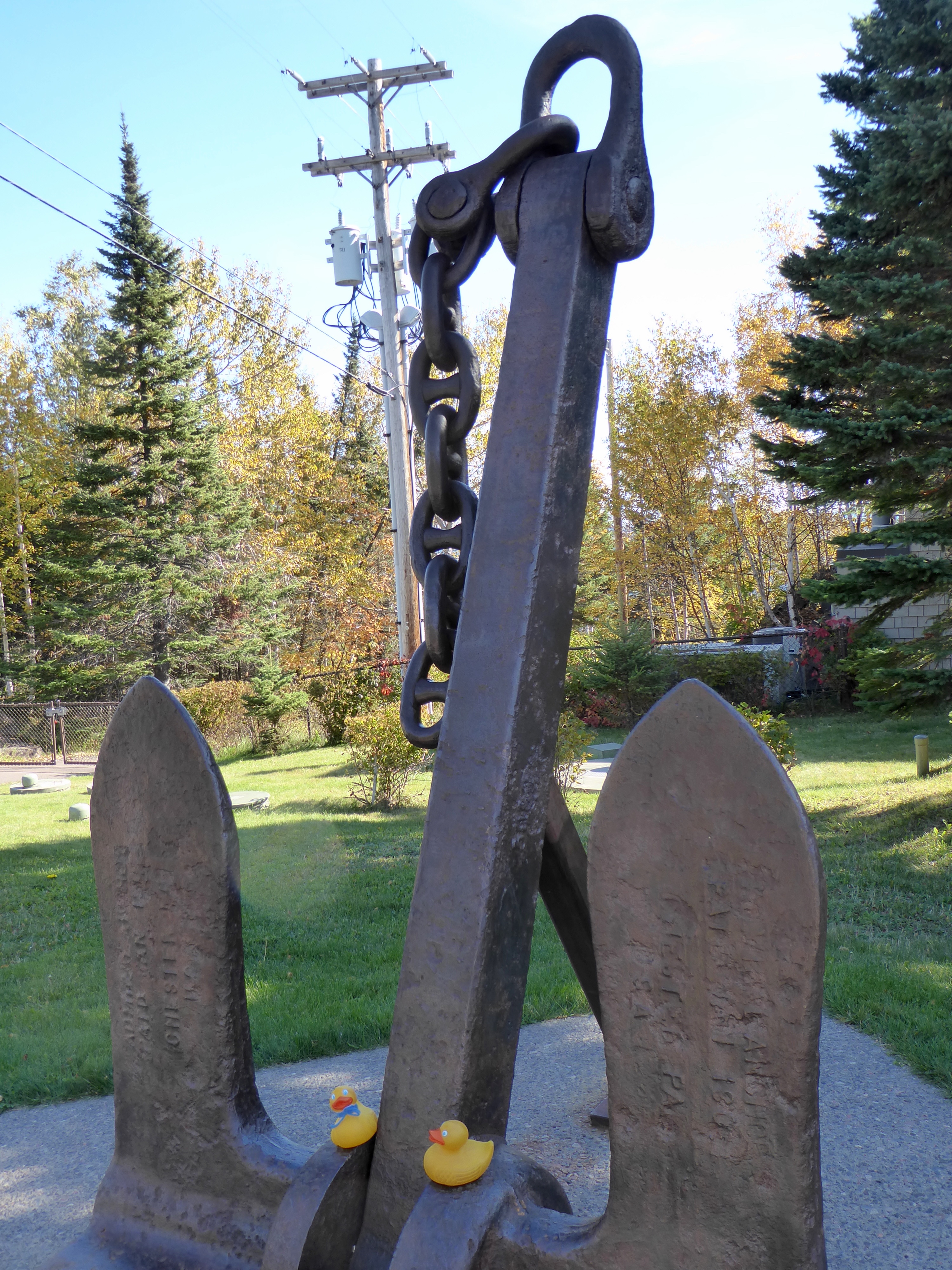
November 27-28, 1905 this area experienced a “Storm of a Century”.   More than 20 ships sank or were heavily damaged at the west end of Lake Superior.   Split Rock Lighthouse was completed in 1910.    At the Visitor’s Center we were greeted by the anchor of the Madeira, a 5,000 ton steel barge that went down in this storm.

Anchor from Madeira. A 500 steel barge, and it could float???

Anchor from Madeira. A 500 steel barge, and it could float???

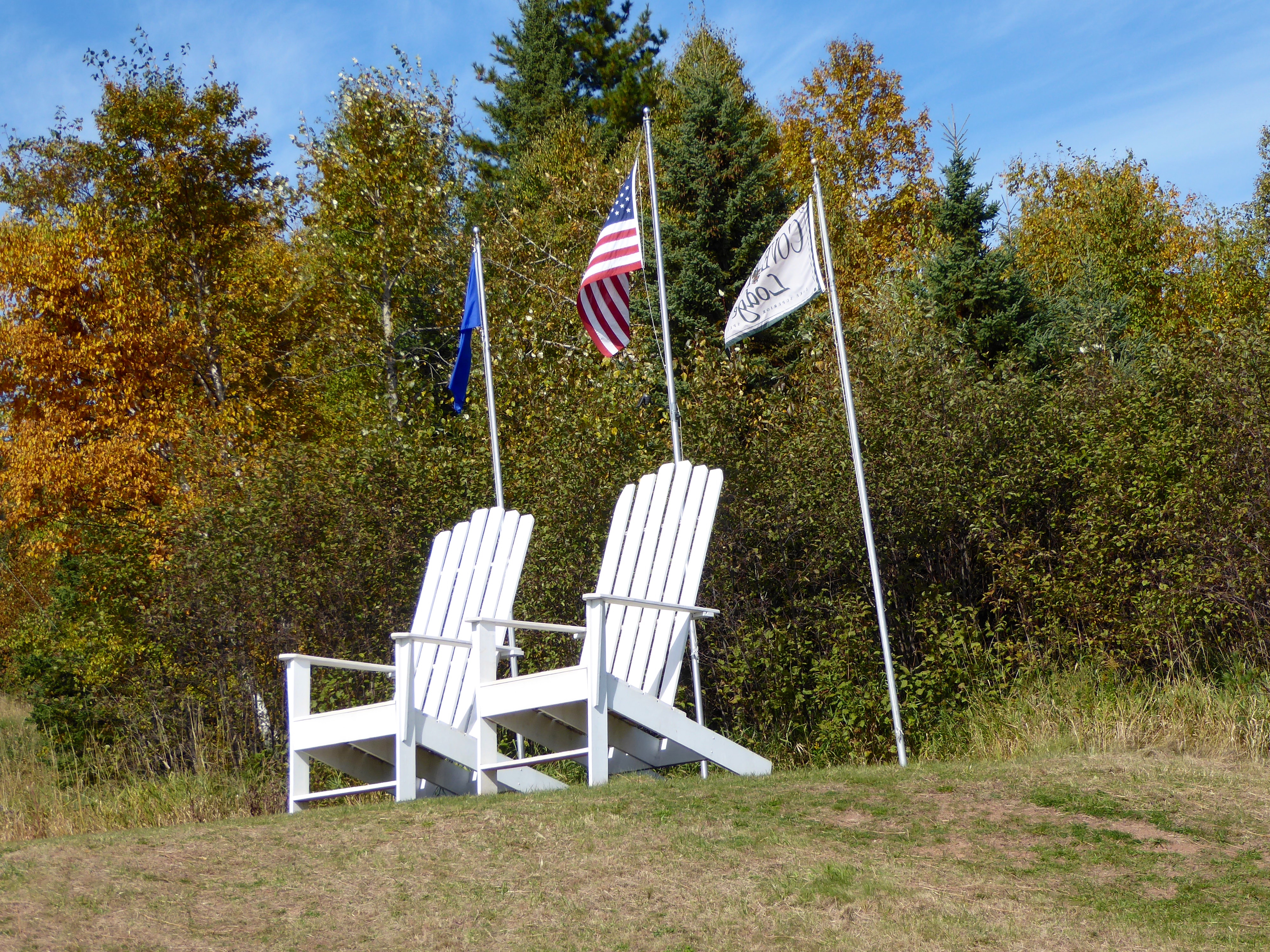
Lakes are beautiful, but can be dangerous.    We loved these big chairs on the cliffs overlooking Lake Superior.
Resort on Lake Superior here. Sit for awhile

Resort on Lake Superior here.   Sit for awhile

They are part of an advertisement for a resort on Lake Superior.   If we come here in the summer, we would stay at this resort.   Next stop for us is Beaver River.

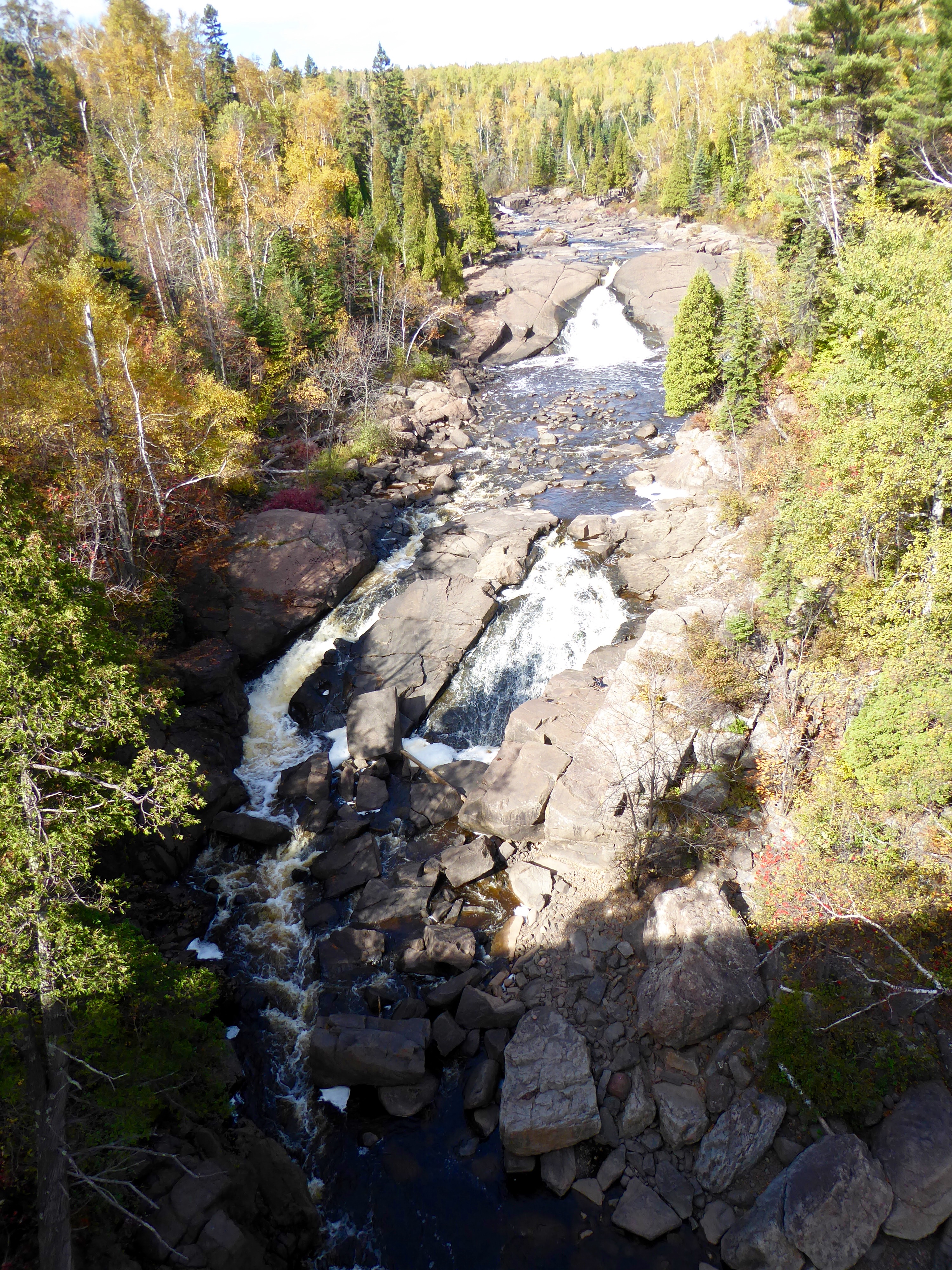
Cascading Beaver River

Cascading Beaver River

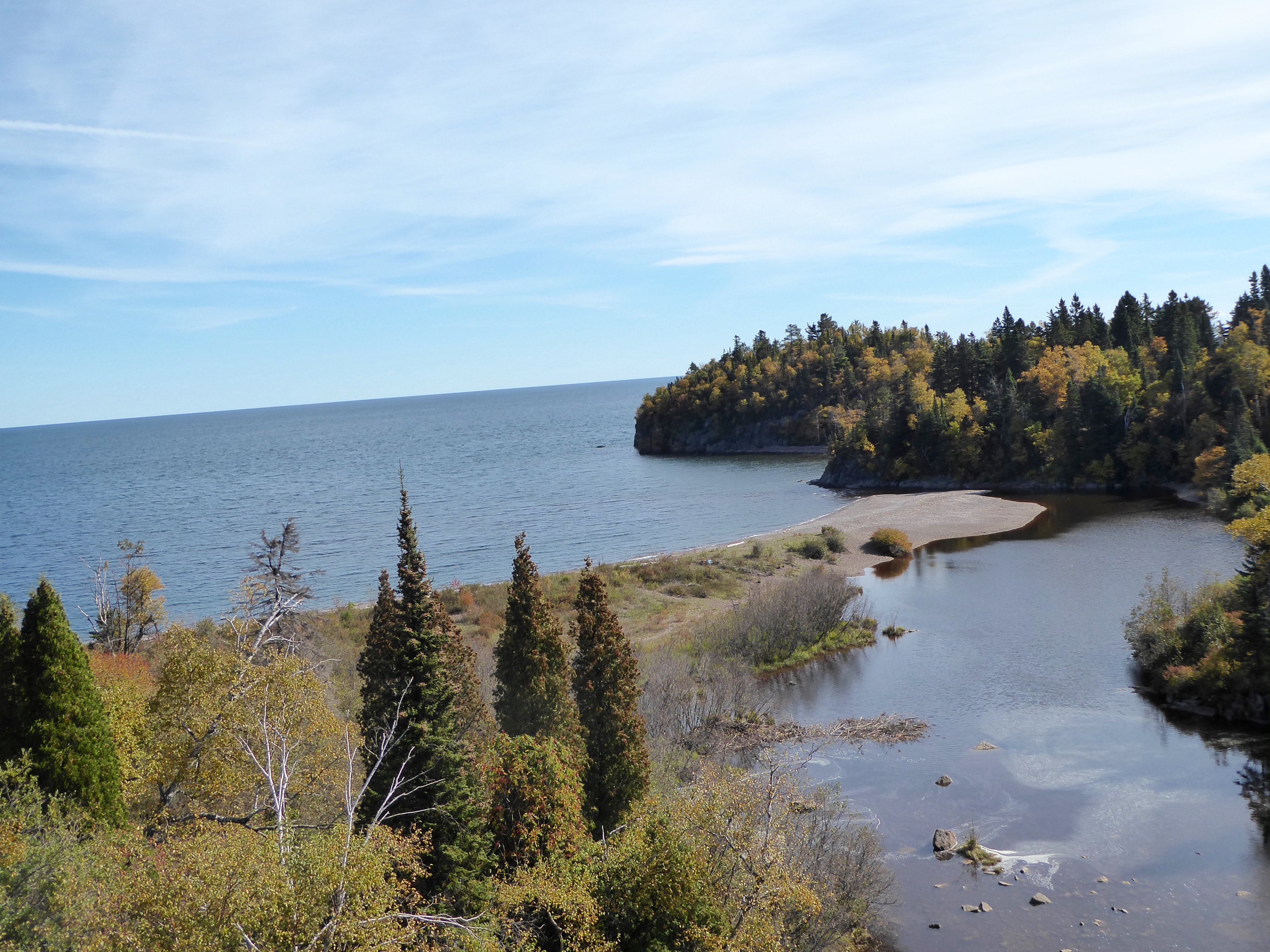
Don’t you just love cascading rivers?   We do!   Beaver River flows into Lake Superior.

Beaver River flows into Lake Superior

Beaver River flows into Lake Superior

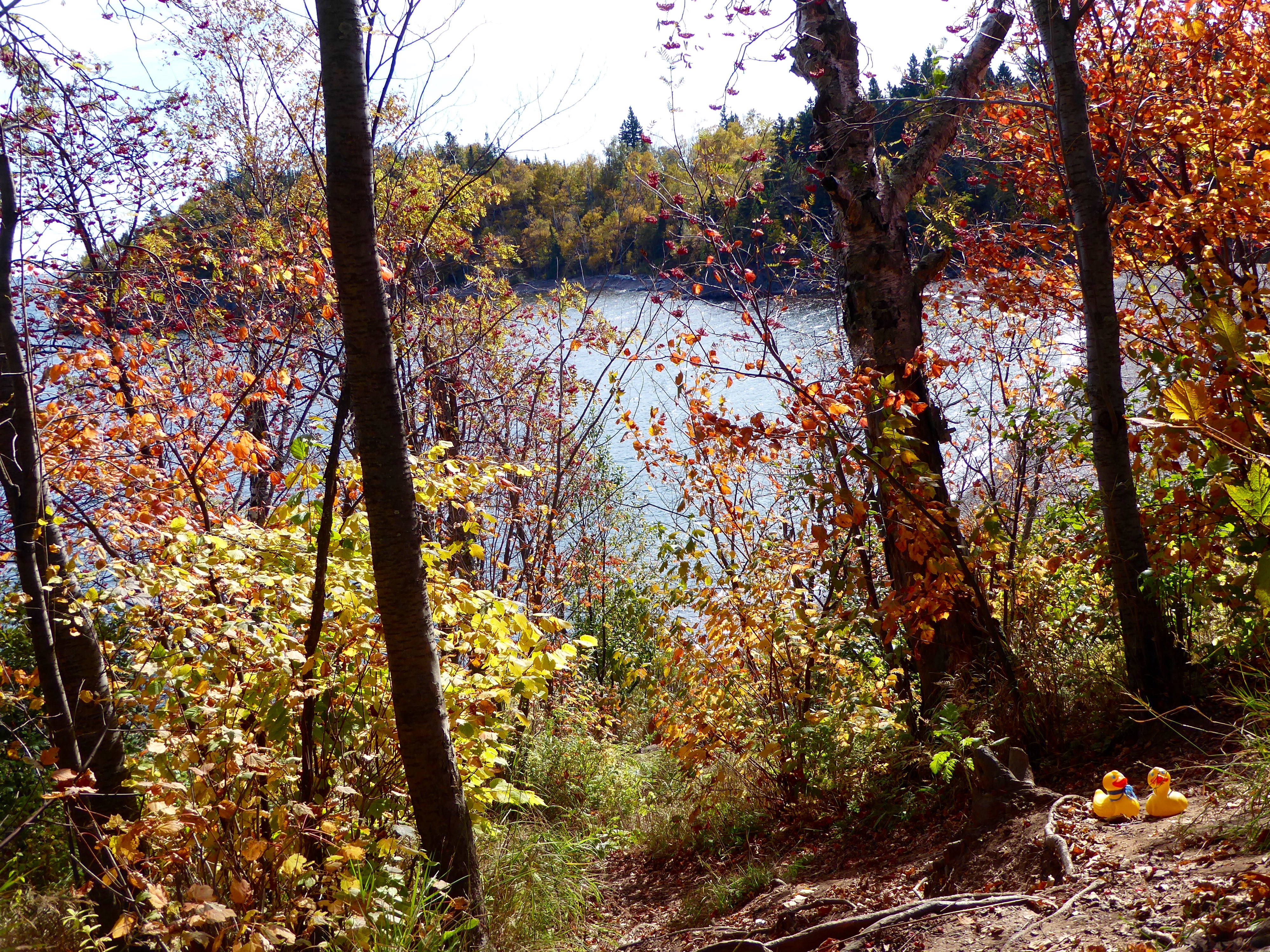
So much beautiful water.     Great view of Lake Superior through the trees.
Lake Superior through the trees

Lake Superior through the trees

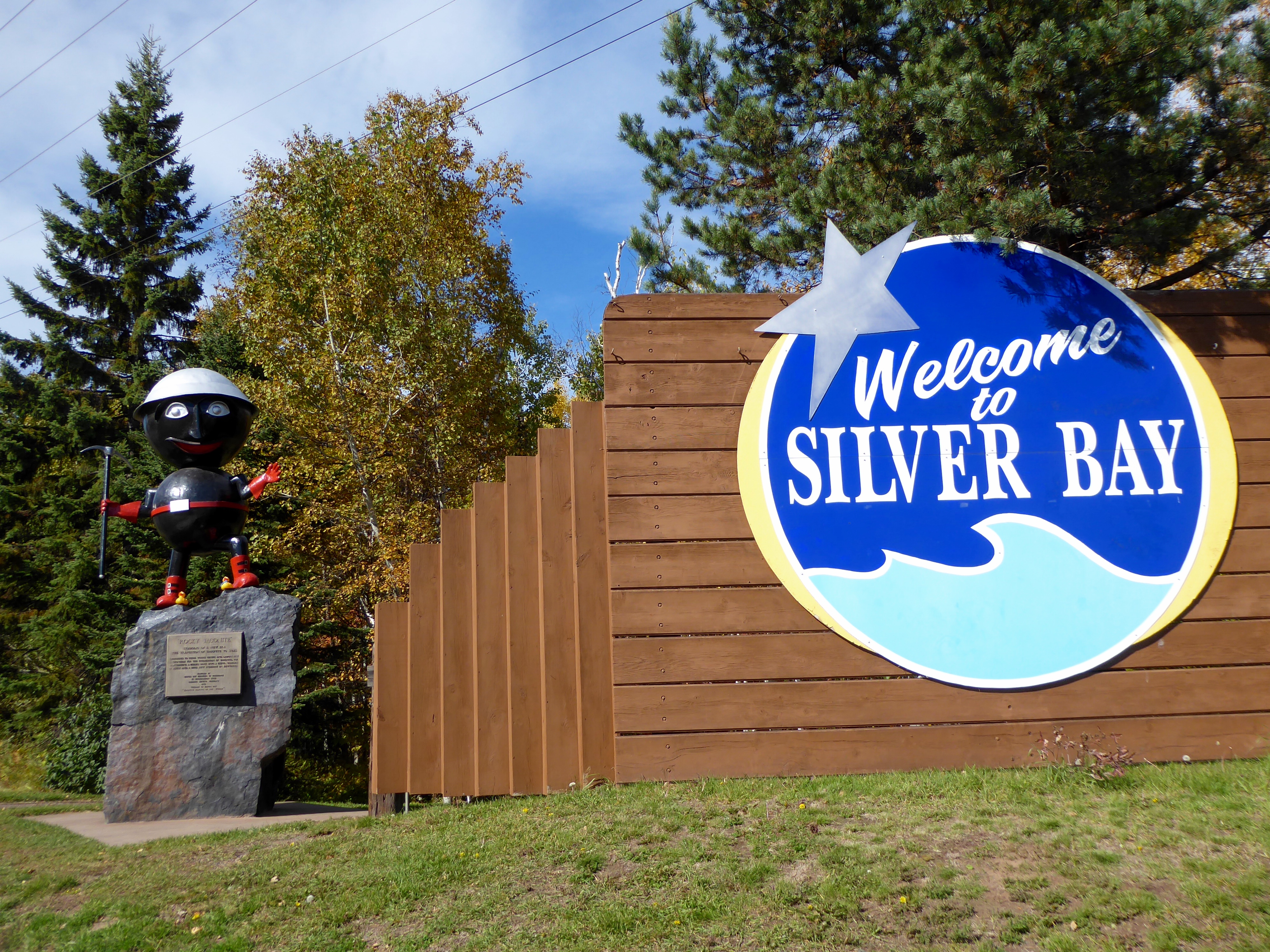
We are now in Silver Bay, Minnesota.   This is Rocky Taconite.
Silver Bay and Rocky Taconite statue

Silver Bay and Rocky Taconite statue

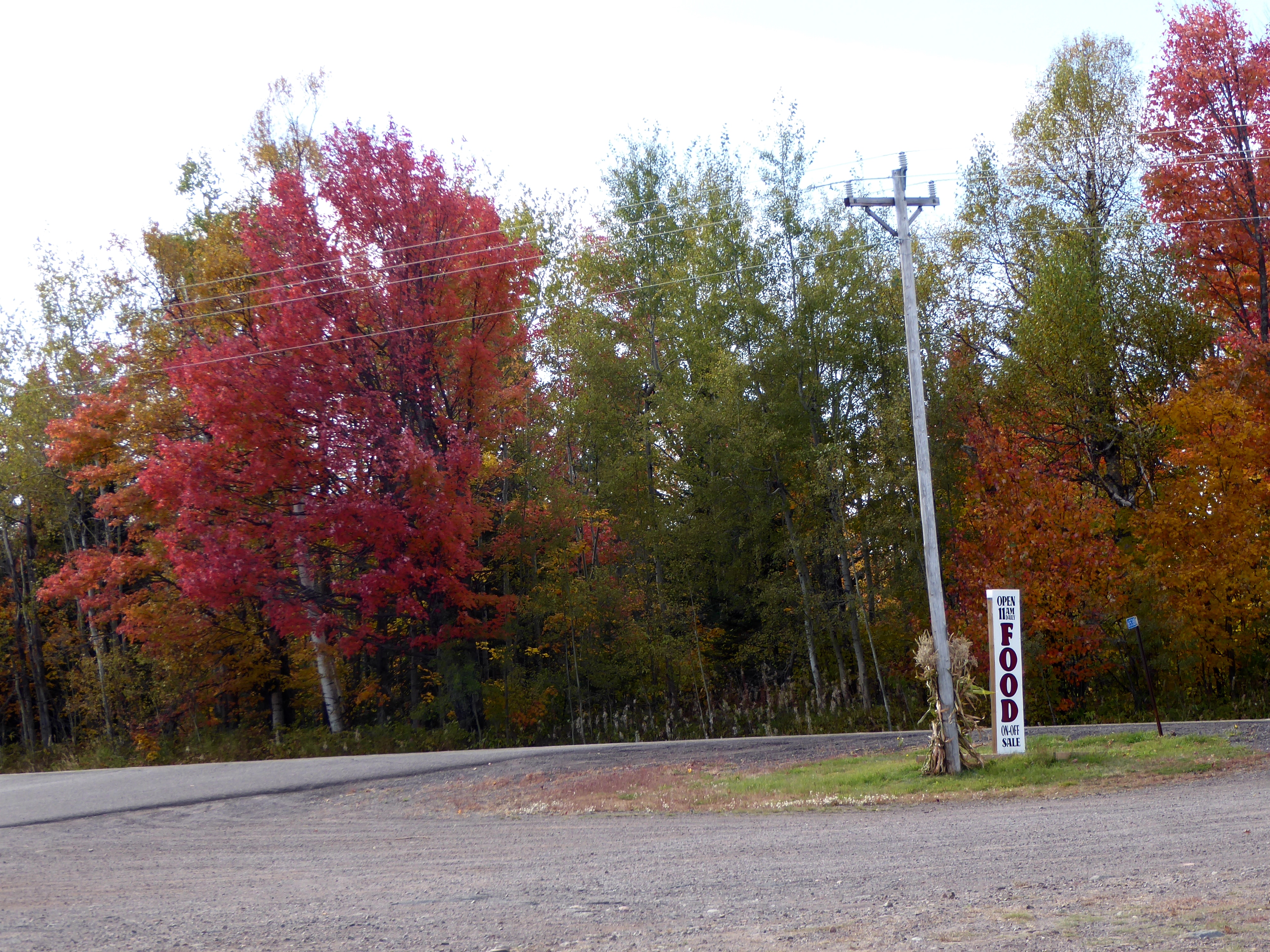
Taconite is now made into steel.   This was a great economic boost to the economy in this area.   We will now drive west, leaving Lake Superior.   Further north and inland, we would come to the Boundary Waters Canoe Area, and we are not prepared to leave our car and canoe across Minnesota.    It is  great thing to do in the summer, though.   We love the red leaves on this tree, and, of course, a sign announcing food is always a welcome sight.

Beautiful red leaves--and tasty food

Beautiful red leaves–and tasty food

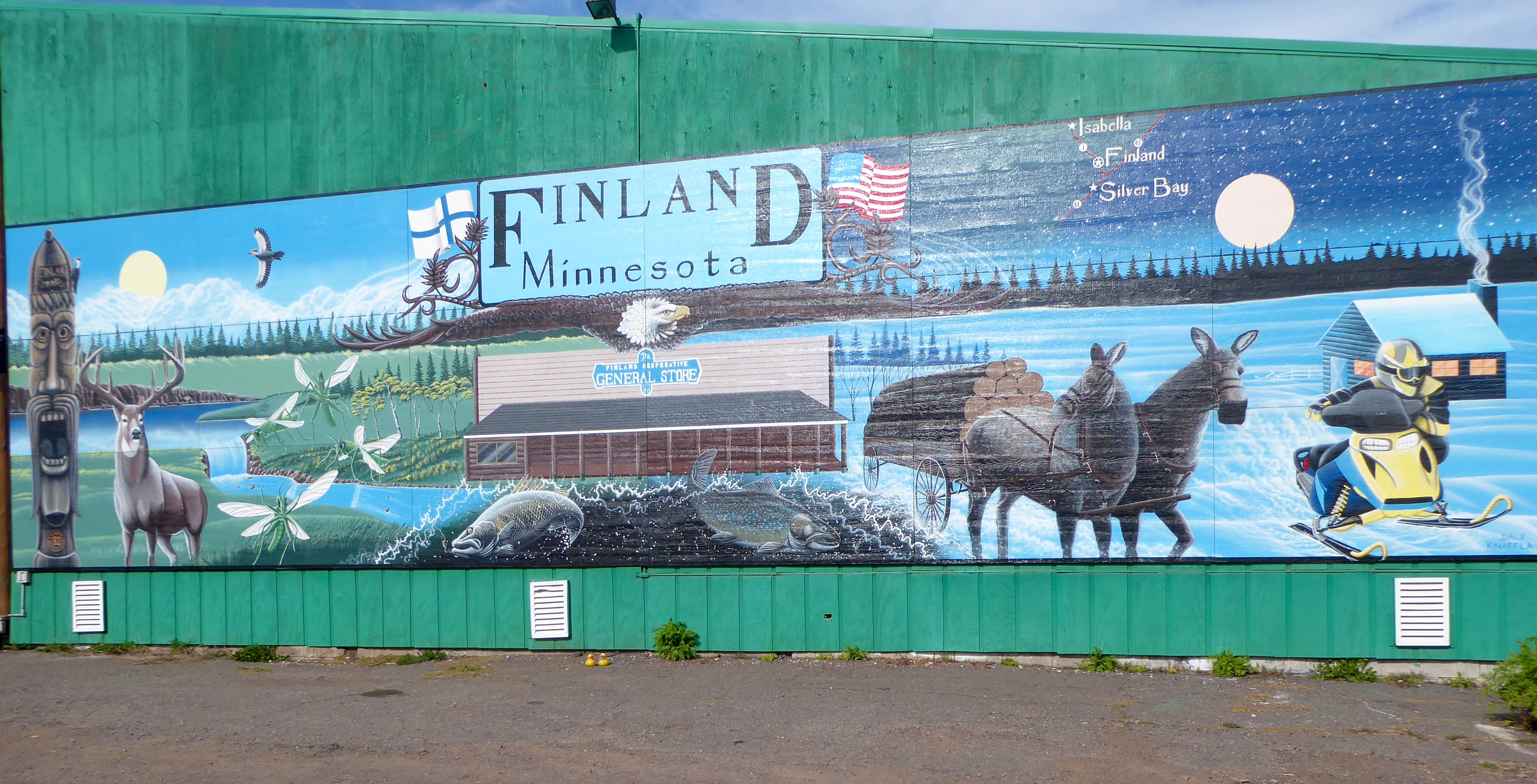
Continuing, we arrived in Finland, Minnesota.   Great mural created by Dale Knaffla in 2011.

Finland, Minnesota. Winter fun!

Finland, Minnesota.   Winter fun!

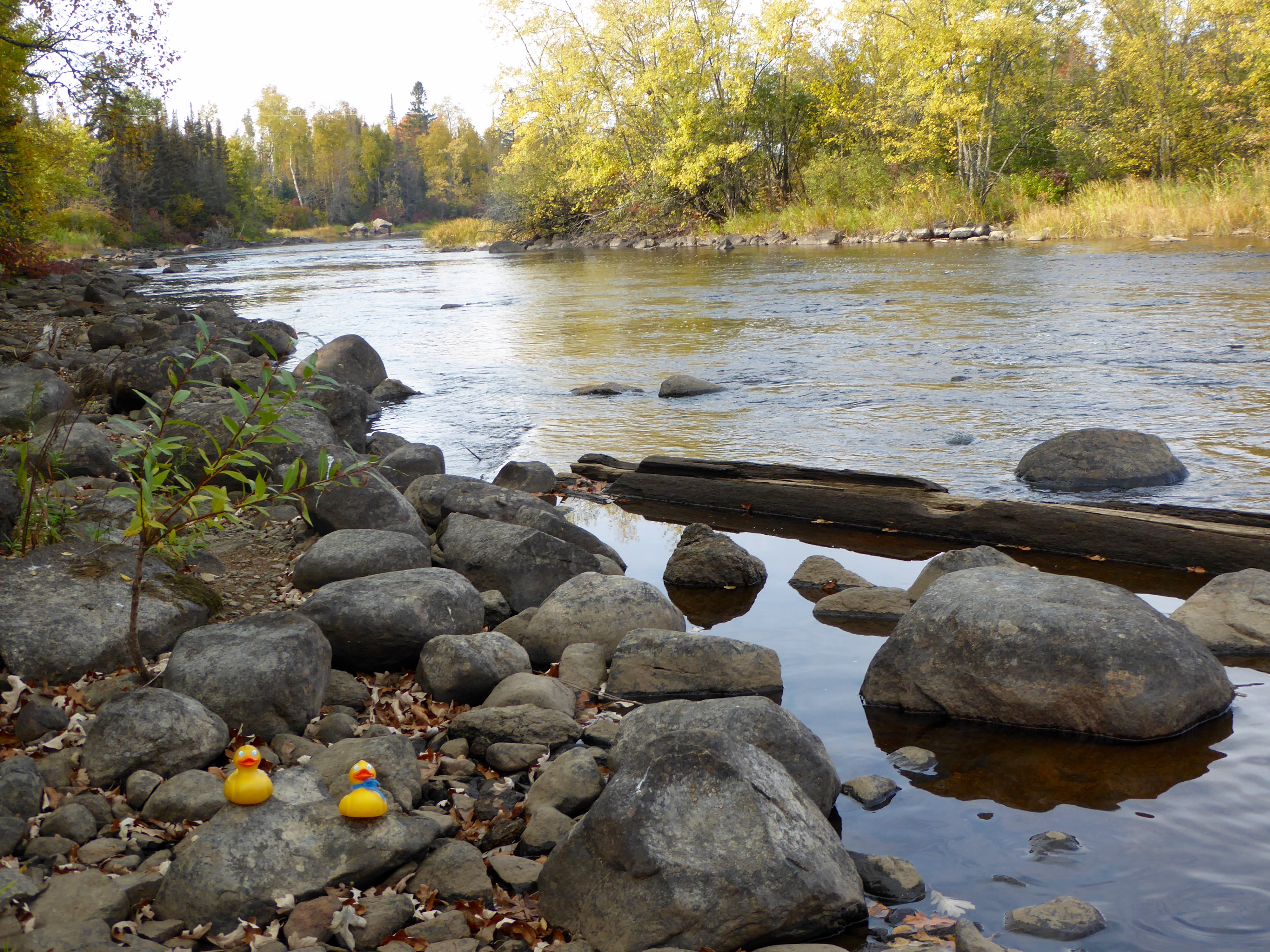
Minnesota is known as the Land of 10,000 Lakes, but don’t forget all the beautiful rivers.

Rivers too. Not only lakes in Minnesota

Rivers too.   Not only lakes in Minnesota,

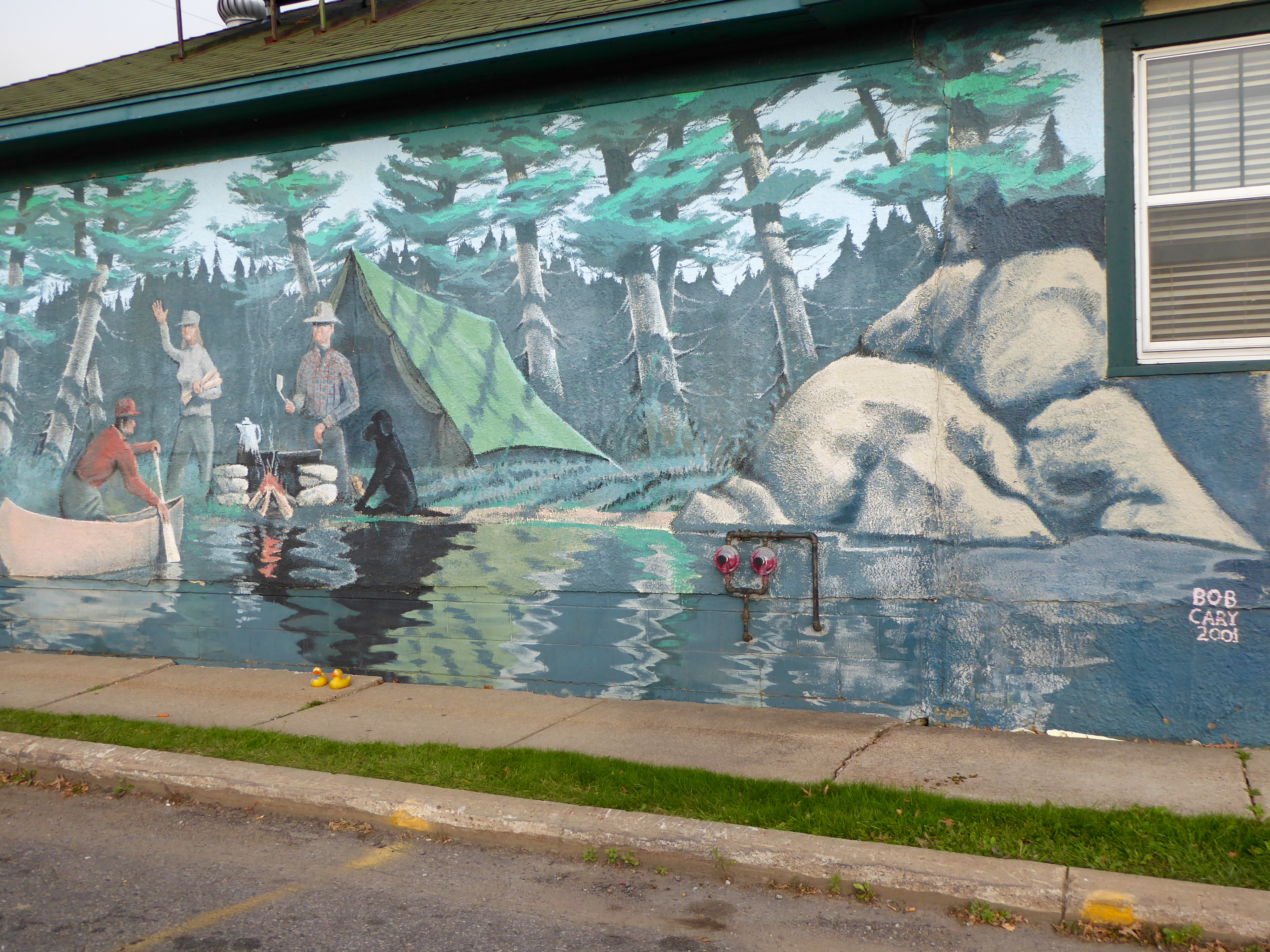
We are now in Ely, Minnesota.   Ely is a tourist town and  we saw many outfitters with stacks of canoes ready for next spring.   Here, in Ely, we admired this mural by Bob Cary in 2001.

Mural in Ely, Minnesota

Mural in Ely, Minnesota

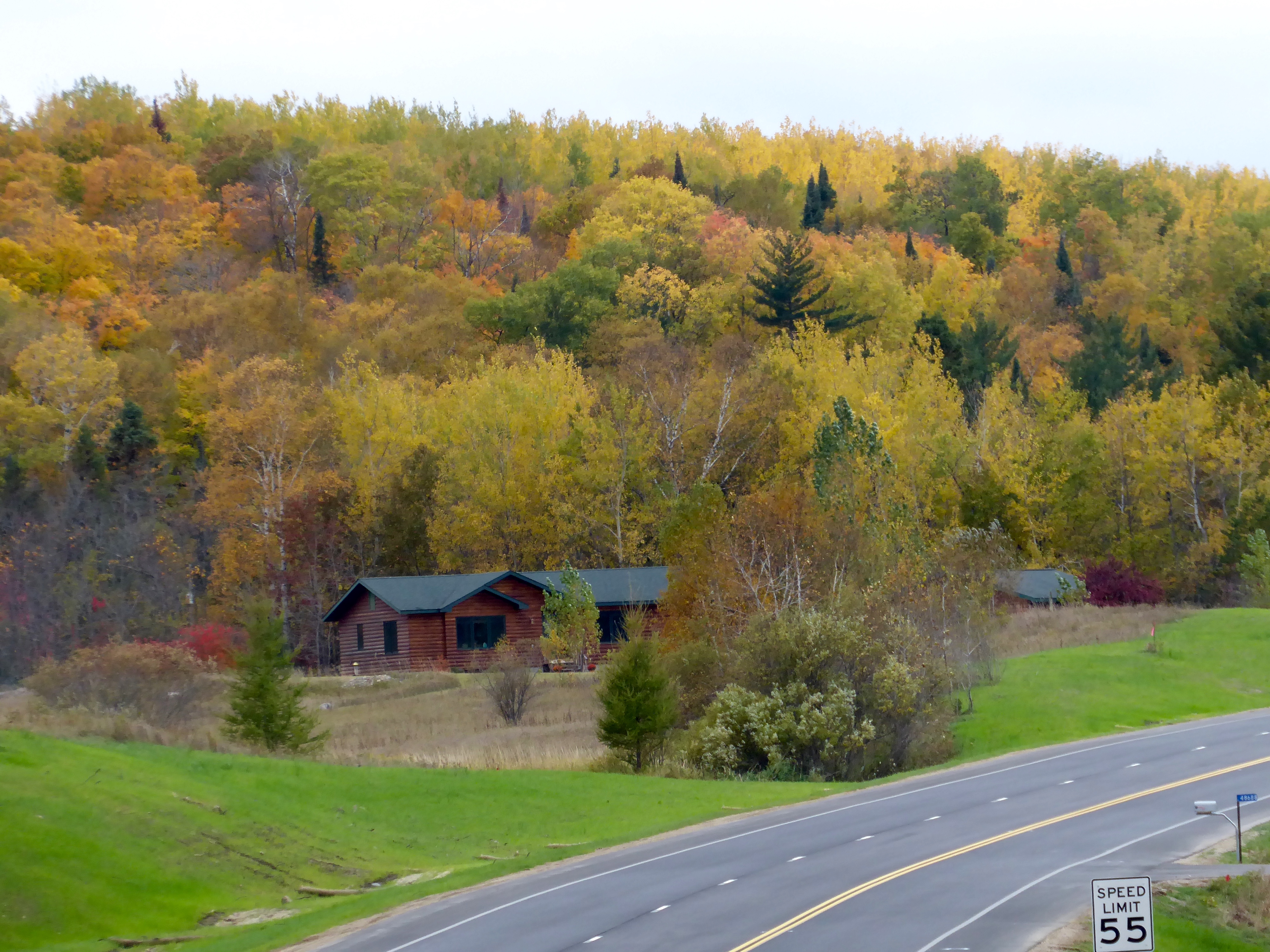
As you can tell, we like the murals painted on buildings.   We thought this looked like a nice house in  beautiful Minnesota setting.

We thought this house and trees were beautiful

We thought this house and trees were beautiful

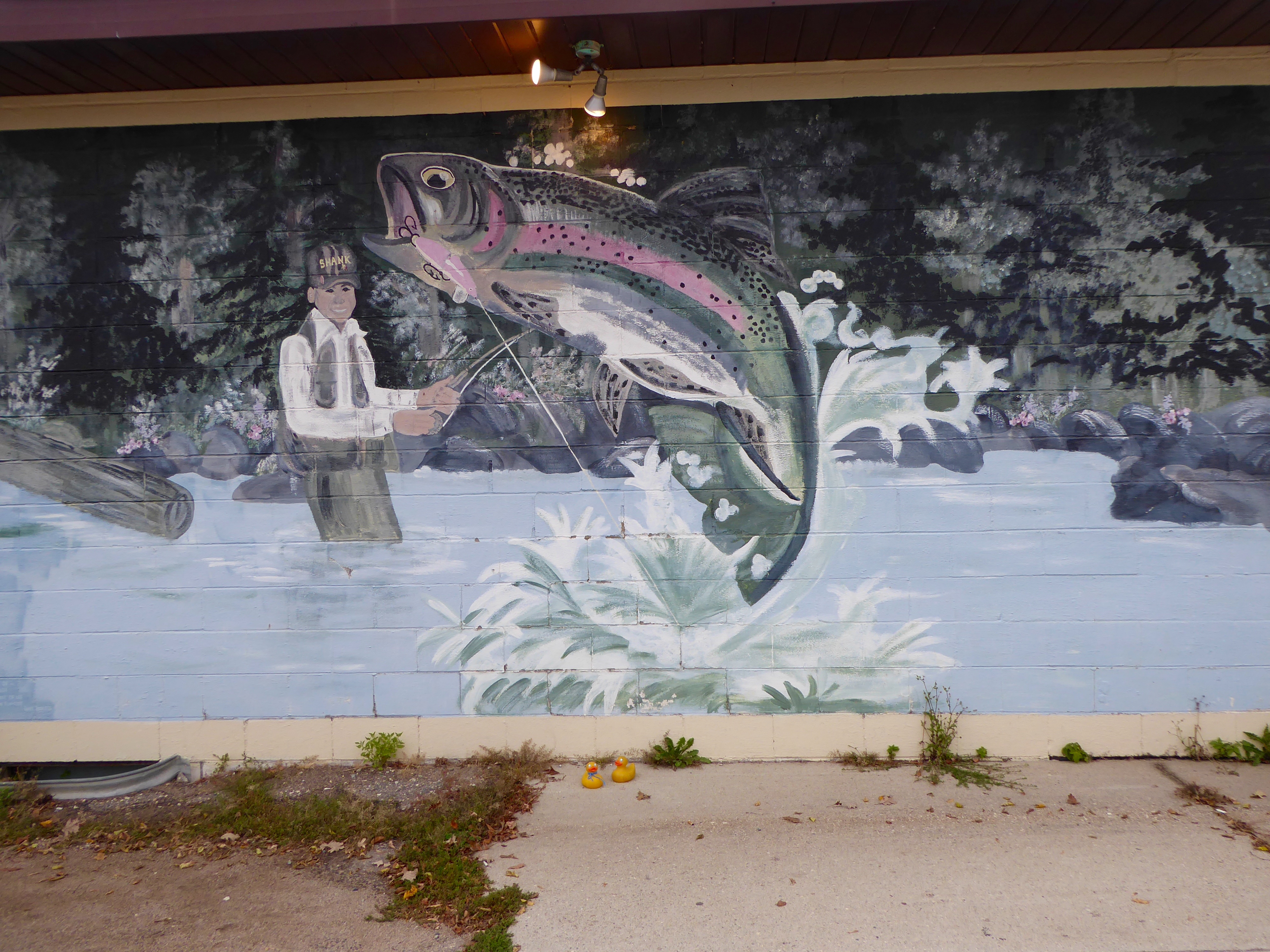
Here is another mural in Detroit Lakes, Minnesota.

Fishing mural in Detroit Lakes, Minnesota

Fishing mural in Detroit Lakes, Minnesota

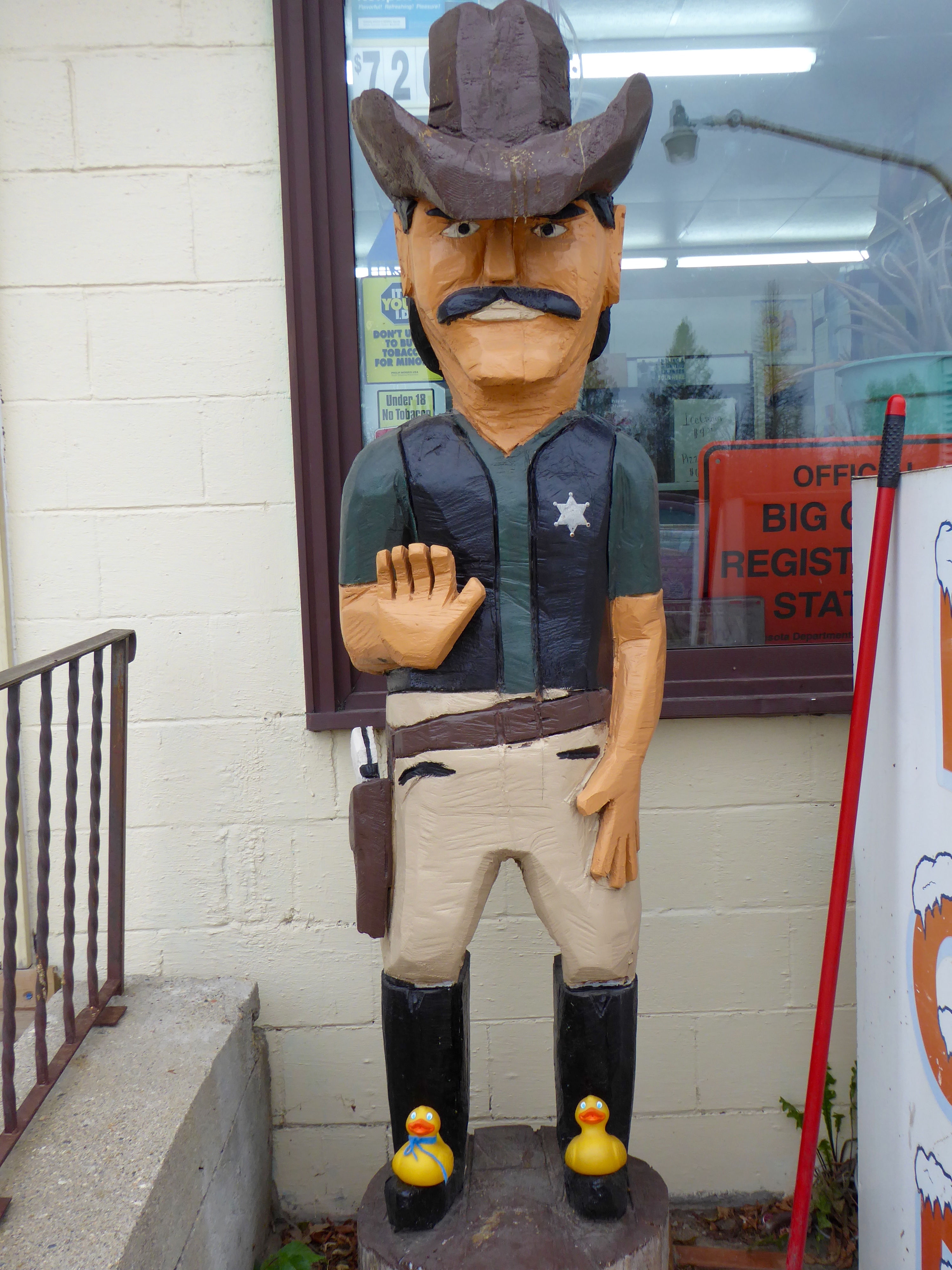
This was done by Amis Aboleg in memory of Tim Wokasch, saying  “Watch over the rest of us.   See you on the Flip Side.”   Nearby, in Detroit Lakes, we appreciated the wood carving of the sheriff.
Wooden sheriff. Detroit Lakes, Minnesota

Wooden sheriff. Detroit Lakes, Minnesota

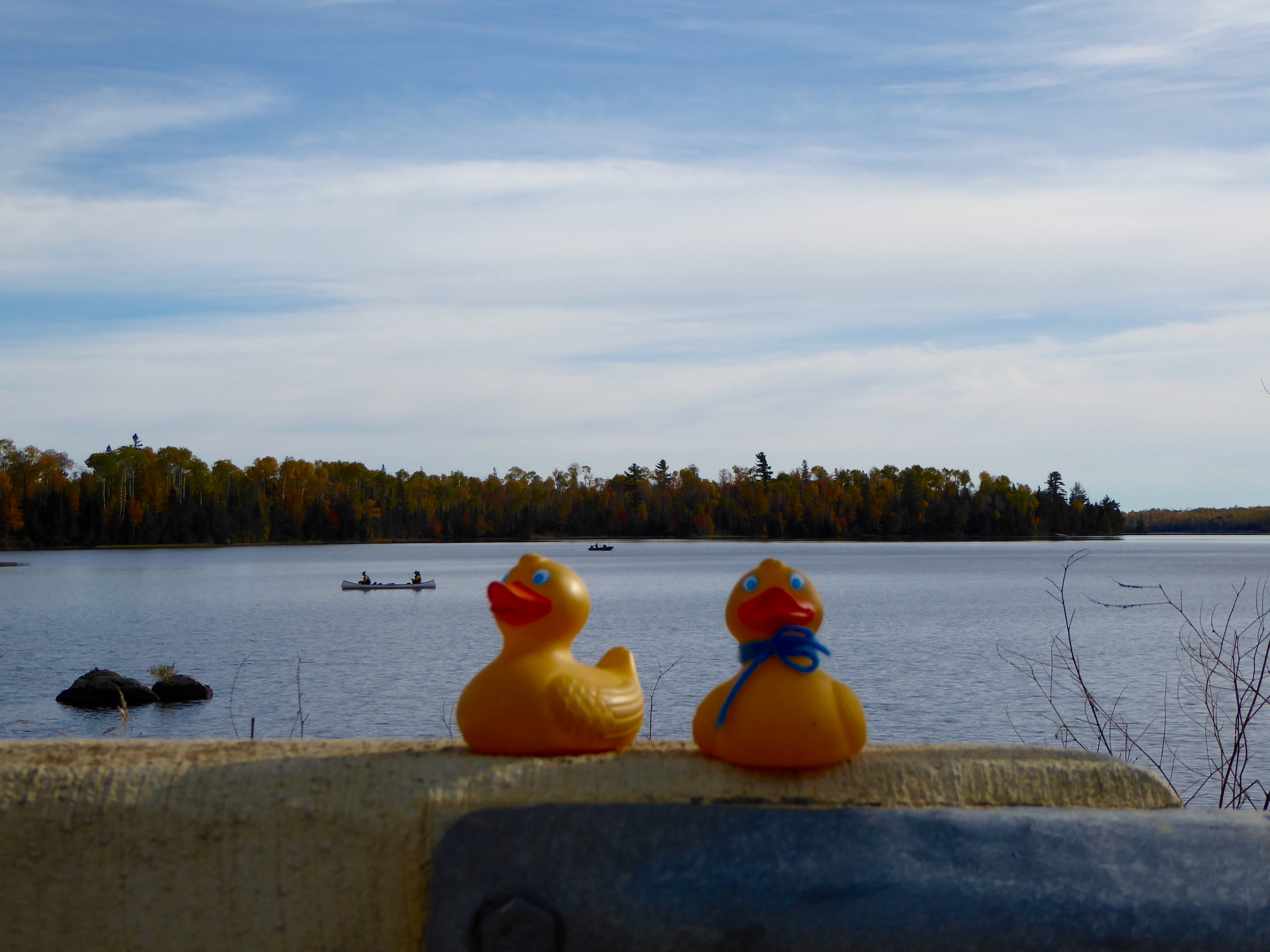
Minnesota has so much, but this is our favorite memory of Minnesota.

A favorite memory of northern Minnesota

A favorite memory of northern Minnesota

We hope you enjoy Minnesota as much as we did.

Windjana Gorge National Park in The Kimberley of Australia with Zeb and Eider

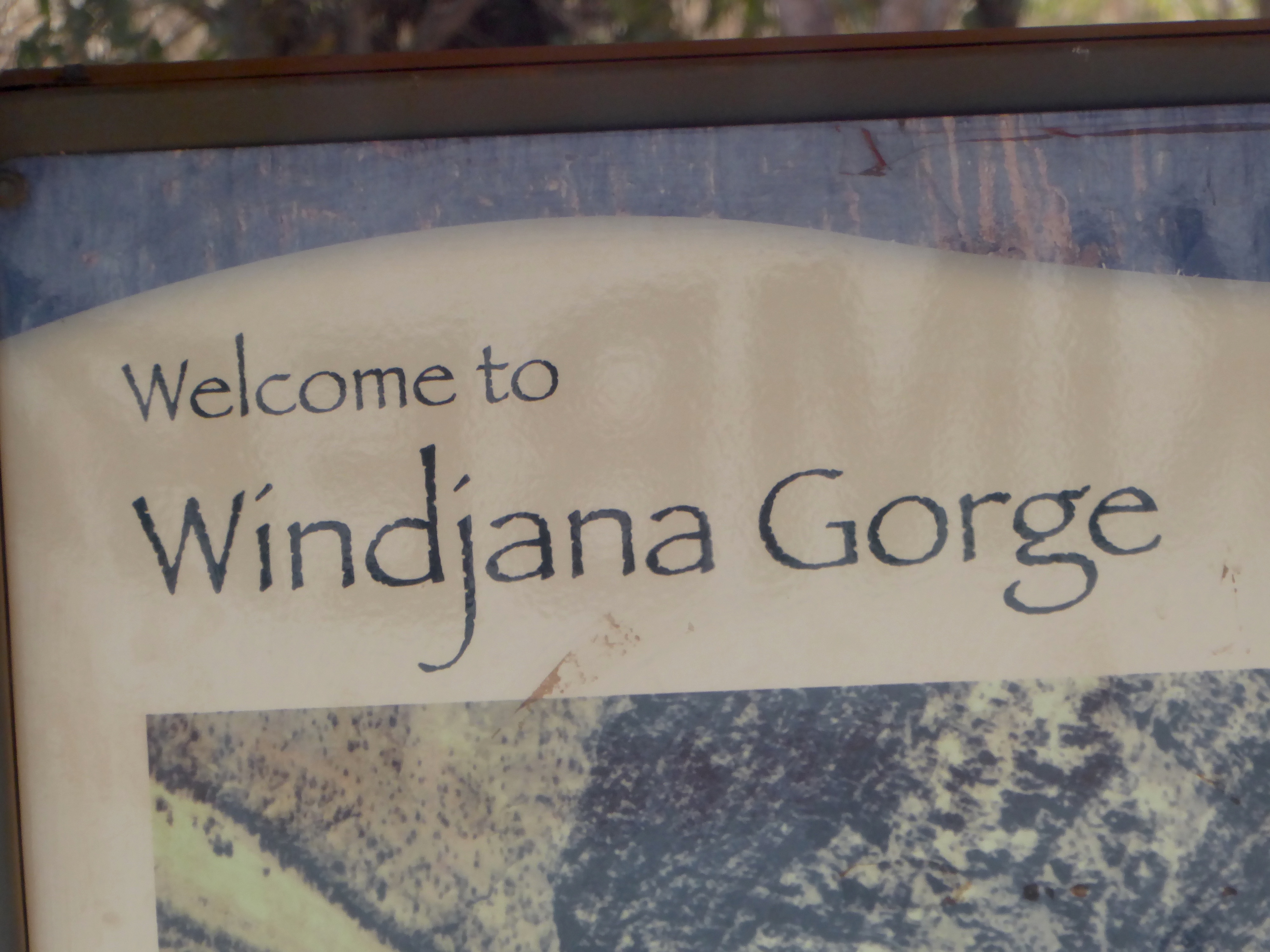
We are in Windjana Gorge National Park now.

We are in Windjana Gorge National Park

We are in Windjana Gorge National Park

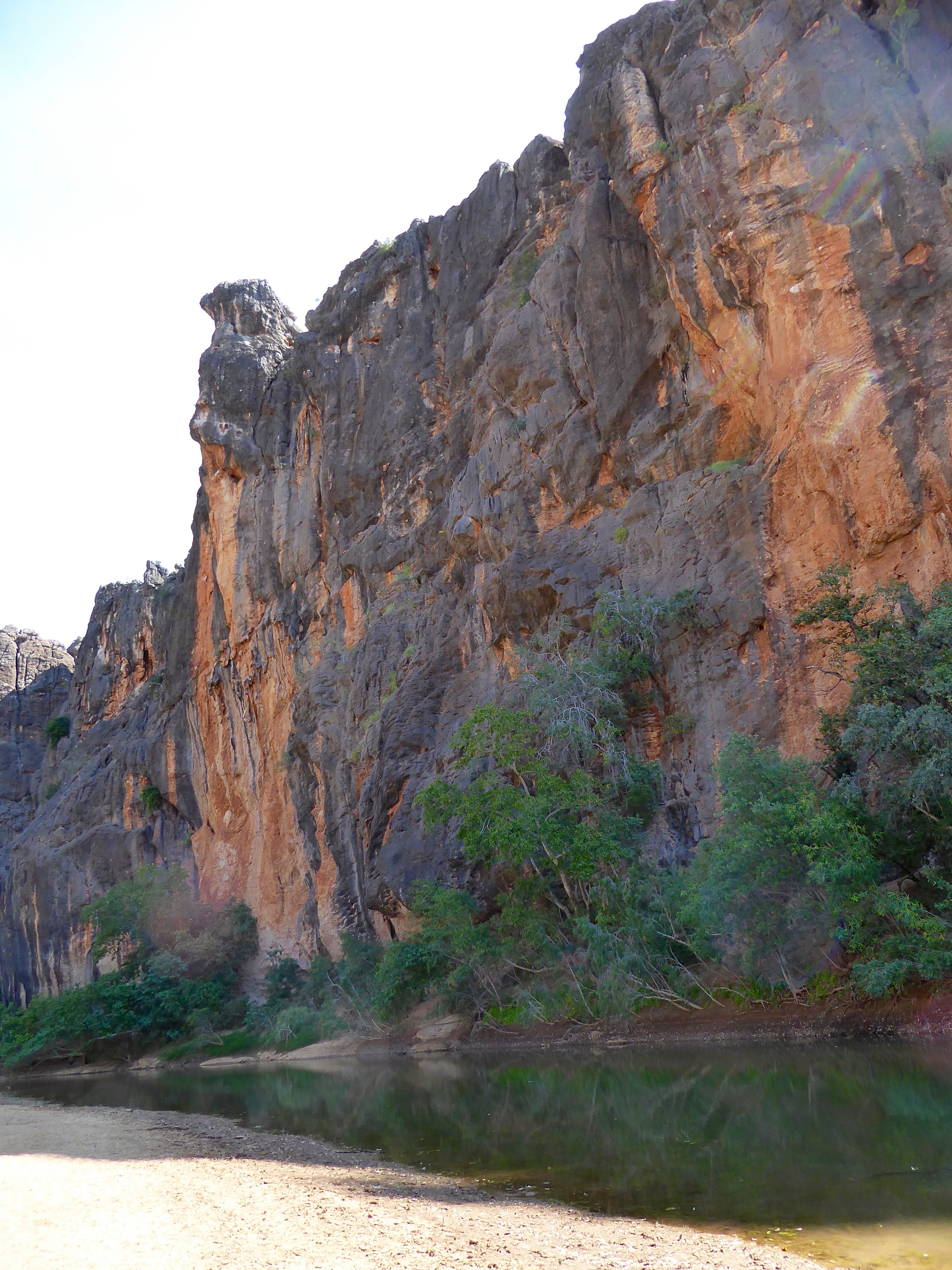
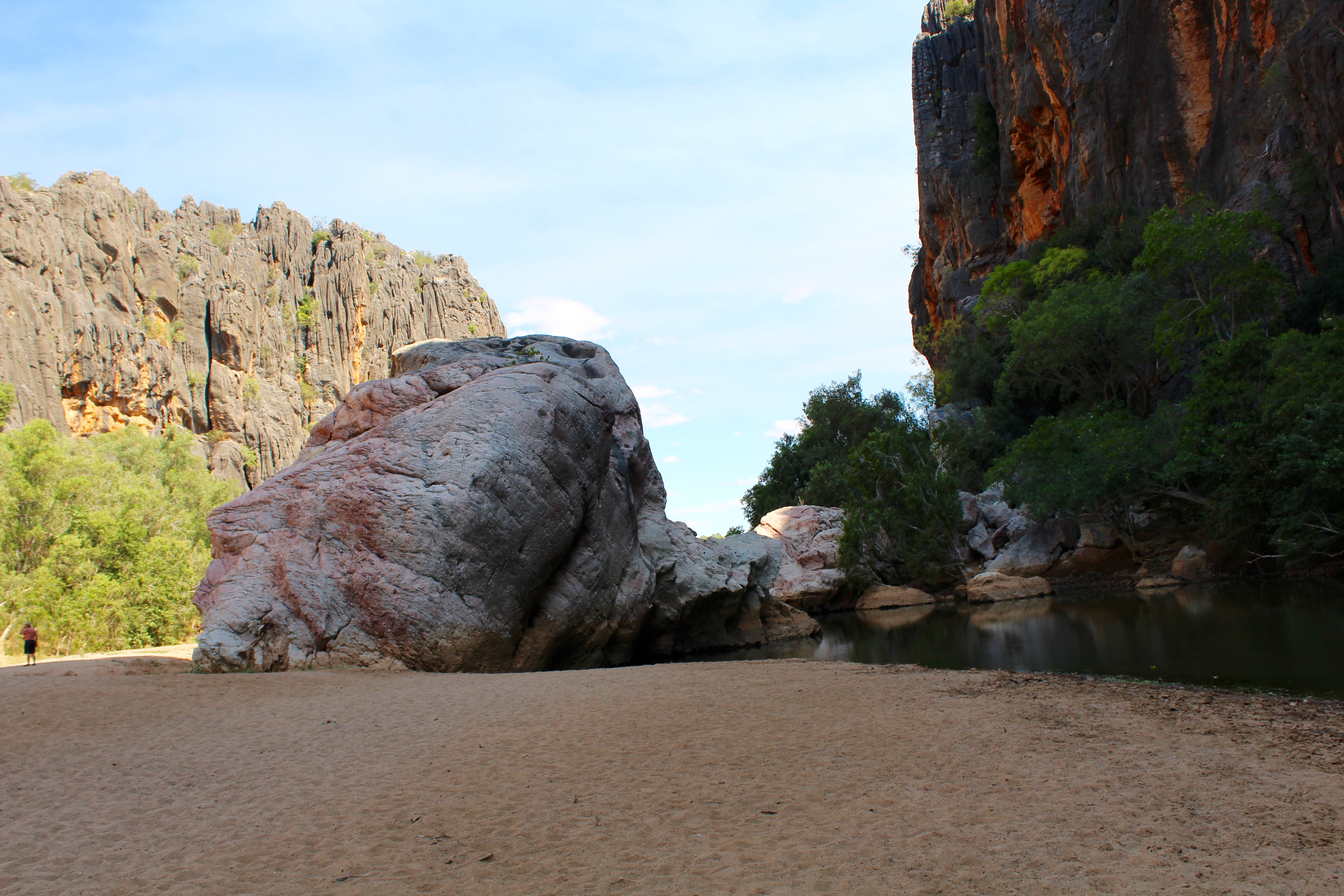
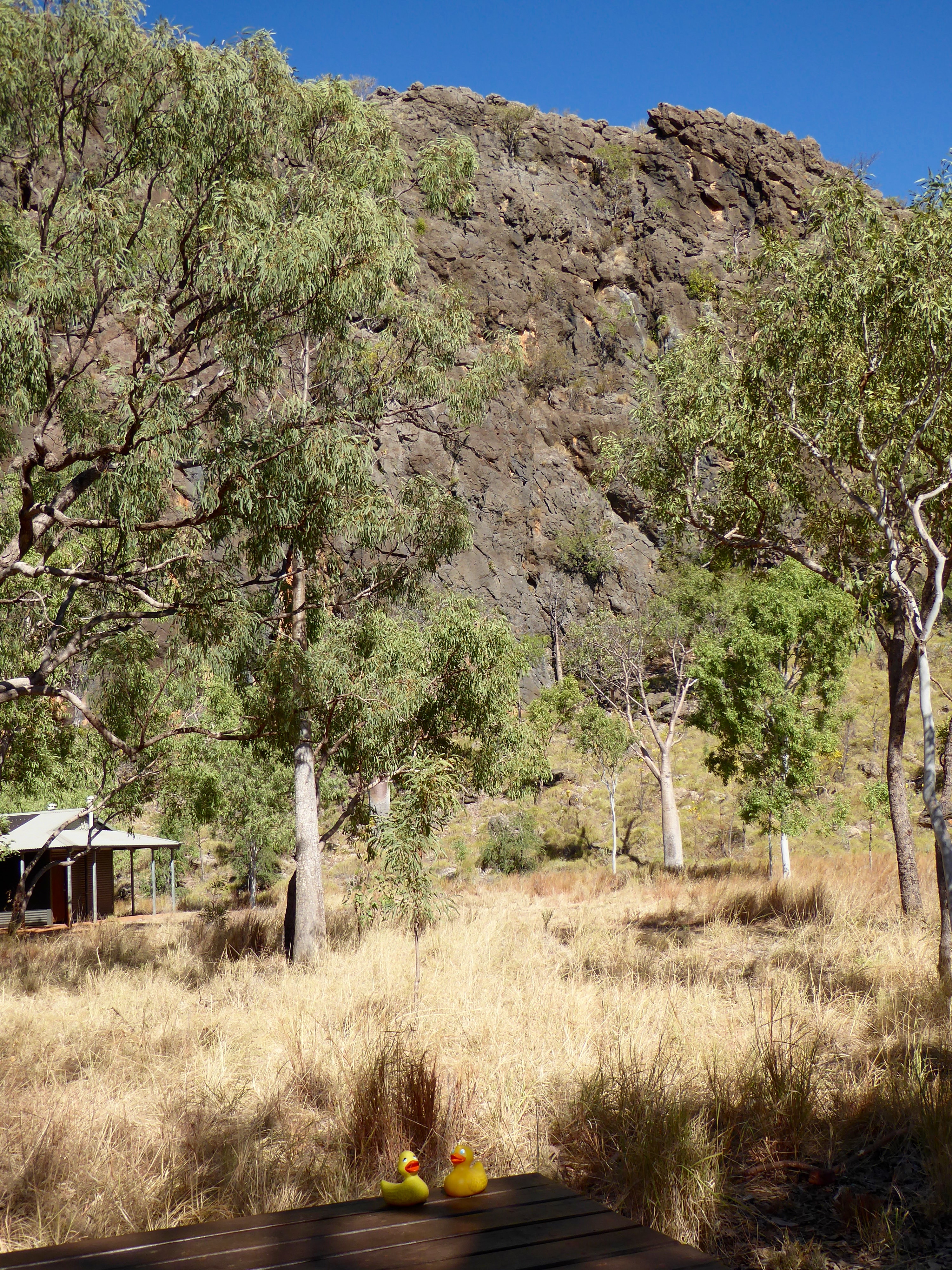
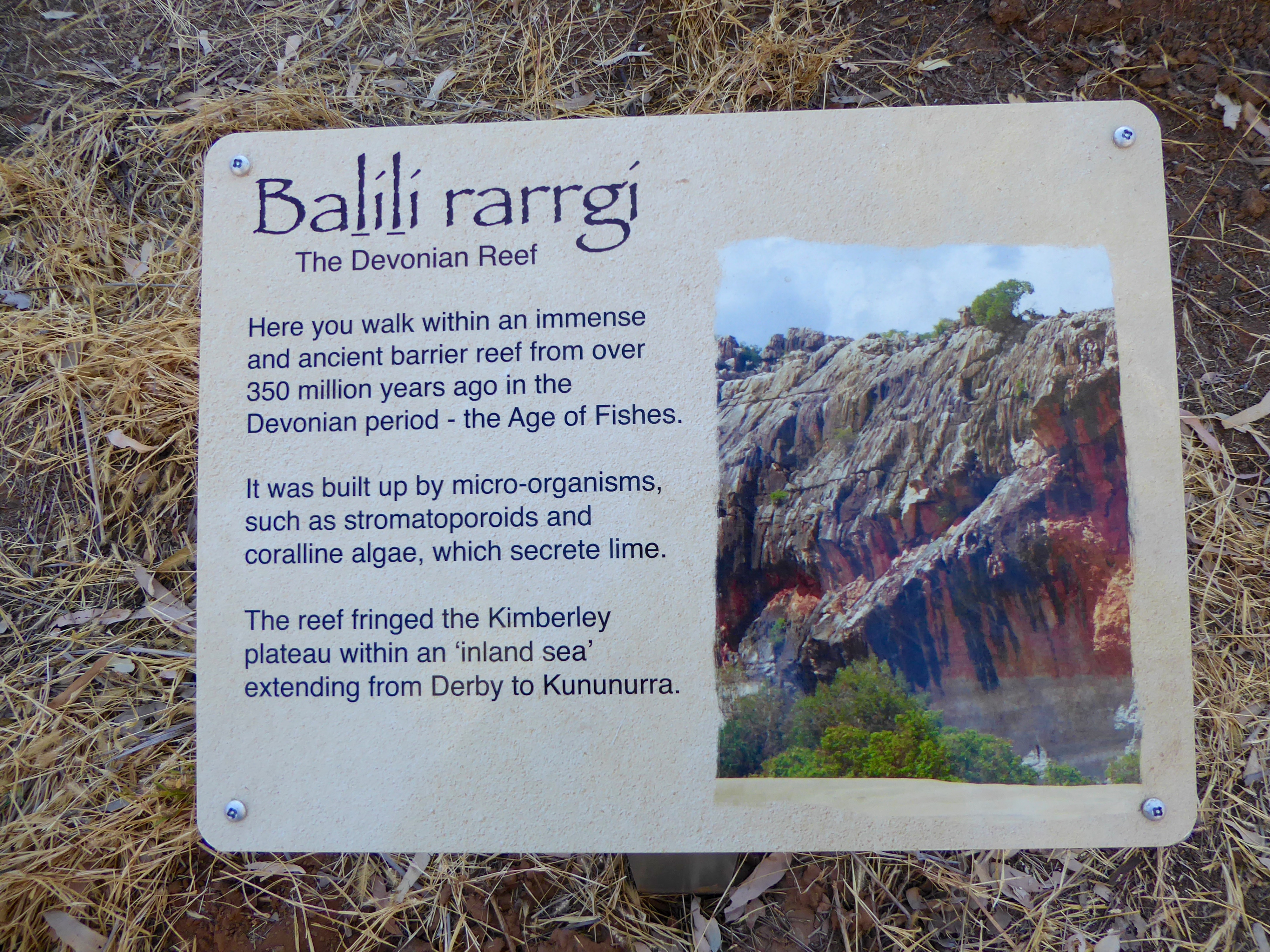
This is our third national park in the Devonian Reef of Western Australia.   Remember that this area, The Kimberley, was once a tropical sea and is now surrounded by the 350 million year old Devonian Reef.   Like Tunnel Creek National Park, we are in the Napier Ranges.   The Windjana Gorge spans 3.5 kilometers and reaches a hight of 100 meters in places.
Limestone cliffs can be 100 meters high

Limestone cliffs can be 100 meters high

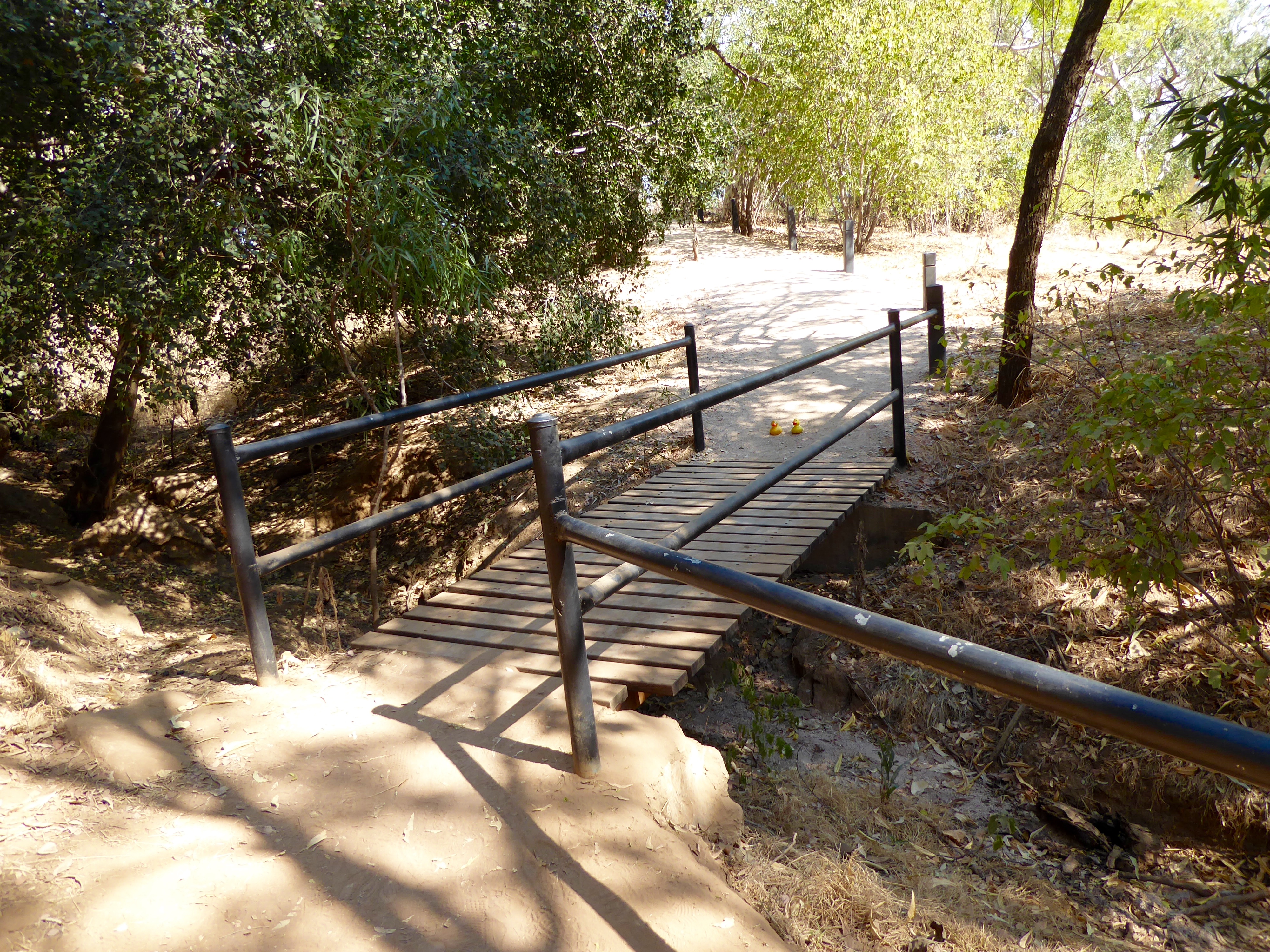
The Lennard River flows through Windjana Gorge.   From the parking lot, we cross this bridge to get to the Lennard River and Windjana Gorge.

Bridge from parking lot to Lennard River

Bridge from parking lot to Lennard River

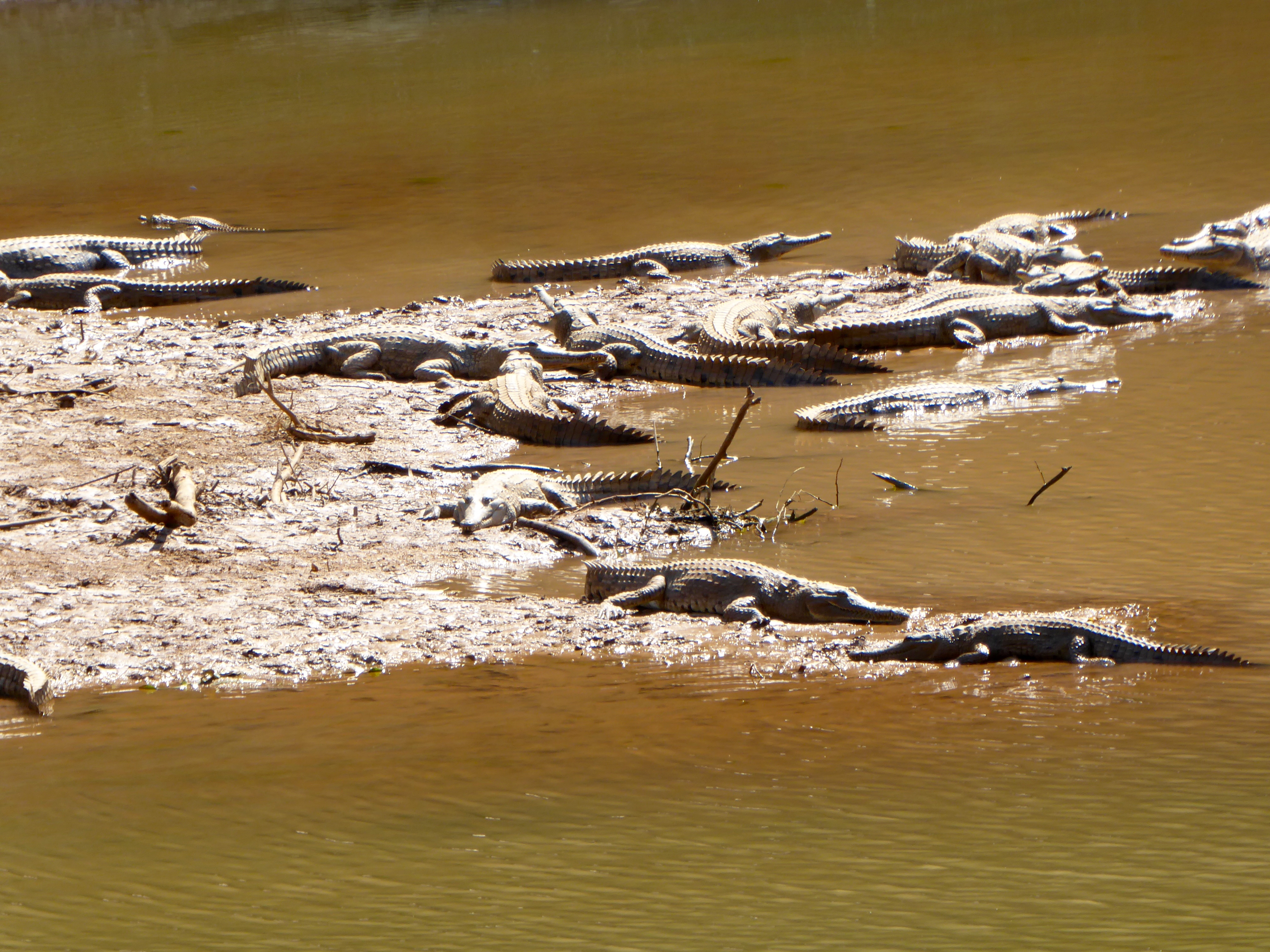
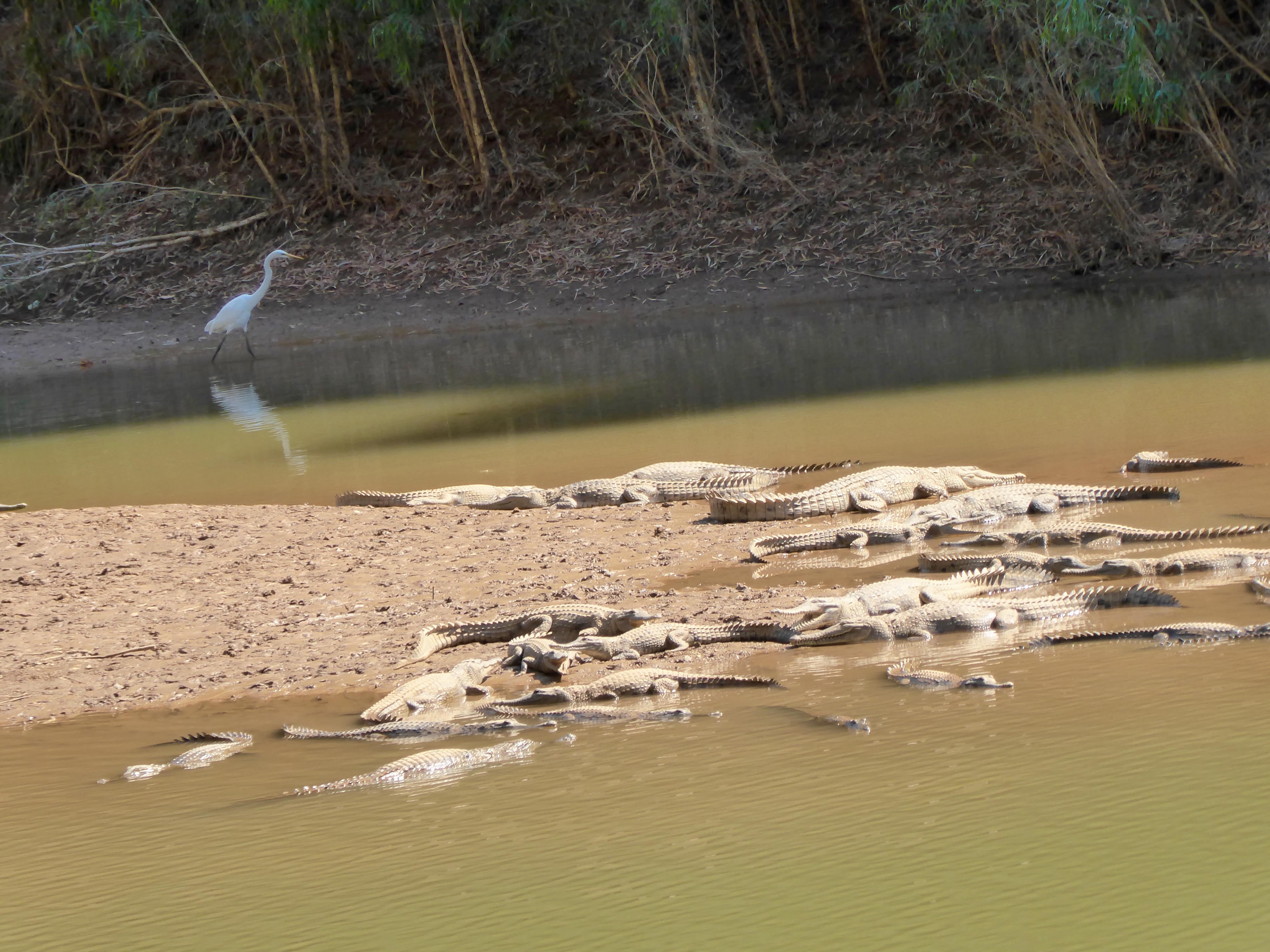
When we reach the Lennard River, we realize we have lots of company here.

So many fresh water crocodiles

So many fresh water crocodiles

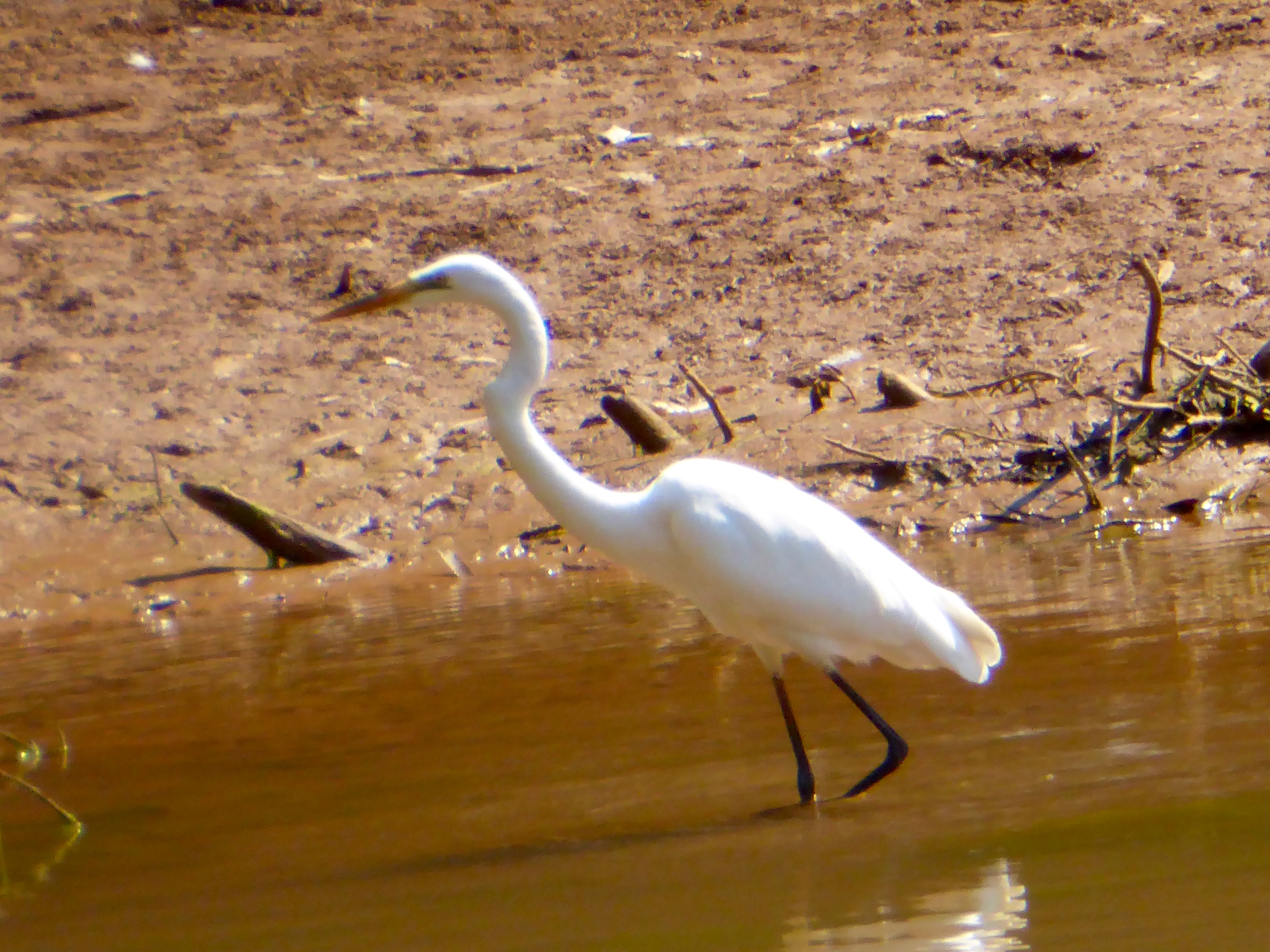
Also this beautiful white bird with long legs.

We like him

We like him

He is not concerned with all the crocodiles.   This rock and area is important to the aboriginal people.   There is a legend about fertility.   So, many couples come here.

Fertility legends about this rock and area

Fertility legends about this rock and area

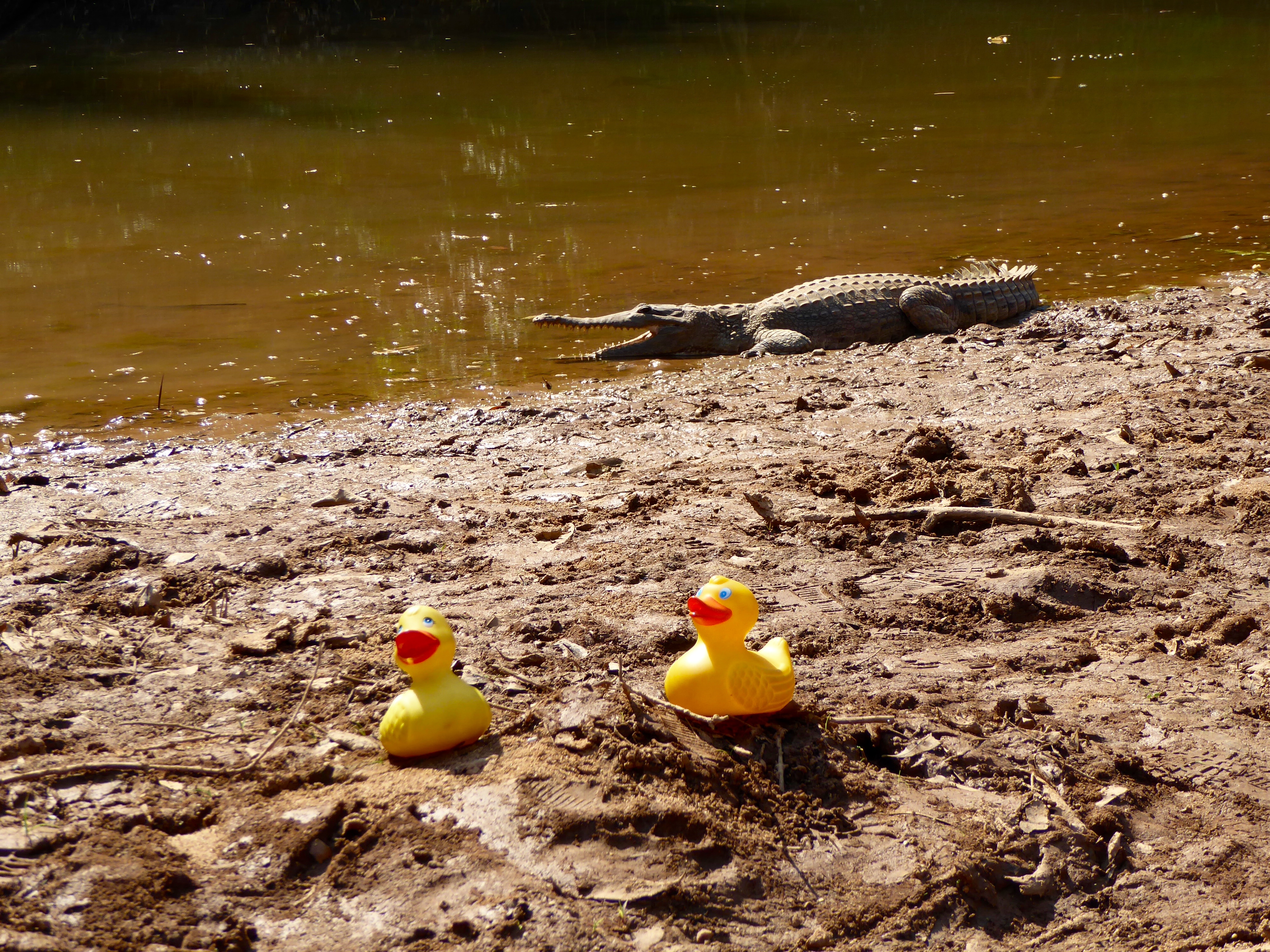
Our humans are not concerned about fertility, but we liked the yellow colors in the cliffs to the left and the orange/red colors in the cliffs to the right.    The humans decided we should see the crocodiles up close.   You will notice that Zeb and Eider are closer, not humans.

Not too close mom

Not too close mom

Maybe he is friendly.    Or maybe not…

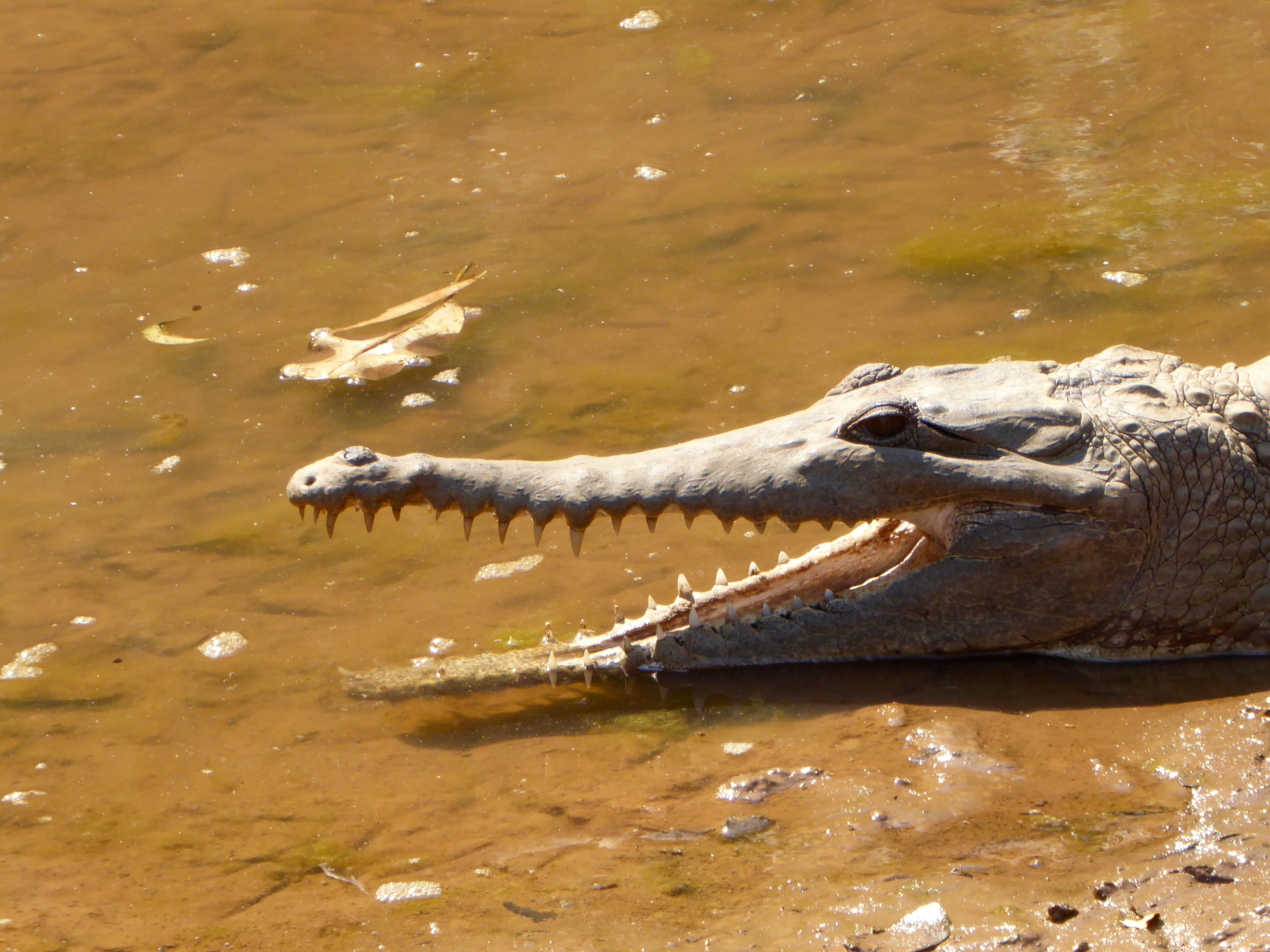
So many teeth. Mom, did you really have us close to HIM???

So many teeth.   Mom, did you really have us close to HIM???  Does he have eyelashes?

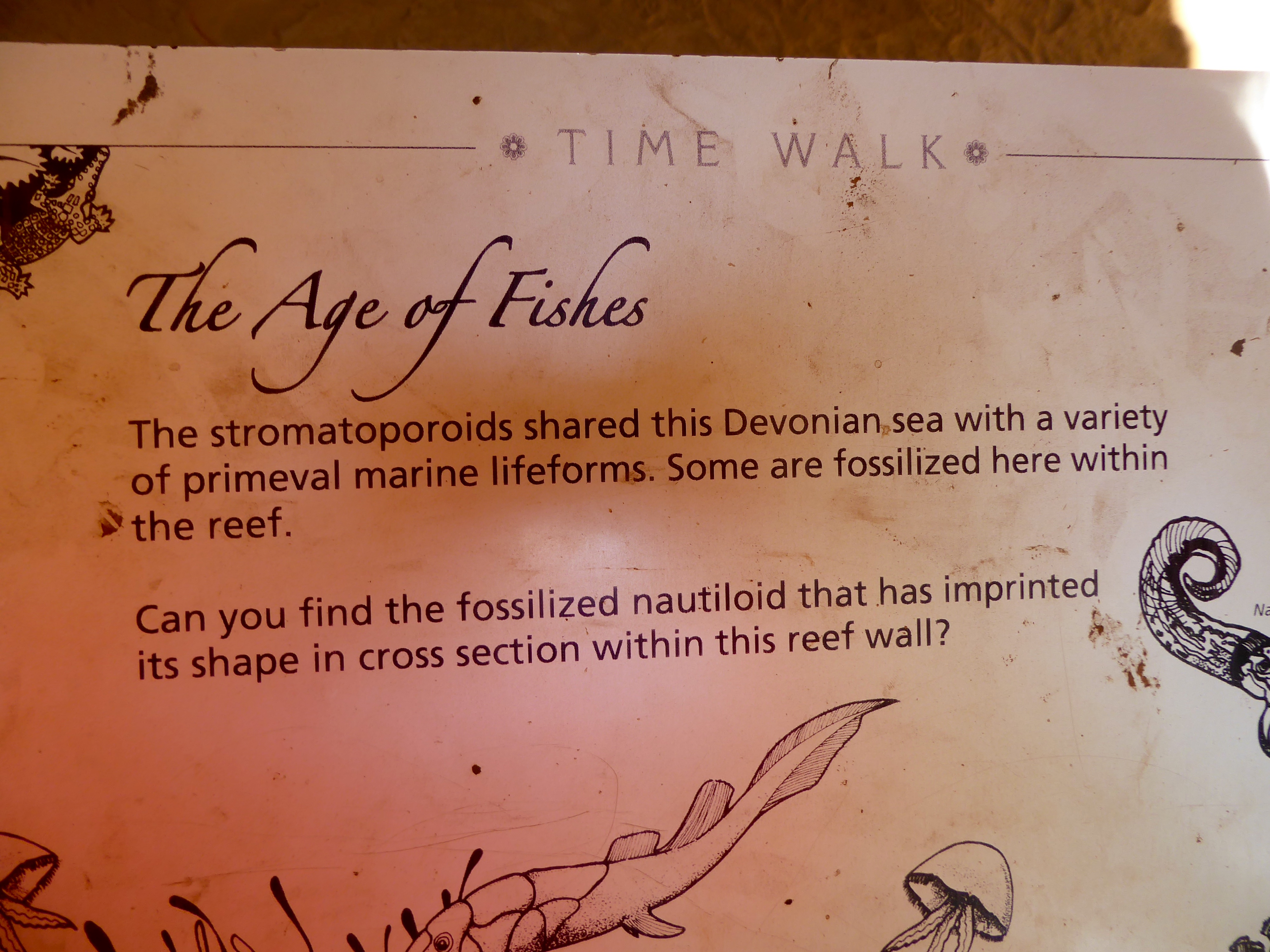
He does have a big mouth and many sharp teeth!    Leaving the Lennard River, we saw this sign about fossils.

Why fish fossils in the walls

Why fish fossils in the walls

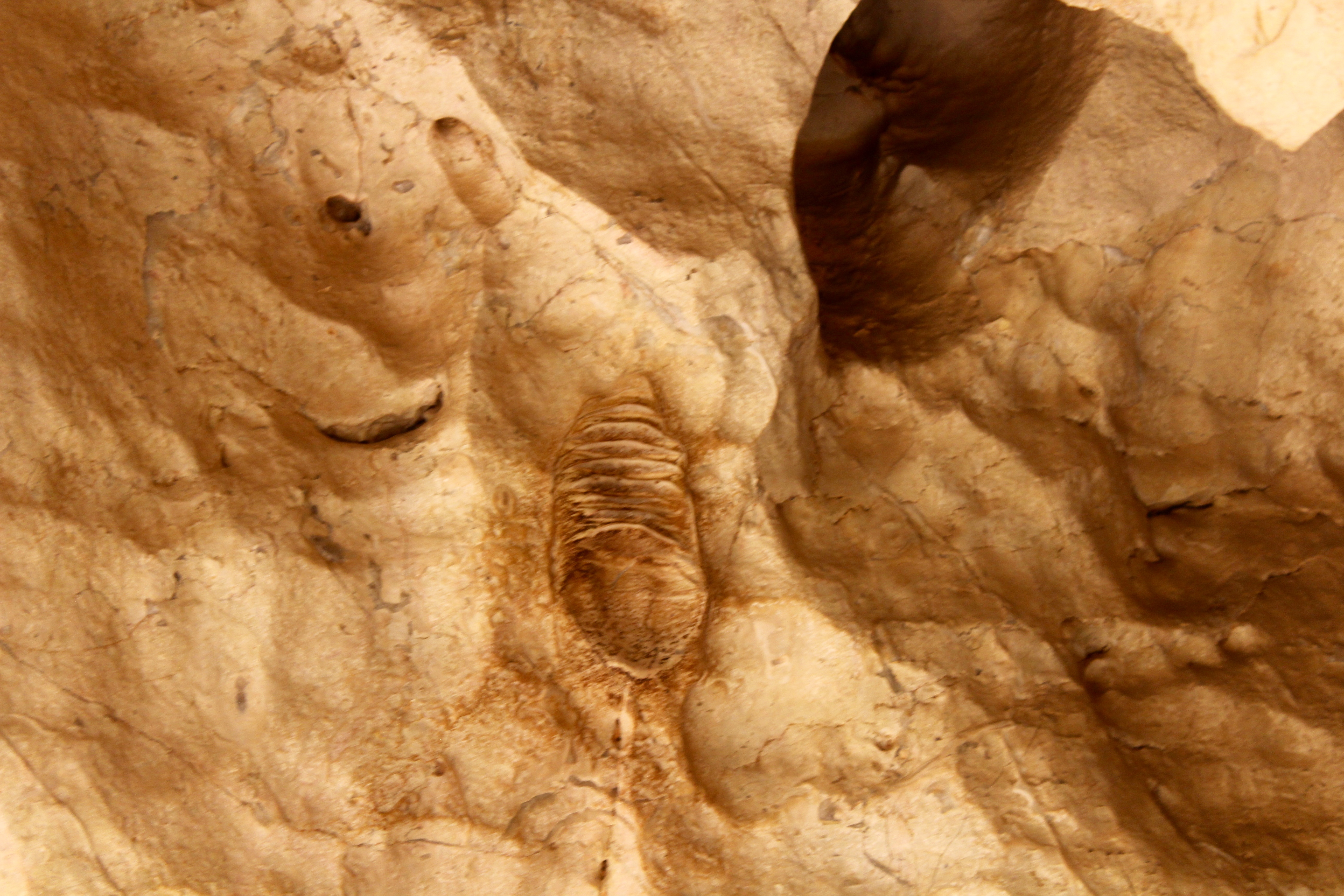
This area was underground.   Here are photos of the fossil area.

Fossil

Fossil

Fossil

Fossil

Fossils

Fossils

We saw one of our favorite white birds.

We love these birds

We love these birds

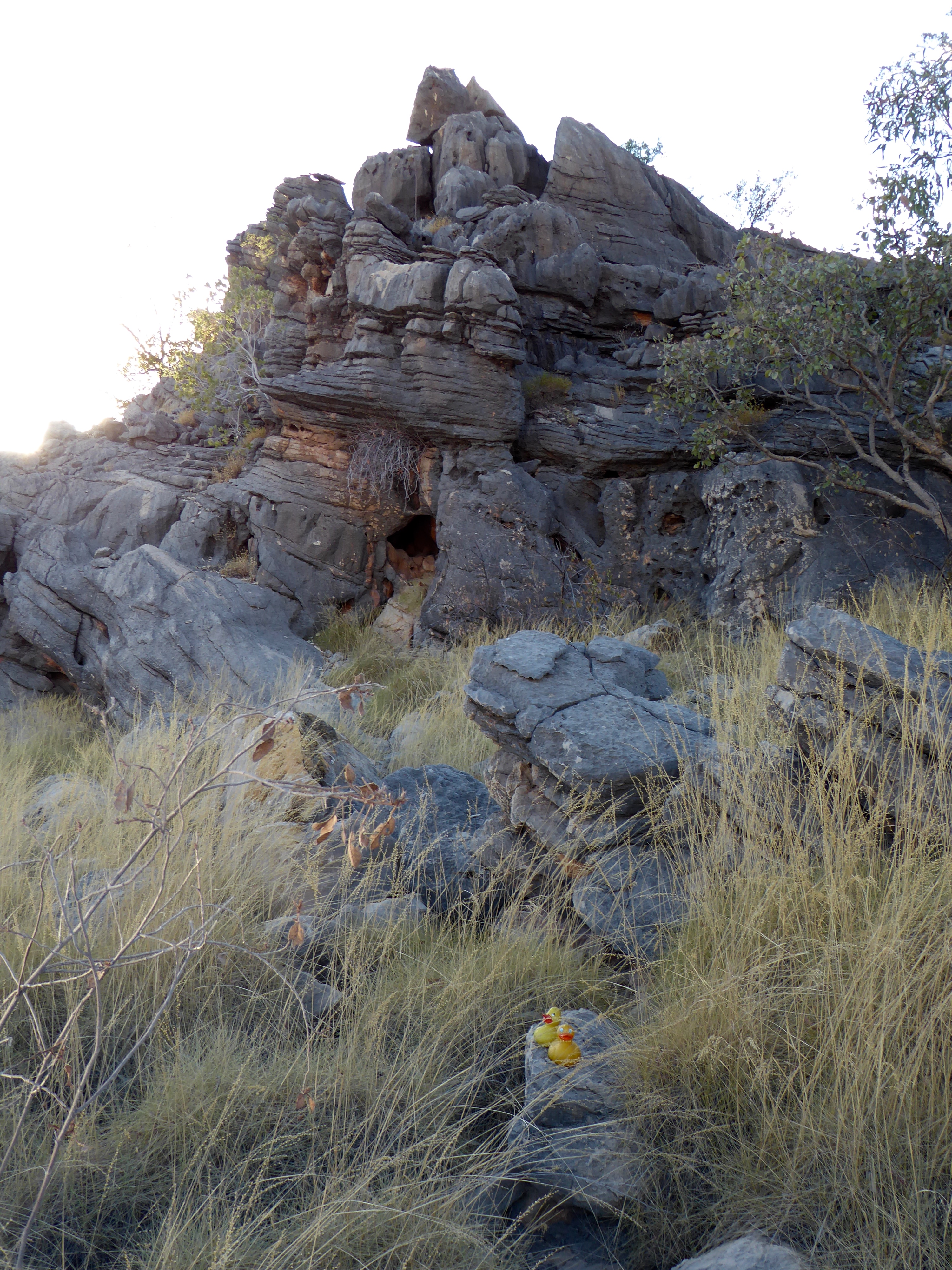
Isn’t he just beautiful?  This rock formation is just perfect for us, the Colorado Traveling Ducks.

Rock formation. We like this one.

Rock formation.   We like this one.

When we think about The Kimberley of Western Australia, this is one sight we will not forget.

So many crocodiles

So many crocodiles and the white bird

We loved all the animals.   We are in awe of the many colored cliffs.   We love the rivers and our boat rides.   But, we will never forget all the crocodiles.   Impressive, but not at all aggressive towards.   We respect them and hope you will also.


Tunnel Creek National Park in The Kimberley with Zeb and Eider Duck

We leave our Safari Tent, driving the 115 kilometers from Fitzroy Crossing, to Tunnel Creek National Park.   Along the way, we admire these rocks.

Love the rocks

Love the rocks

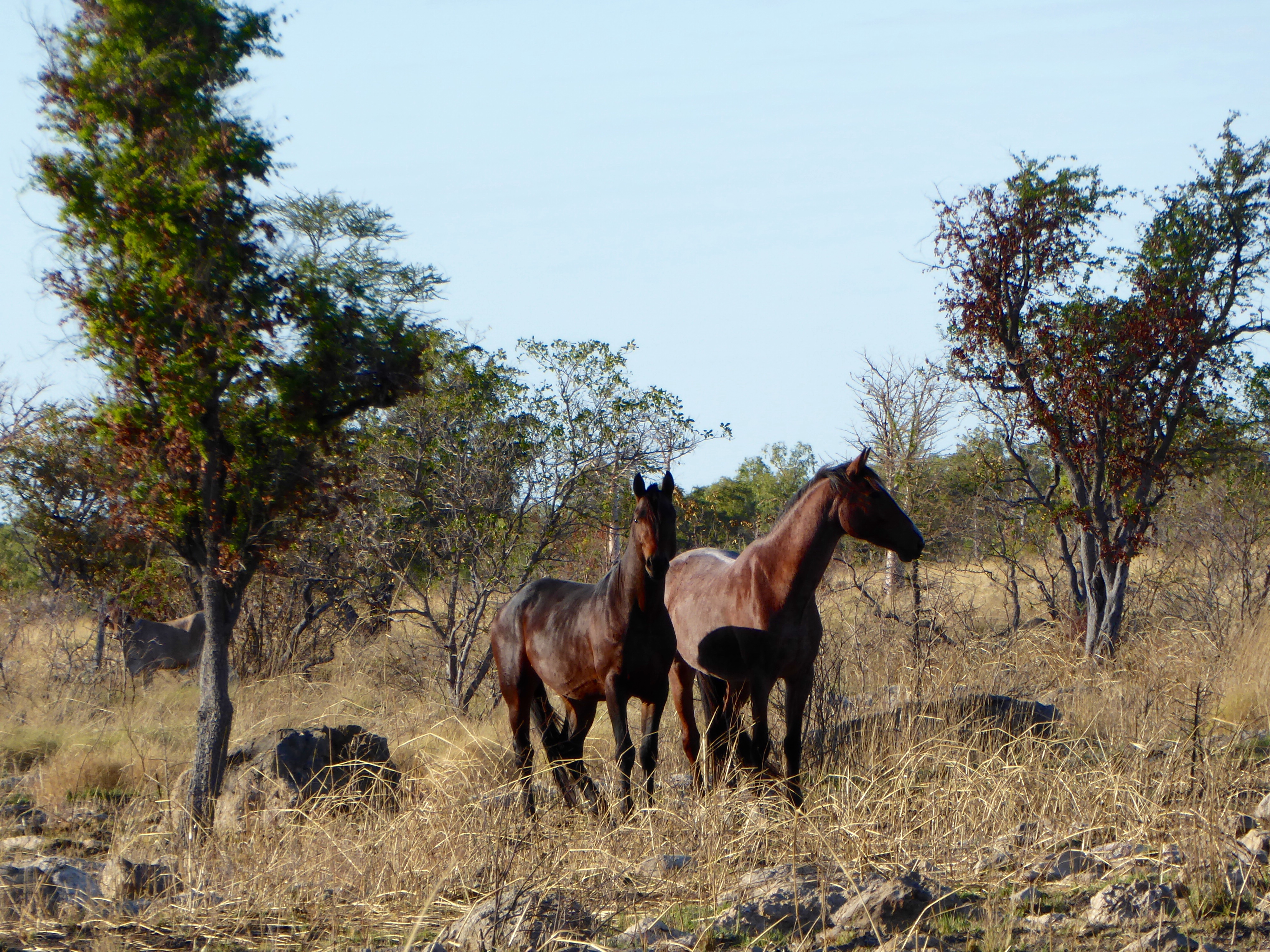
The horses are nice, also.

Horses by the ride to Tunnel Creek National Park

Horses by the ride to Tunnel Creek National Park

We must remember that this area around Fitzroy Crossing is some of the best pasture land in Australia.  We arrive at Tunnel Creek National Park.

We are at Tunnel Creek National Park

We are at Tunnel Creek National Park

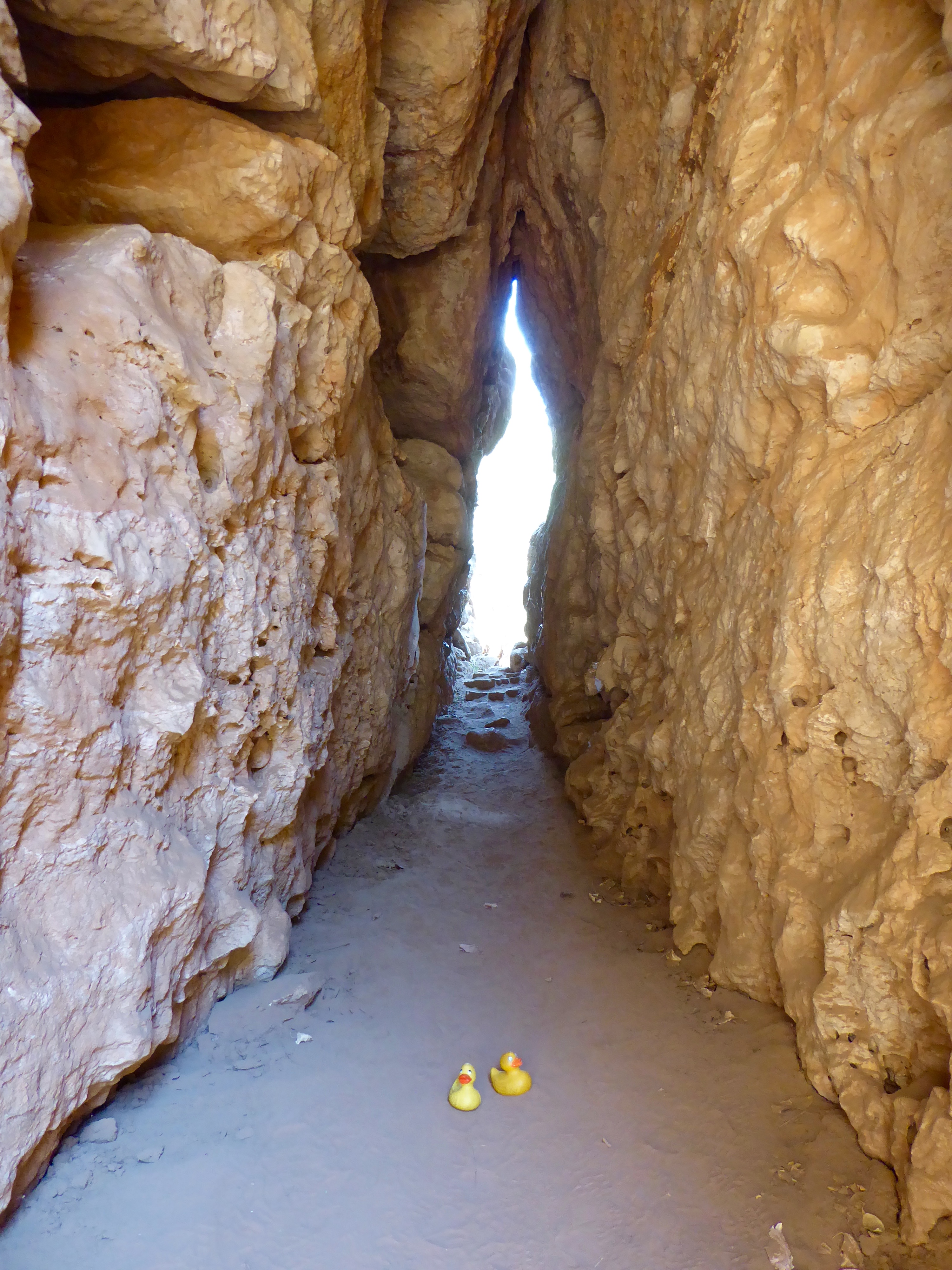
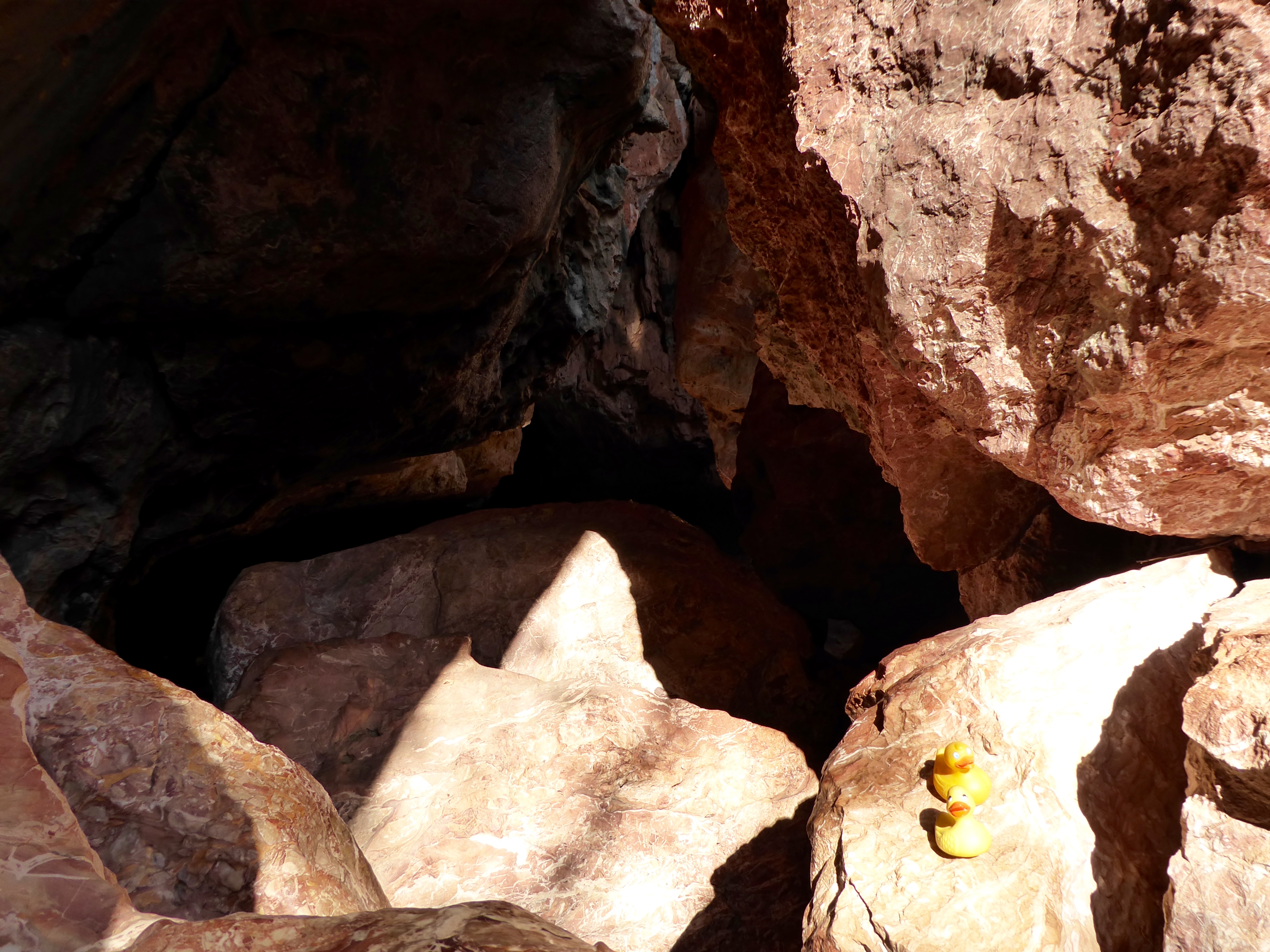
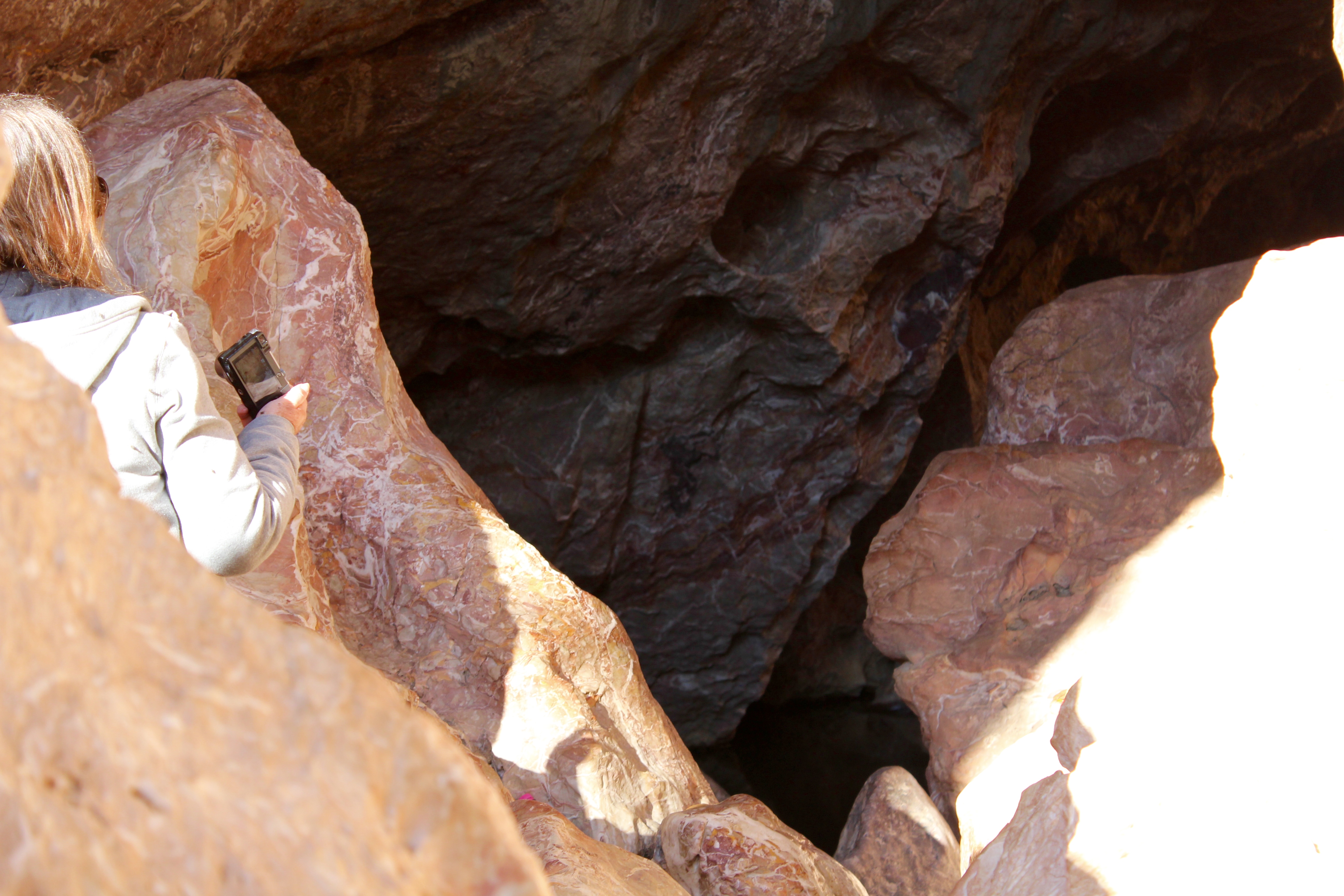
We are still in the area that was once covered by tropical sea and the Devonian Reef.   Tunnel Creek is one of the three national parks in the 350 million year old Devonian Reef.   We are in Western Australia’s oldest cave system.   To enter the tunnel, a torch, or flashlight, is needed.   You will also get wet, so appropriate shoes are encouraged.   We are near the entrance to the tunnel.

Near tunnel entrance

Near tunnel entrance

Jandamarra, an Aboriginal leader, died here.   When Jandamarra was a boy, he was arrested for spearing a settler’s sheep.   He did not learn all the rules of his Bunuba people, did some things wrong and was shunned by the tribe.   He worked for the police as an aboriginal tracker.   He and his police friend, Richardson, hunted and found the aboriginals.   They found Jandamarra’s tribe.   Jandamarra realized his loyalty to his people and killed Richardson.   He led the Bunuba people in raids against the settlers for about 3 years.   Jandamarra was later found by the police and killed near here, in 1897, by the entrance to the tunnel.

Caves near entrance to tunnel

Caves near entrance to tunnel

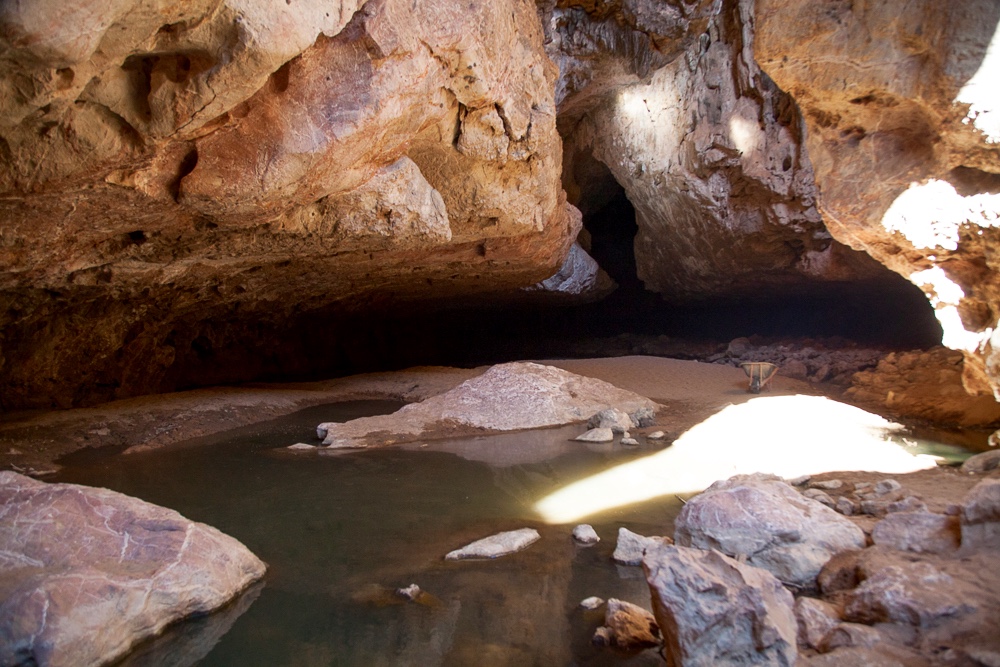
Walking inside the dark tunnel, you will come to this pool.

Pool in tunnel

Pool in tunnel

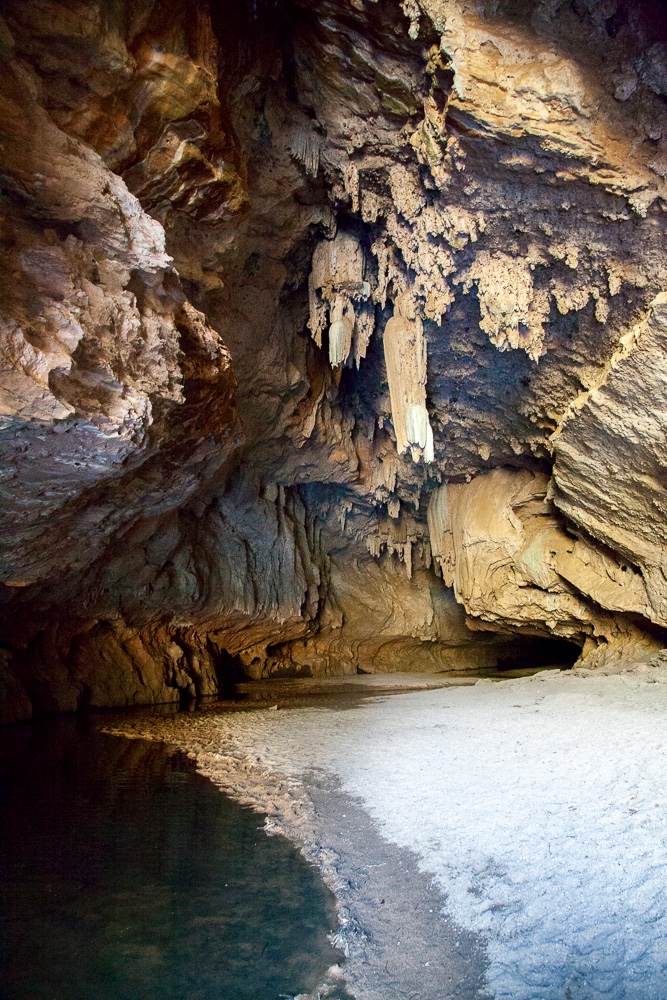
The tunnel is also known for these impressive stalactites.

Great stalactites

Great stalactites

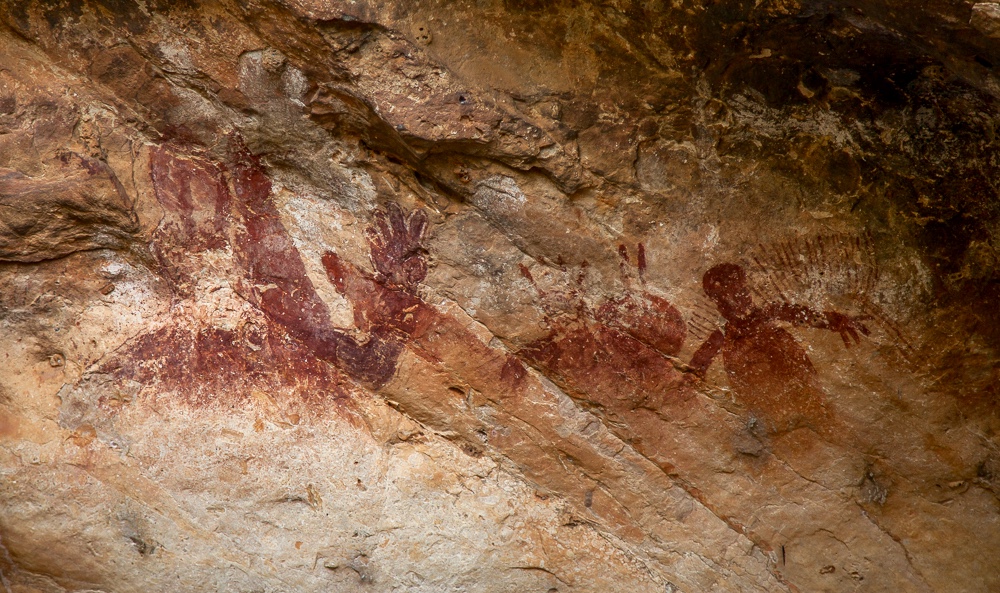
Near the exit of the tunnel, be sure to notice this aboriginal art carving.

Aboriginal art

Aboriginal art

The only way back to the bus is to return through the 750 meter tunnel, with your torch or flashlight.   Outside the tunnel, there are hiking opportunities.

For driving or hiking

For driving or hiking

We loved these noisy white birds.

So pretty and so loud

So pretty and so loud

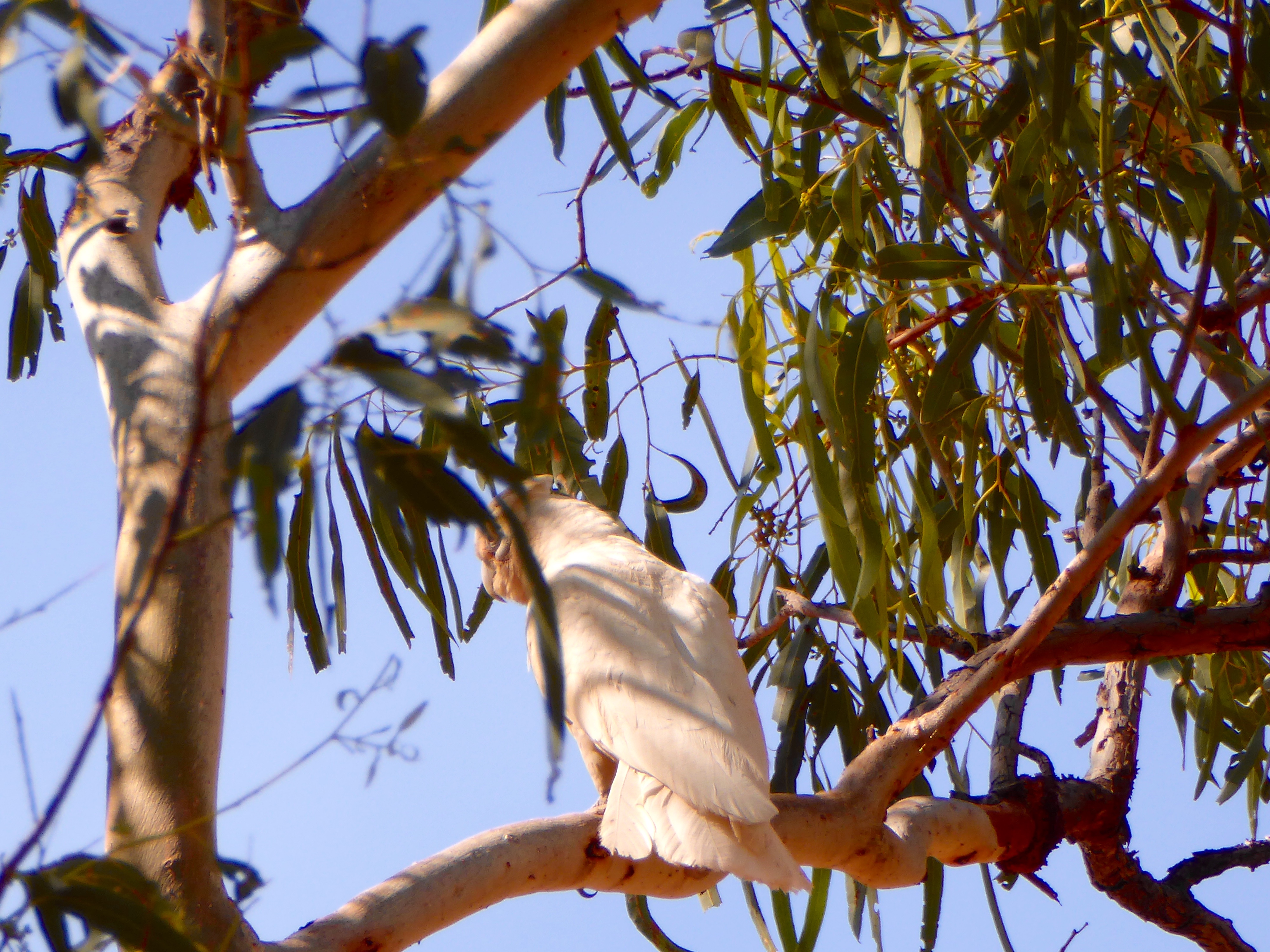
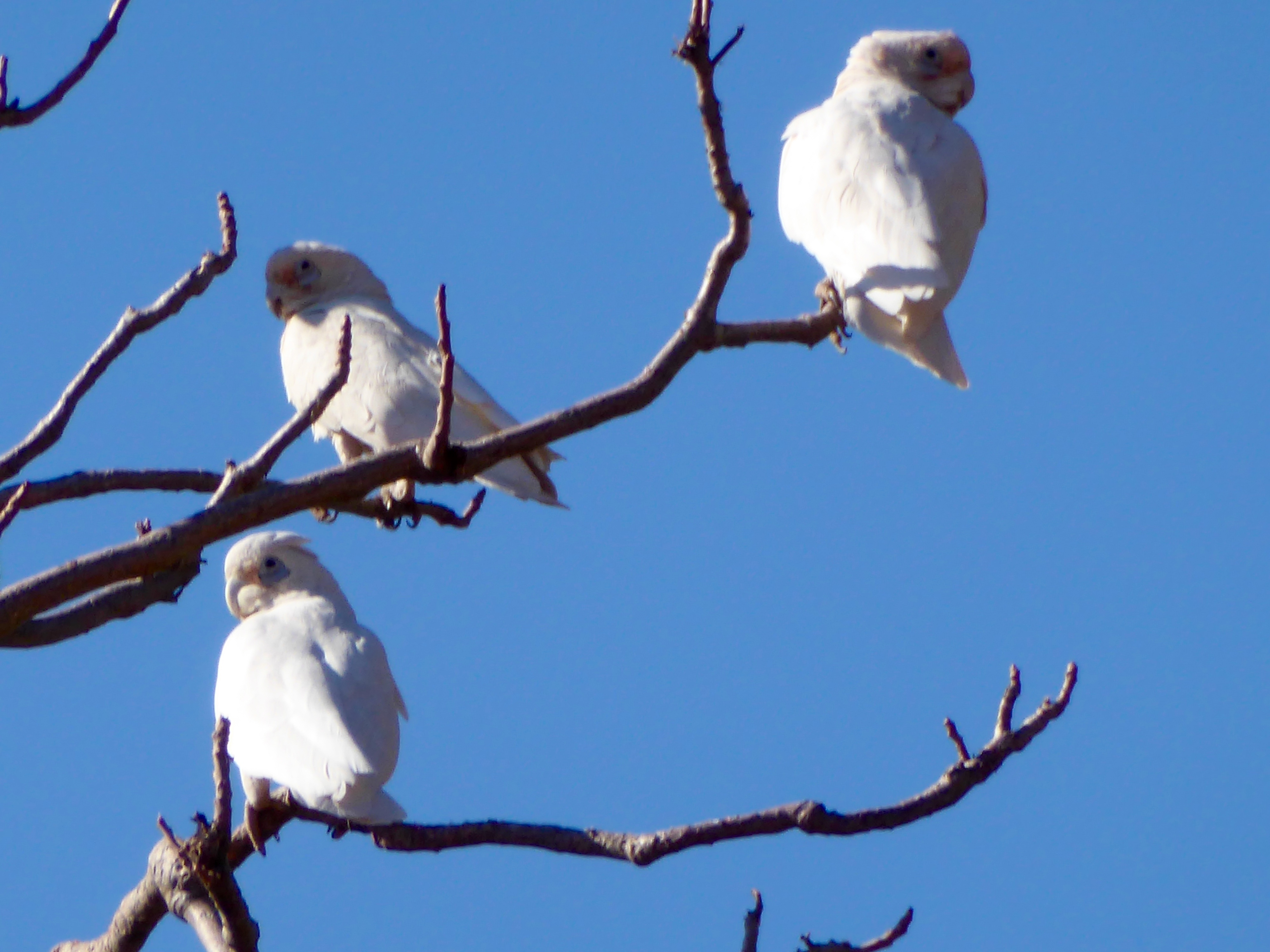
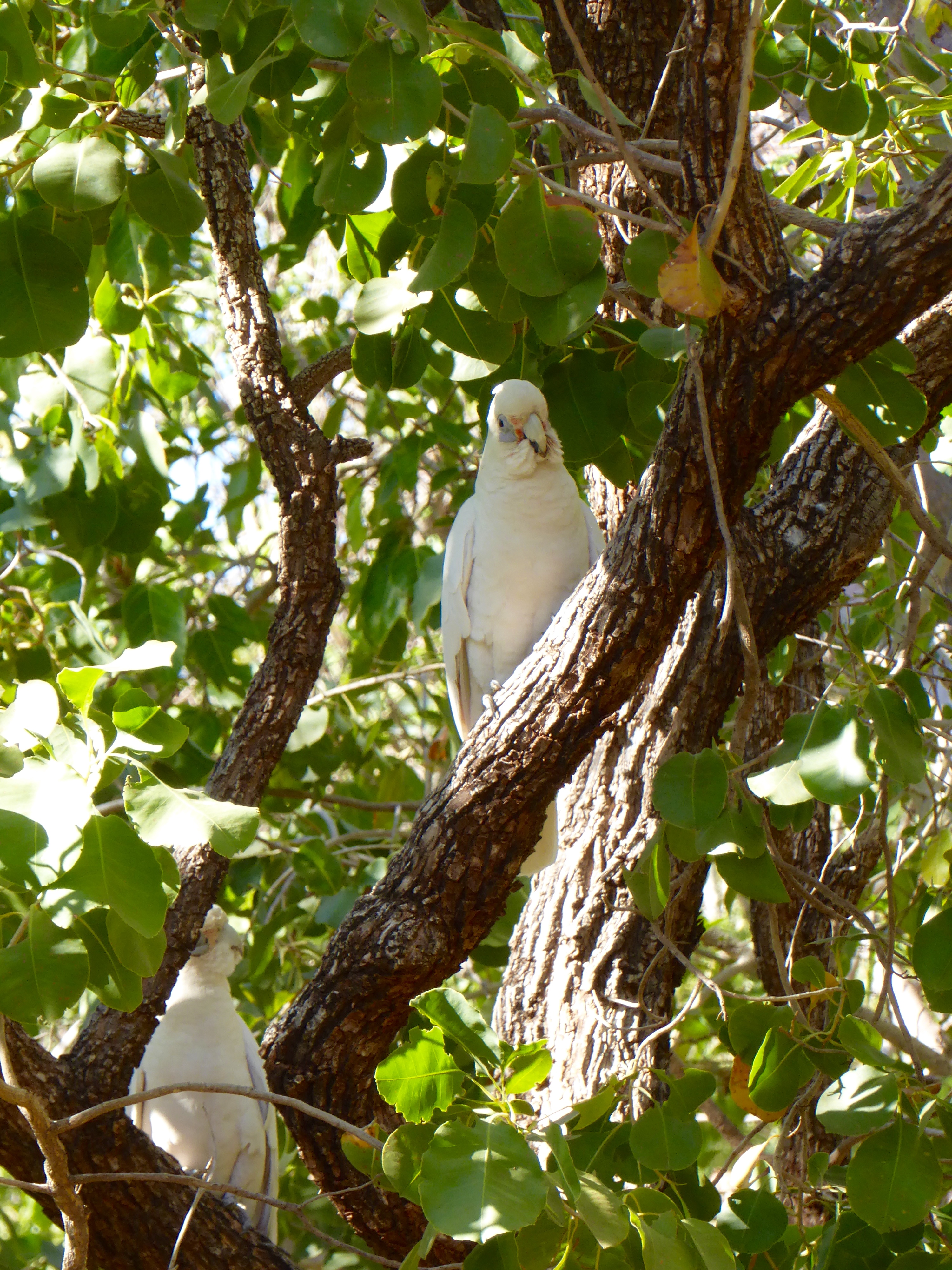
They are corellas, a relative of the cockatoo.   The limestone cliffs are magnificent.

Limestone cliffs

Limestone cliffs

Looking around, several of these beautiful and loud white birds, corellas, were watching us.

There were several corellas in the trees

There were several corellas in the trees

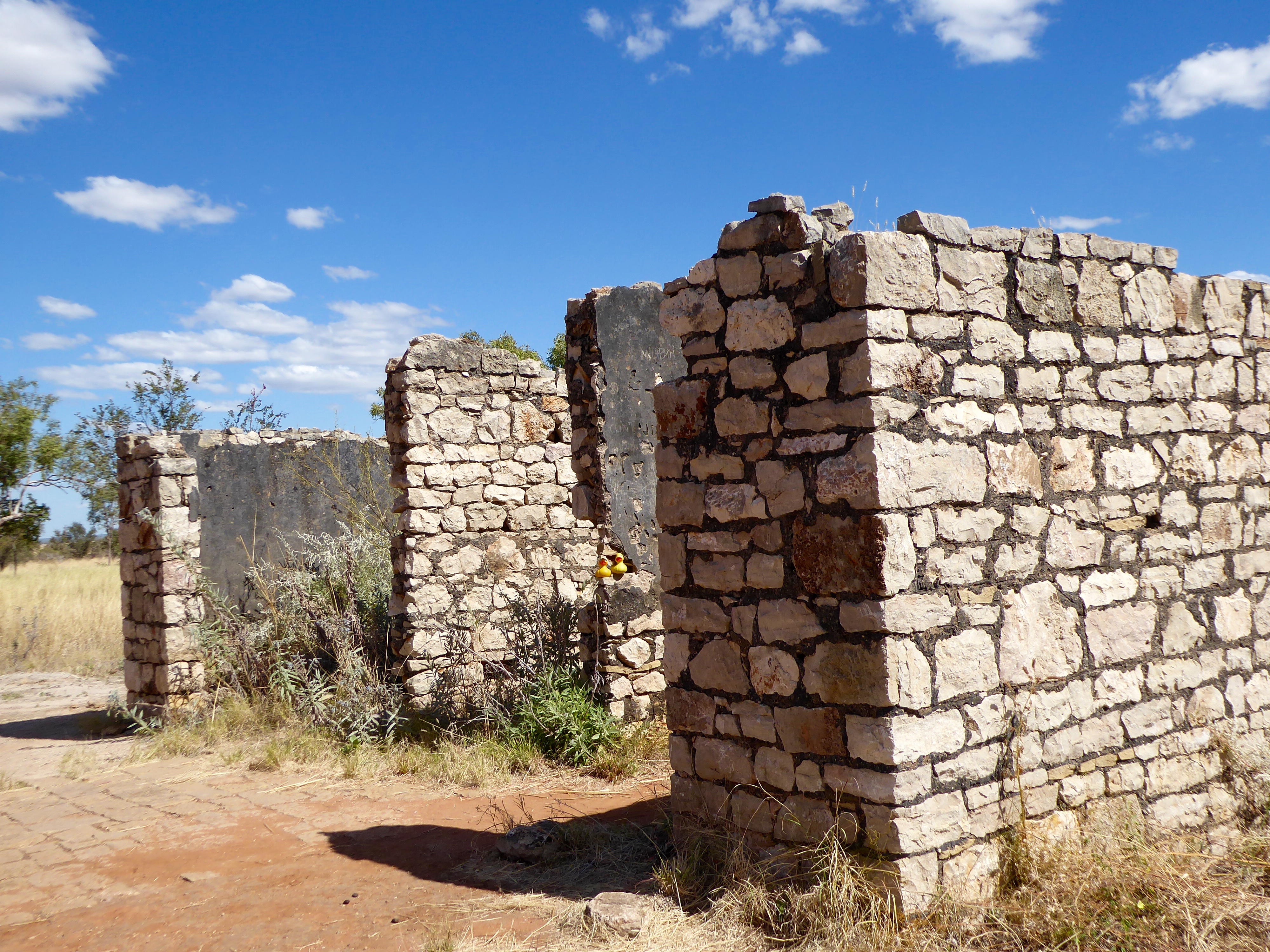
Leaving the tunnel area, we stopped at the Lilliwooloora Police Stations ruins.

Lilliwooloora Police Station Ruins

Lilliwooloora Police Station Ruins

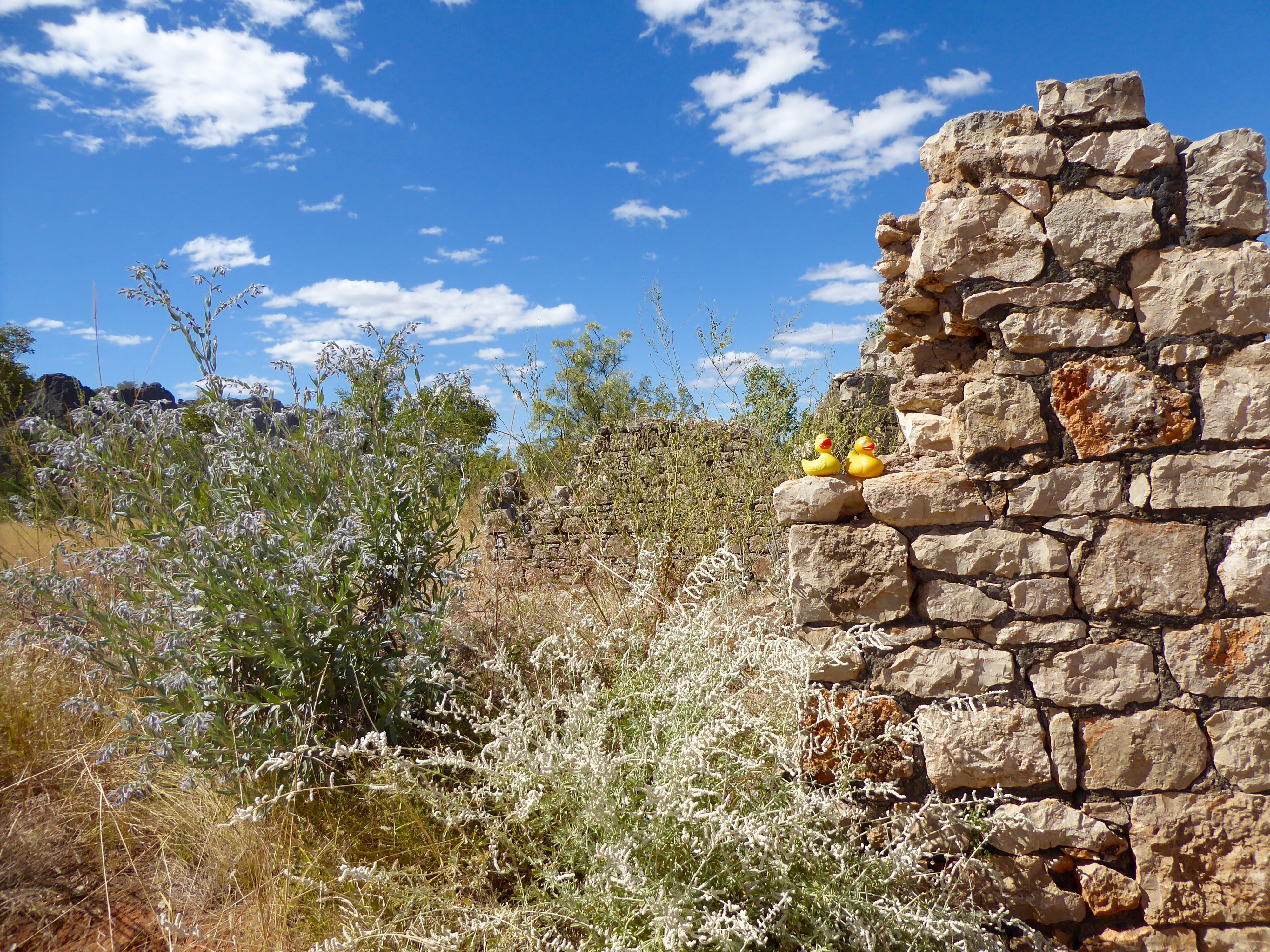
This is where Jandamarra shot and killed his police friend, Richardson.

Lilliwooloora Police Station Ruins

Lilliwooloora Police Station Ruins

We think you would love to see this area and experience a walk through the tunnel.

Zeb and Eider Visit Geikie Gorge National Park in Australia’s Kimberley

We are in Geikie Gorge National Park in the Kimberley Region of Western Australia.   This area was once  covered by tropical seas.   The area includes 3 National Parks.   We will visit all of them, but now we are in the Geikie Gorge.   These parks originated as the western Australia reef, around 350 million years ago, during the Devonian Period, and now feature rocky landscapes and formations and gorges.   We are promised views of the most spectacular landforms in the Kimberley Region.

A tropical sea and tropical reef were here

A tropical sea and tropical reef were here

While waiting for our boat, we take a short walk.

Let's walk and see Geikie National Park

Let’s walk and see Geikie National Park

Vegetation and rock formations are beautiful and abundant.   The tree trunks are even colorful.

These tree trunks fascinated us.

These tree trunks fascinated us.

We love this place!   Our boat is now ready for us.

We wil ride on another boat!

We wil ride on another boat!

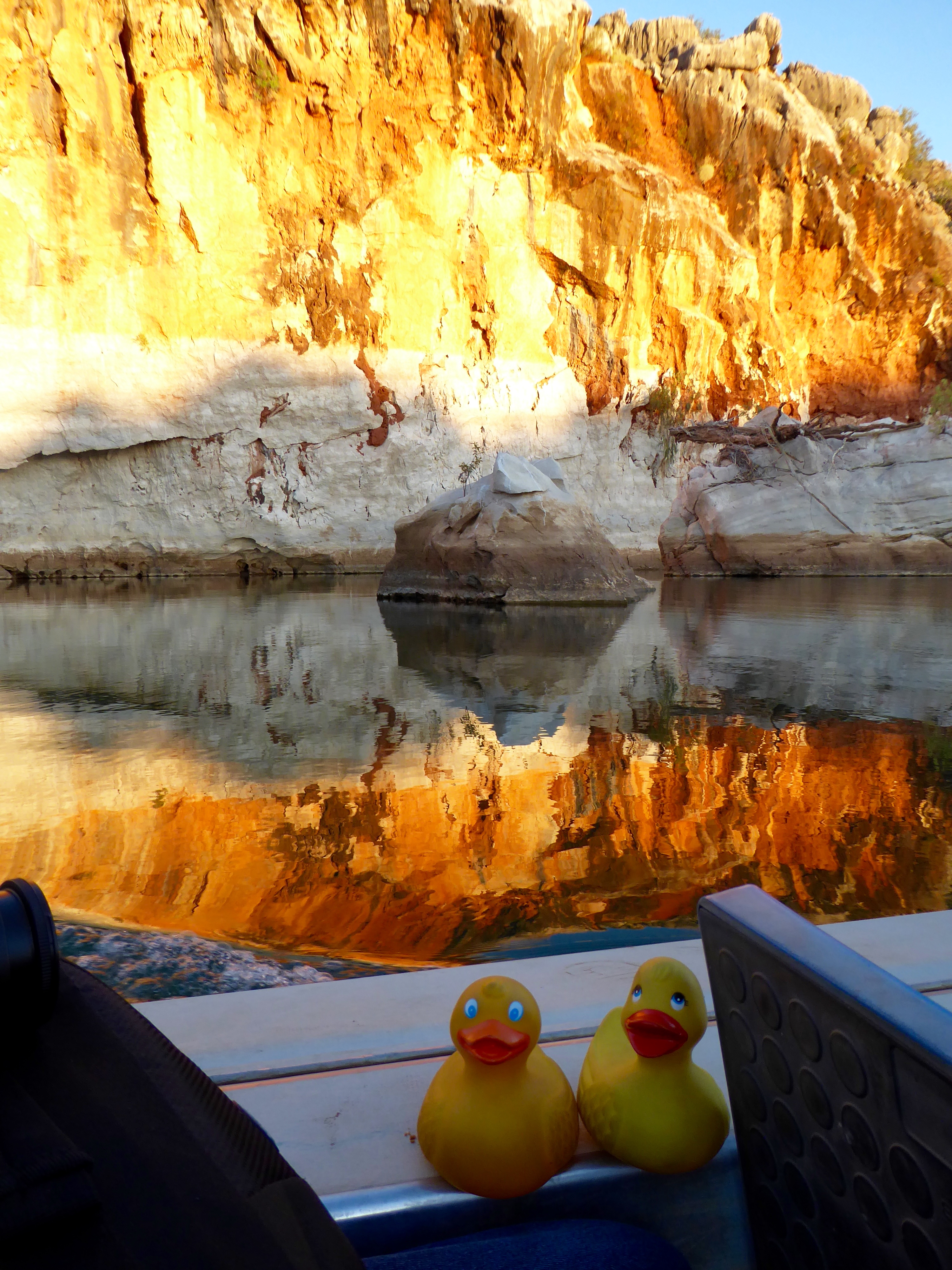
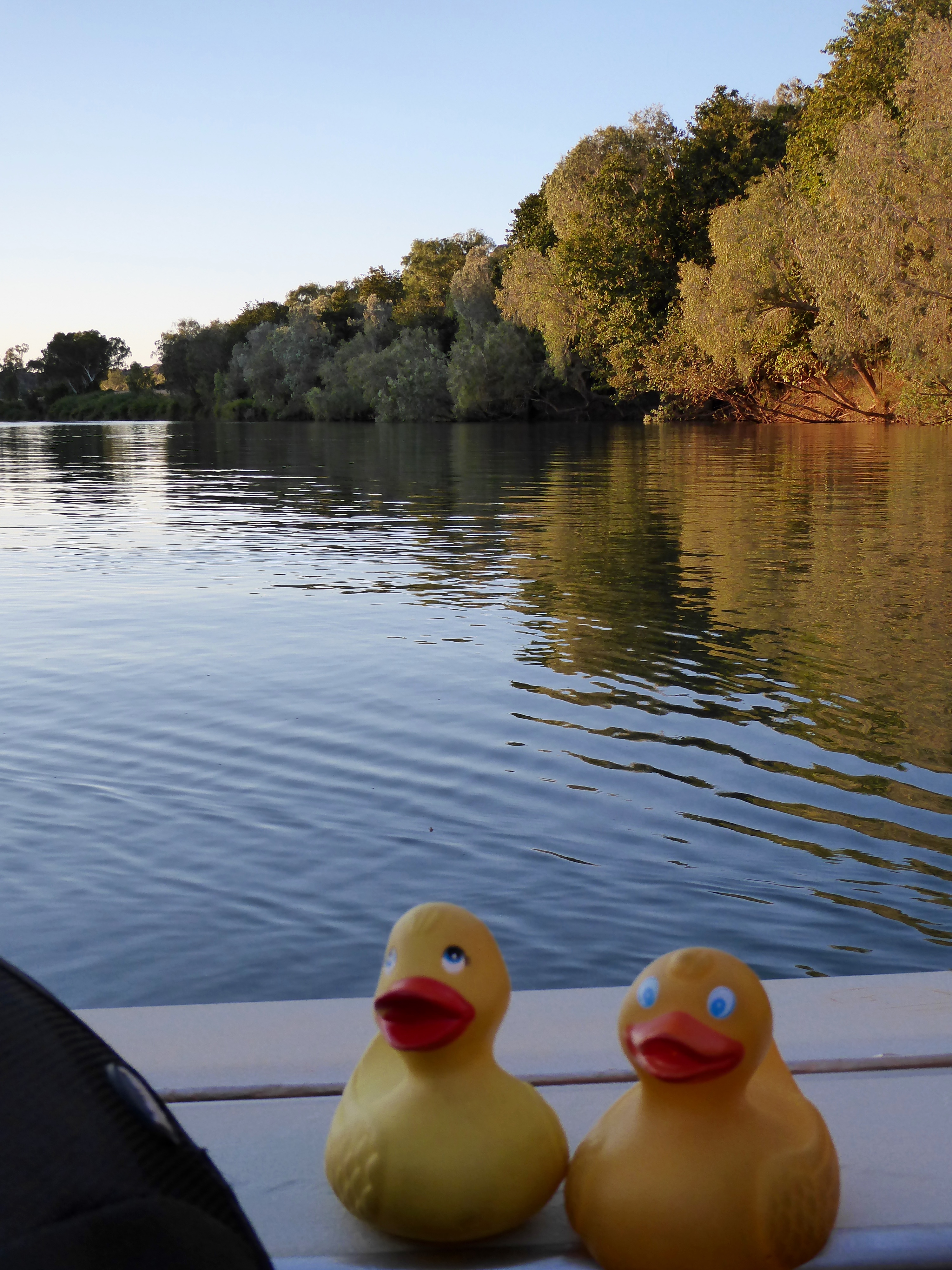
Today the Fitzroy River is calm and we are cruising beneath towering cliffs of the Devonian reef.

Fitzroy River is calm and beautiful today

Fitzroy River is calm and beautiful today

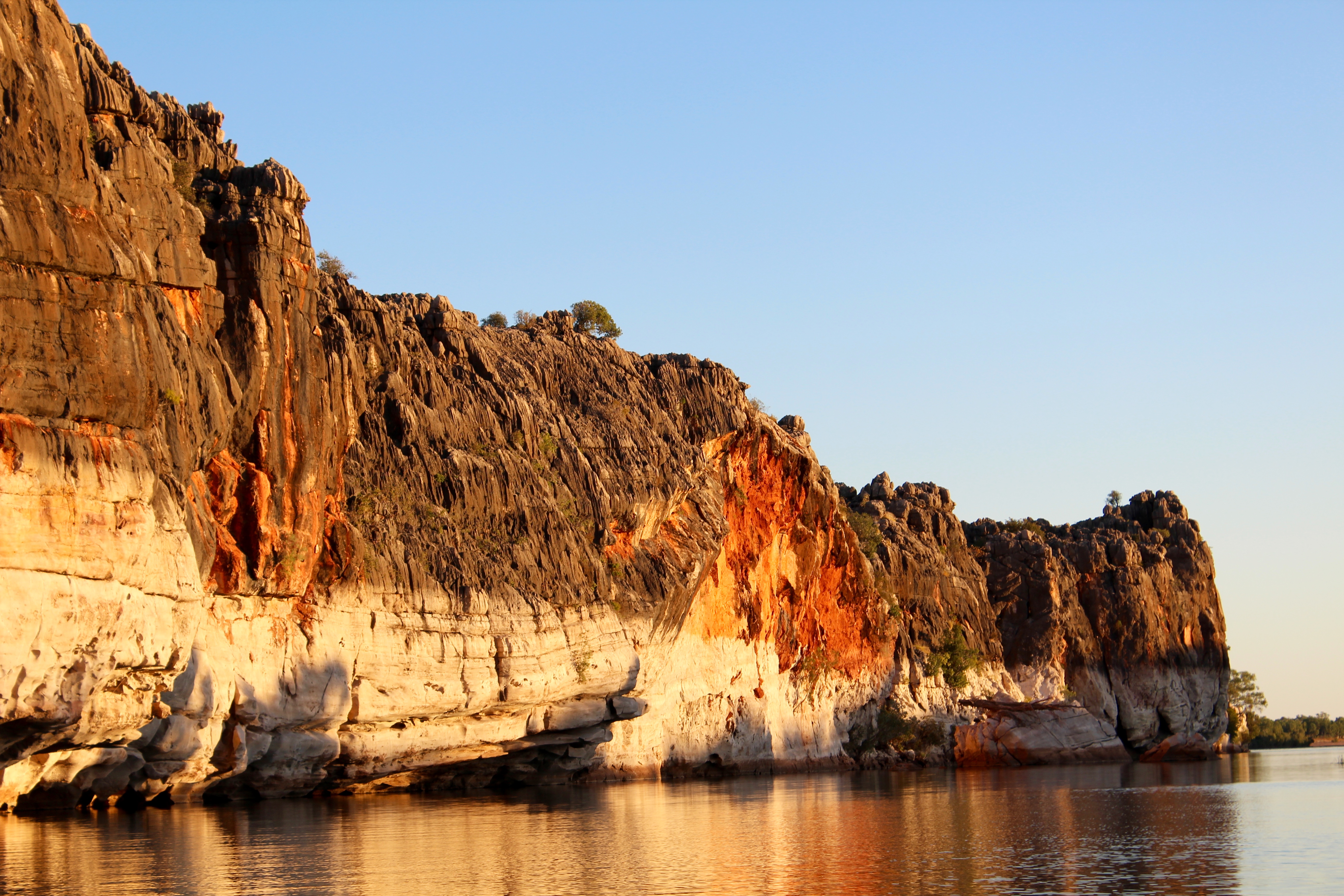
We can see the waterline by the color of the rock.    During The Wet, rainy season, the Fitzroy River rises 16.5 meters, staining the walls and flooding the National Park with 7 meters of water.    The colors of the cliffs here are so bright.

Bright colors and bright reflection

Bright colors and bright reflection

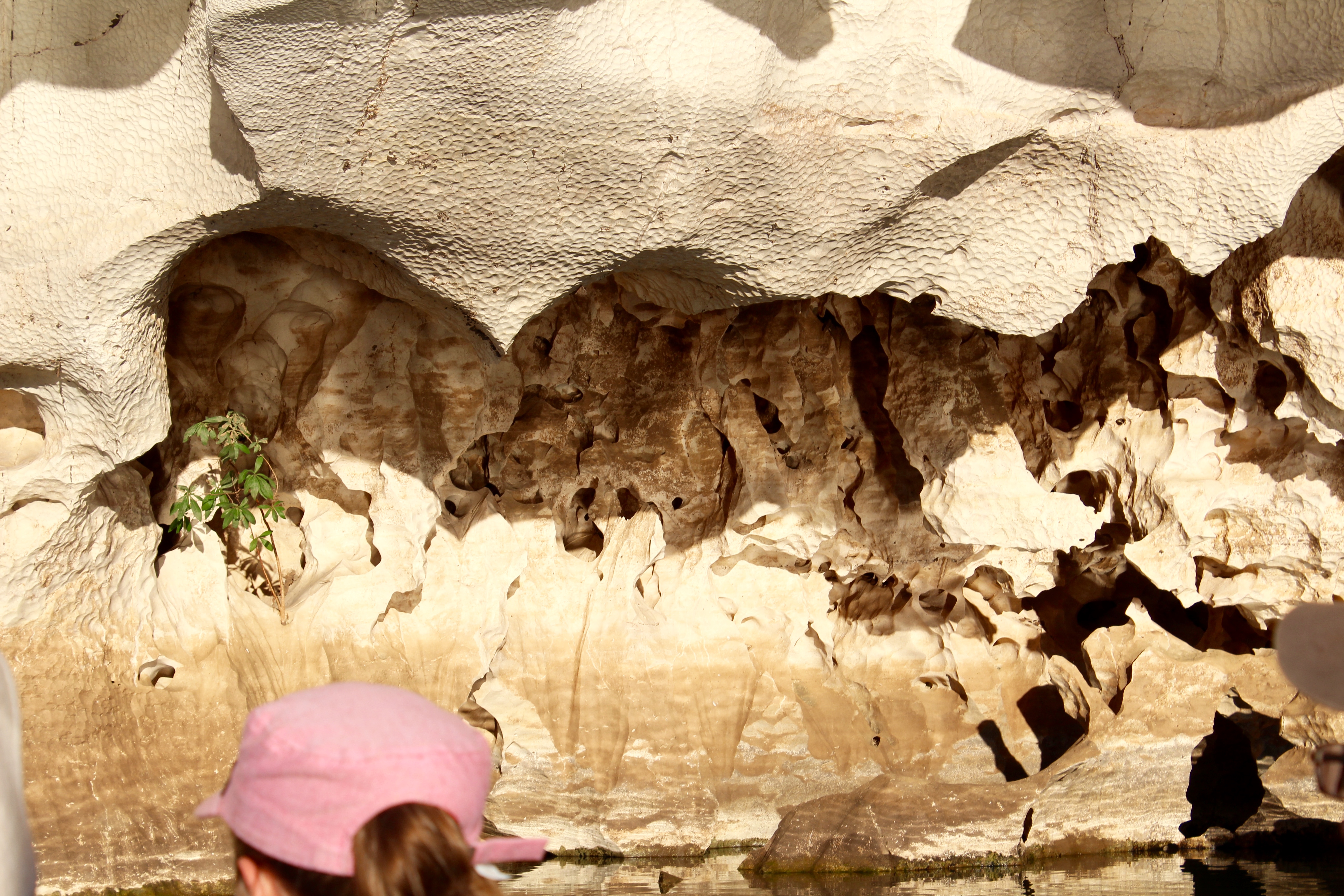
Great reflection in the Fitzroy River.    We heading into a cave.

Into cave with fossils on wall

Into cave with fossils on wall

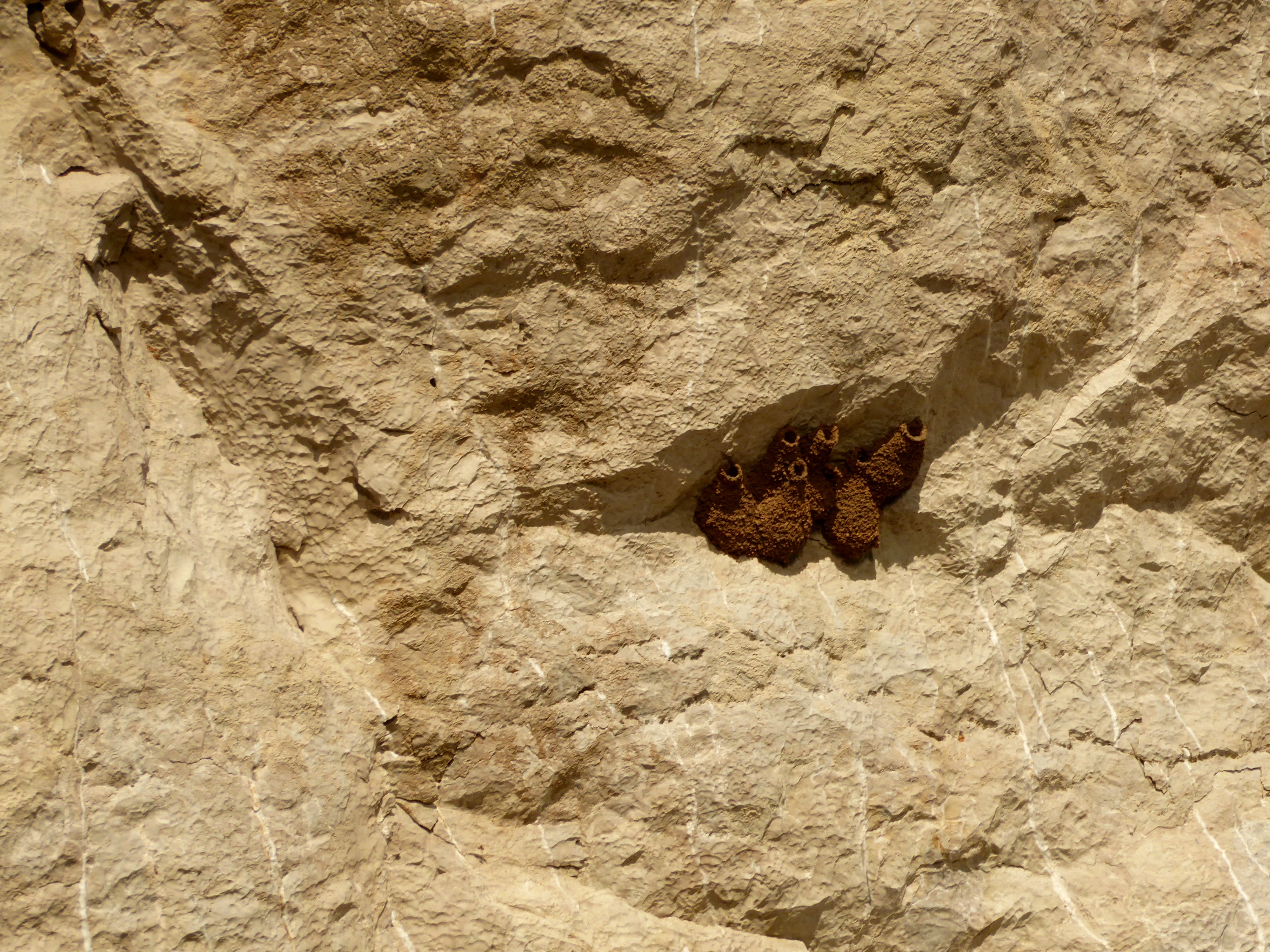
This wall is so full of fossils preserved in the ancient limestone reef.   Also migrating birds and bats build mud nests here.

Mud nests built by migrating bats and birds

Mud nests built by migrating bats and birds

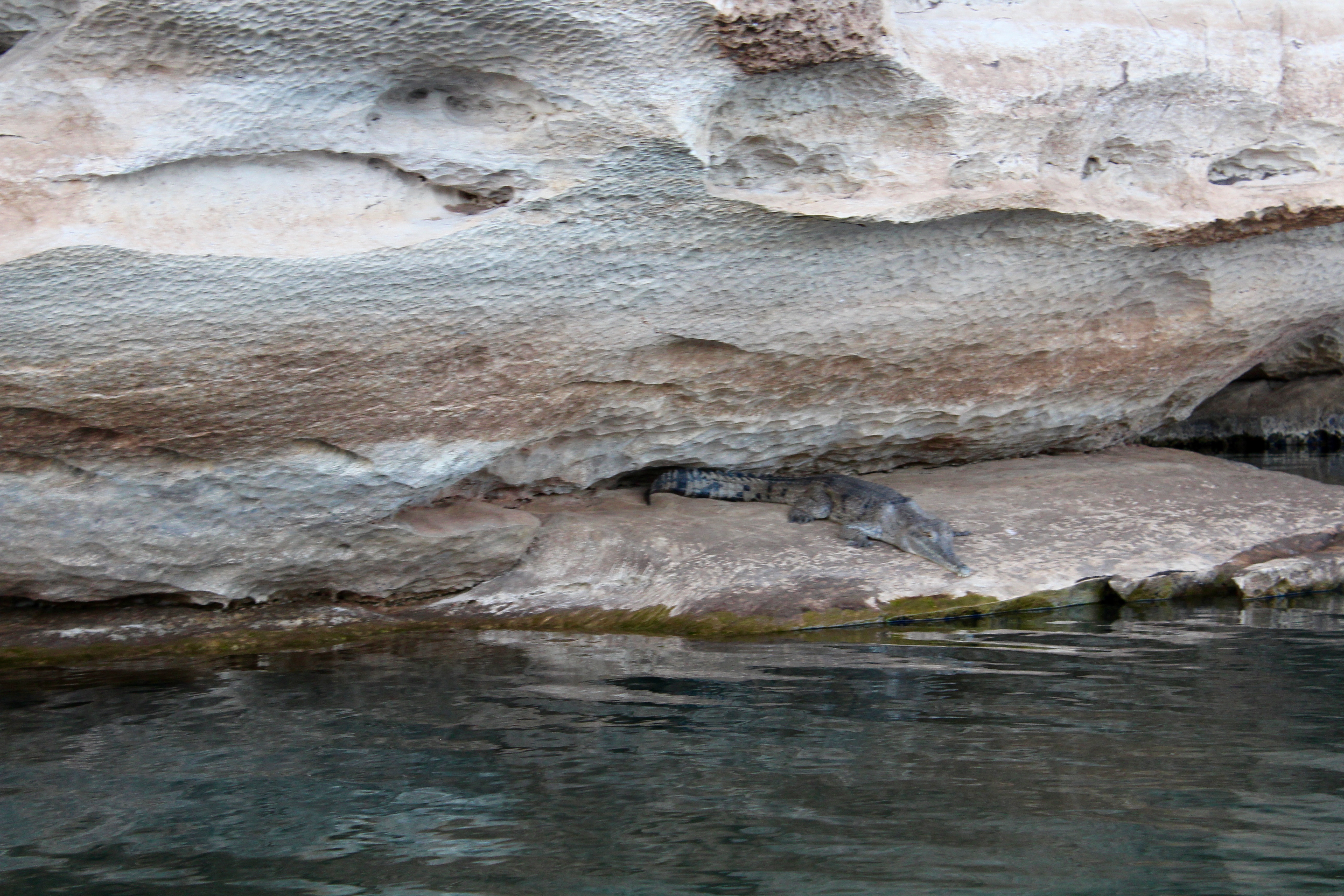
The Fitzroy River has many fish, so there will other animals here.

A fresh water crocodile

A fresh water crocodile

This fresh water crocodile is not supposed to be aggressive, unless provoked.   We will give him plenty of room.   This calm river is so different from the flooding of The Wet.

Cruising down the Fitzroy River

Cruising down the Fitzroy River

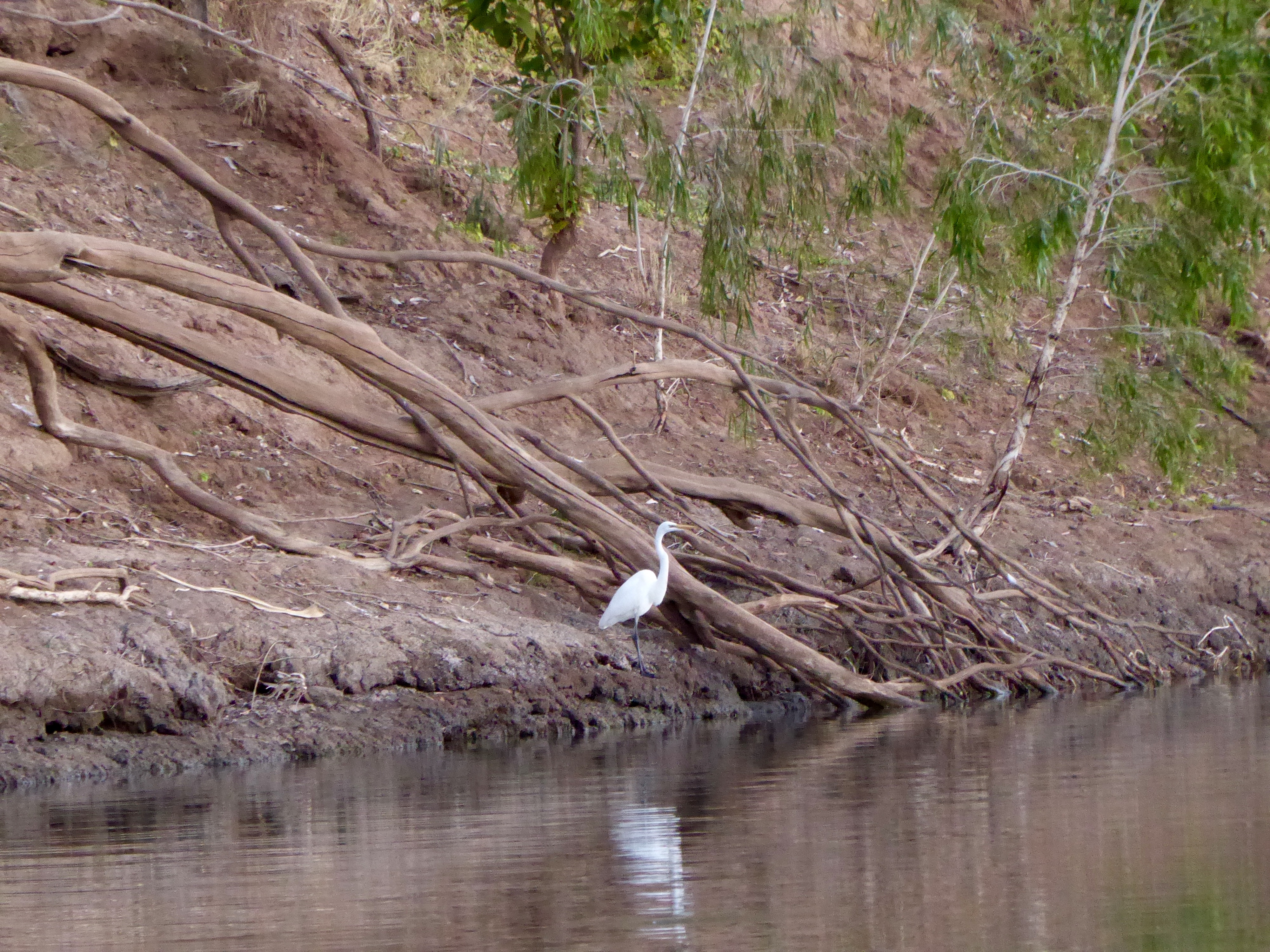
Had to imagine the floods, but they arrive every year.   This gorge is reported to be 30 meters deep and is between the Oscar and Geike Ranges.  This bird was so still.

Calm bird on river bank and reflected in river

Calm bird on river bank and reflected in river

We like reflections in the still river.   Our cruise is almost over, but the bright colors on the rocks just take our breath away.

Vivid colors

Vivid colors

We hope you come here in The Dry.   It is beautiful.   Next time we will visit another of Australia’s national parks.

Zeb and Eider Visit Fitzroy Crossing in The Kimberley of Western Australia

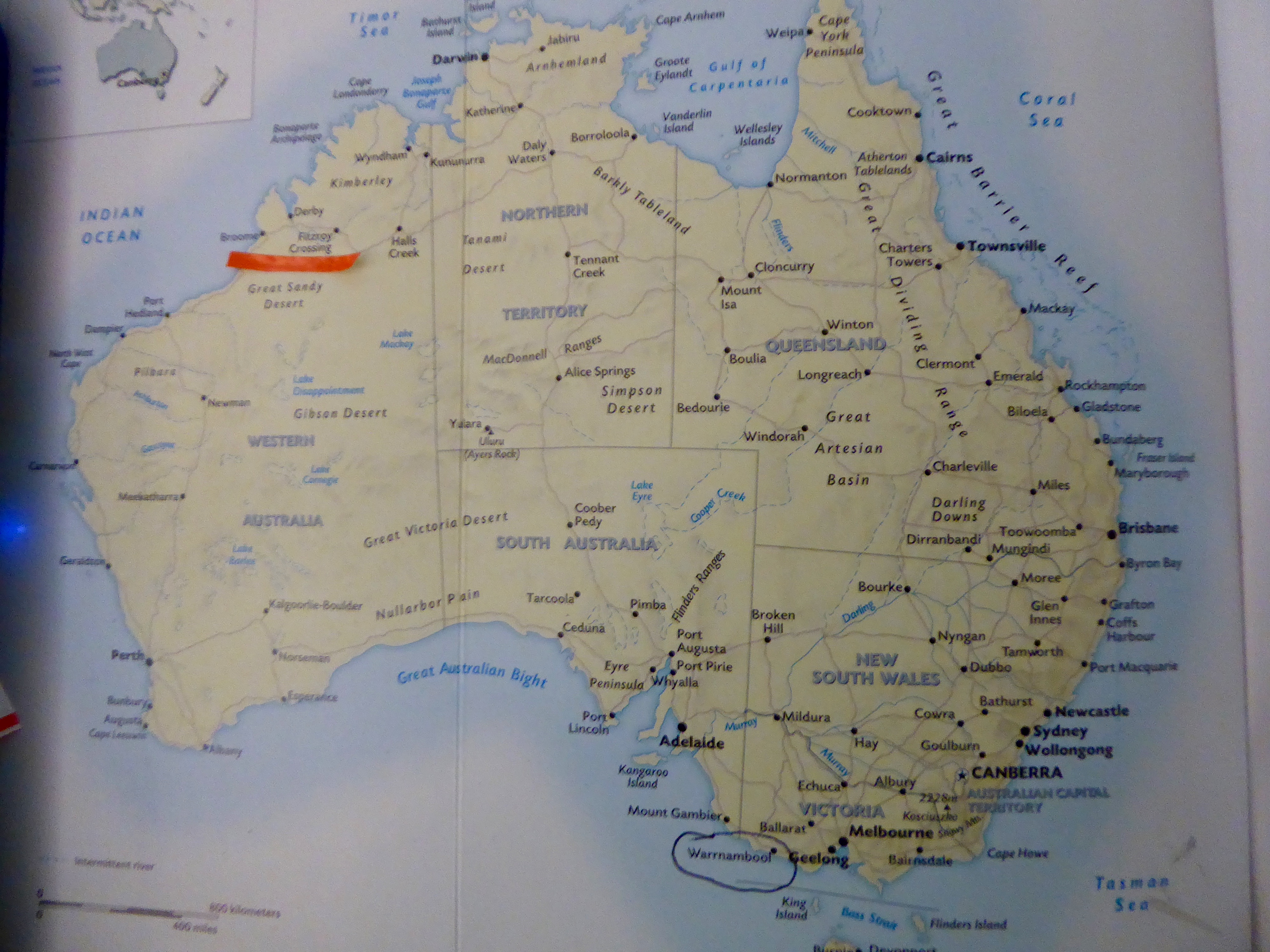
The rugged Kimberley Region of Western Australia has limited access.   There are few roads, and most of them require 4 wheel drive vehicles.   During the rainy season, or The Wet, they are often impassable.   Broome is situated at the southern most tip of the magnificent Kimberley Region.   We decided to try putting a map here, so you know exactly where we are now.

Orange line below Broome and Fitzroy Crossing

Orange line below Broome and Fitzroy Crossing

In the northwest area of Australia, just above the orange line, is Broome on the Indian Ocean, and Fitzroy Crossing, today’s destination.   Wanting to see some of the Kimberley, we took a multi-day Kimberley Gorges Escape tour with Kimberley Wild.   We left from Broome, on the Indian Ocean.

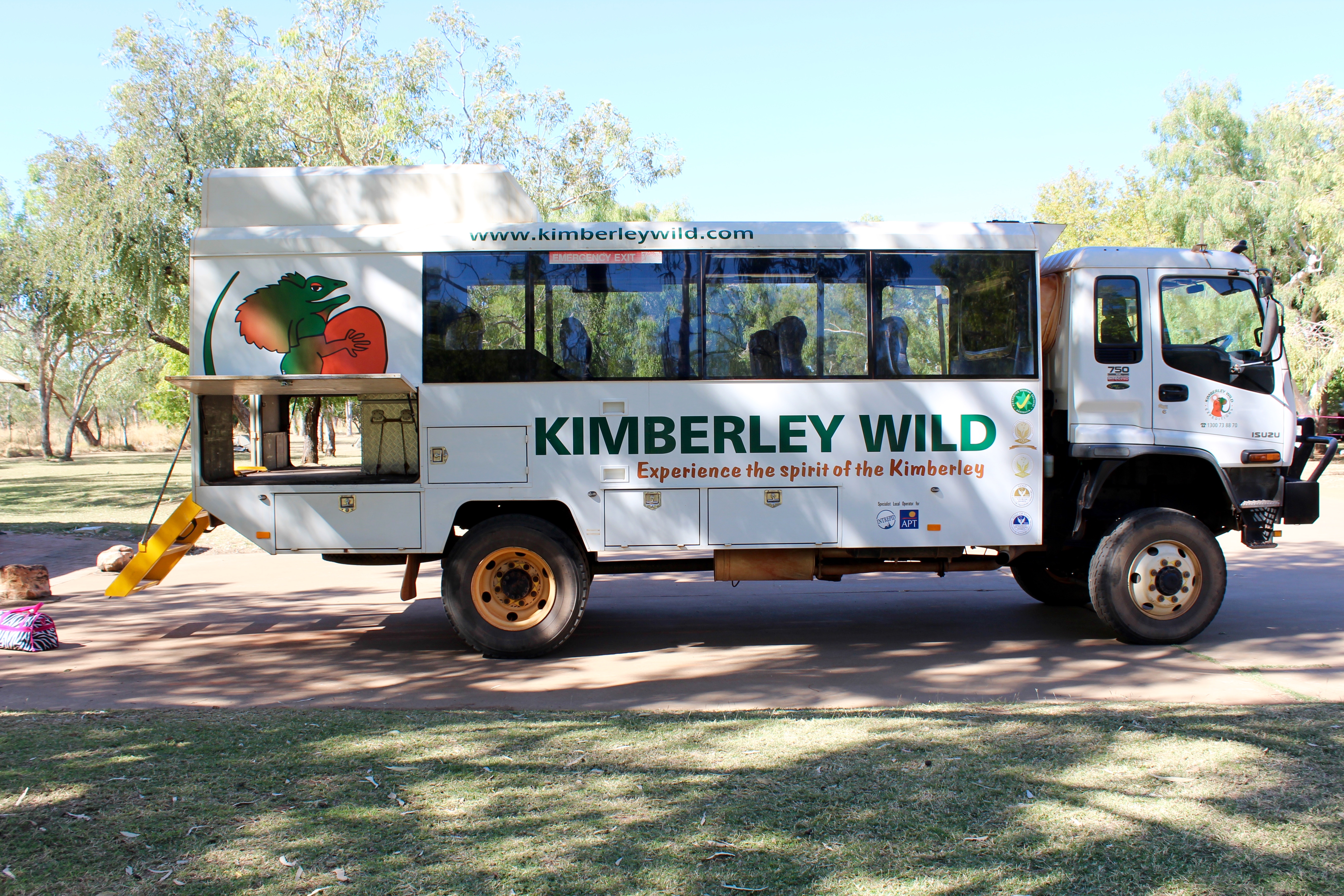
Our Kimberley Wild tour vehicle

Our Kimberley Wild tour vehicle

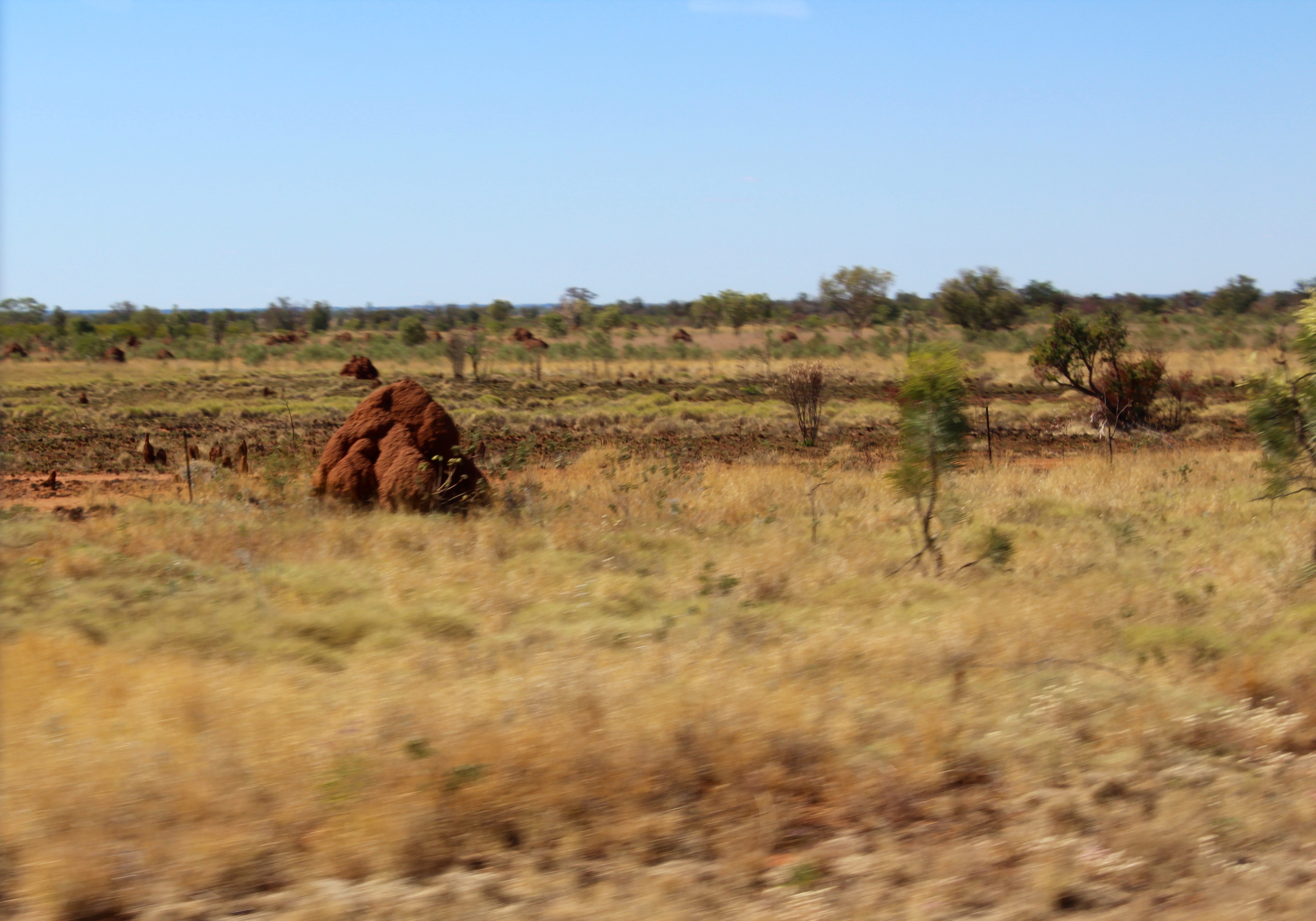
Along the road, we saw thousands of termite hills.

So many termite hills

So many termite hills seen while driving

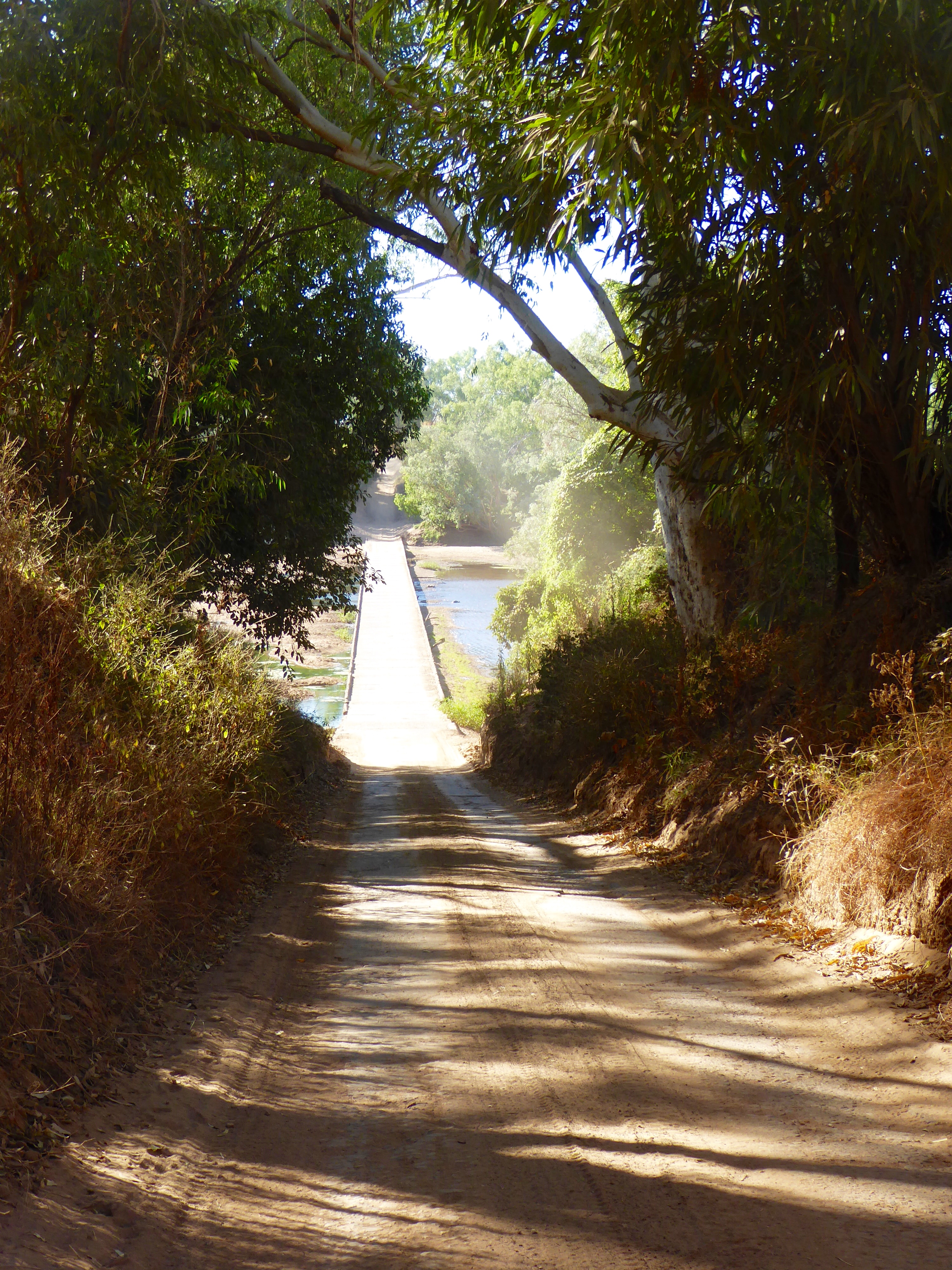
Termite hills have been very abundant since we drove into the northern half of Australia.   Our first tour destination was Fitzroy Crossing.   Here we are approaching the Fitzroy River and the bridge across the river.

Approaching Fitzroy River

Approaching Fitzroy River

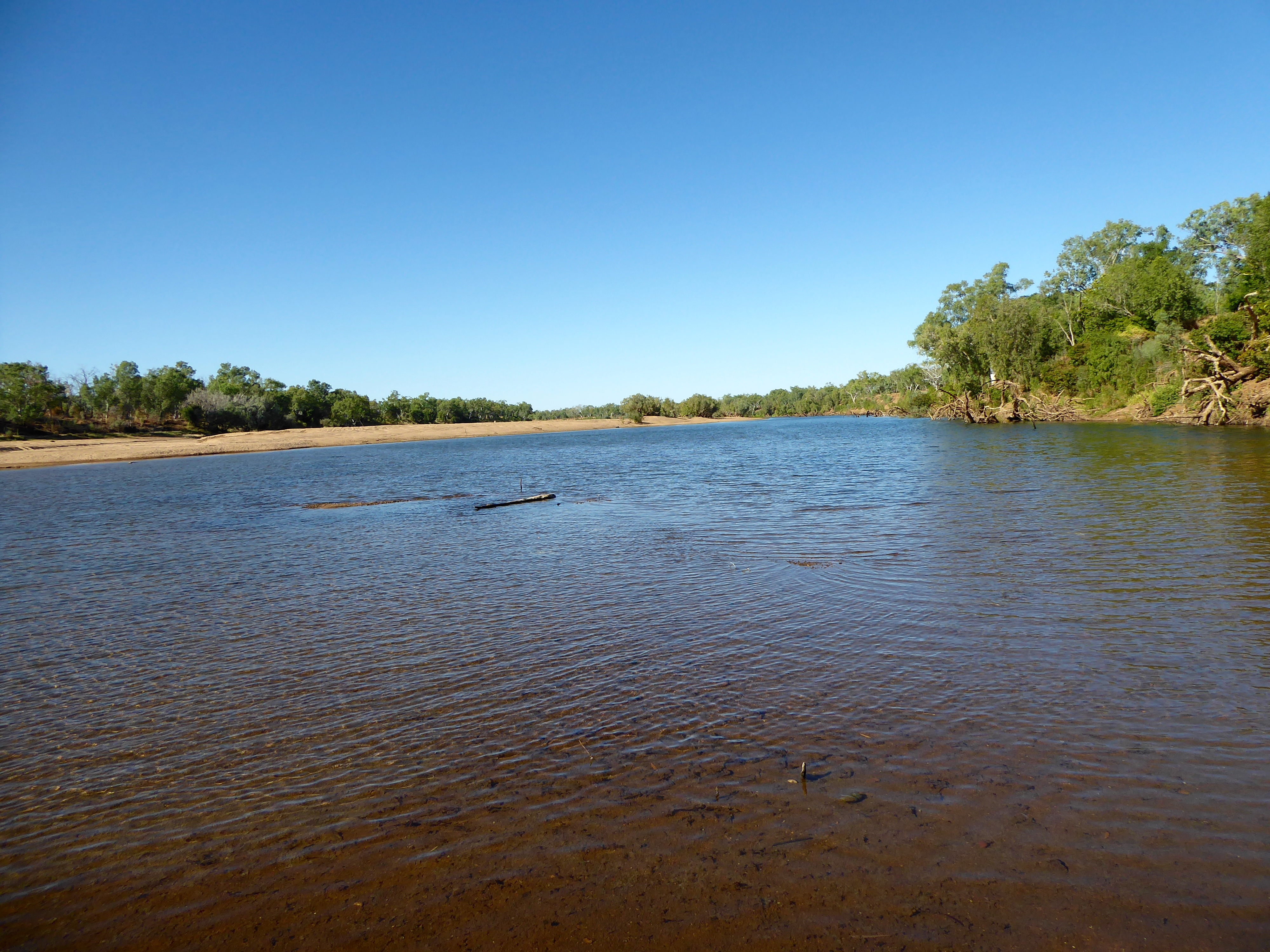
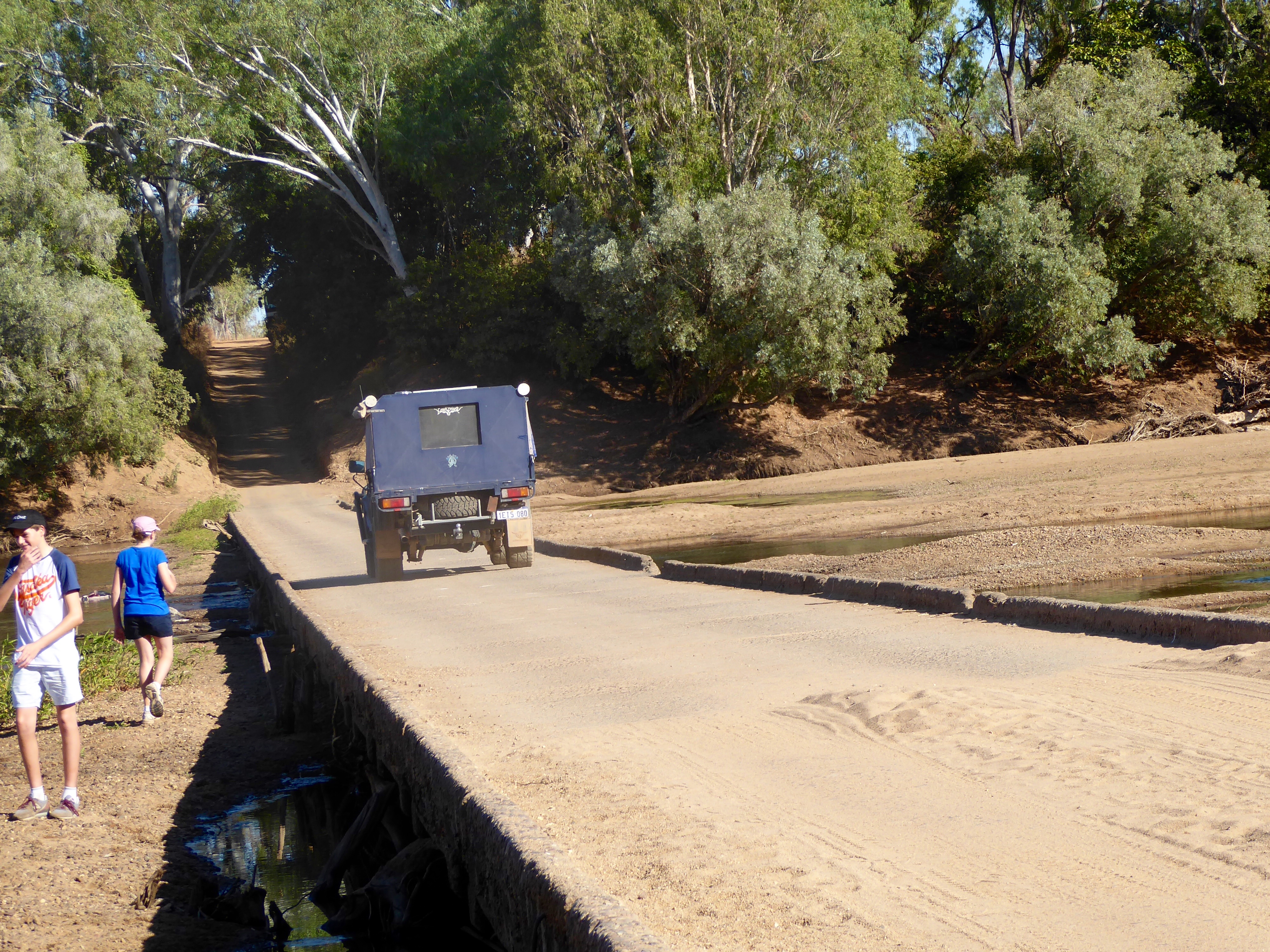
This bridge was built in 1935 and improved in 1958.   Since it is covered with water and closed during the monsoon season, another higher bridge was built nearby.     This area of the Kimberley was, and still is, home to many of Australia’s aboriginal people.    The town of Fitzroy Crossing began in 1886 when Mr. McDonald started the Fossil Downs cattle station.   The cattle station was the result of a 3 year, 3,500 mile cattle drive from Goulburn, New South Wales.   The Fitzroy River is wide, but shallow now.

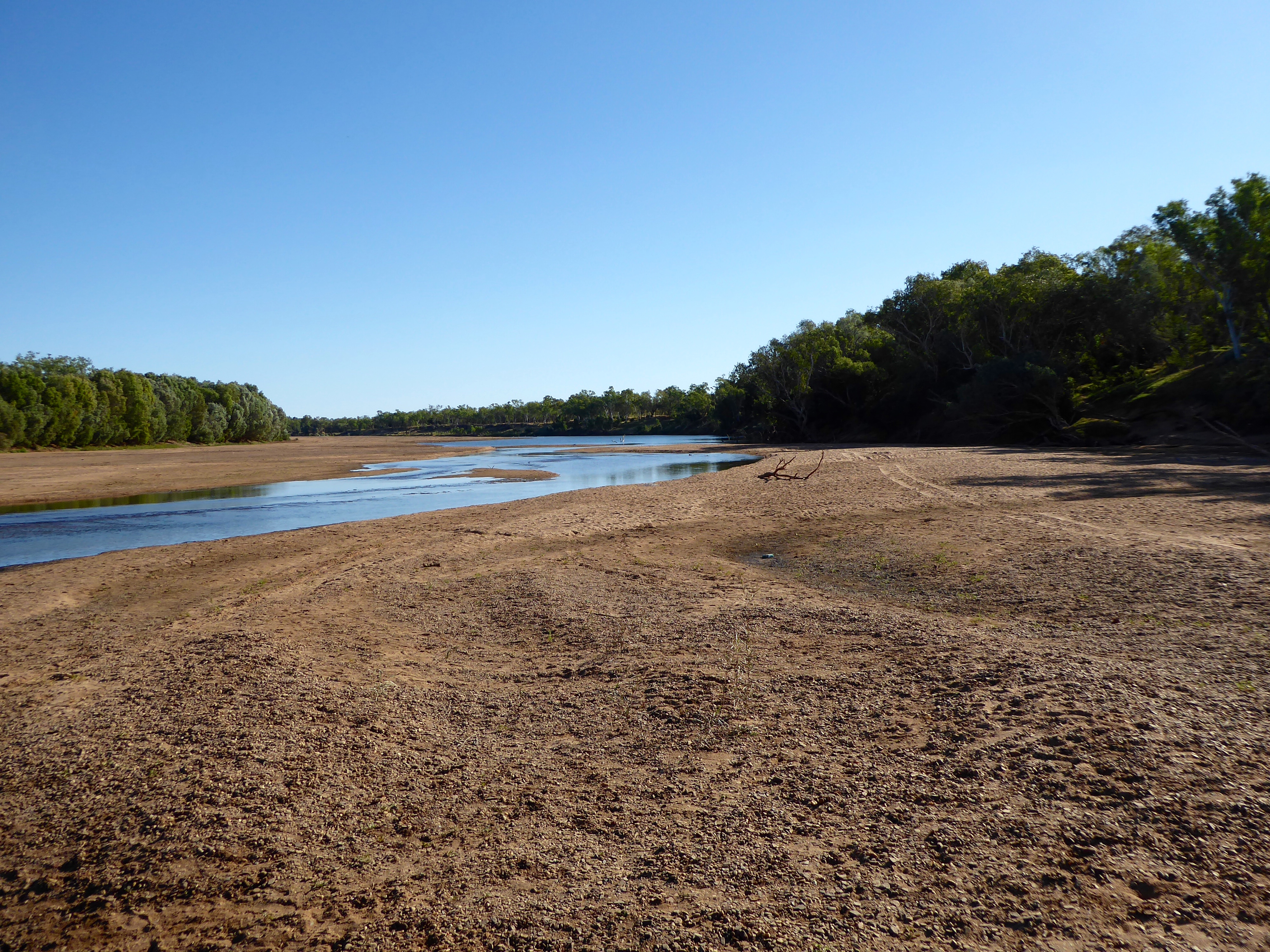
Fitzroy River is now wide and shallow

Fitzroy River is now wide and shallow

As we see here, much of the river bed is dry.

Much of Fitzroy River bed is dry

Much of Fitzroy River bed is dry

The climate here varies from semi arid in the winter (May through October) and monsoonal (December through March).   Leaving Fitzroy Crossing and the Fitzroy River,

Driving across bridge built in 1935

Driving across bridge built in 1935

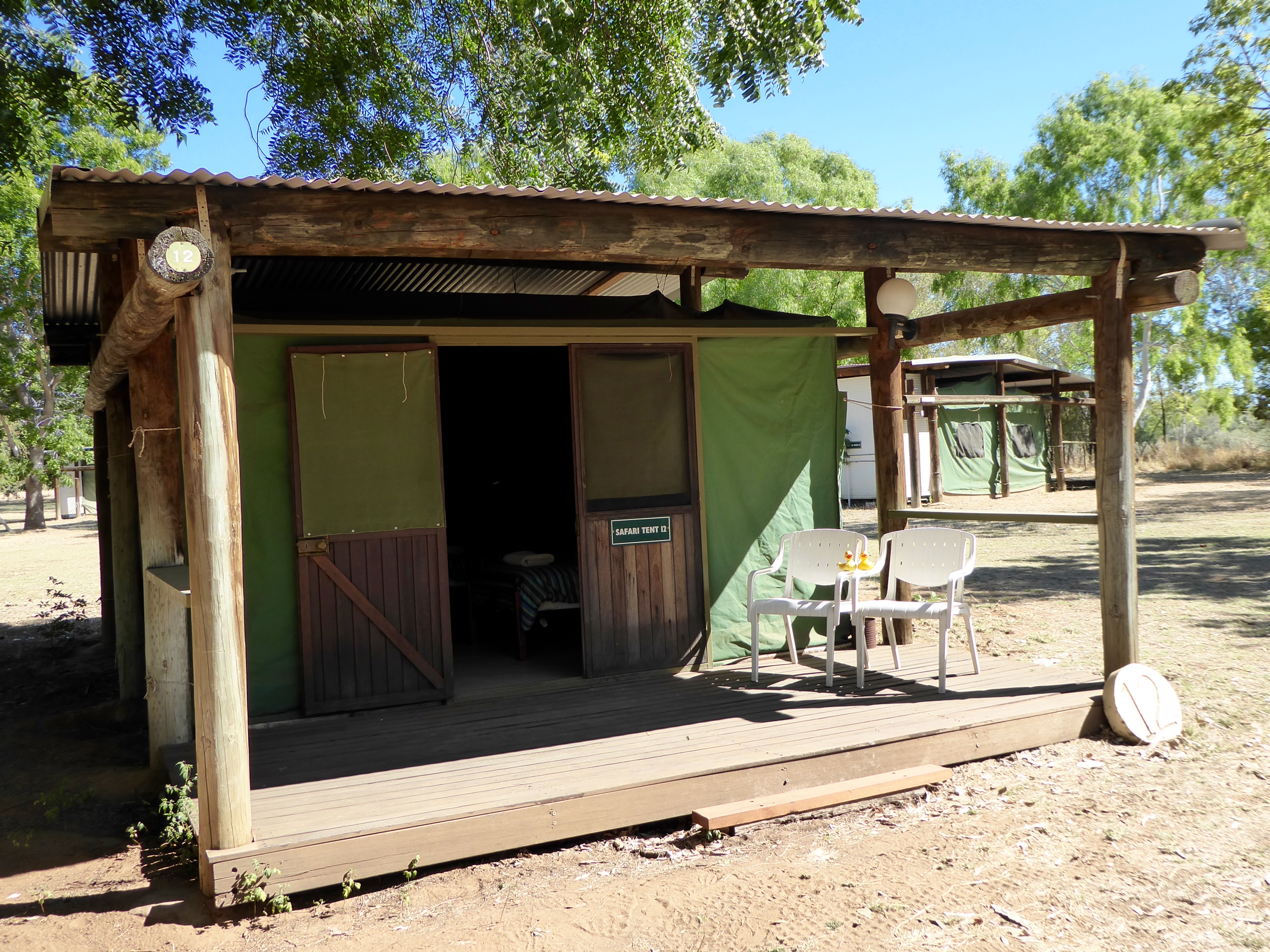
we find our sleeping accommodations for the night.   We will stay at Fitzroy River Lodge.  Here we had our choice of a motel room, a safari lodge, caravan bay, or a campsite.   Before leaving Broome, we reserved a Safari tent.   Ours is Number 12.

Sitting on the patio of our Safari Tent

Sitting on the patio of our Safari Tent

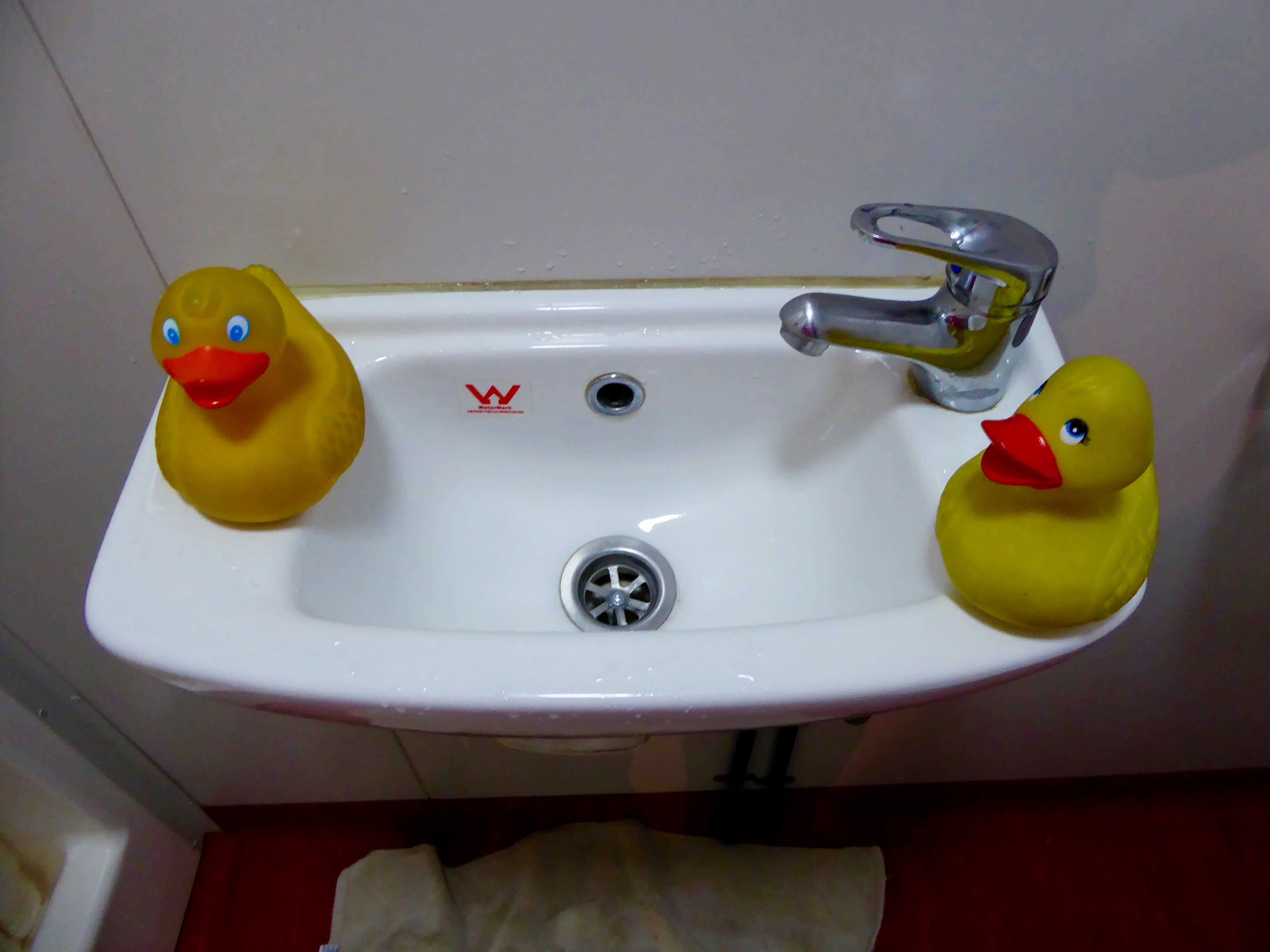
In our safari tent we even have our own bathroom

Even a bathroom in our safari tent

Even a bathroom in our safari tent

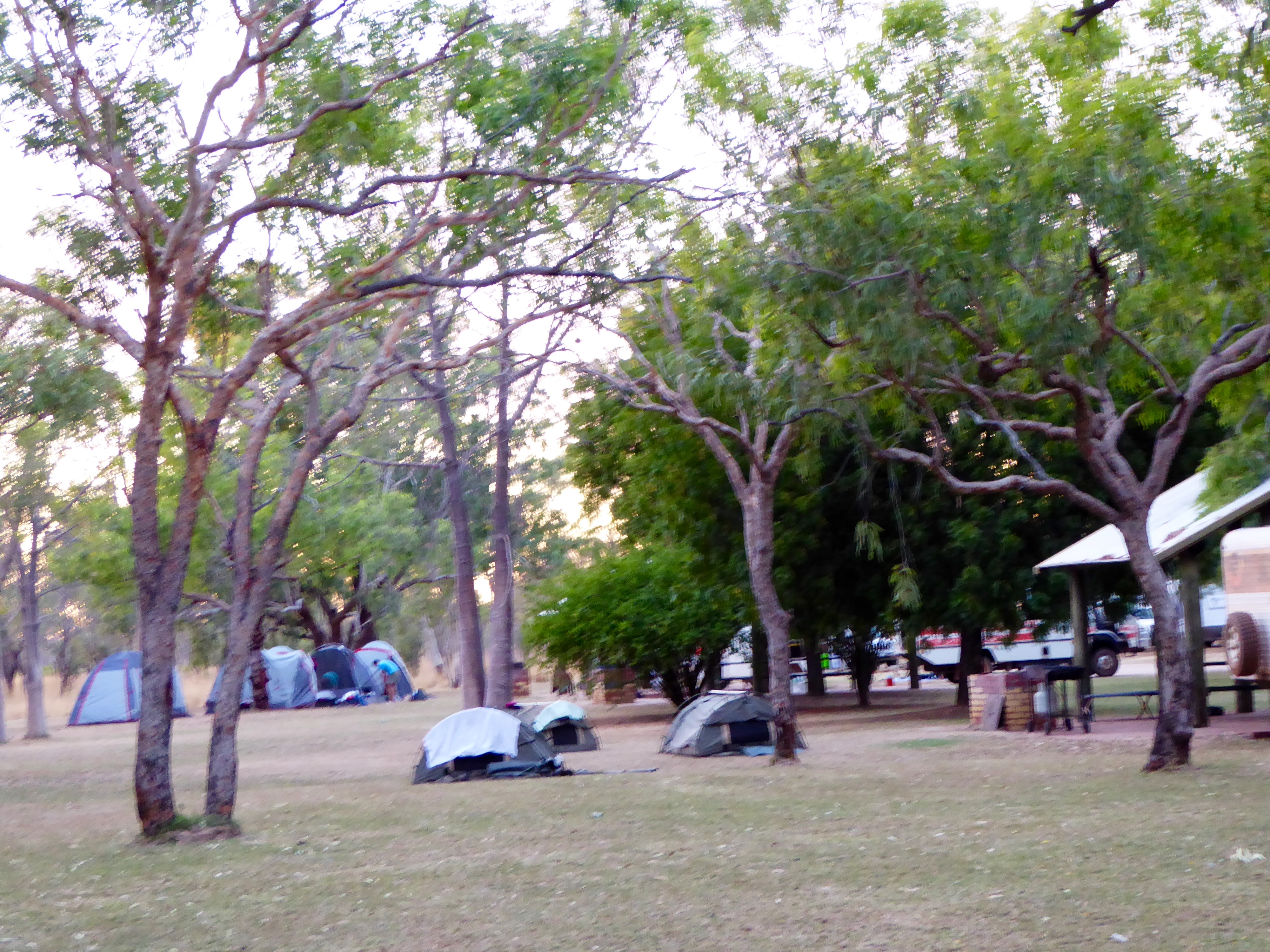
We have our own shower in here also.   This is the camping area.

Camping area at Fitzroy River Lodge

Camping area at Fitzroy River Lodge

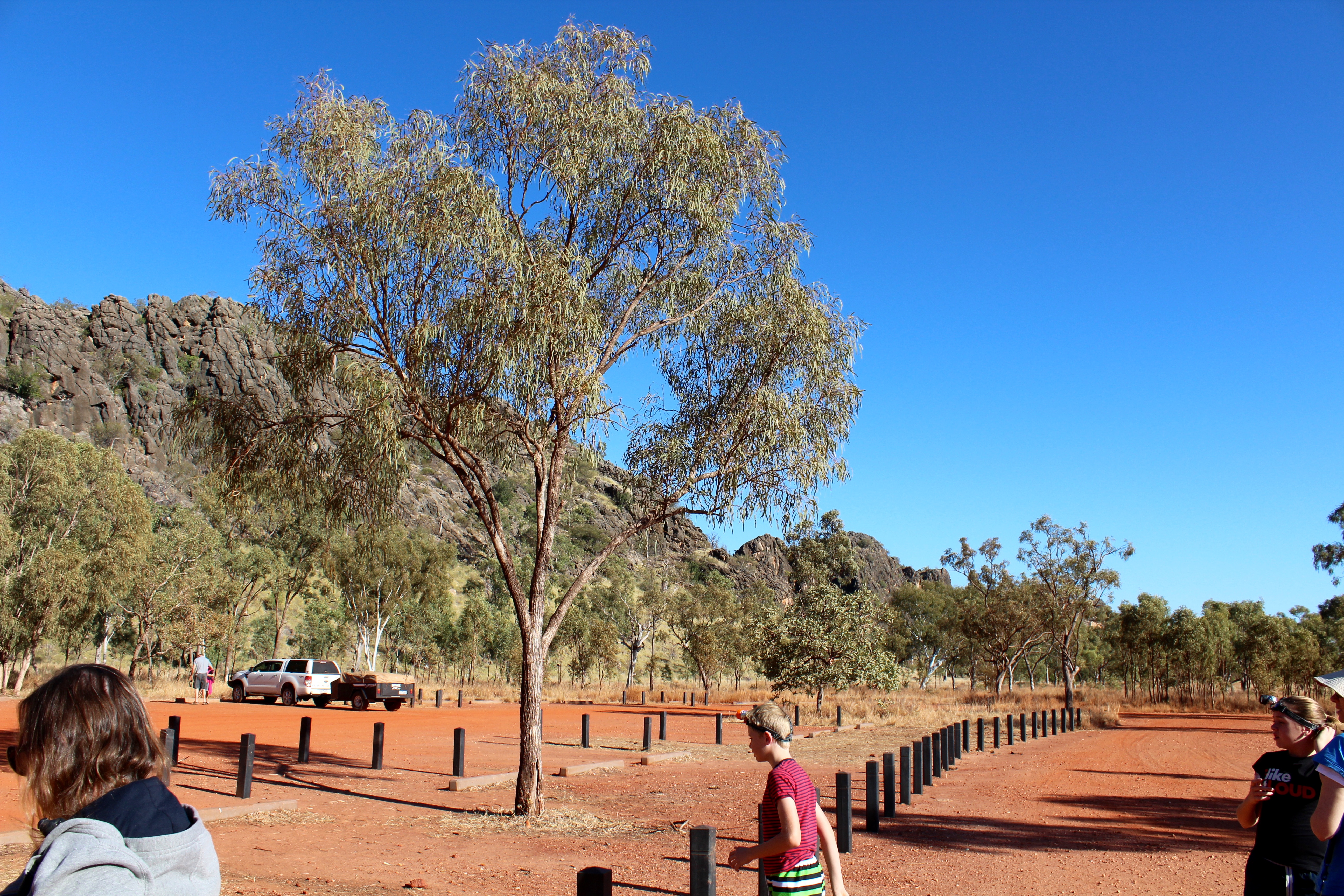
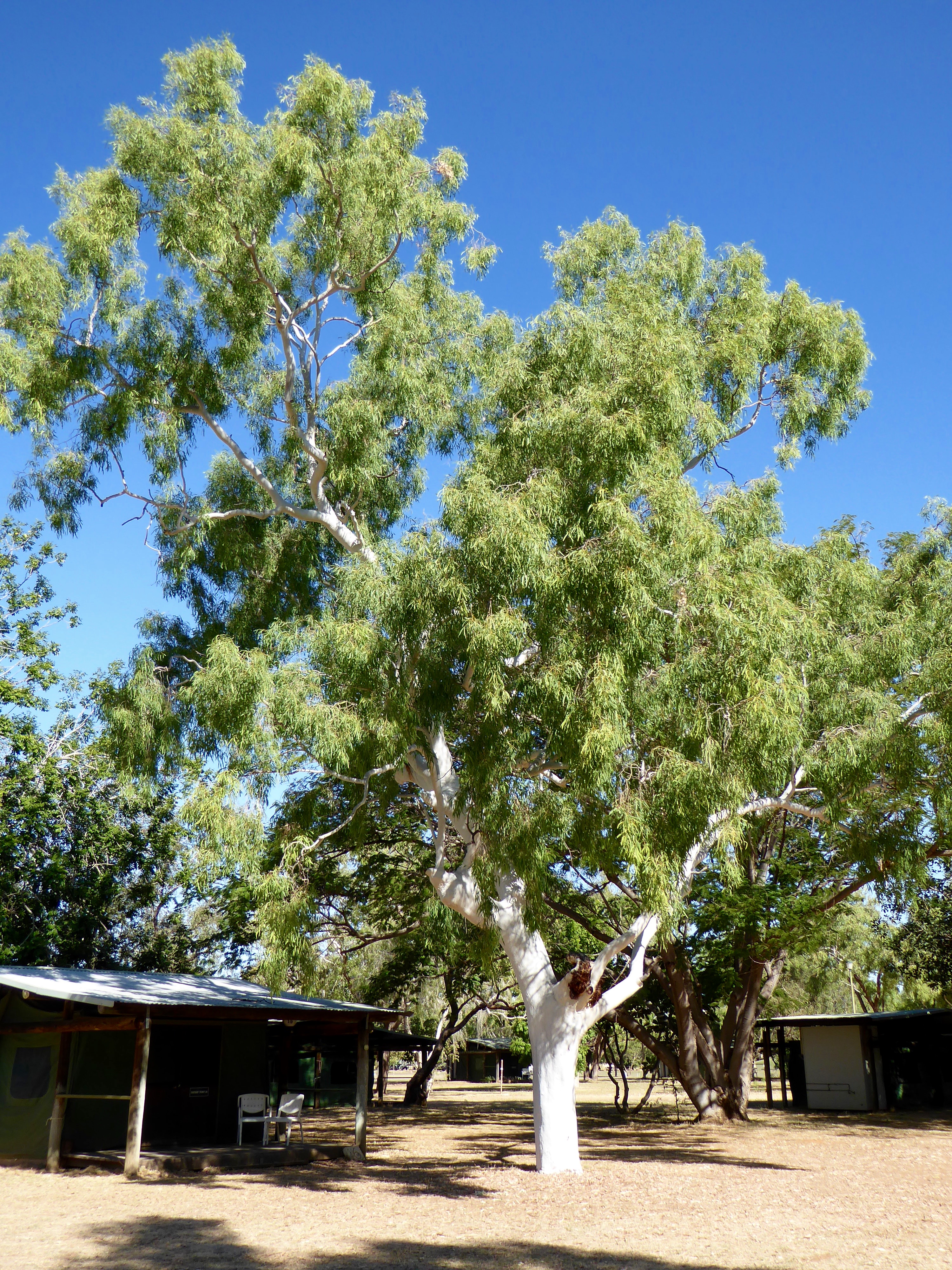
We believe this is a Coolibah tree with the noticeable white branches.

Coolibah tree with white branches

Coolibah tree with white branches

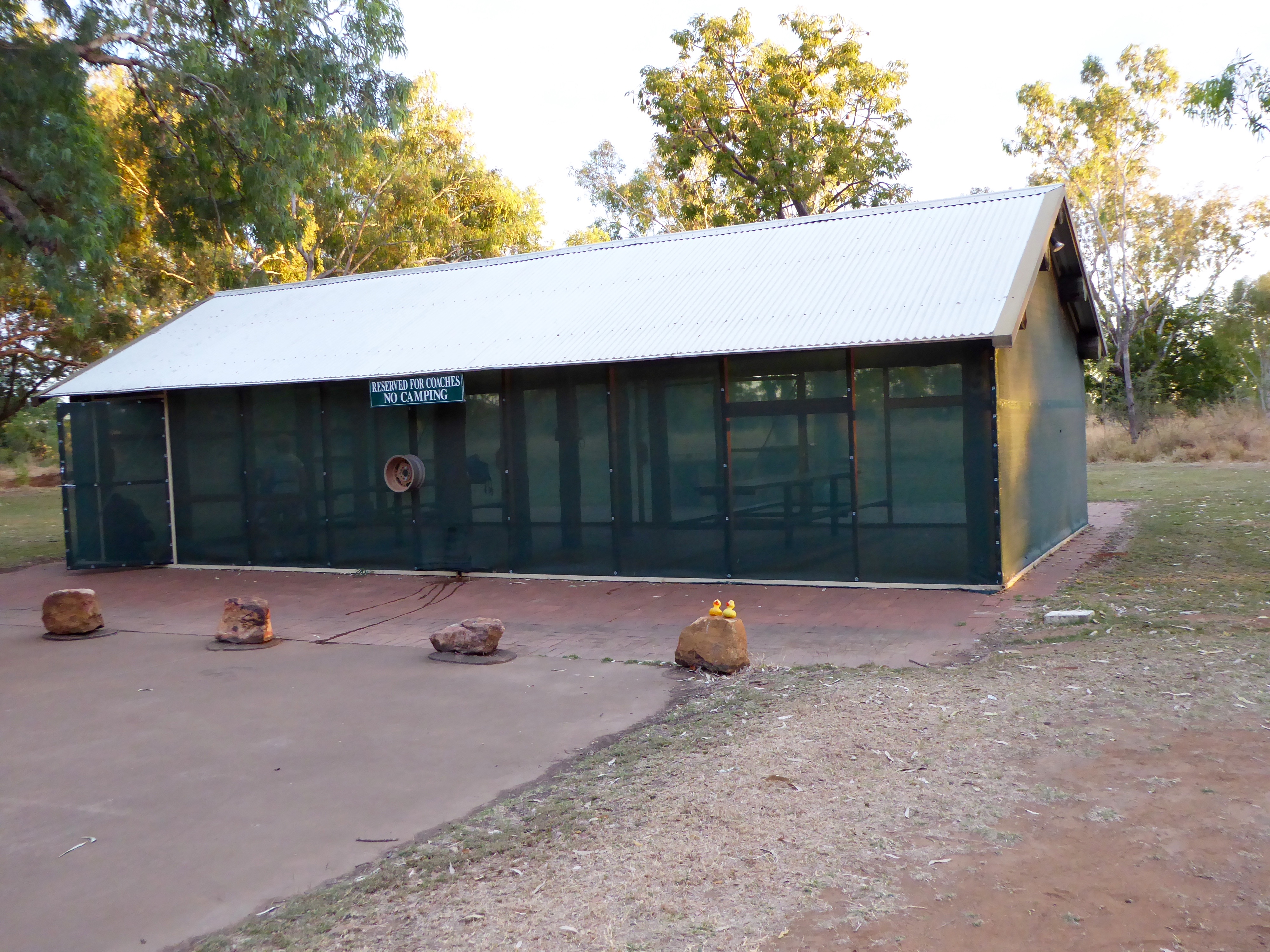
We visit a gorge, which we will tell you about (and, of course, show you) next time.   Returning here, we enjoyed a wonderful dinner of grilled steak and grilled kangaroo, with various side dishes   This is the building where we ate our meals.

Our dining building

Our dining building

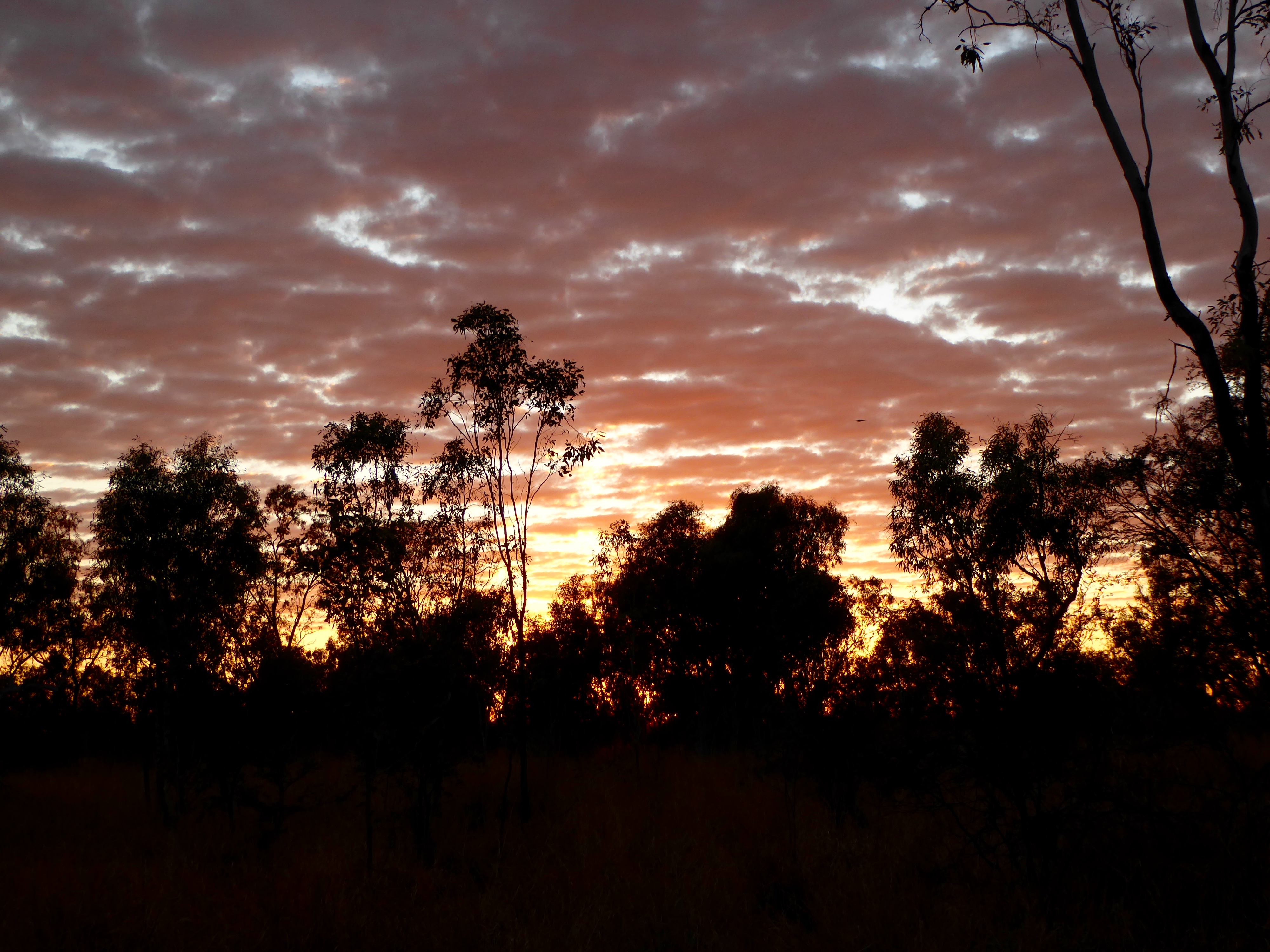
Chrissy, our guide prepared very tasty food for us.   Then we admired yet another beautiful Australian sunset.

Setting sun through clouds

Setting sun through clouds

We hope you take tours into the Kimberley when you are in this part of Australia.   It is beautiful here.