Seal Bay on Kangaroo Bay with Zeb and Eider Duck

We are going to Seal Bay, in a National Park.
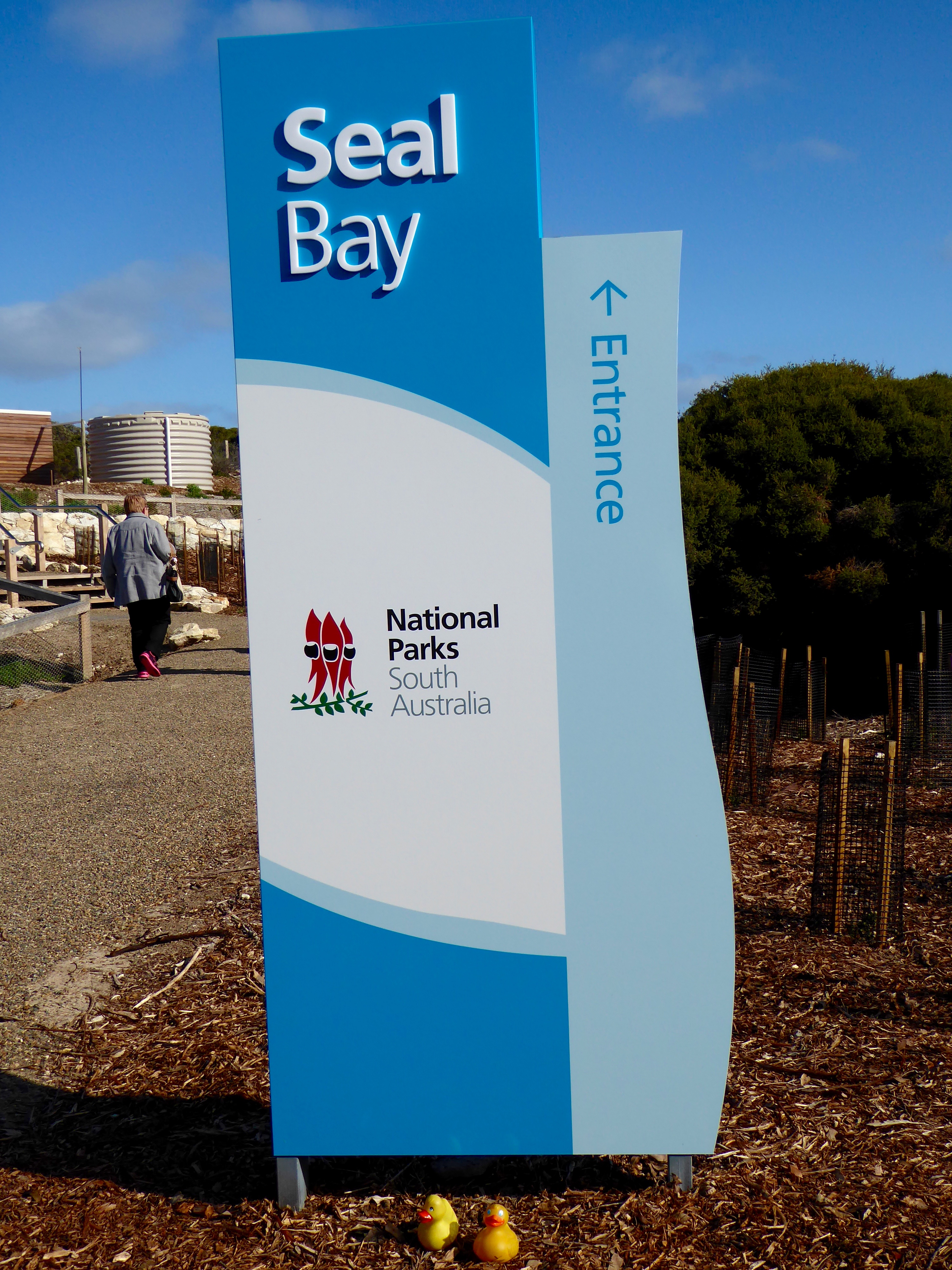
Seal Bay is part of a National Park

Seal Bay is part of a National Park

Humans and duck will see the Australian Sea Lions.   We are visiting the third largest breeding colony in Australia.   Before we even get to the beach, we see this mom and baby sea lion in the bush.
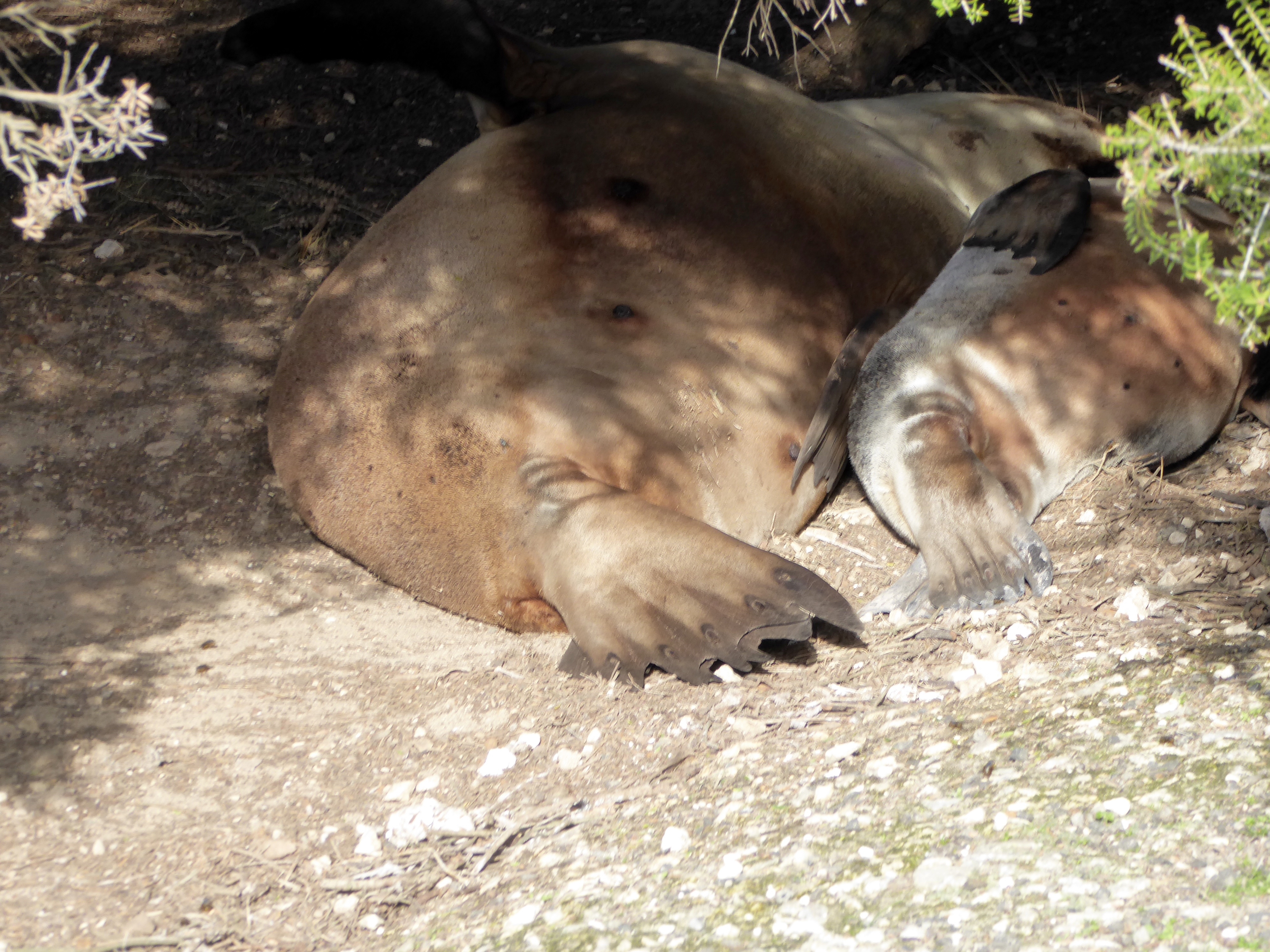
Mom and Baby resting under a bush

Mom and Baby resting under a bush

We are quiet and keep our distance.   We do not want to disturb them.   We follow our guide down to the beach.
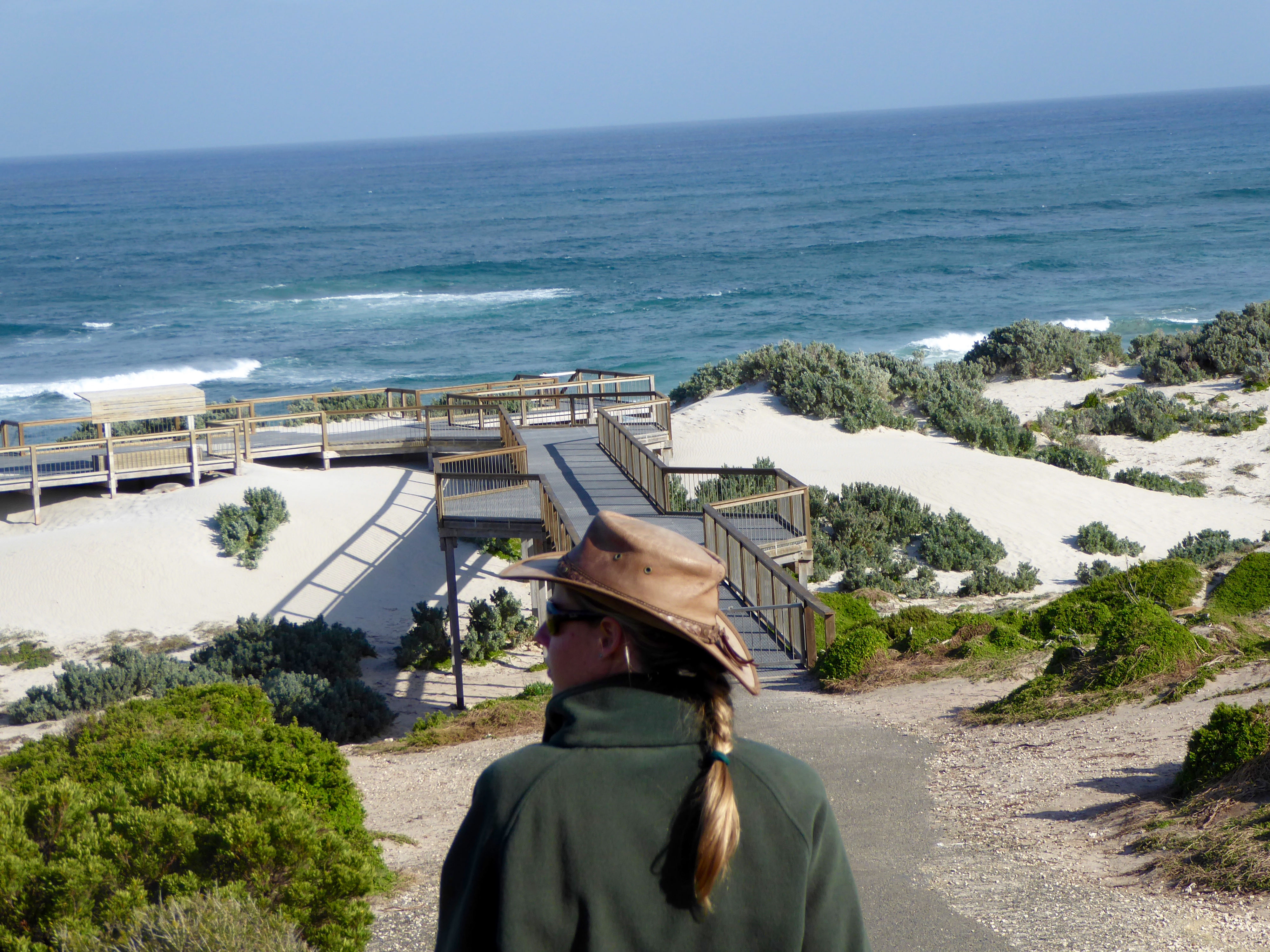
We follow our guide

We follow our guide

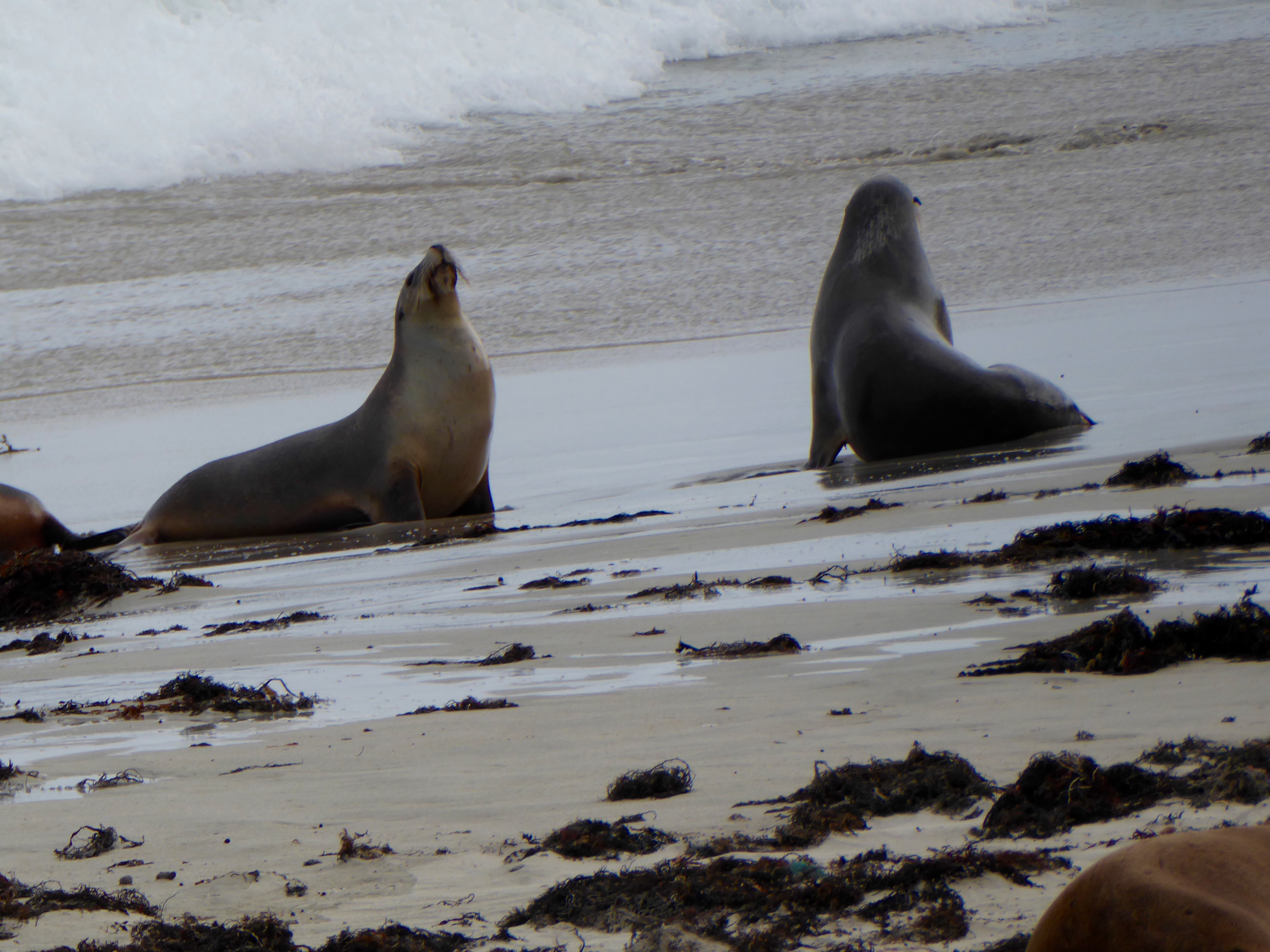
This sea lion is watching us watch him.
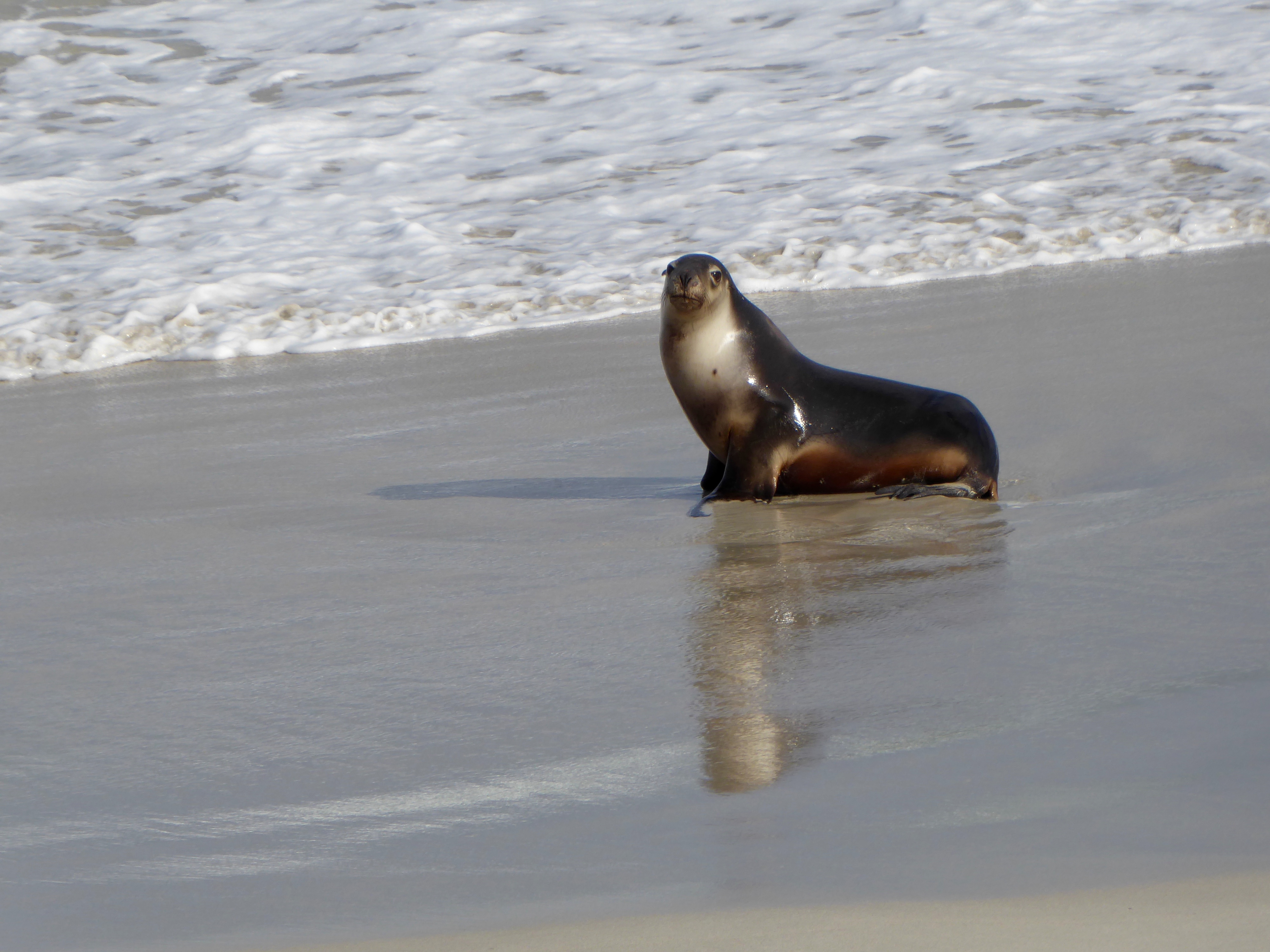
He knows we are here

He knows we are here

Thinking about a swim?
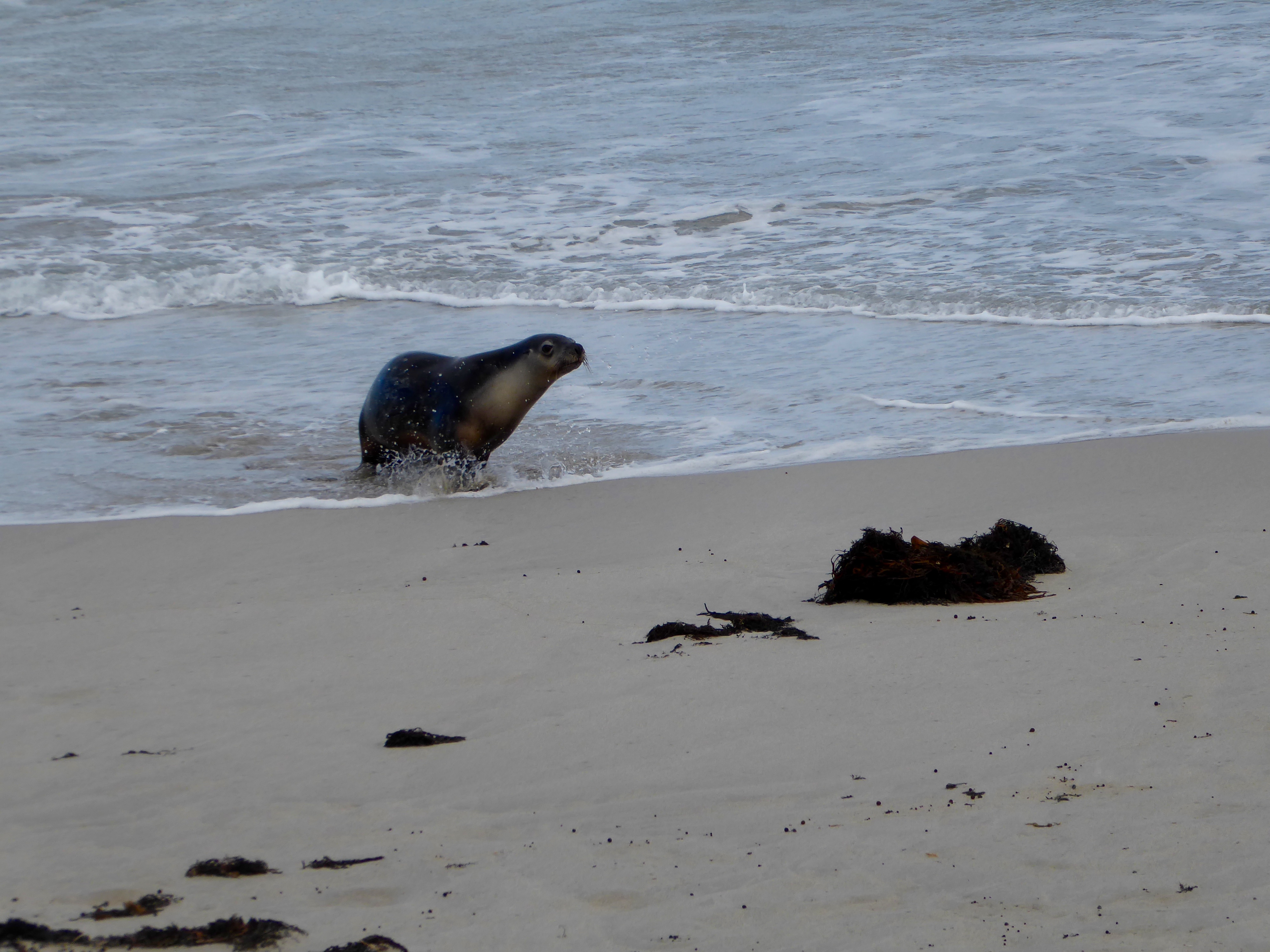
Ready for  swim

Ready for swim

They are swimming and playing in the water.
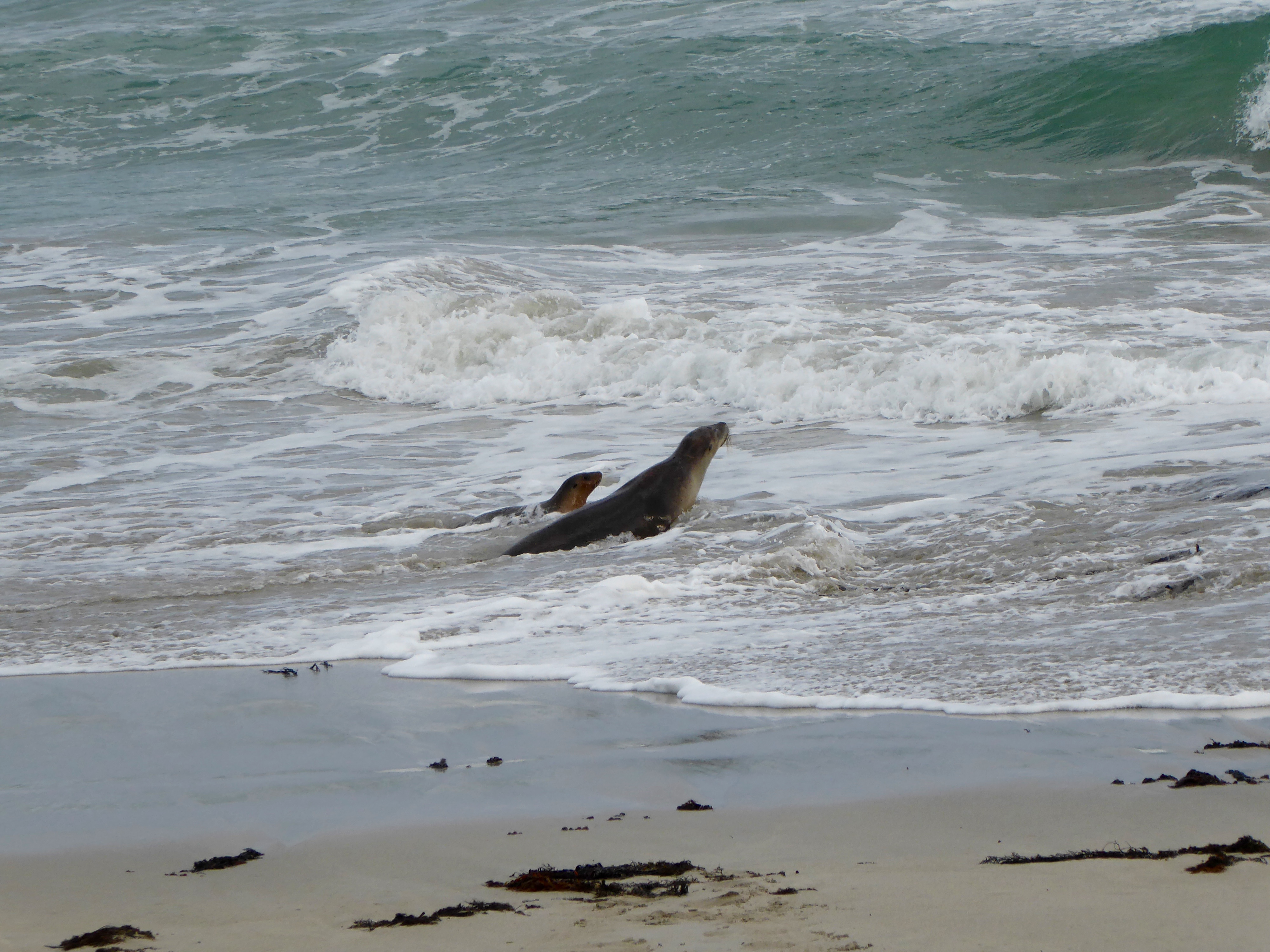
Fun at the beach

Fun at the beach

We like being on the beach with the sea lions.
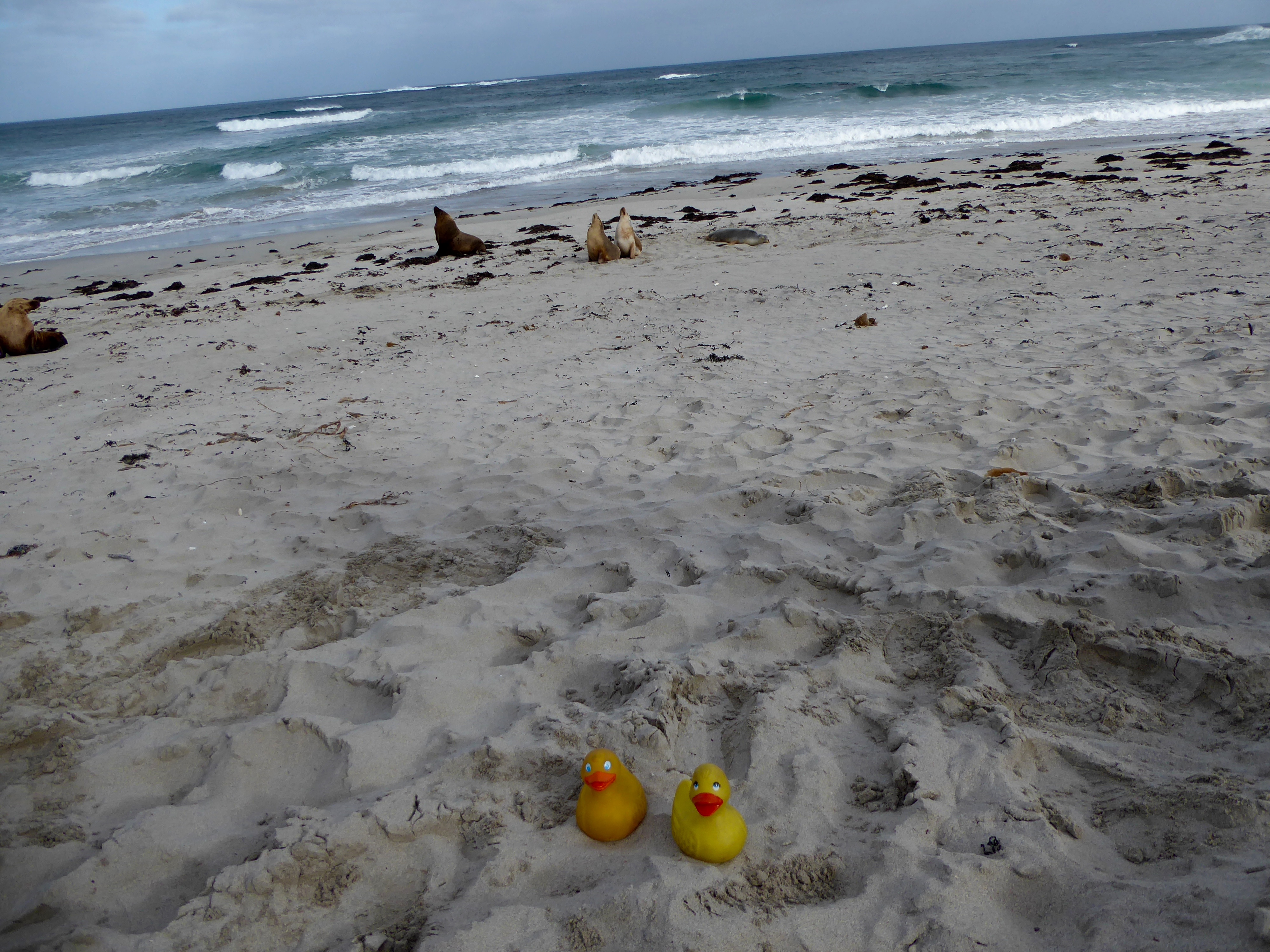
Love the beach with sea lions

Love the beach with sea lions

However, if you do not want to walk on the beach, you can walk on this path and see the sea lions.
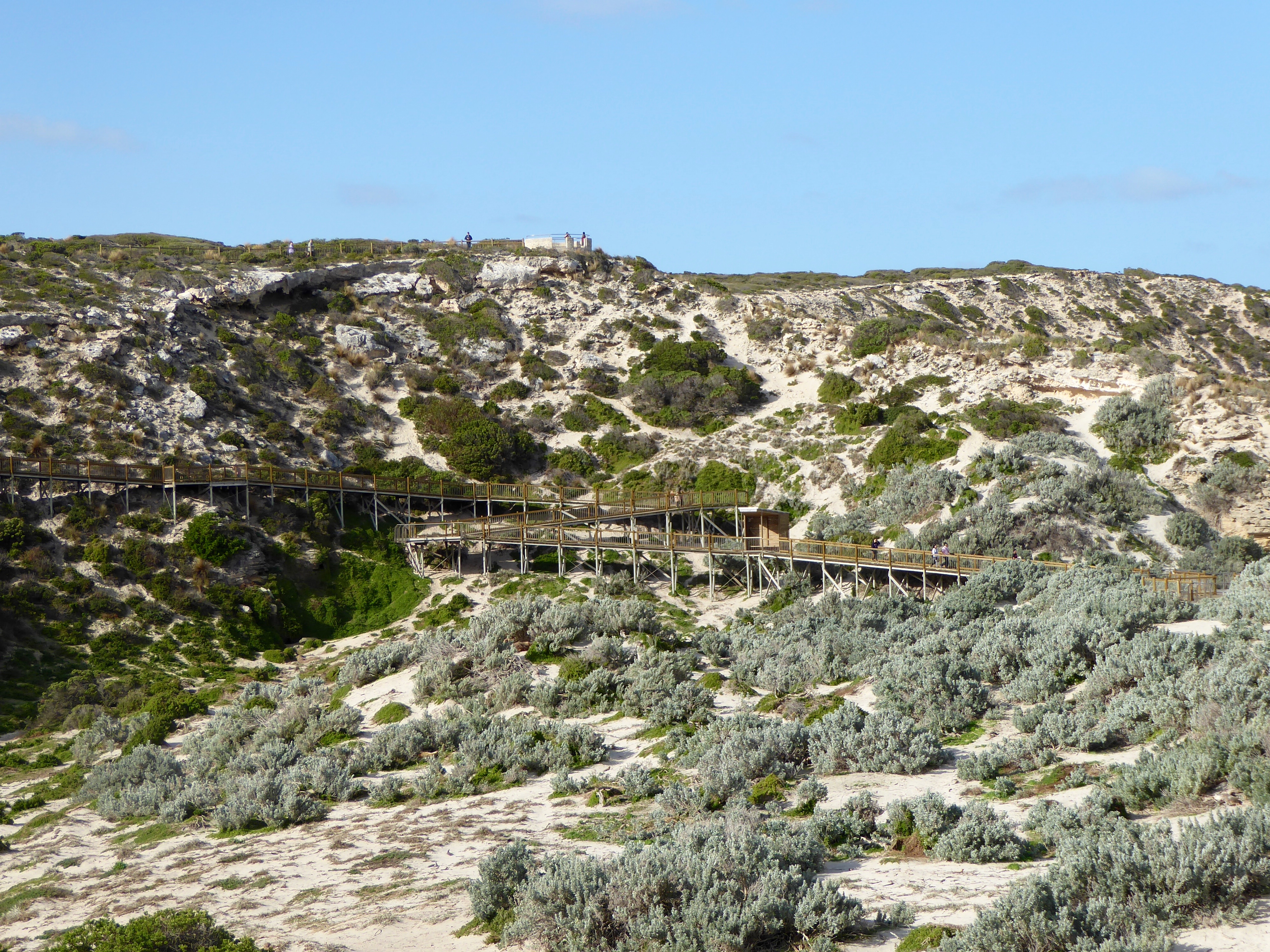
Humans can walk on this boardwalk for a different view

Humans can walk on this boardwalk for a different view

Looking down on beach and frolicking sea lions.
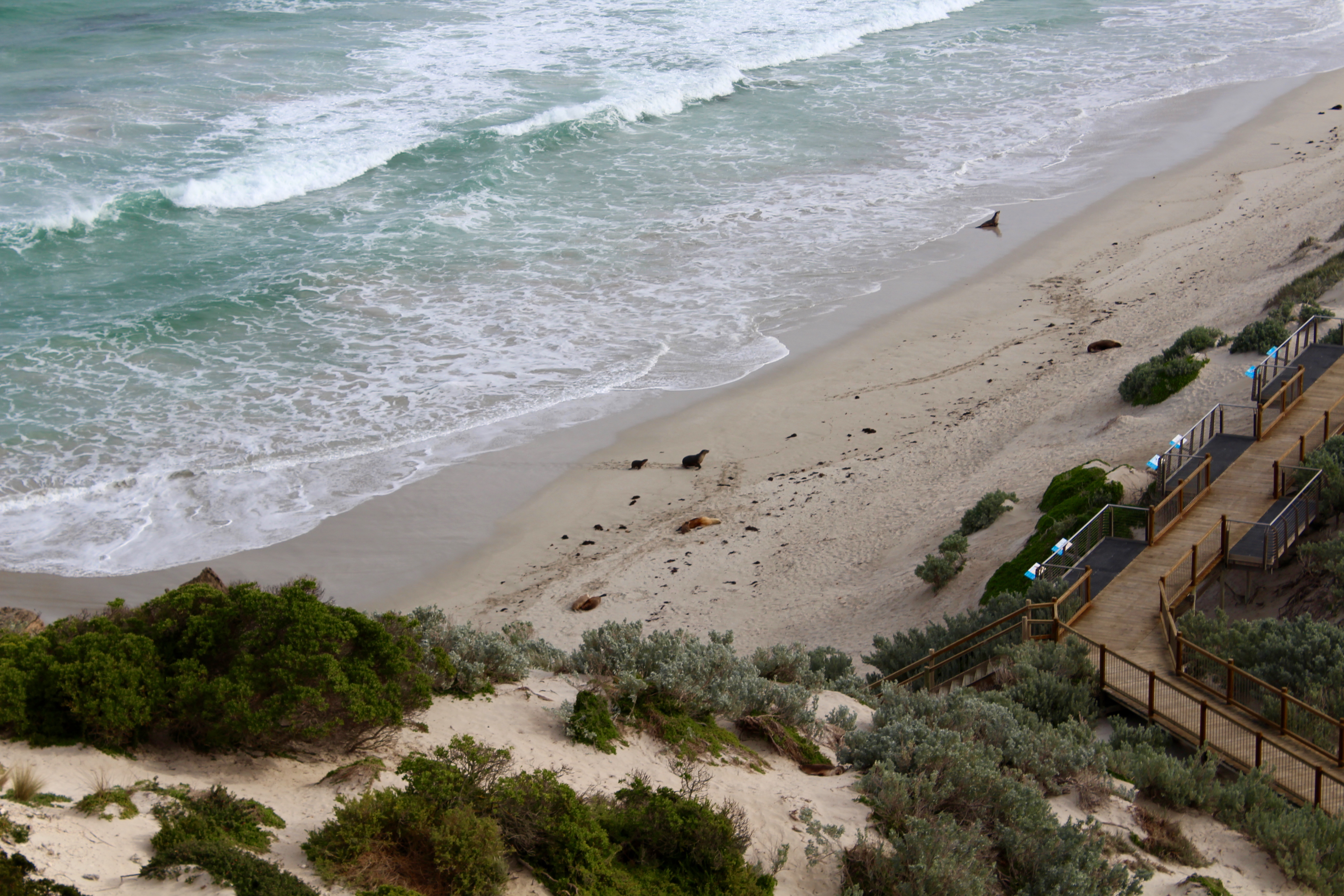
View from boardwalk

View from boardwalk

This young one is ready for a nap.
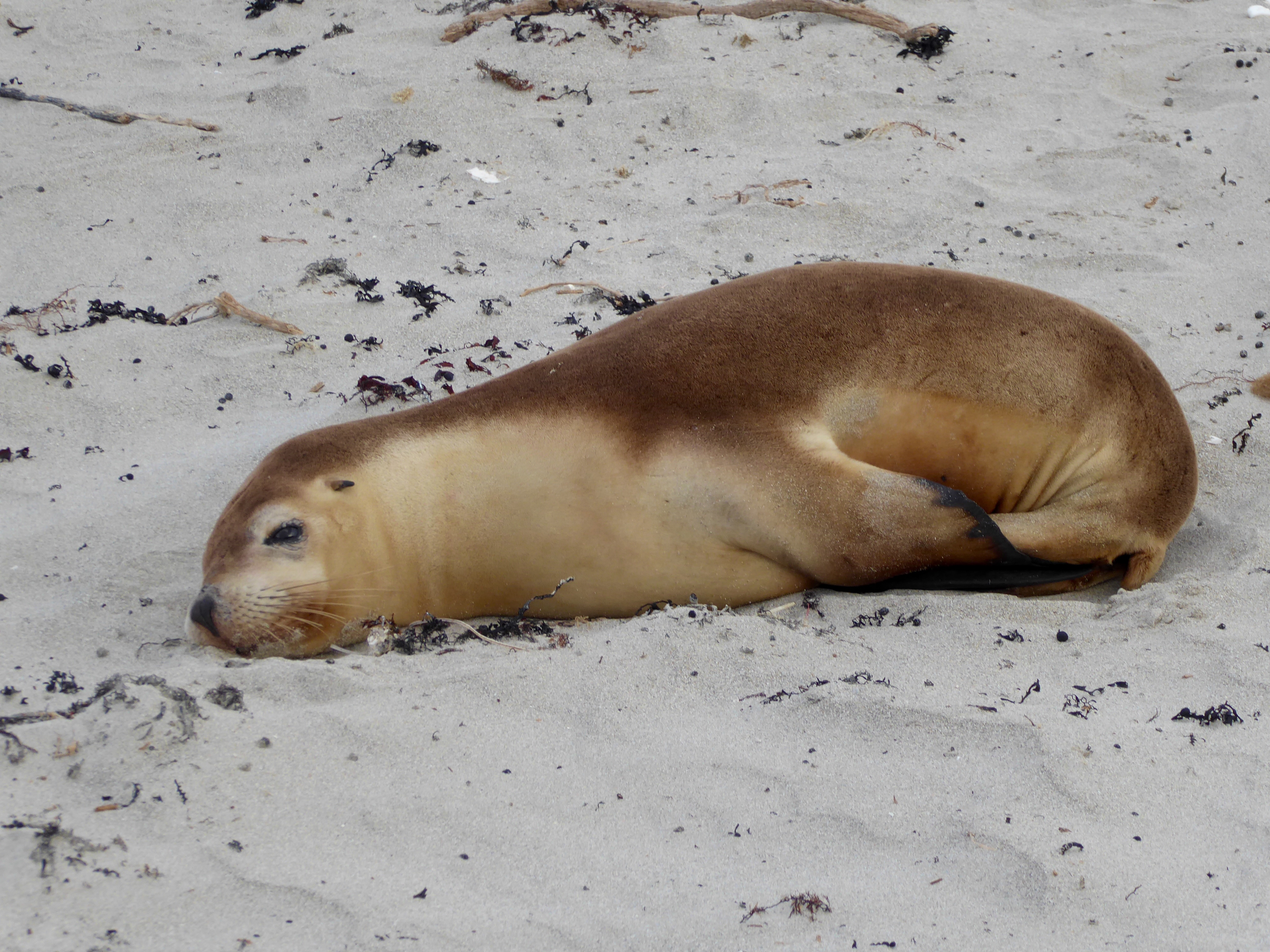
Tired

Tired

Aren’t they adorable?

Picture perfect

Picture perfect

We really like the sea lions.
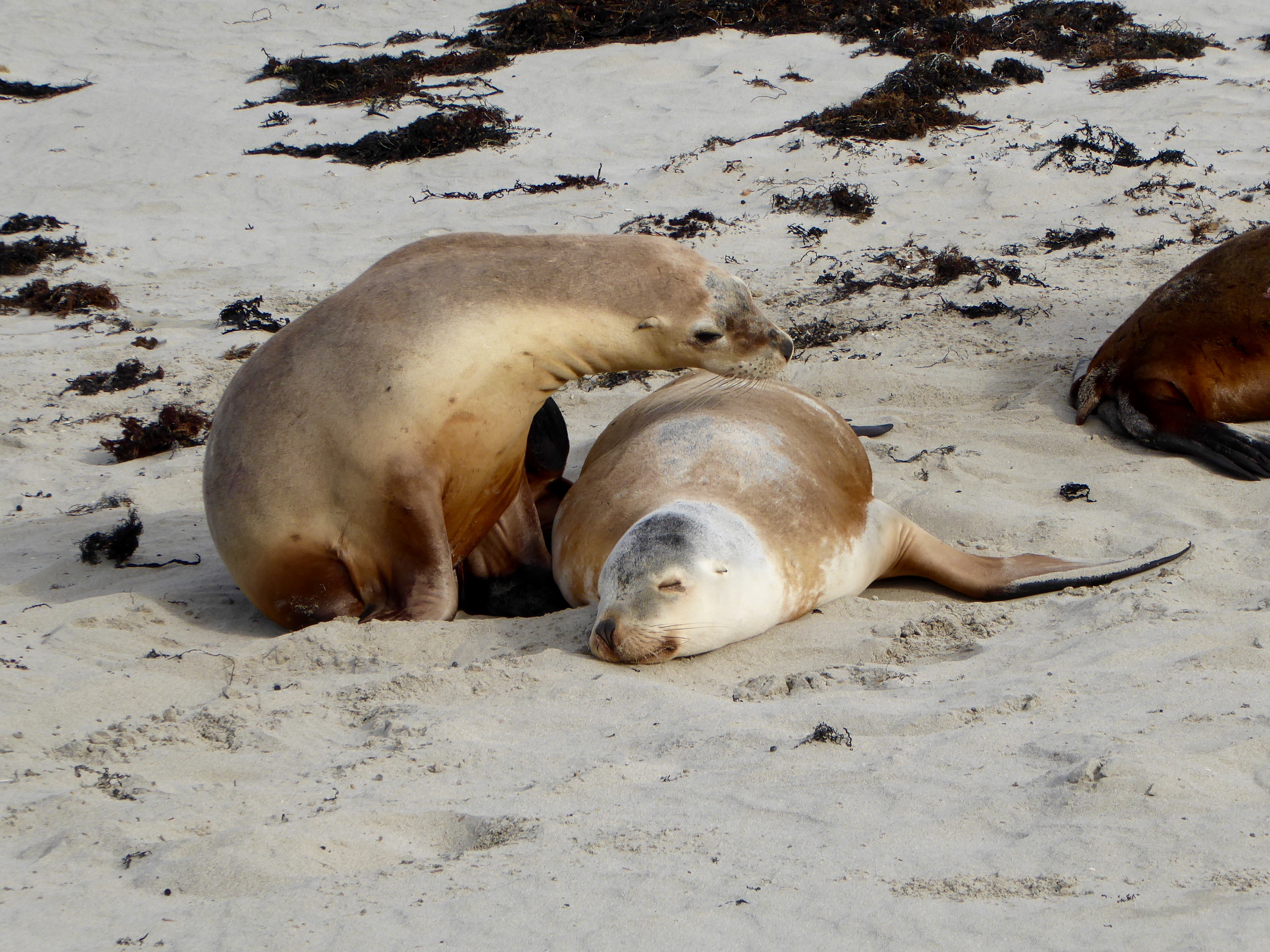
Our new friends

Our new friends

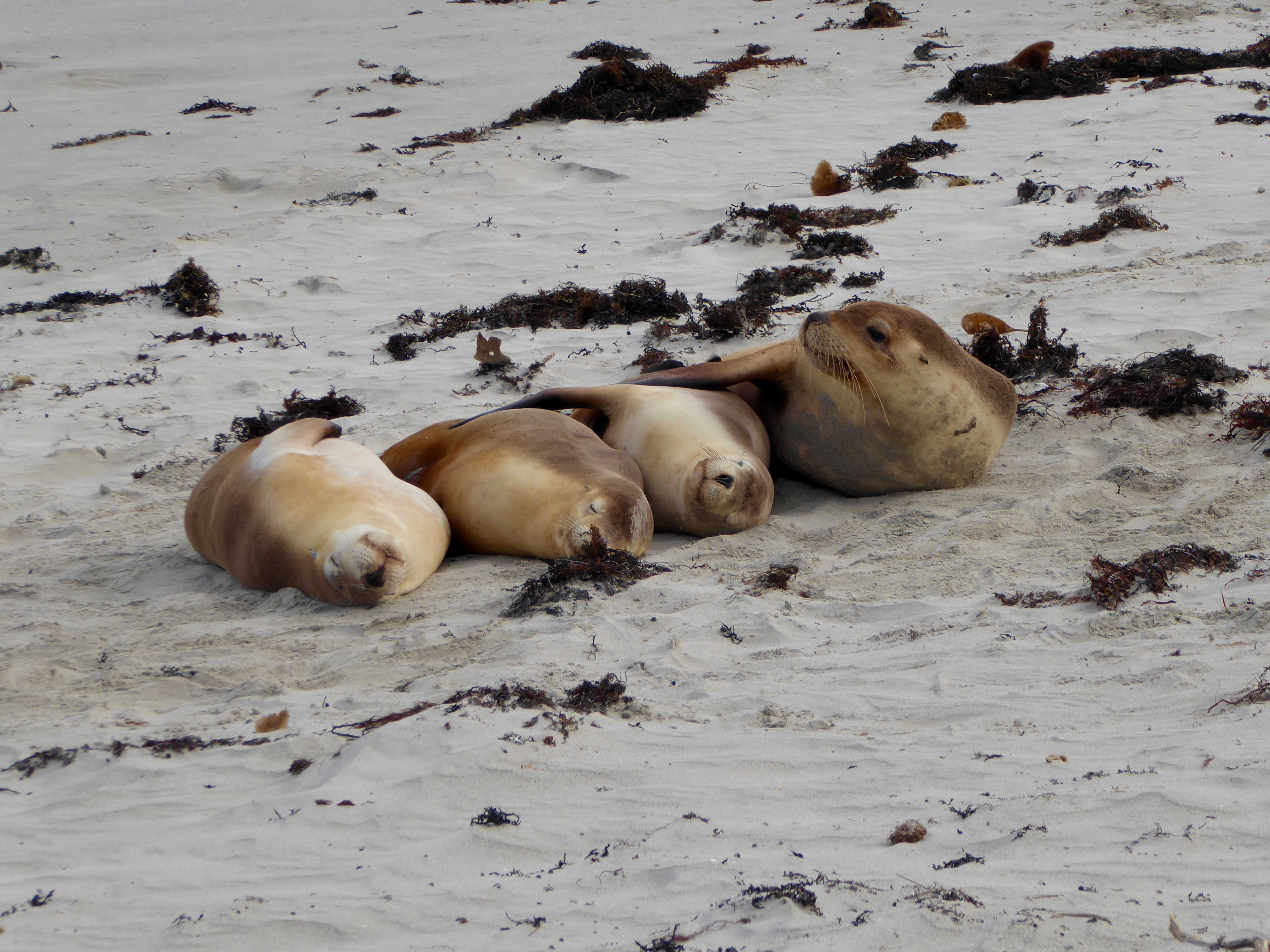
Group nap time.

Group nap

Group nap

Sea lions must share the each with birds also.
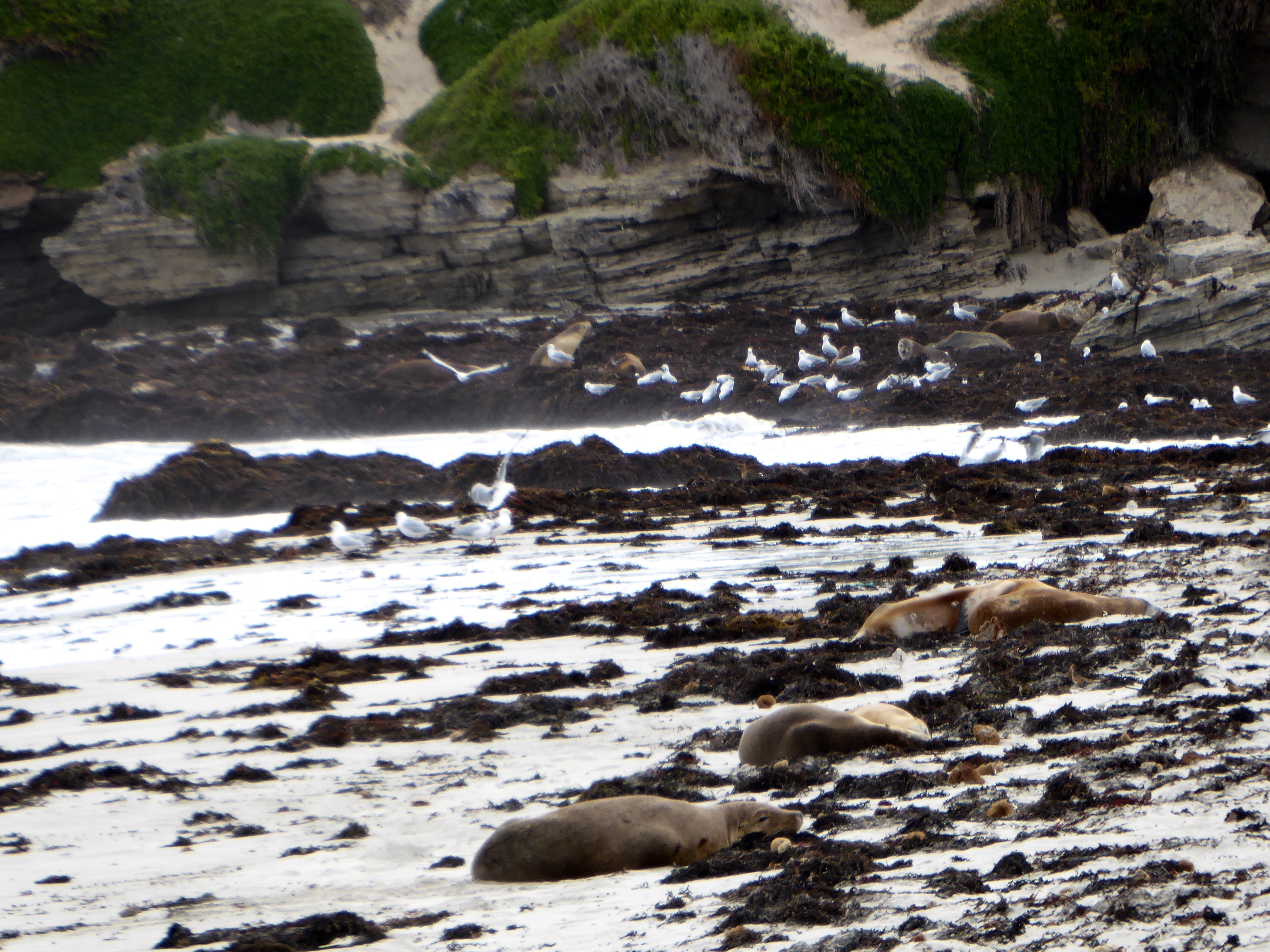
Birds on the beach also

Birds on the beach also

We are off the beach now; heading to our bus, but we must have one last look back at the ocean.
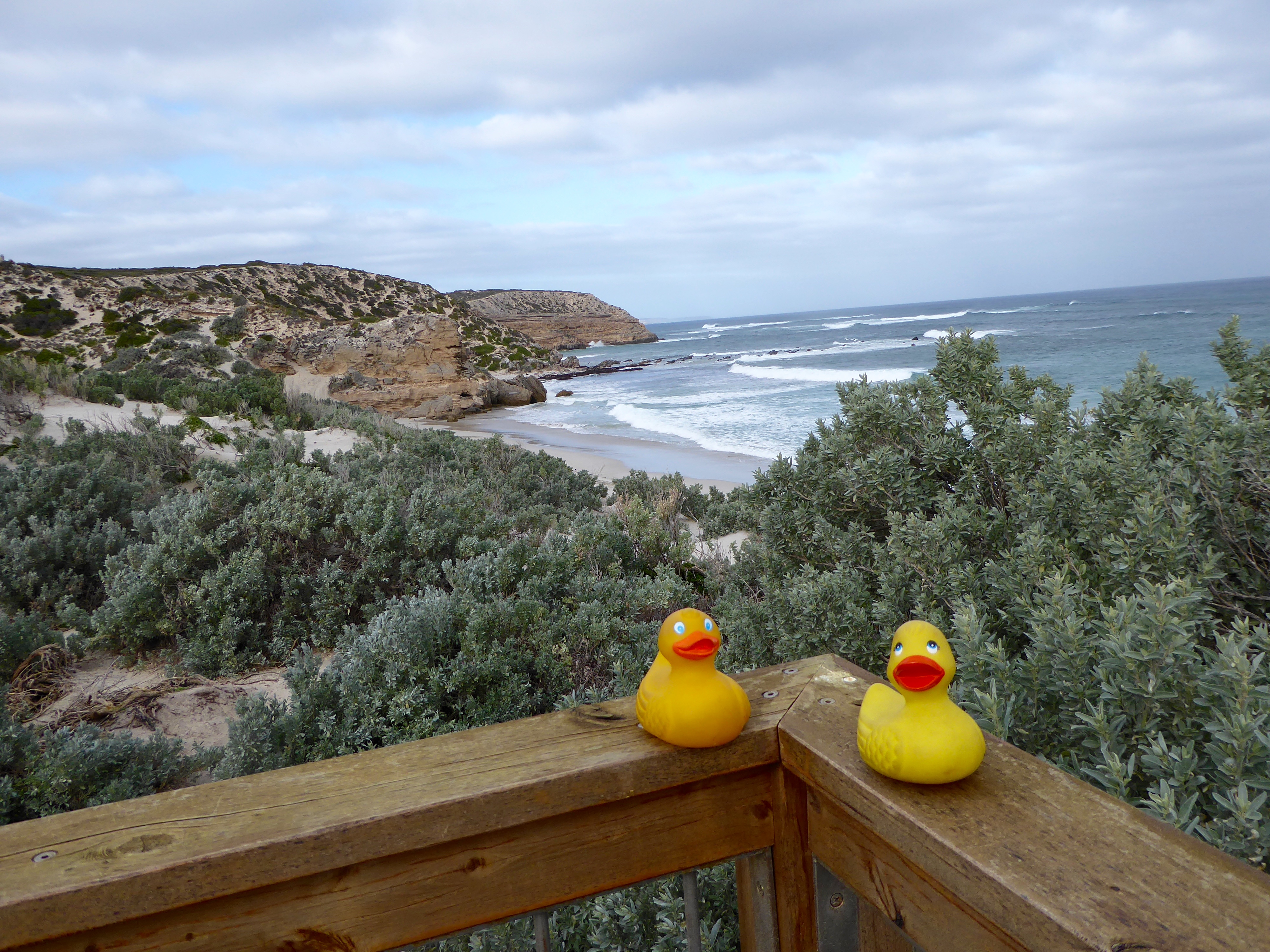
So nice here.   Hard to leave
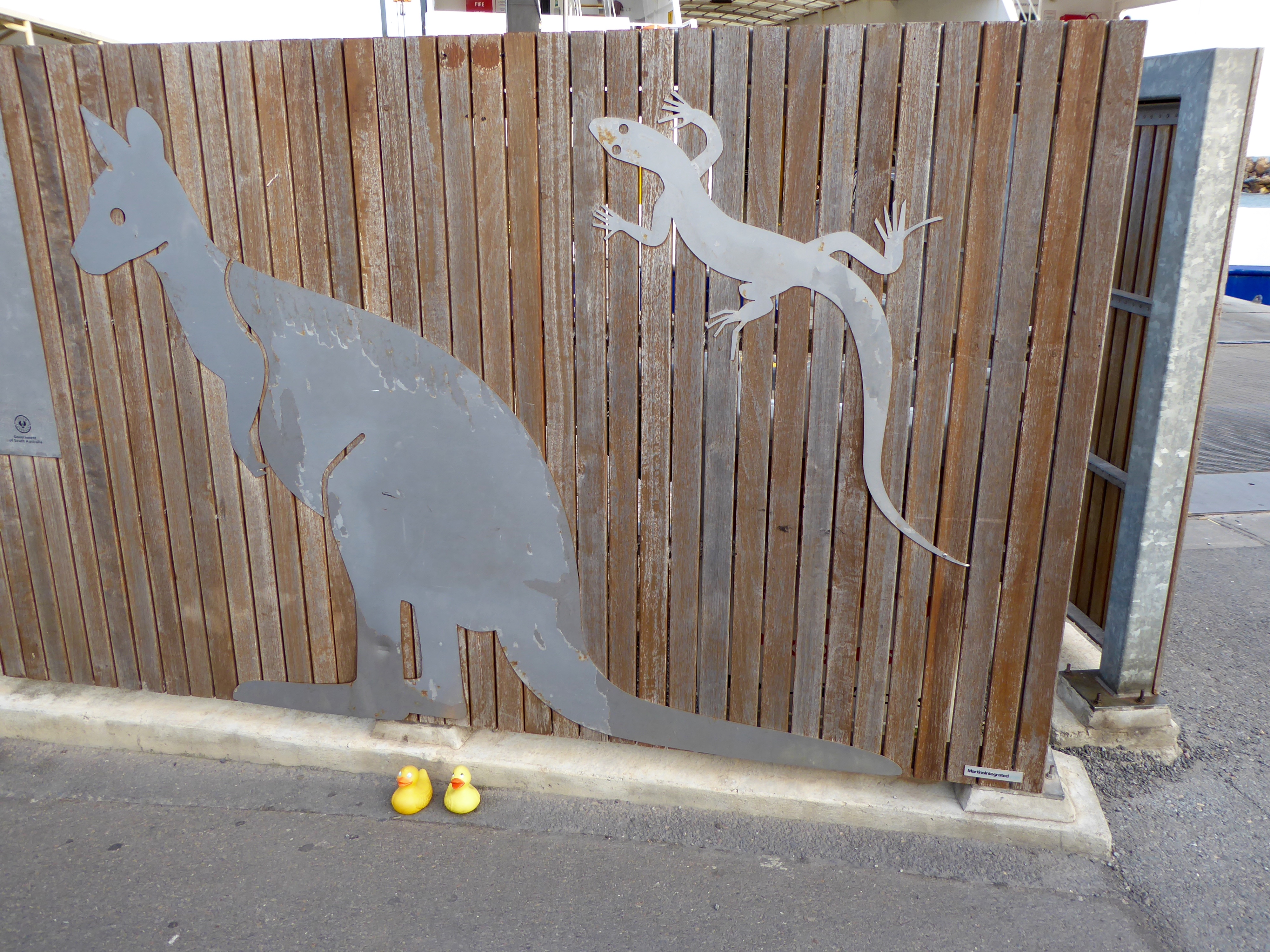
So nice here. Hard to leave
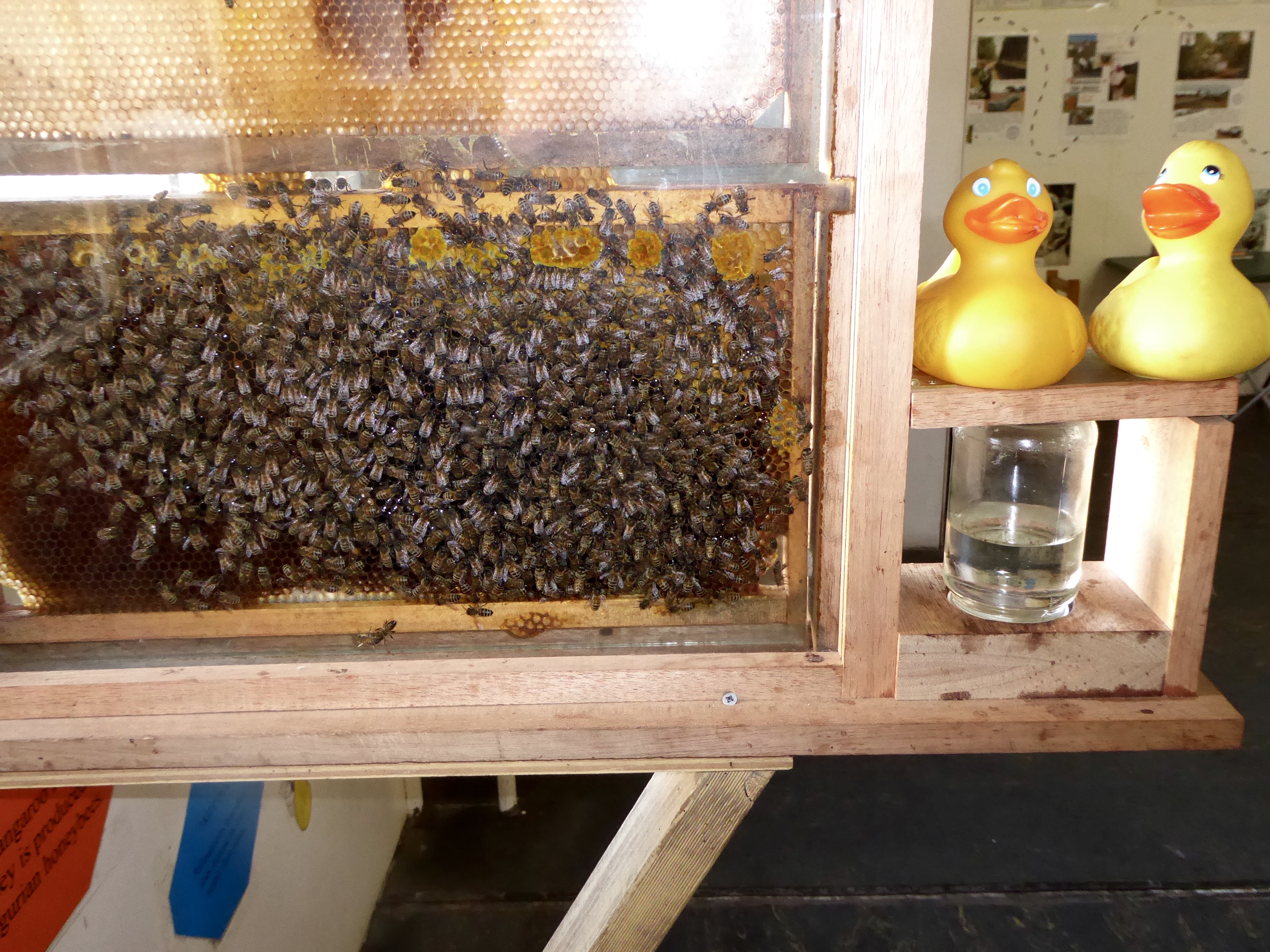
Clifford’s Honey Farm on Kangaroo Island with Zeb and Eider Duck

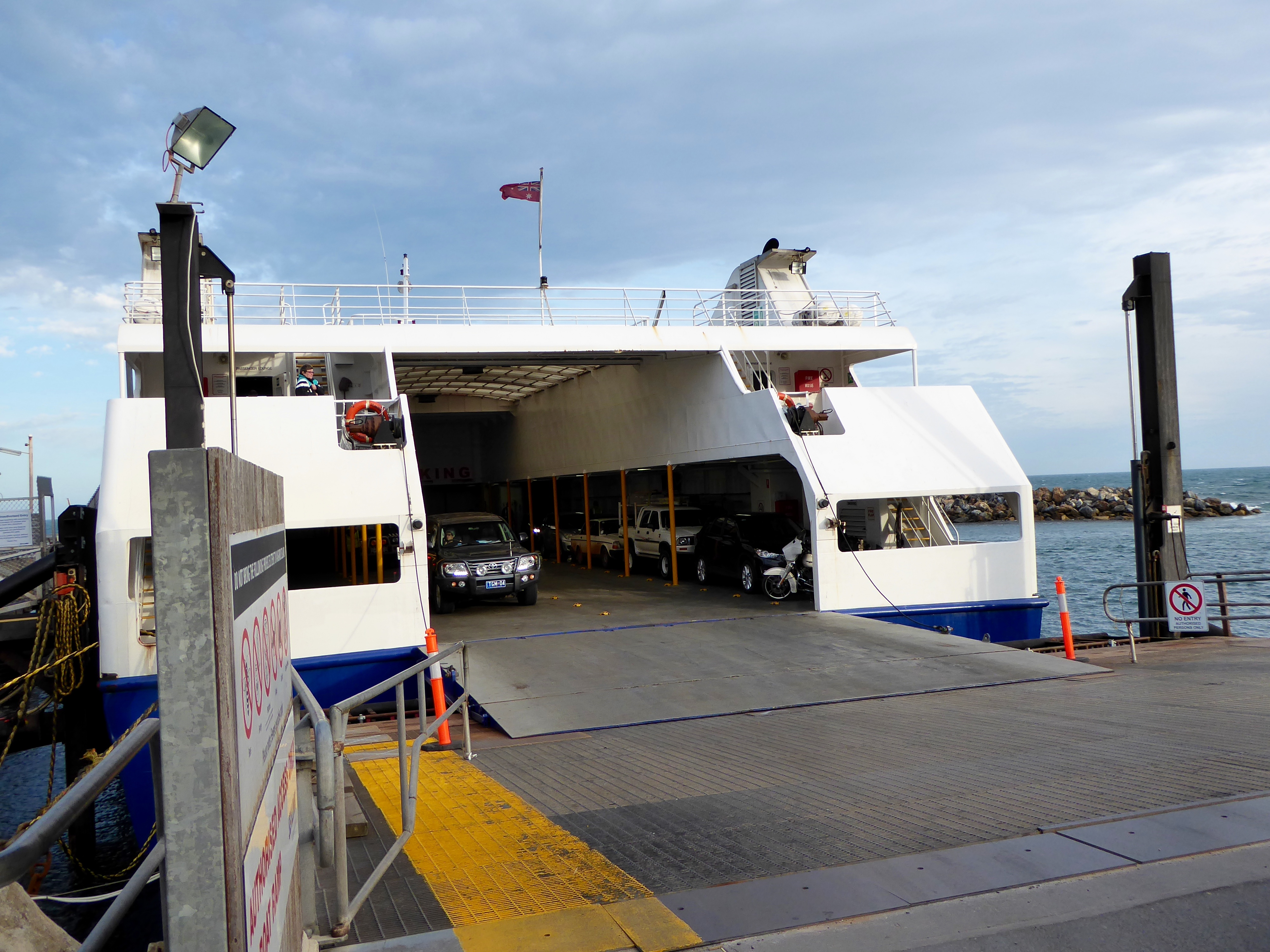
It is 6:15 a.m.; ducks and humans are waiting for a bus to the harbor near Adelaide, South Australia.   We will have a 45 minute ferry ride to Kangaroo Island

We will get on the ferry to Kangaroo Island

We will get on the ferry to Kangaroo Island

and then a couple days of tours.   Some people are taking cars on our ferry.

Cars are going on our ferry

Cars are going on our ferry

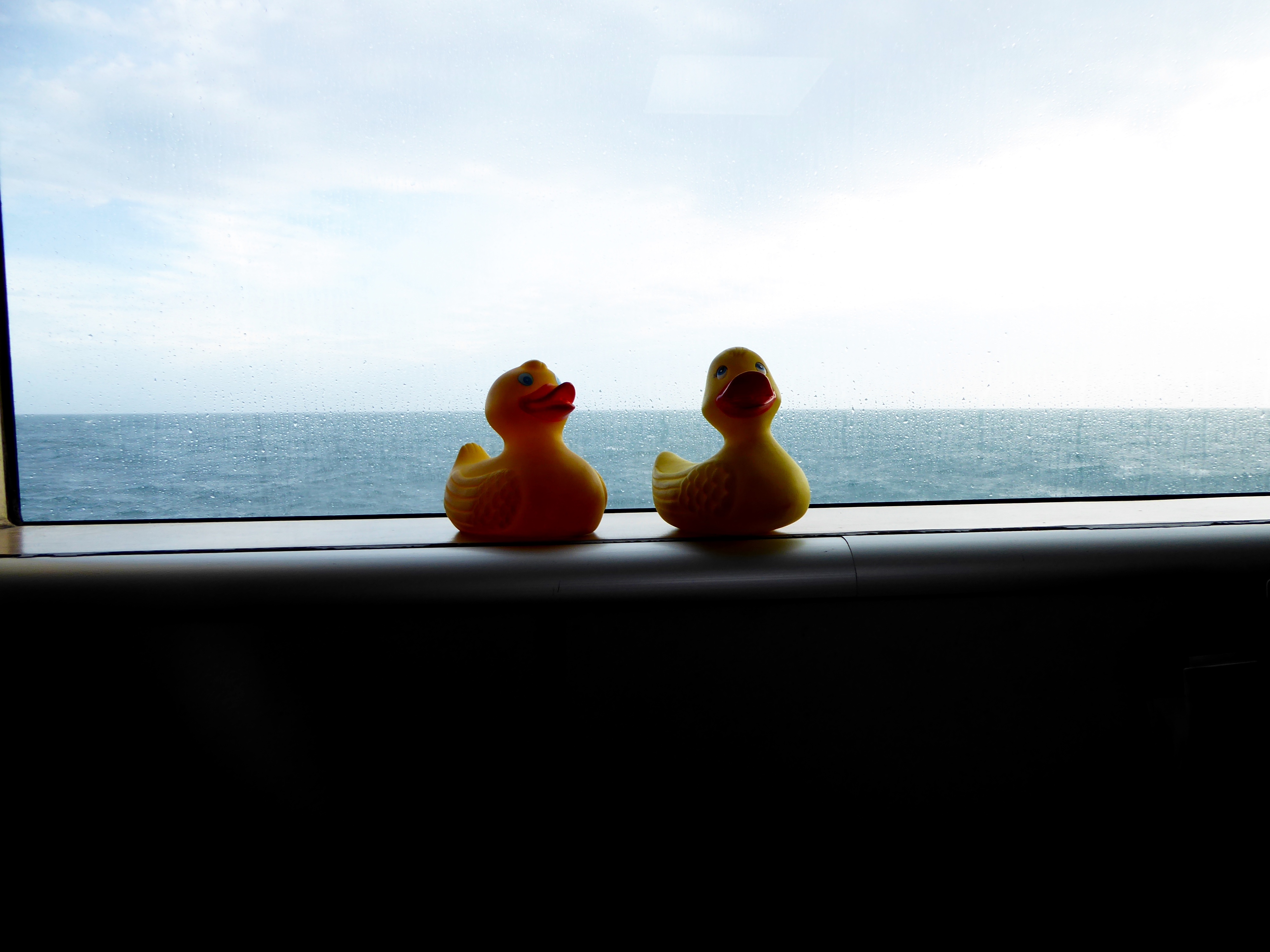
We are not taking a vehicle.   The ferry has left the harbor and we are sailing.

We love riding on boats

We love riding on boats

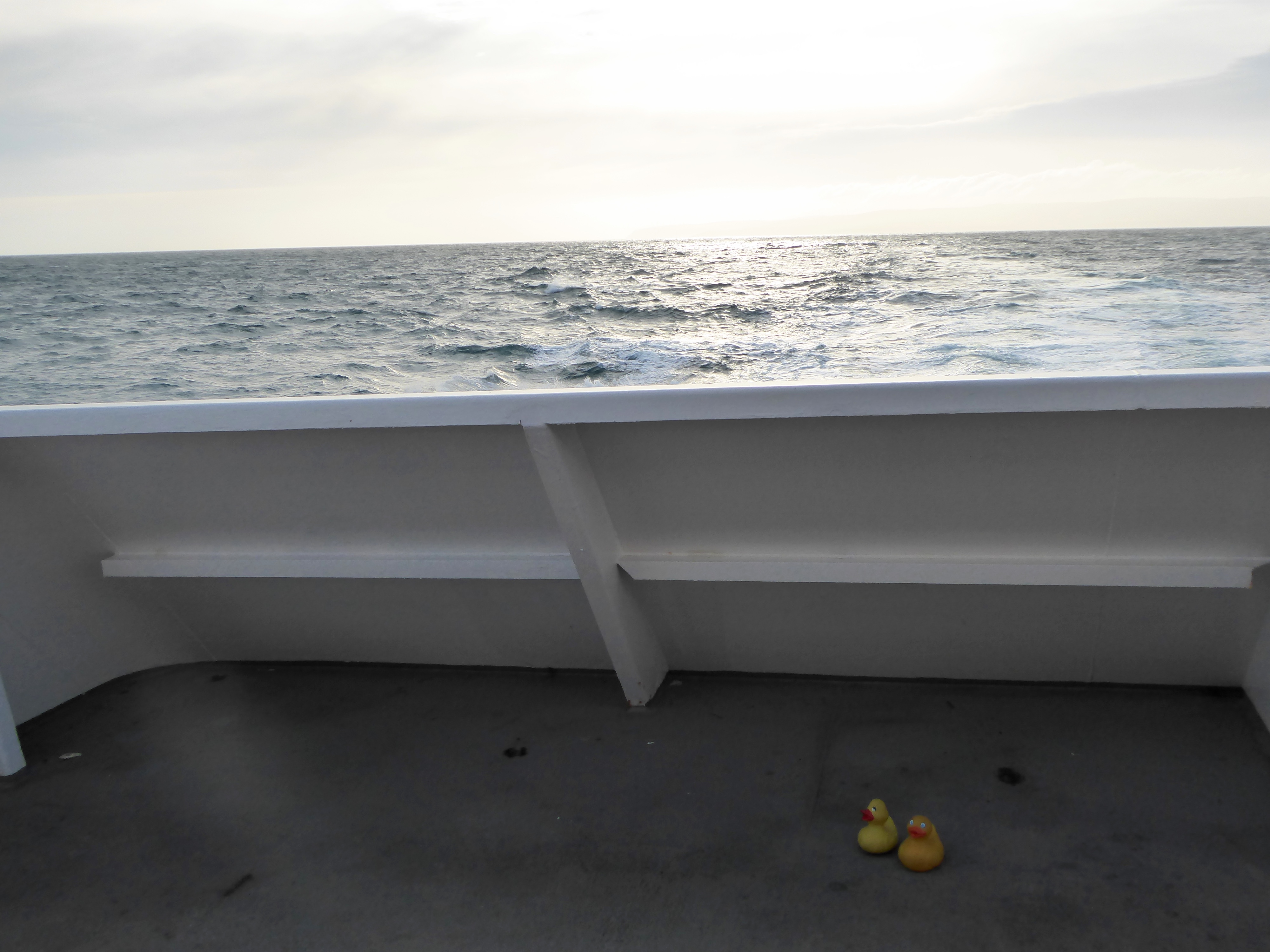
The back of the boat is a little chilly.   Not much sun yet.

Very windy back here.   We have to stay on the floor so we don't blow overboard

Very windy back here. We have to stay on the floor so we don’t blow overboard

We are docking at Kangaroo Island.

We are approaching Kangaroo Island

We are approaching Kangaroo Island

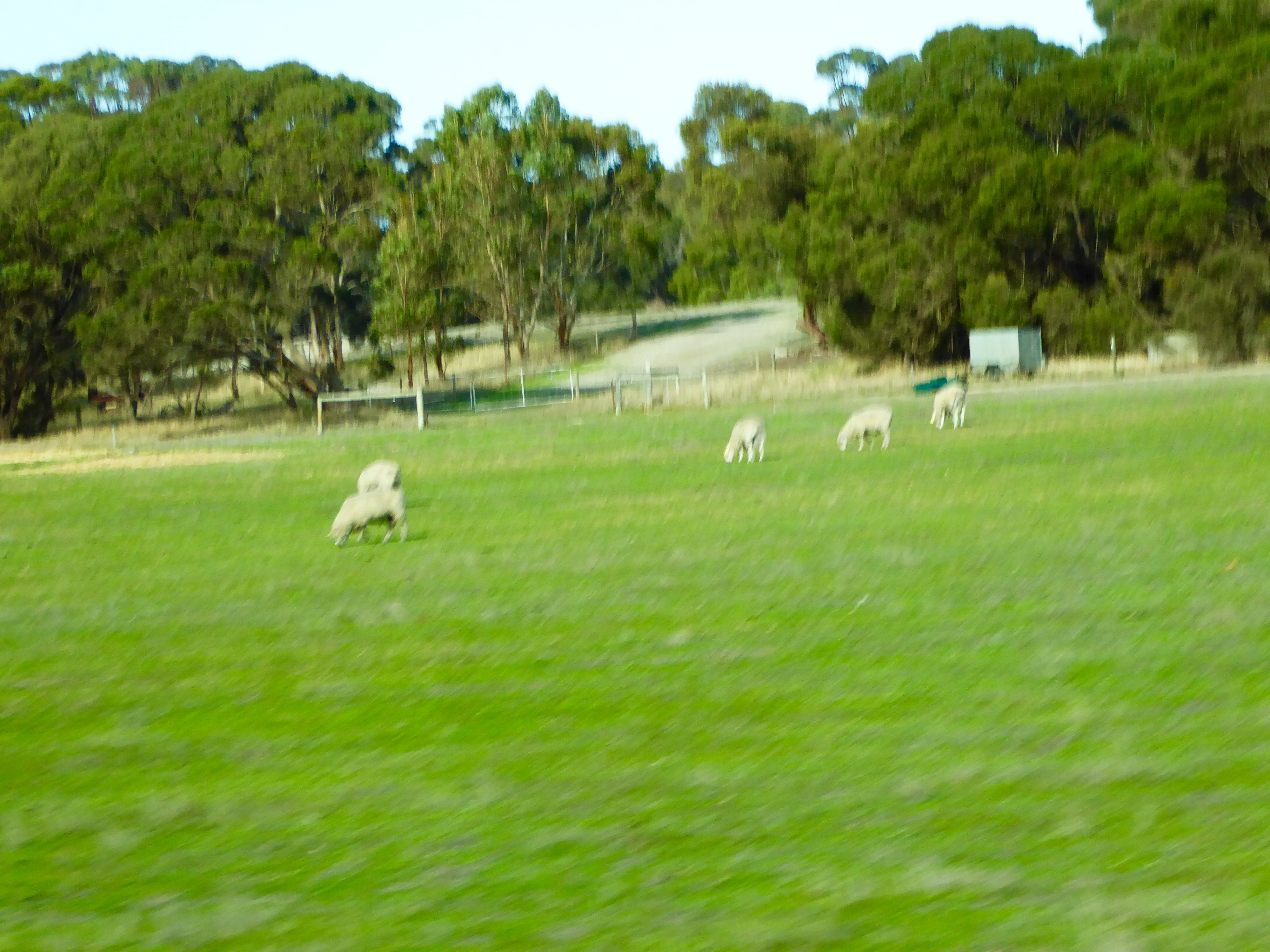
We board our tour bus and begin exploring the island.   Driving we admire the green fields.    As we continued, we saw some kangaroos  grazing in the fields and some fields of cattle.   We saw many sheep

We love the sheep

We love the sheep

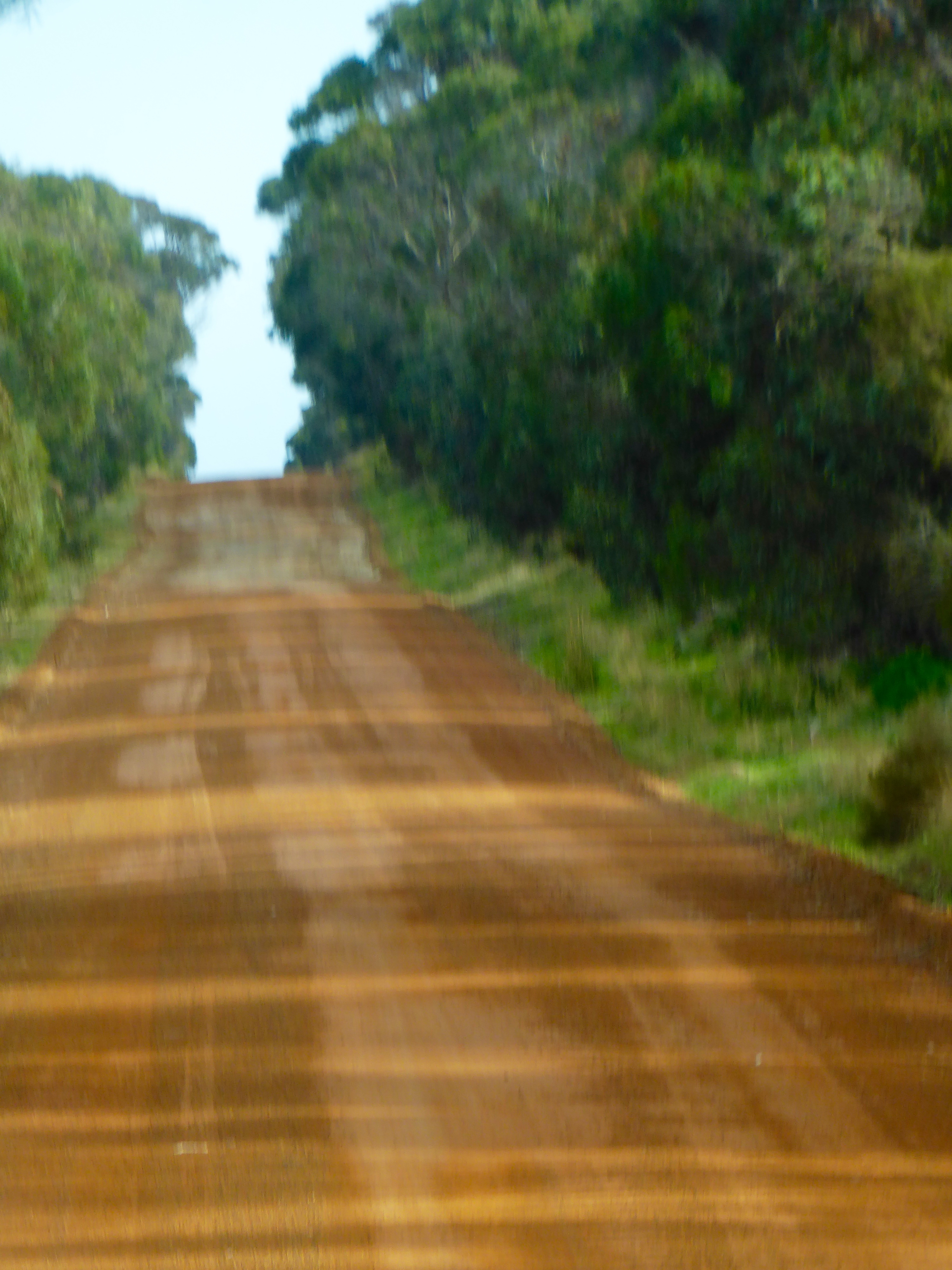
and some new snow white baby lambs.   Our dirt roads are red.

Red dirt on Kangaroo Island

Red dirt on Kangaroo Island

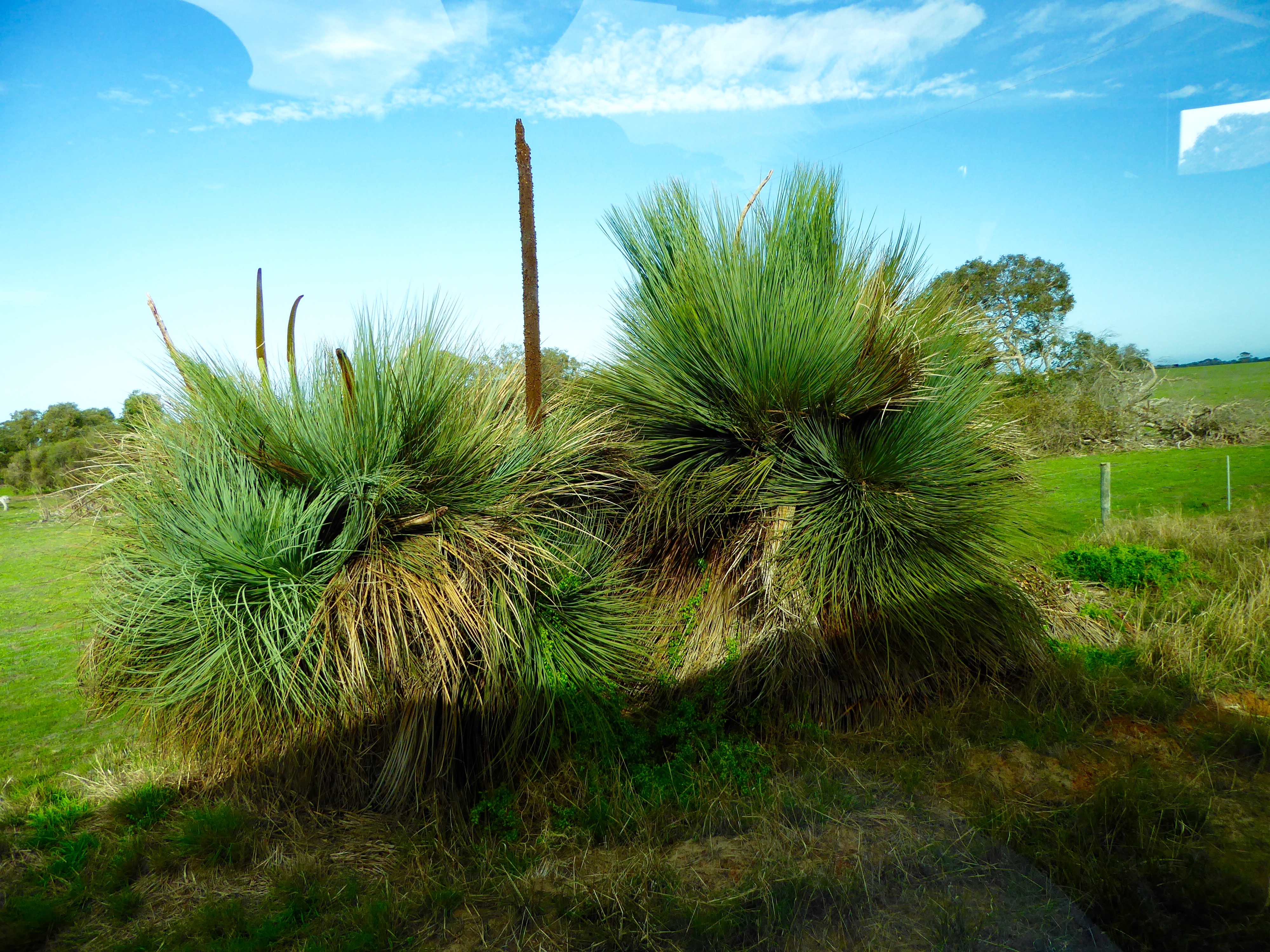
The color will vary across the island.   This is a grass tree.

A grass tree

A grass tree

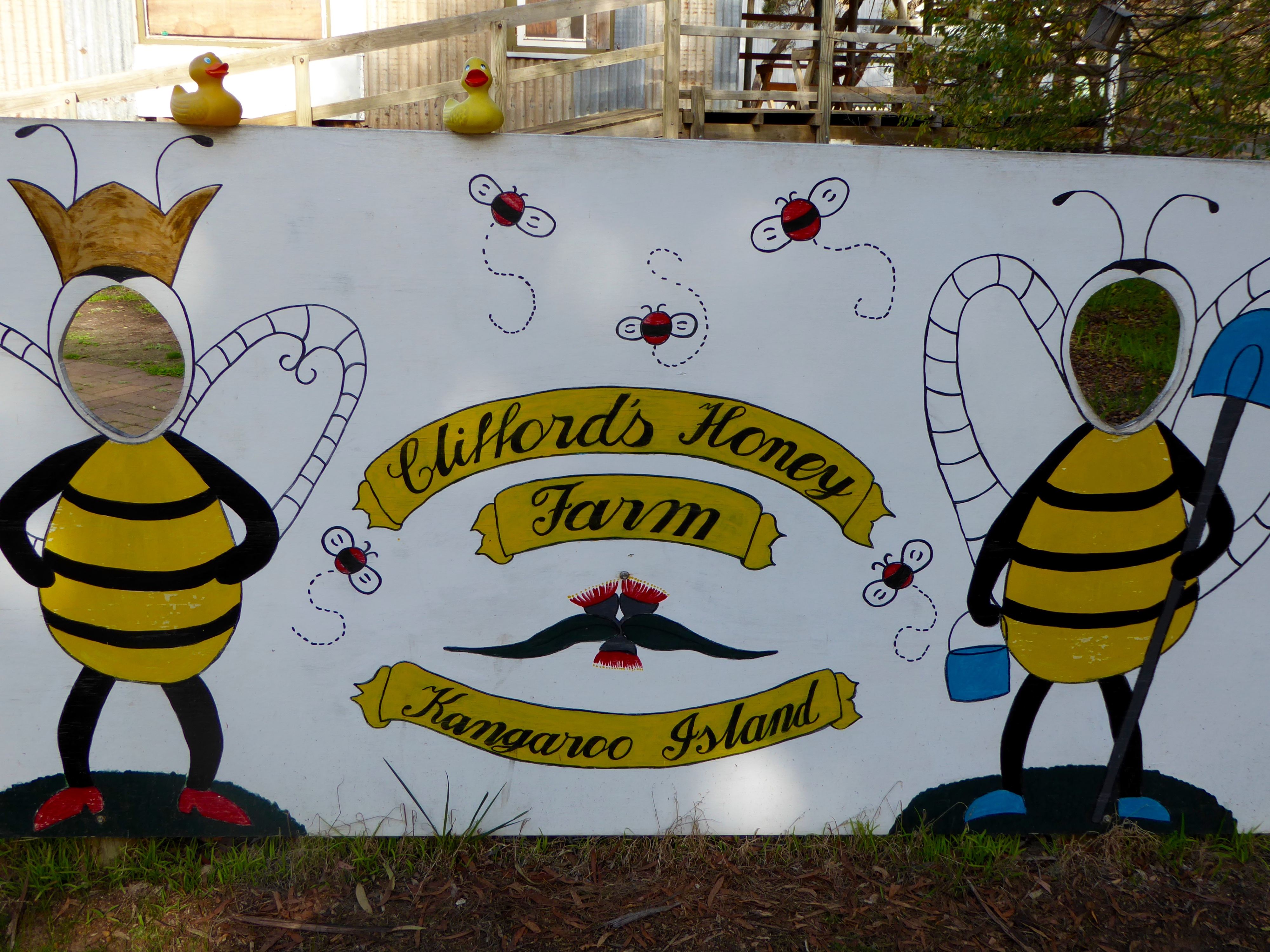
Our first stop is Clifford’s Honey Farm.

Clifford's Honey Farm

Clifford’s Honey Farm

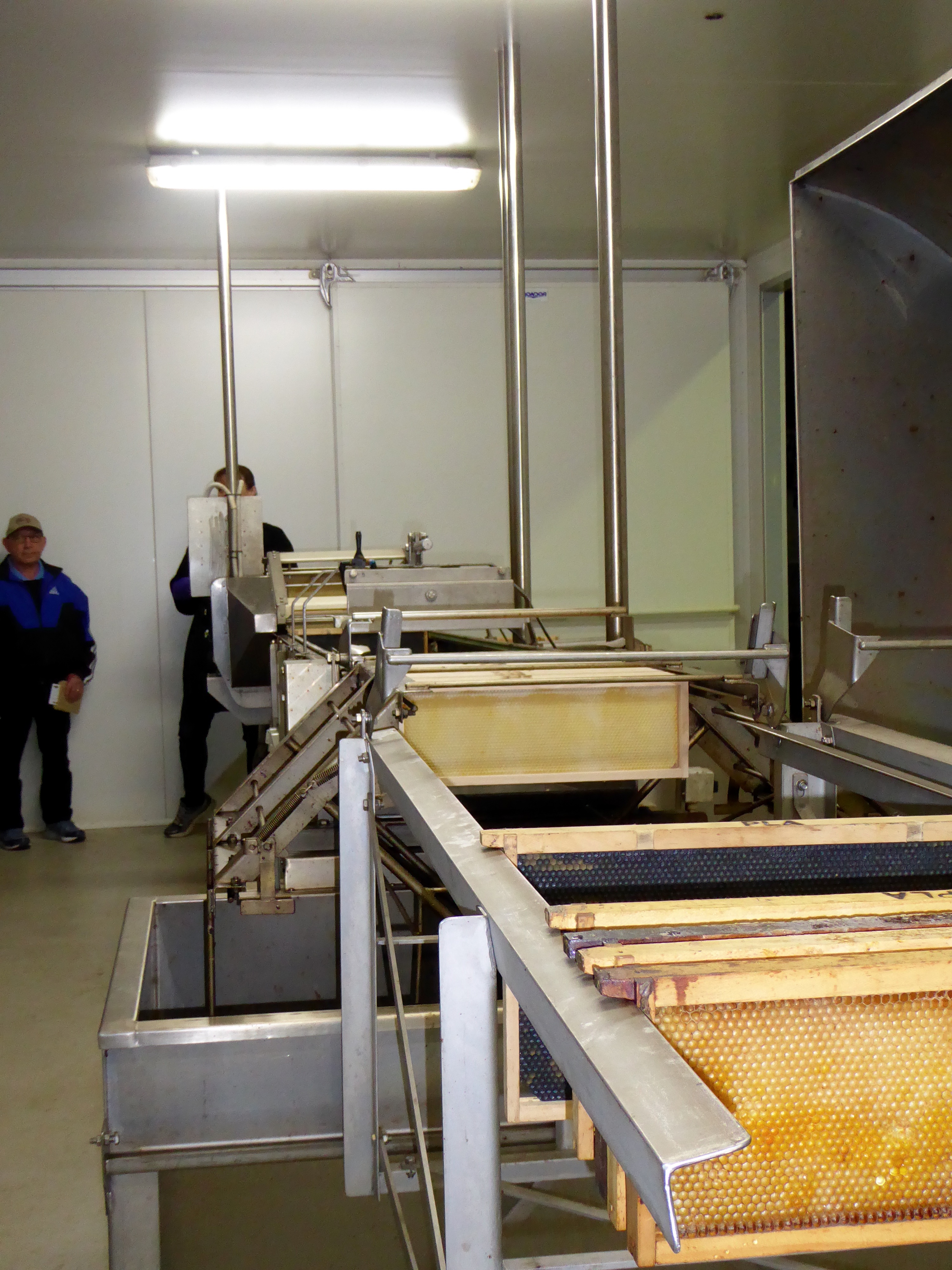
This machine separates honey from the hive.

Getting honey from hive

Getting honey from hive

There are three levels of honey in each hive.   Humans only take 2 levels.   The bees need the 3rd level for their food.   Bees are working here.

Bees at work

Bees at work

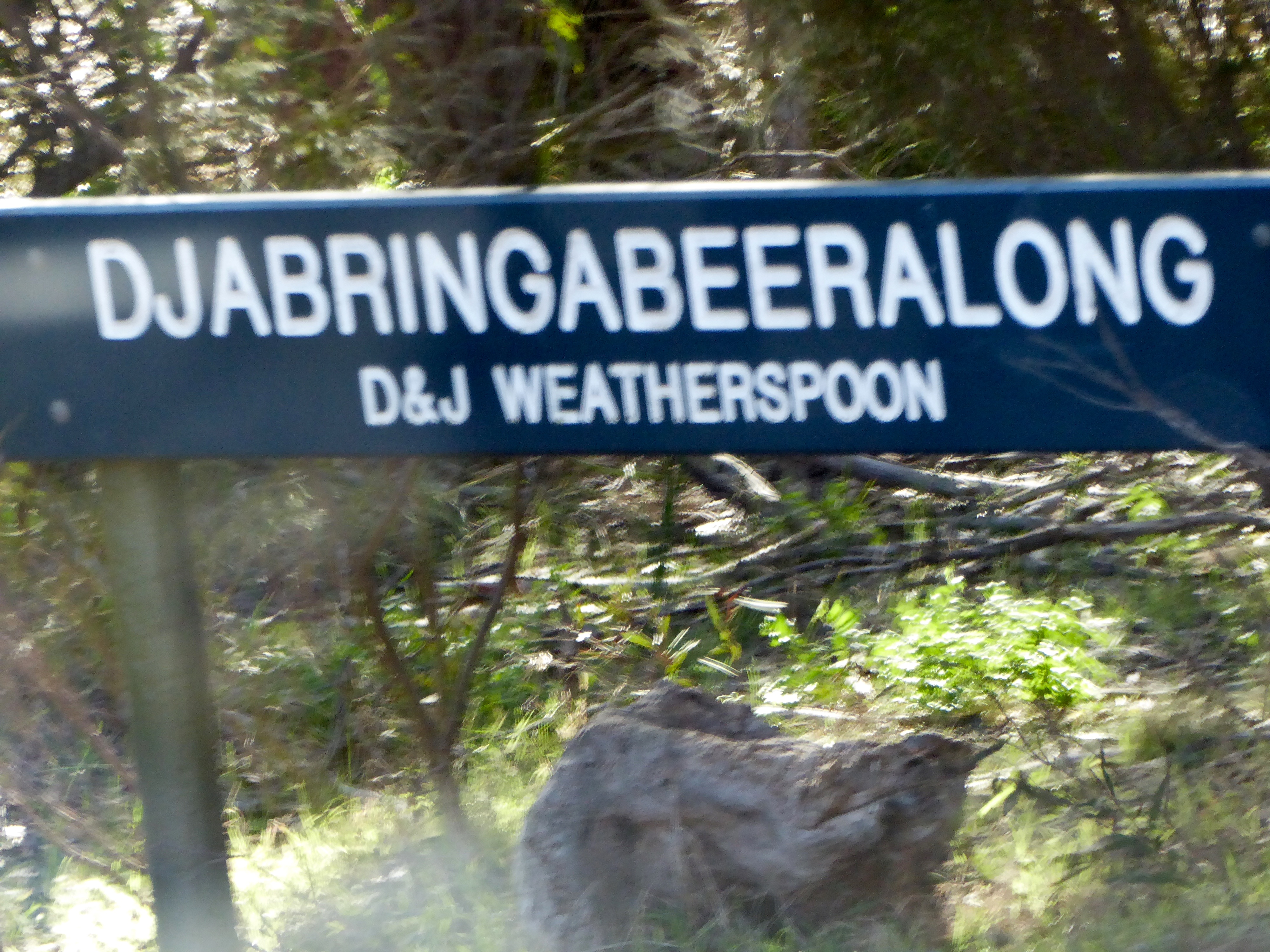
The farm has Ligurian bees from Italy.   Bees cannot fly far, so the bee line remains pure on the island.   These bees are very quiet, docile and much sought after by bee-keepers.   They are easy to work and very productive.   The queen bees are exported around the world.   We visited the store.   Humans tasted honey.   They liked it.   They bought chocolate coated honeycomb and honey bears.   Both were enjoyed!   However, the honey bears were the favorite.   Yum!  For more information on Clifford’s Honey Farm, visit http://www.cliffordshoney.com.au     On our way to lunch, we passed the Weatherspoon farm with this sign.

Creative sign

Creative sign

Can you read it?   It says:  Did you bring a beer long.   A very clever and original sign!   Next we enjoyed a buffet lunch

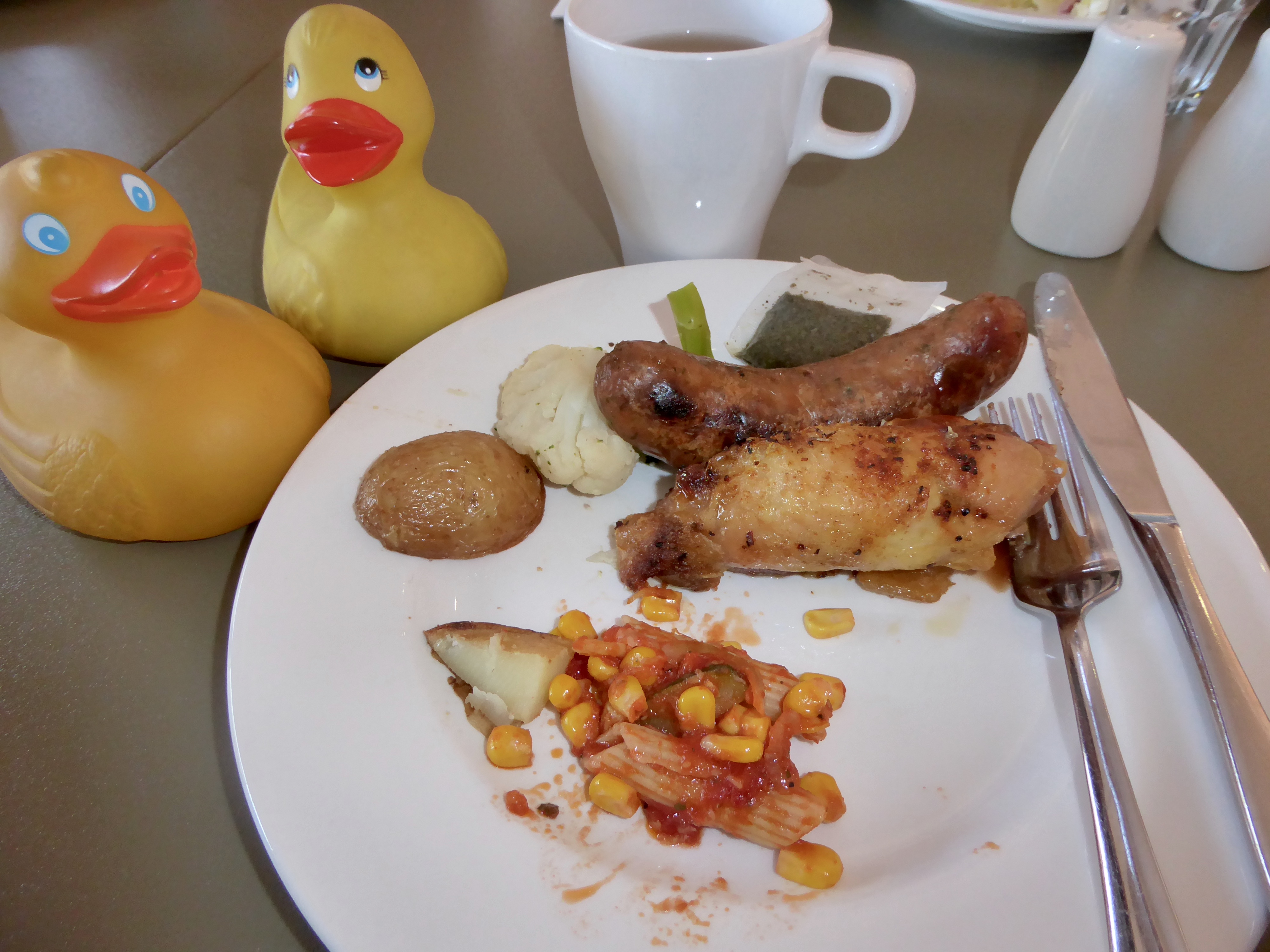
Good lunch

Good lunch

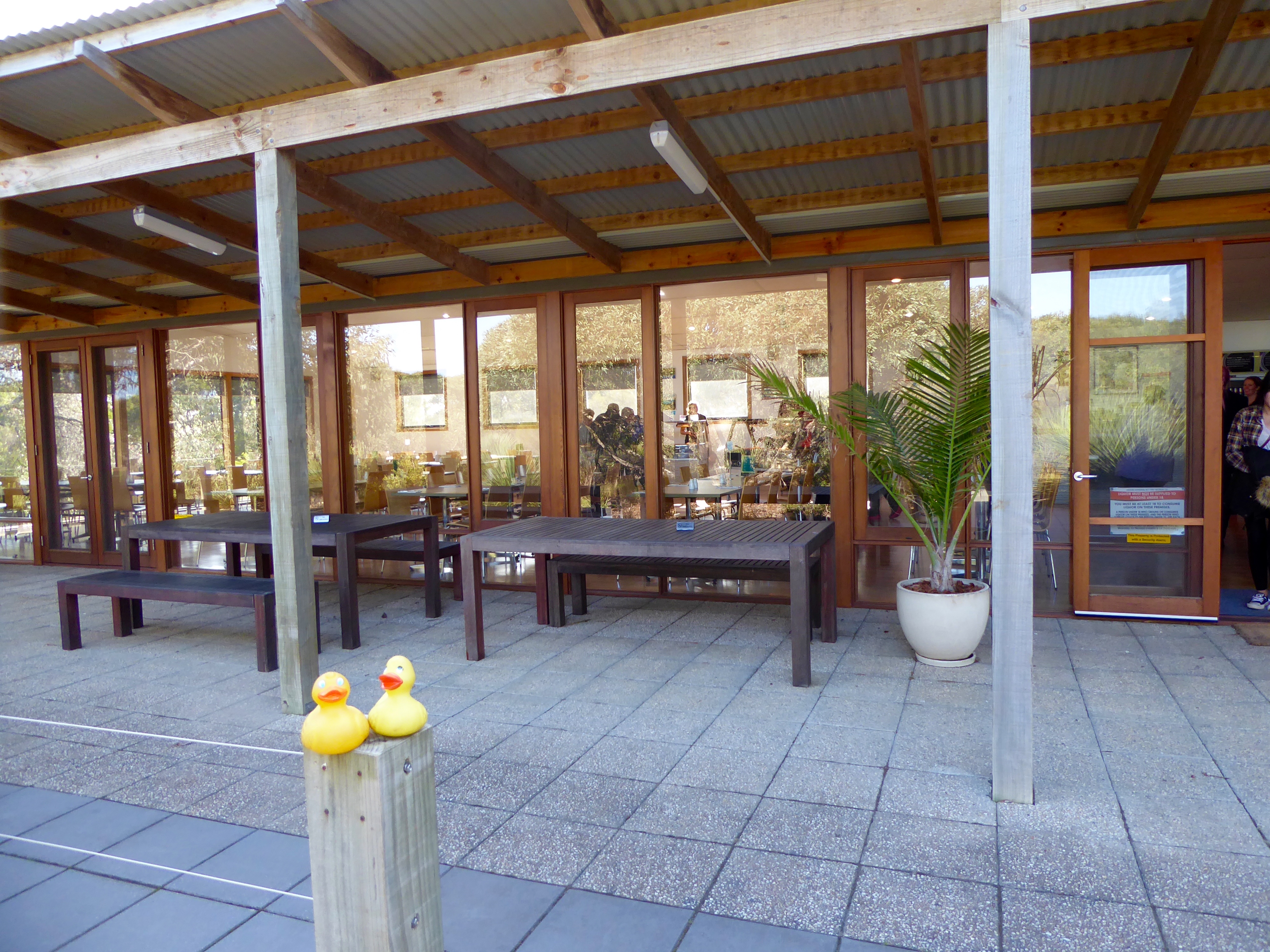
at Vivonne Bay Eco Adventures Bistro and Function Centre on Vivonne Bay.

Let's eat at Vivonne Bay Eco Adventures Bistro and Function Center on Vivonne Bay

Let’s eat at Vivonne Bay Eco Adventures Bistro and Function Center on Vivonne Bay

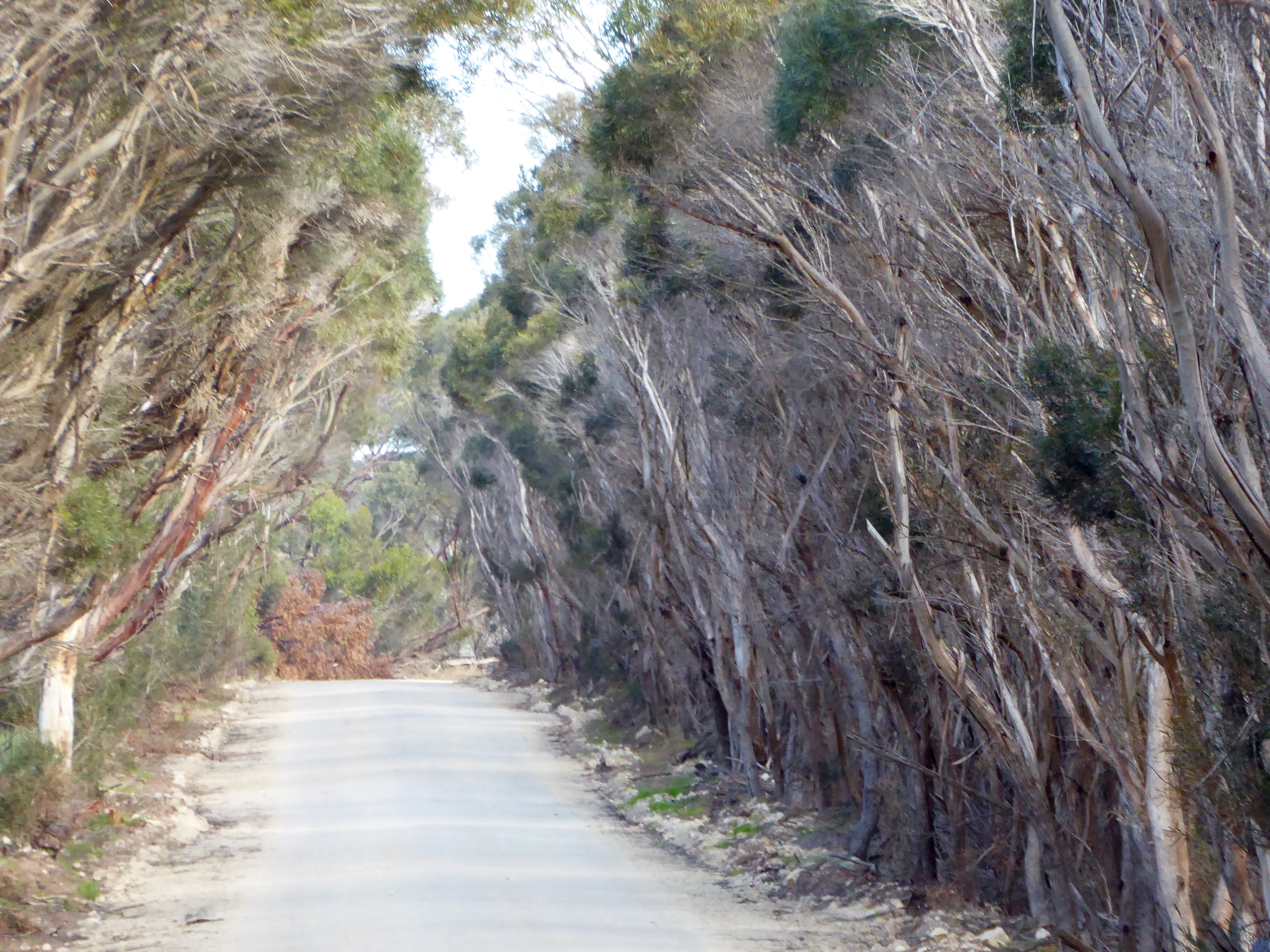
Let’s continue down the road toward our next spot.

Let's continue down the road

Let’s continue down the road

We like our tour so far.   I think you will like what we show you next time.

Zeb and Eider Duck Explore Western Tasmania

Zeb and Eider Duck, with humans, leave Burnie, Tasmania for a long drive.   We want to see the western part of Tasmania, but we have to return our car tonight, in Hobart.   It is pretty cold today.   The valleys have fog.
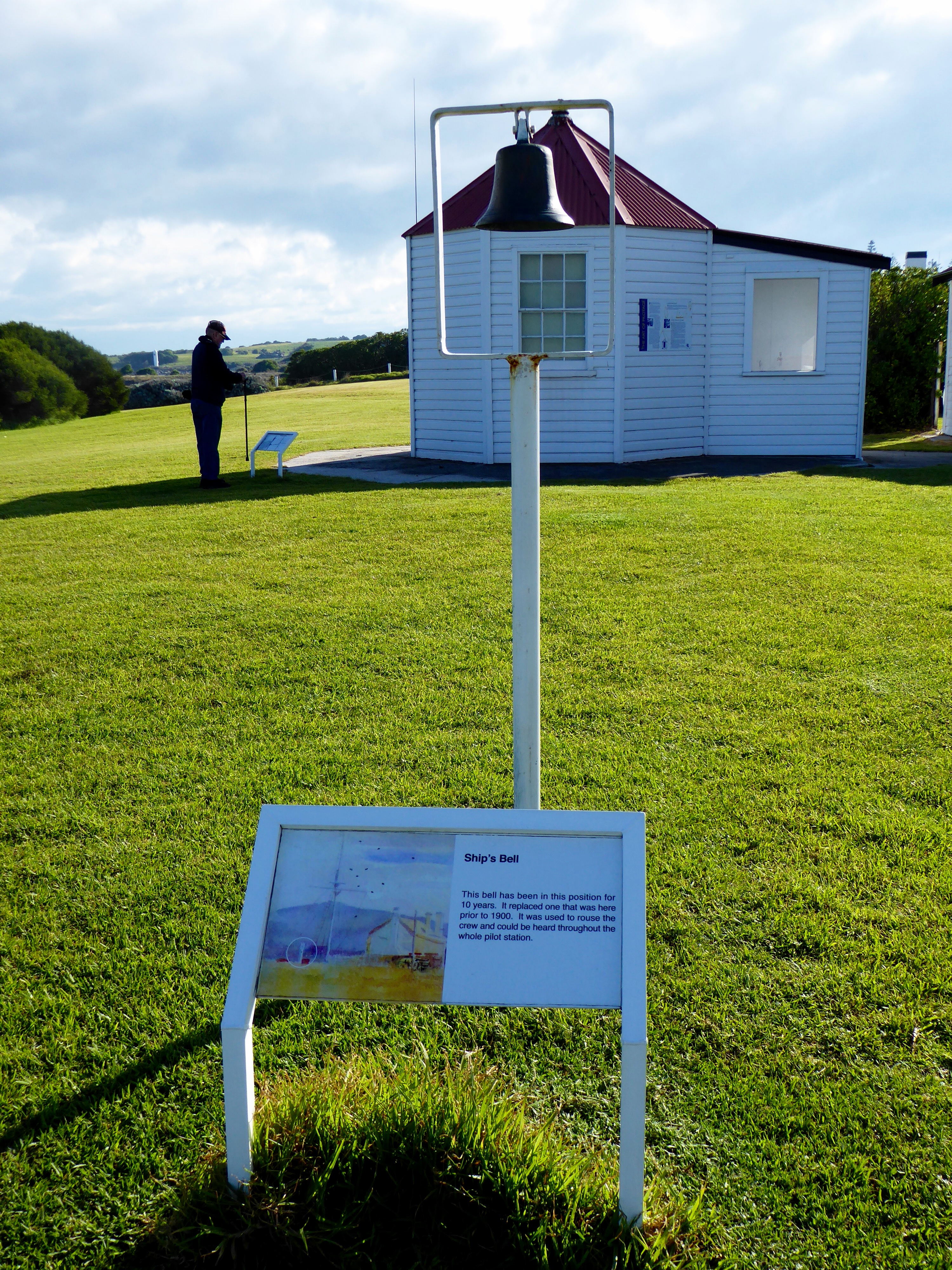
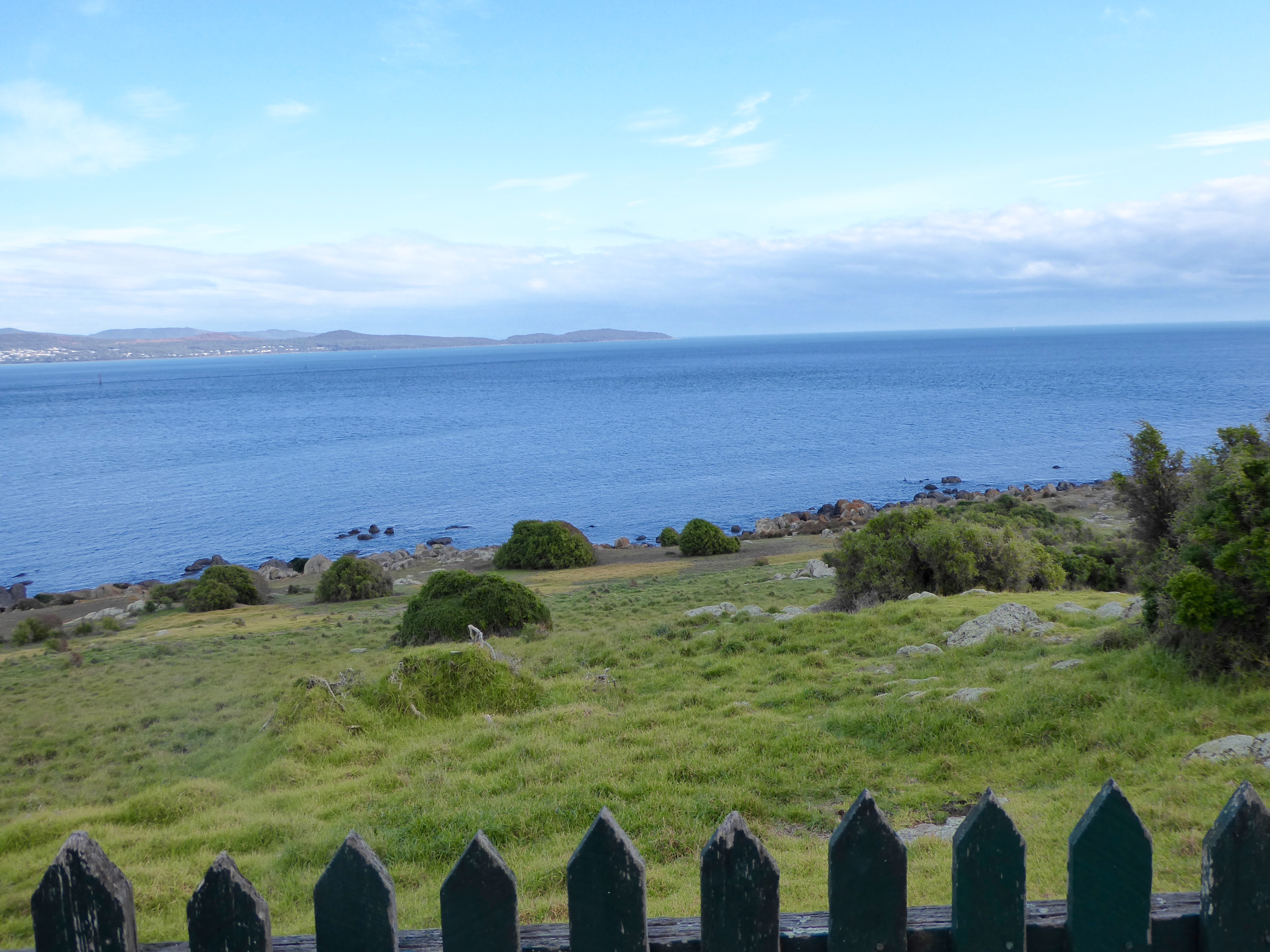
Cold, foggy morning leaving Burnie Tasmania
Cold, foggy morning leaving Burnie Tasmania

We stopped to admire this waterfall,

Such a pretty waterfall

Such a pretty waterfall

near Roseberry.   We like the rainforest.

It is wet in this rainforest and seems mysterious

It is wet in this rainforest and seems mysterious

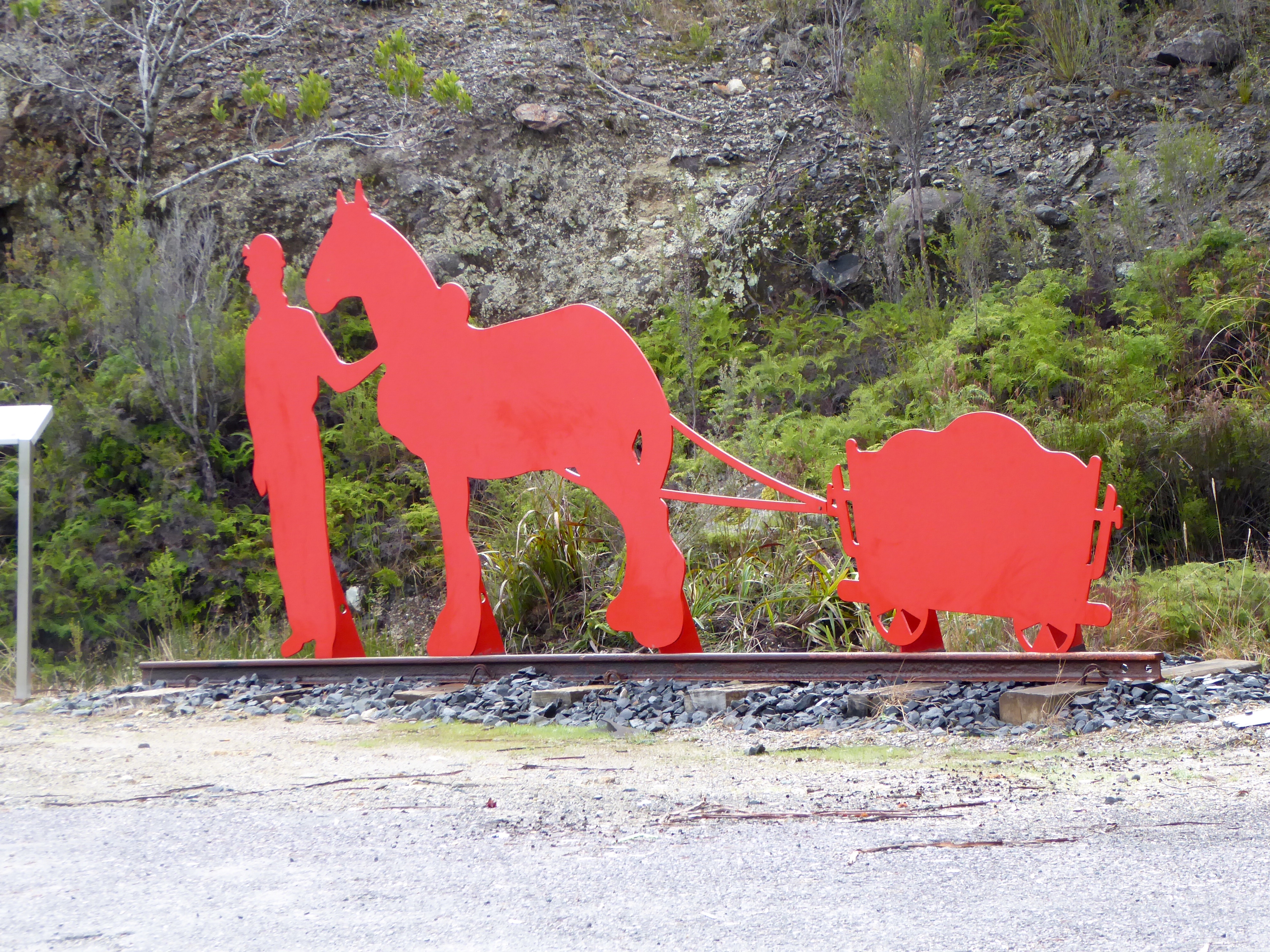
We are now in a mining area of Tasmania.

Gold, silver and copper were mined near here

Gold, silver and copper were mined near here

This is Queenstown.

Love this sign

Love this sign, especially the O in Queenstown

In the late 1800s gold, silver and copper were mined here.

Queenstown is a nice little town

Queenstown is a nice little town

We stopped at this lookout.

Lookout place for humans and ducks

Lookout place for humans and ducks

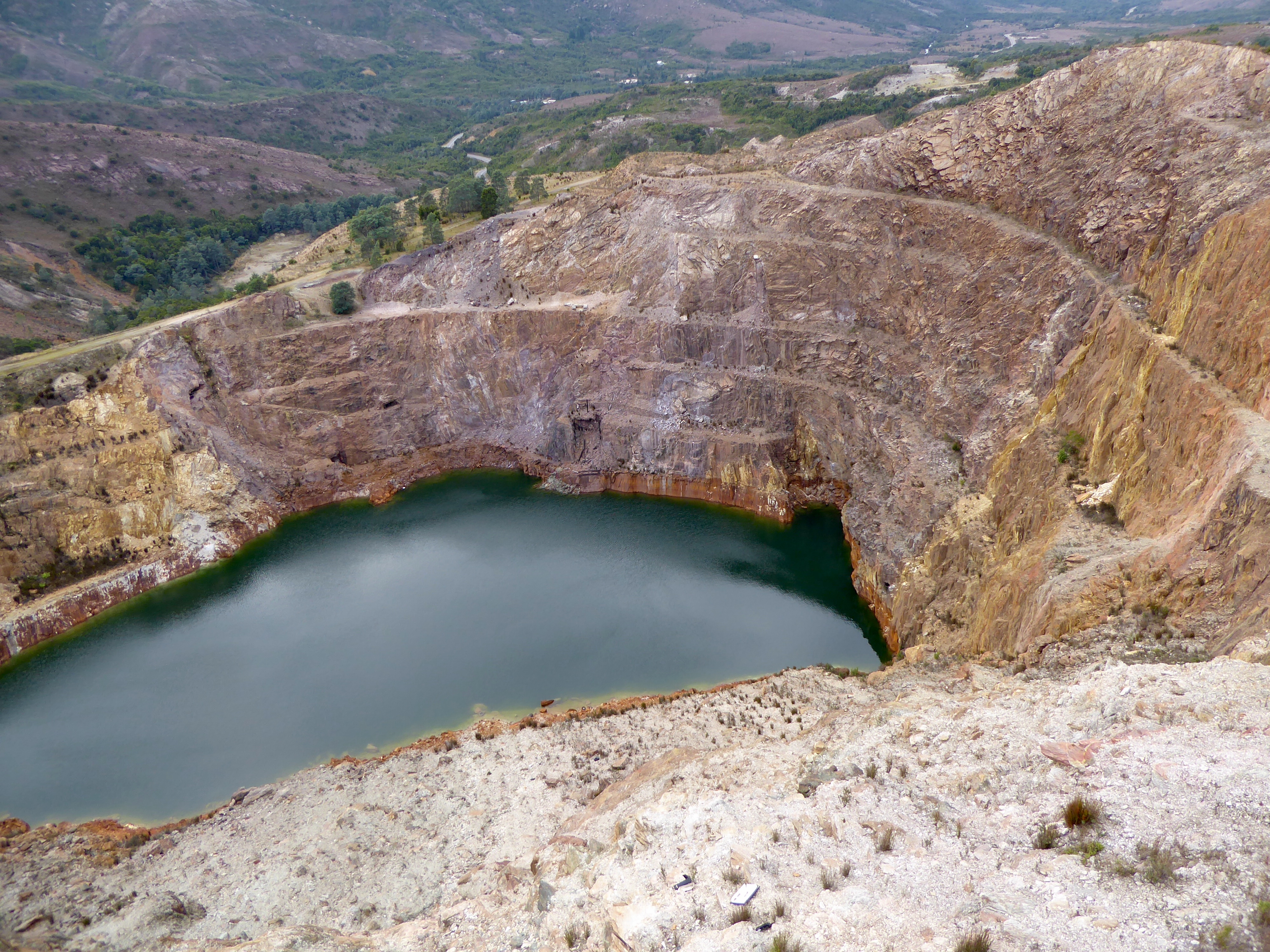
We looked down into the mining area.

Mining pits are now lakes

Mining pits are now lakes

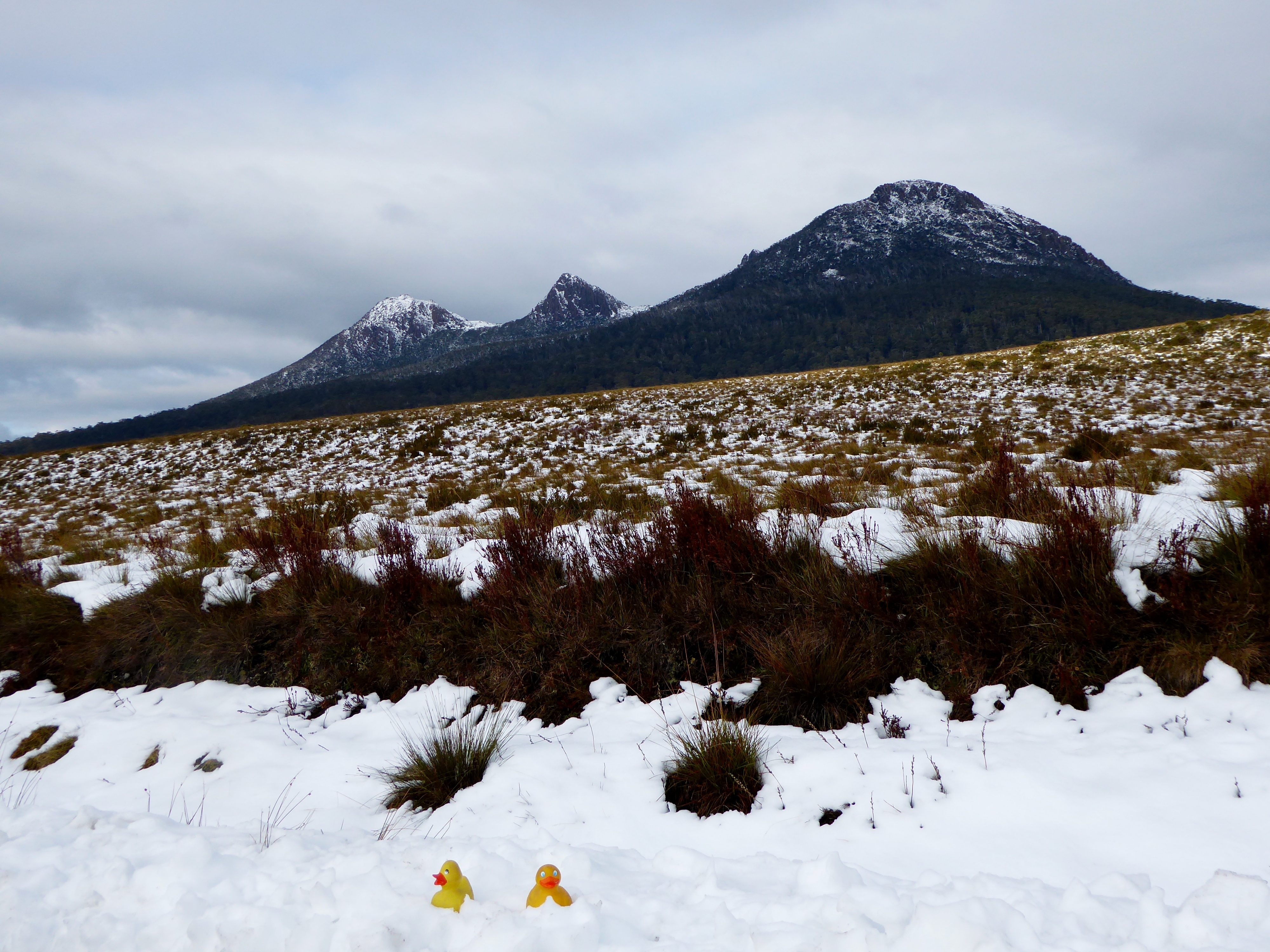
Looking ahead we see fresh snow on the mountain.    Mom is going to put us in the snow.

Fresh snow at the East West Divide.   It is cold, mom

Fresh snow at the East West Divide. It is cold, mom

We stopped at the East West Divide.   The snow has just about stopped.   Coming out of the mountains, we really like this green, hilly landscape.

So pretty

So pretty

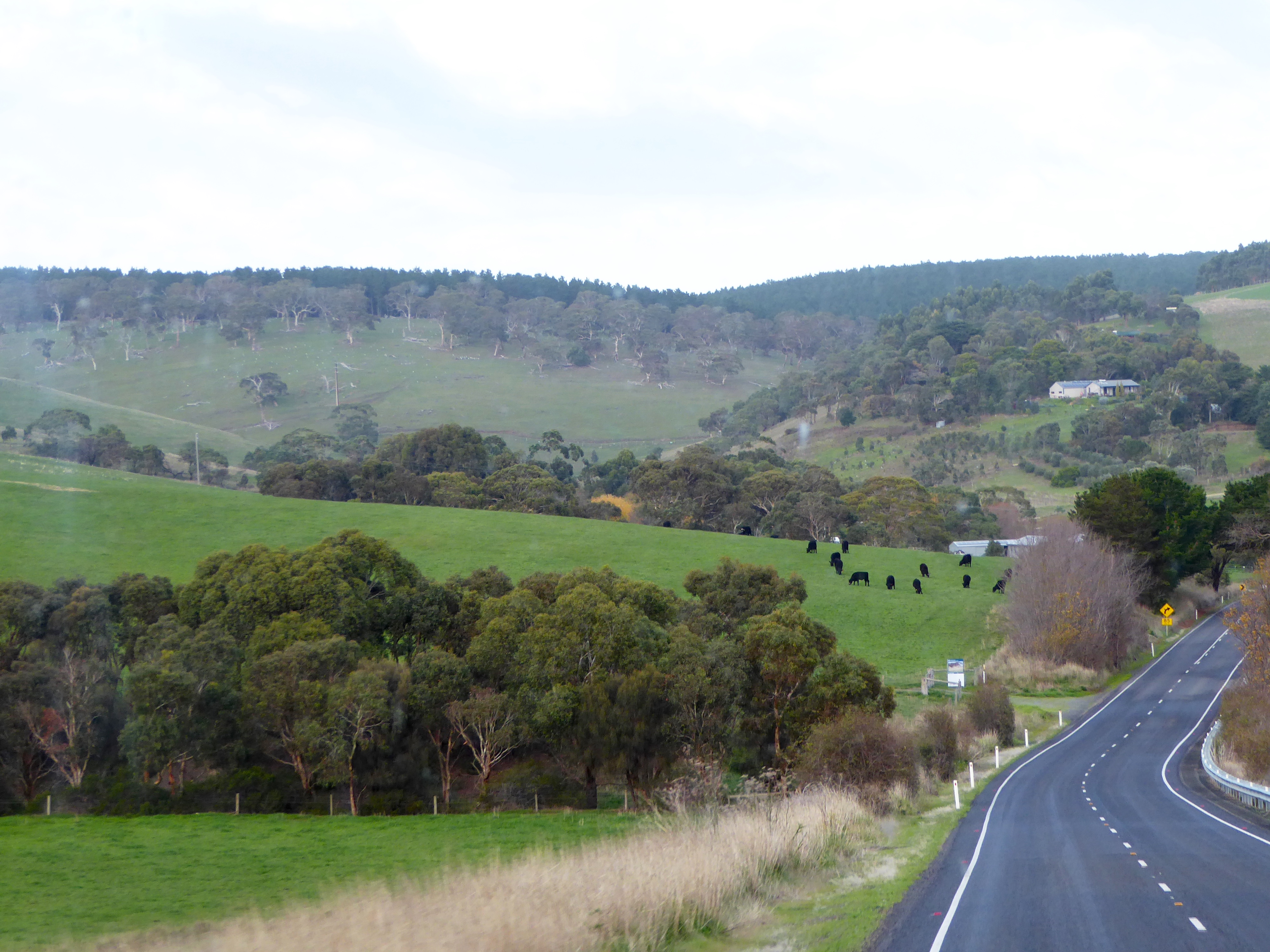
So much change in the land in so few miles.   We still see flocks of sheep, but we also see many herds of cattle.   We really like Tasmania.   The scenery is breathtaking and the people are very friendly and helpful.   This is an island for hiking, camping and enjoying the outdoor lifestyle.   However, we want to caution you that the roads are rather narrow with so many curves.

Most of the roads we found were rather narrow and had many curves.   Beautiful but be careful!

Most of the roads we found were rather narrow and had many curves.   Beautiful but be careful!

If you have a camper you may find driving difficult, so please be careful.   This is our last day in Tasmania.
Typical road

Typical road

We will miss it, but we are eager to explore other parts of Australia.

Zeb and Eider Explore Northern Tasmania

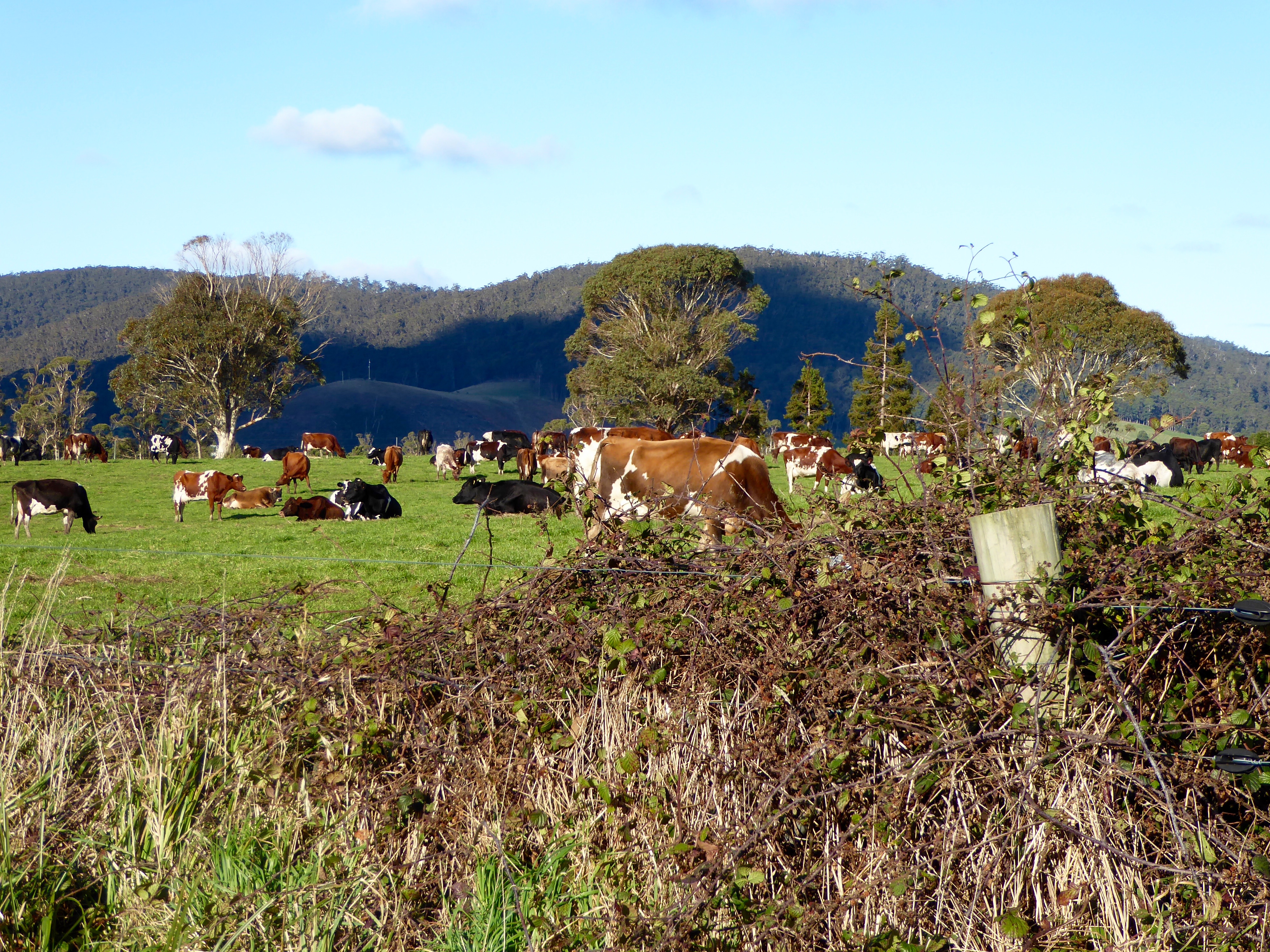
Yesterday we admired the white sand and clear blue water of the Bay of Fires and marveled at Tasmania’s tallest waterfall, St. Columba Falls.    This is such a beautiful island.   Continuing along the north coast of Tasmania, we saw more flocks of sheep, but we also saw herds of cattle.

Many cattle

Many cattle

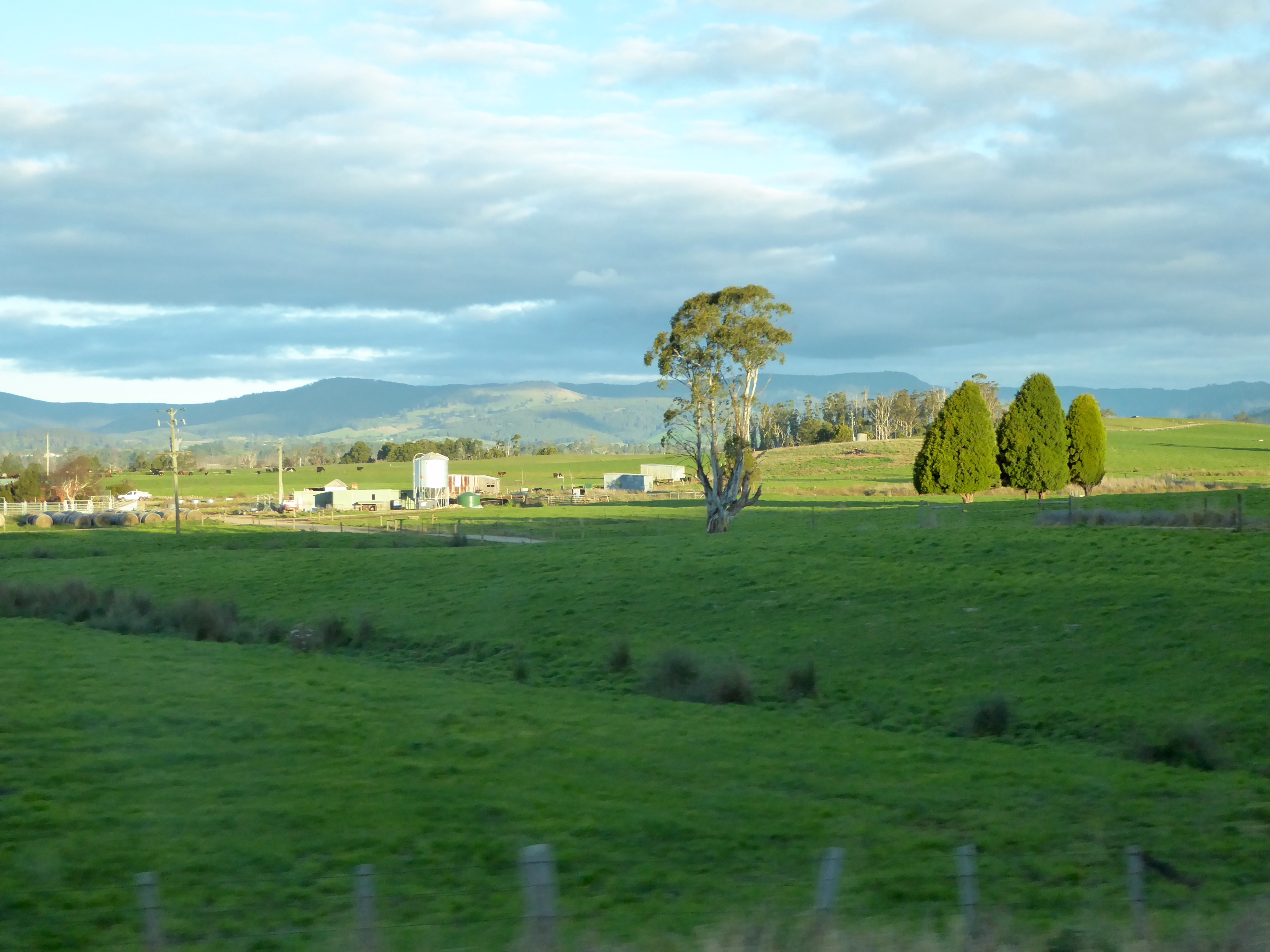
We think the rolling green pasture land and fields are beautiful, especially with the mountains in the background.

Beautiful green fields with mountains in background

Beautiful green fields with mountains in background

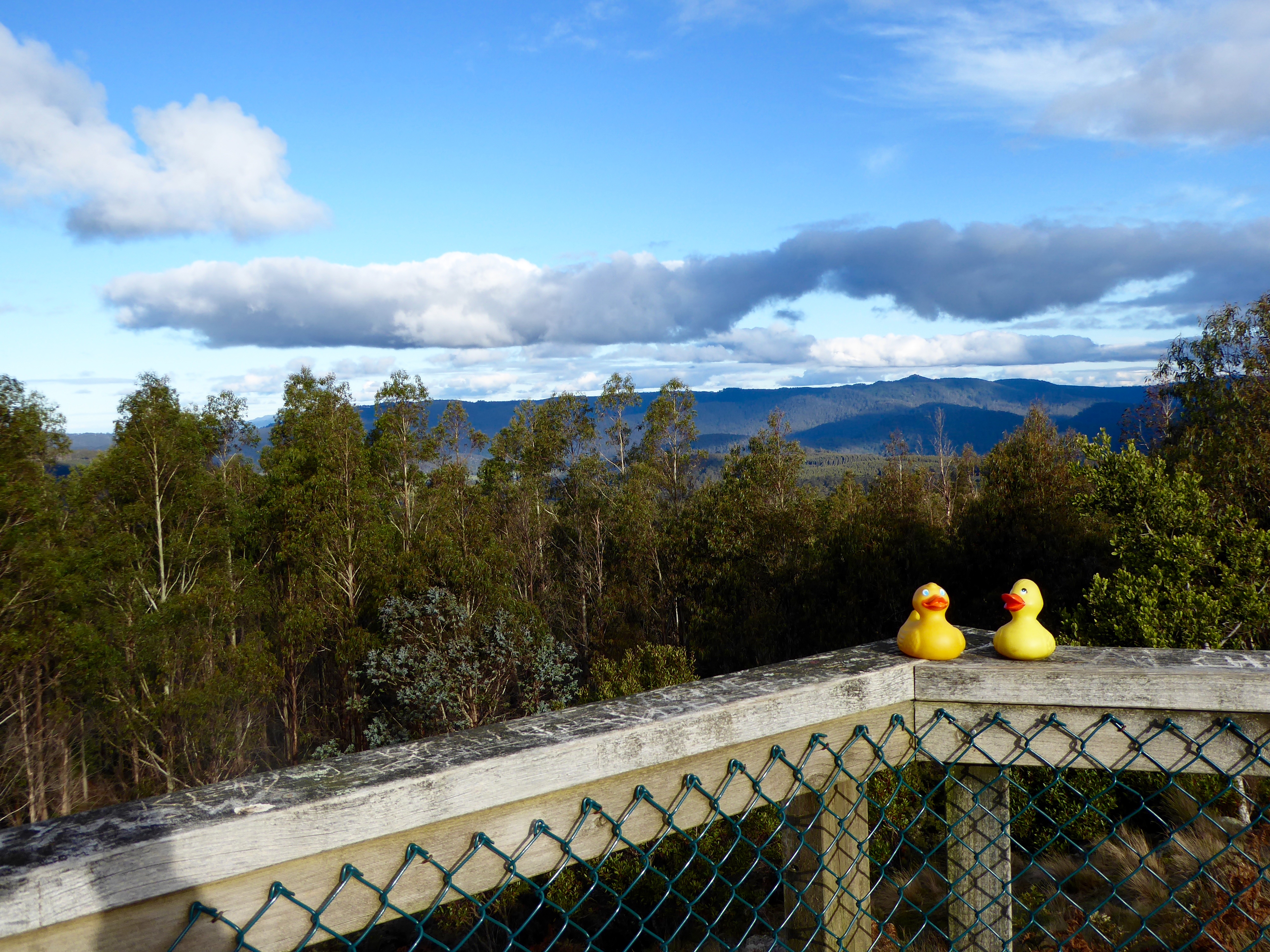
Our next stop was Little Plains Lookout on our way to Scottsdale.

Little Plains Lookout

Little Plains Lookout

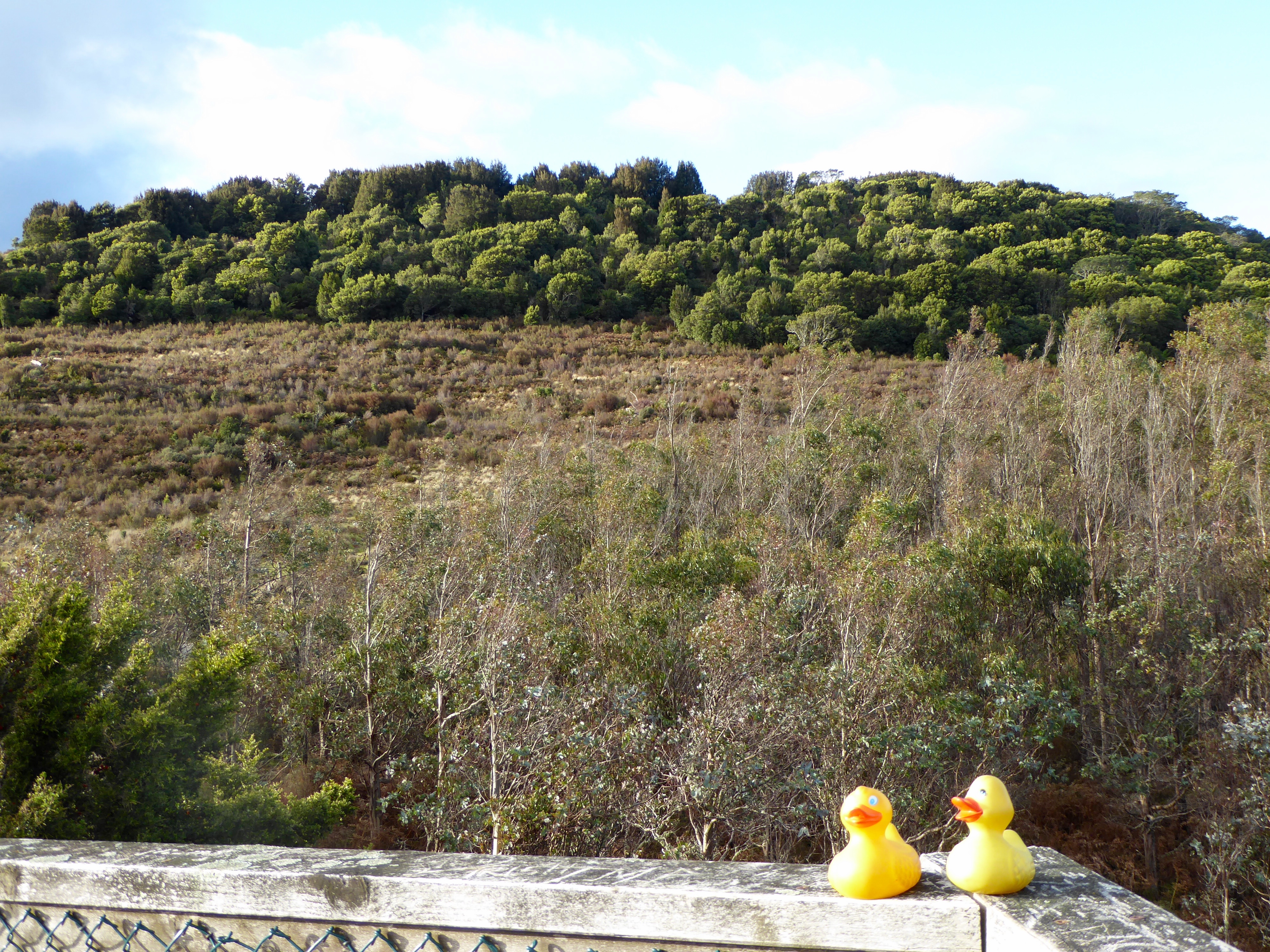
Tasmania is repurposing this land, planting hardwood trees which will be harvested in 2025.   These will be used primarily for hardwood timber and veneer products.

New hardwood trees

New hardwood trees

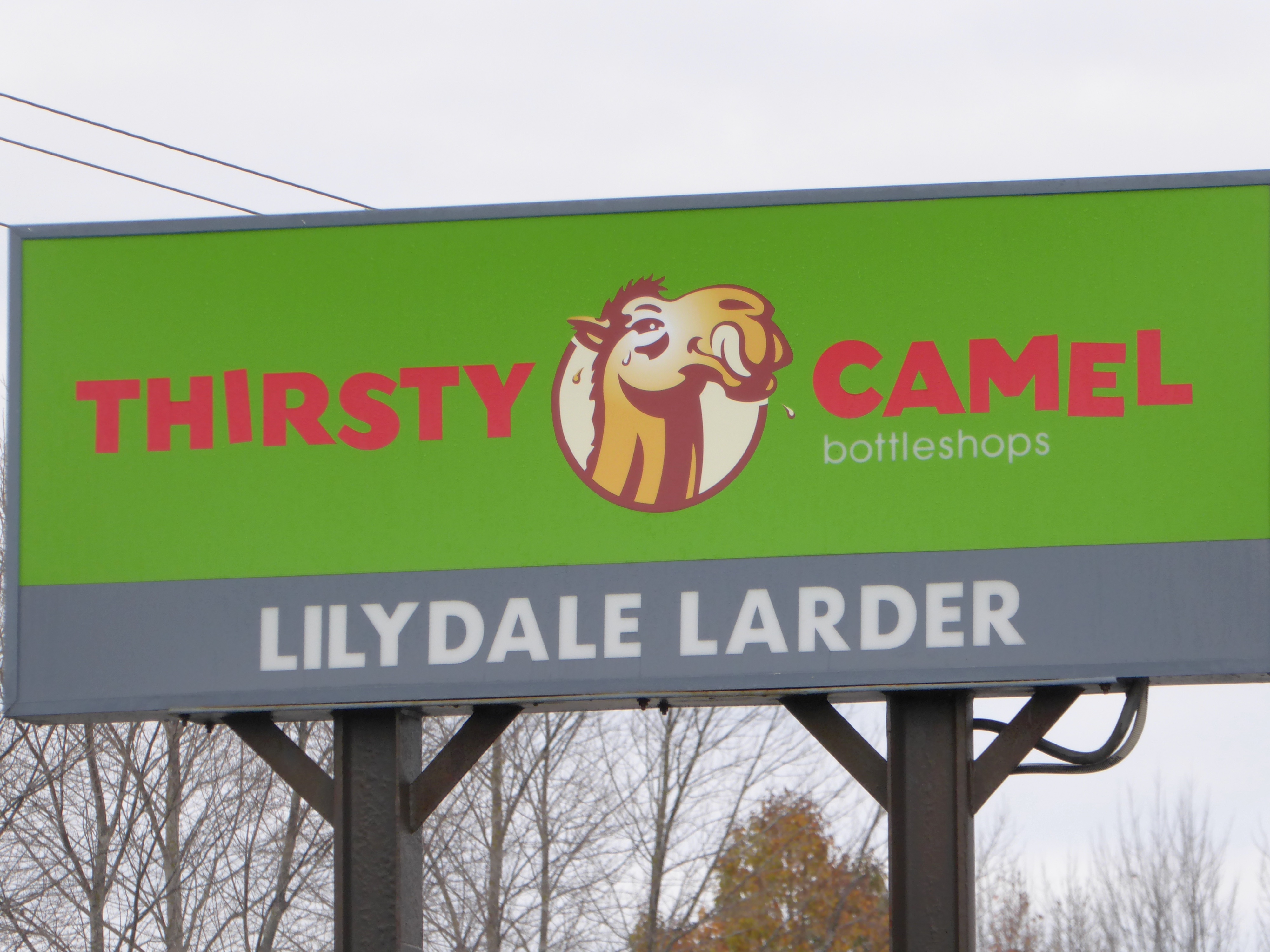
The residue, not suitable for sawlogs, is used for pulp.    In Colorado we do not see many stores called bottle shops, but we did in Tasmania.   This was our favorite brand of bottle shop.

Thirsty Camel Bottleshop

Thirsty Camel Bottleshop

This Thirsty Camel Bottleshop is in Lilydale, Tasmania.

We are in Lilydale, Tasmania

We are in Lilydale, Tasmania

We like the camel.   Continuing our exploration, a few kilometers north of George Town, we enjoy Low Head Historic Precinct.   This is the ship’s bell, standing by the octagonal chart room.

Ship's Bell in front of octagonal chart room

Ship’s Bell in front of octagonal chart room

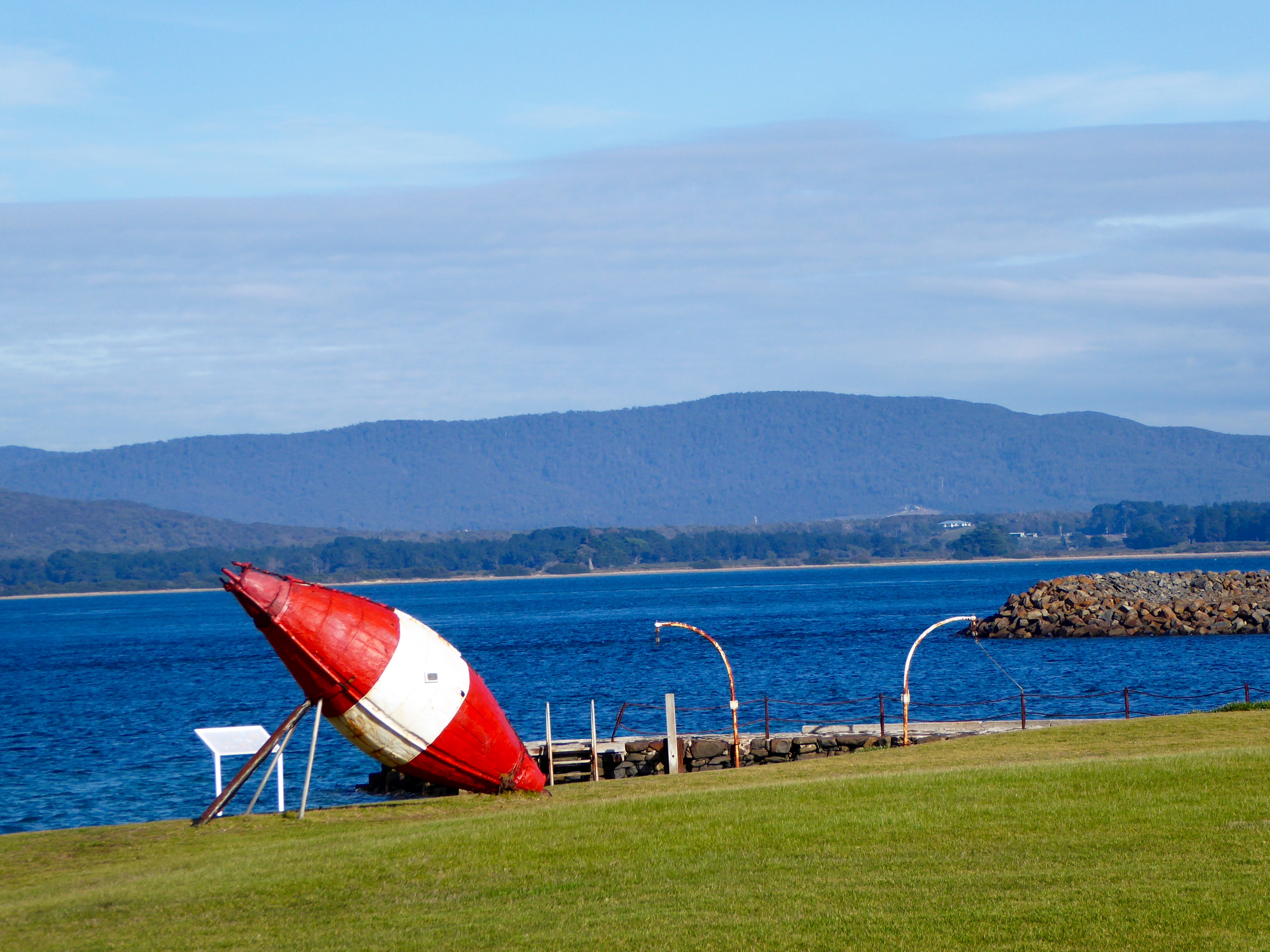
This is a recovered wooden marker buoy.

Recovered wooden maker buoy

Recovered wooden maker buoy

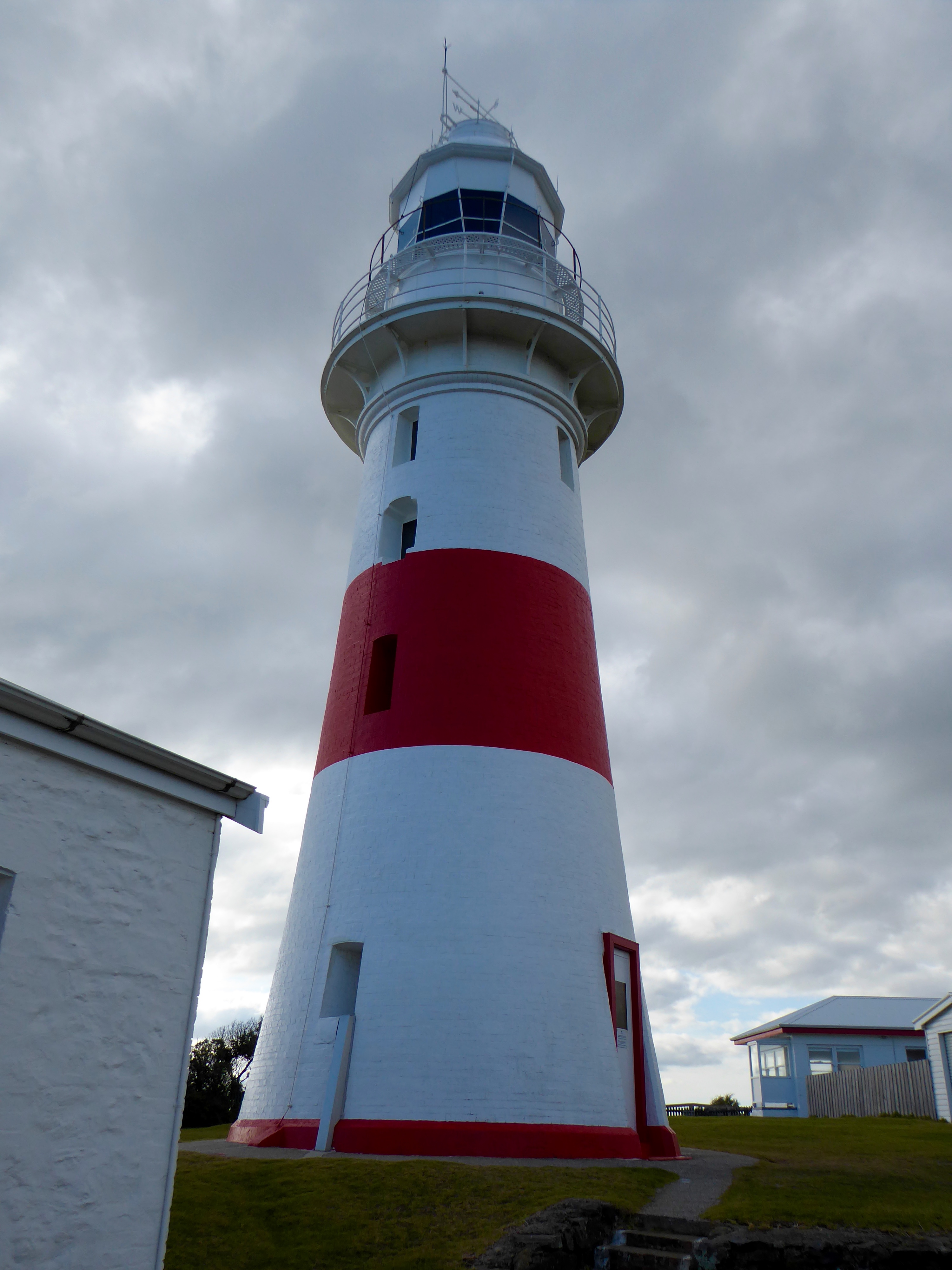
These buoys are used to mark channels and other hazards.   Here is the Low Head Lighthouse.

Low Head Lighthouse near George Town

Low Head Lighthouse near George Town

This view from the keeper’s cottage shows why the lighthouse is needed here.

Vast water view from lighthouse keeper's cottage

Vast water view from lighthouse keeper’s cottage

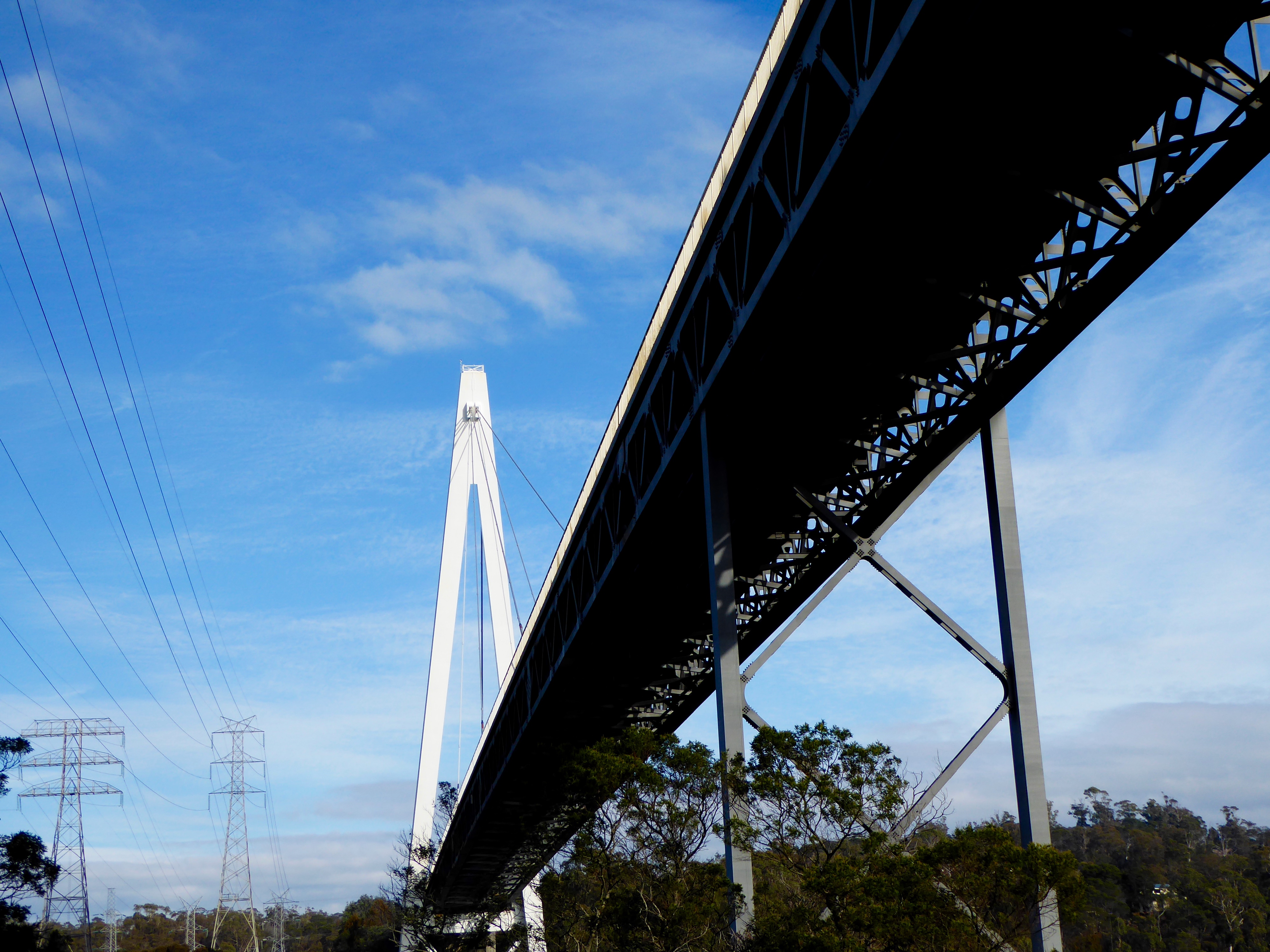
Continuing our journey, we are on the Batman Highway, where we encountered Australia’s first cable-stayed bridge.   This is Batman Bridge in Sidmouth, Tasmania.   Batman Bridge spans the Tamar River.

Batman Bridge

Batman Bridge

Construction began in 1966 and the bridge opened in 1968.   Batman Bridge is named for John Batman, one of the founders of Melbourne,who earlier lived in Northern Tasmania.   We drove under the bridge
Batman Bridge from below

Batman Bridge from below

where we were greeted by this colorful bird.

The official greeter?

The official greeter?

Driving over the bridge, we admired its architecture.

What a great bridge

What a great bridge

It is getting late and we do not want to drive in the dark.   We see too many kangaroos every morning that have been hit by vehicles during the night.   We spent the night in Burnie, Tasmania.   We, the Colorado Traveling Ducks and our humans, like driving round Tasmania.   We think you would enjoy it also.

Zeb and Eider Duck Visit Bay of Fires and St. Columba Falls in Tasmania

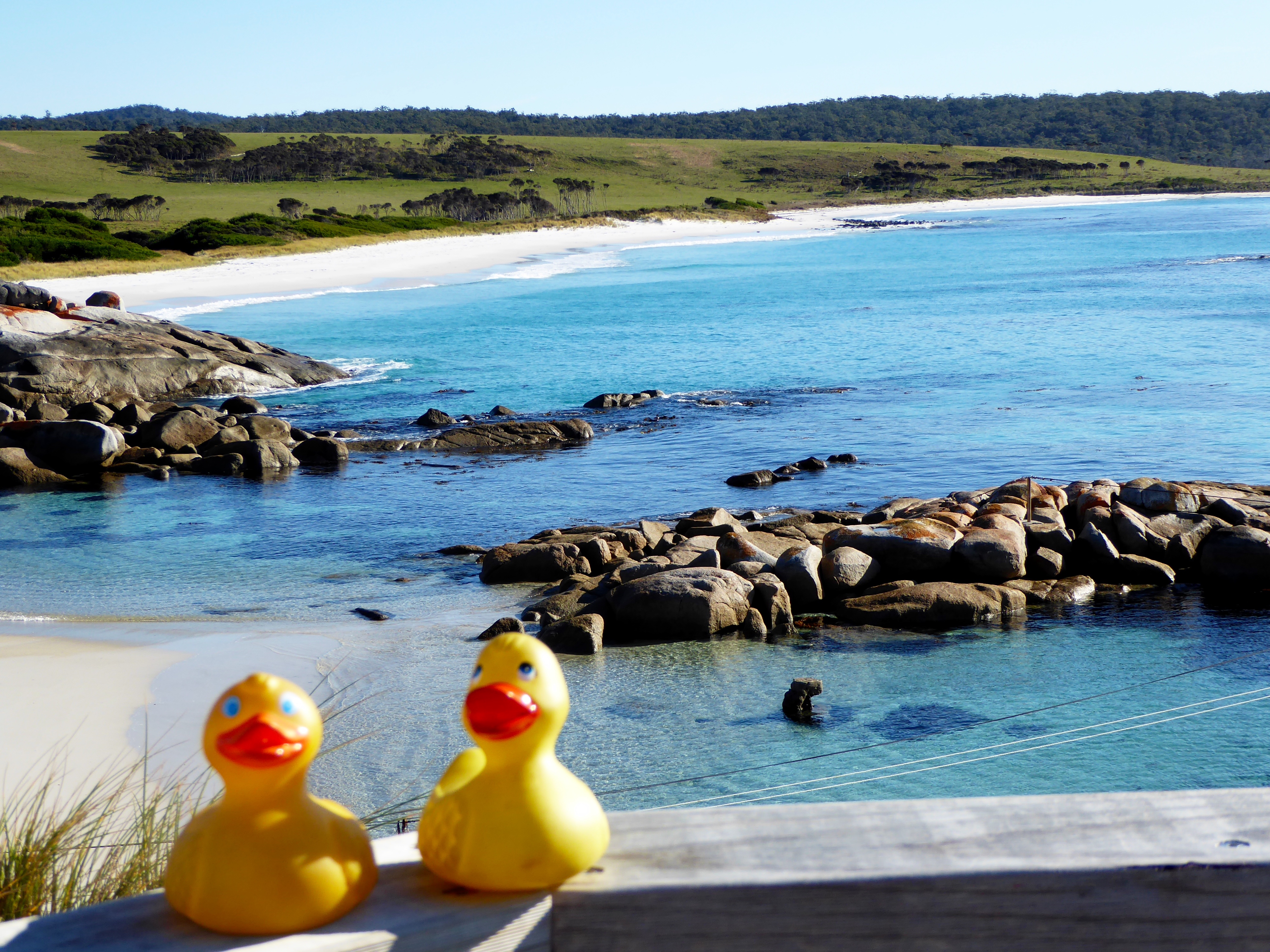
Zeb and Eider, with the humans, visited the Bay of Fire.   This is near St.Helens in northeast Tasmania.   And there are so many rocks!

So many bright rocks

So many bright rocks

The Bay of Fires extends along the coast from Binalong Bay in the south to Eddystone Point in the north.   The sand is so soft and white.

Soft white sand and clear blue water.   Perfect!

Soft white sand and clear blue water. Perfect!

If it were not winter and cool, we would be lounging on that perfect sand and testing the clear (probably cold) water.   The white sand is derived from the granite bedrock that is predominant in North East Tasmania.   The soft white sand is because of the high quartz content of the granite boulder.    First we visited a lookout platform and then walked to the rocks.

We were walking on these rocks

We were walking on these rocks

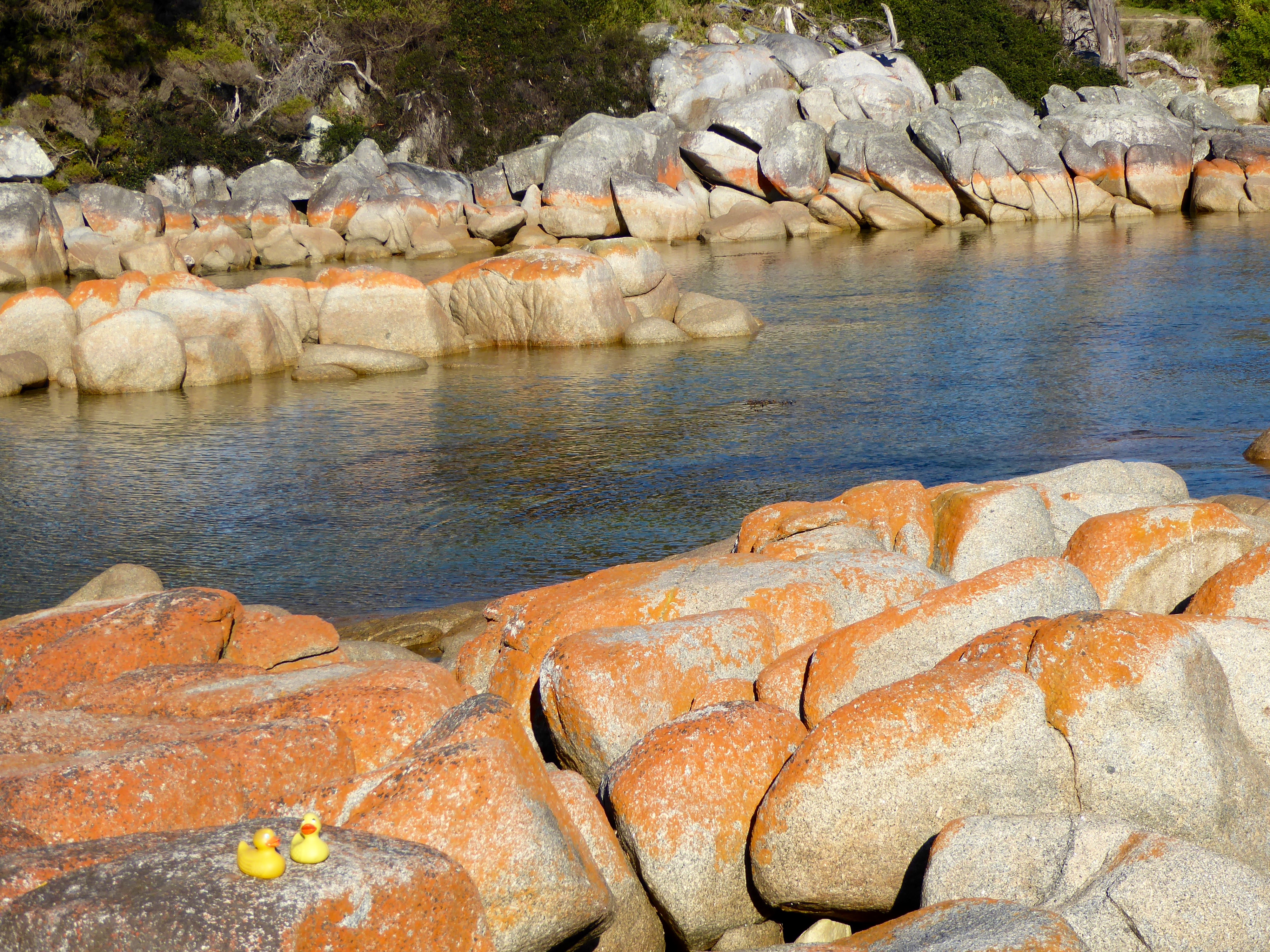
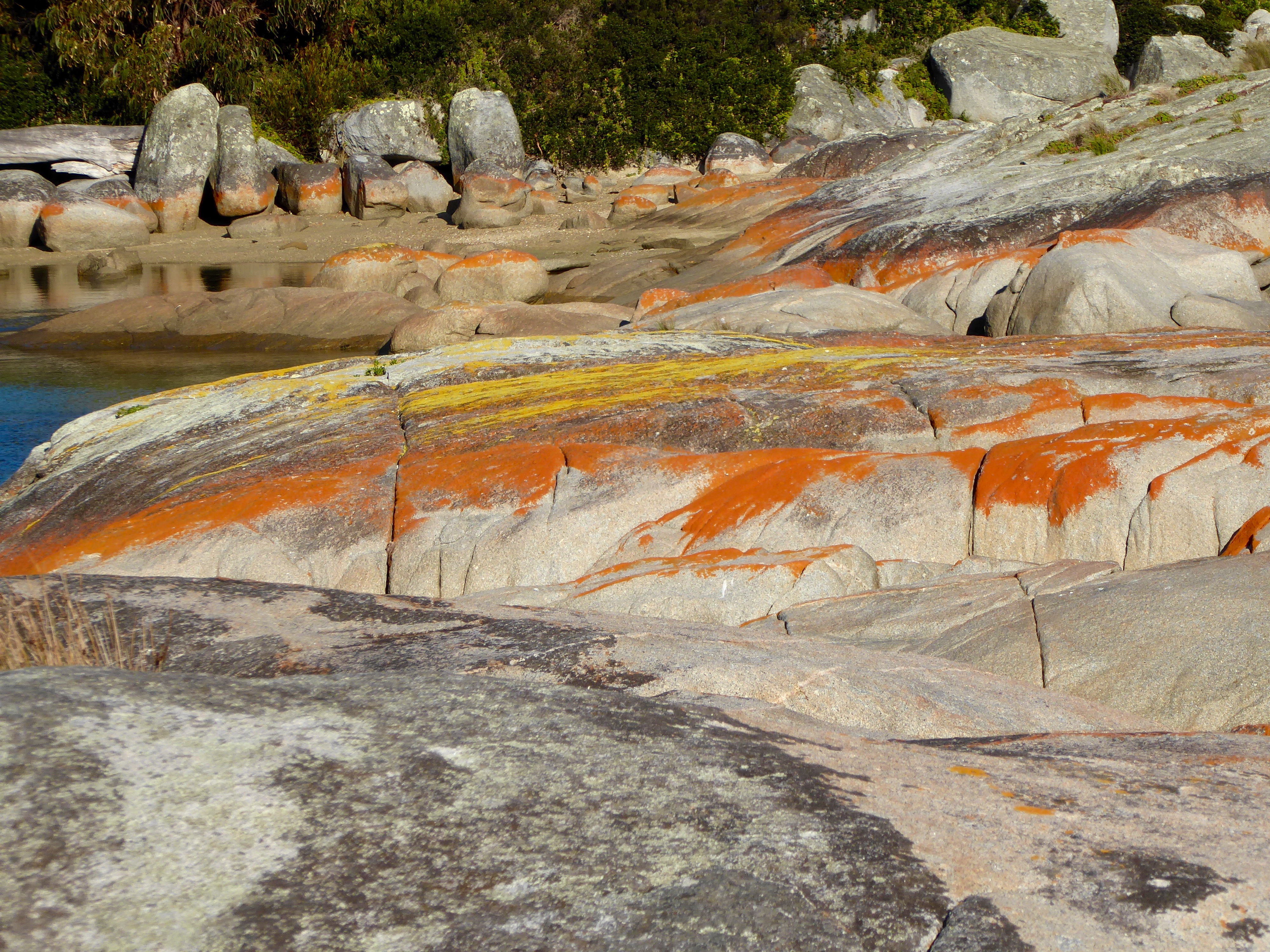
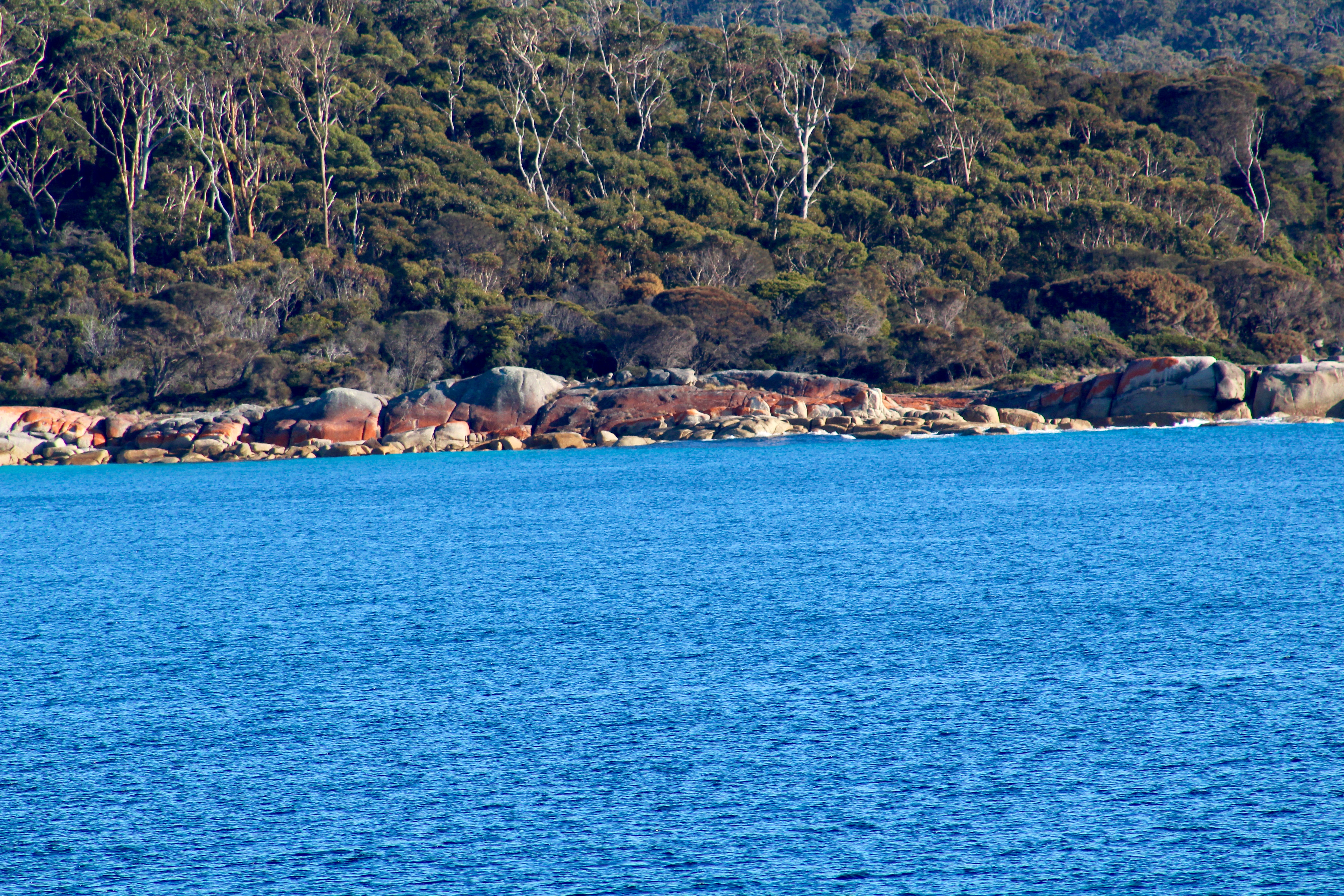
Then we drove to the The Gardens in the Bay of Fires Conservation Area.   Isn’t this beautiful?   Notice the lichen growing on the granite boulders lining the bay.

Bright blue water and orange rocks lining the bay

Bright blue water and orange rocks lining the bay

The bright orange is beautiful.   Hundreds of years ago the native aboriginal people burned this area of the island.  These Aboriginal fires were spotted by Captain Tobias Furneaux when he sailed past in 1773, so this area became known as the Bay of Fires.   The repeated burning kept the vegetation low, giving the animals fresh young plants to eat.   The low vegetation also made hunting easier for the aboriginal.   The fires could be seen from far away, giving this area the name, Bay of Fire.   While the Bay of Fires is beautiful and serene, it does have a darker side.

Sitting in soft white sand, near orange boulders and blue water.

Sitting in soft white sand, near orange boulders and blue water.

The coast is littered with shipwrecks.   A few being the schooner Mary Ann in 1850, the brig Dart in 1865, the barque Queen of the Sea in 1877 and the fishing boat Vagabond in 1950.   These unusual trees caught our attention.

Unusual trees

Unusual trees

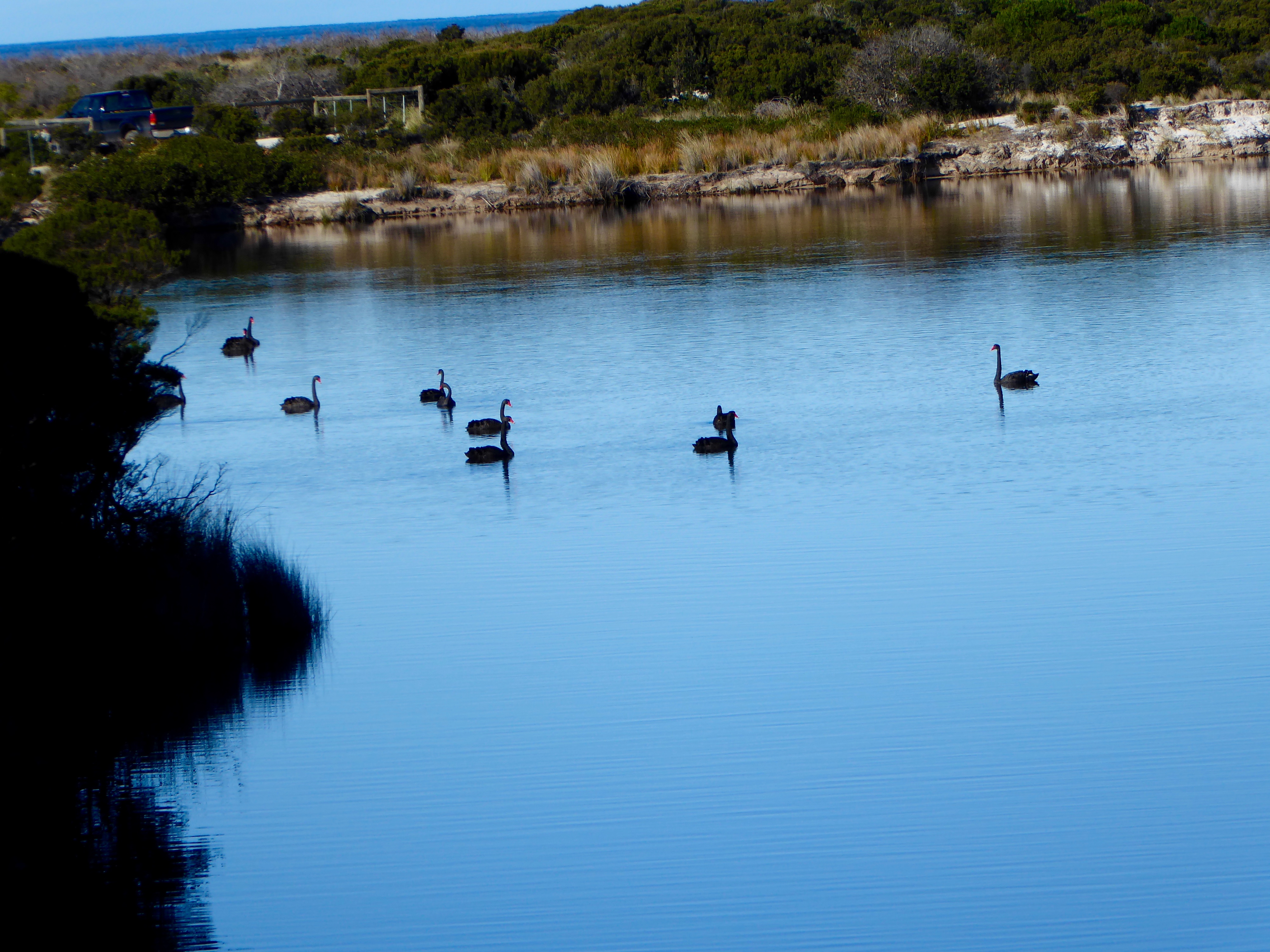
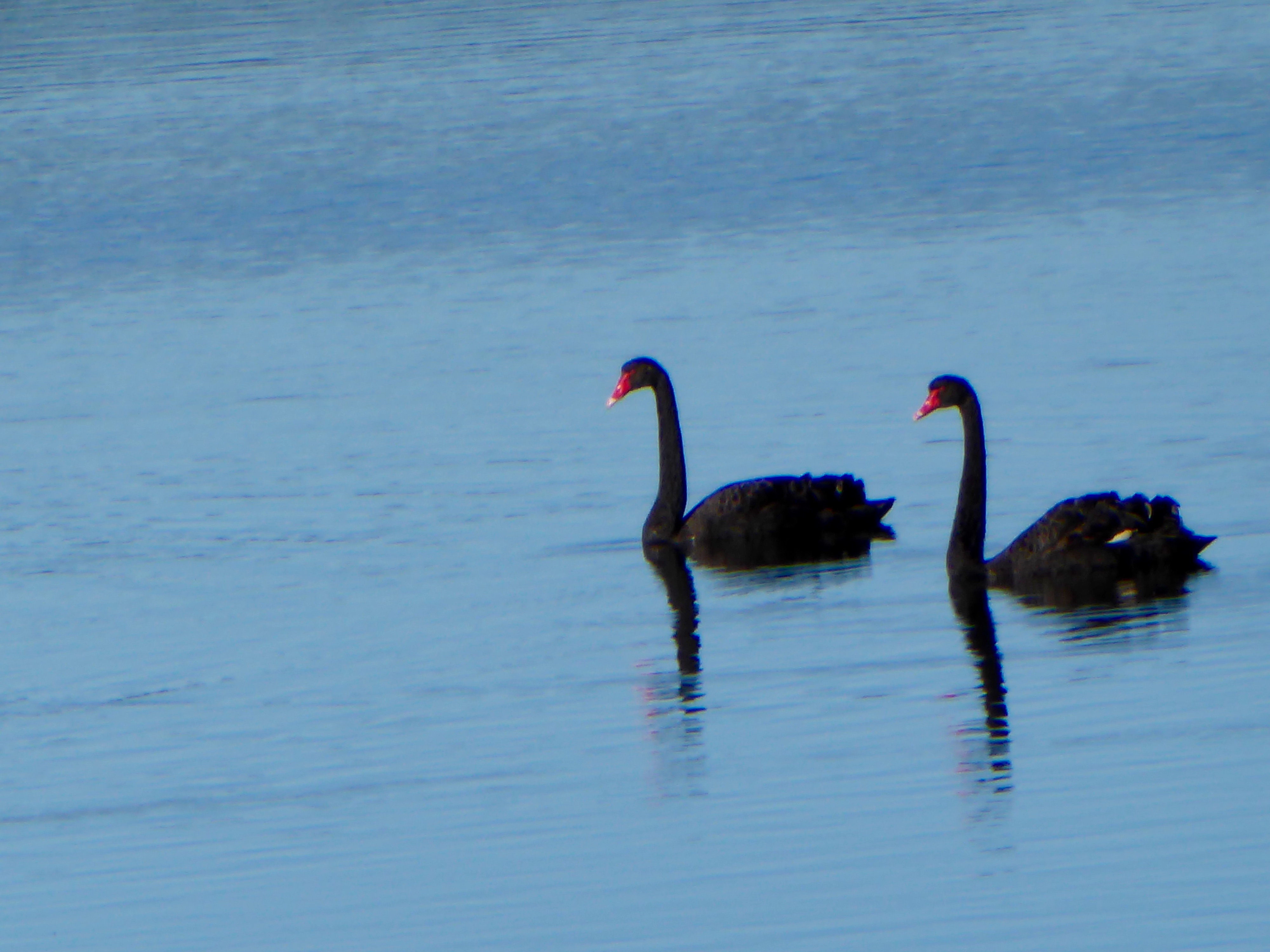
There were many Australian Black Swans in this area.

Several beautiful black swans

Several beautiful black swans

These gorgeous black swans have bright red beaks.

Love the bright red beaks

Love the bright red beaks

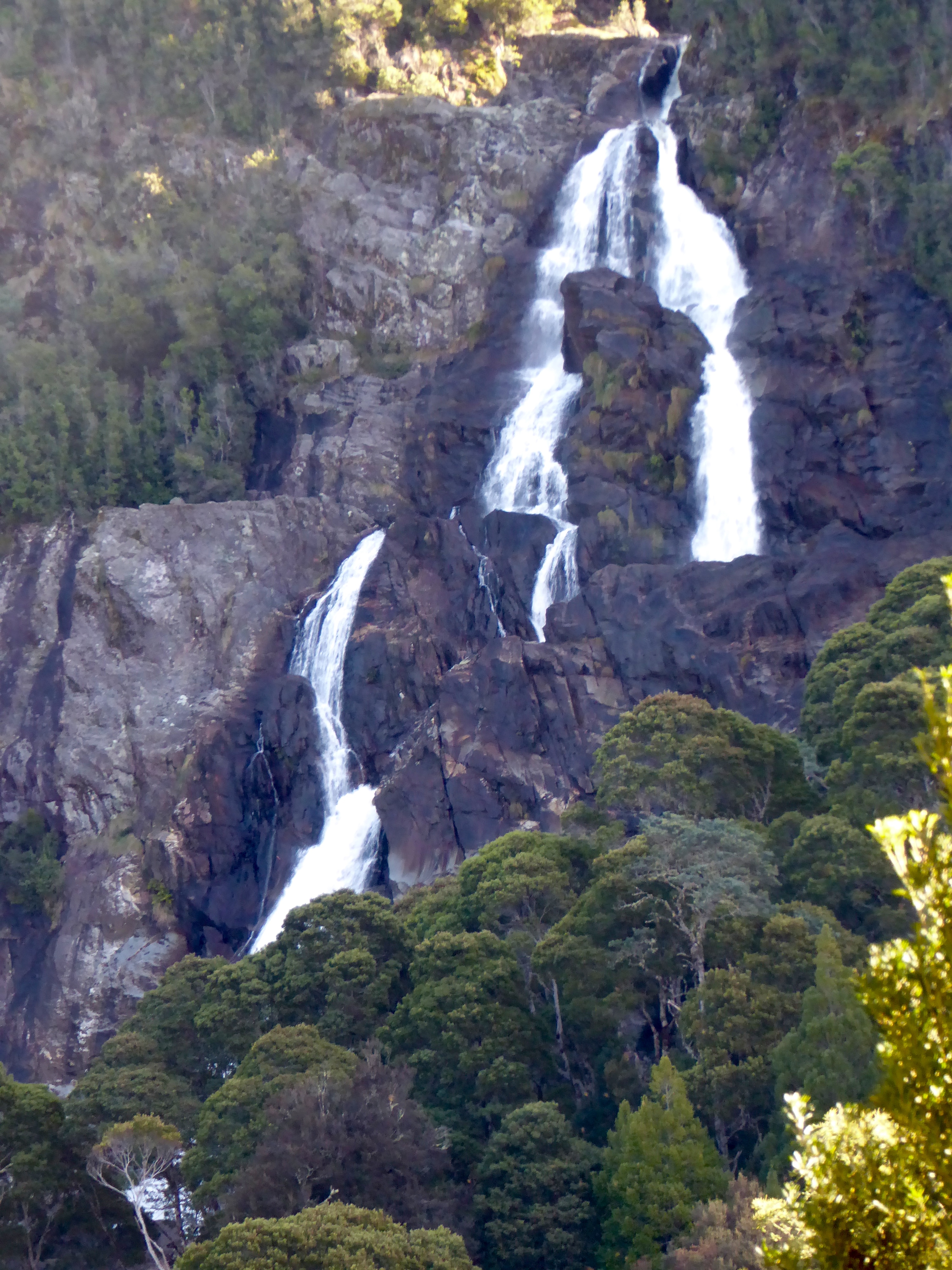
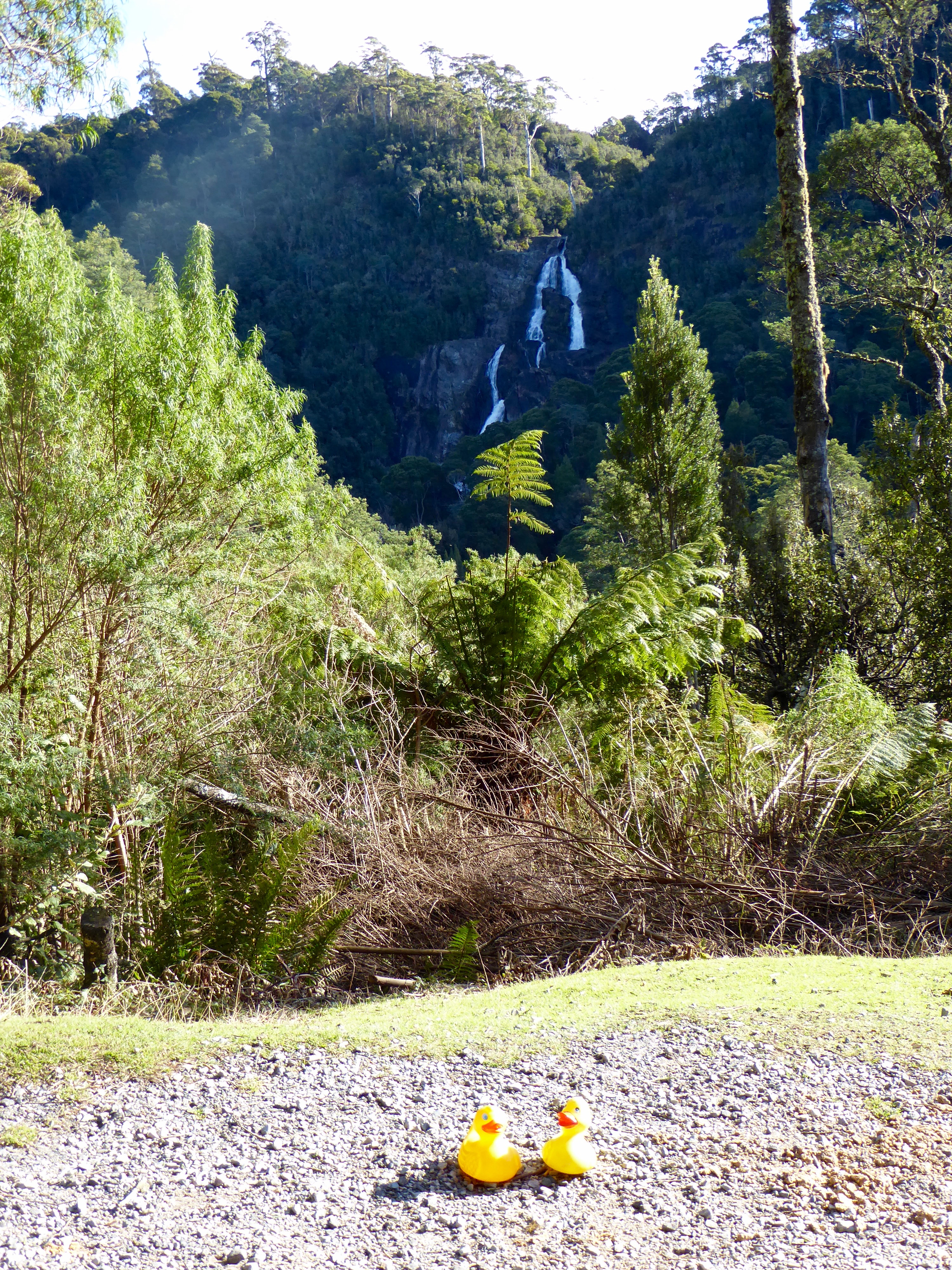
So beautiful.   We were told that black swans are native only south of the equator.   Driving about 30 kilometers west, we visited St. Columba Falls, at Pyengana, Tasmania.

St Columba Falls

St Columba Falls

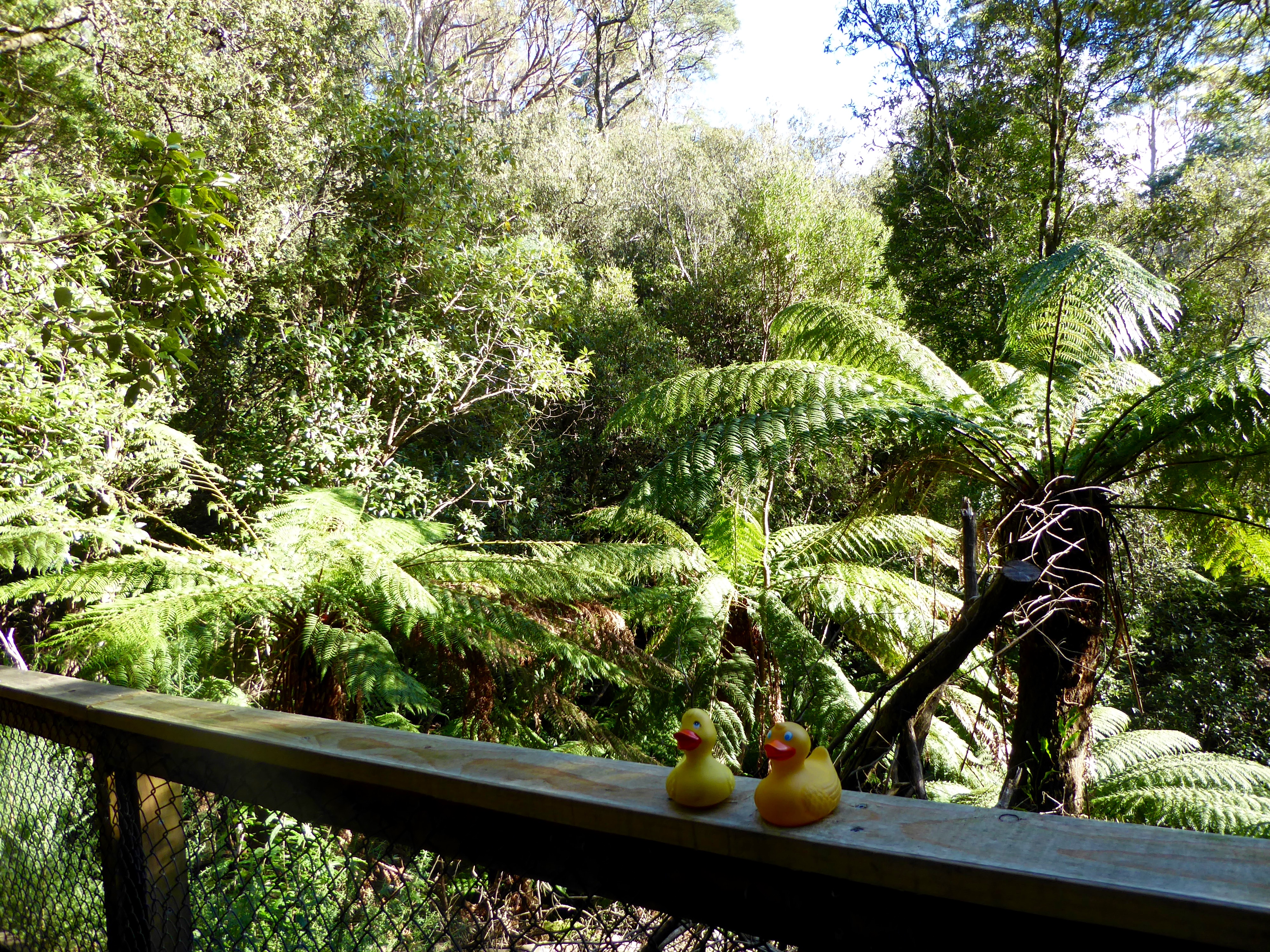
The falls are located in a rain forest.

We are in a rain forest

We are in a rain forest

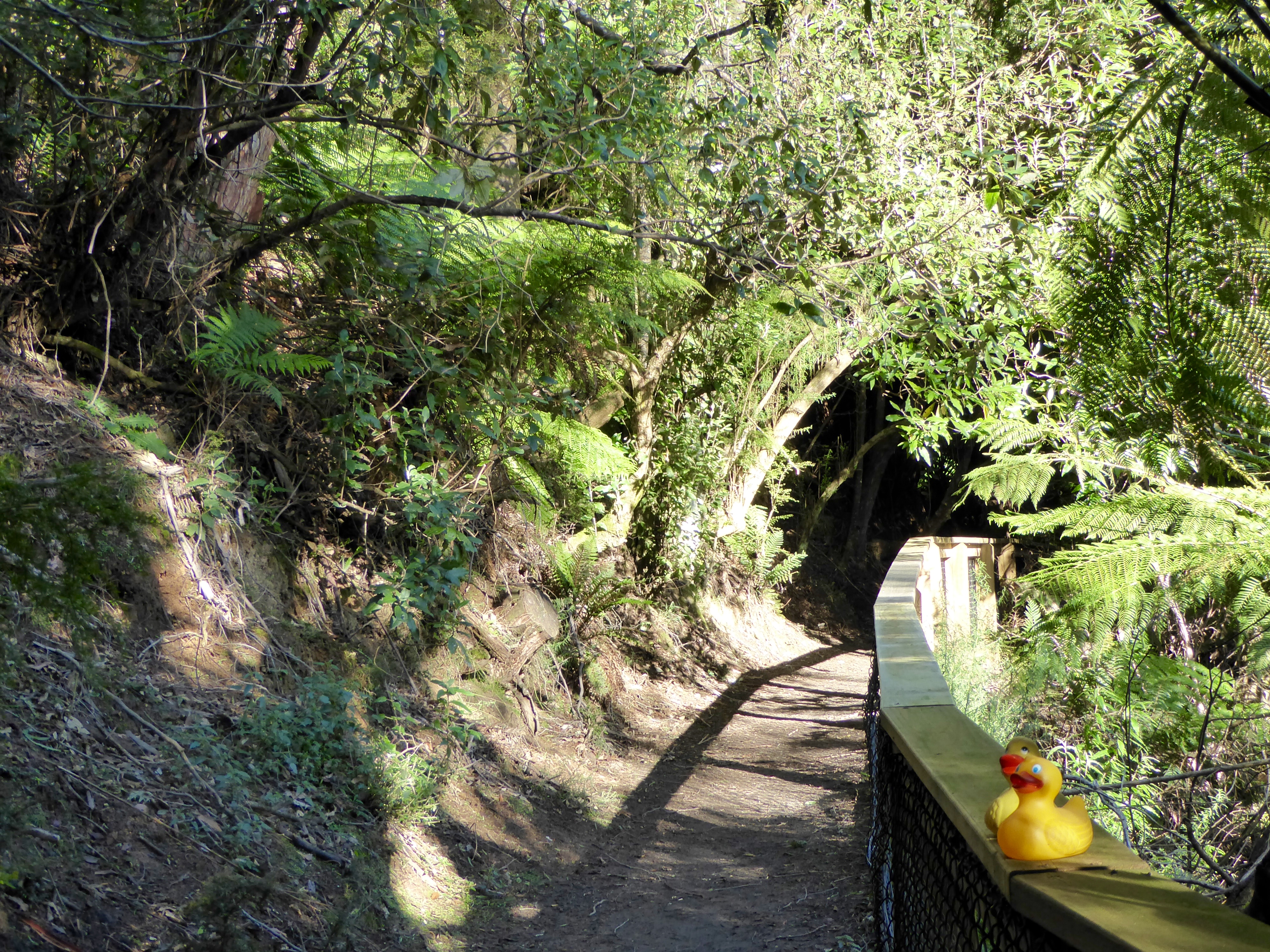
This is the path to the bottom of the falls.

Path to bottom of falls

Path to bottom of falls

St. Columba Falls are said to be the tallest falls in Tasmania,with a drop of over 90 meters.

We can hear the waterfalls

We can hear the waterfalls

East Coast Road Tasmania with Zeb and Eider

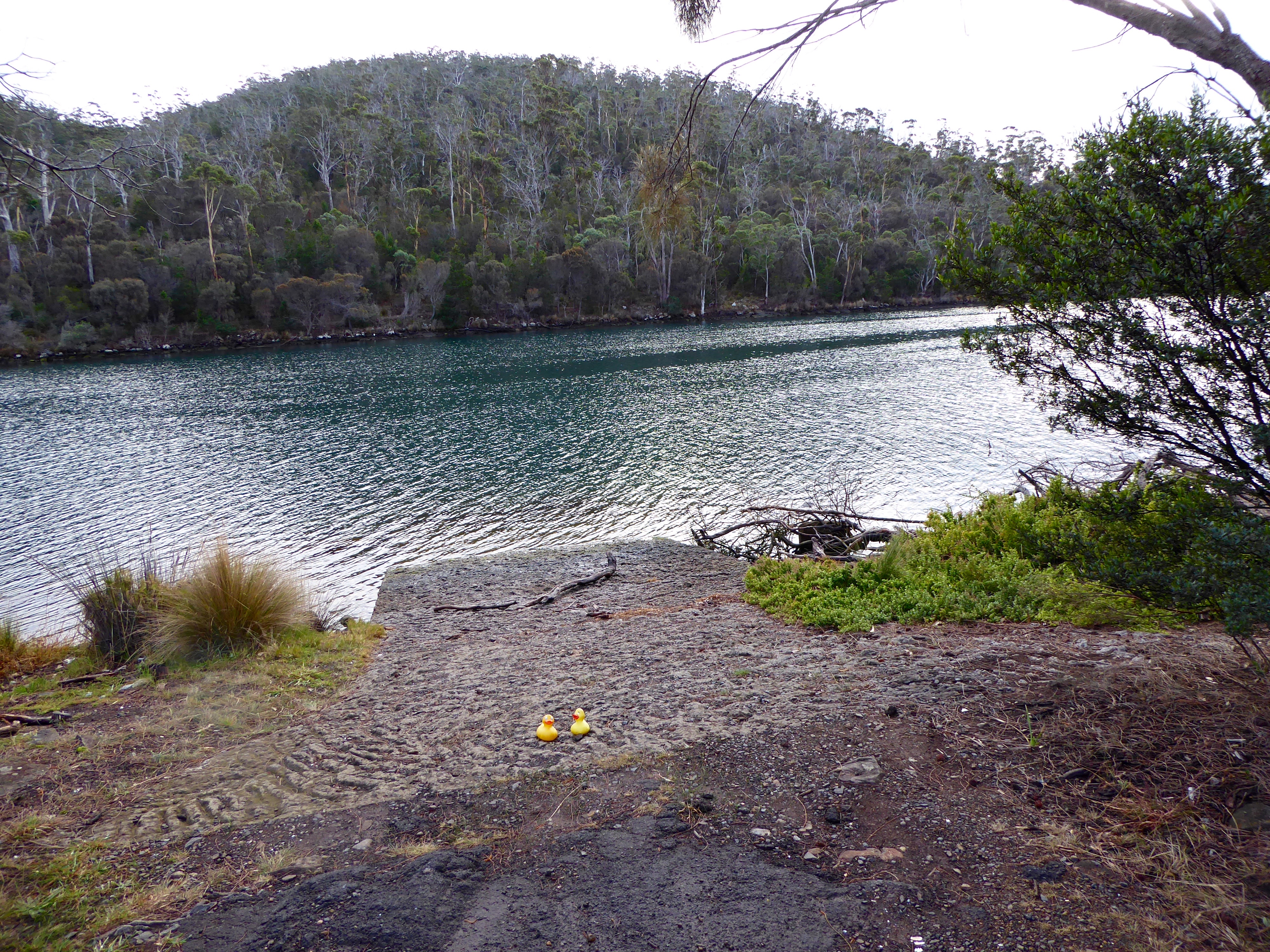
Zeb and Eider Duck and the humans are driving in Tasmania.   Leaving the Hobart area, we head north to the East Coast Road    We stop at the Prosser River at a boat launching place.

We could launch a boat here

We could launch a boat here

We see no other humans.  It is so peaceful and beautiful.    Look at this clear water.

Look at these shells

Look at these shells

We can see these shells so clearly.   And, none of these shells seem to be broken.   Aren’t they beautiful?   We stopped in Orford for breakfast.

Ready for breakfast

Ready for breakfast

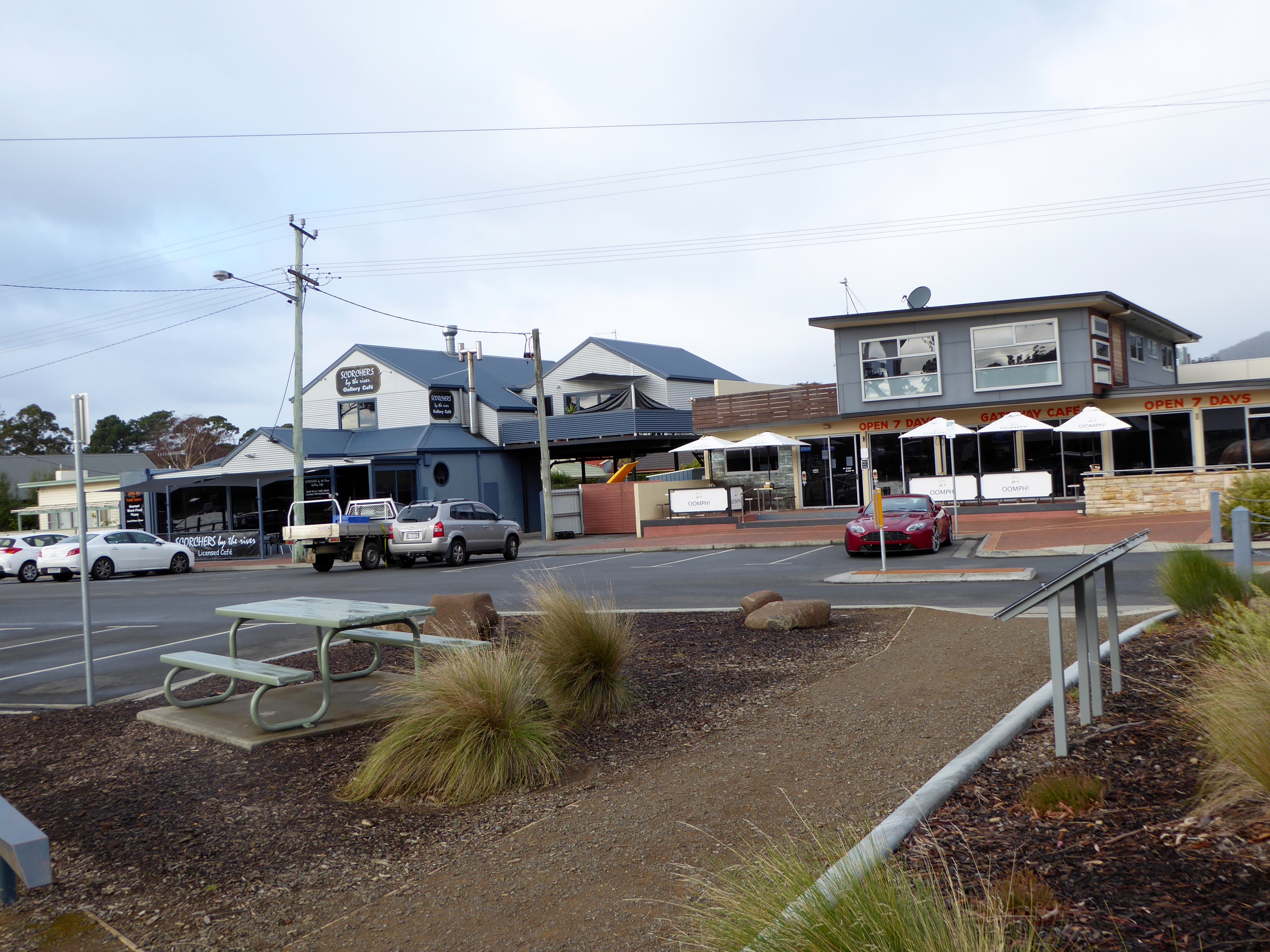
Orford is a nice town on the Prosser Bay and River.

Town of Orford

Town of Orford

Look at this picnic area on the Prosser Bay.   We love the water.

We like the beach at Orford

We like the beach at Orford

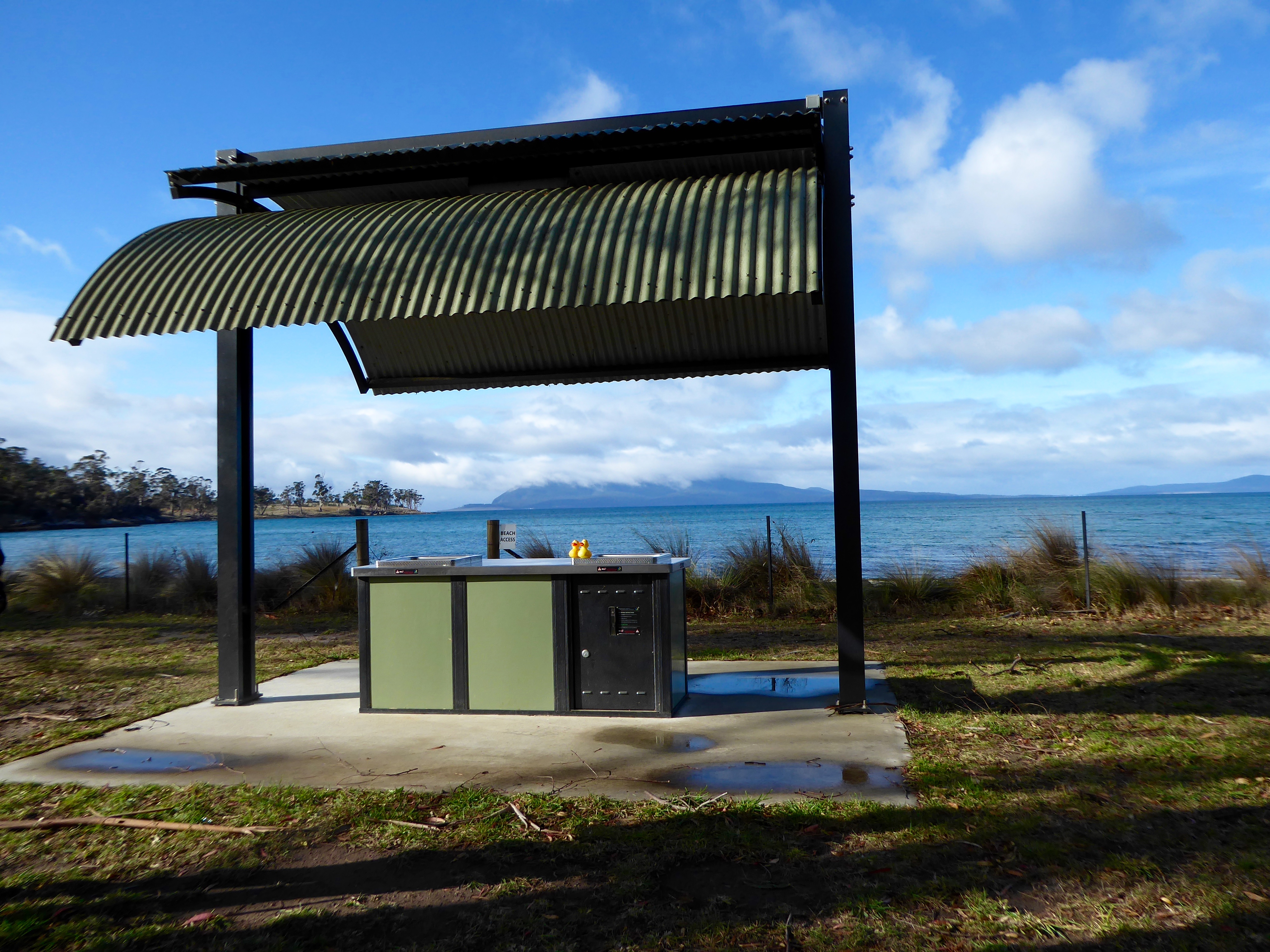
We ducks are sitting on a gas grill.

This is for all to us

This is for all to us

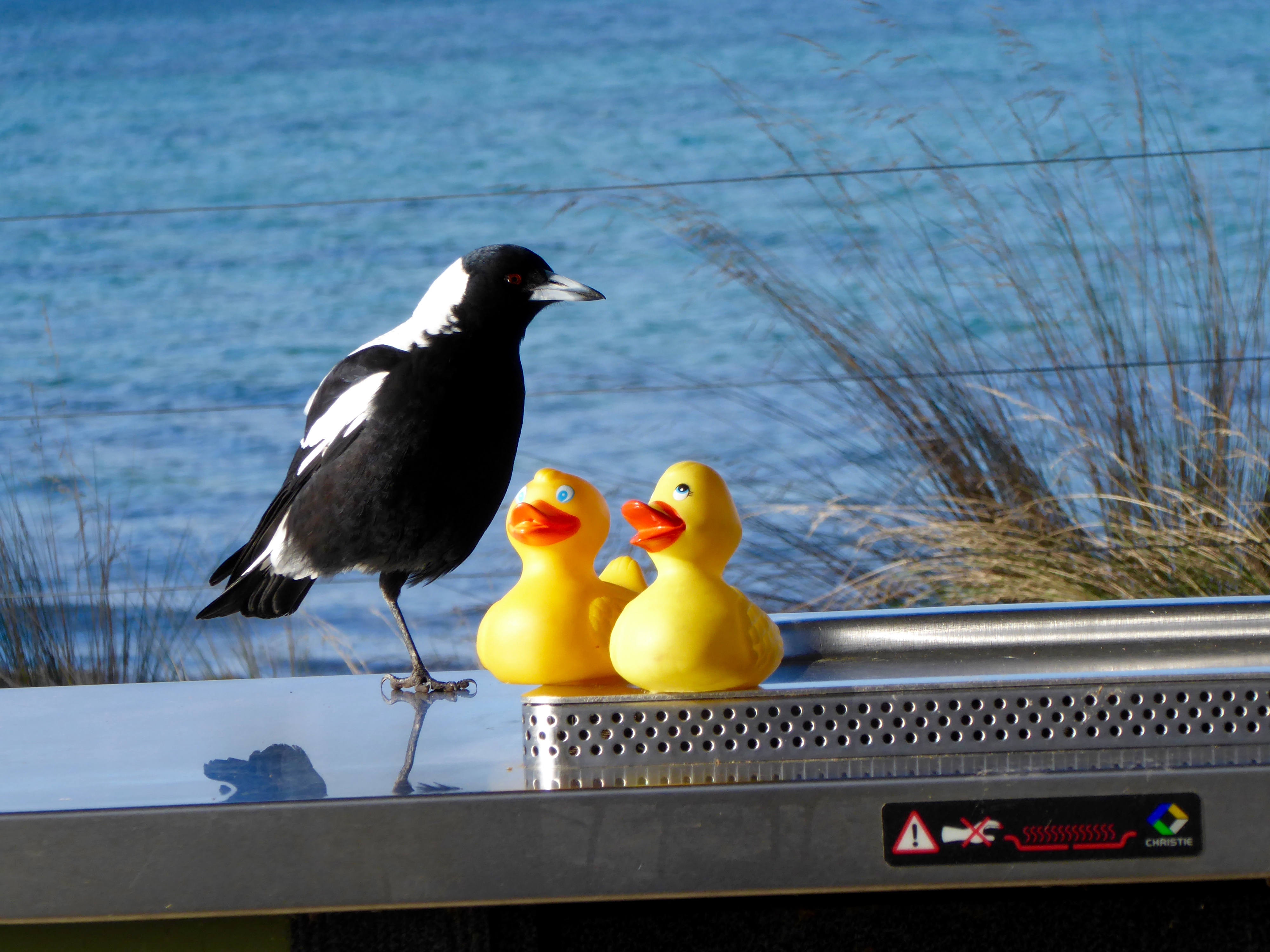
This is available for picnics.    Zeb and Eider are not the only birds that like this grill.

Company of our kind on the gas grill.

Company of our kind on the gas grill.

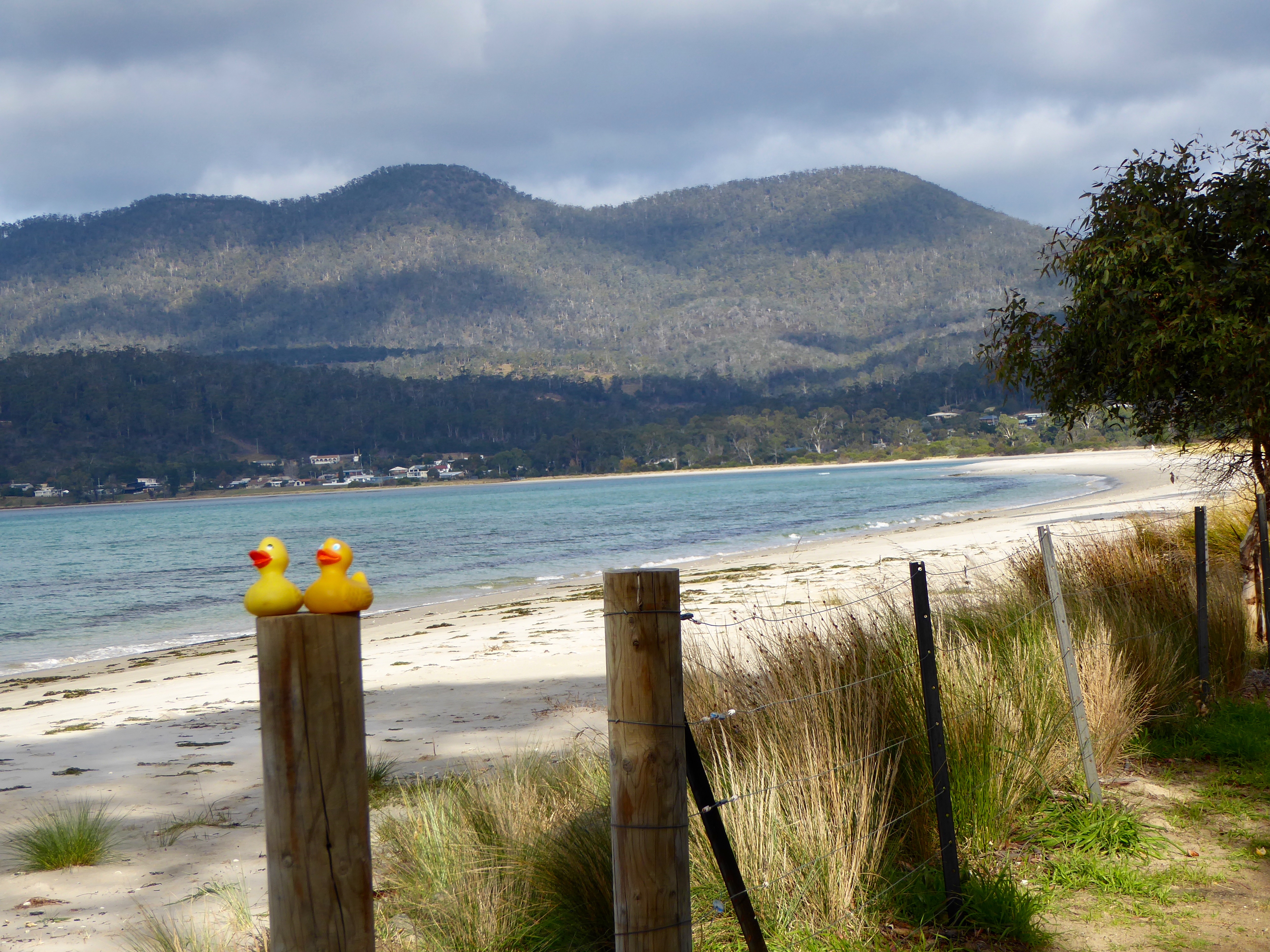
Further up the coast, we see Mayfield Bay.

We like Mayfield Bay

We like Mayfield Bay

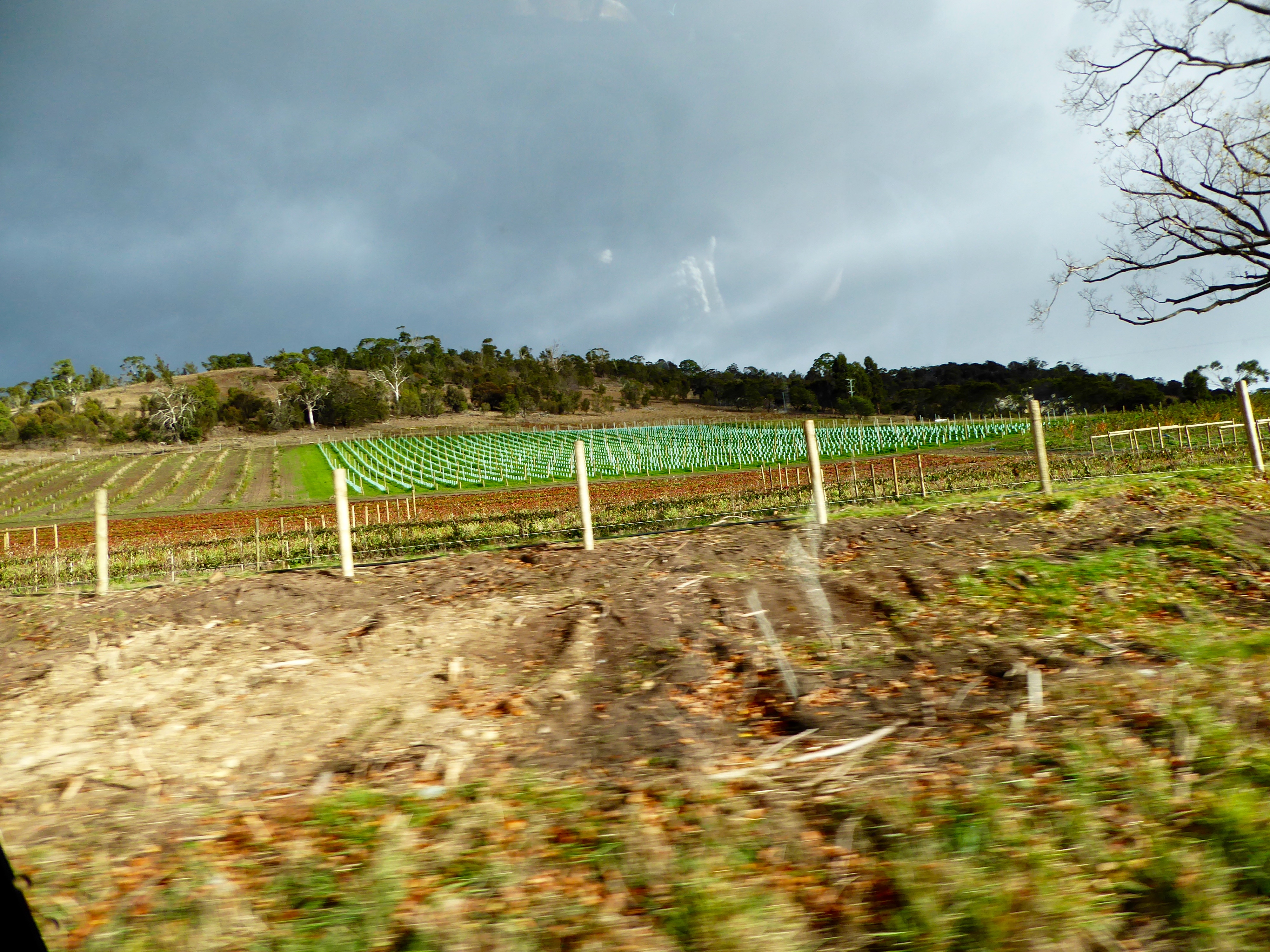
As we travel near the east coast of Tasmania, we saw several vineyards.   This is winter in Tasmania, so the vines are cut back.

Vines cut back for winter

Vines cut back for winter

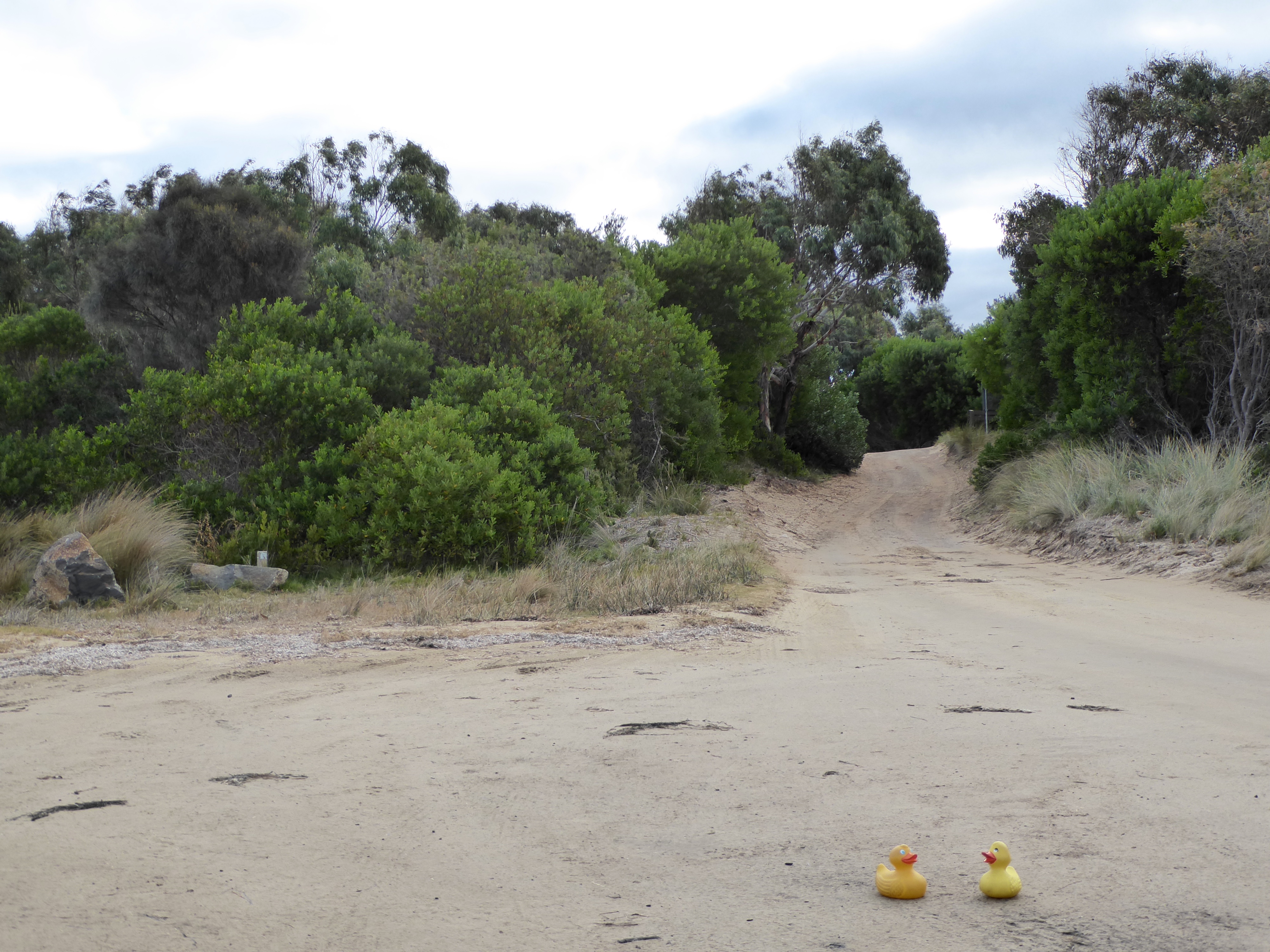
There were several wineries we passed that were open for tours and tasting.   We did not stop.  The humans were more interested in the water views.   Just north of Swansea, we drove to the end of the Nine Mile Beach Road to another boat launch at Bagot Point Coastal Reserve.

Driving on that road brought us here

Driving on that road brought us here

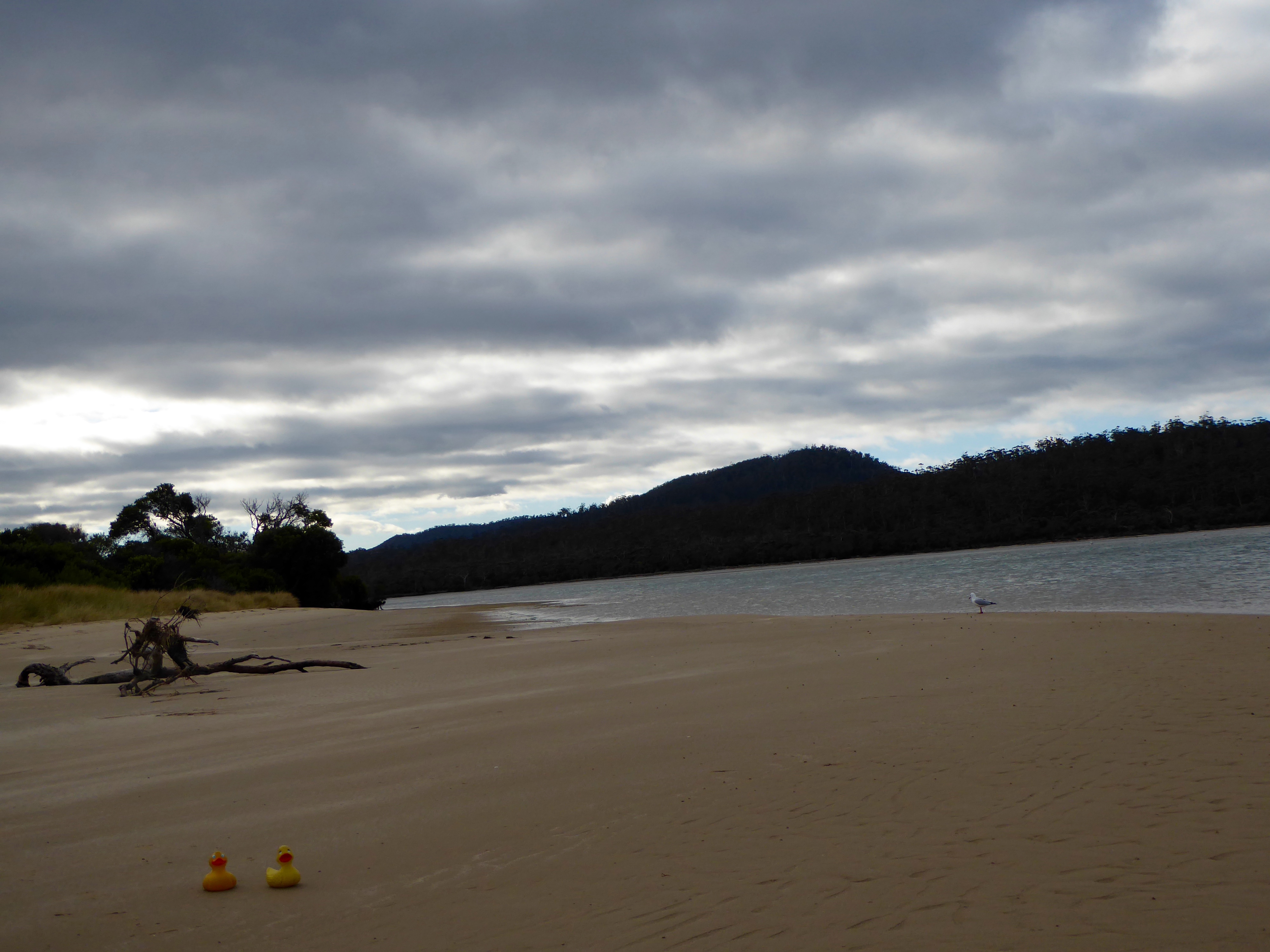
This was looking back at the road that guided us here.   We saw stormy skies here.

Stormy skies but no rain today

Stormy skies but no rain today

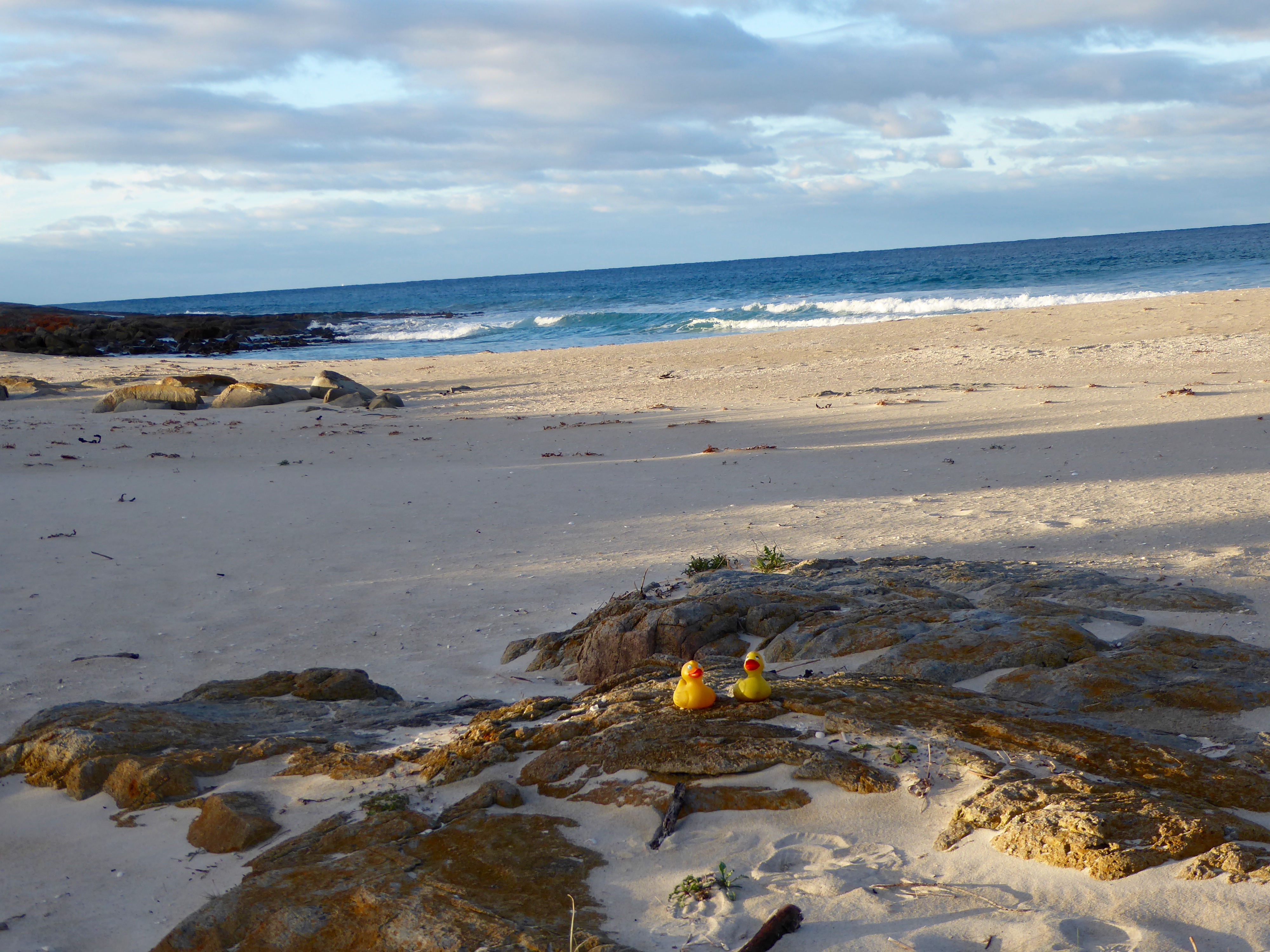
These rocks are our color.

Yellow ducks on yellow rocks

Yellow ducks on yellow rocks

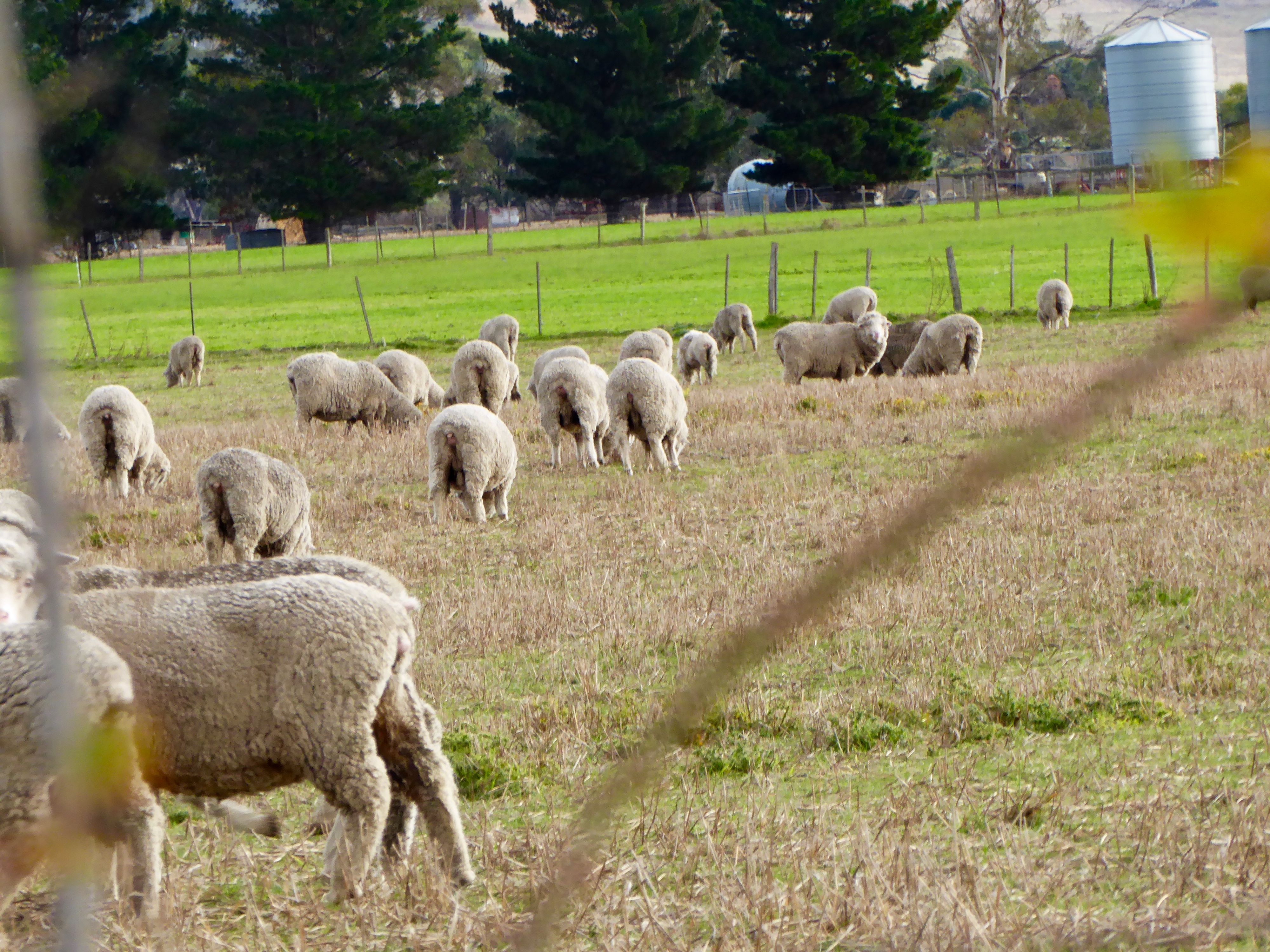
Just a couple yellow rocks among the regular rock colored ones.    Driving in Tasmania, we saw so many sheep.   Many more than sheep than people.

We love the sheep

We love the sheep

We are fascinated with these sheep.   Different sizes, some recently sheared, some with heavier coats.   We love them all.     This is 4 Mile Creek, north of St. Marys.

We liked 4 Mile Creek

We liked 4 Mile Creek

This white sand is beautiful.   Today we wanted you to see a little of the landscape in eastern Tasmania.   We think Tasmania is beautiful.

Zeb and Eider Duck at Bonorong with Kangaroos and Tasmanian Devils

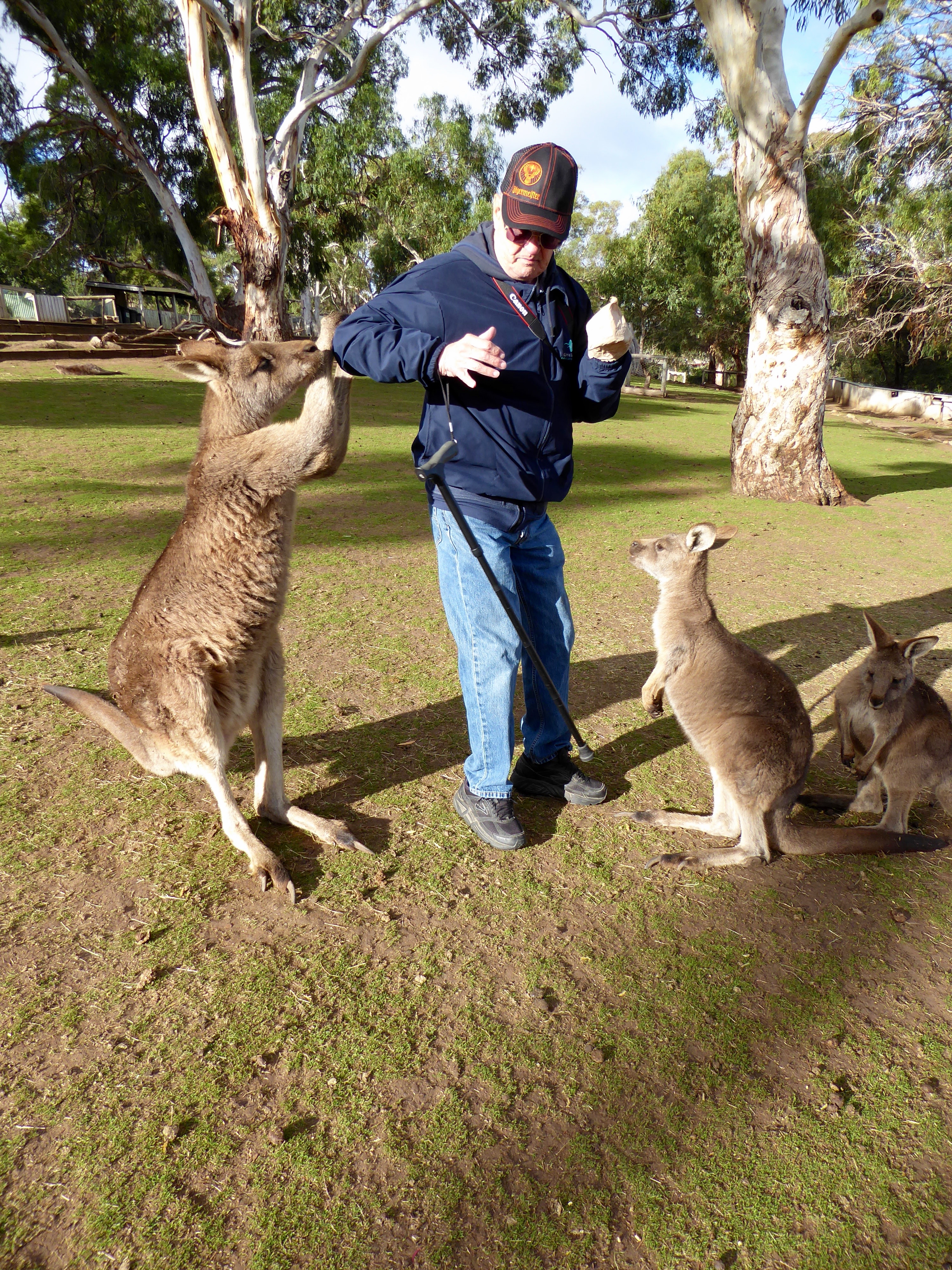
Today we saw and fed kangaroos.   There were so many of them

So many kangaroos waiting for us

So many kangaroos waiting for us

and they liked us.

Our new friends

Our new friends

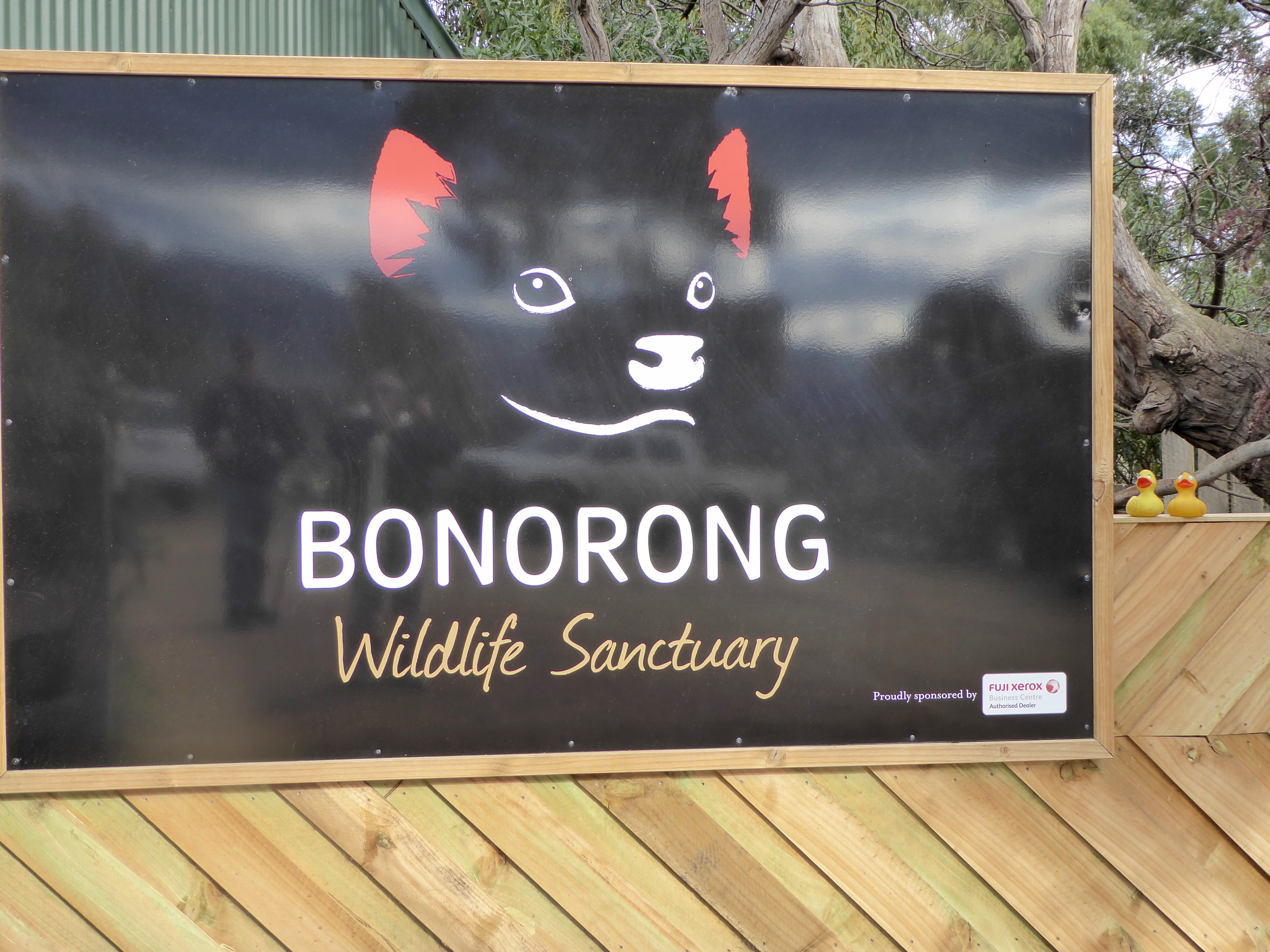
We really liked them, too.    We were at Bonorong Wildlife Sanctuary between Brighton and Richmond, Tasmania.

We loved Bonorong Wildlife Sanctuary in Tasmania

We loved Bonorong Wildlife Sanctuary in Tasmania

When we entered this sanctuary, each human received a bag of kangaroo food.   The kangaroos were waiting for us and looking for the food.

Human has food and the kangaroos want it

Human has food and the kangaroos want it

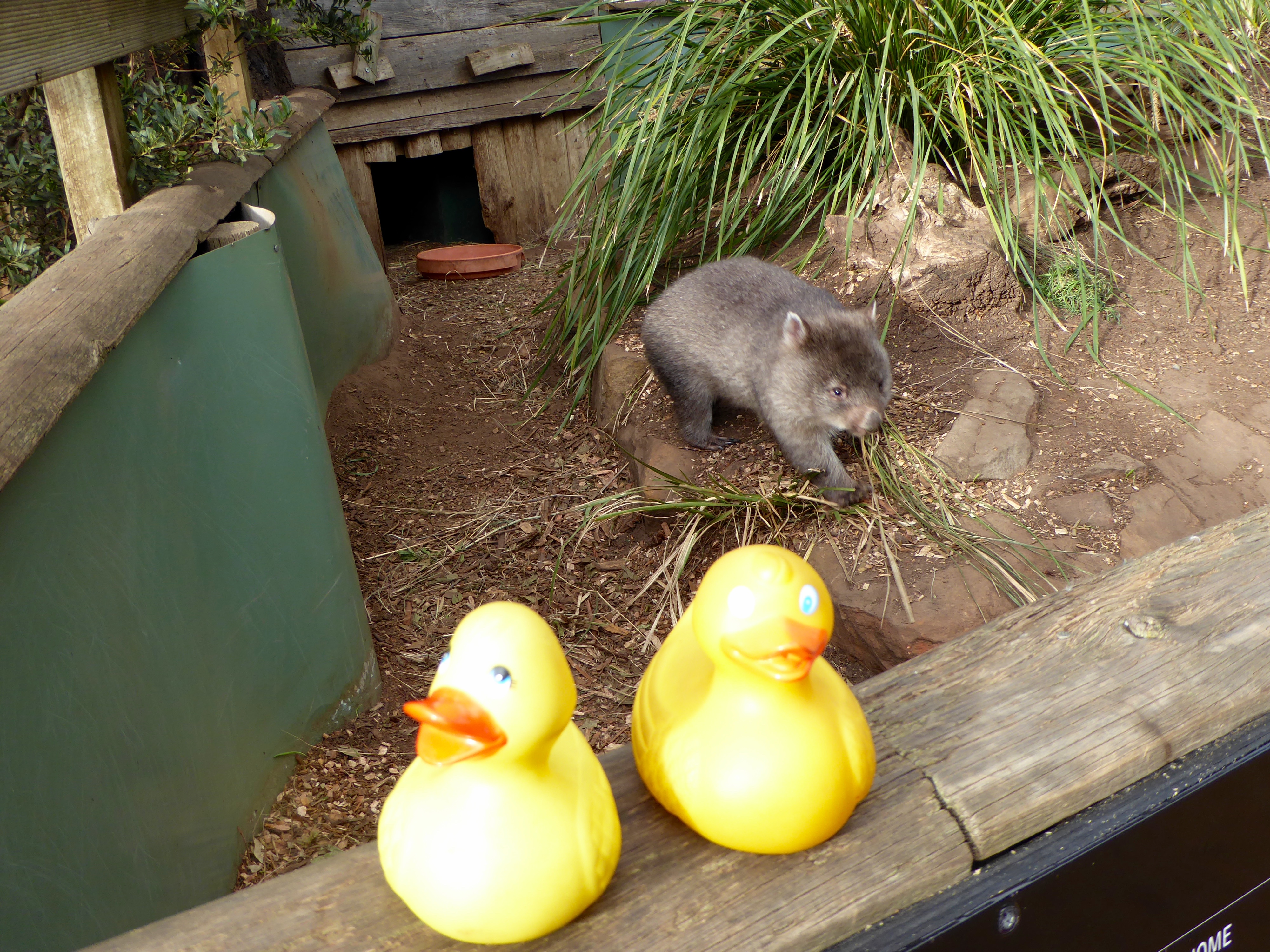
Aren’t they so cute?   Soon the wildlife tour began.   We first saw a wombat.

This wombat is so cute

This wombat is so cute

These guys are strong, fast and not afraid to give a nasty bite if they want to be left alone.   Wombats live in burrows, and if a predator tries to enter, the wombat will allow the predator to touch his rump, and then the wombat will raise his rump and crush the predator against the roof of the burrow.    Wombats have broken human hands this way, also.   Here is another strange fact about wombats.  They have square poop which they place on elevated surfaces to mark their territory.   The square shape stops the poop from rolling away.

The wombat likes us

The wombat likes us

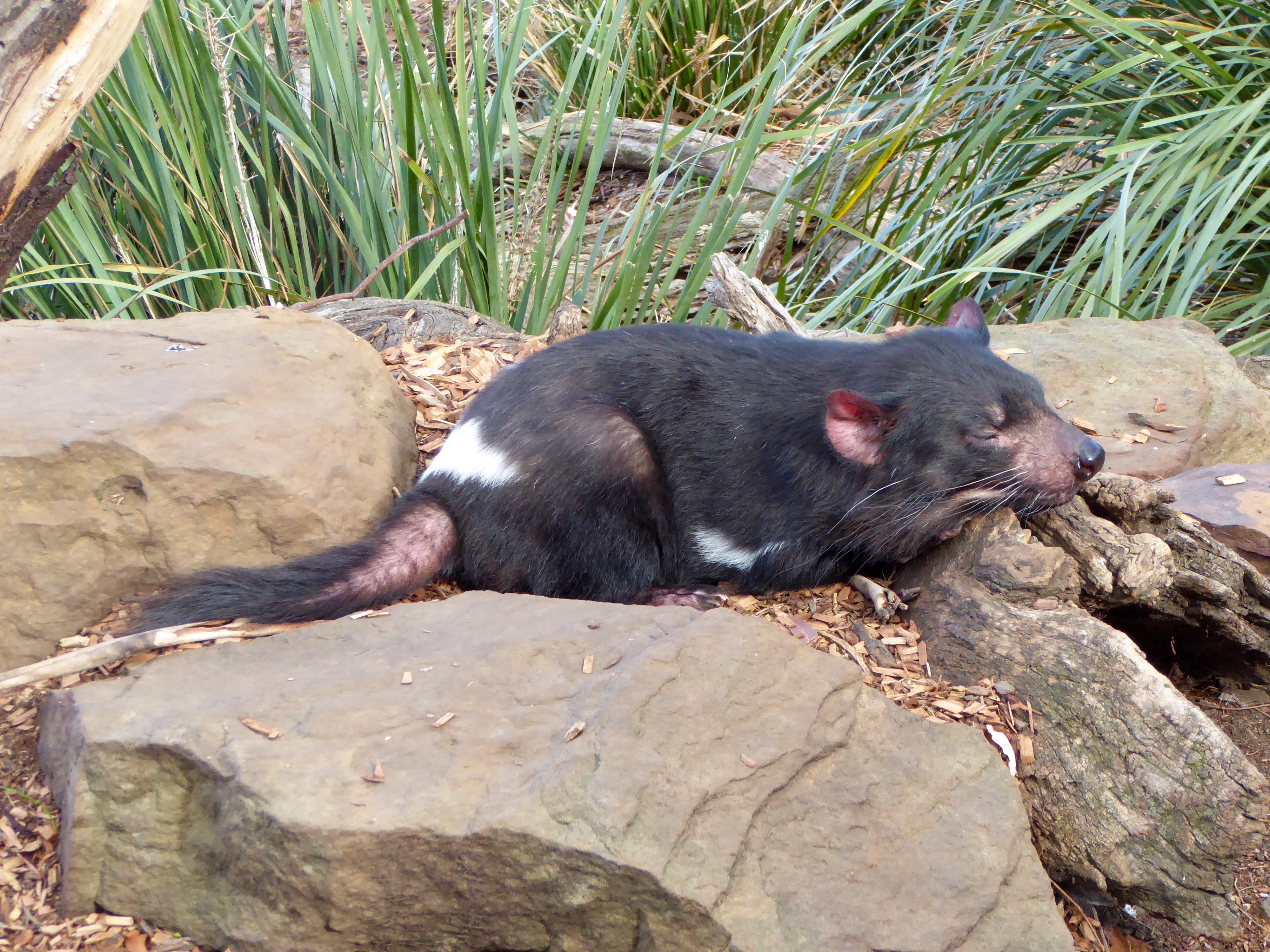
Scientists know they have square poop, they just don’t know how they make their poop square.   Next we went to see the Tasmanian Devils.

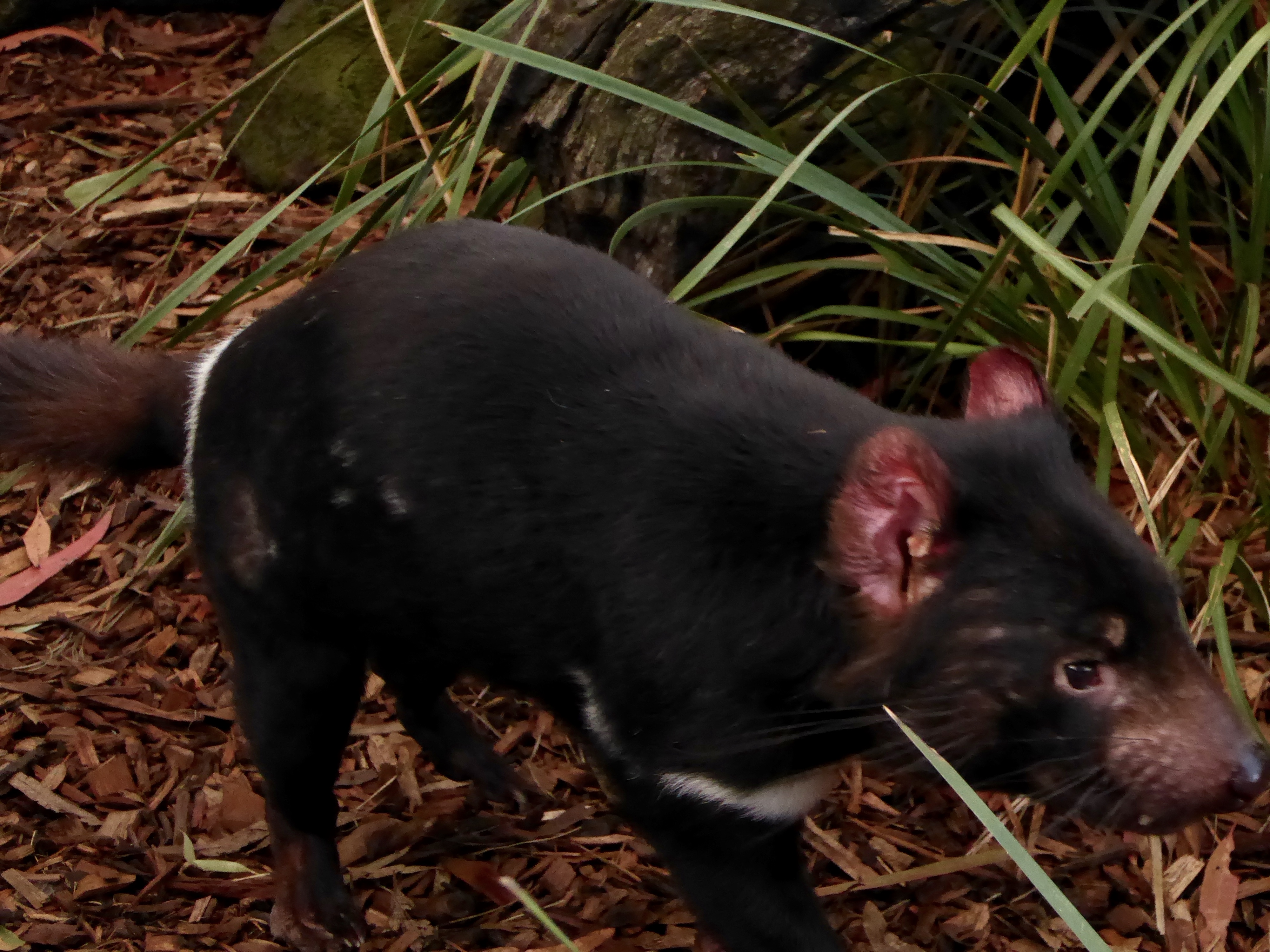
The Tasmanian Devil

The Tasmanian Devil

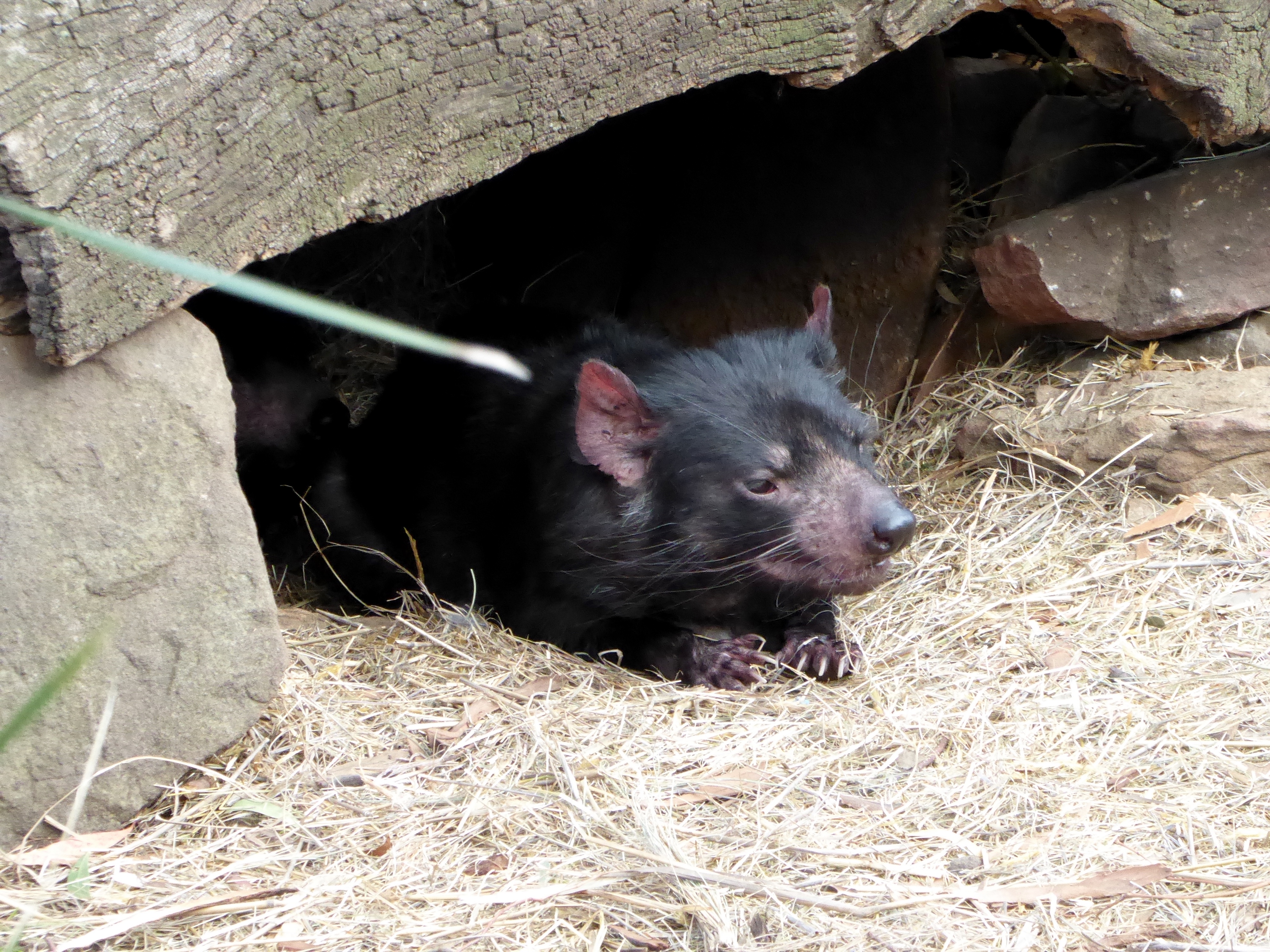
The Tasmanian Devils were the main reason for visiting Bonorong Wildlife Sanctuary.    The Tasmanian Devil is threatened because they have a rare form of contagious cancer.   They have Devil Facial Tumor Disease (DFTD).   So far there is no known cure for this disease.   These devils have a bad reputation because of the shrieking noise they make when eating.   The devils we saw were kind of cute.

This Tasmanian Devil is coming out to see us

This Tasmanian Devil is coming out to see us

This one kept running around his enclosure.

This Tasmanian Devil was running a lot.   He has nice red ears.

This Tasmanian Devil was running a lot. He has nice red ears.

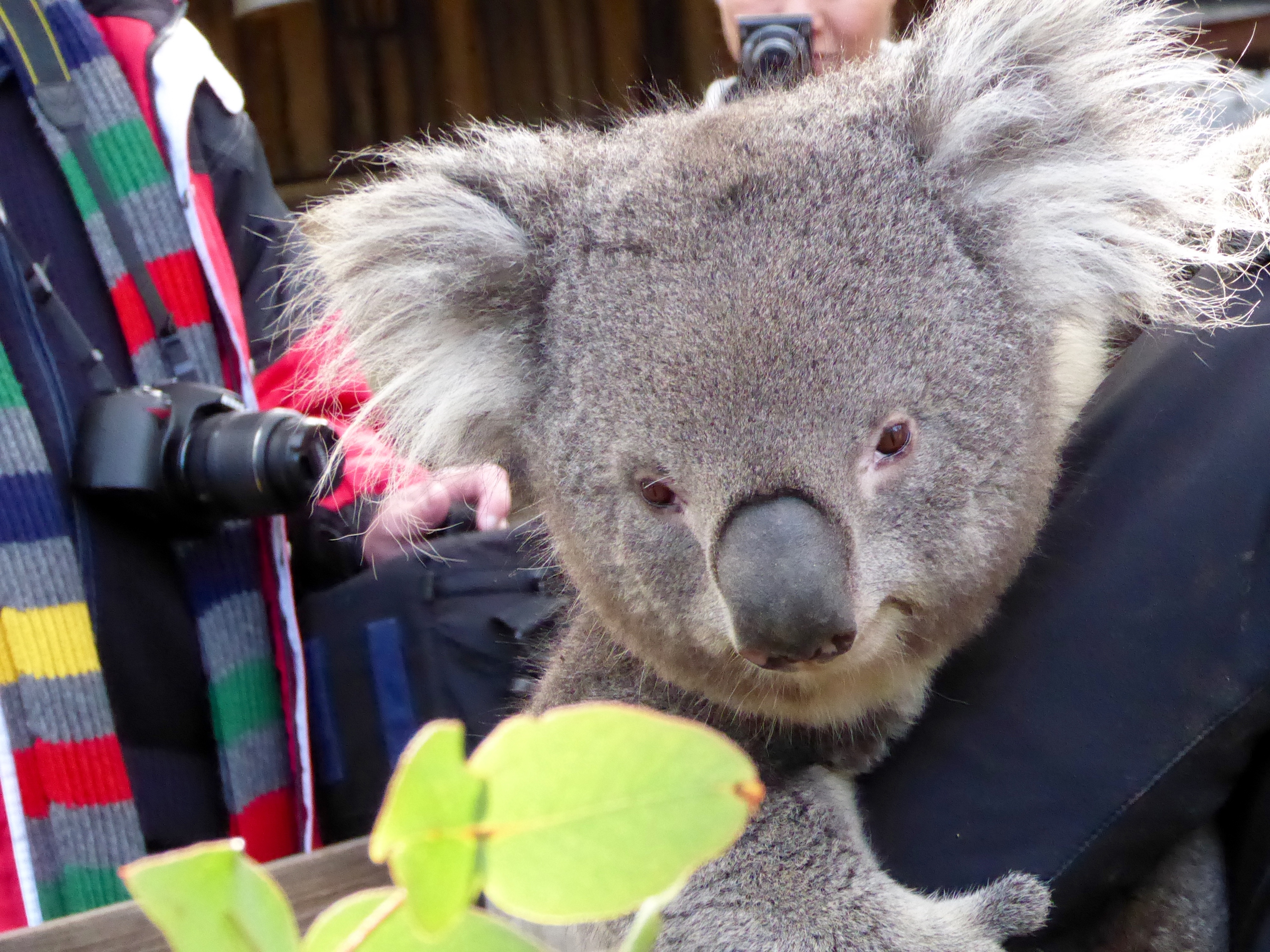
Here are the koalas.

An adorable koala

An adorable koala

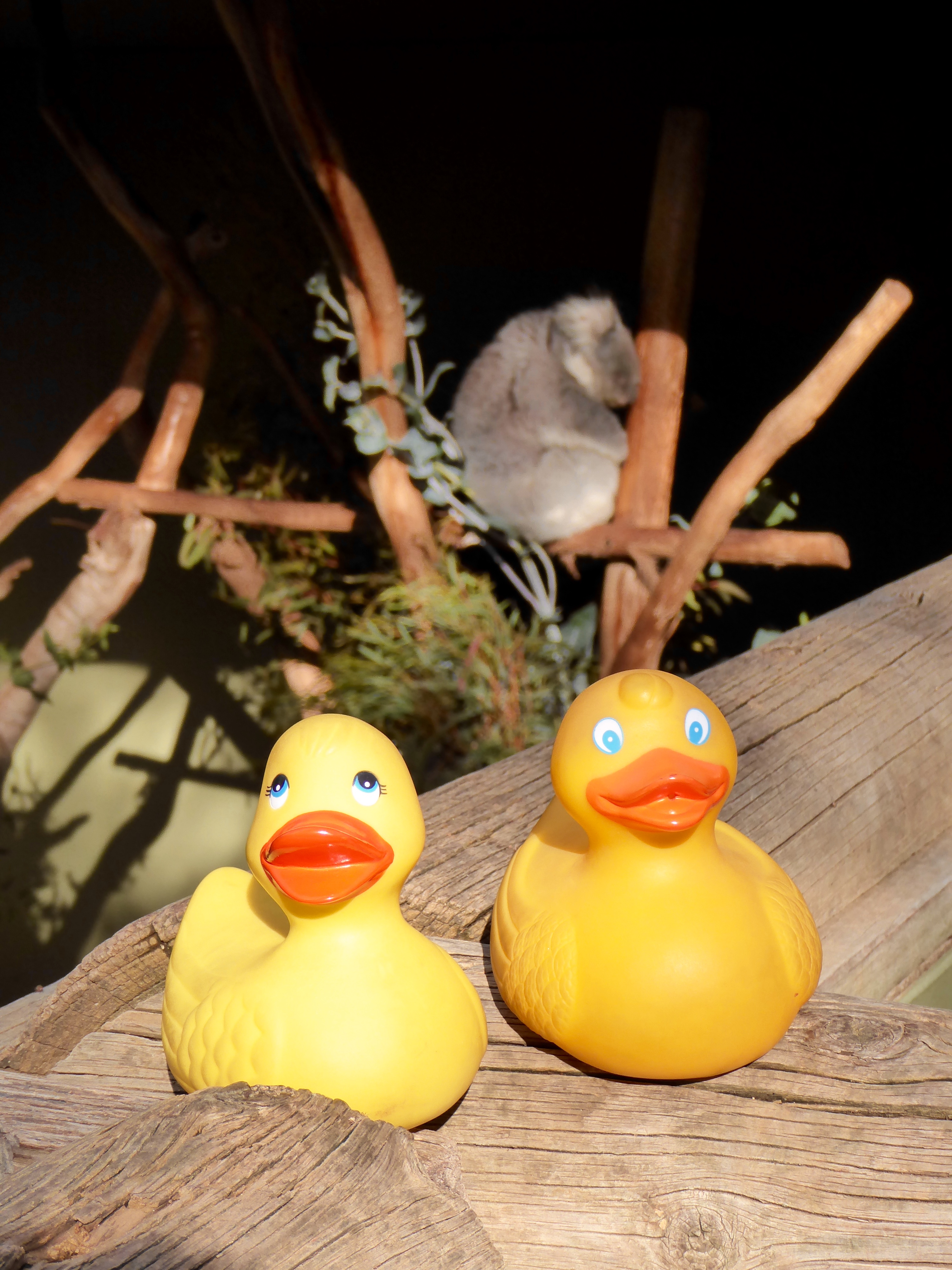
One was in his tree, almost sleeping.

Koalas pass most of the time sleeping like this guy

Koalas pass most of the time sleeping like this guy

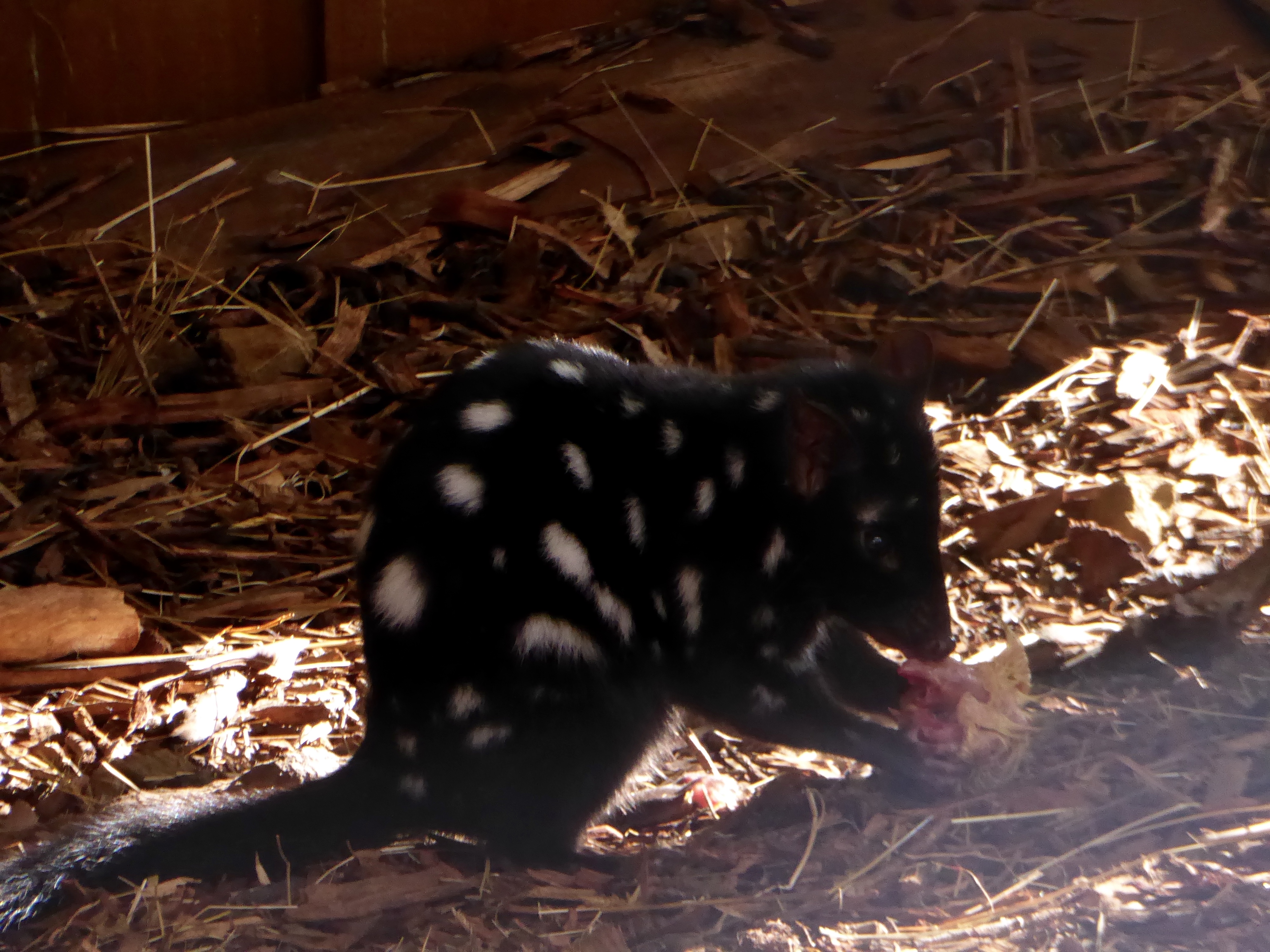
The koalas were so cute, but they don’t move much.   This is a spotted tailed quoll.

Zeke is an Eastern Quoll

A Spotted Tailed Quoll

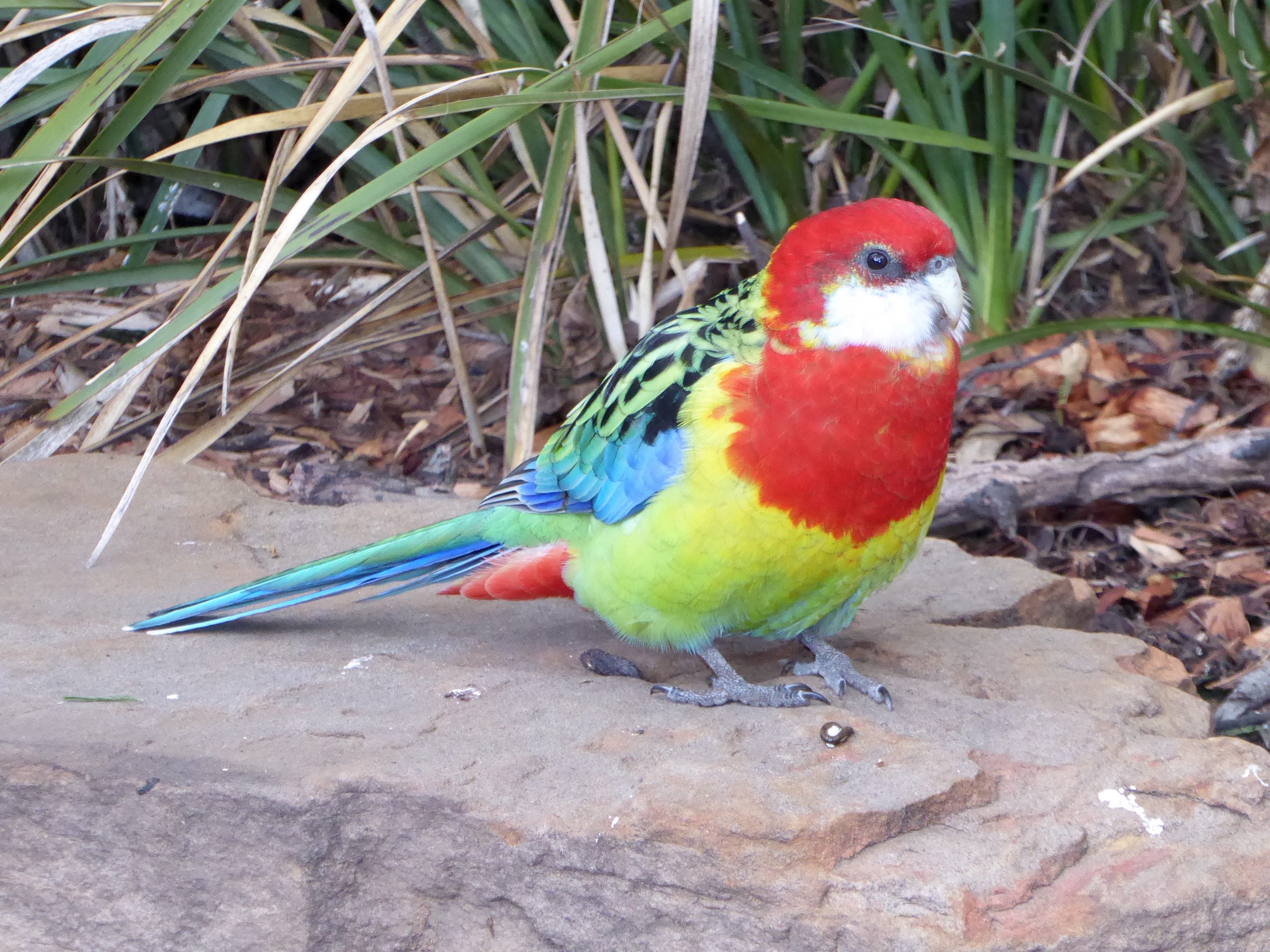
He is having a snack.   There were also brightly colored birds.

So colorful

So colorful and not in a cage.   Just a wild bird

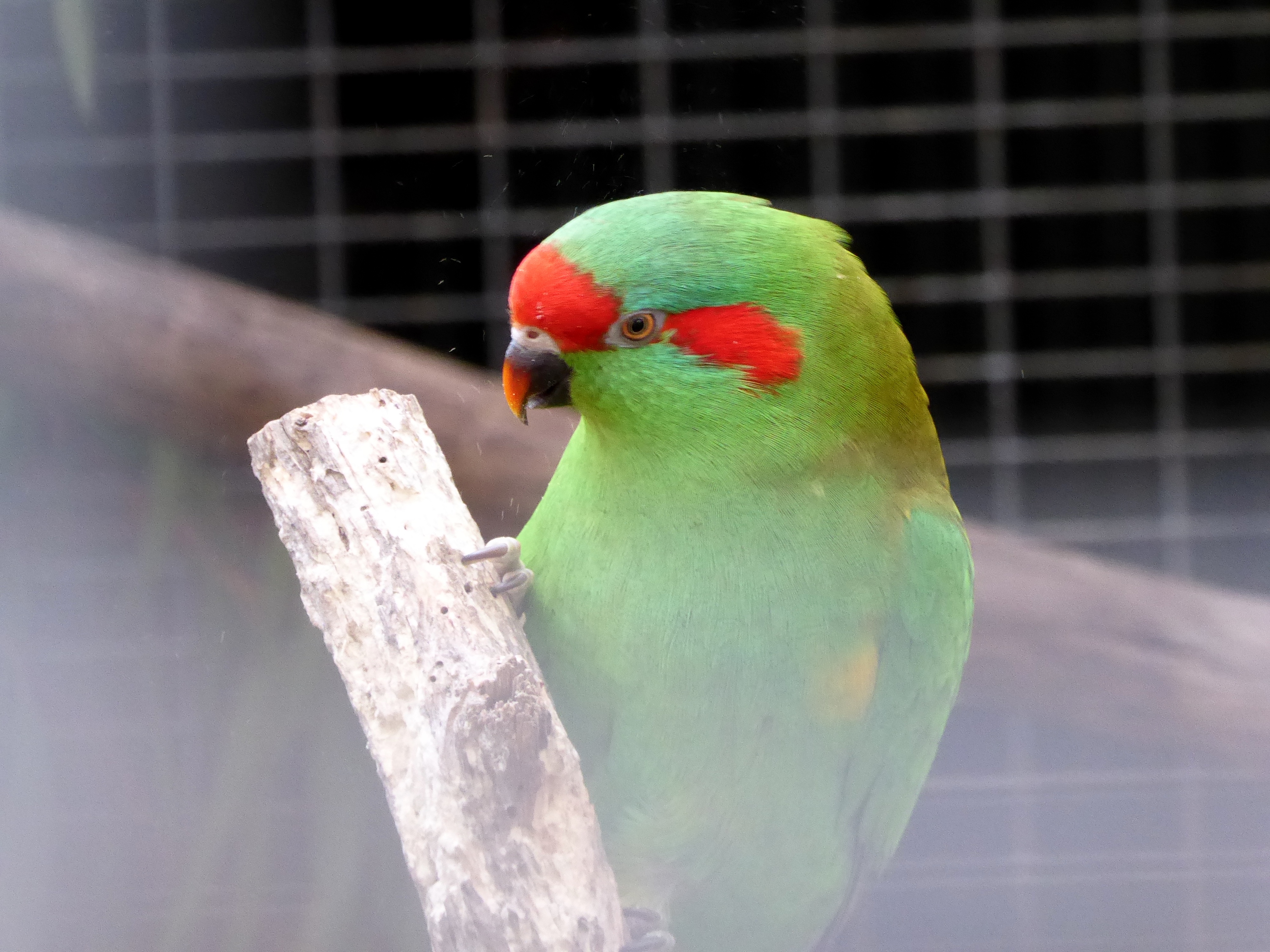
We liked the Musk Lorikeet.

Native Musk Lorikeet

Native Musk Lorikeet

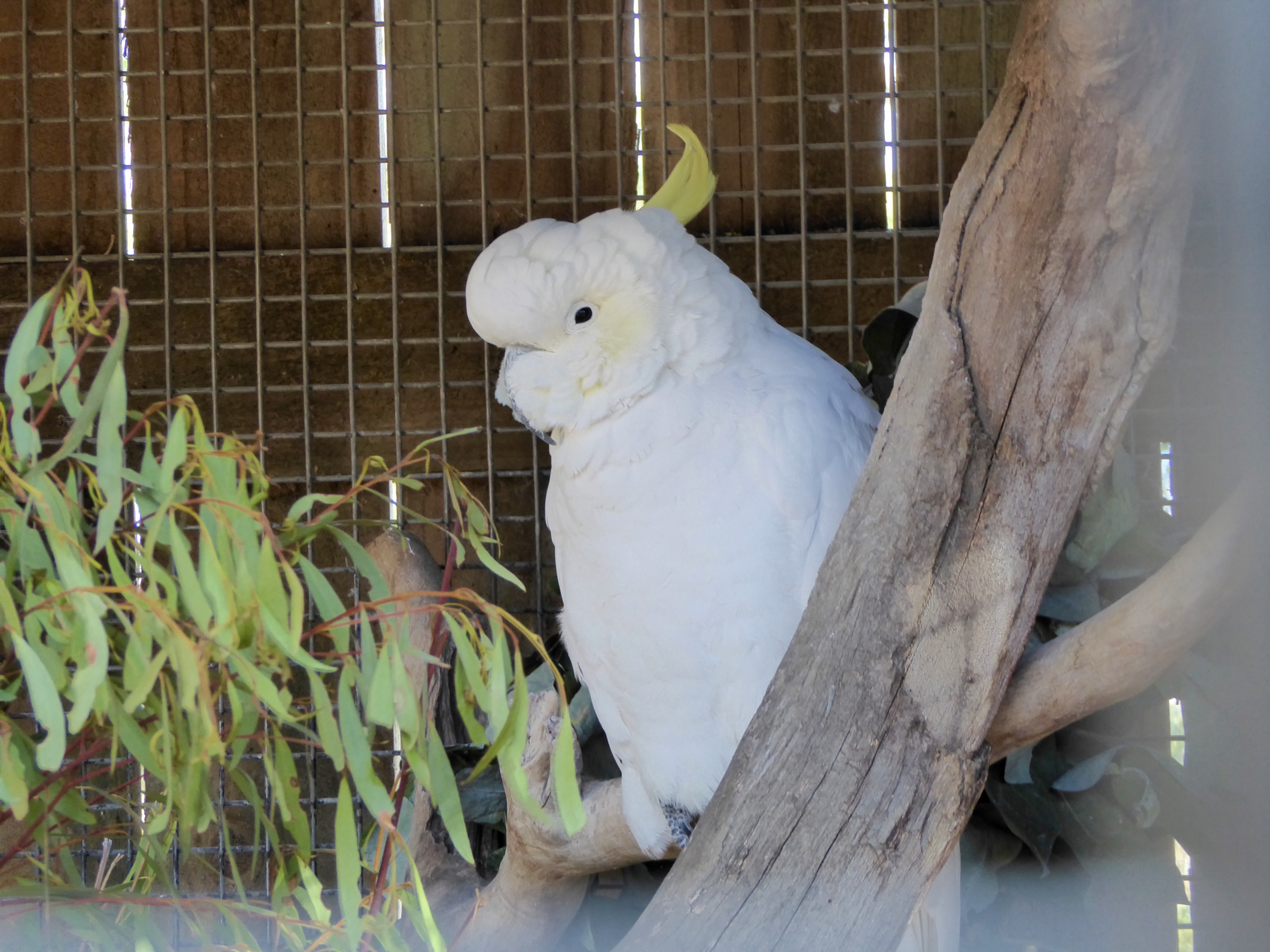
This is the only Lorikeet native to Tasmania.  The sulphur crested cockatoo is beautiful.

Sulphur Crested Cockatoo

Sulphur Crested Cockatoo

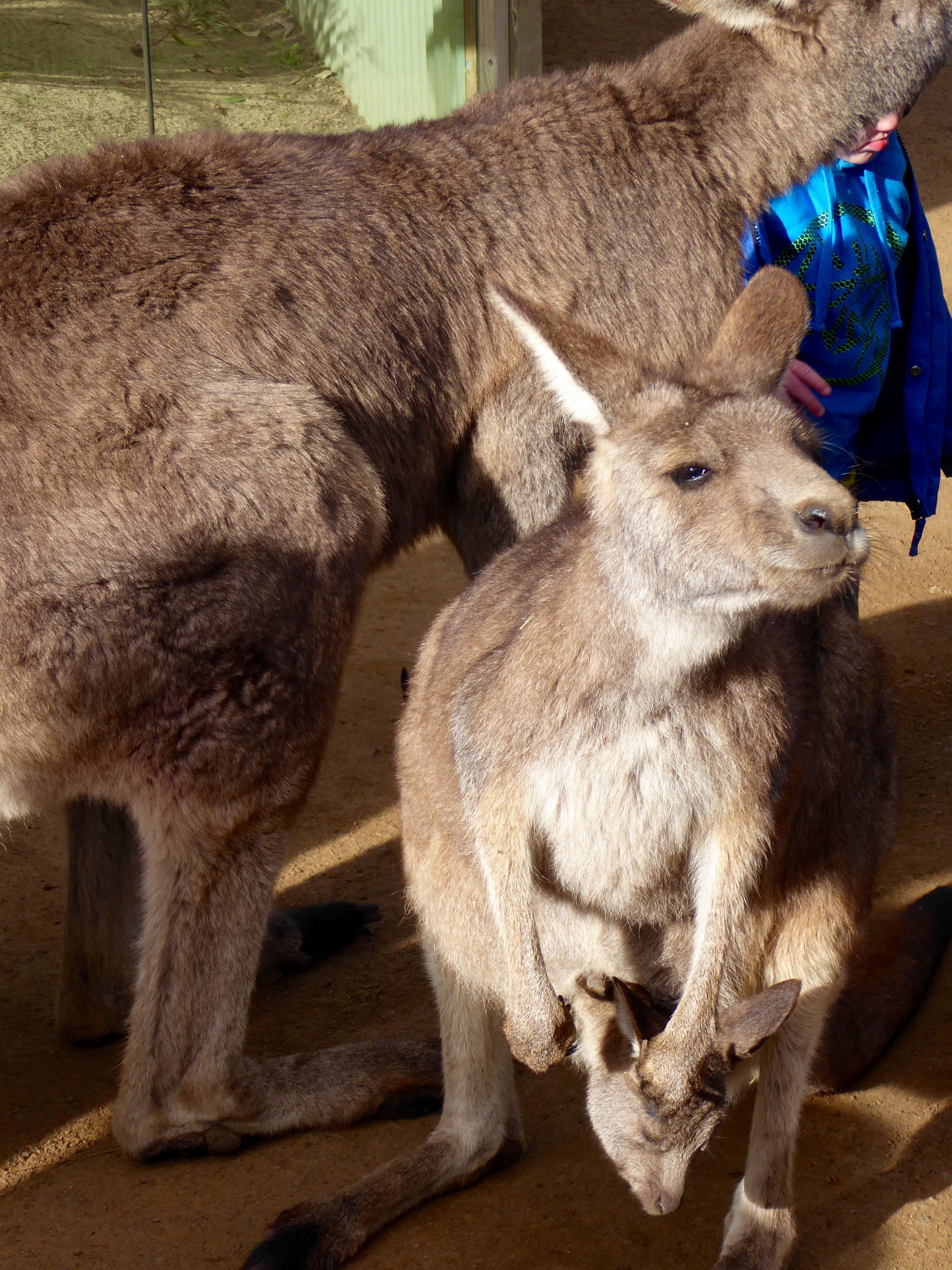
We saw many birds and other small animals, but the kangaroos were certainly the stars of the day.   This one has a baby, or joey in her pouch.

Mom with her baby

Mom with her baby “joey”

We think this kangaroo is our new friend!    For more information visit http://www.bonorong.com.au  You will love this place.

Another friend

Another friend

When the humans need a break, this is the place.

Pretty clever

Pretty clever

Vivid Sydney 2015 with Zeb and Eider Duck

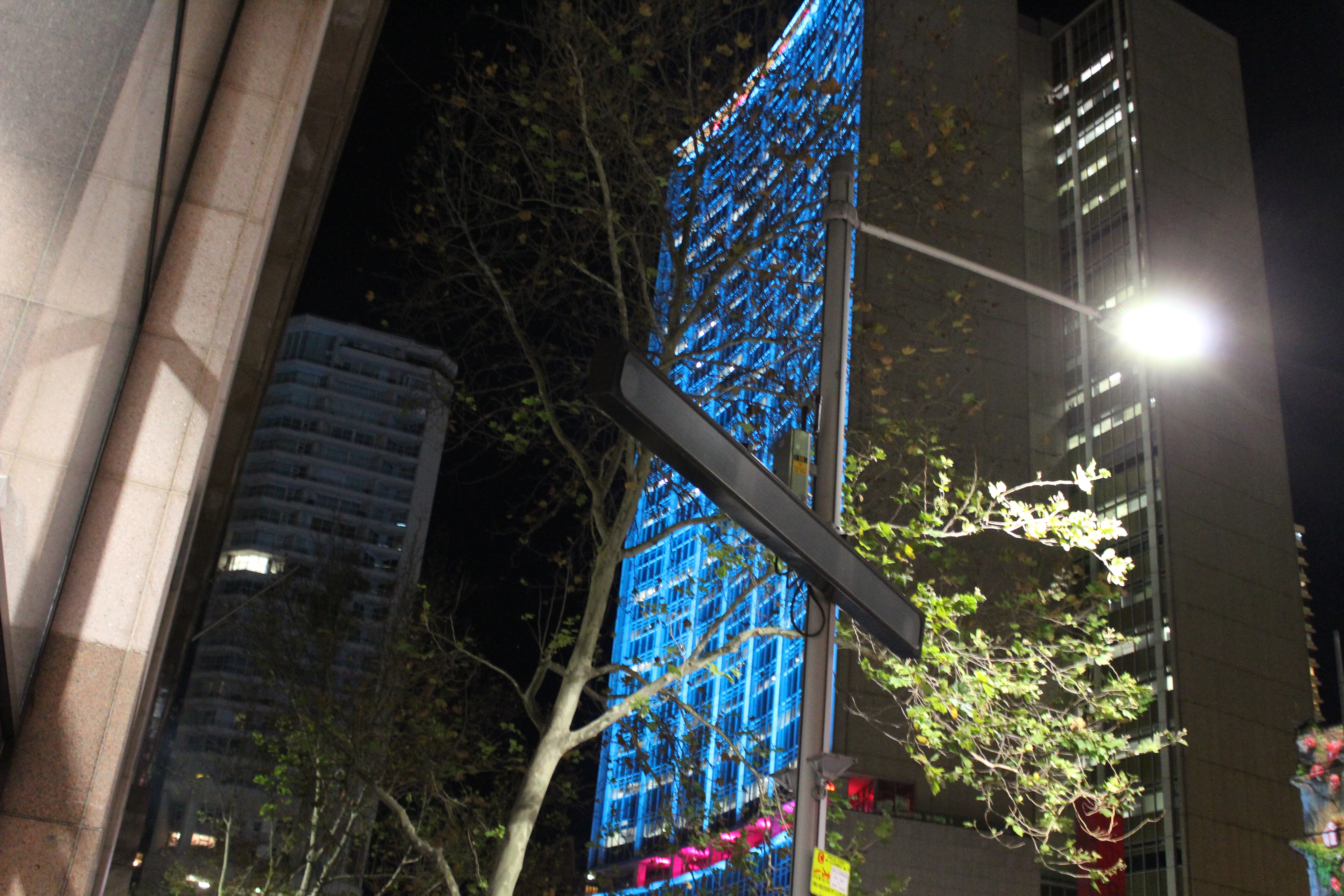
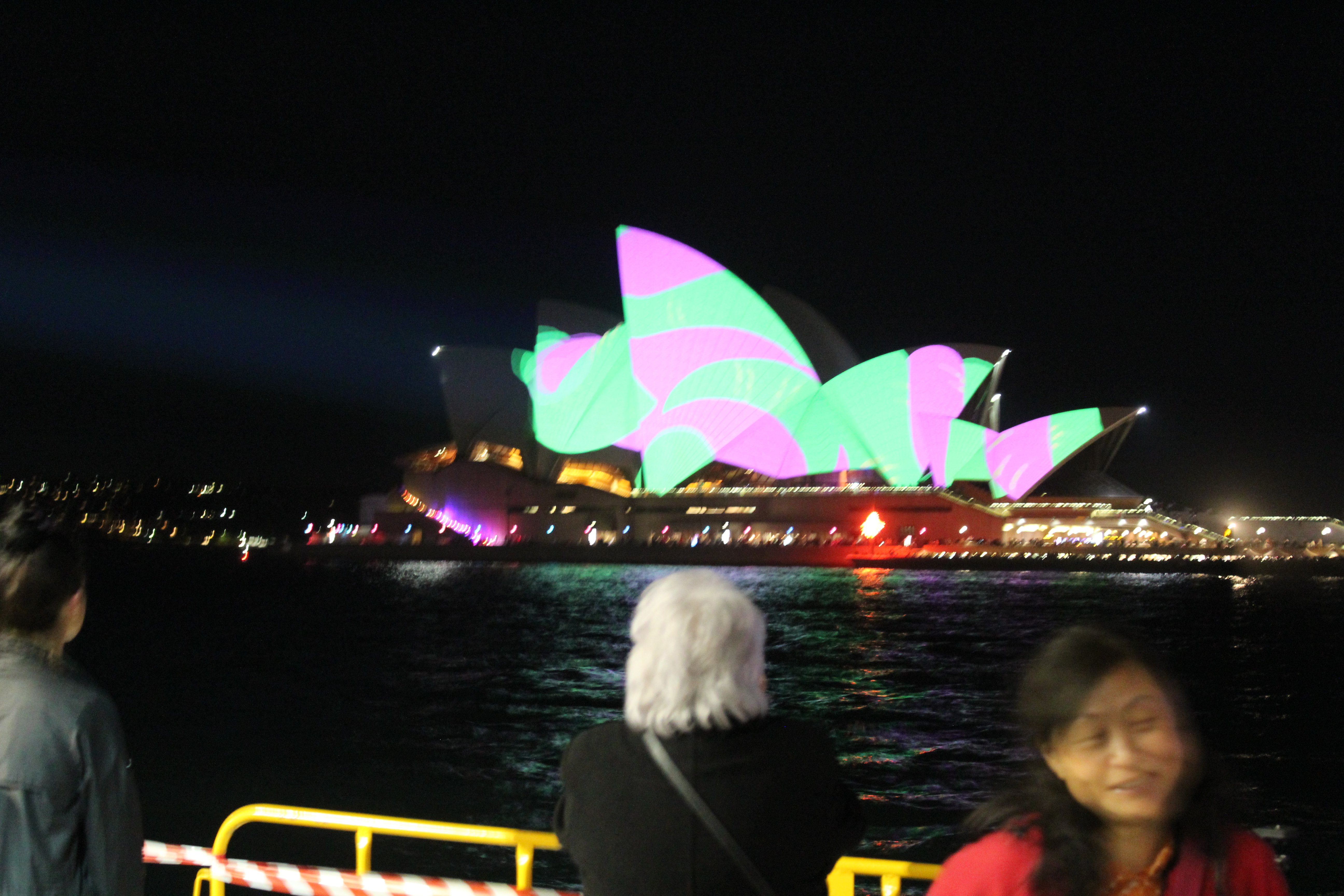
We are so lucky!   We just happened to be in Sydney, Australia for Vivid Sydney.

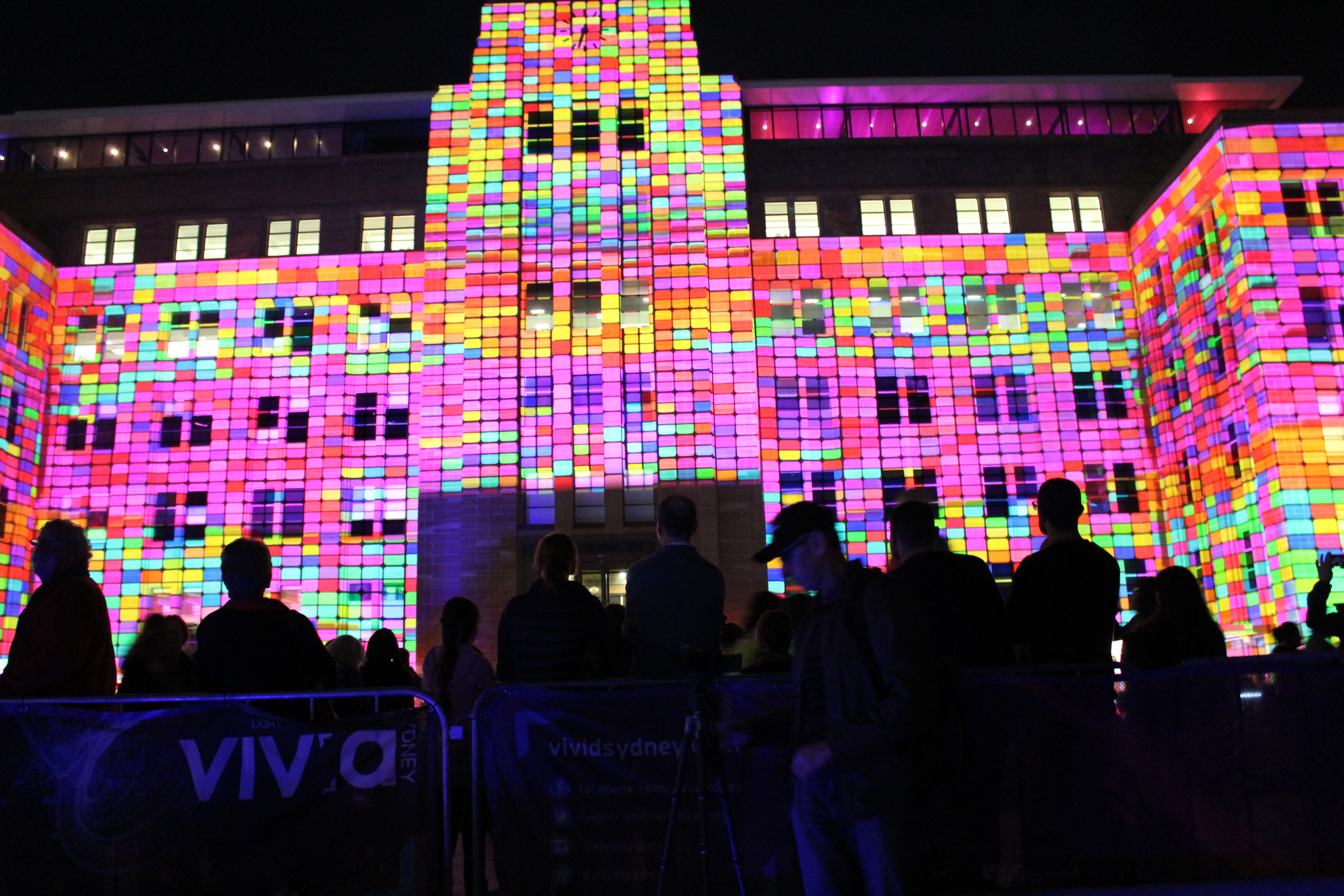
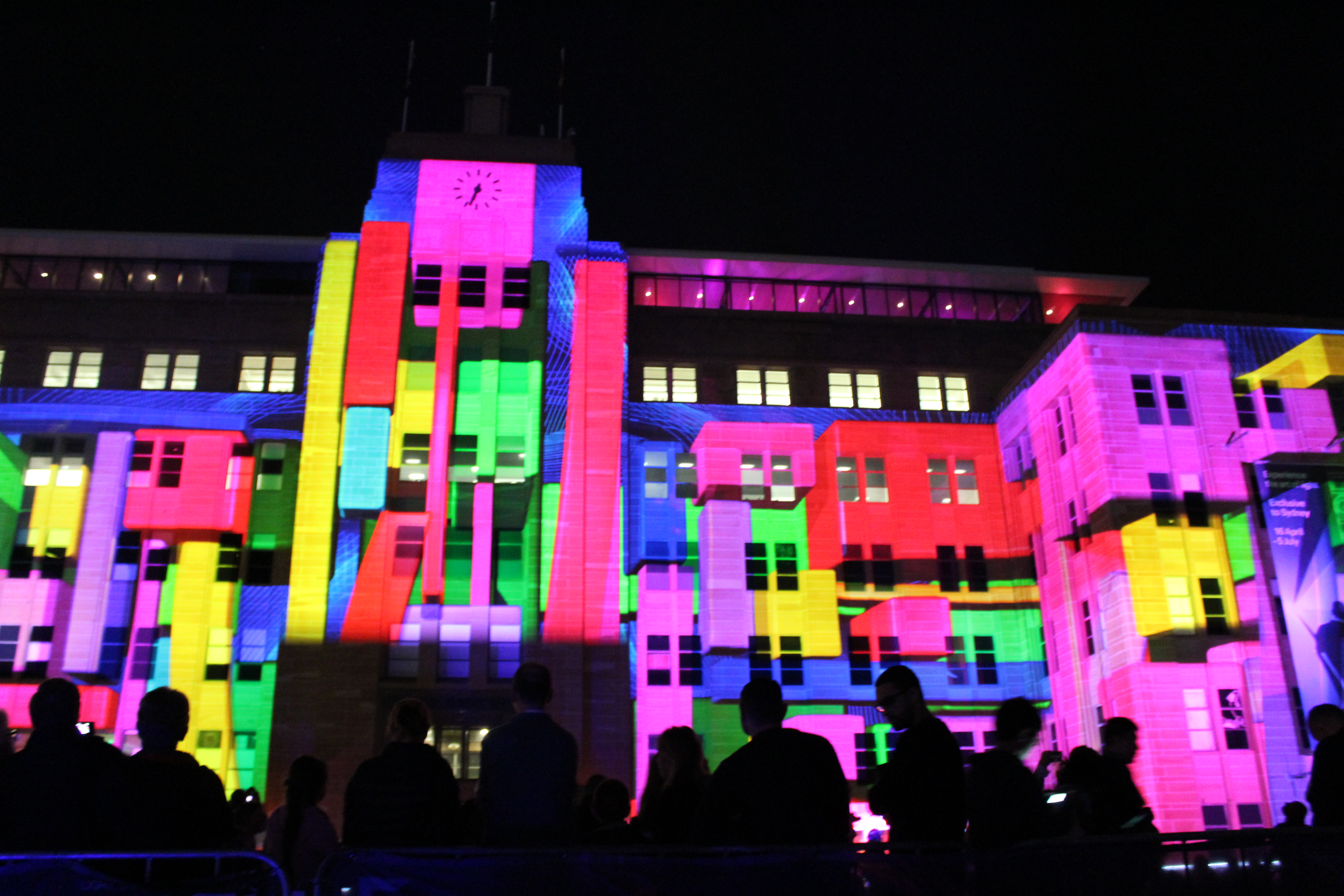
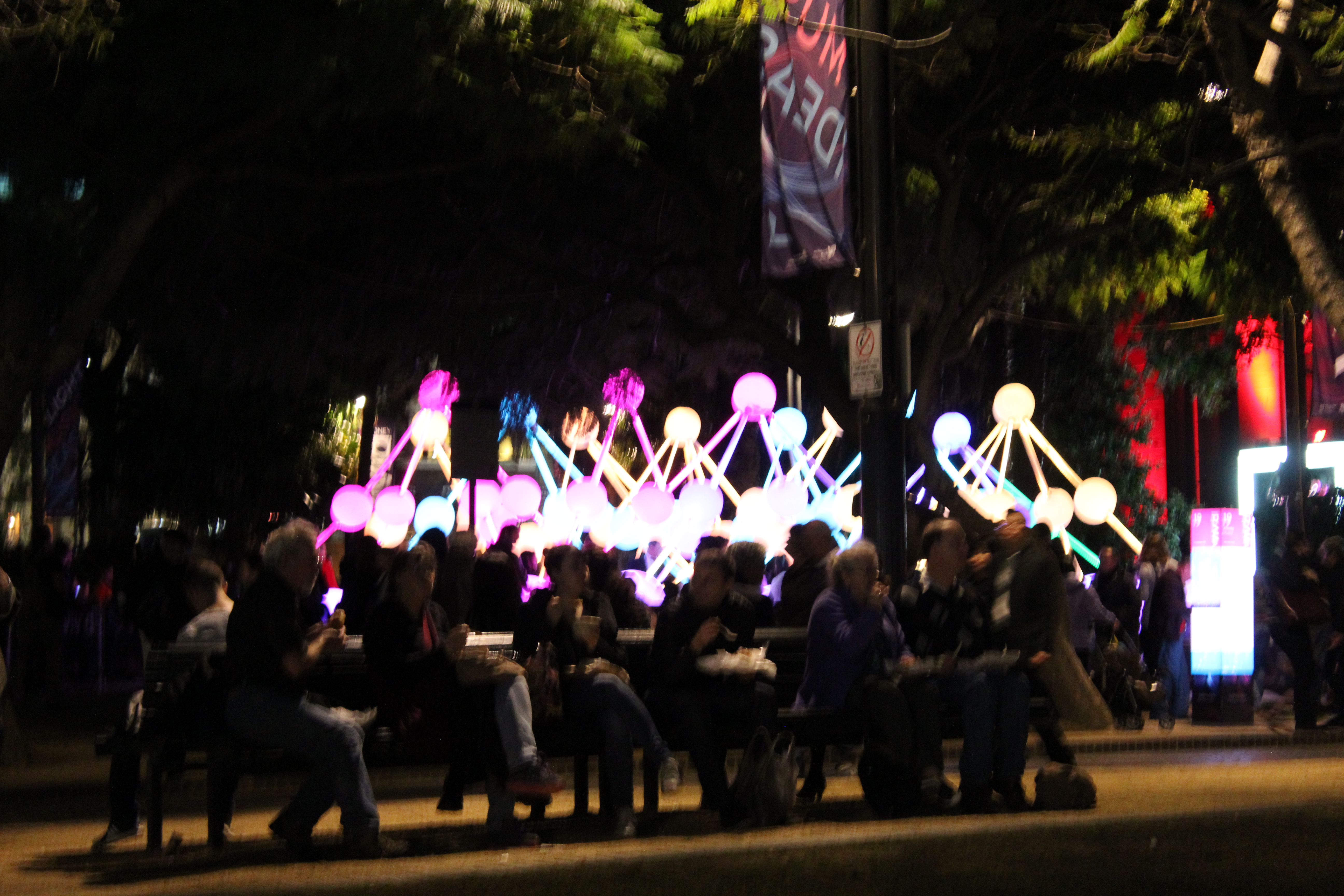
Light displays

Light displays

This is a celebration of light, music and ideas.

Lights near Sydney Harbor

Lights near Sydney Harbor

Between May 22 and June 8 2015, many buildings near Sydney Harbor and downtown Sydney have incredible light displays.

Love the light displays

Love the light displays

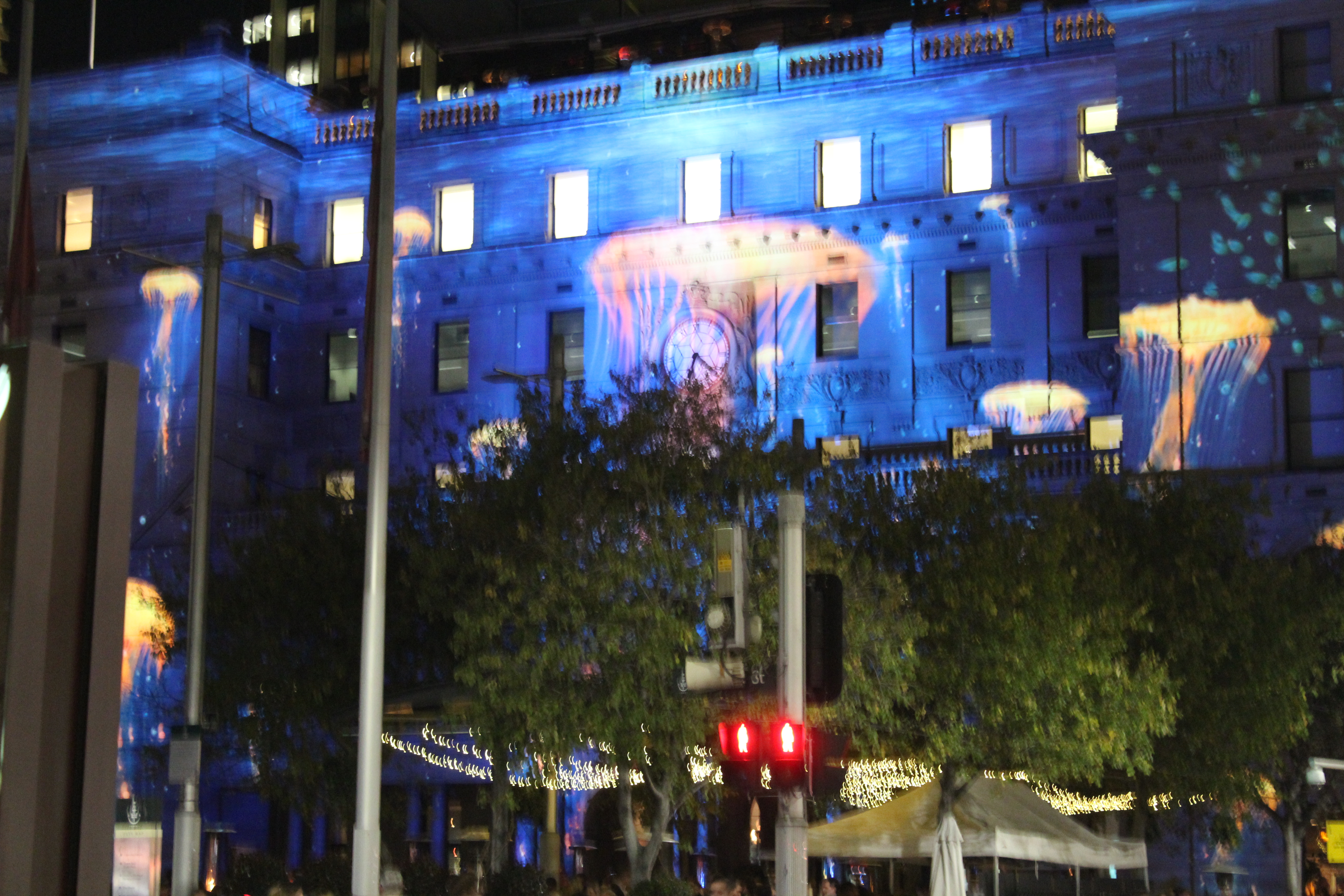
Near Circular Quay, the Customs House had a constantly changing light display based on Sydney’s flora and fauna.

Lights for Vivid Sydney

Lights for Vivid Sydney

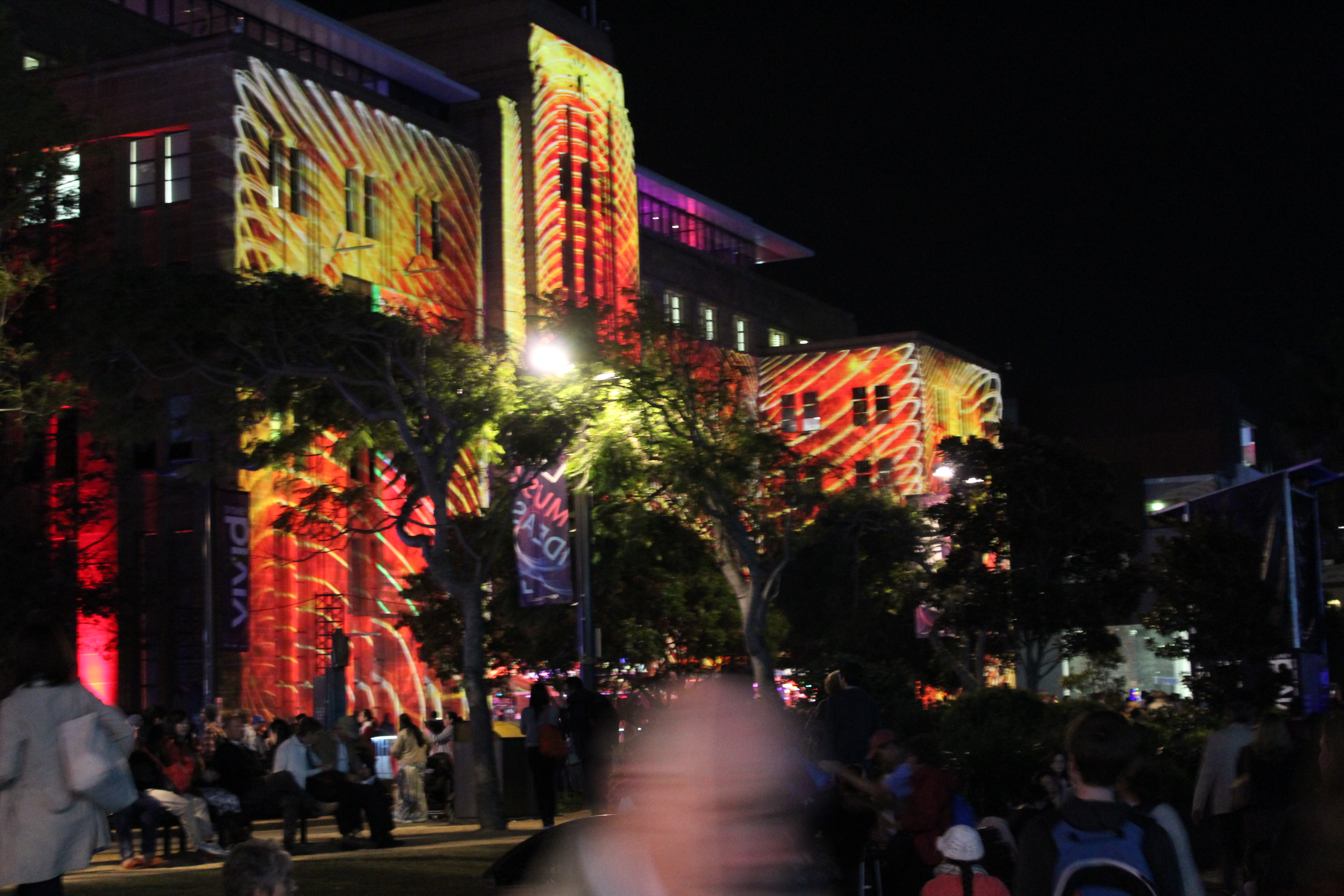
Here is a sample of the light display at the Museum of Contemporary Art.

Display on museum

Display on museum

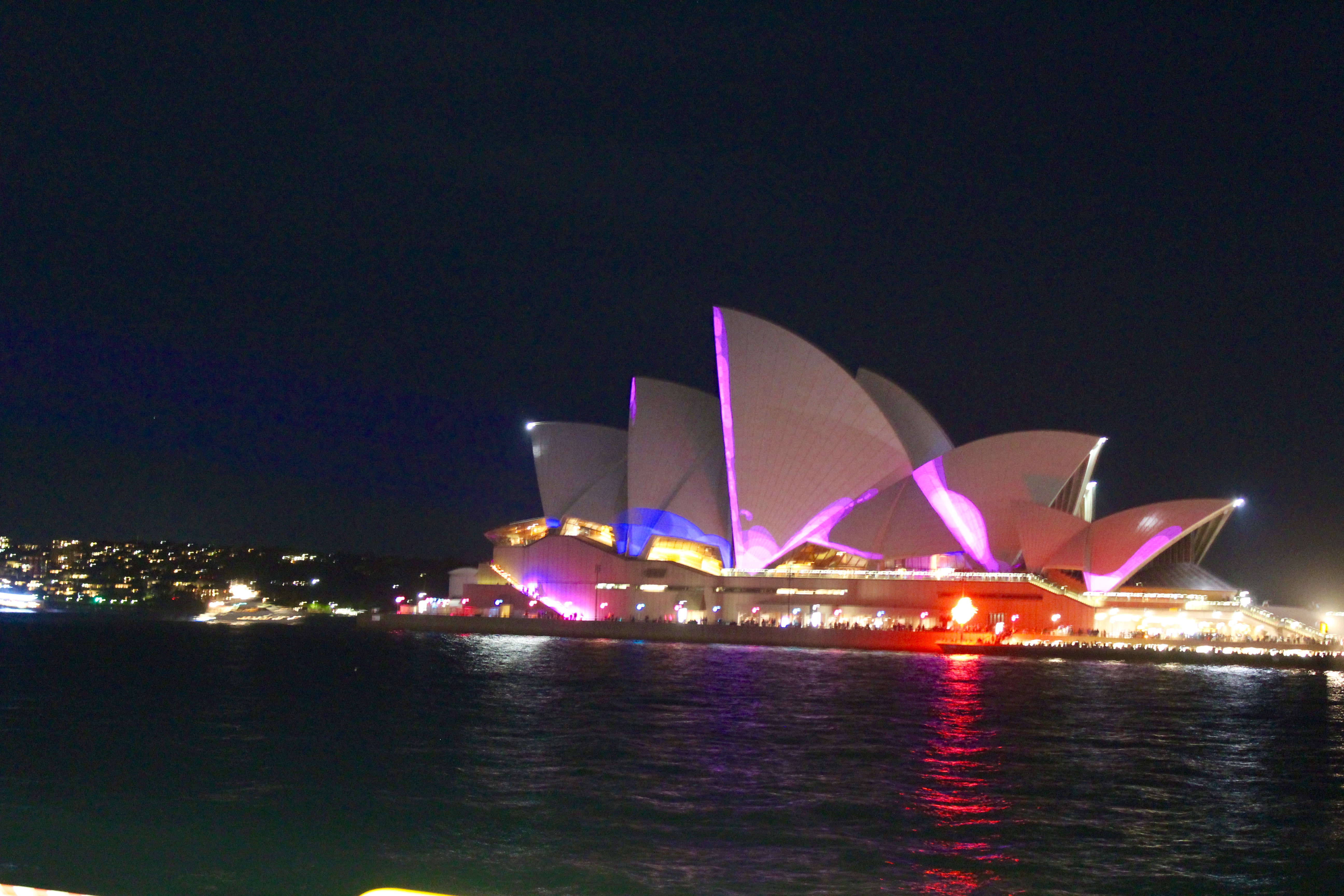
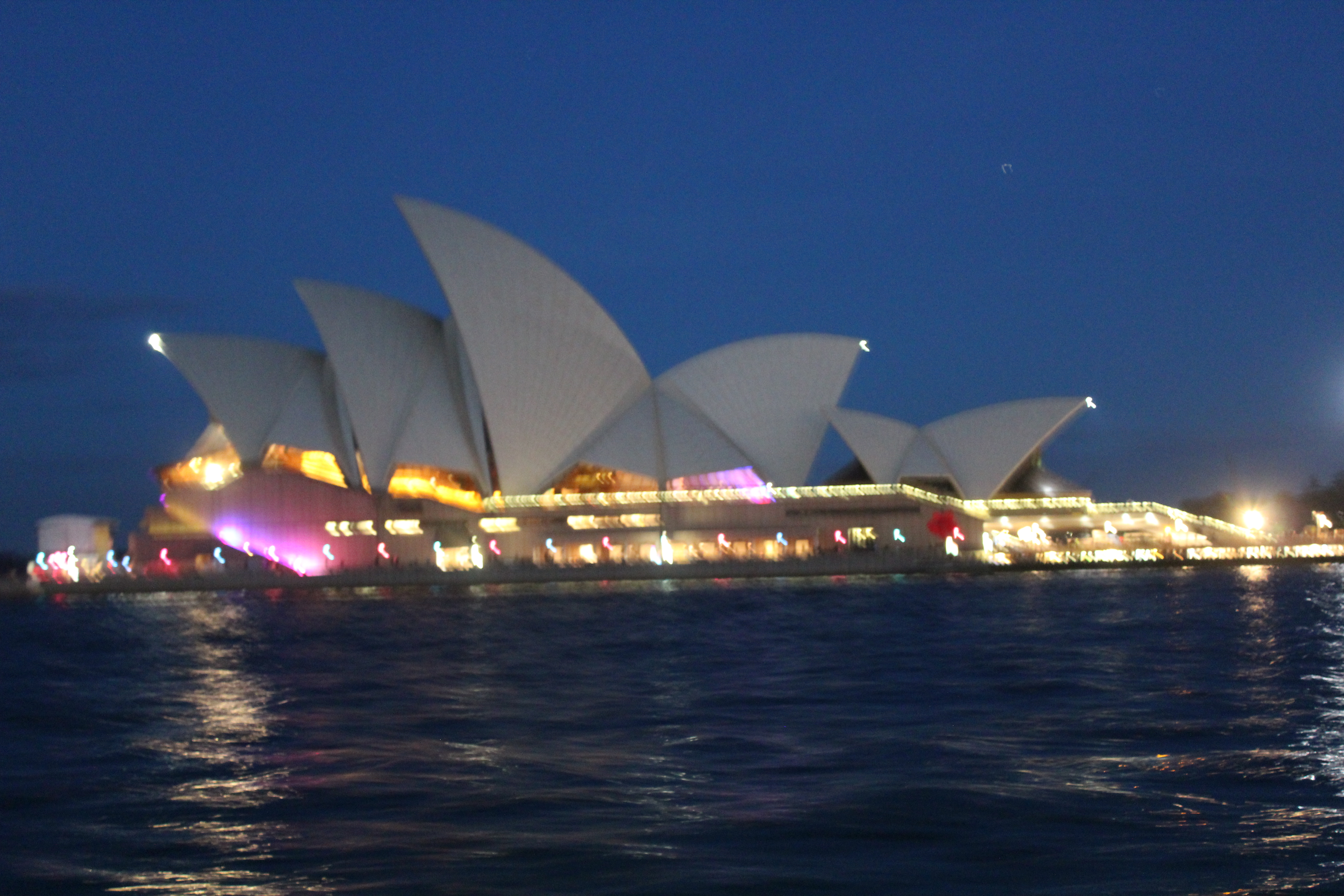
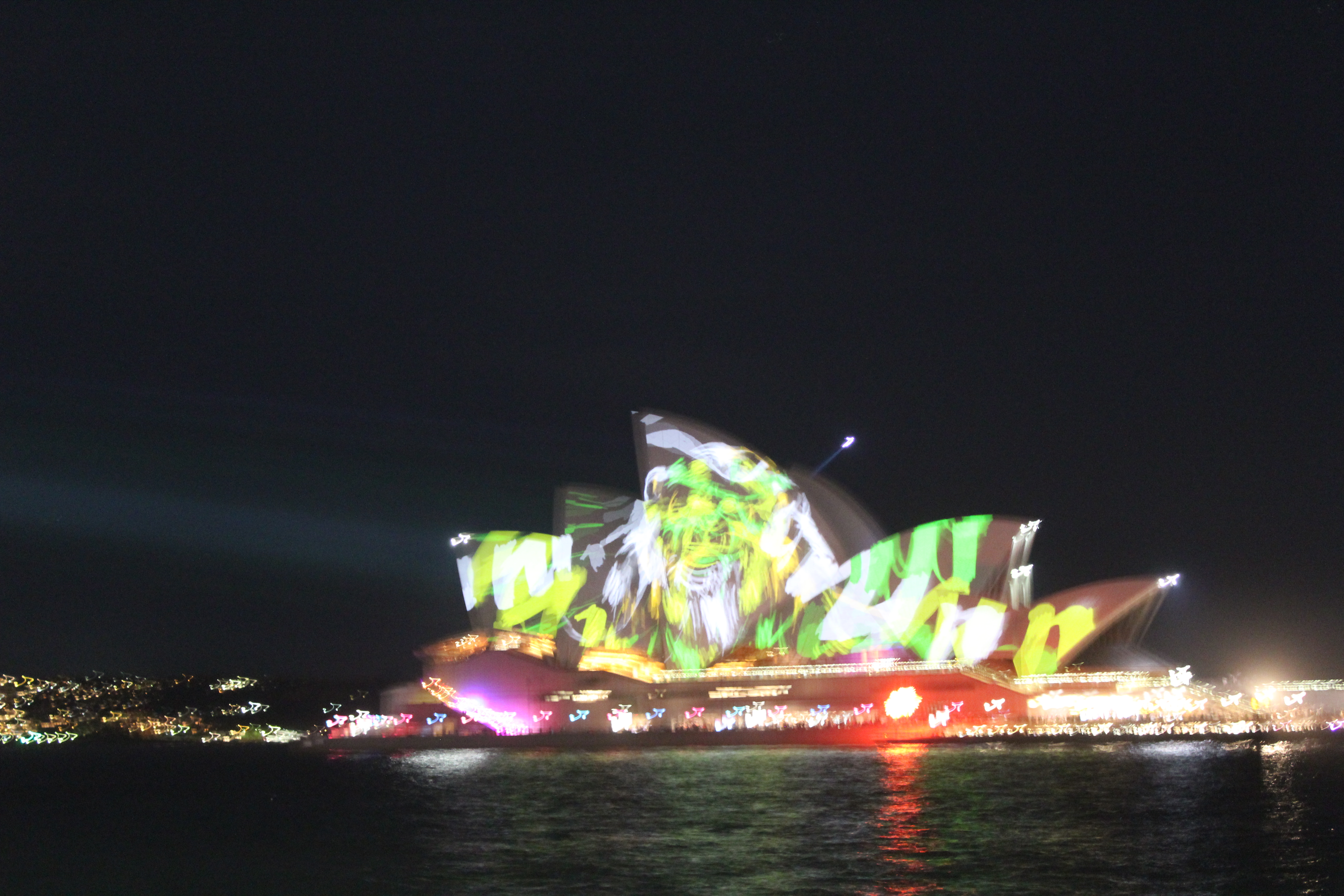
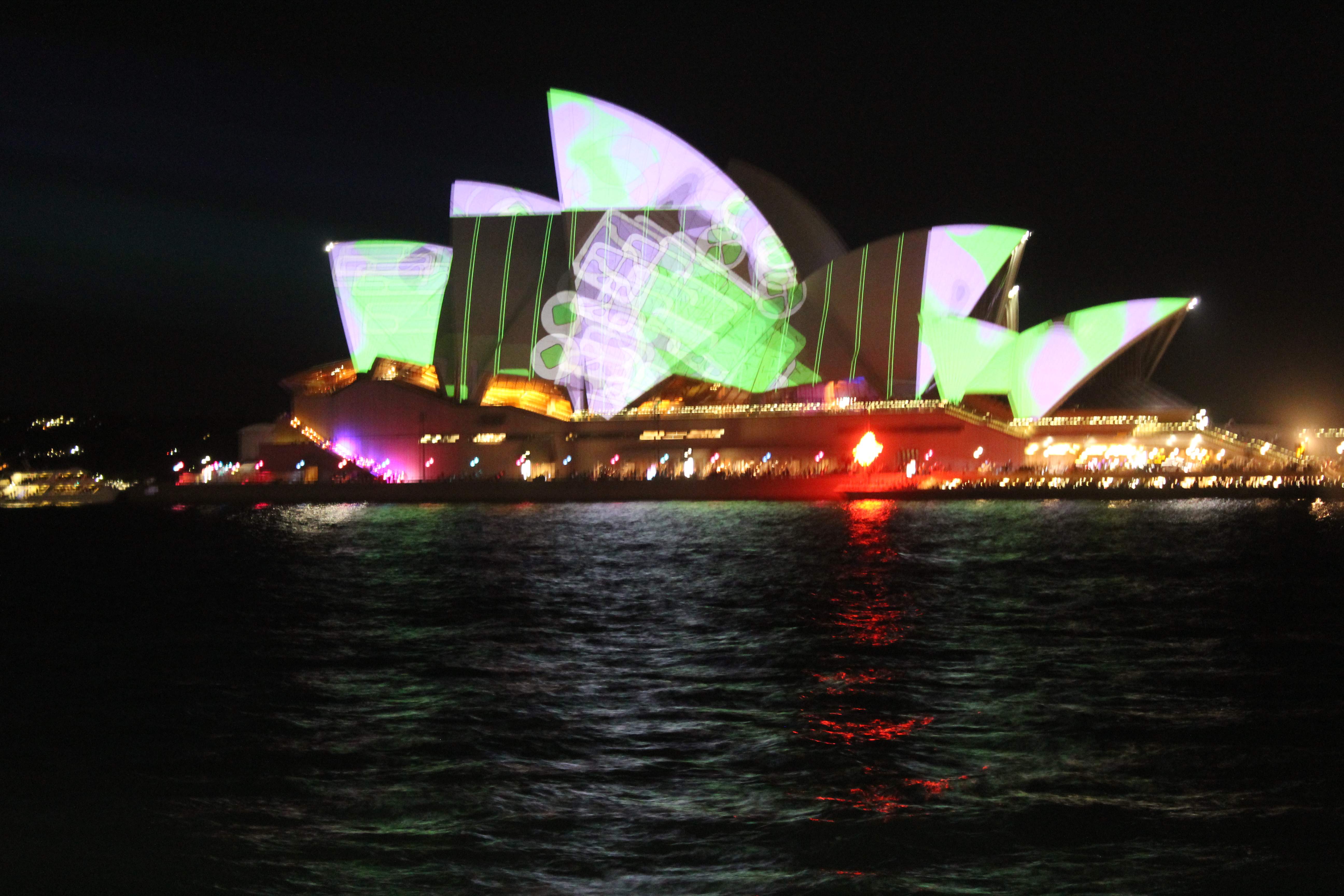
Of course, the star of Sydney Harbor is the Sydney Opera House.

Sydney Opera House

Sydney Opera House

We love the lights on the Opera House

Sydney Opera House

Sydney Opera House

The light show on the opera house was beautiful and so varied.   IMG_0667These are just a few of the displays on the opera house.

IMG_0666The lights were always moving and dancing, so some photos are better than others.

Opera House Vivid Sydney 2015

Opera House Vivid Sydney 2015

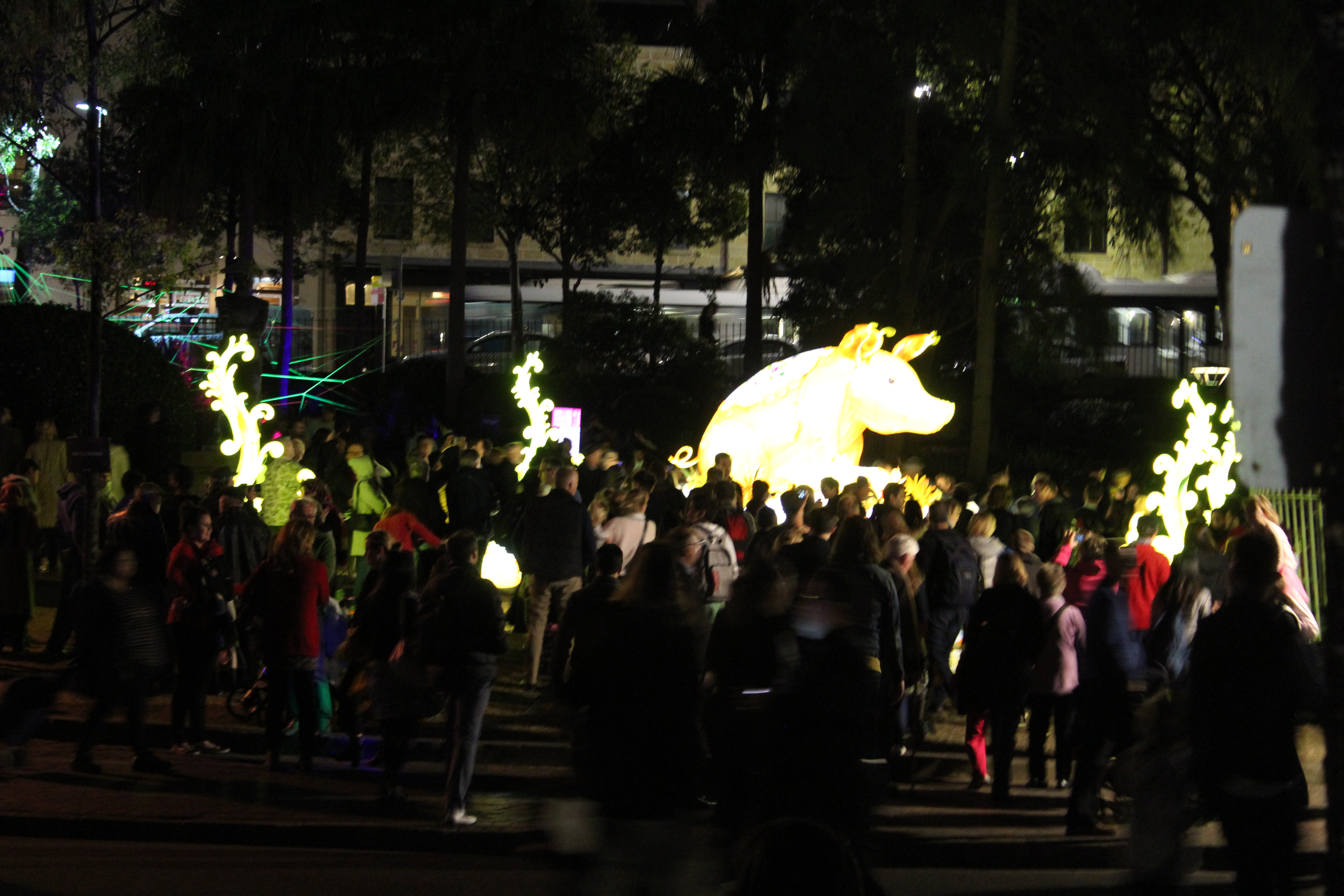
There were many people wandering around in the evening, enjoying the lights and sounds.  This gold pig was great, and it was our first gold pig.

Our first gold pig

Our first gold pig

These lights were also very pretty.

So many lights

So many lights

We really liked Vivid Sydney.   We hope you experienced it also.   If not and you are planning a trip to Sydney,we hope you are here for Vivid Sydney next year.

Zeb and Eider Ride on Sydney Harbour

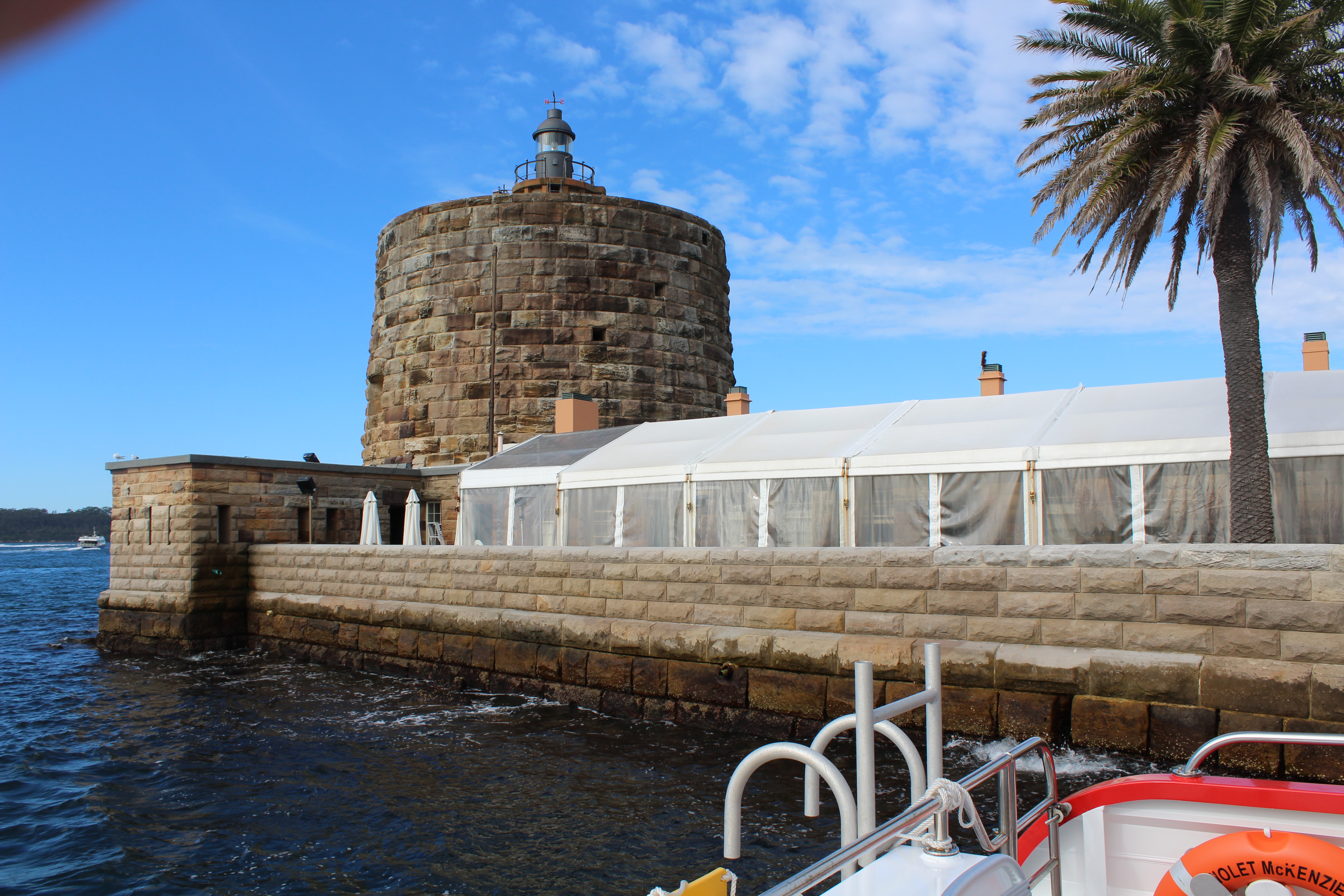
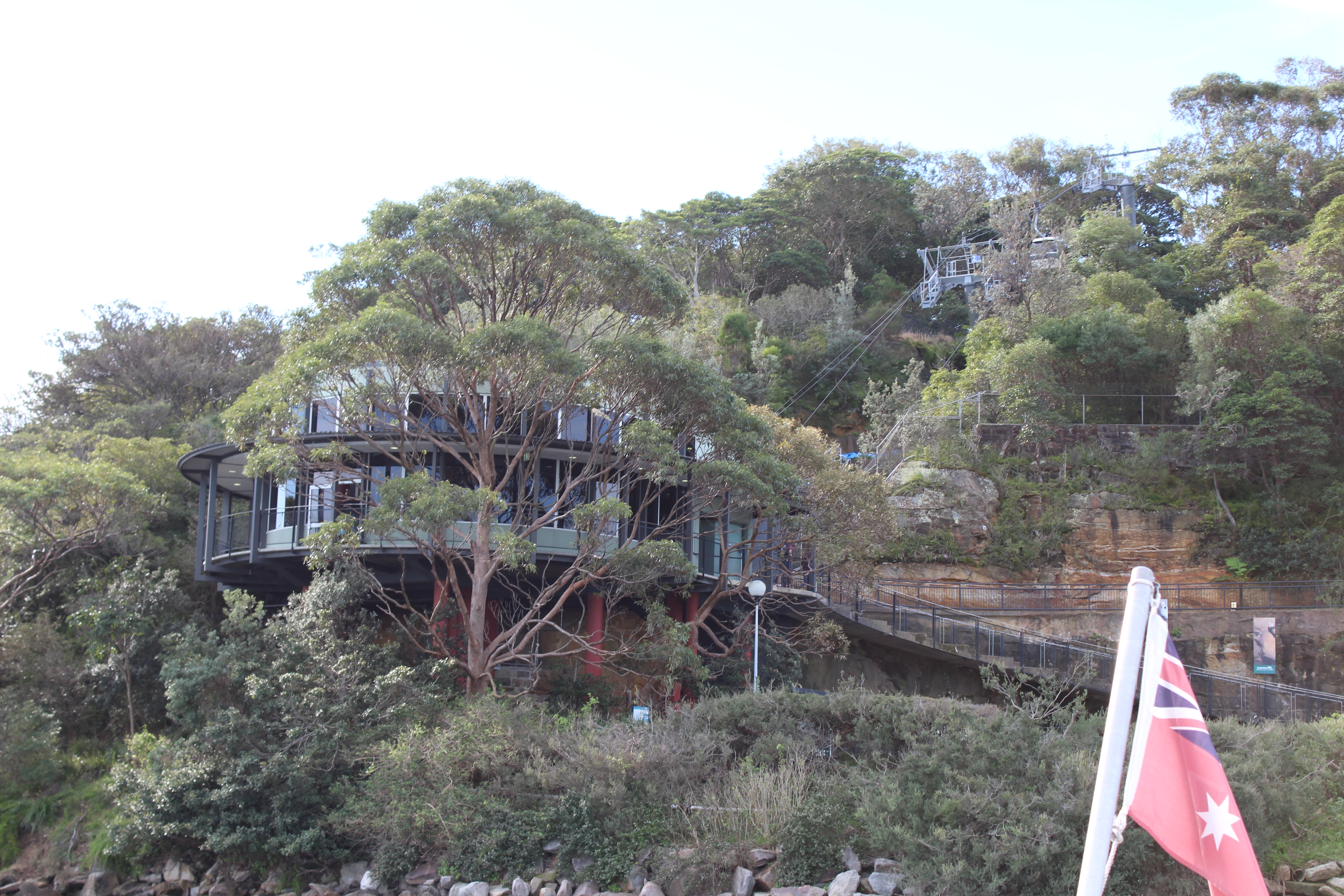
We are getting on a boat!   This is a hop on hop off ferry in Sydney Harbour.   It works just like the hop on hop buses in many cities. This ticket is good for 24 hours.   Here is a Sydney Harbour National Park.   This is Fort Denison.    IMG_0626At Fort Denison, tours are available and a wonderful buffet may be purchased and enjoyed, right in the middle of Sydney Harbour.   Fort Denison was built in 1855 for protection.   It was probably never used for that, but it is rumored to be a  place of torture for penal use.    Here is the entrance to Taronga Zoo.   To reach the zoo, humans take aerial lifts to reach to the top of this hill.

Entrance to the zoo

Entrance to Taronga zoo

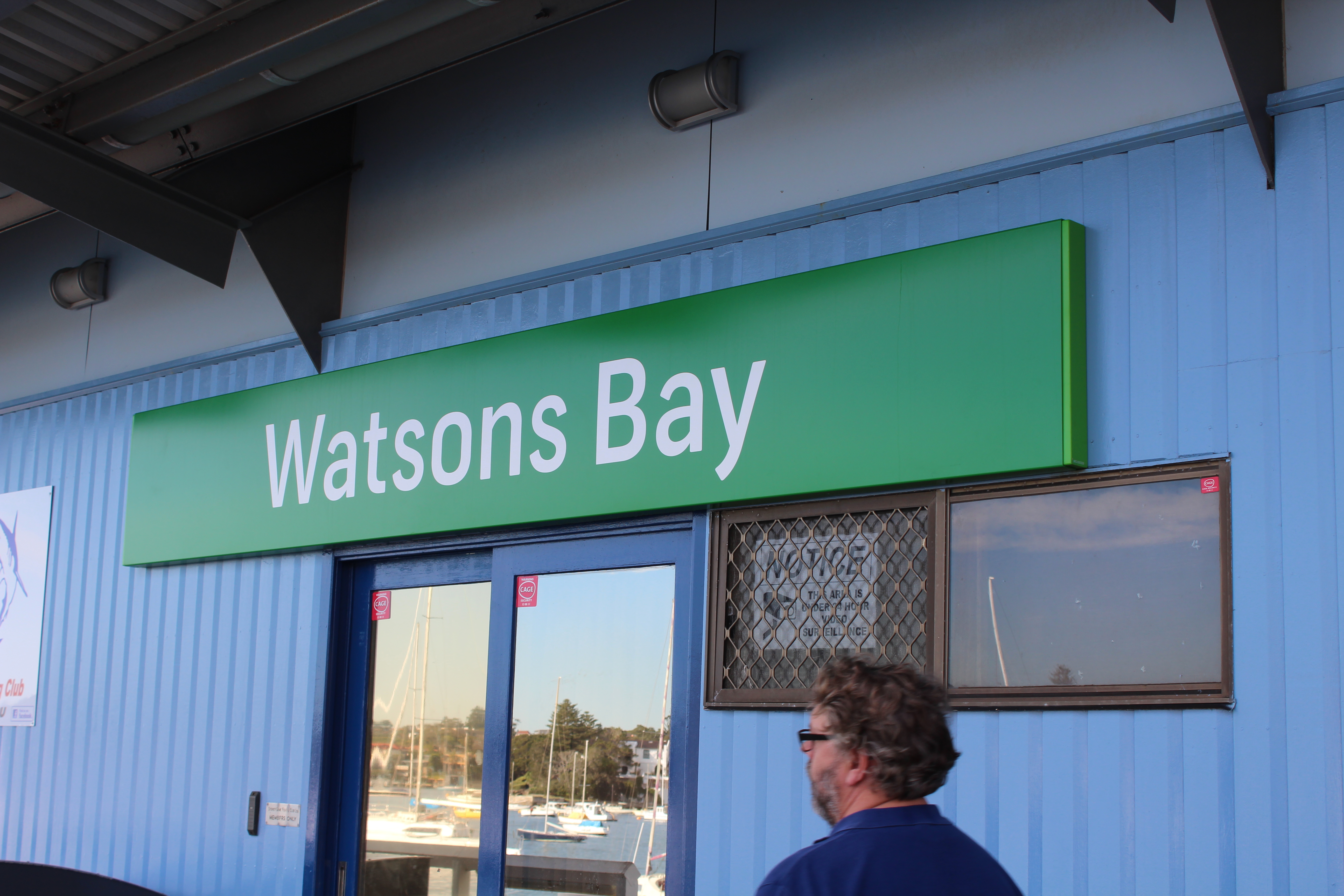
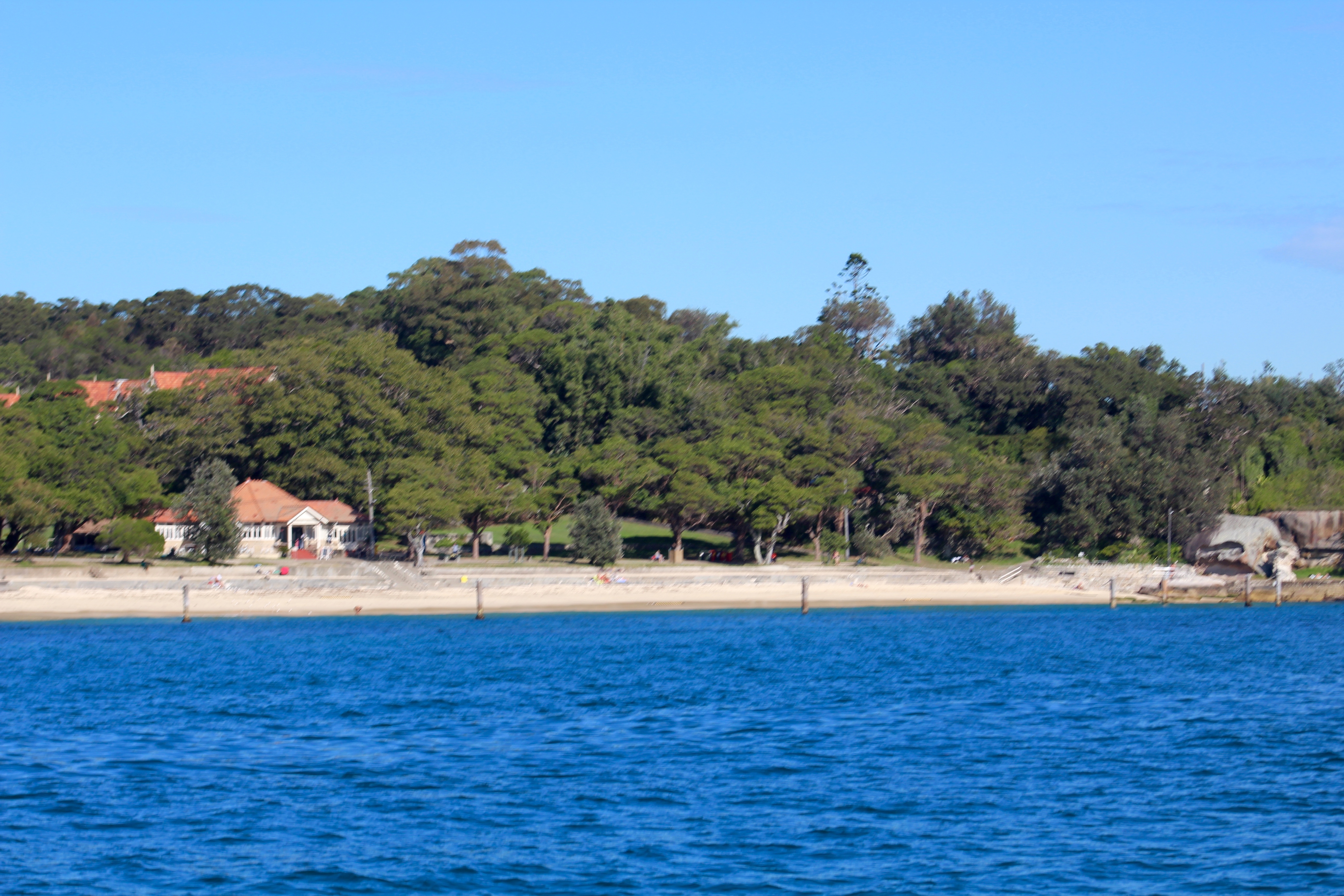
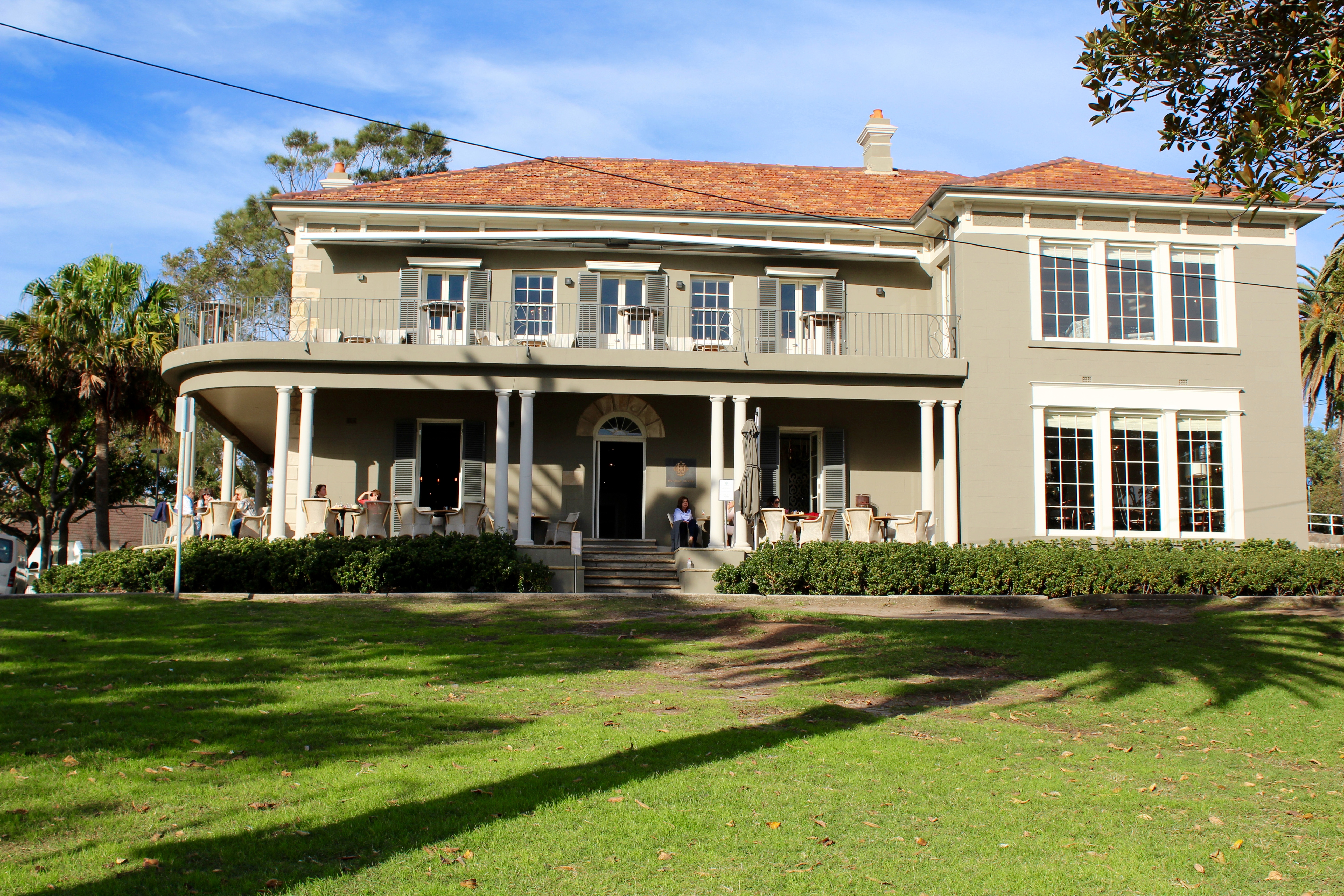
Our next stop was Watsons Bay.   IMG_0597This is a popular destination with tourists and the residents of Sydney.   The many restaurants attract humans and so many seagulls.   The beach looks inviting.   IMG_0615This is the Dunbar House.   IMG_0601This restored building provides breakfast and lunch in a beautiful setting.   Dunbar House is also available to rent for special occasions.   The next stop was at Manly Bay.   We went into the Tasman Sea to get here.

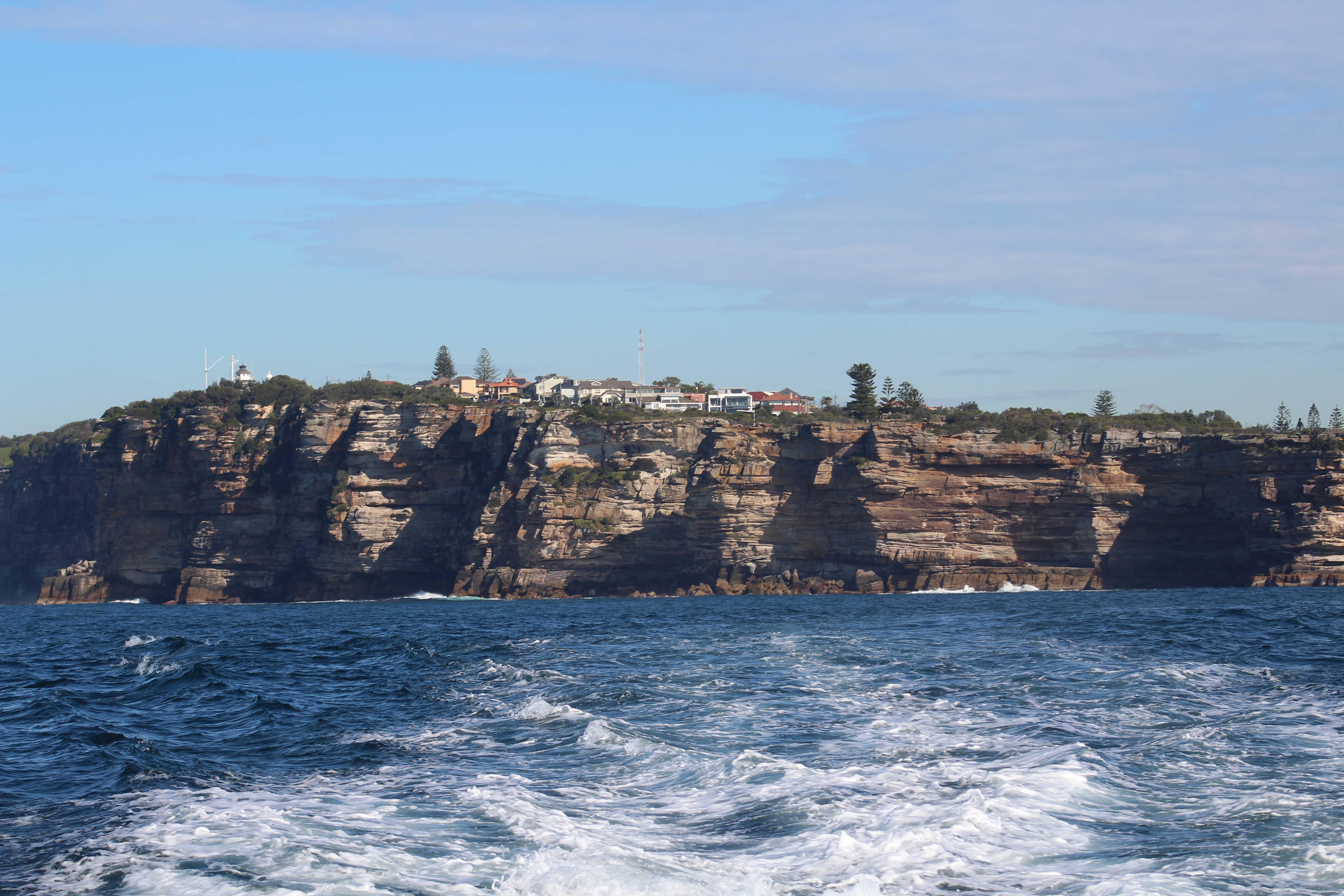
Cliffs of Tasman Sea heading to Manly

Cliffs of Tasman Sea heading to Manly

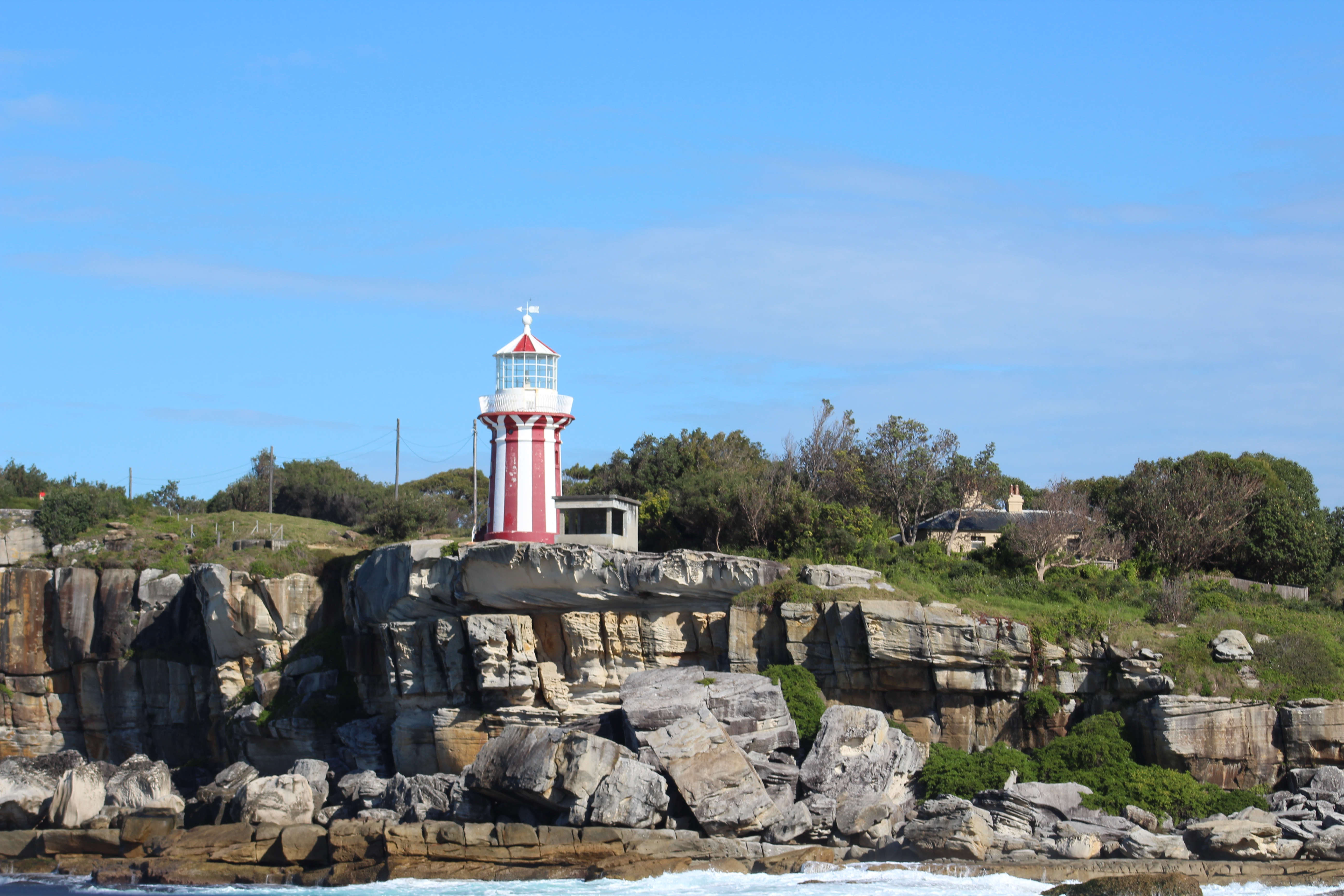
Passing this light house, the cliffs of Australia are very dramatic.

Lighthouse on cliffs

Lighthouse on cliffs

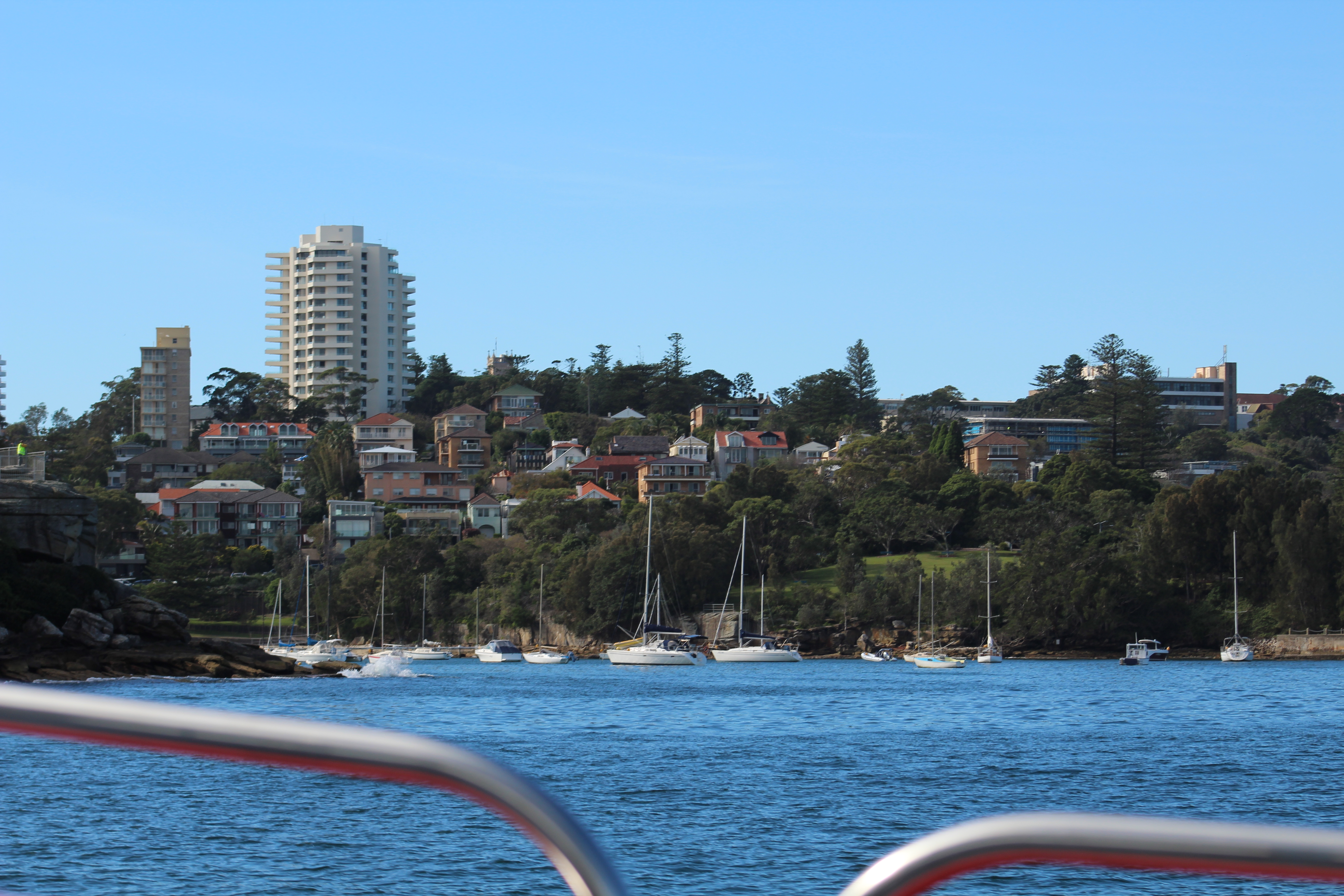
Arriving at Manly Bay, we realized this also is a popular destination.   There were hotels, many restaurants and lots of water activities.

Town of Manly

Town of Manly

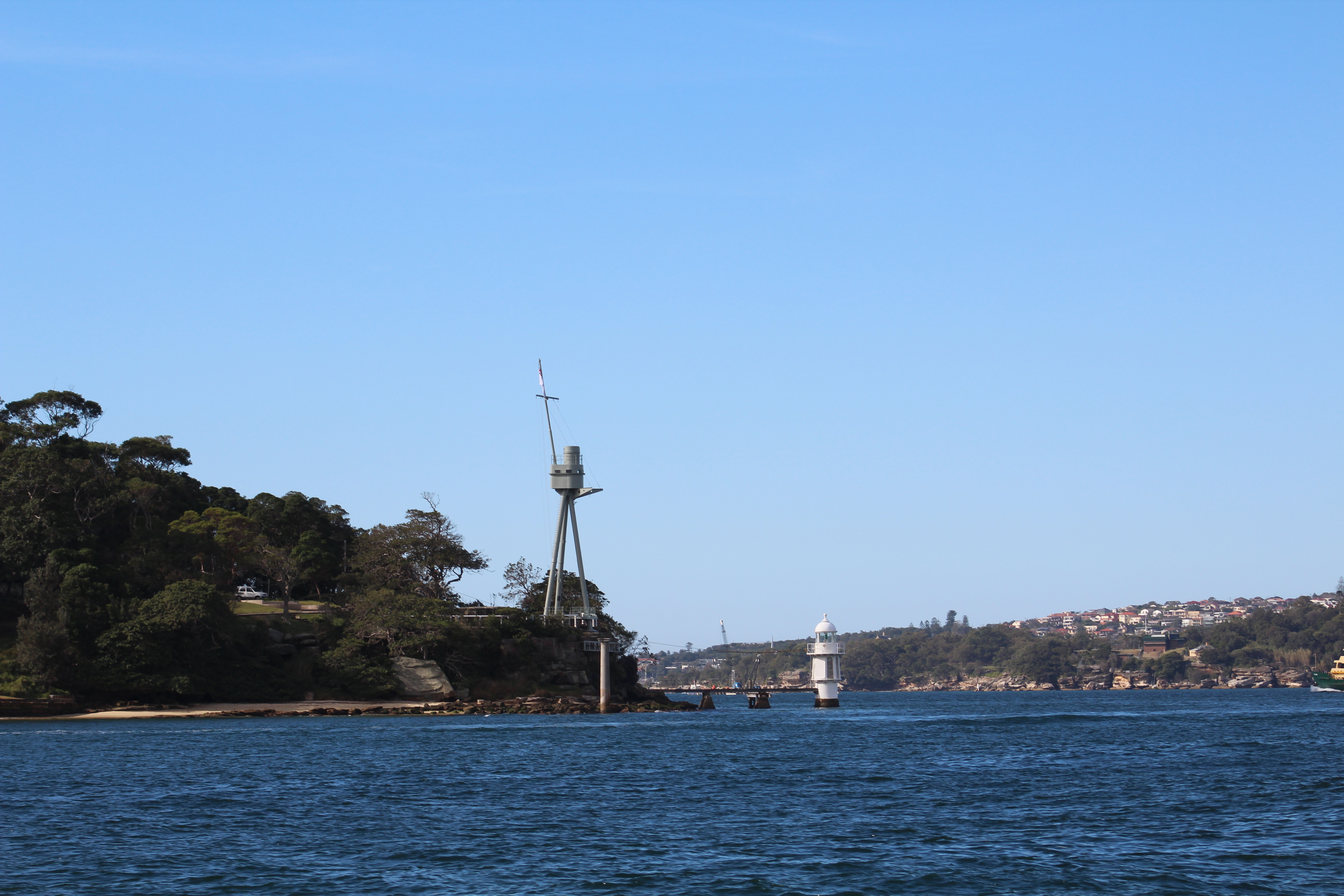
We, like many others, really like Manly Bay.    We really liked this memorial to the lost ships and the lost humans.   We always appreciate memorials for those that have died.

Remembering those ships and humans that have been lost to us.

Remembering those ships and humans that have been lost to us.

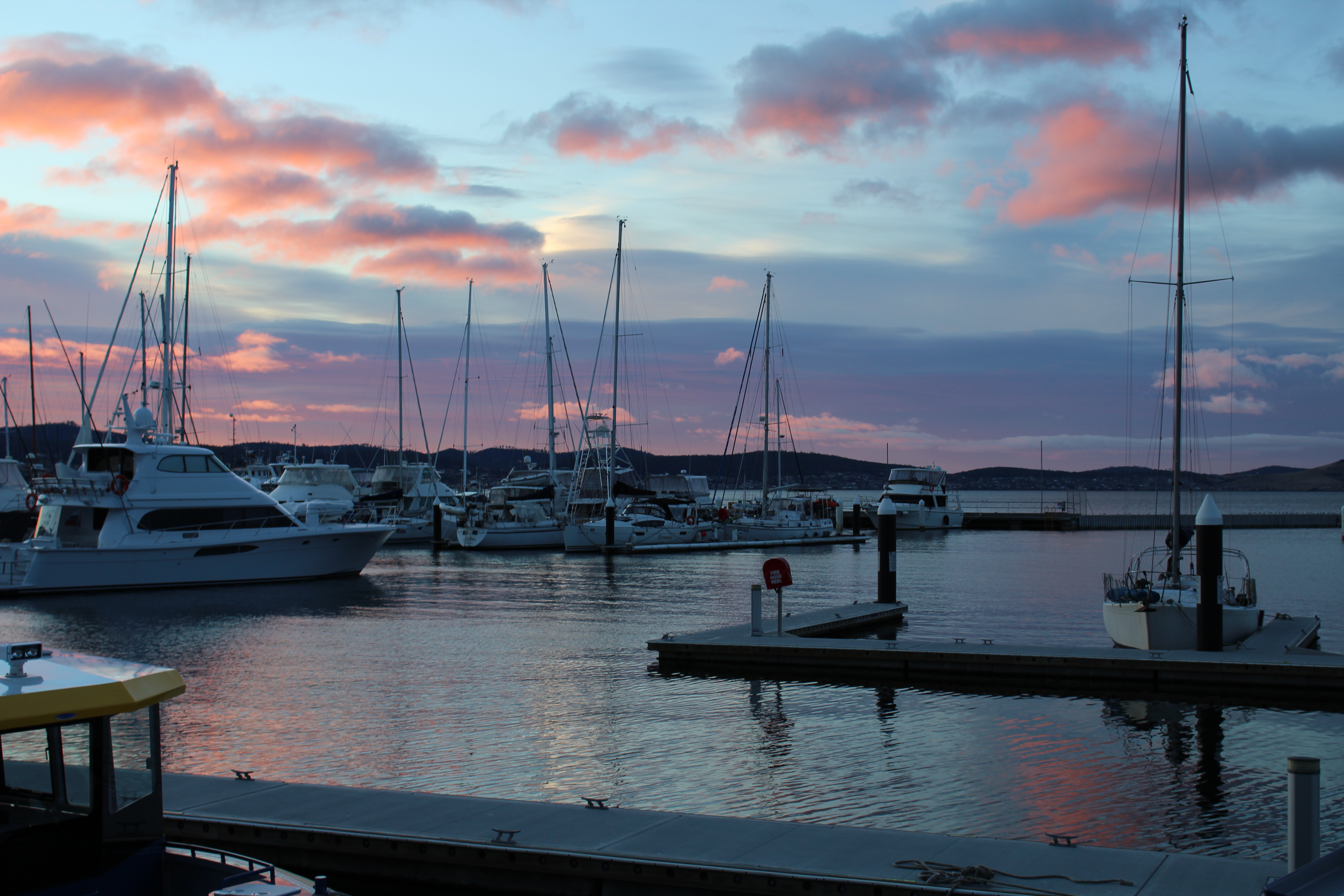
Our next stop was Darling Harbour.   Darling Harbour is home to the Sydney Aquarium.   This also is a great shopping and dining area.  We walked around and took a short refreshment break.

Sunsetting at Darling Harbor

Sunsetting at Darling Harbor

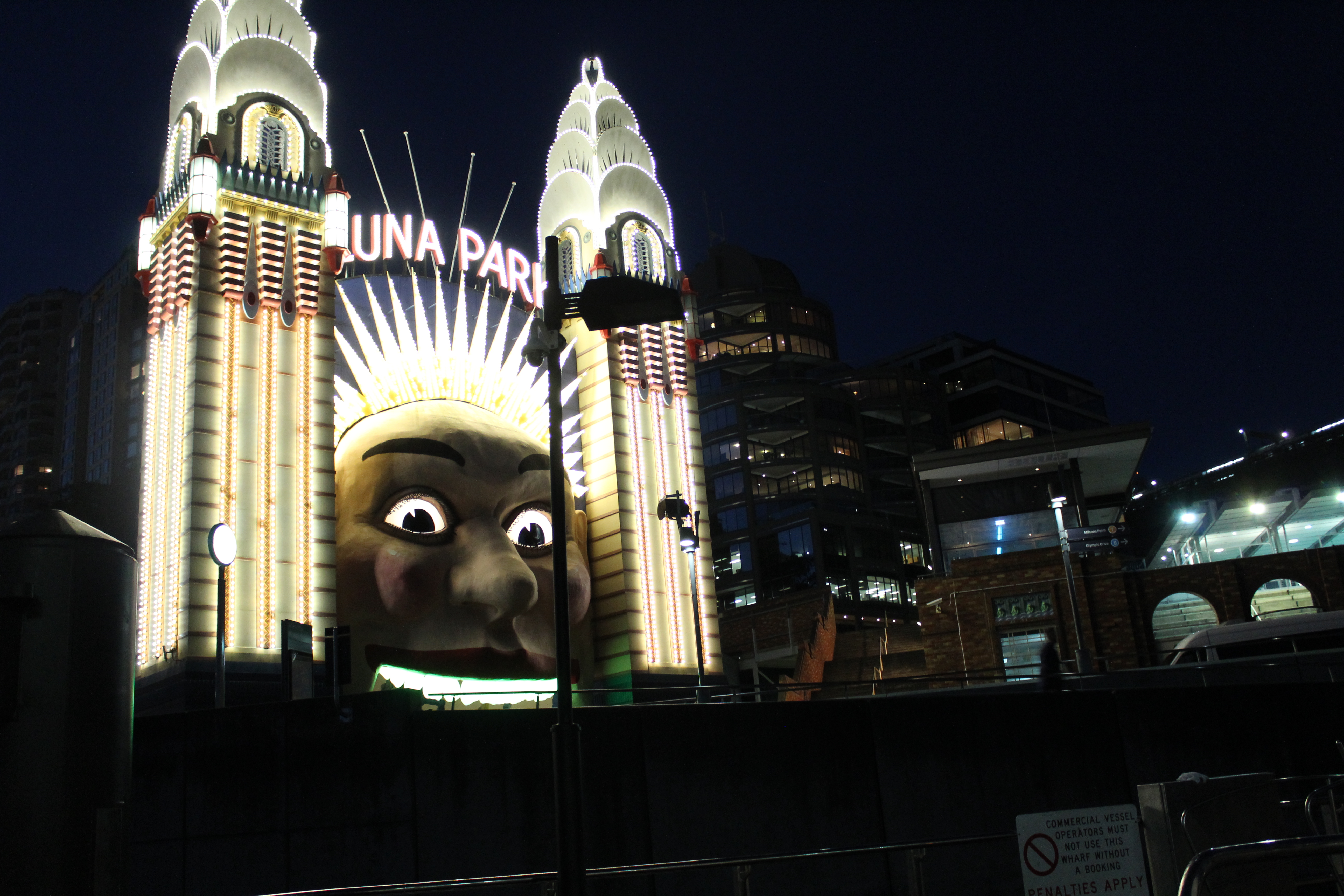
On the ride back Circular Quay, we passed Luna Park.   This is an amusement park.

Entrance to Luna Park

Entrance to Luna Park

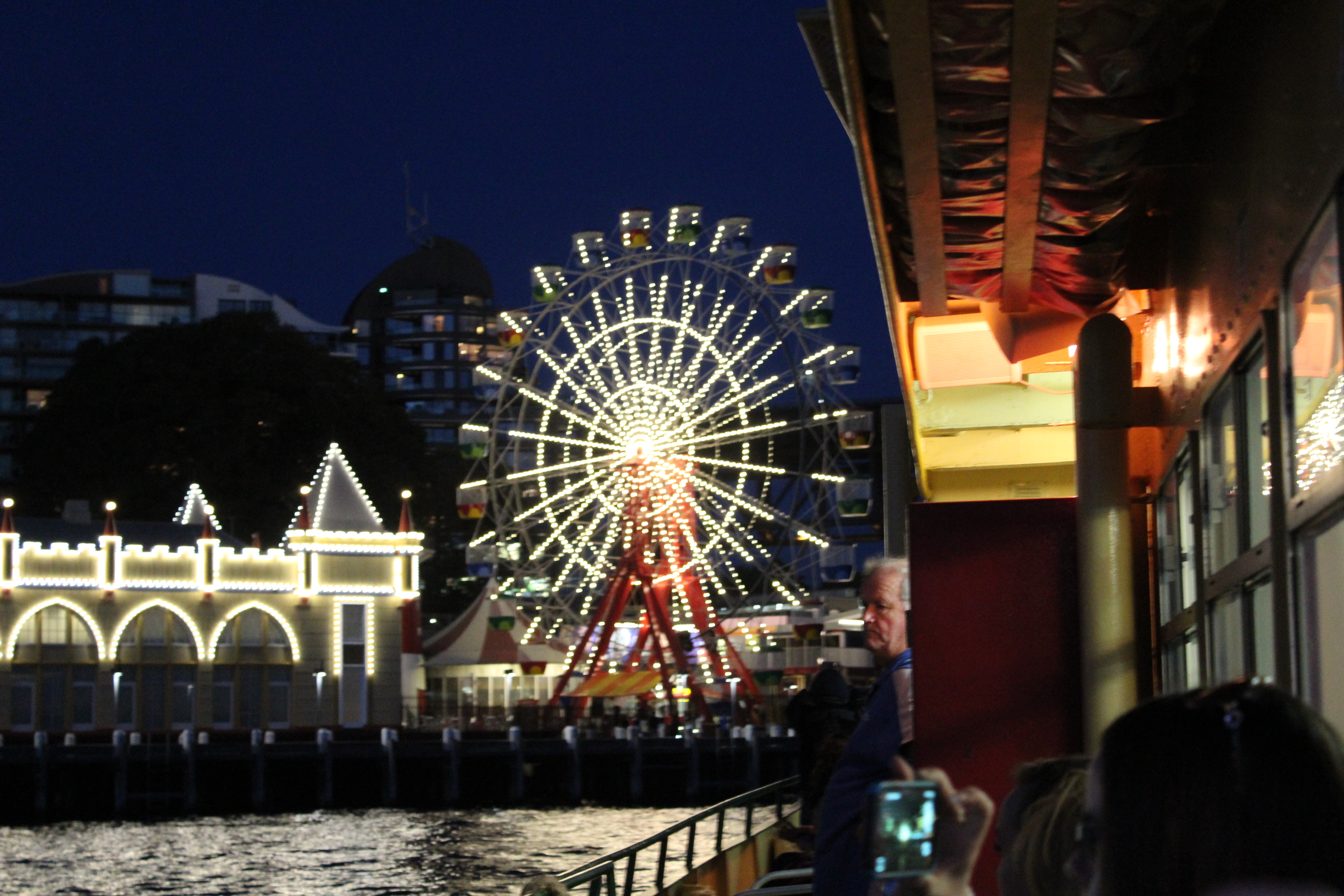
We did not get off the ferry, but it was dark and we really liked this ferris wheel with lights.

Ferris Wheel of Luna Park at night

Ferris Wheel of Luna Park at night

We enjoyed the boat ride back to Circular Quay.   We like Sydney Harbour a lot.