Zeb and Eider at Cable Beach Australia for Sunset

Zeb, Eider and the humans arrived in Broome, Western Australia.   After getting a place to sleep, we headed to Cable Beach.
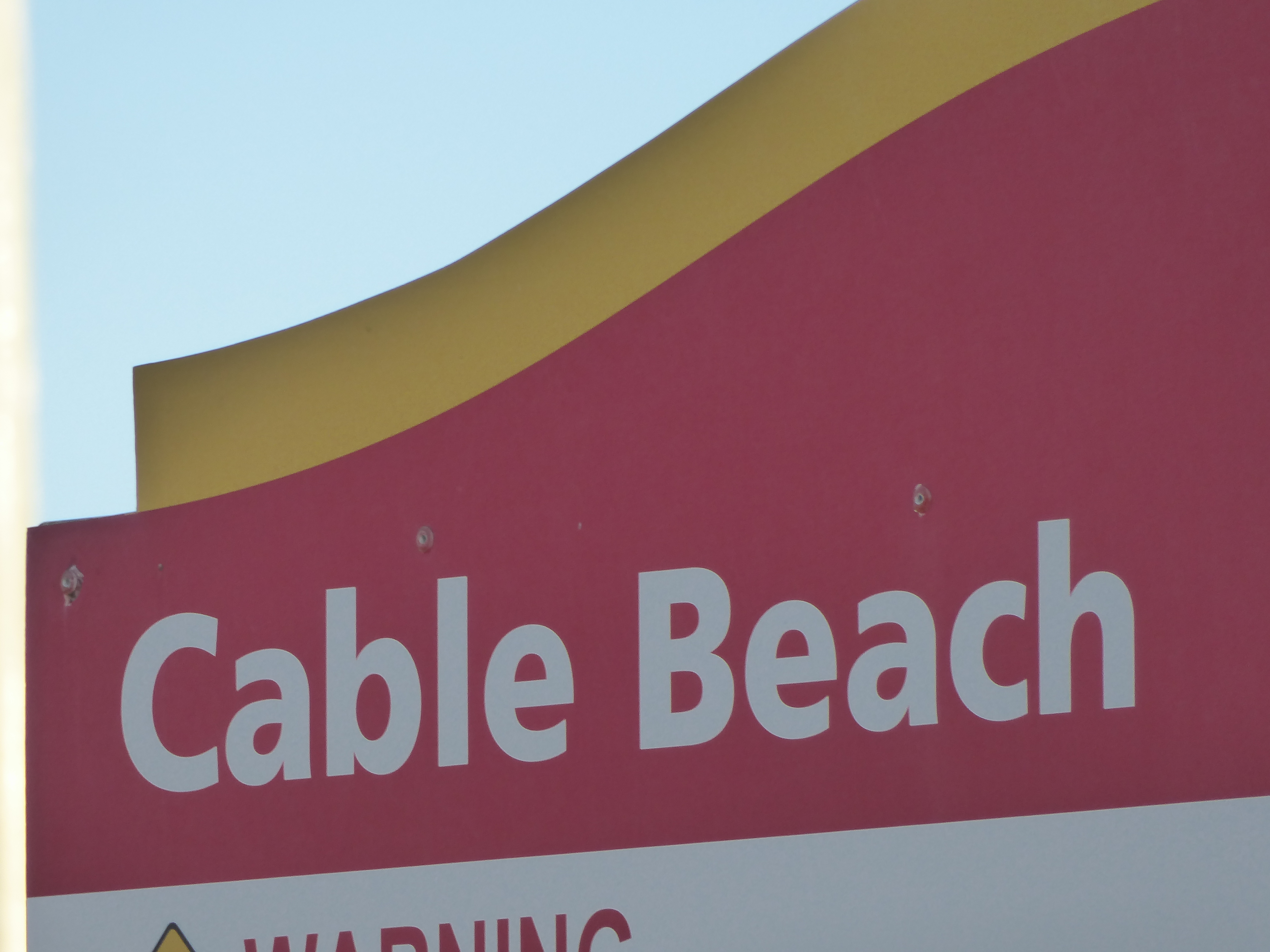
We are at Cable Beach in Broome, Western Australia

We are at Cable Beach in Broome, Western Australia

Broome is on the Indian Ocean and well known for beautiful sunsets.   We did not want to miss it.   Cable Beach is a very wide beach.
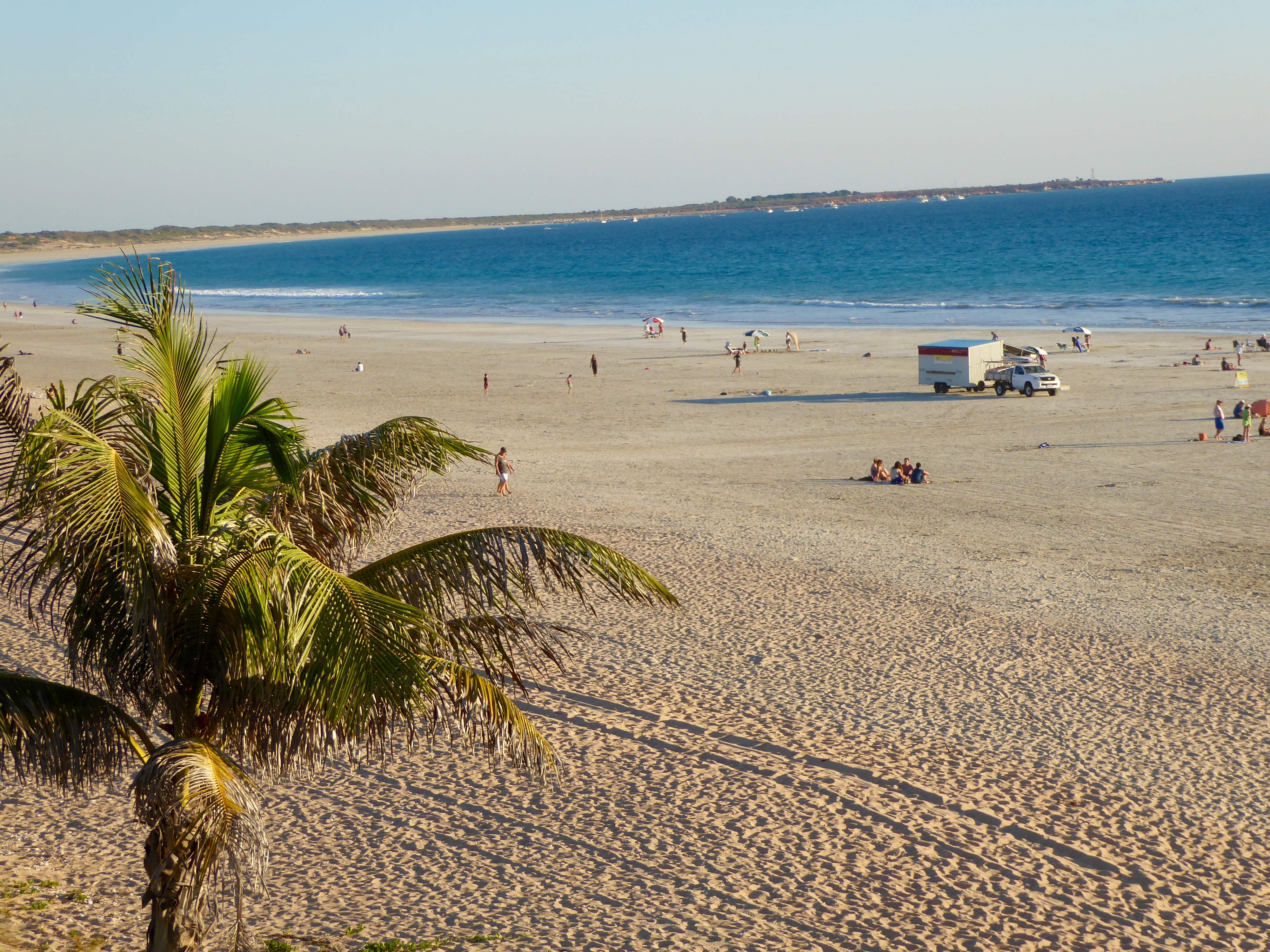
Wide beach and you can drive here

Wide beach and you can drive here

Cable Beach pleases swimmers, sunbathers, and even sailboats.
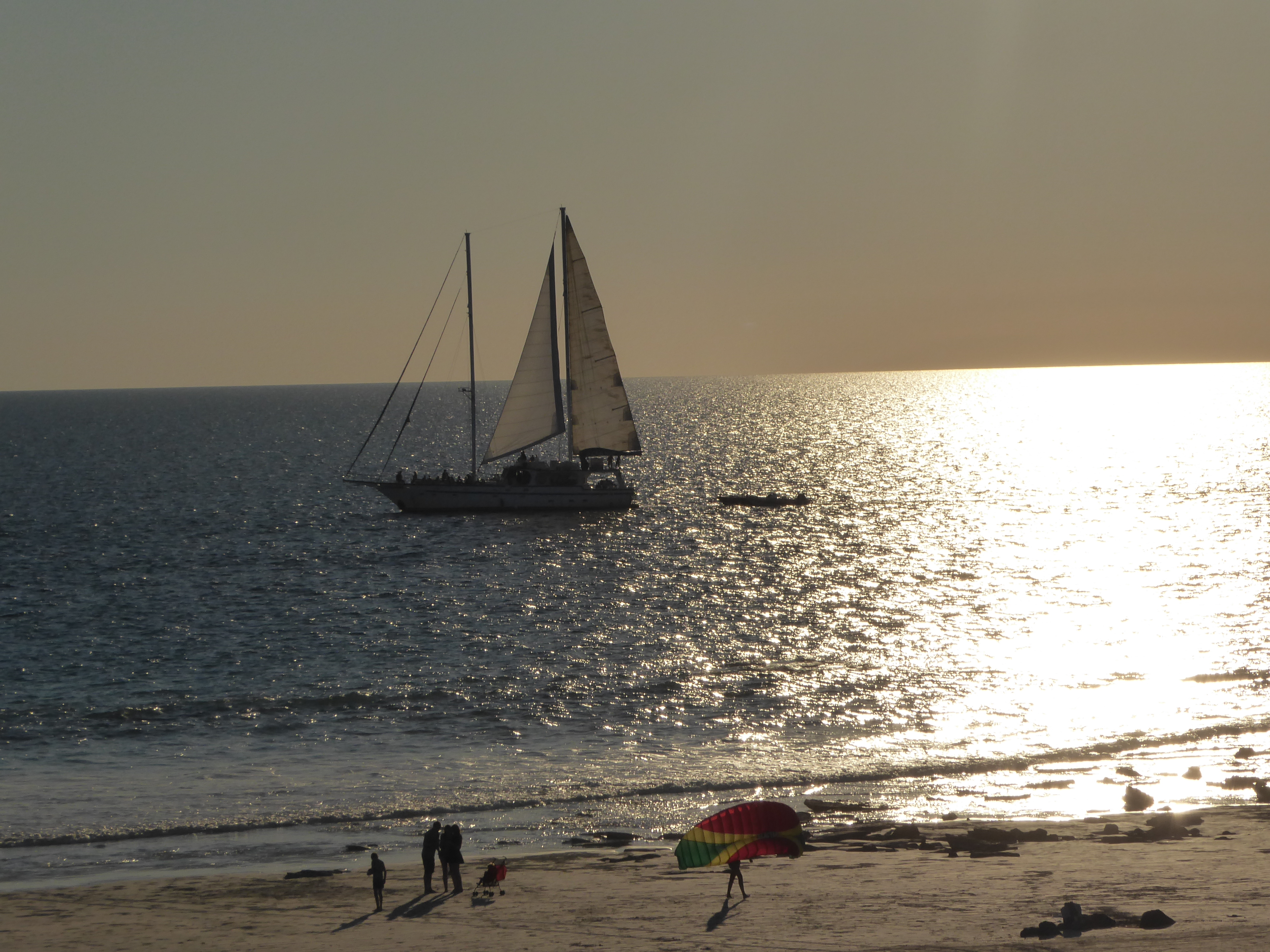
Sailboat with people on beach

Sailboat and people on beach.

Zander’s is the main restaurant on the beach.
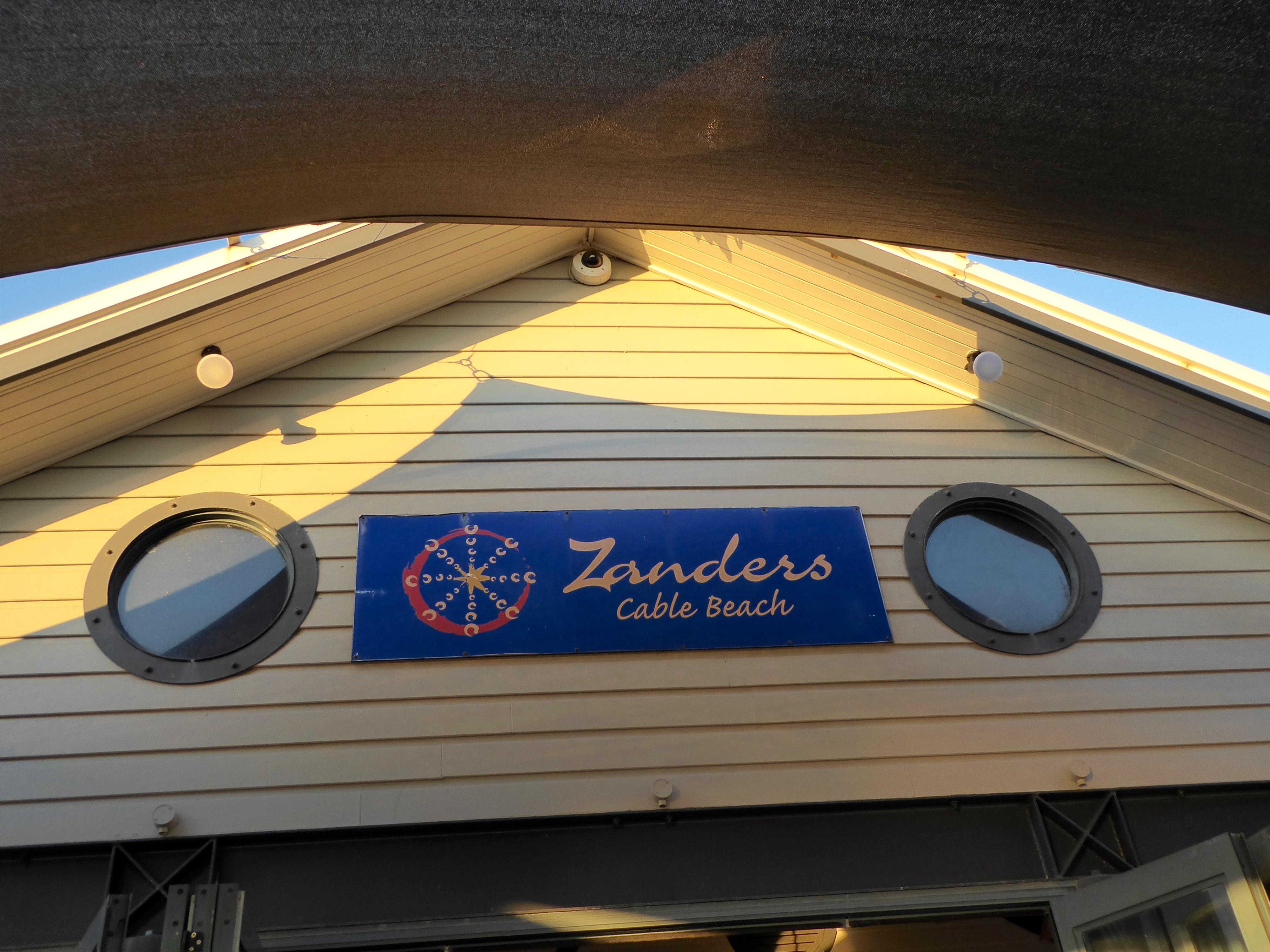
Zander's on Cable Beach

Zander’s on Cable Beach

As you can see, this is a popular gathering place to watch the sunset.
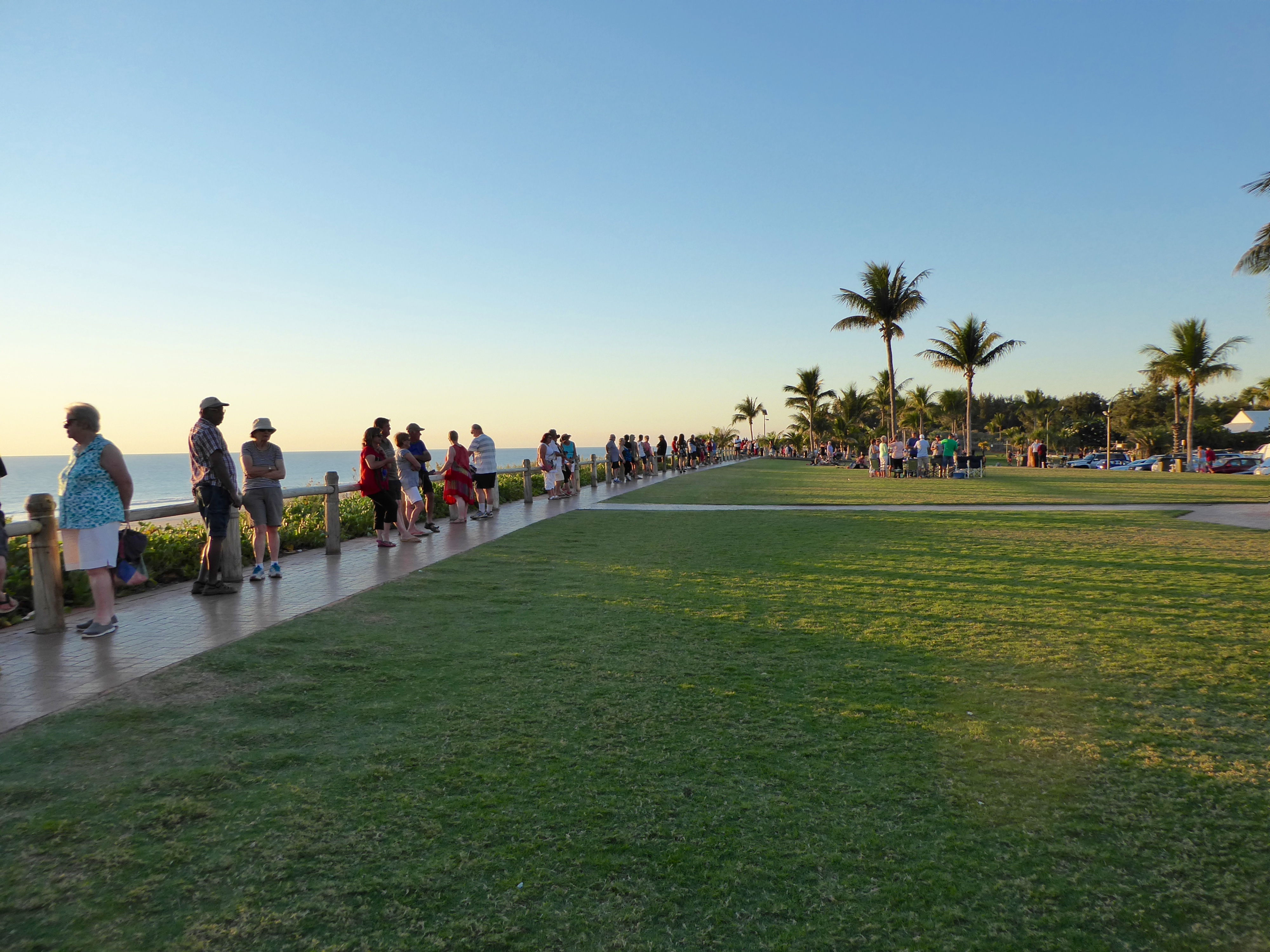
This is the place to be for sunsets in Broome

This is the place to be for sunsets in Broome

At Zander’s you can eat in the main restaurant and watch the sunset.   Of course, you will pay for this option.   We sat in the restaurant, since we wanted the full experience.   Hamburgers cost about $20 US, but the location was well worth it to us.
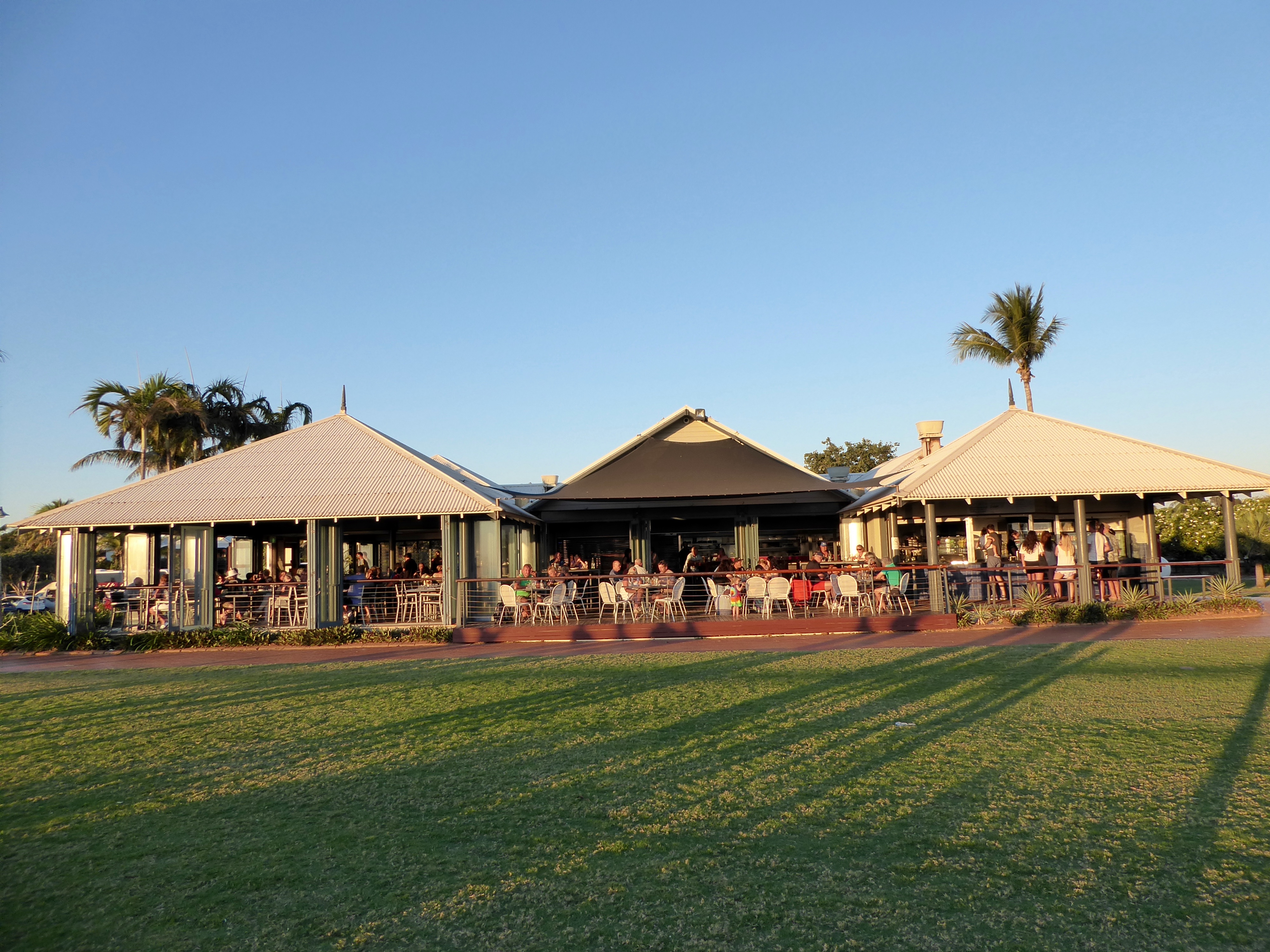
Zander's restaurant. Eat inside or get take away

Zander’s restaurant. Eat inside or get take away

The part on the far right, is for ordering take away food from Zander’s, at a lower price.   You can eat your food while sitting on a few benches outside.    Everyone is ready to watch the sunset.
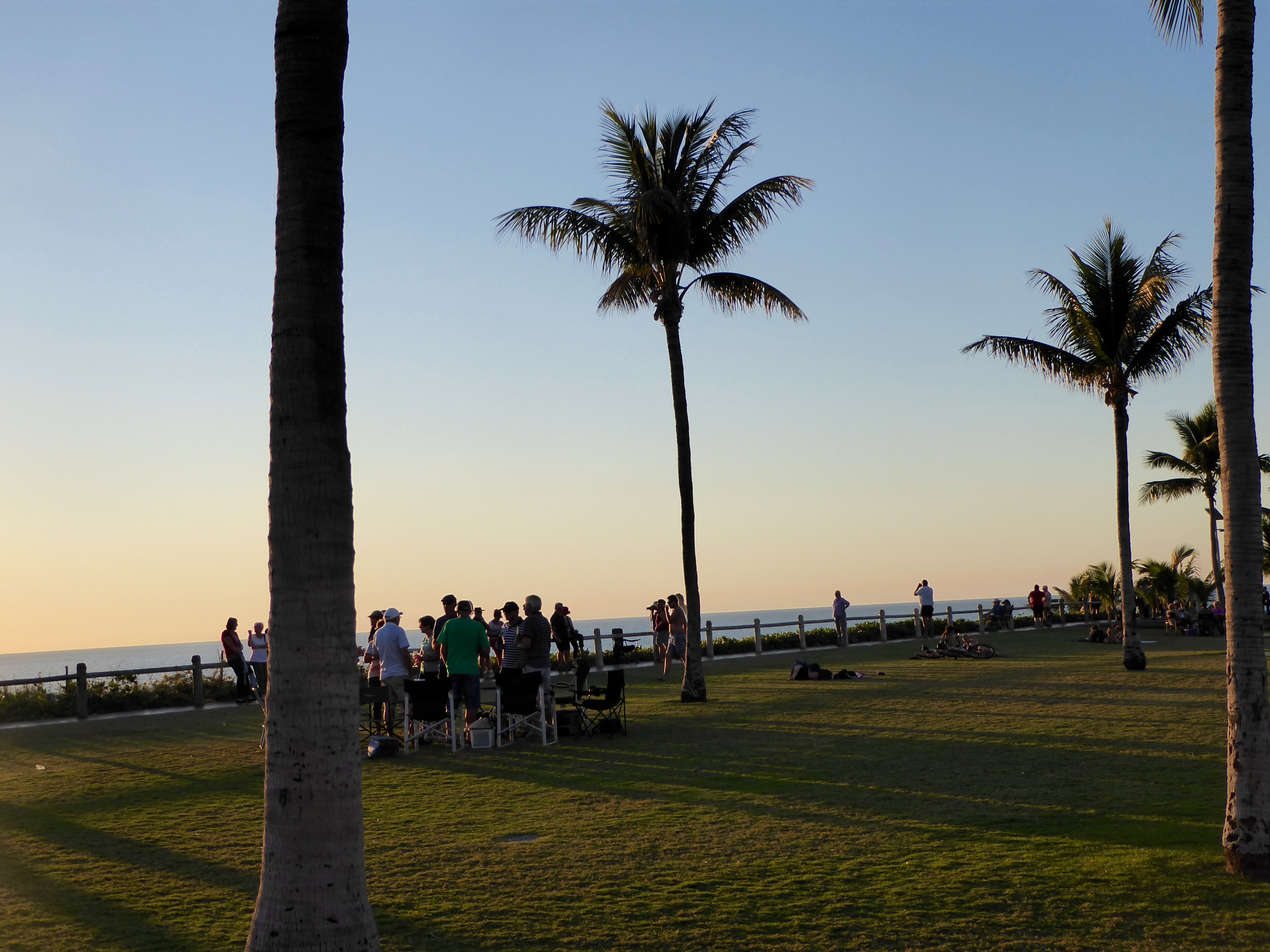
Anticipating the sunset

Anticipating the sunset

The sun is now setting.
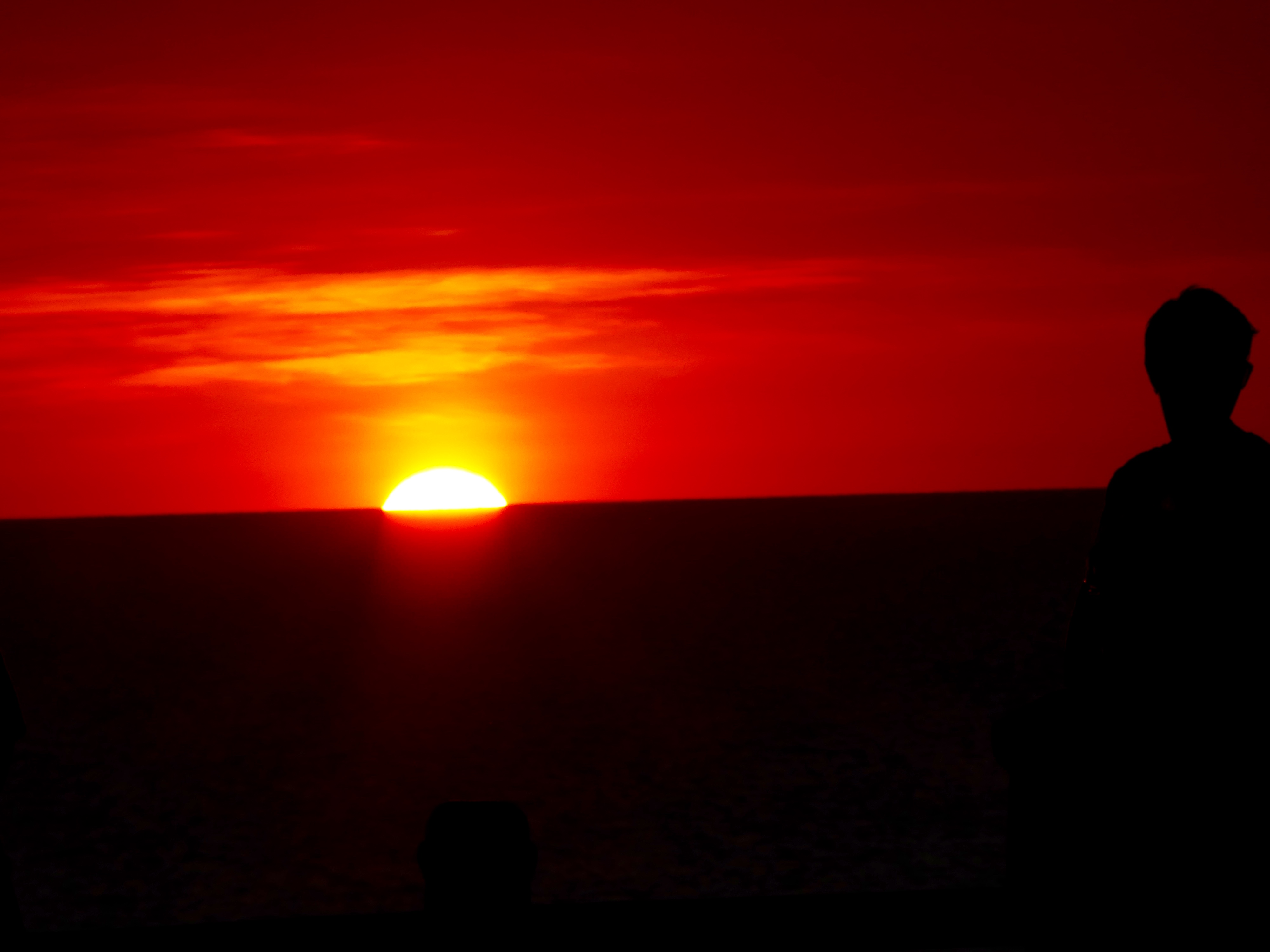
Sun beginning to set in Indian Ocean

Sun beginning to set in Indian Ocean

From the time the setting sun touches the water until it is completely gone is only 90 seconds.
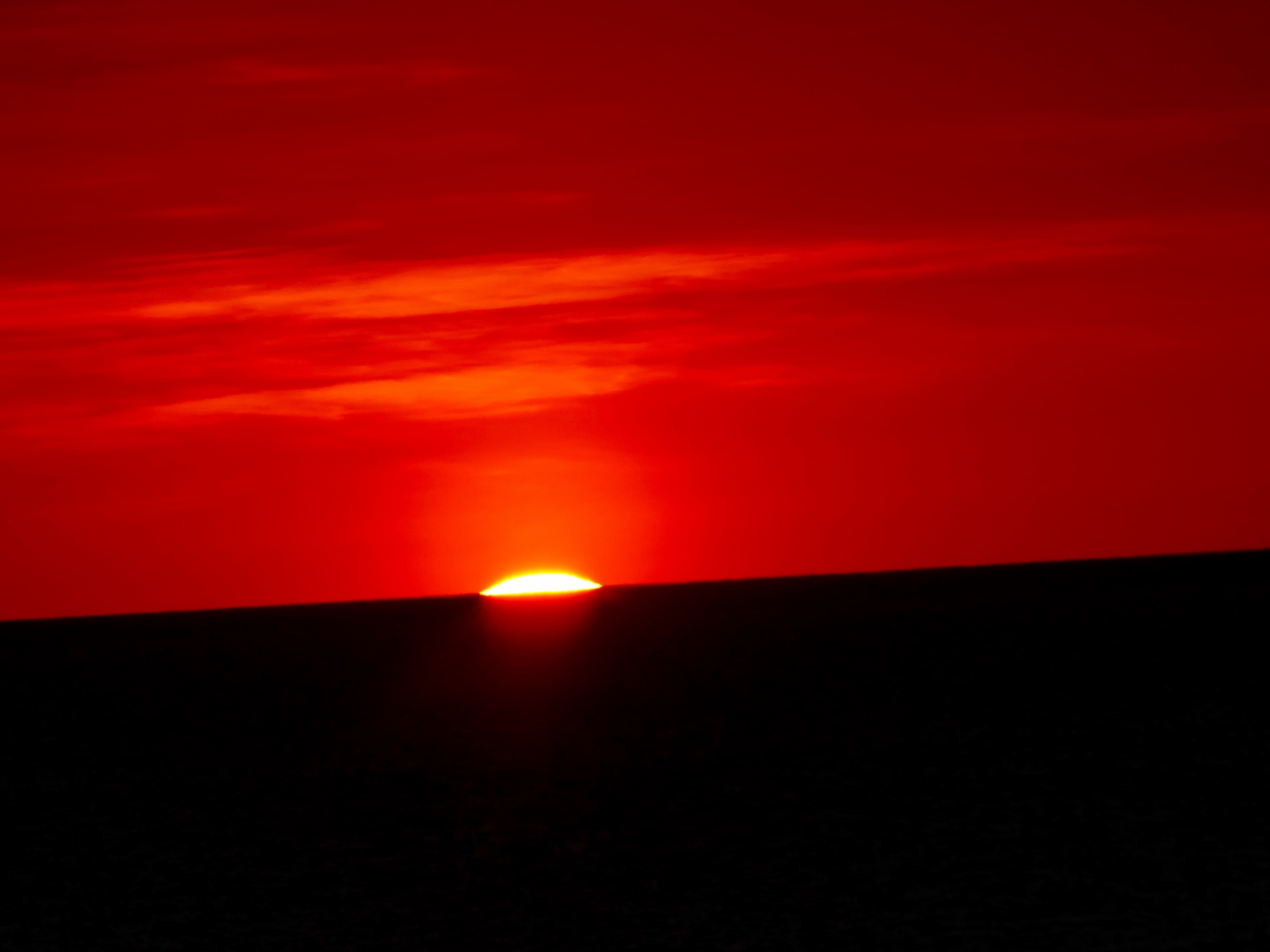
Almost gone

Almost gone

Now, even with the sun gone, this is still a beautiful place and the weather was perfect, so many people still linger here.     It is difficult to leave.
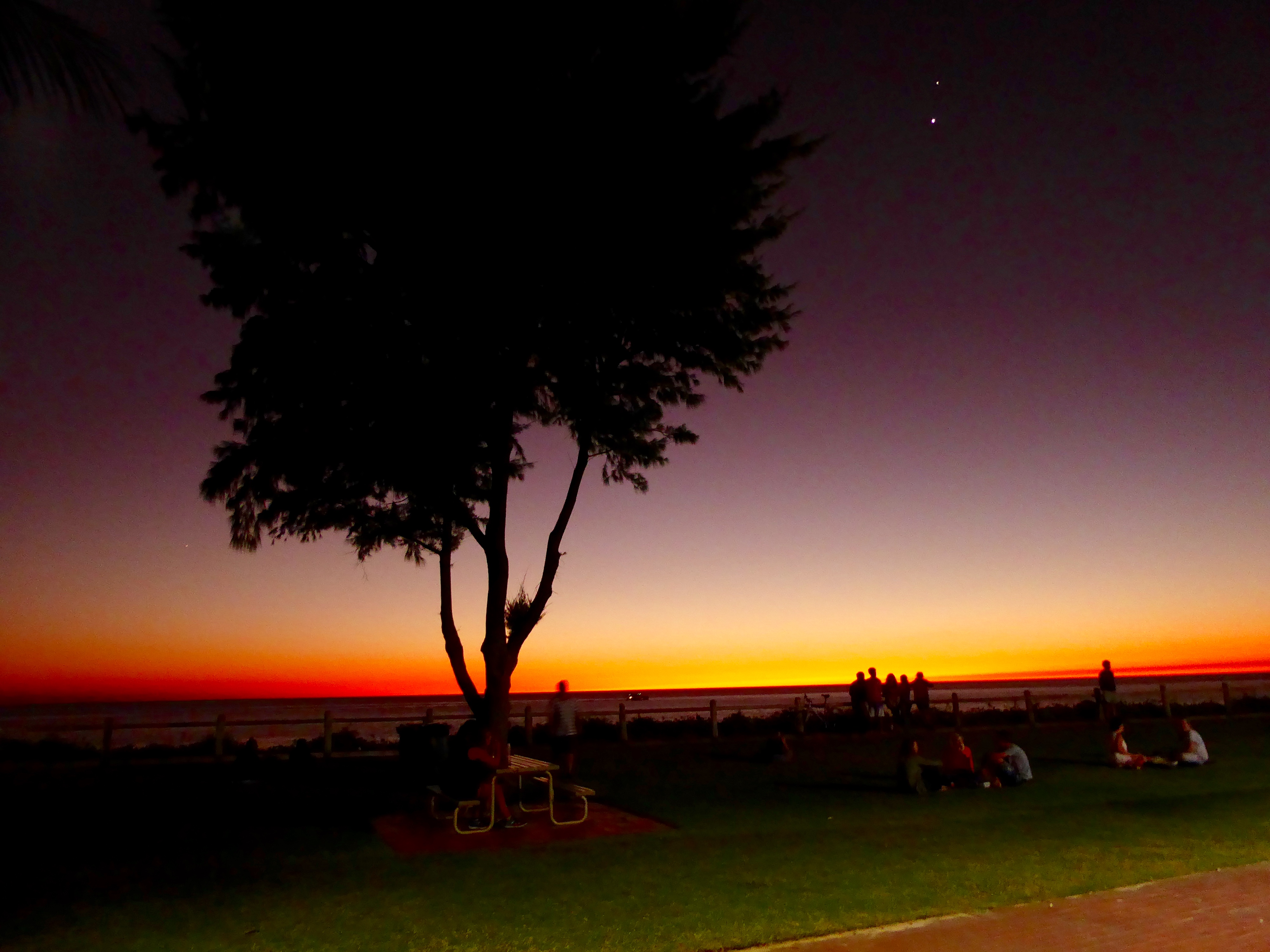
Still warm and beautiful

Still warm and beautiful

We are so happy that we ate at Zander’s and we able to see the famous and beautiful Cable Beach sunset.   We hope you will visit here soon.   It is wonderful.
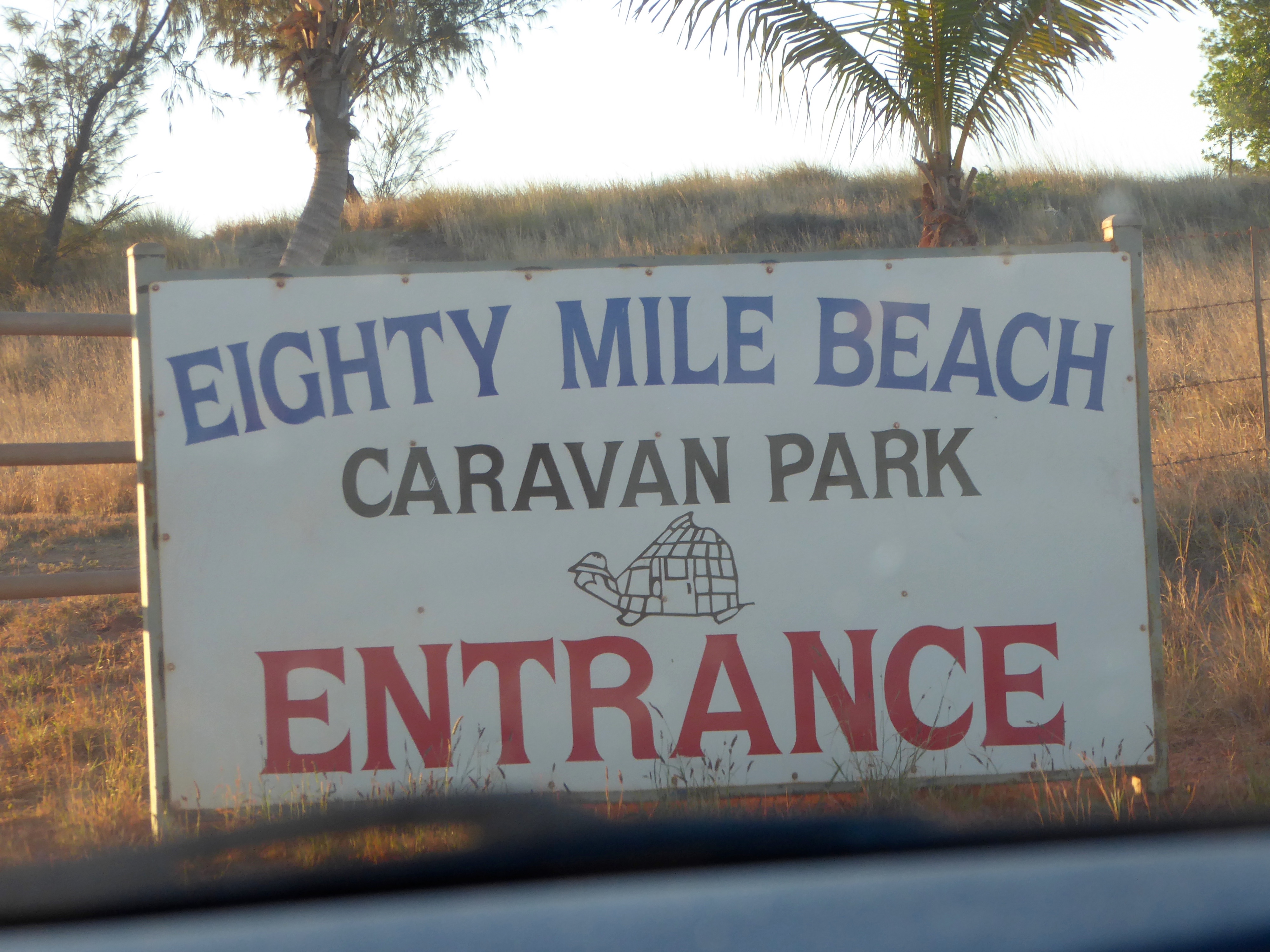
Zeb and Eider Duck Enjoy Western Australia’s Eighty Mile Beach

Zeb and Eider Duck and the humans arrived at Eighty Mile Beach.

Welcome

Welcome

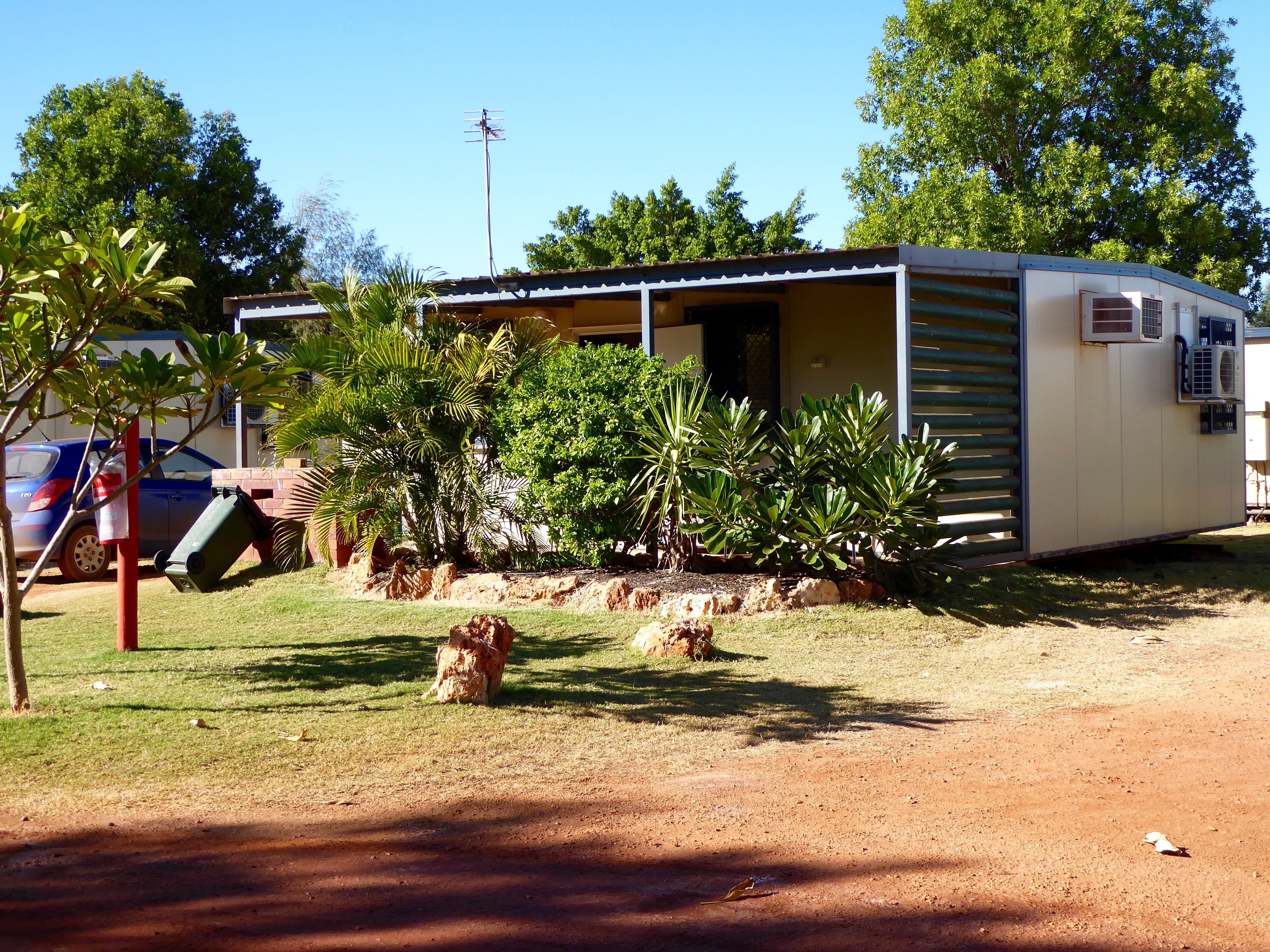
We stayed in a cabin at Eighty Mile Beach Caravan Park.

Our home for a couple days

Our home for a couple days

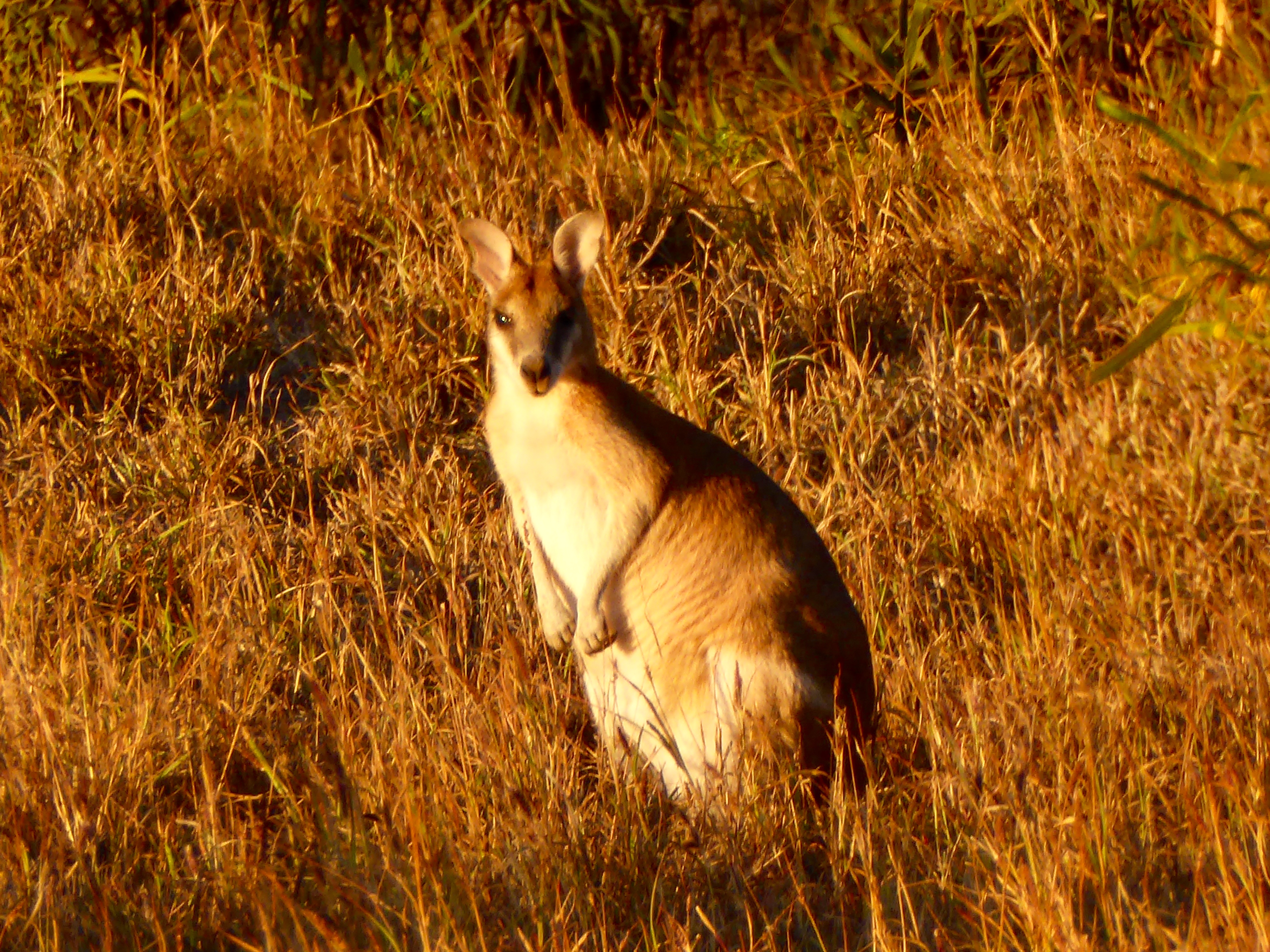
In the U.S. we do not believe the RV parks have self-contained cabins for rent.   But in Australia, many of these parks have places for your tent, your camper, cabins with shared facilities and self-contained cabins.   They are great.   As we approached the park, we admired these Australian greeters.

Hello

Hello

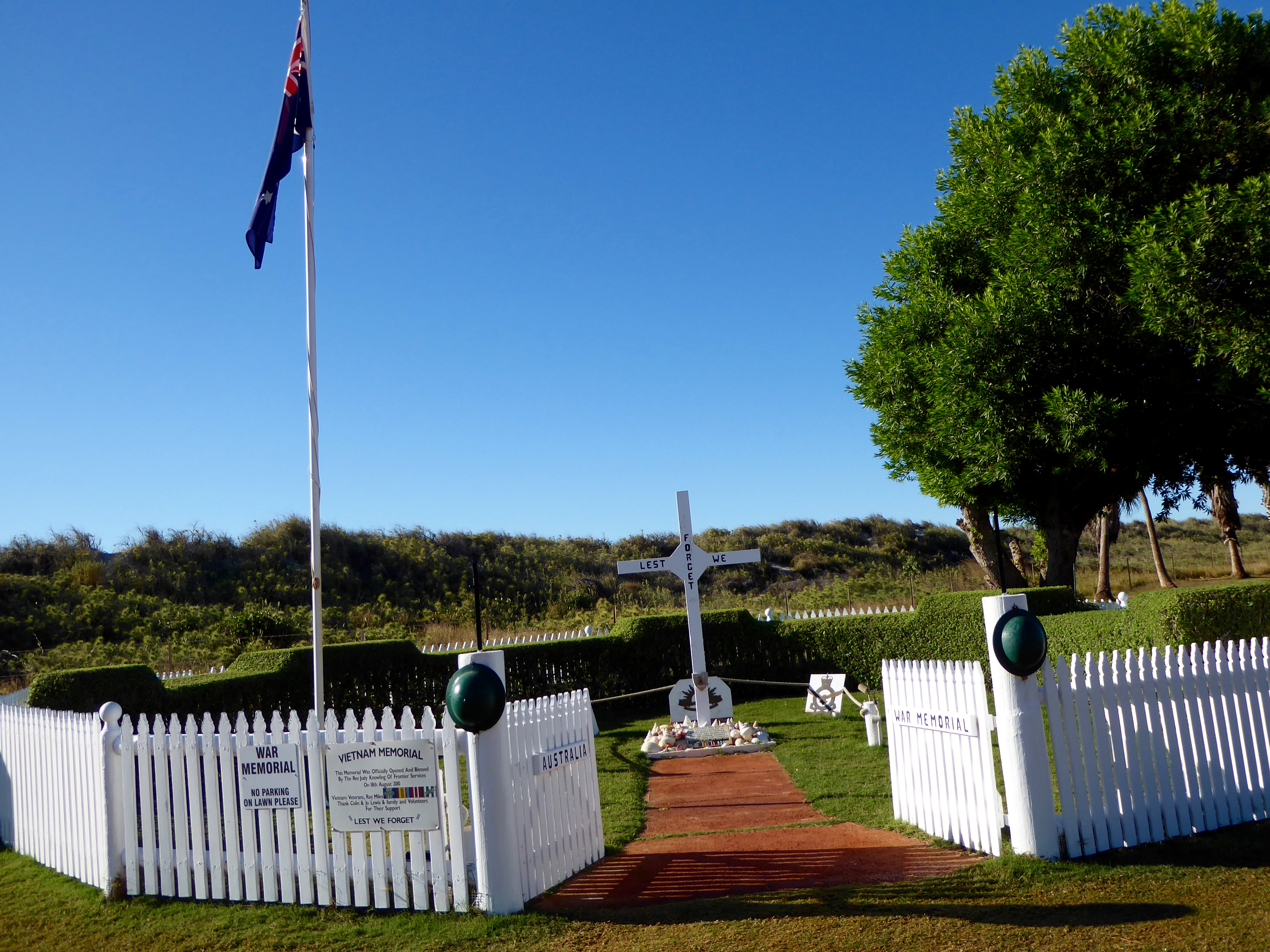
Isn’t she adorable?   We love these wallabies.   You may remember that a wallaby looks like a smaller kangaroo.   Our park has this Memorial for Vietnam Veterans.

Vietnam Memorial

Vietnam Memorial

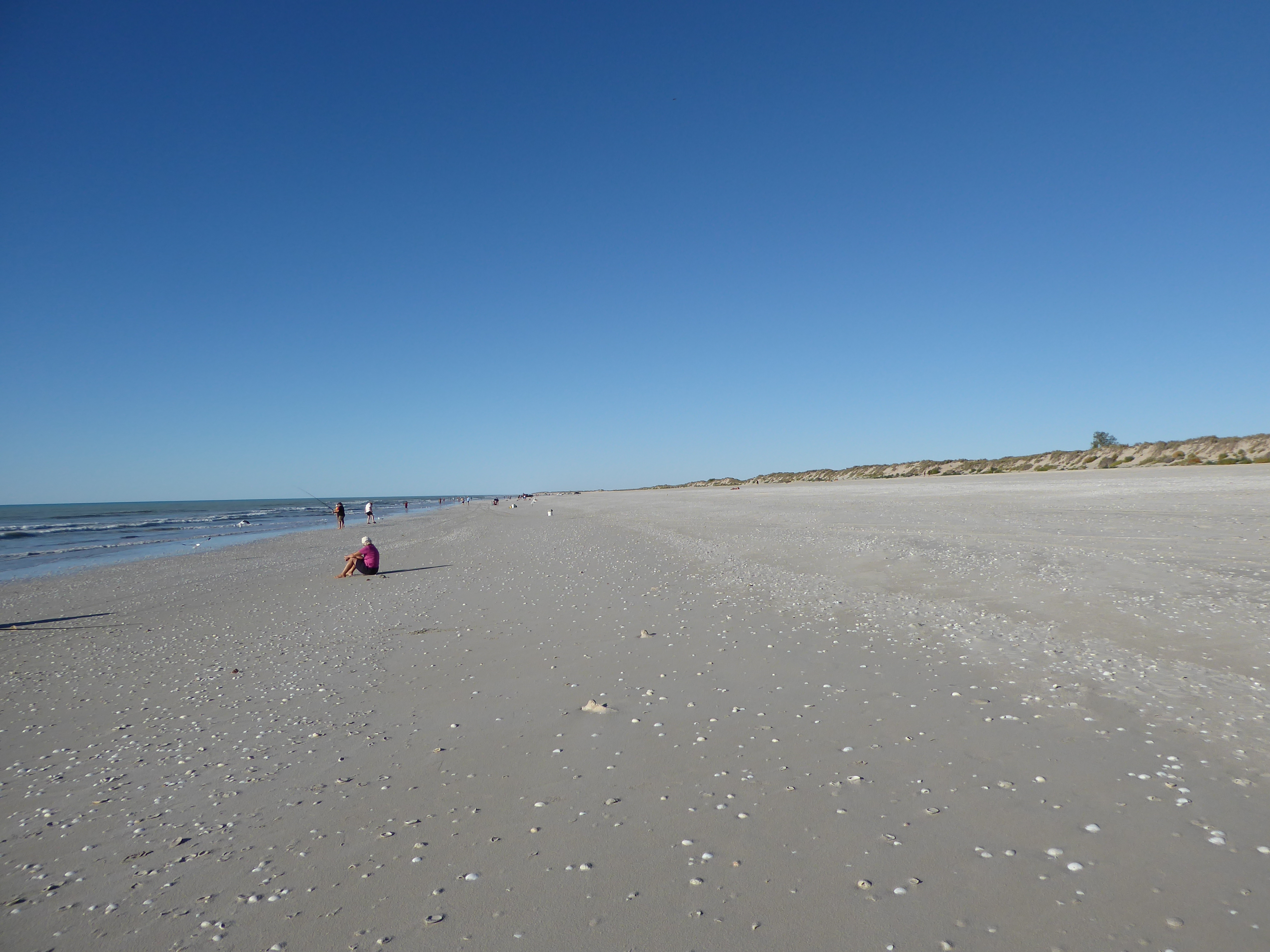
It was officially opened August 18, 2010.   We like memorials that honor those that fought for freedom.   Eighty Mile Beach is the longest uninterrupted beach in Western Australia.   The beach comprises 220 kilometers of coastline between Cape Missiessy and Cape Keraudren.   Let’s see the beach.

Our beach is wide and long

Our beach is wide and long

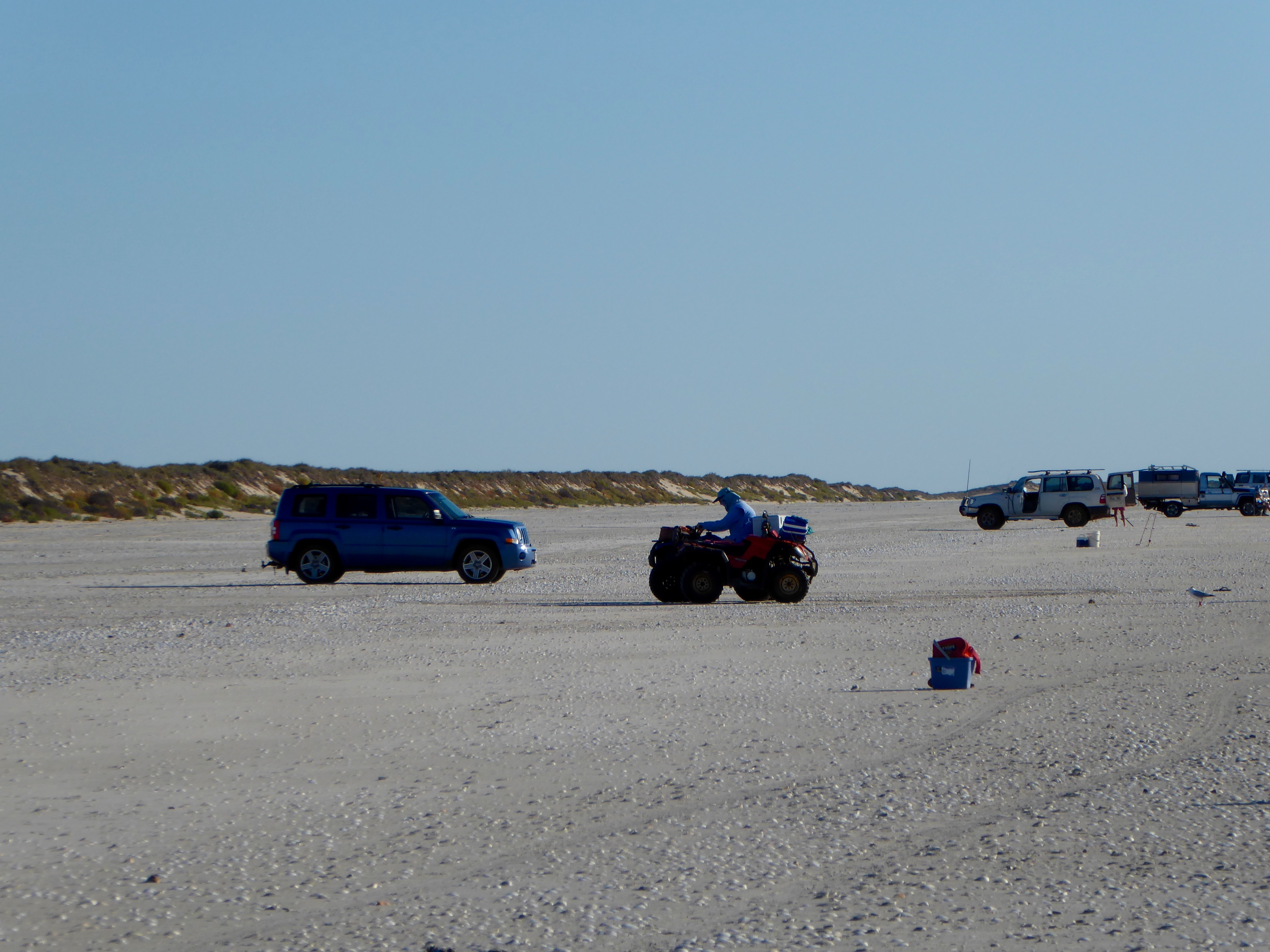
We enjoy the soft sand and the really wide beach.   Many migratory birds come here in the spring to feed.   Also between June and October humpback whales pass near this beach heading north.   This is the Indian Ocean, but the sea is rather gentle.   Humans can drive on this beach.

Driving on the beach

Driving on the beach

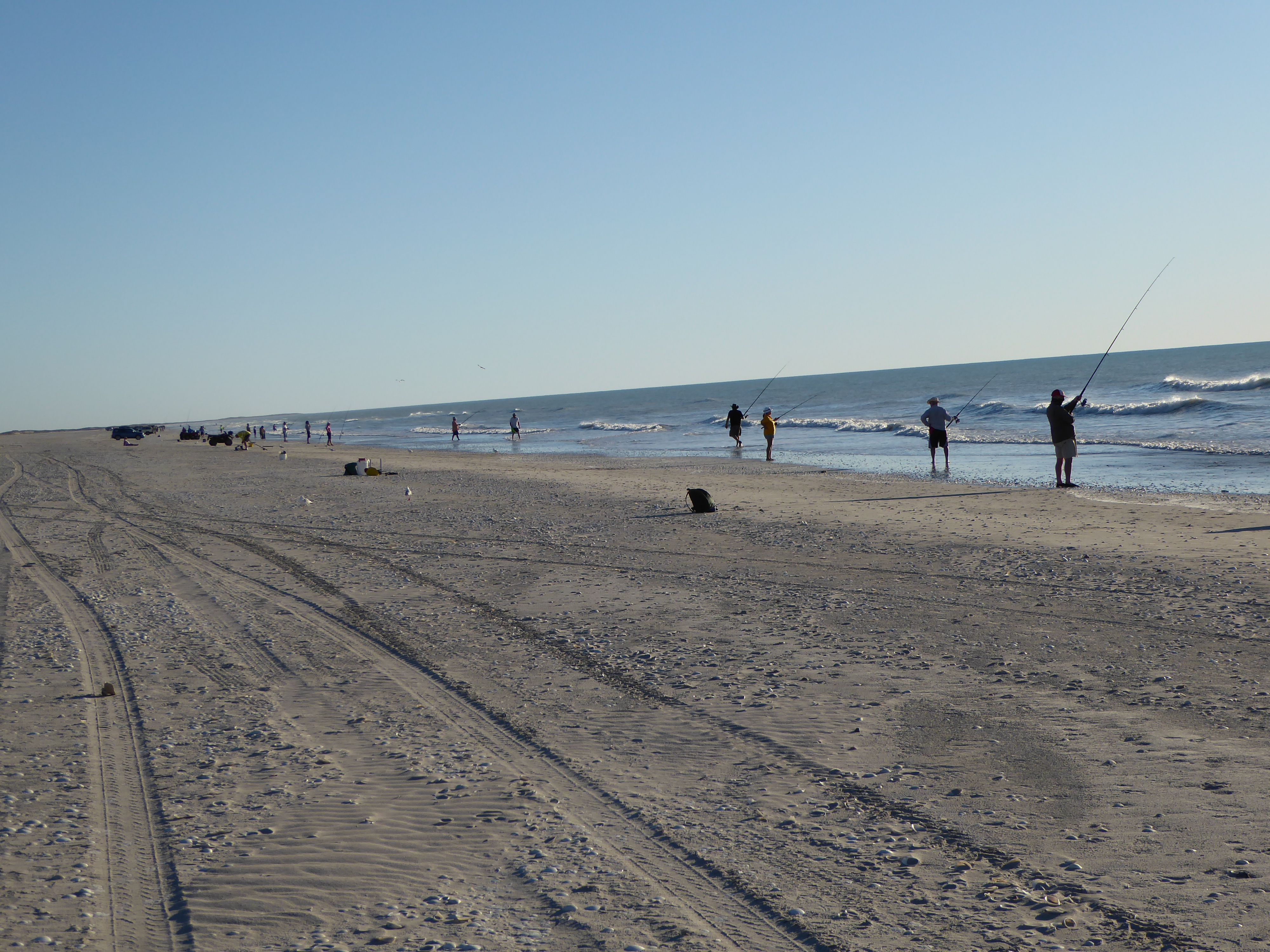
Fishing from the shore is popular with many humans.

Fishing on Eighty Mile Beach

Fishing on Eighty Mile Beach

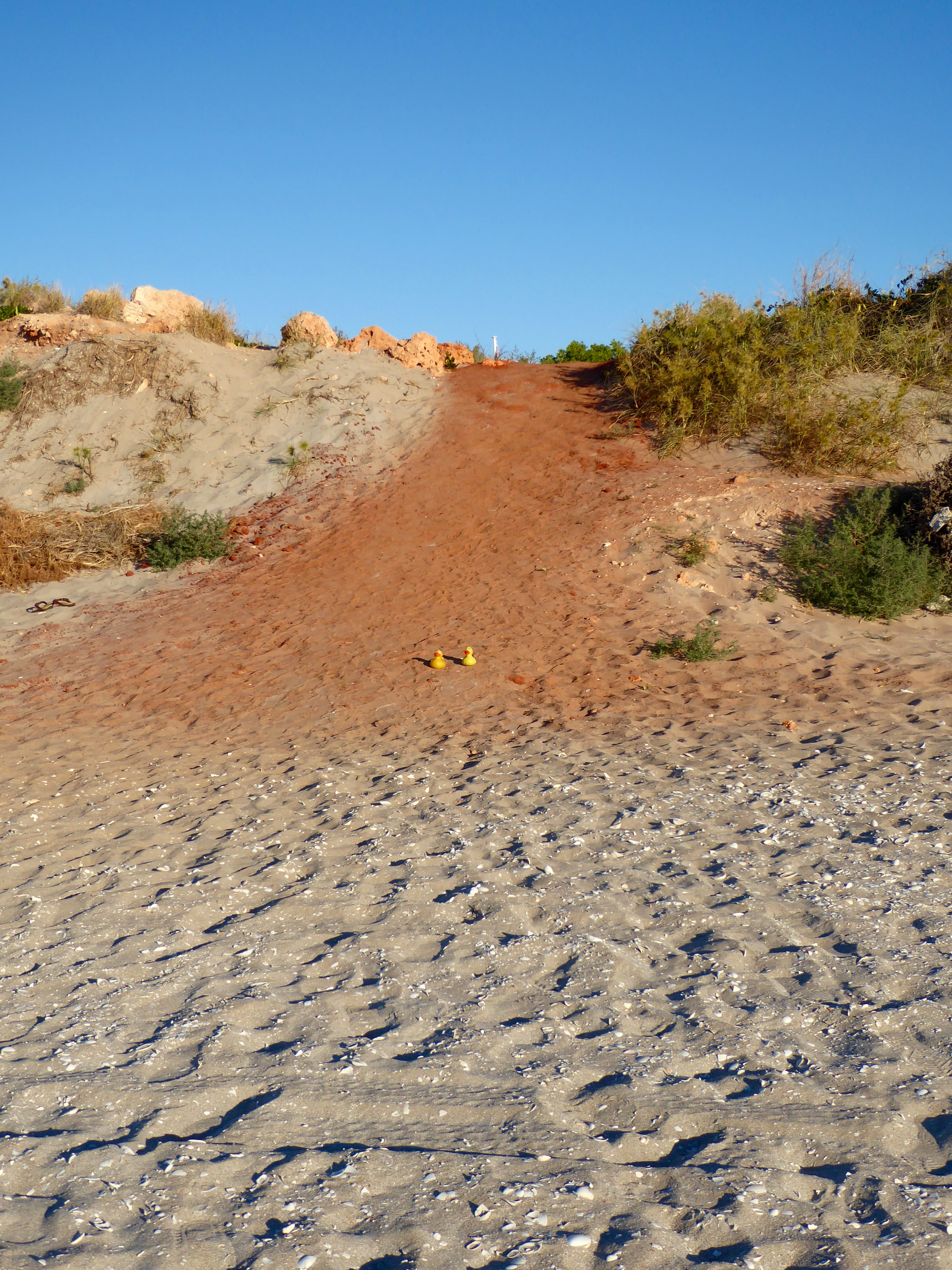
There are many kinds of shells on this beach.  We ducks like beaches, sand, water and shells.   This is the path to leave the beach and return to our cabin.

Heading back to our cabin

Heading back to our cabin

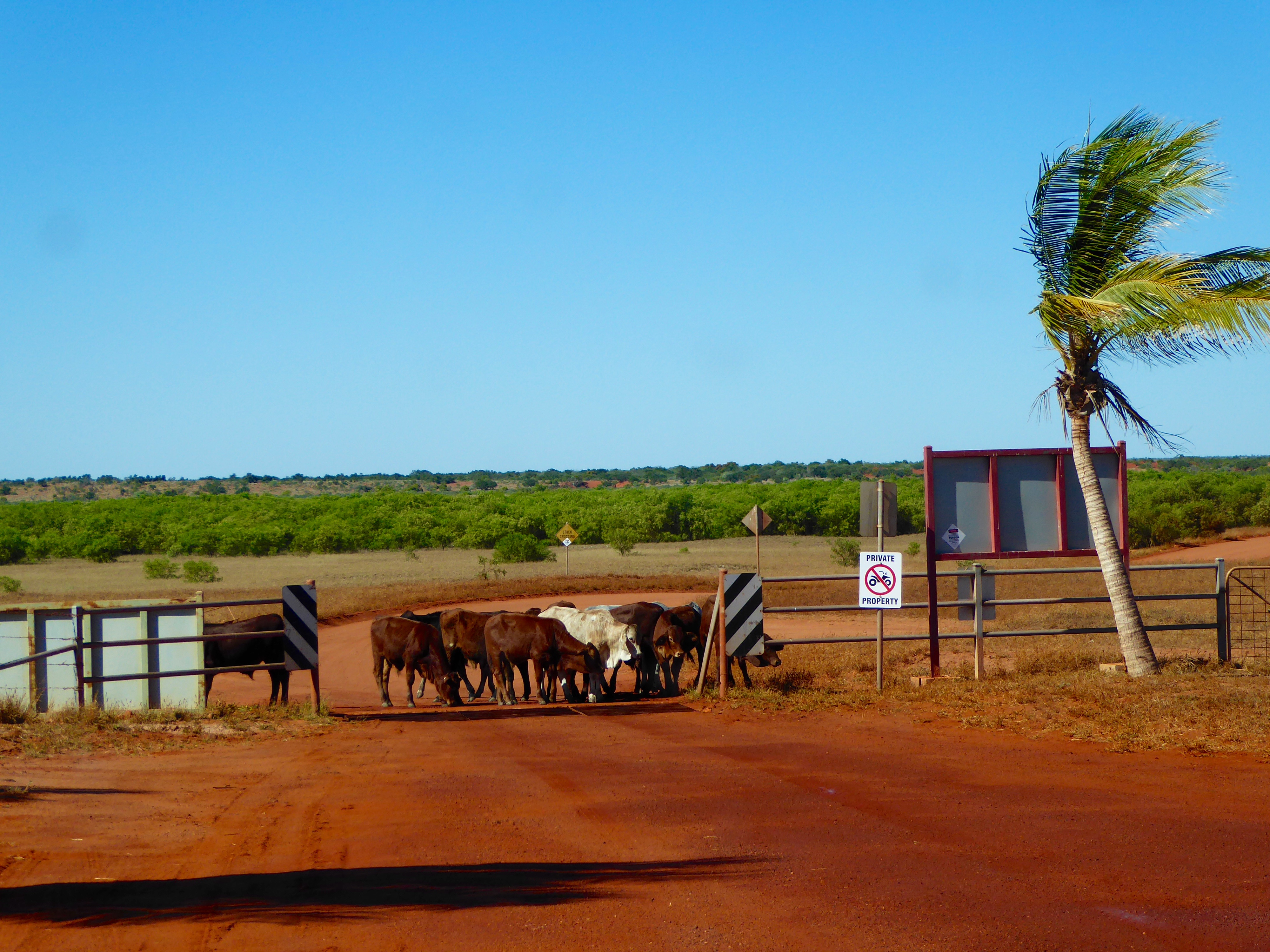
One time when we left the camp, some of the residents did not want us to leave.

Please don't leave

Please don’t leave

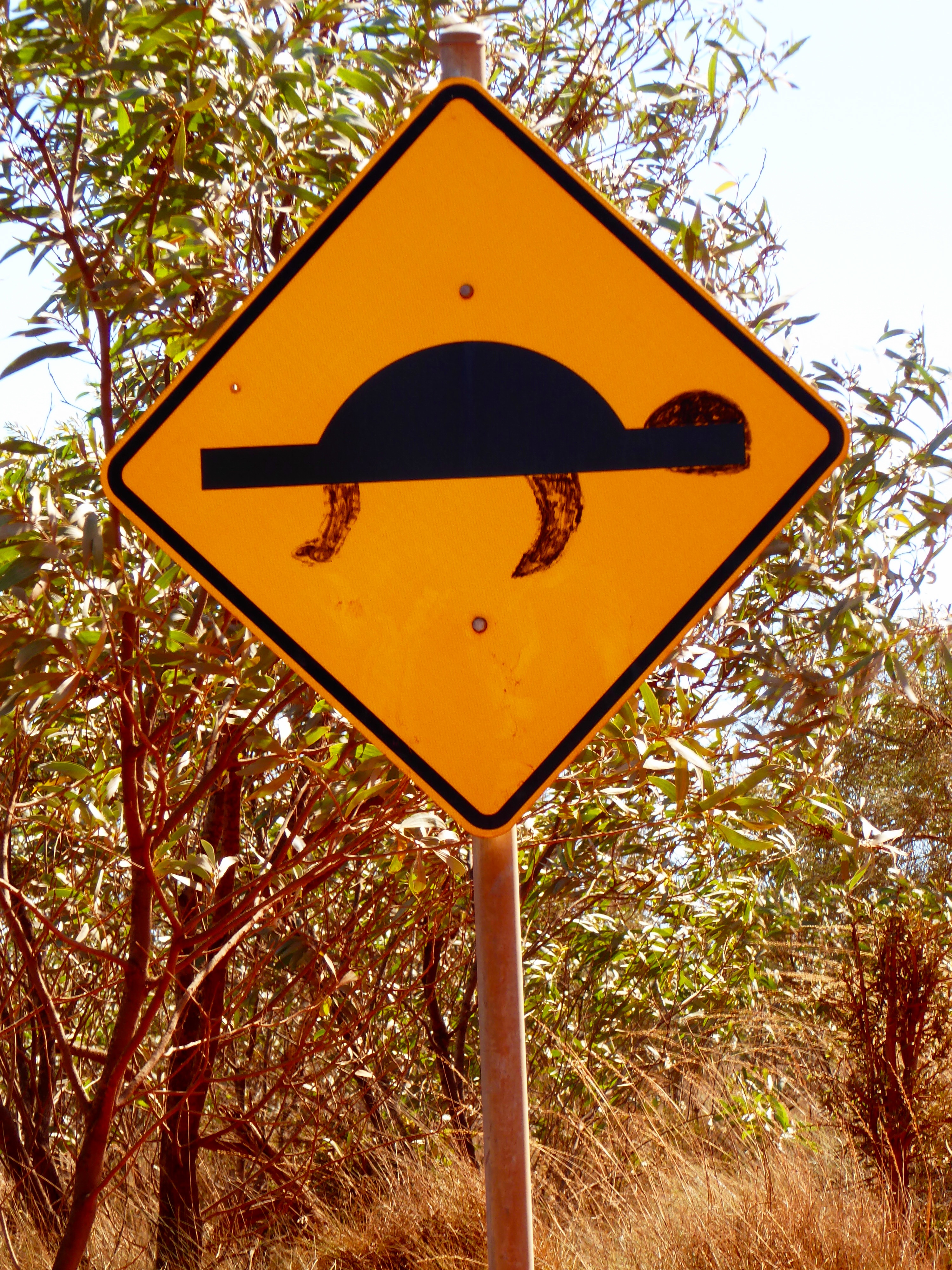
We waited patiently for them and soon they moved for us.   This road sign certainly made us look twice.

What?? Turtle crossing?

What?? Turtle crossing?

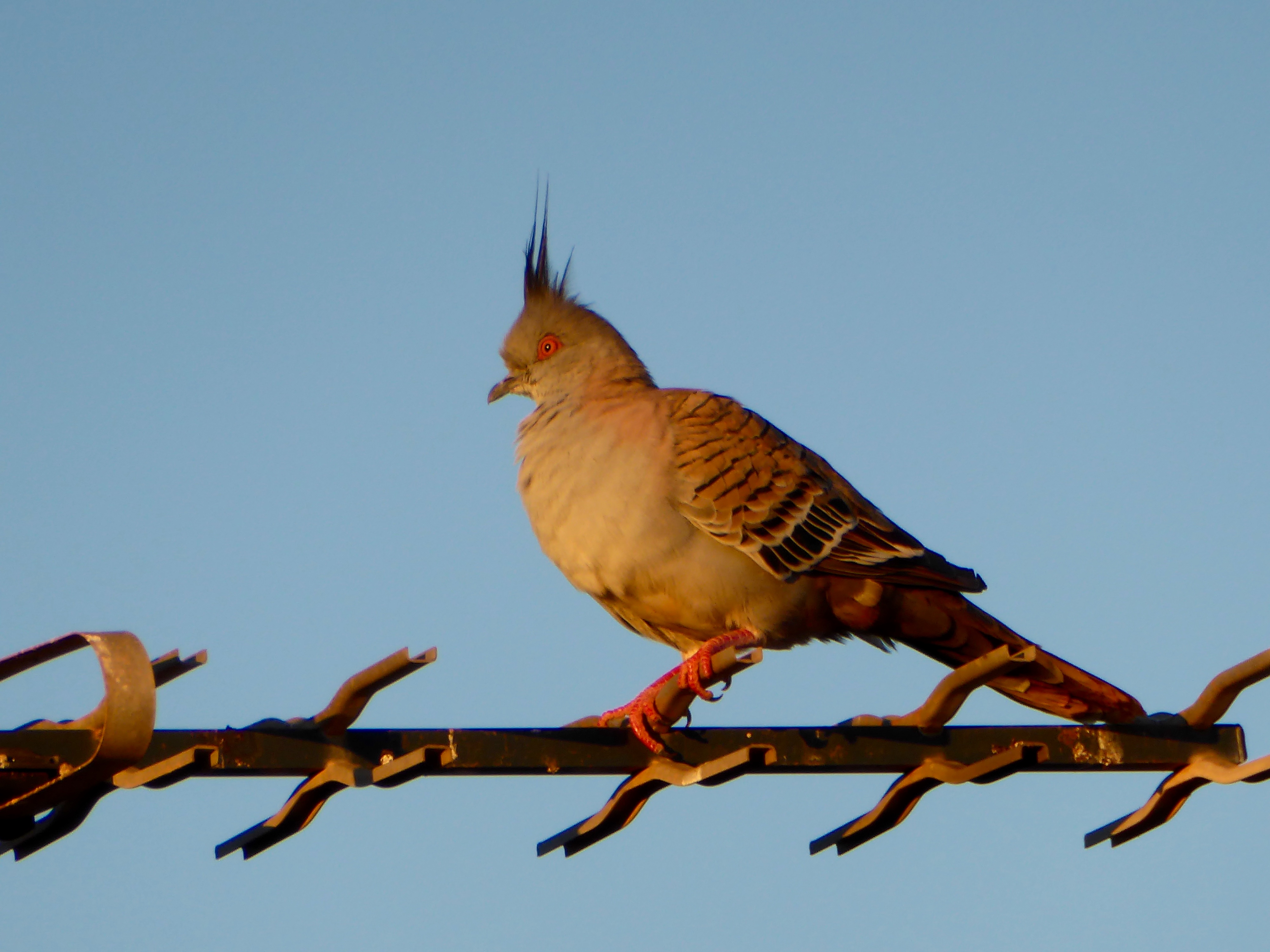
Someone altered a speed bump sign.   Flatback turtles do come ashore between October and April to lay eggs, but by the ocean.   Not on the road.   We are enjoying the view from our front porch.   This proud, colorful bird really got the attention of our humans.   Of course, being a fellow bird, we liked him also.

Our feathered friend

Our bright eyed feathered friend

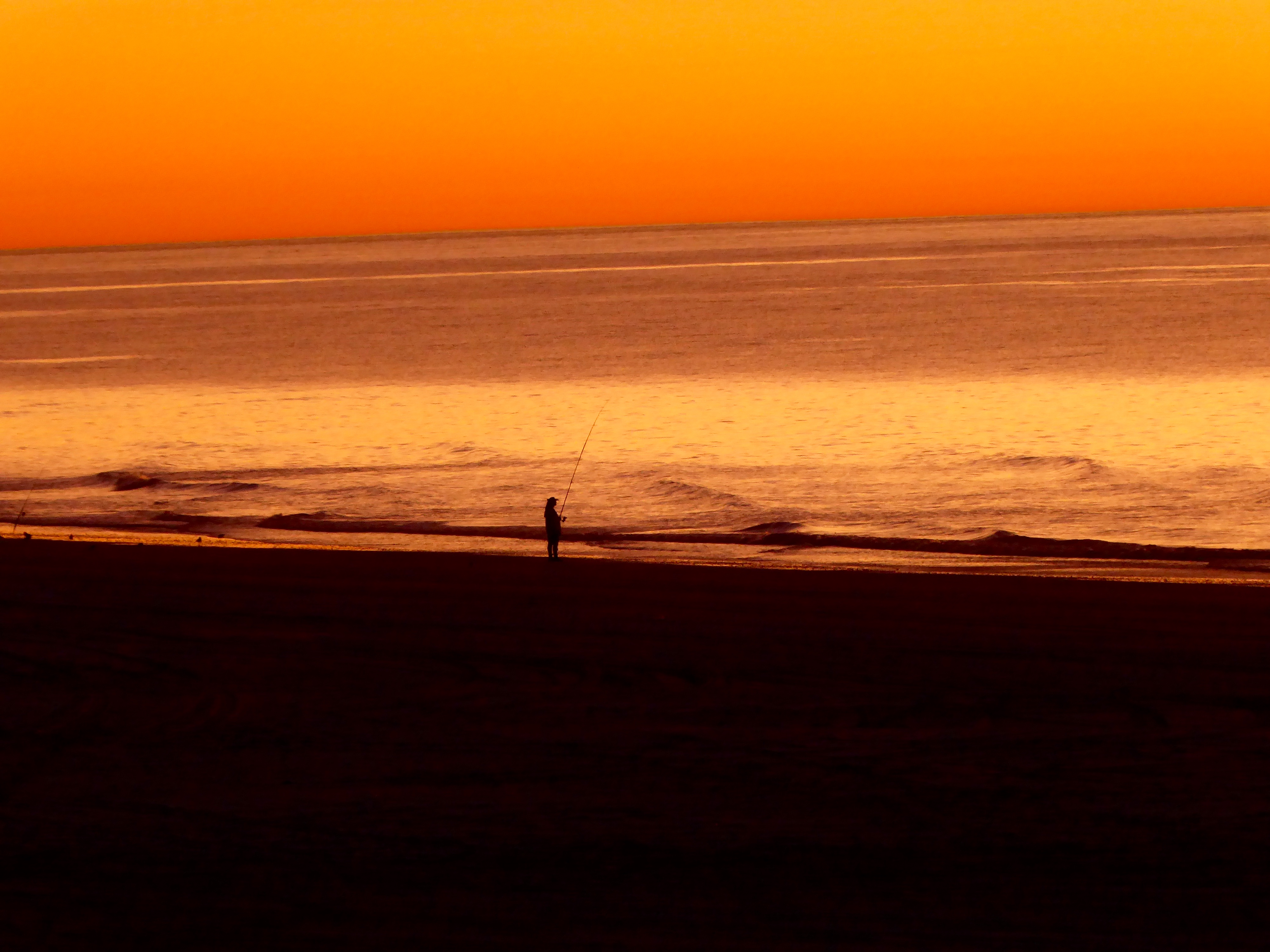
As you can guess, the sunsets here at Eighty Mile Beach on the Indian Ocean, are beautiful.

Beautiful Indian Ocean sunset with a lone fisherman

Beautiful Indian Ocean sunset with a lone fisherman

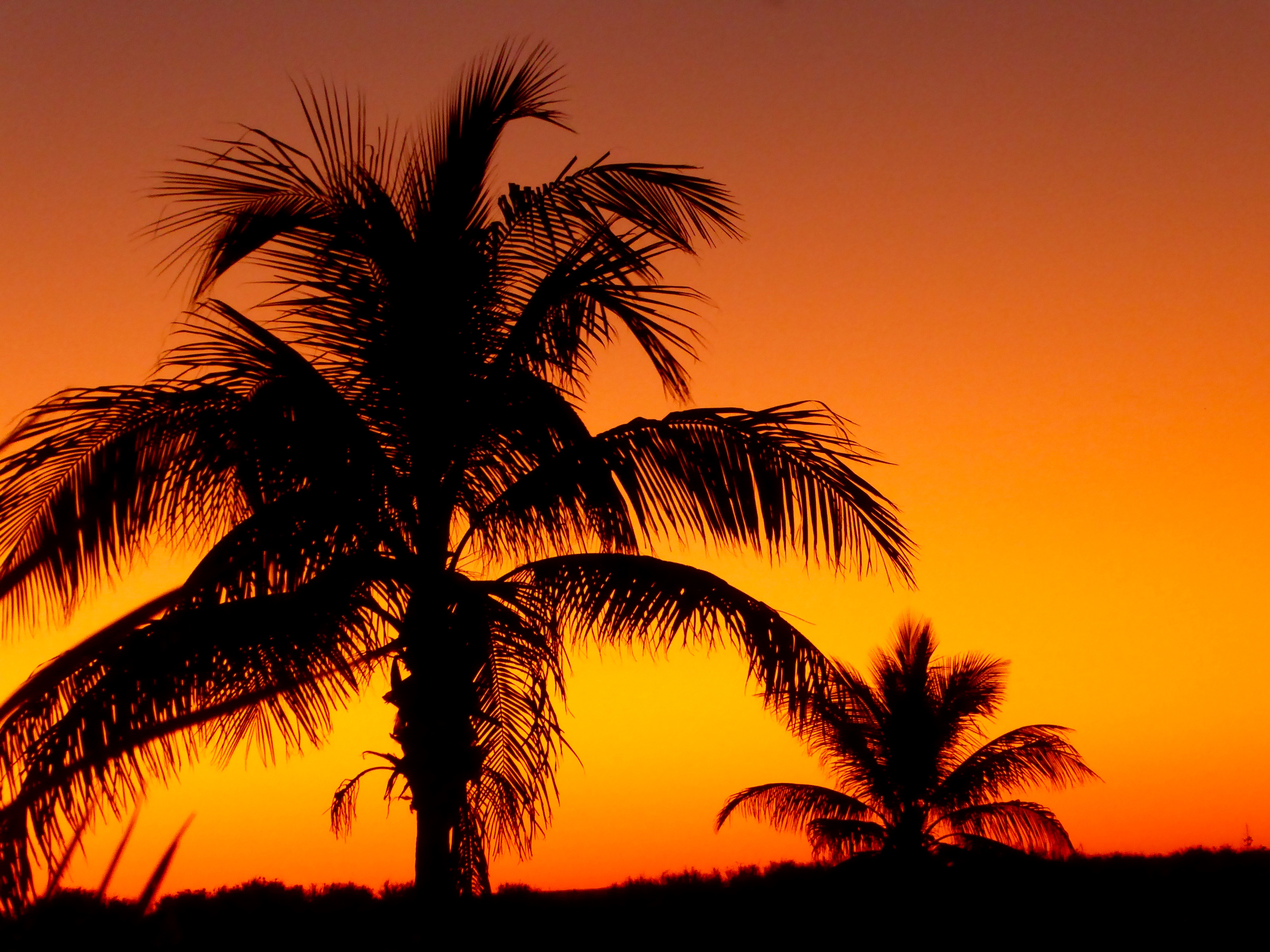
A great finale to our time at Eighty Mile Beach.

Just beautiful

Just beautiful

Driving from Exmouth to Point Samson, Western Australia with Zeb and Eider Duck

Driving north from Exmouth, Zeb and Eider thought this was one of the best signs ever!

One of the greatest signs ever!

One of the greatest signs ever!

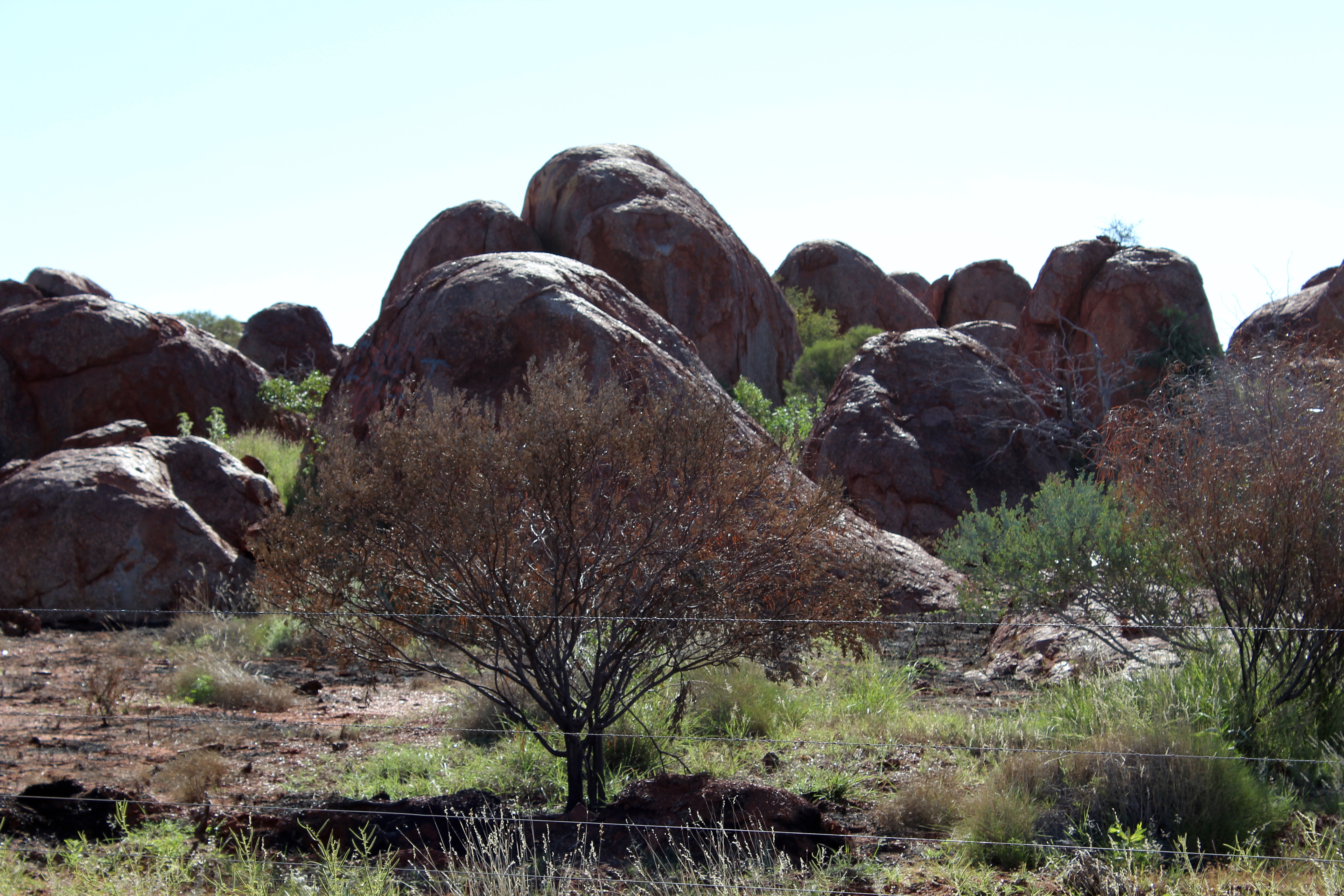
Further north, we spotted these rocks.

Pile of rocks

Pile of rocks

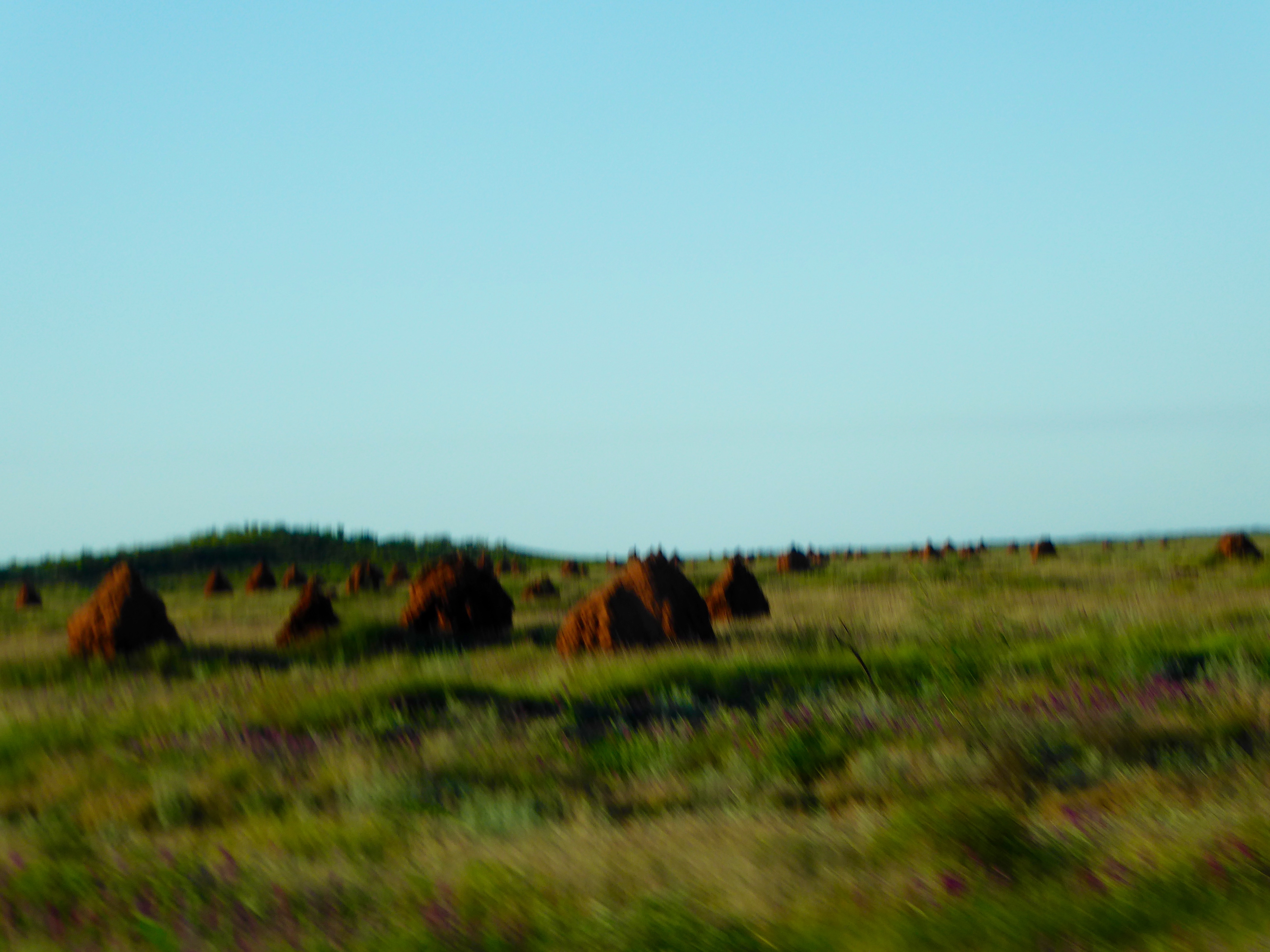
They are just all piled up.   Rather unusual.   We continue to see the many termite hills.

More termite hills

More termite hills

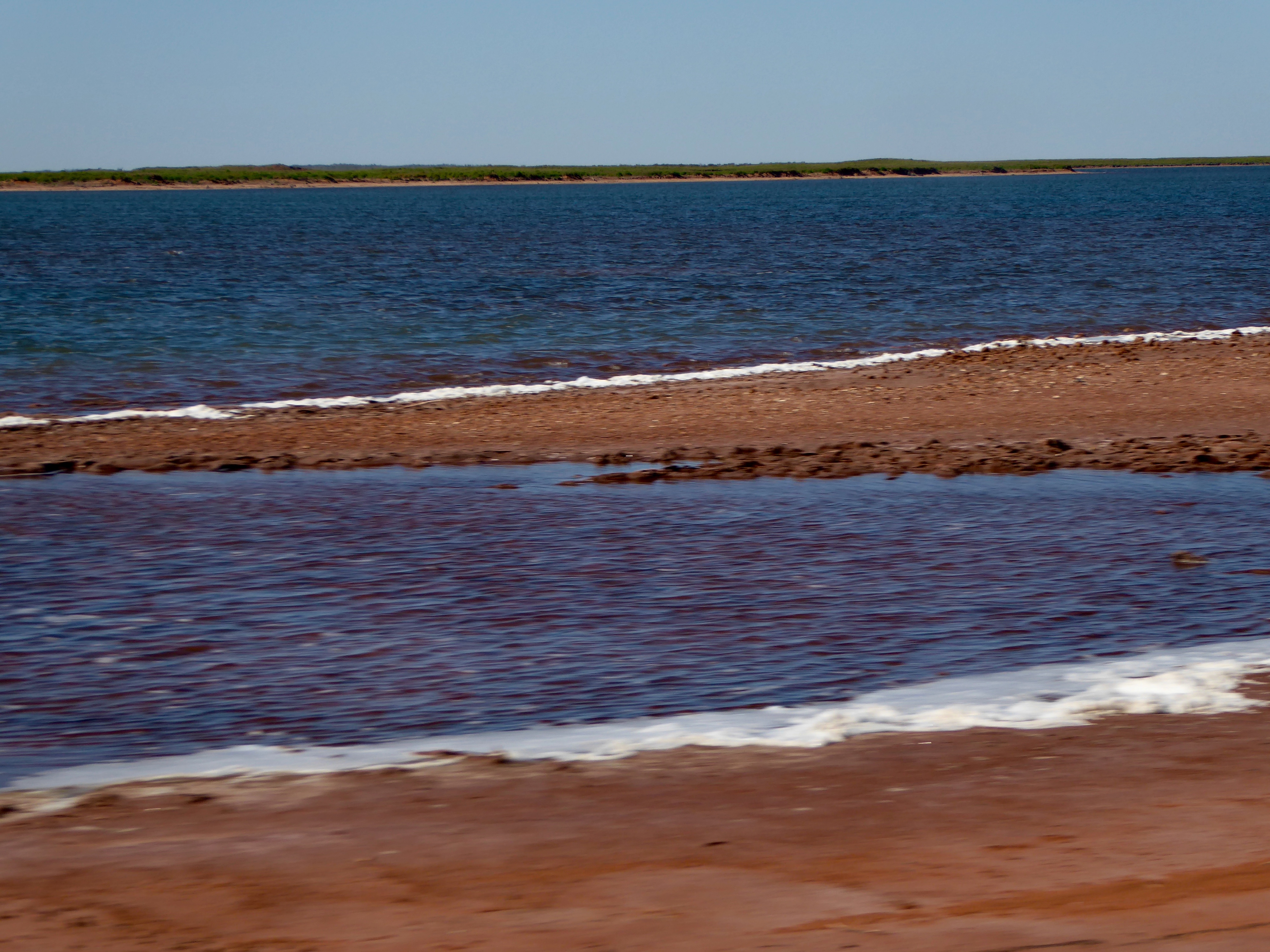
There are thousands of hills, so there must be millions of termites??   Arriving in Onslow, we decide to spend the night here.   Our rooms are on the shore of the Indian Ocean.

Indian Ocean by our cabin

Indian Ocean by our cabin

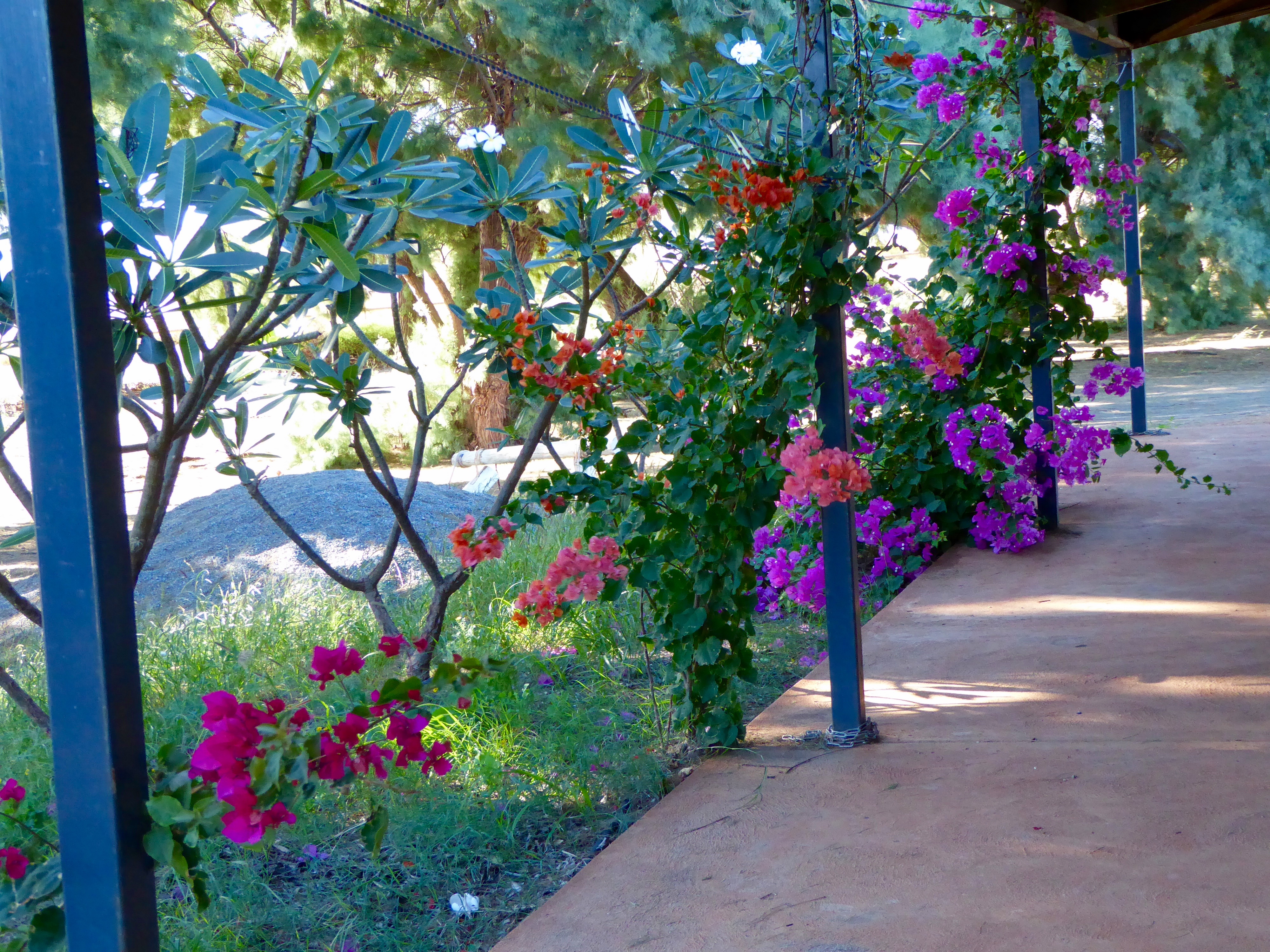
Aren’t these flowers beautiful?

Flowers in front of our cabin

Flowers in front of our cabin

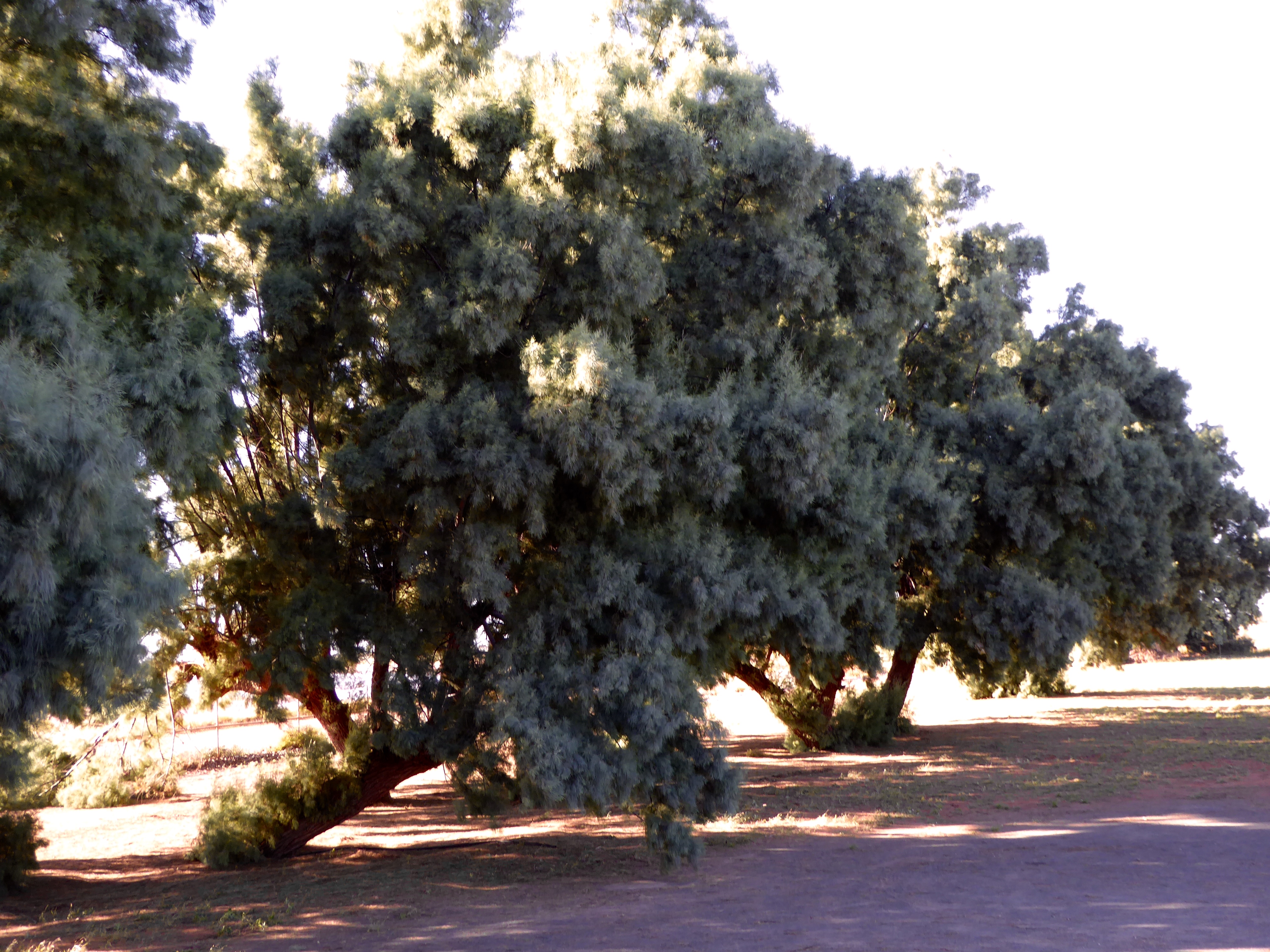
They are growing by the front of our cabin.   How can these trees grow and not fall down?

Growing sideways?

Growing sideways?

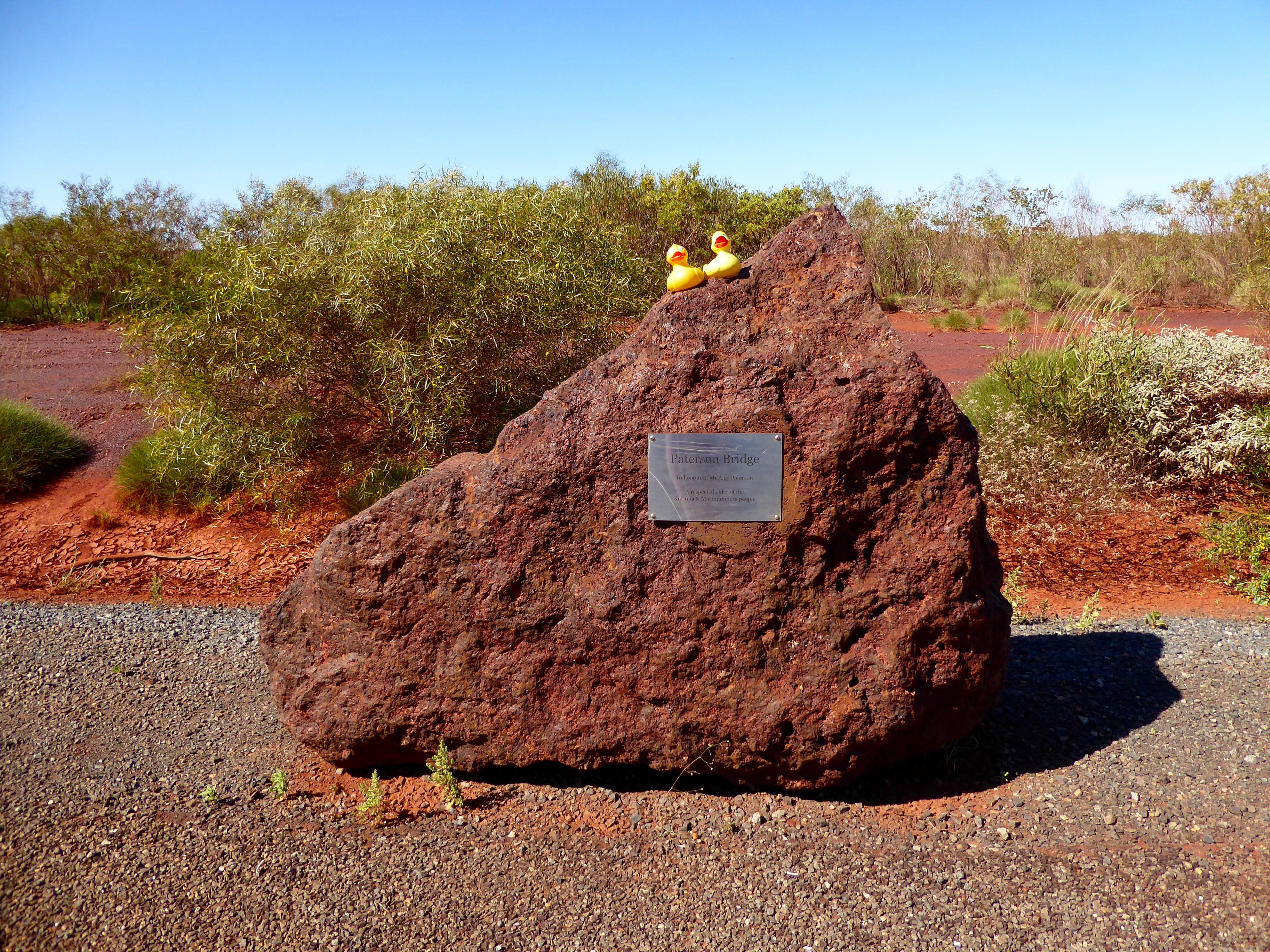
Leaving Onslow, still heading north, we find an Iron Ore mining area.   The real mining area is fenced, but we see this plaque.

Plaque for Mr. Algy Patterson

Plaque for Mr. Algy Patterson

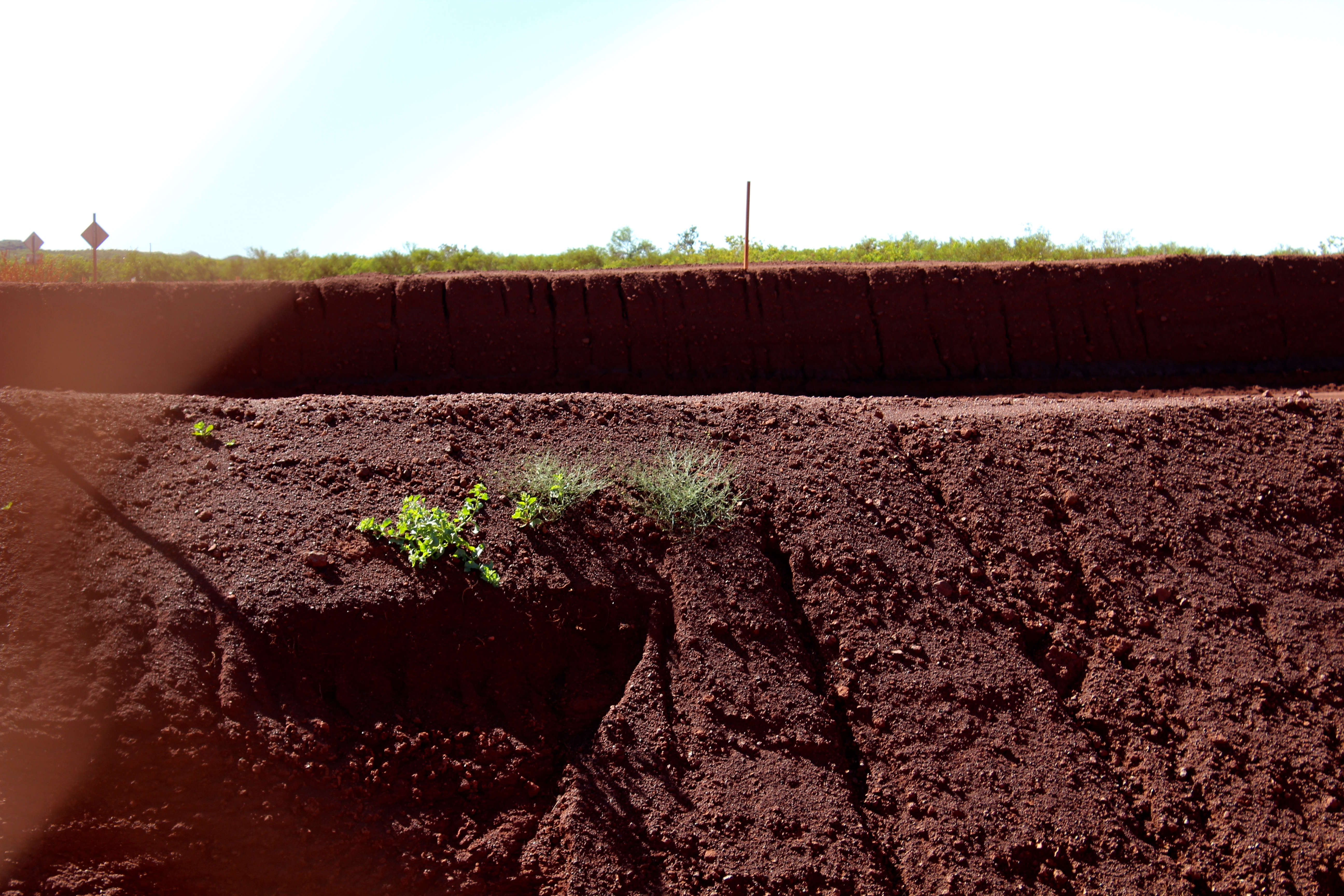
The nearby bridge over the road is the Patterson Bridge, named for Mr. Algy Patterson,  respected elder of the Kuruma and Marthudunera people.   Much land in this part of Australia was owned by the aboriginal people and now Australia calls them traditional owners and they are involved in the use of the land.   This is the case at the iron ore mining site.   This is the Mesa A/Warramboo mine.   Red dirt shows the work being done and the heavy red color of the soil, an indicator of iron ore.

Iron Ore being mined

Iron Ore being mined

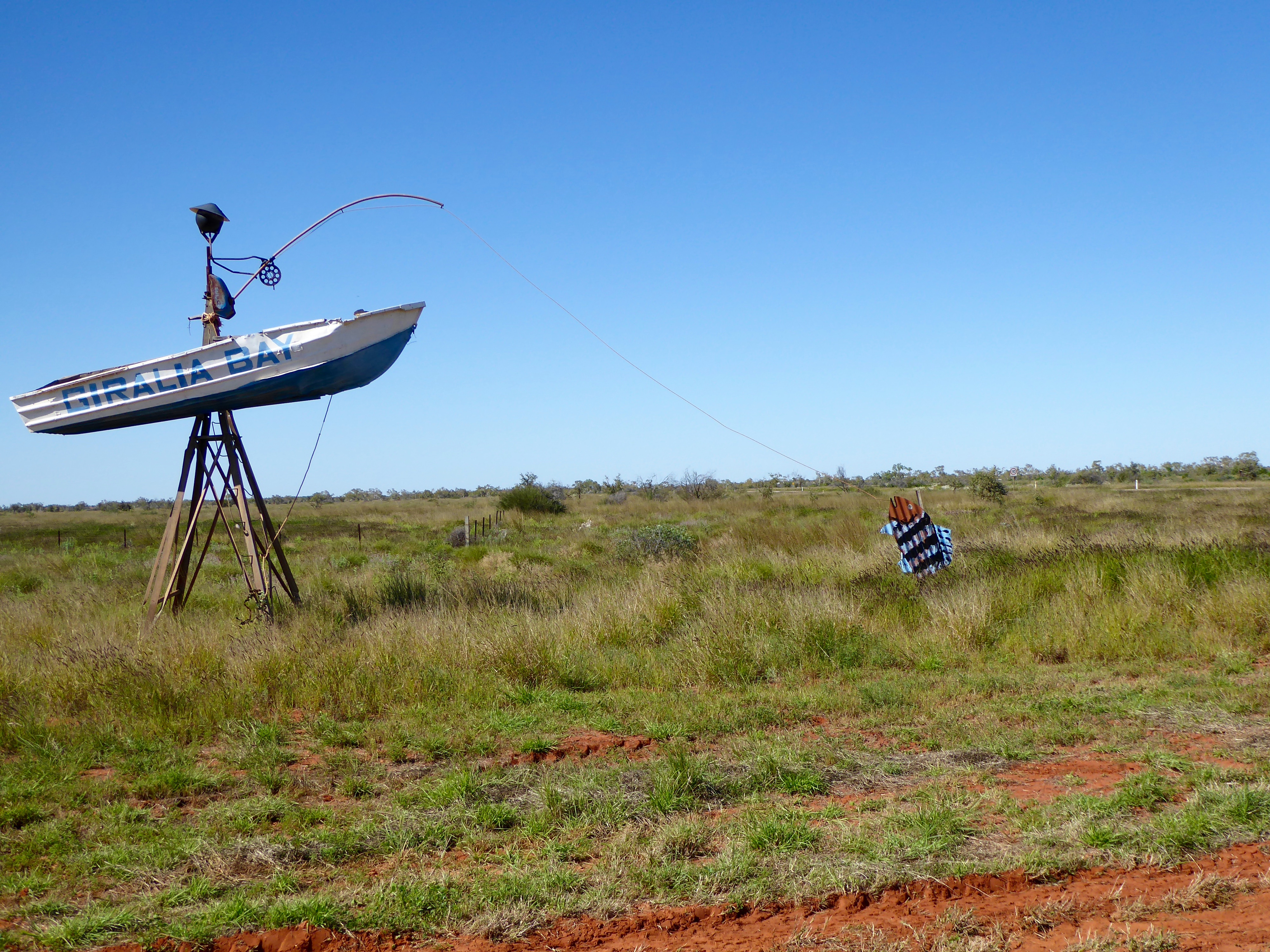
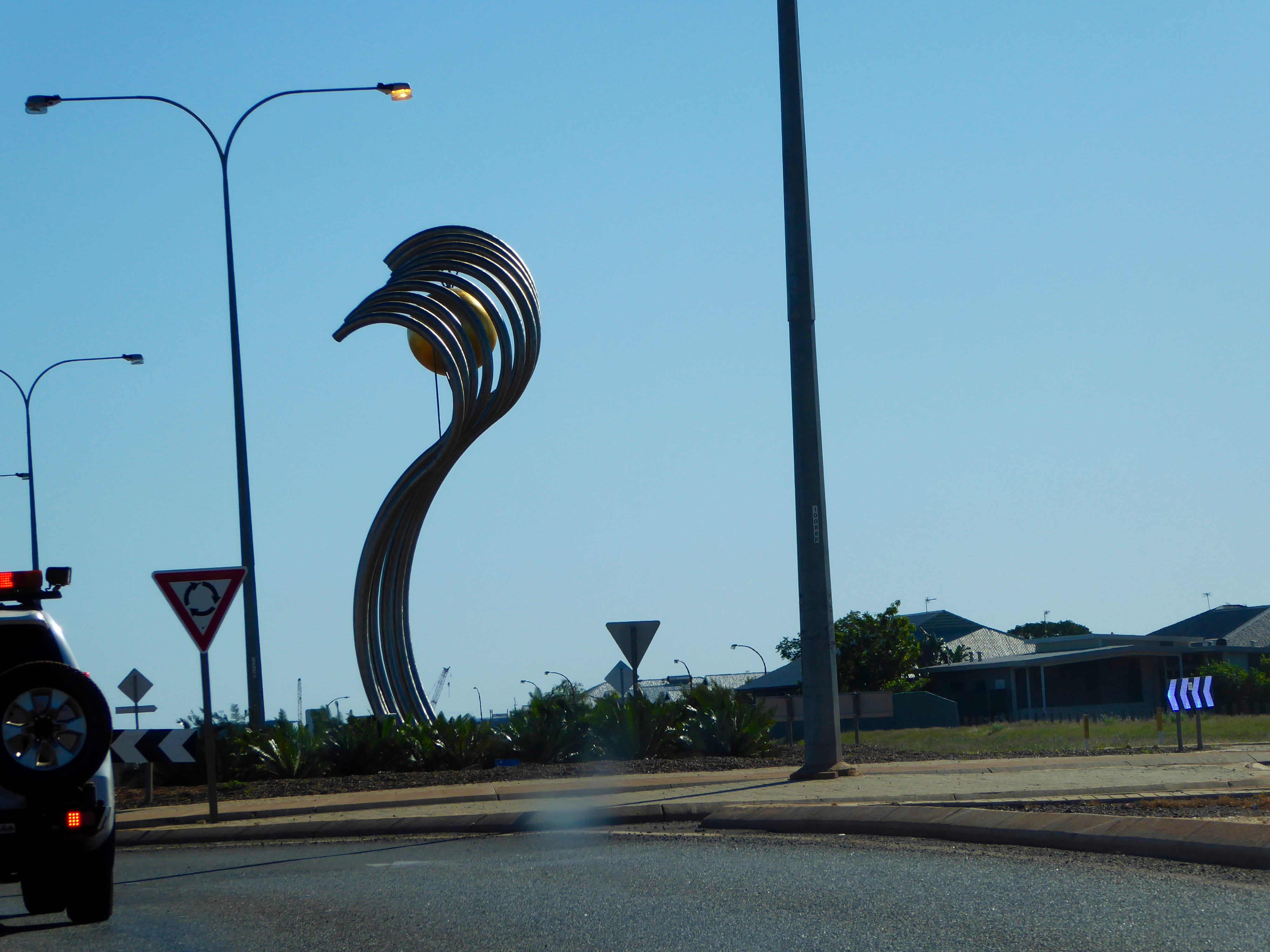
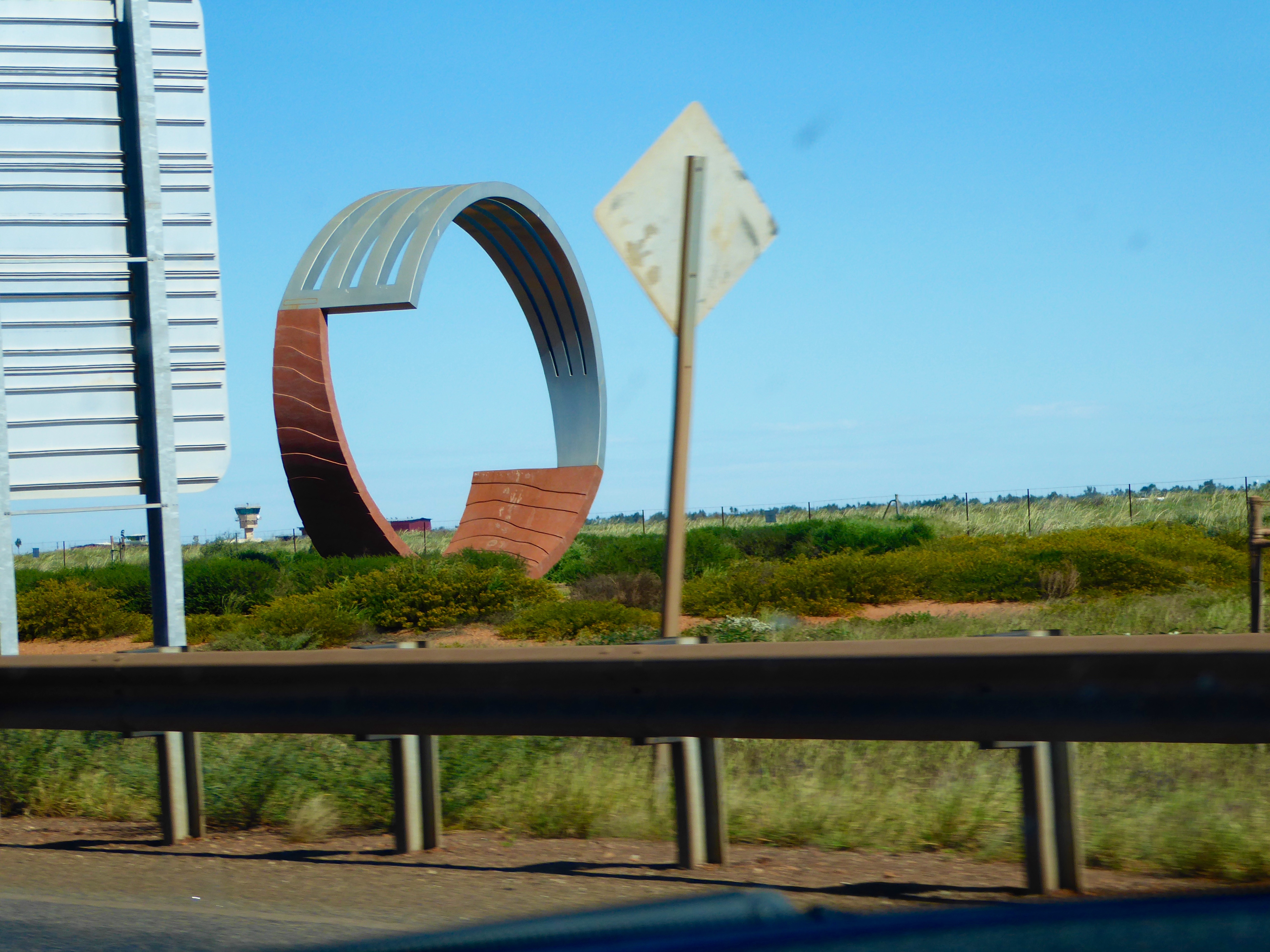
Further north, we observed this unusual sculpture.

Unusual sculpture

Unusual sculpture

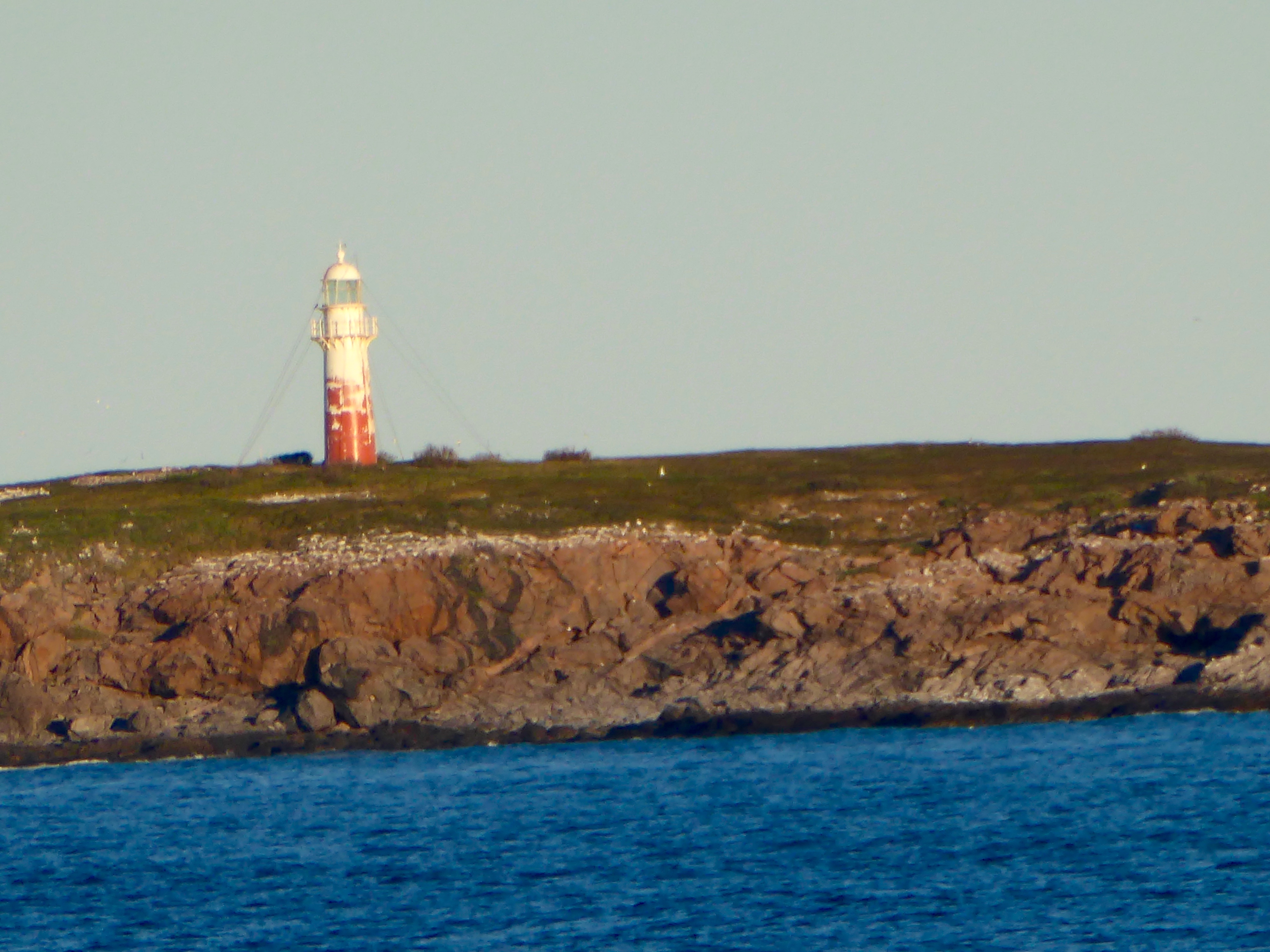
We stop at Point Samson and admire the lighthouse near our room.

Lighthouse at Point Samson

Lighthouse at Point Samson

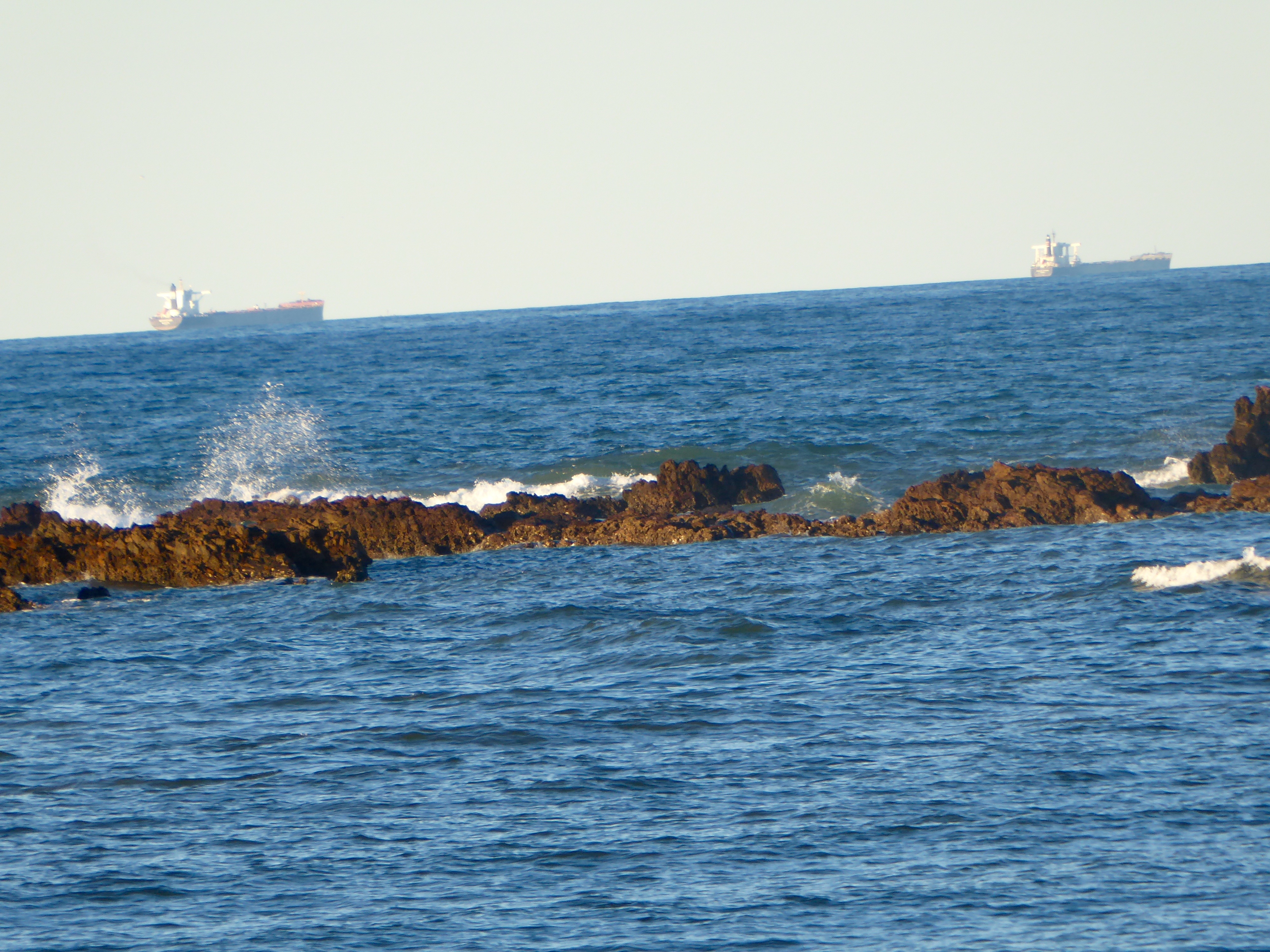
These ships are lined up for the docks at Port Hedland.

Ships lined up for Port Hedland

Ships lined up for Port Hedland

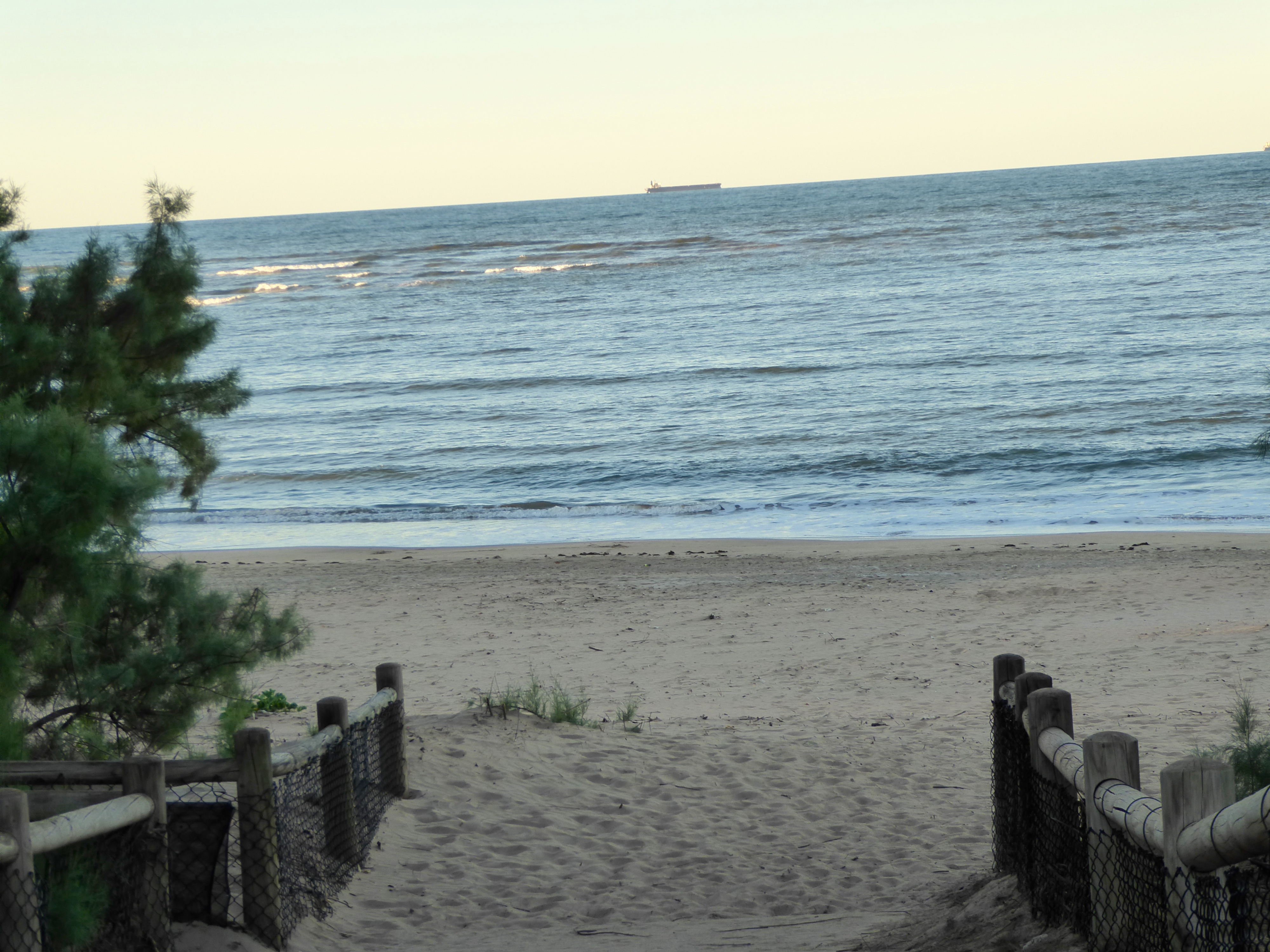
The ships will take iron ore to Asia.   We use this path to get to our beach on the Indian Ocean at Point Samson.

Path to beach at Indian Ocean

Path to beach at Indian Ocean

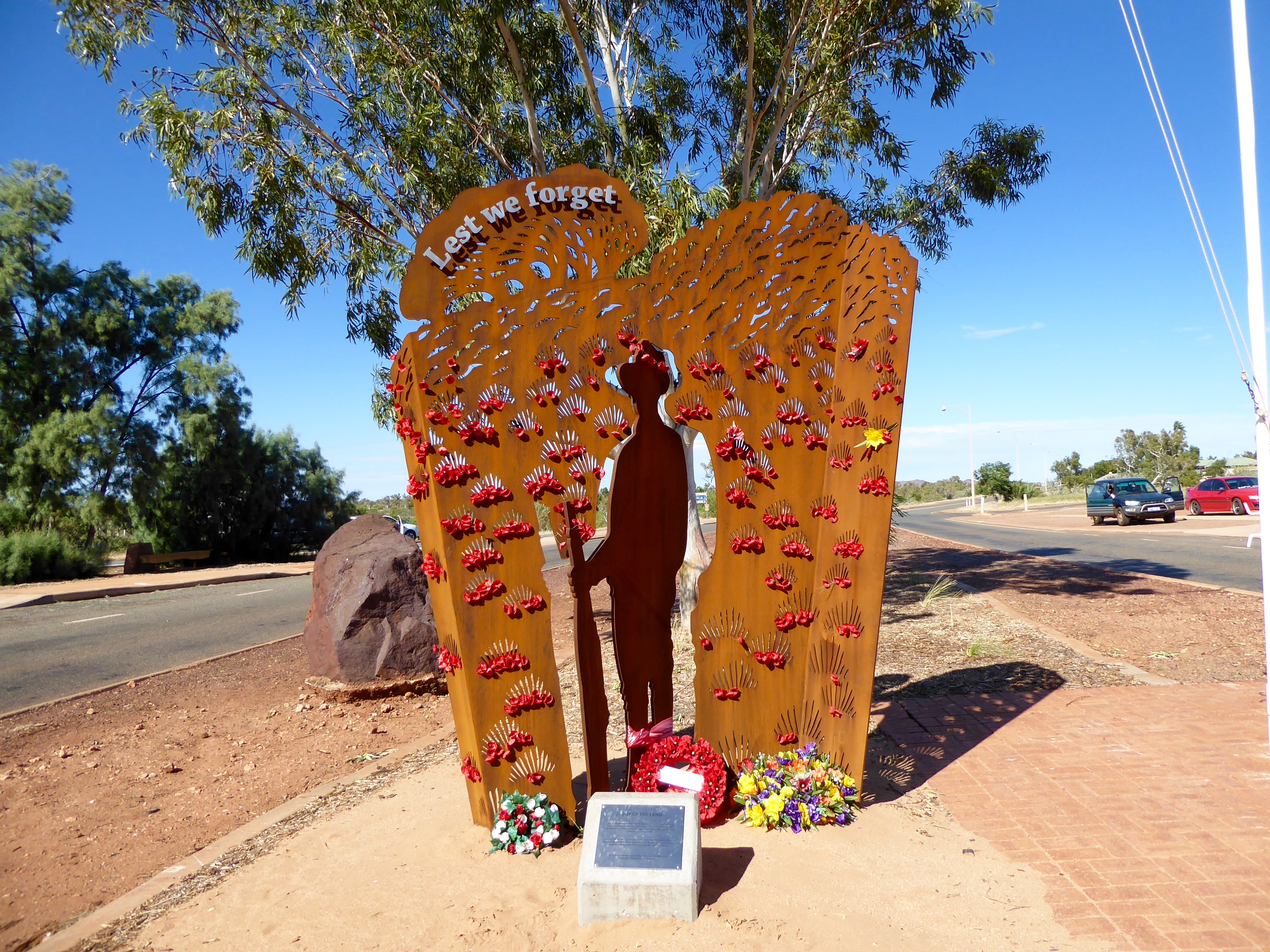
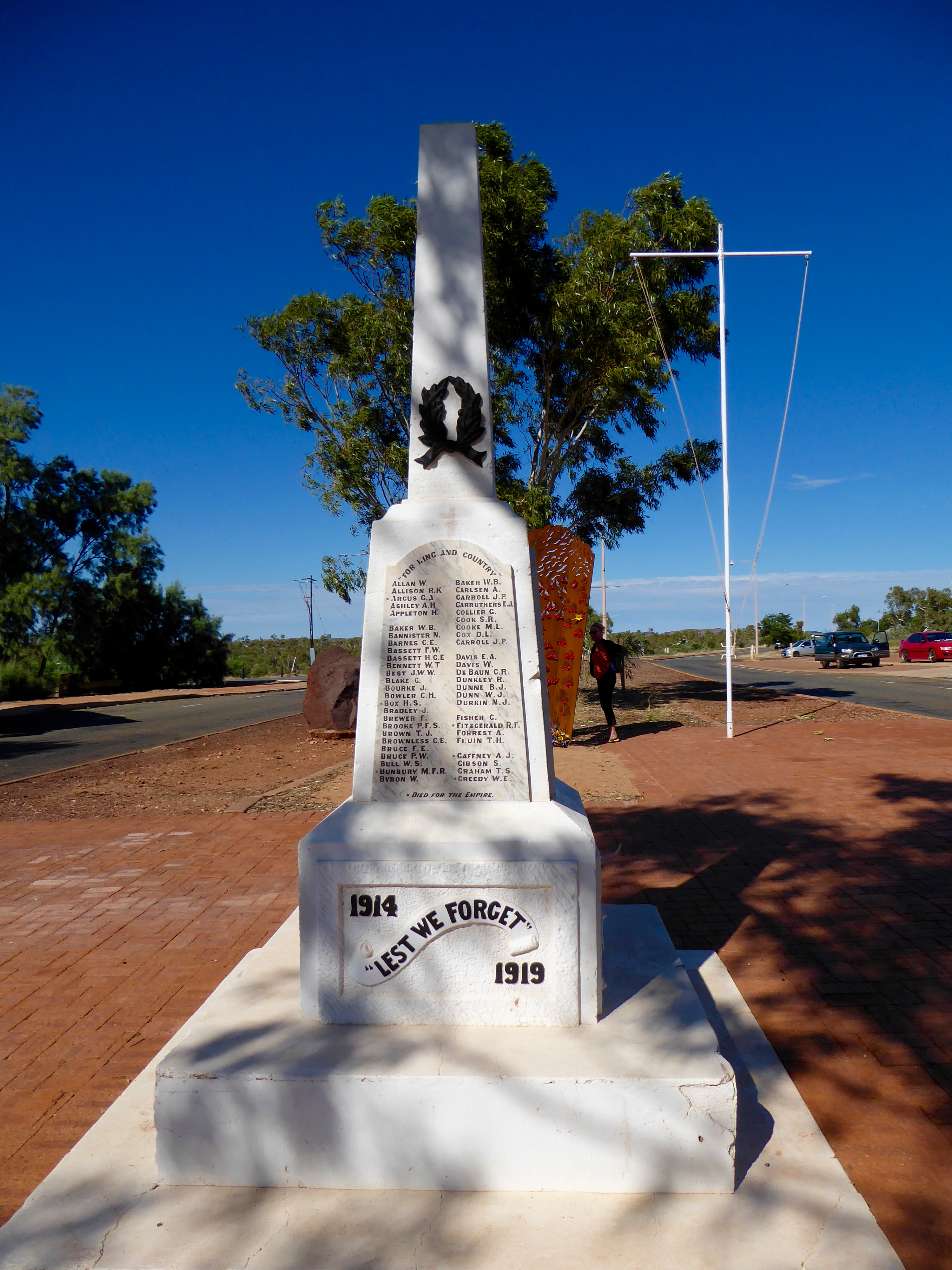
The next town, heading north, is Roebuck.   We really liked these memorials for Australia’s military heroes.   This one is for those that perished during World War I.

Honoring World War I Veterans at Roebuck

Honoring World War I Veterans at Roebuck

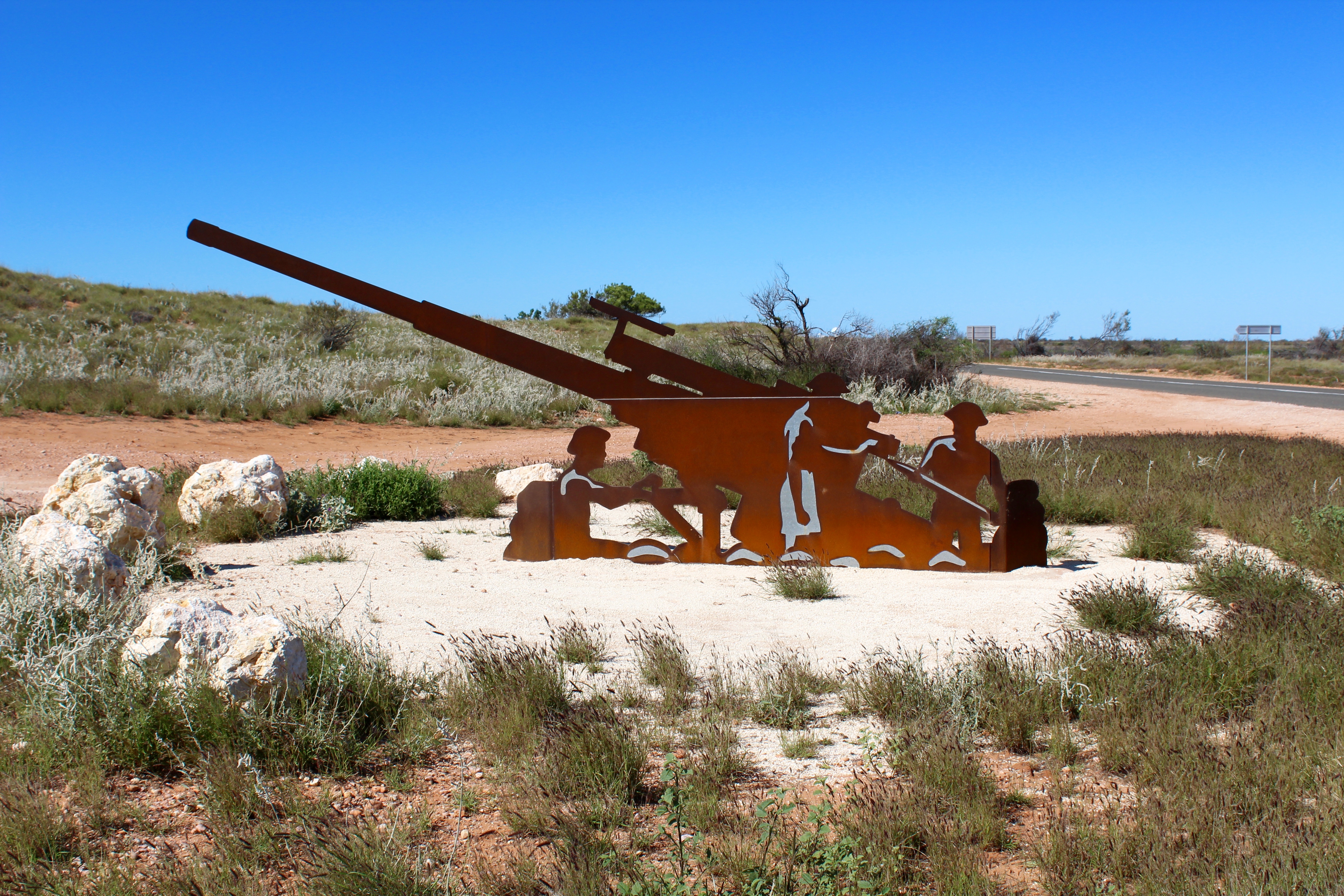
This one honors all fallen veterans.

Honoring all veterans. Roebuck, Western Australia

Honoring all veterans. Roebuck, Western Australia

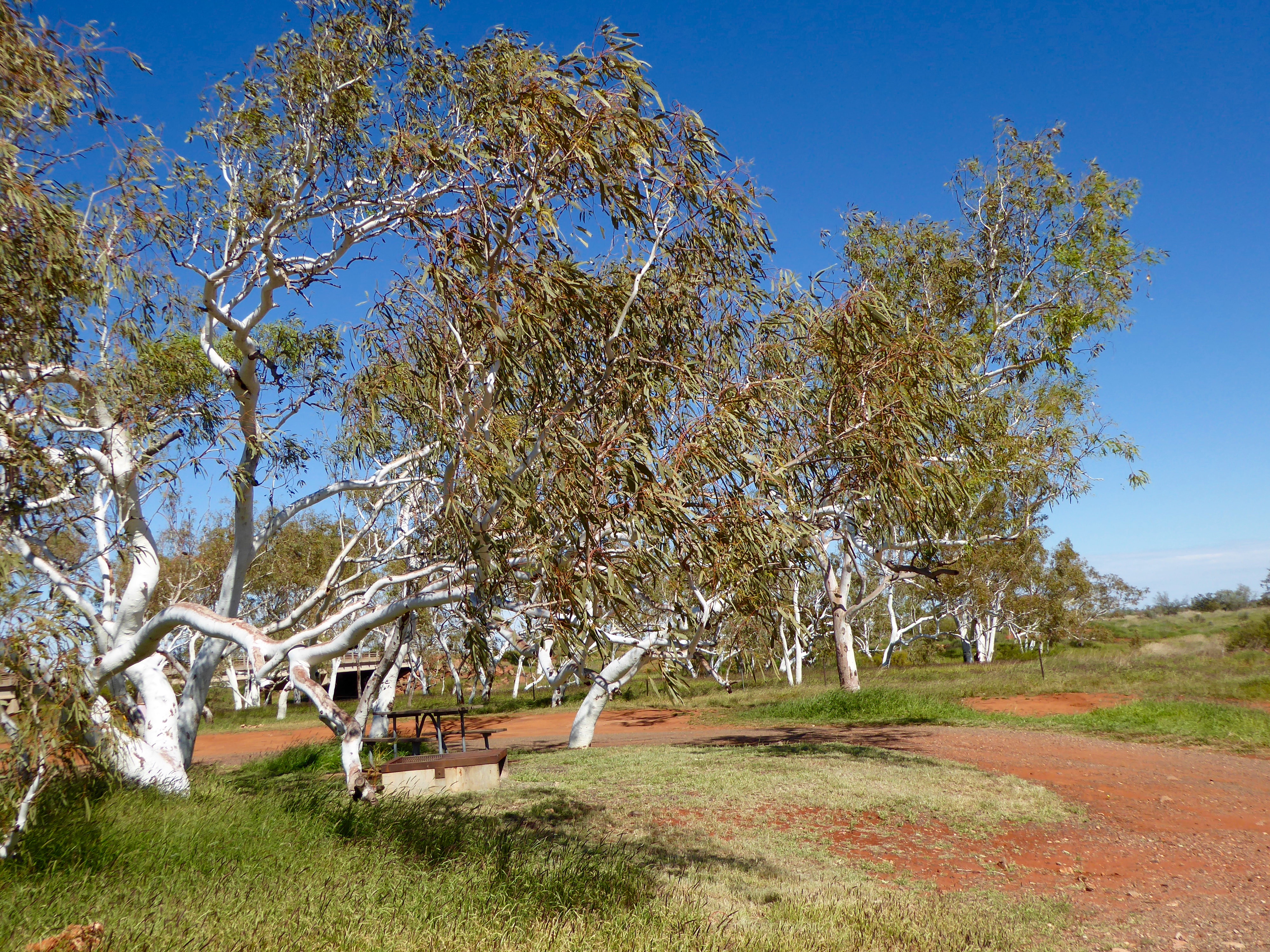
At a rest area we again were amazed at the way trees can grow.

How can they grow like this?

How can they grow like this?

We also love the white bark.   Here is another sculpture by the side of the road.

Unusual road side sculpture

Unusual road side sculpture

We don’t know what it is, but it captured our attention.   Today we have shown you some of the scenery we liked driving up the coast.   Next time we will take you to 80 Mile Beach on the Indian Ocean.

Exmouth Australia During World War II with Zeb and Eider

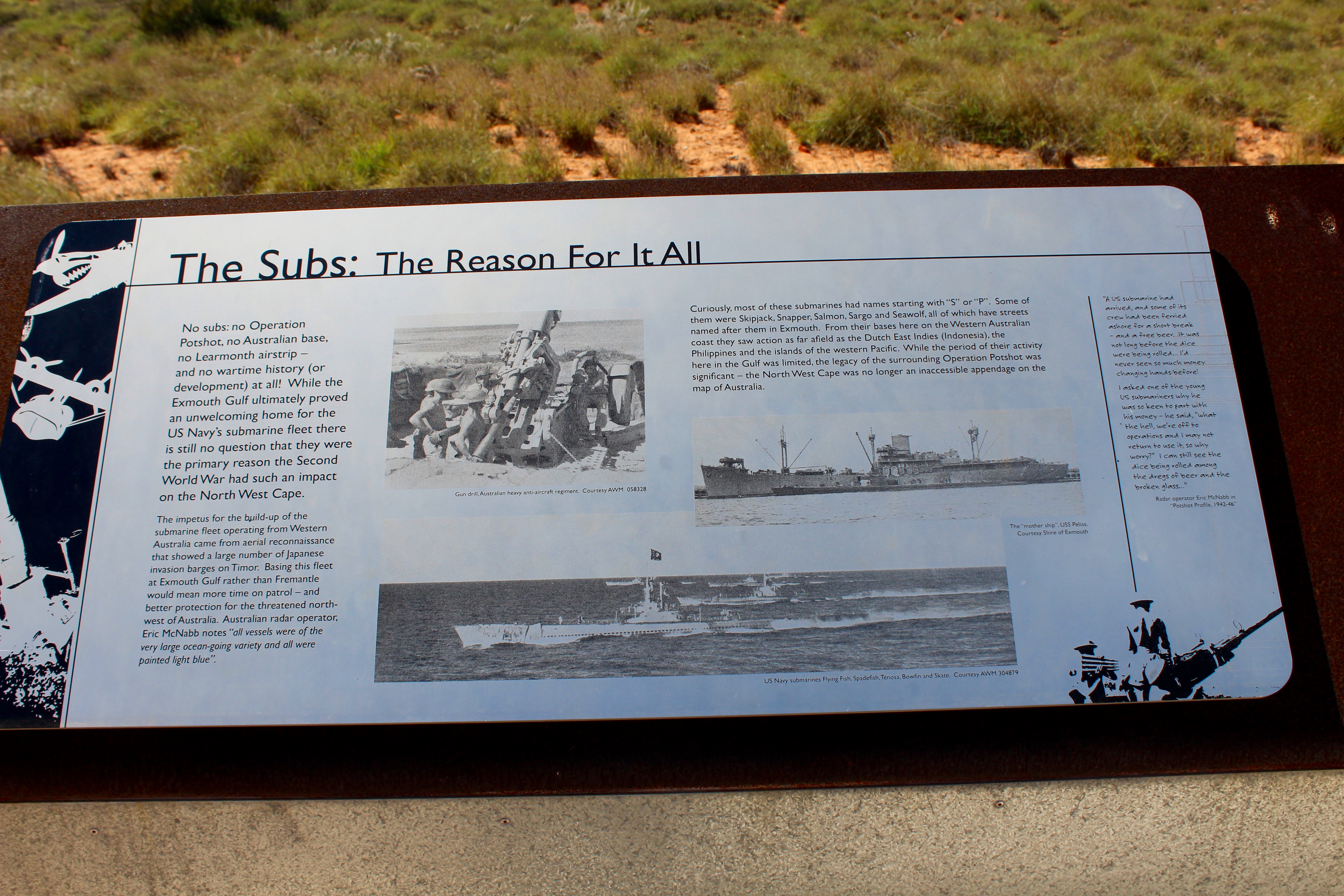
During World War II Australia and the United States often worked together.   Remember that the United States entered World War II after Japan bombed Pearl Harbor in Hawaii on December 7, 1941.   The US declared war on Japan.   In 1942 the US had ships docking in Fremantle, Australia which is southwest, near Perth.   A refueling port further north was needed for the submarines.   The US and Australia each built bases near Exmouth.

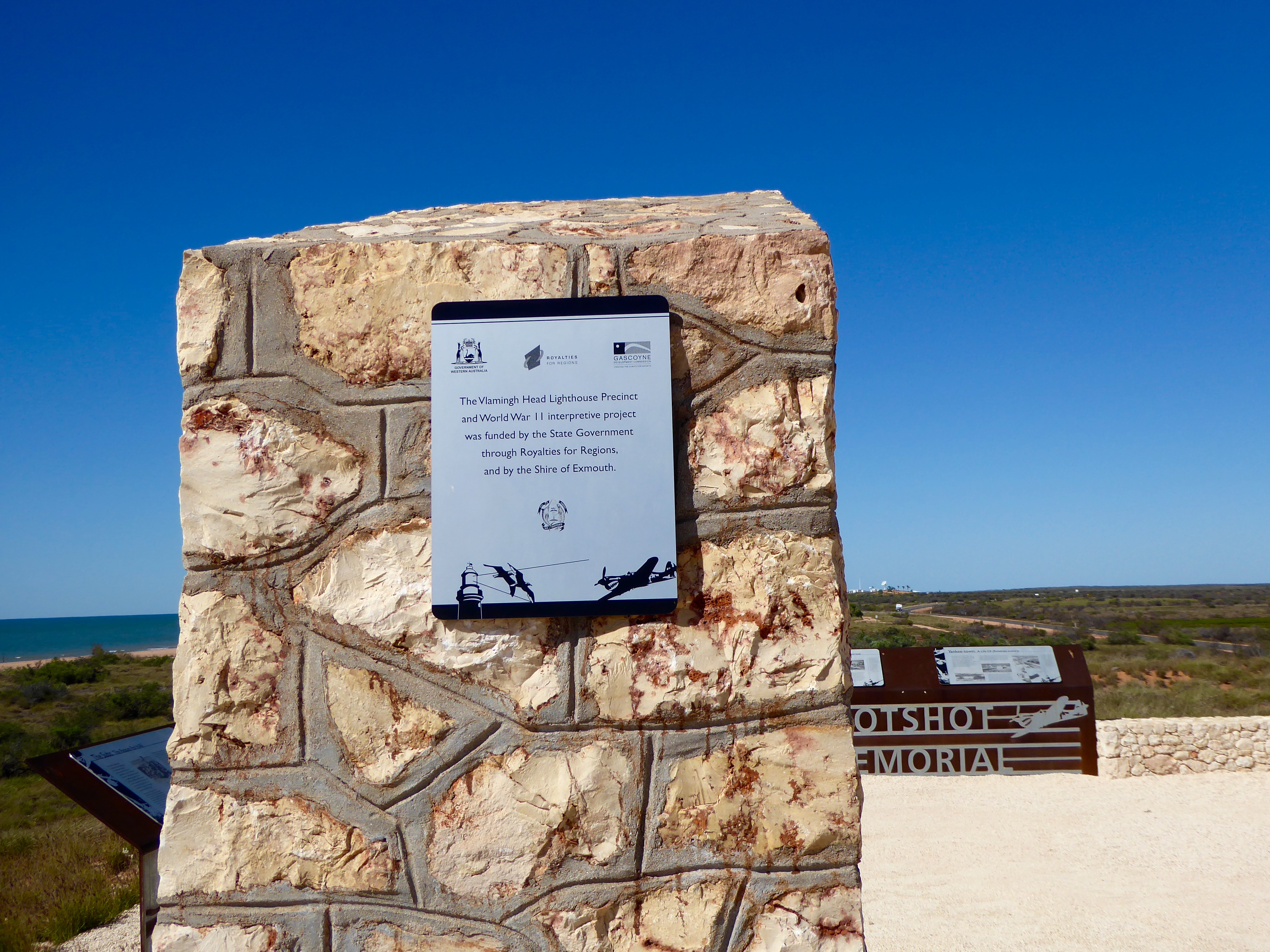
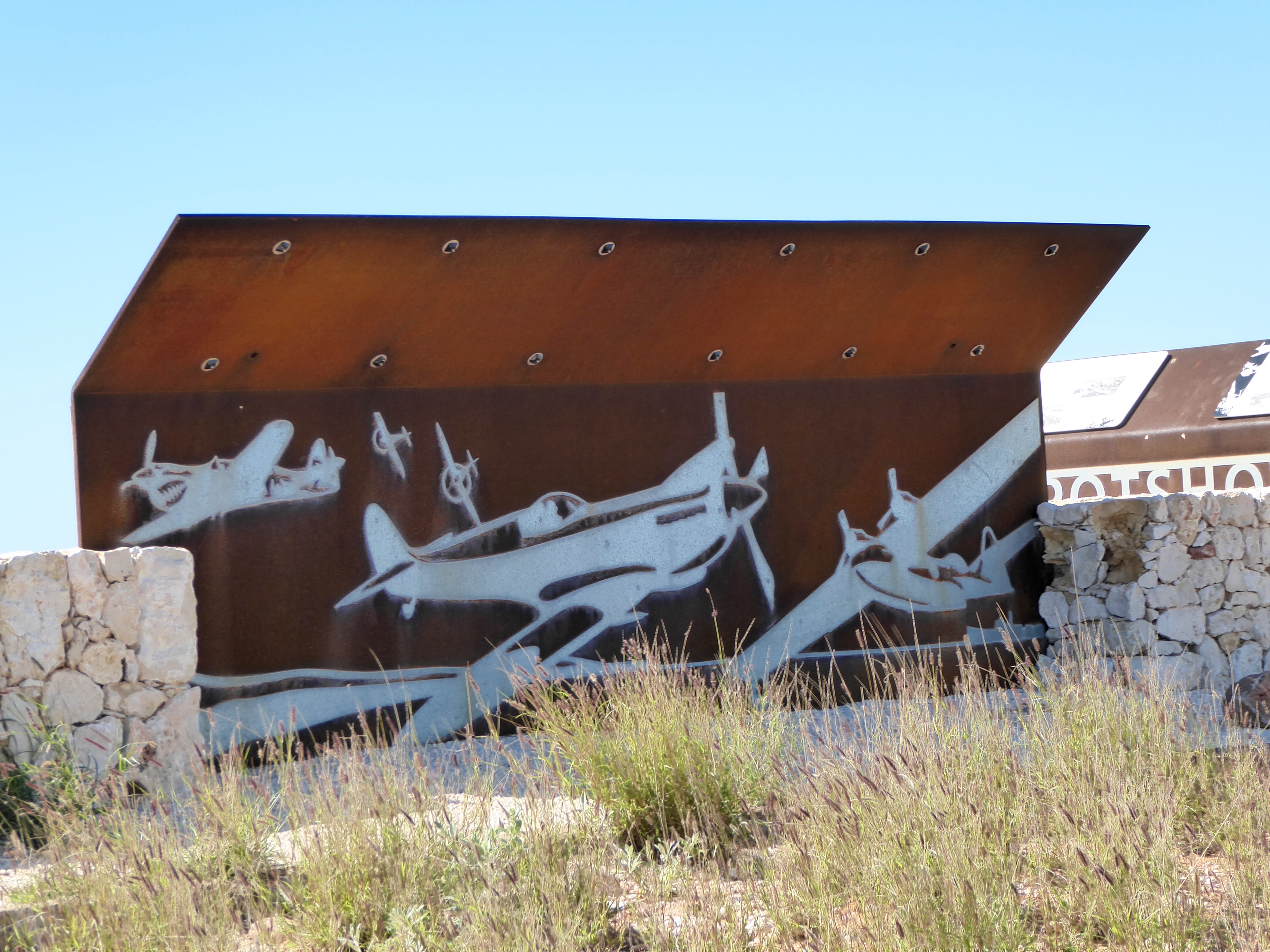
Operation Potshot Monument

Operation Potshot Monument

The US stayed here from 1942-1944.    The two countries worked very close in this area.

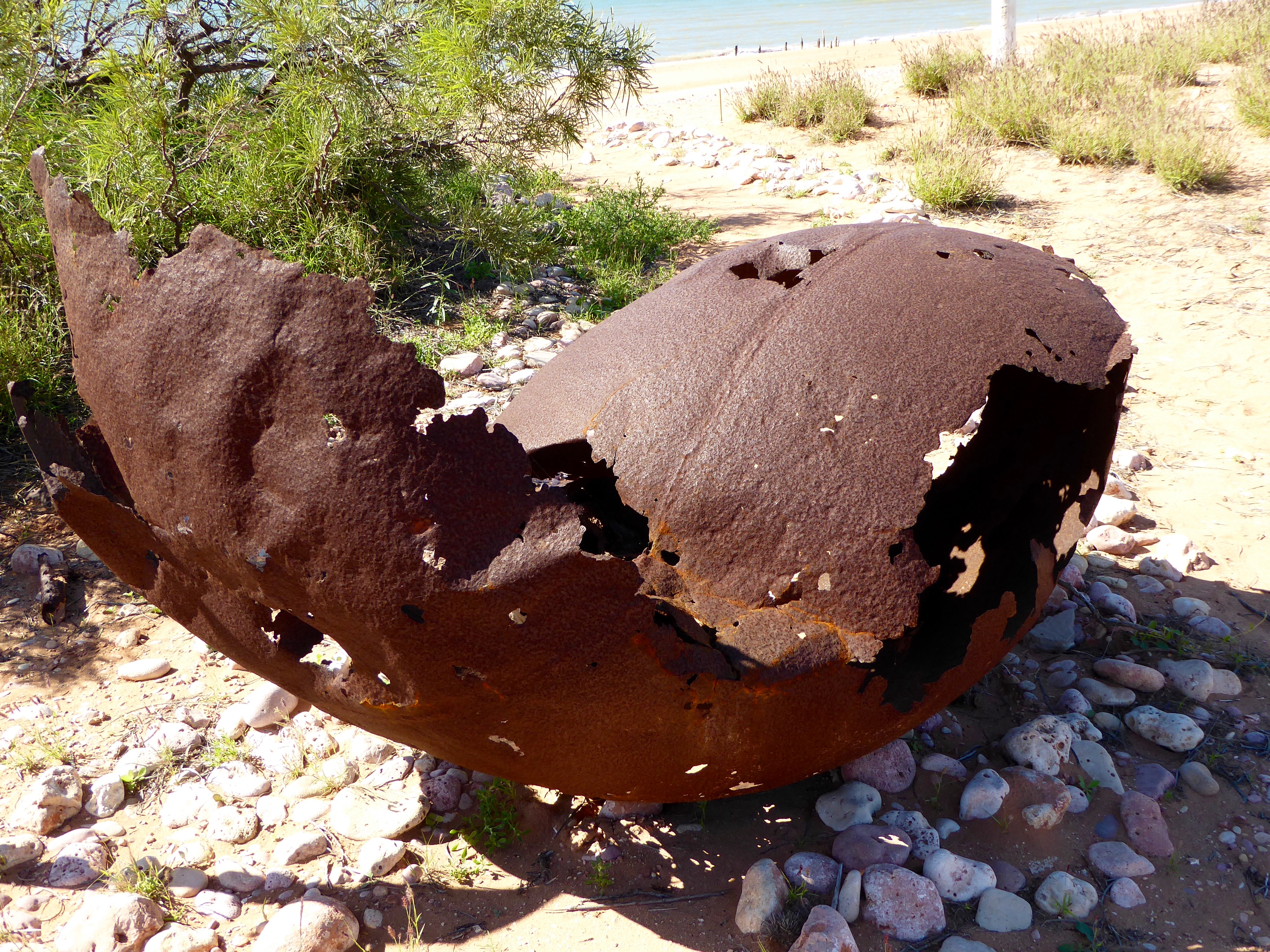
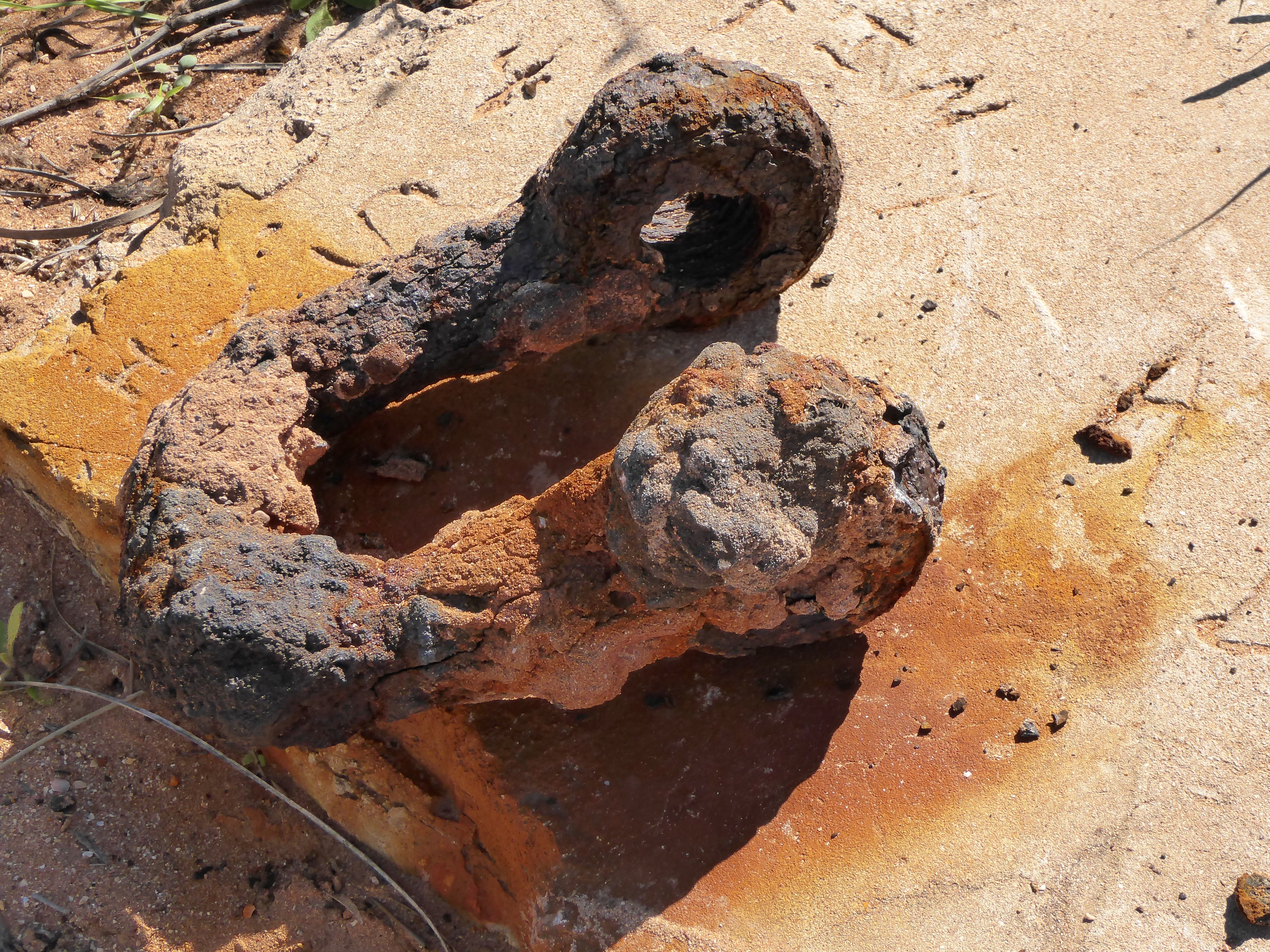
Balls of Steel

Balls of Steel

These balls of Steel, or ball float, were anchored in the nearby Gulf and used as a mooring point by boats or barges involved in Operation Potshot.

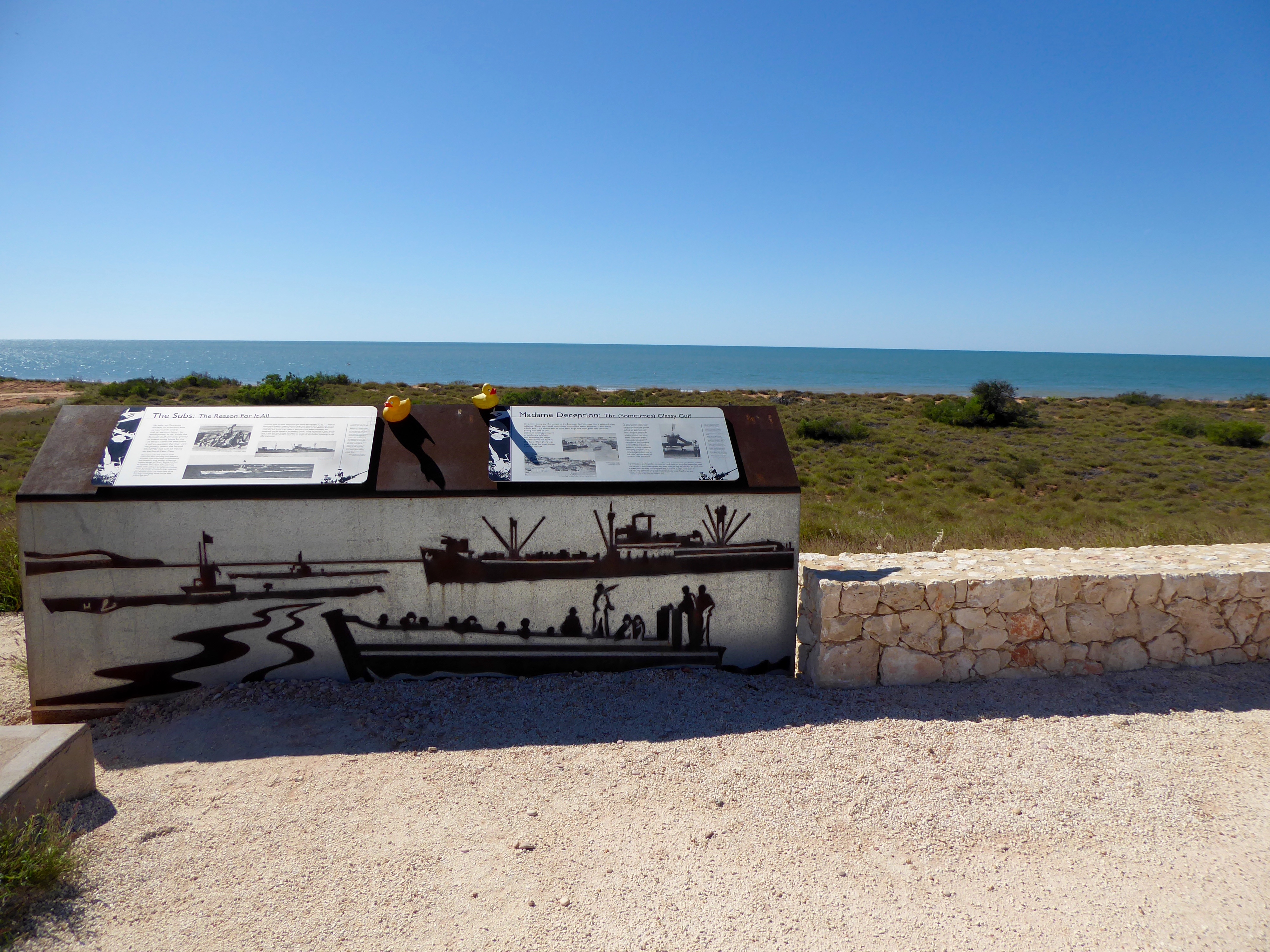
Zeb and Eider visited the site of the former US basis, called Operation Potshot.   At this monument, there are several signs explaining the differences and similarities of conditions for the soldiers from each country.

Operation Potshot Monument

Operation Potshot Monument

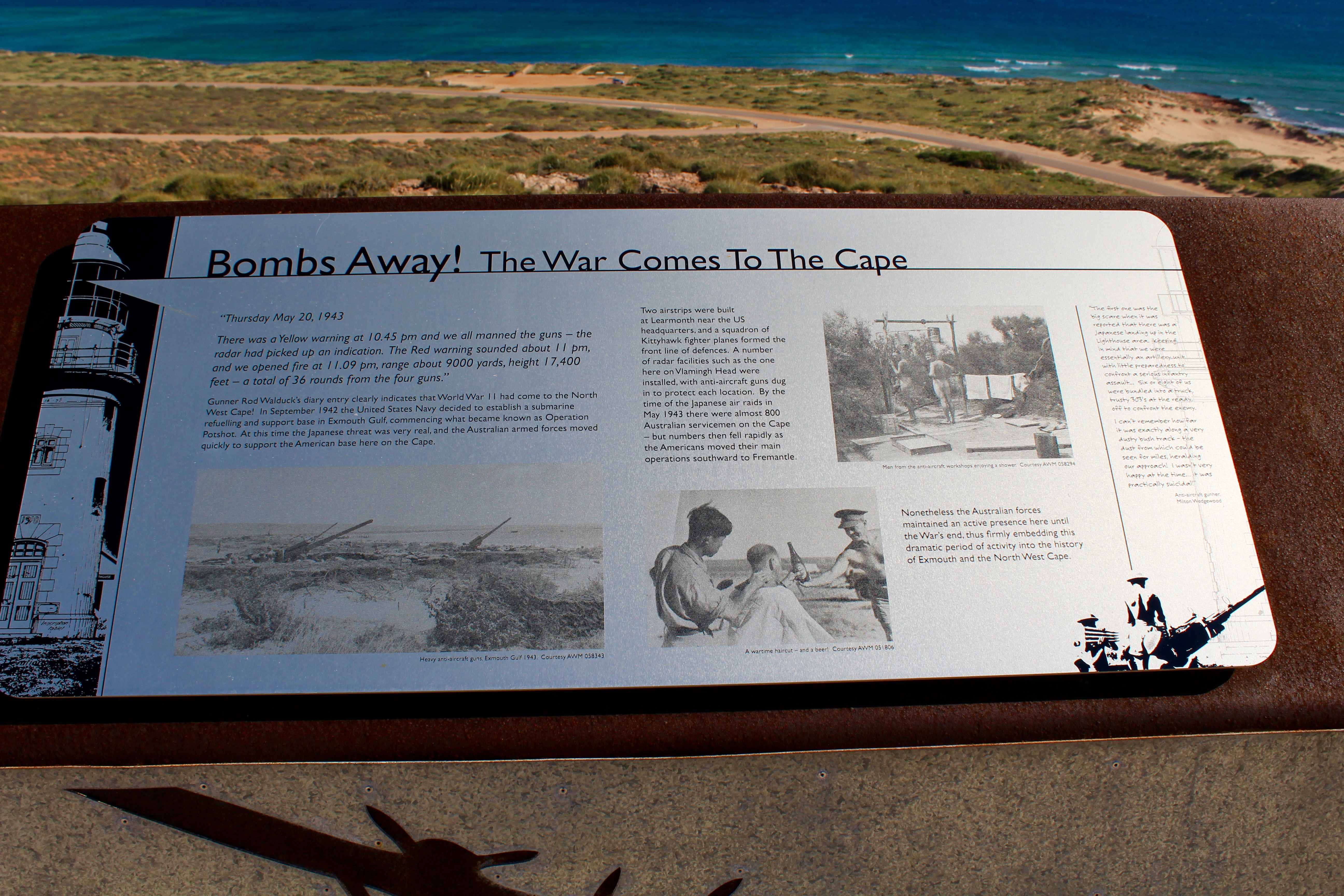
We think you would find these signs interesting.   During this time the Japanese military was very aggressive in southeast Asia.   Japan had moved through Thailand, into Malaysia and Singapore.   Singapore is very close to northern Australia.   During World War II Japan bombed northern Australia very heavily.

Australia attacked by Japanese

Australia attacked by Japanese

Broome and Darwin were frequent targets.   Operation Jaywalk, a joint effort of 14 men from Australia and Britain, left Exmouth from the US base, September 2, 1943.

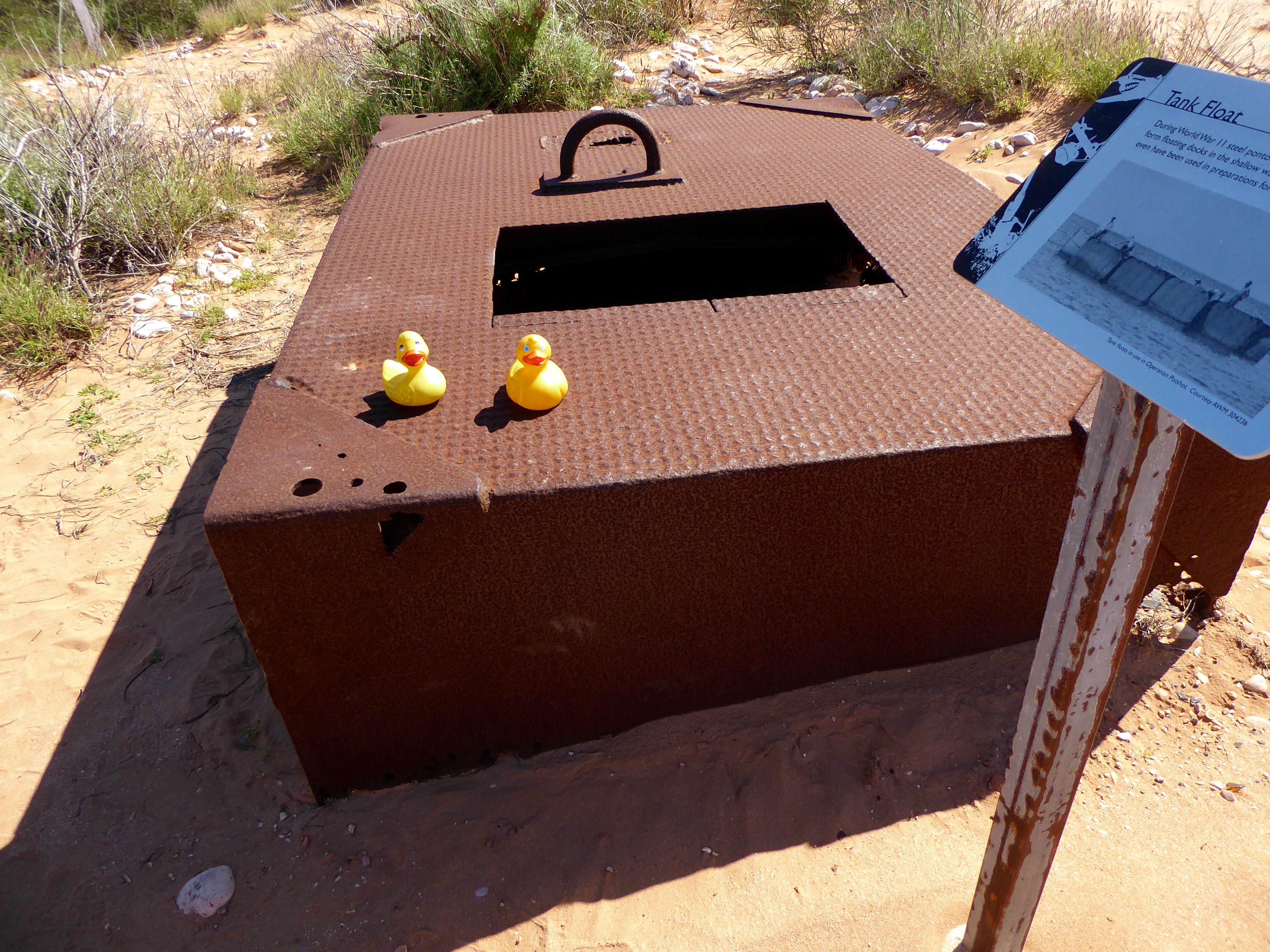
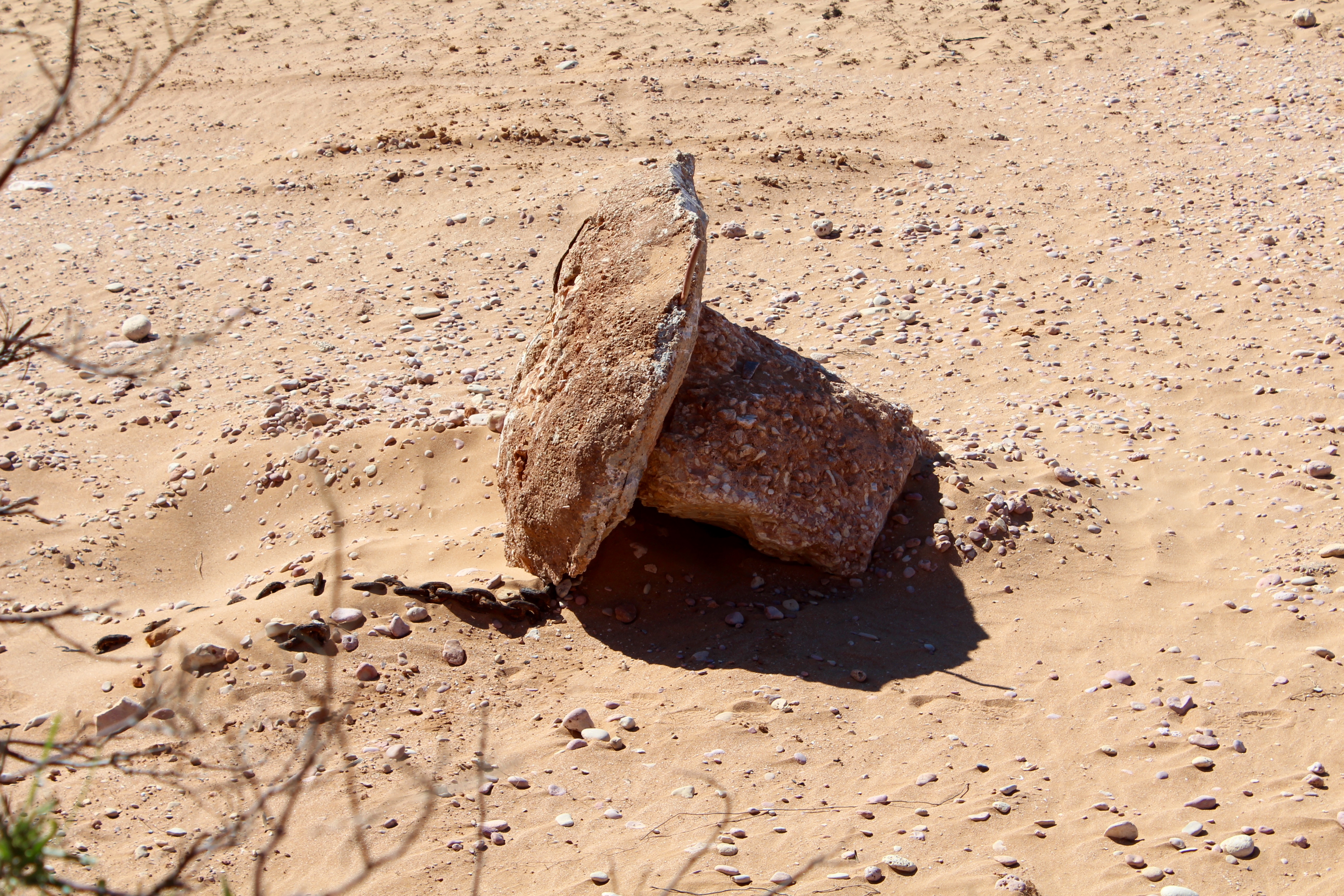
Tank Float

Tank Float

Tank floats were steel pontoons hitched together to form floating docks.

These men conducted a raid on the Japanese ships in Singapore.   As  result, 7 Japanese ships sank or were seriously damaged.   All 14 men returned to the US Base at Exmouth October 19, 1943.

From Operation Jaywick

From Operation Jaywick

From Operation Jaywick

From Operation Jaywick also

The US base was heavily damaged during the Cyclone of February 3, 1945.   We, the Colorado Traveling are not history experts, but we are happy to see that both countries were able to work together to help end World War II.

Operation Potshot

Operation Potshot

These monuments are very interesting and informative.

Submarines need refueling port

Submarines need refueling port

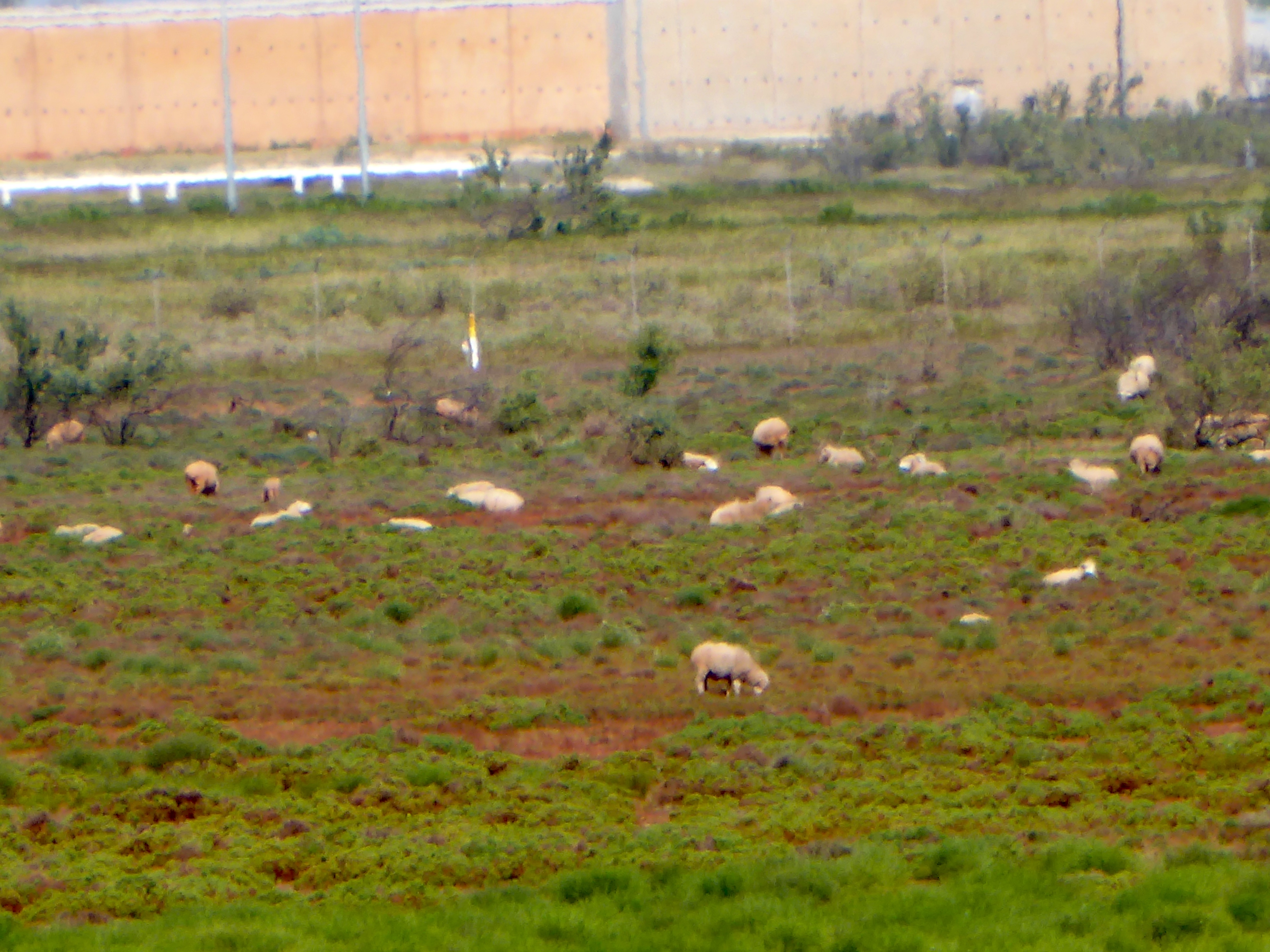
We think they would be worth some of your time when you are in the area of Exmouth, Western Australia.   Standing by the monuments, the Indian Ocean in on one side and sheep grazing in a pasture are on the other side.

We love this guy

We love this guy

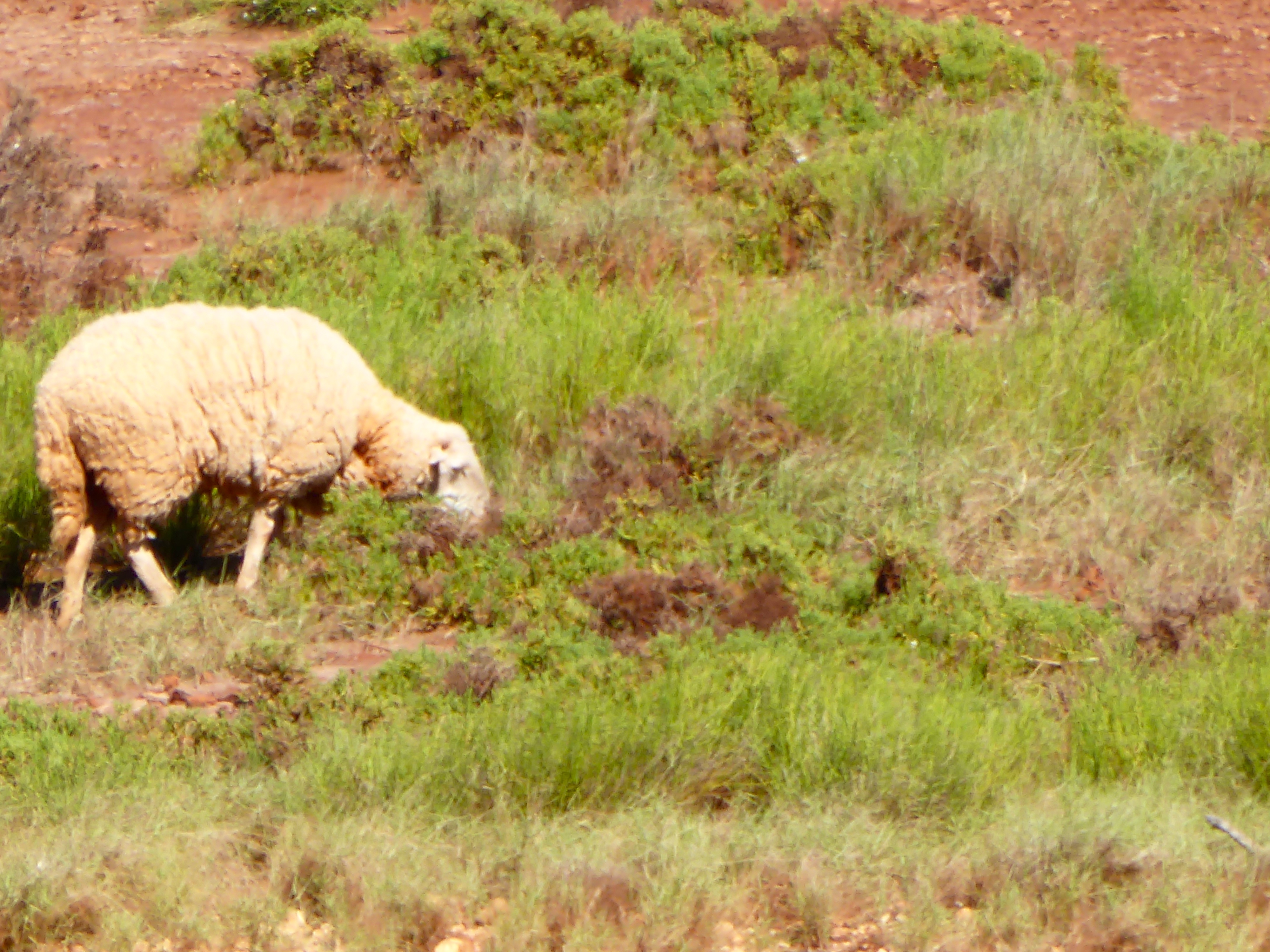
We like seeing all the sheep.

Grazing sheep

Grazing sheep

More peaceful now than during the war.

Operation Potshot Monument

Operation Potshot Monument

Exmouth on the Ningaloo Reef with Zeb and Eider Duck

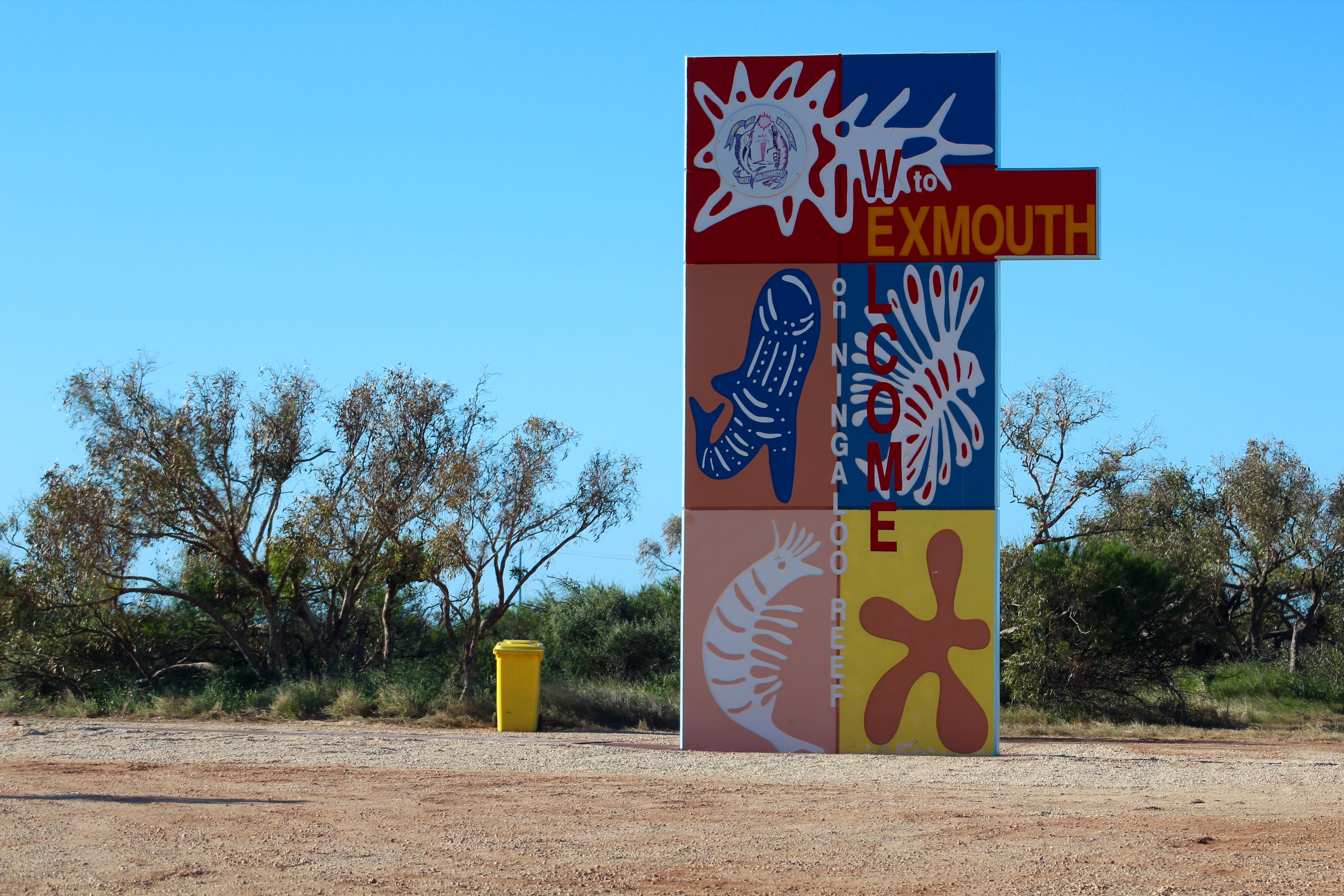
From Coral Bay we continued north to Exmouth.   We made it!

We are in Exmouth, Western Australia

We are in Exmouth, Western Australia

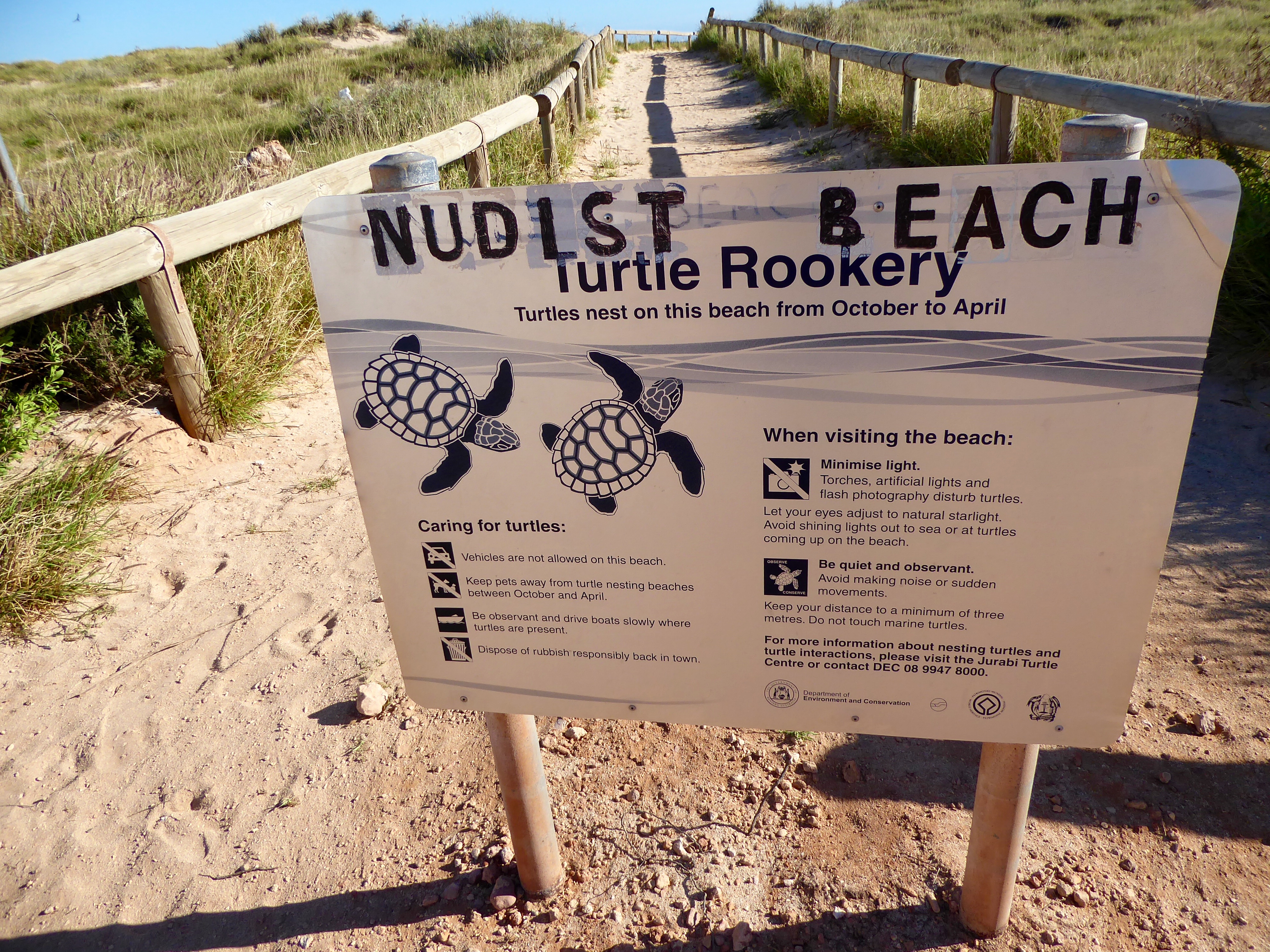
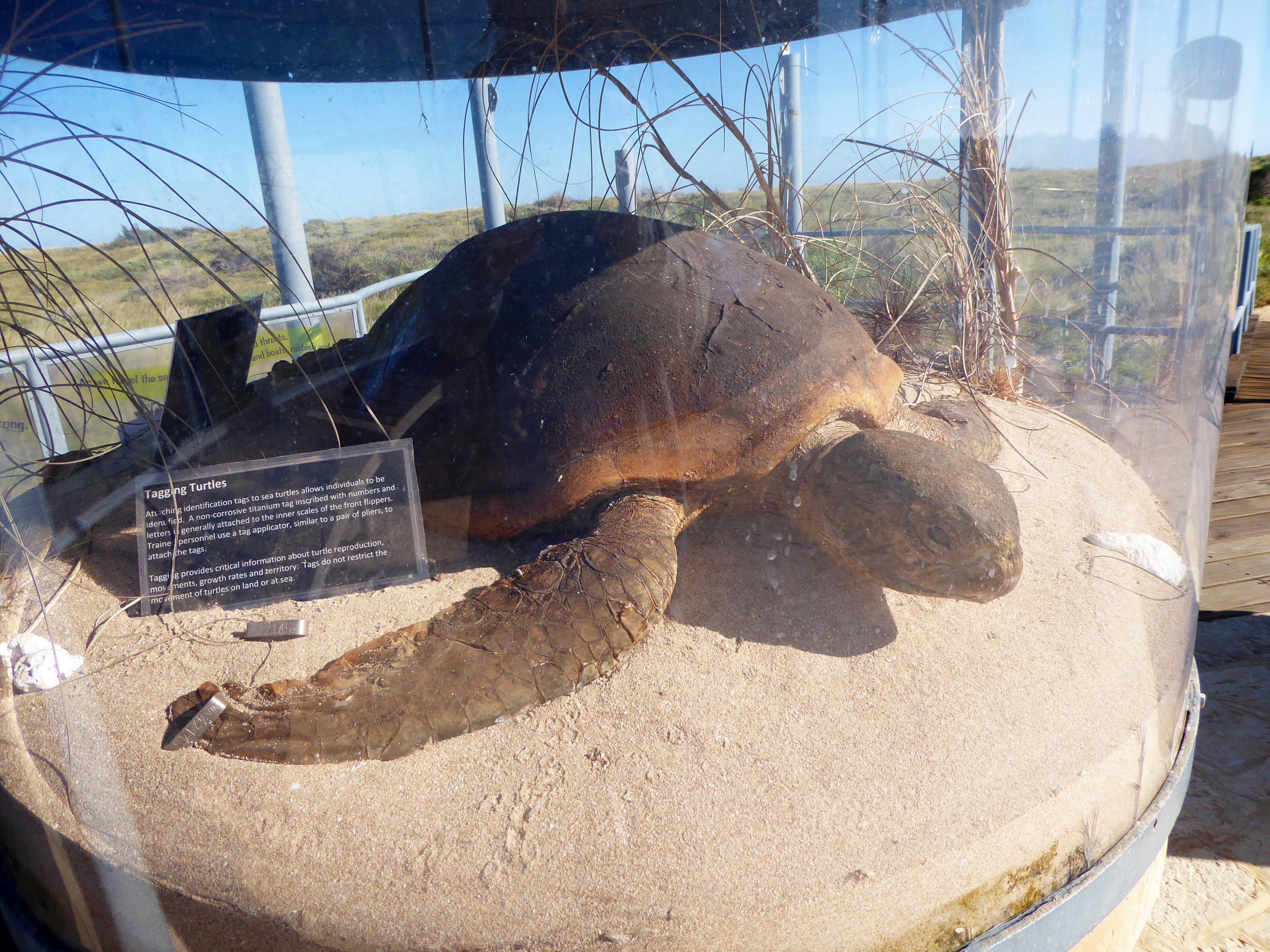
Turtles are born here.   However it was not turtle season when we were there, but this is the path to one of the nesting beaches.

Turtle Rookery

Turtle Rookery

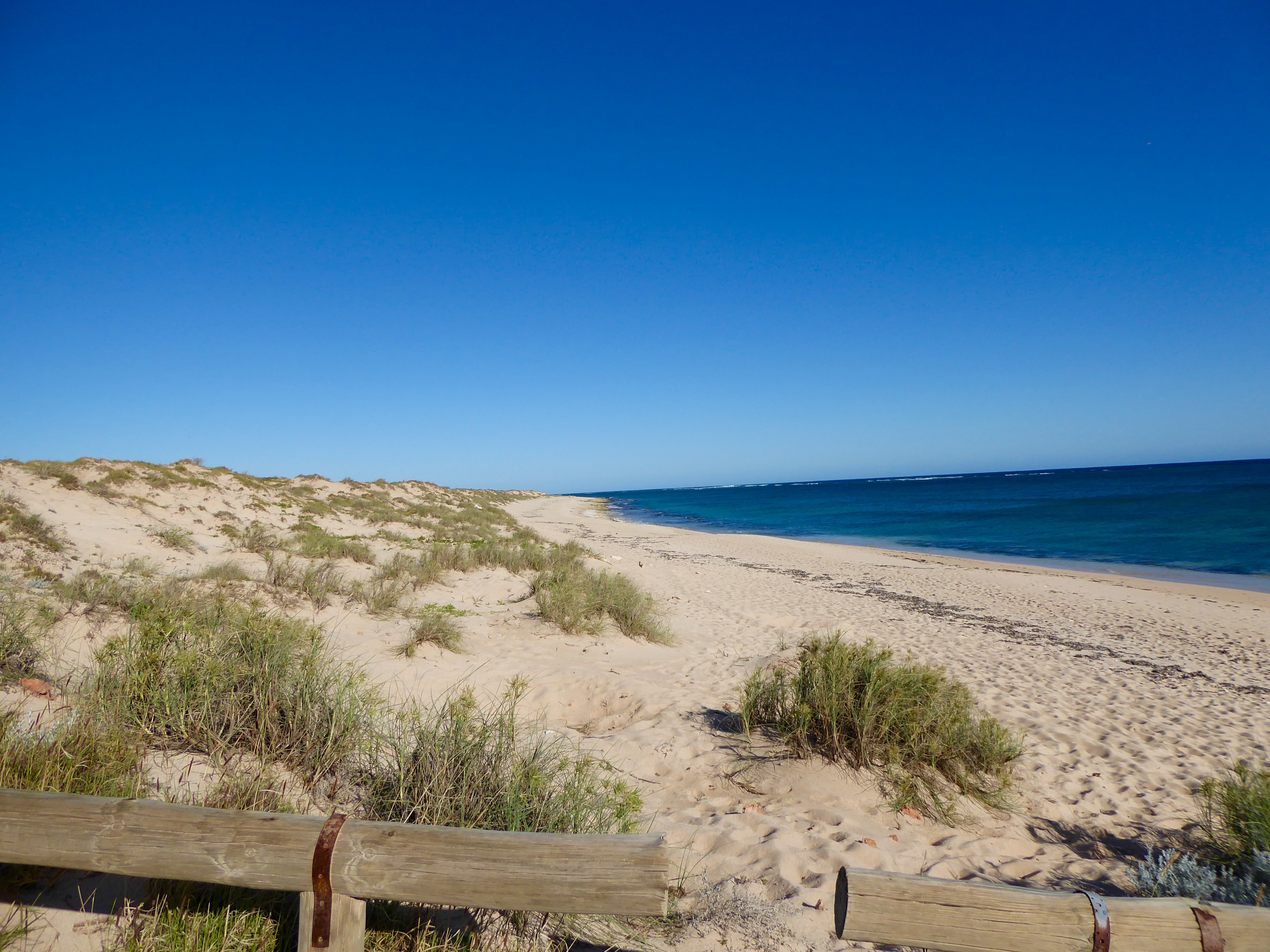
Looks like a nice beach.

Turtle nesting beach

Turtle nesting beach

Further along the beach we liked this turtle sculpture.

Ceramic turtle

Turtle Sculpture

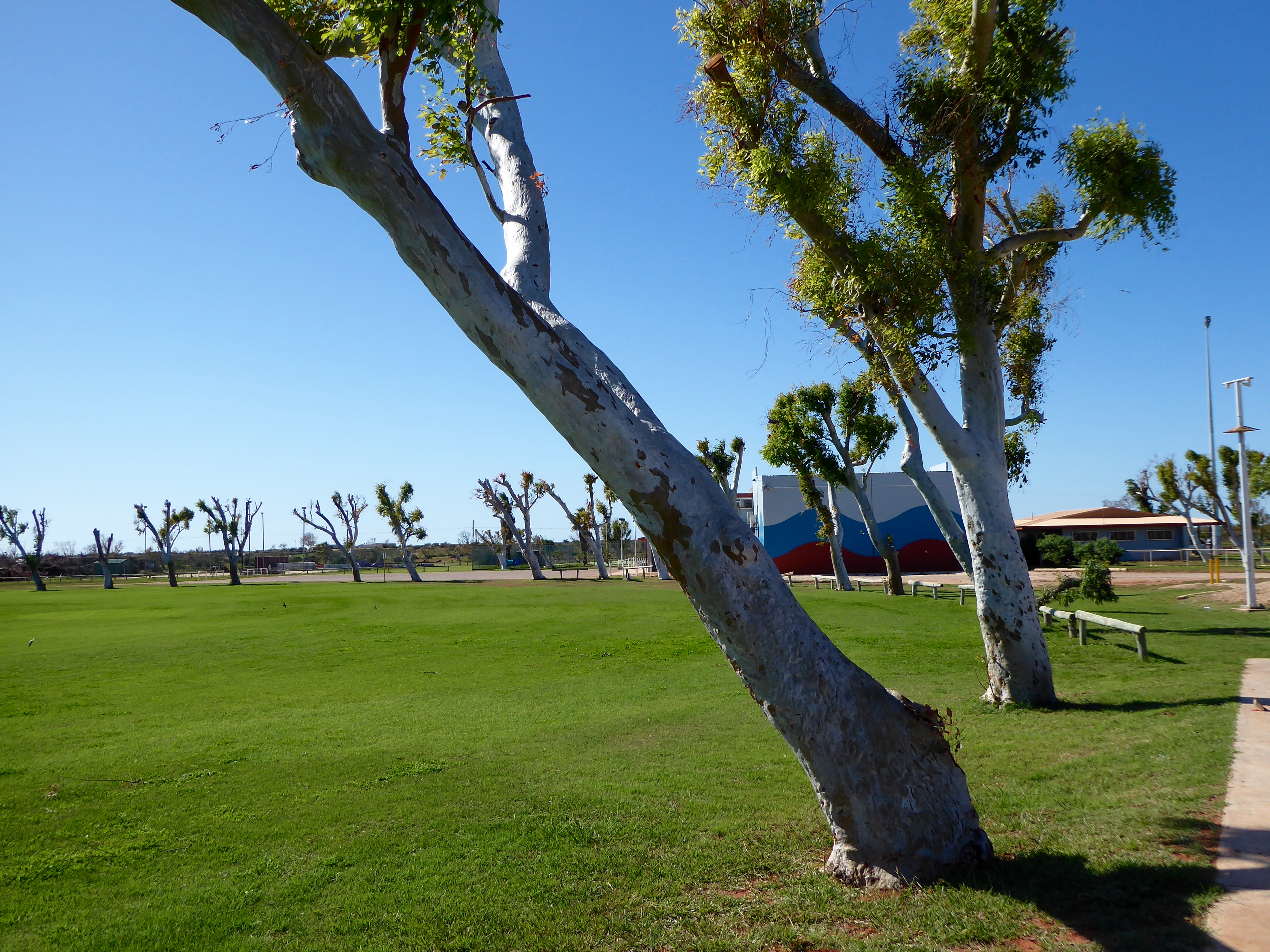
The small town was very nice and the people friendly.    This is the Koobooroo Oval, and sports field.

Koobooroo Oval in Exmouth

Koobooroo Oval in Exmouth

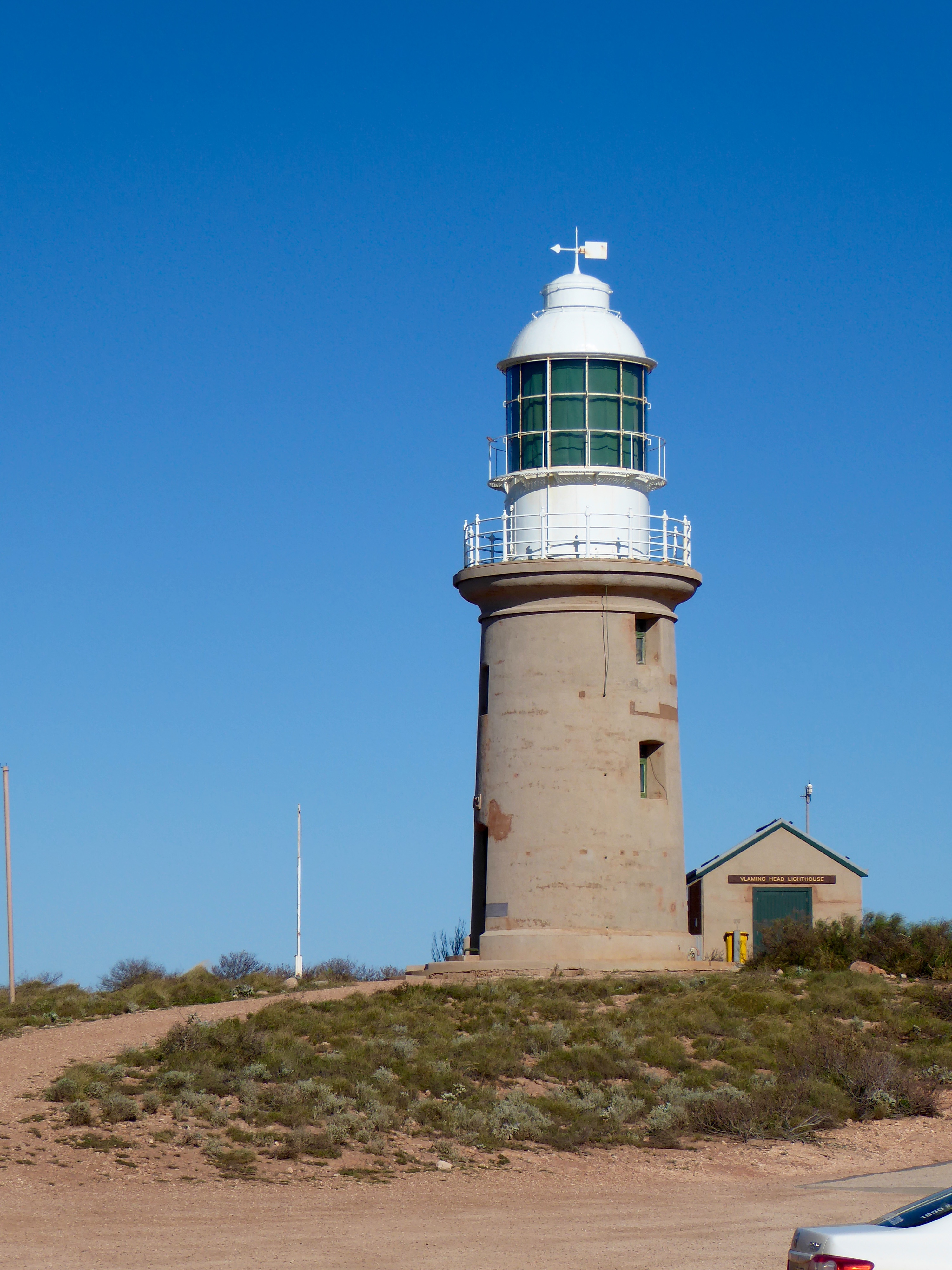
We liked the trees planted around the oval.   In Coral Bay we showed you the beaches, so today we will show you the Vlaming Head Lighthouse.

Vlaming Head Lighthouse

Vlaming Head Lighthouse

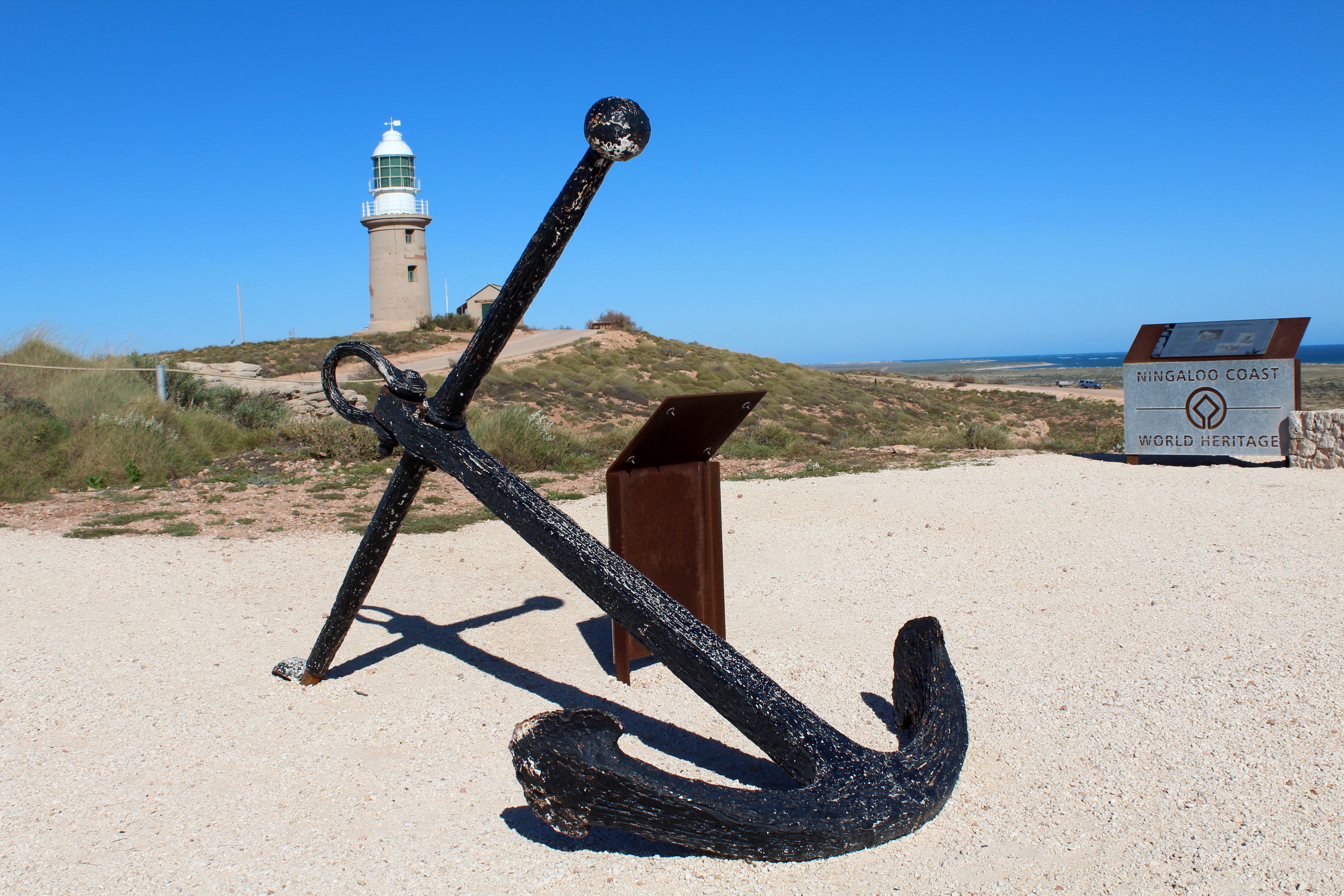
This lighthouse is 17 km from the town of Exmouth.   Since it is built on the northern most tip of Cape Range, it is one of the few places in Australia where you can watch the sun rise and also set.   Building the lighthouse had been under consideration for  few years, but in 1907 when the SS Mildura sank here and many good men were lost, the lighthouse building date was accelerated.   The lighthouse was completed in 1912 and was a welcome addition to this coast.   This is the anchor from the SS Mildura.

Anchor from SS Mildura ship

Anchor from SS Mildura ship

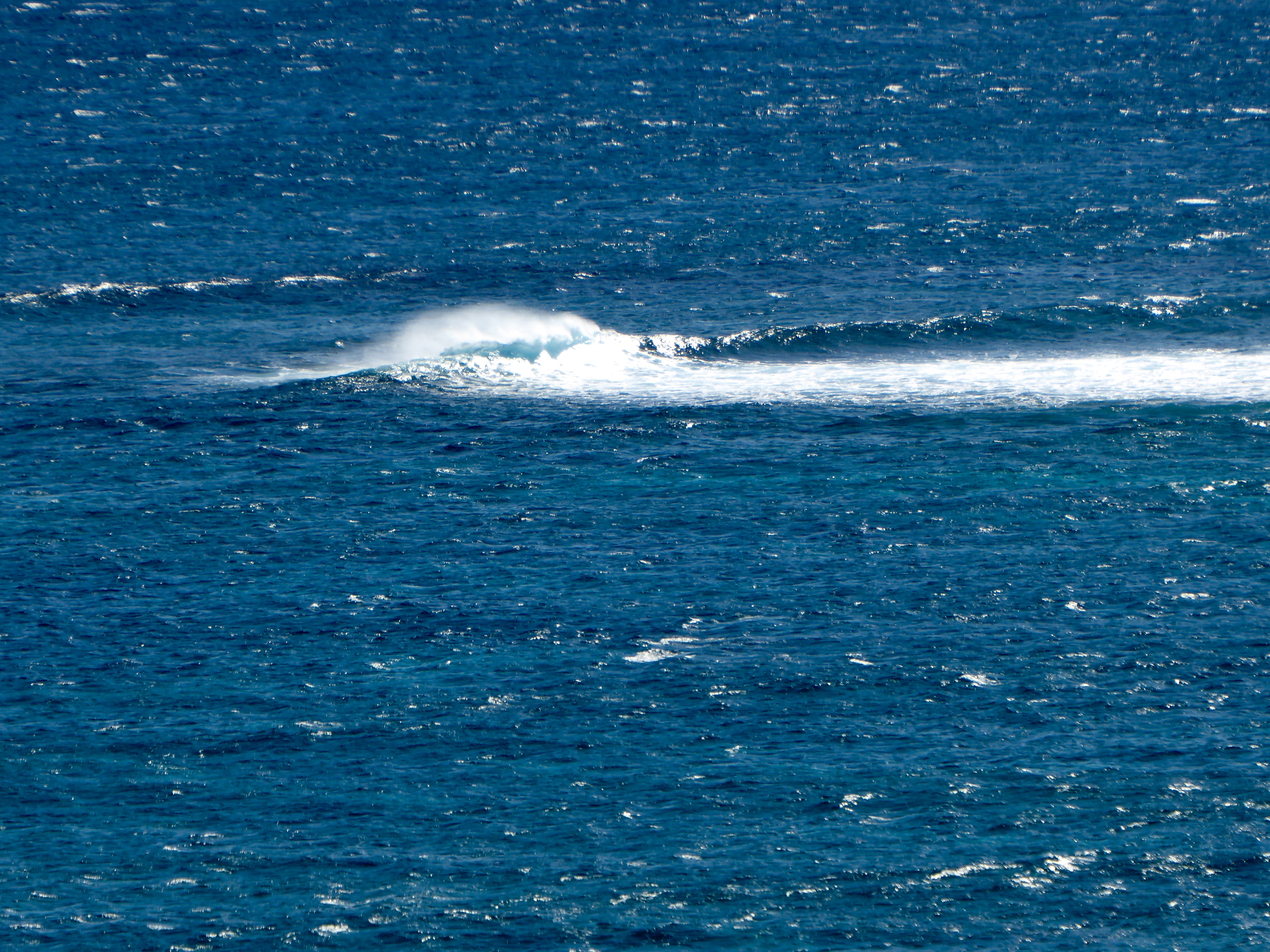
The view from the lighthouse is wonderful.   Many people report seeing the migrating whale shark from here.   The ocean current here made an unusual pattern on the Indian Ocean.
Unusual currents viewed from lighthouse

Unusual currents viewed from lighthouse

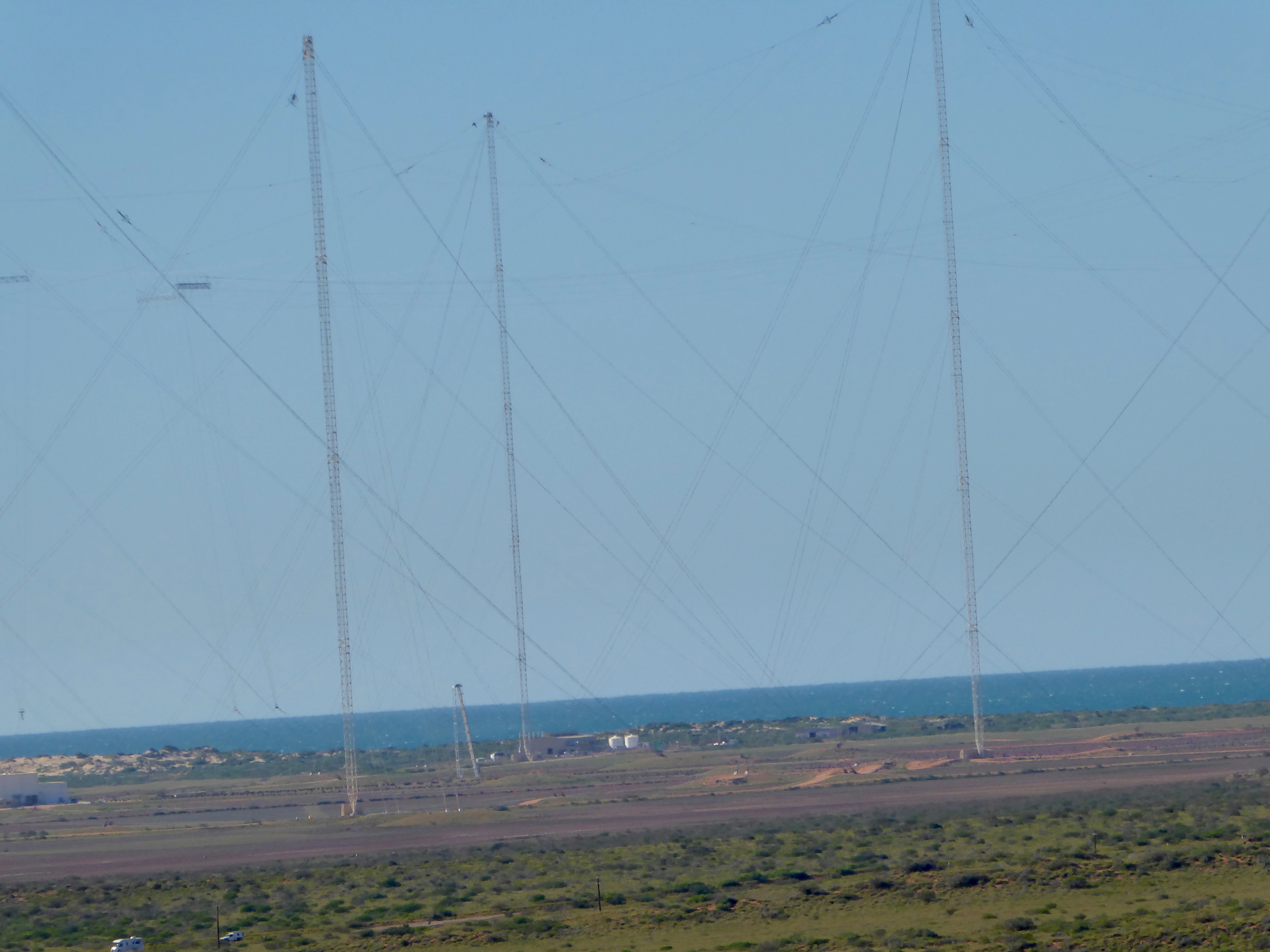
From the lighthouse 13 tall towers are visible.

13 tall towers

13 tall towers

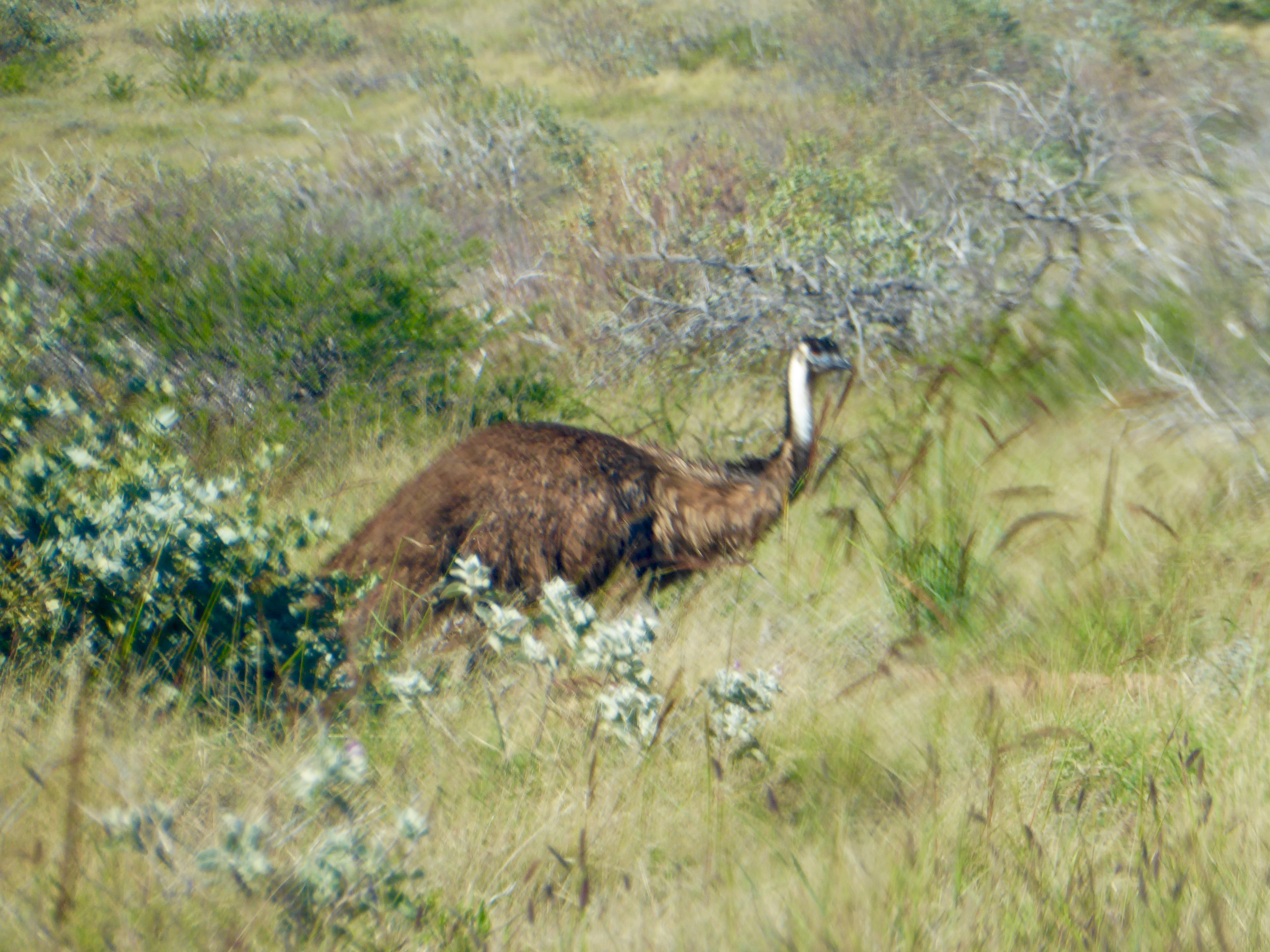
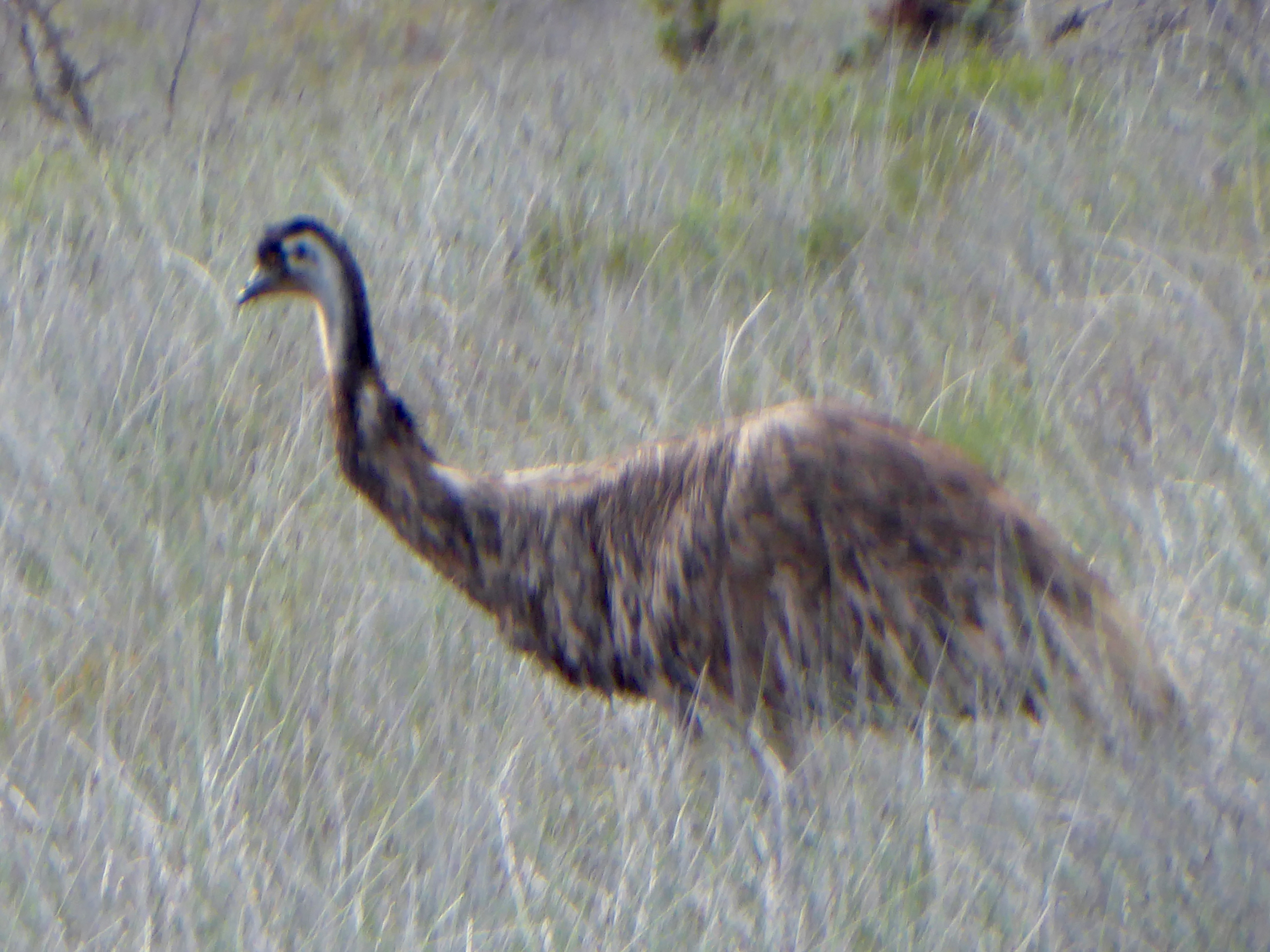
During the 1960s the US Navy was granted permission from Australia to build these towers to aid in the US communication network.   During our visit to Australia, we learned about many joint military efforts between the United States and Australia.   We will show you more of these sites soon.   Leaving the Vlaming Head Lighthouse, we saw this friendly emu.

Friendly emu

Friendly emu

Emus are very common in and around Exmouth.   We are still enjoying our road trip up the western coast of Australia.   We hope you enjoy some of our explanations and photos also.

Zeb and Eider Duck Drive North to Coral Bay on Australia’s Ningaloo Coast

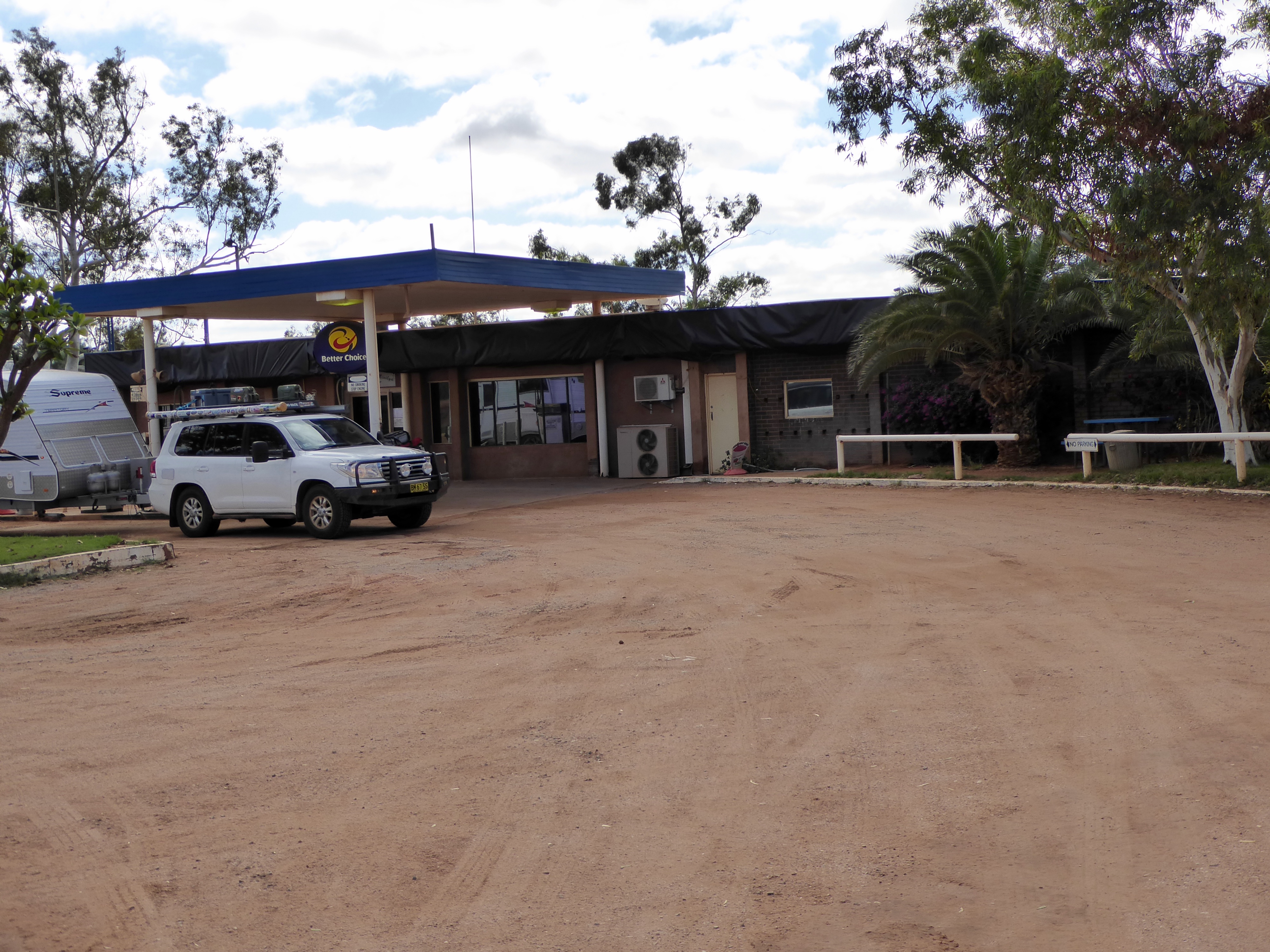
Zeb and Eider left Carnarvon and drove north toward the Ningaloo Coast.   We love car trips.   We can see so much of the land and watch the terrain change.   Soon we stopped here at the Minilya River Roadhouse.

Minilya River Roadhouse

Minilya River Roadhouse

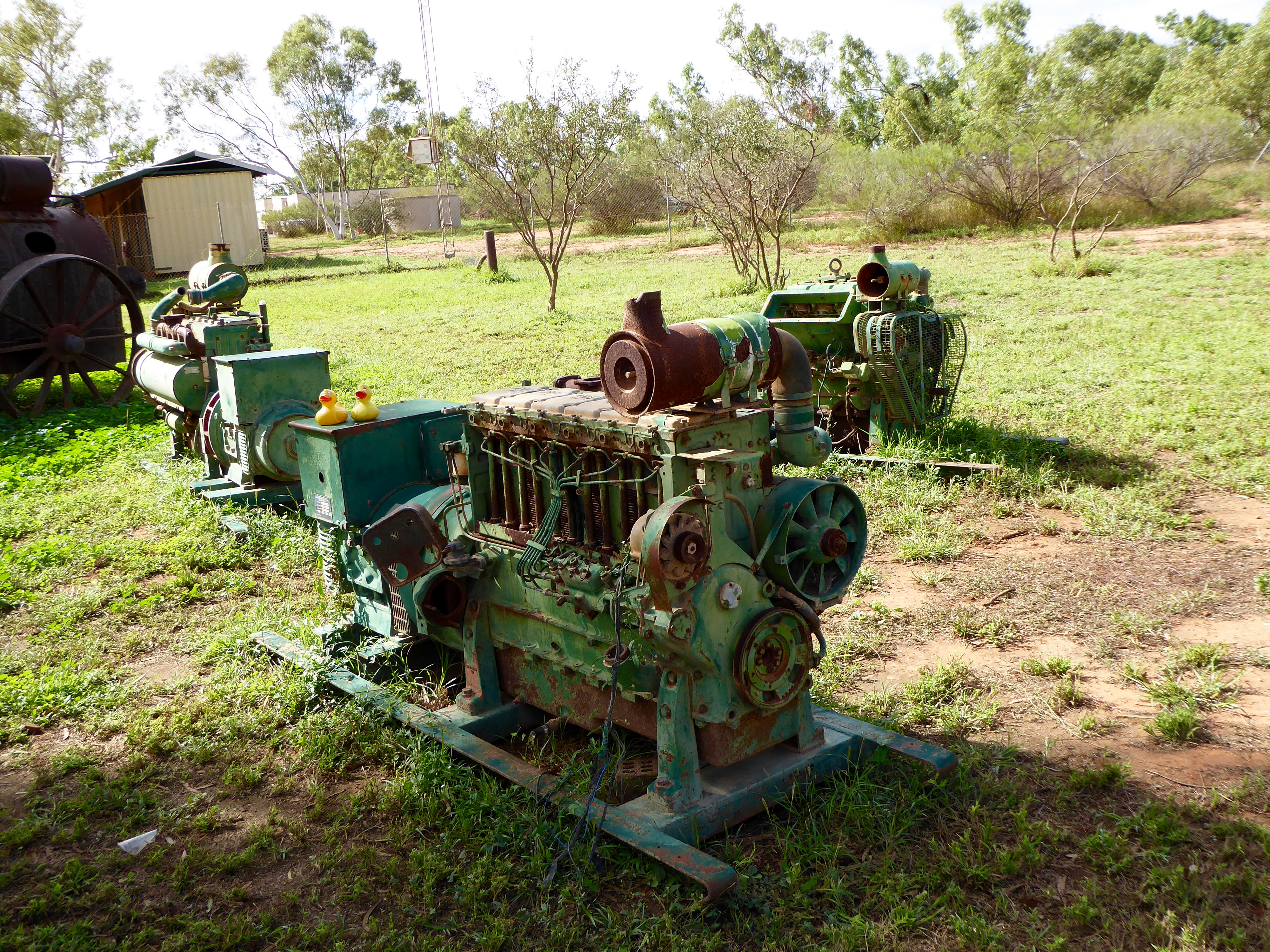
Those humans think they need a Magnum Ice Cream bar every day.   While they are eating (again) we admire the display of old farm equipment.

Old equipment

Old equipment

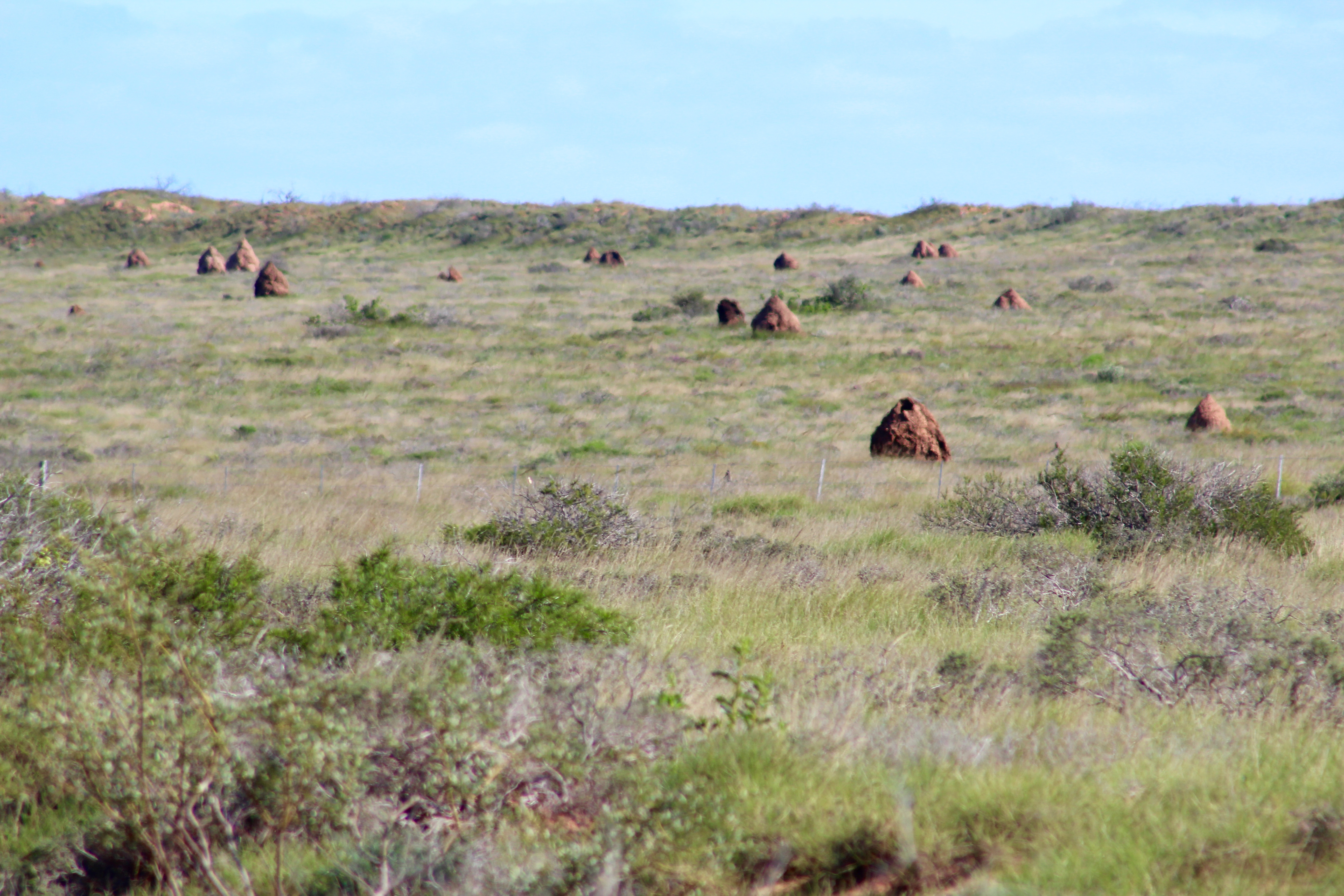
Continuing north, we begin seeing strange things in the fields.   First we think they are large rocks, but soon realize they are termite hills.

Hundreds of Termite Hills

Hundreds of Termite Hills

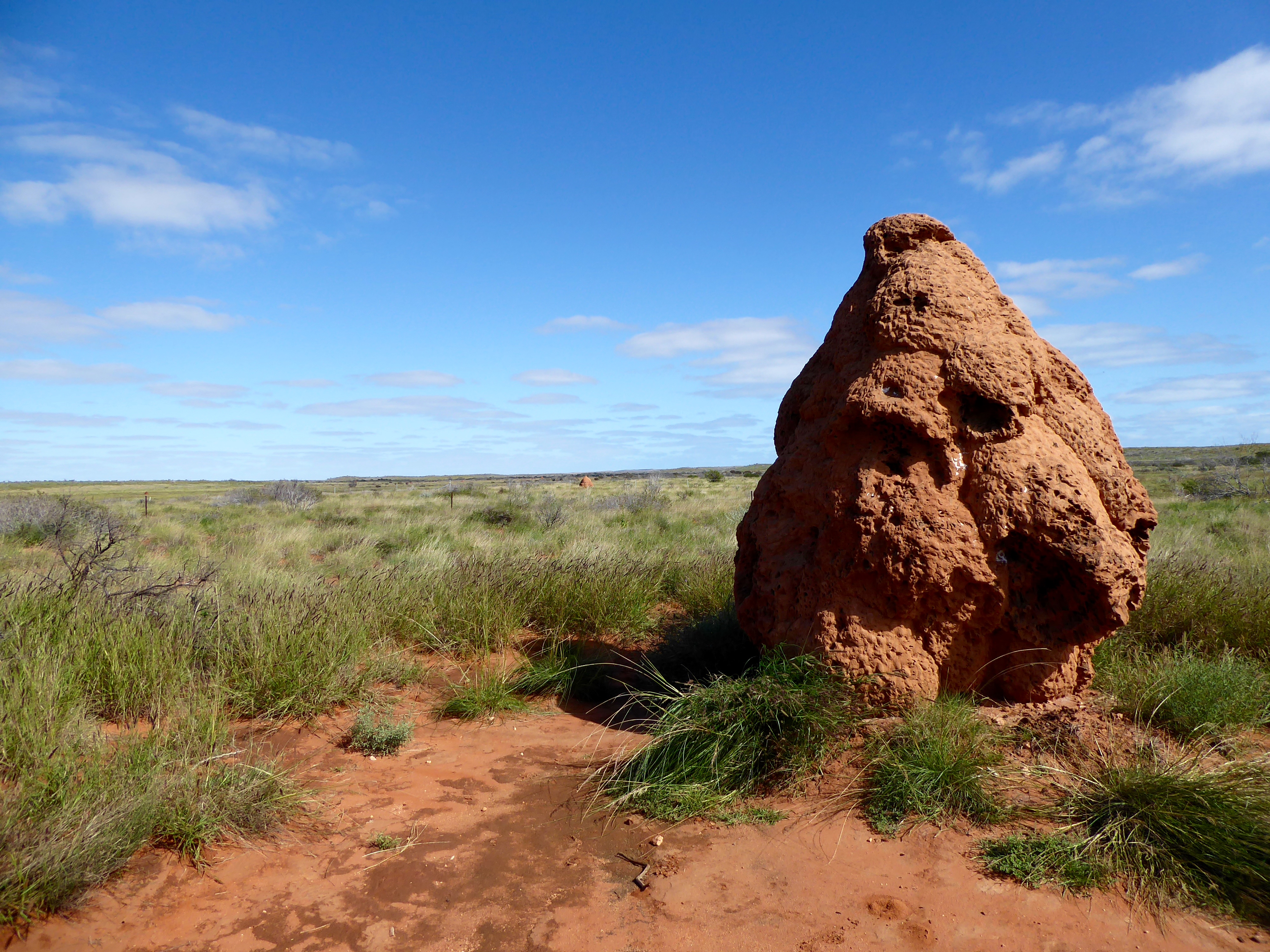
Termites are a type of ant.   There are many types of termites and they build many different shape and size homes, or termite hills.   This one is pretty large and very lumpy.

Big, lumpy termite hill

Big, lumpy termite hill

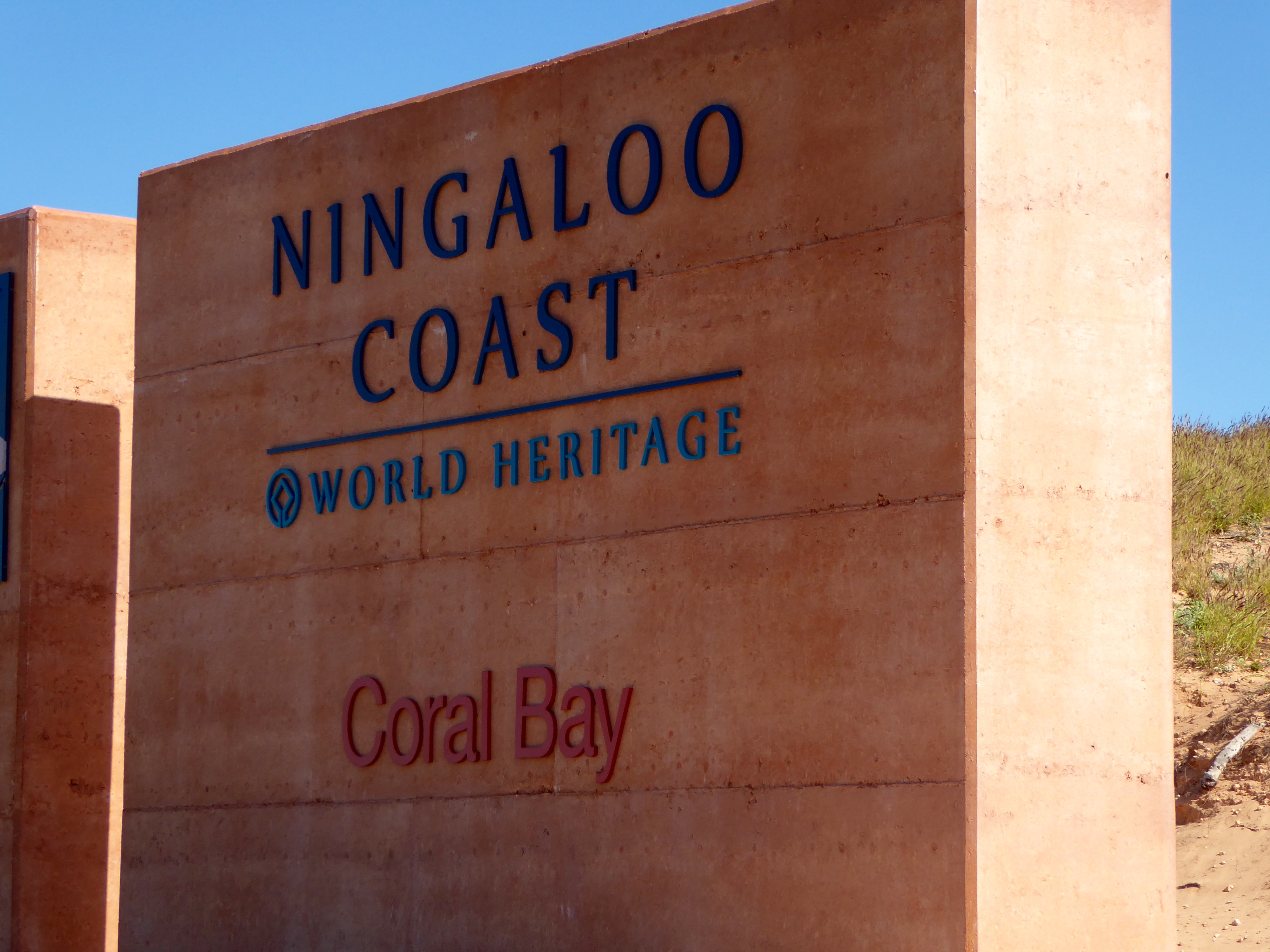
We showed you a few smaller termite hills on Kangaroo Island in our August posts.   We have arrived at the Ningaloo Coast.

We are here on the Ningaloo Coast

We are here on the Ningaloo Coast

This is another World Heritage Site.   First we will visit Coral Bay.

Beautiful Coral Bay

Beautiful Coral Bay

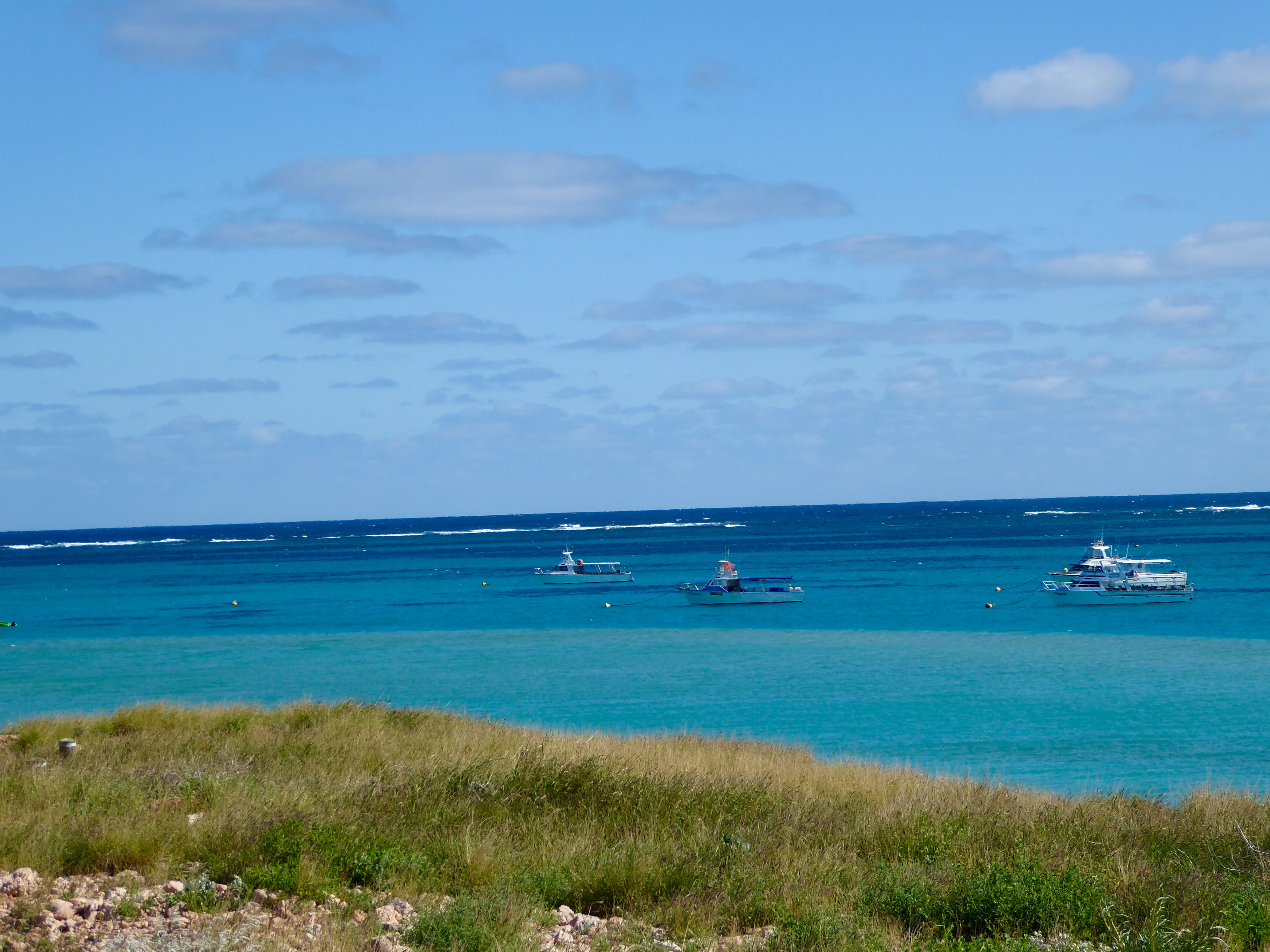
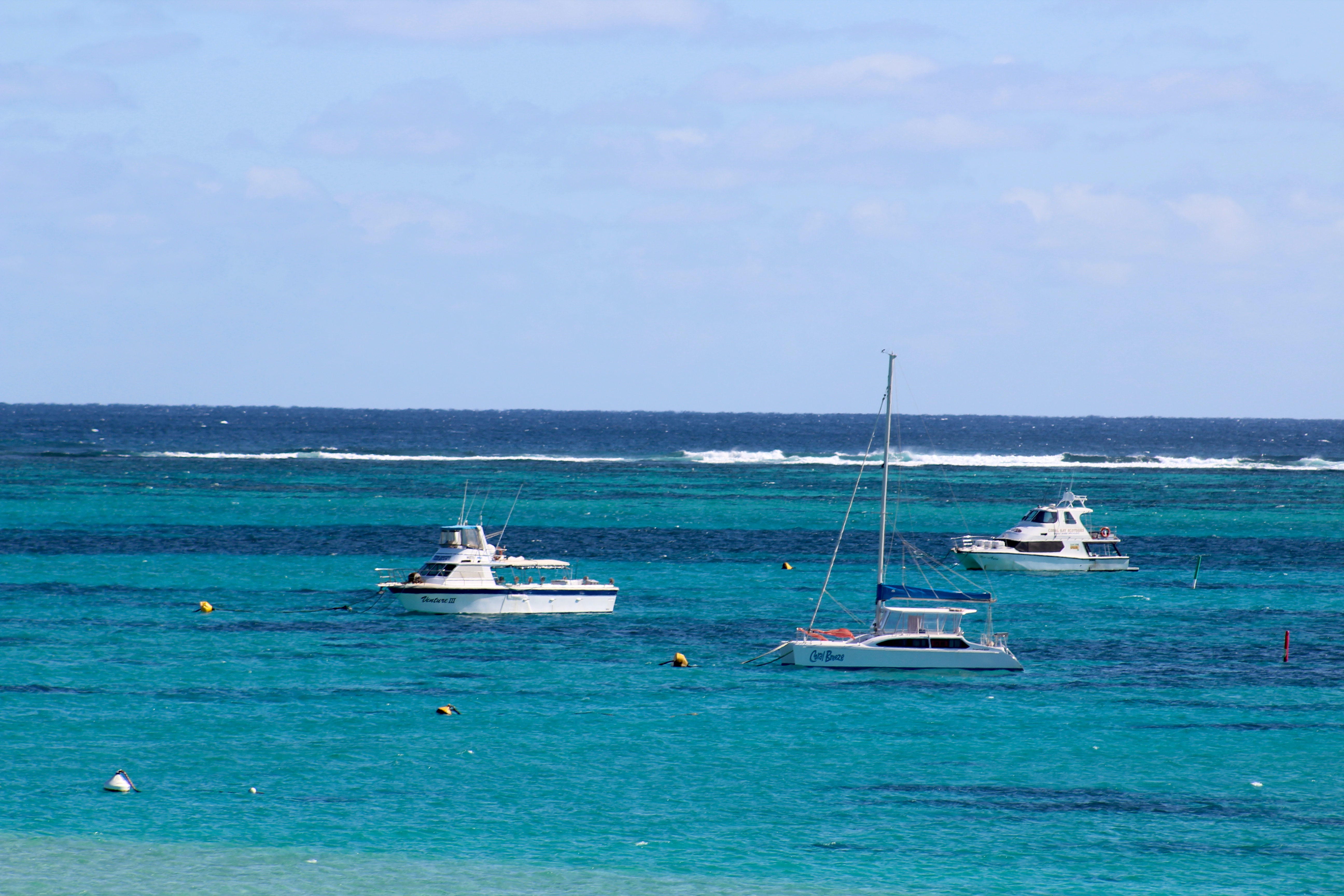
Another beautiful view of the Indian Ocean.   Coral Bay is just north of the Tropic of Capricorn.   The Ningaloo Reef forms a natural lagoon.

Coral Bay

Coral Bay

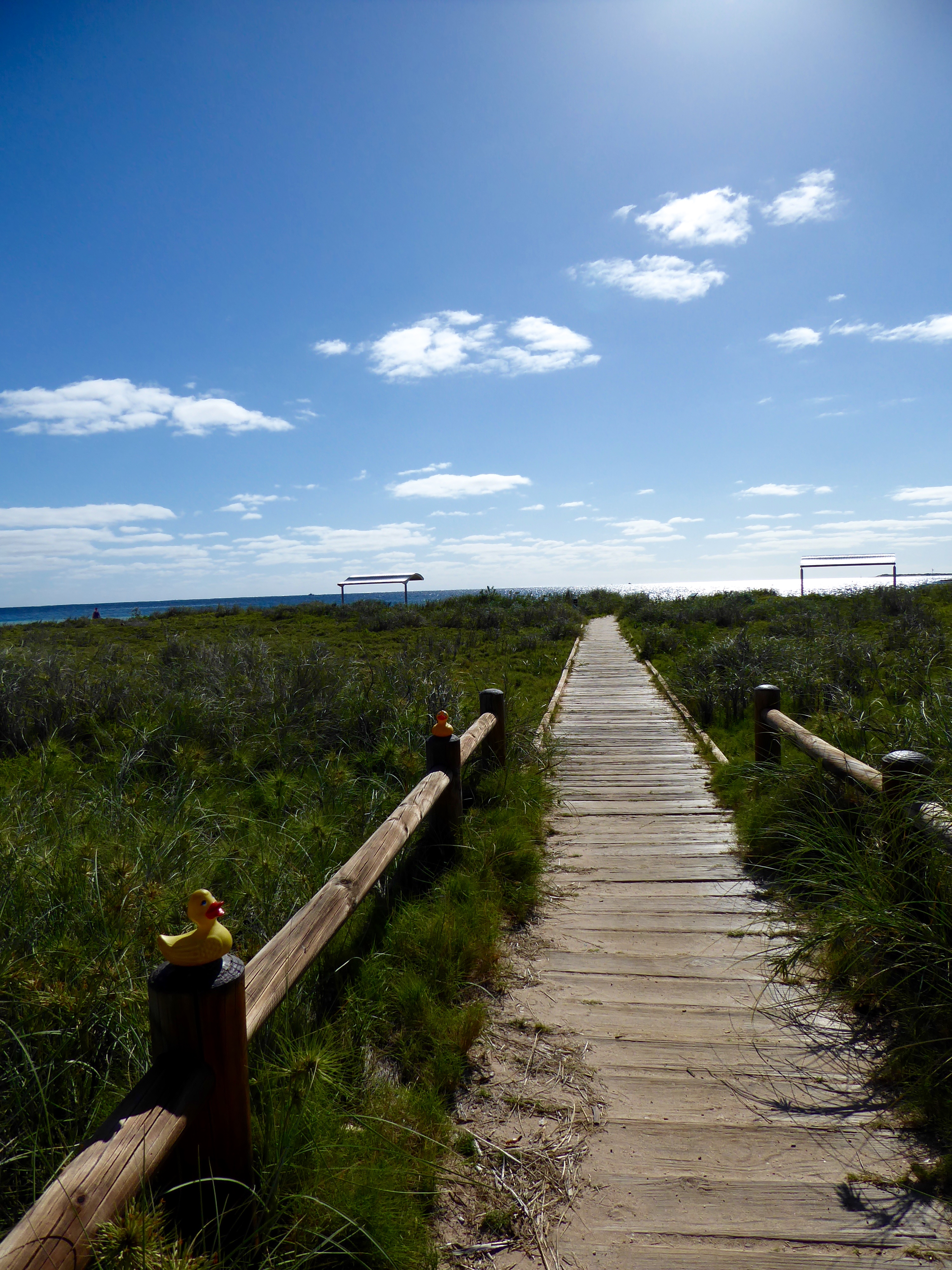
The Ningaloo Reef runs for 80 km off shore, starting about 300 meters from the beach.     This is the boardwalk to the public beach.

Boardwalk to the beach

Boardwalk to the beach

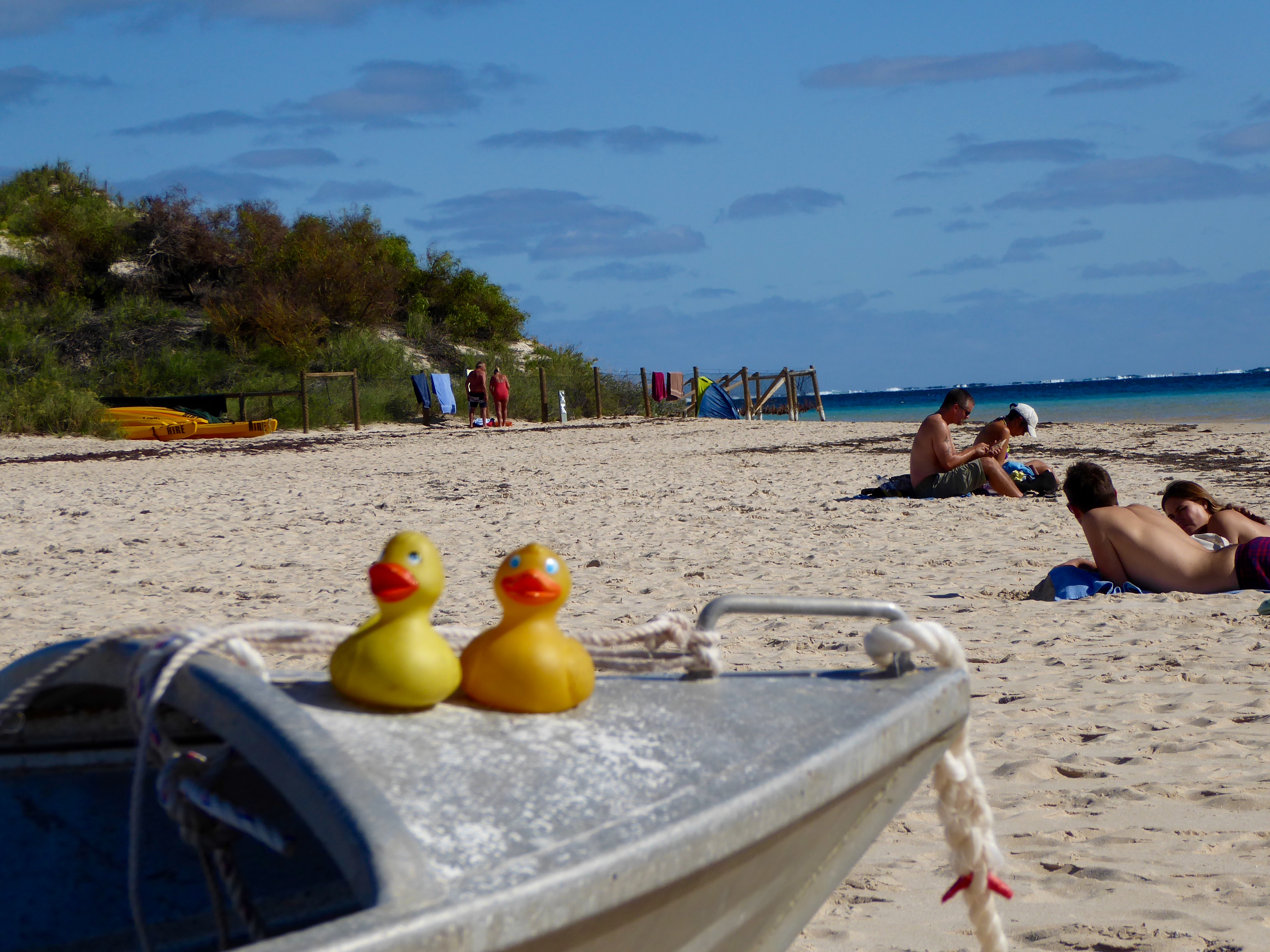
Much of Coral Bay and the Ningaloo Coast forms the Ningaloo Marine Park and much of that is an animal sanctuary.   Turtle hatching takes place in February.   Whale sharks can often be seen from March to June.   Human activity on the water is limited, but on this beach we can enjoy the beach and swimming.

Swmming and sunning here

Swmming and sunning here

Isn’t this a pretty beach?   We think it is.

Lets take a boat ride

Lets take a boat ride

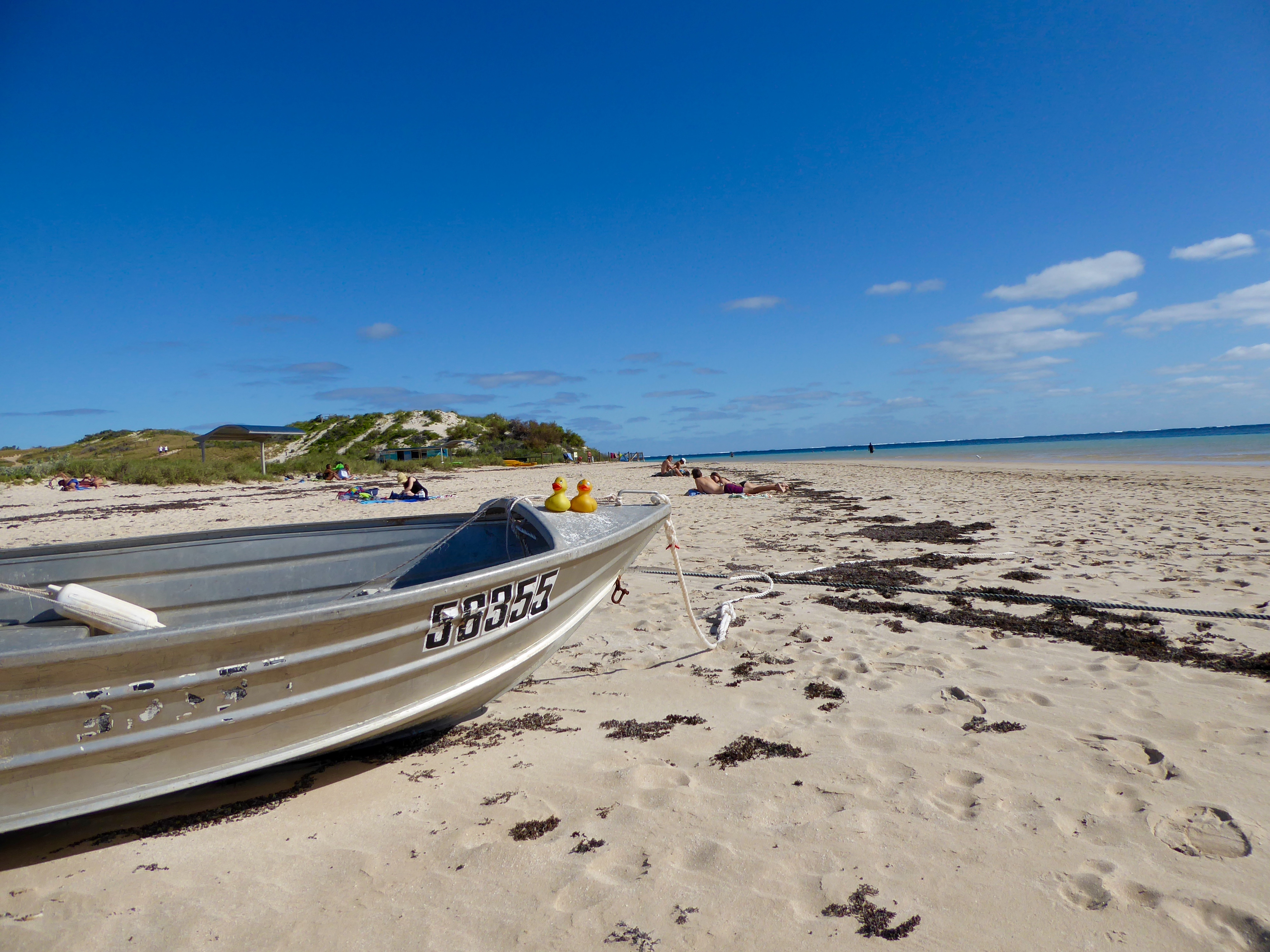
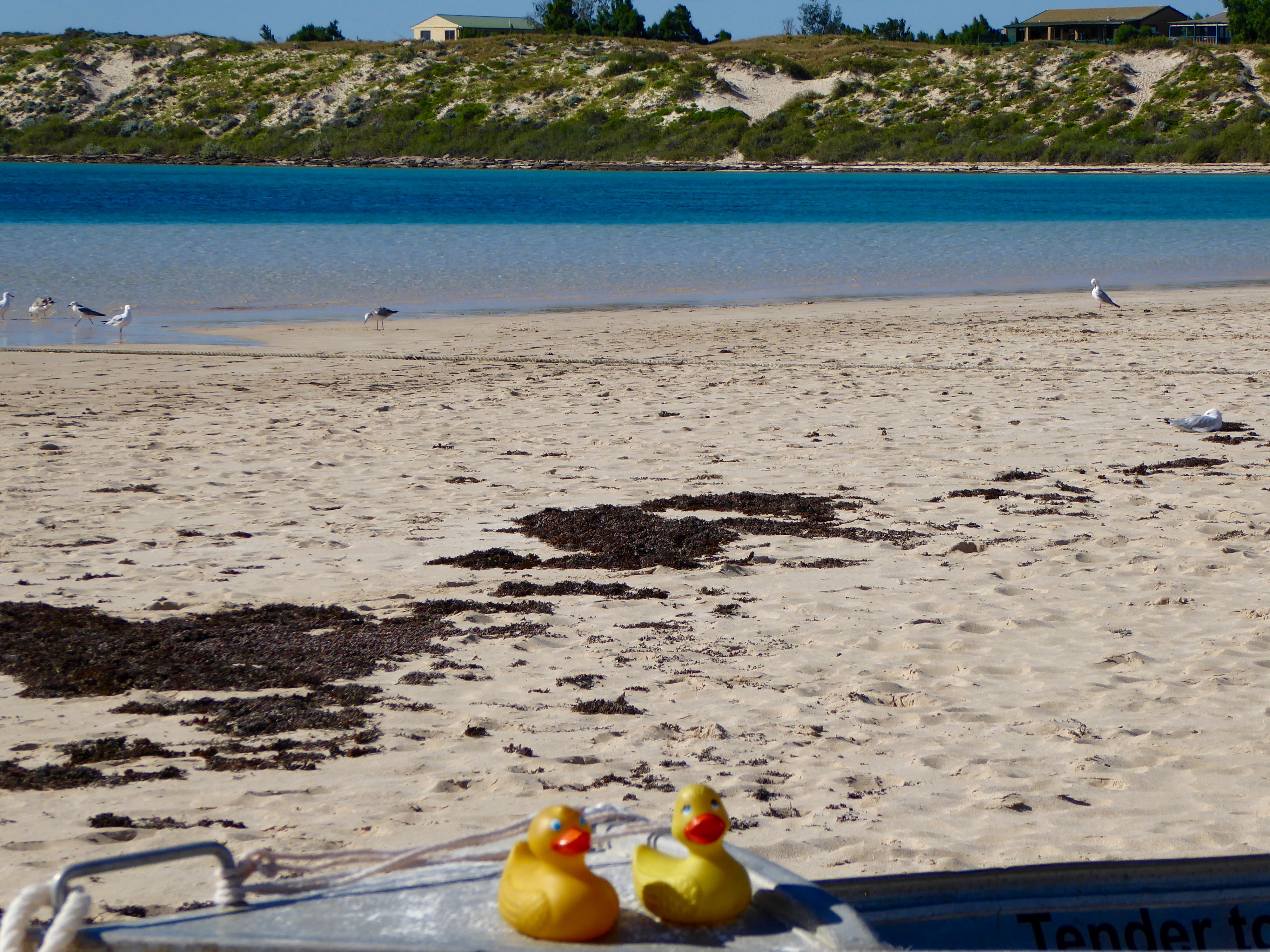
We ducks think this boat is here just for us.   But, the humans would not let us take it out on the water.   They said it was not ours and not for rent to tourists.

Beautiful beach and not many humans

Beautiful beach and not many humans

Notice that like so many other places on Australia’s west coast, the beaches are not at all crowded.   This is so nice.

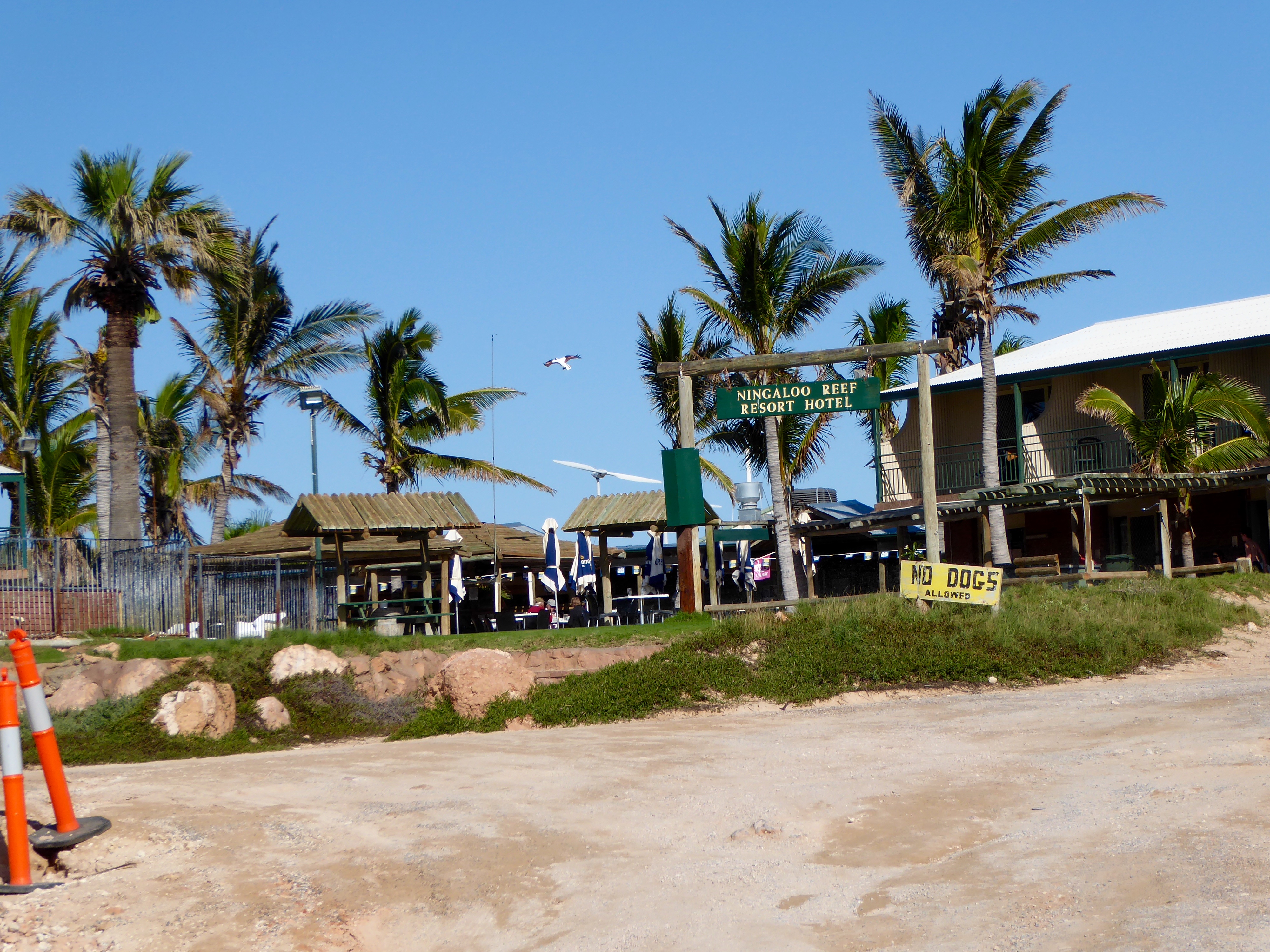
Ningaloo Reef Resort Hotel

Ningaloo Reef Resort Hotel

This is the Ningaloo Reef Resort Hotel and is the perfect place to stay while enjoying the Ningaloo Reef.   We could stay here for a long time if the humans would let us.

Carnarvon Australia with Zeb and Eider Duck

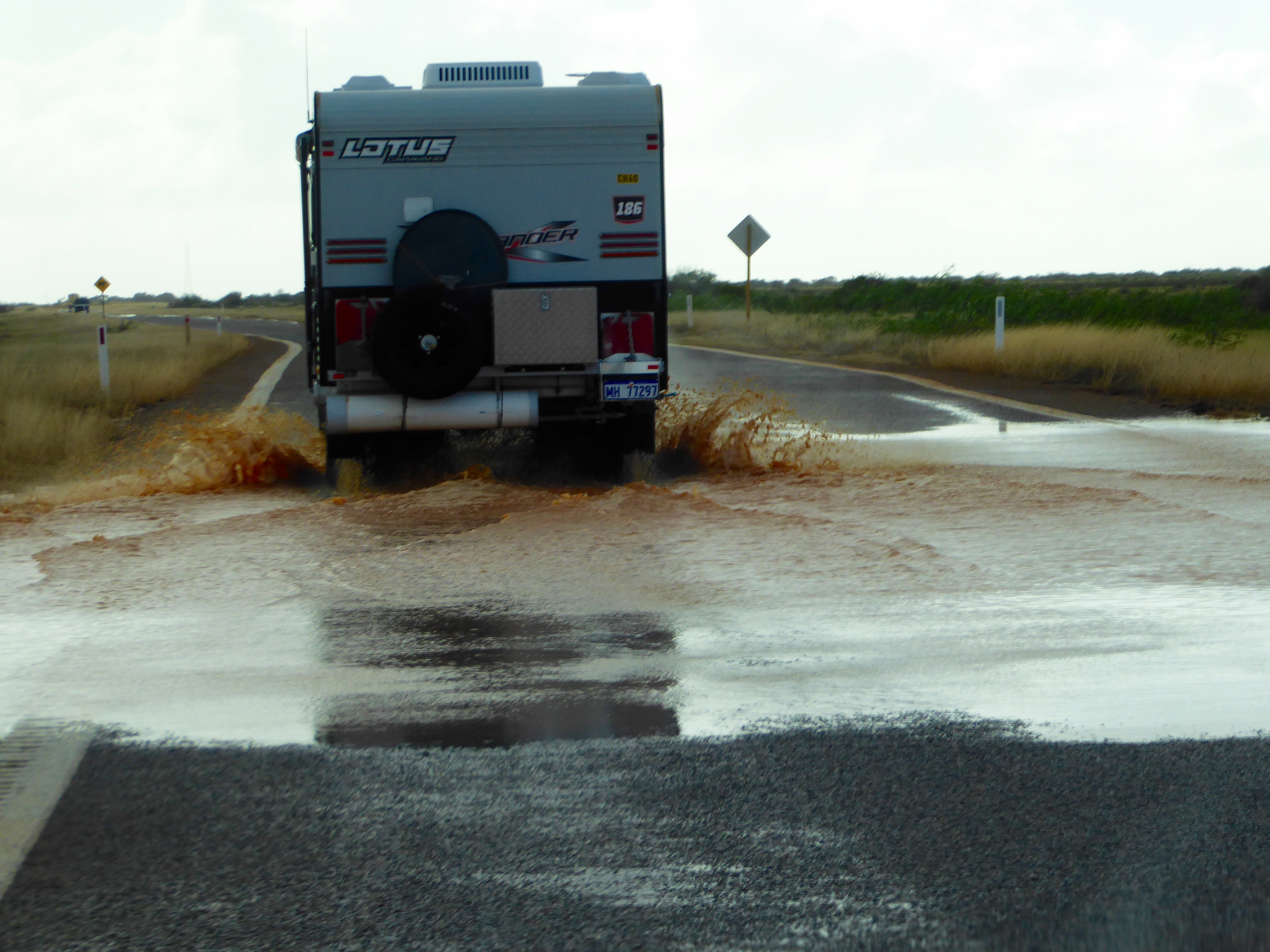
It was raining when Zeb, Eider, and the humans left Monkey Mia in Shark Bay, Western Australia.   The road was flooded in places, but we were able to drive through.

They drove through the water. So did we!

They drove through the water. So did we!

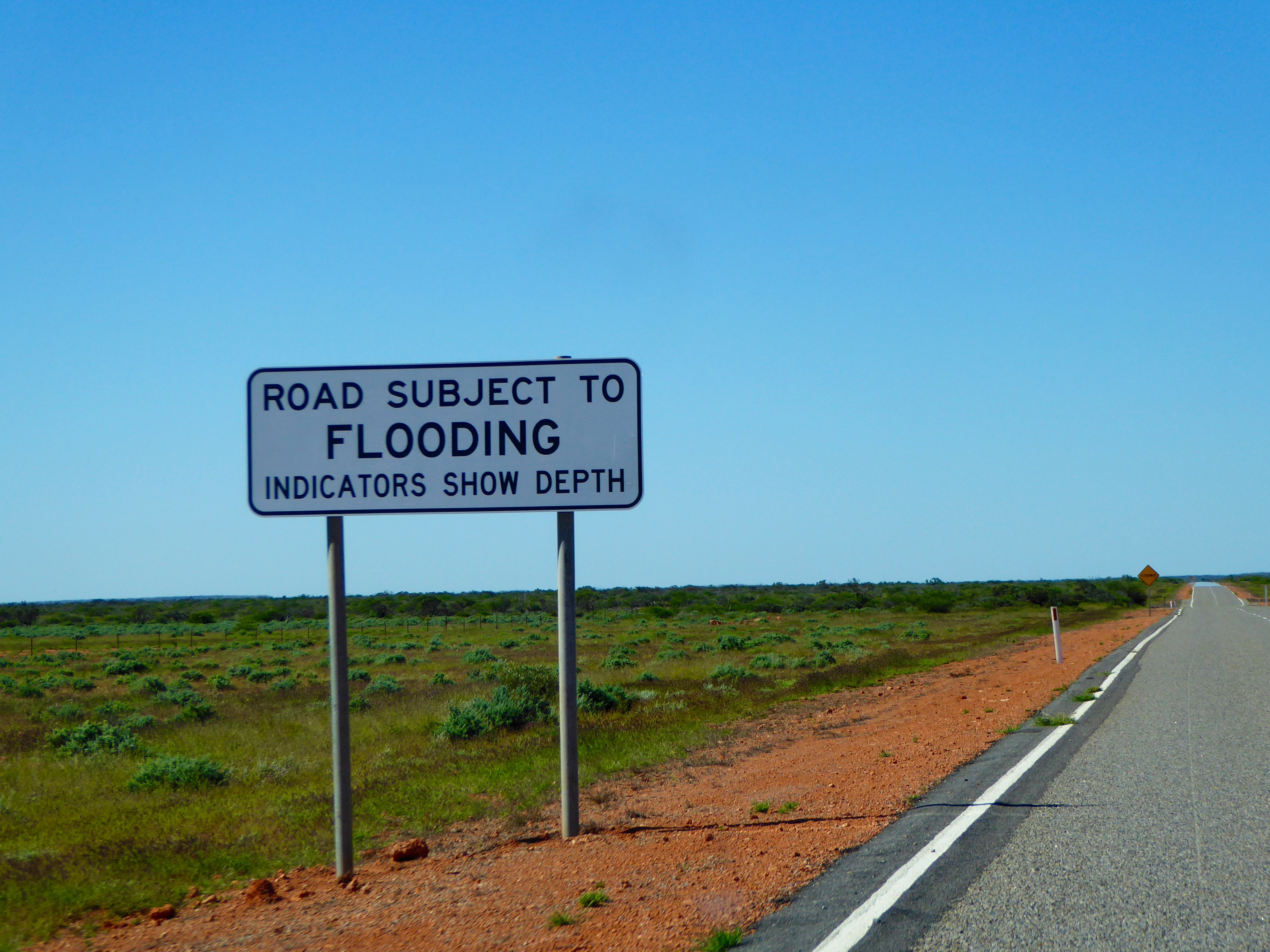
Apparently the roads flood a lot in the rainy season, and also in the drier winter.  This was a common sign along the road.

Common sign along the road

Common sign along the road

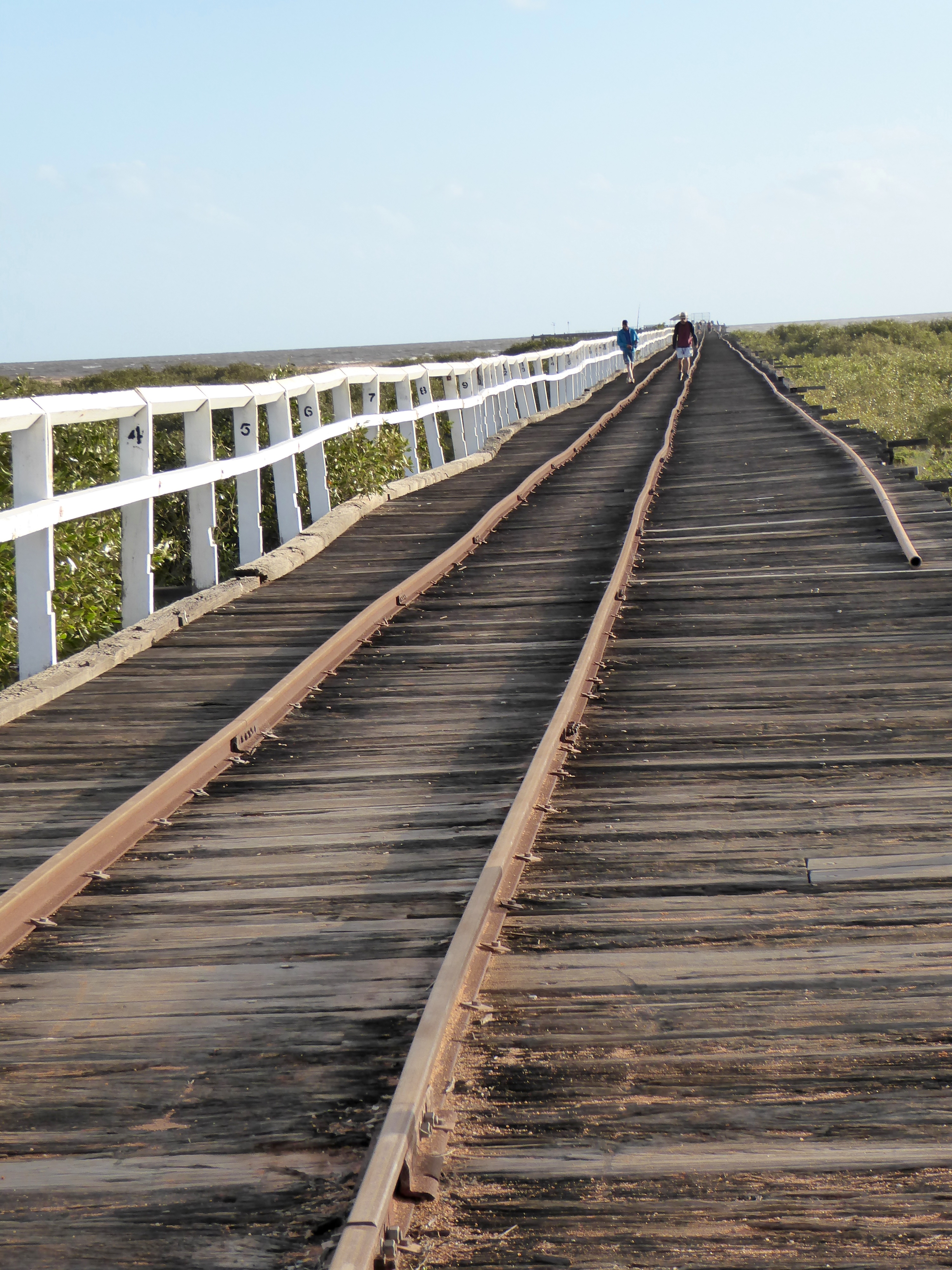
We are still driving north and decided to spend the night in Carnarvon.    Carnarvon is famous for its great climate and banana plantations.   Carnarvon is the commercial center for the rich Gascoyne district.   We went to the historic One Mile Jetty, built by Matthew Price in 1897.

Carnarvon's One Mile Jetty

Carnarvon’s One Mile Jetty

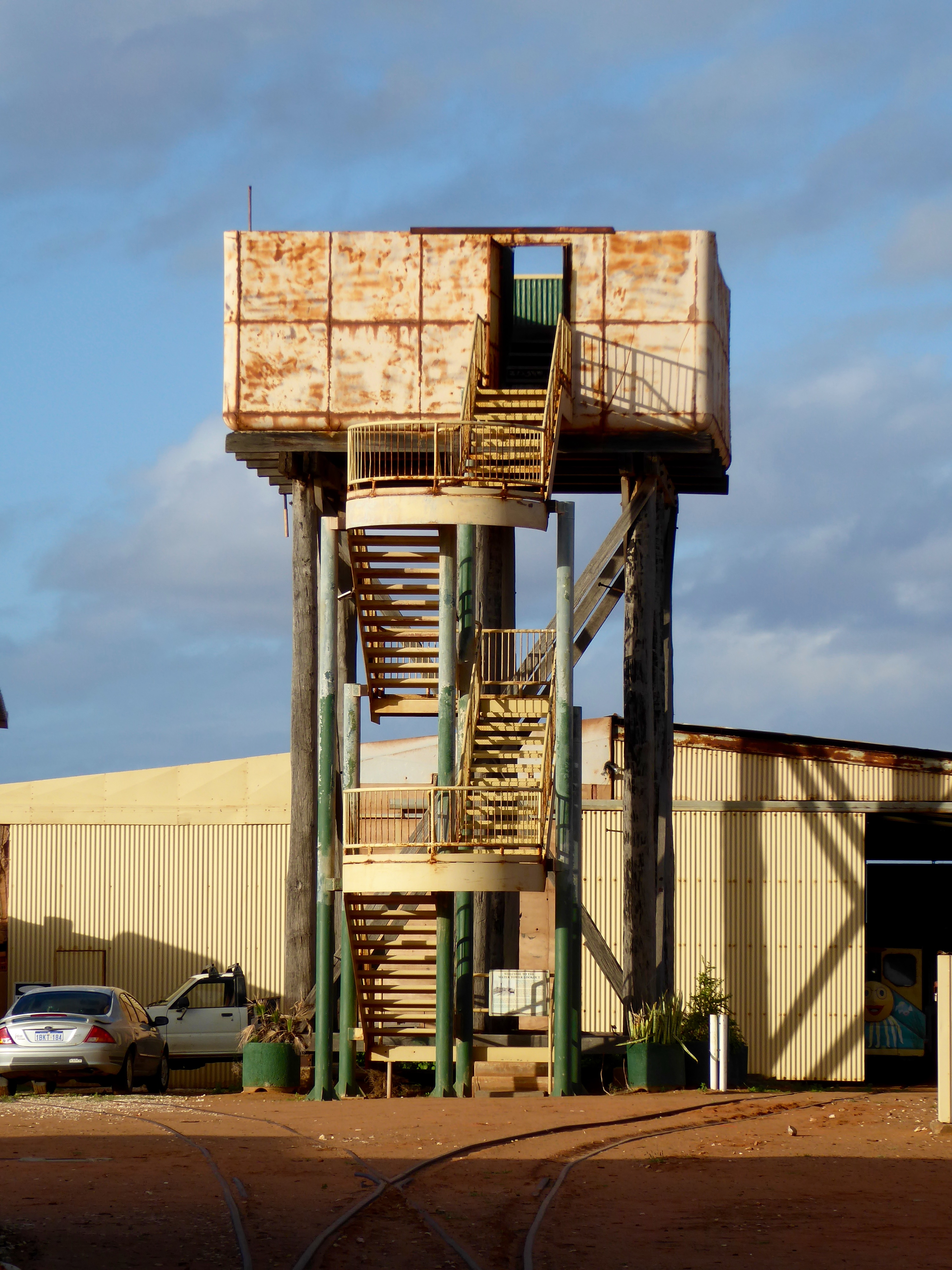
It was built to accommodate State Ships bringing supplies and passengers from Perth and allow the export of livestock and wool from the region.   Today there is great fishing from the jetty.   Nearby is the water tower lookout.

Water Tower Lookout

Water Tower Lookout

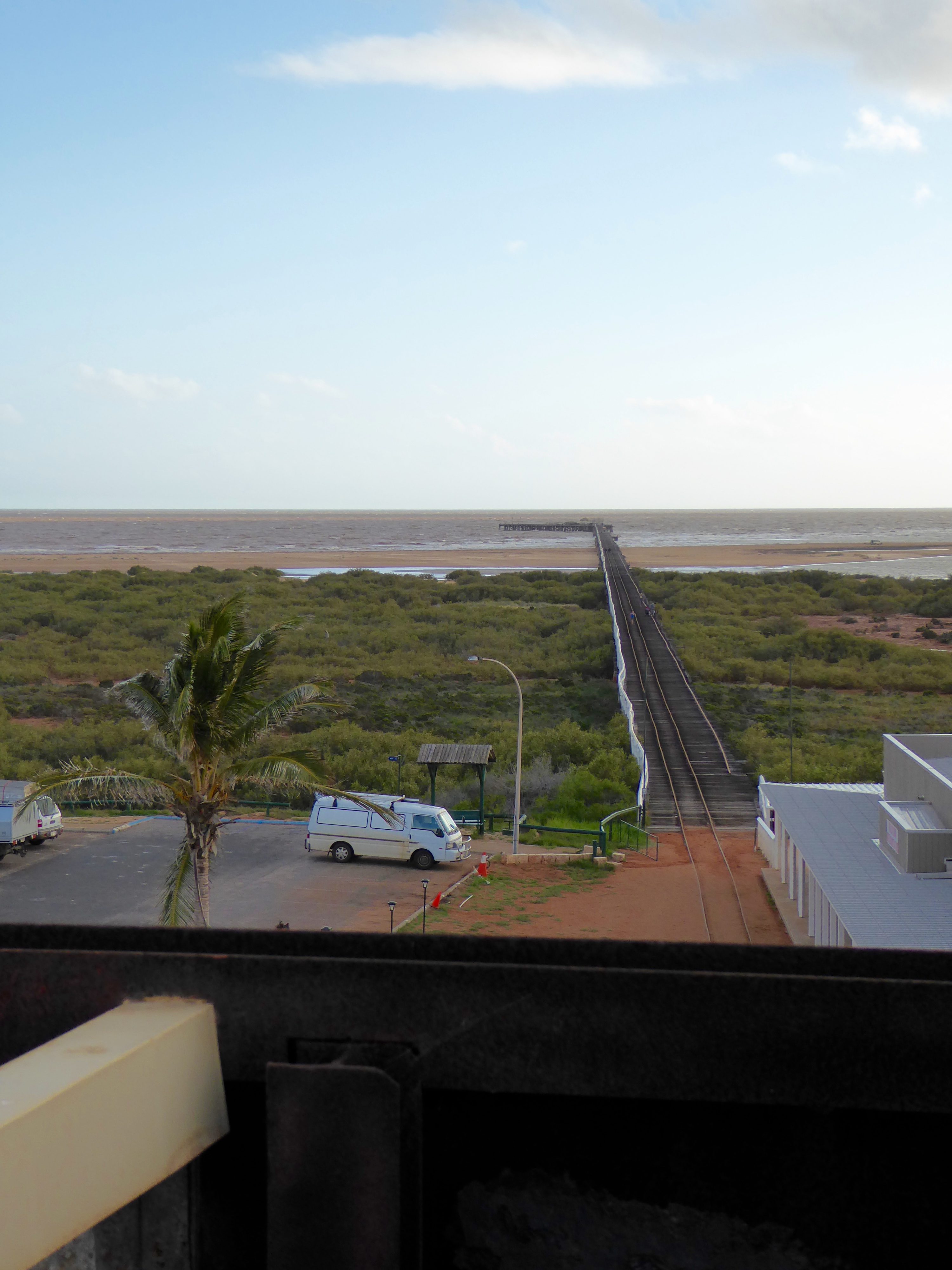
From this lookout we saw great views of the mouth of the mighty Gascoyne River.

Indian Ocean from Water tower lookout

Indian Ocean from Water tower lookout

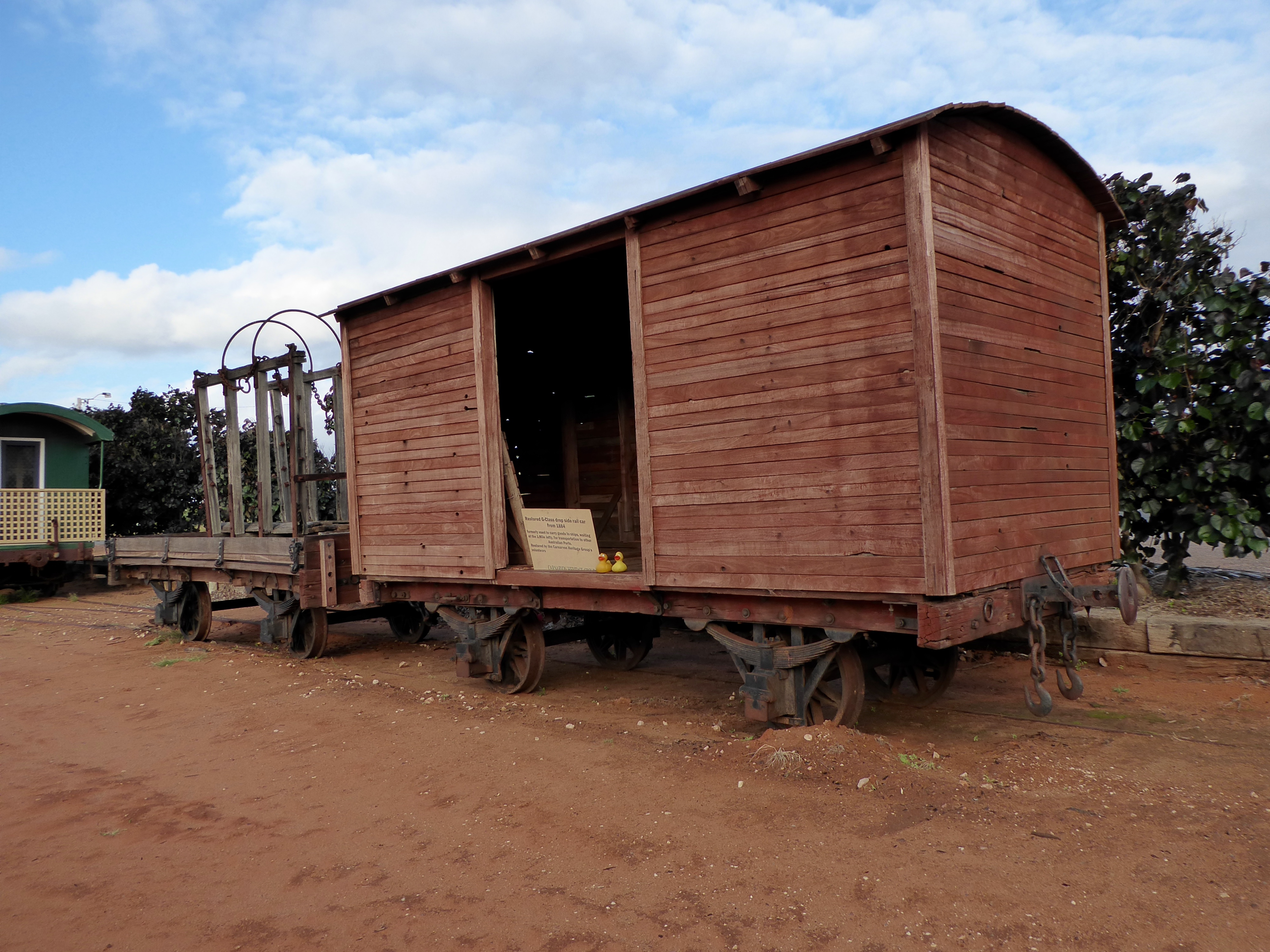
There is also a Railway Museum here.   We liked this restored G-Class dropside railcar from 1884.

Drop side rail car

Drop side rail car

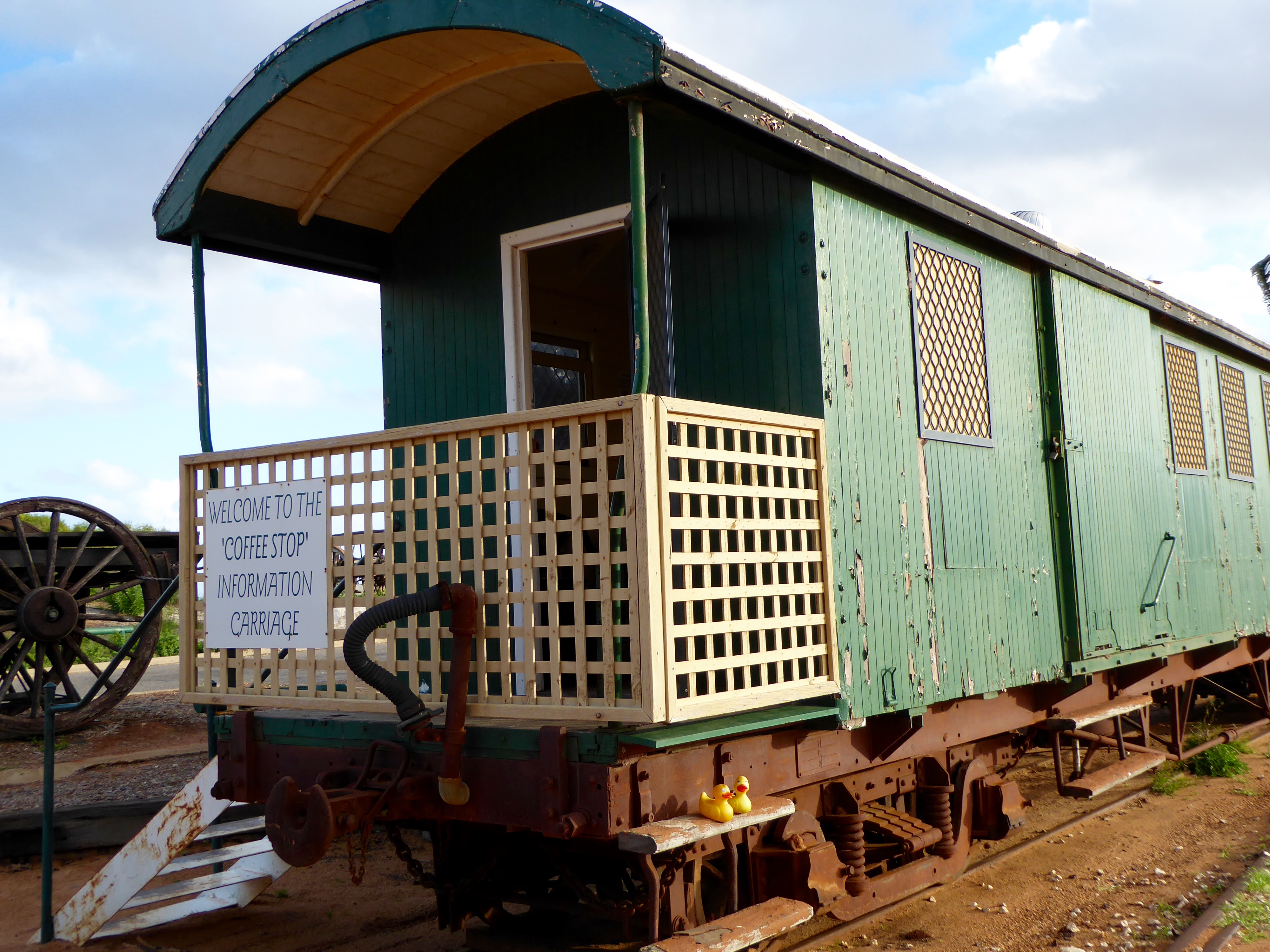
This information carriage was not open when we were here.

Information carriage

Information carriage

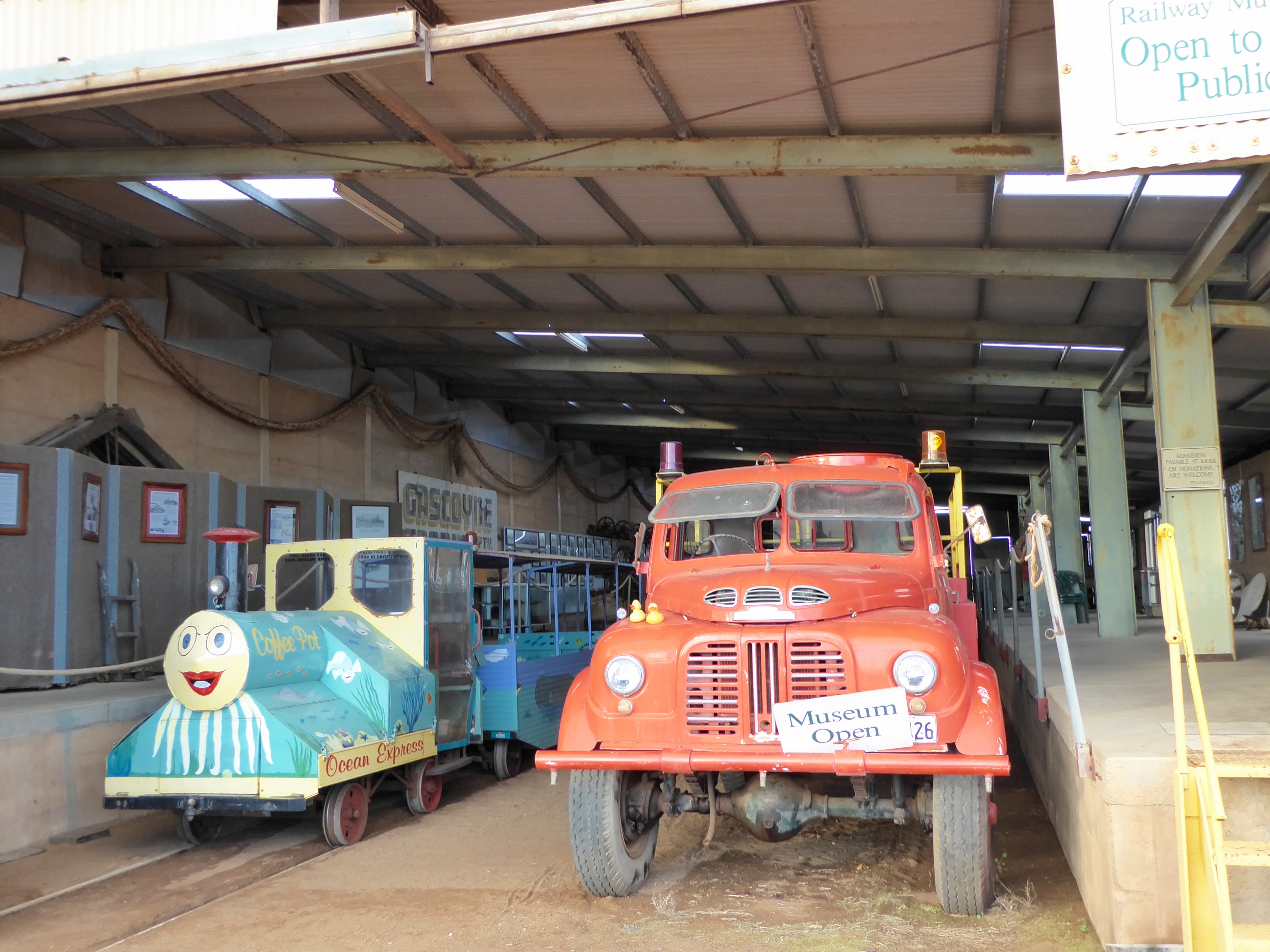
These vehicles were interesting.

We like these

We like these

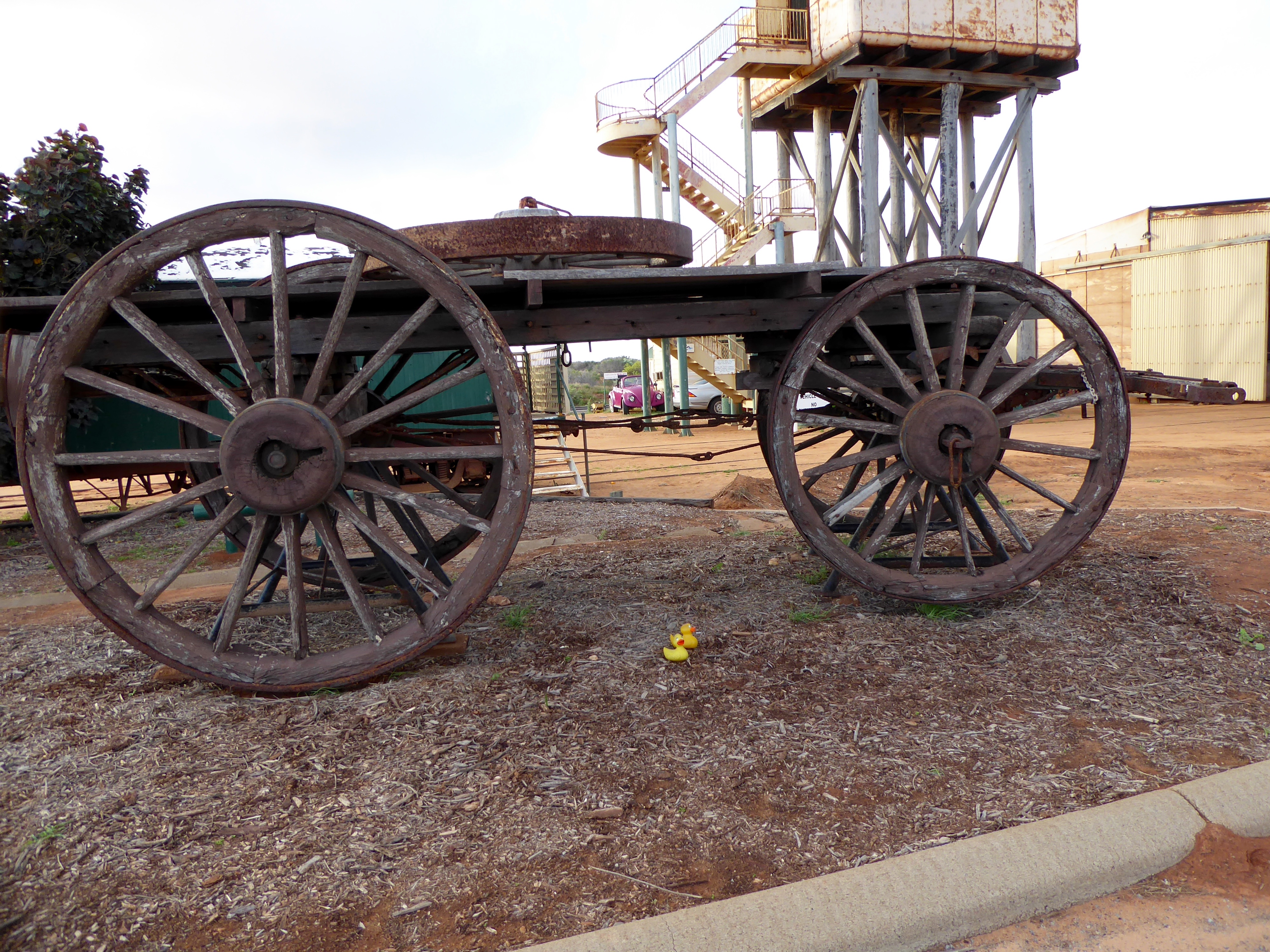
This wagon was much taller then Zeb and Eider.

Big wagon

Big wagon

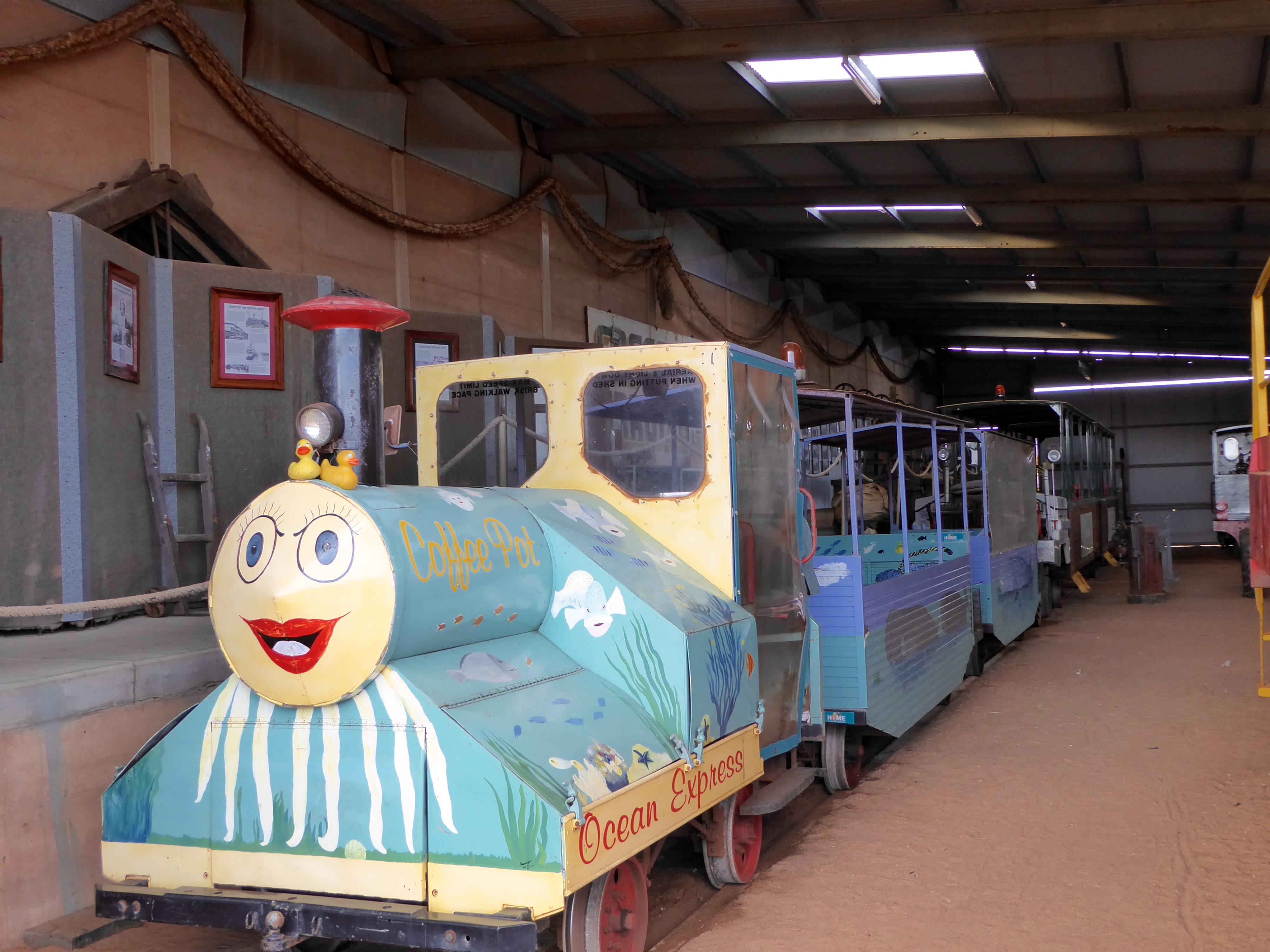
We especially liked this Coffee Pot train.

Looks like a fun ride

Looks like a fun ride

We could not stay longer in Carnarvon, but it was a very nice and interesting town on the Indian Ocean.

Zeb and Eider Visit Monkey Mia Resort at Shark Bay, Australia

The World Heritage Drive ends at Monkey Mia Conservation Park and Reserve.   Entering the reserve, we stayed Monkey Mia Dolphin Resort.

Monkey Mia Dolphin Resort

Monkey Mia Dolphin Resort

This resort is famous for dolphins.   The wild dolphins come into the bay.   The rangers at the reserve feed a few wild dolphins a little food each morning between 7:45 am. and noon.   The rangers greet the dolphins when they arrive, so there is no strict time schedule.   Like many tourists, we went to the beach at 7:45 am.

Waiting for the dolphins to come. Rain came first

Waiting for the dolphins to come. Rain came first

A couple dolphins came in, and then it stated to rain.   Most of the tourists, including our humans, left the beach.   We did see the dolphins and they are beautiful animals.

Wild dolphins

Wild dolphins

This pelican was on the beach also.

Matching blue feet

Matching blue feet

We like his blue feet; they seem to match the human feet with blue shoes.   From our patio, we enjoyed watching the ocean.

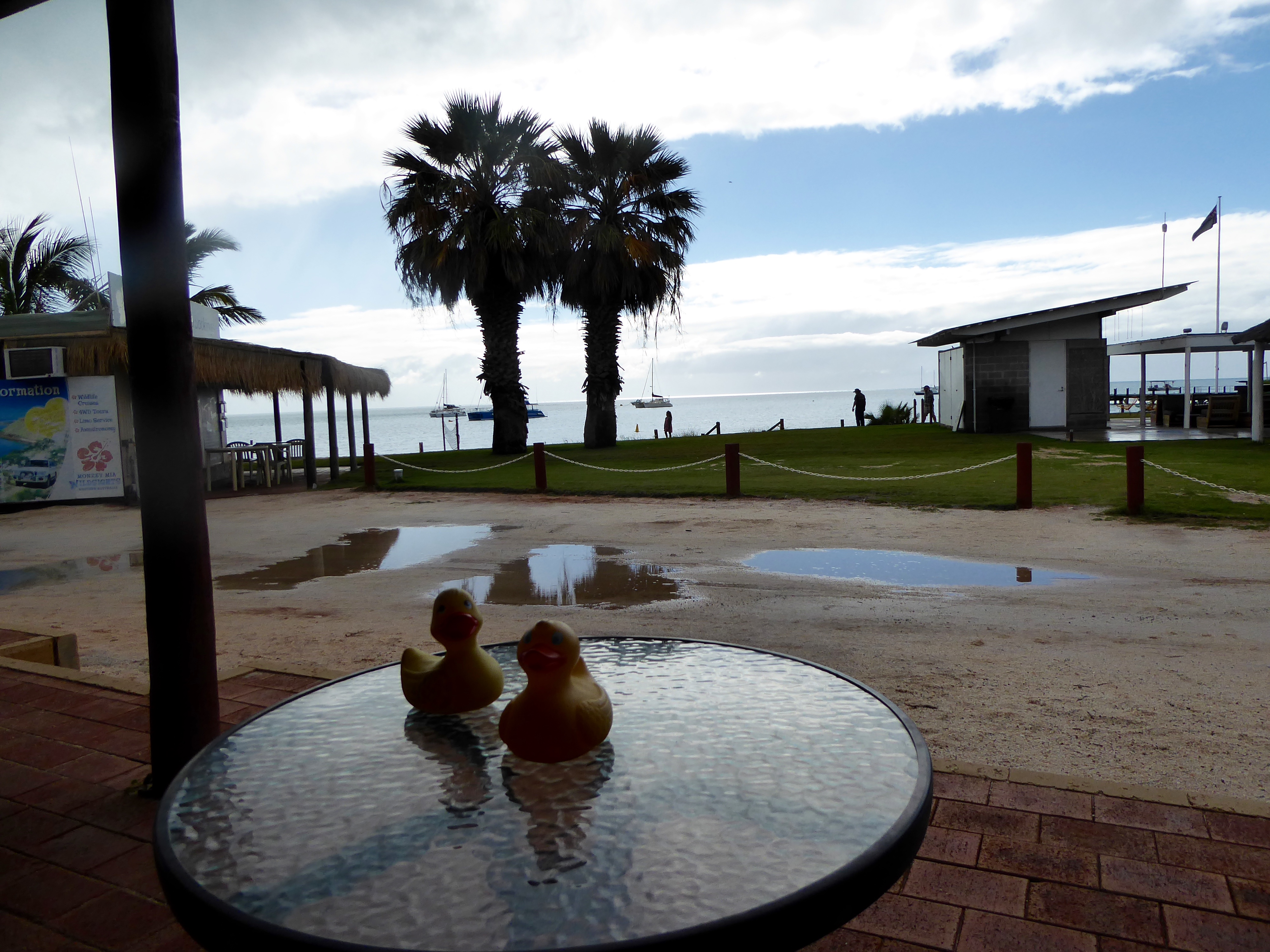
From our patio

From our patio.   After the rain

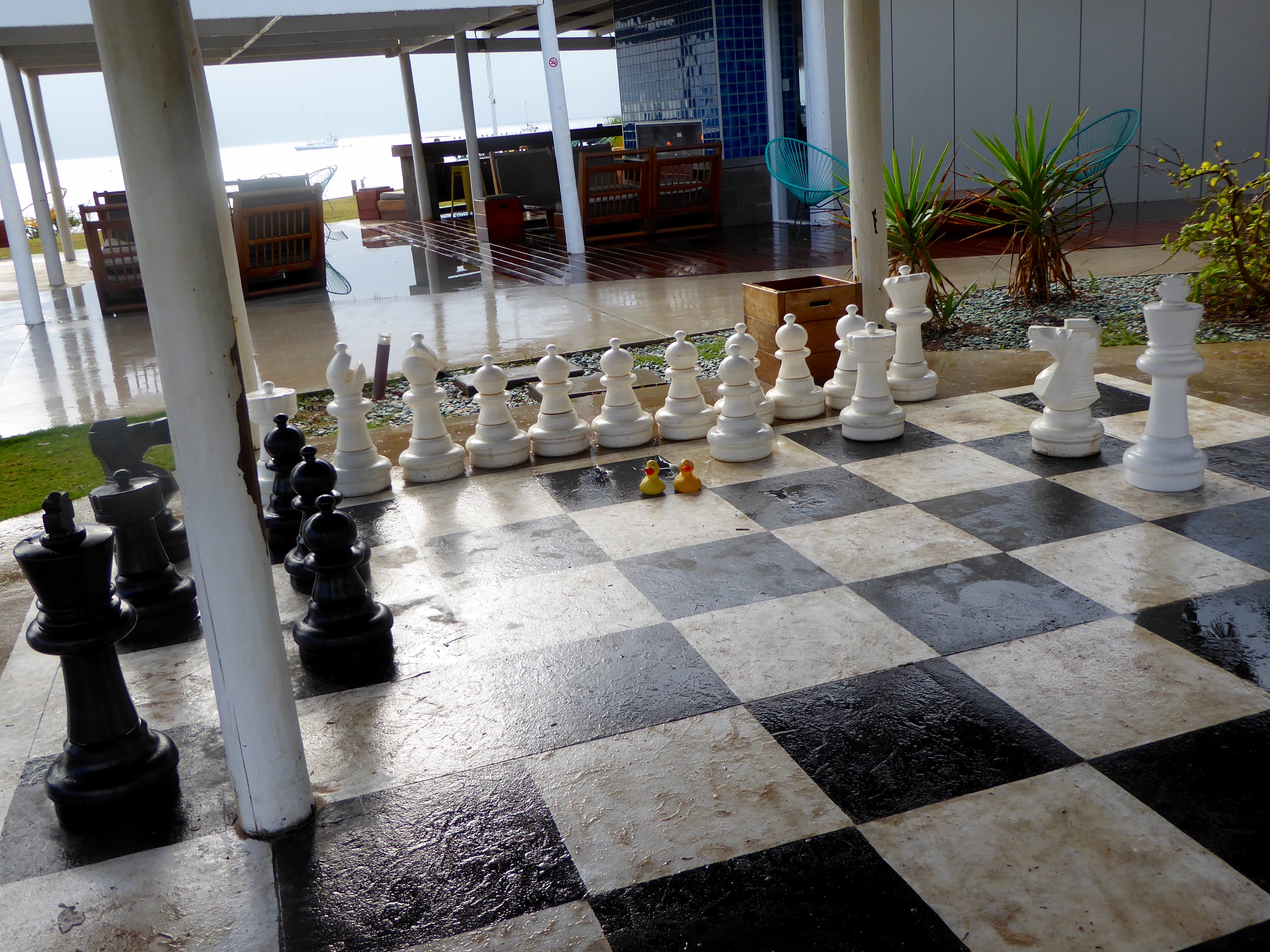
Monkey Mia Dolphin Resort has many thing for humans to do.   Chess anyone?

Help us play chess. We cannot move the pieces

Help us play chess. We cannot move the pieces

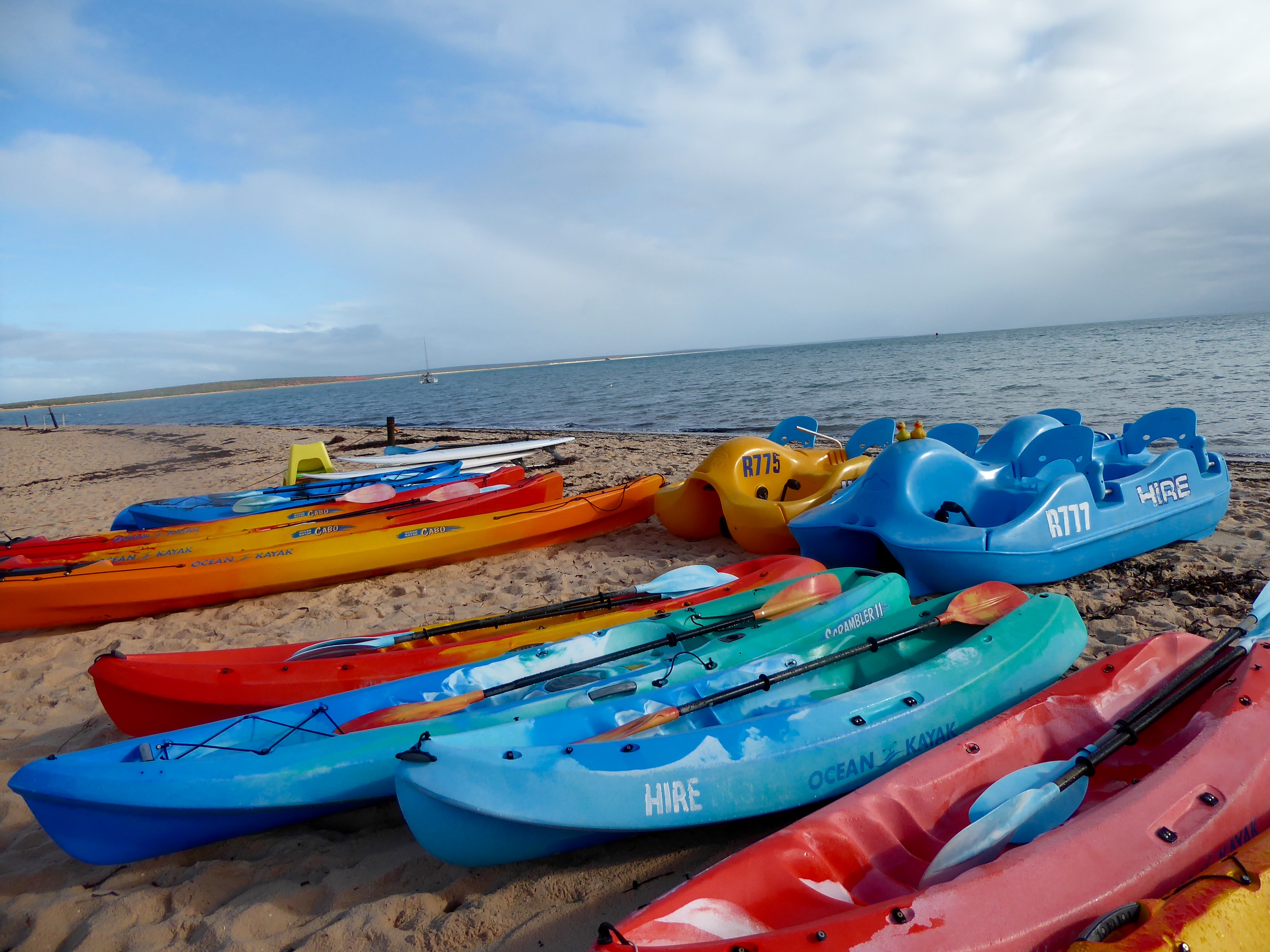
Anyone want to rent a canoe or kayak and go on the ocean?

Let's get a kayak

Let’s get a kayak

Let’s go swimming when the sky clears.

The sky will become clear and the sun will shine

The sky will become clear and the sun will shine

Maybe beach volleyball or join the seagulls at the outdoor bar?

Come have a drink with us

Come have a drink with us

You can always be entertained by the many pelicans near the resort.

So many pelicans here

So many pelicans here

How about food?  You can sit outside by the fireplace and enjoy  meal, or of course, you can enjoy your food inside.   This fireplace is visible from both sides.

Cozy fireplace behind us

Cozy fireplace behind us

For more information visit http://www.monkeymia.com.au   We enjoyed our brief stay at Monkey Mia, even though it was rather rainy.   Mom said if we are even back in this part of Australia we will definitely stay here again.

Australia’s Kalbarri National Park with Zeb and Eider Duck

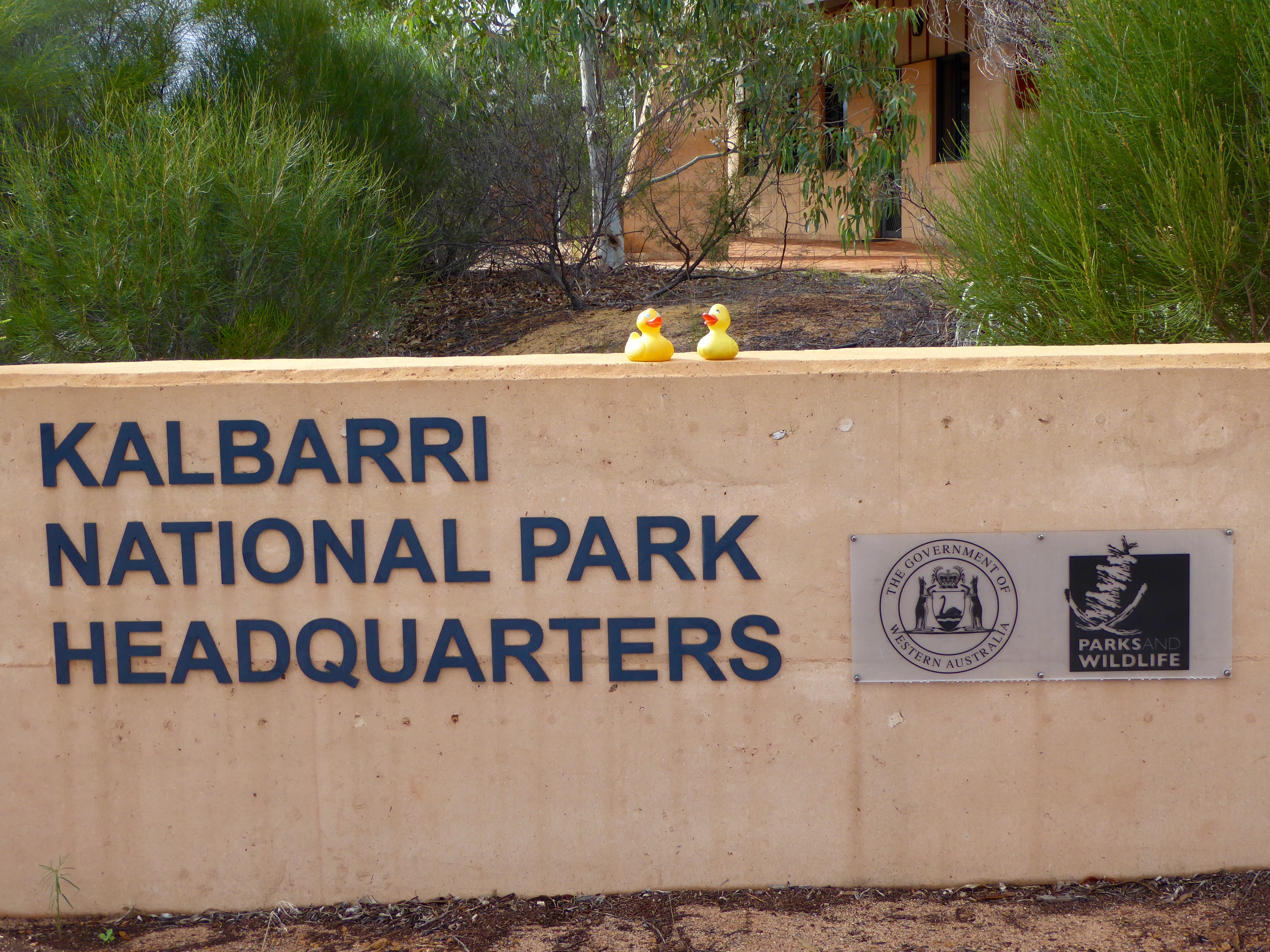
Kalbarri National Park, in Western Australia, has coastal lookouts and look out points over the gulches of Murchison River.    After leaving the Principality of Hutt River, we drove to the Indian Ocean coast toward the town of Kalbarri.   Our first stop in the national park was Grandstand.

From Grandstand Lookout in Kalbarri National Park

From Grandstand Lookout in Kalbarri National Park

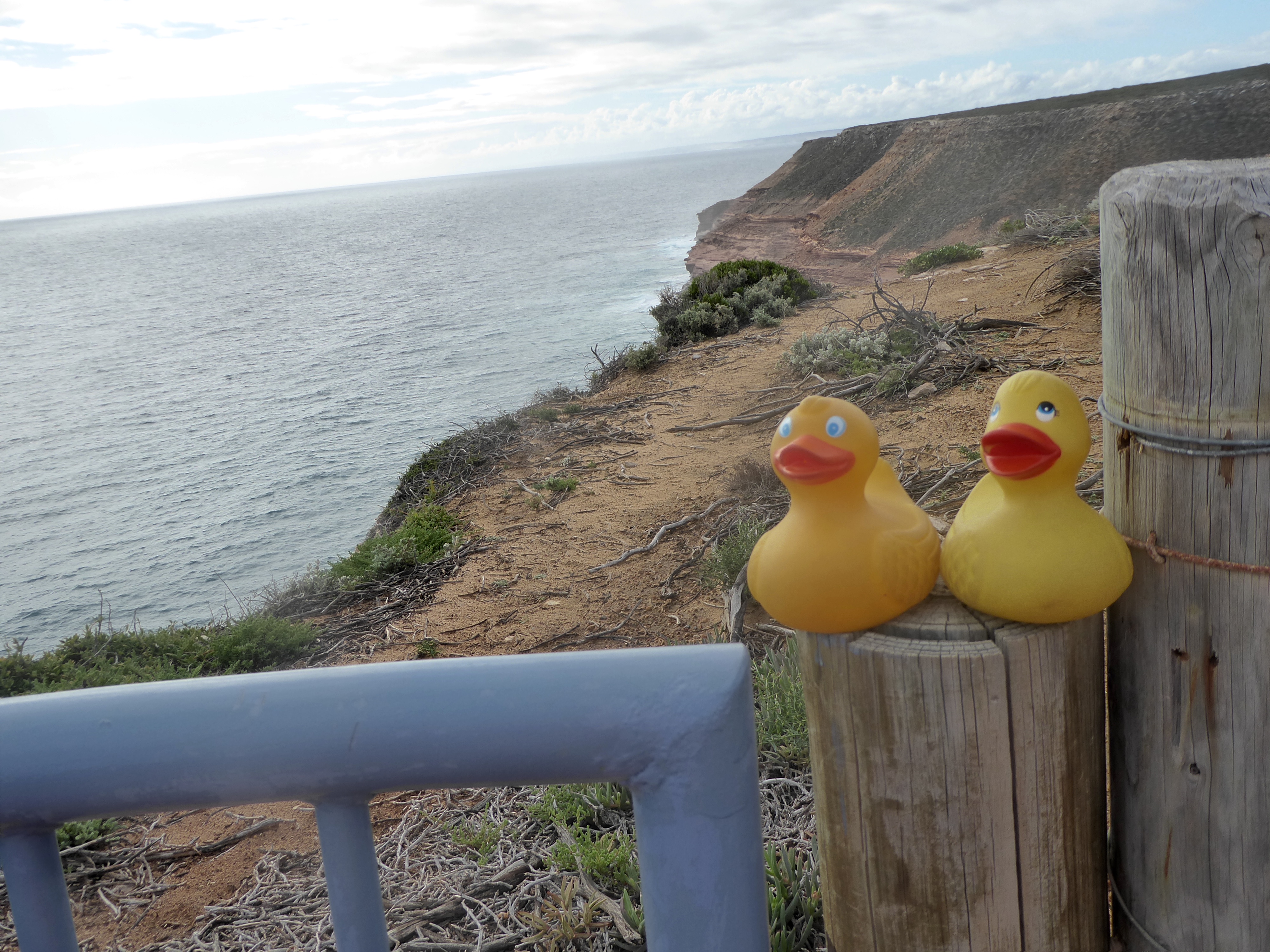
We, Zeb and Eider, were very careful because the wind was pretty strong.

We are here too, but it windy

We are here too, but it windy

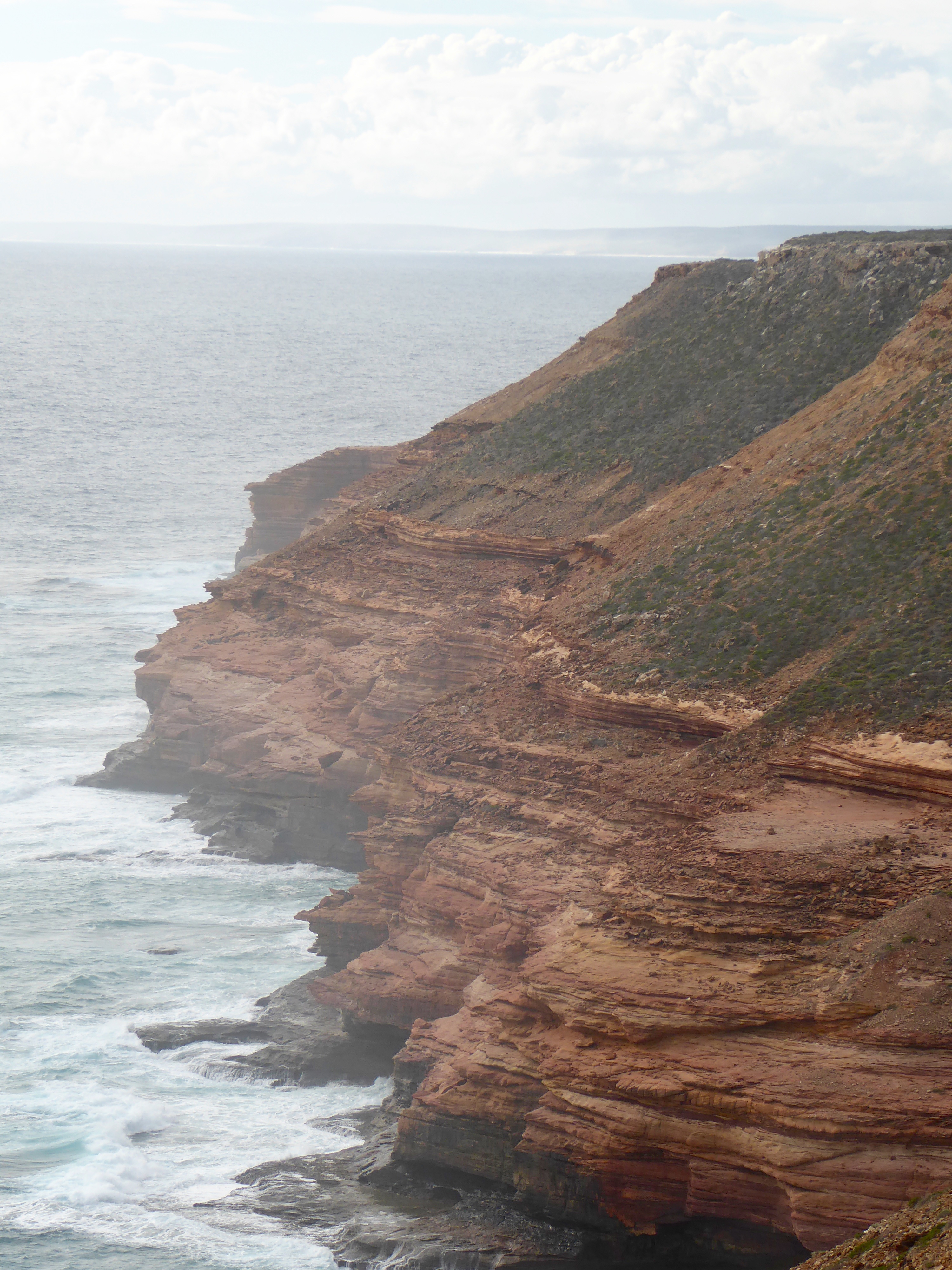
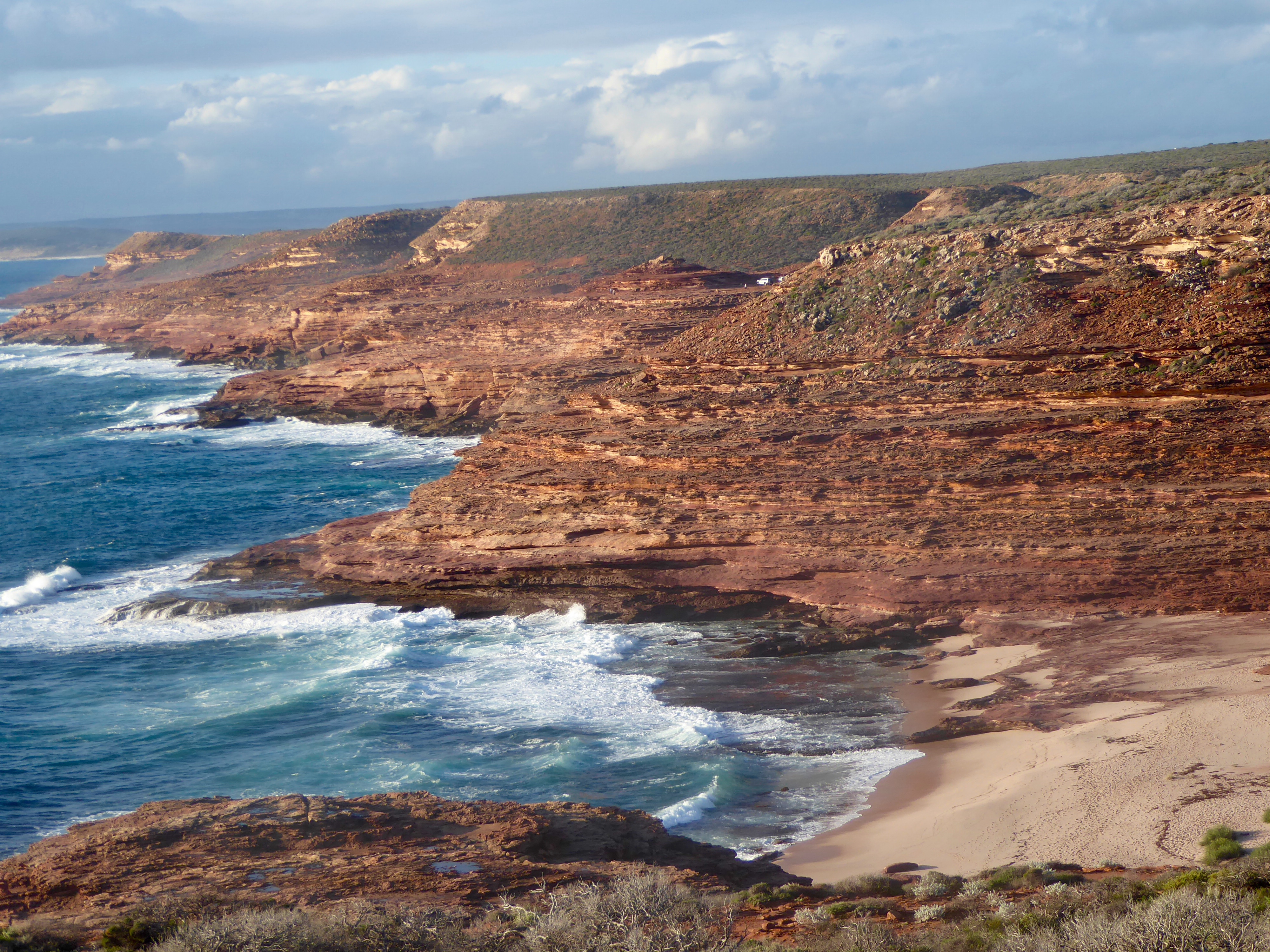
We loved looking at these cliffs of the Indian Ocean.

Great cliffs to Indian Ocean

Great cliffs to Indian Ocean

Our next stop was at Island Rock.

Island Rock

Island Rock

It really is an island of rock.   Natural Bridge, a little further along the coast, was nice.

Natural Bridge

Natural Bridge

This bridge was formed by the force of the water, cutting through the rock.    Here at Eagle’s Gulch, we admired this beach.

A beach at Eagle's Gulch

A beach at Eagle’s Gulch

This would be a great place for a picnic.   More beautiful views of the Indian Ocean from Pot Alley.

We like Pot Alley. We feel safe here

We like Pot Alley. We feel safer here

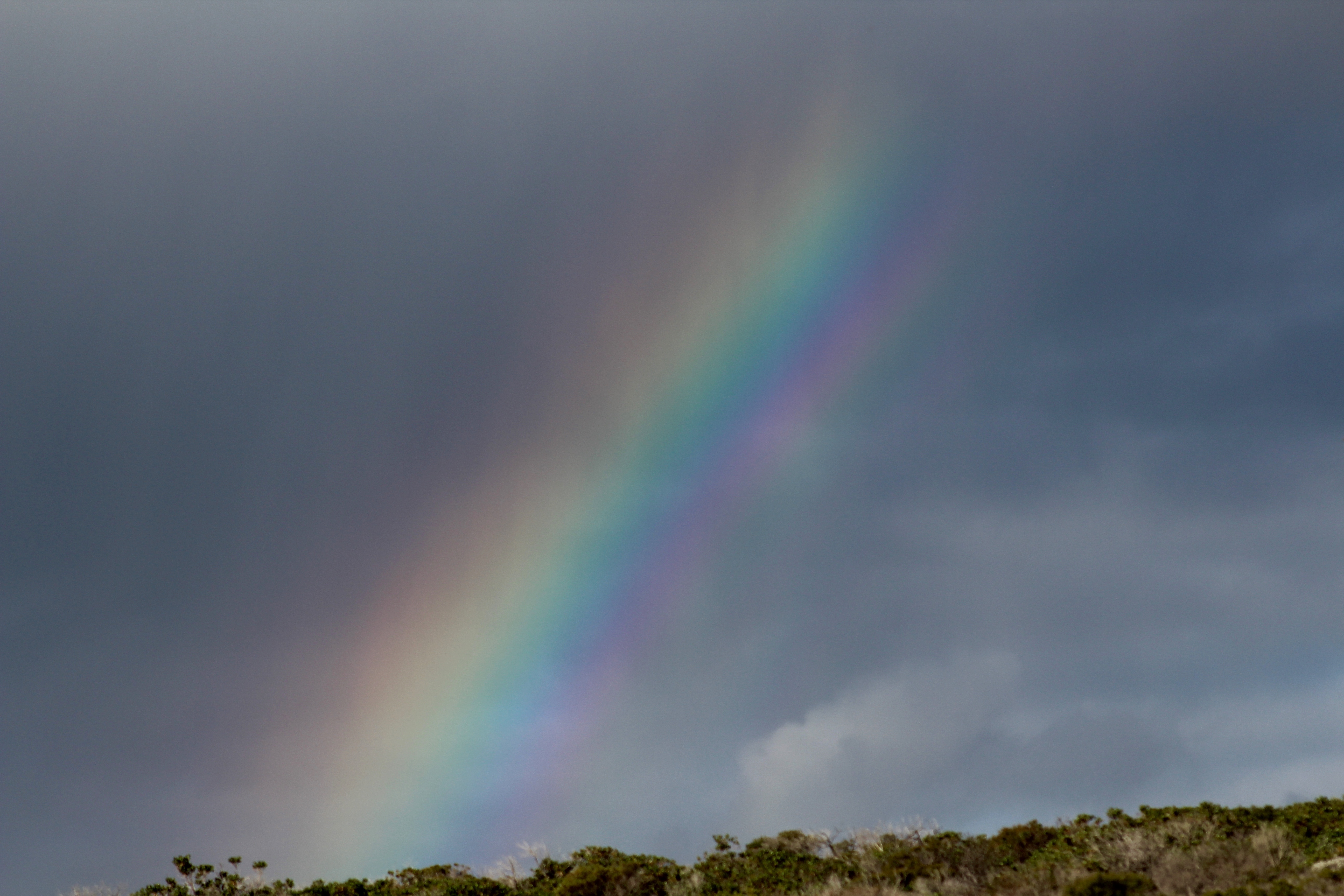
As the weather changed, we saw this rainbow.

We love rainbows

We love rainbows

Next morning we drove a little inland to the entrance of Kalbarri National Park.

Kalbarri National Par

Kalbarri National Par

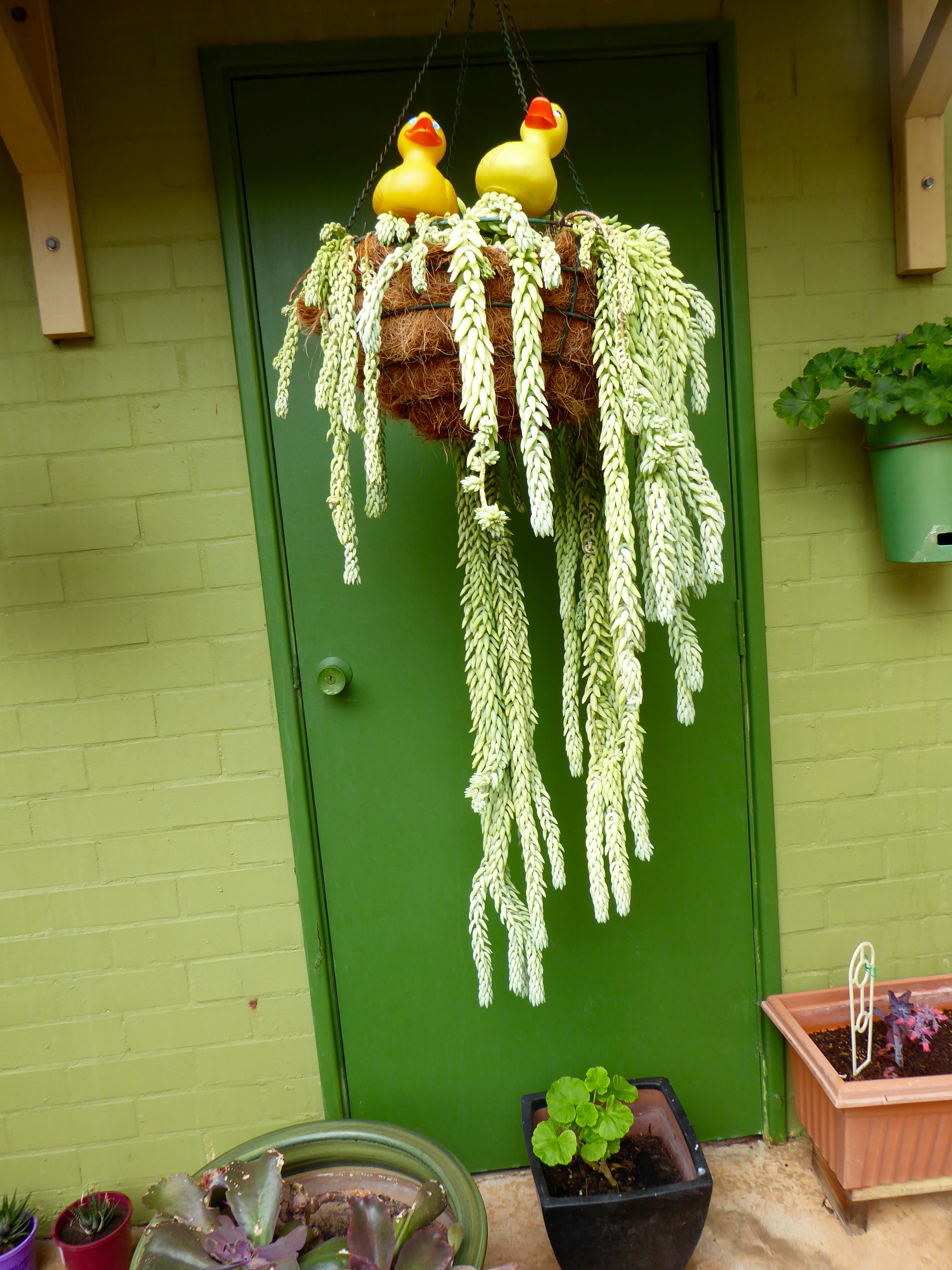
We were fascinated by this plant at the Park Headquarters Building.

Different plant

Different plant

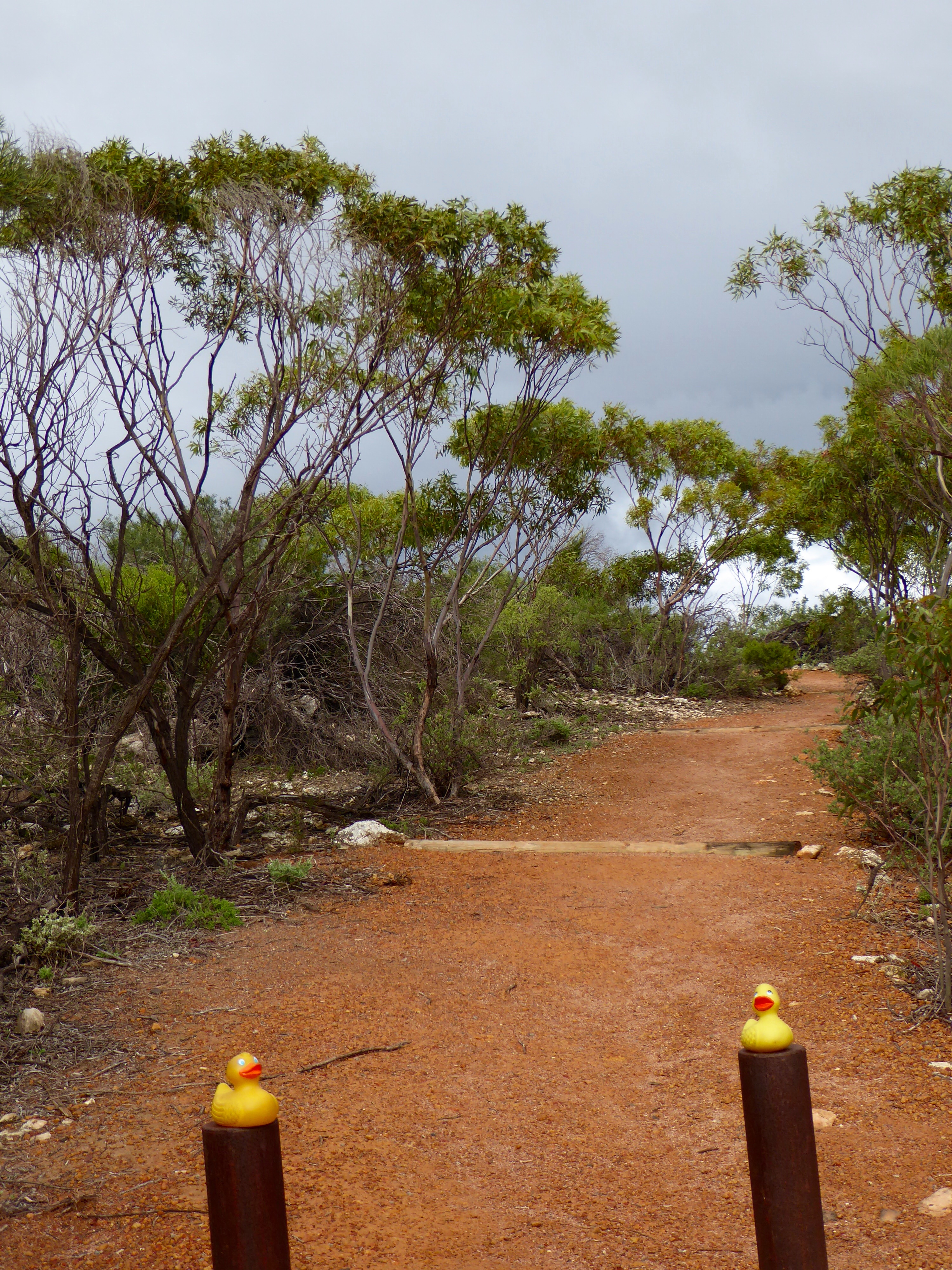
The Murchison River flows through the park, so we had our choice of hiking trails and beautiful views of the gorge.

We hiked this trail

We hiked this trail

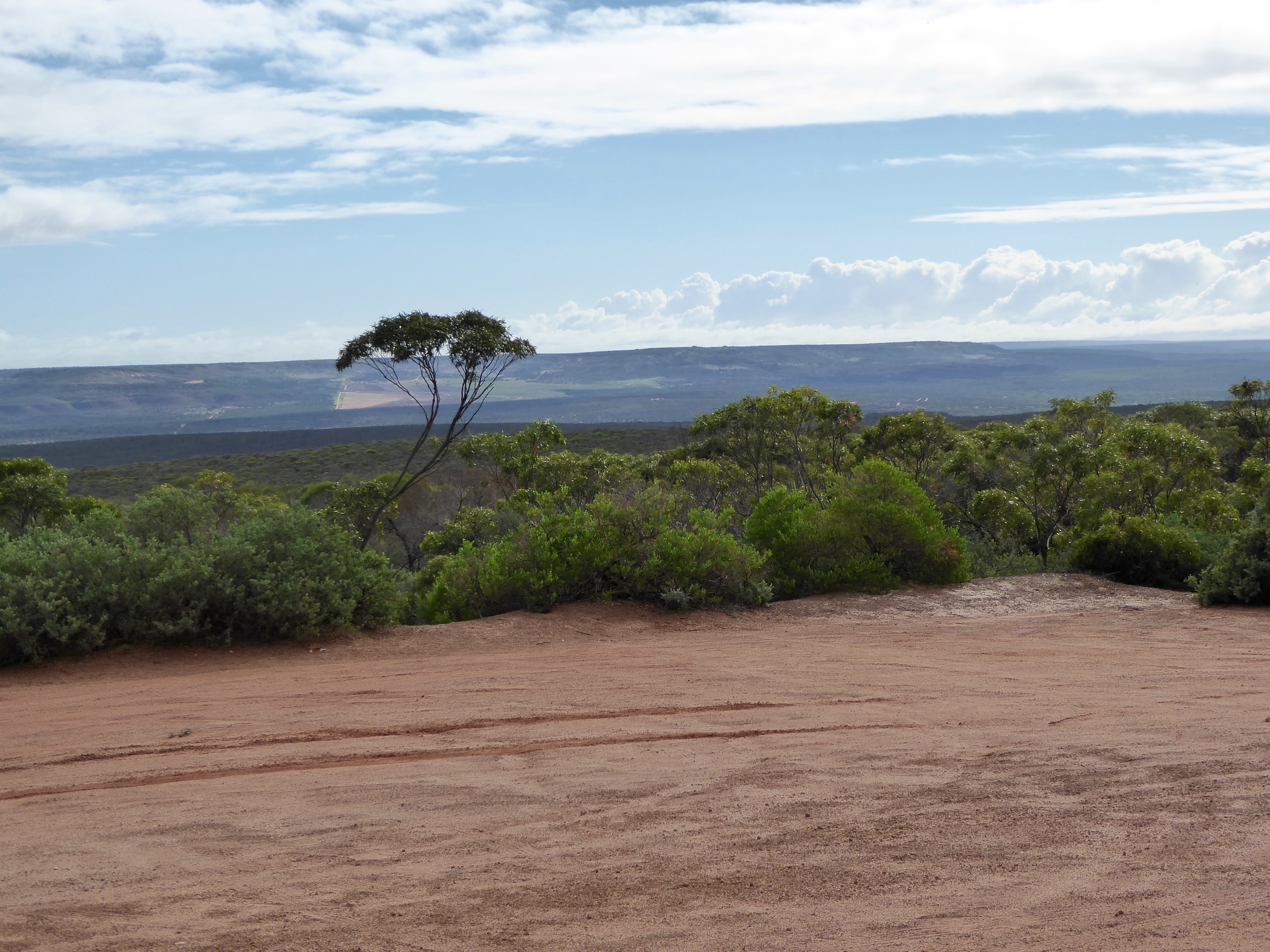
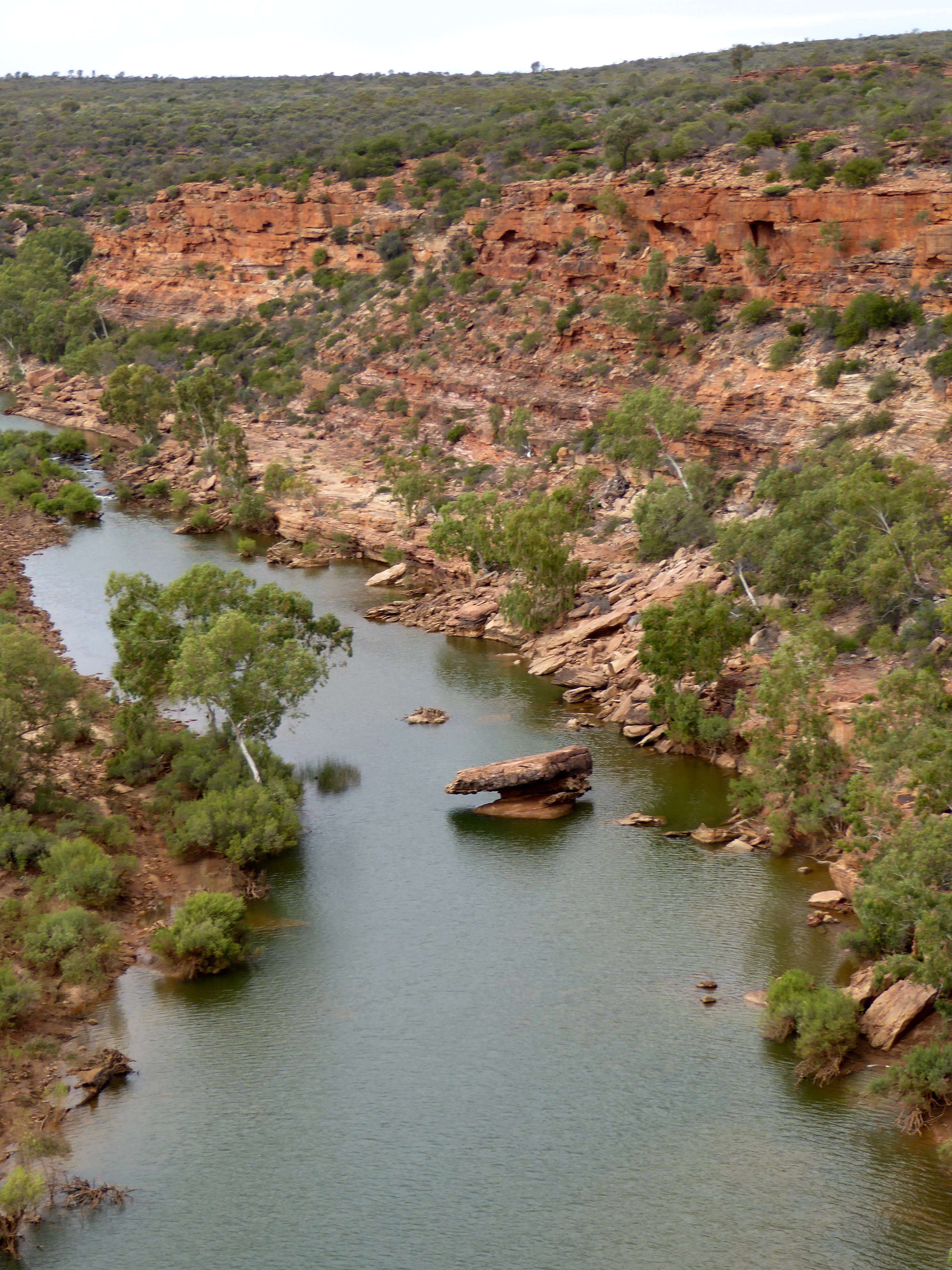
This was our first hiking trail.   We enjoyed this view from the trail.
Great view

Great view

After our hike, we drove a little further and saw this emu.

Emu wandering

Emu wandering

This was a pretty view of the Murchison River from Hawks Head Walk.

Murchison River

Murchison River

Since Western Australia is known for wildflowers, so we wanted you to see these flowers near the building.

Everybody loves bright flowers

Everybody loves bright flowers

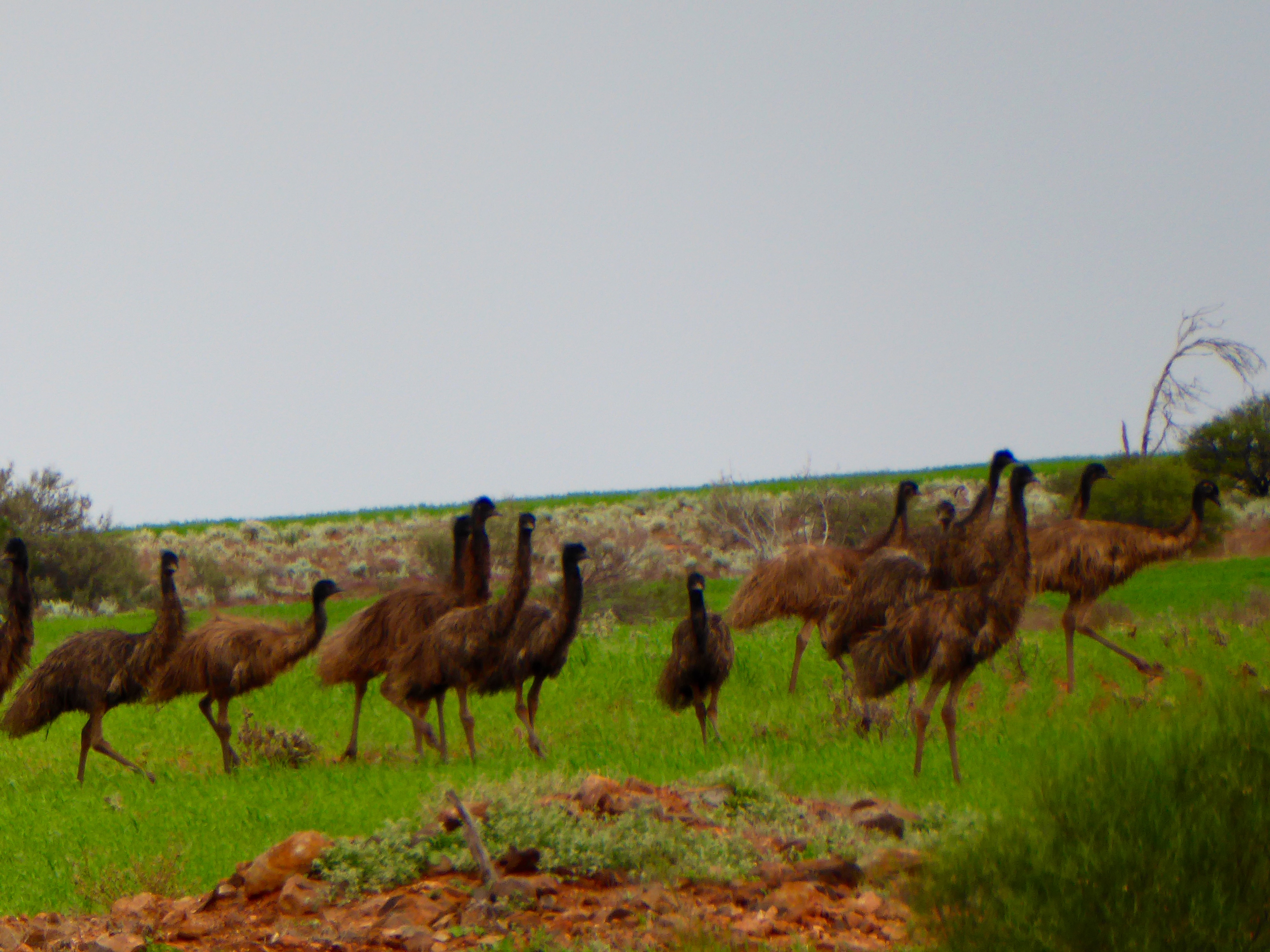
As we were leaving the park, we enjoyed watching this flock of emu.

Are they sad we are leaving the park?

Are they sad we are leaving the park?

We are really enjoying our drive in Western Australia.   You would enjoy time here also.

Zeb and Eider Duck Drive in Southwestern Australia

Zeb and Eider Duck and the humans rented a car in Perth, Australia.   We are heading north, along the Indian Ocean coastline.   We want to show you some of what we saw the first couple days of driving.   We are meandering up the west coast of Australia, beginning in Perth but our final driving destination is Broome, Australia, on the northwest coast.    We stopped to admire this roadside park overlooking the water.

Picnic area along Indian Ocean

Picnic area along Indian Ocean

The seed pods on this tree were new to us.

Unusual seed pods

Unusual seed pods

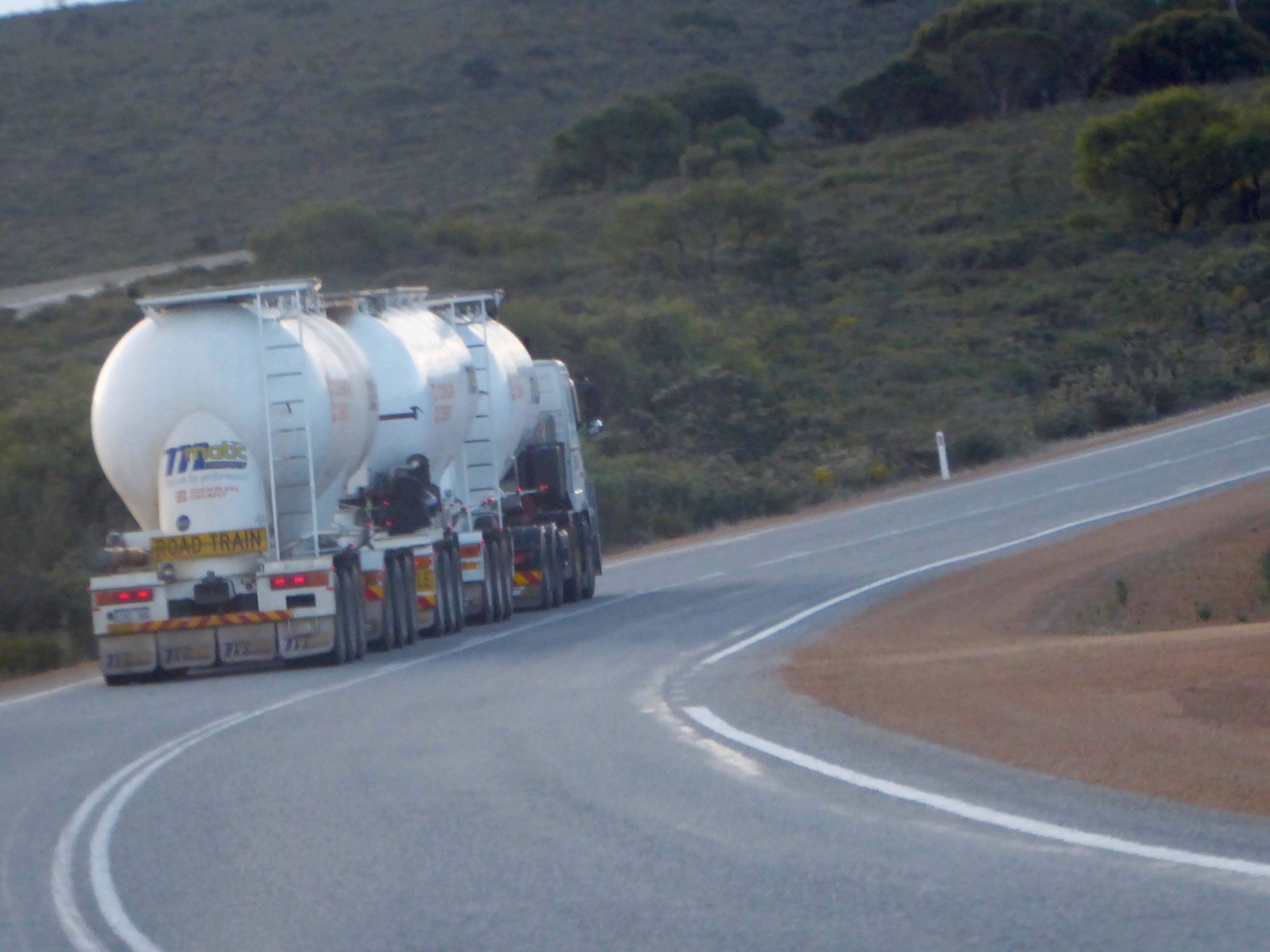
These trucks, with more than one trailer, are called road trains.

Road Train

Road Train

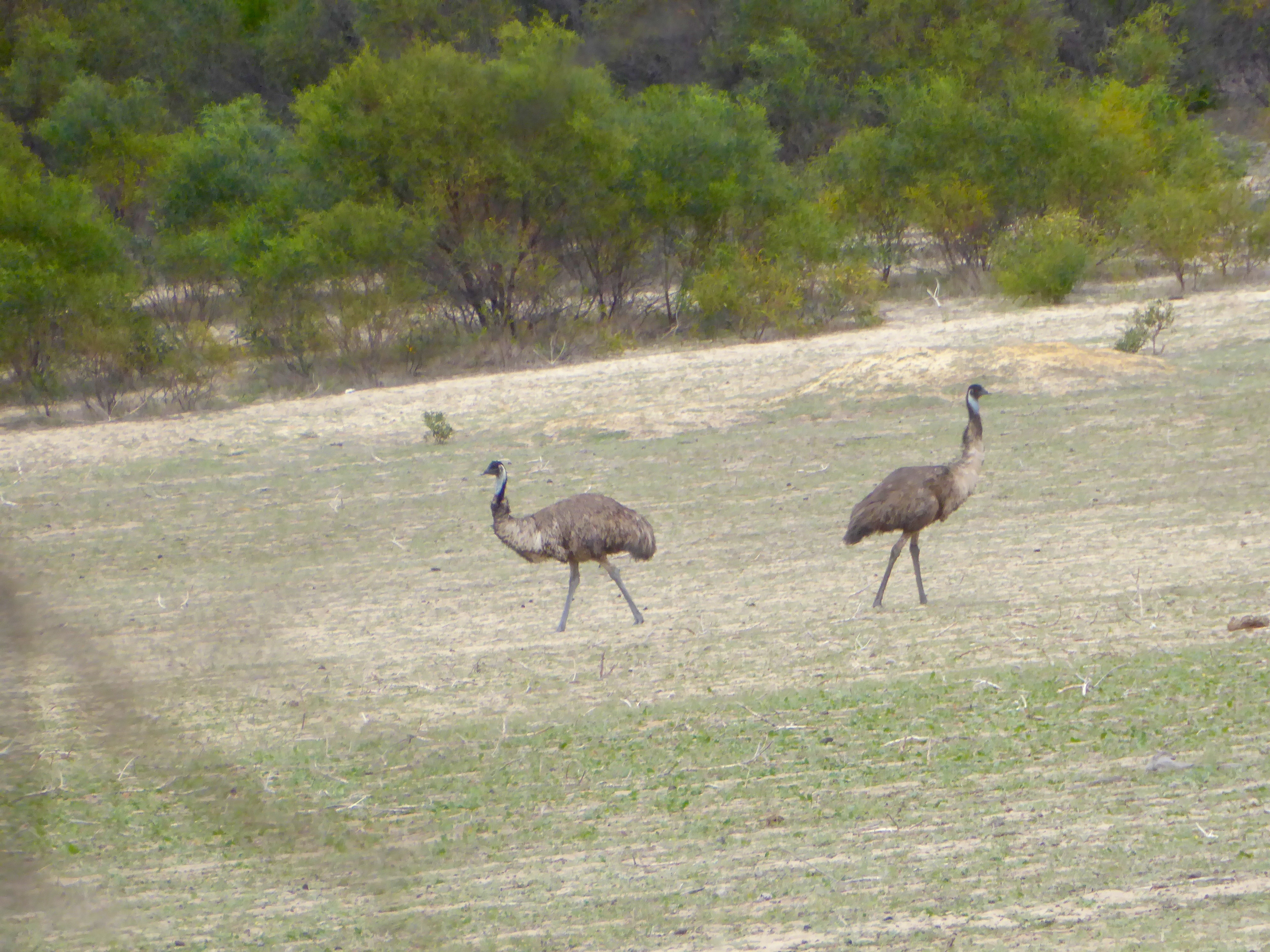
We write more about them another day.   These were our first sightings of wild emu.

Our first wild emus

Our first wild emu

It was exciting for us to see them.   Of course, we do not see wild emus in Colorado nor in Alaska.   Driving into the town of Dongara, we stopped at this navigation beacon,

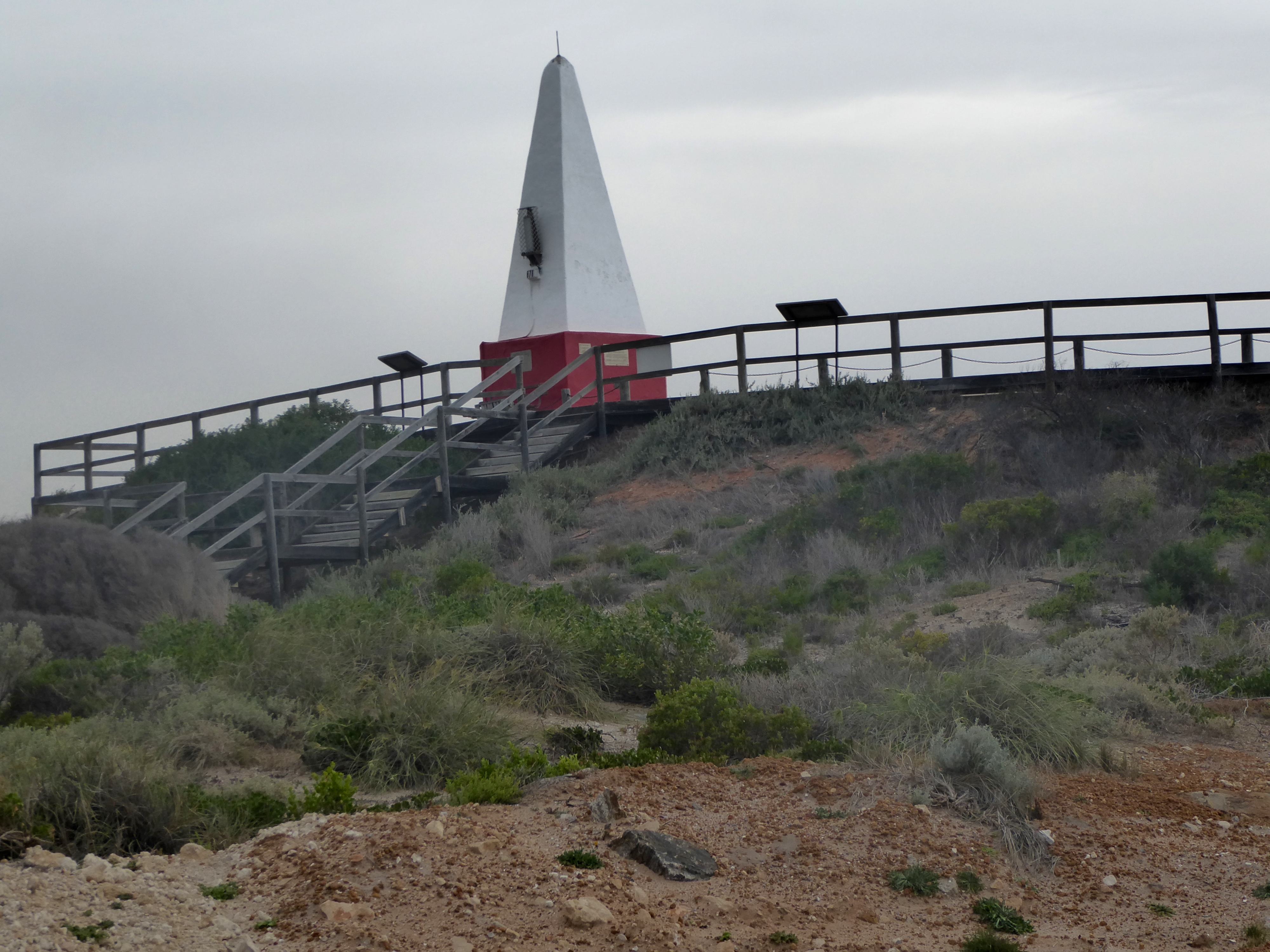
Navigation Beacon at Dongara

Navigation Beacon at Dongara

built commemorate the loss of the Brigantine Leander near this point on November 11, 1853.   The rugged coastline is a reminder of the importance of navigation beacons.

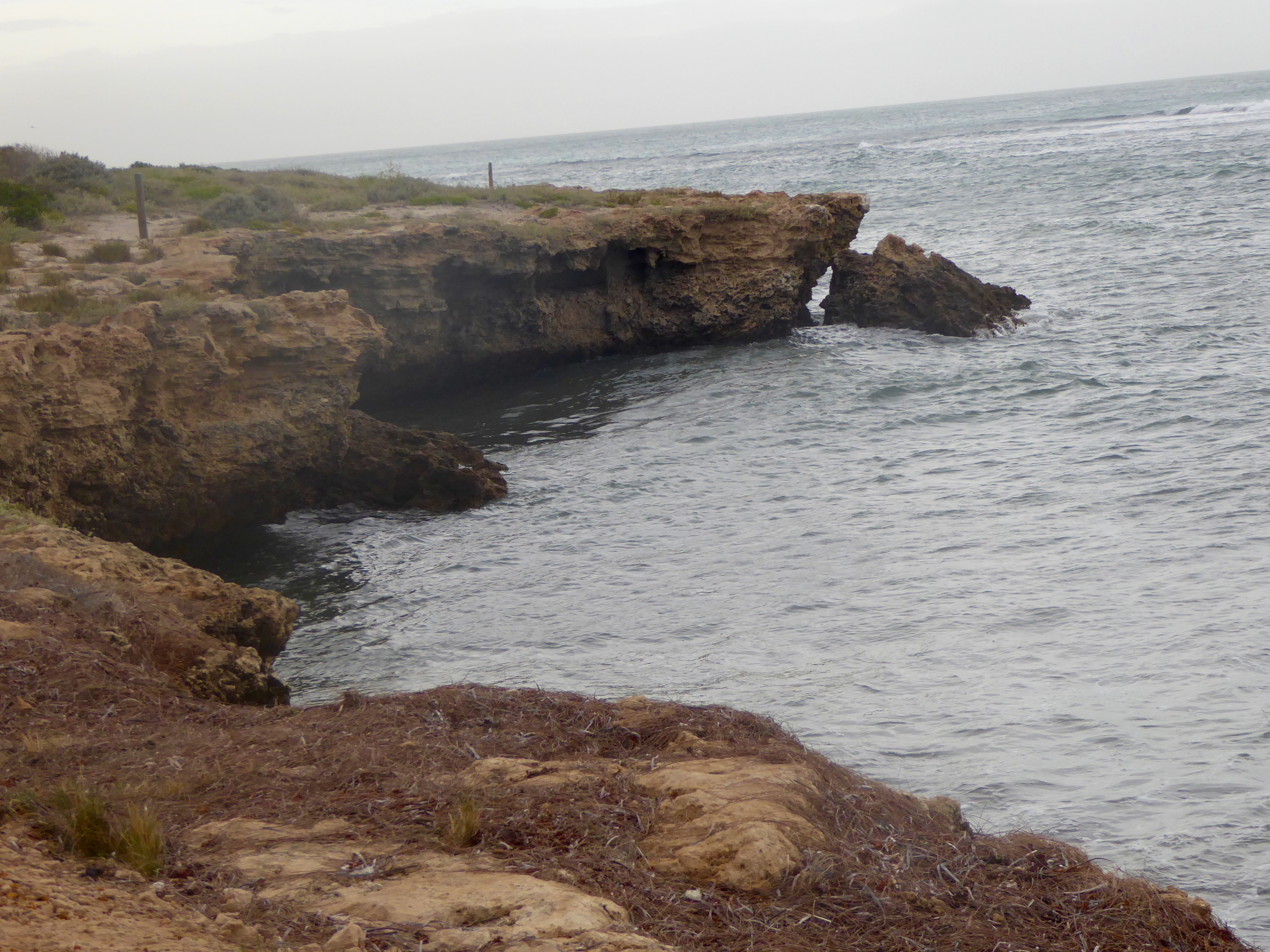
Rocky coast can be treacherous

Rocky coast can be treacherous

Even the water is rather rough here.

Coast at Dongara

Coast at Dongara

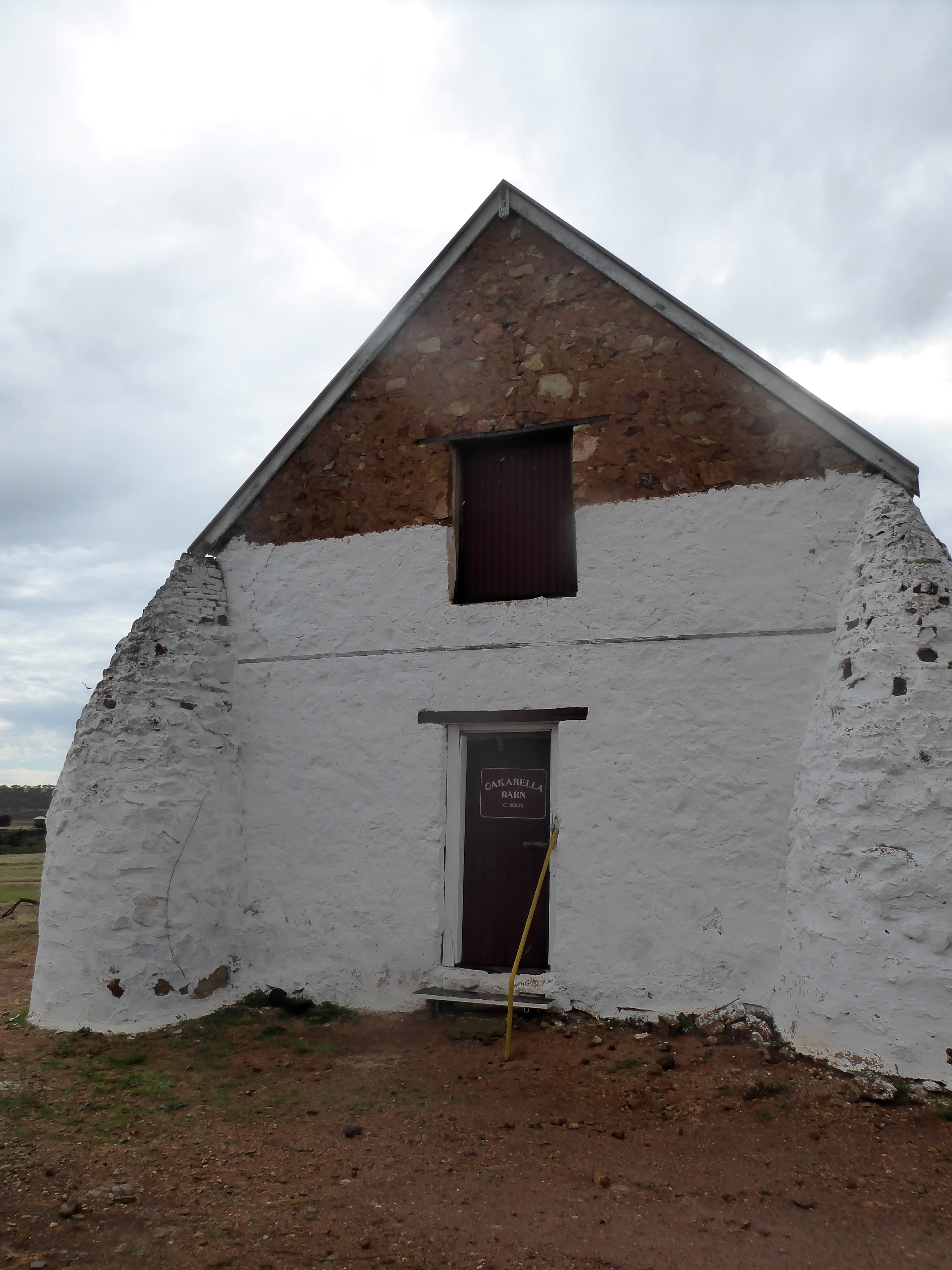
Continuing north, we visited Oakabella Homestead, located between Chapman Valley and Northampton.   This is an 1860s heritage-listed beautiful restored homestead.   This is arguably Western Australia’s most haunted house.   Here we met Loretta, formerly of Nova Scotia, Canada.   Loretta took us through the 13 room homestead.   This is the bedroom where the owner, George, accidentally shot himself while cleaning his shotgun.

Bedroom where owner, George, accidentally shot himself

Bedroom where owner, George, accidentally shot himself

Loretta says his spirit, or ghost is often here.

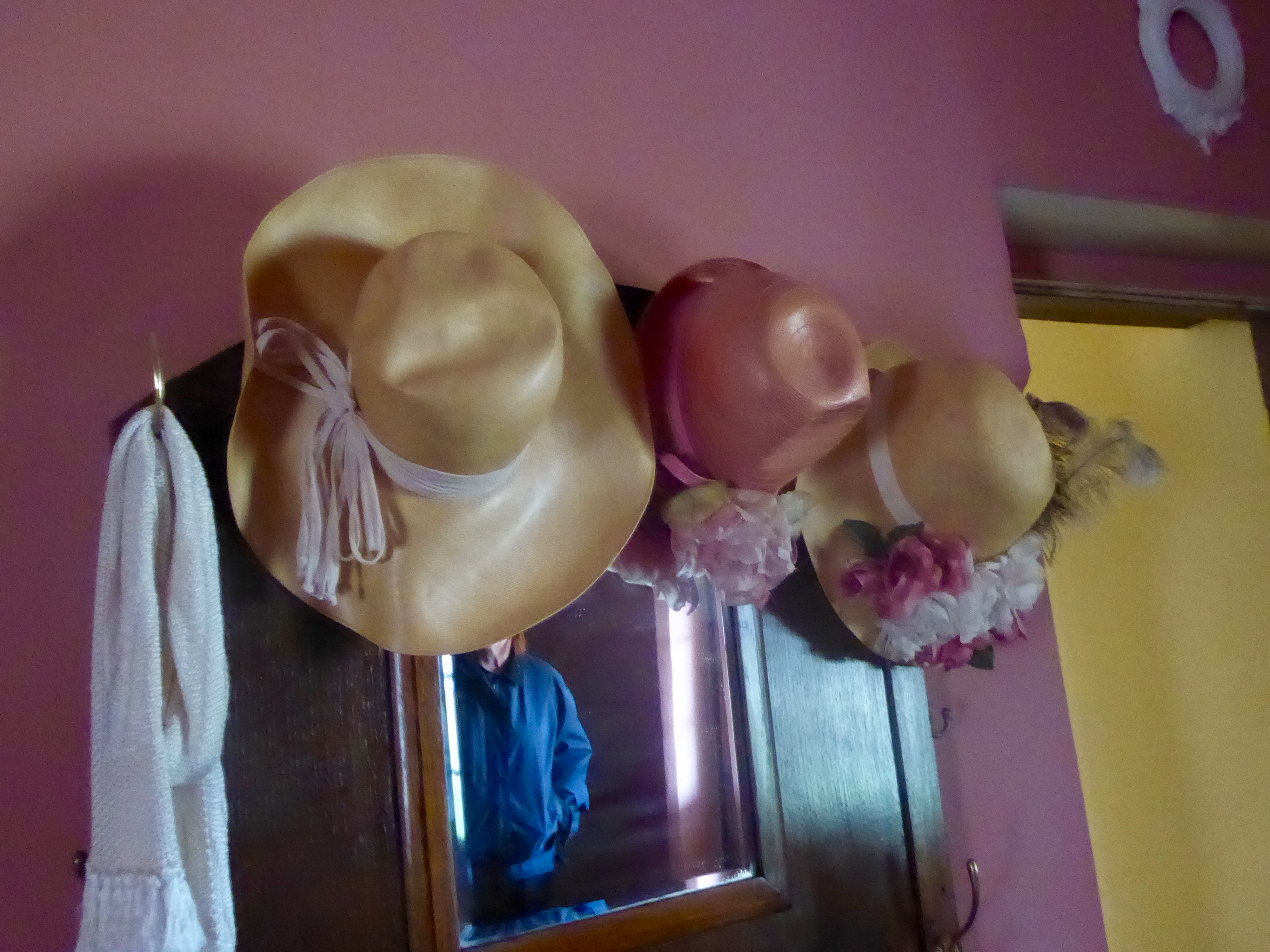
This bedroom belongs to a young woman.   She had a great hat collection.  Her spirit, or ghost is also a frequent visitor.

Former lady's bedroom with hat collection

Former lady’s bedroom with hat collection

This stove still works in the kitchen.   The spirits or ghosts did not like any of the new appliances that were brought in. The all broke within a few days or weeks of their arrival.   The new appliances have been removed and the old ones function very well.
Kitchen. This stove still works.

Kitchen. This stove still works.

This museum building was a former school.

Former school, now museum

Former school, now museum

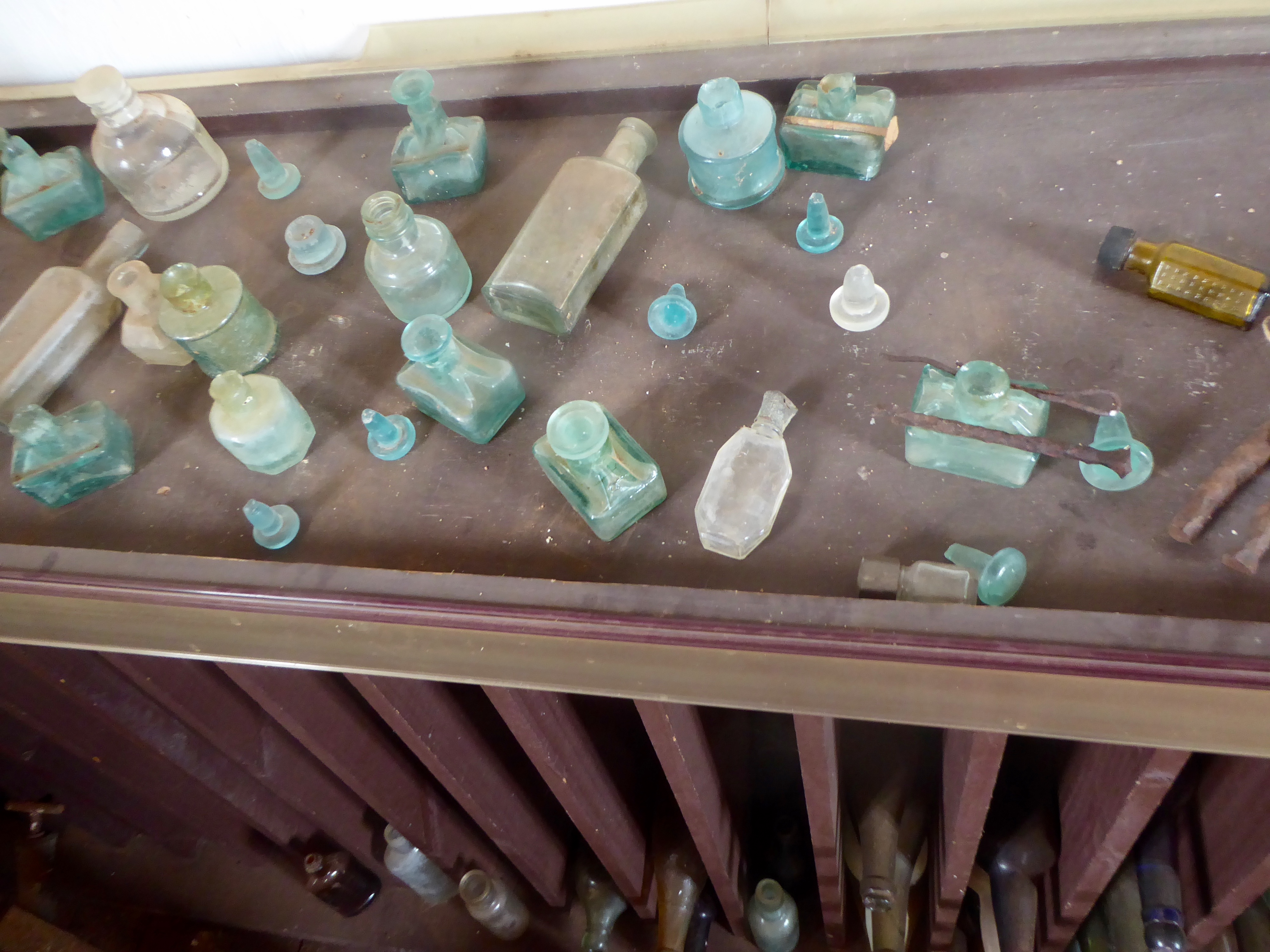
Mom was fascinated with this collection of ink wells.

Collection of ink wells

Collection of ink wells

This view toward the Oakabella Creek is really nice.

Oakabella Creek behind homestead

Oakabella Creek behind homestead

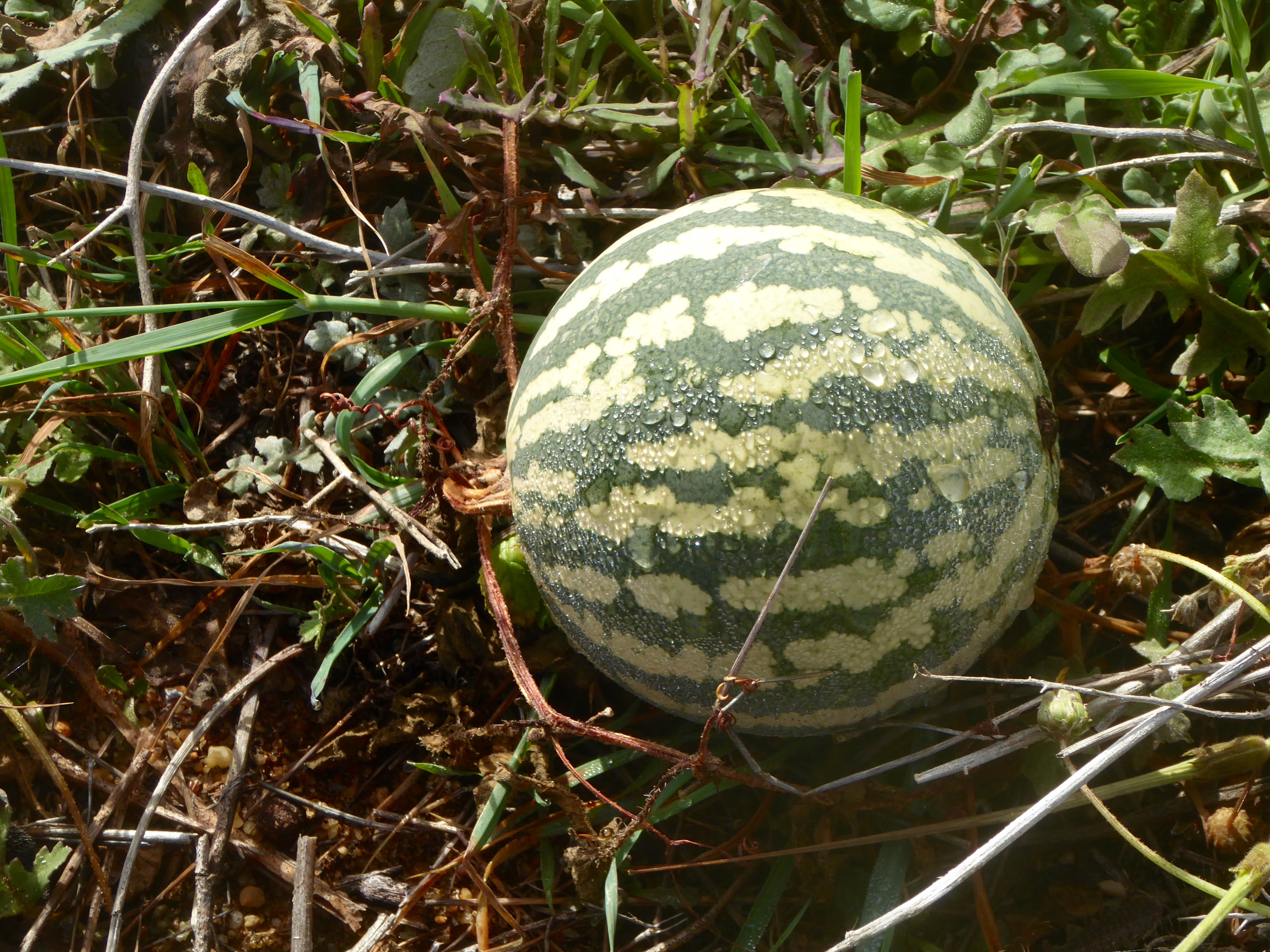
While walking around in this area, we saw these plants that look like small watermelon.

Maybe wild watermelons

Maybe wild watermelons

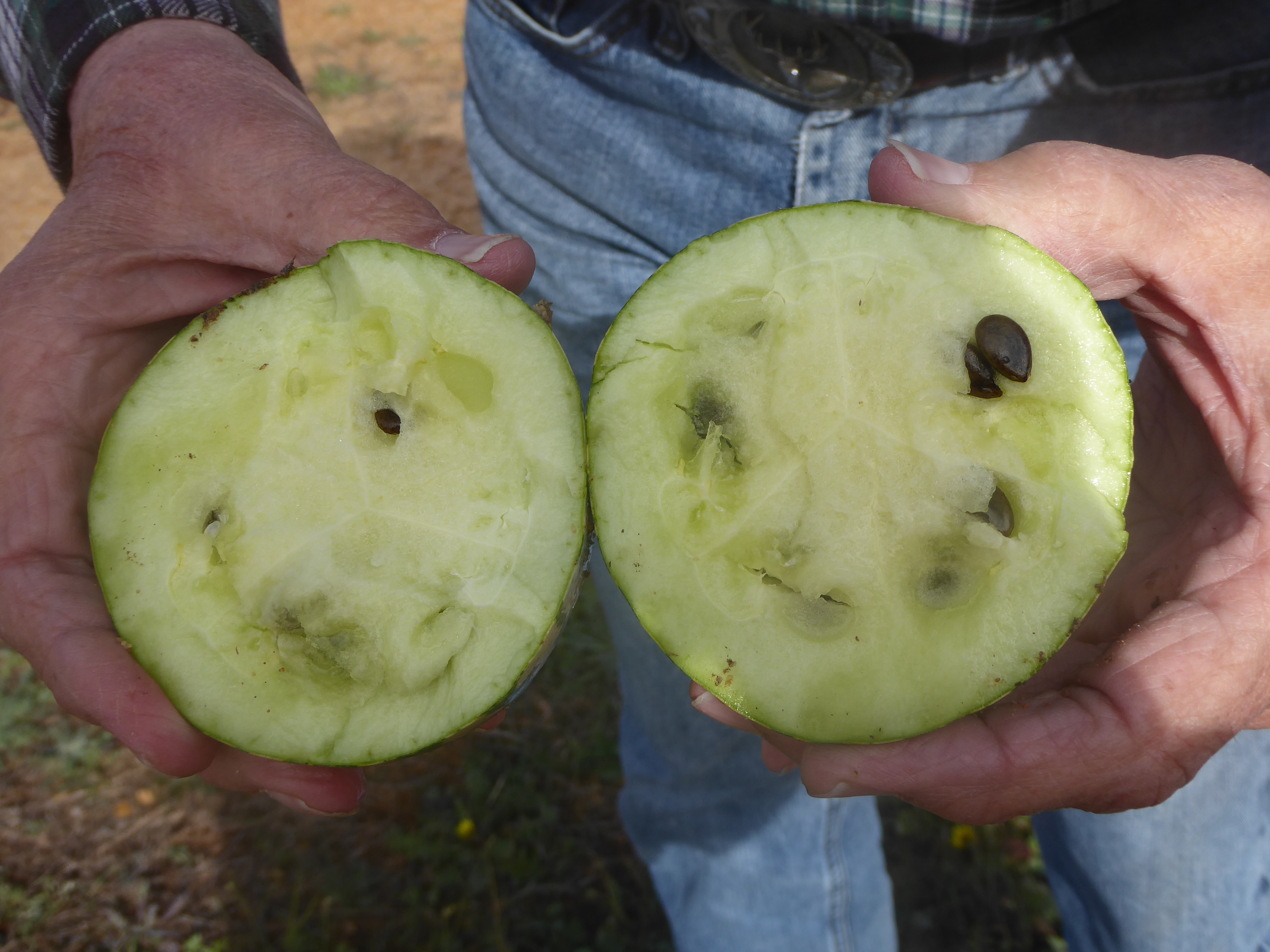
Inside the fruit looks like a watermelon, but the fruit is green.

Green inside

Green inside

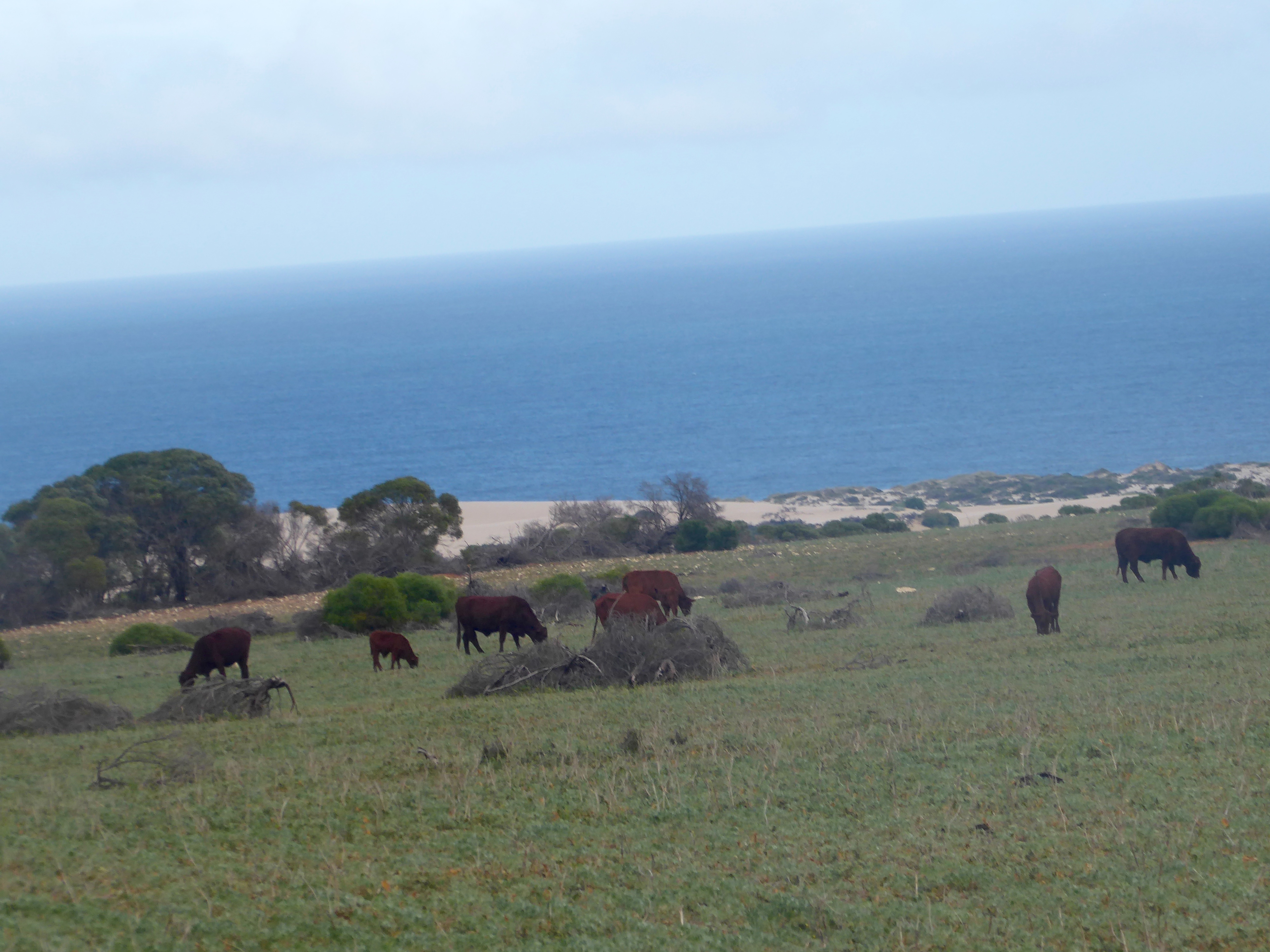
We also enjoyed seeing this herd of cattle grazing near the Indian Ocean.

Cows grazing near Indian Ocean

Cows grazing near Indian Ocean

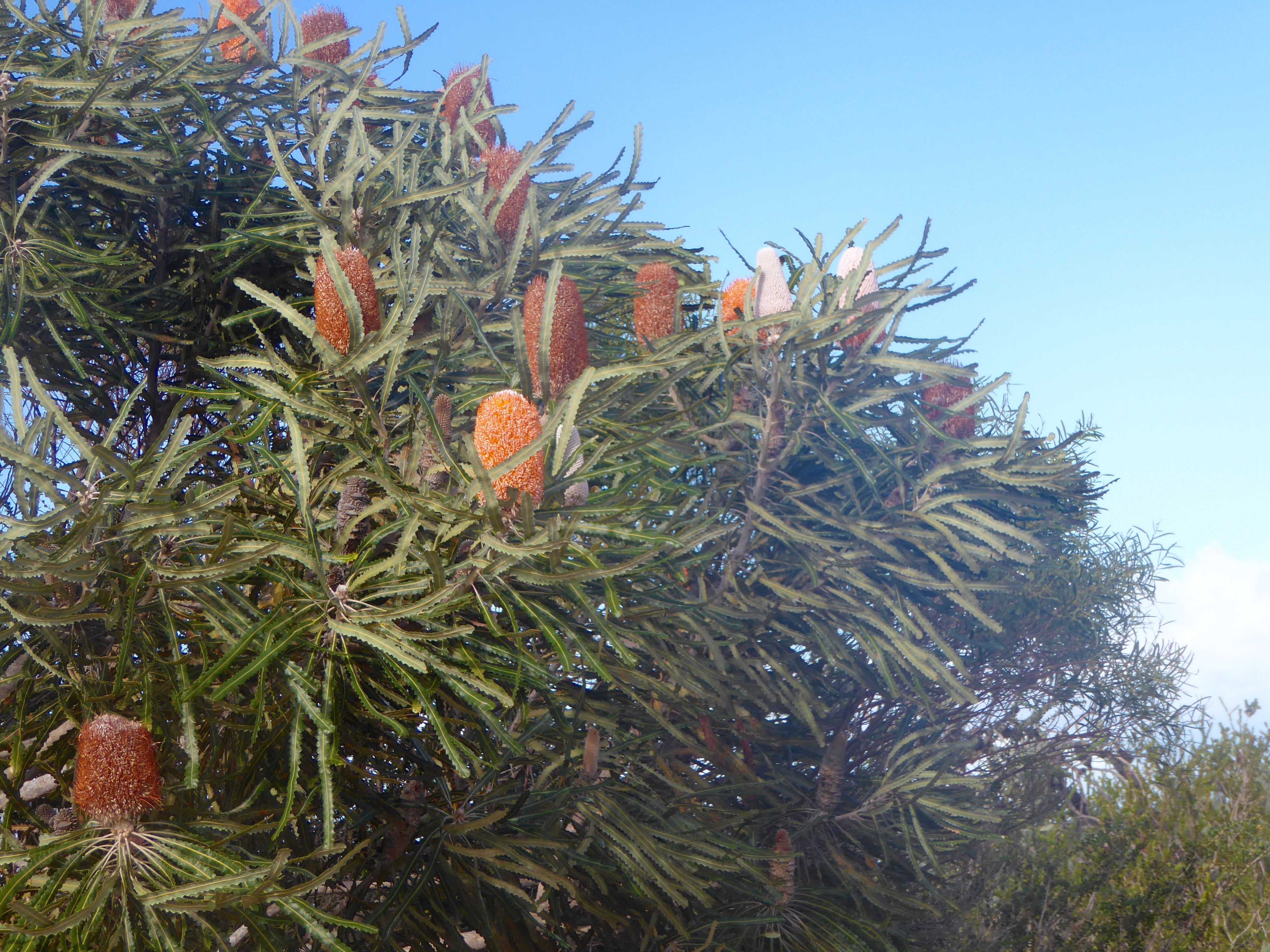
This is a Banksia tree.   Here is a variety showing various stages of the pod developing.

Seed pods of various colors and various stages of maturity

Seed pods of various colors and various stages of maturity

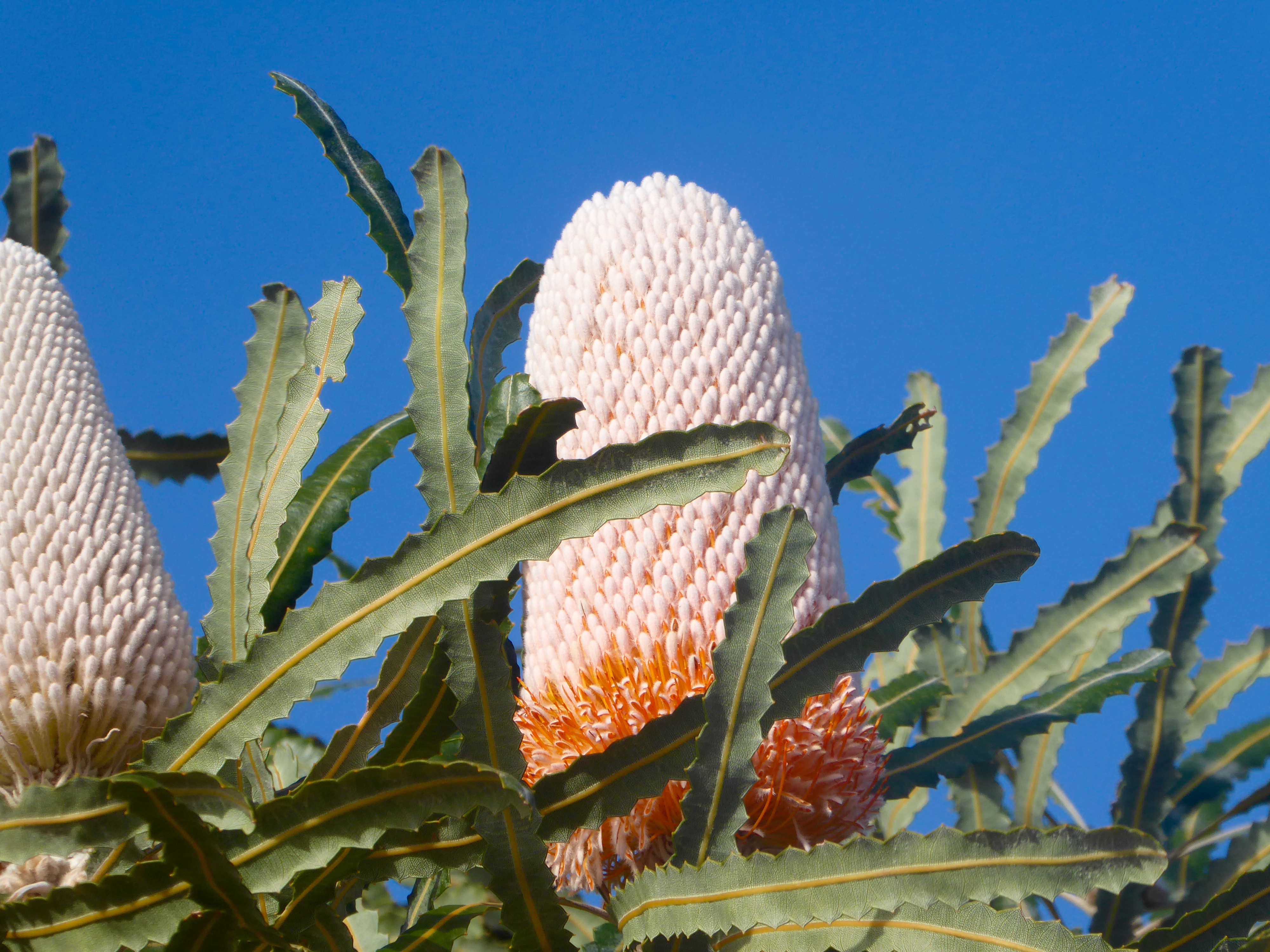
First the pods seem to be brown, then turning salmon color.   Then the seeds come off and the pod is white and has a very smooth feel.

After seeds fall, this white part is very soft and smooth

After seeds fall, this white part is very soft and smooth

These really are interesting trees.   These kangaroos were grazing near a housing subdivision.

Kangaroos in field near subdivision

Kangaroos in field near subdivision

We love seeing kangaroos.   We will show you more of the scenery along our west coast drive later, as we continue our northern route.