The High and Low of Death Valley with Zeb, Soapy Smith and JB Duck

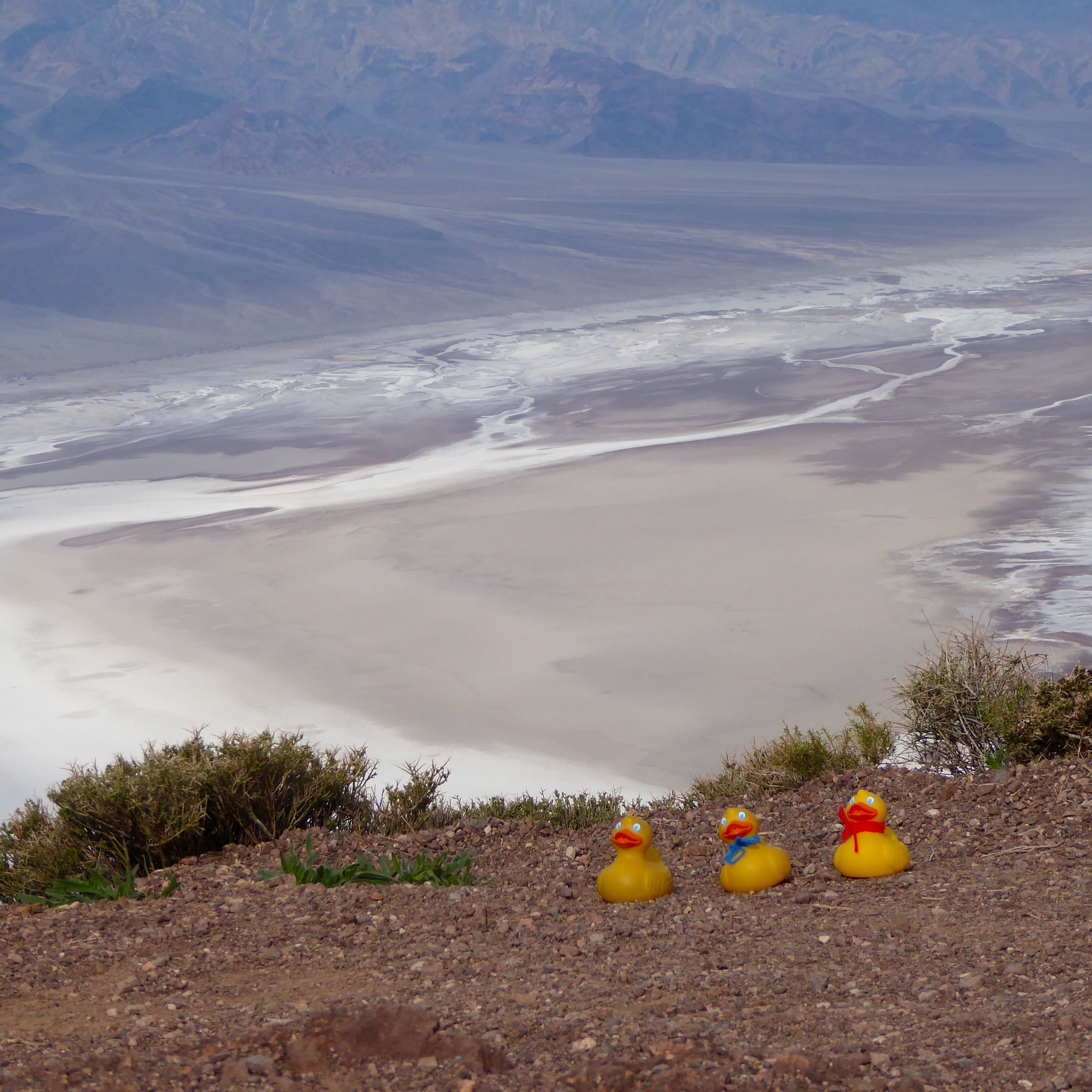
The largest national park south of Alaska reveals more secrets to the Colorado Traveling Ducks.  Driving to Dantes View, we gain elevation.   This, the most breathtaking viewpoint in the park, is 5,475 feet above the floor of Death Valley.   Looking to the floor of Death Valley from Dantes View, the green vegetation is a contrast to the dry earth.

From Dantes View

From Dantes View

The white ground below is a reminder that all minerals that are thrown in the valley, from volcanic activity, earthquakes or rain, will forever remain in Death Valley.   This land, below sea level, has no outlet to the sea, so everything stays here and is further altered by the forces of nature.
From Dantes View

From Dantes View

Not only is the floor of Death Valley covered with minerals, but the mountain walls of the valley exhibit colors and patterns from thousands of years of change.

From Dantes View

From Dantes View

Mom is experimenting with the panorama function on her camera.

Floor of Death Valley from Dantes View

Floor of Death Valley from Dantes View

We like the effect.   From the high point, let’s go to the floor of Death Valley.   We drive to Badwater Basin.

Badwater Basin

Badwater Basin

This is not only the lowest point in North America, but it is the lowest point in the Western Hemisphere.   There are not many places in the world where you can stand on dry land, below sea level.    Let’s go on the salt flats.

On the salt flats

On the salt flats

We are careful to only walk where it is allowed.   This environment is fragile and we do not want to destroy any of it.   We are happy to discover our national parks.   Did you know that the National Park Service is 100 years old in 2016?   Now we turn our backs to the salt flats and look at the rock wall.

Standing 282 feet below sea level

Standing 282 feet below sea level

If you look closely you will see a white rectangular sign marking sea level.   The sign is about half way up the wall and 2/3 to the right of this photo.   The information signs say that Death Valley Basin is still dropping.   Today we are 282 feet below sea level.   Hundreds of years from now, these salt flats probably will be further below sea level.     We only spent a couple days in Death Valley National Park, but you could spend a day, a week, or months here and never see everything.   The park is huge and the land is constantly changing.   The rain and flooding from September gave us the wildflowers this spring.   In the park, you can receive wildflower updates.   You may want to view the best flower display.   We loved all the flowers, but our photos are not the best.   You may want to use google to see more pictures.   But we were happy with these flowers.

A few wildflowers by the road

A few wildflowers by the road

We hope you enjoy some national parks this year.

Death Valley National Park to Tecopa, California with the Colorado Traveling Ducks

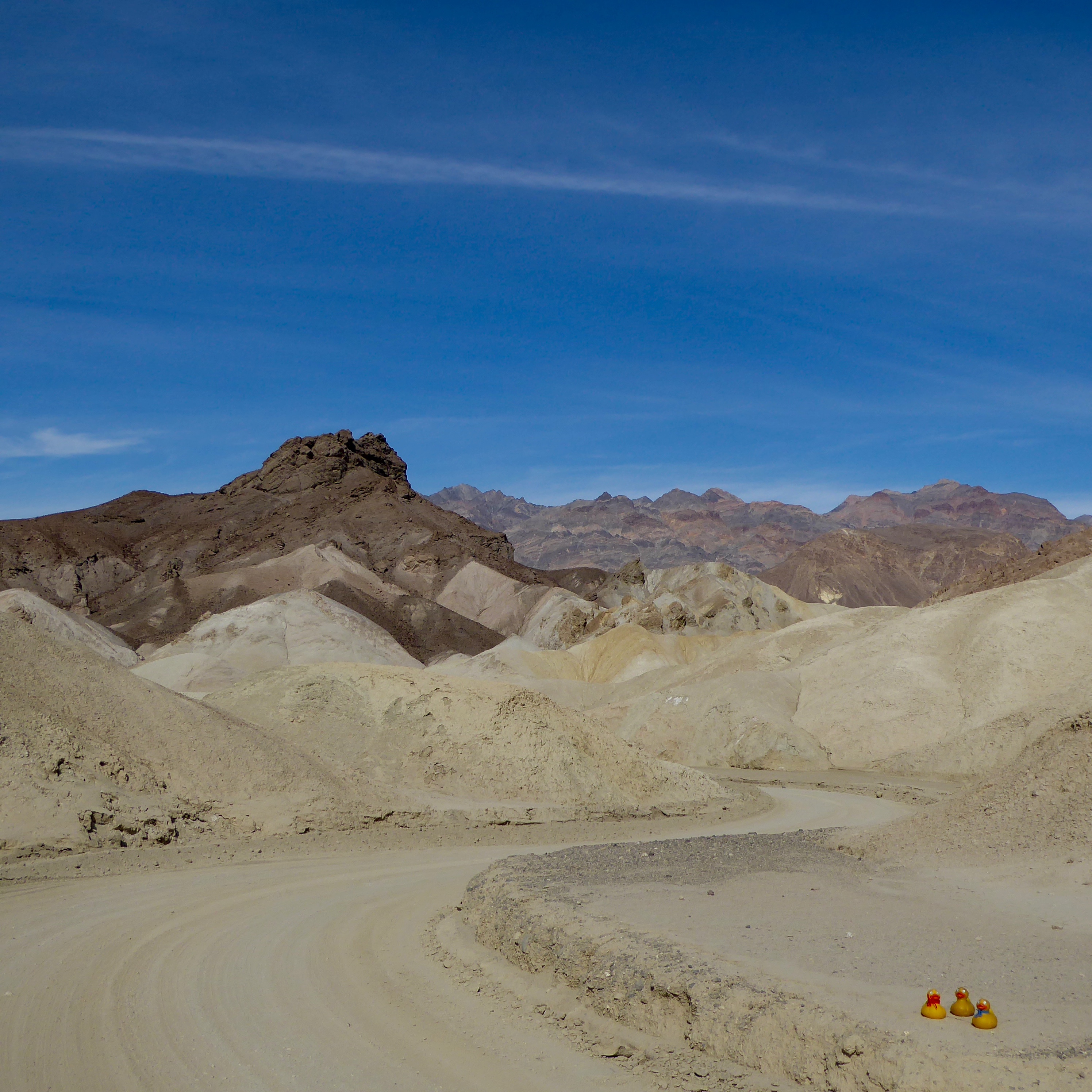
Driving through Death Valley National Park, we spotted the road in 20 Mule Team Canyon.

We want to drive in the canyon

We want to drive in the canyon

Let’s go.   On a dirt road we followed the dried river bed.

Dried river bed in canyon

Dried river bed in canyon

And, yes this is the road.

Dirt road

Dirt road

Let’s hope there is no sudden rain and flash flooding.   There was none.   Just beautiful sunny skies.   Even the mountains look dry.

Even rocks look dry

Even rocks look dry

Remember, Death Valley usually only receives 2 inches of moisture annually.   And the summers are extremely hot.   This was a short 3 mile loop, but we loved it.   The desert mountain landscape fascinates us.   In this area of the park, these are typical rock formations.

Typically Death Vally scenery in this part of park

Typically Death Vally scenery in this part of park

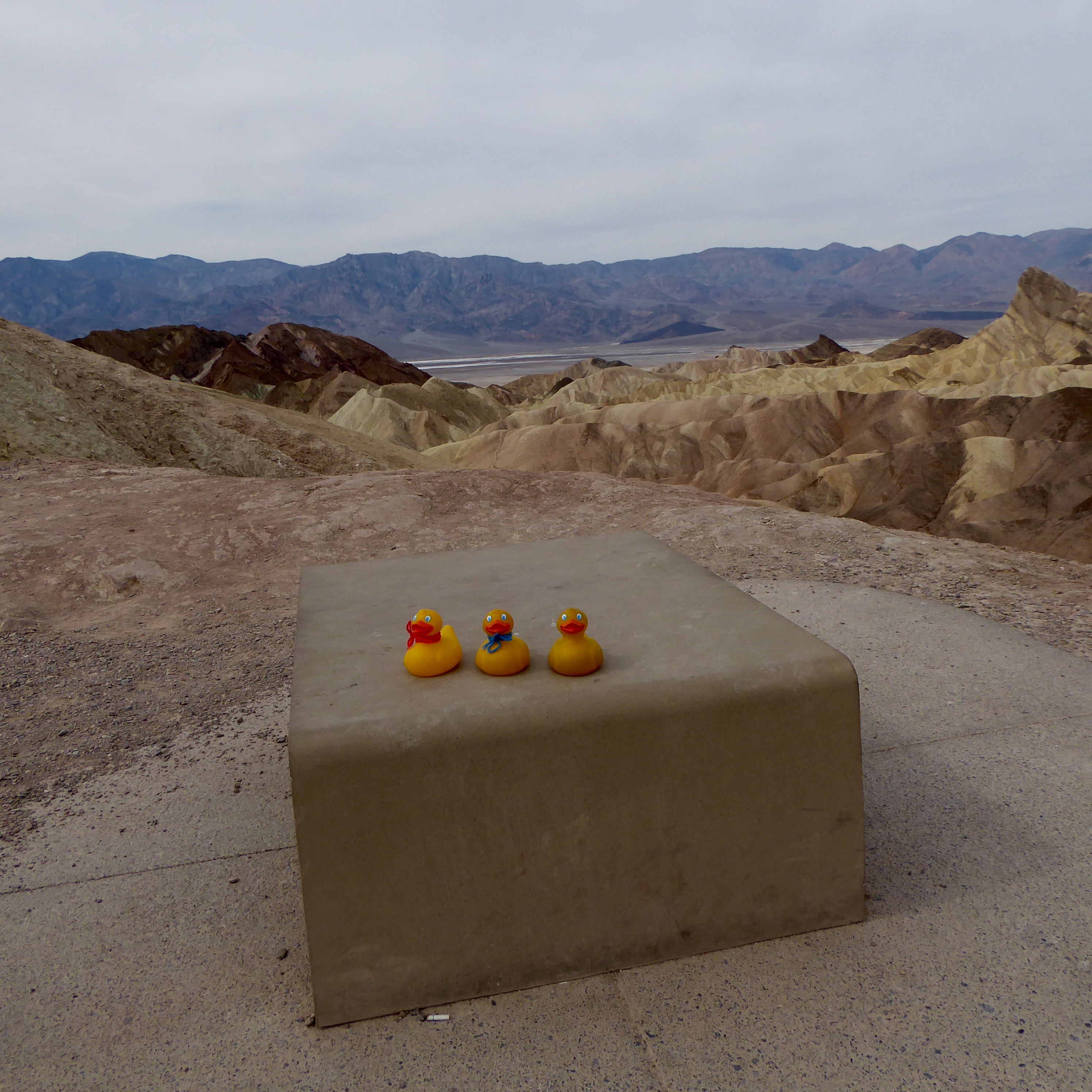
Next turn off for us is Zabriskie Point which overlooks what is referred to as the Badlands.

Zabriskie Point

Zabriskie Point

Within the lake bed are rich layers of Colemanite and Uluxite, minerals often referred to as Borax.   Strip mining was used until a 1976 law close the park to prospecting and gave the National Park Service more control over mining activity.   There is still some private mines in operation in the park, but no strip mining.   Pacific Coast Borax Company was a major mining company, but by the 1920s their mining activity had slowed.

Zabriskie Point

Zabriskie Point

The company turned to tourism by opening the elegant Furnace Creek Inn in 1927, with great success.    Christian B. Zabriskie was vice president and general manager of Pacific Coast Borax Company during the transition from mining to tourism.   This lookout, Zabriskie Point, is named for him.   Aren’t park information signs great?   Much of this landscape was formed by water and earthquakes.   However the black layer here is lava that oozed out onto the ancient lake bed.

Black lava on tops of mountains

Black lava on tops of mountains

Hot water followed the lava, bringing minerals such as borax, gypsum and calcite with it.   Isn’t geology fascinating?   We left the park for the evening, but we will return in the morning.   Driving into Death Valley Junction, we saw the Amargosa Opera House and Hotel.   This is now an historic building and cultural center.

Amargosa Opera House

Amargosa Opera House

Marta Becket was  professional dancer who danced at Radio City Music Hall and performed on Broadway in New York City.   A flat tire on a camping trip led her to Death Valley Junction where she fell in love with the theater.   She renovated it and renamed it Amargosa Opera House.   She remains in Death Valley Junction, performing until she officially retired in 2012.   She still lives there, and live performances are still performed at the Opera House.

Performances scheduled this year

Performances scheduled this year

We thought the doors to the Amargosa Opera House were wonderful.

Beautiful doors to Opera House

Beautiful doors to Opera House

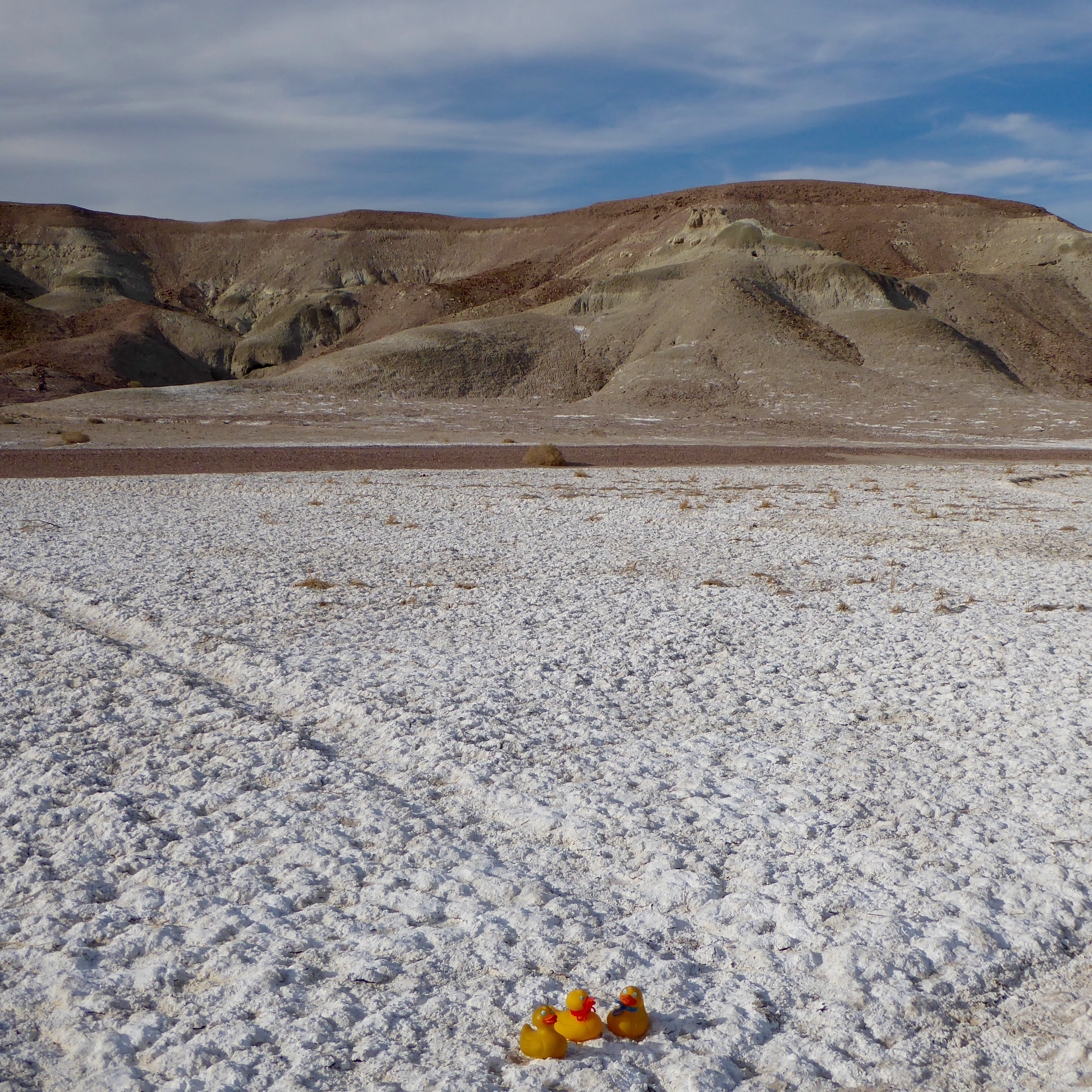
We spent the night at Tecopa, California.   There are many hot springs in the area and we enjoyed soaking in the hot water.    The ground is white from minerals.

Minerals in Tecopa, CA

Minerals in Tecopa, CA

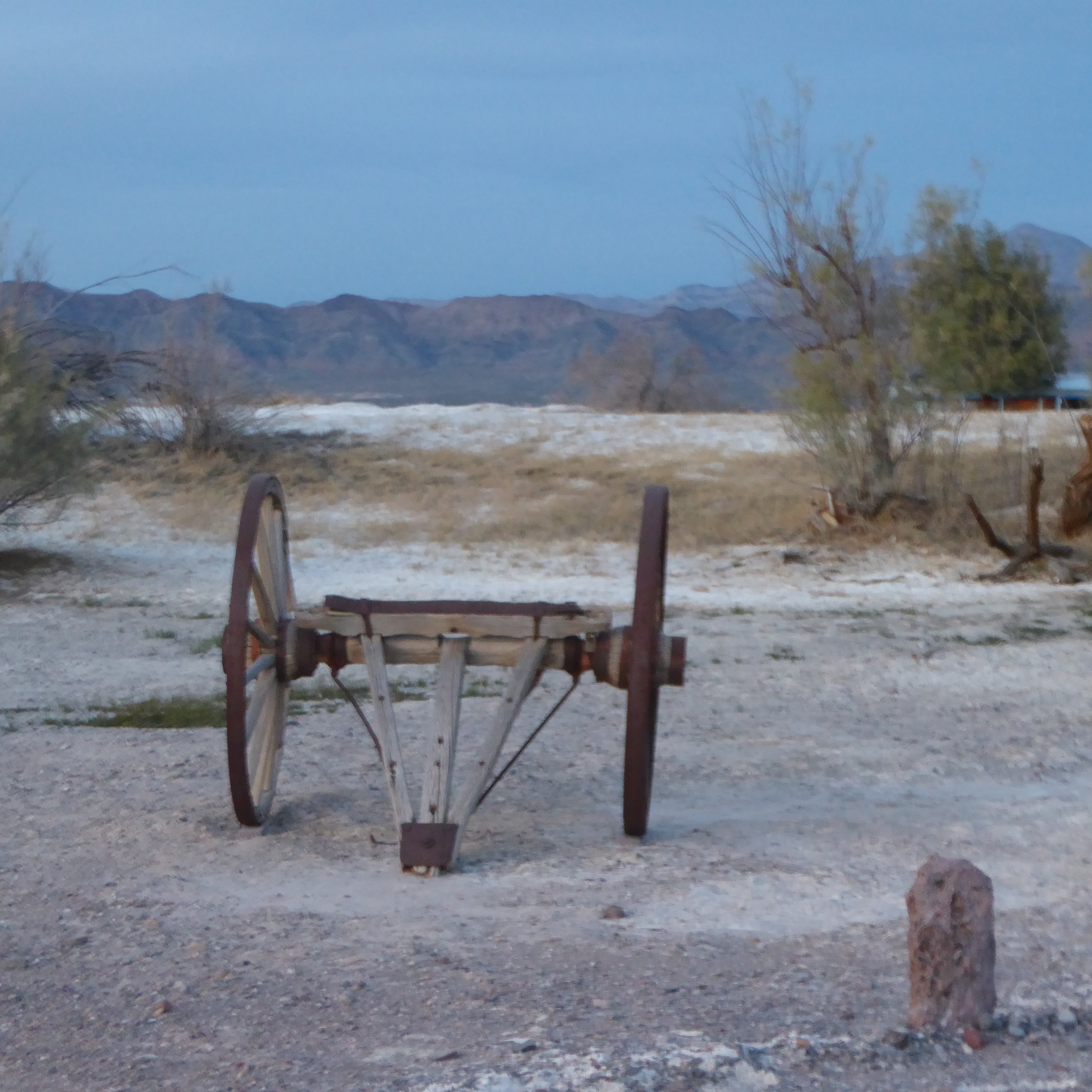
There is a variety of minerals, but salt is in there also.    Yes, mom tasted it.   We liked this wagon in Tecopa.

Wagon in Tecopa

Wagon in Tecopa

The evening sky was so clear, we saw thousands of brilliant stars.   We are enjoying our time in the desert.

Wildflowers in Death Valley 2016

We are entering California.

Hello California

Hello California

Where are the beaches?   Mom says we are not going to the beach.   The desert is in bloom.   That means there are wildflowers blooming where usually no flowers bloom.   Entering Death Valley National Park, we will look for wildflowers.

Going into Death Valley National Park

Going into Death Valley National Park

This desert usually receives 2 inches of rain annually and summer temperatures over 120 degrees are normal.   Here are a few flowers.

Purple flowers

Purple flowers

We like purple, and of course yellow is one of our favorite colors.   These white flowers are pretty, also.

White flowers

White flowers

And the flowers are growing in gravel like soil.   Mom buys potting soil for our flowers and needs to water every few days.   The flowers are beautiful this year, but mom did not get very good photos.

Thousands of flowers blooming

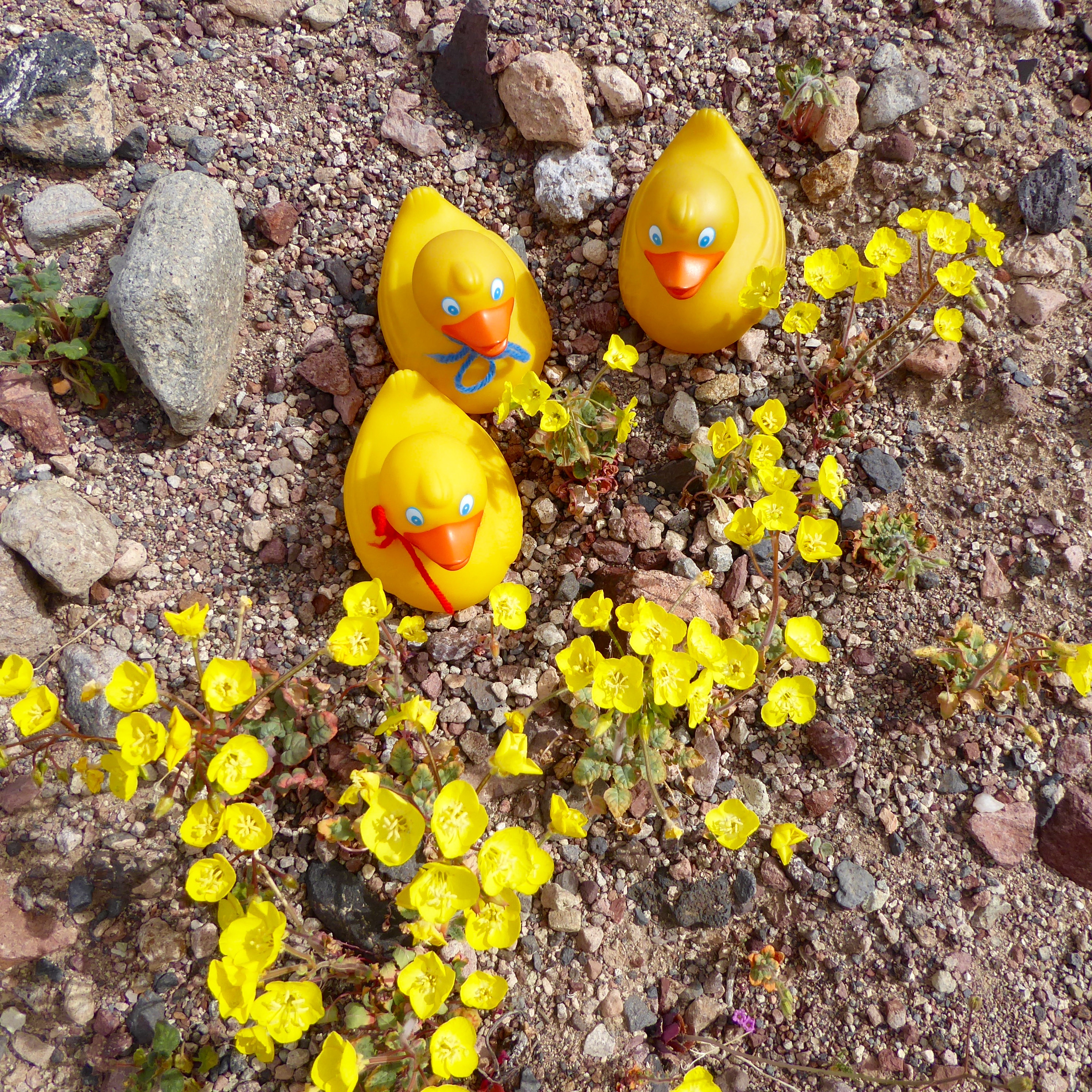
Thousands of flowers blooming.   Find yellow ducks in yellow flowers

Looking online you will see better views of flowers.   A fellow traveler we met at dinner one evening, suggested we take Artists Drive to see flowers.

We are in the flowers

We are in the flowers

We did, and also went to Artists Palette.   Artists Palette shows colors of the mountains.

Volcanic rocks of many colors

Volcanic rocks of many colors

Over 5 million years ago repeated volcanic eruptions blanketed the landscape, depositing ash and minerals.    The volcanic minerals were chemically altered by heat and water, with variable amounts of oxygen and other introduced elements.   Chemical analysis have identified iron, aluminum,magnesium and titanium,but no copper.   Some of the colored minerals here include red hematite and green chlorite.   We love the information signs in national parks.   Further along Artists Drive, we admired this  splash of turquoise mountain.

Color of Caribbean in rocks here.

Color of Caribbean in rocks here.

Just like  huge turquoise wave in the Caribbean Sea.   Here are a few more of this years wildflowers.

Different purple flowers

Different purple flowers

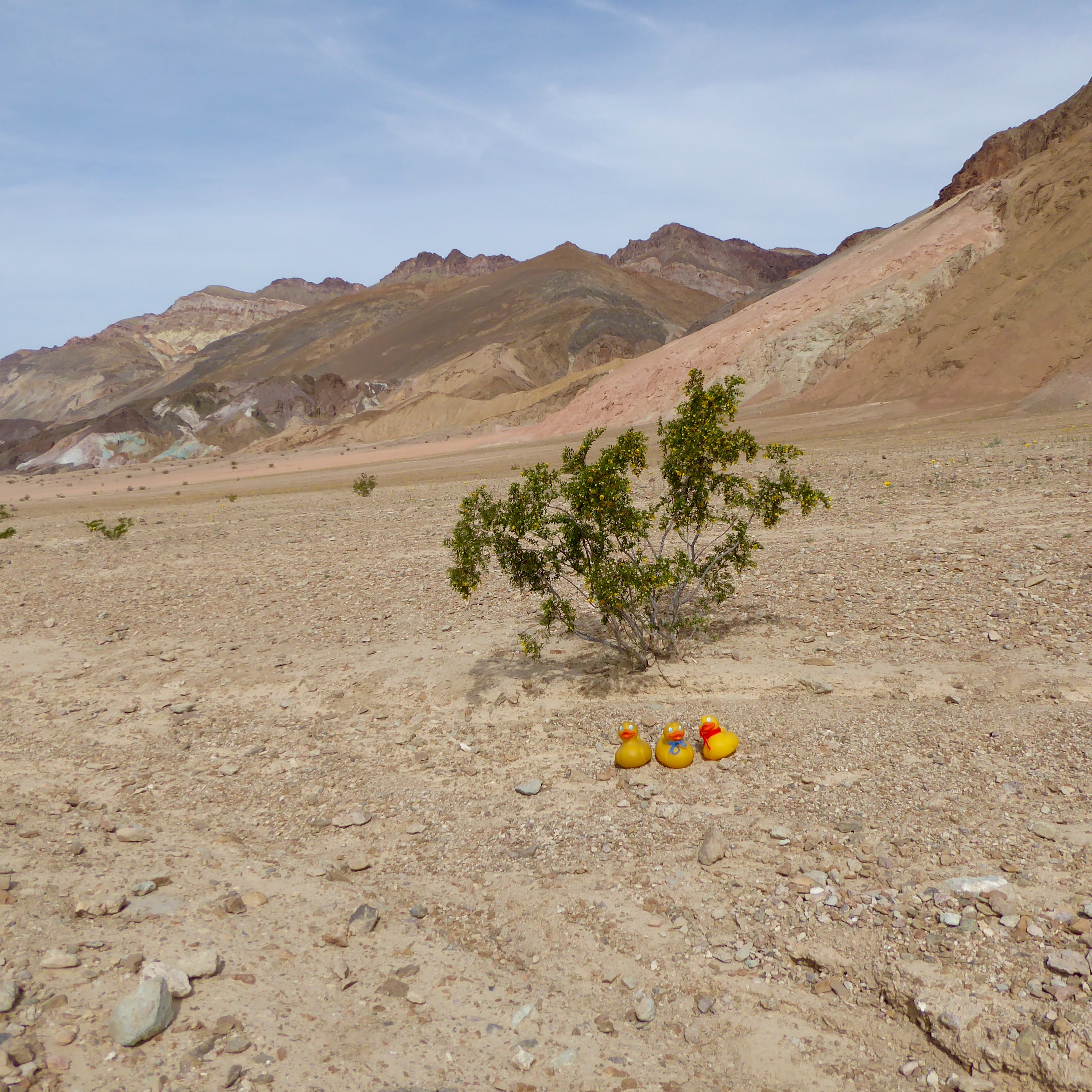
This bush is even producing small yellow flowers.

Bush has tiny yellow flowers

Bush has tiny yellow flowers

We especially liked these flowers.

Wildflowers really are growing wild this year.
Wildflowers really are growing wild this year.
This was our first time in Death Valley.    We were fascinated by the entire landscape and we will show you more next time.   You should see Death Valley soon.   You will like it also.

Arizona Mountains with Zeb the Duck

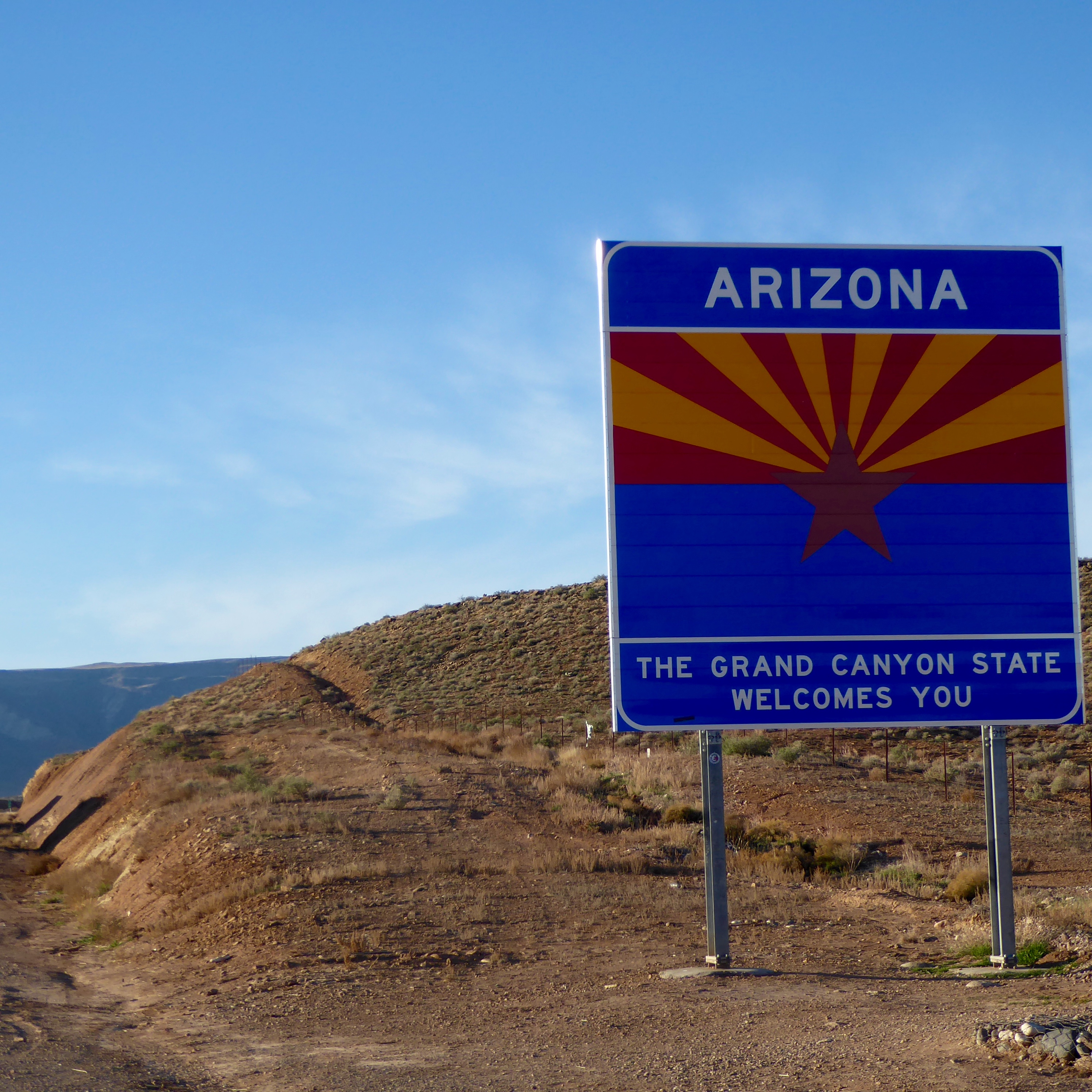
Leaving Utah, I Zeb the Duck, entered Arizona.

We are in Arizona

We are in Arizona

Mom said we would only be in Arizona for 30 miles, but to look out the window as the scenery is great.

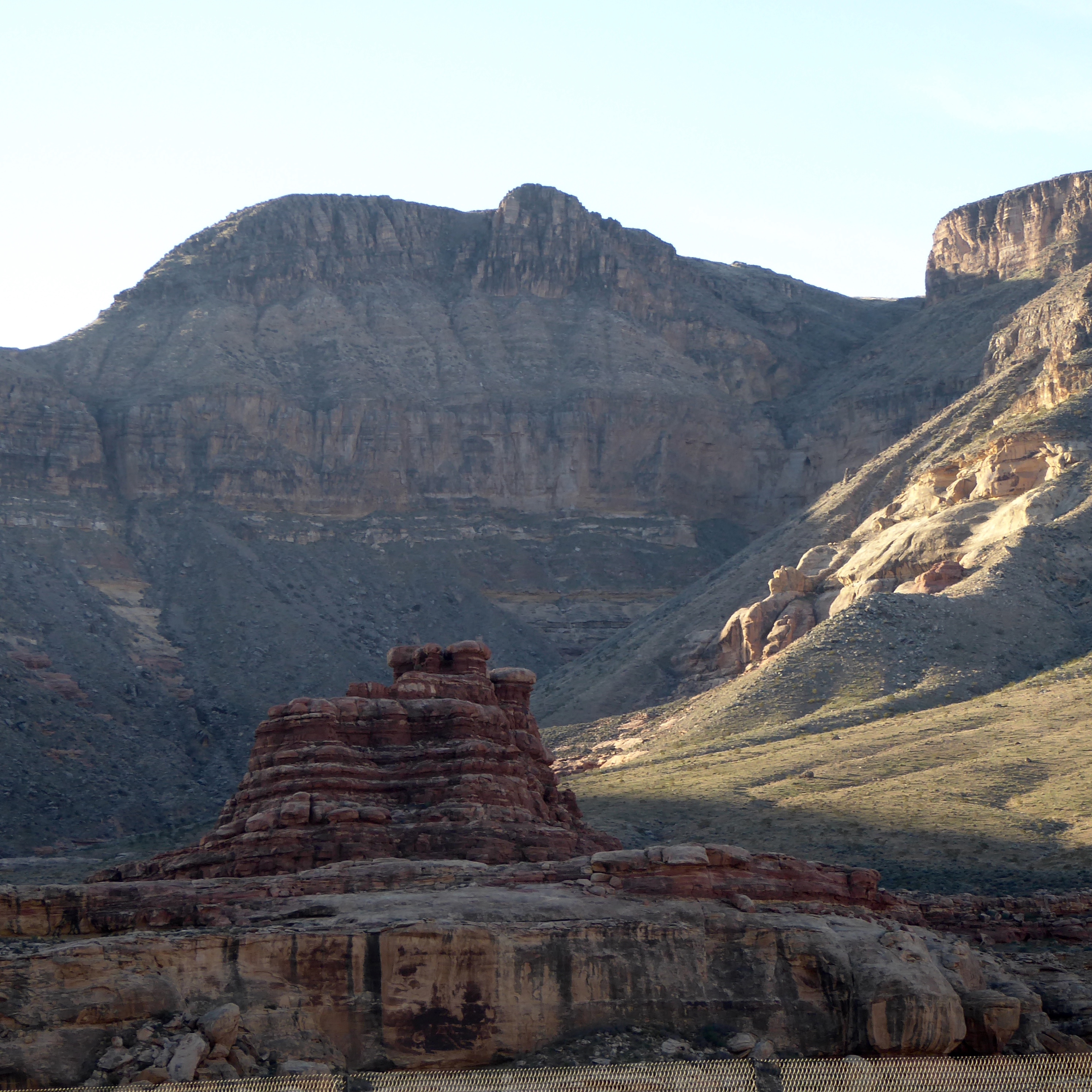
Great rock formation in rock canyon

Great rock formation in rock canyon

Driving through these mountains was like looking at old western movies.

Feel like we are in an old western movie

Feel like we are in an old western movie

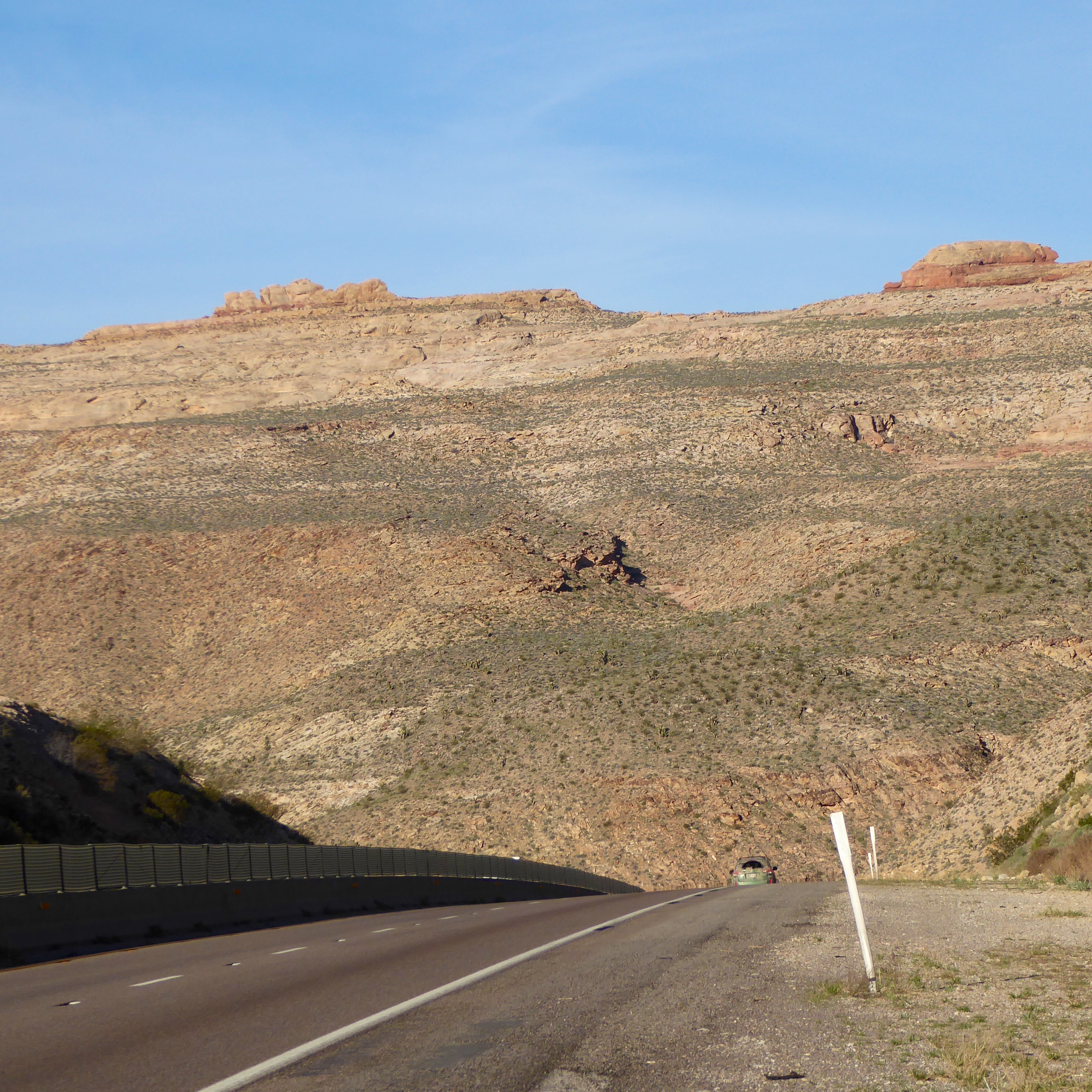
We stopped and I got out of the car, too, but the mountains were too tall to get me in many photos.   Our road, I-15, cut right through the mountains and there were few places to stop.

Road through mountains

Road through mountains

You will notice that there are no houses or people by the highway, in these rugged mountains.

No buildings and people in sight

No buildings and people in sight

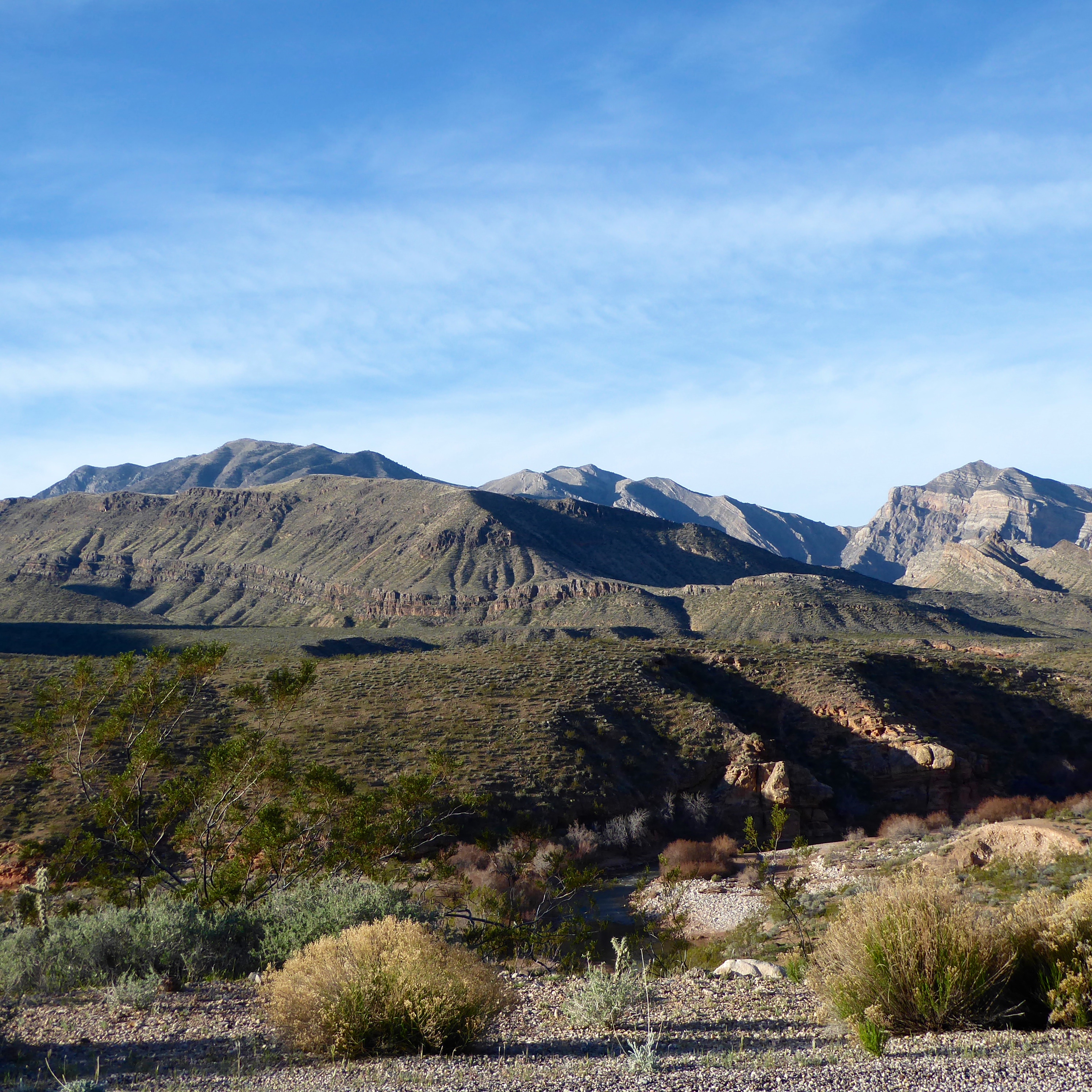
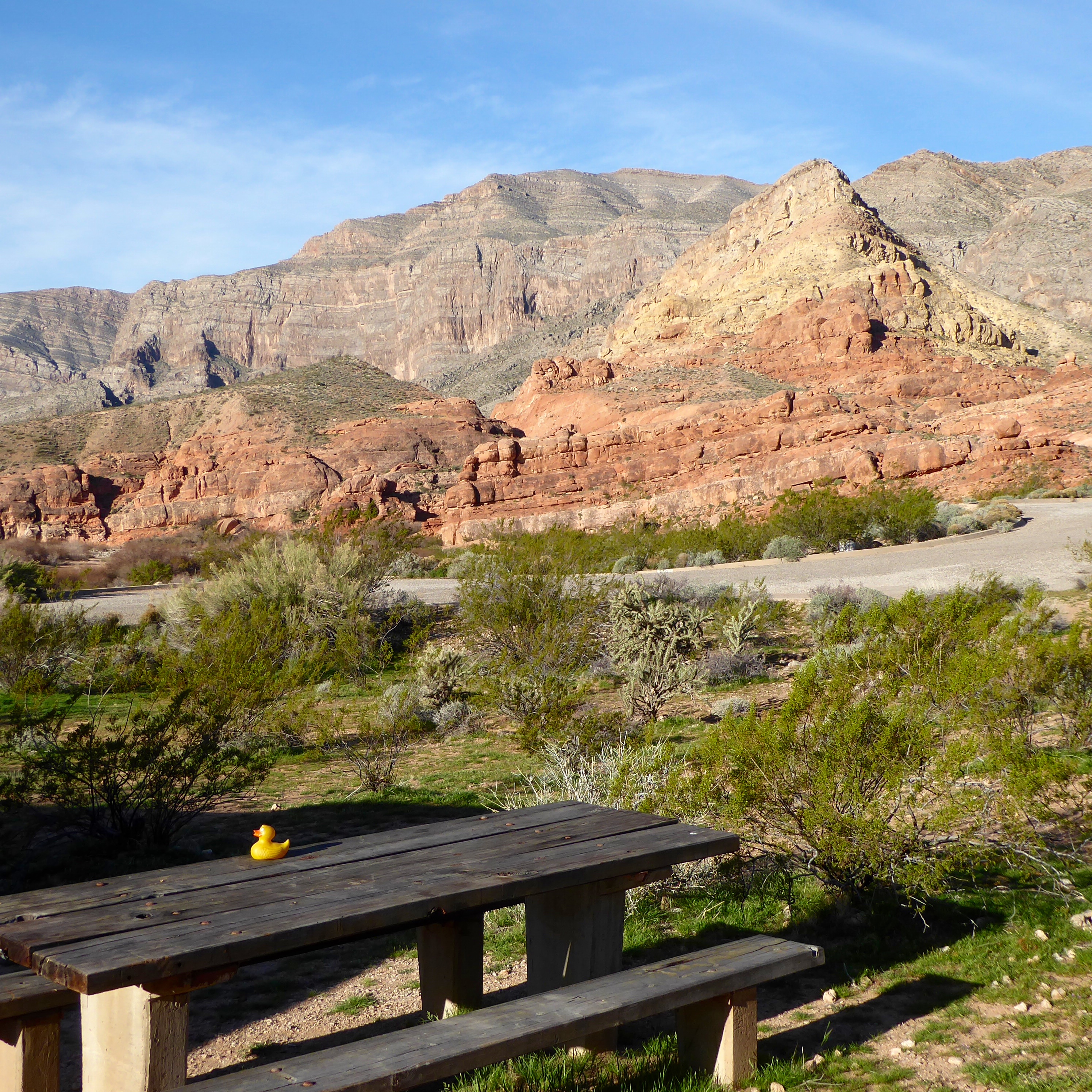
OK, we found an exit and now let’s enjoy the Virgin River Canyon Recreation Area.   Picnic tables make this a perfect place to spend time, eat, and relax.

Picnic area at Virgin River Canyon Recreation Area

Picnic area at Virgin River Canyon Recreation Area

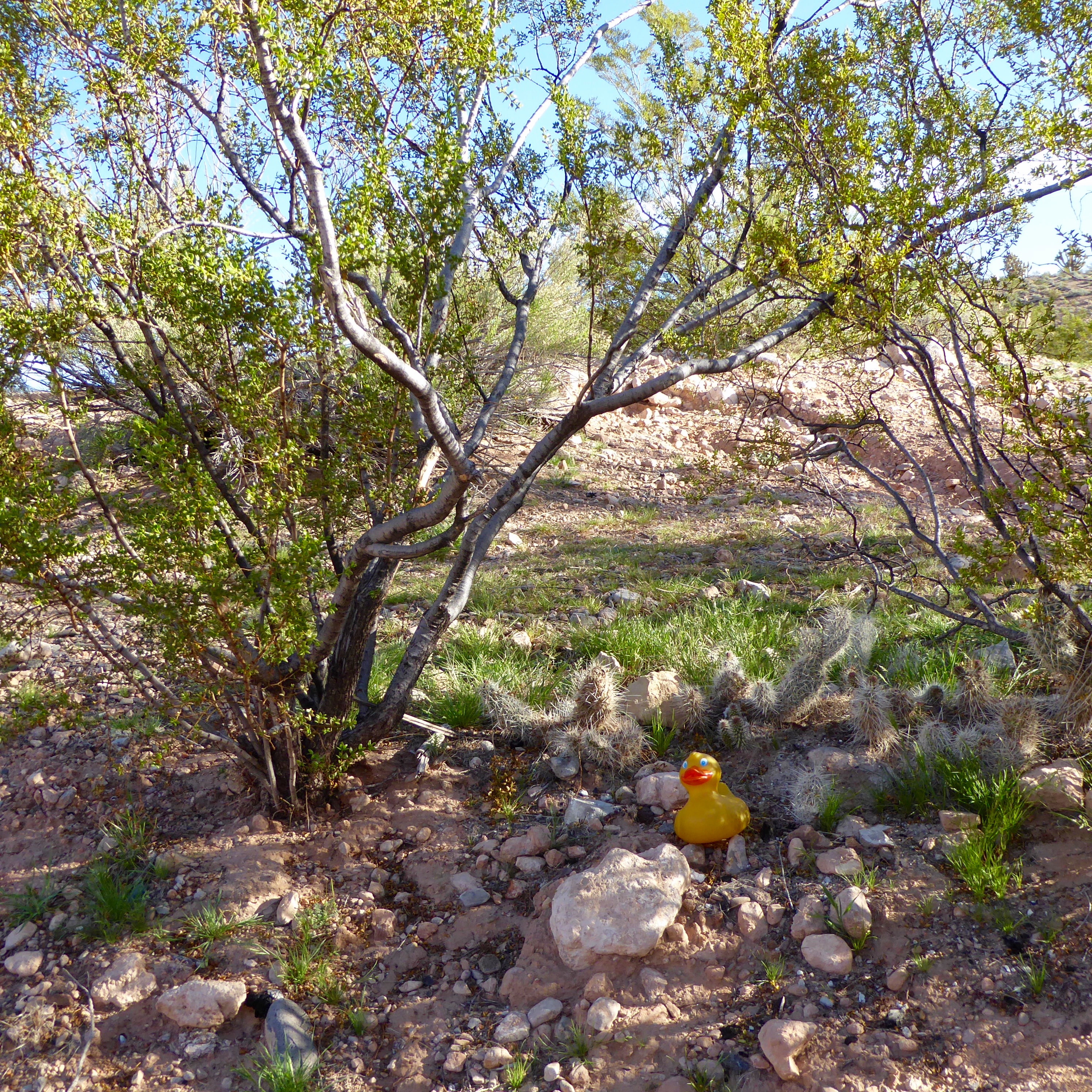
Sit by a cactus in the shade of a tree.

Under the shade of a tree

Under the shade of a tree

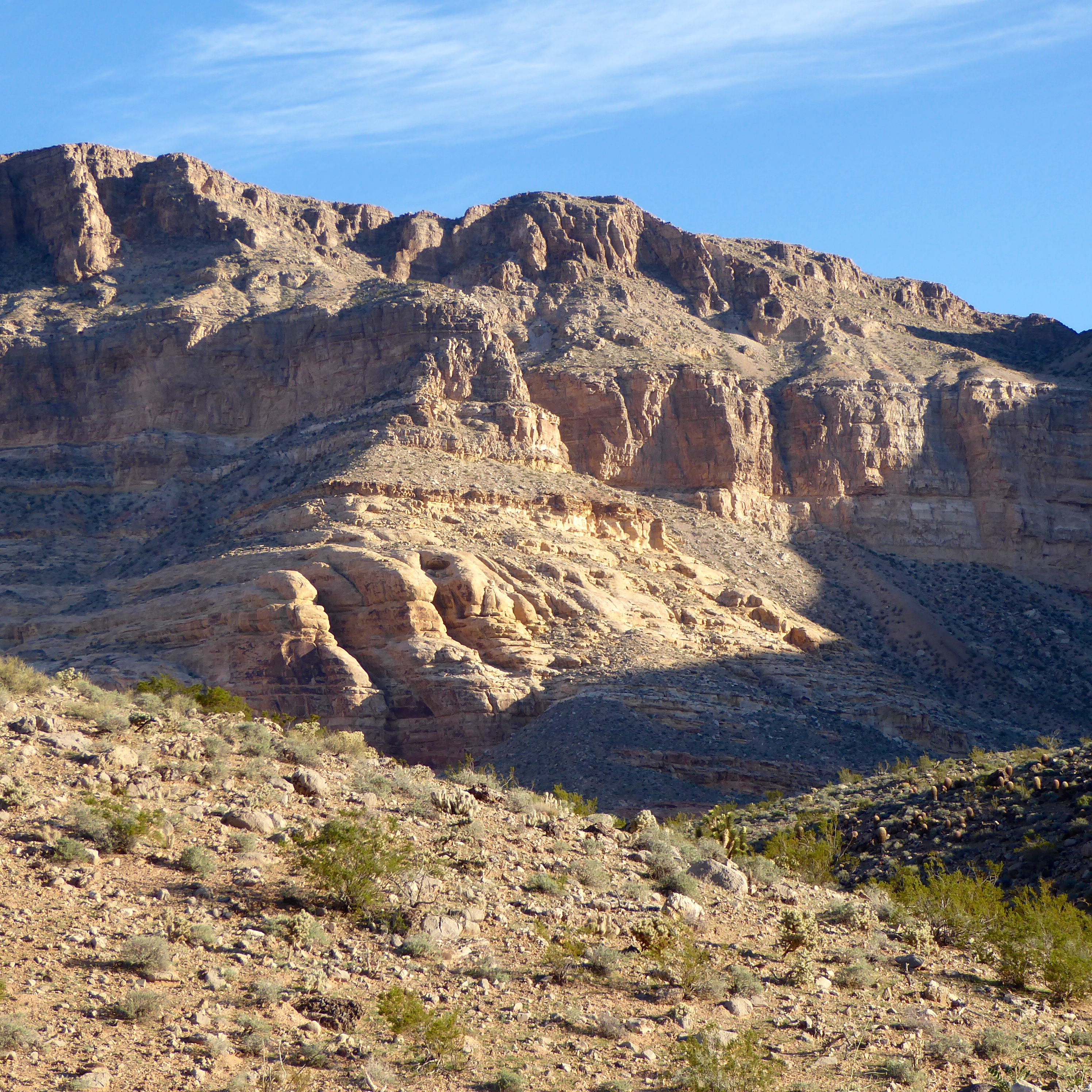
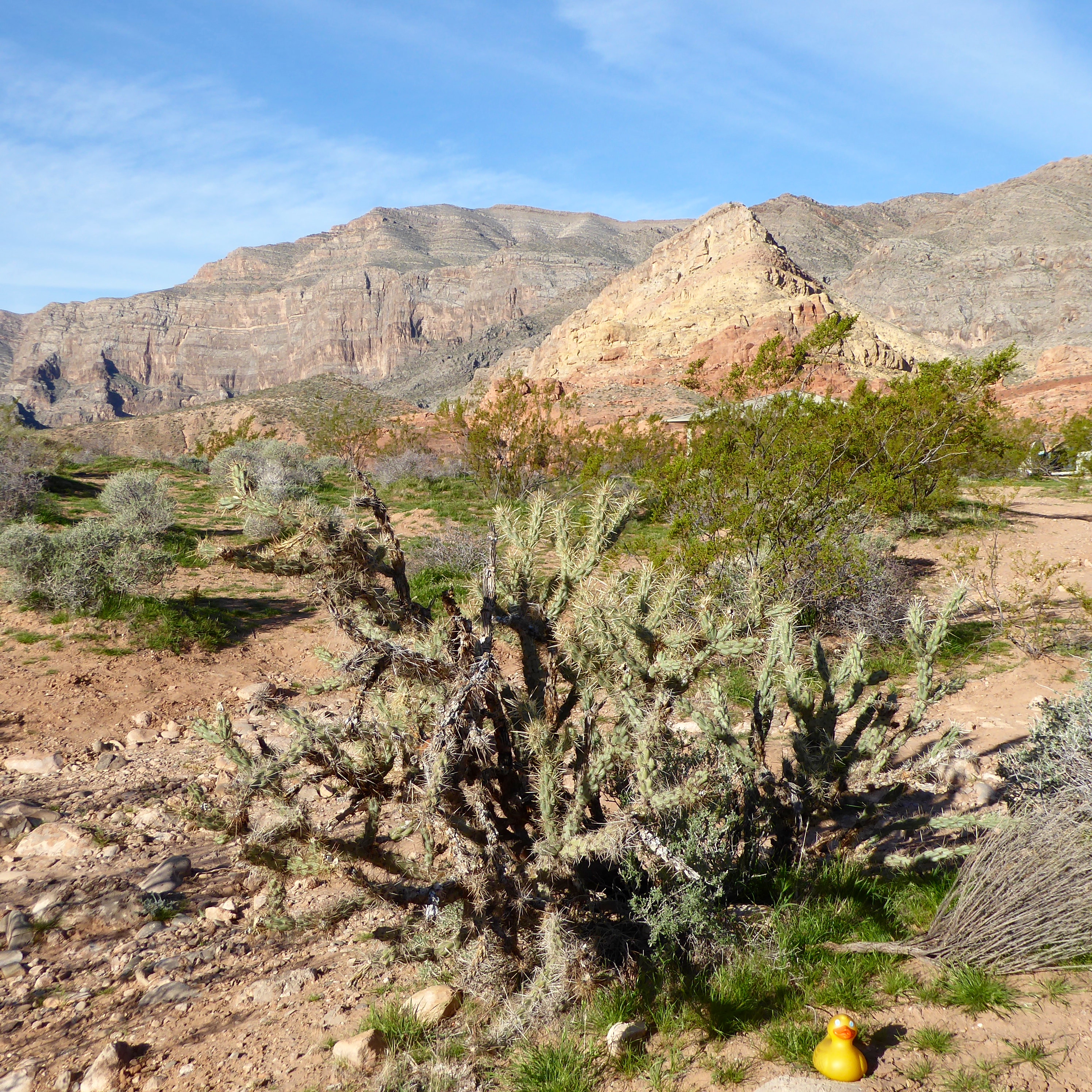
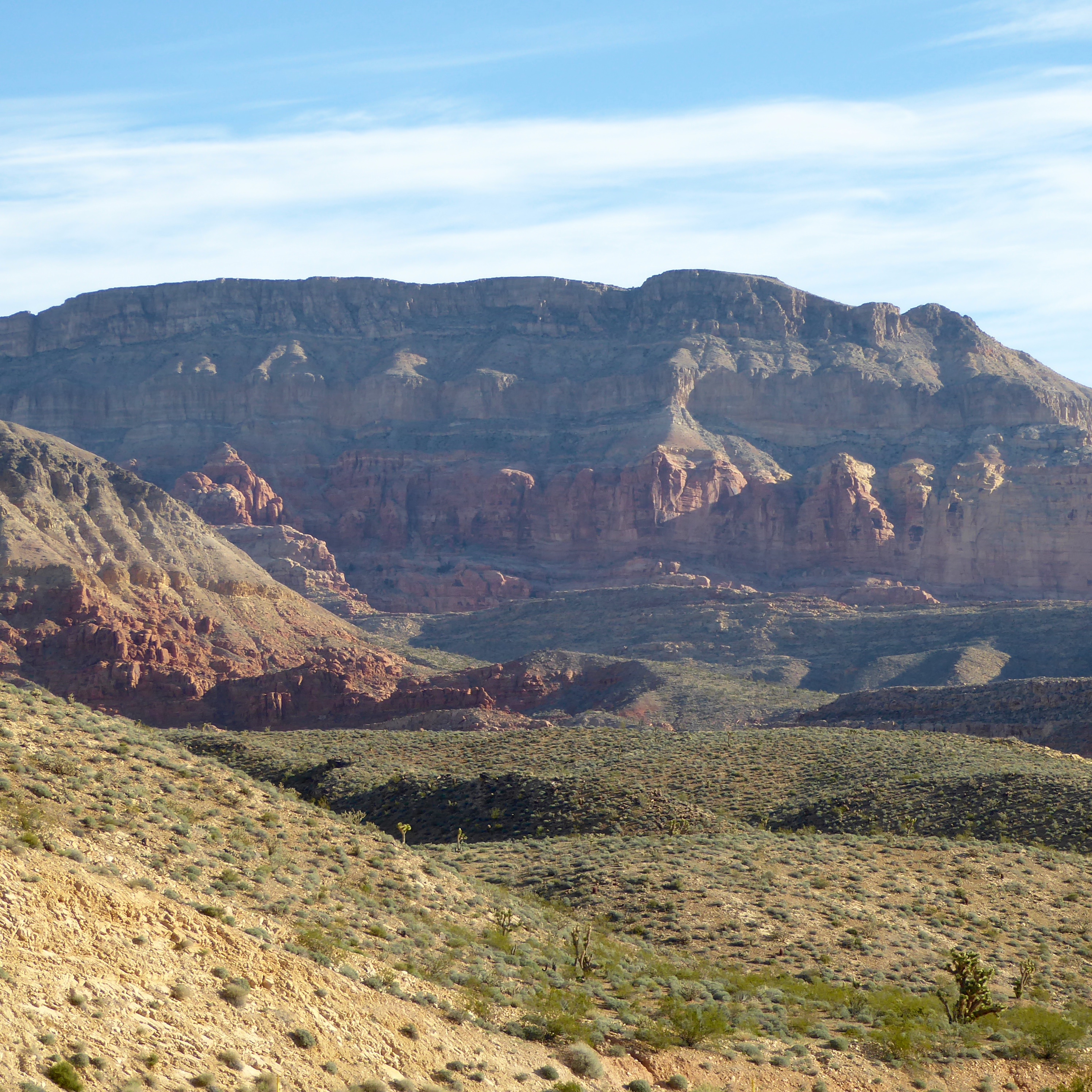
Admire the barren mountains with color in the rock.

Sitting by cactus with great mountains behind

Sitting by cactus with great mountains behind

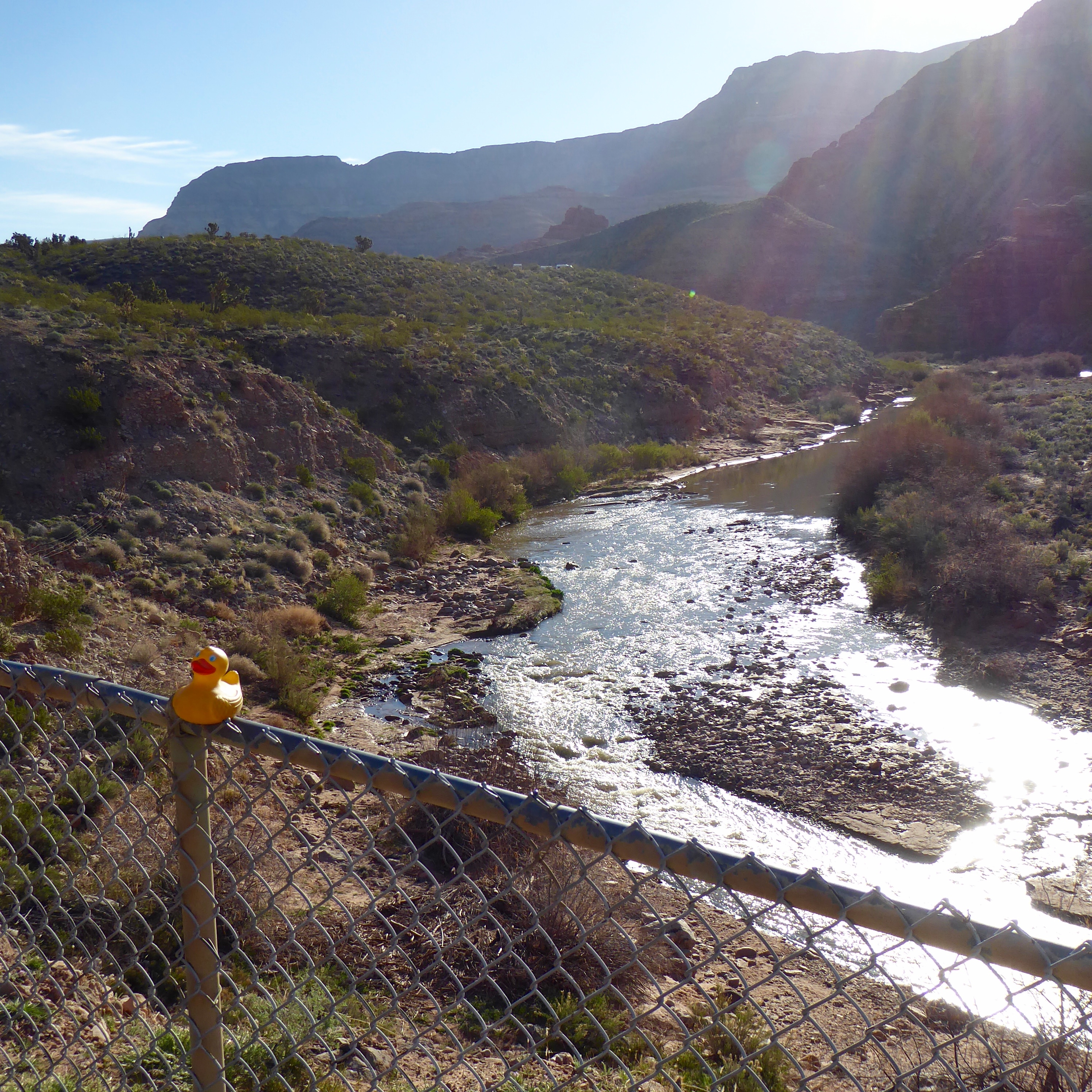
Here is the Virgin River.

The Virgin River. Rapids and calm places

The Virgin River. Rapids and calm places

You may want to fish today.   I don’t know where we are going, the signs say Las Vegas, but mom says we are not going to Las Vegas now.   Wherever we are going, I really like this mountain scenery in Arizona.

We like the scenery in this little corner of Arizona

We like the scenery in this little corner of Arizona

When you drive through here, you will like it also.

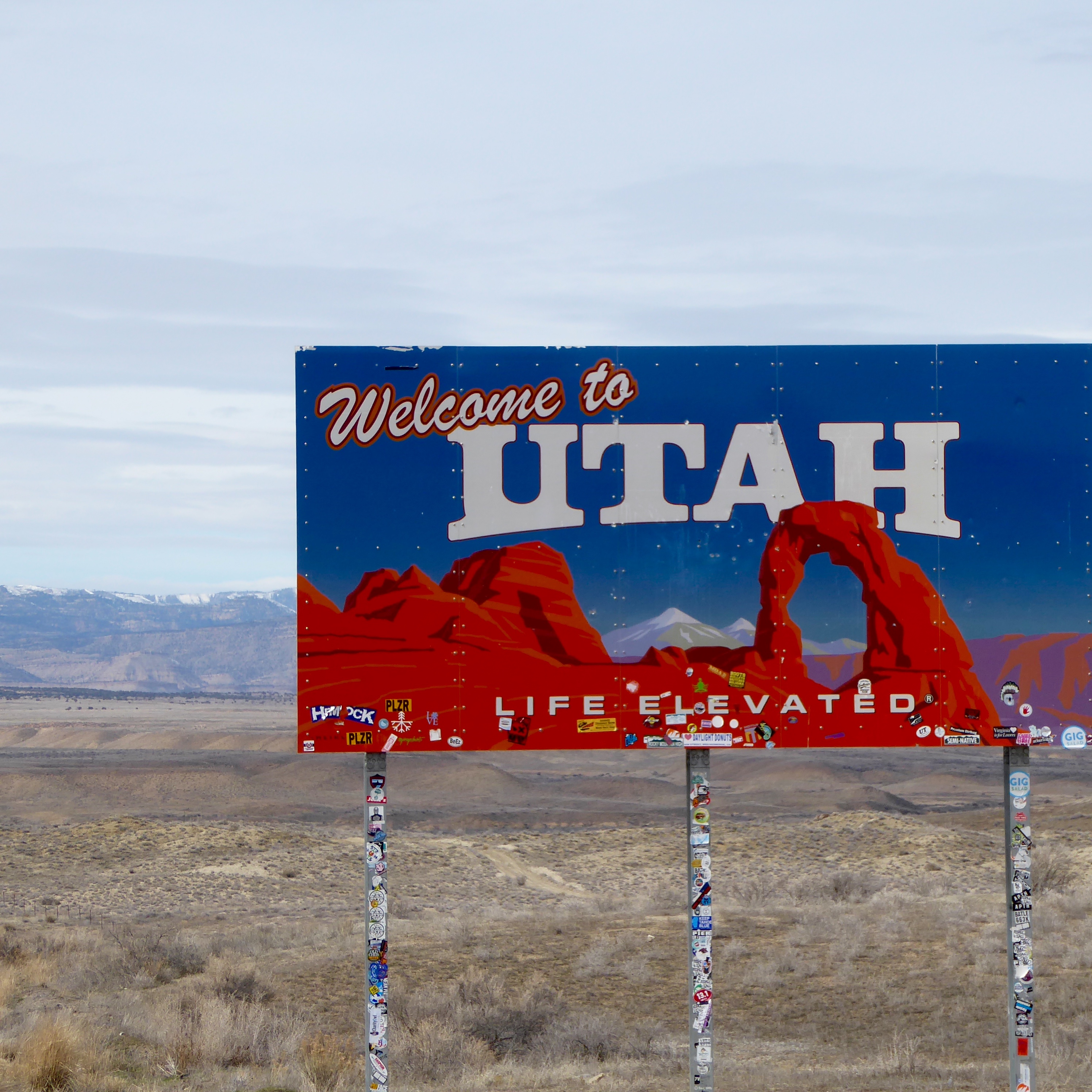
Utah. We are in Utah

In the car and driving west on I-70 from Denver.   We are in Utah.

We are in Utah

We are in Utah

There is a lot of big empty space here.   You know about The Great Salt Lake and Park City, former host of Winter Olympics.   You probably also know about Salt Lake City, with Temple Square, the Mormon Tabernacle and the famous choir.    But that is not the Utah we will show you today.    Our first stop is Green River, Utah.

Green River, Utah

Green River, Utah

These sculptures explain the history of Utah.    I-70 enters Utah mid way between north and south.   On I-70 we will travel south west to I-15 and then into Arizona.   Rock formations like these dominate the landscape near Green River.

Green River landscape

Green River landscape

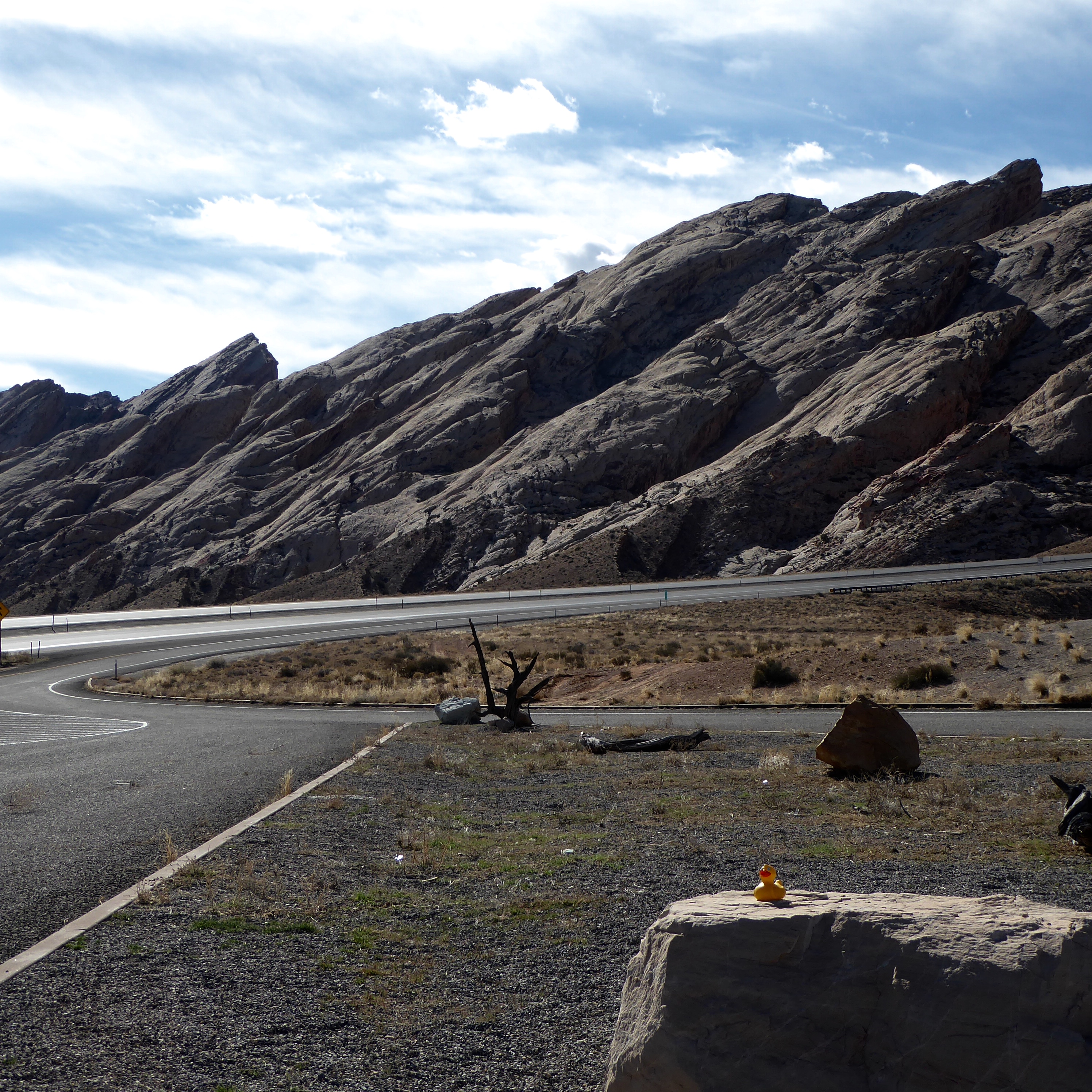
The highway takes us to the San Rafael Reef, a great rock wall formation.

San Rafael Reef

San Rafael Reef

We will cross the San Rafael Swell.   This is a large anticline where the earth’s crust has been heaved from below to form a great dome of rock layers.

San Rafael Swell

San Rafael Swell

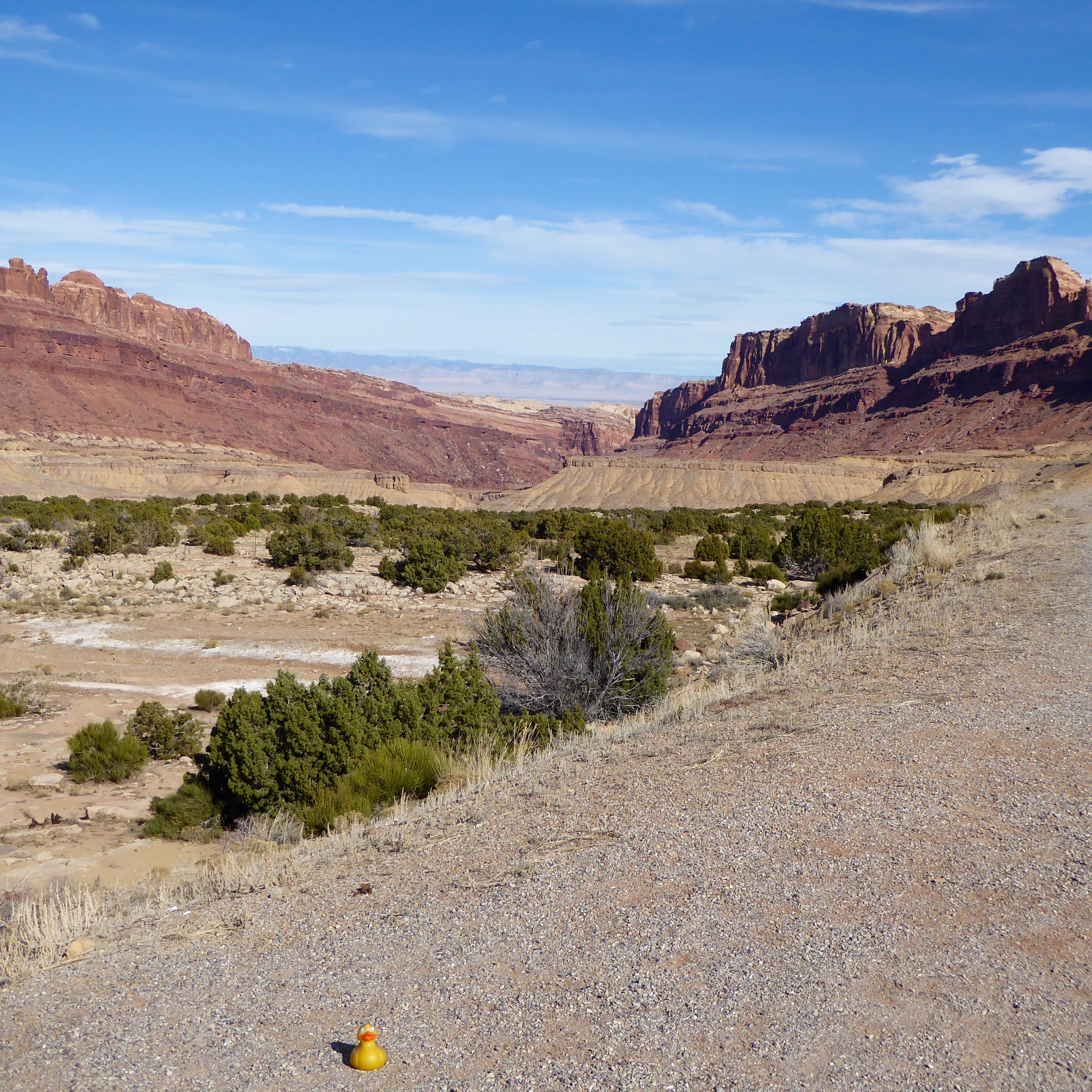
Erosion has sliced and sculpted steeply tilted layers of hard sandstone.    A few miles further and another 1,000 feet in altitude, we stop to view Black Dragon Canyon.

Black Dragon Canyon

Black Dragon Canyon

Some of this sedimentary rock was deposited over 250 million years ago.   Continuing southwest on I-70, we admire the mountains, and the cows.

Contented cows

Contented cows

This photo shows several layers of what we see.

Variety of landscape and rock formations

Variety of landscape and rock formations

The grass, the trees, desert looking mountains and snow capped mountains.   There is so much beauty in the untouched landscape.   Leaving Green River, we saw a couple signs advising us that there were no services for 103 miles.   We have a full gas tank and many bottles of water.   This rugged land of canyons and badlands allowed outlaws such as Butch Cassidy, Elza Lay, Flat Nose George, Kid Curry, Joe Walker and others to elude the lawman.

Perfect for outlaws

Perfect for outlaws

We are fascinated by the changing rocks and colors.

Love the red

Love the red

Red here.   Almost looks like they were carved.   Now white rocks.

Love the white

Love the white

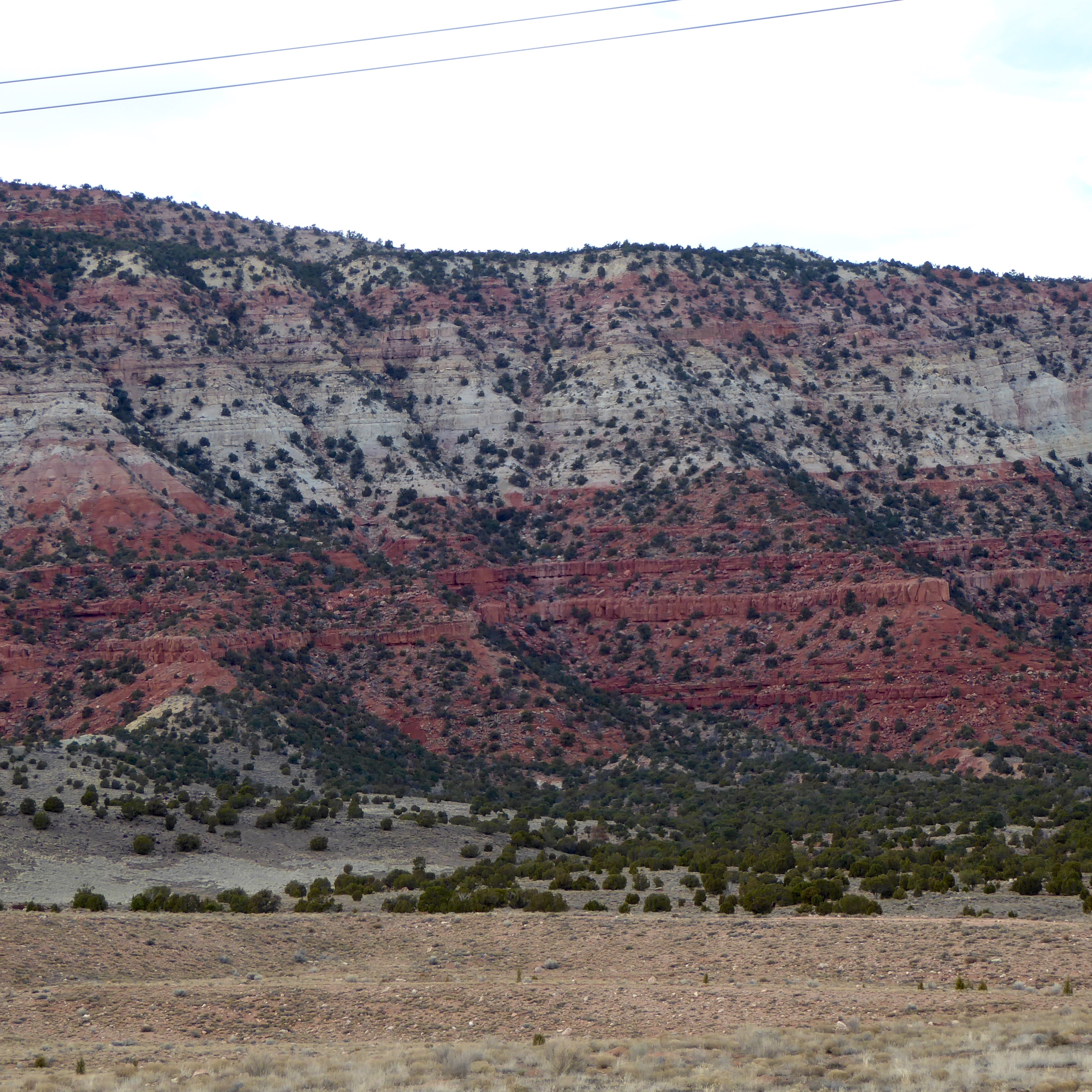
The minerals in the rock determine the color of the rocks and mountains.   These mountains with red and white made us smile.

Various colors on same mountain. Minerals give color to rocks

Various colors on same mountain. Minerals give color to rocks

Utah also has 5 national parks, so plan to stay here awhile to enjoy many wonders.   We will be back to Utah again.   It seems that mom is trying to get somewhere else on this trip, too.

Happy Leap Day from the Colorado Traveling Ducks

Today is February 29, 2016.   February 29???   February only has 28 days, right?   Not always.   Most years that can be evenly divided by 4 are Leap Years.   Also presidential election years in the United States.  How much time does the earth requires to orbit the sun?   It is exactly 365 days, 5 hours, 48 minutes and 46 seconds.    So, to keep the seasons and months together, an extra day is added every 4 years.   Almost.   On century years, the ones that end with 00, there is a leap year only if the year can be evenly divided by 400.   This can get confusing.   But all that means that today, February 29 is a special day.   Some stores will even have special Leap Year sales.   And, if you were born on February 29, you only have  your real birthday once every 4 years.   So, Pizza Hut says that if that is you and you can prove your birthday is February 29, you will receive a free one topping personal pan pizza today.   Also, tradition says that ladies may propose marriage to a man today, on Leap Day.   So, whatever you do today, make it special.   This is a special day, and you will not see February 29 again for 4 more years.

Chocolate at Denver Museum of Nature and Science

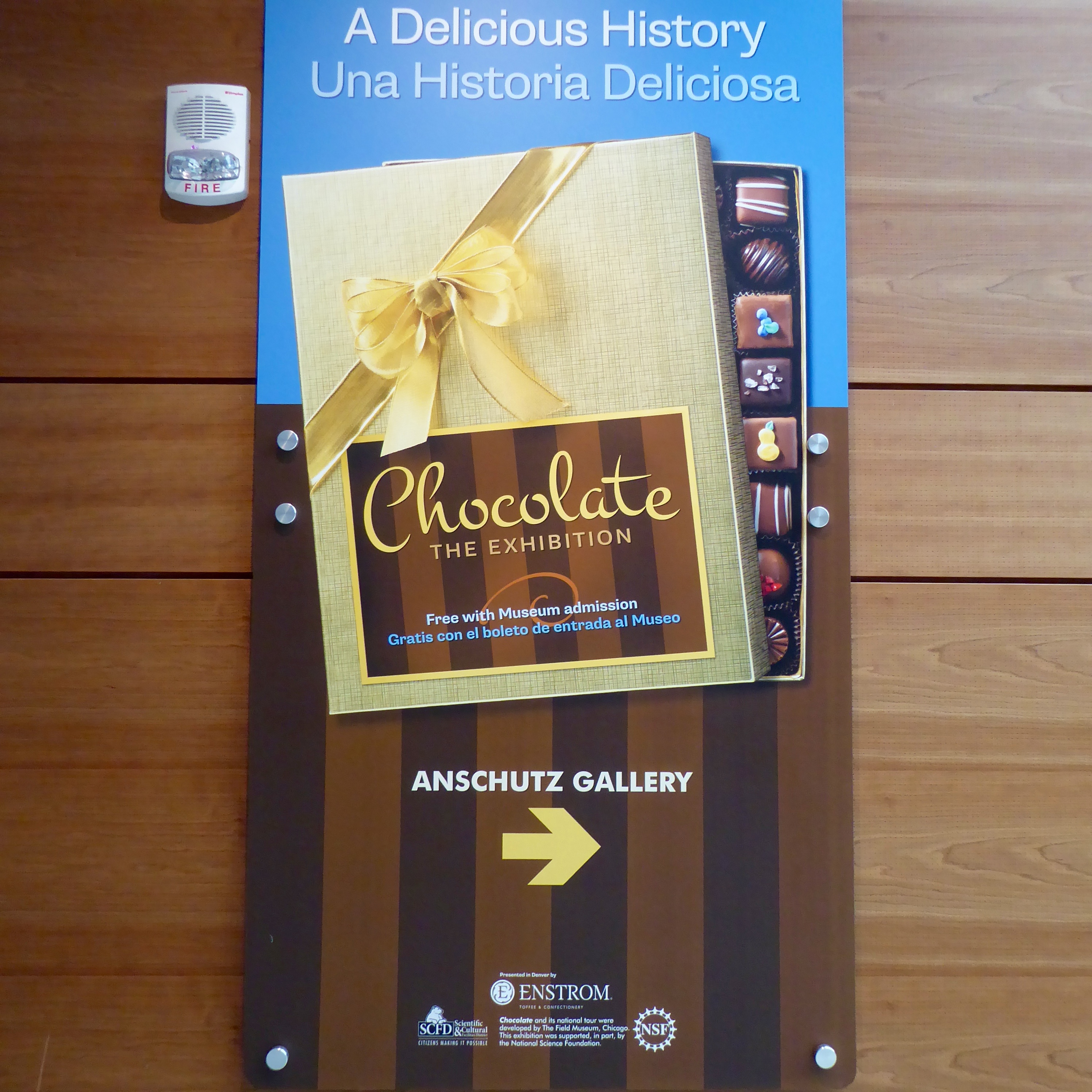
Chocolate !   Chocolate!   We are going to Denver’s Museum of Nature and Science to learn about chocolate.   I, Zeb the Duck am ready.   Let’s go mom.   We enter the exhibit, which is included with a general admission ticket or our museum membership card.

Chocolate Exhibit

Chocolate Exhibit

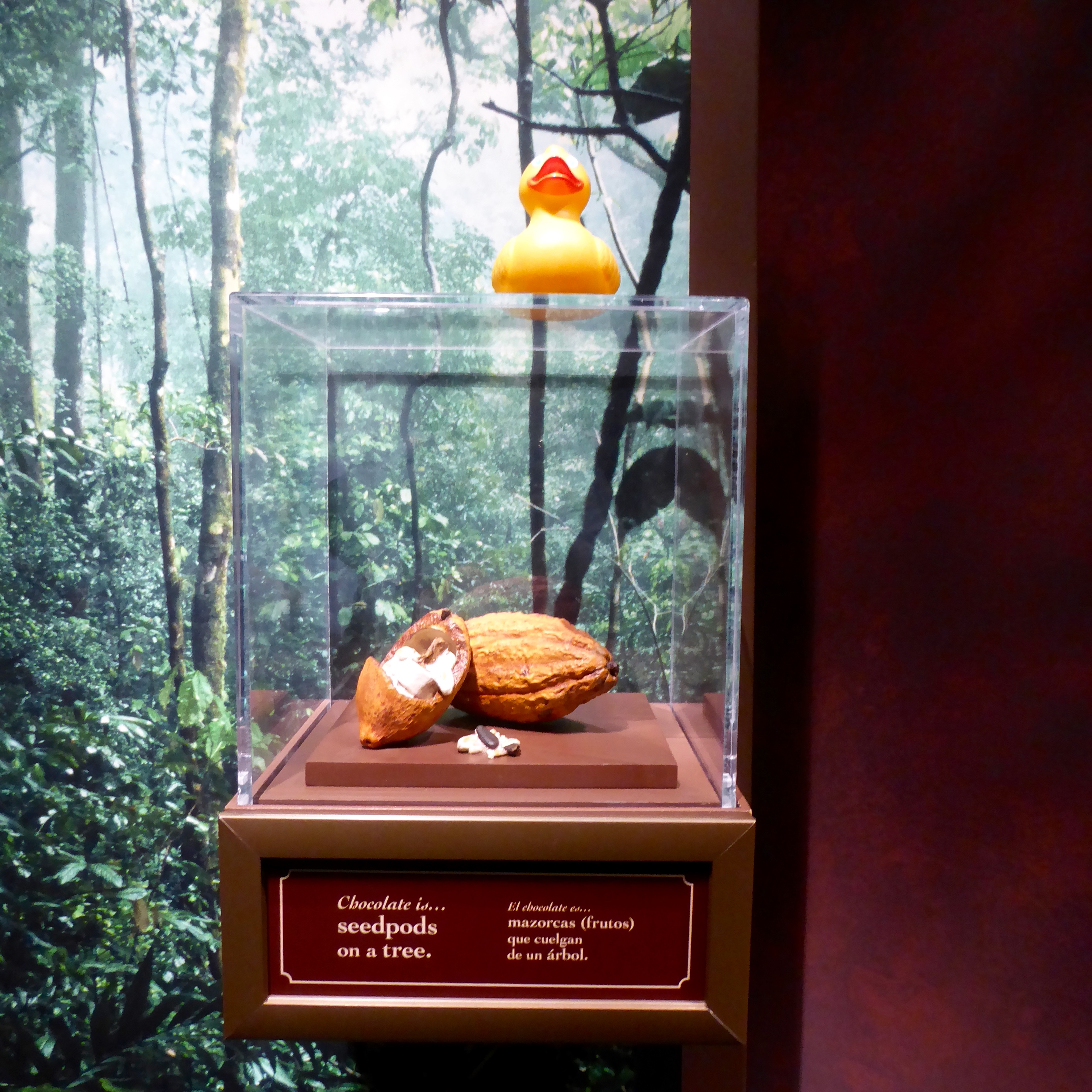
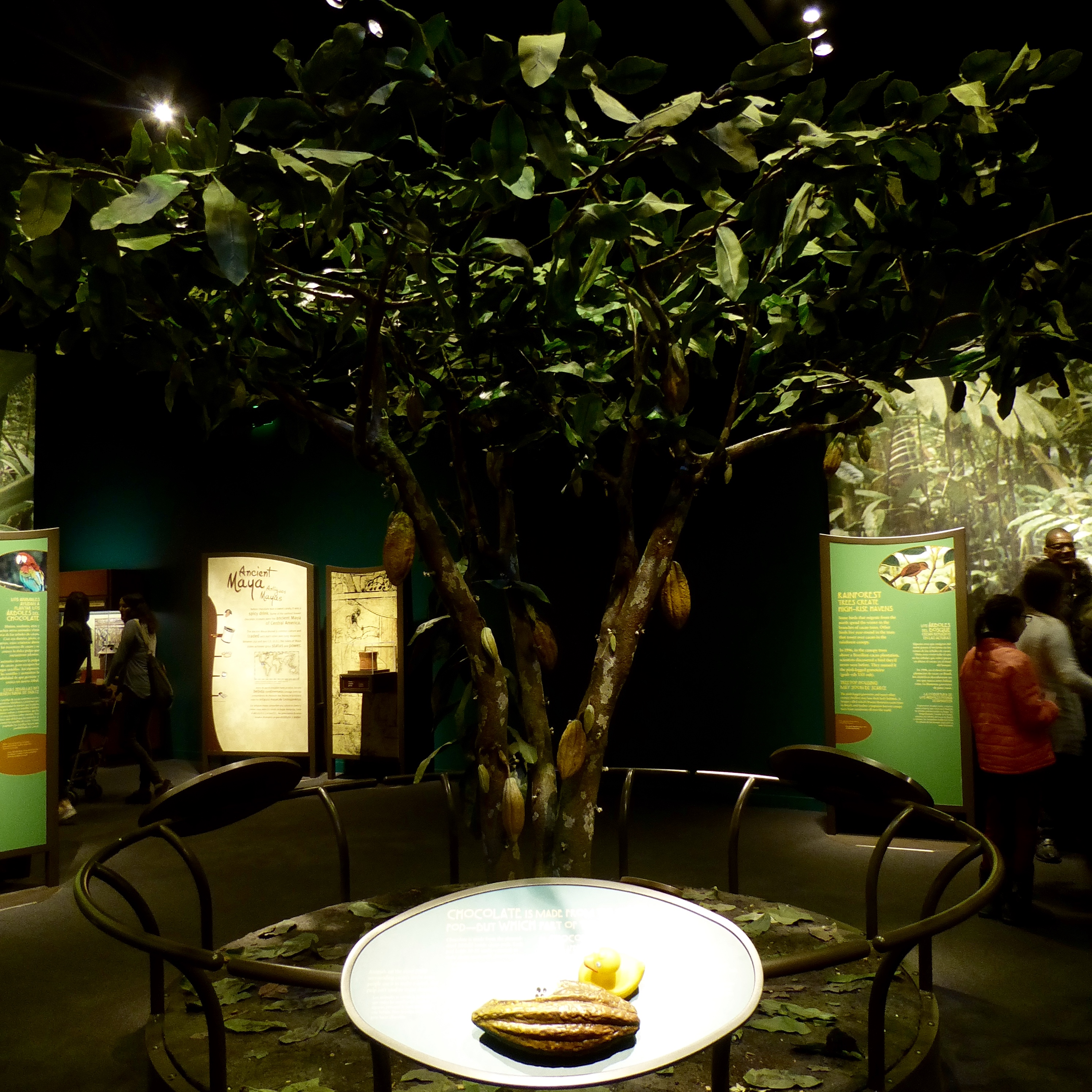
Chocolate comes from a tree.   The seedpods of the cacao tree.

Cacao seedpod

Cacao seedpod

Those are pretty big seedpods.

Cacao Seedpod

Cacao Seedpod

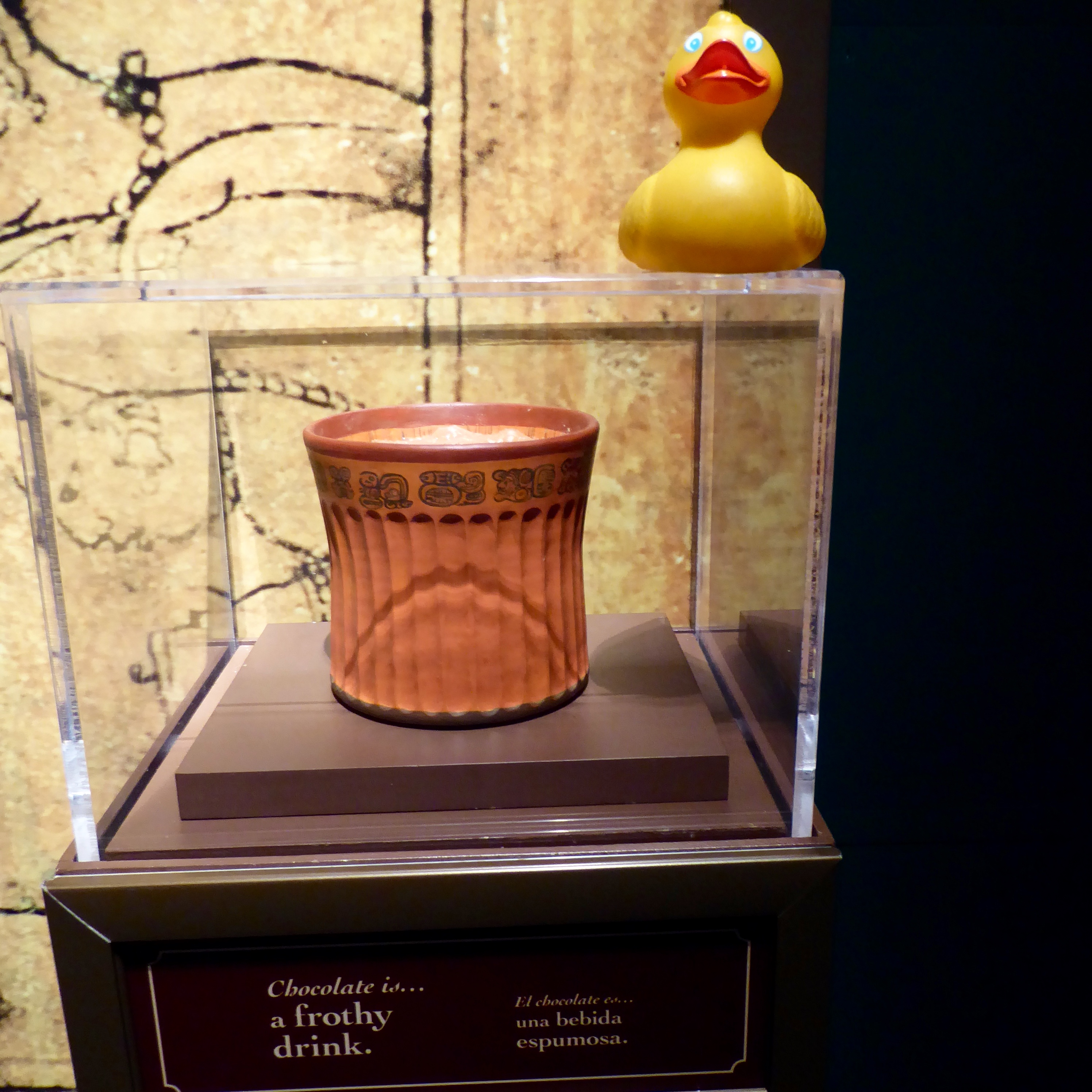
Chocolate comes from the 30-50 seeds in each pod.   One pods provides enough chocolate for about 7 milk chocolate bars.   Animals eat the pulp while the tough husk protects the seeds.   Animals help create new cacao trees.   They eat the sweeter pulp, while throwing the seeds on the ground.   Many seeds will create new trees.   The Mayans loved the chocolate and often grew cacao trees near their homes.   It was easy to go in their yards to get chocolate seeds.   The Mayans enjoyed chocolate as a frothy drink.

Frothy chocolate drink

Frothy chocolate drink

The cacao seeds were fermented, dried and roasted.   These seeds were then crushed into paste and mixed with water.    Other ingredients such as cornmeal, honey, and chili peppers were added.   The beverage was then poured back and forth between two cups to make the beverage frothy.    Enjoyed by rich and poor, chocolate was a particular favorite of Maya Kings and priests.

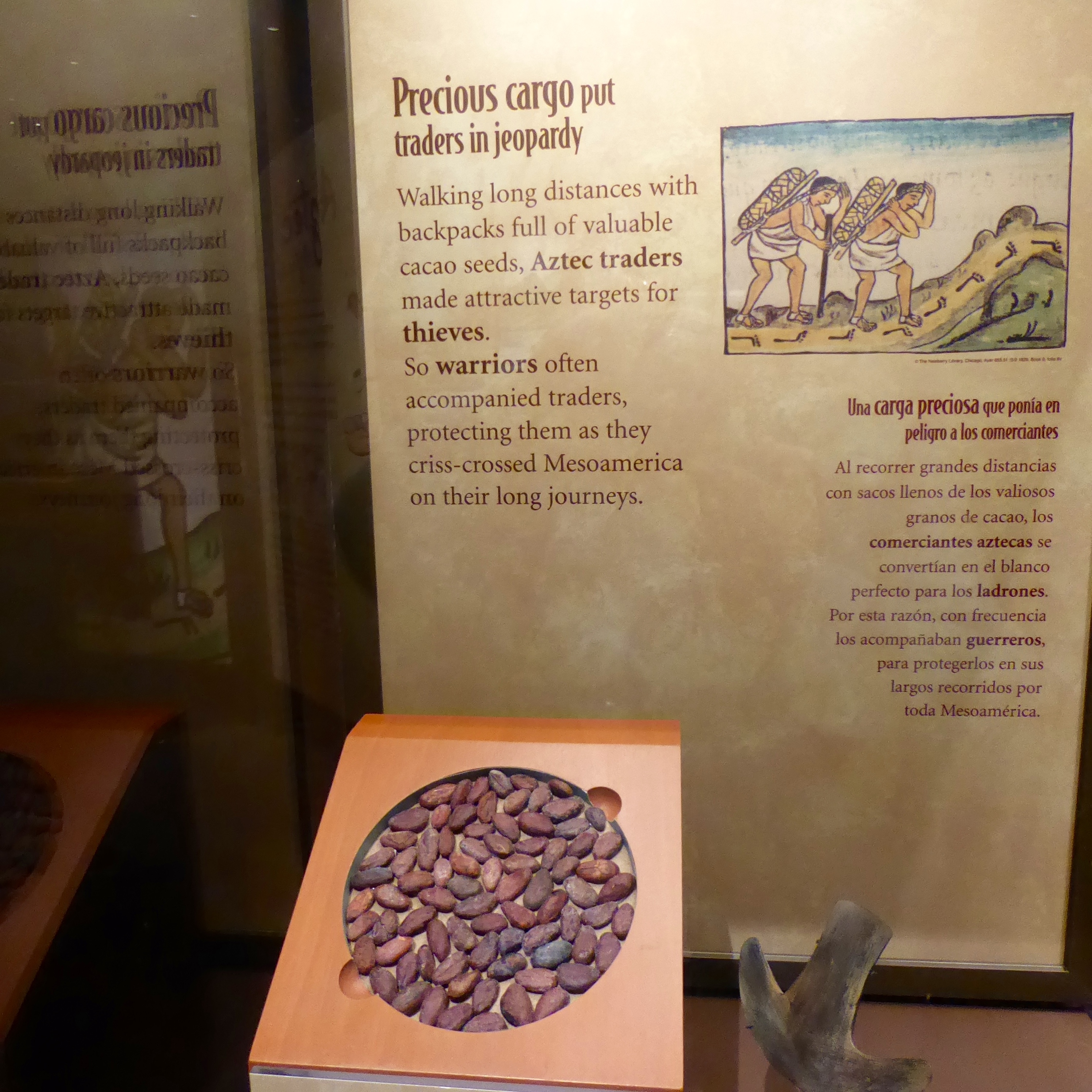
Cacao seeds

Cacao seeds

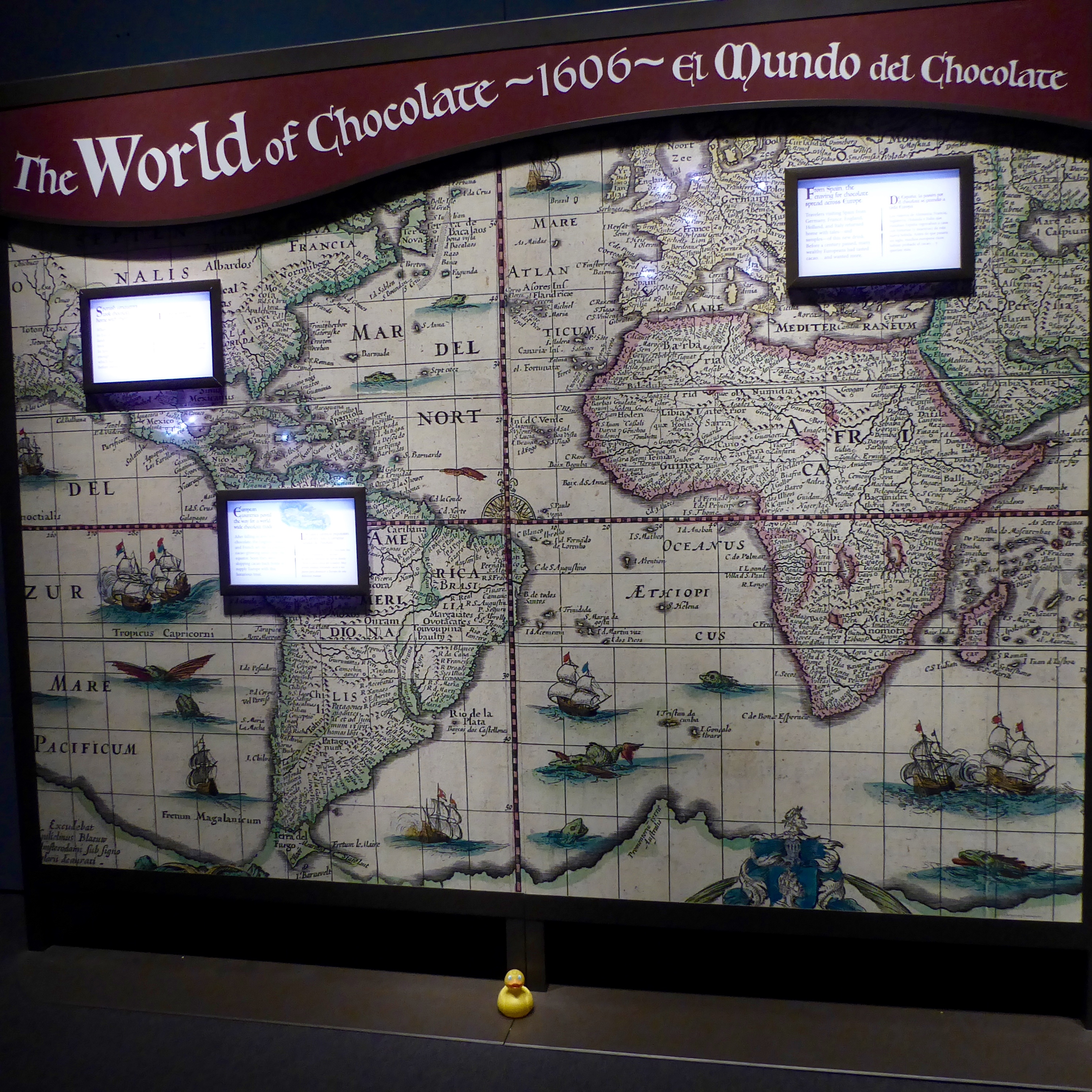
Chocolate was widely traded and was used as money by Aztecs.   In 1606, this was the World of Chocolate.

World of Chocolate 1606

World of Chocolate 1606

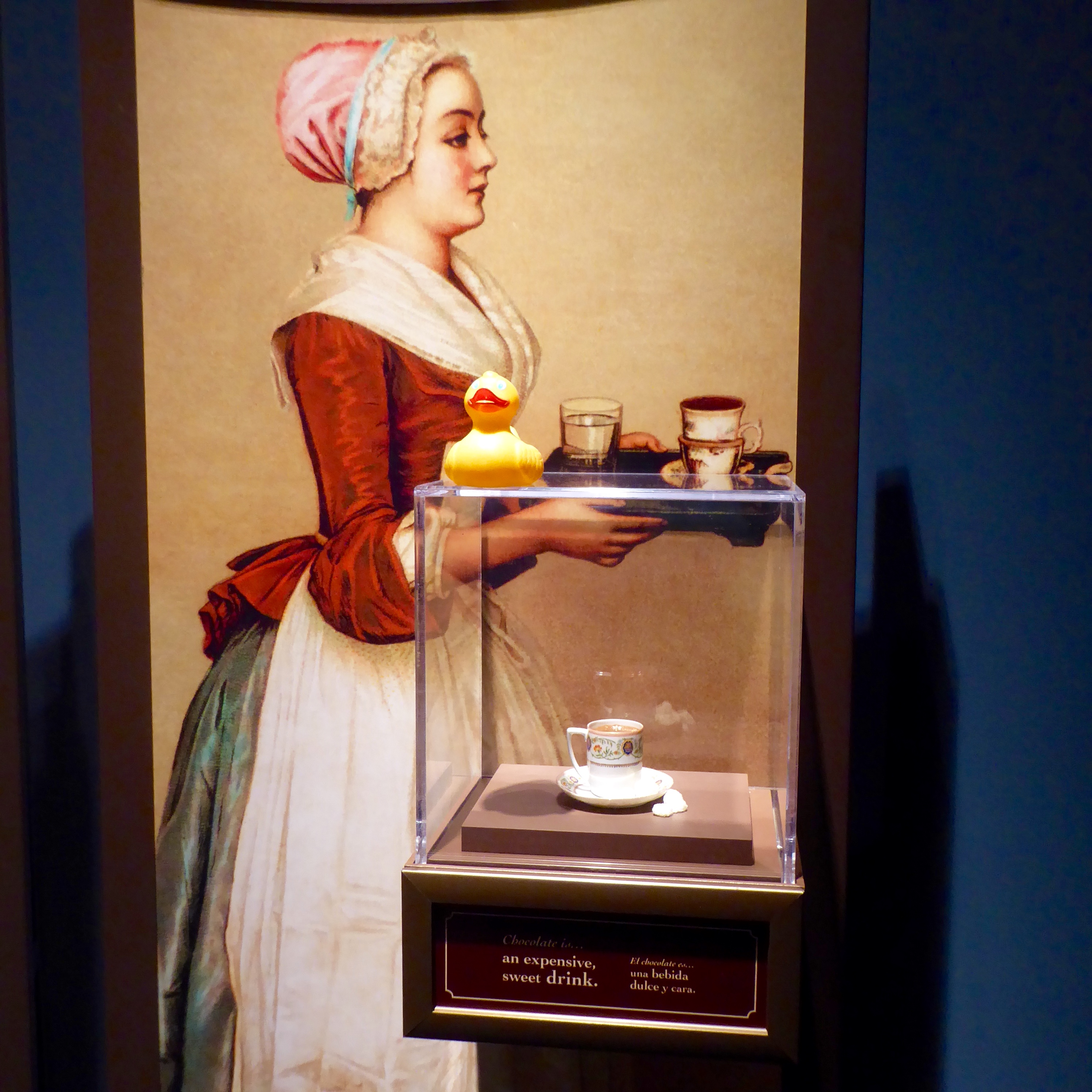
Chocolate was introduced to Europe where sugar was added to the beverage.

Sugar added to chocolate

Sugar added to chocolate

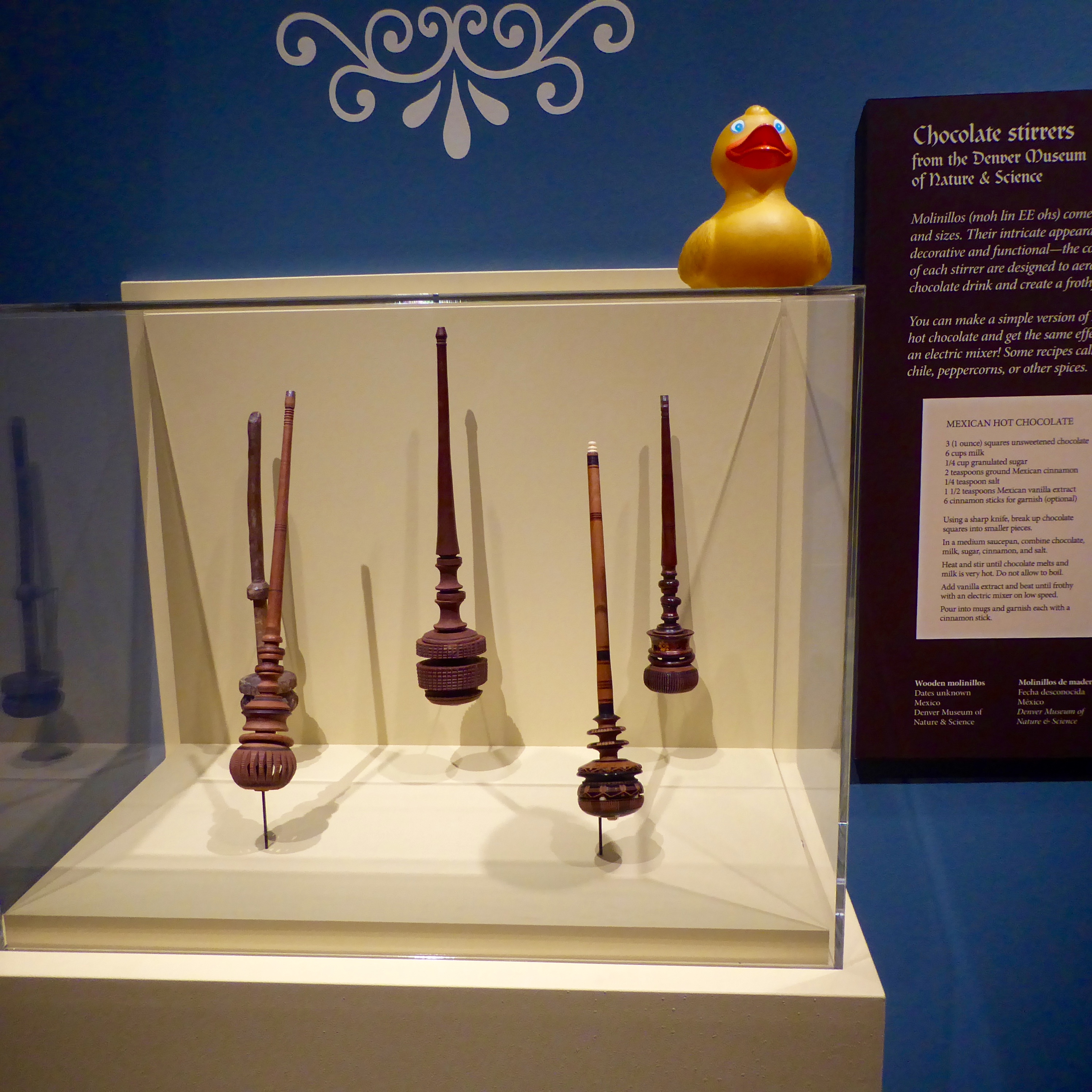
Europeans also invented the chocolate stirrer, to more easily create froth on top of the beverage.

Chocolate stirrers

Chocolate stirrers

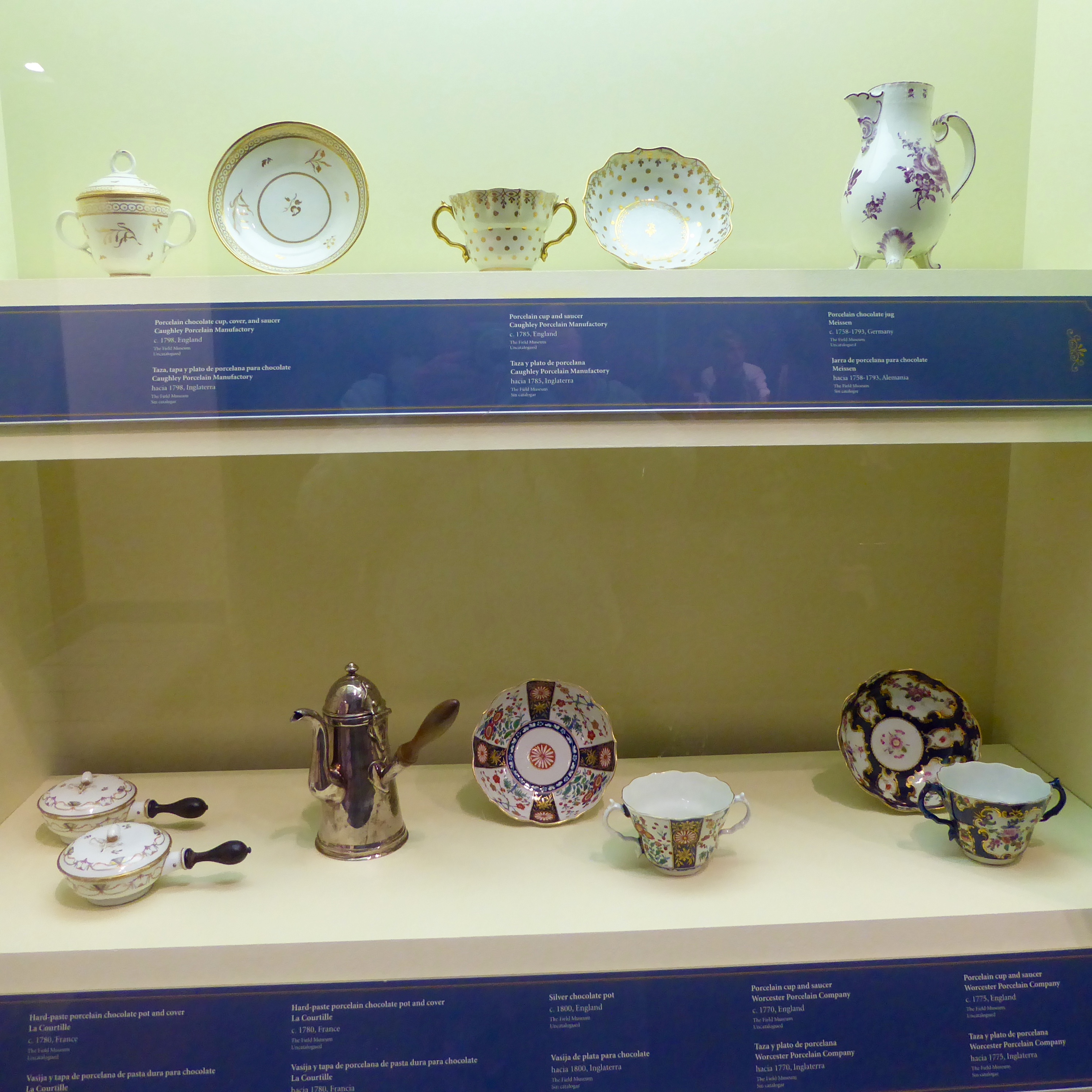
Having and serving chocolate soon became a status symbol for the wealthy, requiring special serving cups and utensils.

New chocolate serving dishes

New chocolate serving dishes

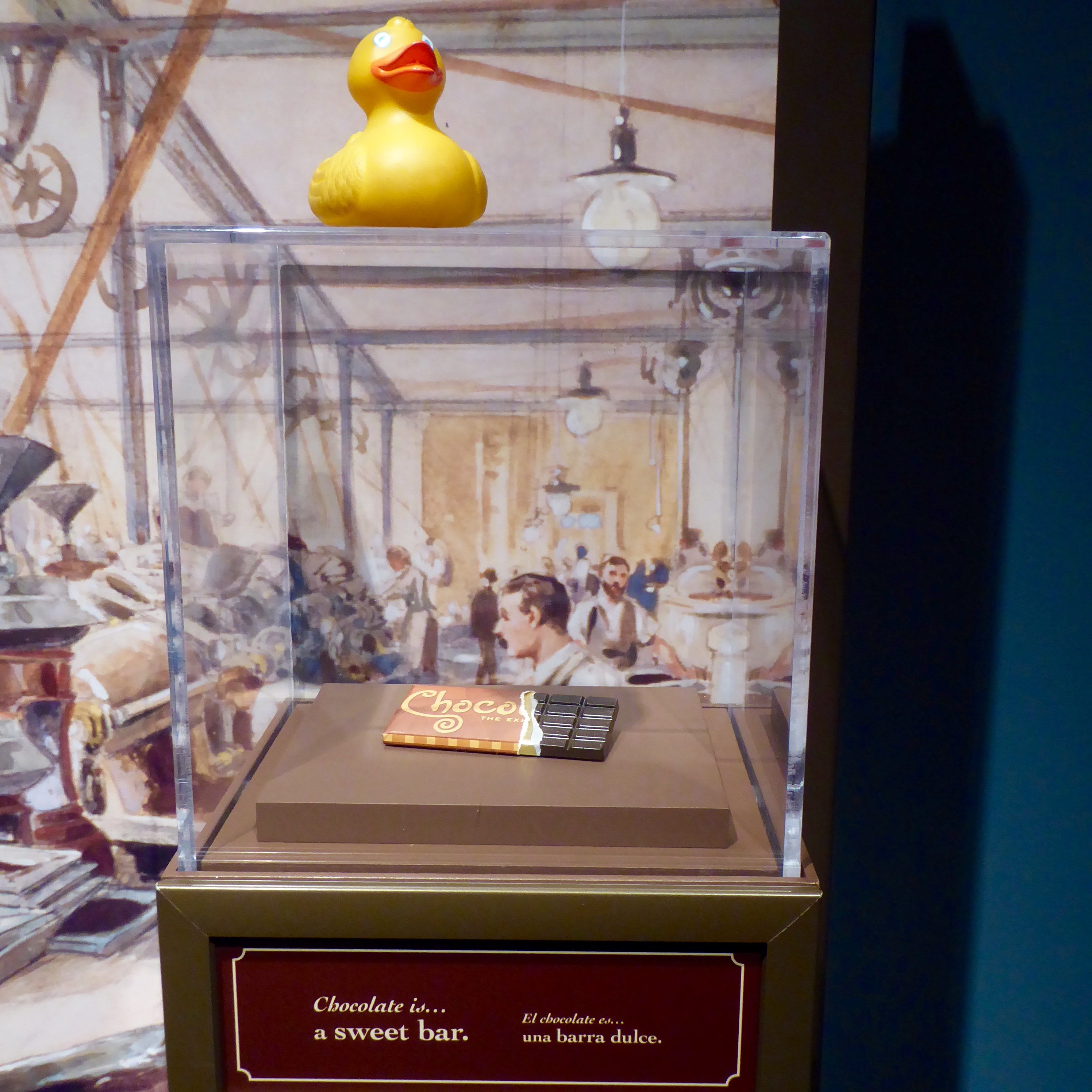
In 1847 the first chocolate bar was made.

Chocolate bar

Chocolate bar

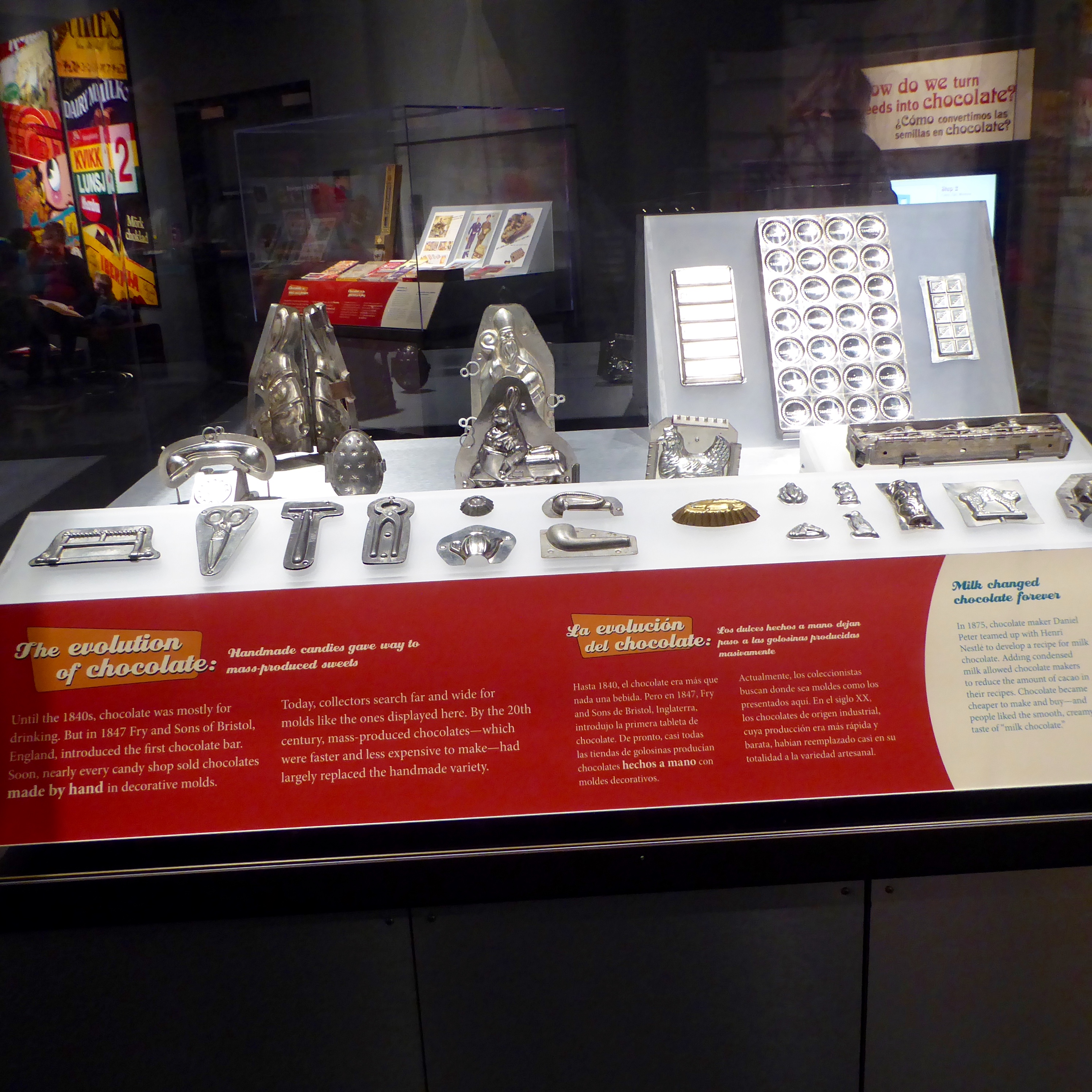
The chocolate bar led to a new chocolate item–molded chocolate.

Chocolate molds

Chocolate molds

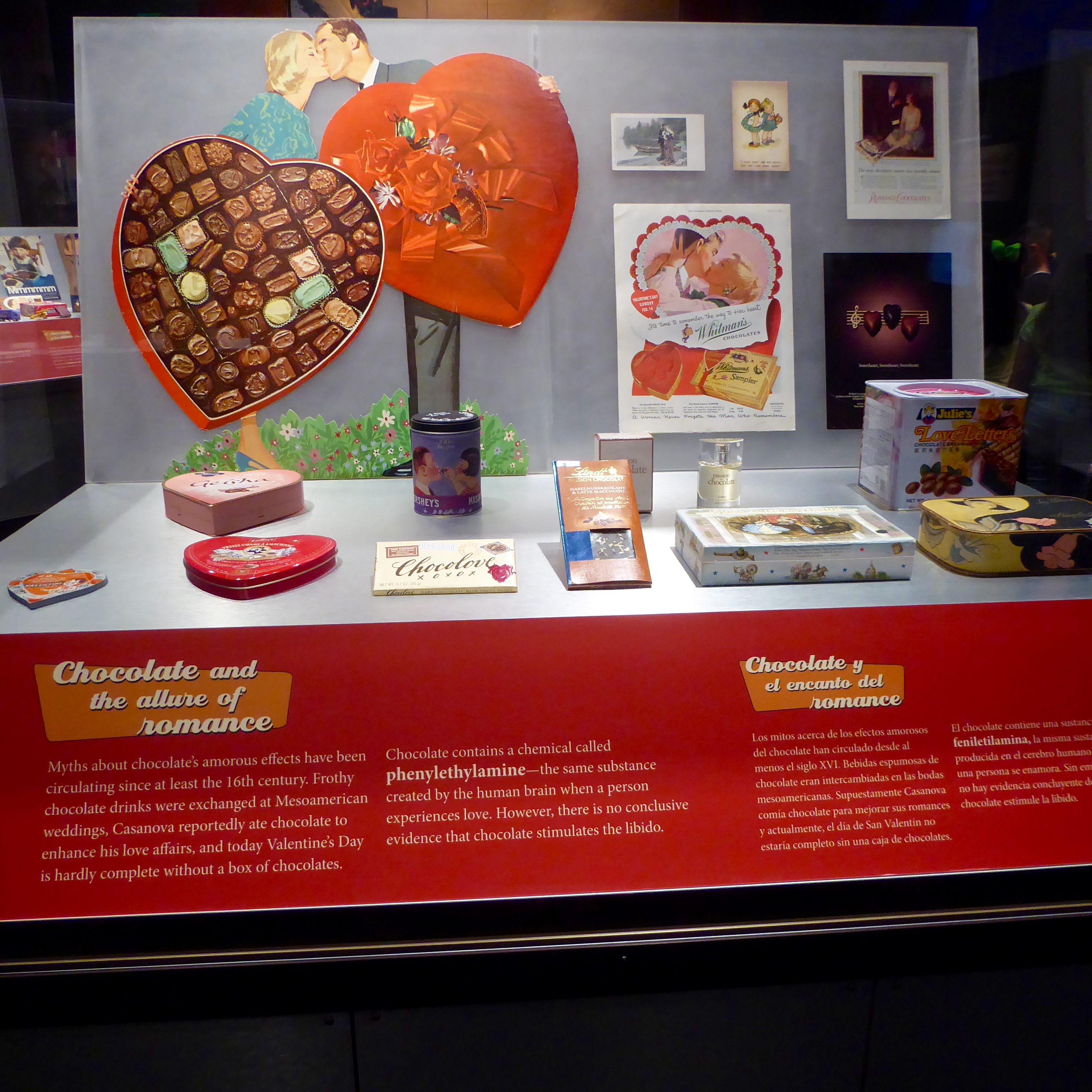
Later, in 1875, chocolate maker Daniel Peter teamed with Henri Nestle to produce milk chocolate.   Soon chocolate symbolized romance.

Chocolate for romance

Chocolate for romance

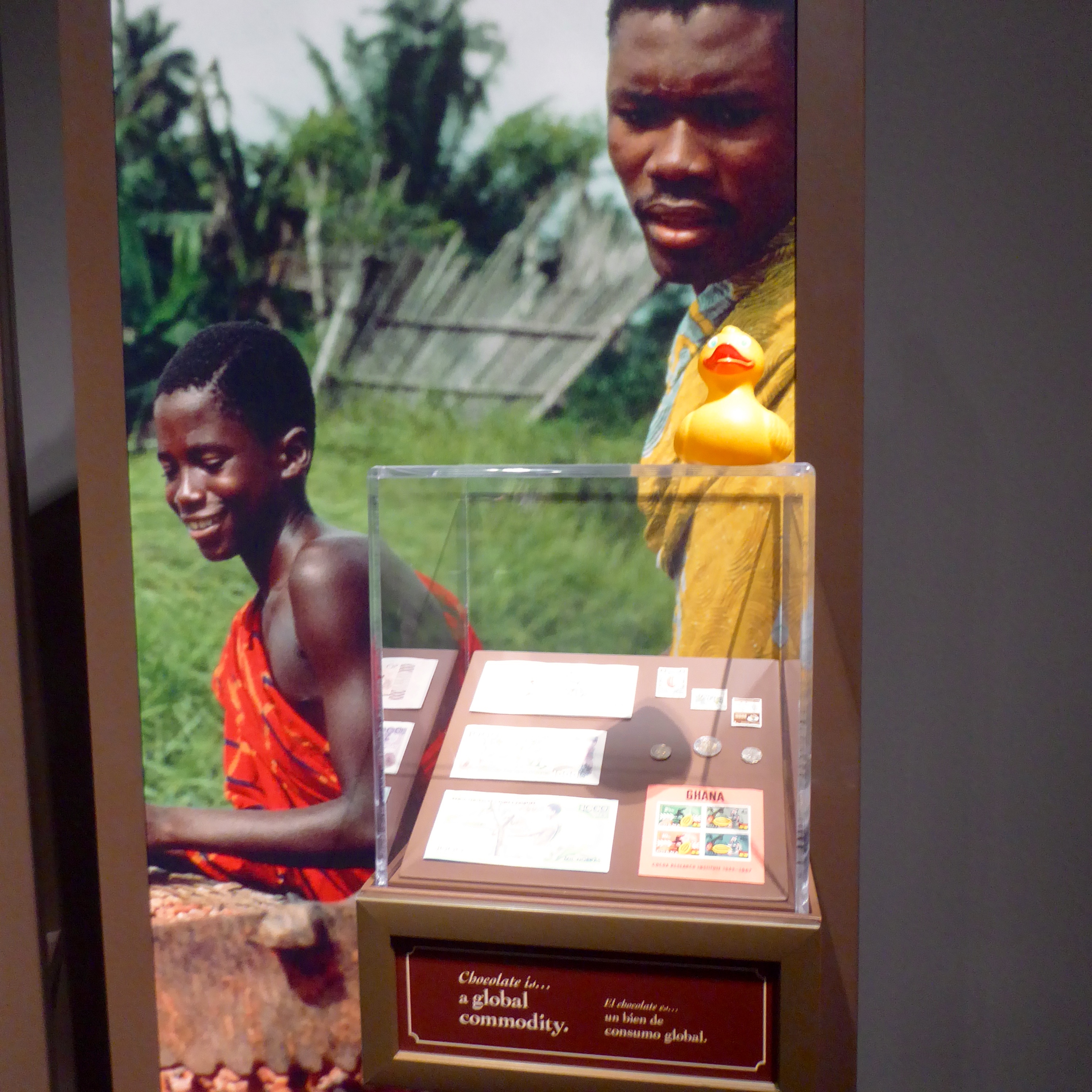
Today chocolate is a global commodity, with much coming from Africa.

Chococlate is global commodity

Chococlate is global commodity

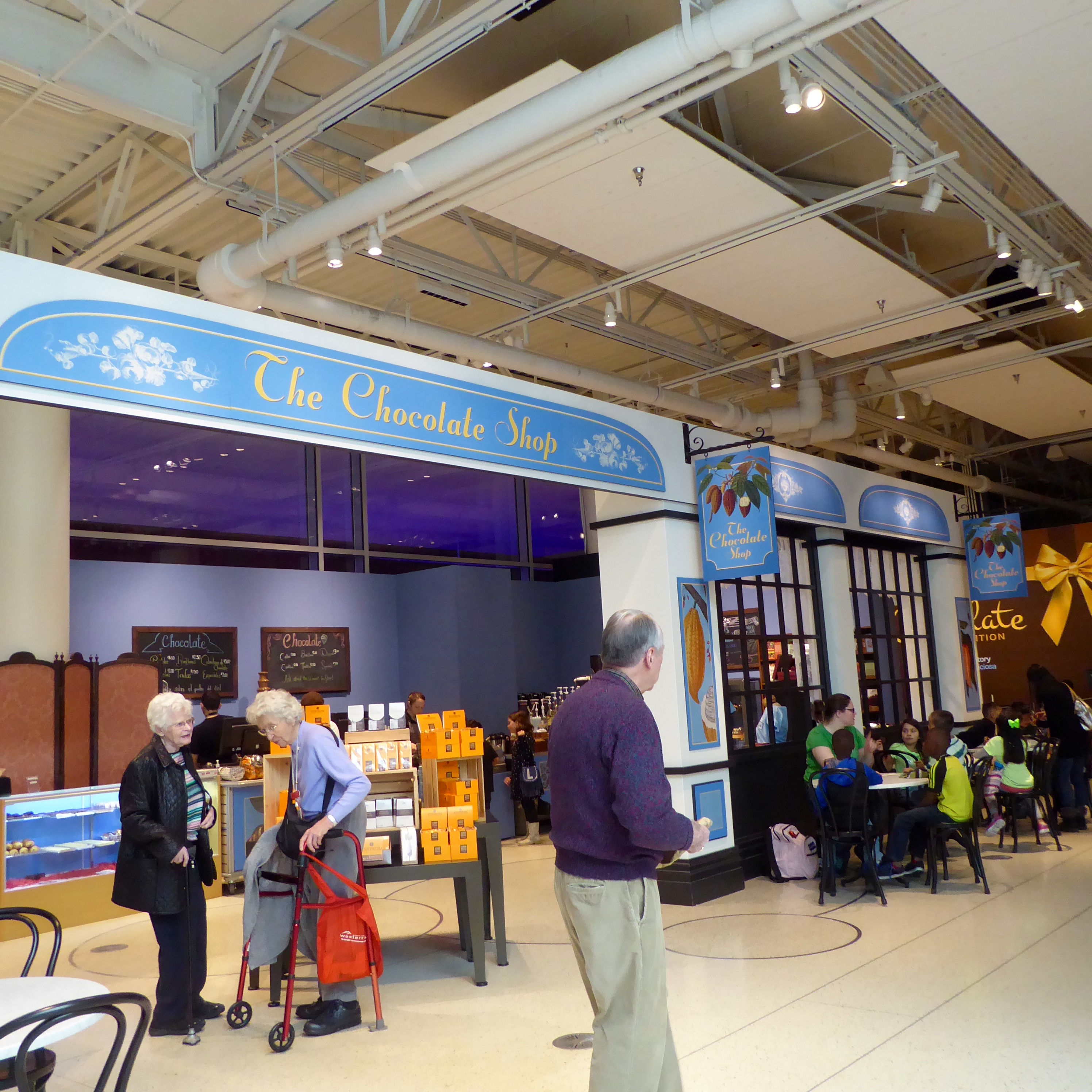
Near the exit, and entrance, to this exhibit we enjoyed the Chocolate Shop.

Chocolate Shop

Chocolate Shop

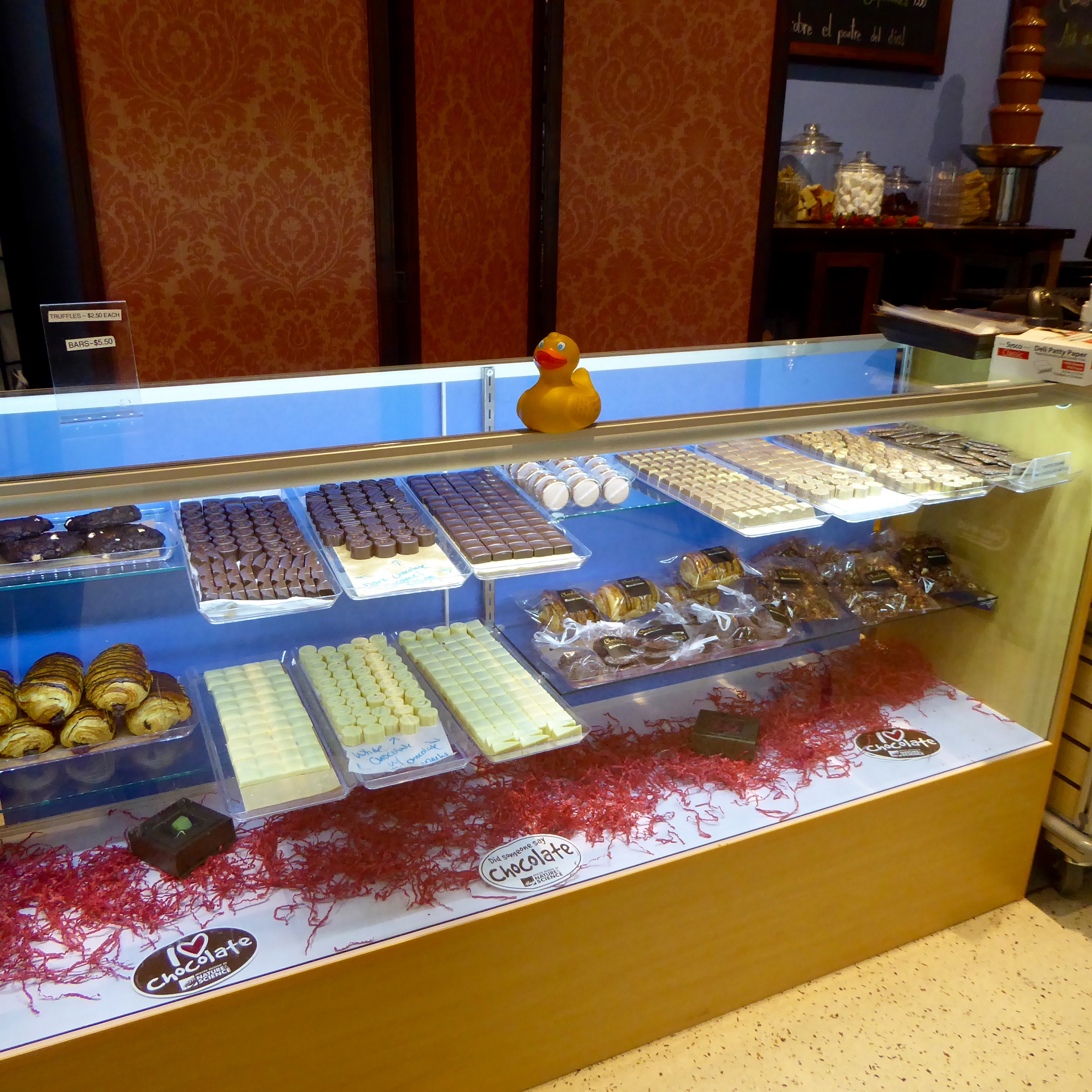
Enstrom’s Candies  from Colorado is a sponsor of this exhibit.   We loved this case.

I can only have one???

I can only have one???

Mom said I had to pick just one.   Don’t wait too long to visit Chocolate at the Denver Museum of Nature and Science.   The exhibit is here only until May 8, 2016.

Denver Received Snow

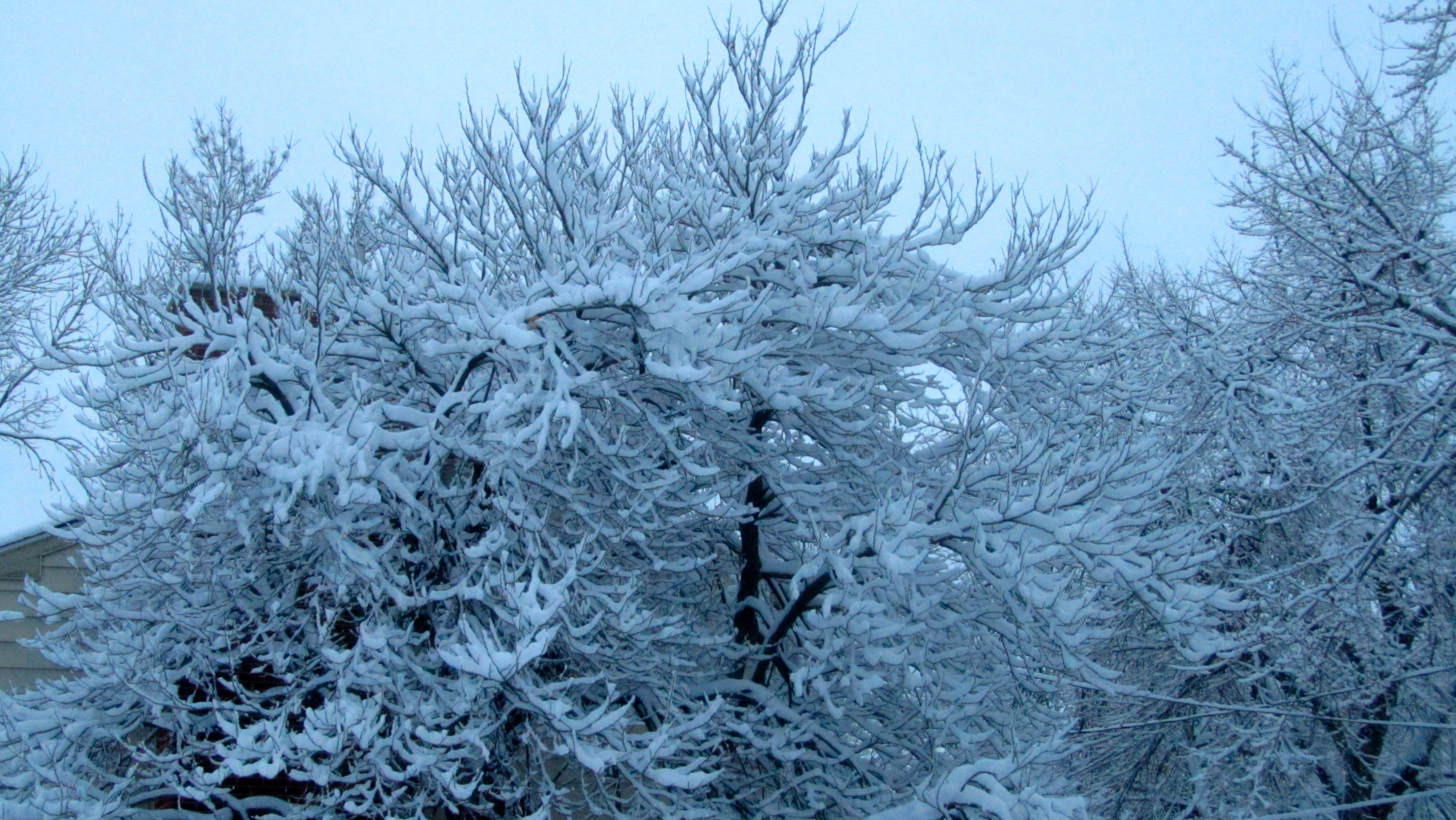
February is still winter, but not very wintery in Denver this February.   We enjoyed temperatures in 40s, 50s, 60s, and even 70s the past couple weeks.   Tuesday morning we woke to a few inches of new fluffy snow.   Early morning featured snow covered trees and branches.

Snow coated tree

Snow coated tree

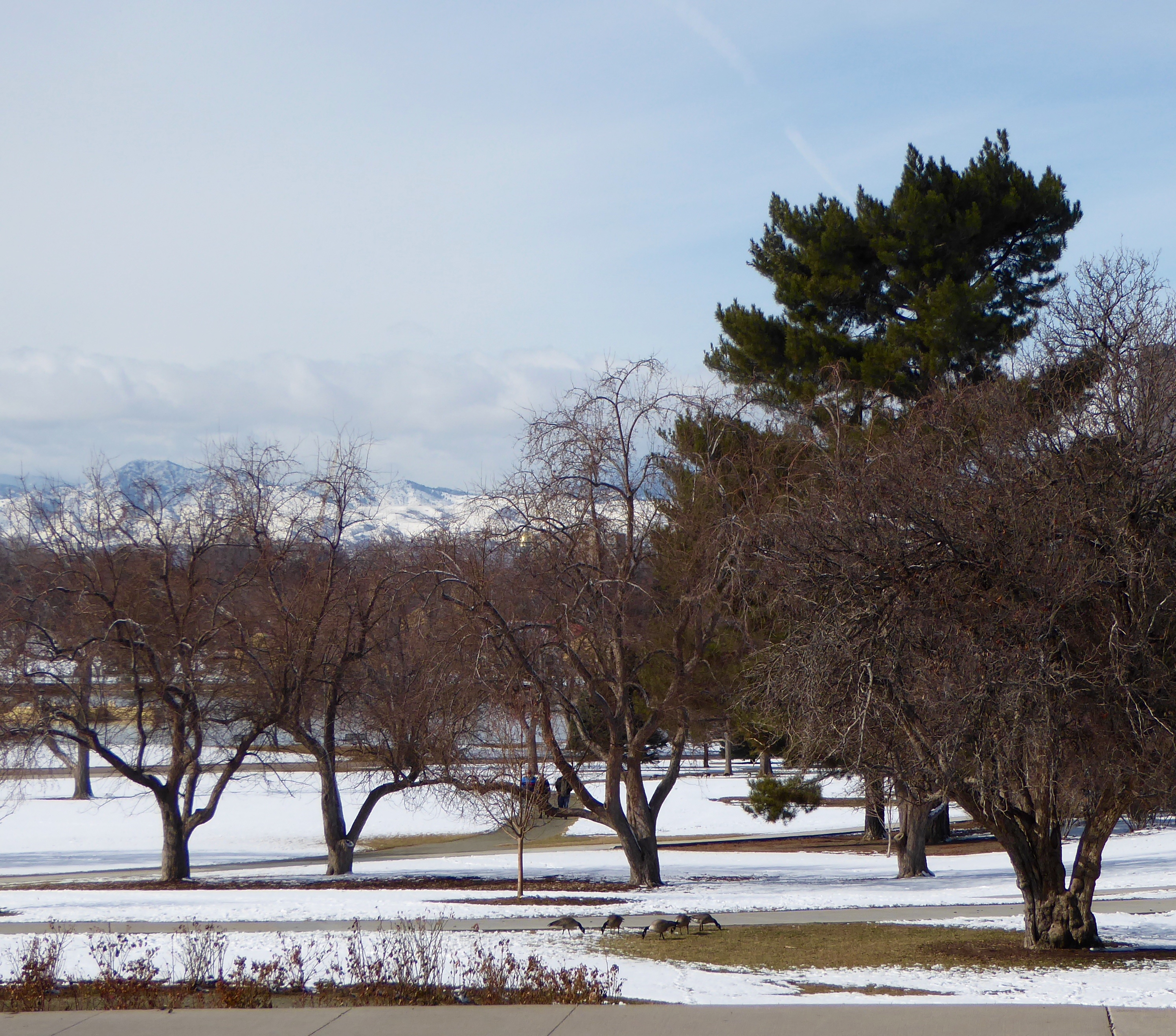
The sun appeared and snow disappeared.    The mountains, covered with new snow, from across Denver’s City Park are usually a regular Denver winter sight.

Denver's City Park

Denver’s City Park

And the Canadian Geese still believe they own the town.   The mountains received much more snow than we did in town.   Our snow was almost gone by sunset.

Cripple Creek, Colorado Ice Festival with Zeb, Soapy Smith, and JB Duck

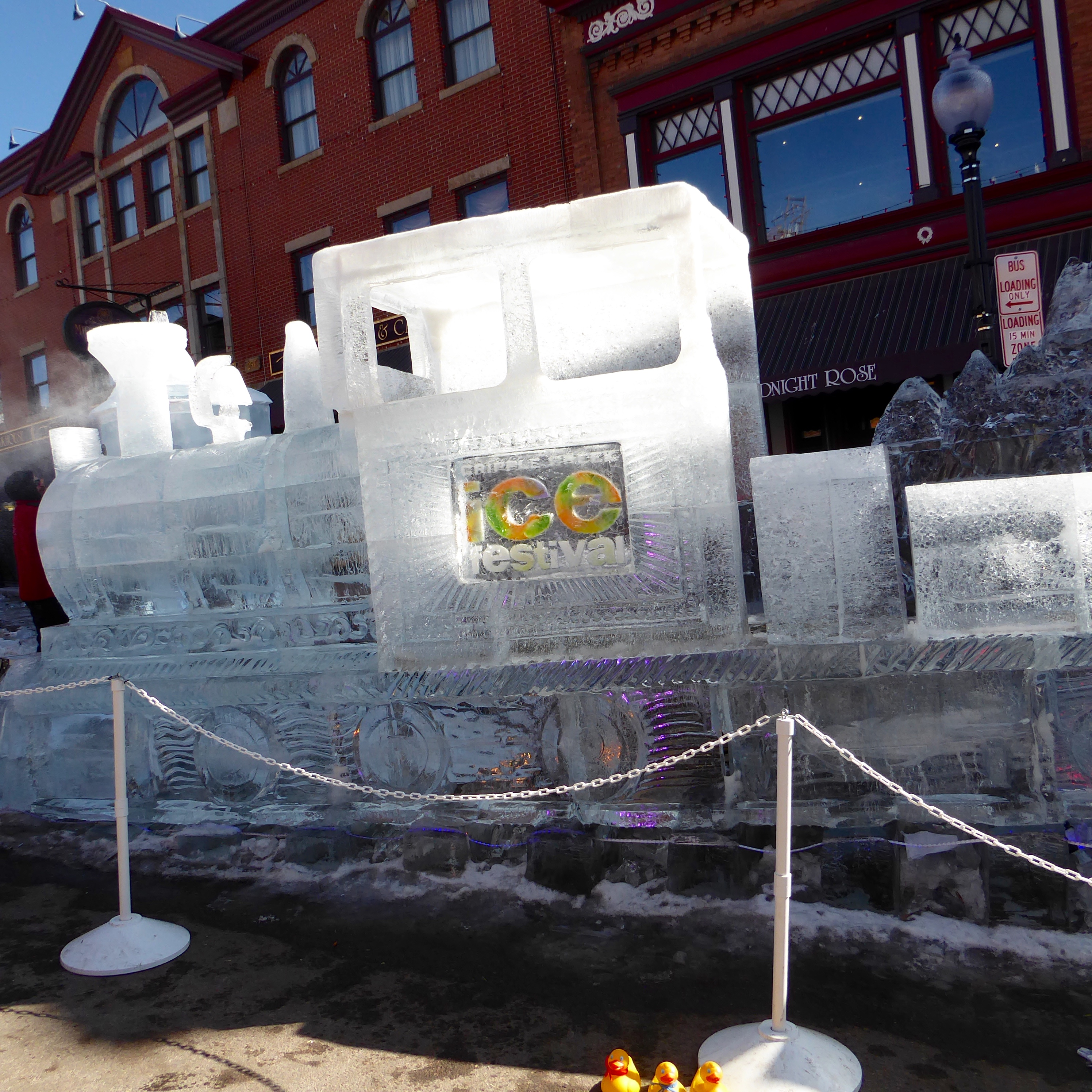
An Old West town made of ice, with slides, firehouses and miners.   Cripple Creek, Colorado has that and more.   The Colorado Traveling Ducks traveled southwest of Denver, into the mountains, to the old mining town of Cripple Creek.   Yesterday was the last day of the Ice Festival.

Cripple Creek Ice Fsstival

Cripple Creek Ice Fsstival

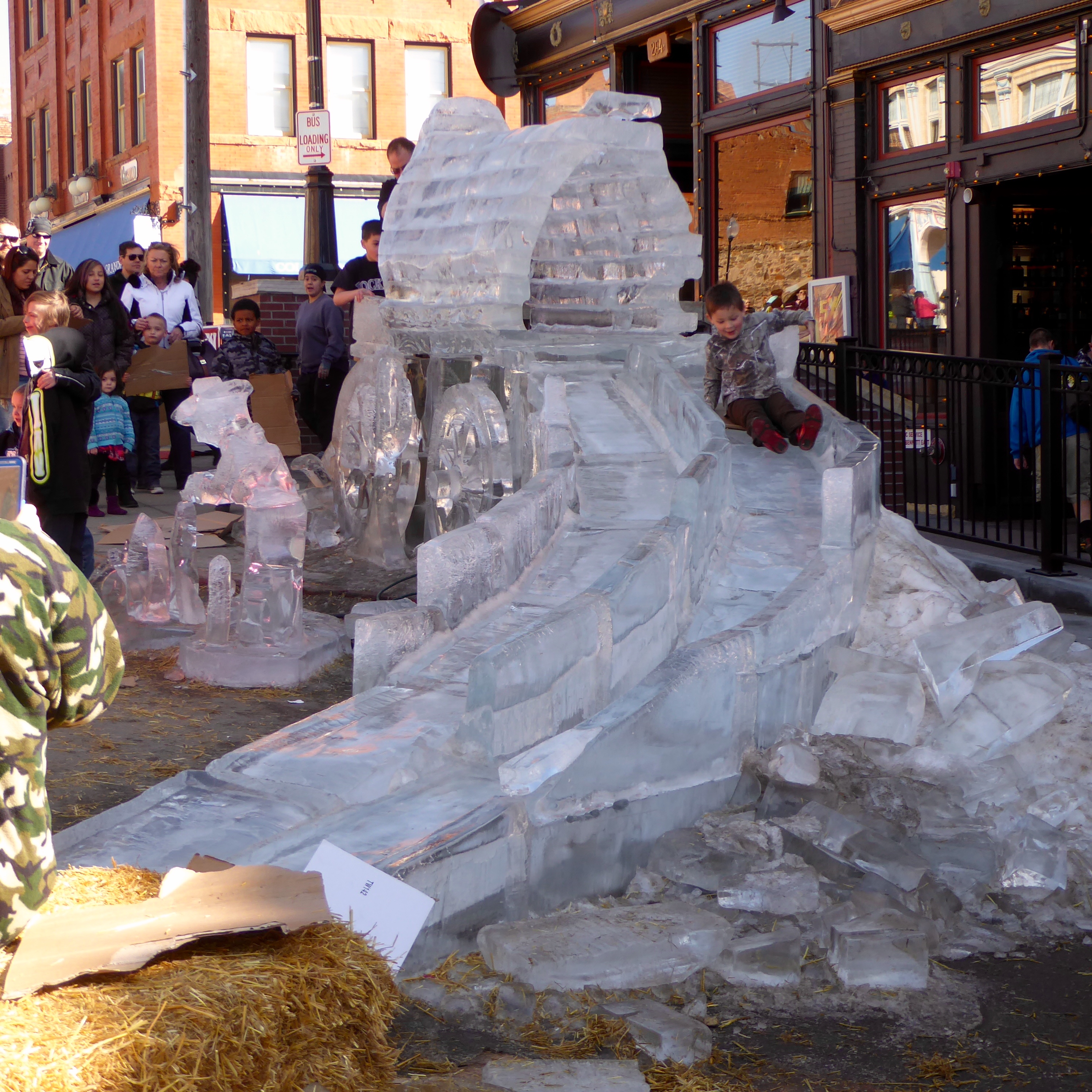
Wow.   This is a “cool” train.   Small humans are having fun on the ice slide.

Ice slide

Ice slide

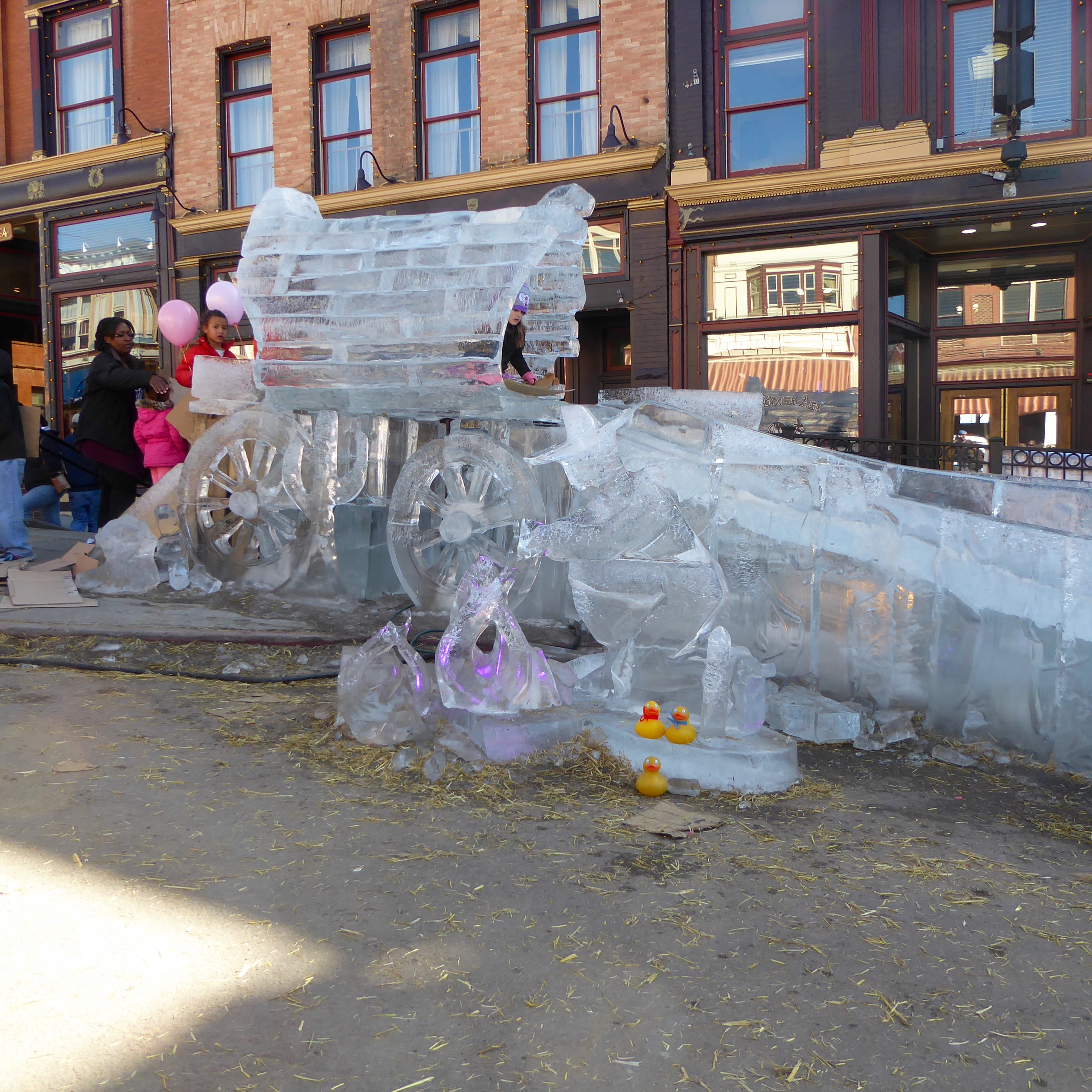
They sit on a piece of cardboard and slide down.   If necessary, bales of straw stop them at the end.   This could be a scene in the Old West.

A glimpse into the past

A glimpse into the past

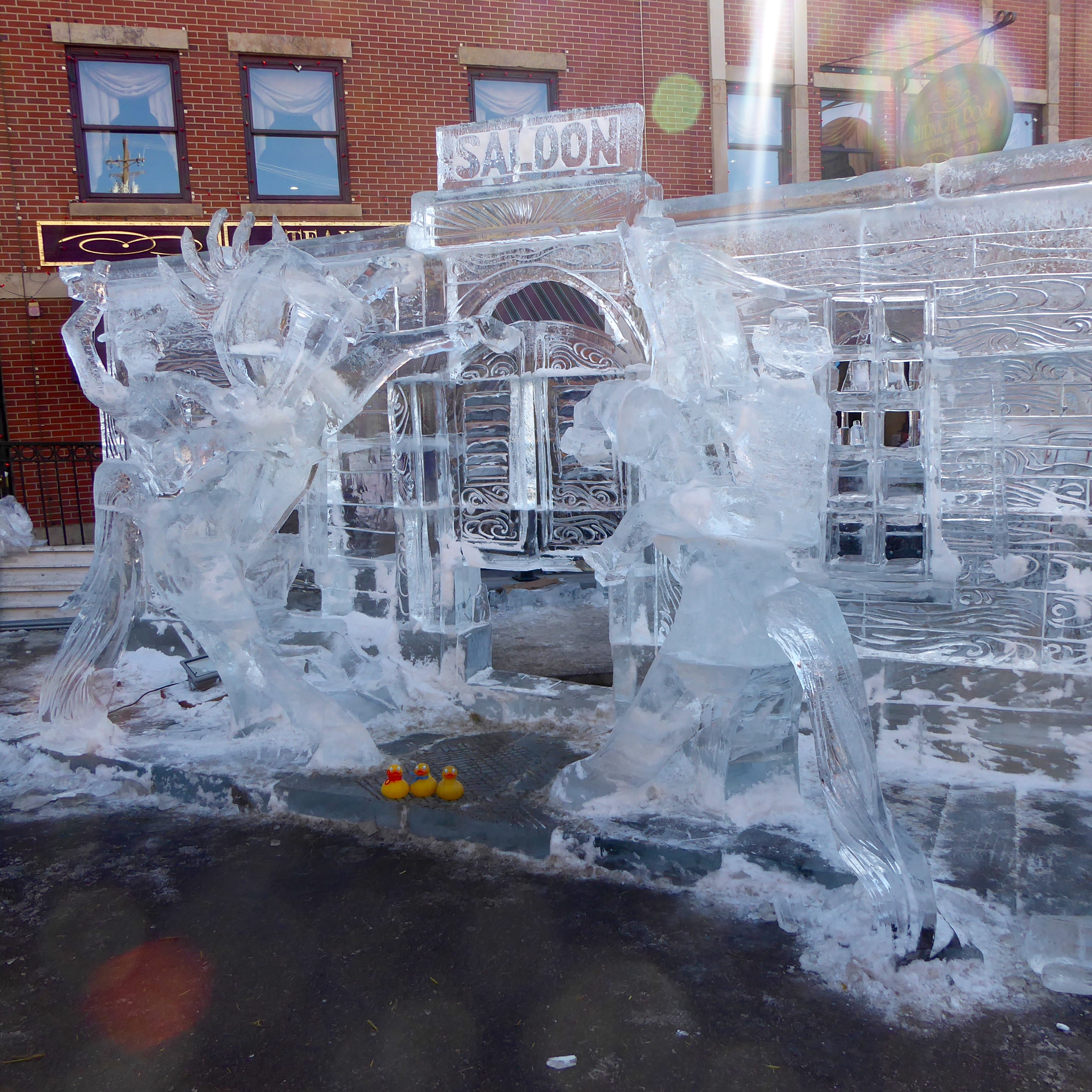
An important part of old towns is the Saloon.

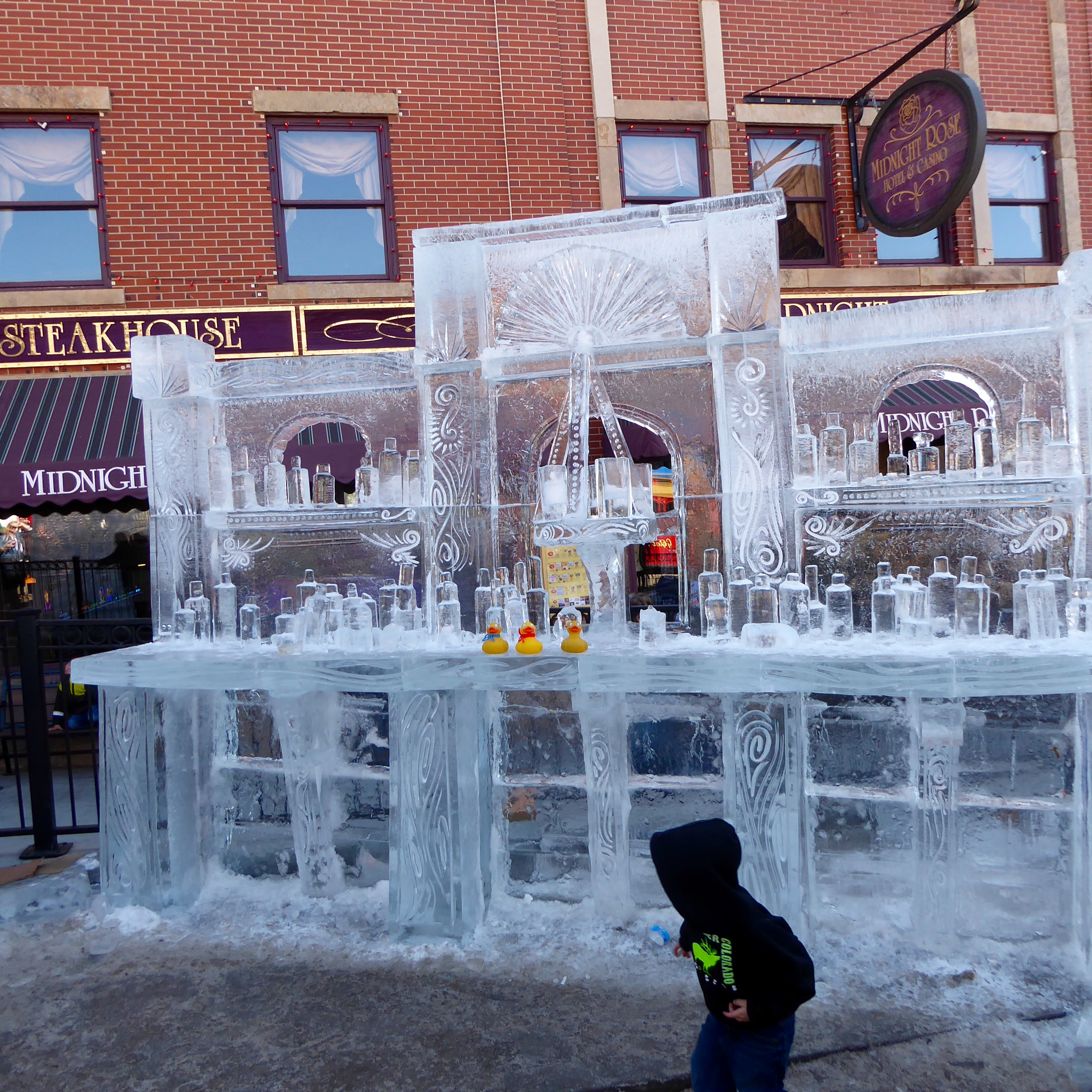
Here is the Saloon

Here is the Saloon

Let’s go in.   This is a well stocked bar.
This bar has everything

This bar has everything

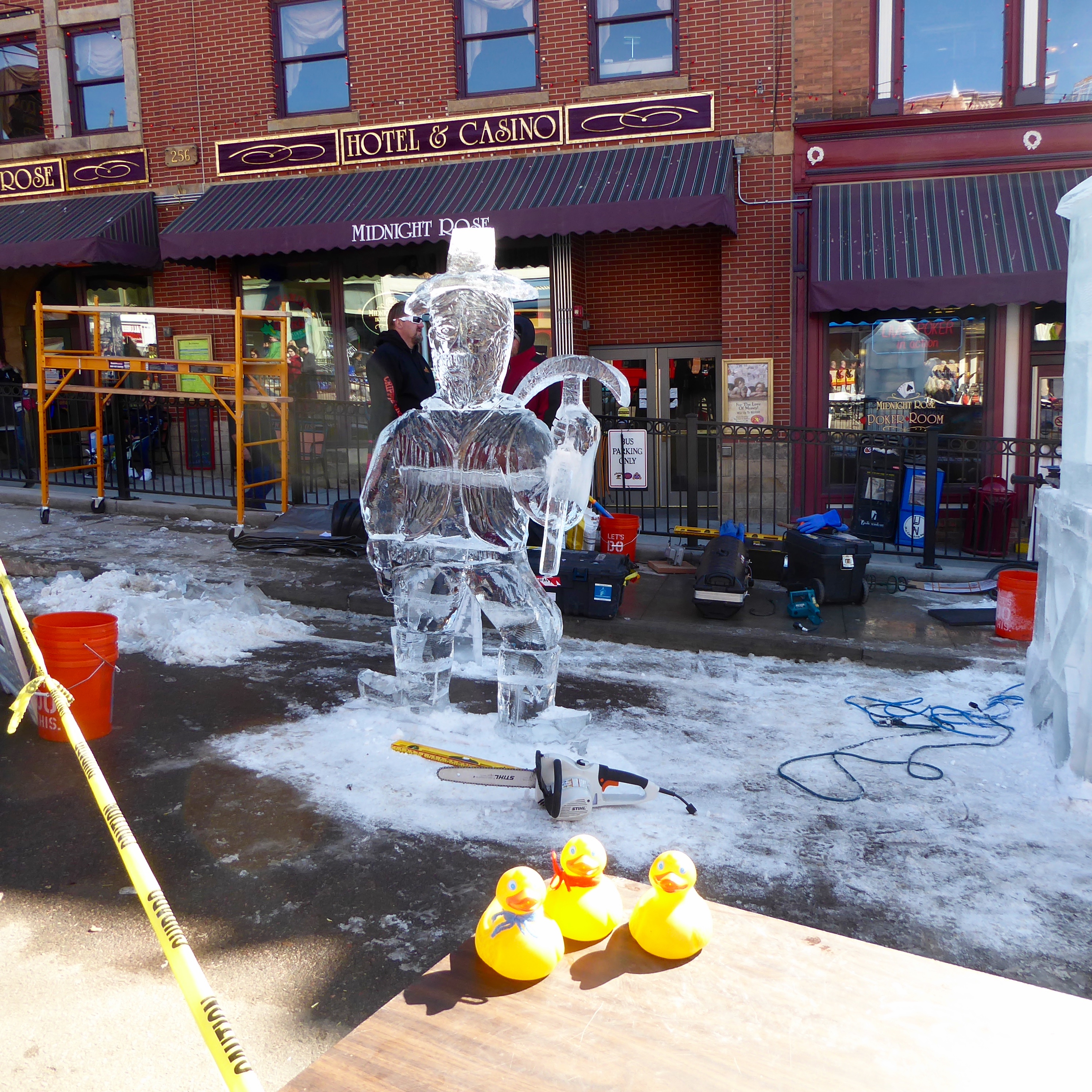
And, mining towns need a diligent prospector.

Prospector

Prospector

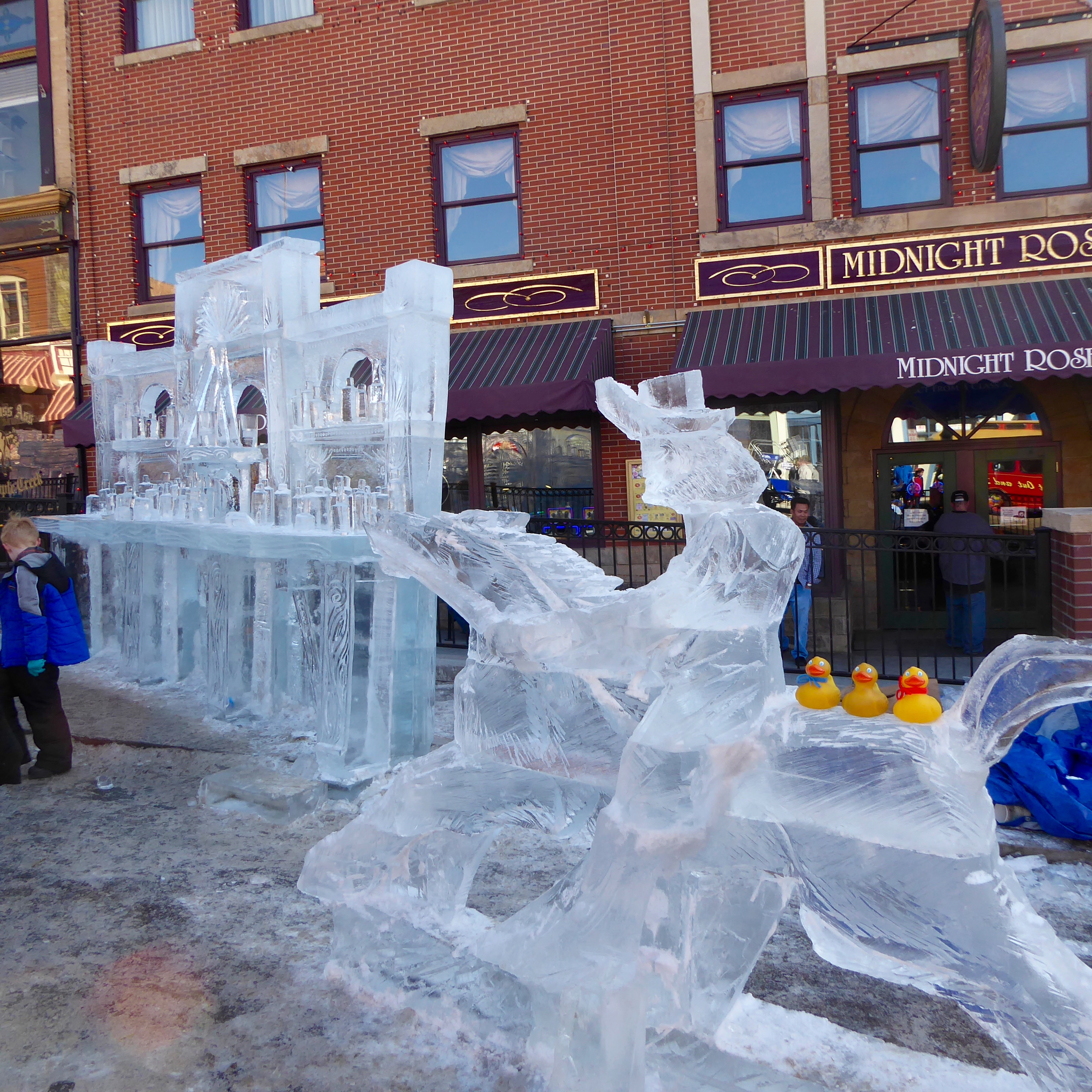
We really like him.   Without cars, horses were the major form of transportation.
Riding the horse

Riding the horse

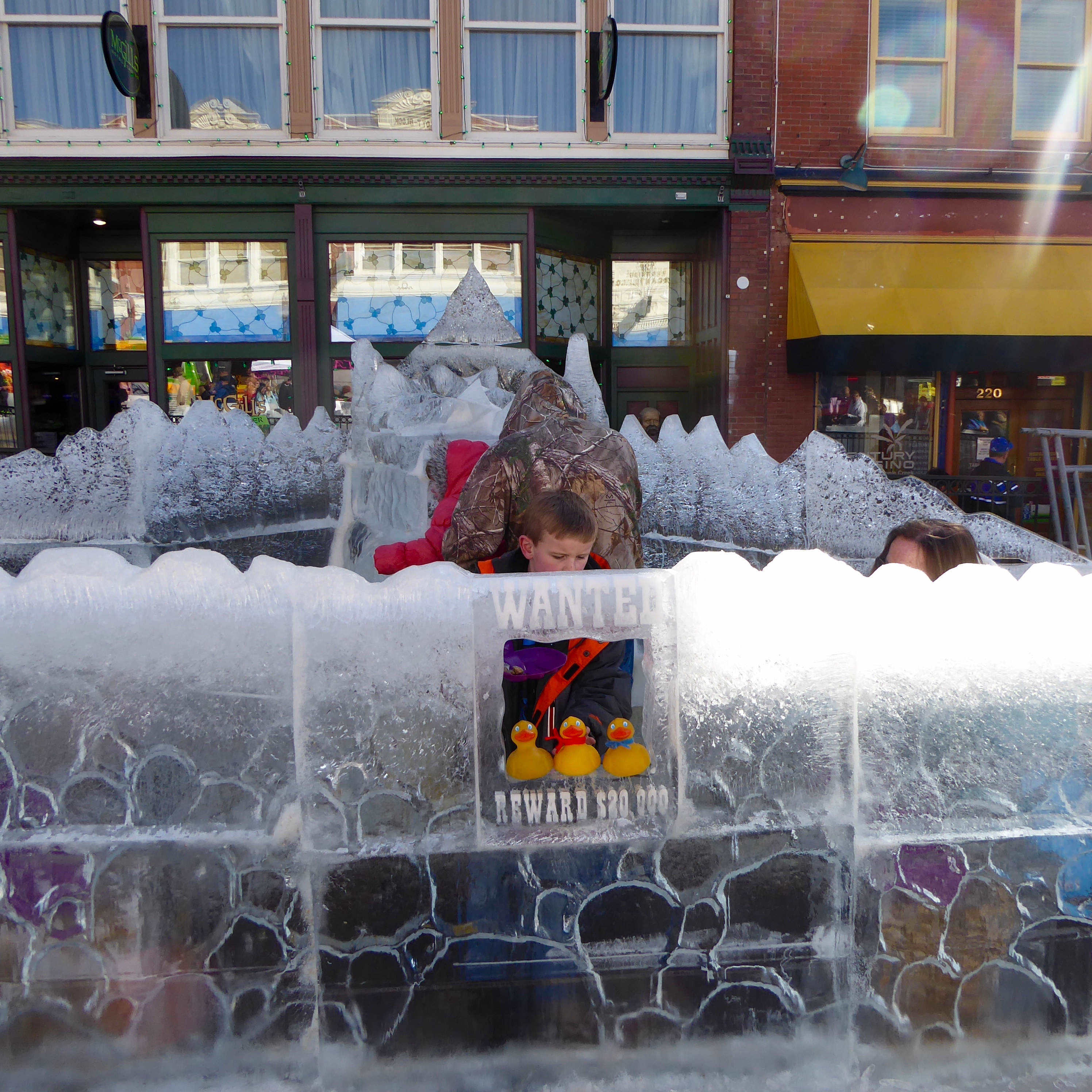
Guess we are going back to the Saloon.   Even in the Old West towns, the sheriff was needed.   There were always some characters wanted by the law.

Wanted??

Wanted??   Reward??

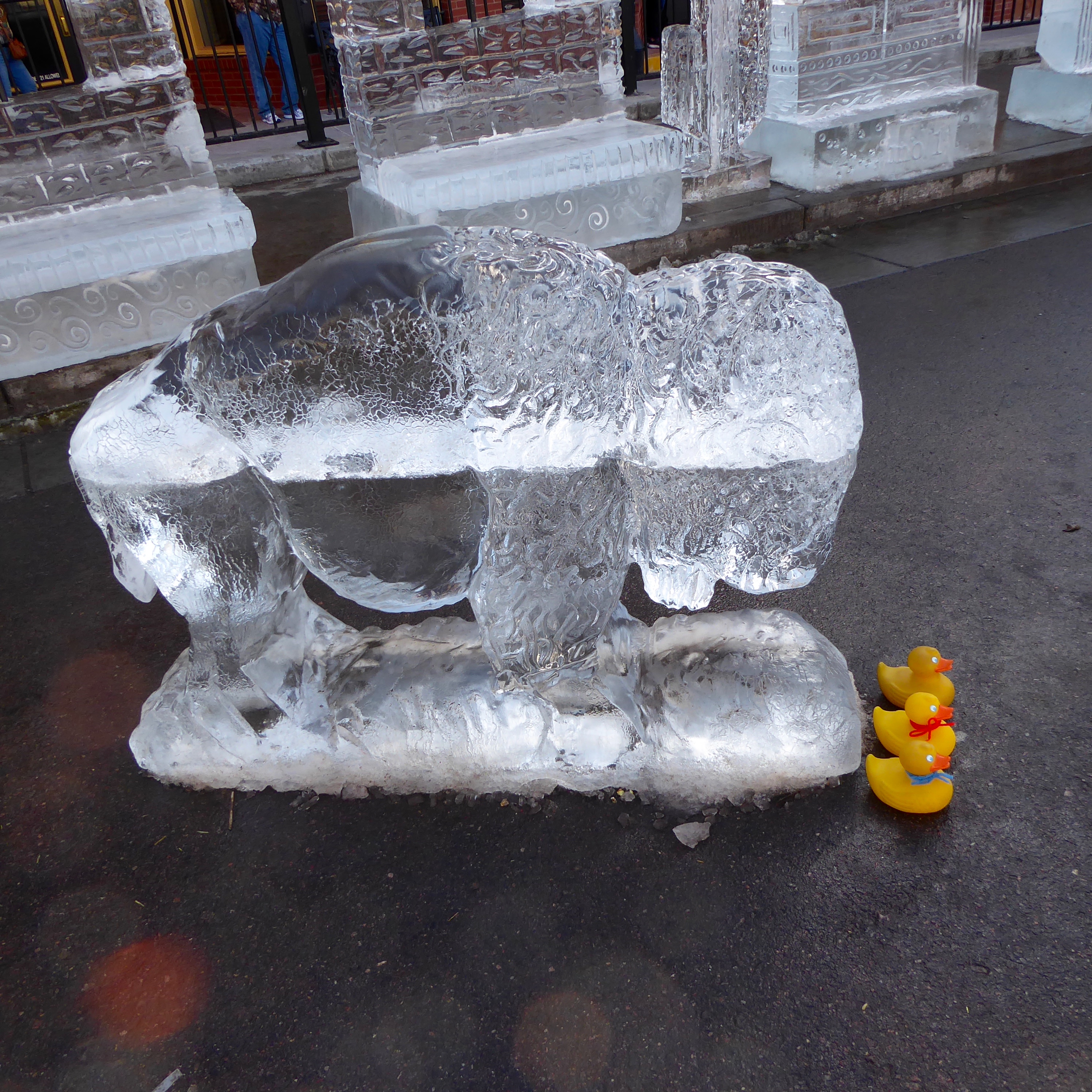
Before cows, the buffalo did roam.

Buffalo

Buffalo

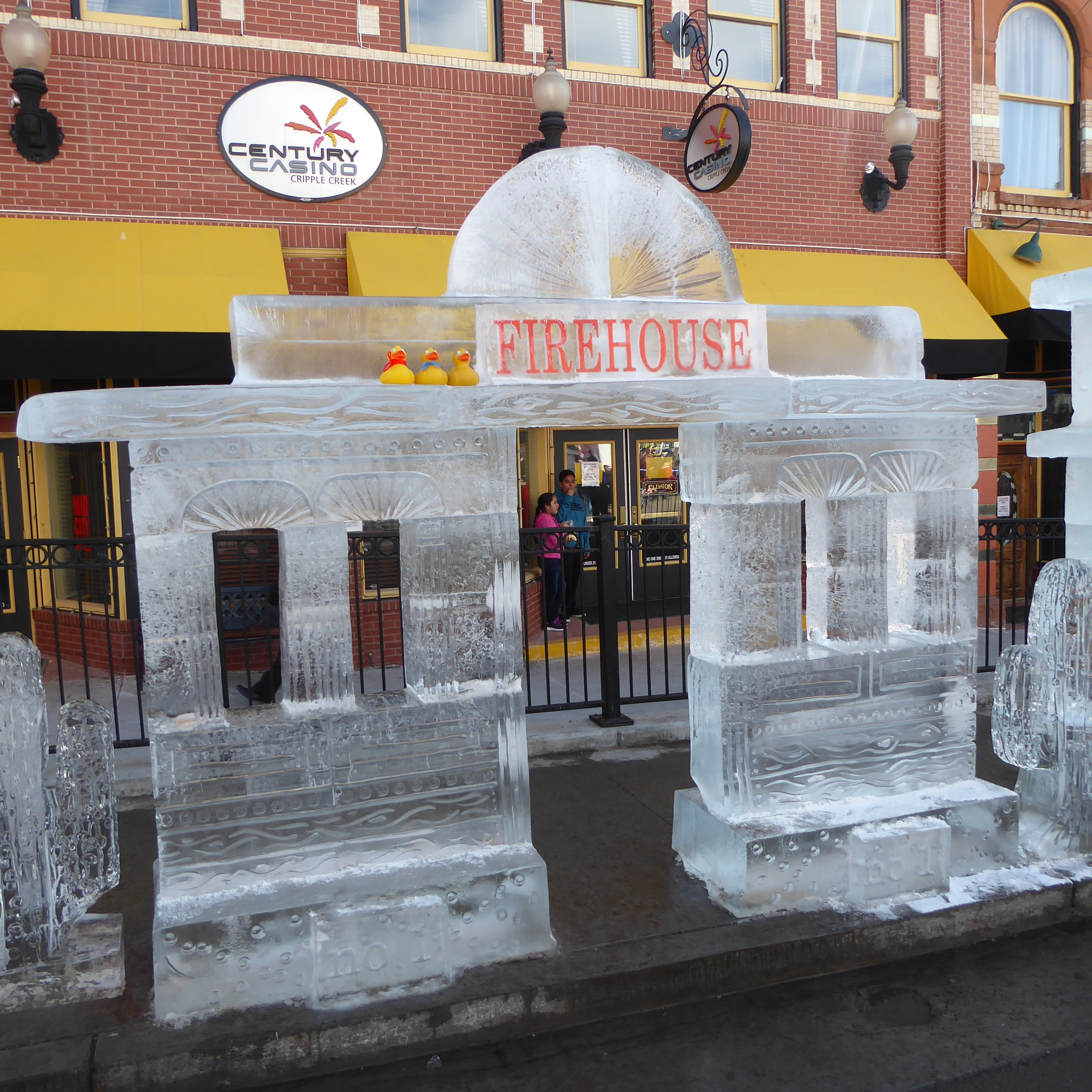
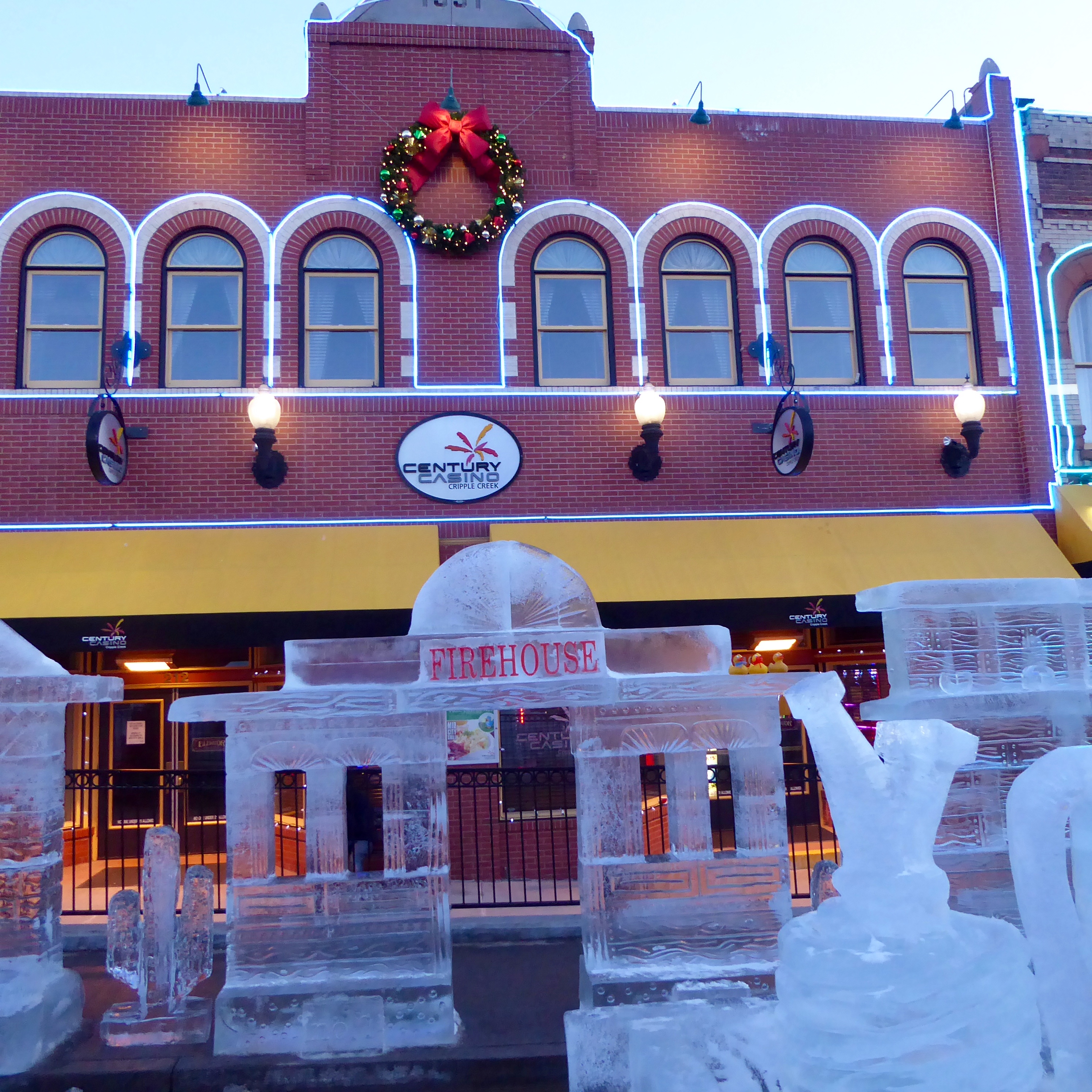
Just in case, the Firehouse was ready.

Firehouse

Firehouse

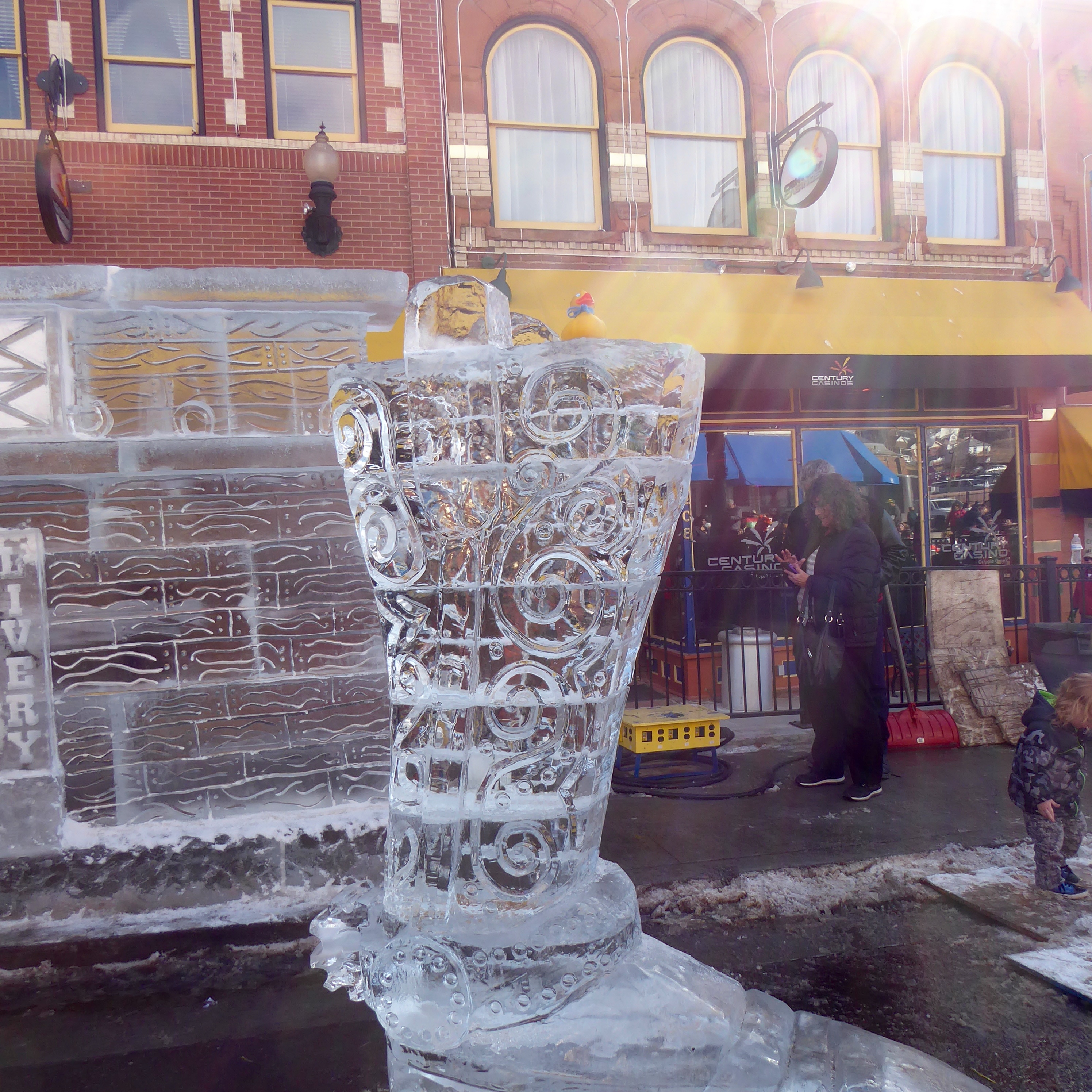
Now that scoundrel, Soapy Smith Duck, is sitting on a big boot.

Soapy on the boot

Soapy on the boot

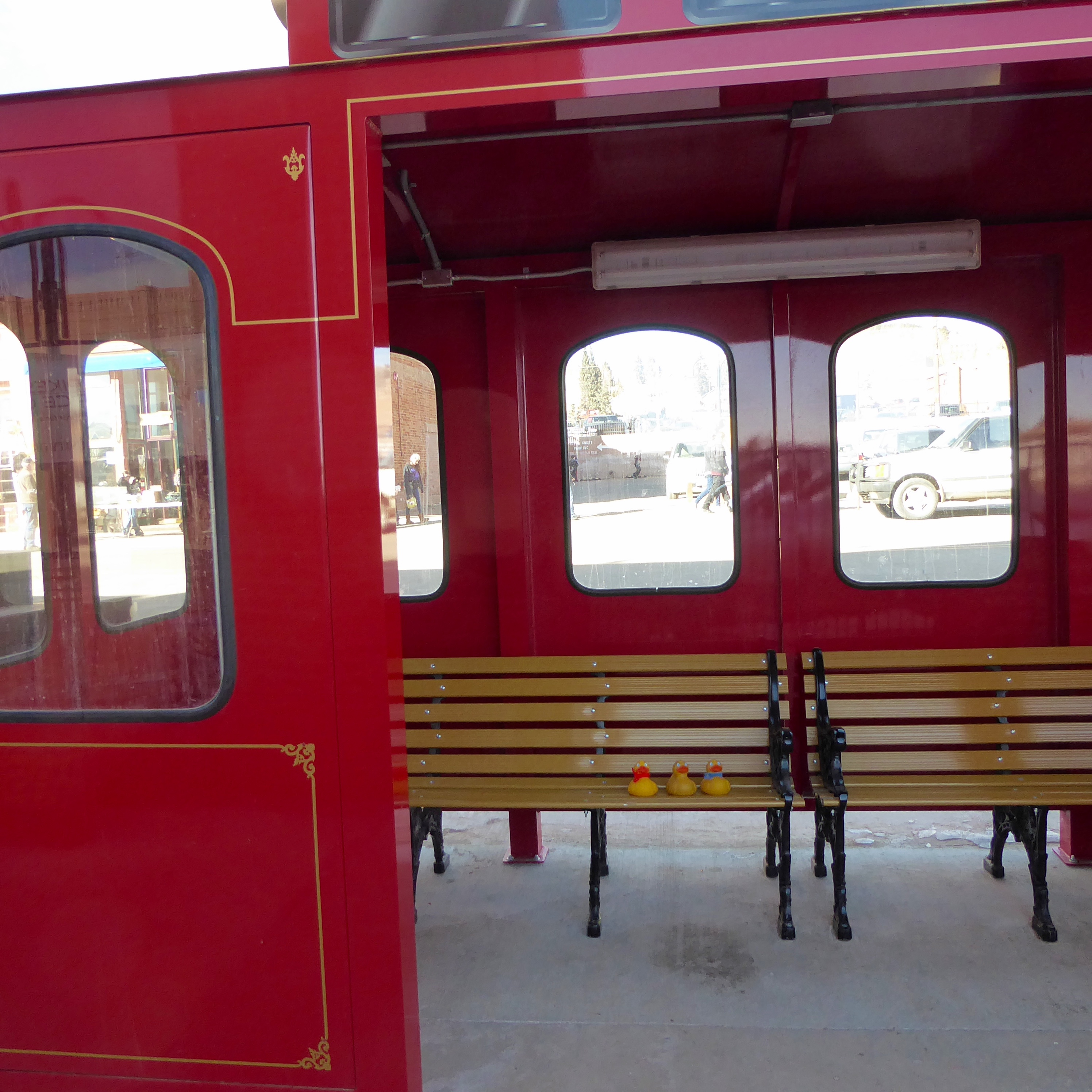
Careful, that spur can do damage.   Leaving the ice sculptures, we sat in the caboose.

Sitting in a caboose

Sitting in a caboose

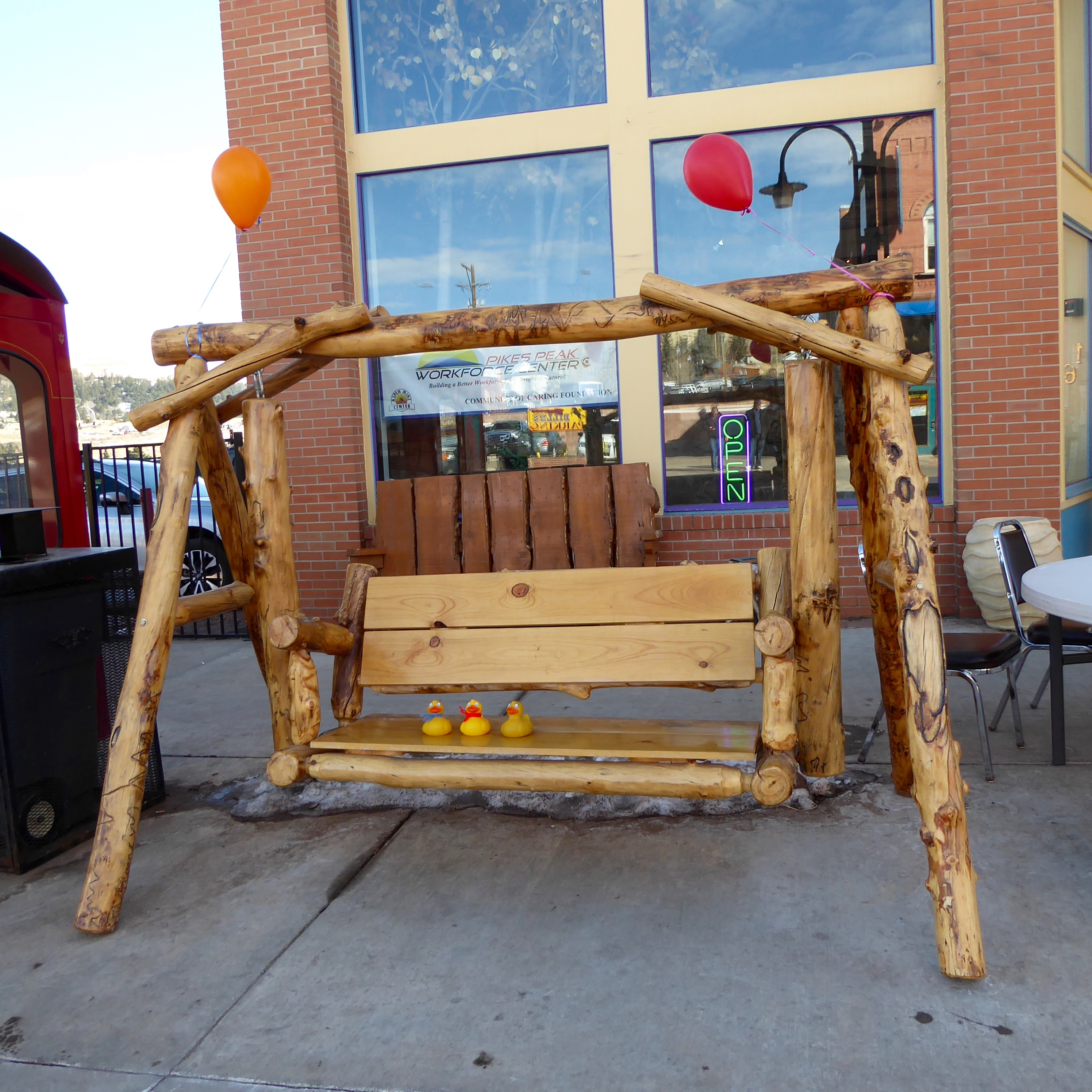
This is nice.   Hey, look at the wooden swing.

We love swings

We love swings

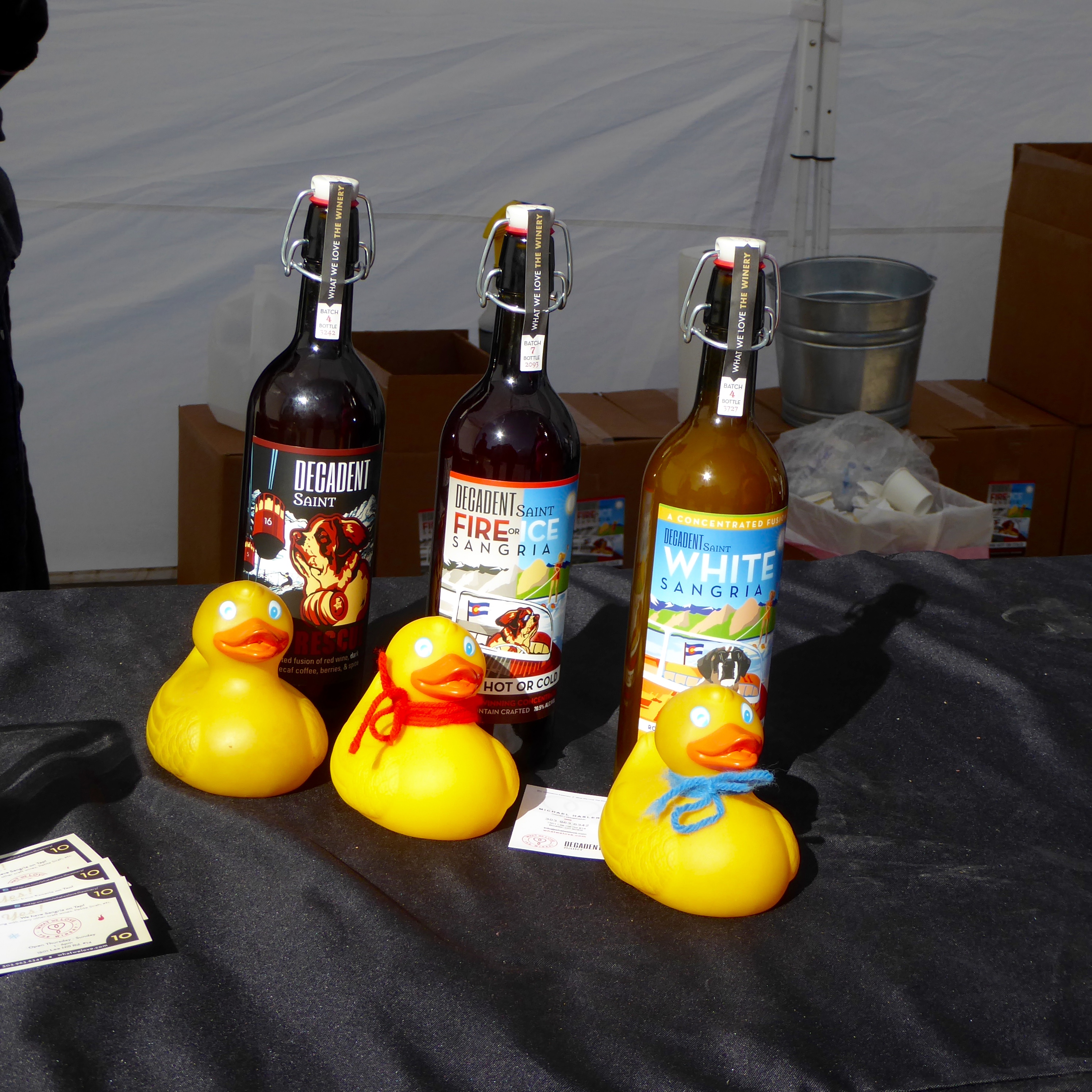
These are logs for log homes.    Swings are so much fun.   Here we have Sangria, from http://www.whatwelove.com

Sangria

Sangria

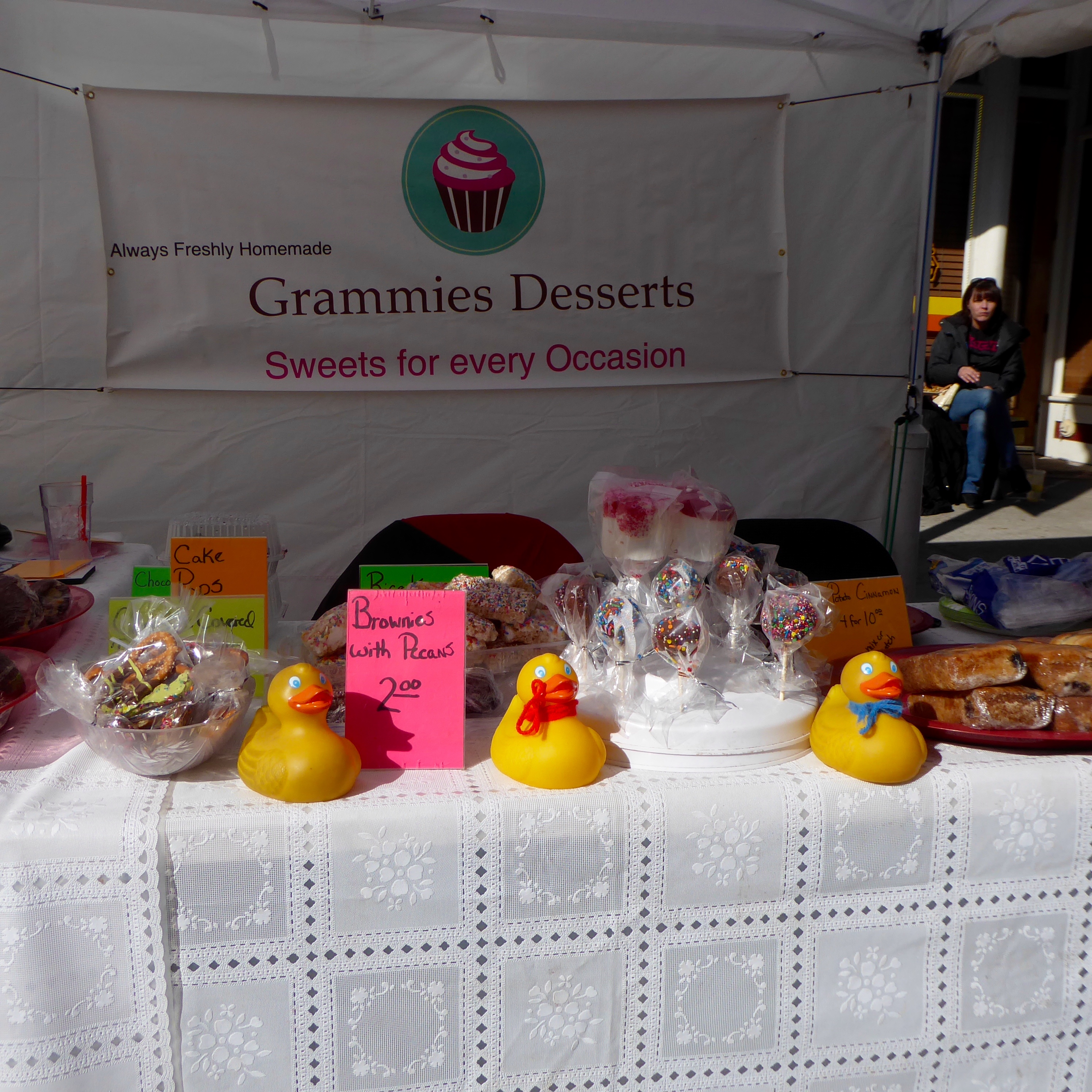
Michael Hasler is the owner and winemaker.    Time to eat.   Grammies Desserts have less to sell now.

Grammies Desserts

Grammies Desserts

Moms are buying lots and it looks so good.   We also bought warm, homemade tamales here.   Yum!   Cripple Creek Ice Festival is great and we love it.   As the sun begins to get lower in the sky, we enter Century Casino.

Century Casino

Century Casino

Twenty-five years ago gambling was legalized in Cripple Creek.   The casinos are not allowed to build huge new casinos.   The historic buildings now are casinos.   This makes the town retain the Old West look and atmosphere.  Video poker is the game of choice today.

Let's play video poker

Let’s play video poker

The moms have a good time.   Some hands they win and some they lose.   We ducks are fascinated with video poker.   Soon the humans are finished, cash out the winnings, and head for the bar.   A bag of popcorn, a hot dog and diet Cokes are just what we wanted.   Great festival food.   Visit Cripple Creek soon.   This is a great town and they have great festivals.

Camp Amache in Granada, Colorado

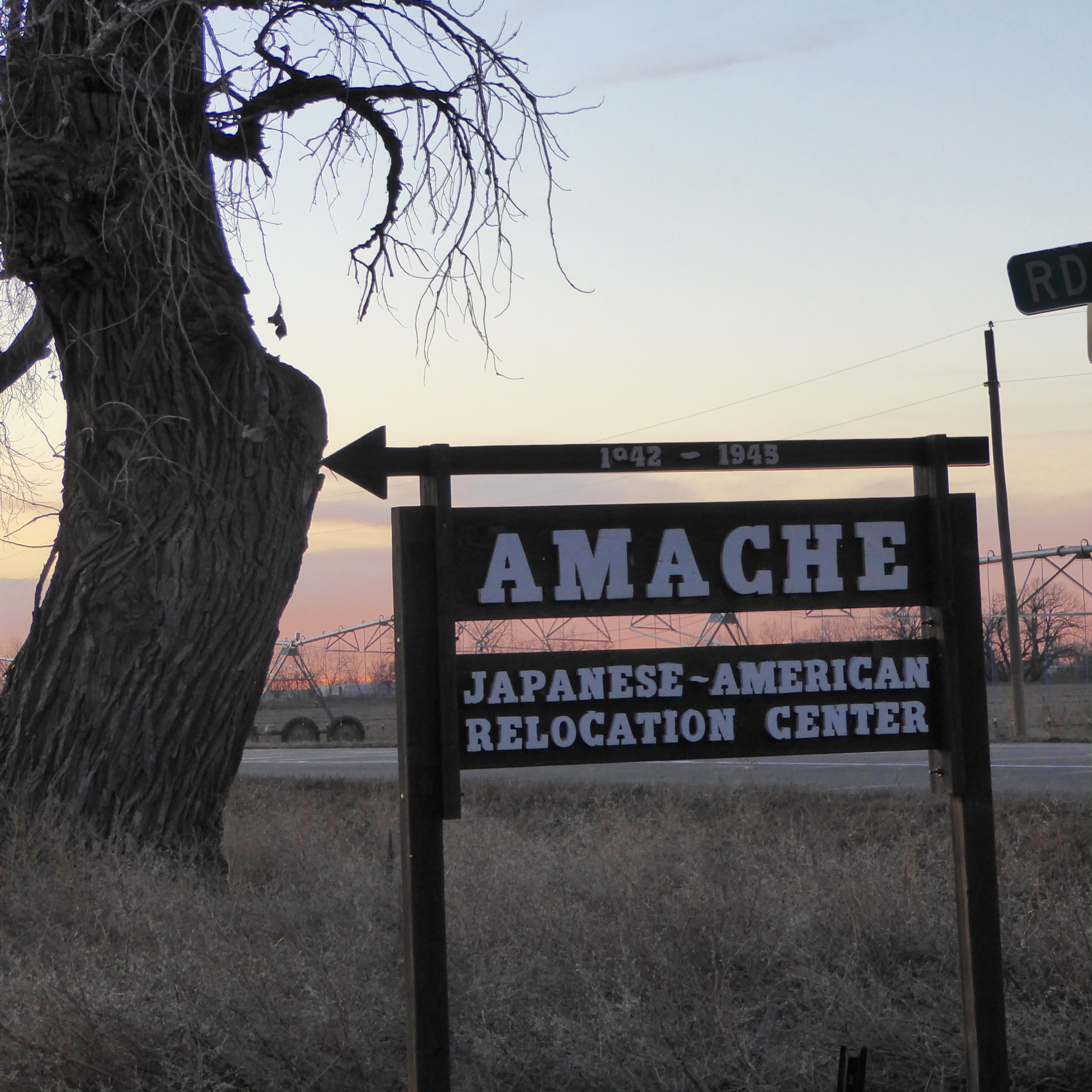
The sign at the entrance tells us this is not a traditional camp.

Camp Amache

Camp Amache

Most of the original buildings are gone, but memories linger forever.   After December 7, 1941 and the attack on Pearl Harbor, Hawaii, fear, shock, anger and disbelief were some of the emotions running rampant in the United States.    In 1942 the US Government began placing people of Japanese ancestry in Relocation Centers.   One of these Relocation Centers, named Camp Amache, was located in southeast Colorado, on the edge of Granada, Colorado.   Camp Amache opened August 27, 1942 and reached its peak population of 7,318 in February 1943.   To control the internees, barbed wire surrounded the camp and 8 machine gun towers were placed within the camp.   The guns were never used.   Within this compound, Camp Amache was a city.   The internees were often allowed to walk to the town of Granada and some even had jobs in Granada.   Entering Camp Granada today, you first see this wooden sign.

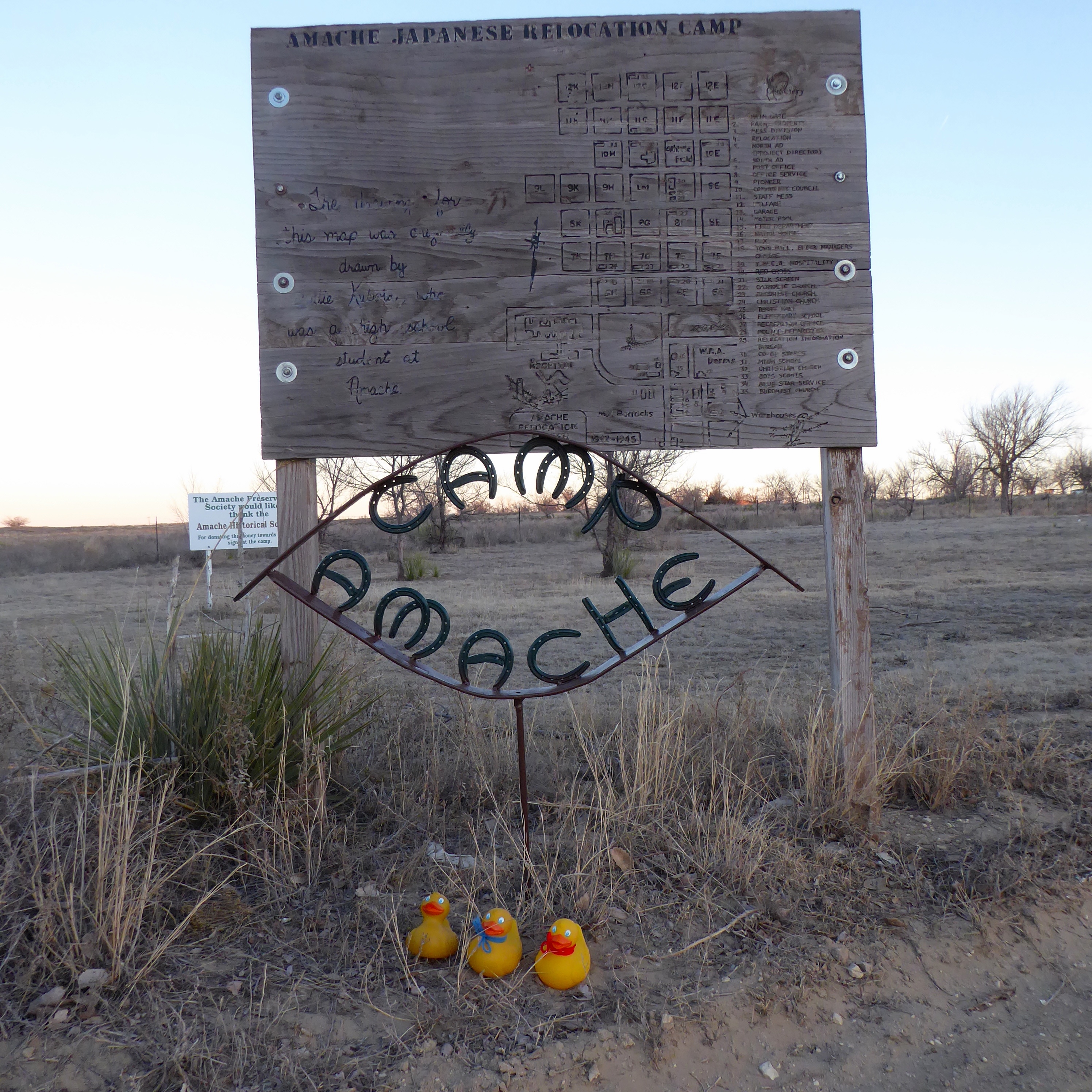
Camp map

Camp map

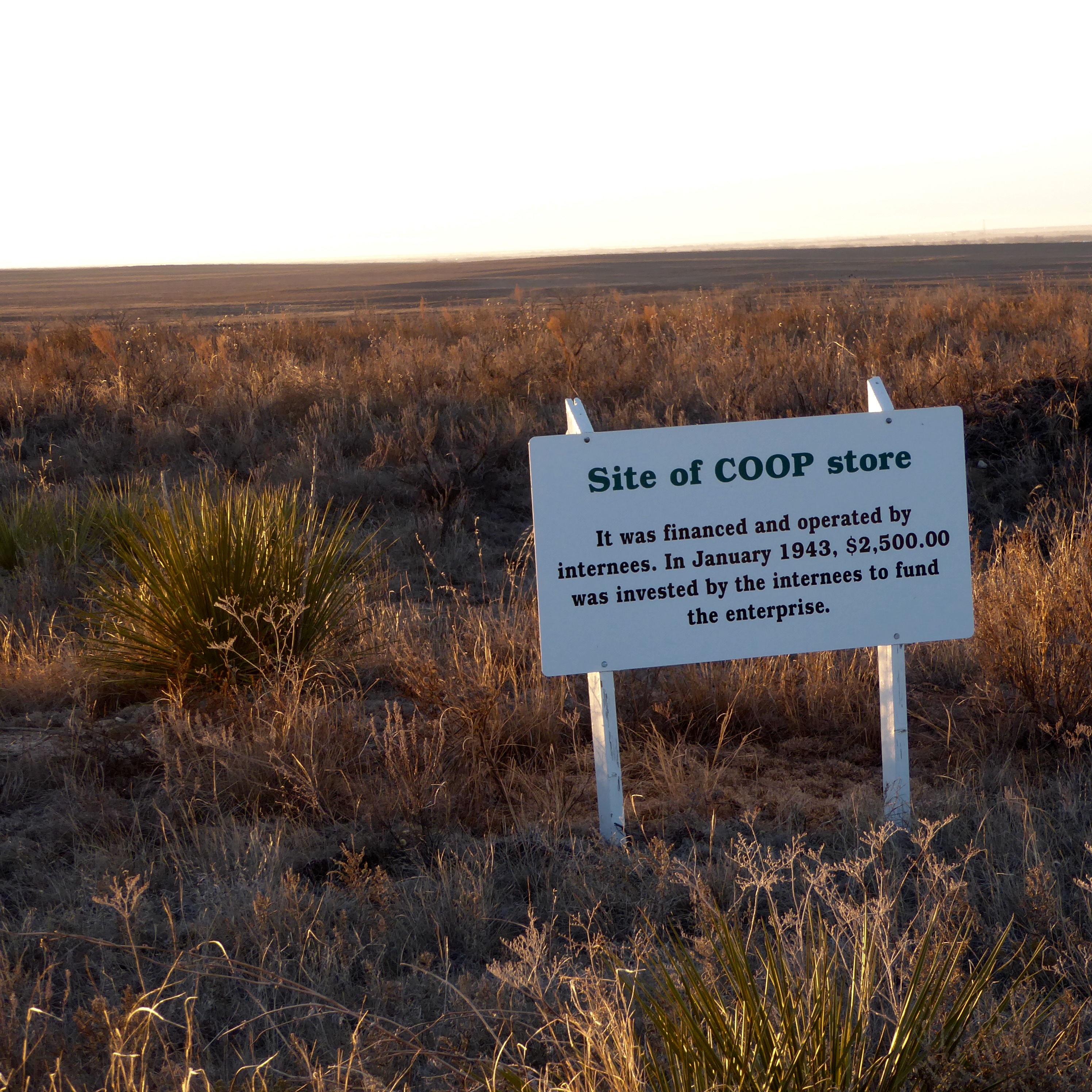
The map was drawn from memory by one of the former high school students at Camp Amache.   Most of the buildings are gone, but signs show the former location of many buildings.   This was the location of the Coop.

Amache Coop

Amache Coop

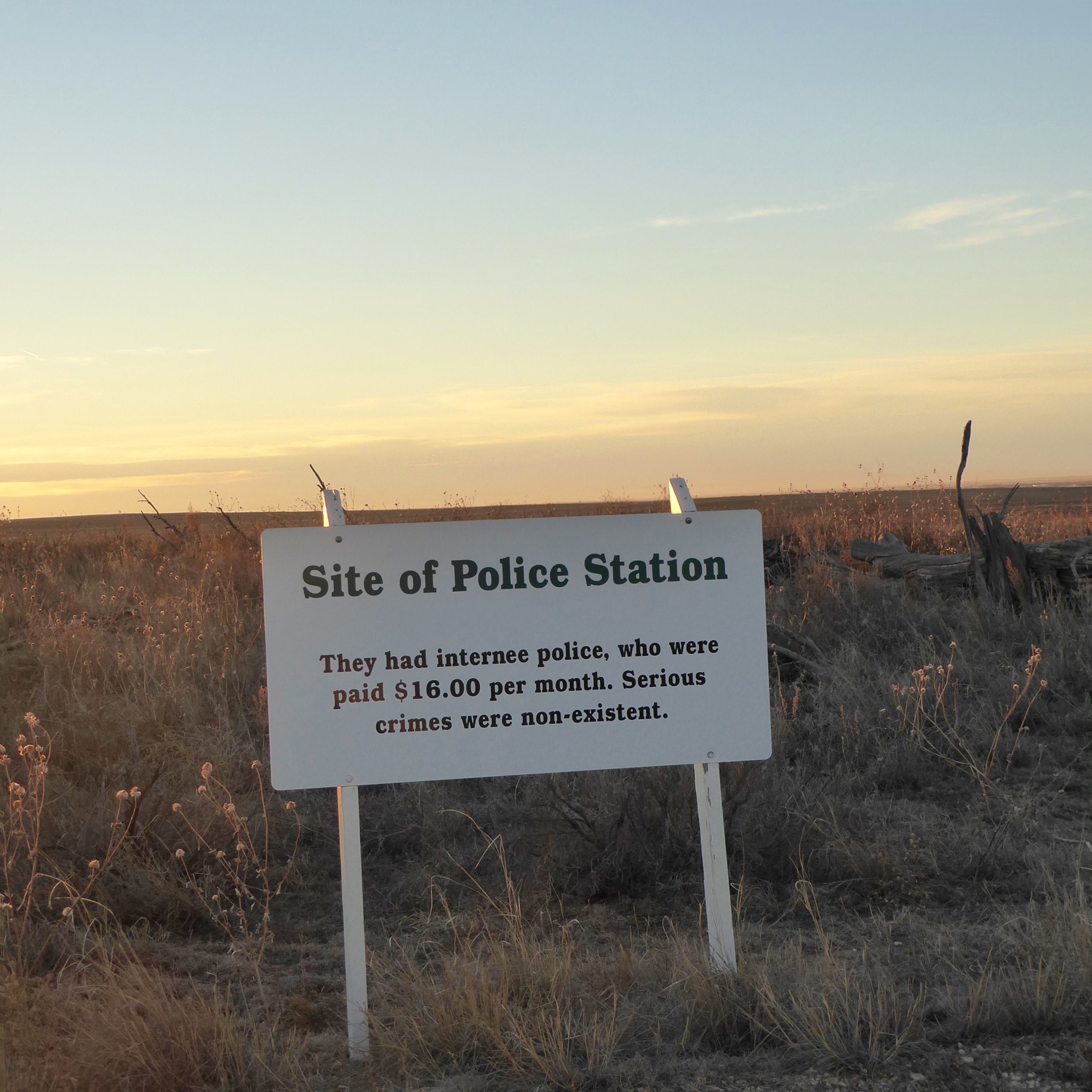
The police station was here.

Amache police

Amache police

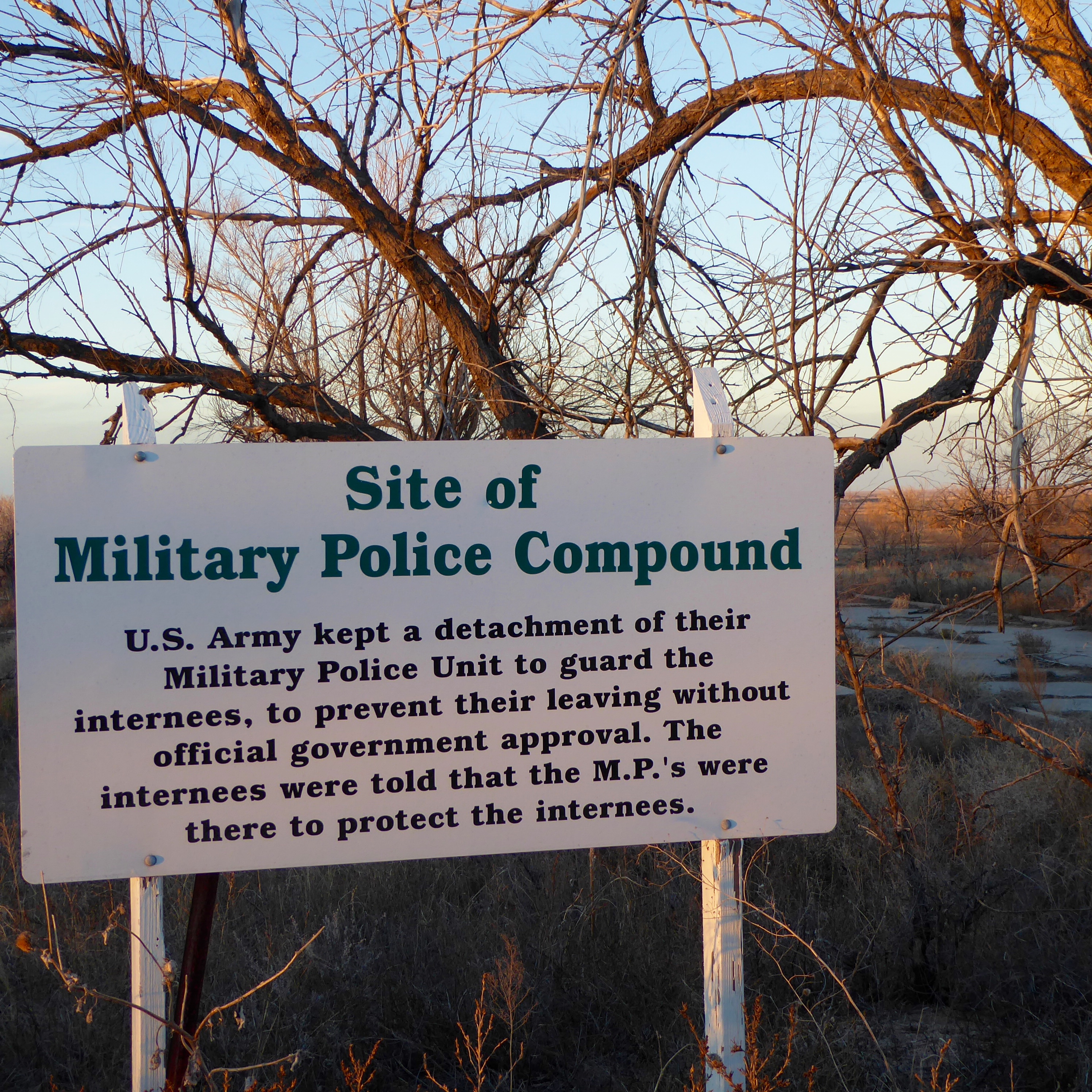
Internees were hired to work for the police, fire department and other services within the camp.   They were paid, but less than other employees.   The Military Police compound was here.

Military Police Compound. Notice foundation on right

Military Police Compound. Notice foundation on right

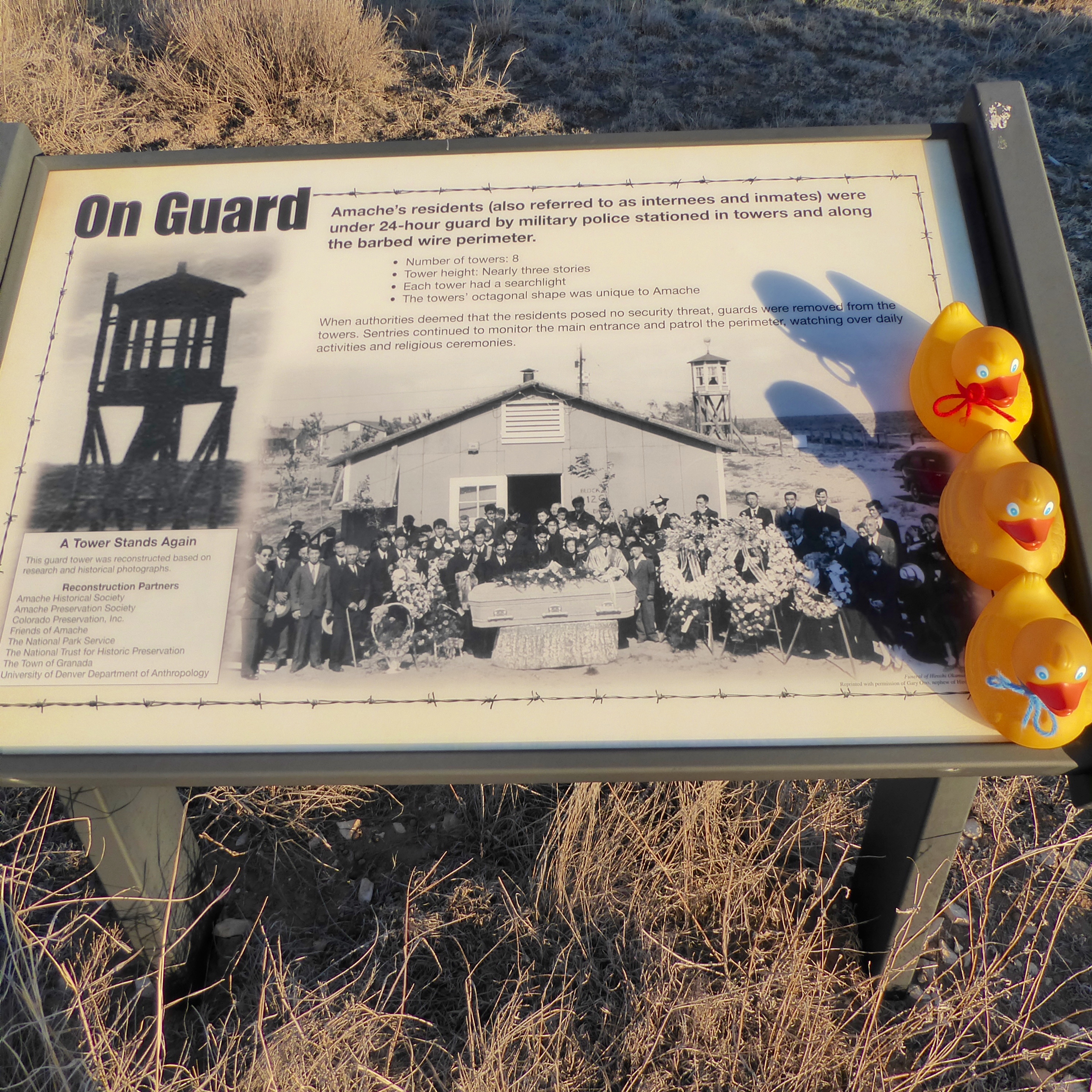
You can see still part of the cement foundation.   The guard towers had all been removed,

Guard Tower information

Guard Tower information

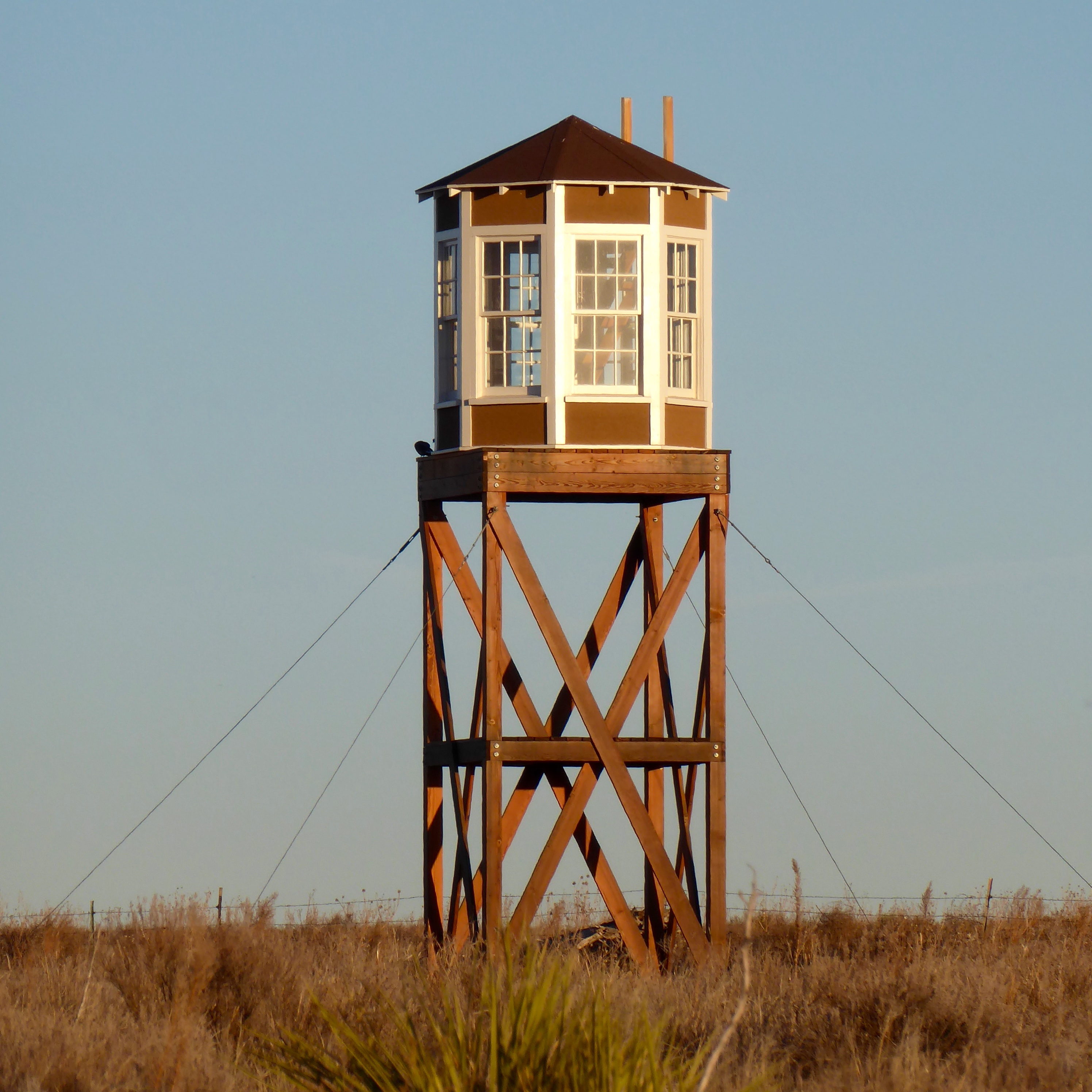
but now a replica of a guard tower has been rebuilt.

Replica of Guard Tower

Replica of Guard Tower

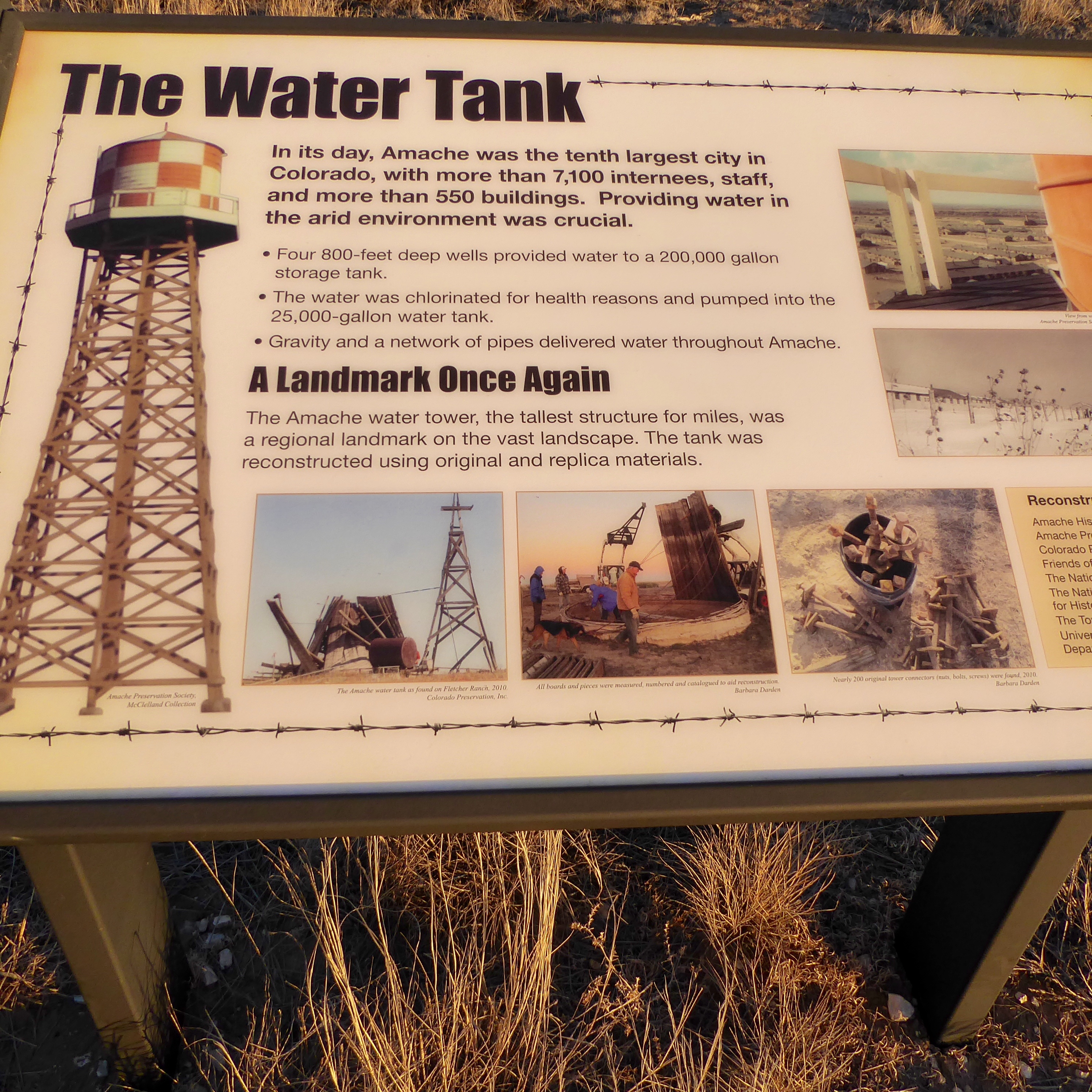
The water tank was also removed,

Water tank information

Water tank information

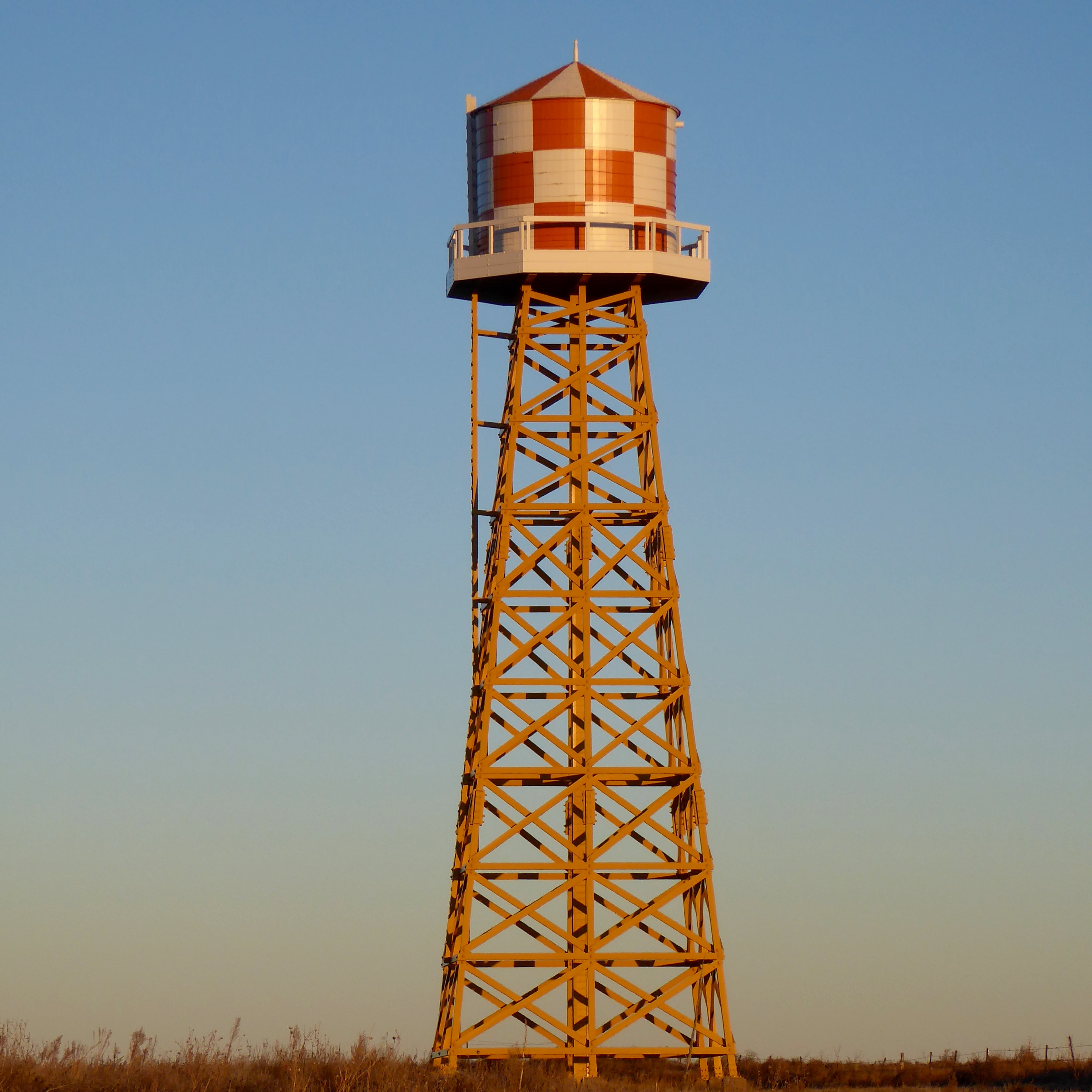
and now a replica has been rebuilt.

Replica of water tank

Replica of water tank

In May each year many former residents of Camp Amache return to Granada, tour the grounds and have a great lunch provided by the town.   This is a time for renewing friendships, reminiscing about the past and catching up on life since leaving Camp Amache.   This was a very difficult time in the United States and many mistakes were made.   At Camp Amache ten percent of the population volunteered to serve in the US military.   Tours are available at certain times.   When we were there, nothing was open and no tours were available.