Scarecrows in Colorado with Zeb the Duck

A warm, sunny day, but Olde Town Arvada, Colorado was full of scarecrows.

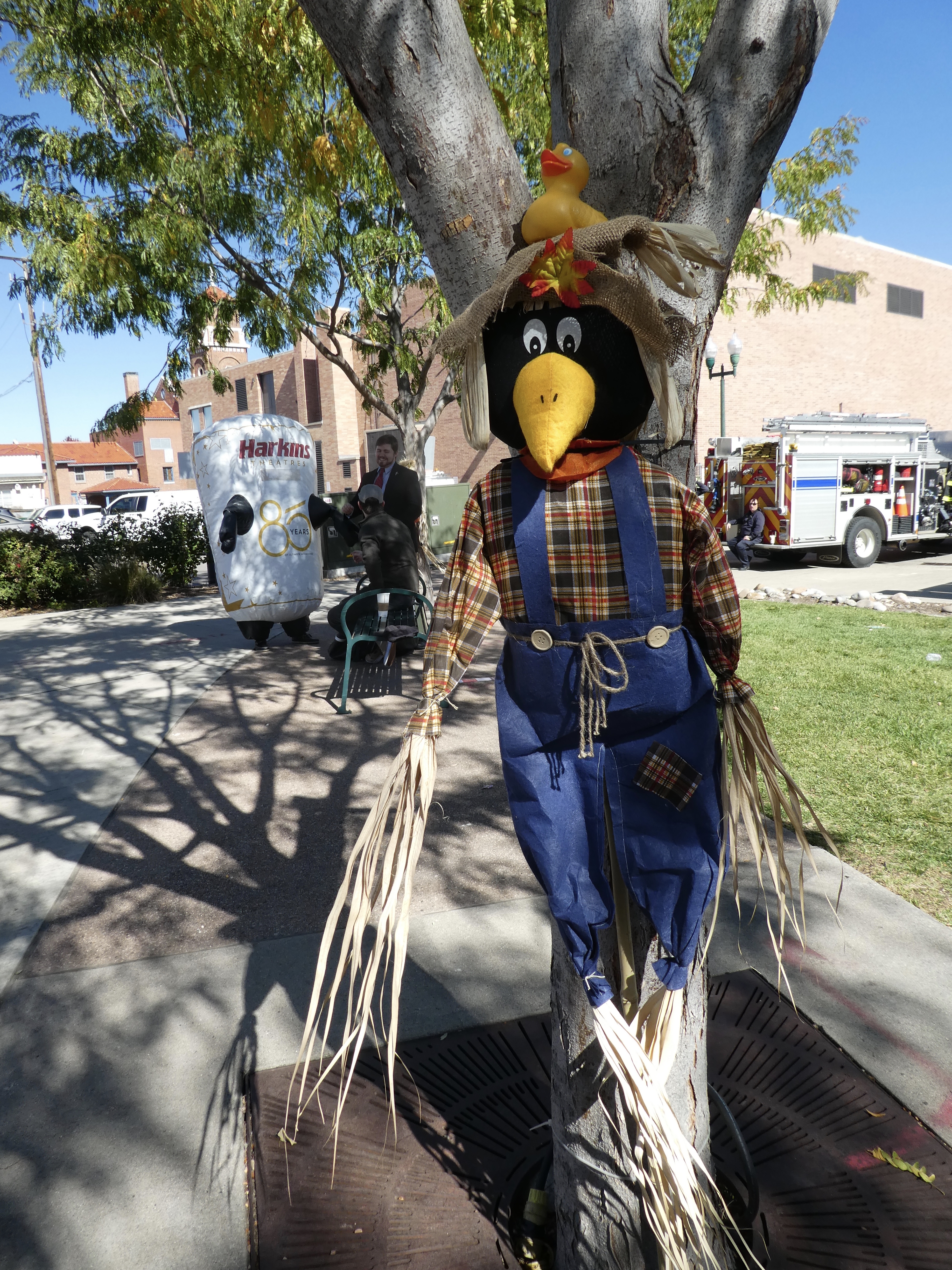
Scarecrow

I, Zeb the Duck, am sitting on the head of a scarecrow.   There seems to be several scarecrows in the plaza.   And no crows.

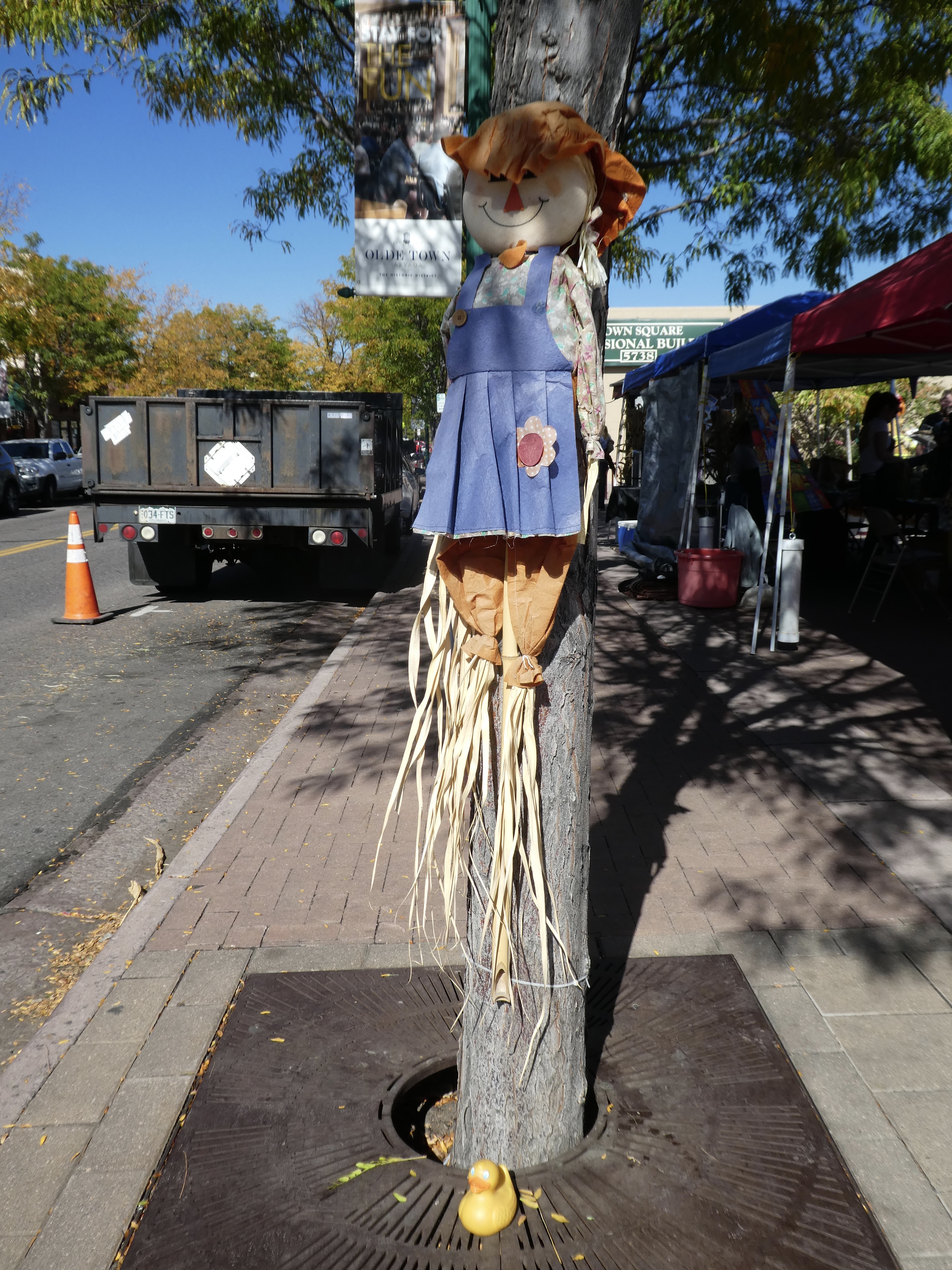
Scarecrow

Here is another one.   Arvada Plaza is near the library and signs say the library also has a scarecrow.    Let’s go see it.

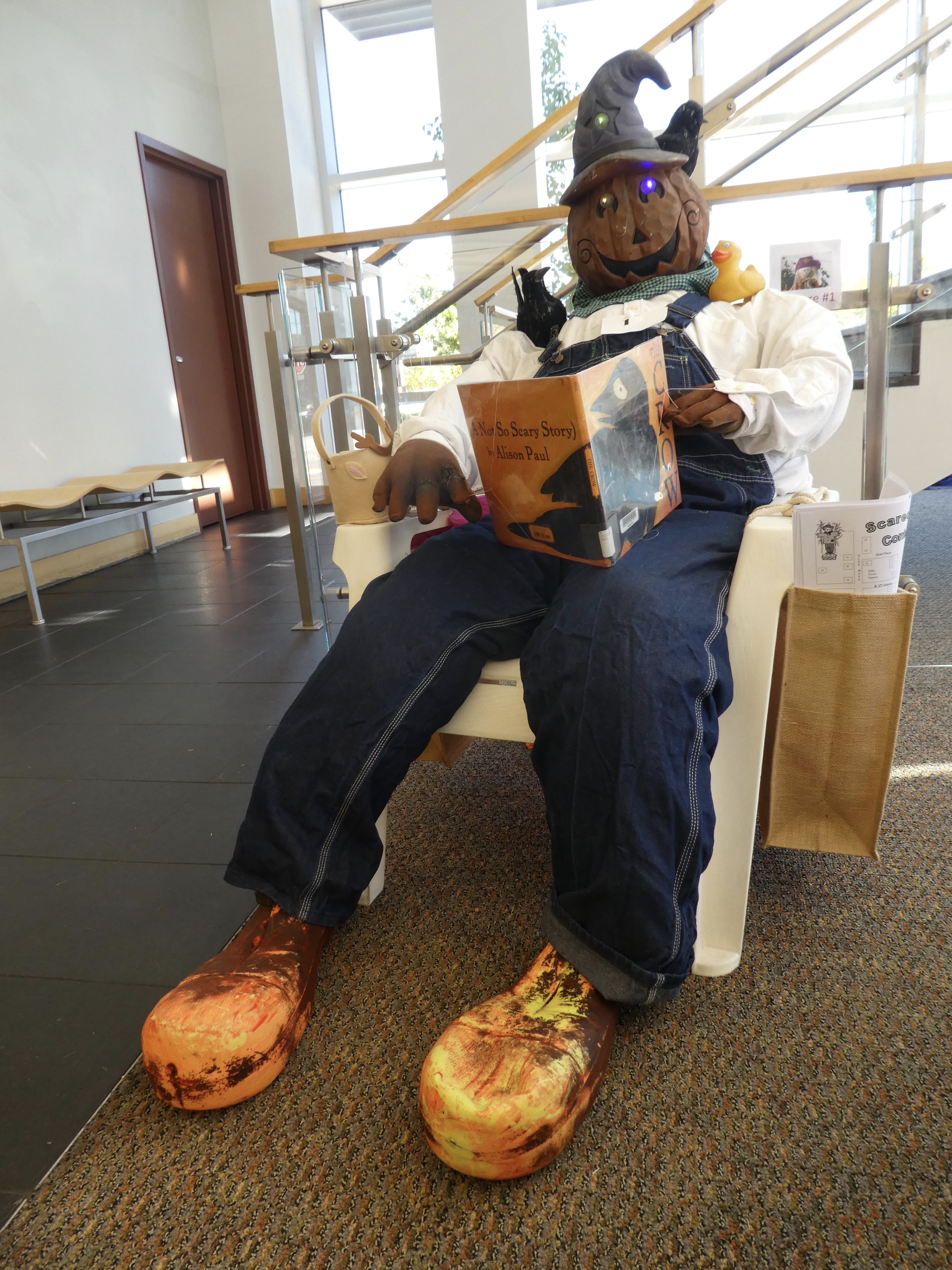
Scarecrow with Zeb and crows

Oh, this scarecrow is reading a book, and the crows want to hear the story.  I am on one shoulder and a crow is on the other.   Another crow on the back rim of the hat.   But the crows are friendly.   Perhaps they are trying to understand those shoes.   The humans get to vote here, for their favorite scarecrow.

Vote here

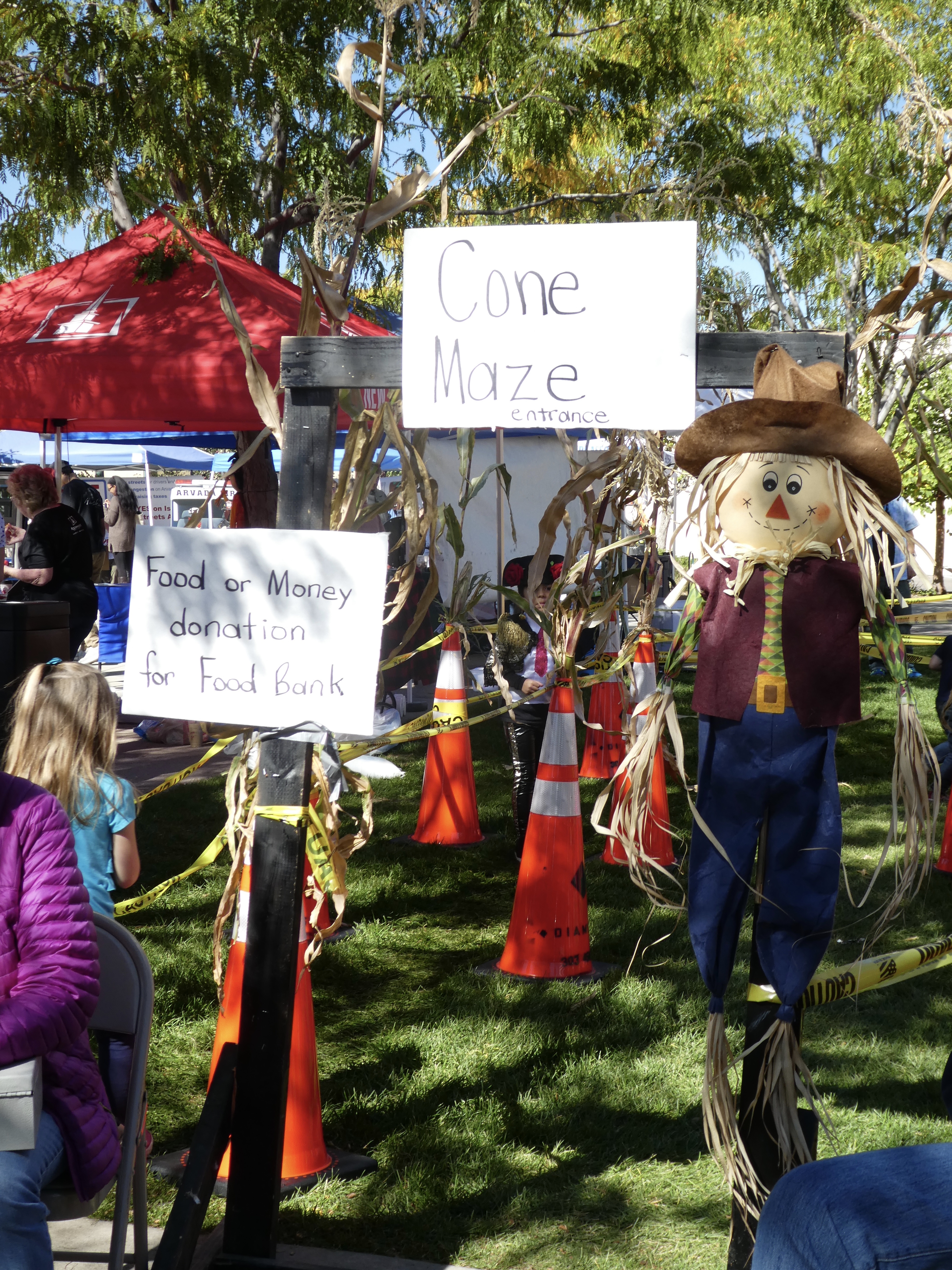
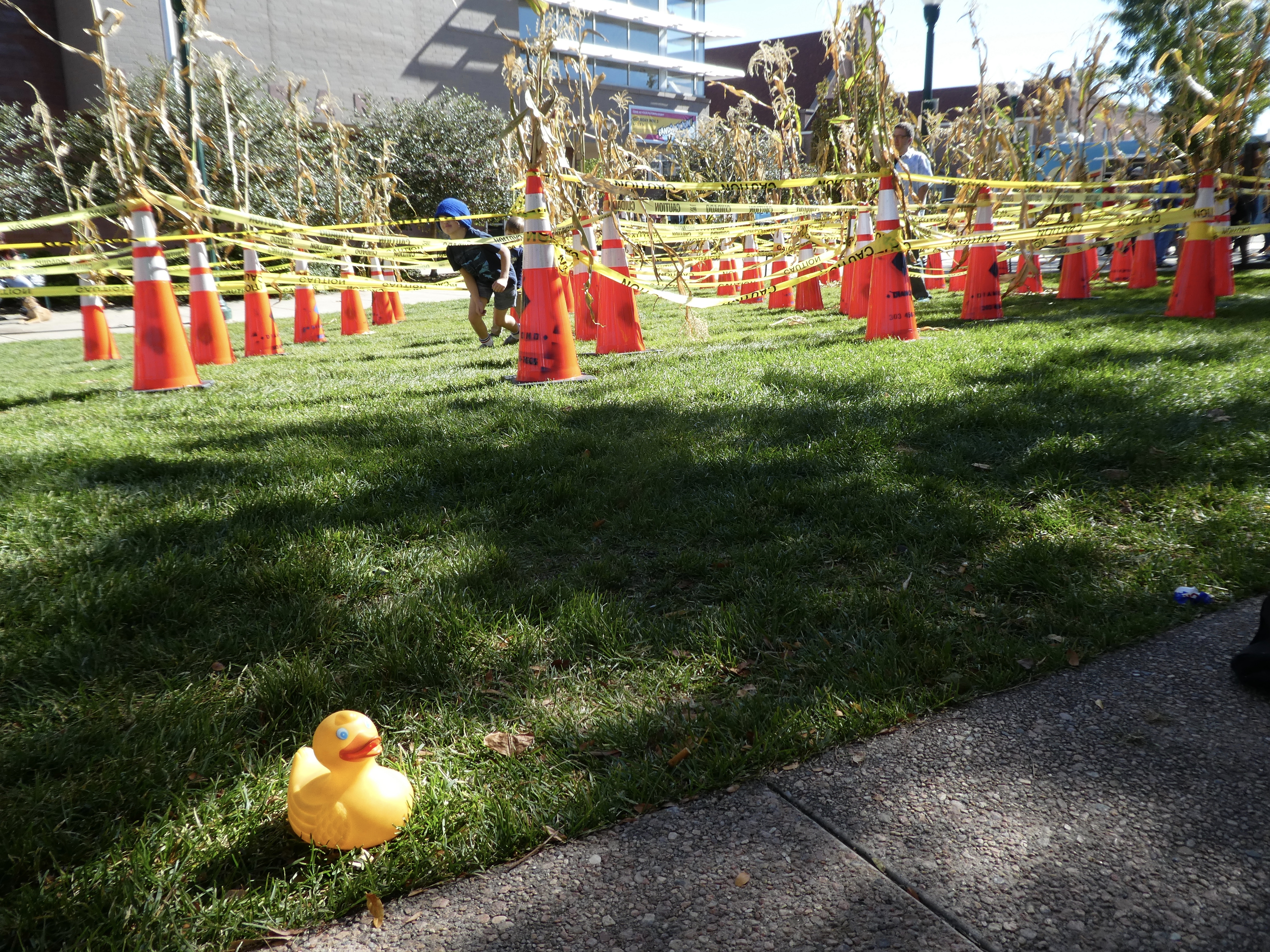
The ladies in the booth said ducks cannot vote.   Darn.   Small humans enter the cone maze here.

Enter Cone Maze

They follow the yellow tape and seem to be having fun.

Cone maze

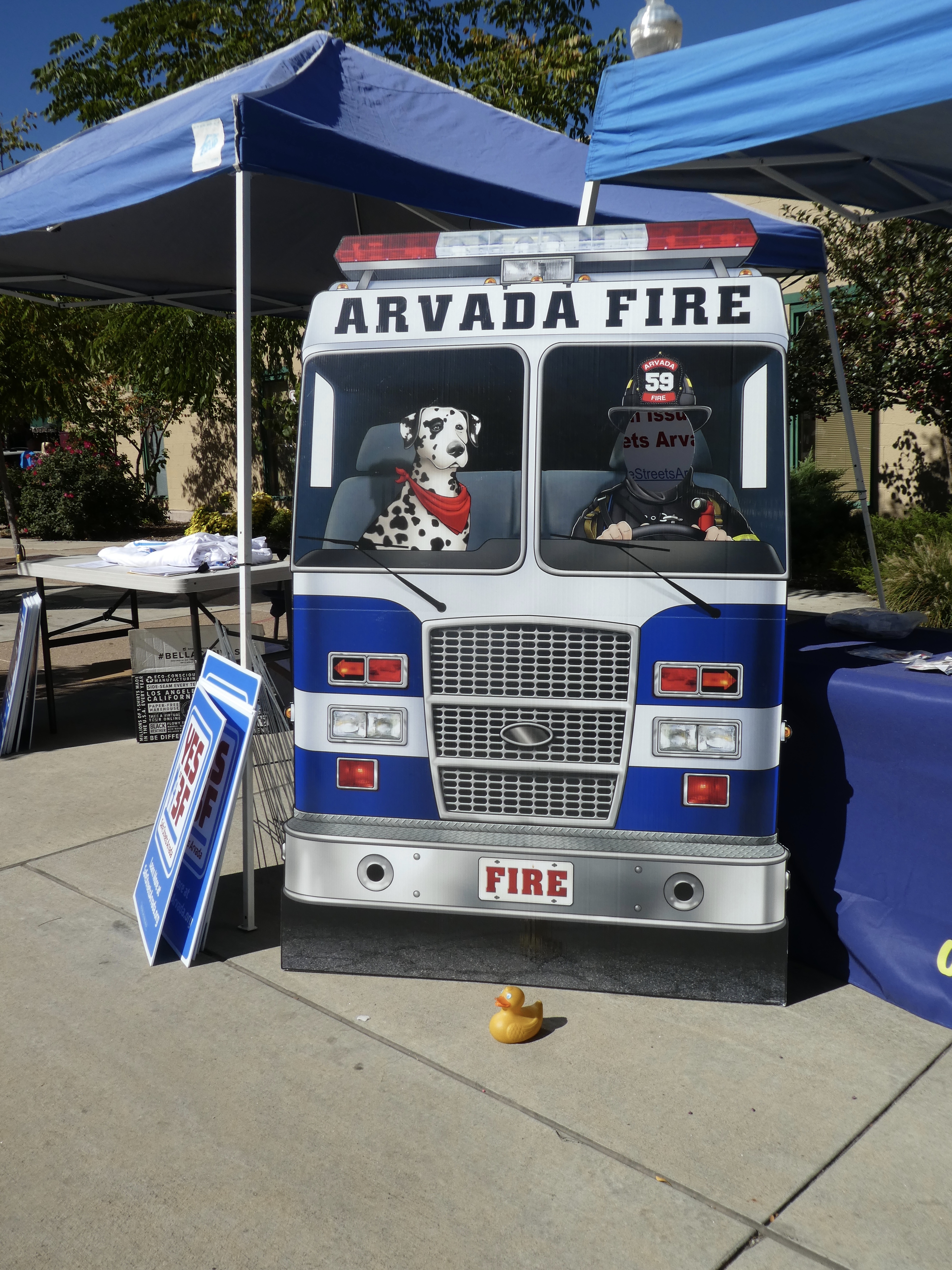
Oh, if only I could be a human sometimes.   The Arvada Fire Department had a booth here also.

Arvada Fire Department

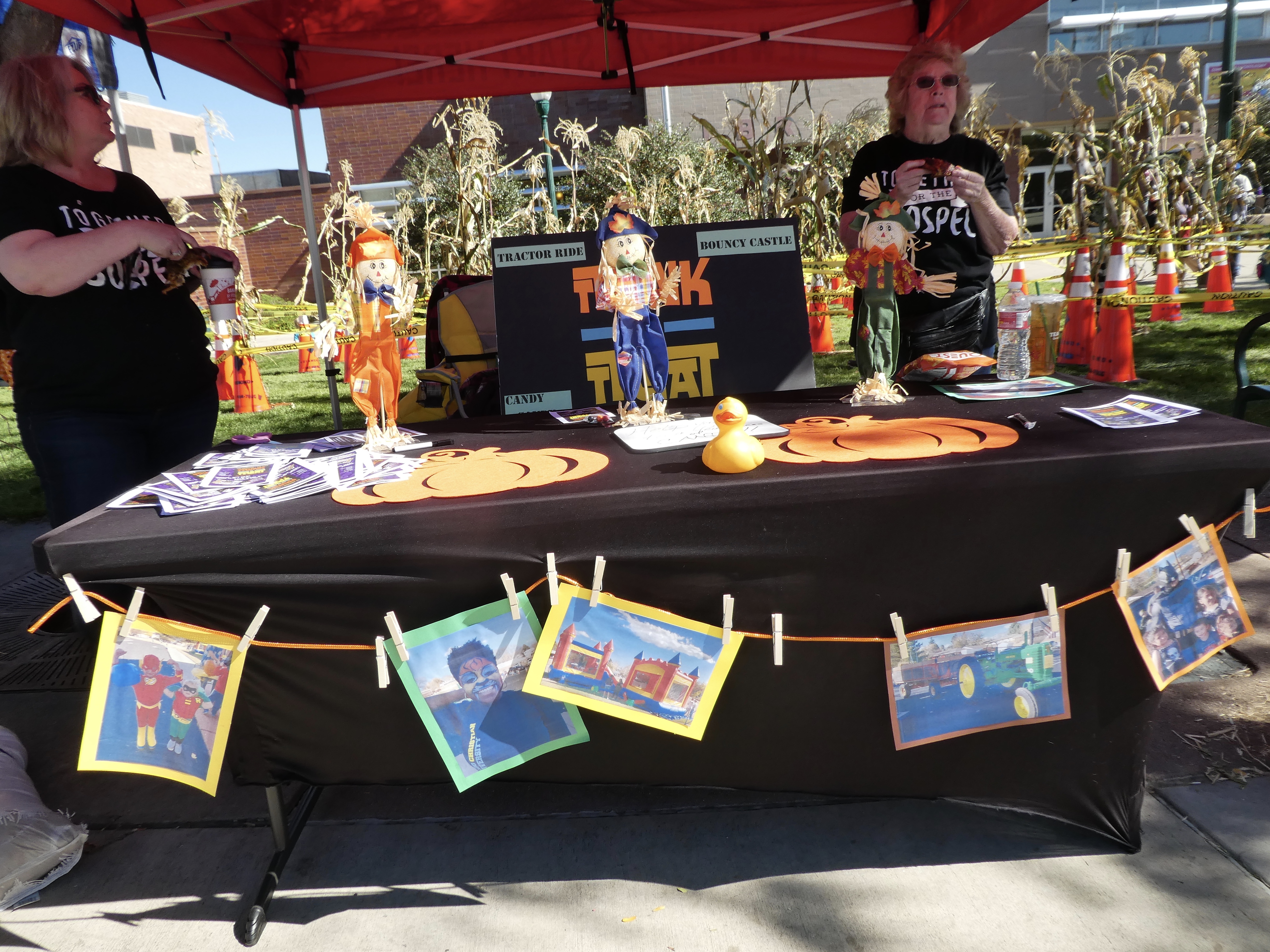
So many options for humans here.

Many choices

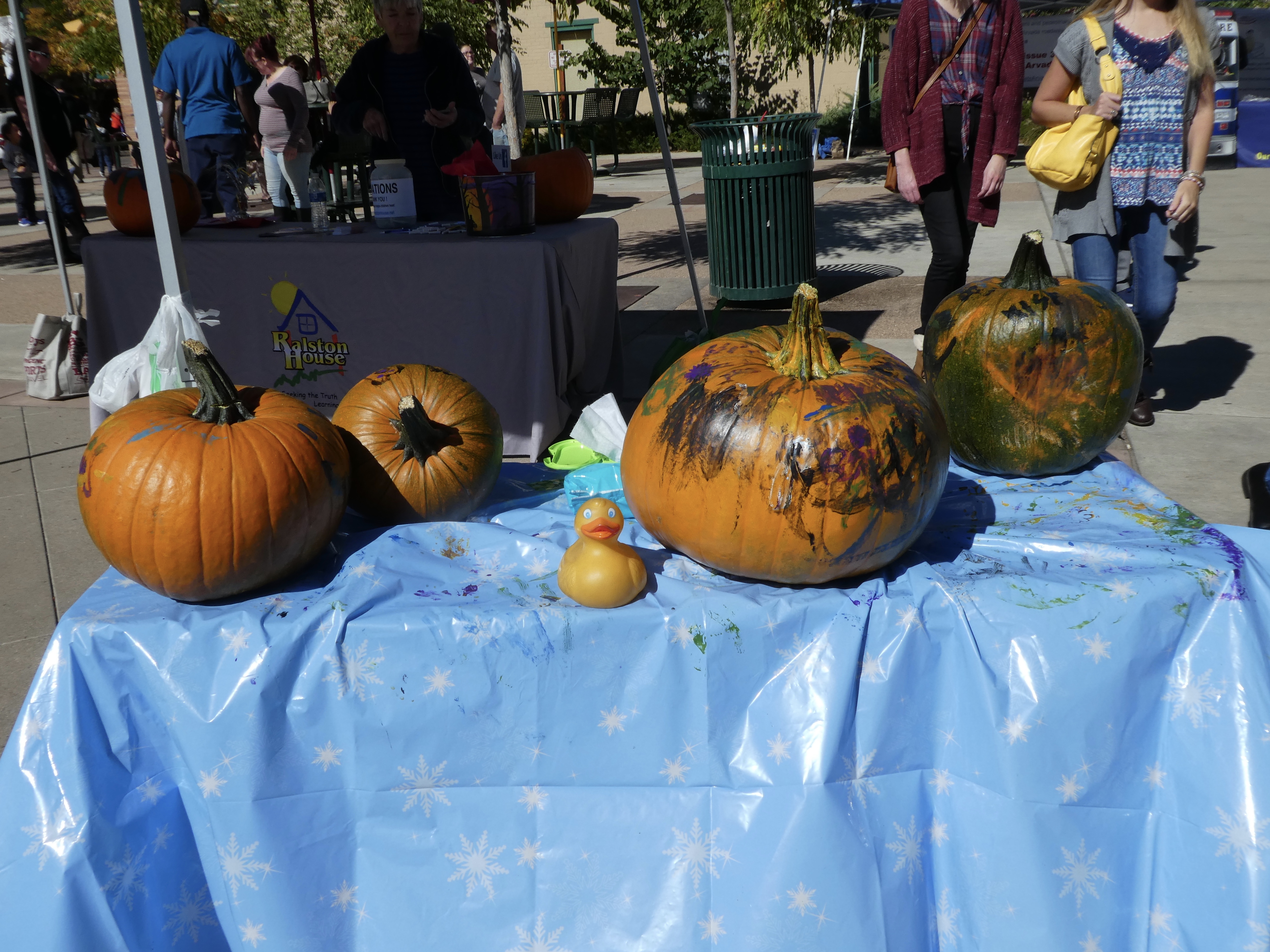
And more.

Painted pumpkins

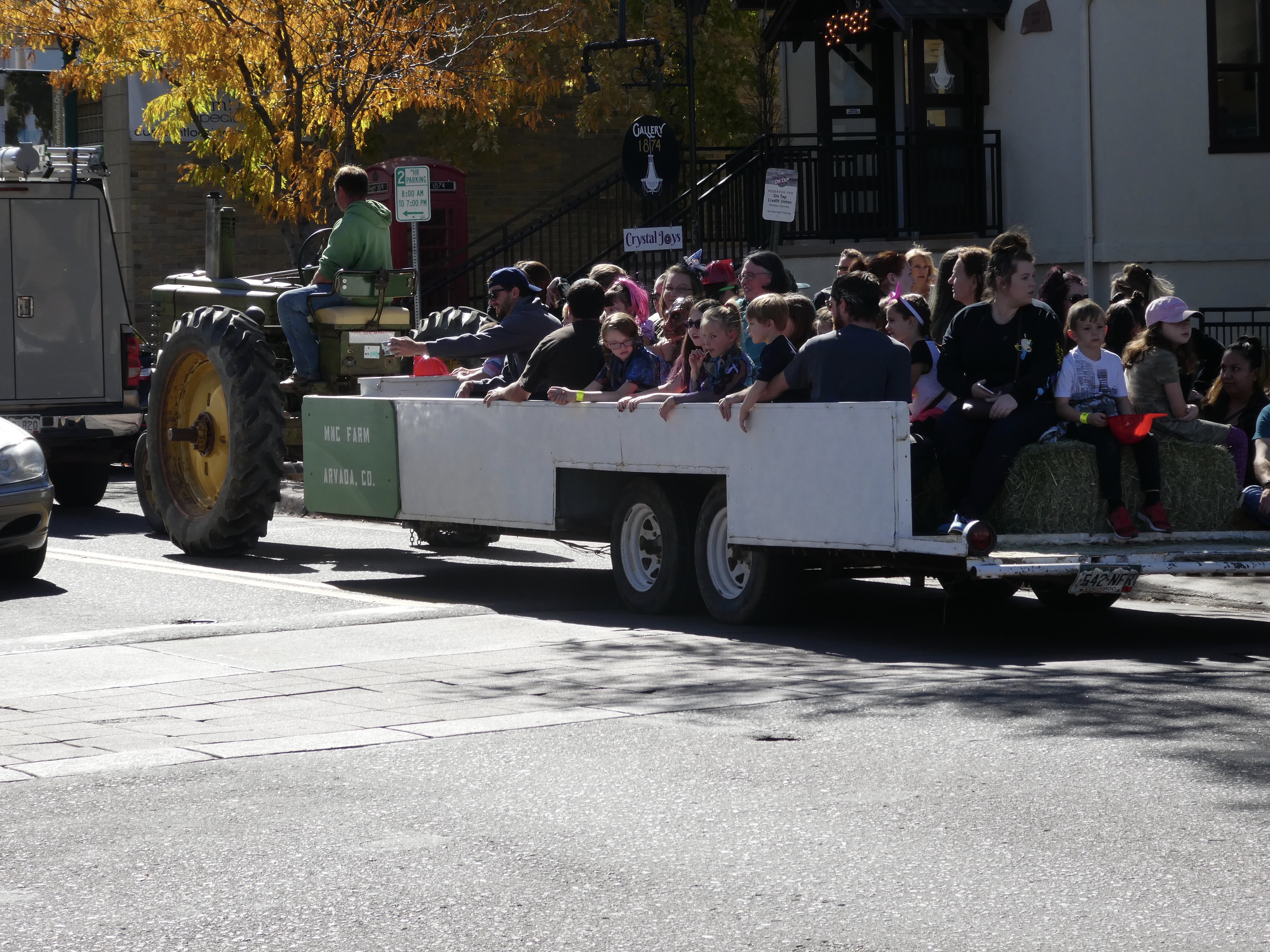
I love these painted pumpkins.   Humans, large and small, can ride the hay wagon.

Ride on the hay wagon

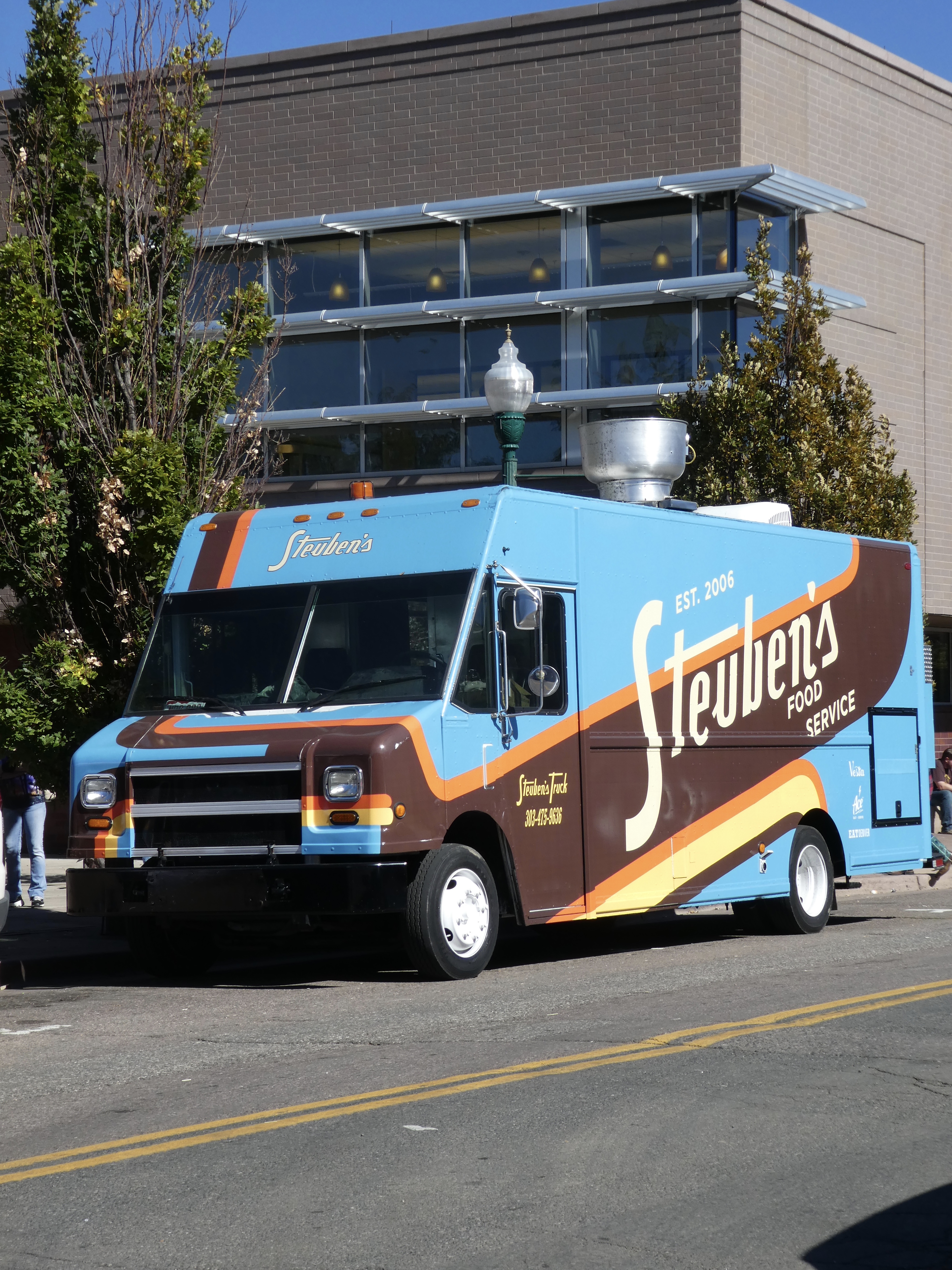
Humans sit on bales of hay and a tractor pulls the wagon through the streets of Olde Town Arvada.   All this activity makes humans, and ducks, hungry.   This great food truck is from Steuben’s Restaurant.

Steuben’s Food Truck

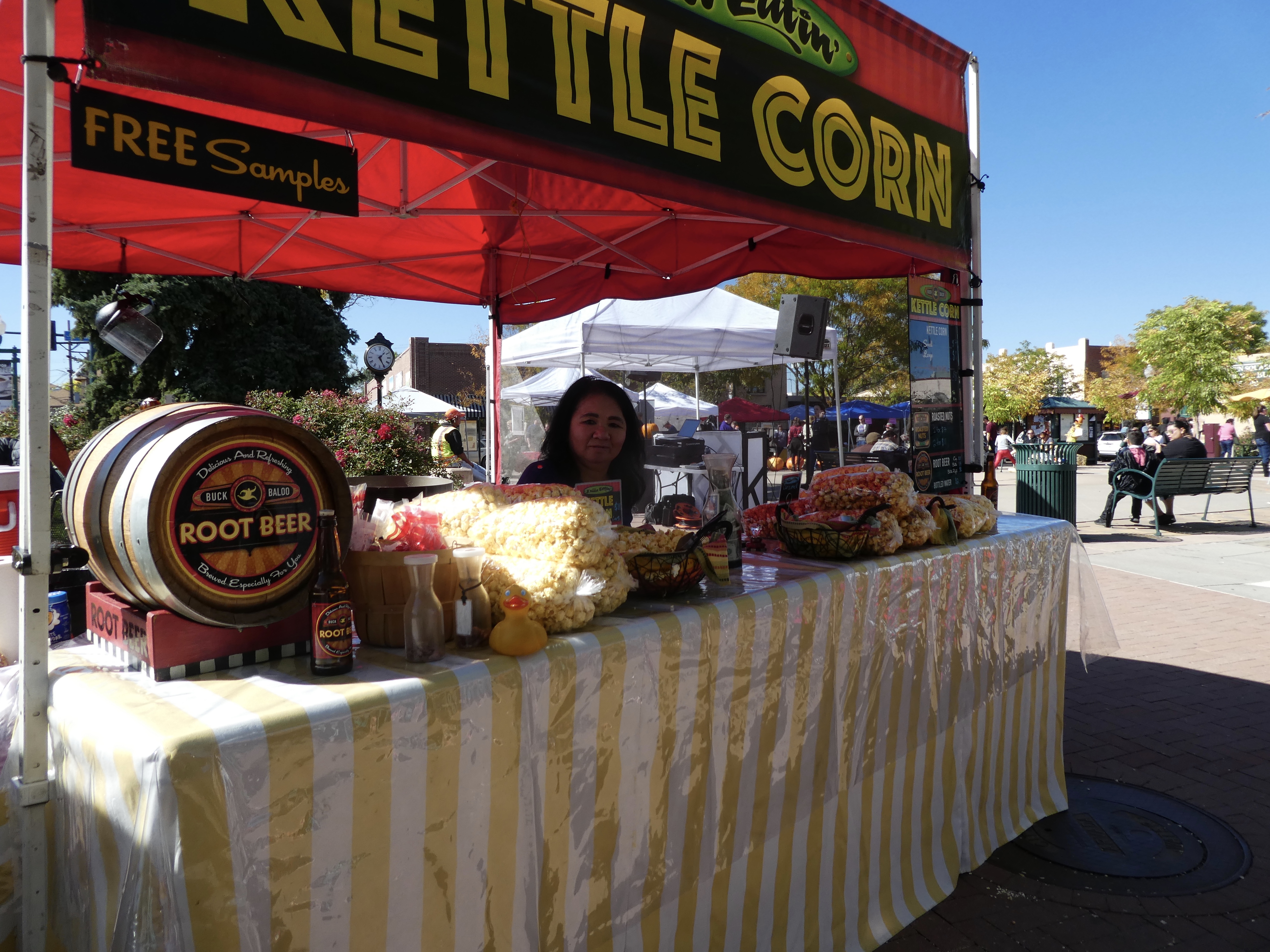
Steuben’s has a restaurant in Olde Arvada.   Very tasty.   But, my very favorite festival food is here.

Kettle Corn

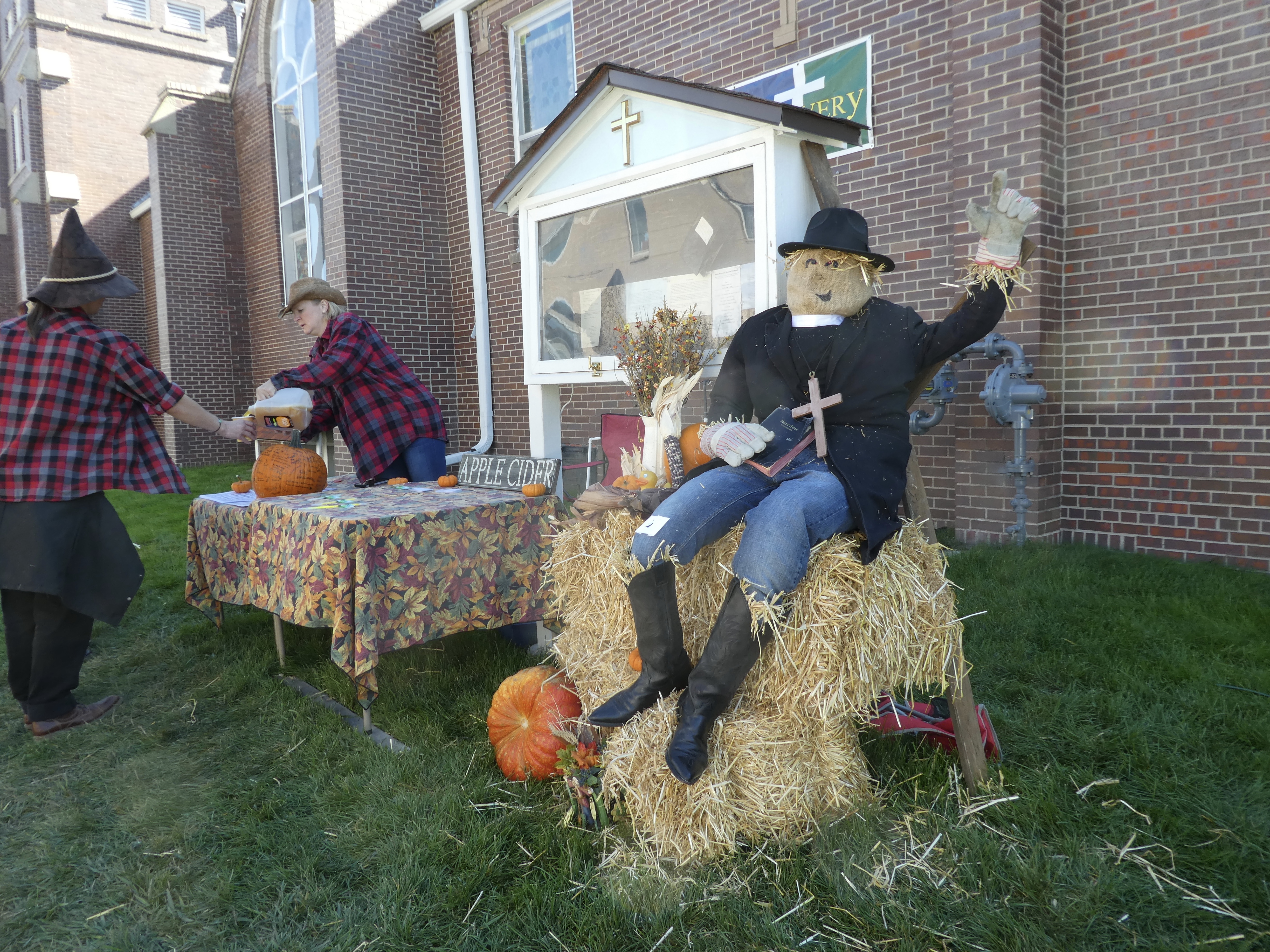
I love kettle corn.   Of course we bought some.   Across from Olde Town Arvada Plaza, this church, with scarecrow, hay and apple cider, is ready for autumn.

Lounging on bale of hay

Last Saturday, the weather was warm, in the 60’s, sunny and a perfect day for a festival.   The next day, Sunday, the temperature was in the teens and low 20’s with snow all day.   Monday was sunny again and all the snow melted.   That is just how the weather is in Colorado.   Many seasons in a week, and we love it.   We are happy that the 22nd Festival of Scarecrows was here on the warm sunny day.

Florissant Fossil Beds With Zeb the Duck

Colorado used to have giant redwood trees.   We had a warmer climate, so we had many tropical insects also.  That was about 34 million years ago.   What a change from the Colorado we know and love today.   Today I, Zeb the Duck, took mom and a friend to Central Colorado, a little south and west of Colorado Springs, to Florissant Fossil Beds.   These fossil beds are now part of the U.S. National Park Service.

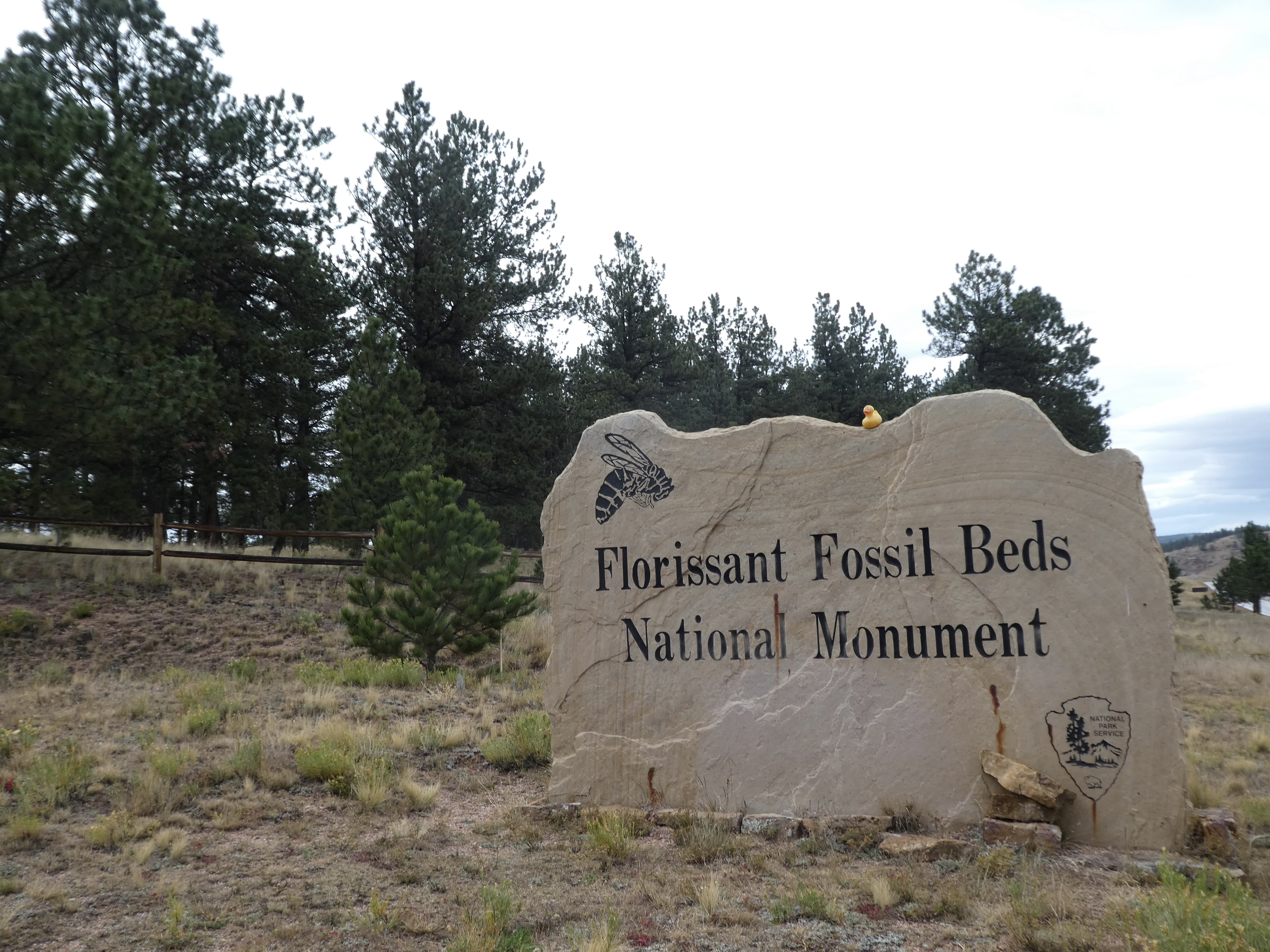
Florissant Fossil Beds

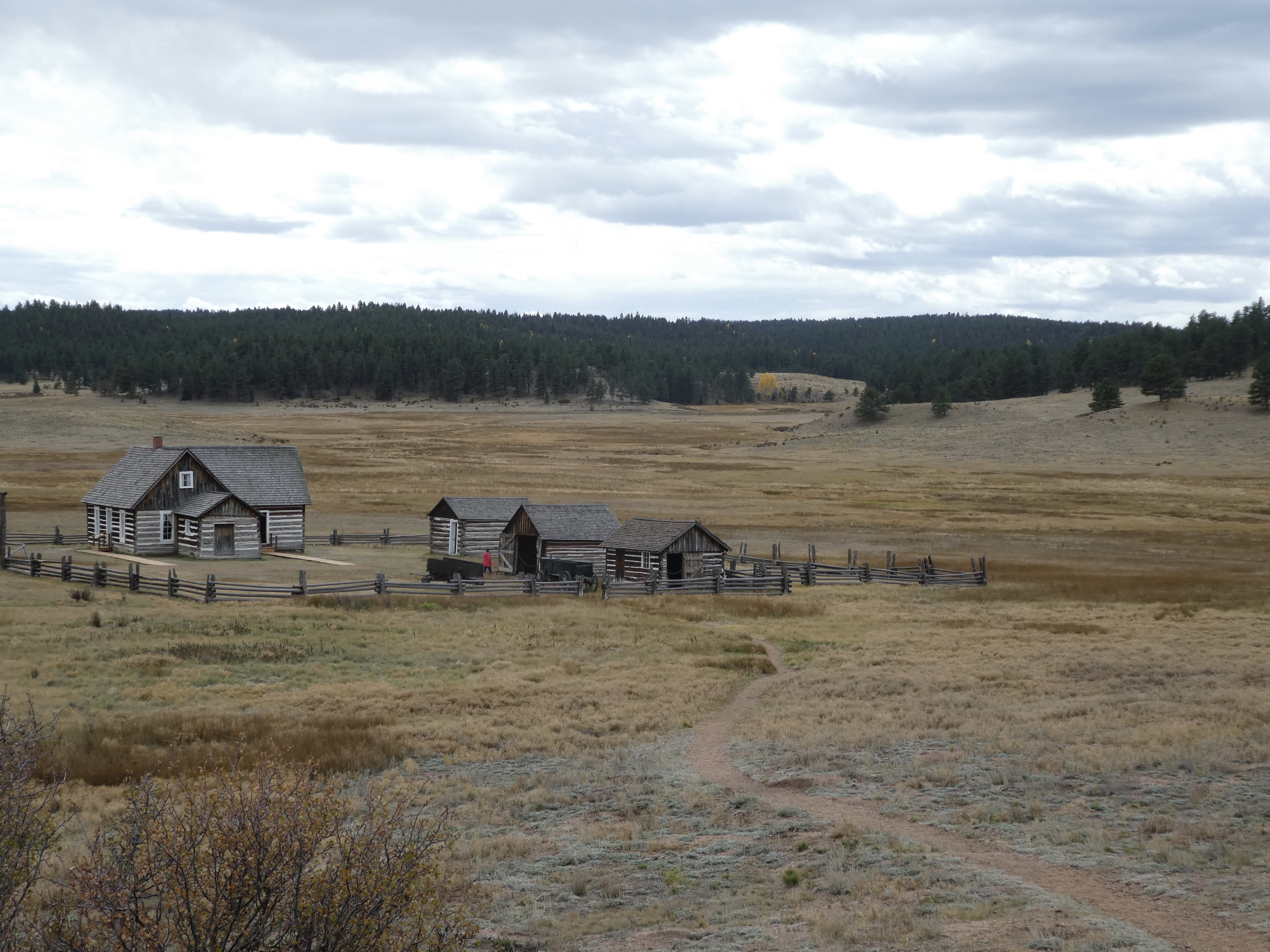
It was a cloudy day, so we decided to see the outside things first, just in case we got some rain.   About two miles from this sign, is the homestead of Adeline Hornbek.   Back when women usually could not purchase land, Adeline acquired 160 acres to homestead.  Her homestead is now protected by the National Park Service.   In 1878, she had outlived two husbands and had four children to raise.   She and her children farmed and ranched here.

Adeline Hornbek’s Homestead of 1878

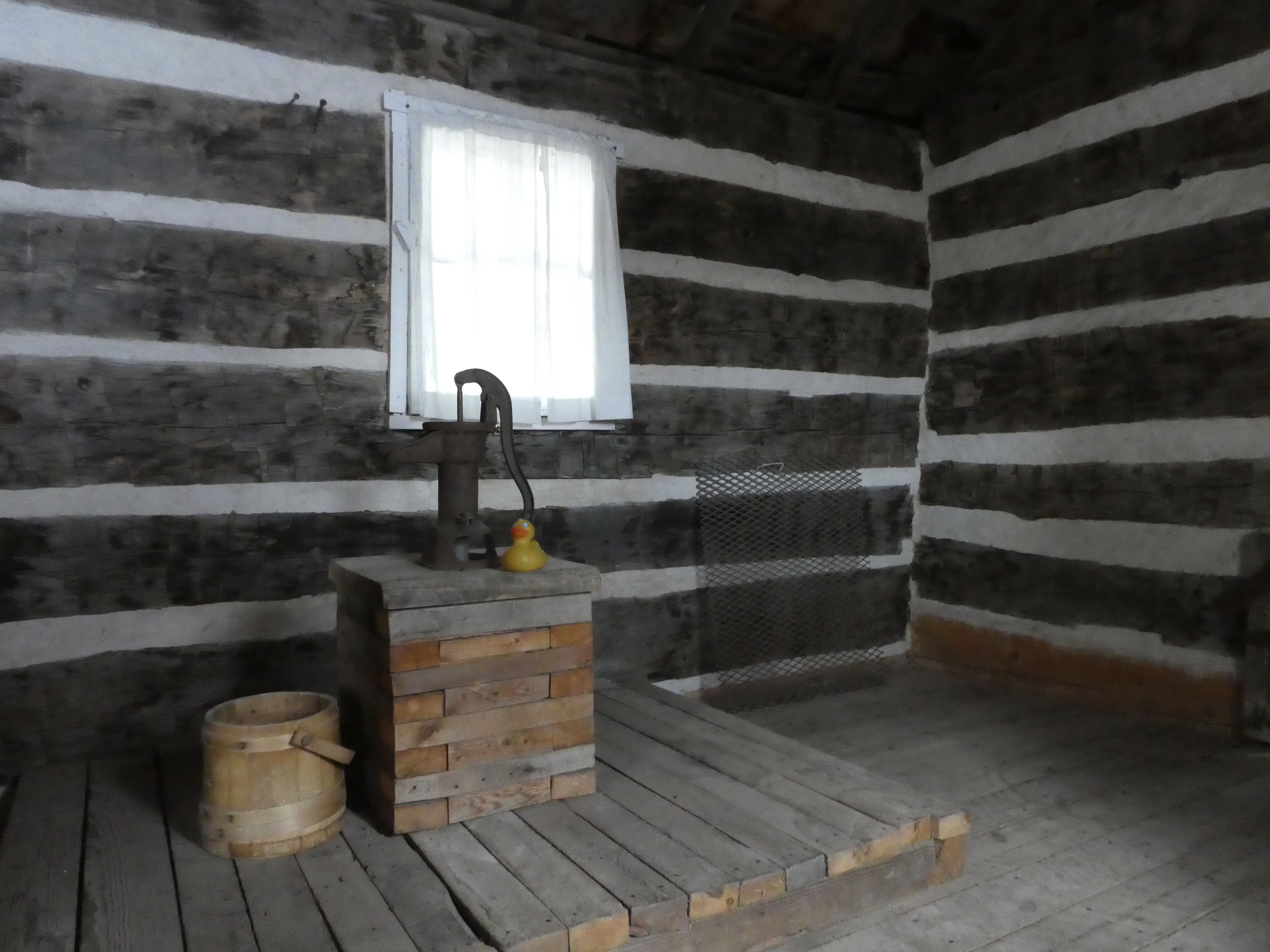
Today, her great great granddaughter, was in the house.   So tourists were allowed inside the home and outbuildings.   Attached to the main house is the well house.

Well House

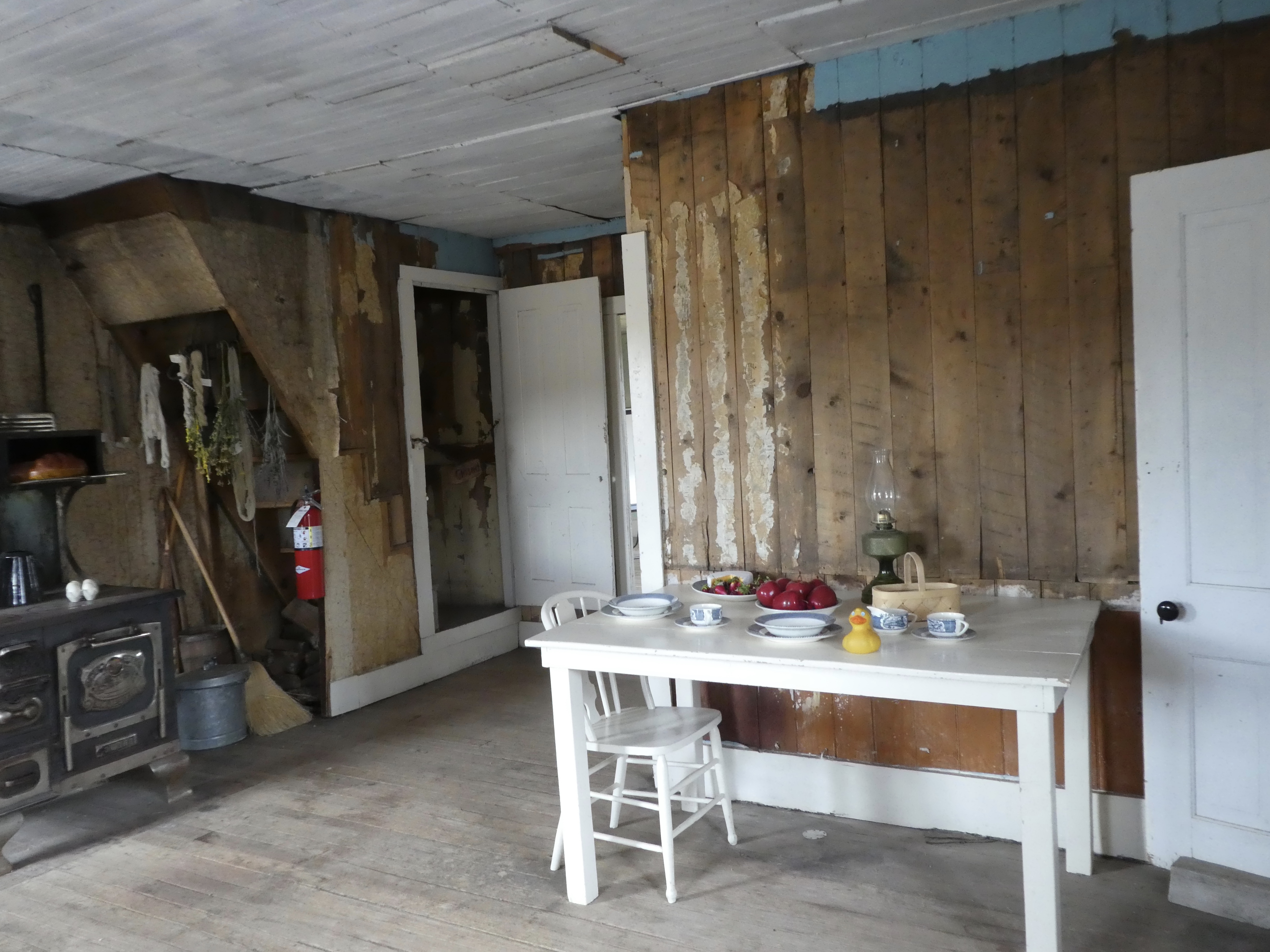
An enclosed pump is less likely to freeze.   The kitchen was large.

Kitchen

On the right side is the door to the well house.   To the left and to the front, is a door to the living room.   The open door on the left leads upstairs where her sons slept.  The rear door goes to another room, with a door to the outdoors.

Living room

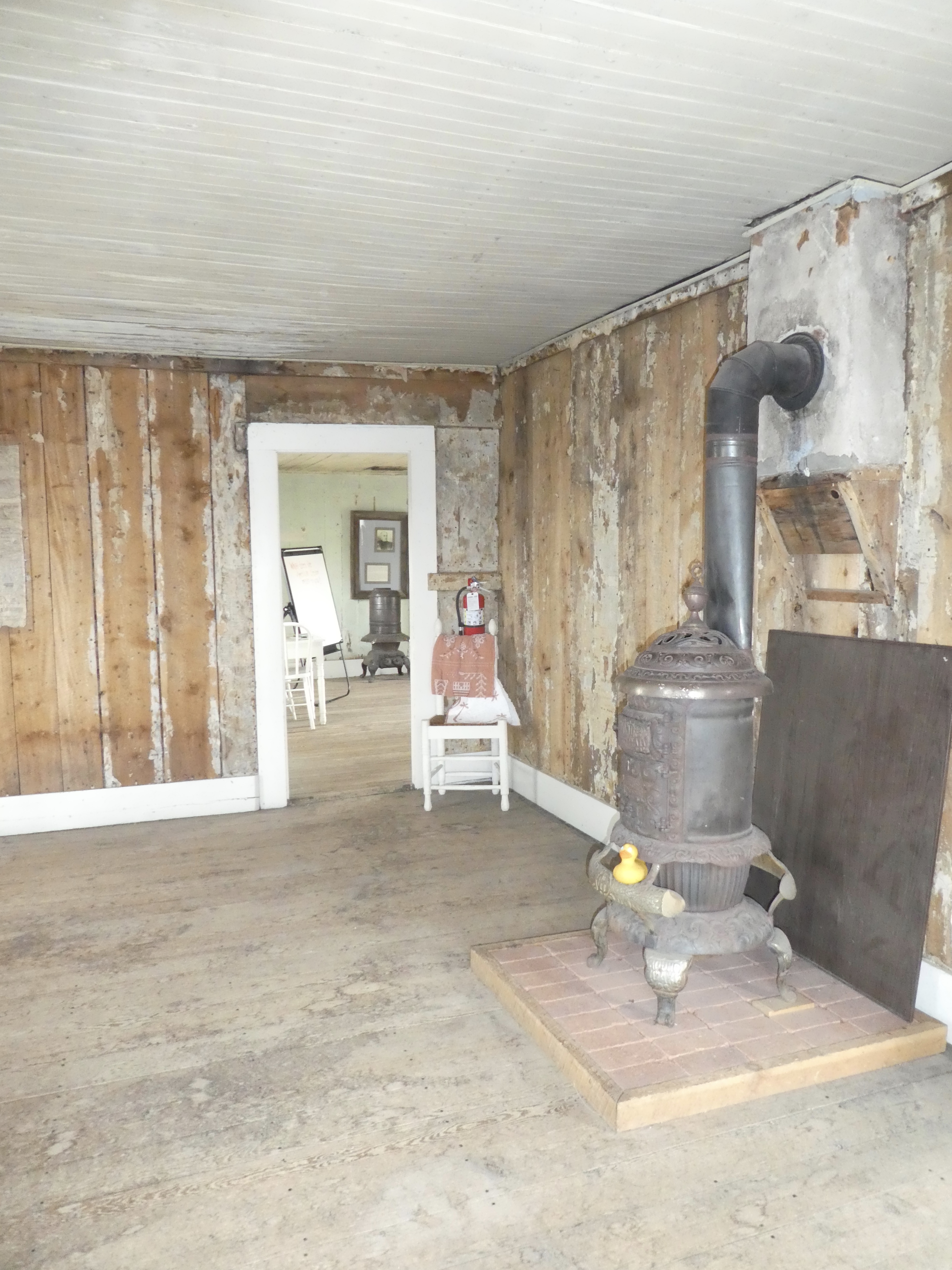
The living room is also rather large and has a wood stove for heat.   You can see the adjacent room behind also has a wood stove for heat.   This is the pantry.

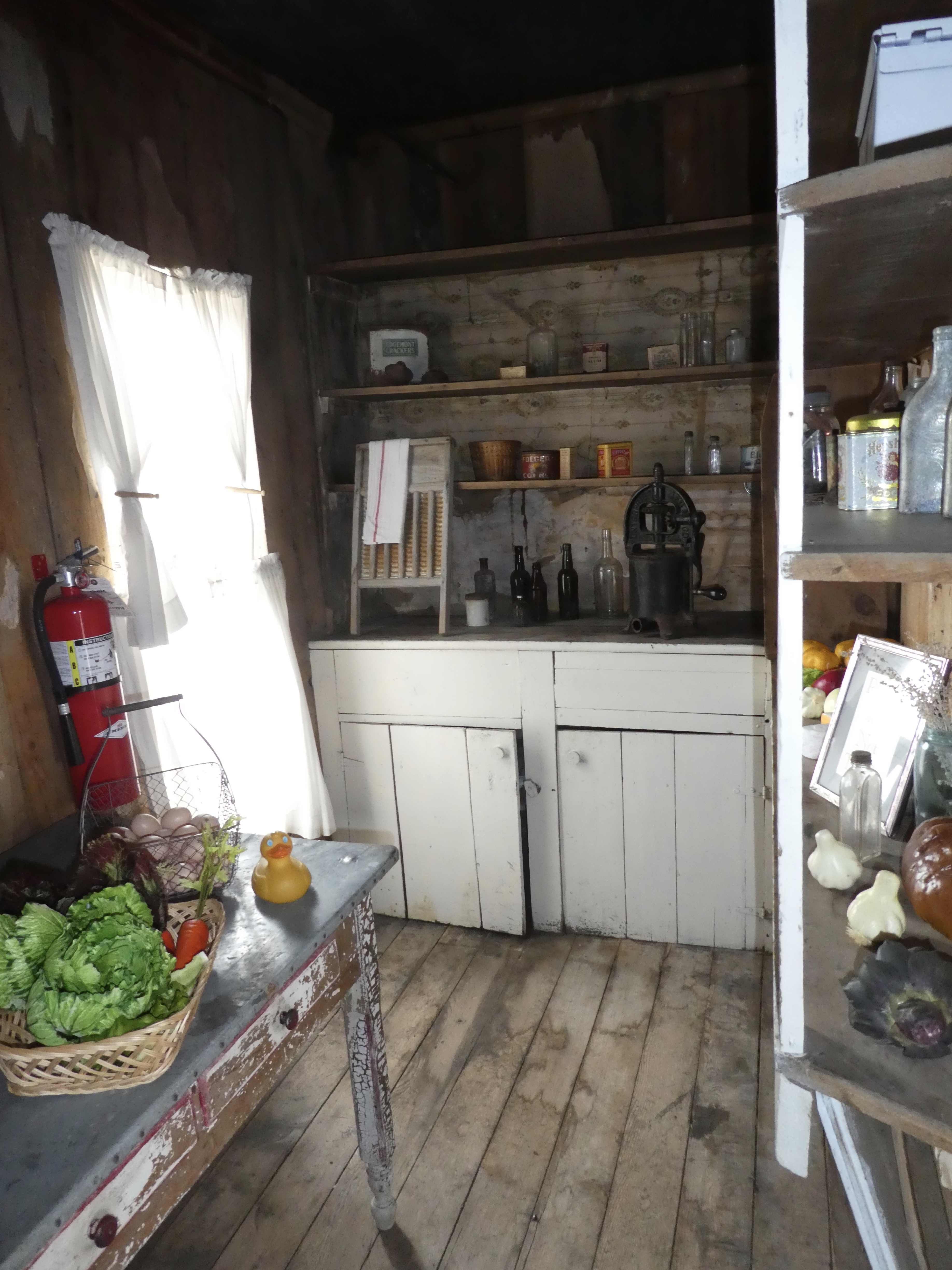
Pantry

With five people to feed, storage space was important.   Outside, dug into a hill, is the root cellar.

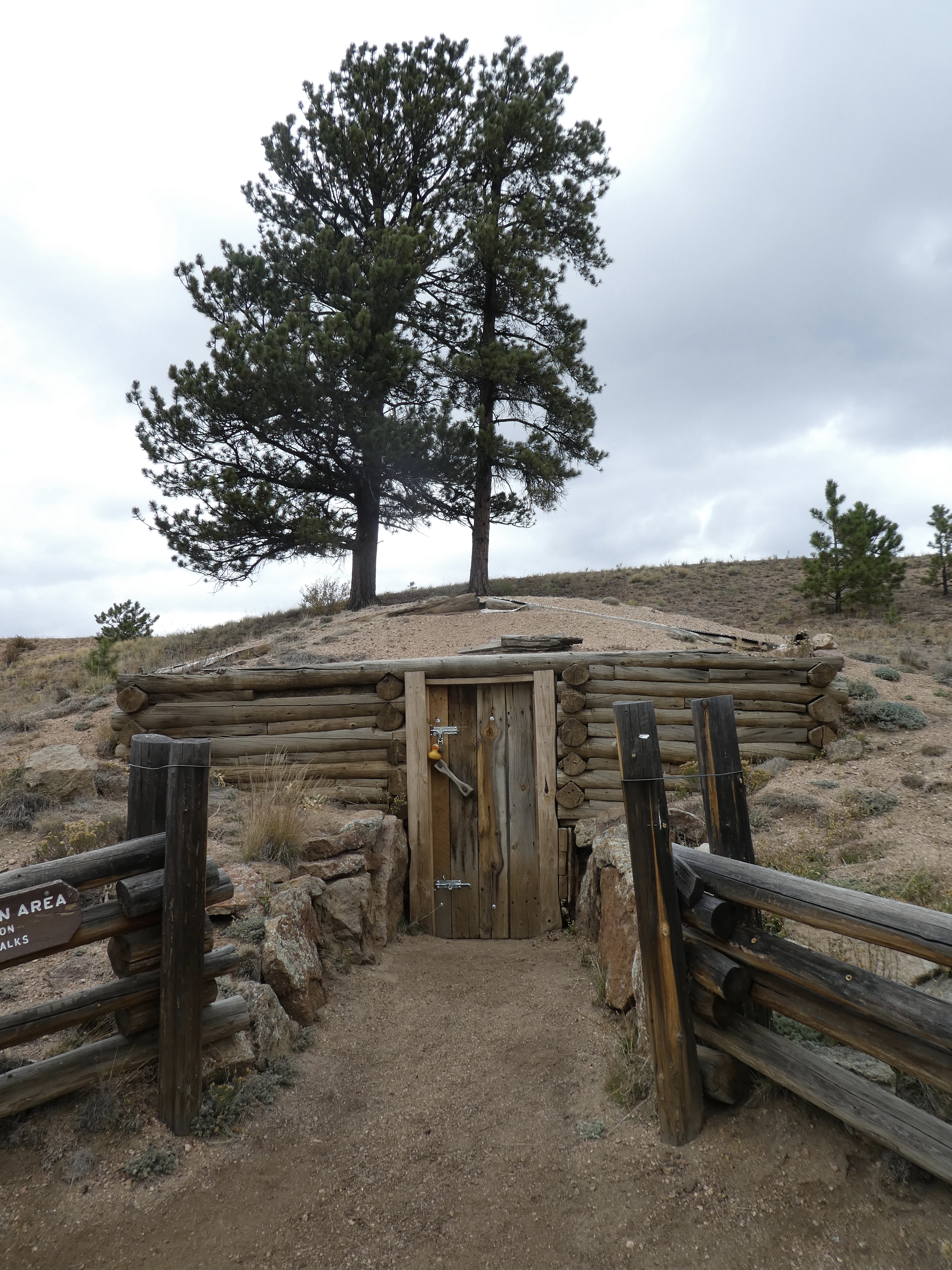
Root Cellar

More food was preserved here for the long cold winter in the Colorado Mountains.   Going back to the Visitor’s Center, the fossil beds are outside, so we went there first.   There are fossil exhibits inside also.

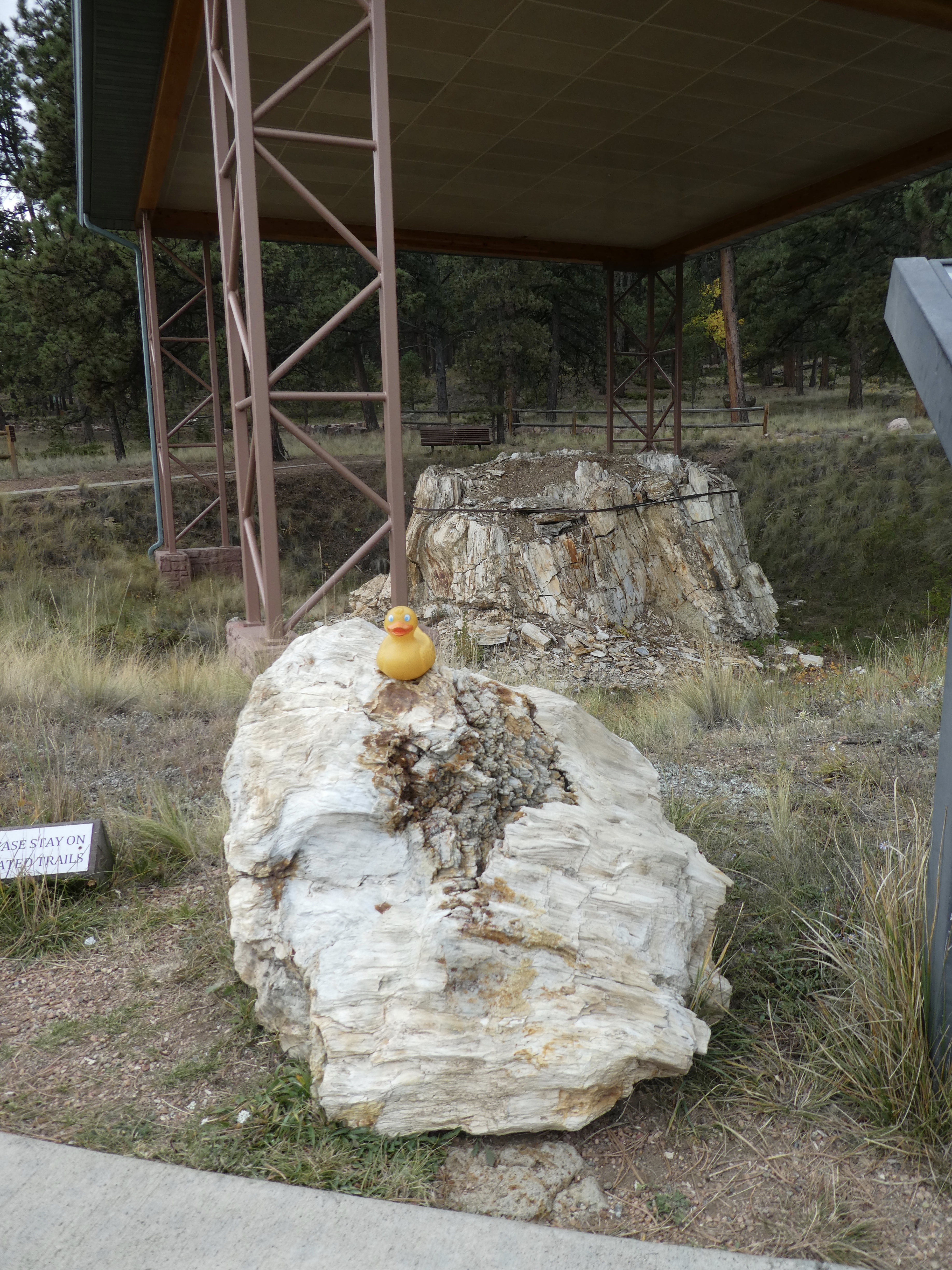
Petrified redwood tree

I, Zeb the Duck, am sitting on a large piece of petrified redwood tree.  The huge petrified tree stump is under a manmade cover, to offer some protection for the fossil.   Moisture in the stump, freezing and thawing, will damage the fossil.   Humans are trying to slow the process.   The sign says 34 million years ago the Rocky Mountains were warmer with wet summers and mild winters.   This area was forested with towering redwoods, cedar, pines, mixed hardwoods and ferns.   Now this is rare.

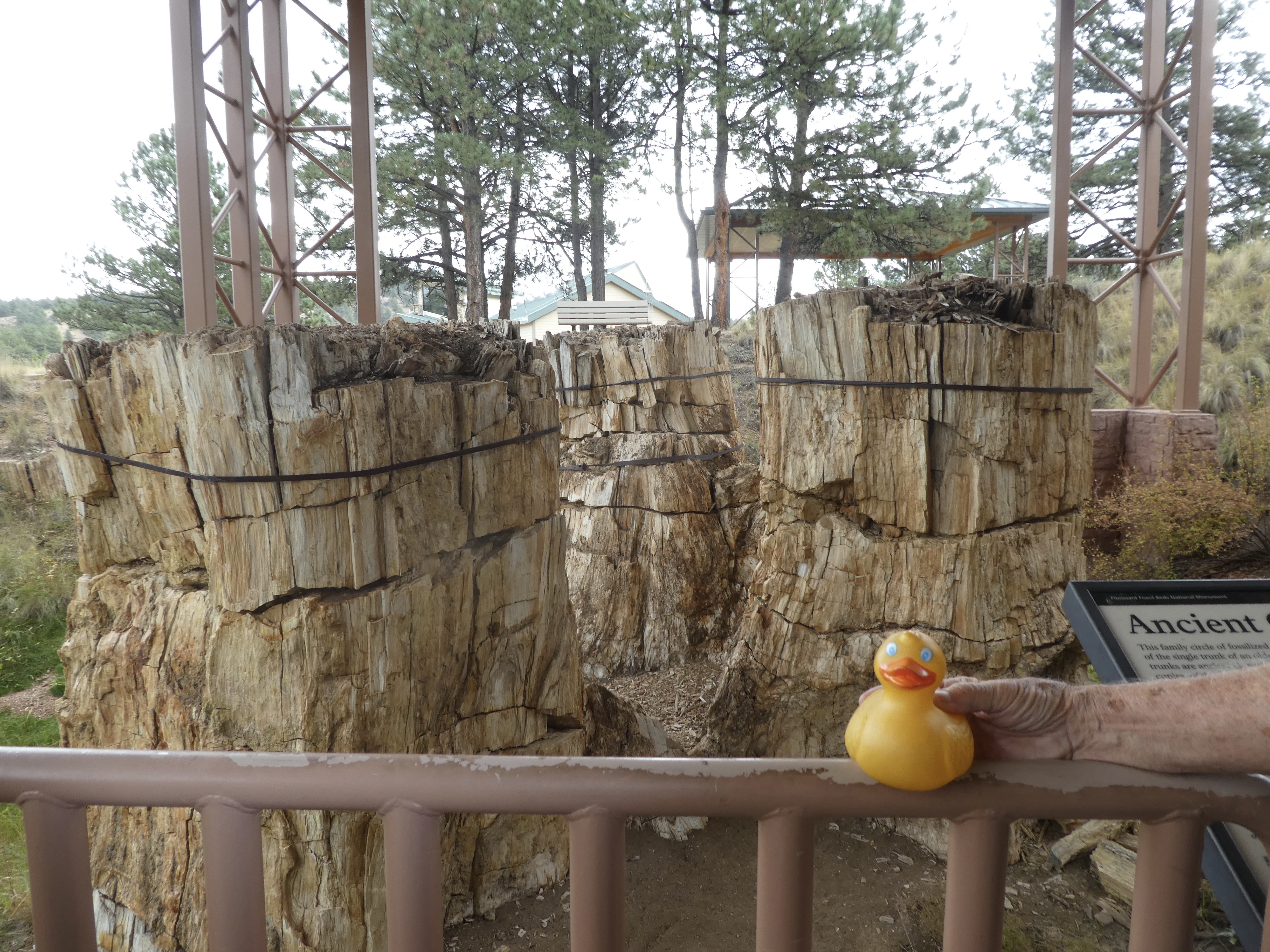
Trio of fossilized stumps

A family circle of fossilized stumps grew out of the single trunk of an older parent tree.   The 3 trunks are ancient clones, or genetically identical copies, of that parent tree.   This is common now in California with coastal redwoods, but this trio of stone stumps is unique in the world’s fossil record.  We hiked the one mile trail and arrived here, at the Big Stump.

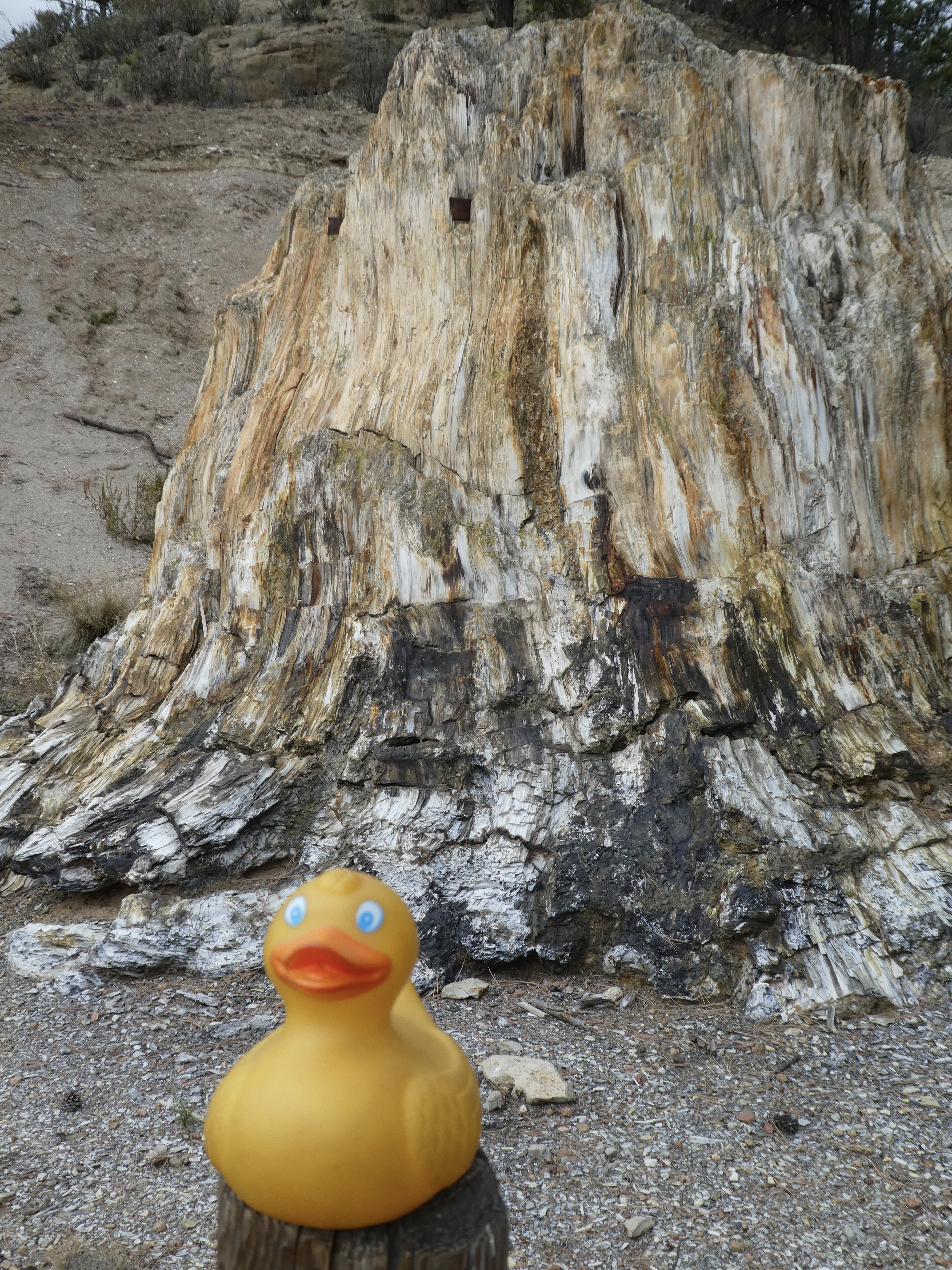
The Big Stump

This massive petrified redwood stump is one of the largest fossils in the park.   The tree was probably 230 feet tall and 750 years old when volcanic mud flow buried its base.   In the 1800’s local residents excavated the stump and tried to cut it in smaller pieces.   You can see 2 saw blades still in the stump toward the top, above my little duck head.   The base is charred from volcanic mud and volcanic lahar.   Further along, we see tree rings in the redwood fossil.

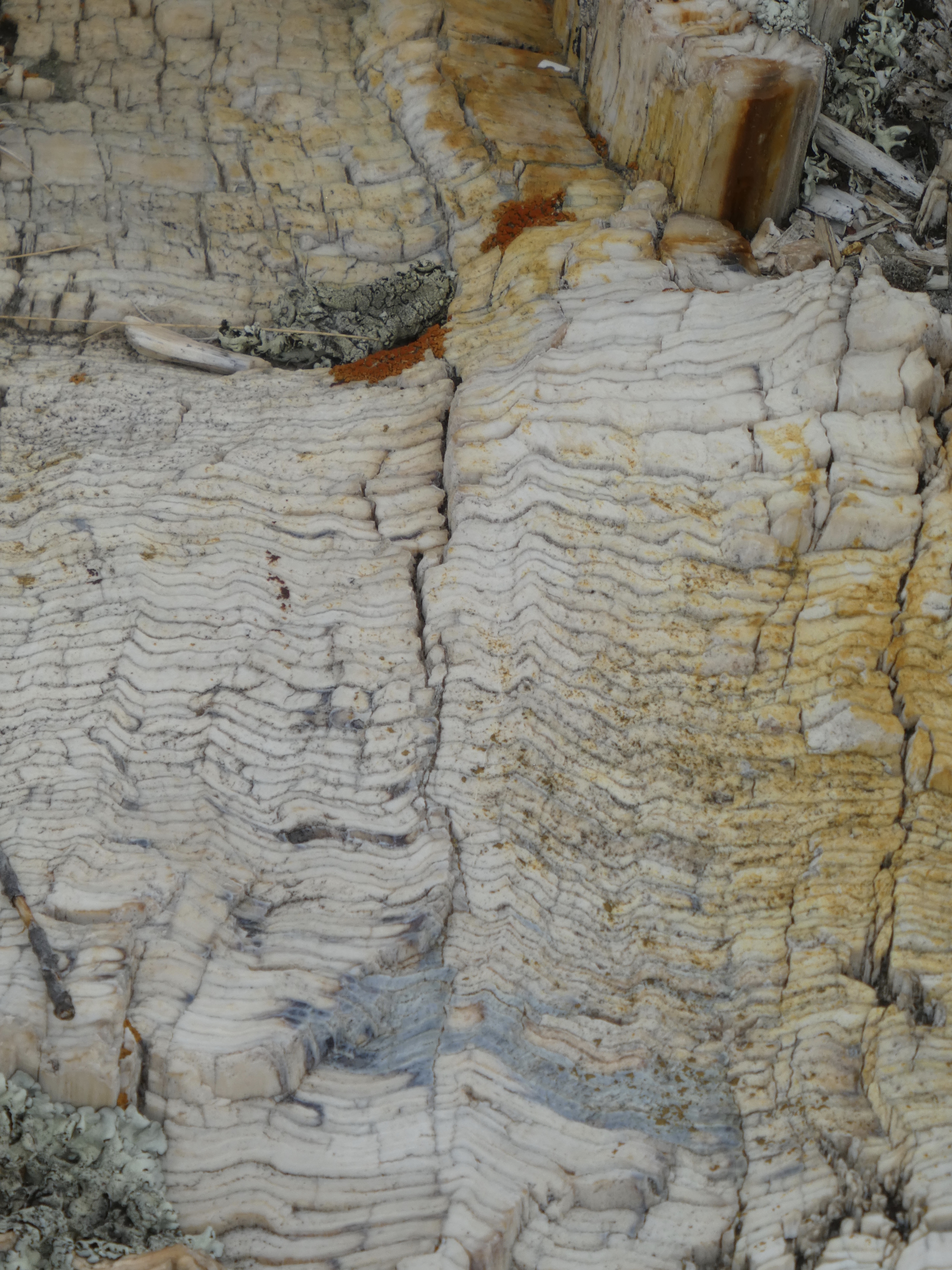
Rings in fossilized redwood stump

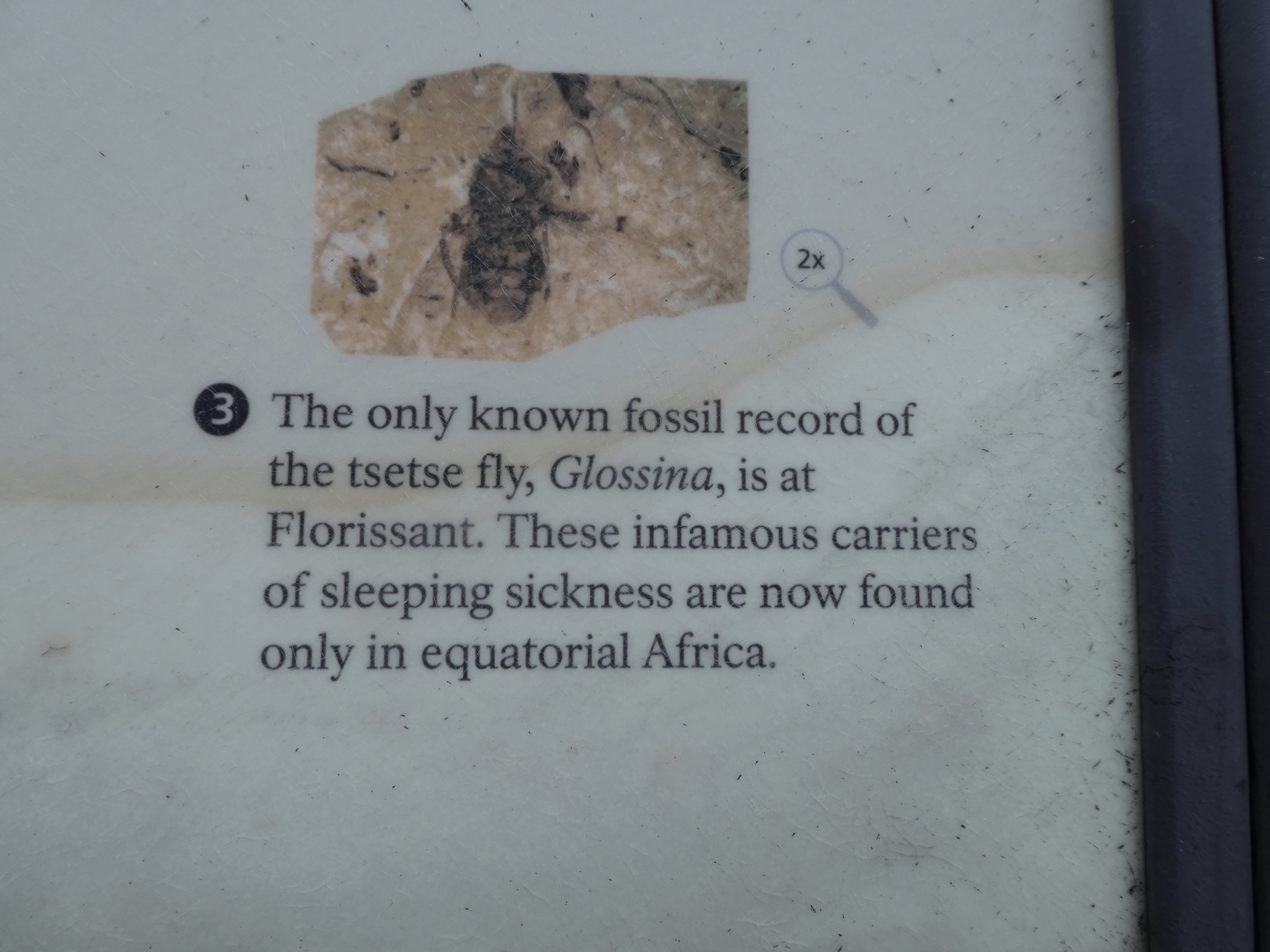
These rings are still visible after 34 million years.   They provide information about environment and climate.  The rings show more favorable growing conditions than coastal redwoods of California today.   Tropical insects were also here.   We had tsetse flies?

Tsetse Fly

This fossil was not on display the day we visited.   Let’s go inside.

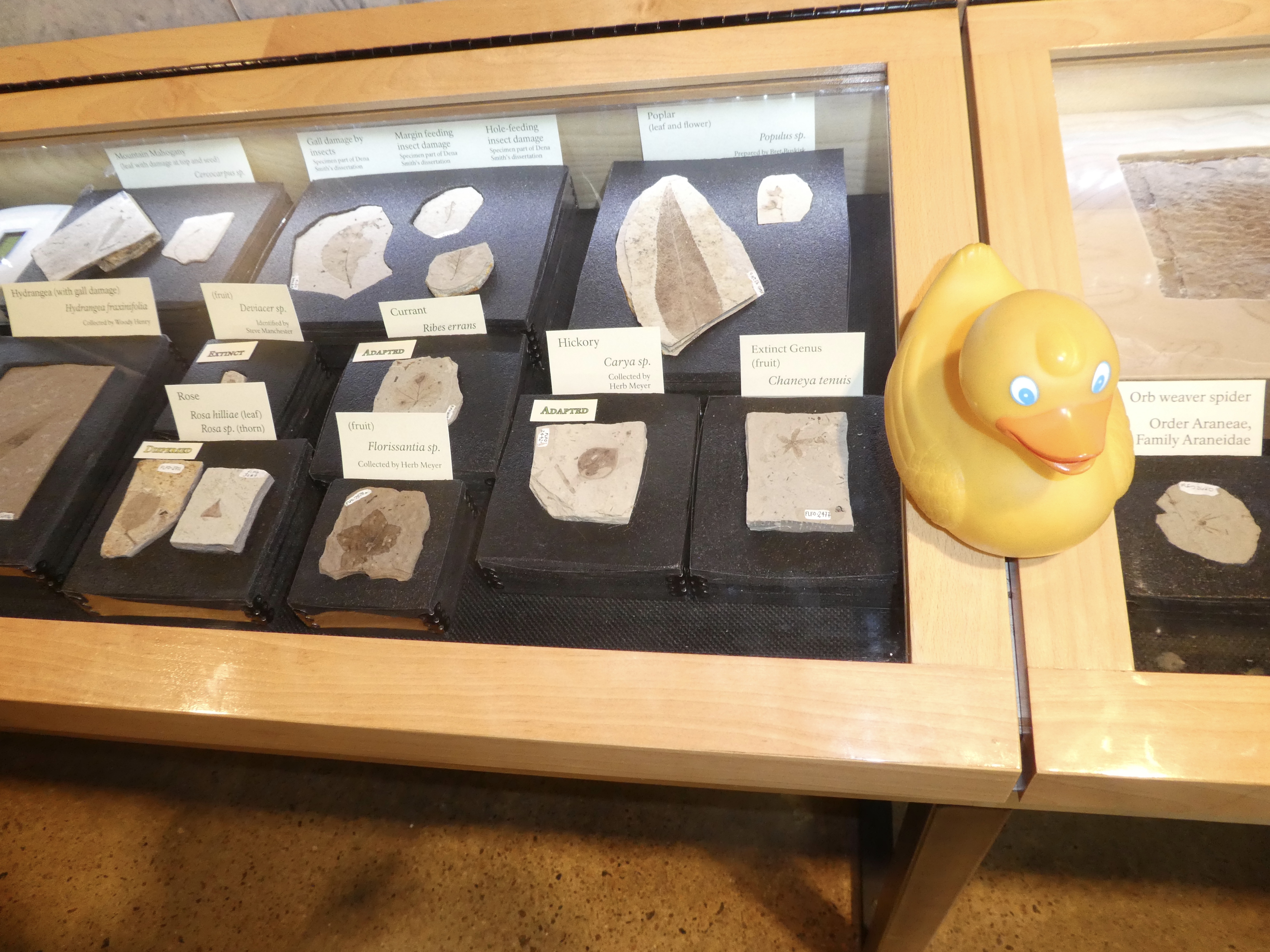
Fossil display at Visitor’s Center

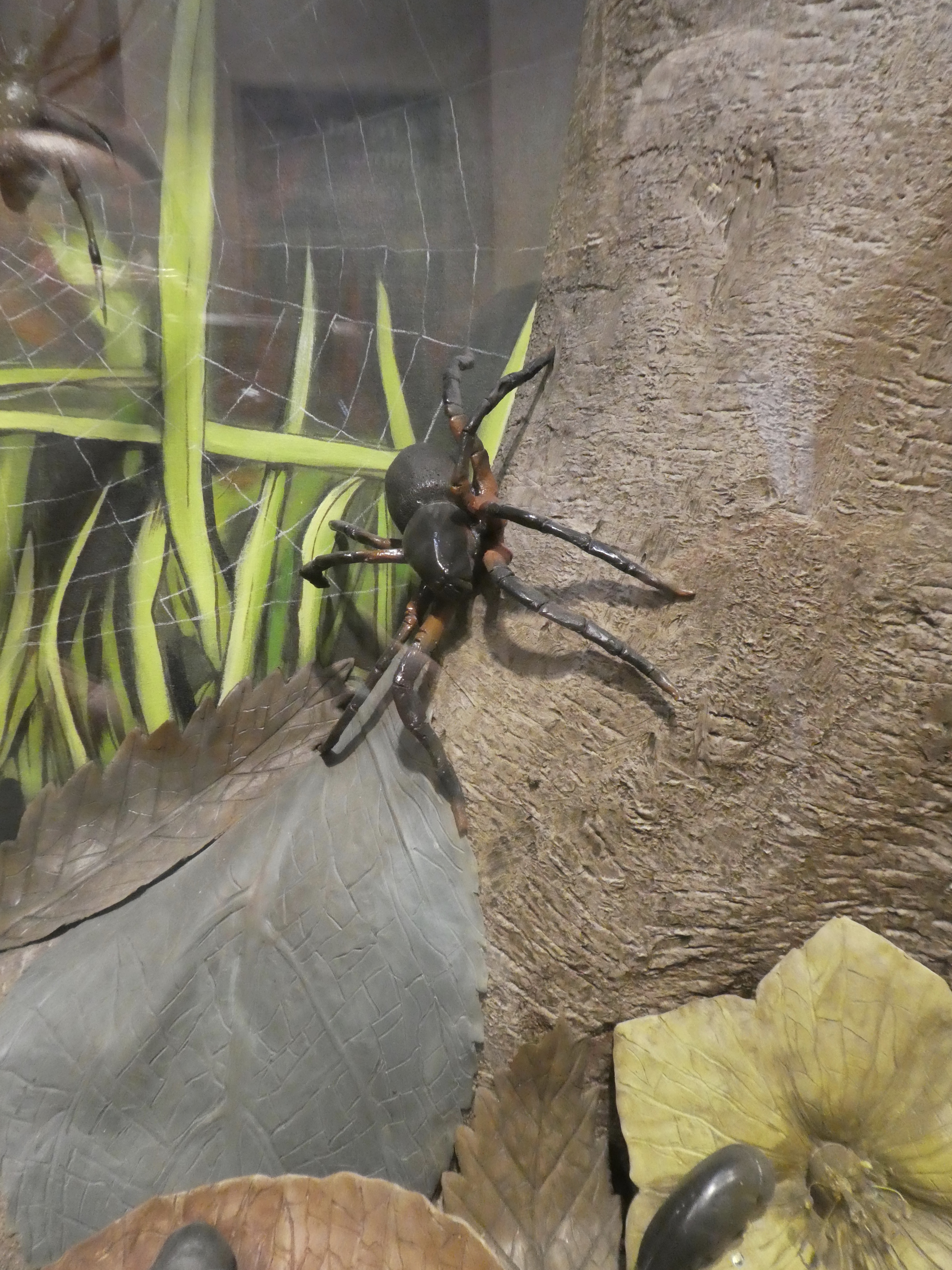
There are many fossils on display.   On an interactive display we met this spider.

Spider

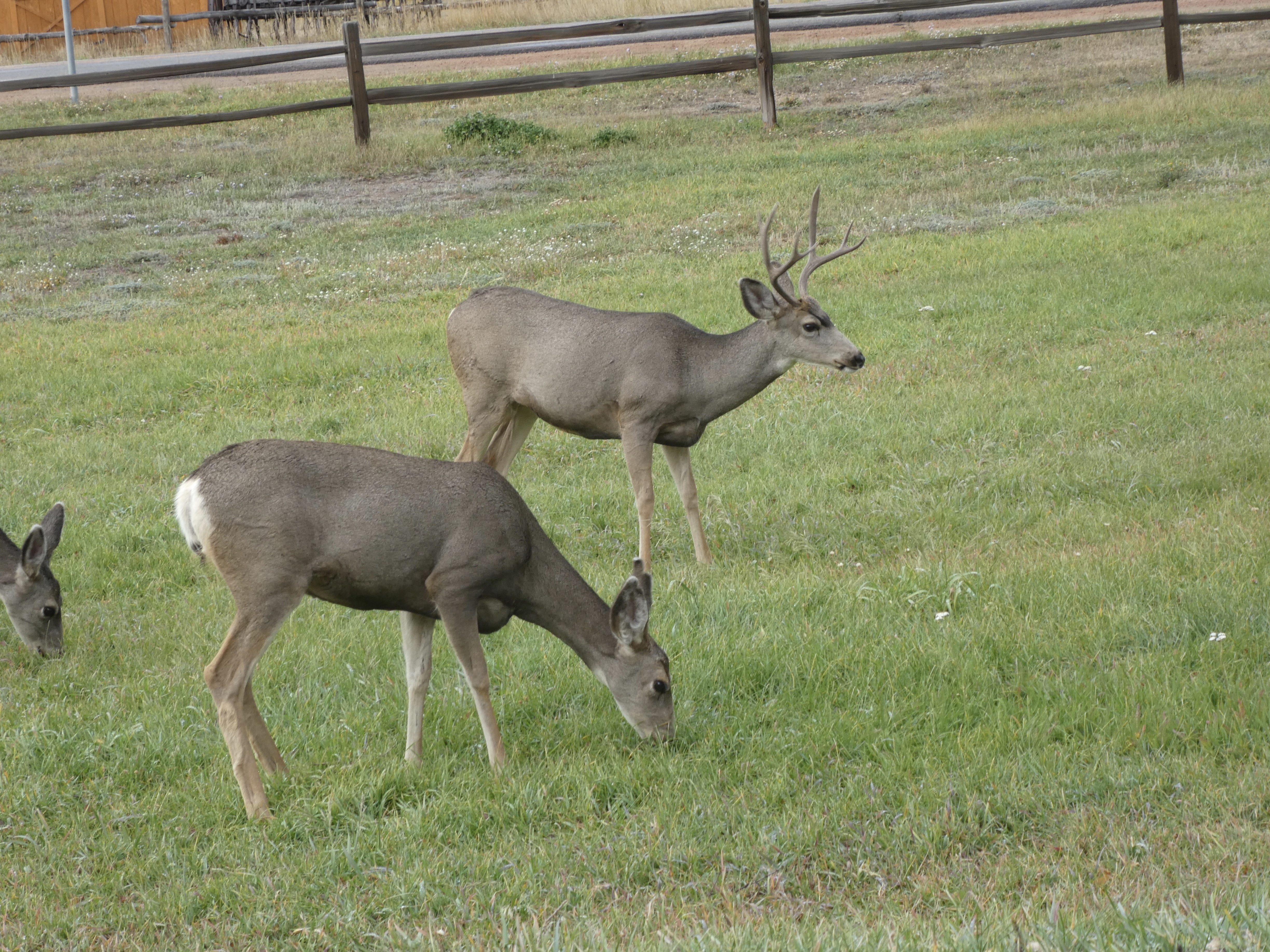
This stealthy ground spider (Palaeodrassus) lived under the bark of a tree.  Rather large spider!  Florissant Fossil Beds, which according to the U.S. National Park Service, now look like a grassy mountain valley in Central Colorado, is one of the richest and most diverse fossil deposits in the world.   This place is very interesting and we could spend much more time here.   But we are leaving now and heading back home.   A couple miles to the town of Florissant, we see these deer.

Deer are so graceful and delicate

There is one male and several females.  He is watching.   But I like her.

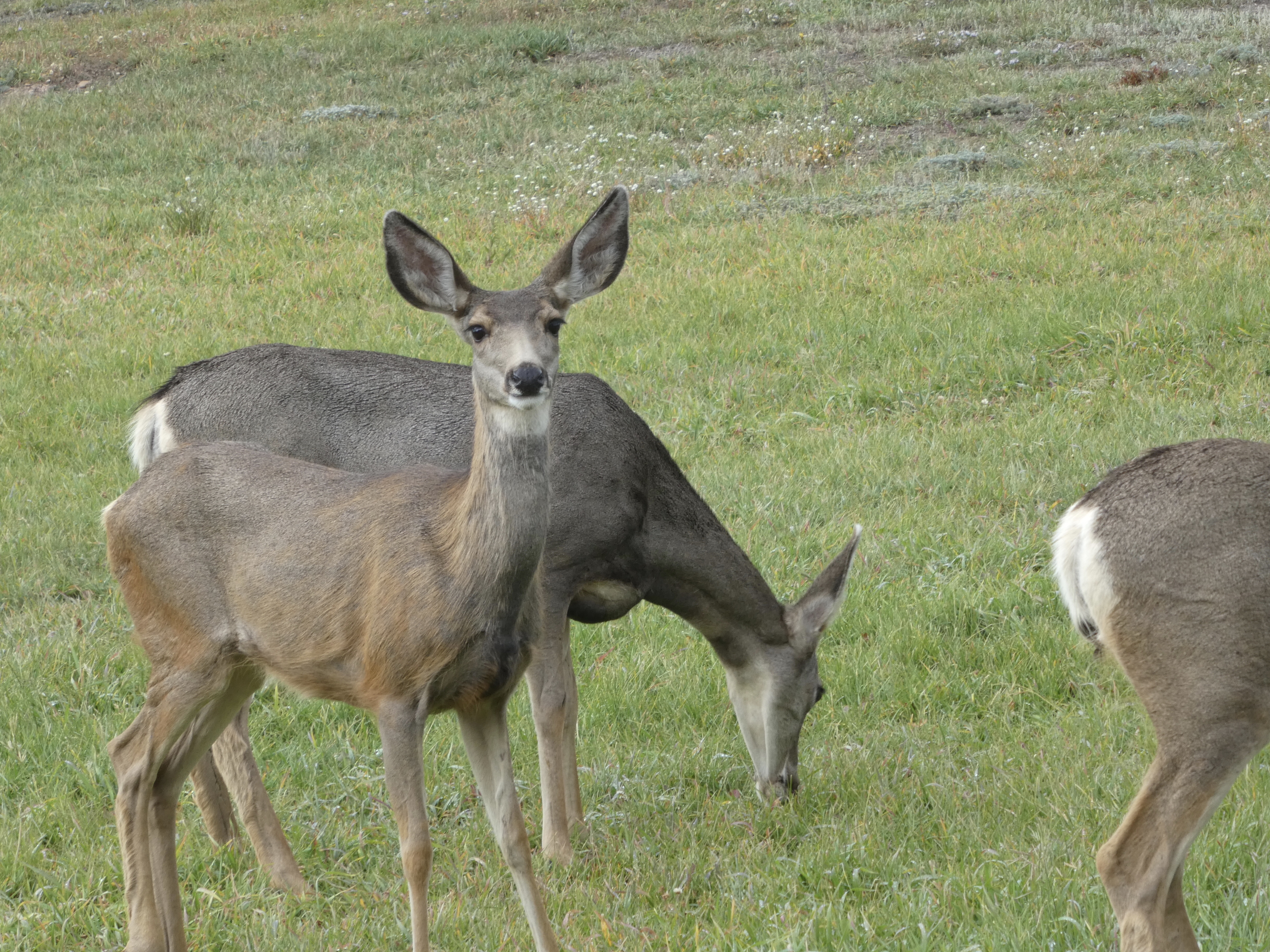
My new friend

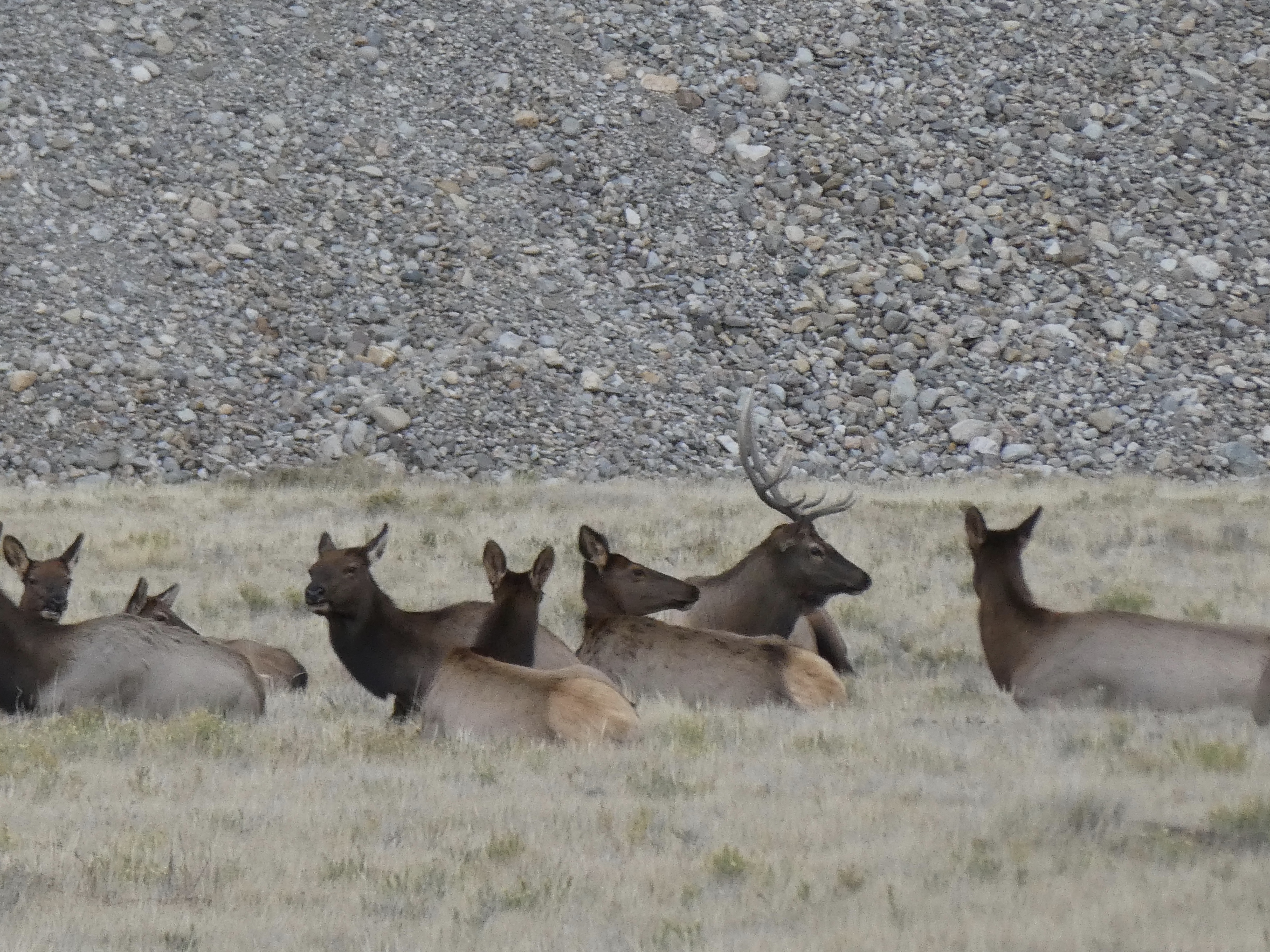
I think this deer is watching me.   Further along we saw a herd of about 50 elk resting in a grassy meadow.

Elk lounging.

We love seeing the wild animals.   The trees of our northern mountains have changed color and many have fallen.   We are in the central mountains now and the leaves are still beautiful.

Autumn in the Rocky Mountains

We love to see fall colors in the mountains.   Especially on a warm calm day.   Are you enjoying the changing seasons where you live also?

Over Trail Ridge Road with Zeb the Duck

A favorite summer drive for us includes visiting Winter Park, a stop at Grand Lake where we enter Rocky Mountain National Park.   We drive over Trail Ridge Road, the highest continuous paved highway in North America.  Exiting the national park at Estes Park we stay there for a little shopping and then return home.   It is a full day, but a wonderful day.   That is the plan for today.   First stop is Winter Park, Colorado.

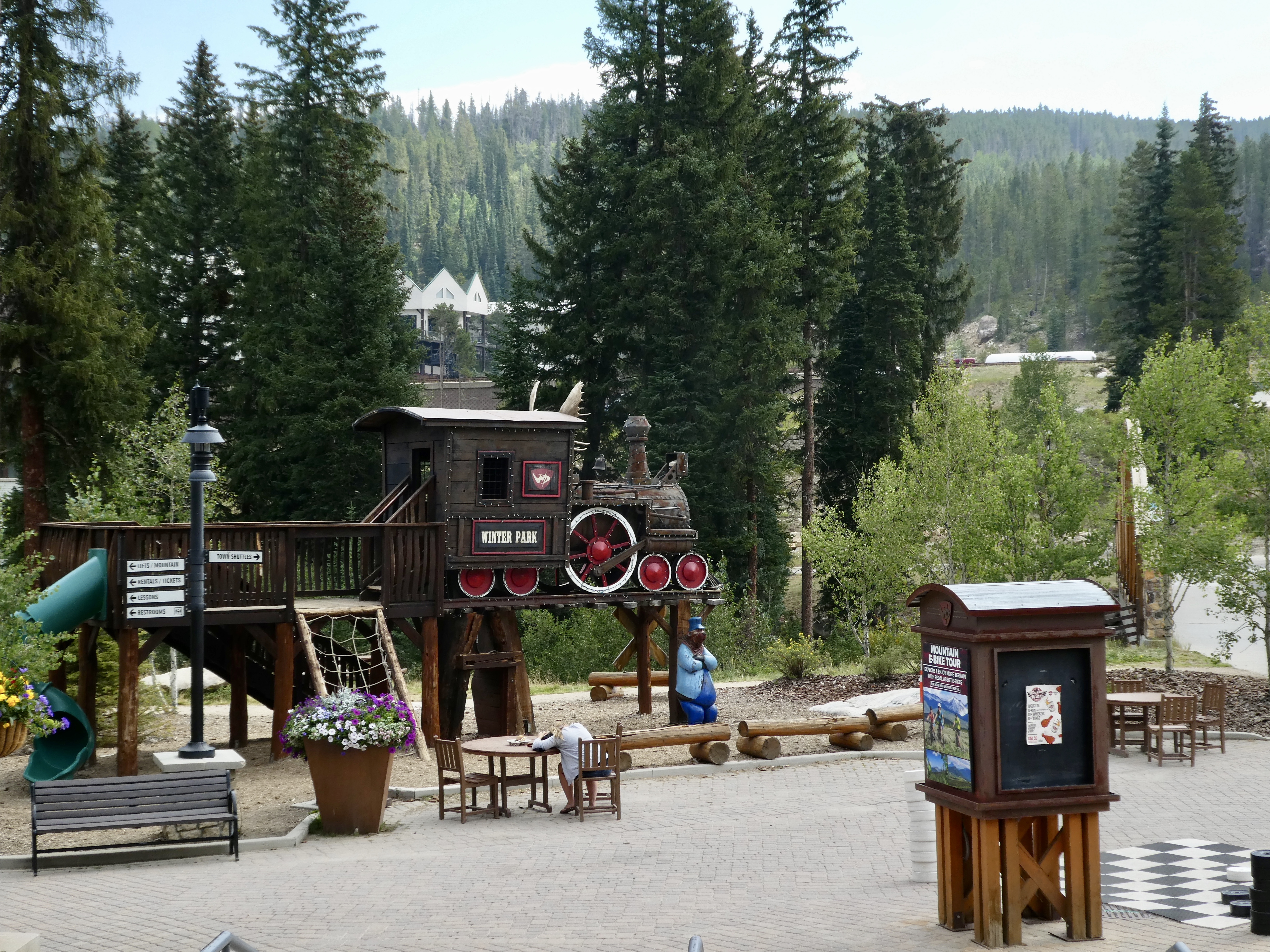
Winter Park Resort

This is a mountain resort, skiing in the winter and many opportunities in the summer.   In the winter there is a ski train from Denver to Winter Park.   In the summer we love the Alpine Slide.

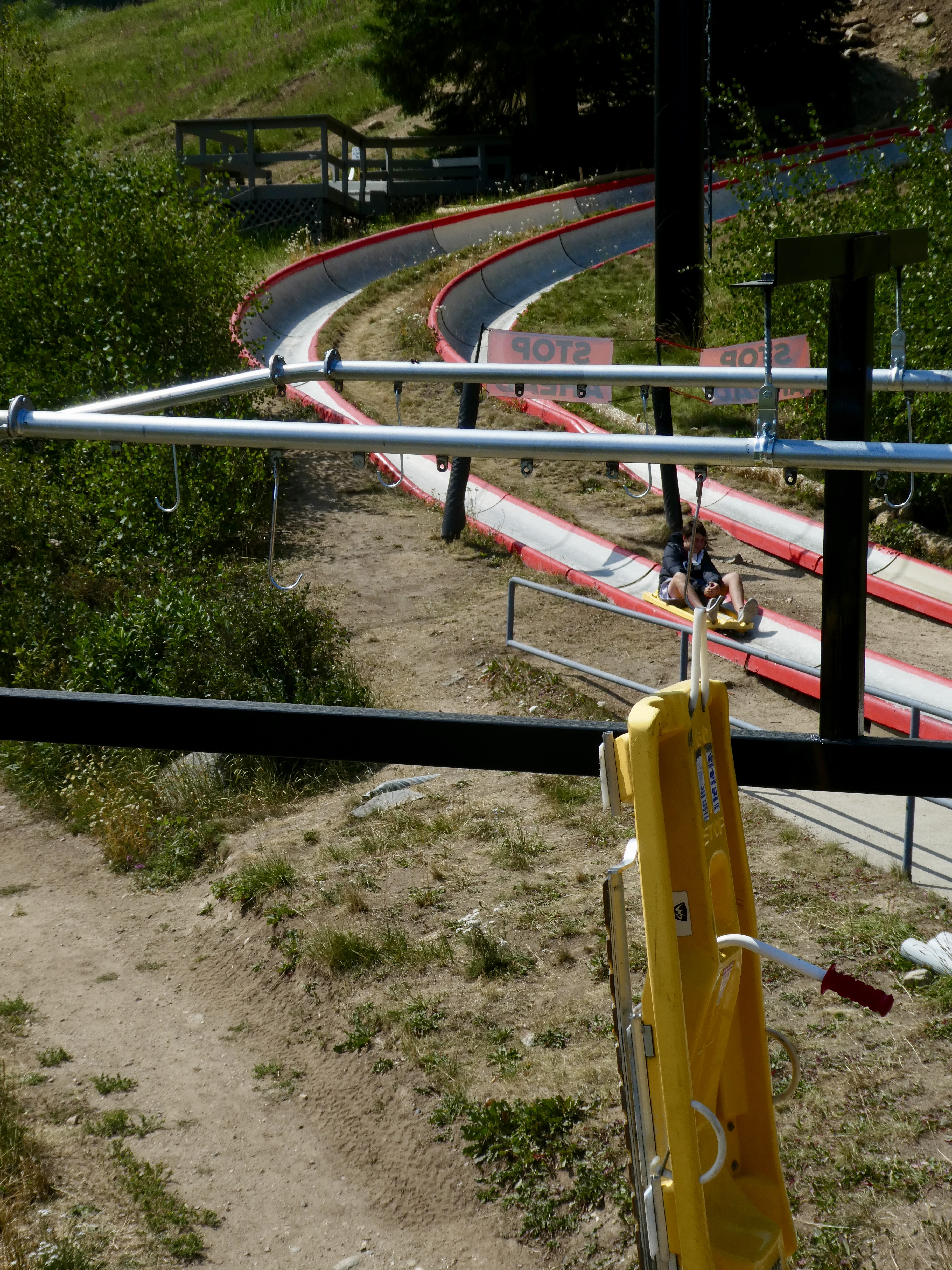
Alpine Slide, Winter Park Resort

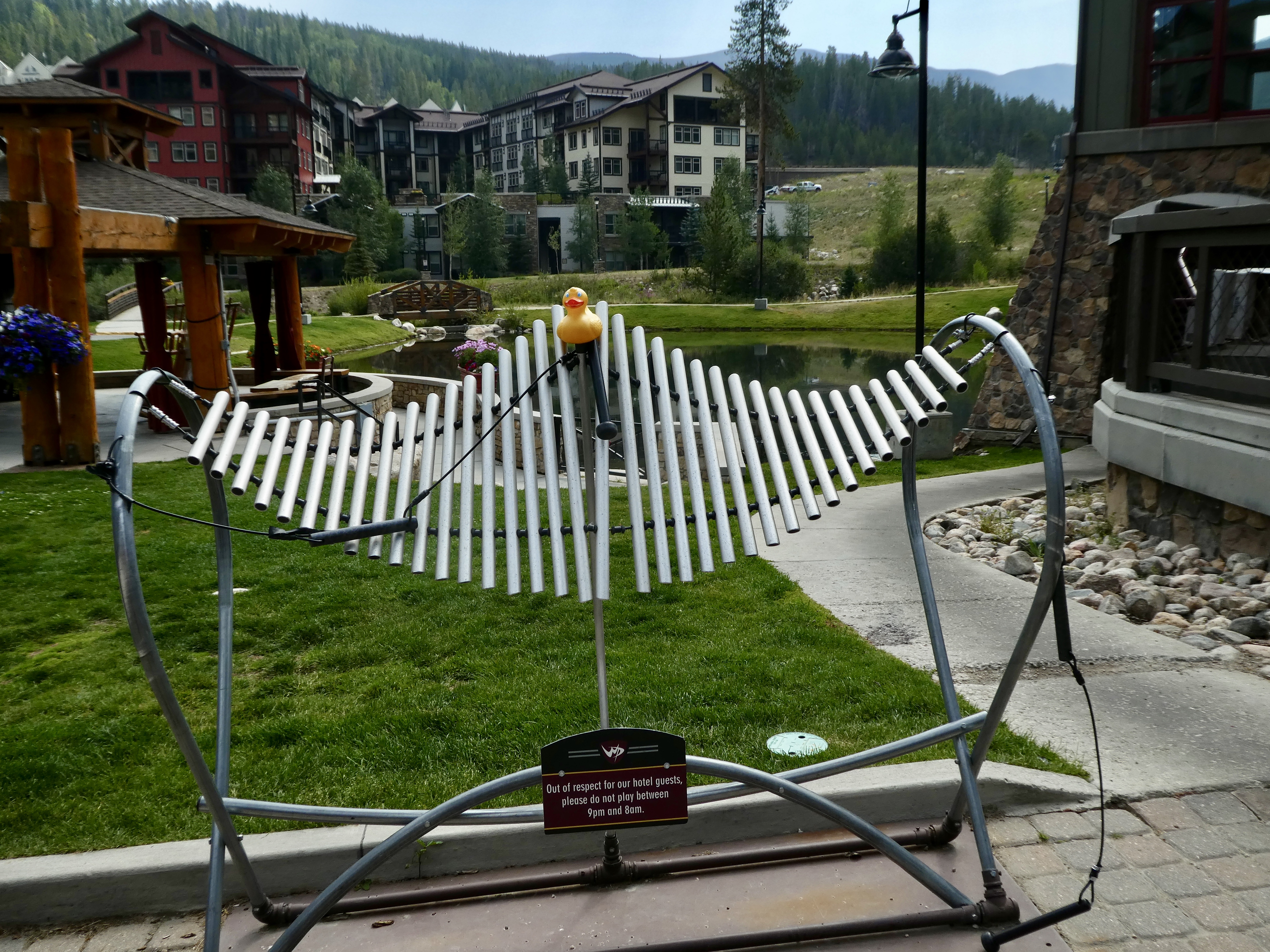
It is hard for mom to get photos of this, but here you can see the half pipe track we use.   Also there is a rider on a sled at the end of the ride.   When we finish, we take our sled and hang it on the line so it can be taken back to the top of the ride.  We ride the ski chair lift to the top of the mountain, get off, walk a little way to get a sled, put our sled on the half pipe run, sit on sled, check our brakes and ride to the bottom of the mountain.   It is really fun!  We can make music here at Winter Park Village.

We can make music.

In the winter humans ice skate on the lake behind us.   Back in the car, we drive to Grand Lake, Colorado.   Grand Lake is the name of the town, but there is a lake, named Grand Lake here.

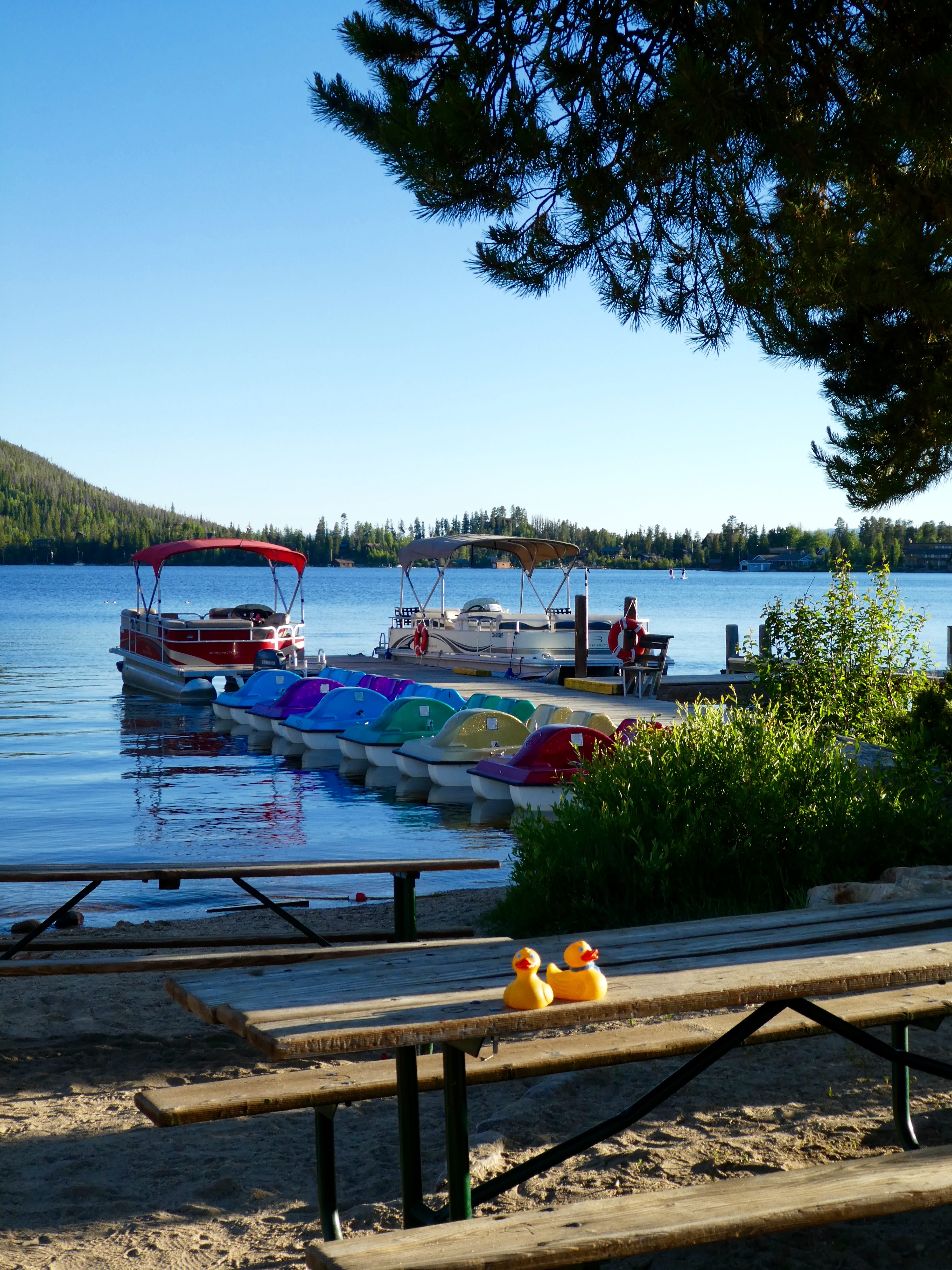
Boats available at Grand Lake

Hardy souls swim here, but we don’t want to swim in a cold mountain lake.   But these boats on Grand Lake are really fun.   Now let’s enter Rocky Mountain National Park.

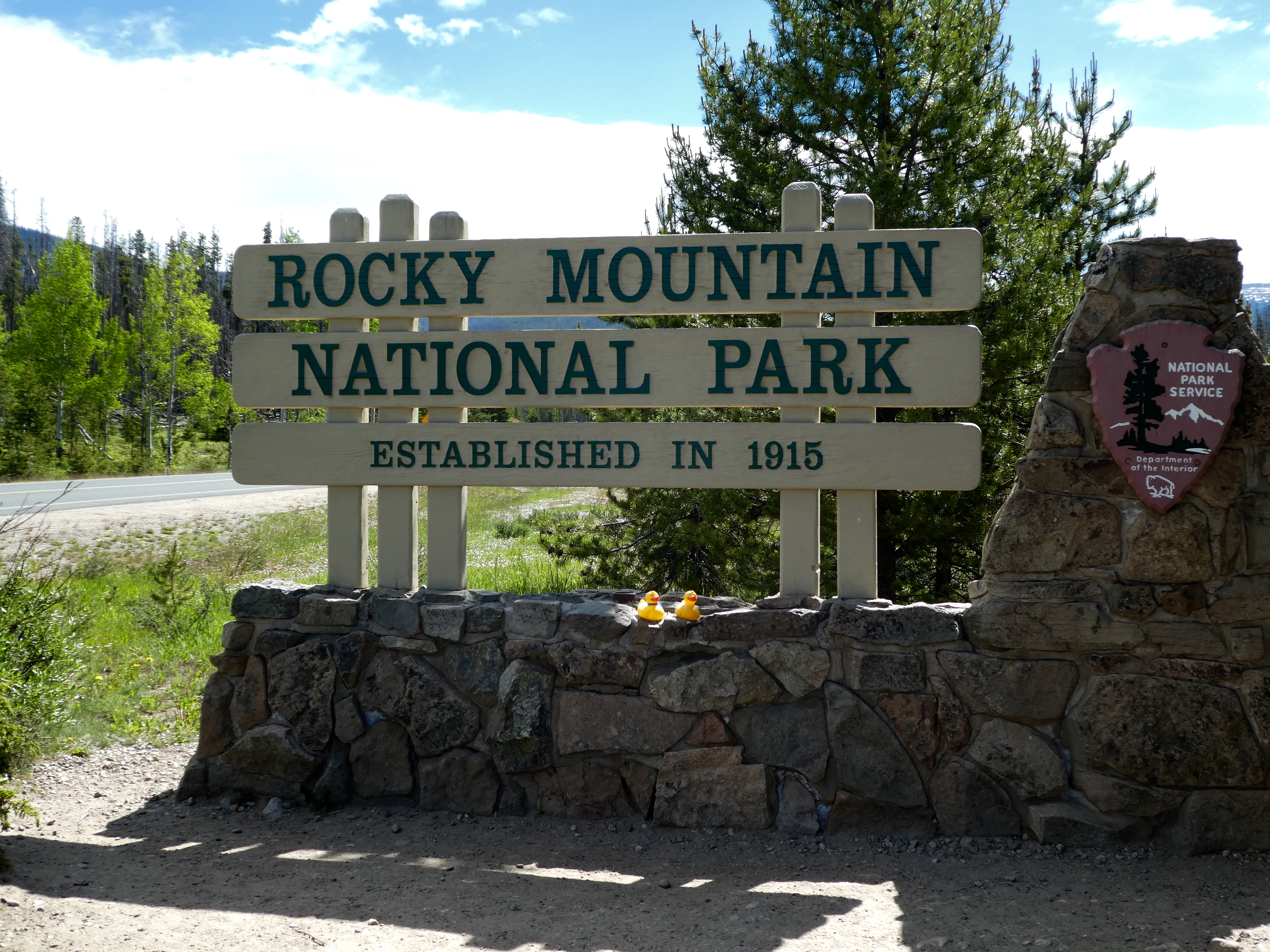
Rocky Mountain National Park, west entrance

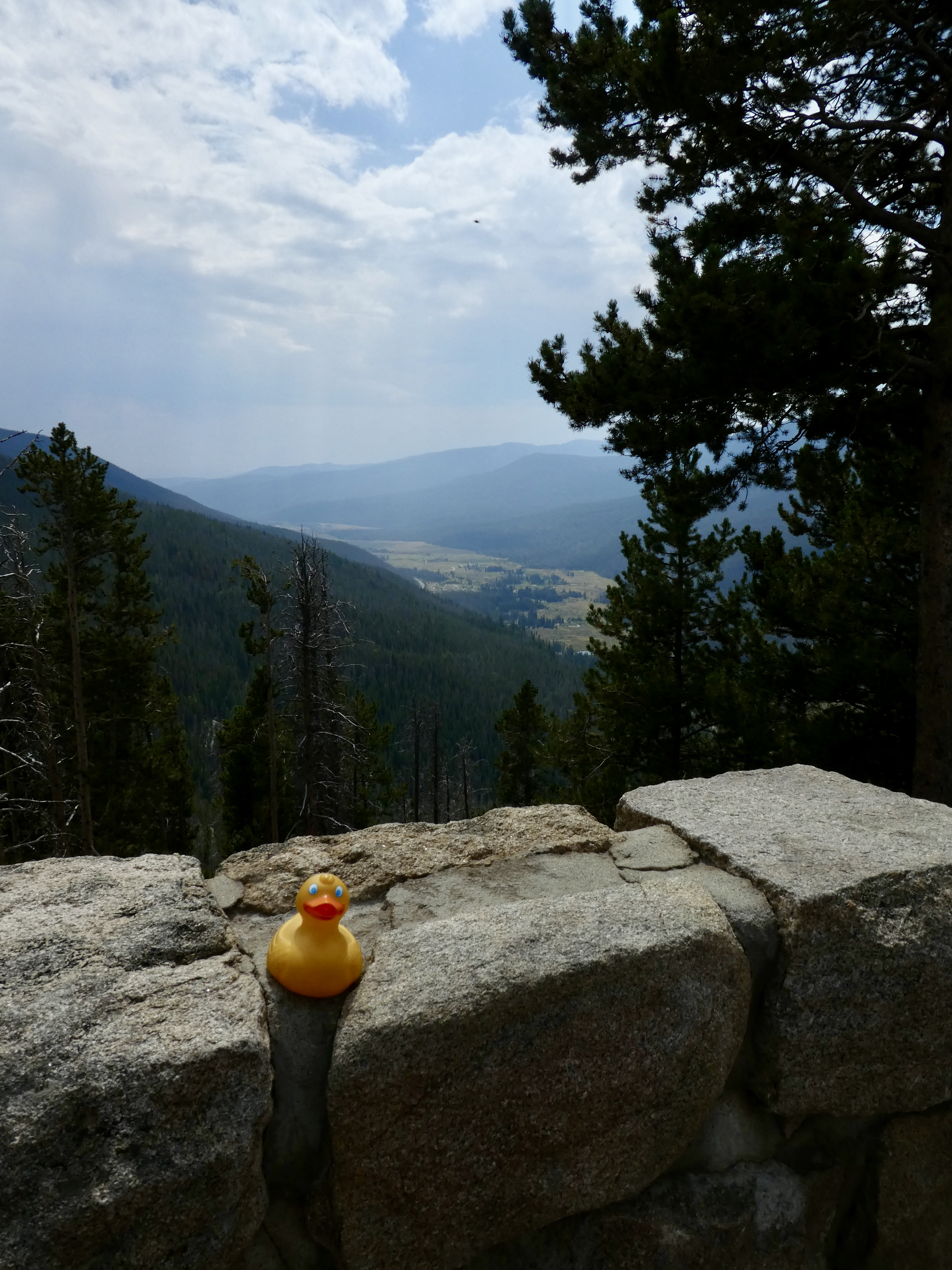
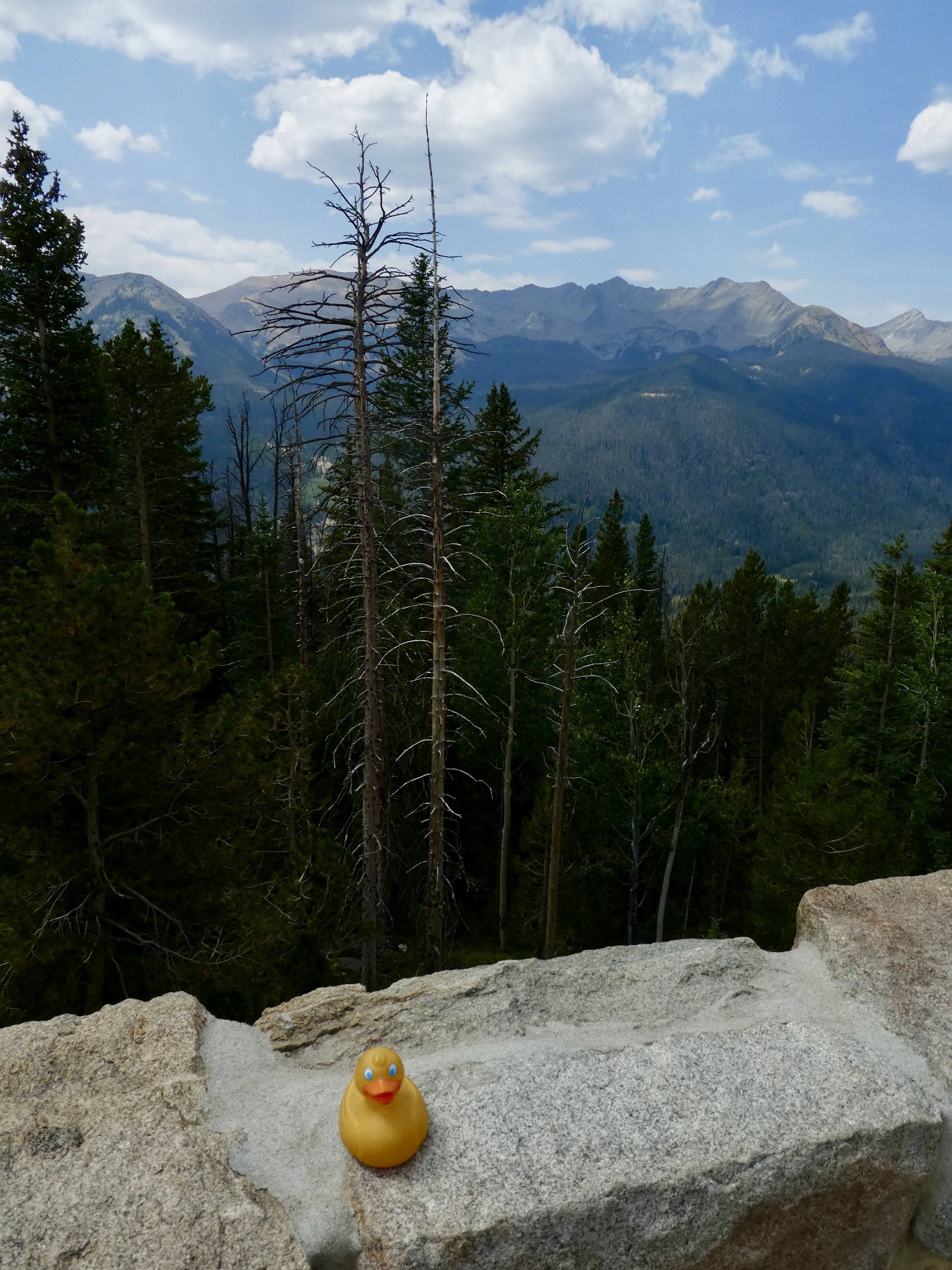
This is one of four national parks in Colorado, and probably our favorite.   Here I, Zeb the Duck, am admiring the beautiful mountain scenery.

In Rocky Mountain National Park

You may notice dead trees behind me. The Pine Bark Beetle is killing many of our lodge pole pines.   This beetle epidemic is in Canada, the United States and into Mexico, killing trees in the forests.   This beetle epidemic has occurred several times in the past 500 years, but it is so sad to see so many dead trees.  I just love lakes.

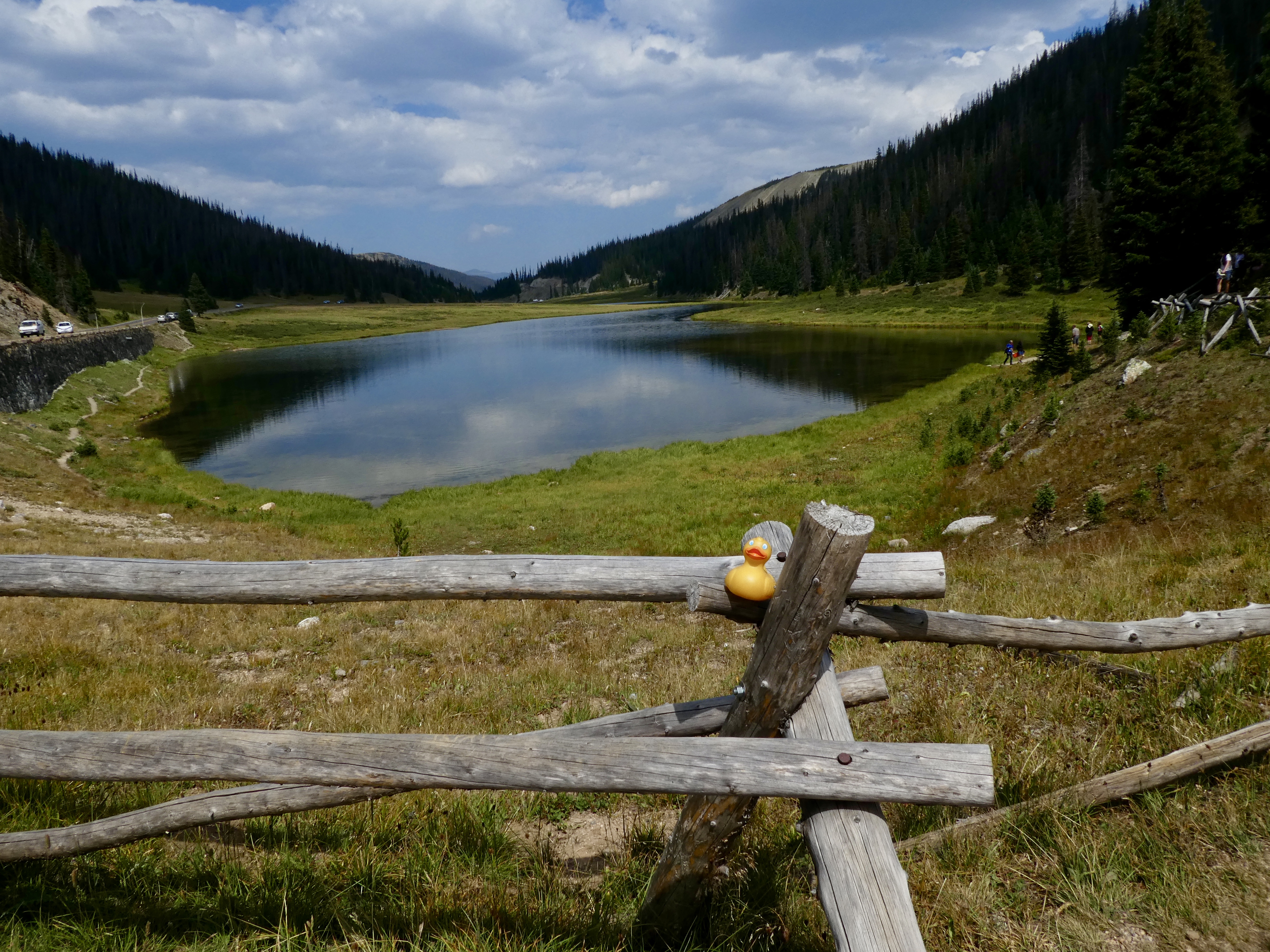
Alpine Lake

This alpine lake is so beautiful and so serene.   Driving further up the mountain on Trail Ridge Road, we are now above timberline.

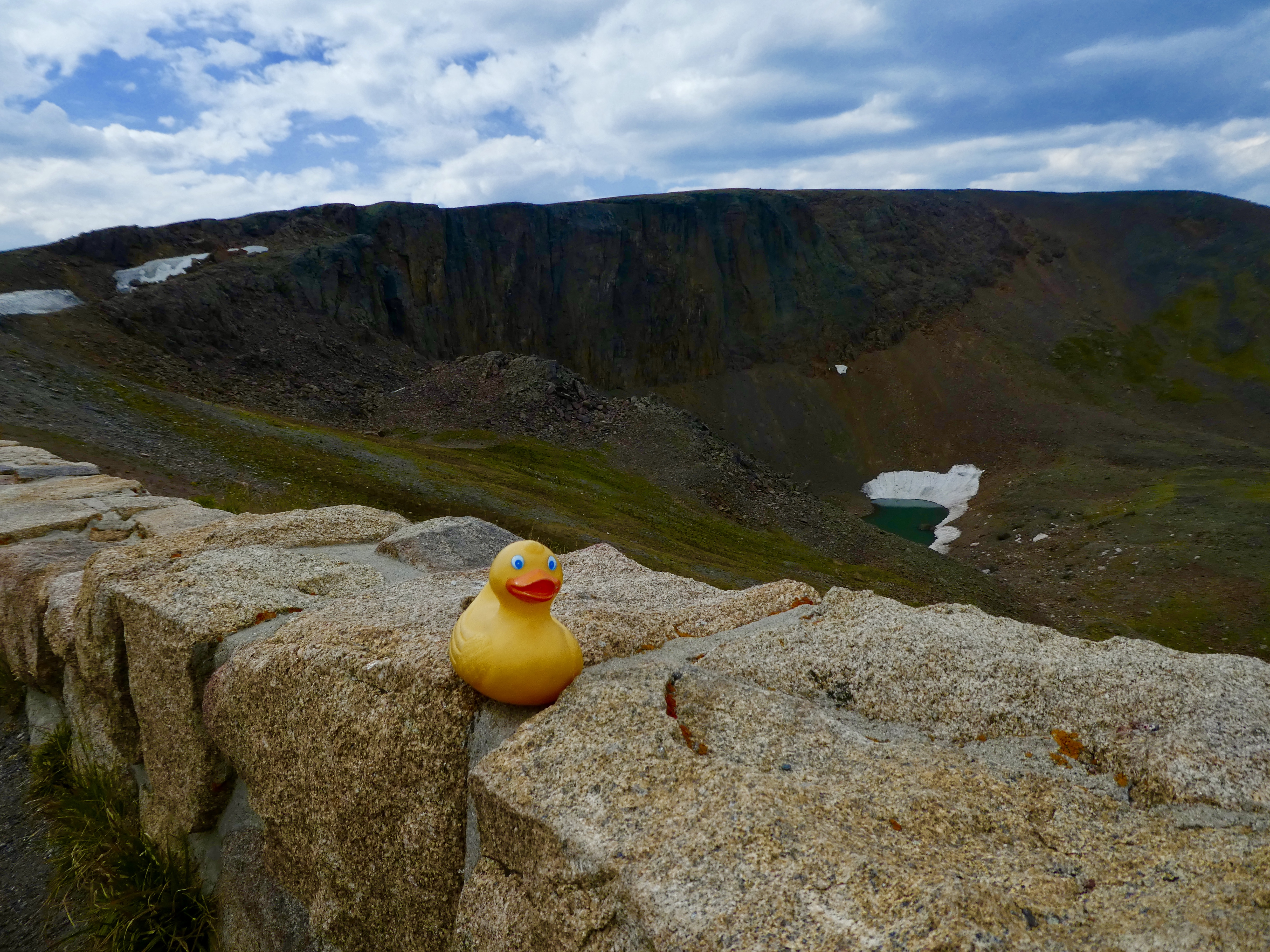
Above timberline. It is too high for trees to grow

The growing conditions at this altitude and temperatures are too severe for trees to grow.  You can see a lake and snow below us.   We were there in August, so this snow is from last winter.   Remember, the higher you go, the colder it gets, so snow in some areas doesn’t always melt during the summer.   On Trail Ridge Road we have experienced incredible mountain scenery.

Beautiful views

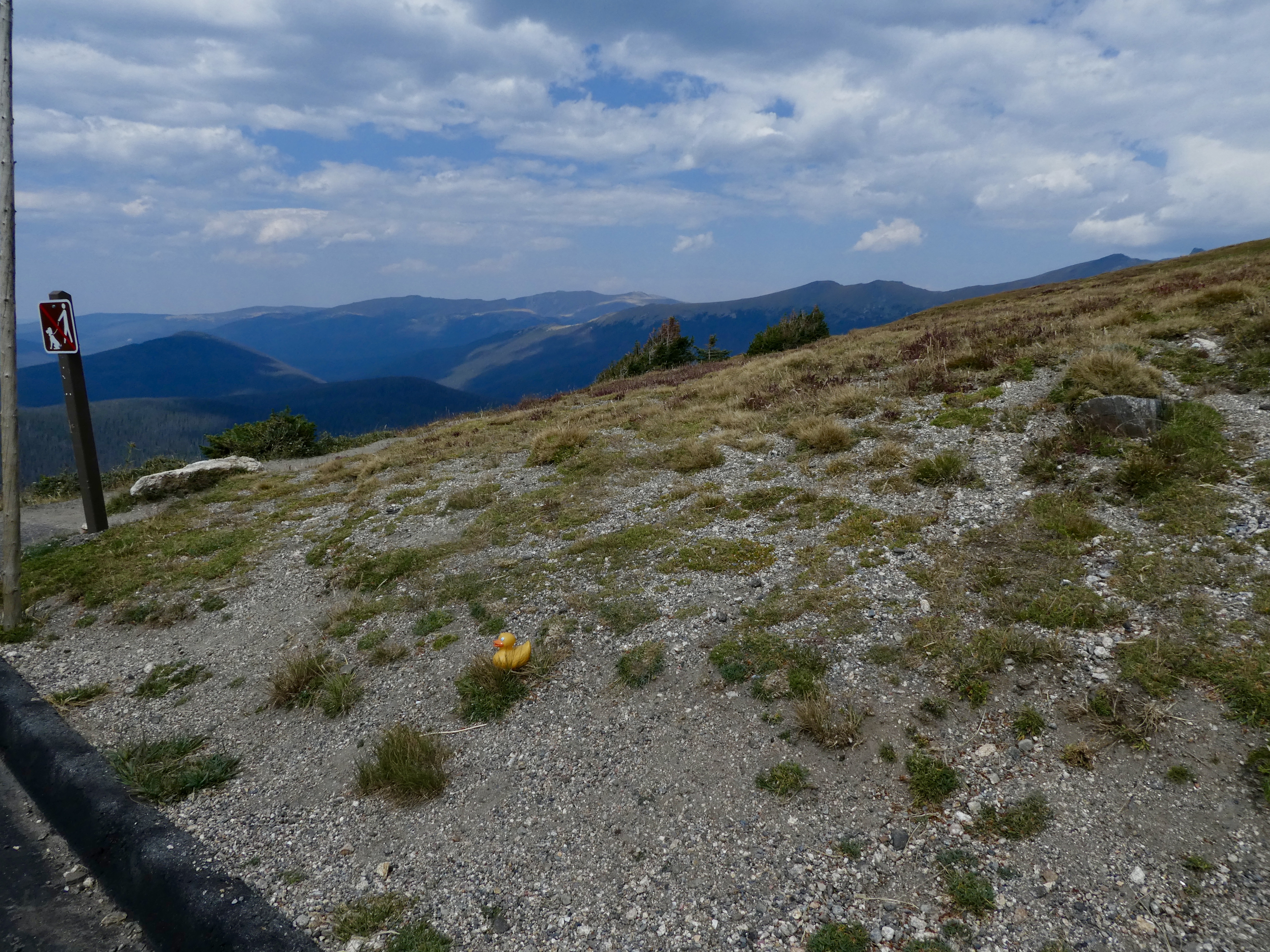
We climbed through alpine conditions.  Visited above timberline.   Stopped near Visitor’s Center.

Near Visitor’s Center

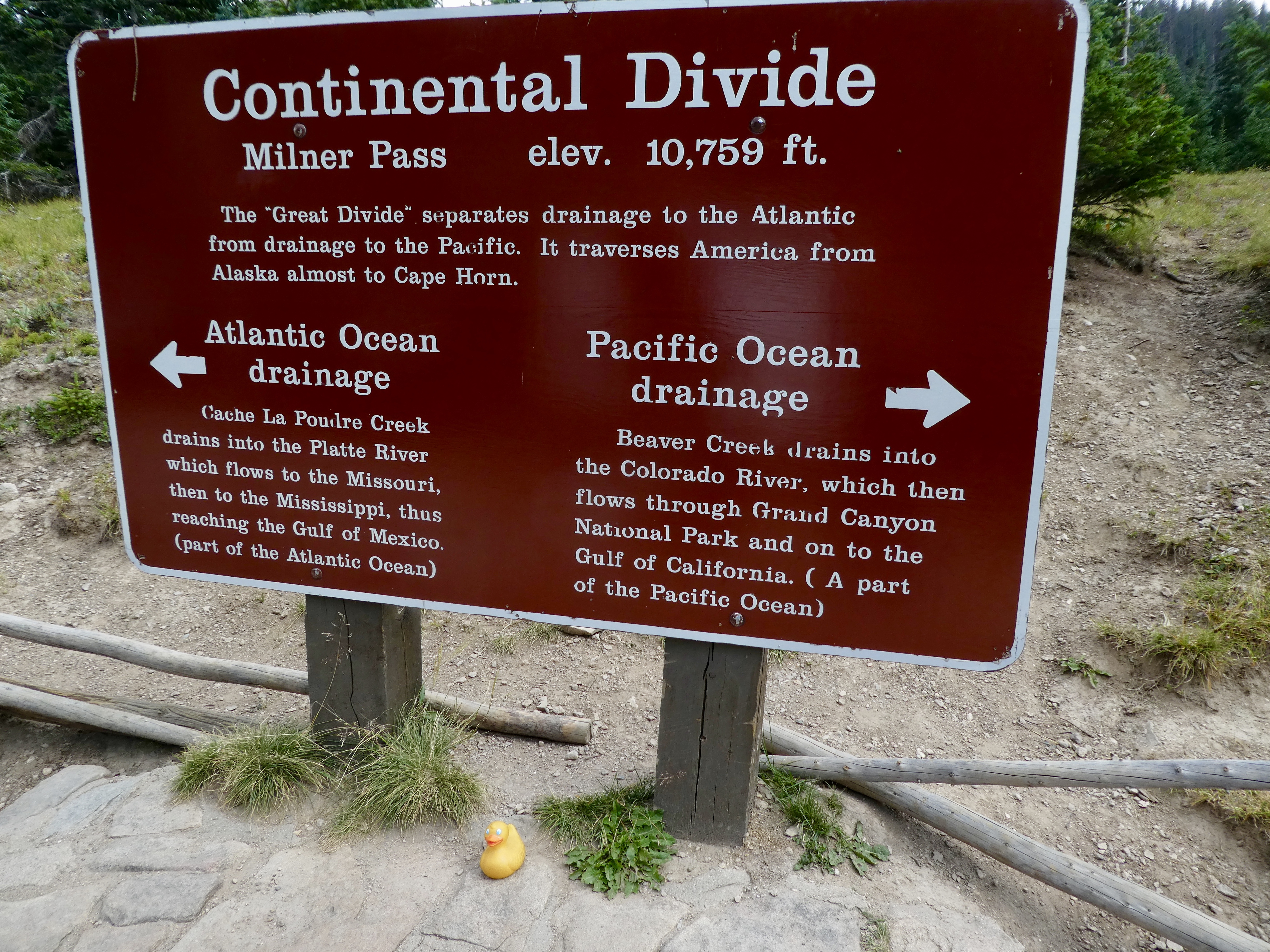
Passed through Arctic tundra.  We crossed the Continental Divide.

Crossing Continental Divide

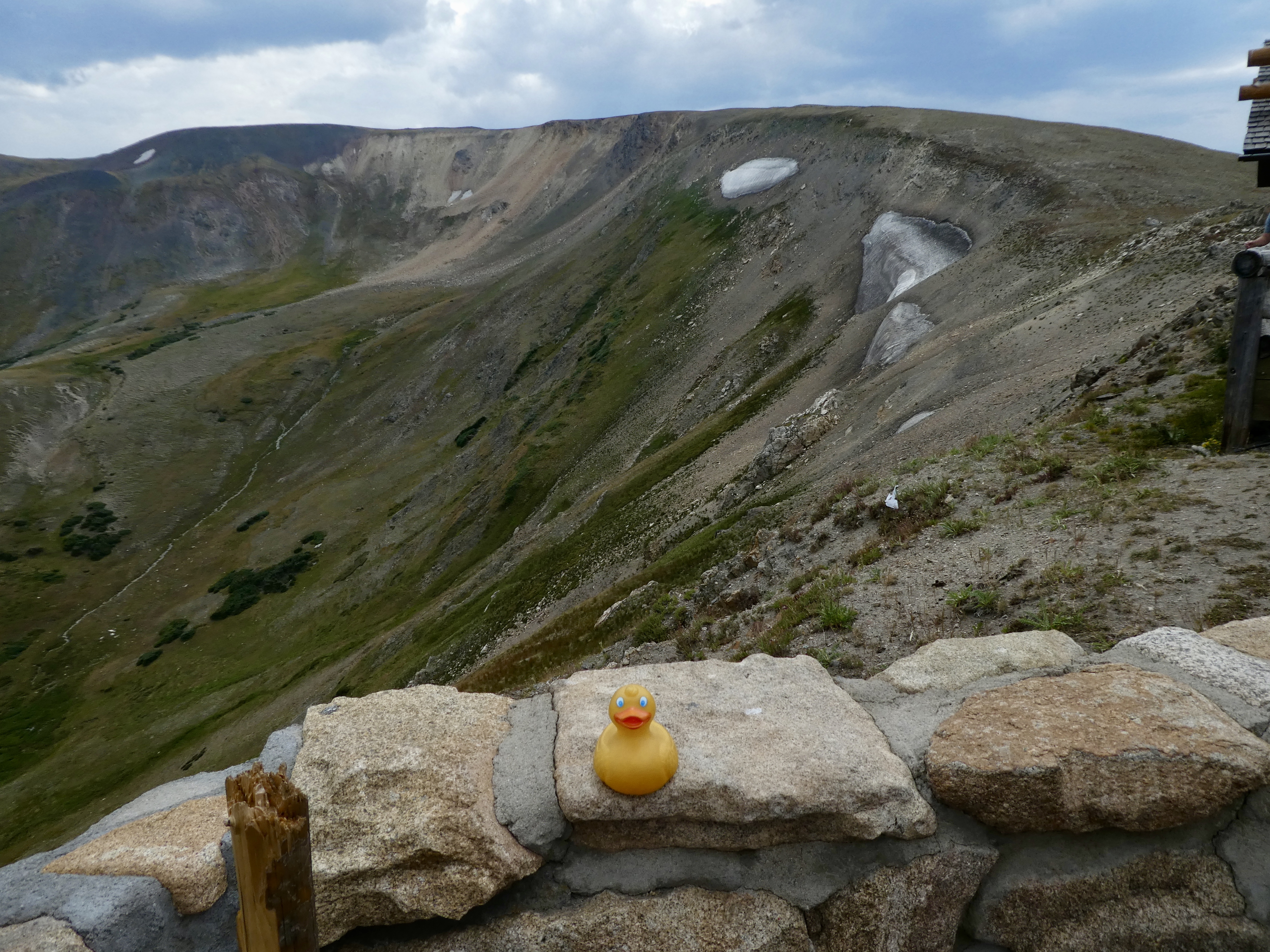
Viewed landscaped shaped by volcanic activity.

All types of terrain here in Rocky Mountain National Park

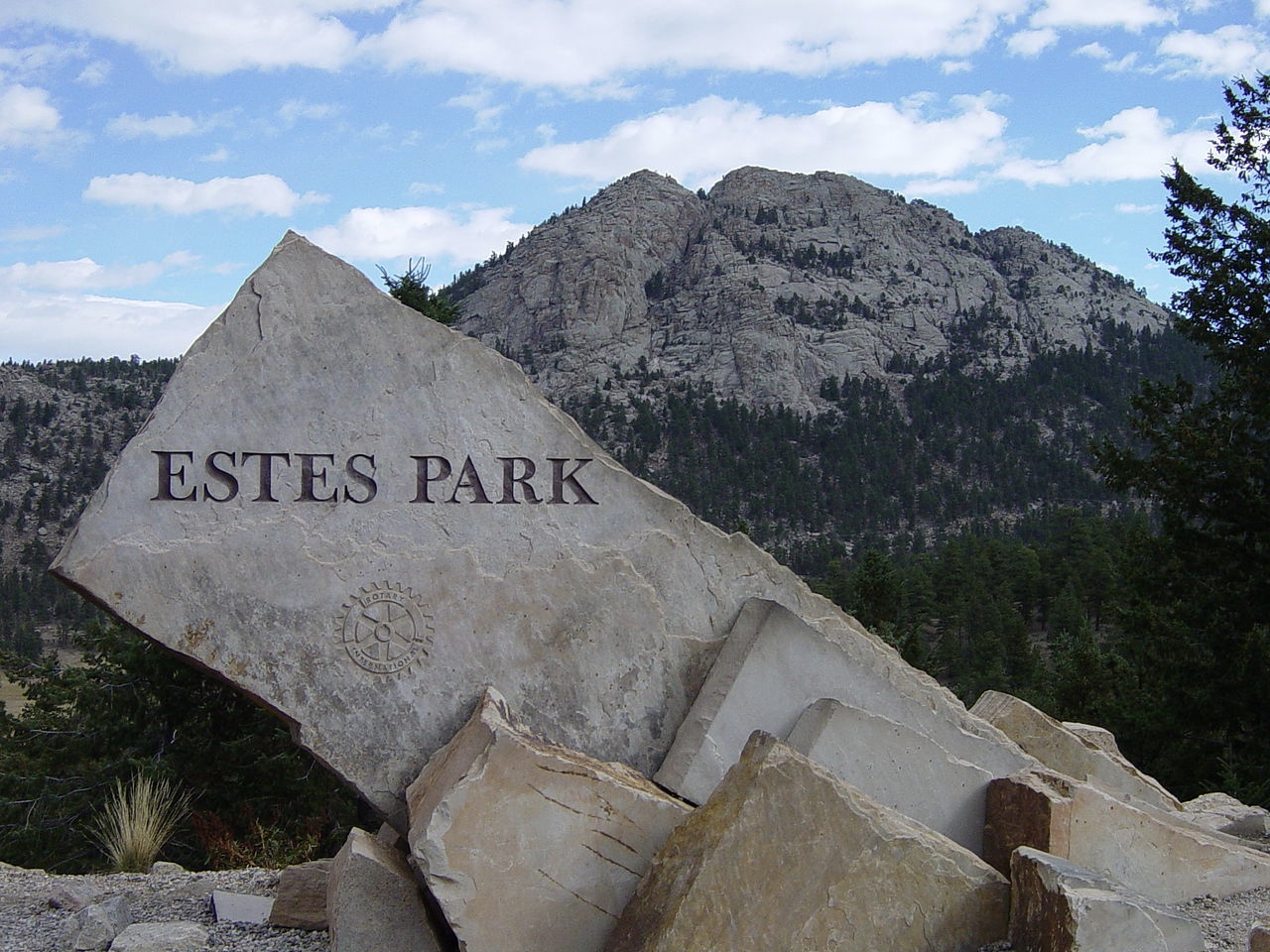
And descended into the resort town of Estes Park.   We could spend days or more exploring this park and take thousands of stunning photos, but not today.   We enter Estes Park.

Welcome to Estes Park

We walk through town and of course mom always stops at Laura’s Fudge Shop and at the Taffy Shop.   At one of town, we watch the river and listen to the soothing sounds of water tumbling over the rocks.

Scenic river through Estes Park, Colorado.  This is a free photo from the internet.

We love this town and we love this drive.   When you visit Colorado, we encourage you to drive over Trail Ridge Road.

Georgetown Loop Narrow Gauge Train with Zeb the Duck

Today we are going to Georgetown to ride the train.   I love that train.

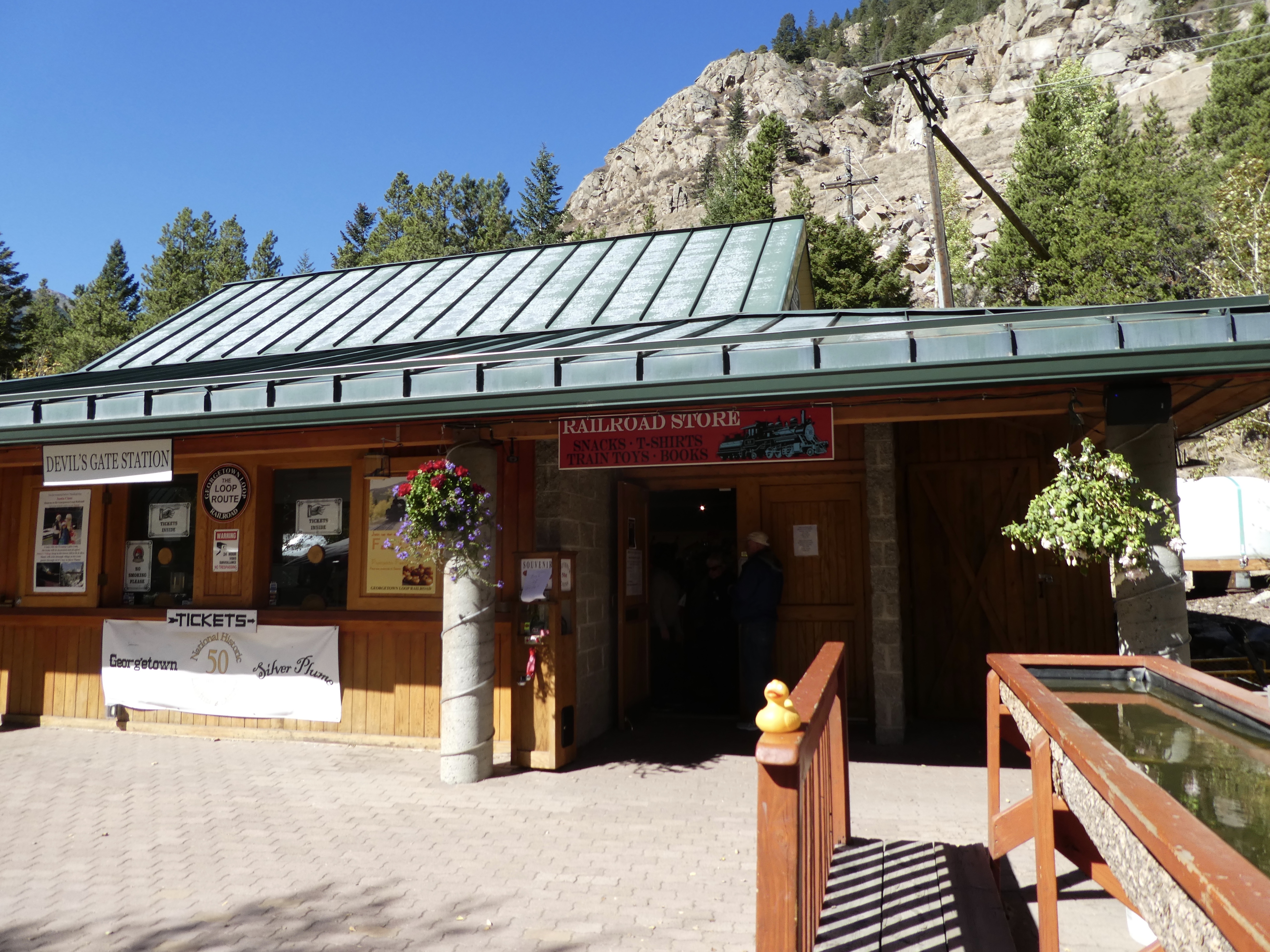
Georgetown Loop Train. Tickets and gift shop

Georgetown, Colorado is a former mining town.   In 1884 a narrow gauge train was completed to connect some mining towns.    At the time, this train was considered an engineering marvel.   There were horseshoe curves, 4% grades, 4 bridges across Clear Creek and Devil’s Gate High Bridge.   The distance between Georgetown and Silver Plume was only 2 miles (3.2 km) but the train traveled 4.5 miles (7.2 km) to go through the narrow canyon between the two mining towns.   Mining ended, roads were built and the train was dismantled in 1939.   But during the 1980’s, the train was restored and is now a tourist train.   Inside the building we will get our tickets.  We did make the recommended reservations.   We are glad we did.   It is a very full train, and we went on Wednesday.   We leave the ticket and gift shop and wander around.

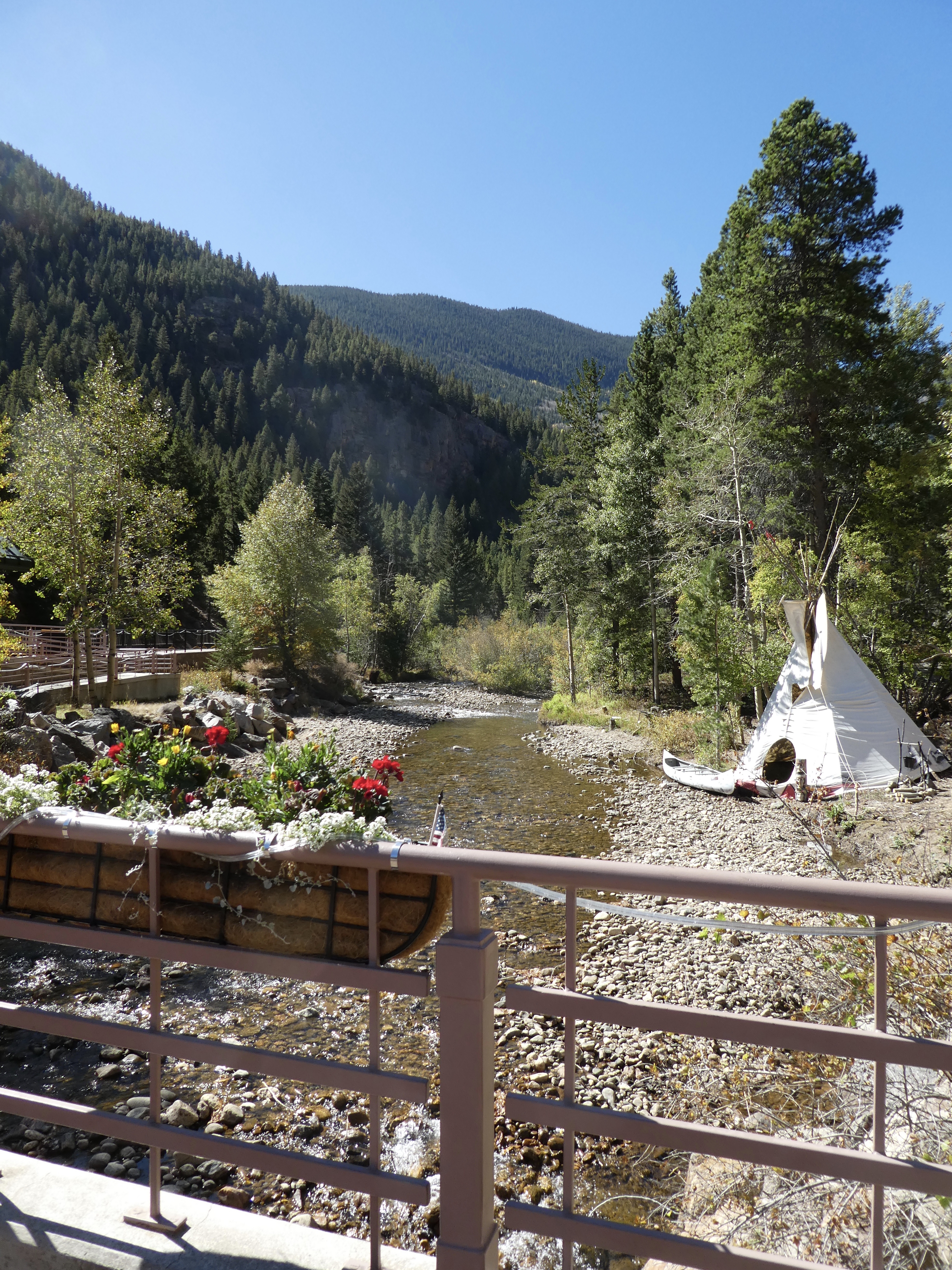
Clear Creek. Canoe and tepee

From the bridge over Clear Creek, we admire the canoe and tepee.   And we see a small native Colorado animal.

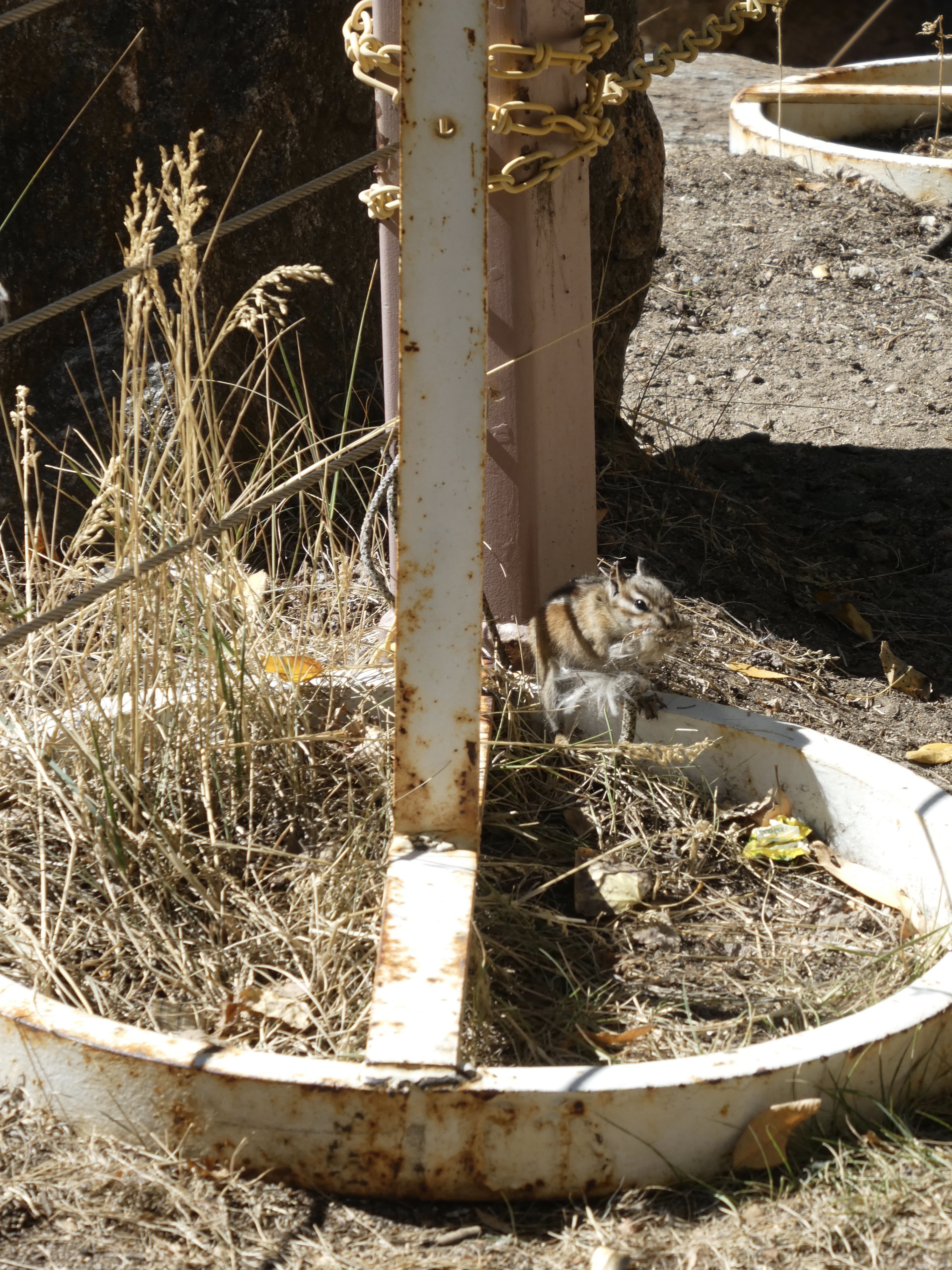
Chipmunk chewing something

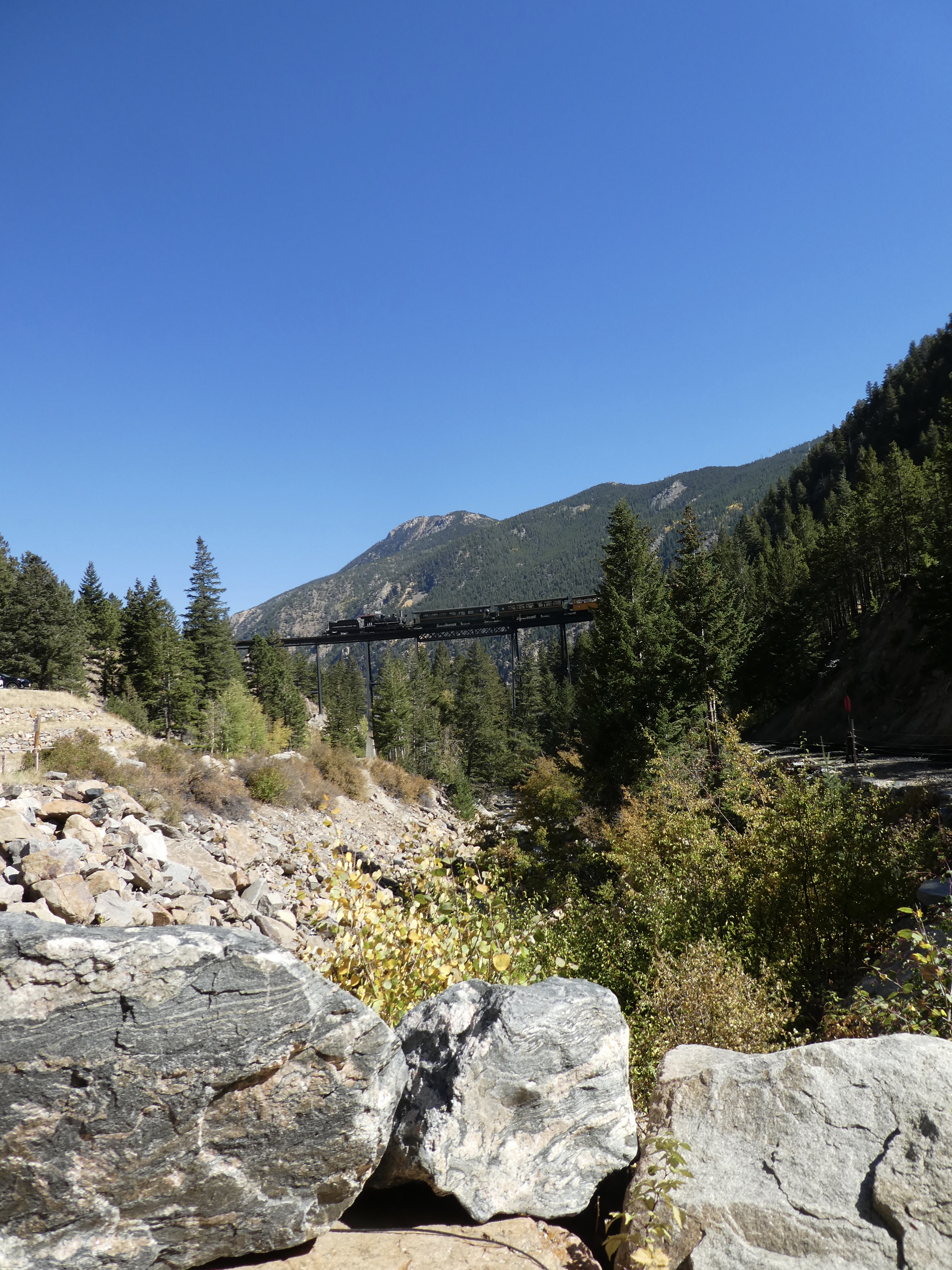
We love chipmunks.   This one is chewing something.   His nose is wrinkled up.   The train is coming from Silver Plume.

Train from Silver Plume

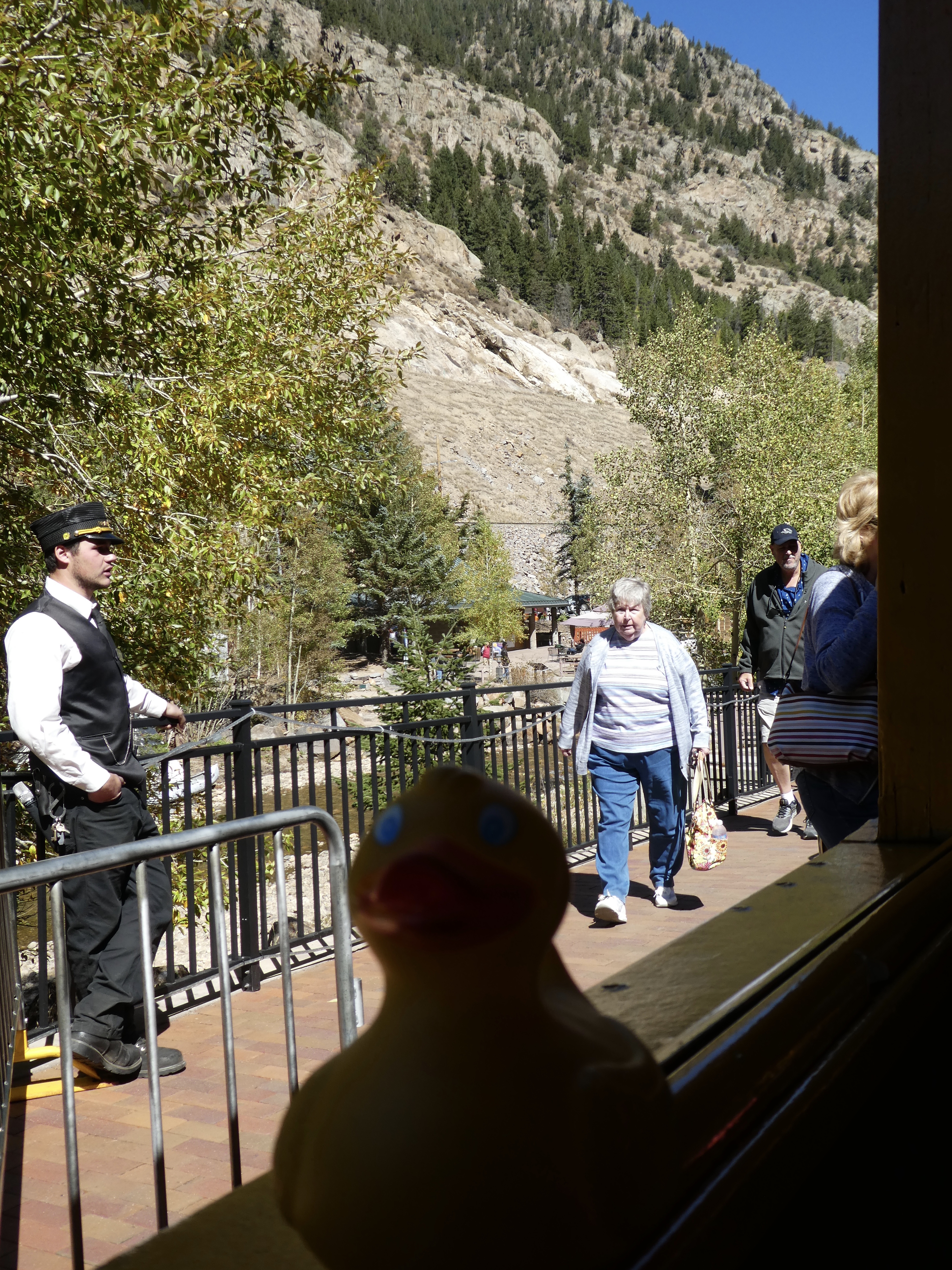
Some passengers will get off and stay here, most will get off for about 10 minutes and then get back on.   Mom, our friend and I, Zeb the Duck, are on the train.

On train. More passengers coming.  I do have two eyes!

More passengers are coming.   There will not be pictures of me on the train.   The rails are not level and I don’t want to fall off.   Also mom can’t take good photos with the sun behind me like this.  We are moving.

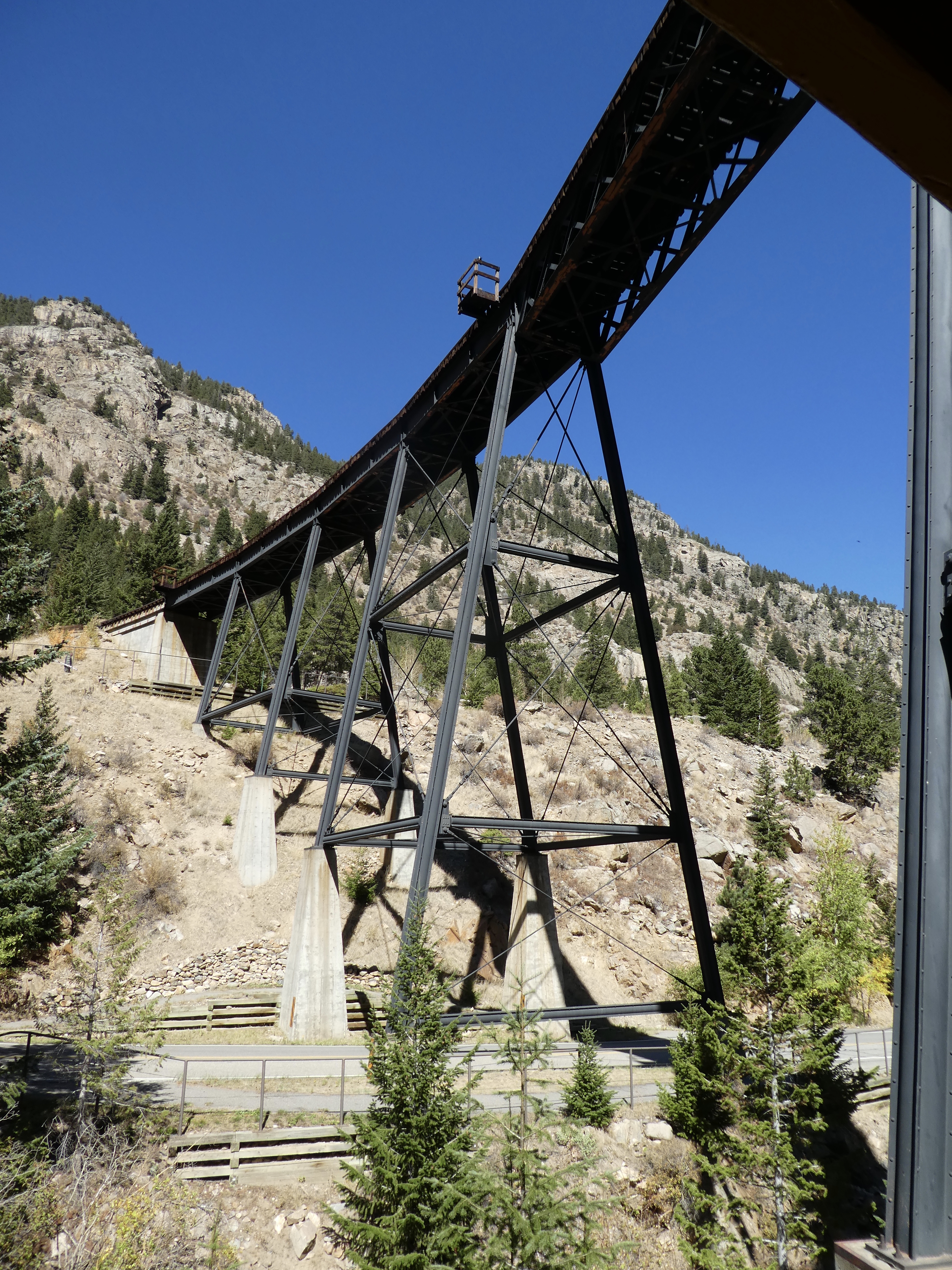
Devil’s Gate High Bridge from lower train tracks

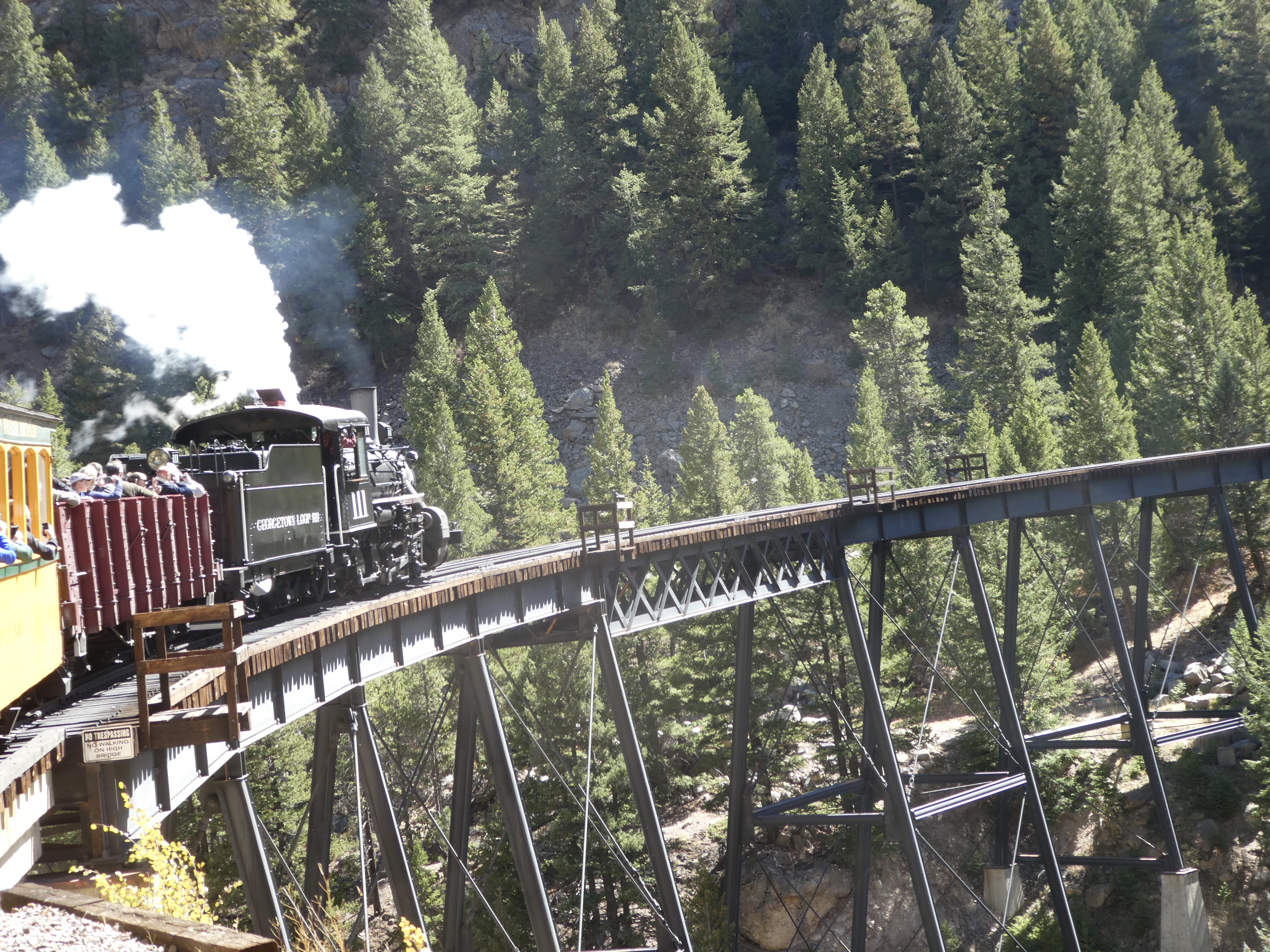
From the lower track we look up to view Devil’s Gate High Bridge.   Winding around the station, we are now going on Devil’s Gate High Bridge.

We are going over Devil’s Gate High Bridge

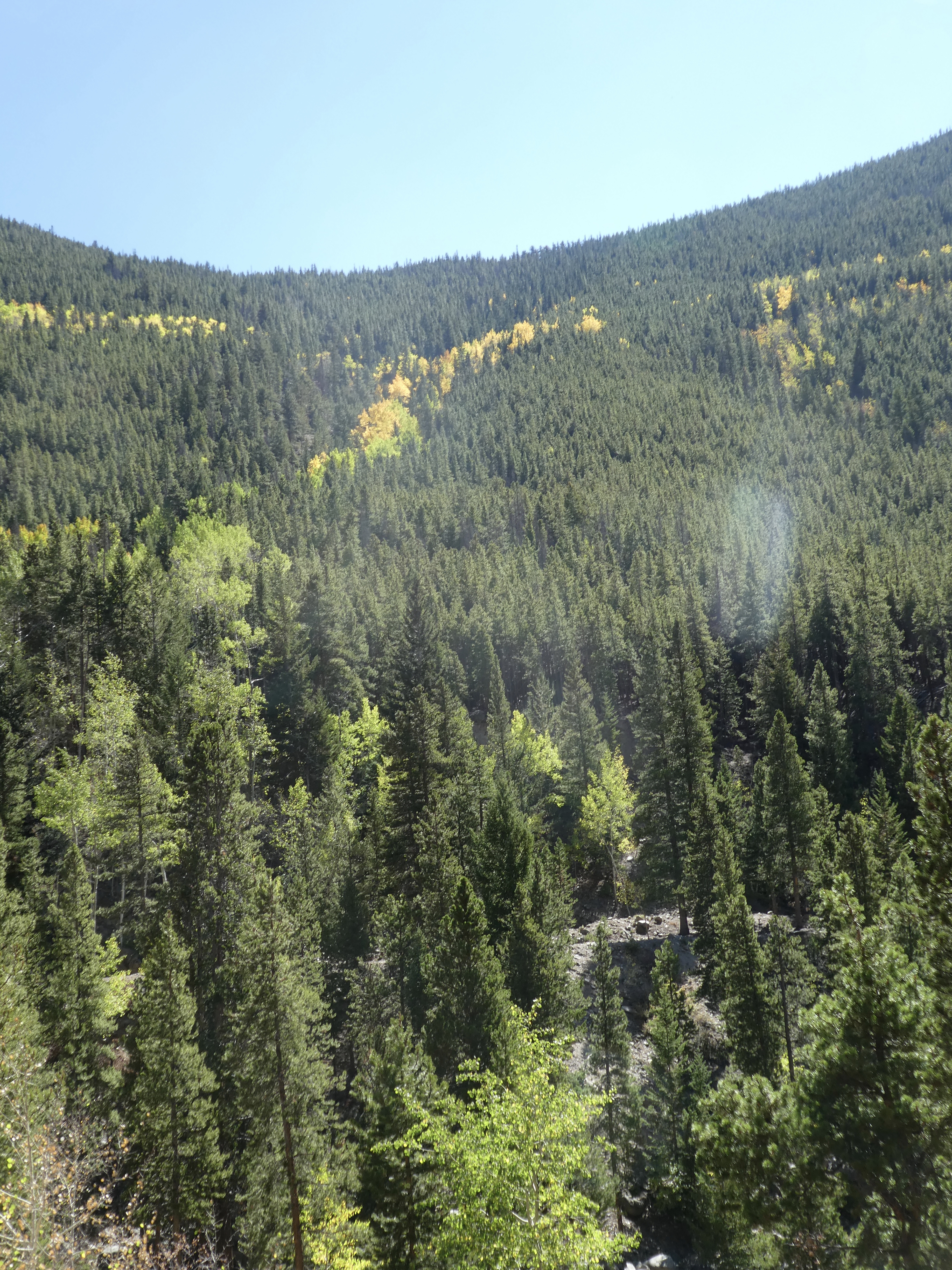
We rode this train a couple years ago and I love it.   It is wonderful that we are riding again.   The scenery from the train is beautiful.

Beautiful mountains

We are in a mountain canyon in the Colorado Rockies.   Pulling into Silver Plume station, the conductor tells us we have about 10 minutes here.

About 10 minute stop in Silver Plume

We don’t go far.   Some people started their train ride here, so they get off now.   Maybe a few new passengers join us.   Our train crosses Clear Creek 4 times each direction.

Clear Creek

This is one of my favorite views of Clear Creek.   When the first railroad was build in the 1880’s there were no machines to move rocks.   These boulders were all move by human hands.

in 1880’s boulders moved by human hands. No machinery

We are almost back to Devil’s Gate station, our starting point.

Almost back to Devil’s Gate Station

There was a stop for humans to get off the train if they purchased tickets to visit an underground mine.   We did not.   We want to drive through the mountains when our train trip is finished.

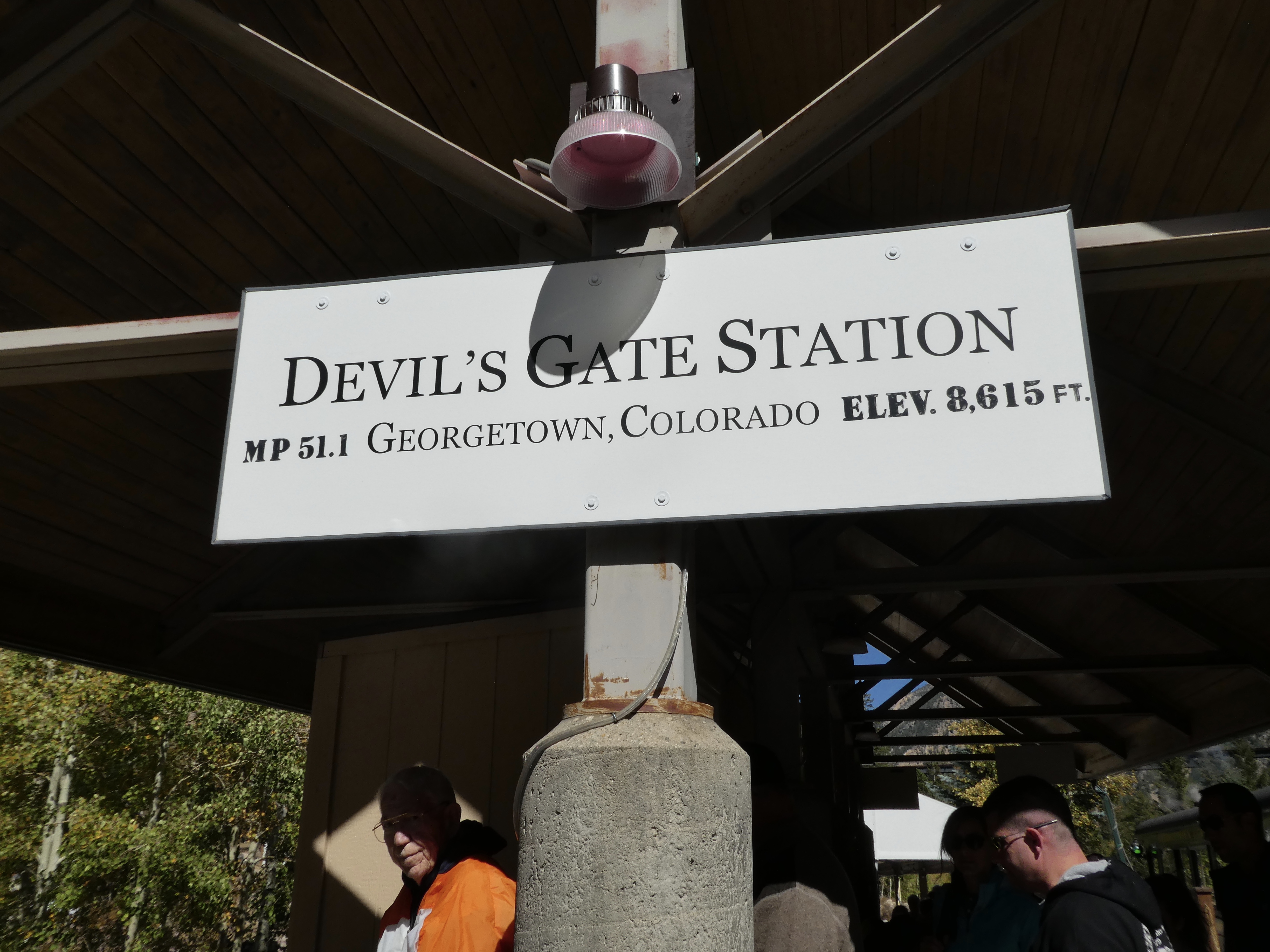
Devil’s Gate Station

We have arrived at Devil’s Gate station and we must leave the train.    But we saw something between Clear Creek and the Rocky Mountains.   Off the train, we need to explore.

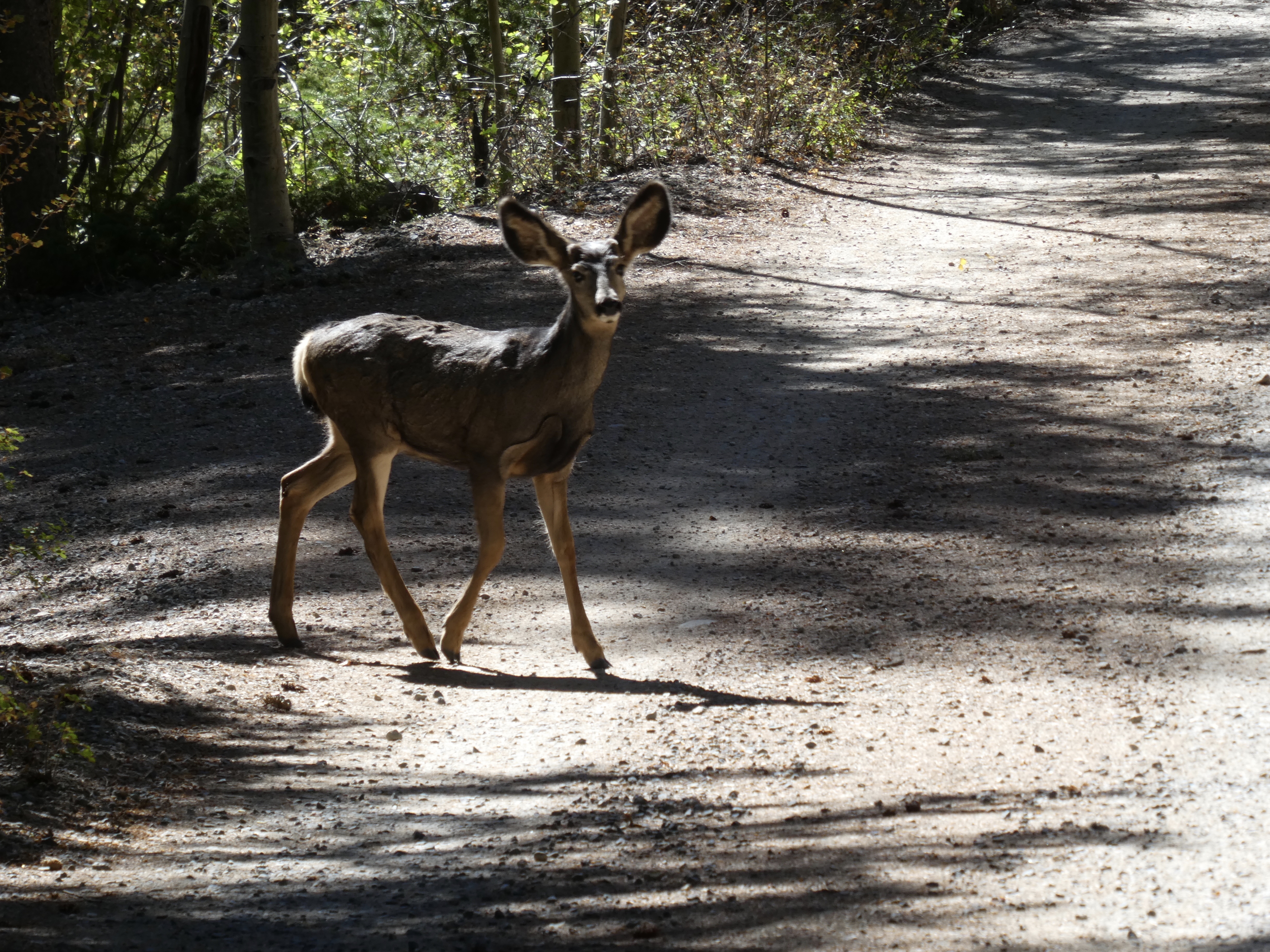
Mule Deer

Yes, we did see deer.   This is a young mule deer.   Just love those huge ears.   There are 4 deer here.   We stood very still and all four of them crossed the road in front of us and gracefully climbed into the mountains.   Back in our car, we drive behind Georgetown.   We will go over Guanella Pass and arrive in Grant, Colorado, on the other side of the Continental Divide.

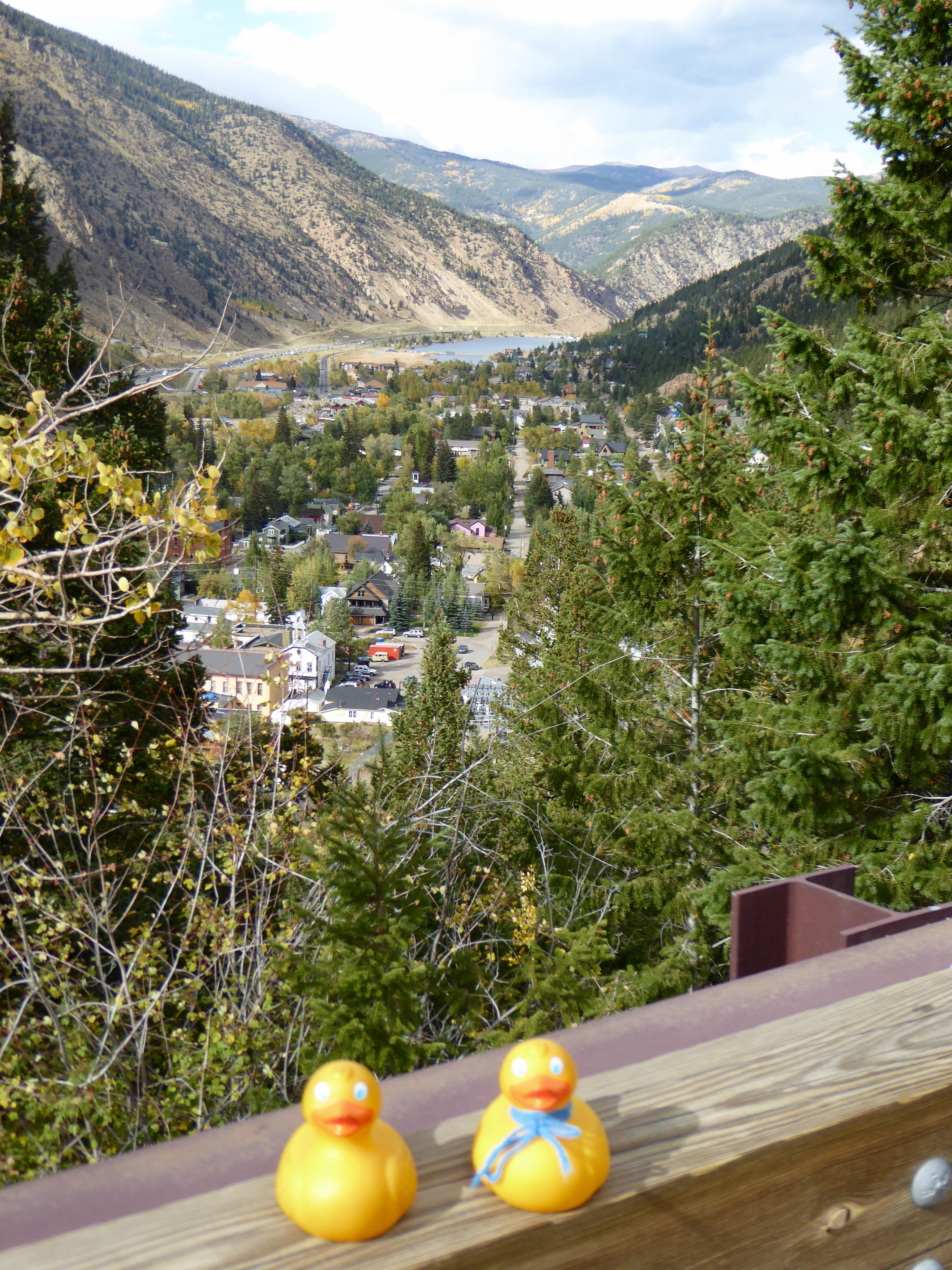
Georgetown, Colorado

Driving up the pass, we stop to look at Georgetown behind and below us.  The aspen trees are changing colors now.

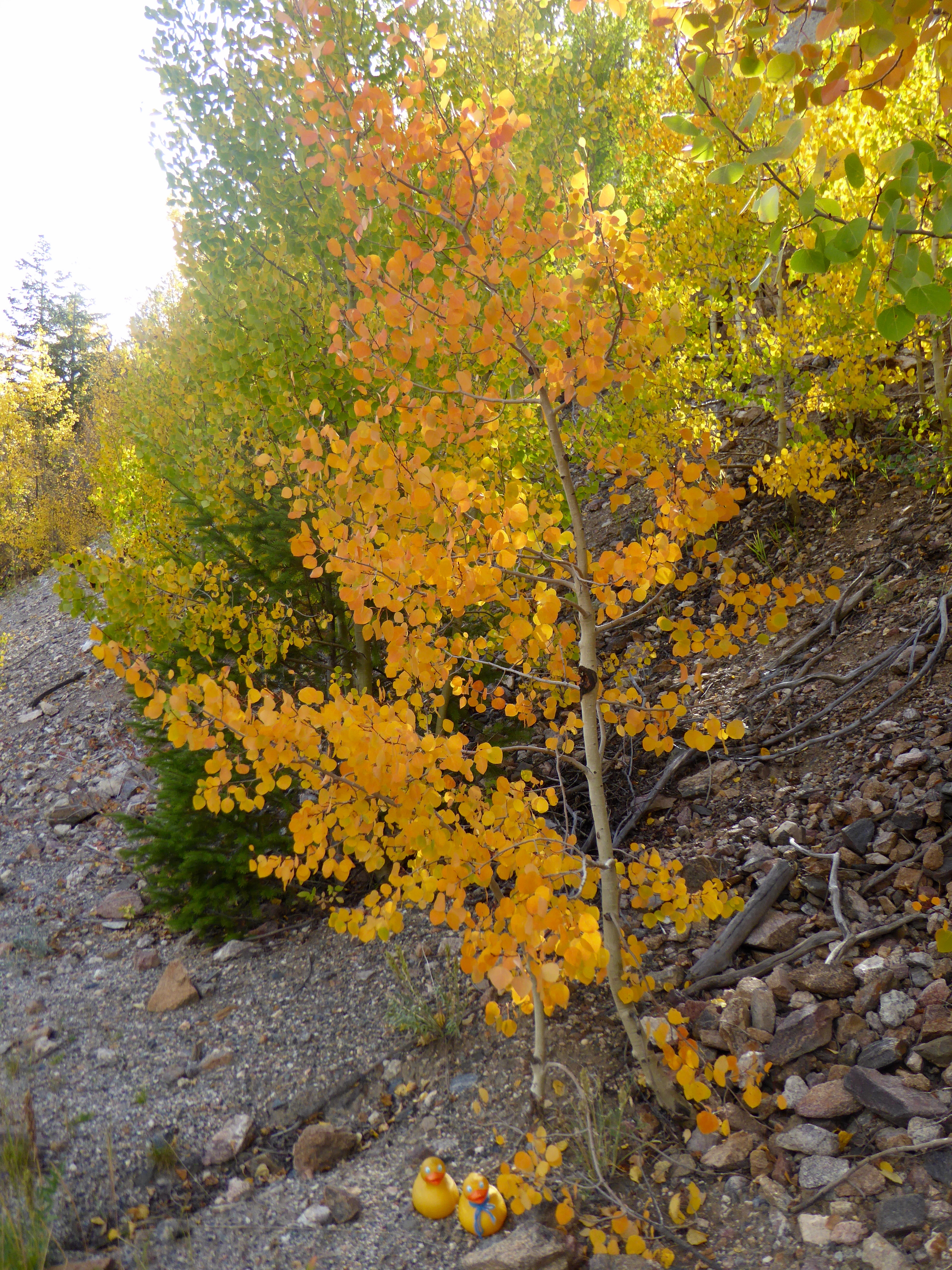
Variety of colors all together

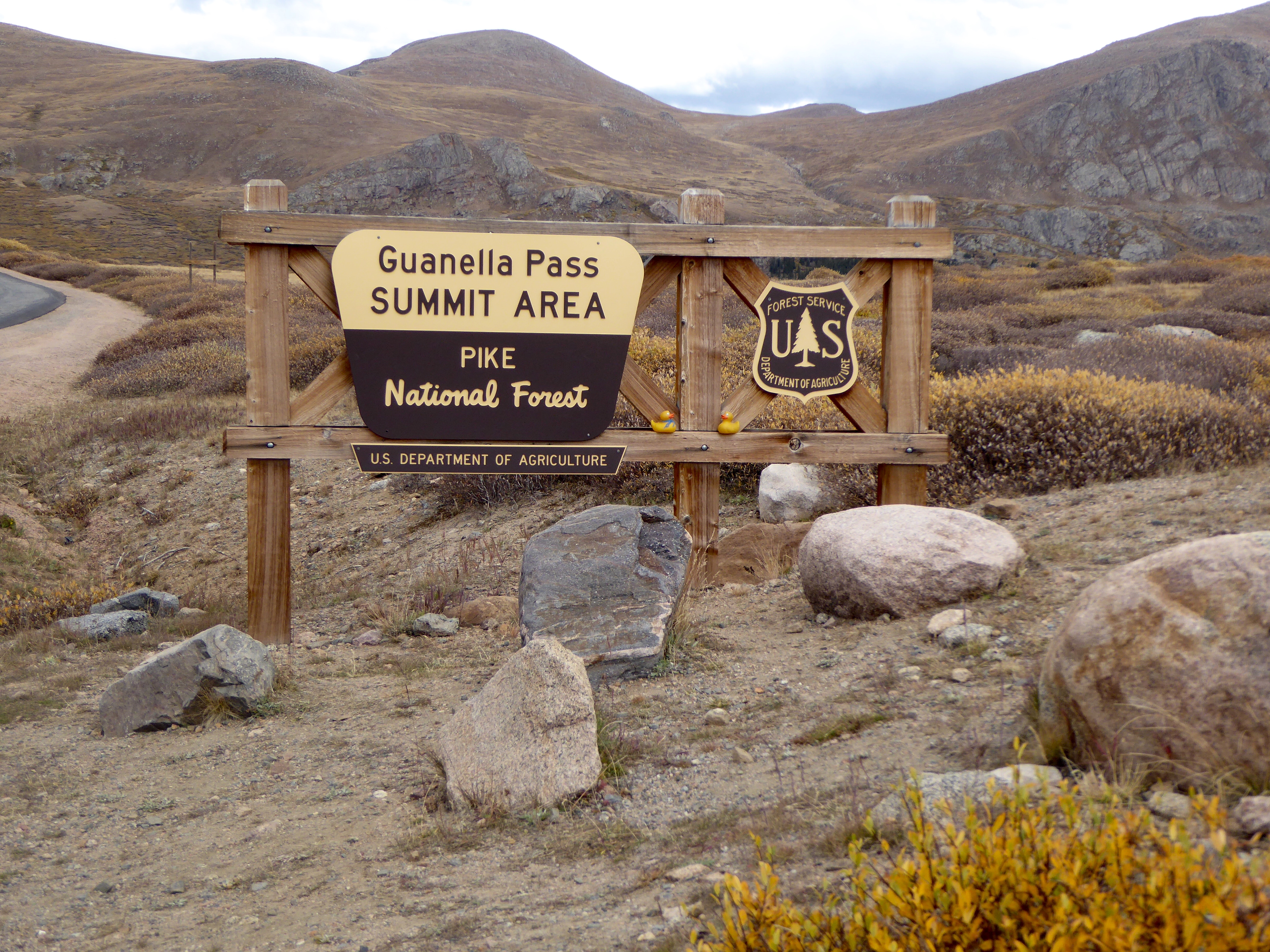
Some leaves will still be green, some bright yellow, some gold and some red.   At the top of Guanella Pass we stop to admire the view from the top.

Guanella Pass area, above timberline.

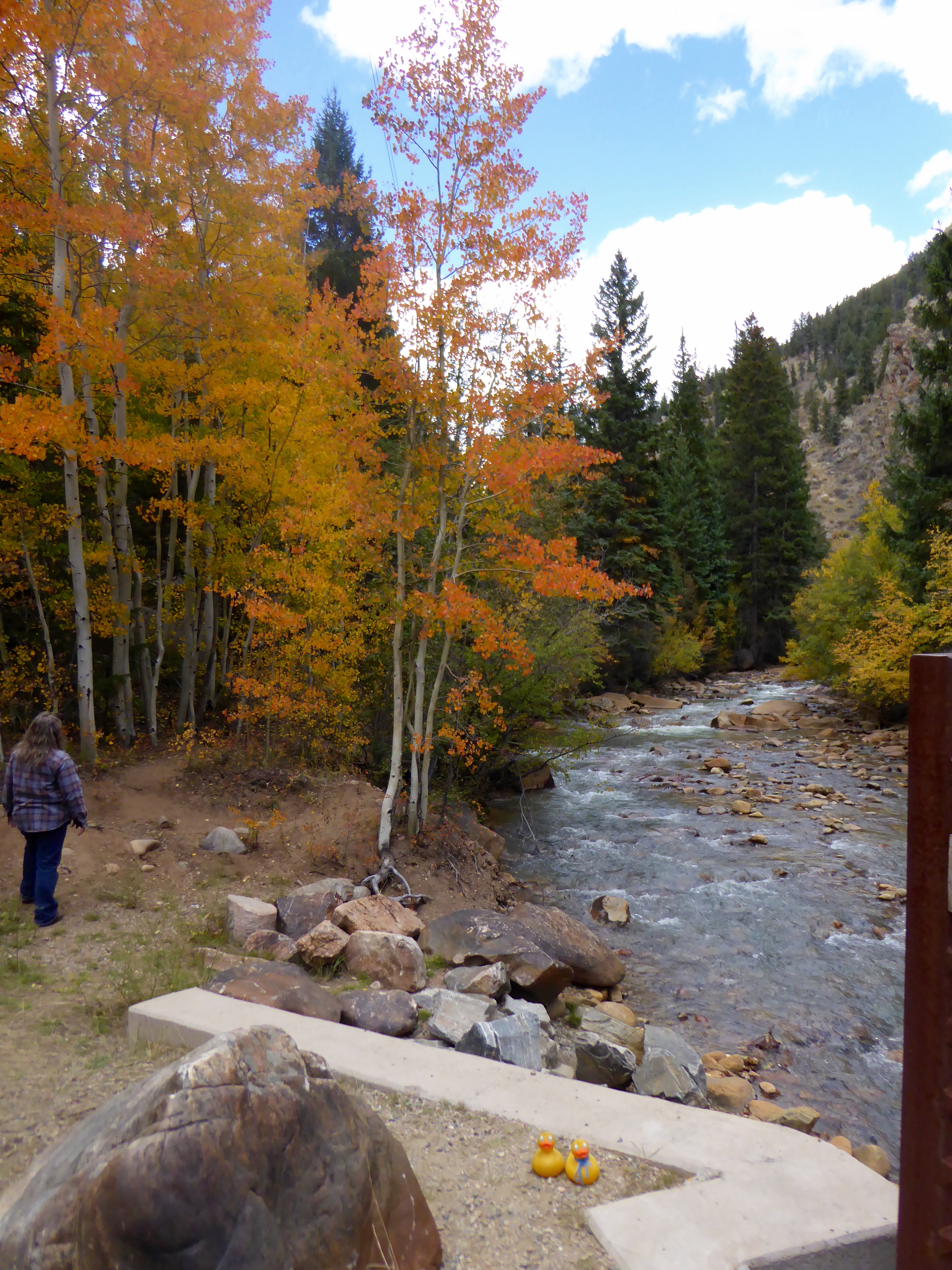
Again, we are above tree line as we are on the top of the Continental Divide.  Going down toward Grant we stop to admire Geneva Creek.

Water is soothing and beautiful

This is a great day.   The Colorado sun has been shining much of the day.   We love the train.   And our Colorado mountains are beautiful.   The train was less than an hour from home and Grant is about 90 minutes from home.   We hope you explore and enjoy areas around your home also.

Dogs in Costume Go On Parade

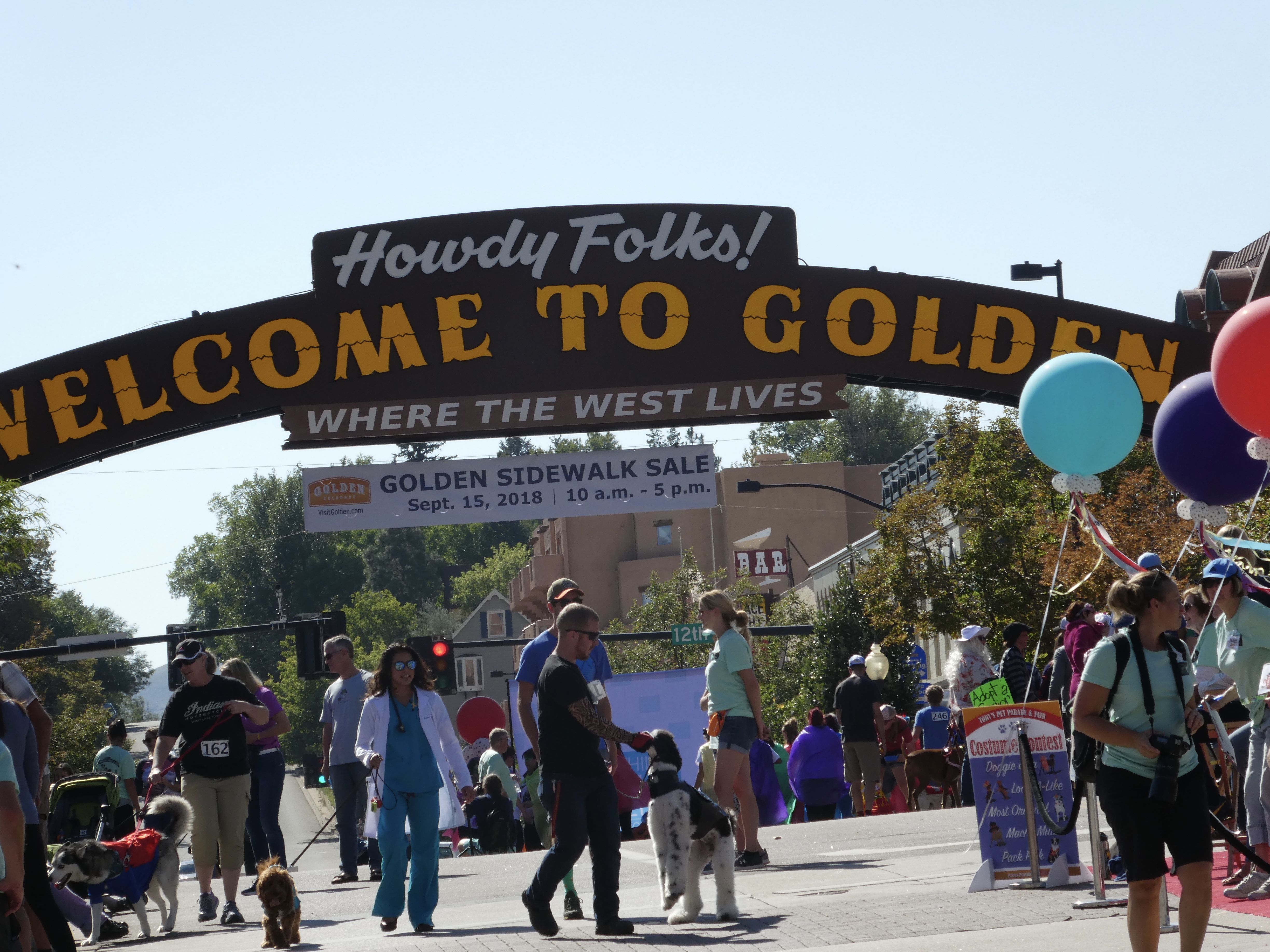
I, Zeb the Duck, went to Toby’s Pet Parade and Fair.   This pet fair is a fundraiser for Foothills Animal Shelter.   We love animals.   We love parades.   We love fairs.   So here we are, in Golden, Colorado, a western suburb of Denver.

Welcome to Golden, Colorado

There were more than 200 dogs in costume in the parade.   Many more at fair, but not in the parade.   This was cute.

Spot on banking from Credit Union of Denver. Main sponsor of parade and fair

Spot on Banking from Credit Union of Denver, a major sponsor of Toby’s Pet Parade and Fair.   One category in the parade was look like your dog.

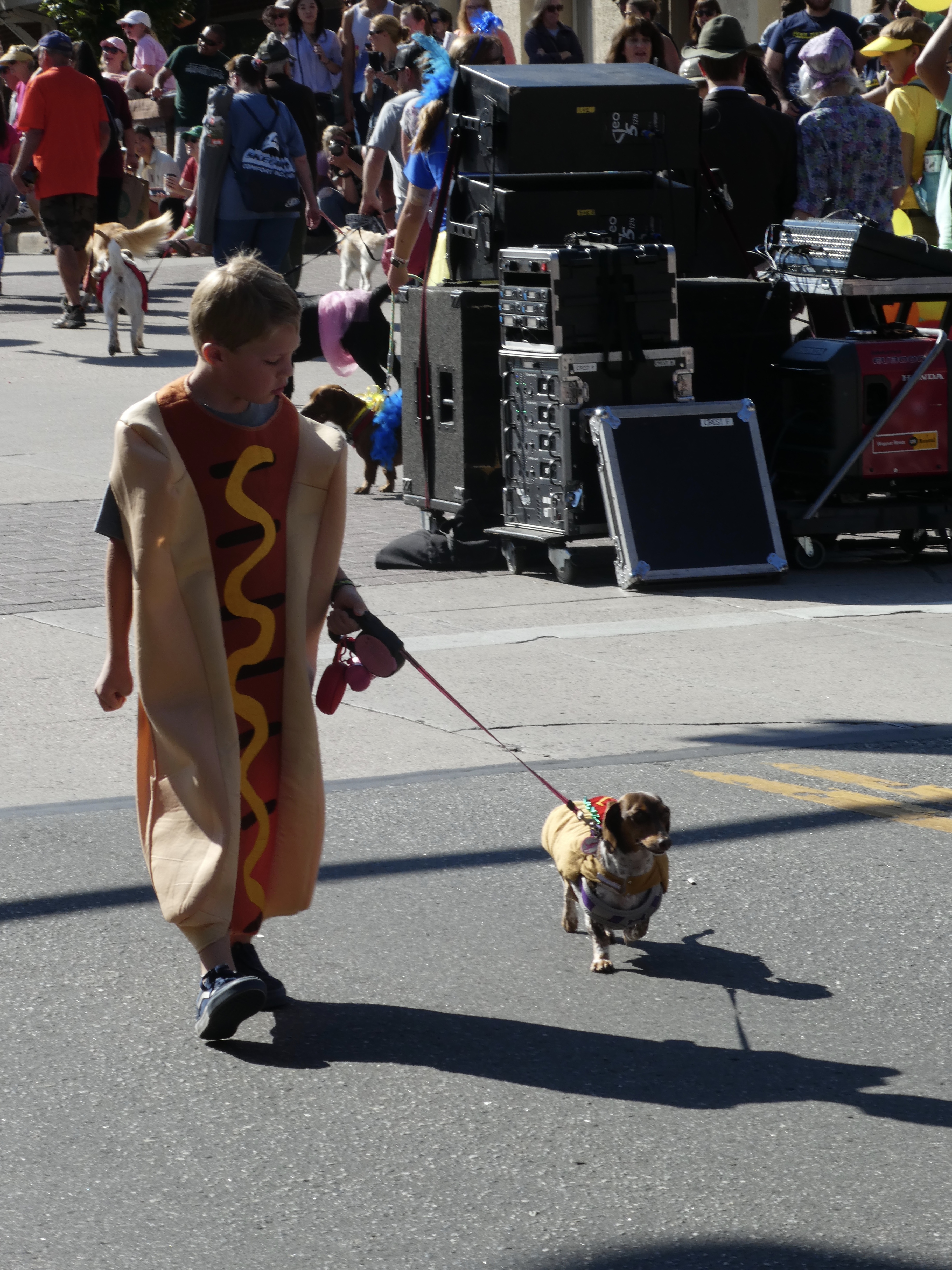
Hot dog costumes

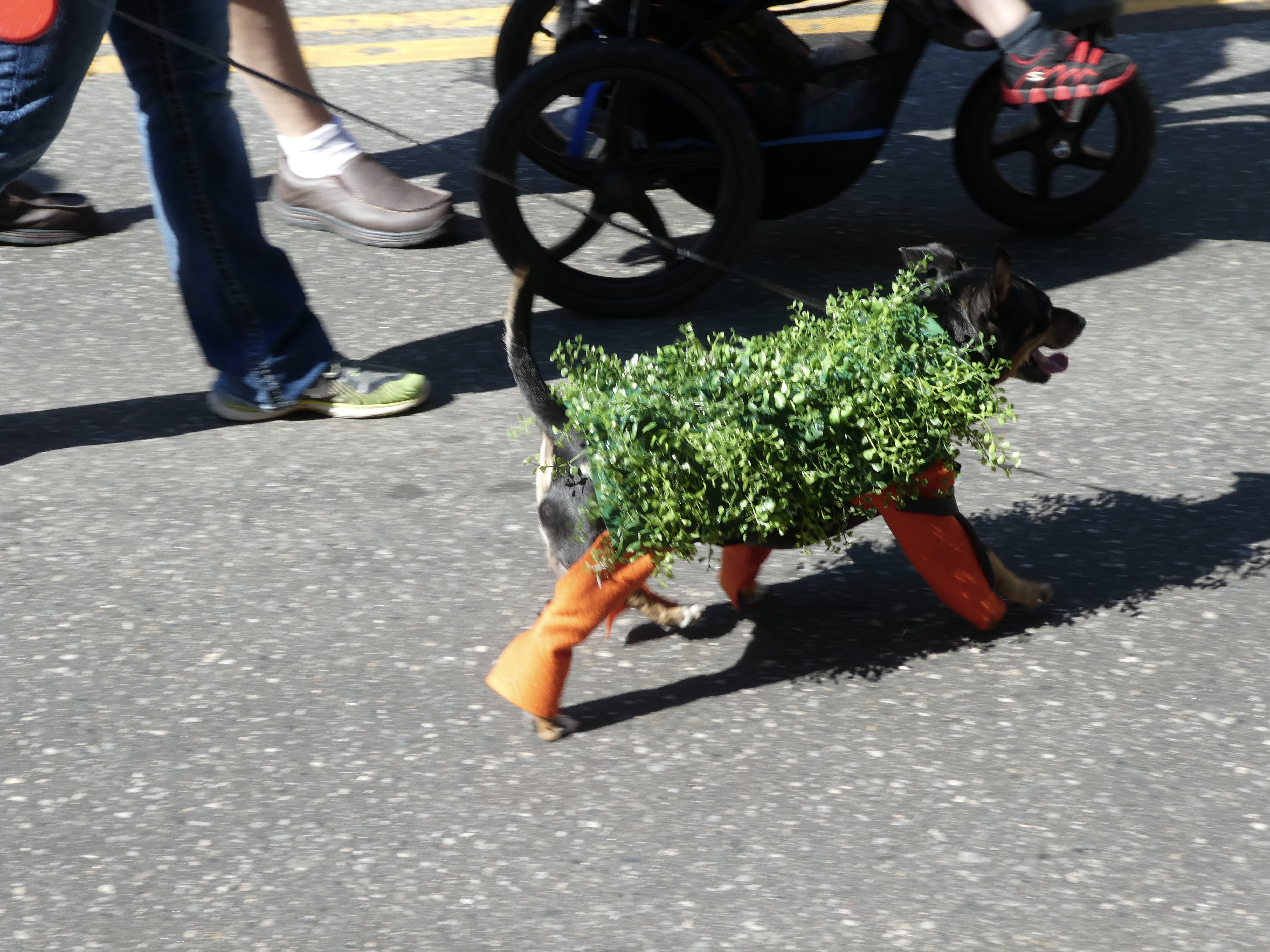
We liked the hot dog costumes.   And what is this?

Chia pet dog

Shrub dog?  Of course not.   This is Chia Pet dog.  Adorable.  Need to solve a mystery?

Sherlock Holmes dog

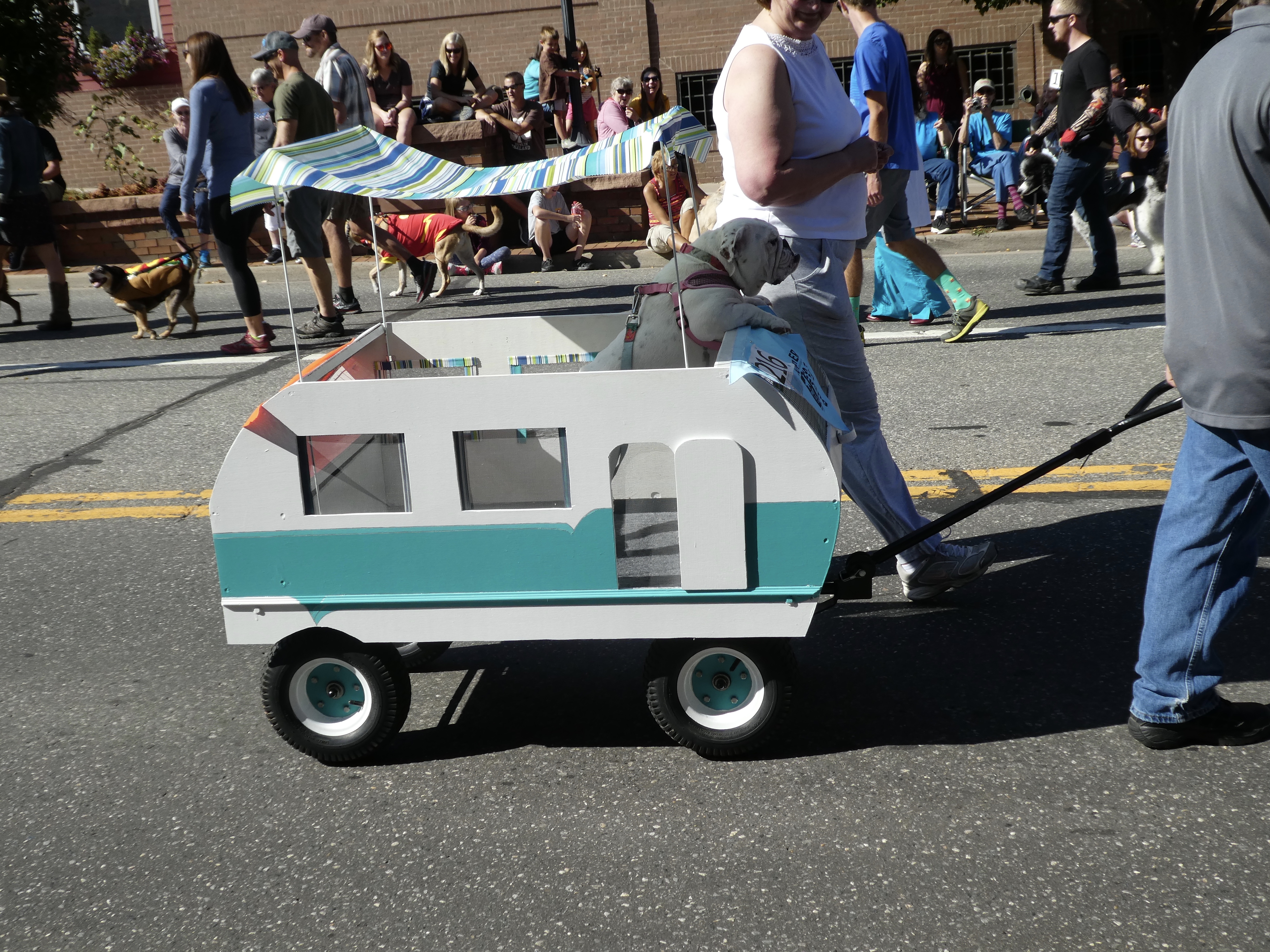
Sherlock Holmes dog is here to help.   Camper dog is ready to go out.

Camping dog

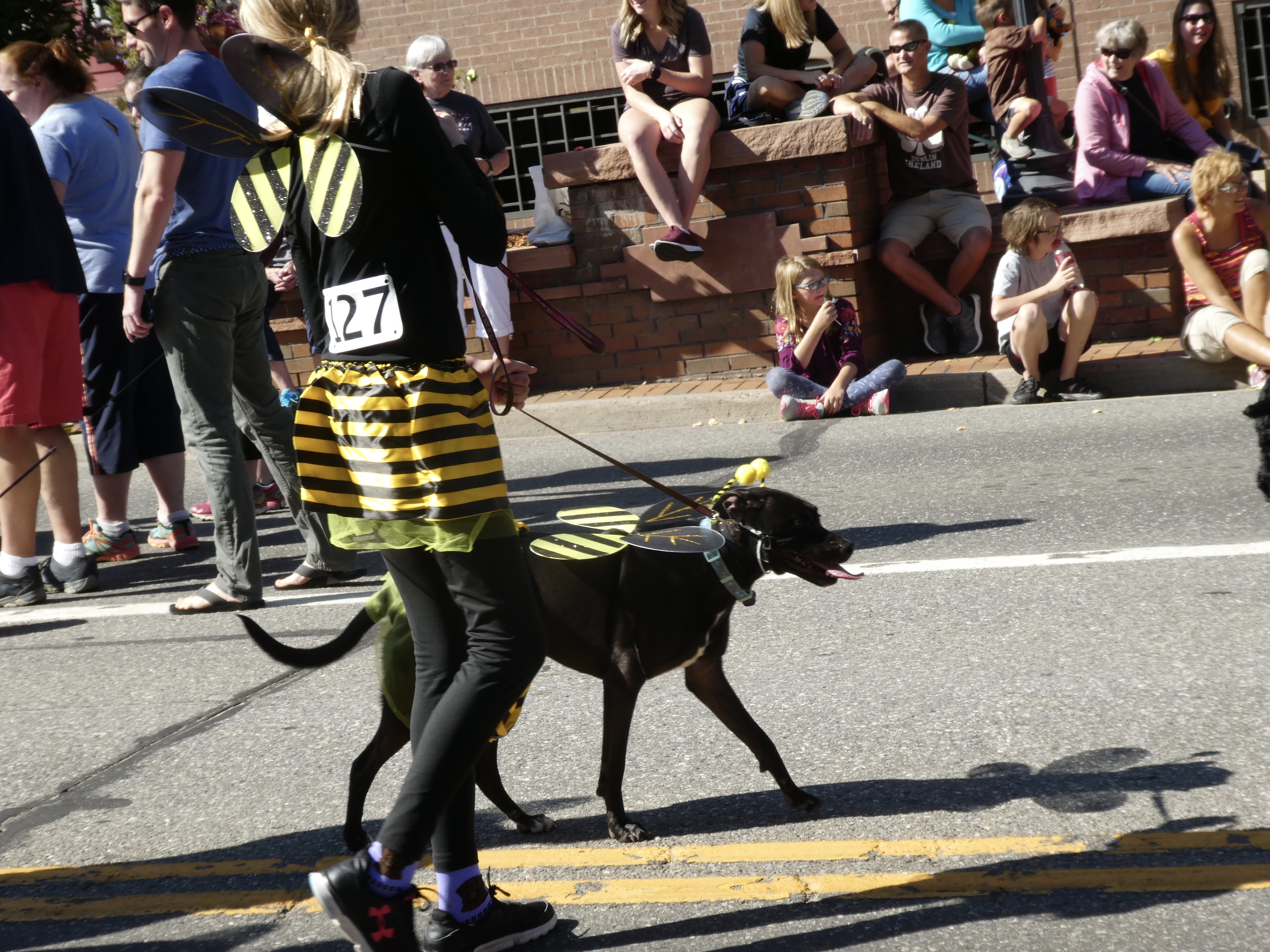
So many people camp in and around the beautiful Colorado Rocky Mountains.  Another matching costume.

Bee costumes

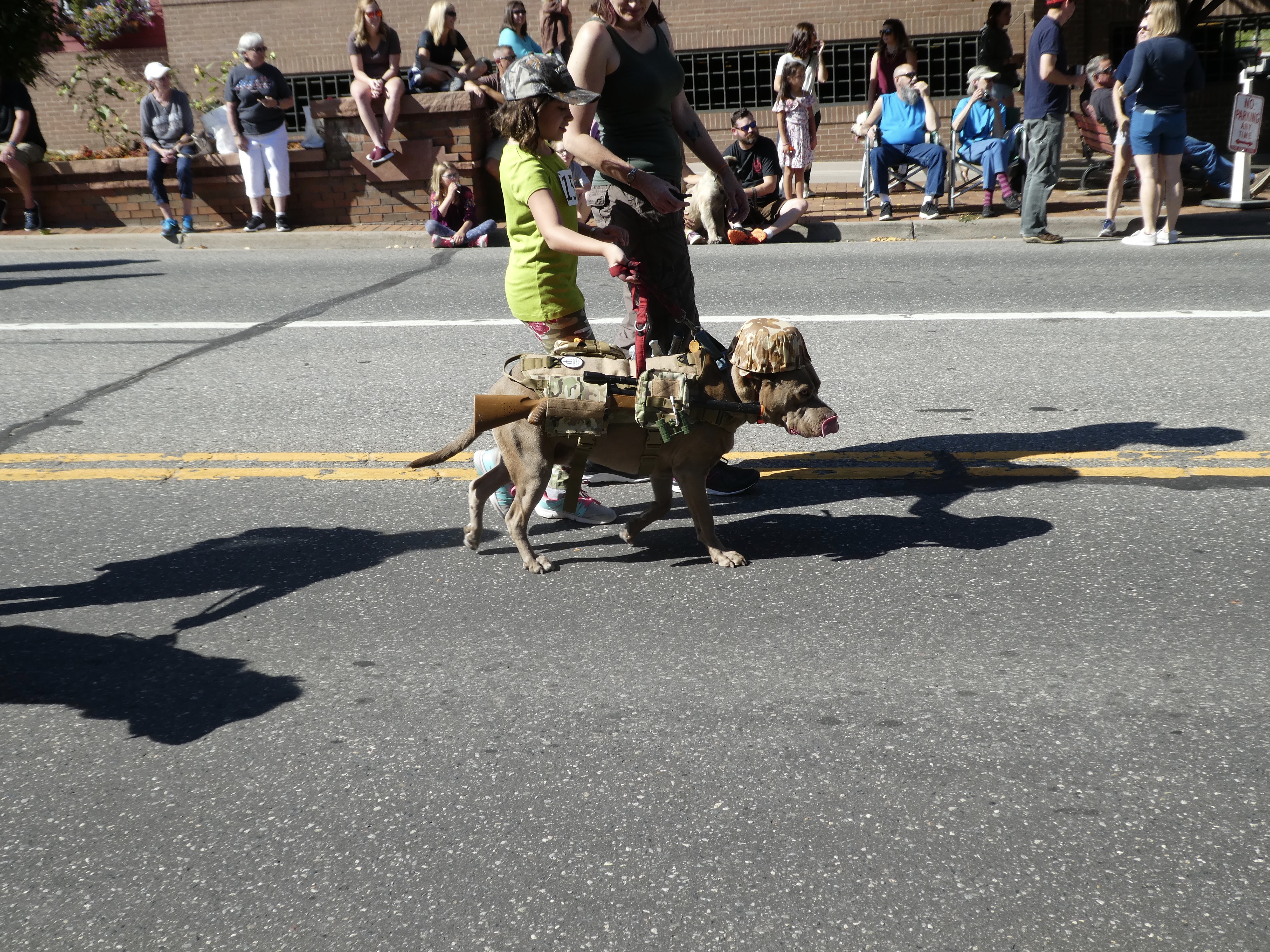
We love the bright bee attire.   It is autumn in Colorado and hunting season is right around the corner.

Hunting dog

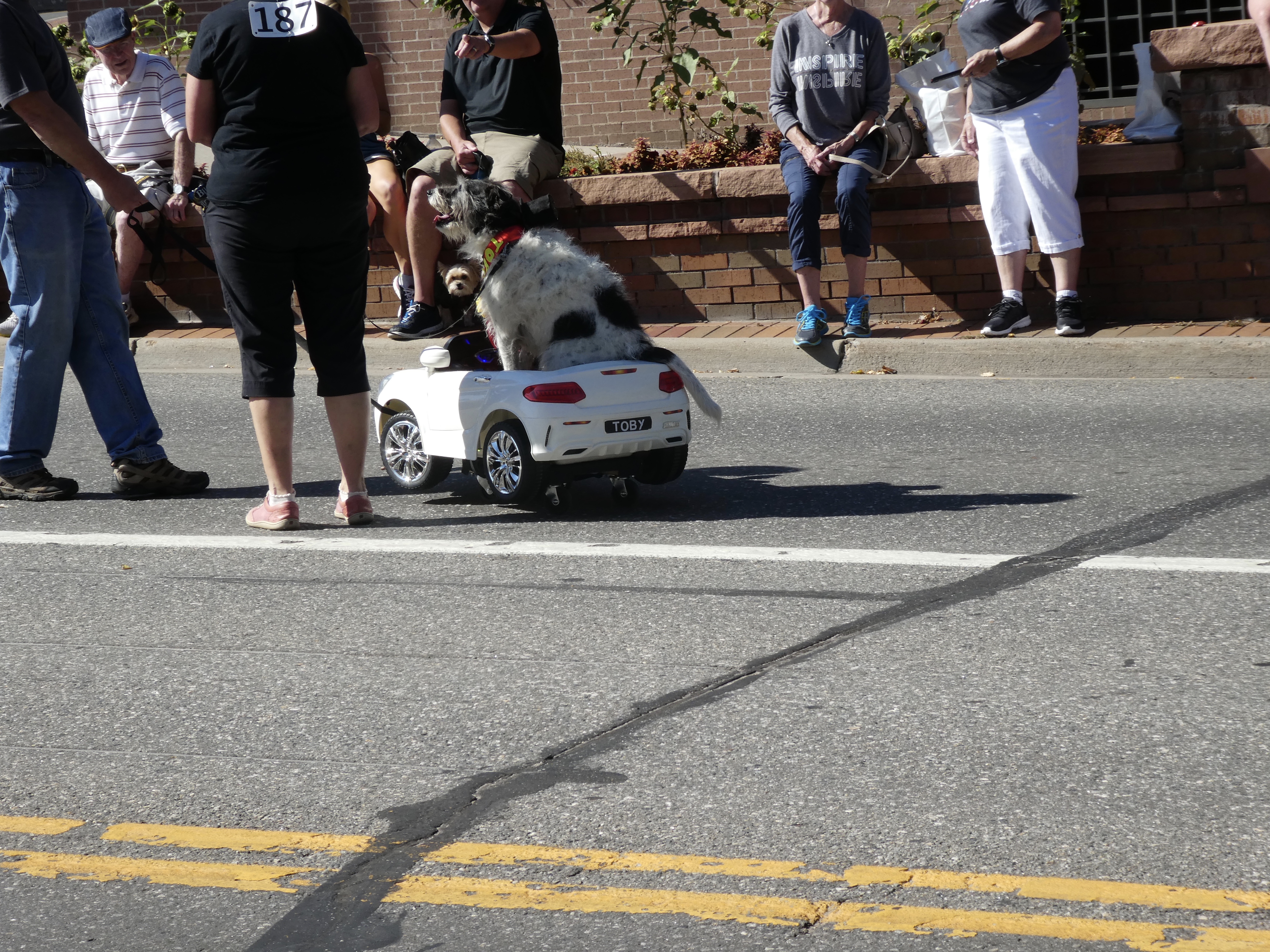
Hunting dog is ready.  Toby, an Australian Shepherd, is Foothill Animal Shelter’s official Mascot.

Toby. Mascot for Foothills Animal Shelter

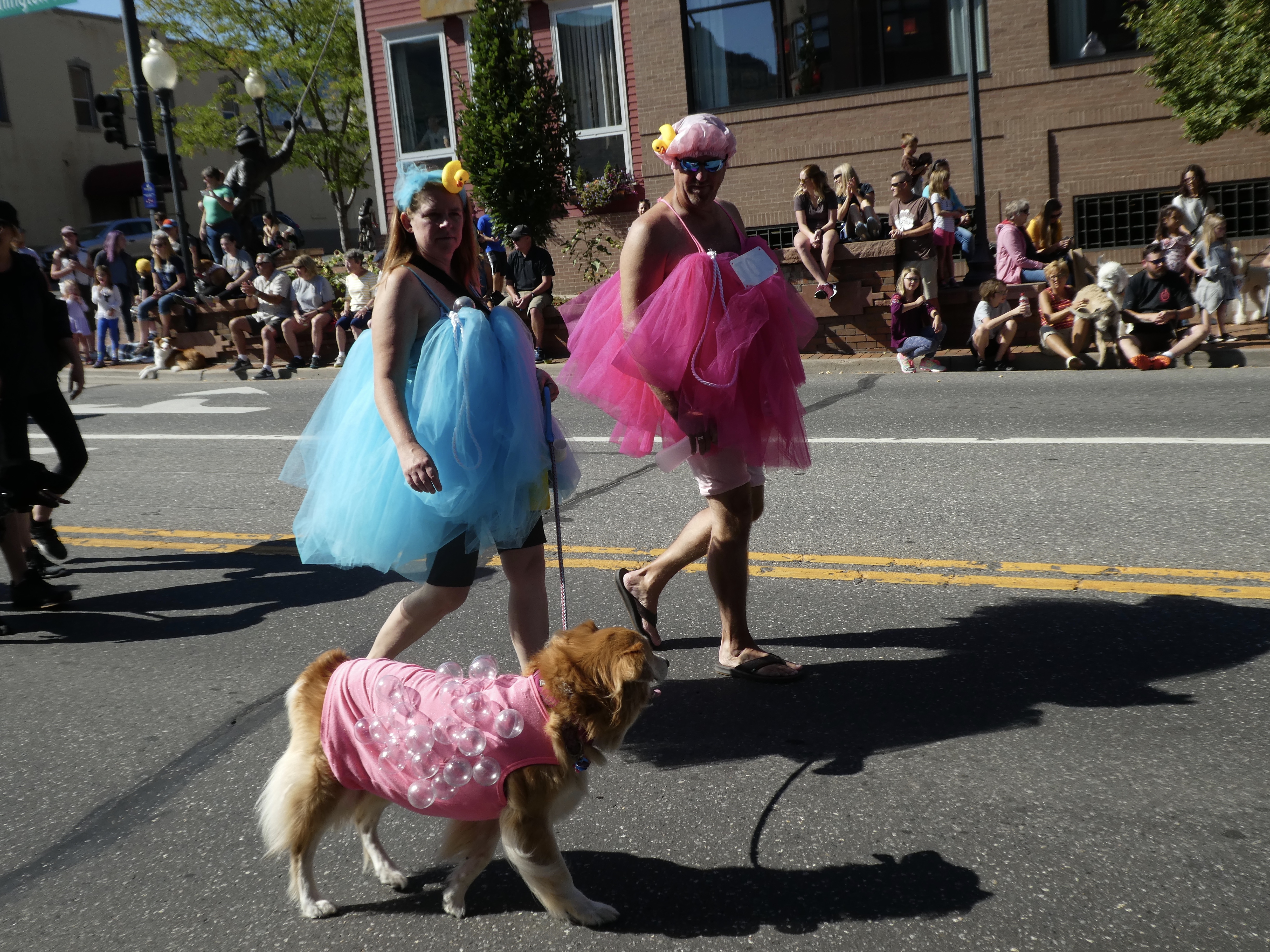
He was found 3 years ago in bad shape, but recovered and now has a loving, forever home.   Another entry in the look like your dog category.

Look like your dog contestant.

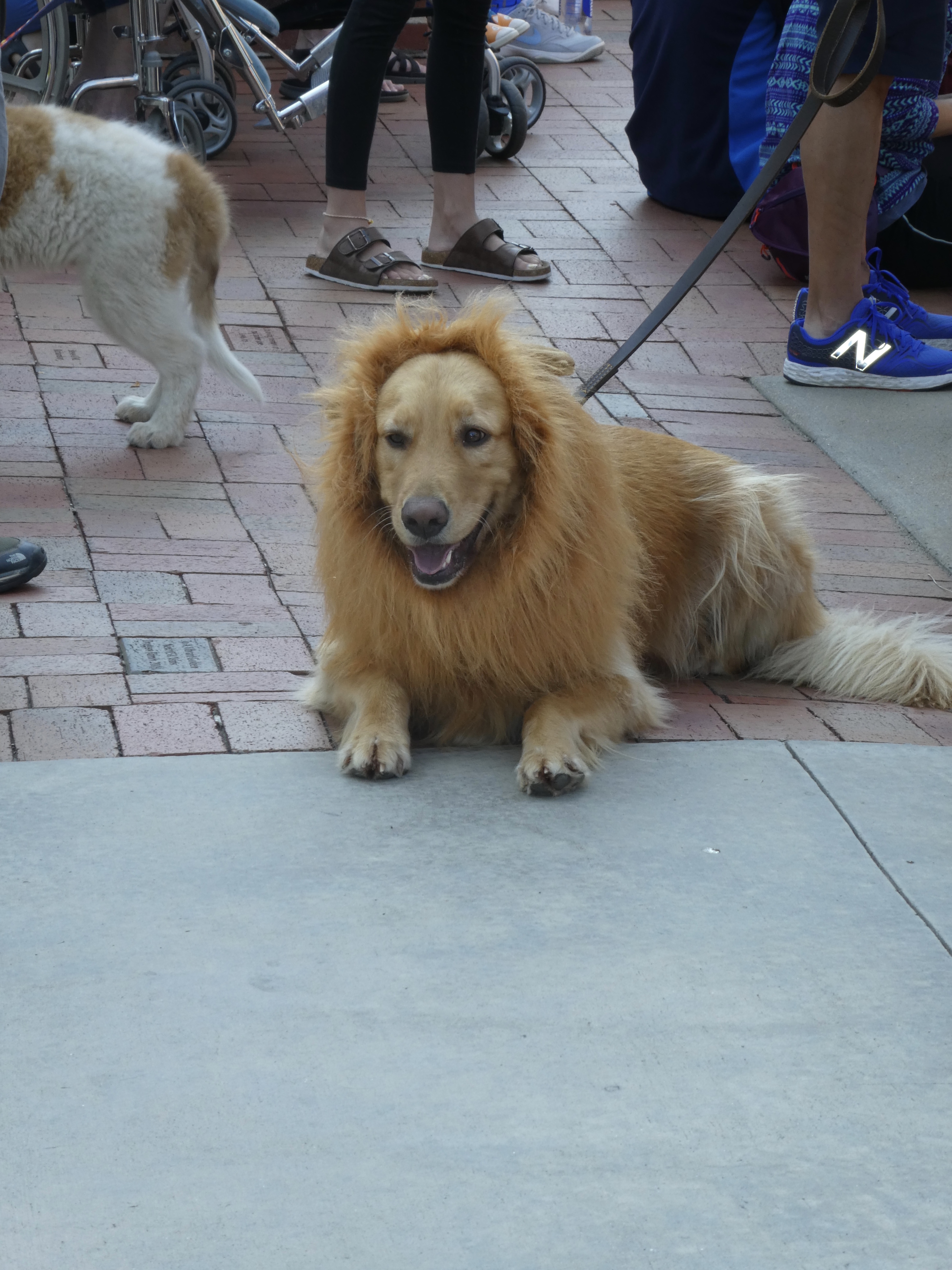
They didn’t win, but they sure got our attention.   We love them.   This dog was not in the parade or any contest.

Not in parade, but loved the lion look

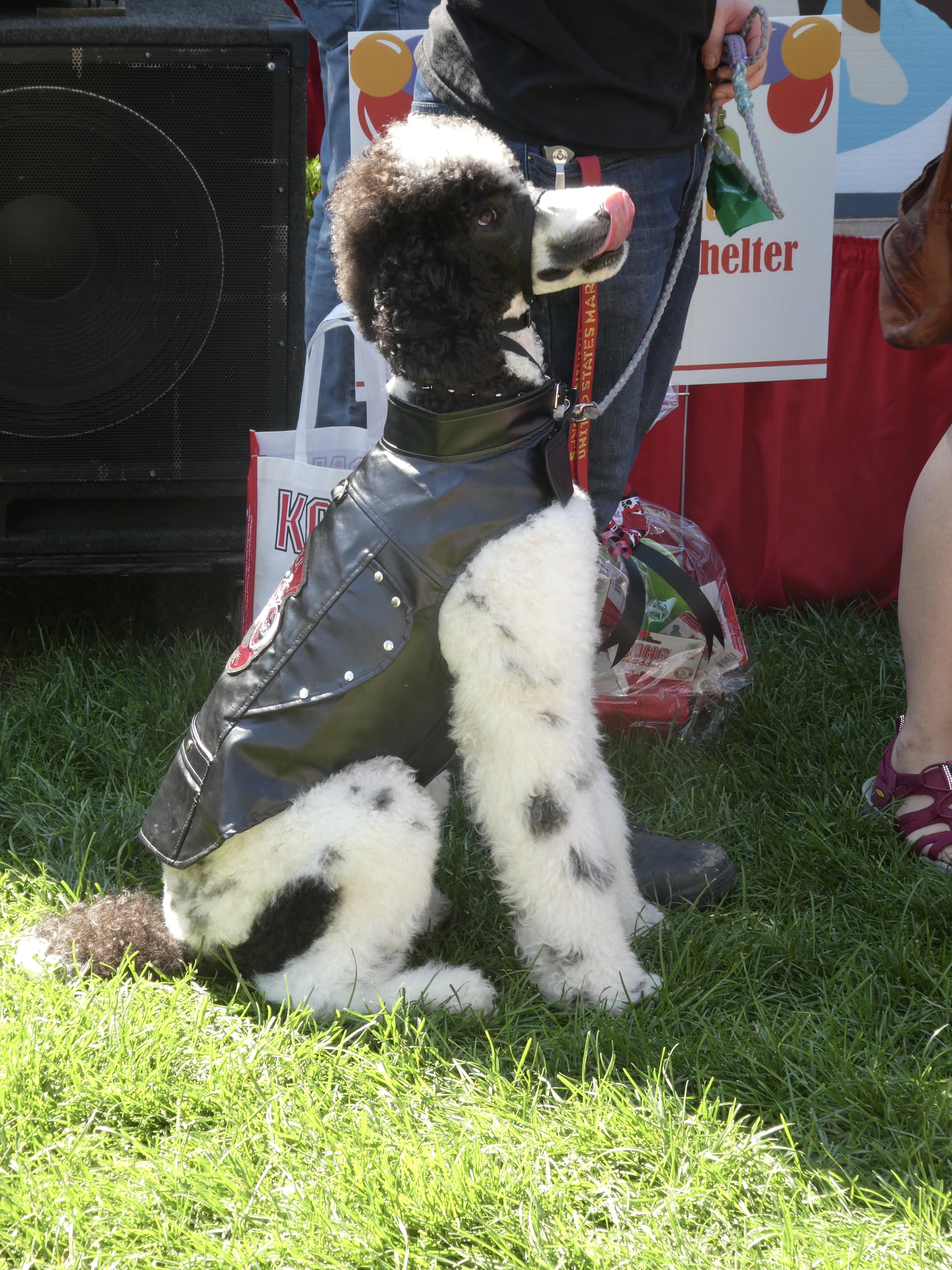
But we loved the grooming and the lion appearance.   Here are some winners from the parade.   In the Macho Dog category.

Winner. Macho dog category

Love the leather.   Biker dog?  Next winner will make most dog owners laugh, and groan.

Winner. Fart Factory

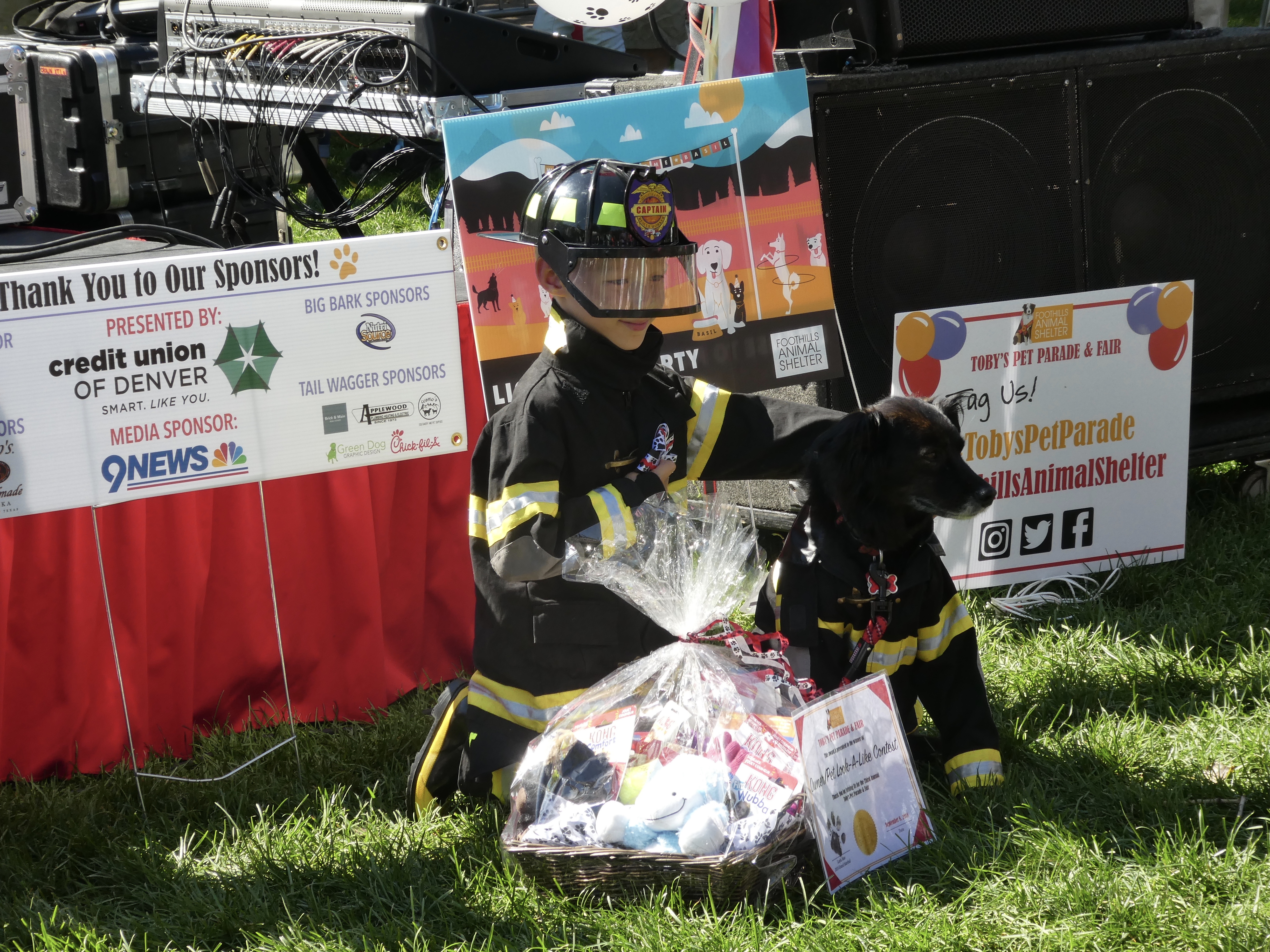
This dog is the Fact Factory.   We like this boy and his dog.

Winner. Look like your dog category

Firemen and winner of look like your dog category.   I, Zeb the Duck, was there enjoying the parade, but I don’t get too close to dogs.   Too many times a dog thought I was one of his toys.   So, I look from a distance.   But this is safe.

Dog treats. We bought some!

We like special dog treats for the dogs in our extended family.   We bought treats with apples in them.   Really sounds good.   Since this was a fund raiser, we did give a donation.   All donations will be doubled by Tito’s Handmade Vodka.   We hope a lot of money was raised for our Foothills Animal Shelter.   We had fun and we think the dogs had fun also.   Maybe we will see you there next year.

Mt. Evans, High in the Colorado Rocky Mountains

Let’s drive on the highest paved highway in North America.   Colorado Traveling Ducks are going to the top of Mt. Evans.  And we will not be more than 2 hours away from home near Denver, Colorado.   First we stop to admire Echo Lake.
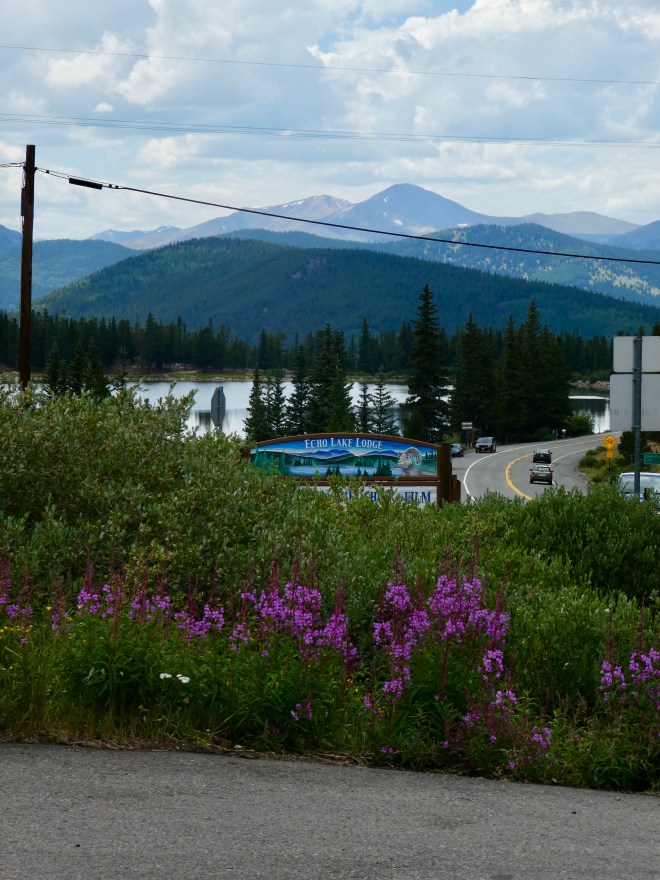
Echo Lake

At 10,600 feet above sea level, a short hike by the lake, then a great meal at the lodge,

Echo Lake Lodge

and we are ready to begin our journey to the top of Mt. Evans.

Let’s go to the top of Mt. Evans

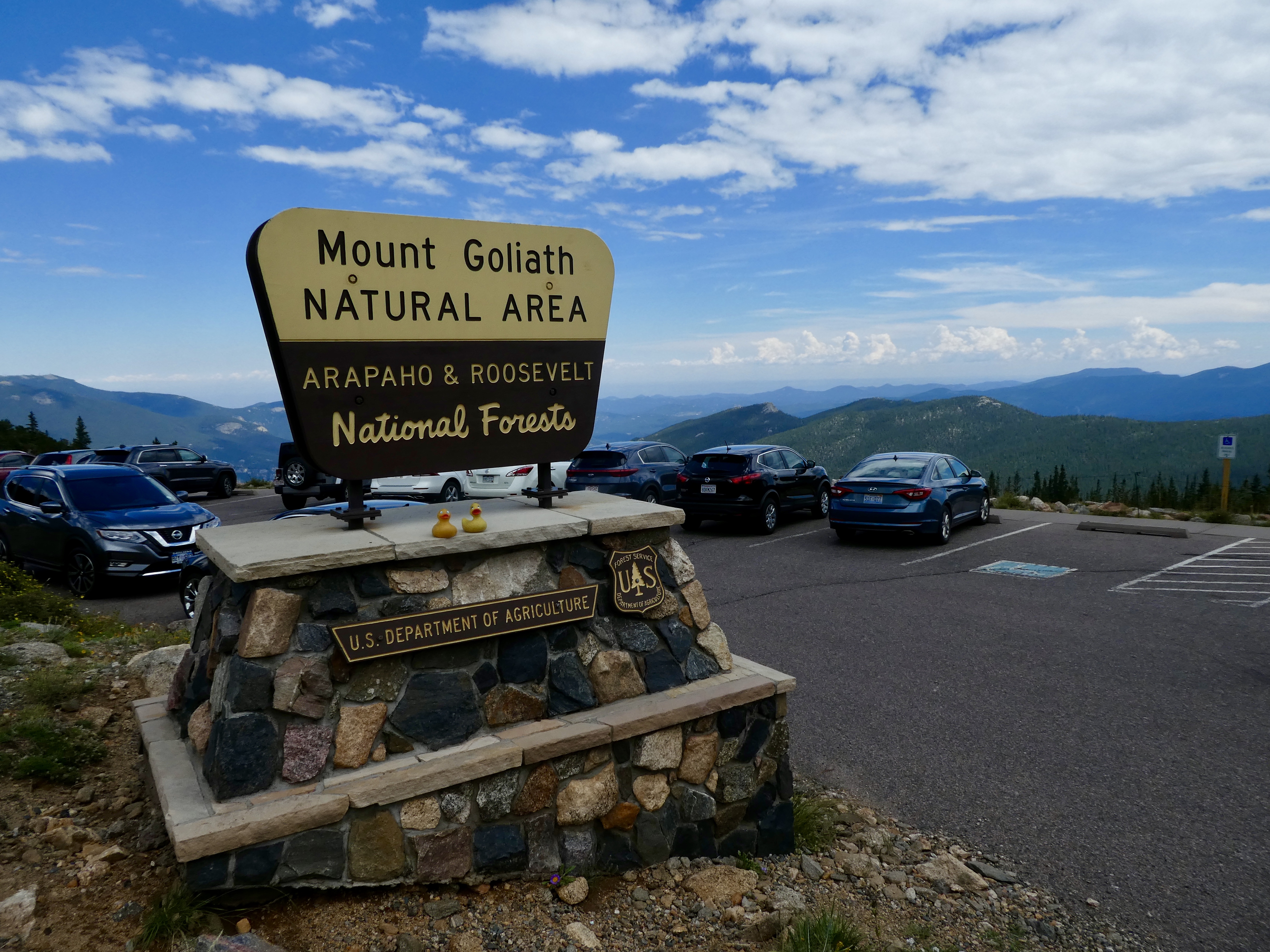
This is a combination of Denver Mountain Parks and some Federal land, but our National Park Pass covers our admission.   Our first stop is Mount Goliath.
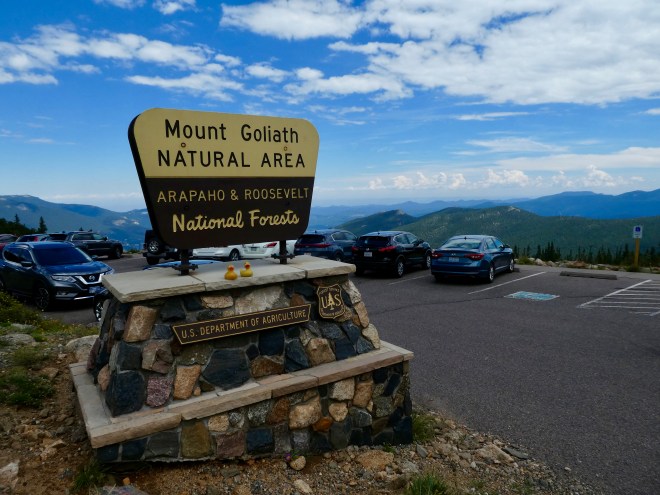
Mount Goliath Natural Area

Here we see the really old Bristlecone Pine trees, the oldest living things on earth.
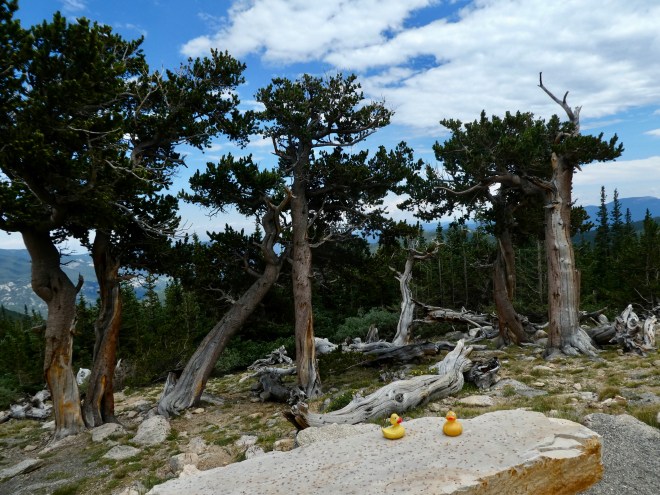
Bristlecone Pines

Our bristlecones are only about 1,700 years old.   Some bristlecones in California and Nevada are over 4,000 years old.   Those trees were old when Jesus was born.   We like sitting on this fallen Bristlecone.
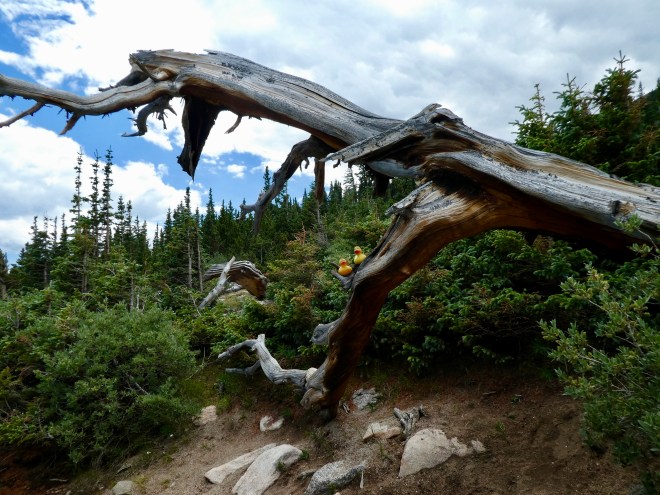
Fallen Bristlecone Pine

Our Bristlecone Pines do not get as old as those in California and Nevada because our growing conditions are too good.   They like more wind, more cold, and less moisture.   And we think our winters at this altitude are pretty brutal for growing things.  We are driving our car here, but some people enjoy the challenge of riding a bicycle.  You may notice there are few trees here.   We are approaching timber line.   Above here, the conditions prevent trees and most vegetation from growing.
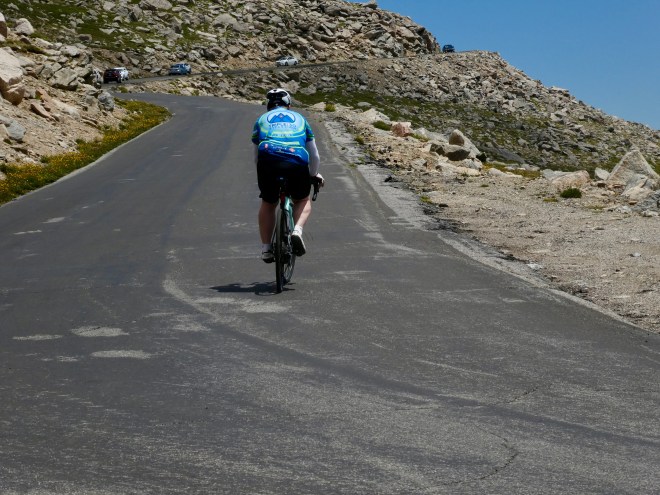
Hard work to go by bicycle

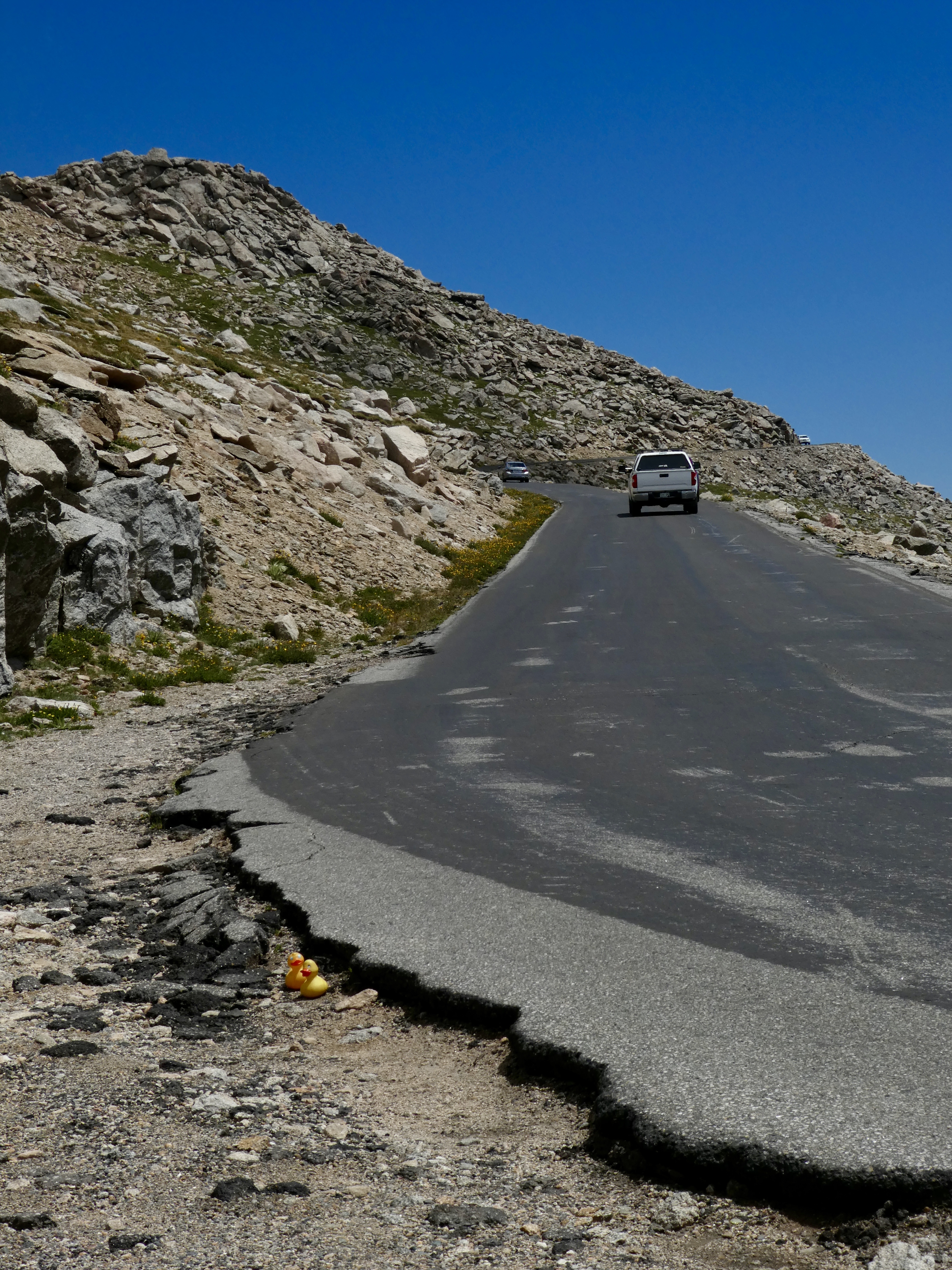
The road is wide enough for two cars to pass, but not much wider.   There are no shoulders on this road and not a single guard rail to be seen.

Narrow road. No shoulders. No Guard rails.

The drivers need to be careful, and they are.   Each year more cars drive to the top of Mt. Evans, so be aware and be observant.   Look what you may see.
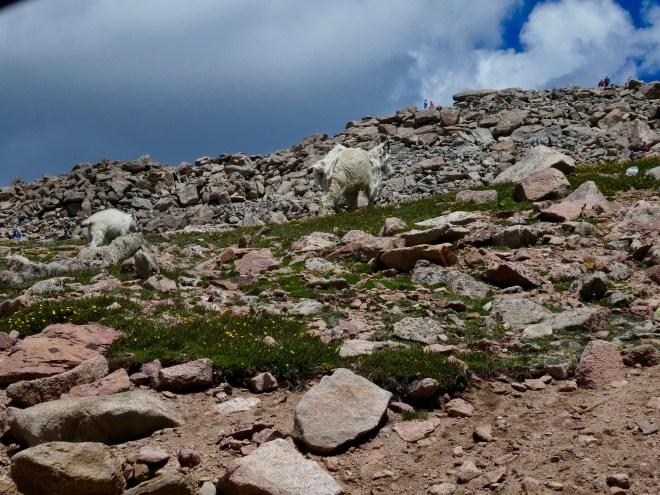
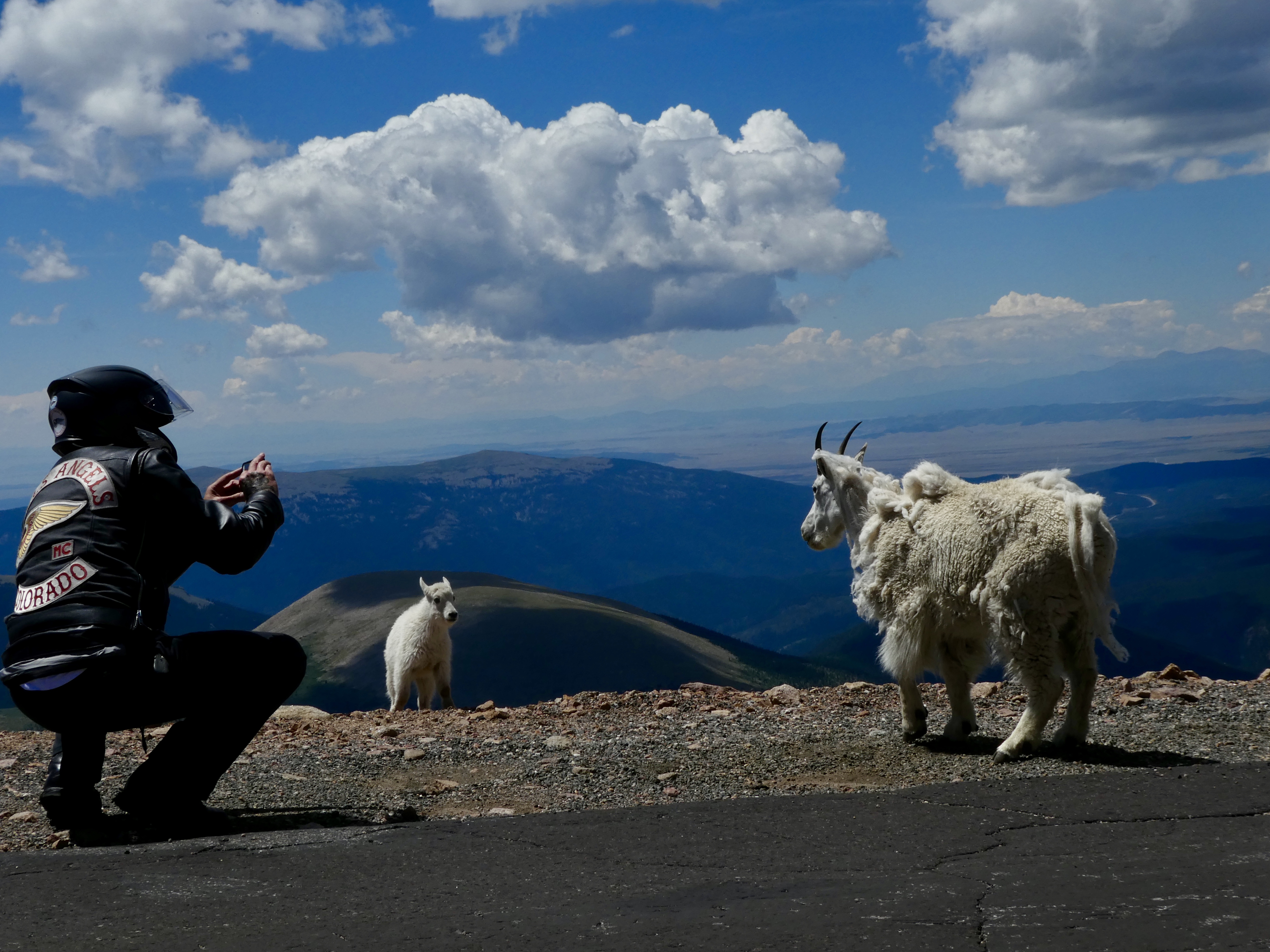
Mountain Goats

As we approach the summit of Mt. Evans, these Mountain Goats are wandering.   Humans do stop to admire and photograph the animals.
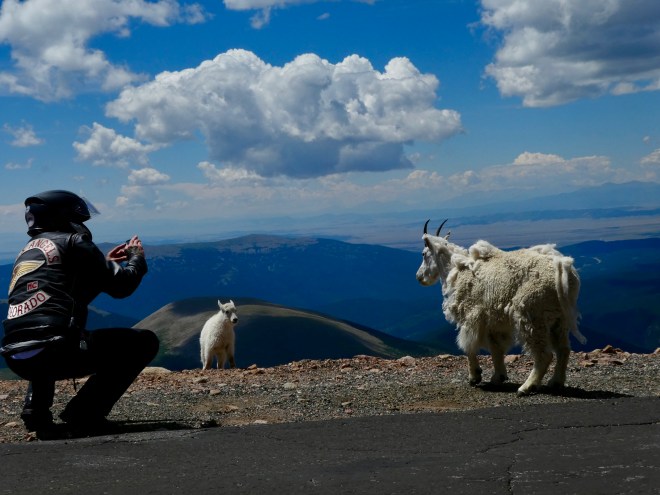
Mom and child. Mountain goats

We love seeing these animals.   At the summit of Mt. Evans, there is a parking lot with limited parking, paths to hike, and the remains of Crest House.
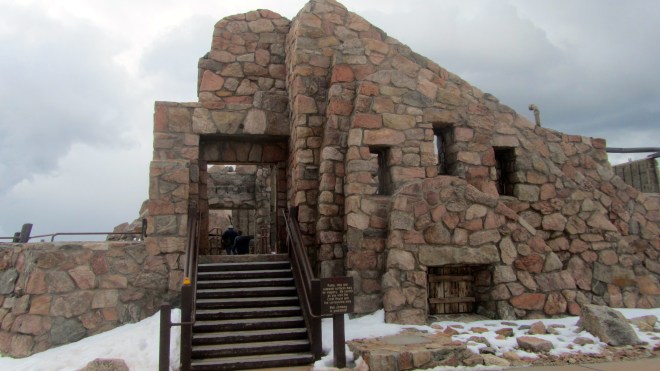
On hand rail of remains of Crest House

There are no concessions here, so bring your own water.  Crest House was a gift shop and restaurant, but was destroyed in a fire in 1979.   It was never rebuilt.   At the parking lot, you have reached the end of the highest paved road in North America.   You are at 14,206 feet above sea level.   Be careful.   The air is very thin, meaning there is not as much oxygen in the air as most people usually experience.   Move slowly and stop if you get light headed or dizzy.   If you brought oxygen with you, use it!  And if you are wondering, this road is 154 feet higher than the road to the top of Pikes Peak, a little further south near Colorado Springs.   Let’s head down now.   We love the views along the way.

Enjoy the views

There are some pullouts for hiking and admiring these mountain views.   We are higher than most of the surrounding mountains.

Beautiful views

Small mountain lakes dot the landscape.   Enjoy your time here.  Descending to 12,830 feet above sea level, we stop at Summit Lake.
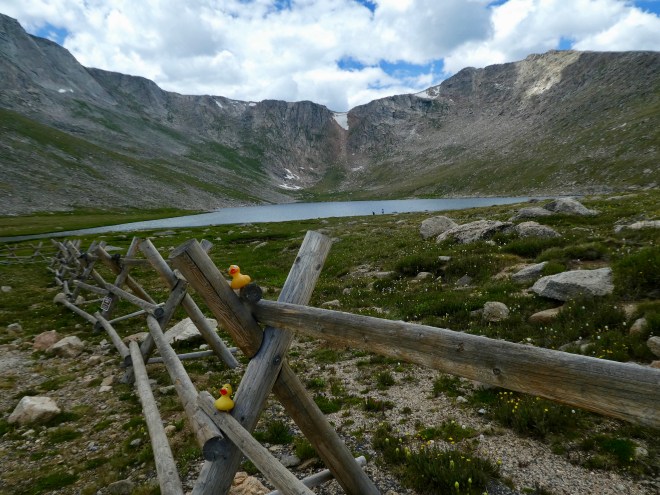
Summit Lake

The day after Labor Day, the road is closed from here to the top of Mt. Evans.   Usually closed on the first Tuesday of September.   The rest of this road, from Echo Lake to Summit Lake, stays open until closed by snow.   We park here and follow the trails.
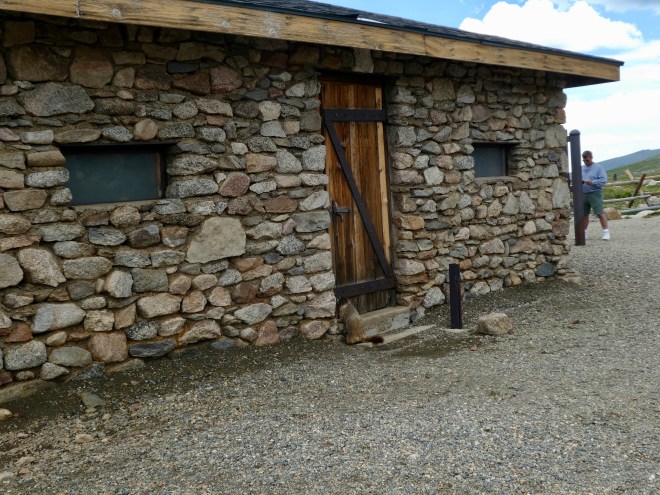
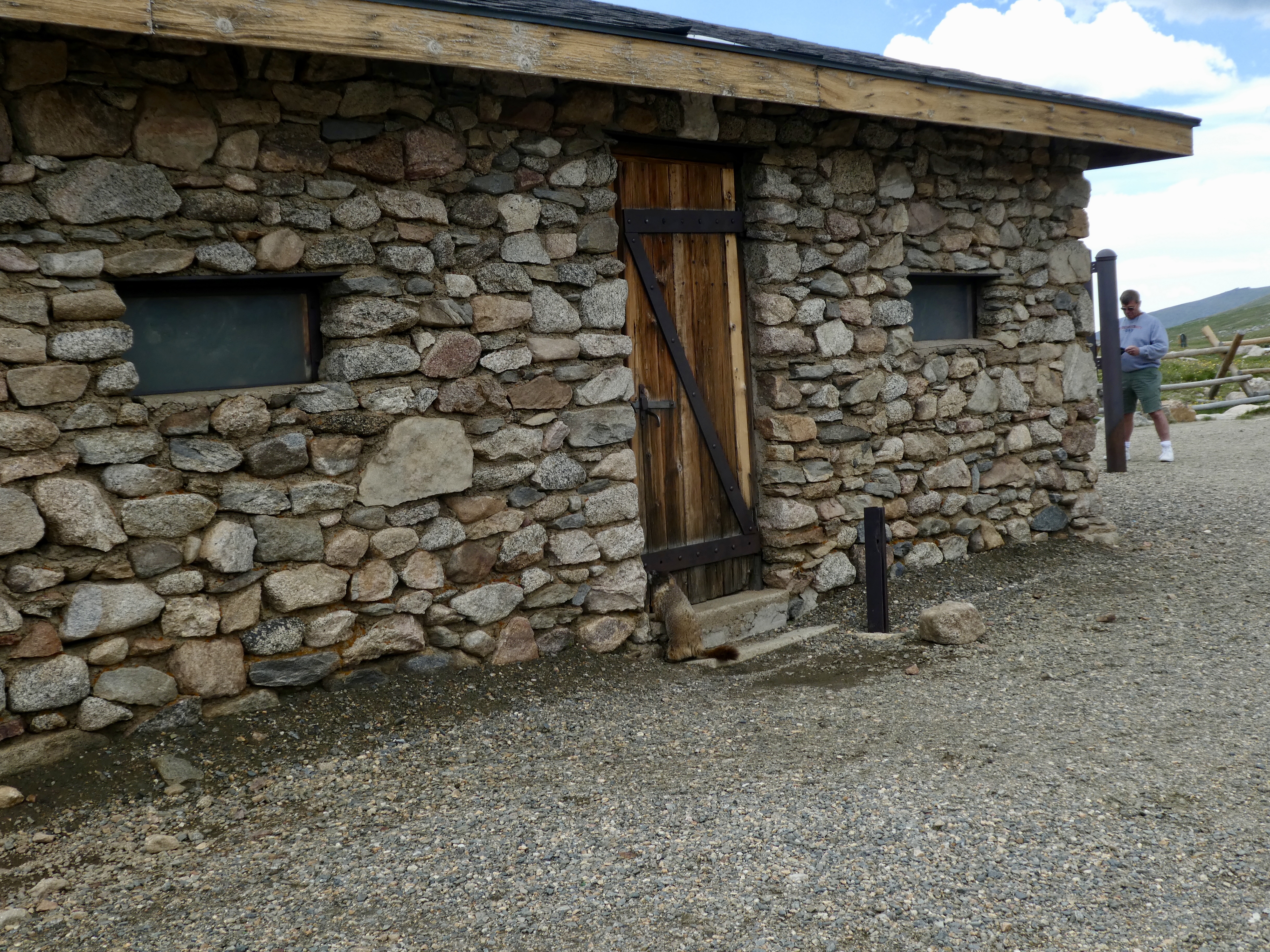
Yellow Bellied Marmot wants to go inside

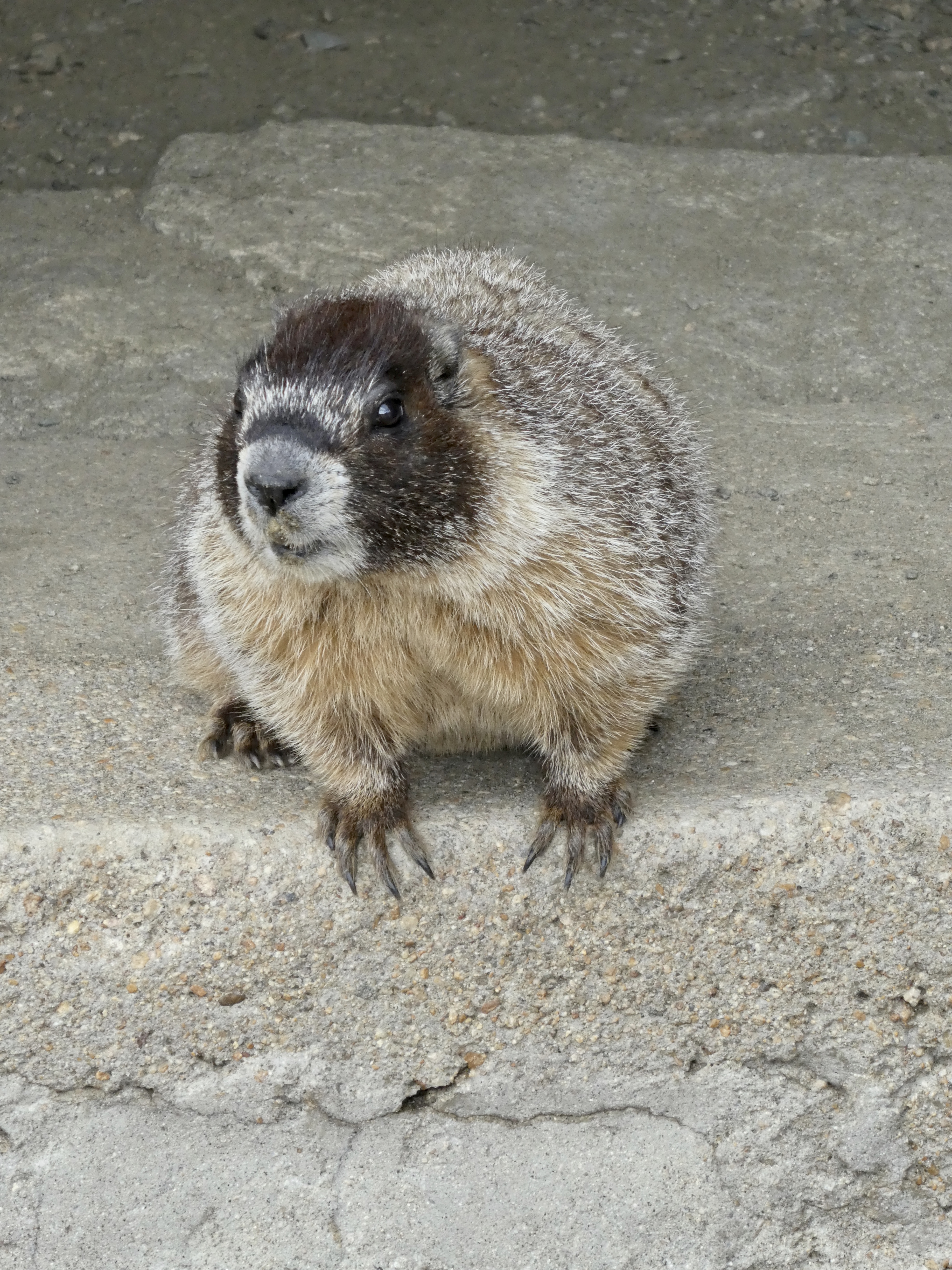
This yellow bellied marmot wants to go inside this building?  We saw a park ranger and he said he opened the door earlier and the marmot went inside.   When he came out, the ranger closed the door.   As he was coming out, he seemed to look right at me.

Yellow Bellied Marmot

Mom, should I be worried?   The sign says he is eating lots to get ready for 8 months of hibernation.   Continuing driving back, we stop to see wildflowers.
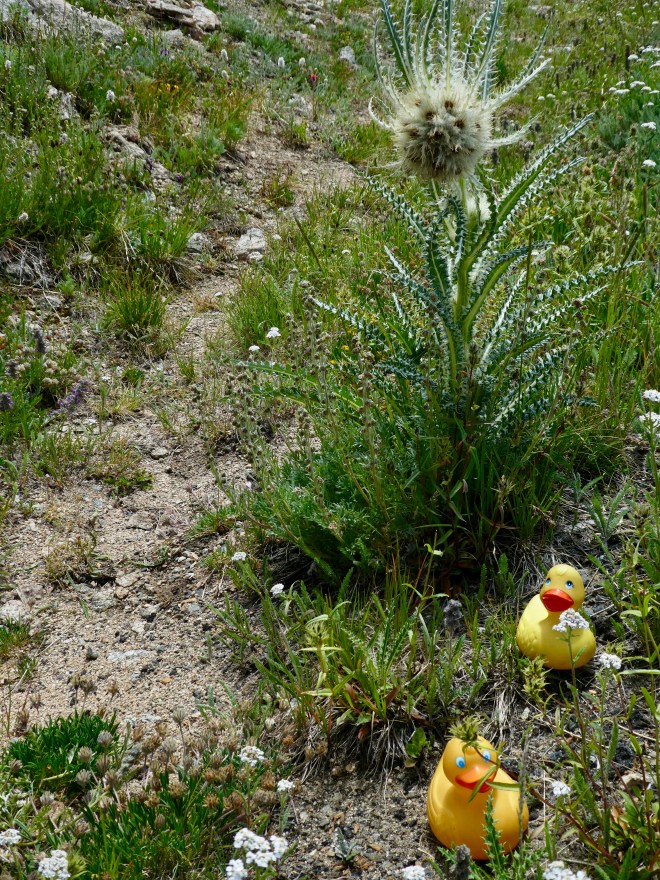
This one is producing seeds

This unusual plant is growing and has a seed ball.   Interesting.   But this is my favorite.
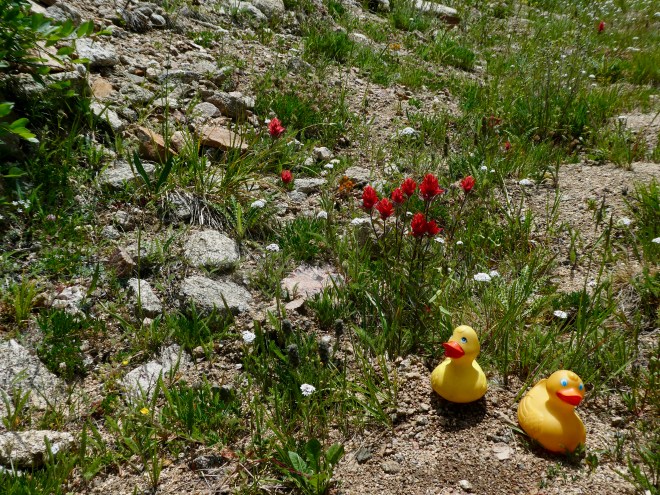
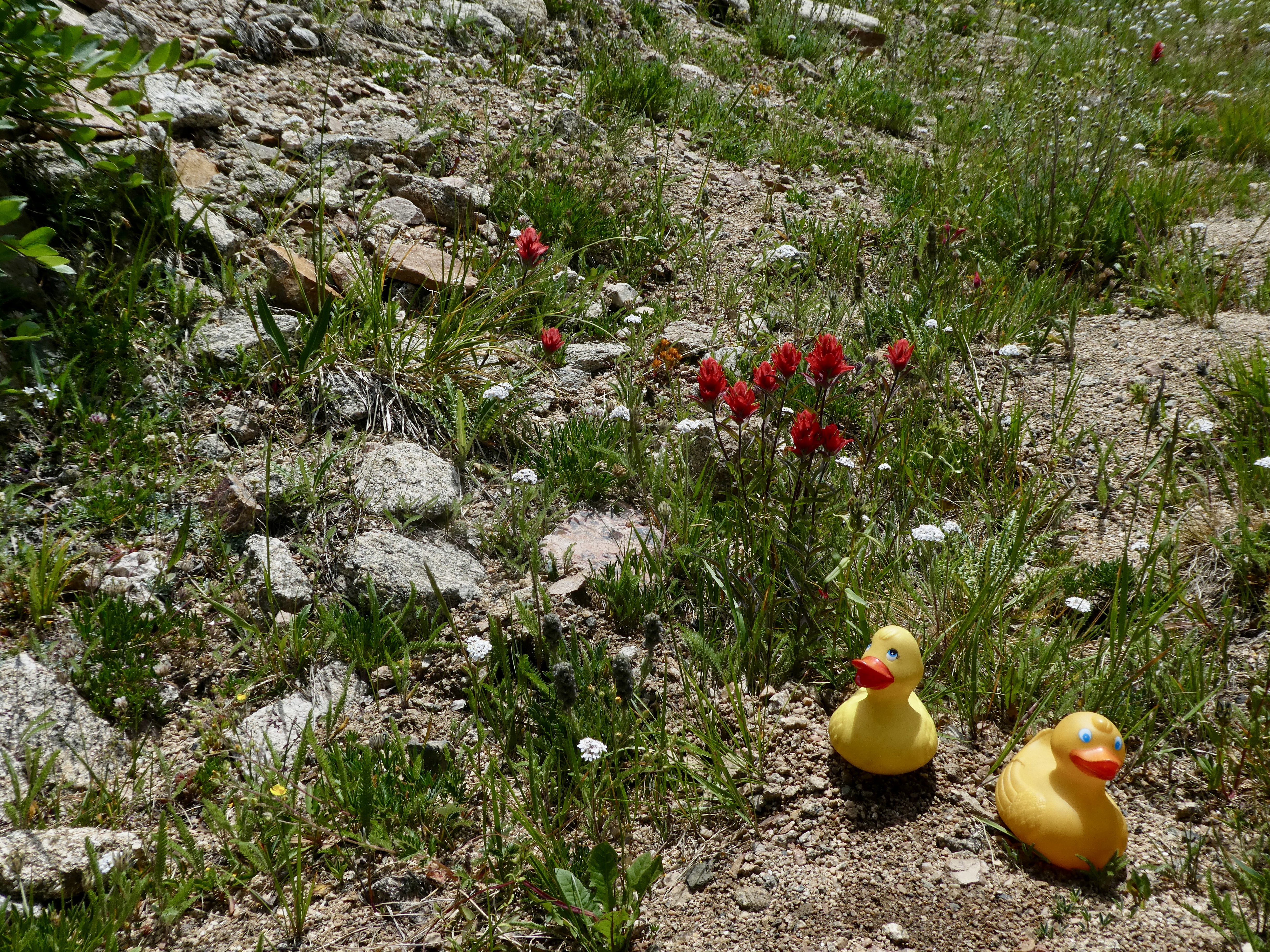
Beautiful red wildflowers

I, Zeb the Duck, love red wildflowers.   If you did not drive to the summit of Mt. Evans this summer, we hope you plan to go next summer.   It is beautiful and you pass through so many climate levels.   You will be above tree line.   You will see arctic tundra.   We hope to see you there next summer.
Boulder Creek Hometown Festival 2018

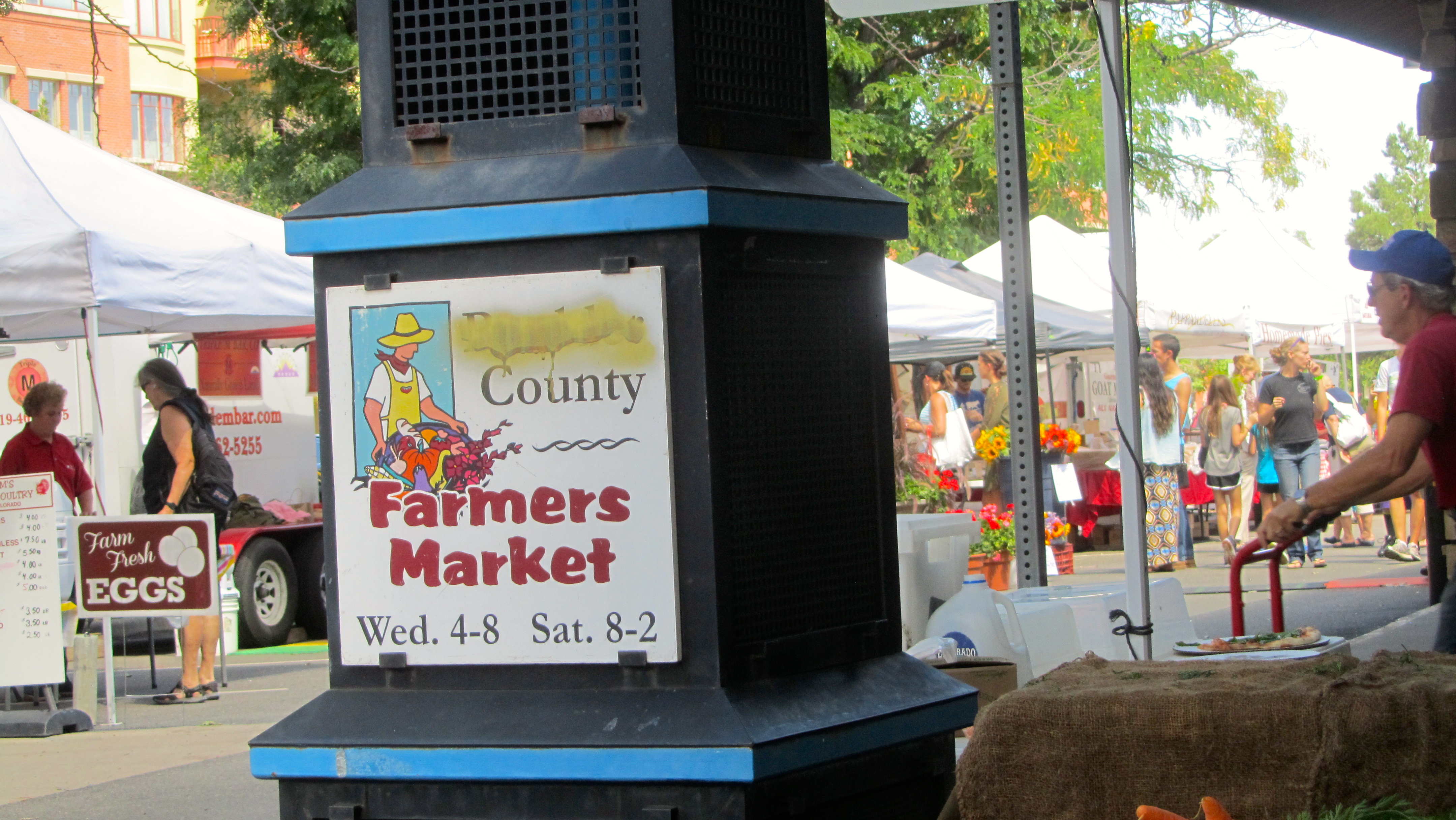
We love festivals.   And we love festivals in Boulder, Colorado.   Labor Day Weekend, the first weekend in September is one of our favorite festivals.   There is a Farmer’s Market.

A Farmers Market in the festival

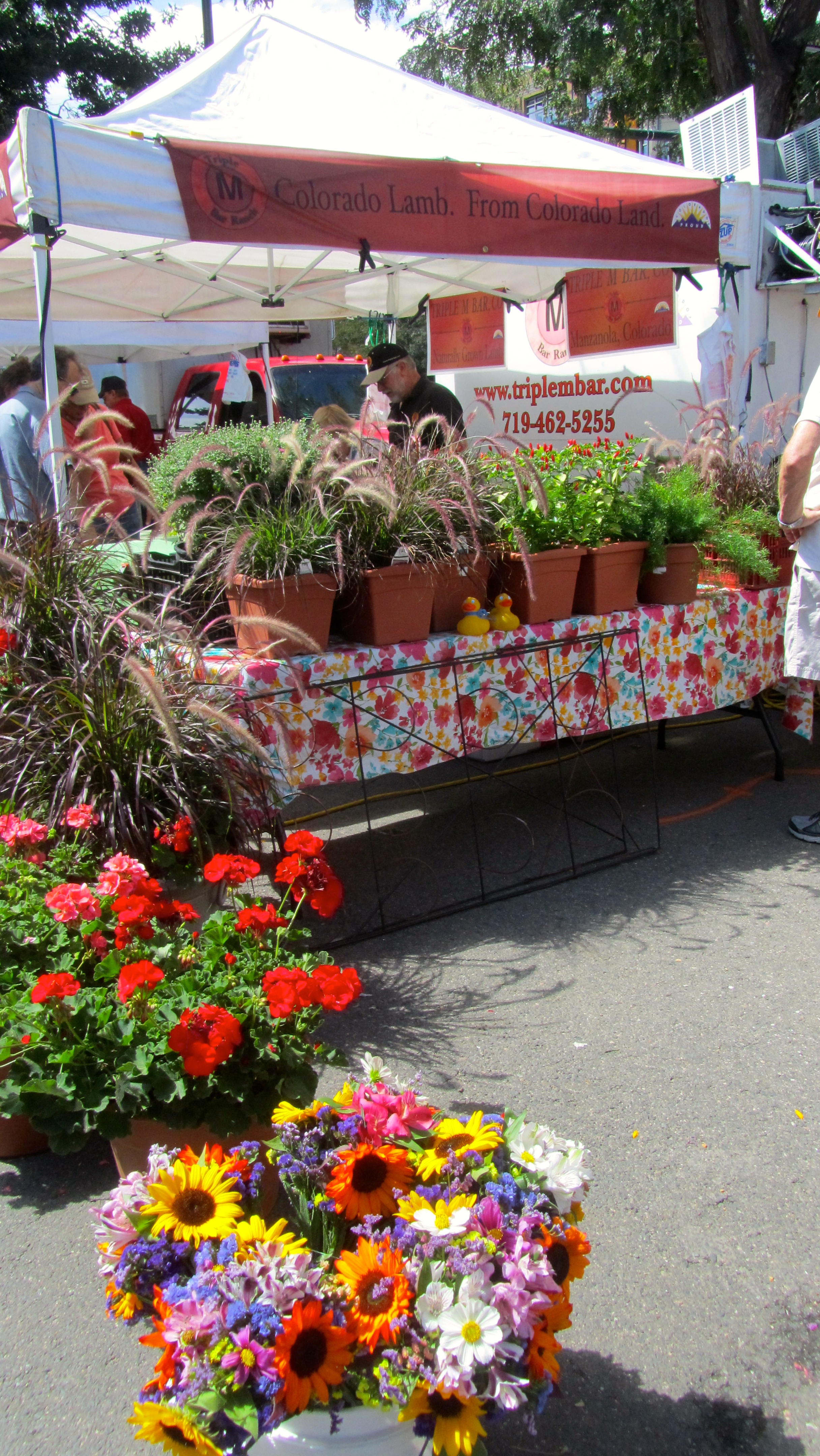
Yes, we can purchase Colorado lamb and cheerful cut flowers. (Sept 2014)

We like flowers and Colorado lamb

These vegetables are so colorful.

Yum

Makes ducks and humans hungry.   Also so many venders here.

Singing Bowls from the Himalayas.

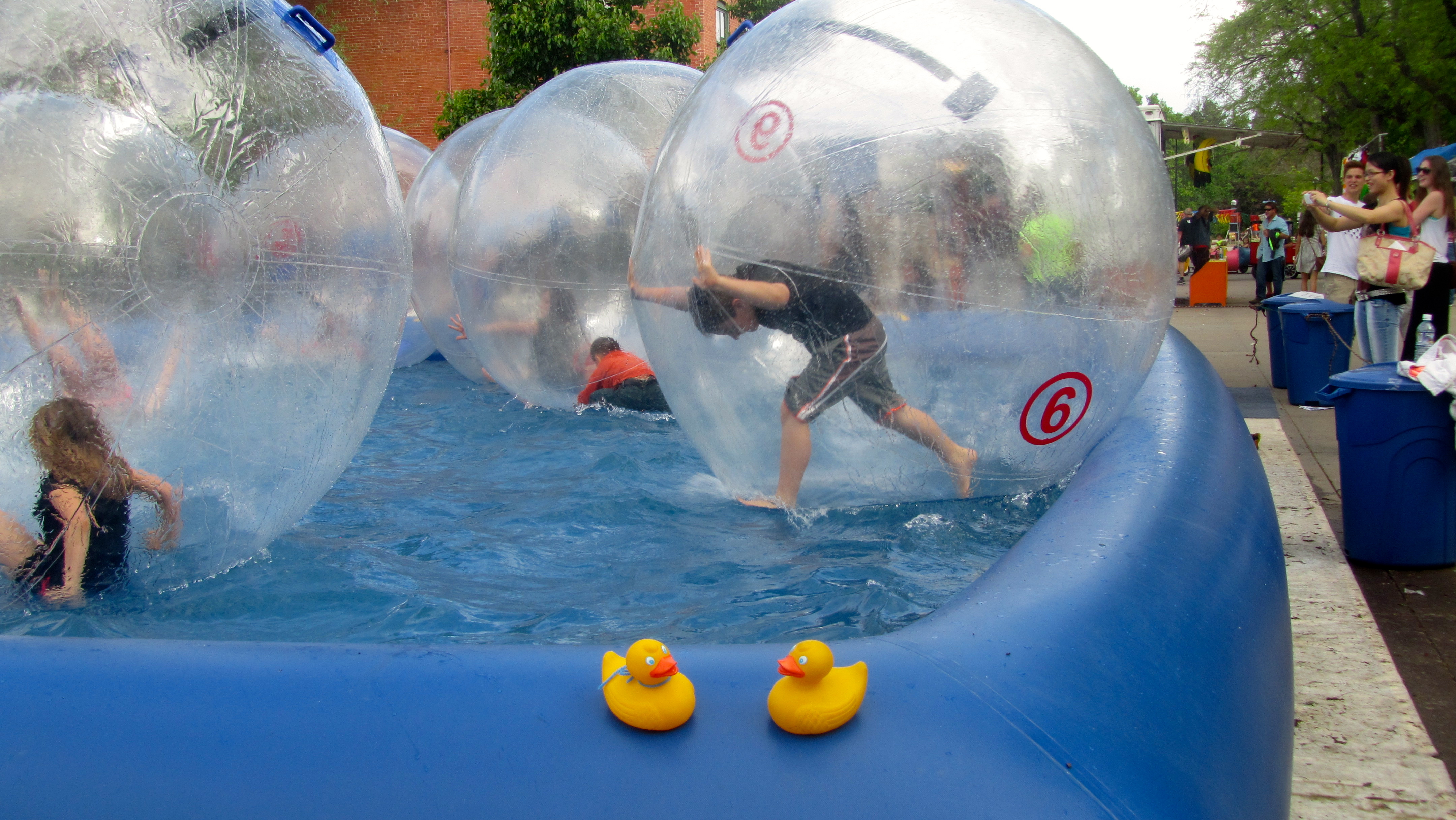
We love the singing bowls from the Himalayas.   Kids can get inside balls.

Walking on water in a bubble

Doesn’t this look fun?    Or, if you don’t want water, try these bumper balls.

Bumper Balls

And you can watch artists at work.

Artist at work


These are great!   But this festival has something special.

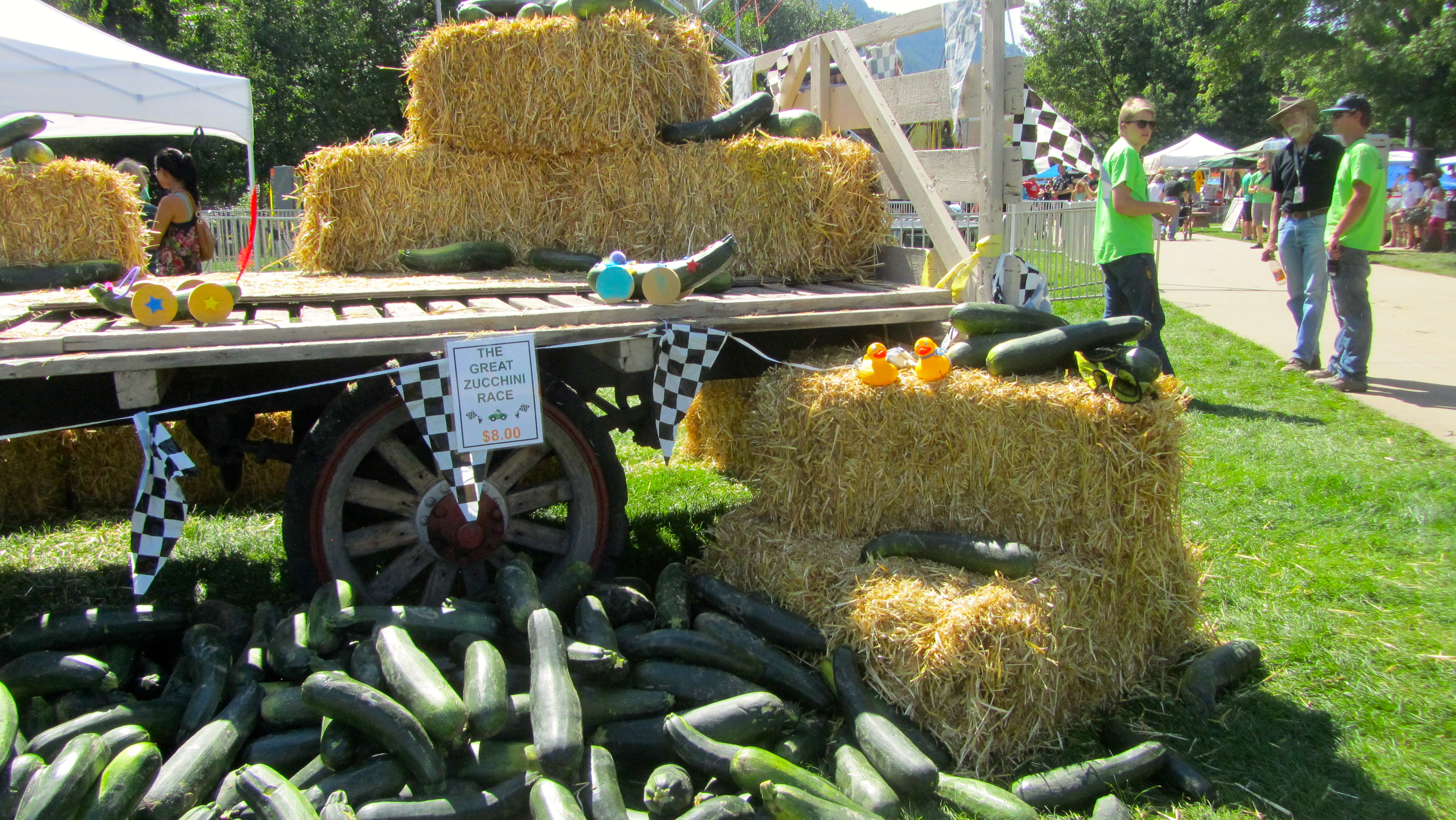
So many huge zucchinis

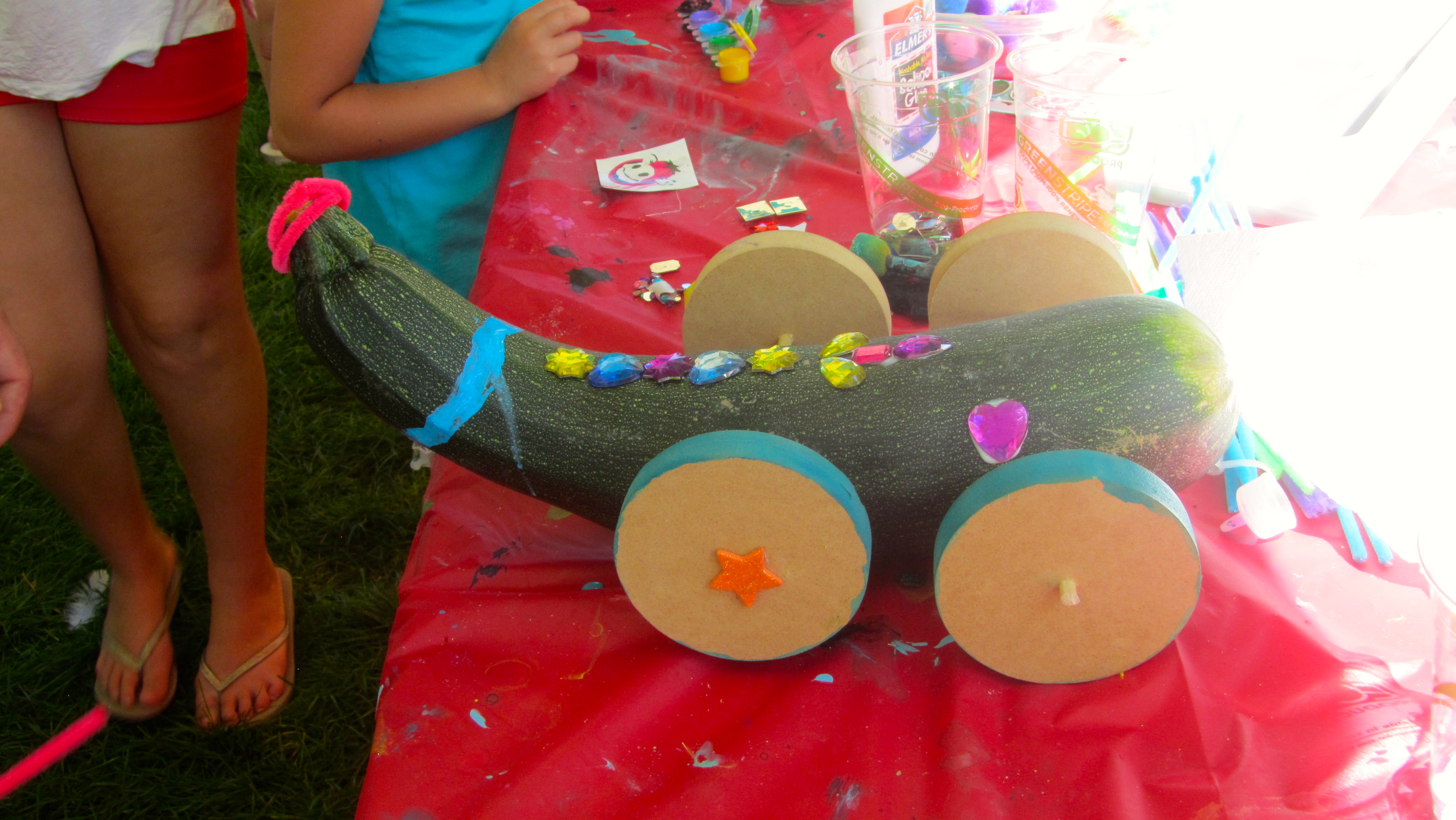
Zucchini Races.   Kids can purchase a giant zucchini.   The wheels are then put on the zucchini for the young human.   There are many choices for these little ones to use for decorating their zucchini.

Work in progress

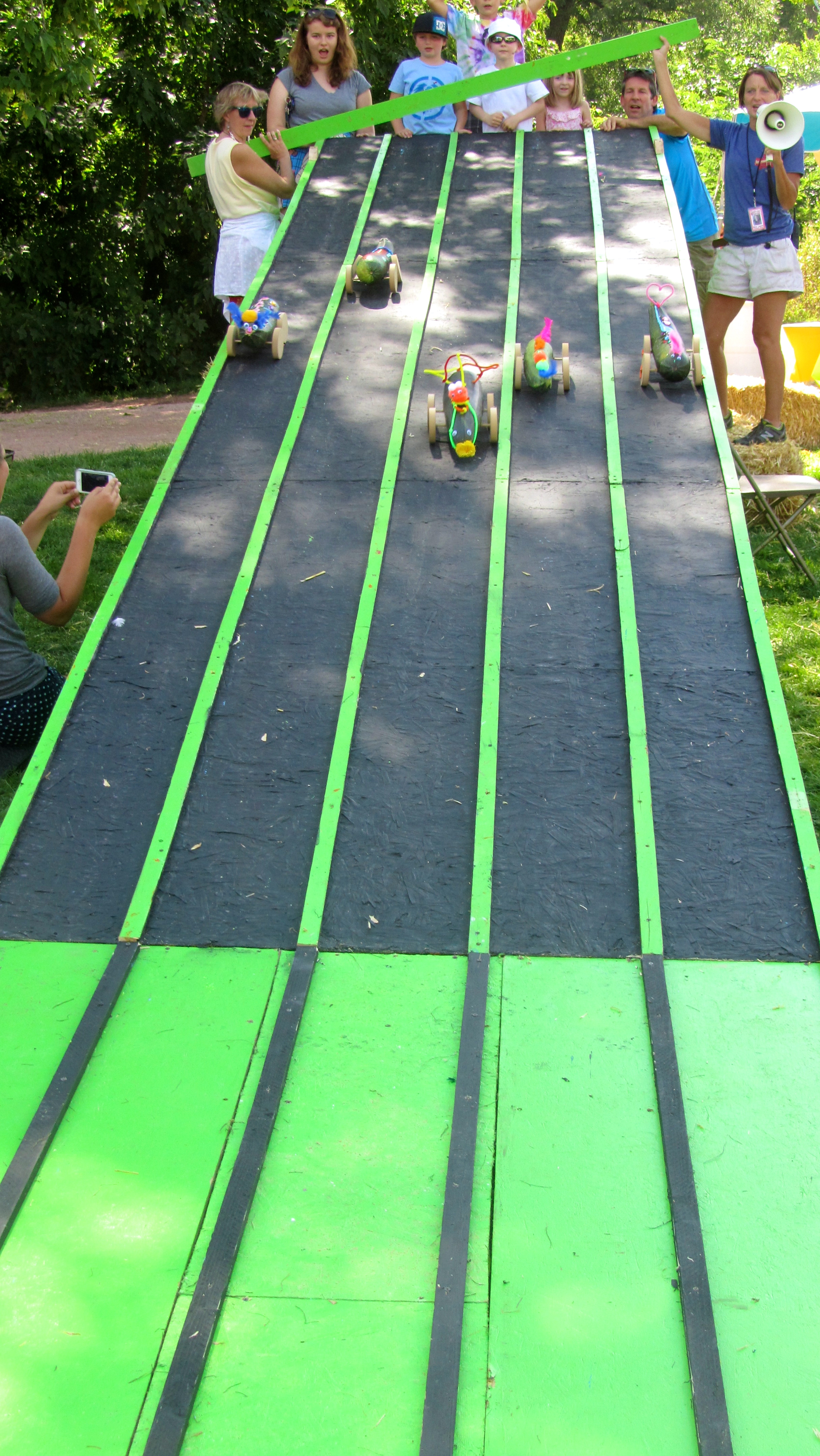
Now it is time to race.

And the race begins

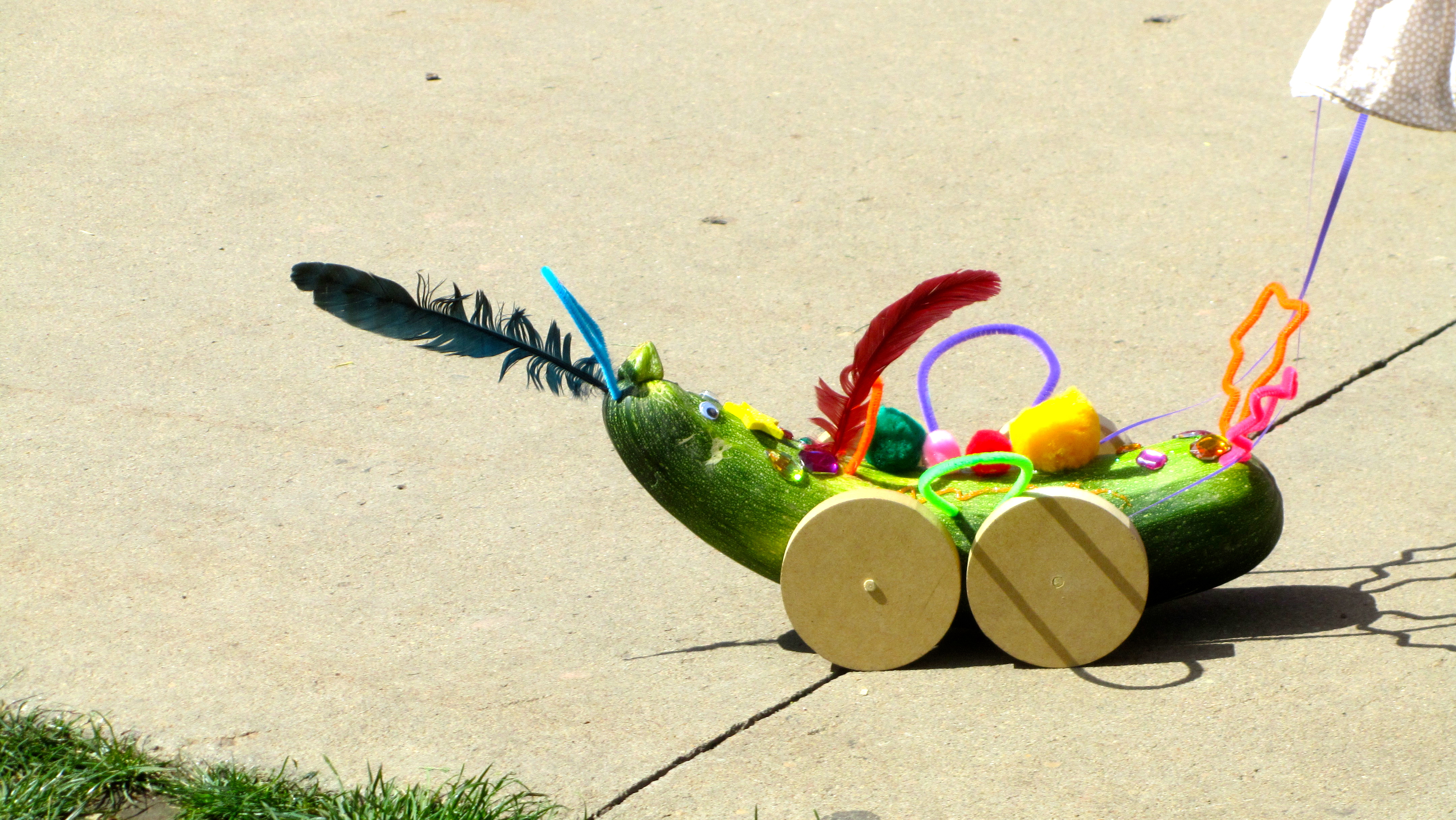
These races occur every 10-15 minutes, depending when the decorated zucchinis are ready.   Isn’t this fun?  The young human keeps the decorated zucchini.

Zucchini

If you have ever planted zucchini in your garden, you know that it grows quick.   Zucchini is a very prolific plant, so there are always giant zucchinis.   Humans can only eat so much zucchini in one summer.
Racing zucchinis

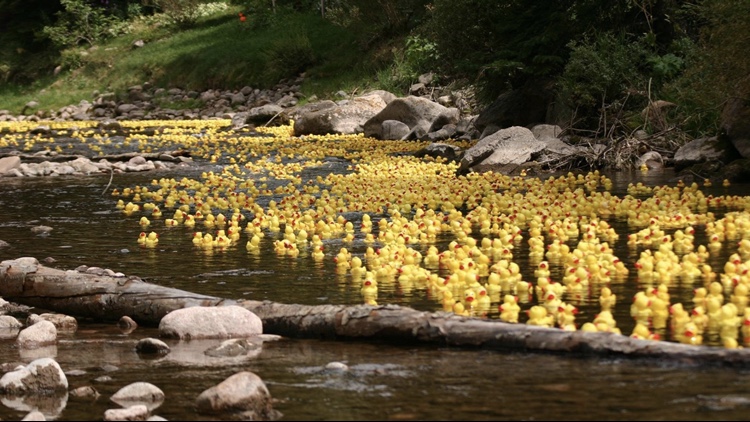
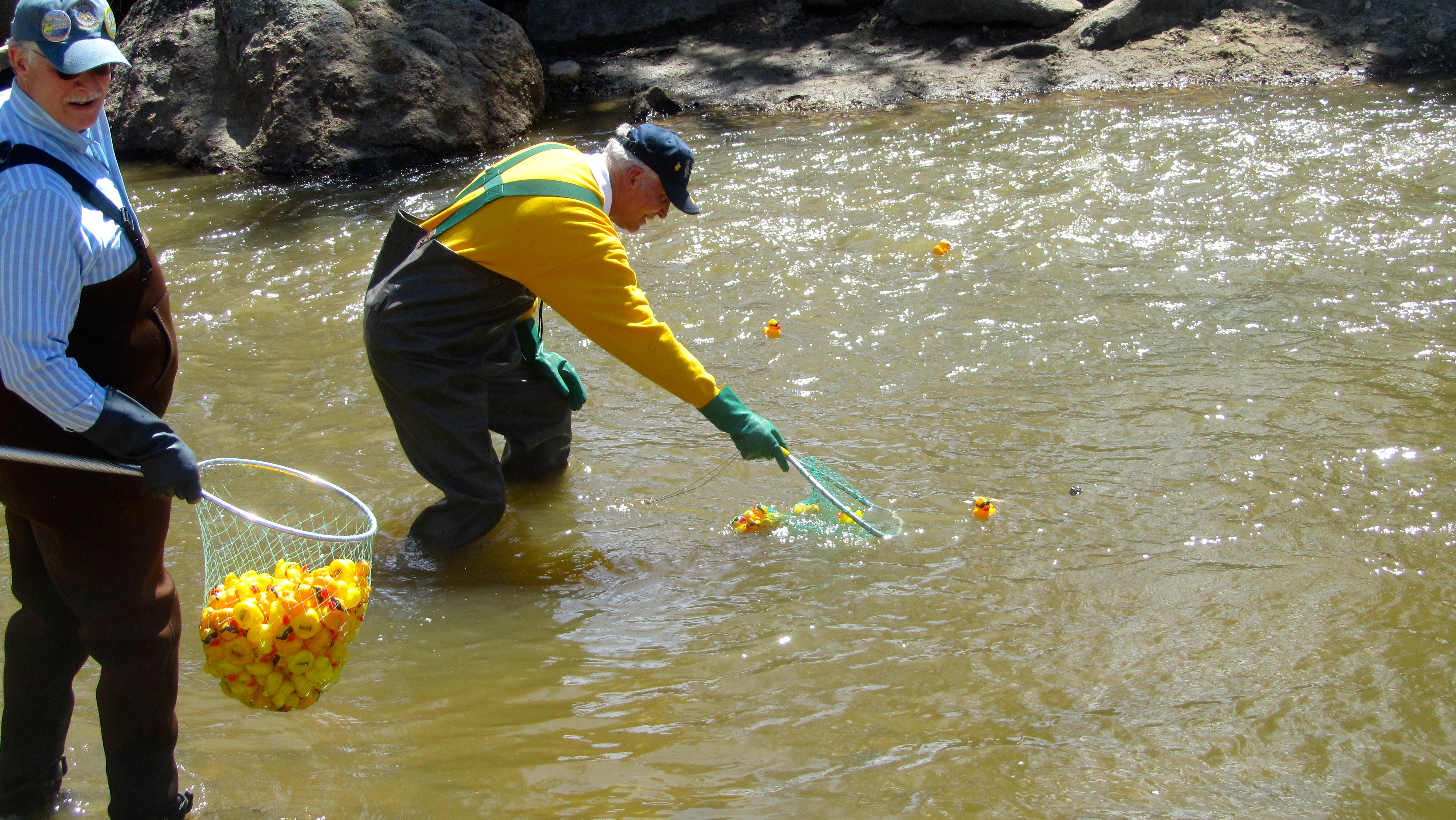
But that is not all for this festival .   On Monday, the duck races occur.   Of course, we love duck races.   Duck races are to raise money for a good cause.   The organizers of the duck races have hundreds or thousands of ducks that look almost like us.   People or businesses buy (really rent) a duck or ducks.  But they are not allowed to touch the duck.  Each duck has a number, so humans know which is their duck.   All ducks are dropped in Boulder Creek.  And the races begin.

Ducks

Many humans are needed to catch the ducks at the finish line.

Wow! At the finish line

The water carries the ducks to the finish line.

Some of the many ducks

The person paying for the winning ducks receive prizes.   Everybody loves to watch the ducks race down Boulder Creek.   These duck races are very popular and many towns feature duck races in the local festivals.  We hope you watch duck races near you and, of course, think of us, the Colorado Traveling Ducks.

Colorado Traveling Ducks Reach Dawson Creek

This morning we checked out of our hotel, Fort Nelson Hotel in Fort Nelson, British Columbia.

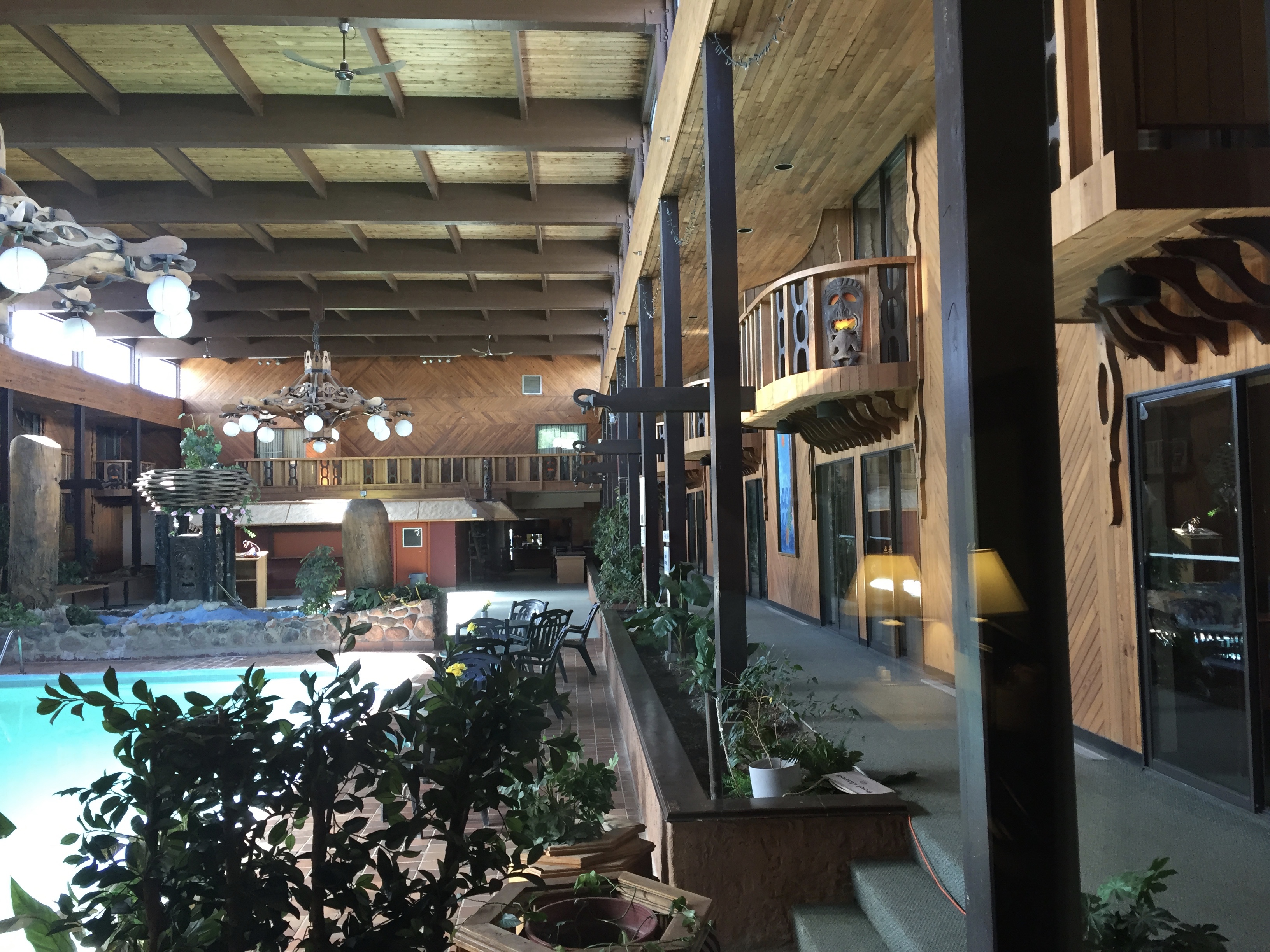
Inside Fort Nelson Hotel. View from our room

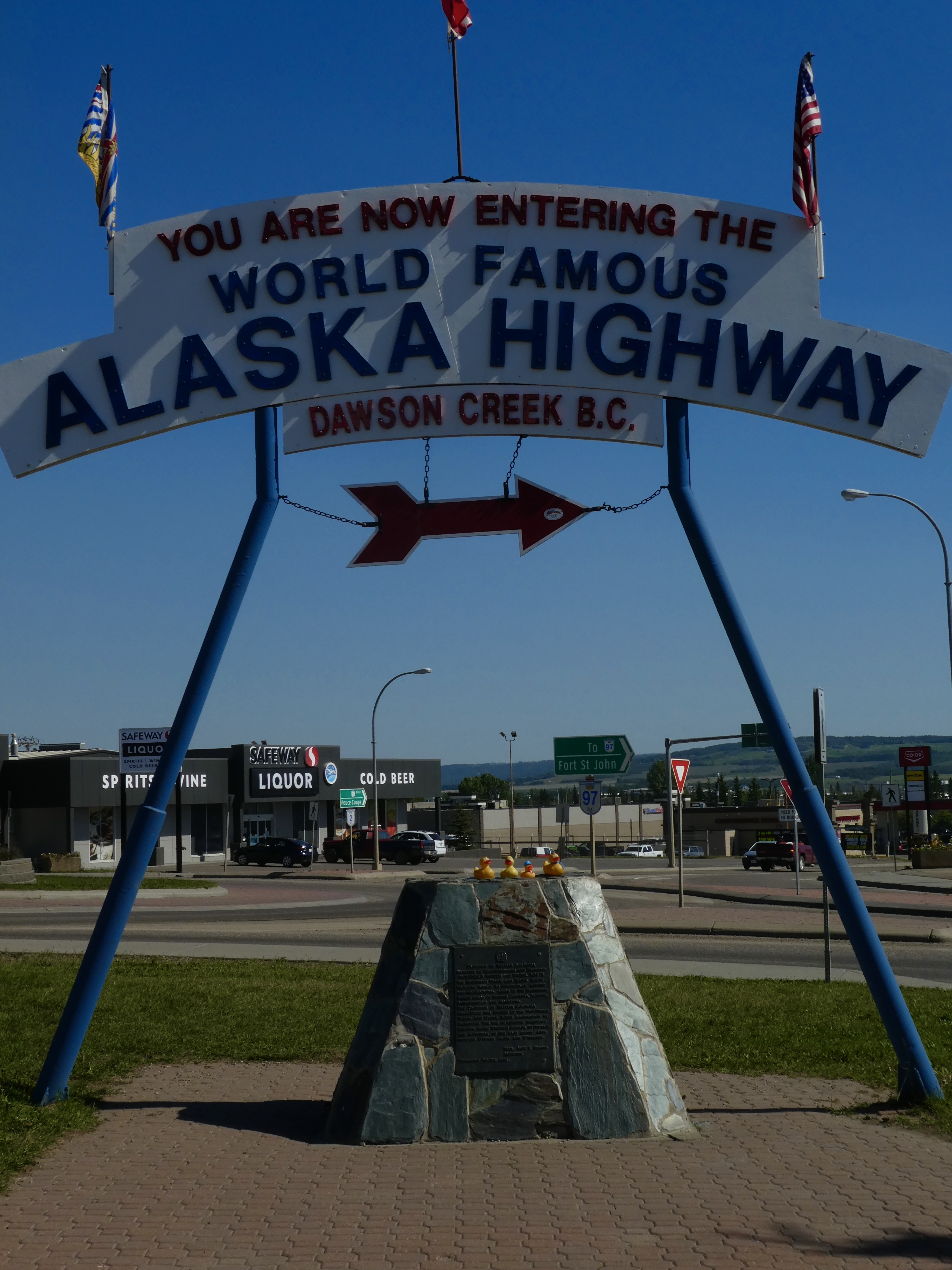
This was the view from our room window.    We saw the indoor pool.   Look at the carving on the balcony to our right.   This morning was different.   Our moms said we needed to hurry, we had a long drive today.   What?  We have never known how far we would get any day.   We just drove and stopped to look and explore where ever we wanted.   Something is different today.   We have traveled a little over 1,000 miles in more than one week.   Not traveling very fast or very far each day.   Now, the moms tell us we have to drive about 2,000 miles in three days. OK, we can do this, but why??  Soapy and his mom have flights to visit a friend in Tampa, Florida.   OK, let’s get going.   We are still driving through and admiring the gorgeous scenery, of course.   First stop is in Dawson Creek, British Columbia.    This is the official beginning (or for us, the end) of the Alaska Highway.

Official beginning of Alaska Highway in Dawson Creek

We enjoyed our trip, but why was the Alaska Highway built, and why did it need to be completed so fast?   The tourist information says this:   The Japanese bombing of Pearl Harbor in 1941 forced the America and Canadian governments to re-evaluate the security of North America.  They needed a secure supply route to haul military goods and materials from the lower states to Alaska and it had to be completed in less than one year.   The story of the men, the equipment, and their triumphs over nature to open the northern passage is as legendary as the men who risked their lives to build the highway.  Next to the official beginning of the Alaska Highway is another sign explaining things, but it is covered with bumper stickers now.   But you can see it is mile 0 here.

Milepost 0. Lots of bumper stickers here.

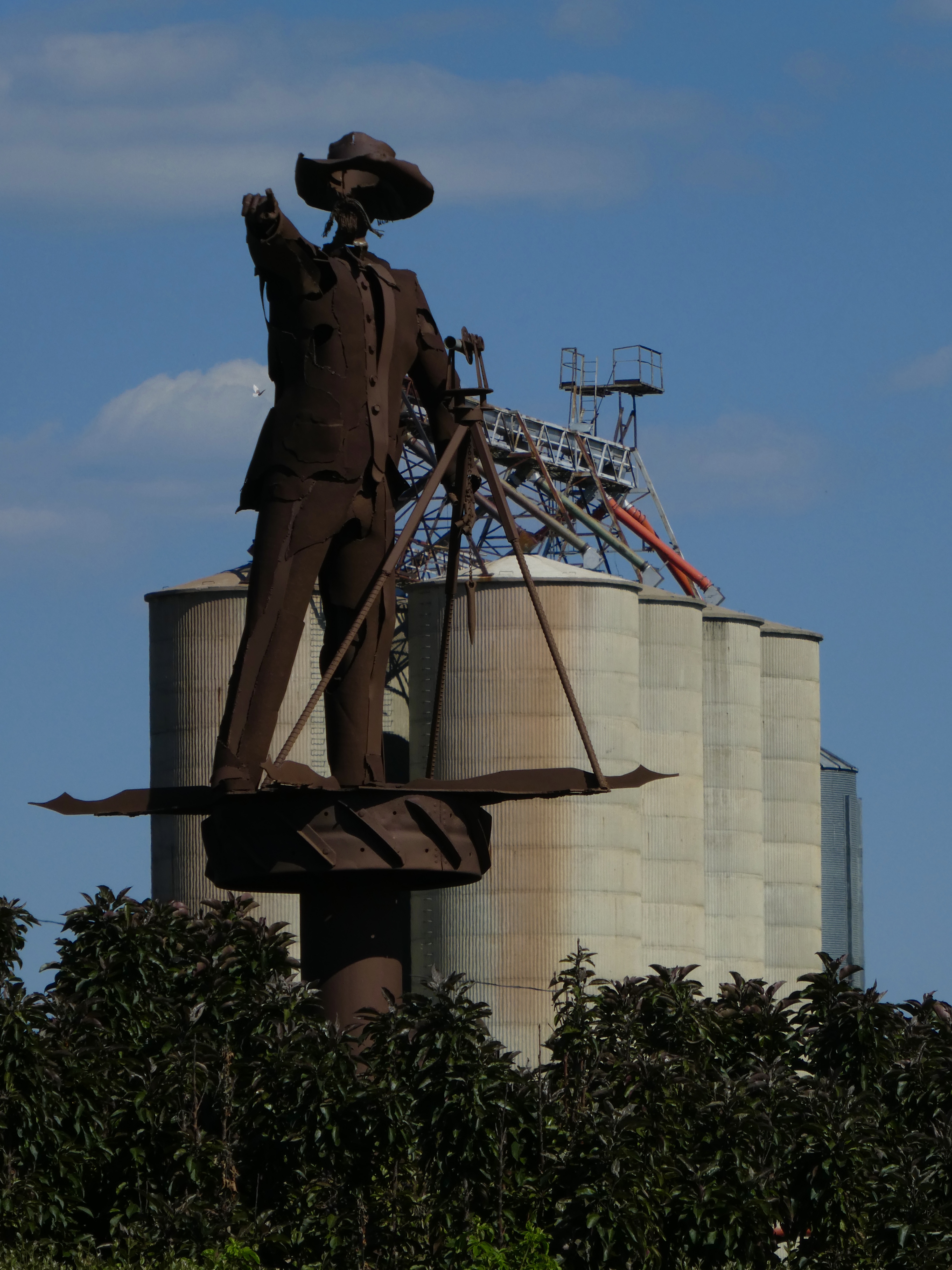
This is an exciting drive for many motorists.   Across the street, we saw the Surveyor Statue.

Surveyor Statue

This statue is a tribute to the tens of thousands of men who arrived in Dawson Creek in the spring of 1942 to build the Alaska Highway.  The Iron Surveyor statue stands as a reminder of the amazing feat and of those who lost their lives in the effort.  Standing above the traffic circle that leads you onto the famous highway, the surveyor points northwest along the path that became first a mud track and finally the paved highway we have today.   Created by local sculptor, Karl Mattson, whose family has ranched in the region for generations, the statue is welded from scrap metal from local farms.   The clothing and surveyor’s transit are true to the style of the 1940’s.  If you go to Dawson Creek, spend some time here to visit museums and walk around the town.   There is so much history and so many interesting things to see here.  But we have to keep driving for the next there days.   Our next stop was for a beaver.
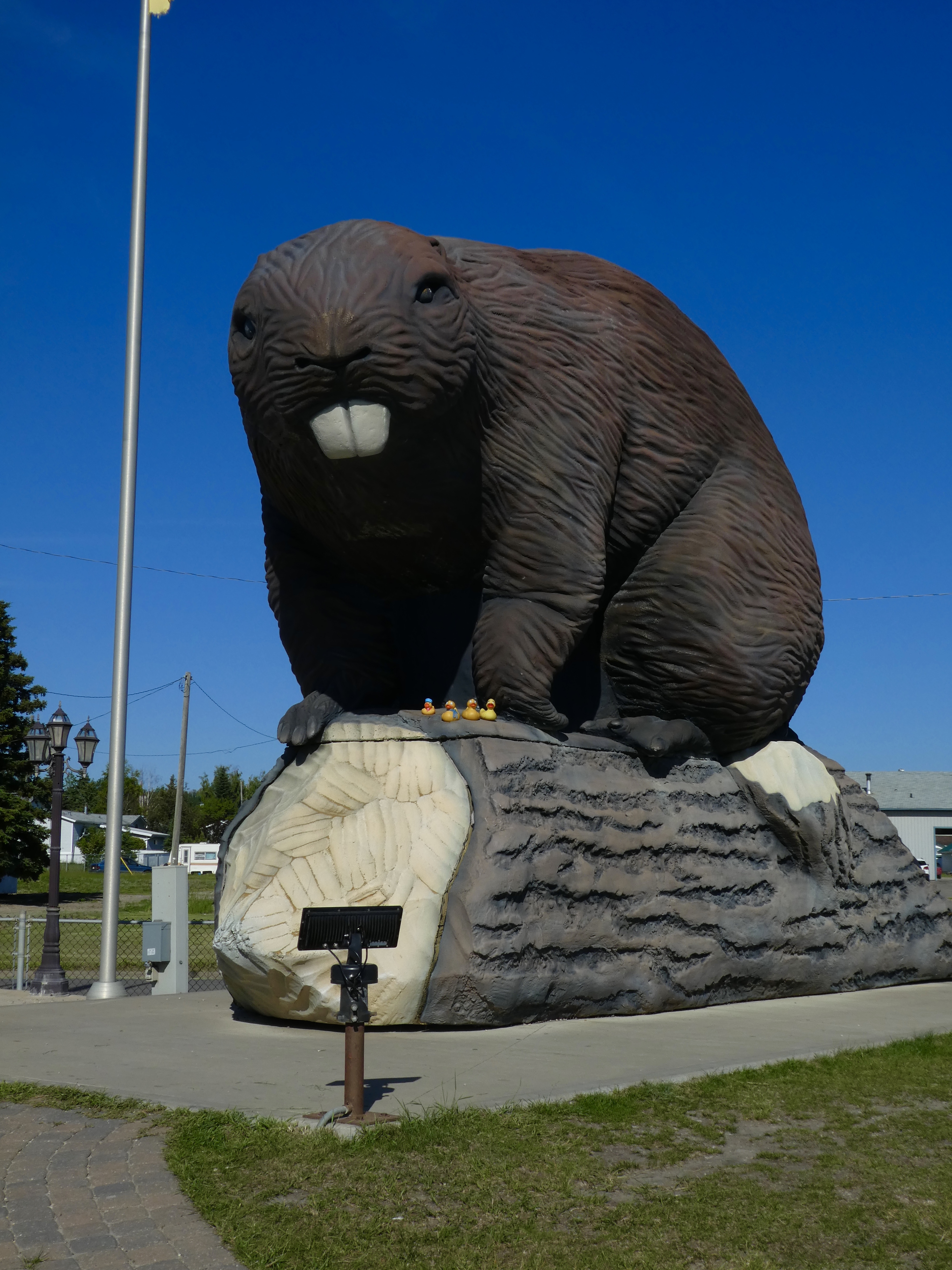
World’s Largest Beaver in Beaverlodge, Alberta, Canada

Here we are in Beaverlodge, Alberta, Canada.   In 2004 this giant statue of a beaver was built here, next to the Visitor’s Center.   Each town along the Alaska Highway and roads leading to Dawson Creek, try to have a reason for travelers and tourists to stop.   Beaverlodge has, according to Roadside America, the world’s largest beaver.   This beaver is 15 feet tall, 18 feet long and sits on a log that is 20 feet long.   And, weighs 3,000 pounds.   The beaver was built to commemorate the town’s 75th anniversary.   This was our last photo stop.   We drove to Edmonton, Canada tonight.   The next day we drove south through Calgary, Canada and into Great Falls, Montana, USA.   Another long drive and we arrived home, west of Denver, Colorado.   This was a great trip, but of course, we did not see everything.   Some day we would like to drive leisurely, through the USA and Canada to Dawson Creek.   There is so much more to see, but maybe???  So many place to see, so little time to travel and explore.  We hope you drive all or part of the way to Fairbanks, Alaska.   It was beautiful and fun.
British Columbia’s Alaska Highway with Colorado Traveling Ducks

We may be in a different Canadian province, but the scenery is every bit as beautiful.   Perhaps more trees and vegetation.   And this.

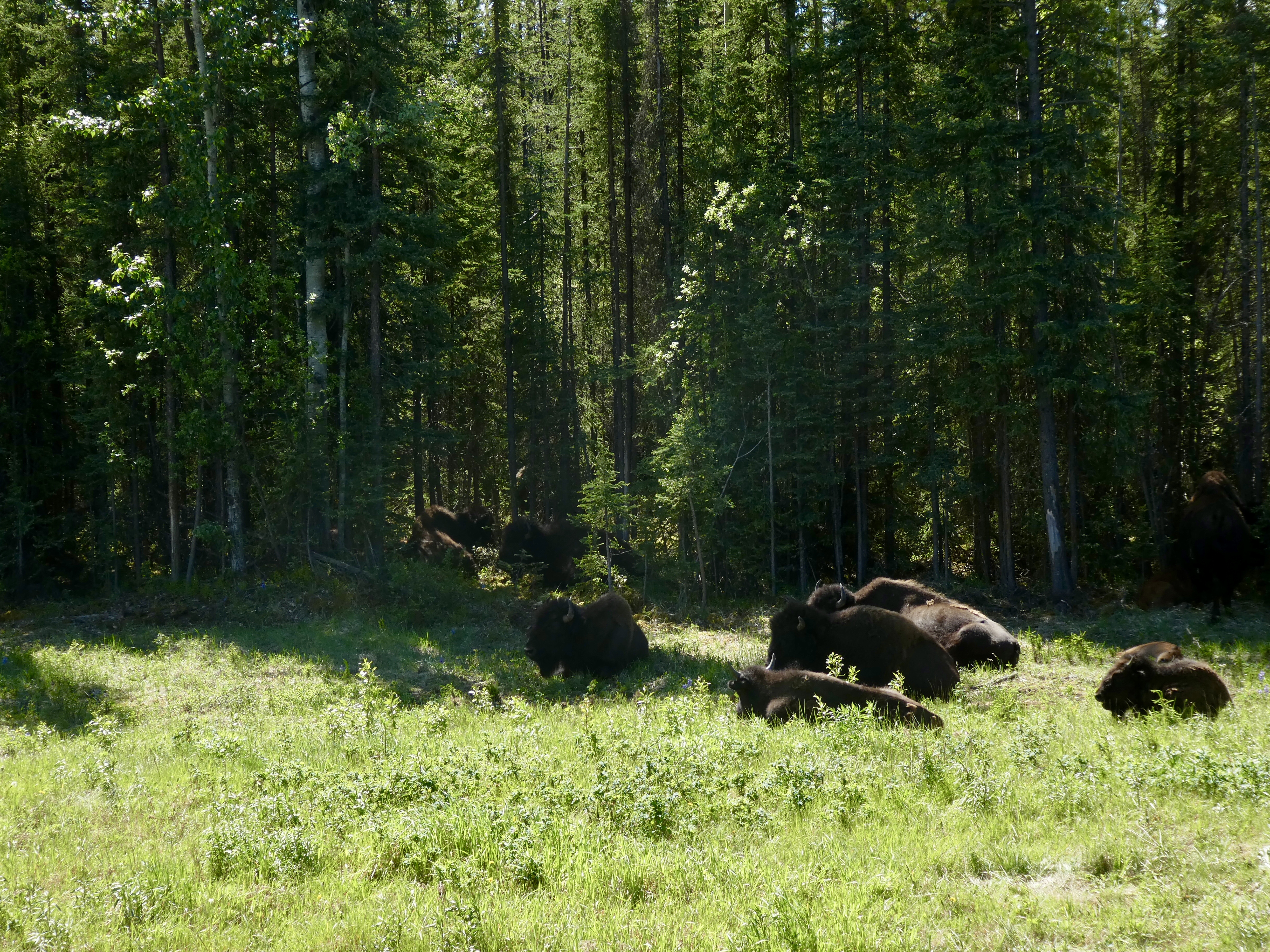
Bison near forest

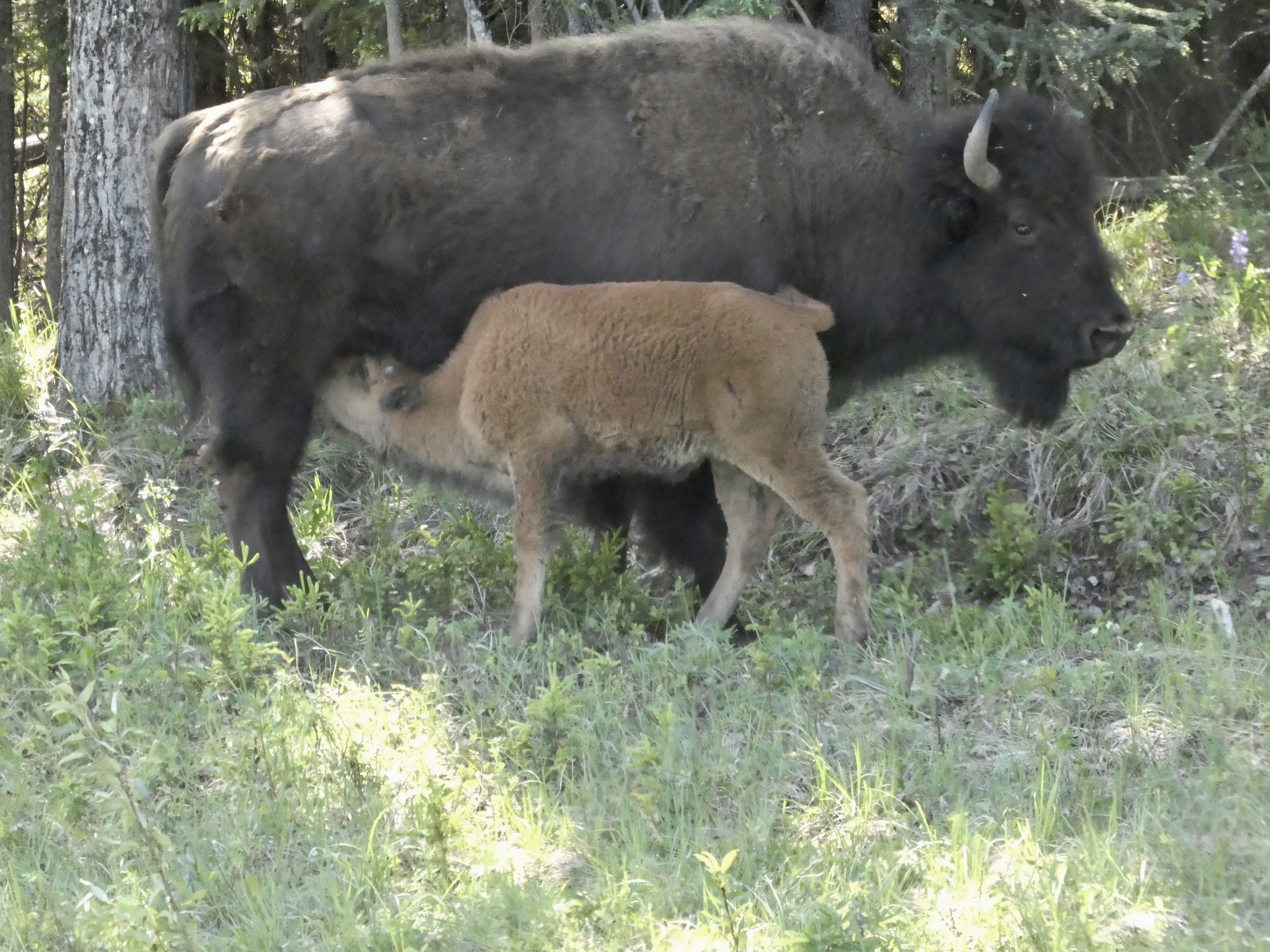
A small herd of bison.   Road signs said to watch for bison, and here they are.   And that forest is beautiful also.   This mom bison wanted to move a little further on the grass, but baby said no.

Baby is hungry

And they did not go until baby said it was time to move.   Really no difference in behavior between human babies and bison babies.   Babies, so small, but seem to be in charge of many things.  Continuing we come to this magnificent bridge.

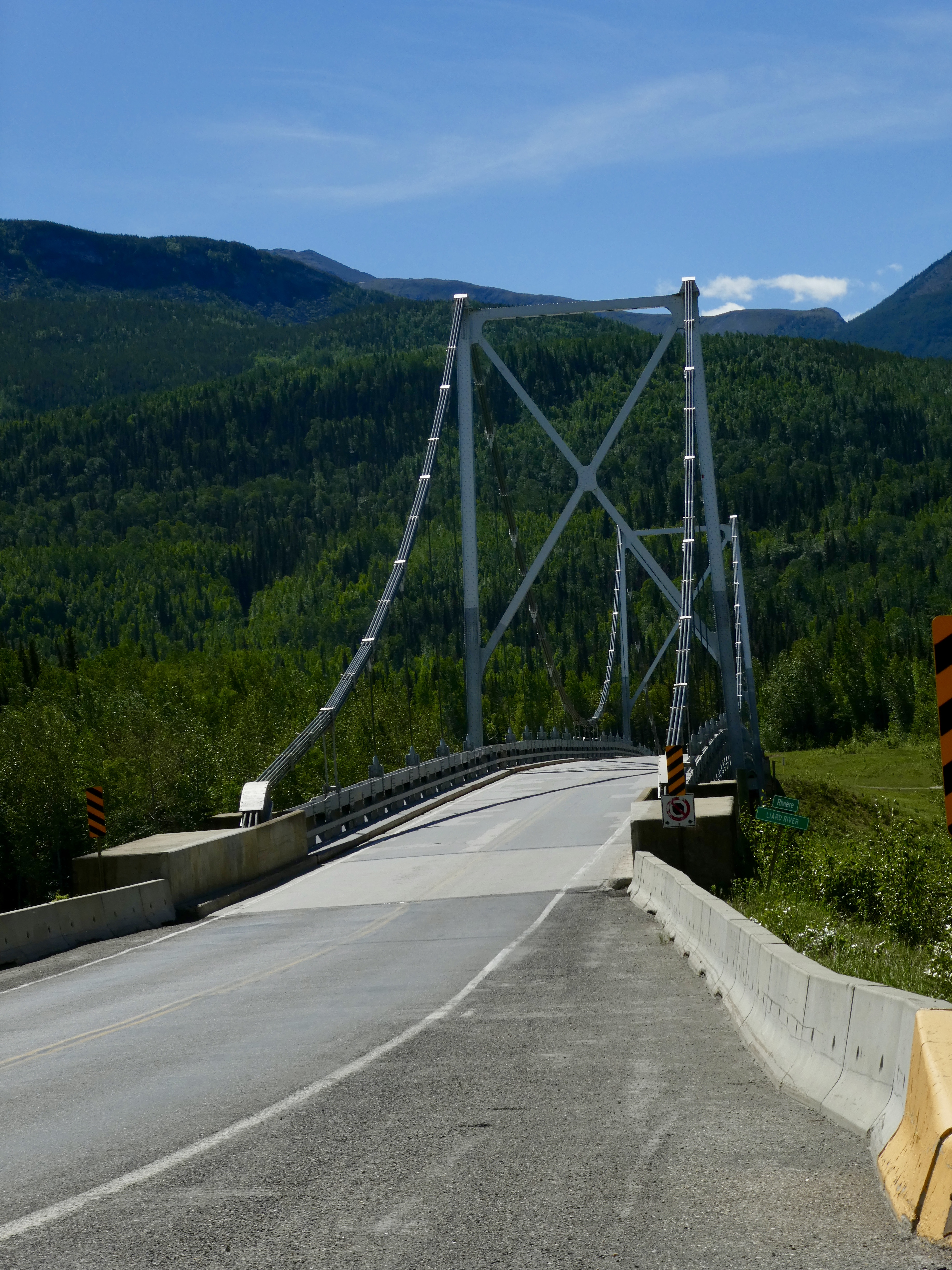
Lower Liard River Bridge

This is Lower Liard River Bridge.   It is 24.65 meters (94 ft) tall and 307 meters (1143 feet) long.   Built in 1943 this is the only suspension bridge on the Alaska Highway.  Soon we see sheep.

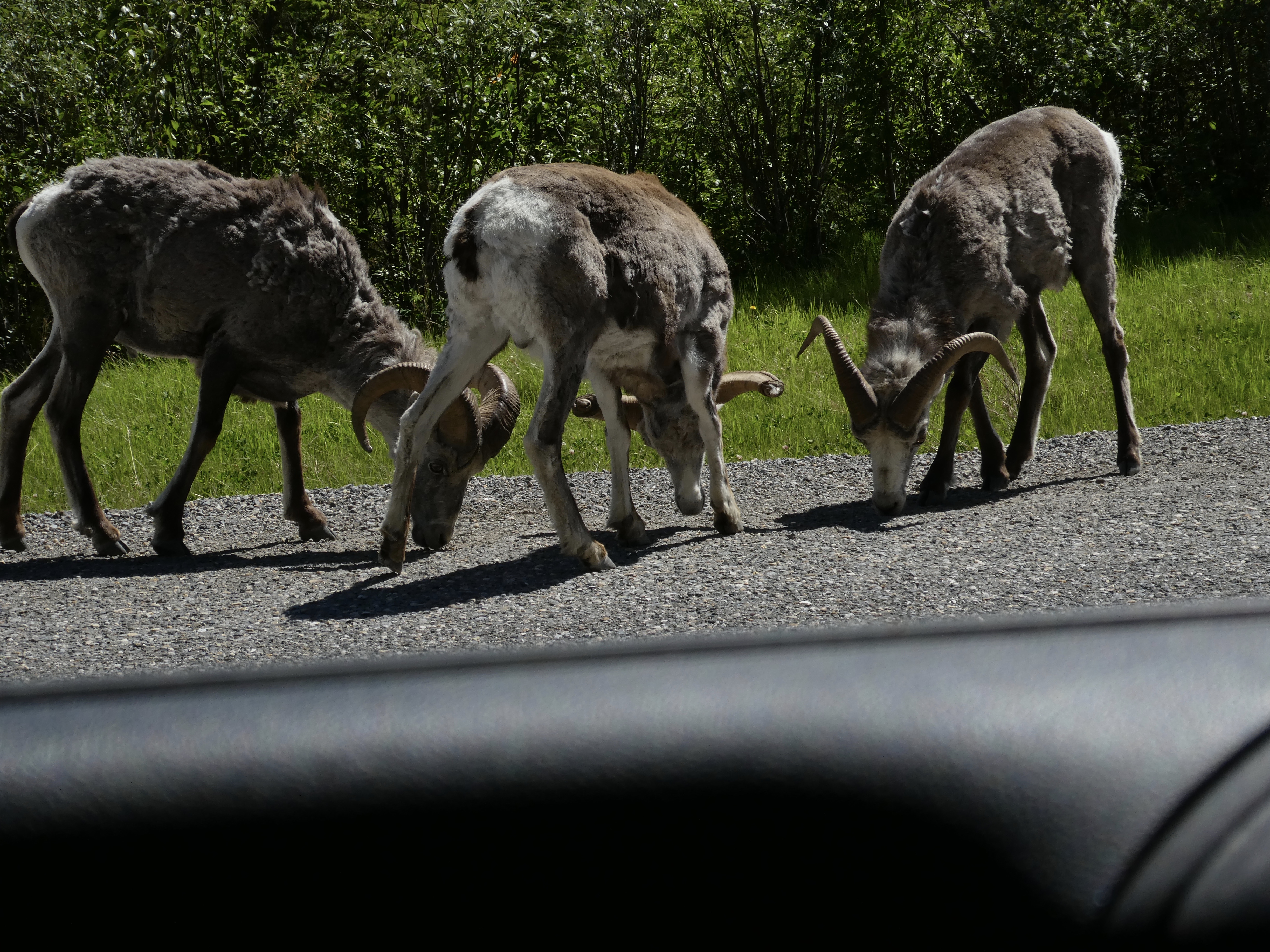
Stone Sheep

Milepost, the Alaska Travel Planner, says we are probably seeing Stone Sheep.  This group is busy licking the ground for necessary minerals.   But this one is watching us.

He sees us!

Maybe he likes to watch traveling ducks as much as we like to watch Stone Sheep.  Here is Northern Rockies Lodge.

Northern Rockies Lodge

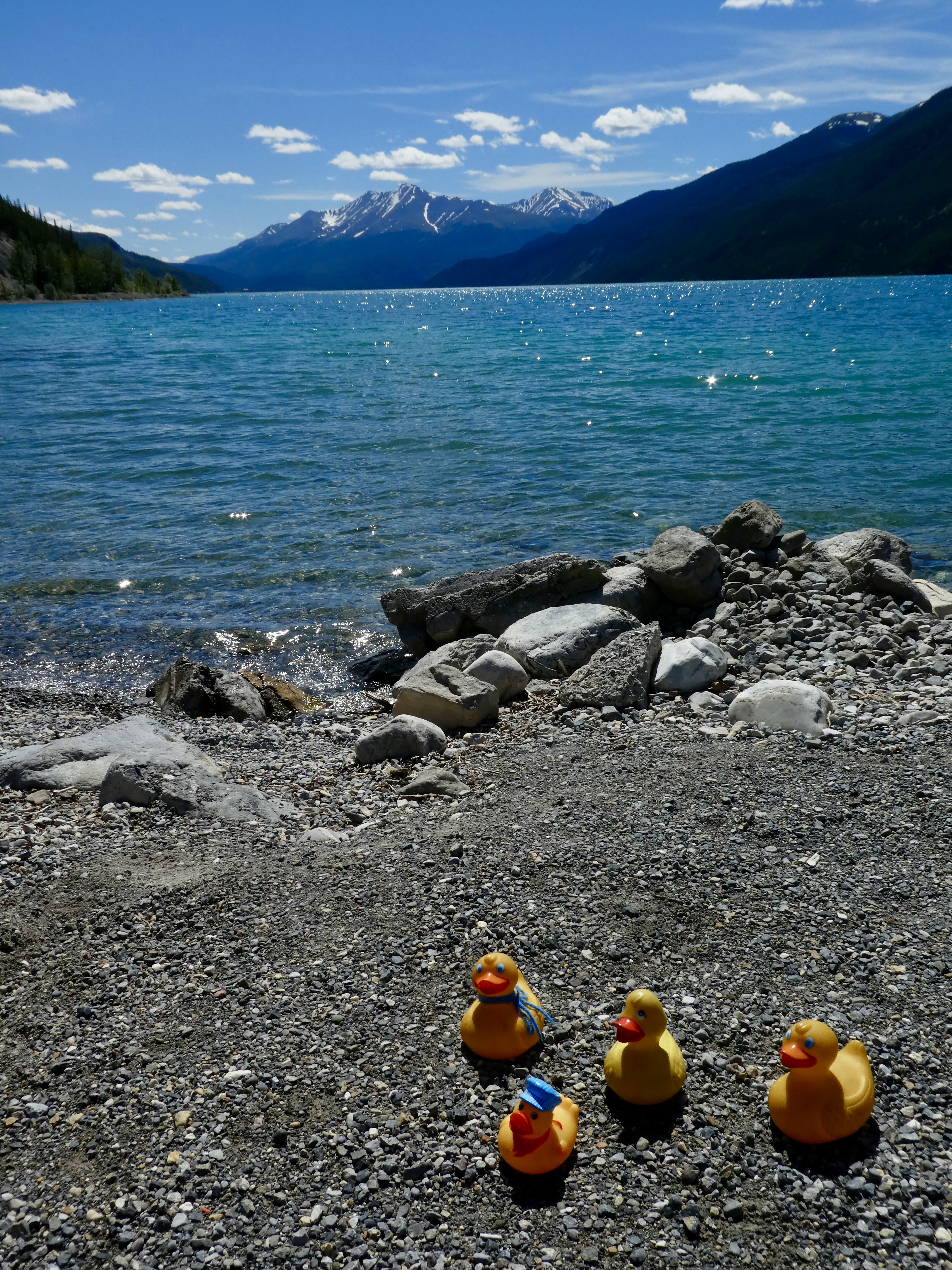
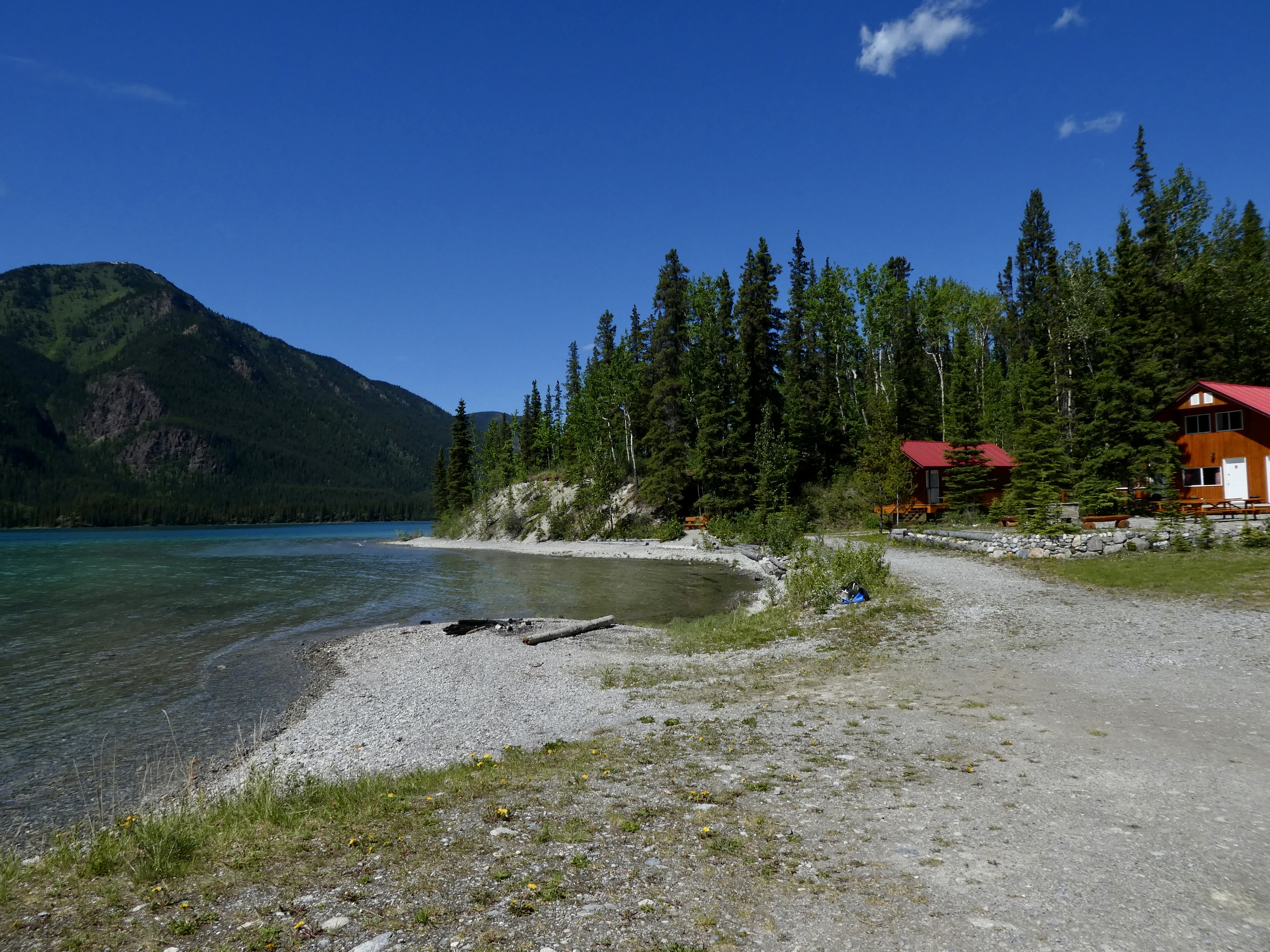
This lodge is located on the shores of beautiful Muncho Lake.

Lodge on beautiful Muncho Lake

If we are ever back here, we all want to stay at this lodge.   And for a couple days.   Look at this.

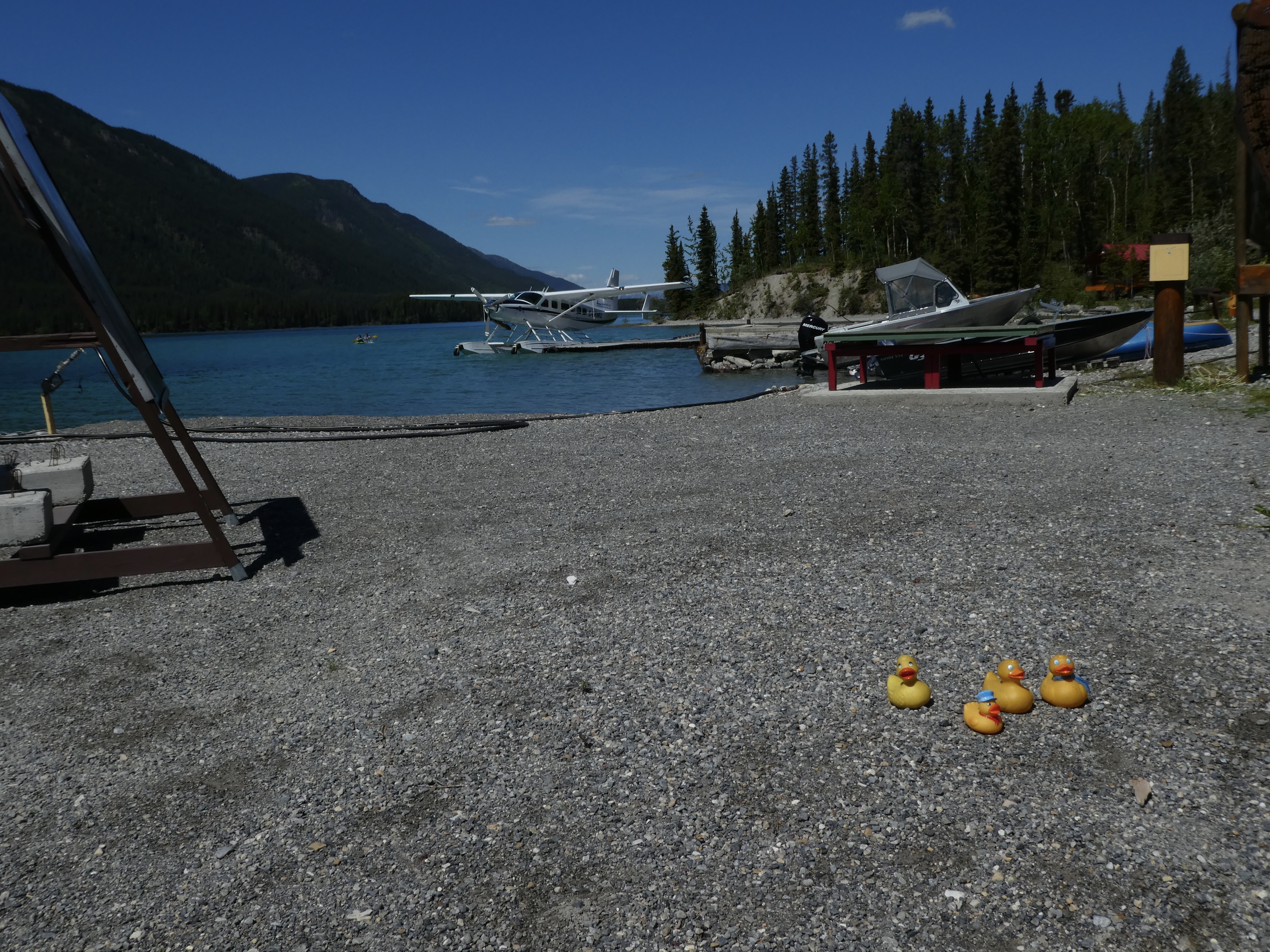
Float plane on Muncho Lake

The float planes can take us out for a one day fishing trip.   Or a sightseeing flight over this area.   There are smaller boats here also.   We saw some tourists on jet skis.   Aren’t these cabins wonderful?

Cabins at lodge

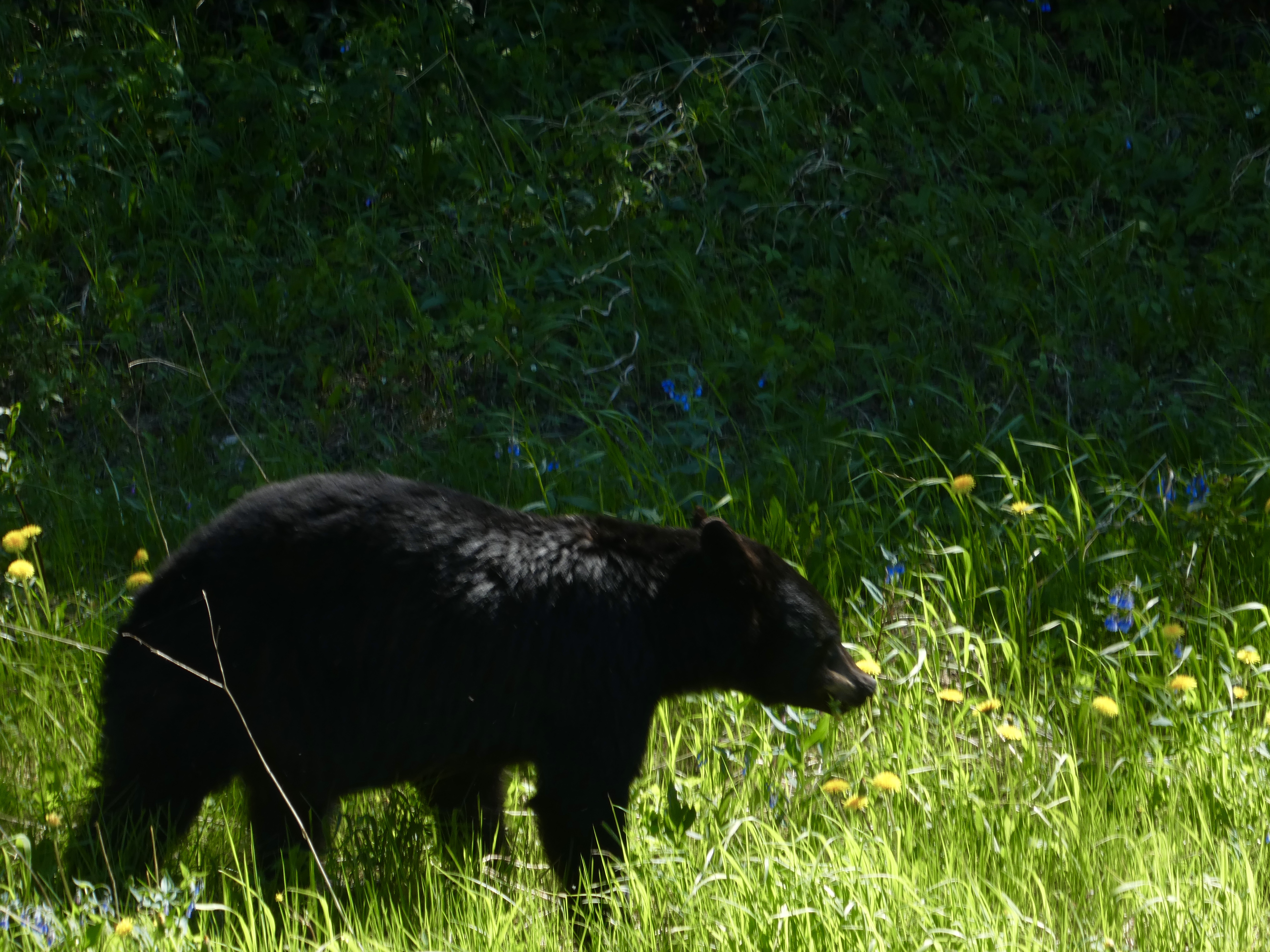
We would love to stay in one.   But we didn’t know about this lodge and we didn’t know when we would be here.   Maybe another time?  Here is our bear for today.

Our last bear

When we saw him, we didn’t know that this would be our last bear sighting on this trip.  Maybe he did.   He seems to be walking away from us.   One last scenic view for this post.

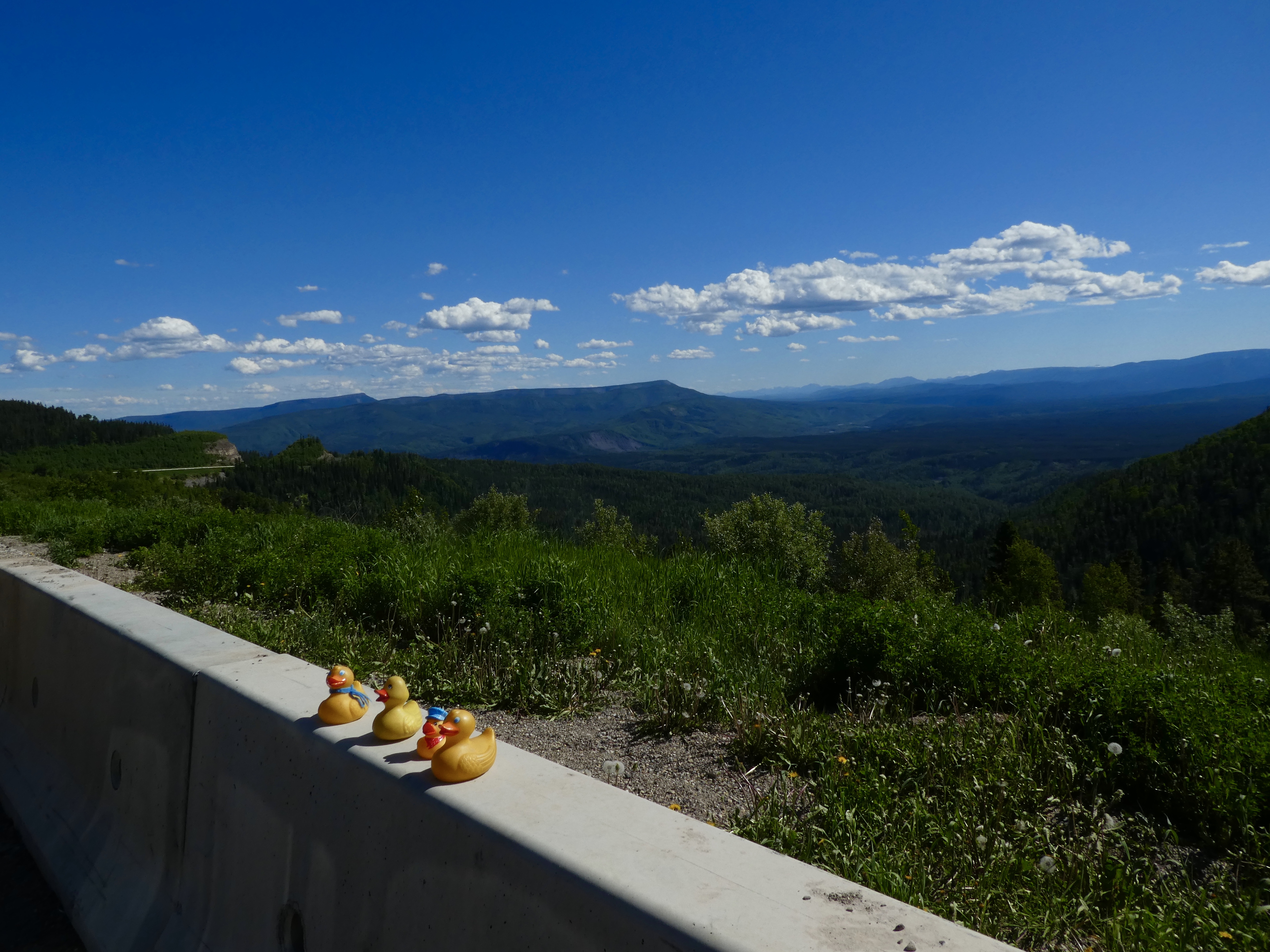
View of Sawthooth Mountains

This is a view of the Sawtooth Mountains.  Being from Colorado, we have beautiful mountains and gorgeous scenery.   The difference here is a lack of humans.   We can stop and watch whatever we want, and there are no other tourists here.   There is very little traffic on the Alaska Highway now.   Perhaps later in the summer it will be more traveled, but now it is just perfect for us.   We hope you take the time to discover this beautiful, uncrowded part of our world.

Watson Lake. Colorado Traveling Ducks Visit Sign Post City

We are in Watson Lake.   This will be our last community in the Yukon Territory.   But what a community!  Driving into the community of Watson Lake, we see something unusual.

Are those sign posts?

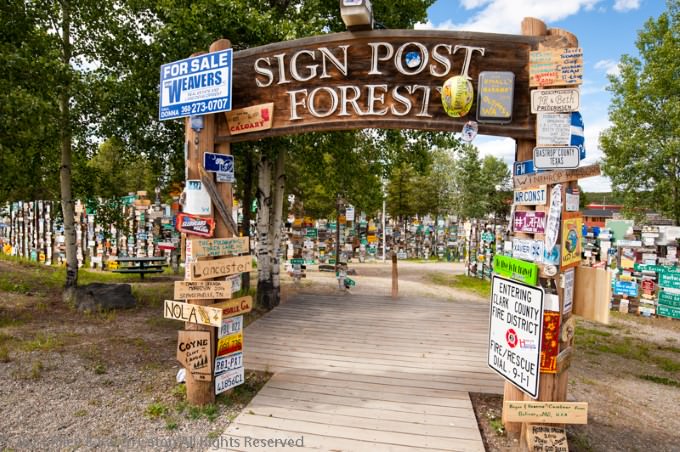
Are these sign posts?   Oh yes.   Not just a few signs, but so many.

Sign Post Forest, Watson Lake

This is Watson Lake’s most famous attraction.

Sign Post Forest of Watson Lake

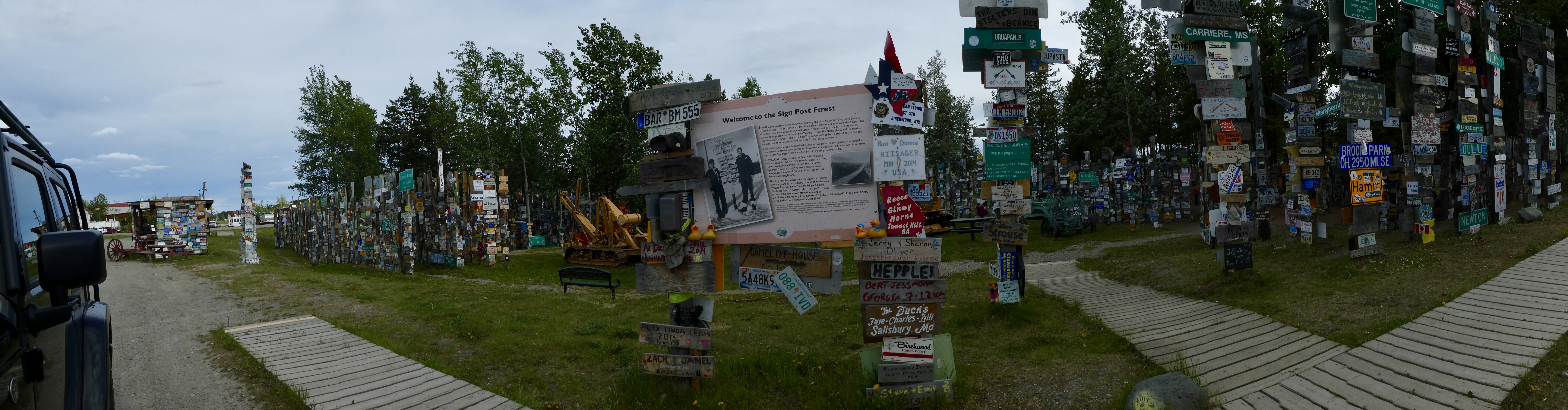
We are at the Sign Post Forest.   OK, but why are all these signposts here?

How did this start?

This sign explains the beginning.   Just think, all these signs are the result of a homesick American from Danville, Illinois.   Apparently he was not the only one suffering from a little homesickness.

Sign Post Forest, Watson Lake

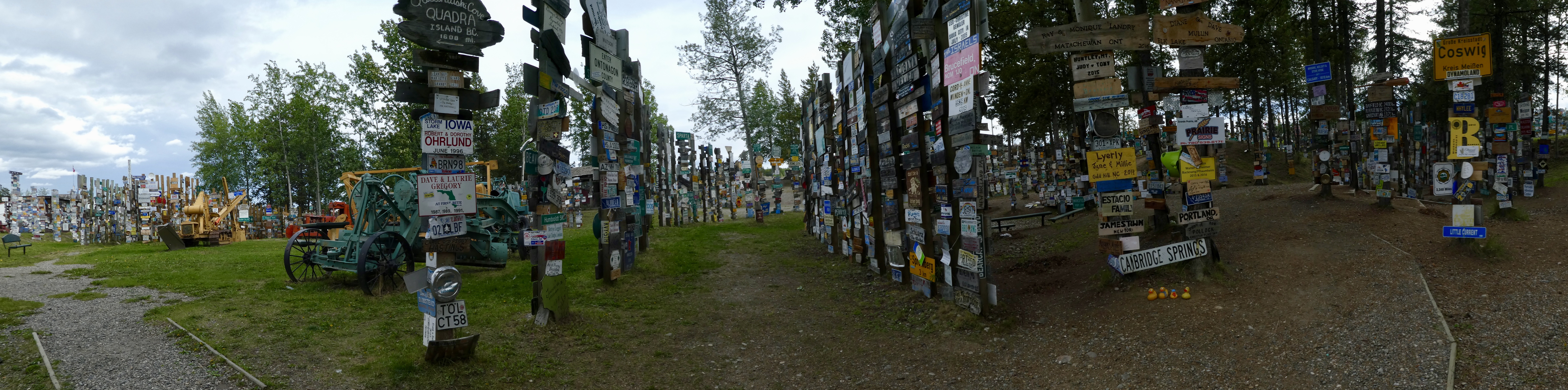
Look at all these signs.   The Alaska Highway was started March 8, 1942.   More than 11,000 soldiers and engineers, 16,000 civilians and 7,000 pieces of equipment built this 1,500 mile road through the vast wilderness of northern Canada and Alaska.   In less than 9 months Dawson Creek, British Columbia and Delta Junction, Alaska were connected.    What an accomplishment.   Once Carl Lindley put up the first sign, the idea really caught on and everyone started putting up signs.

Sign Post Forest, Watson Lake

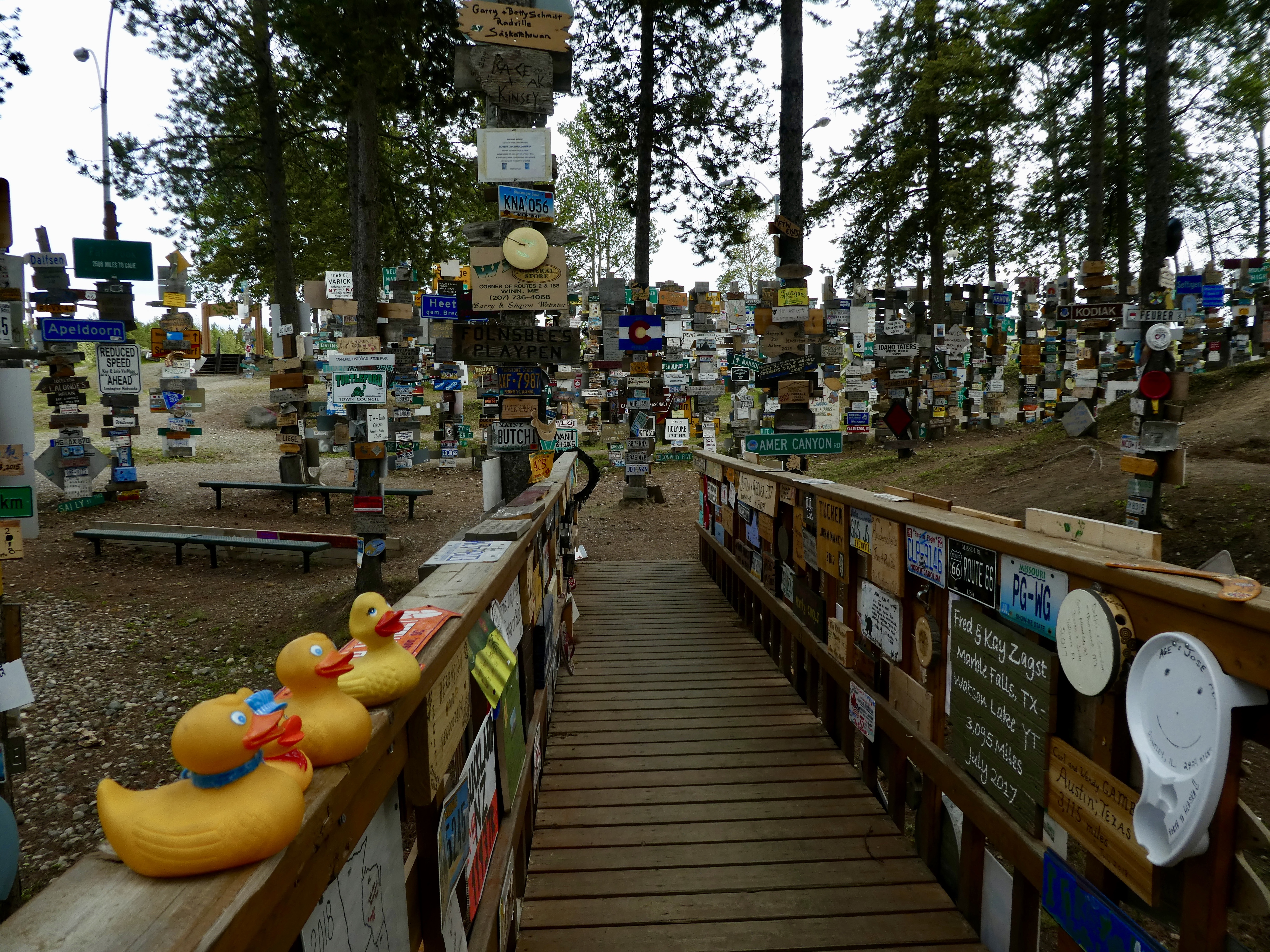
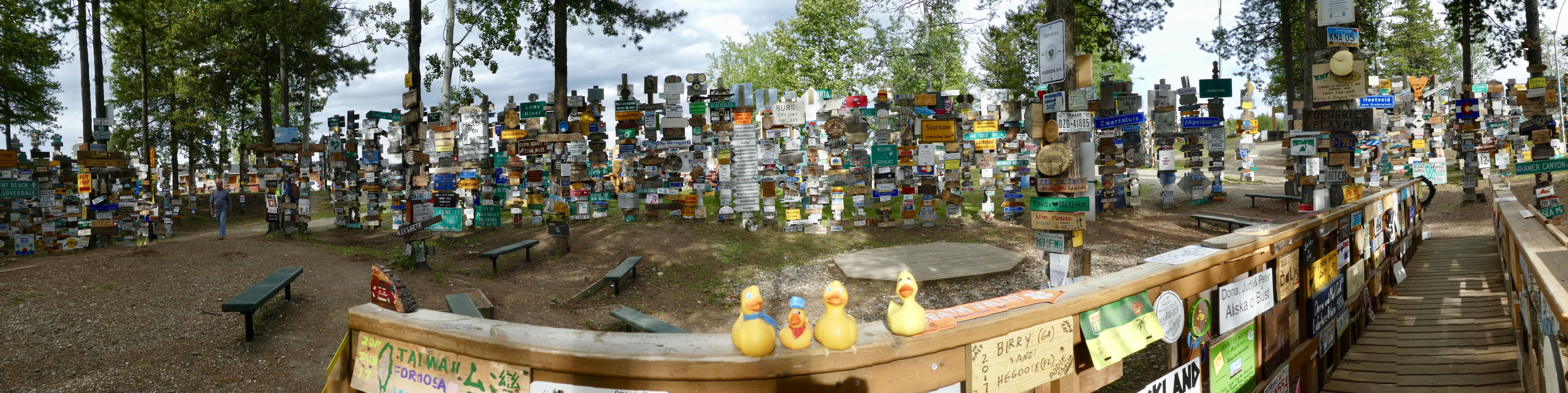
Even with these panoramas, there was no way mom could get photos to show the thousands of signs, everywhere.   We ducks enjoyed sitting on the bridge and reading some signs.

A bridge in Sign Post Forest, Watson Lake

We went to the Visitor’s Center in Sign Post Forest.   They were very helpful and so nice.   If humans have a sign to add to the forest, the Visitor’s Center will provide a hammer and guide humans to the area where new signs can be placed.   Our moms said if we ever come here again, we will bring a sign to add.

Sign Post Forest, Watson Lake

Leaving the Visitor’s Center, we looked more and are still rather speechless at all the signs.   Our guide book says Sign Post Forest is one of The Yukon’s most famous landmarks and contains over 72,000 unique signs.  Looking down the main street (The Alaska Highway), we liked the international flags.

Main Street, Watson Lake

As you can see, Watson Lake is not a large town.

Main Street, Watson Lake

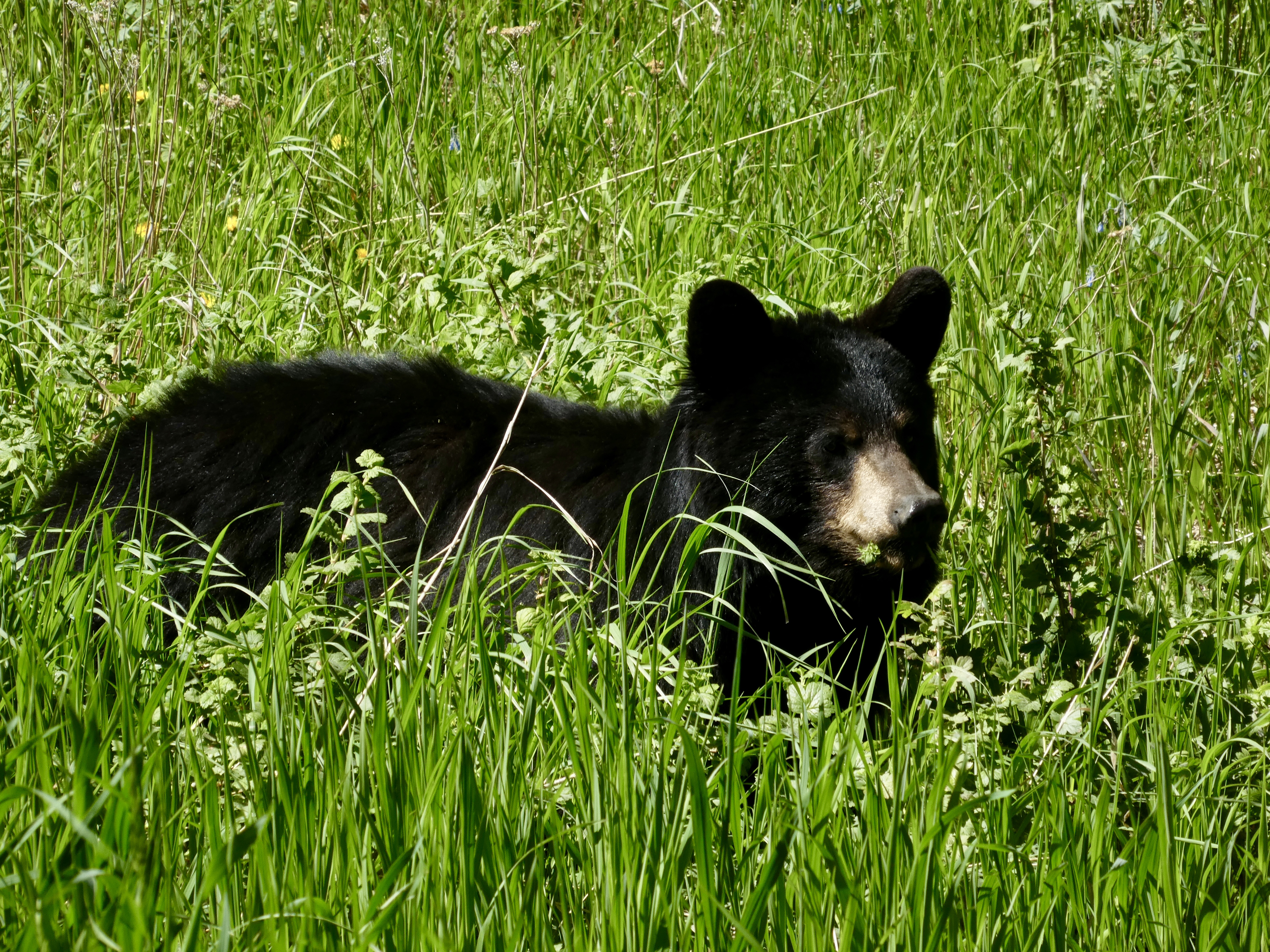
According to Wikipedia, the 2016 census showed a population of 790 permanent residents.   Our hotel was clean and comfortable.   The restaurant served great food.   If you are looking for an interesting place to get away from it all, you might like Watson Lake, Yukon Territory, Canada.   Heading south in the morning, we once again saw an adorable bear along the road.   Of all the bear photos mom took, this just might be her favorite.

Favorite bear photo. Is he watching us?

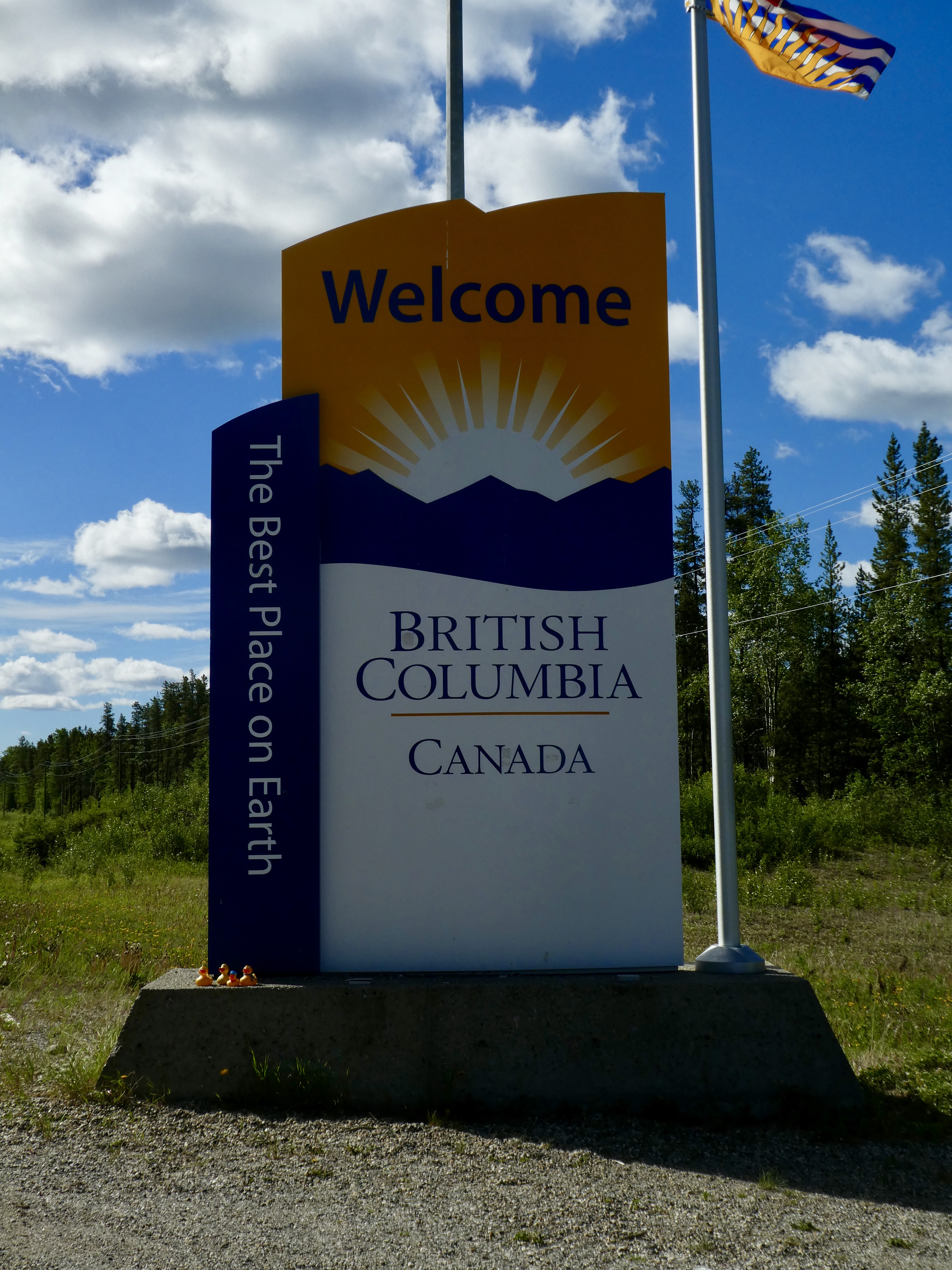
Isn’t he looking right back at us as we look at and admire him.   We were thrilled to see bears along the road in the Yukon almost every day.   Continuing through the beautiful scenery, we left the Yukon Territory and entered beautiful British Columbia.

Leaving Yukon Territory and entering British Columbia

We are enjoying our scenic drive through Canada.