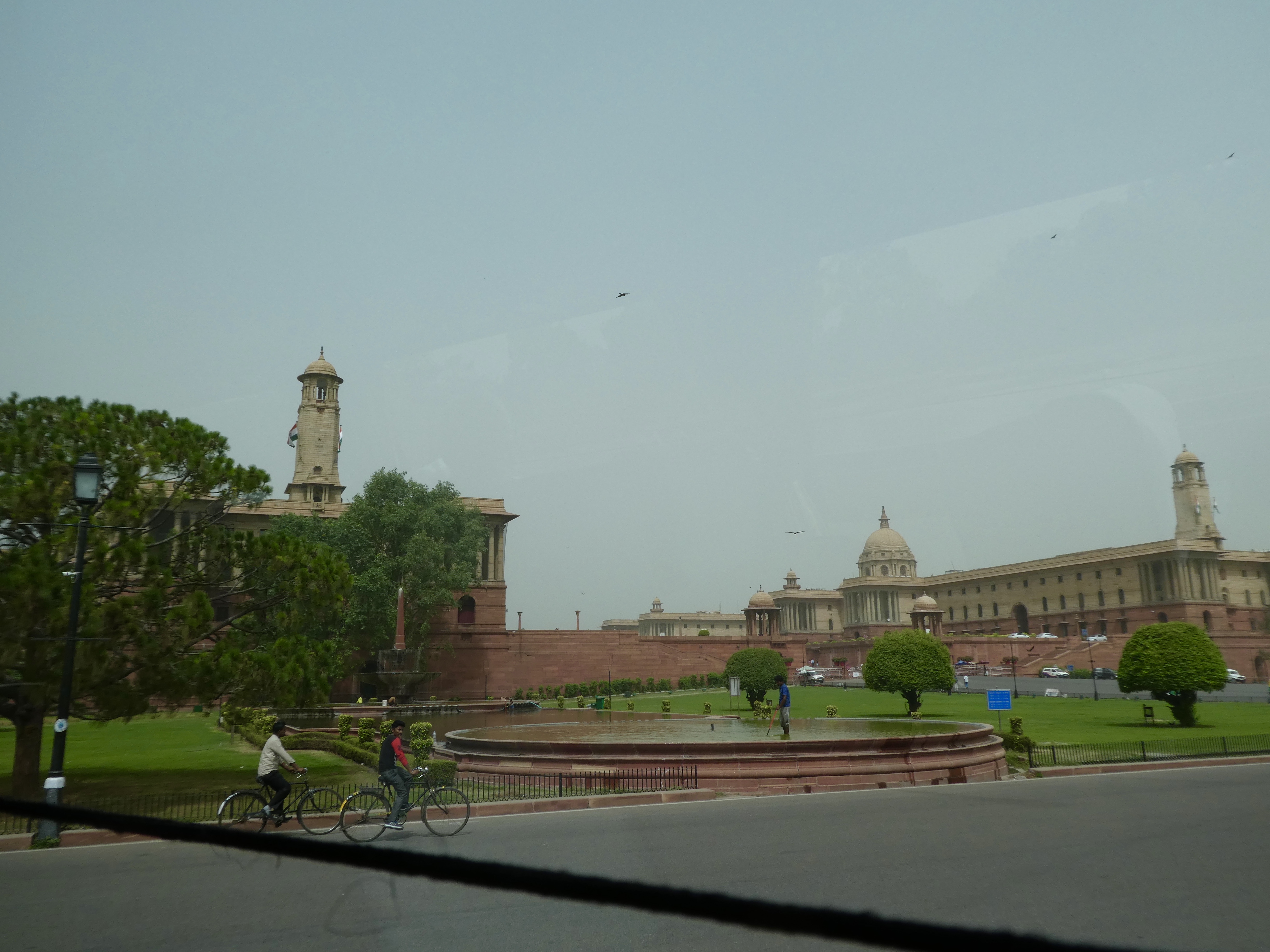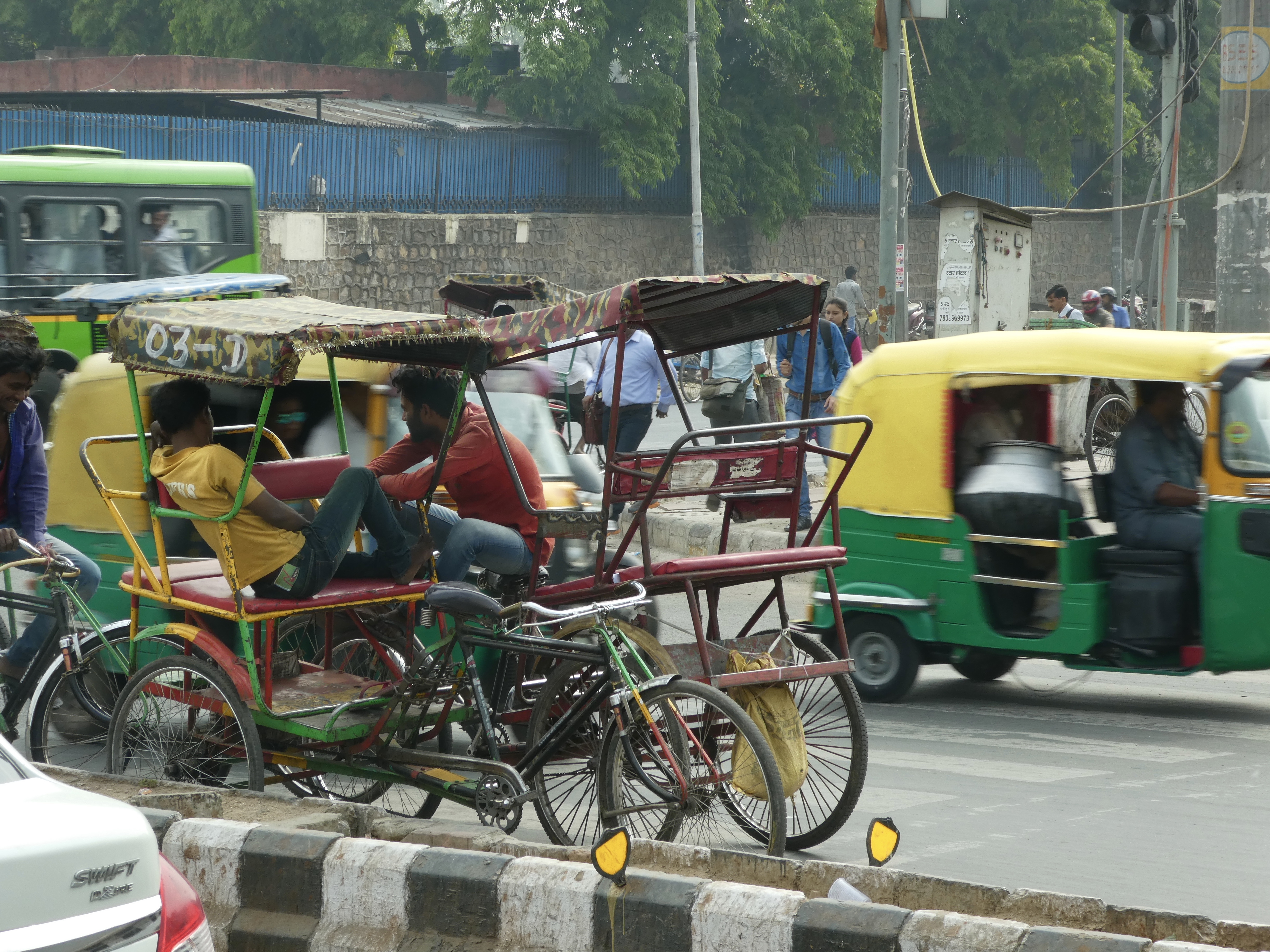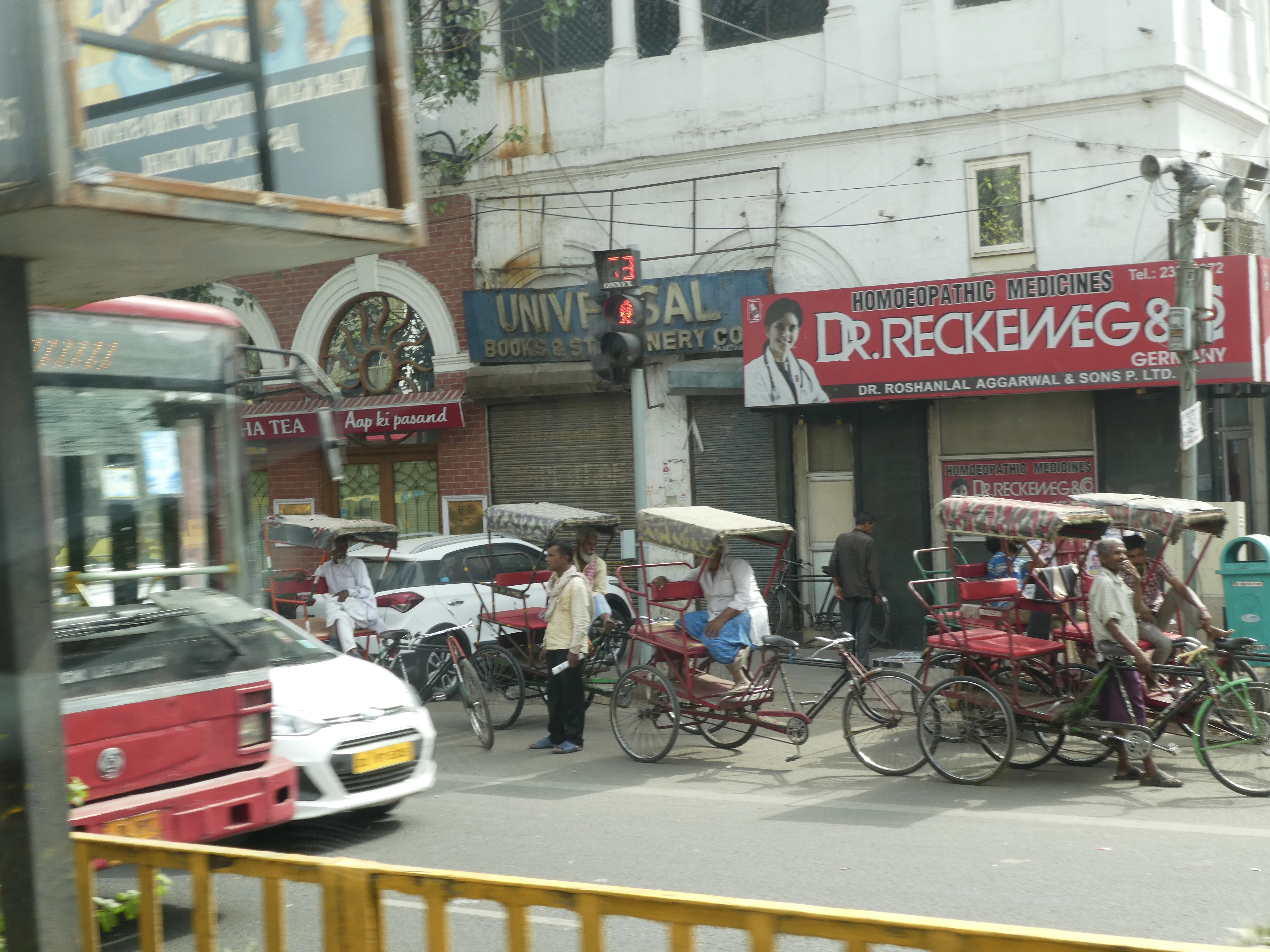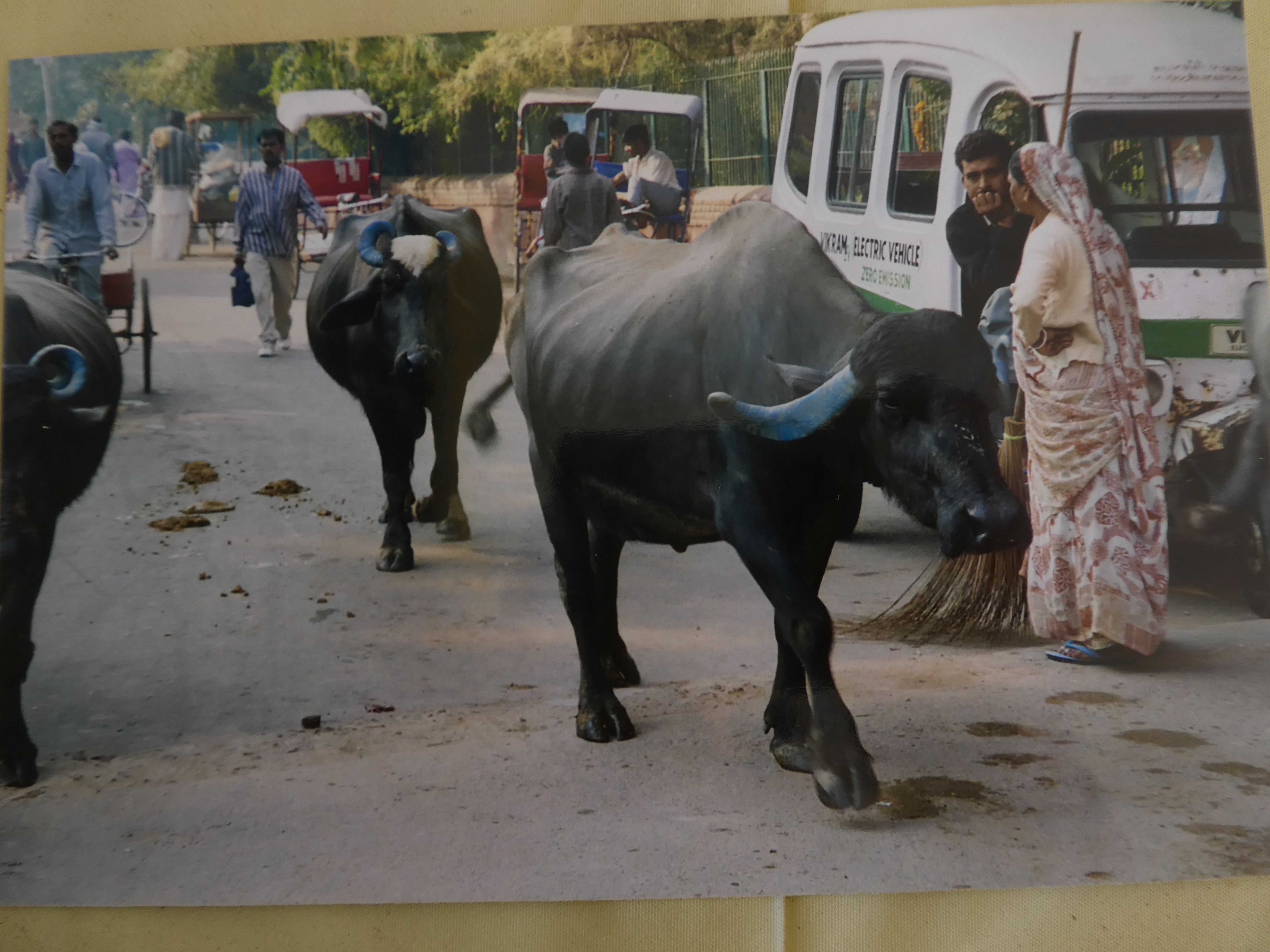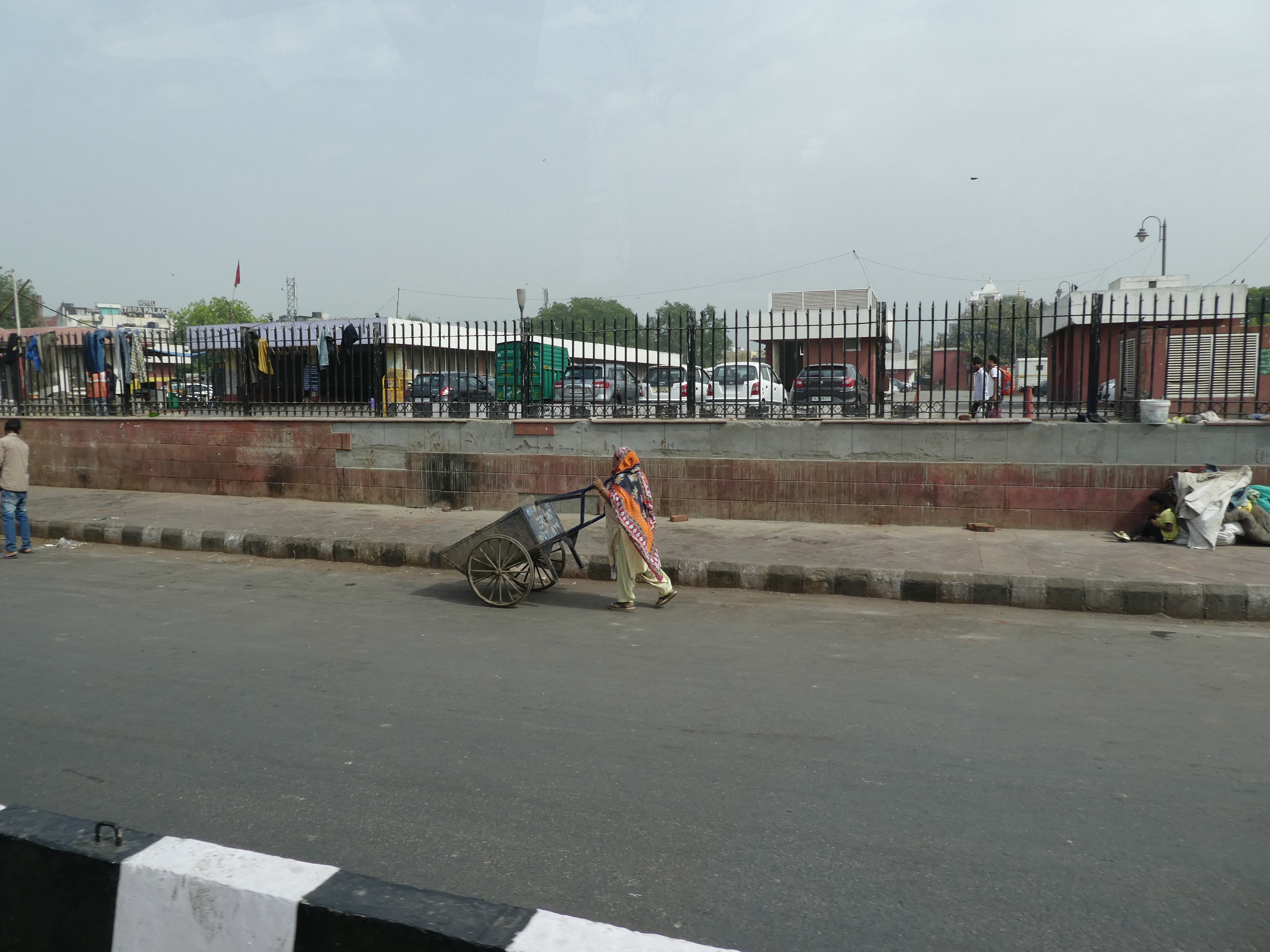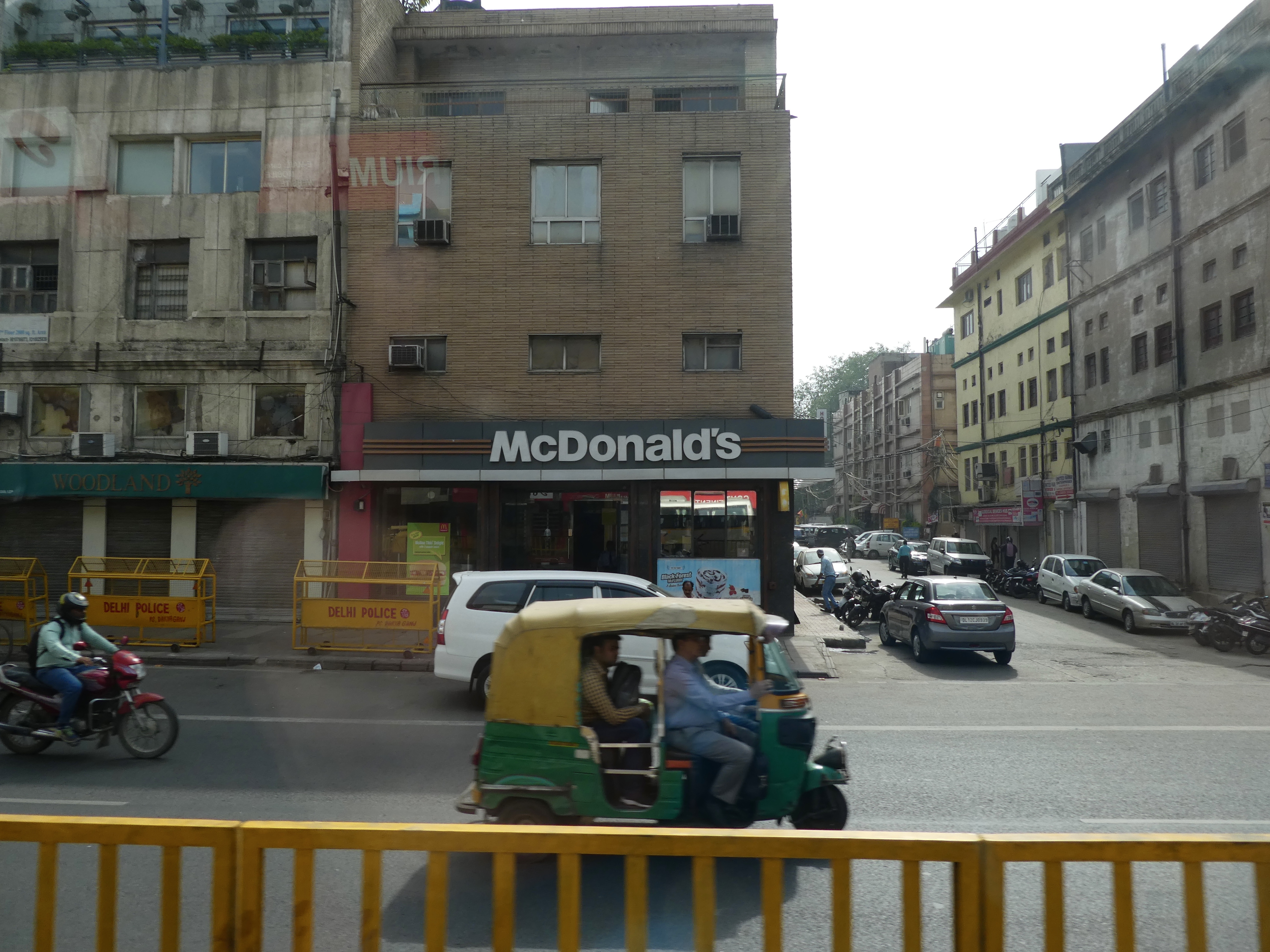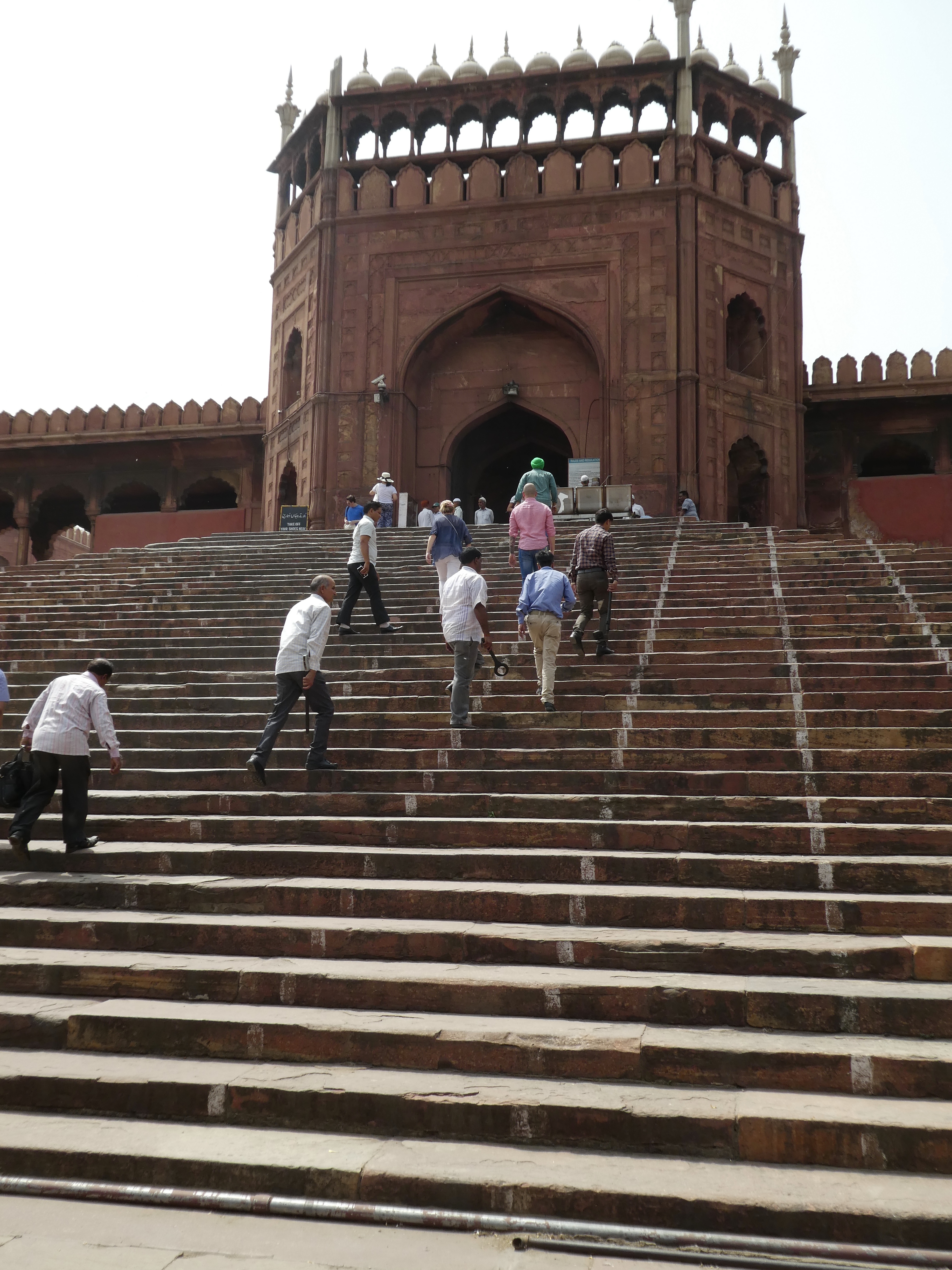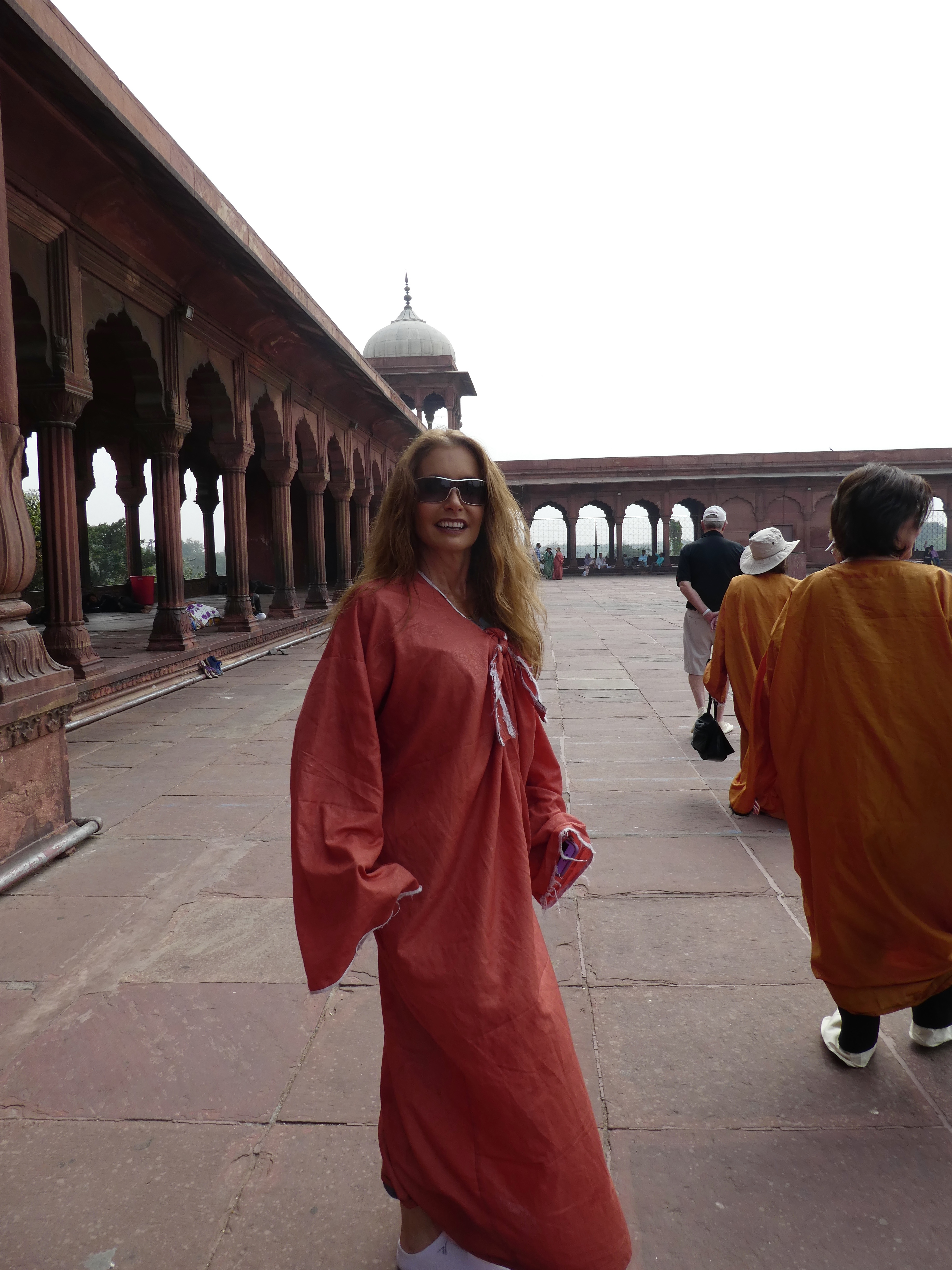
Views of Agra, India, from the Bus Window

After one of our walks around Agra, India, we had a pleasant surprise when we returned to our room.   We opened our curtains and saw visitors on our window ledge.
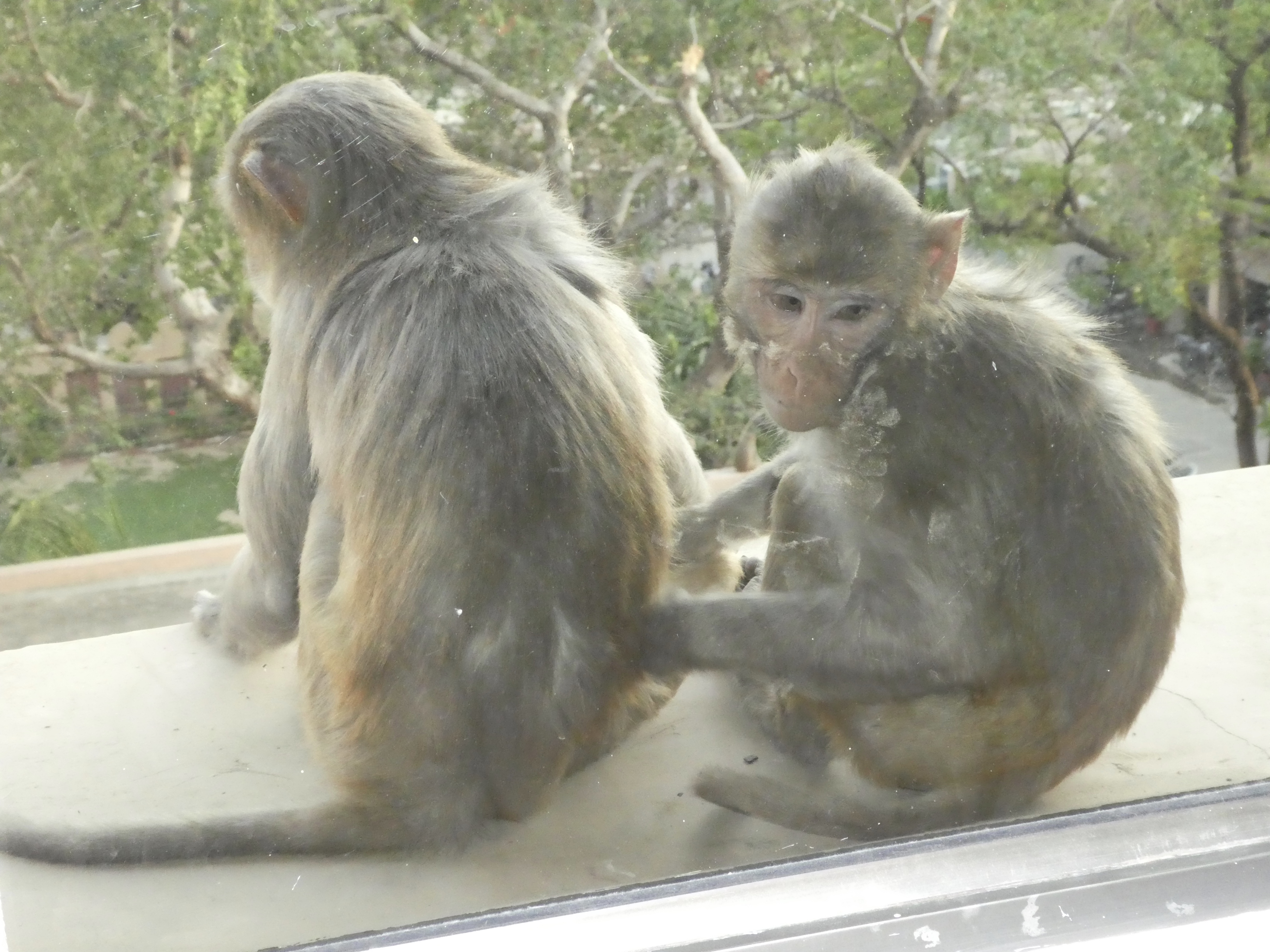
Two friendly monkey on ledge outside our room

These two monkeys were grooming each other.   No surprise, the window has smudges on the outside.
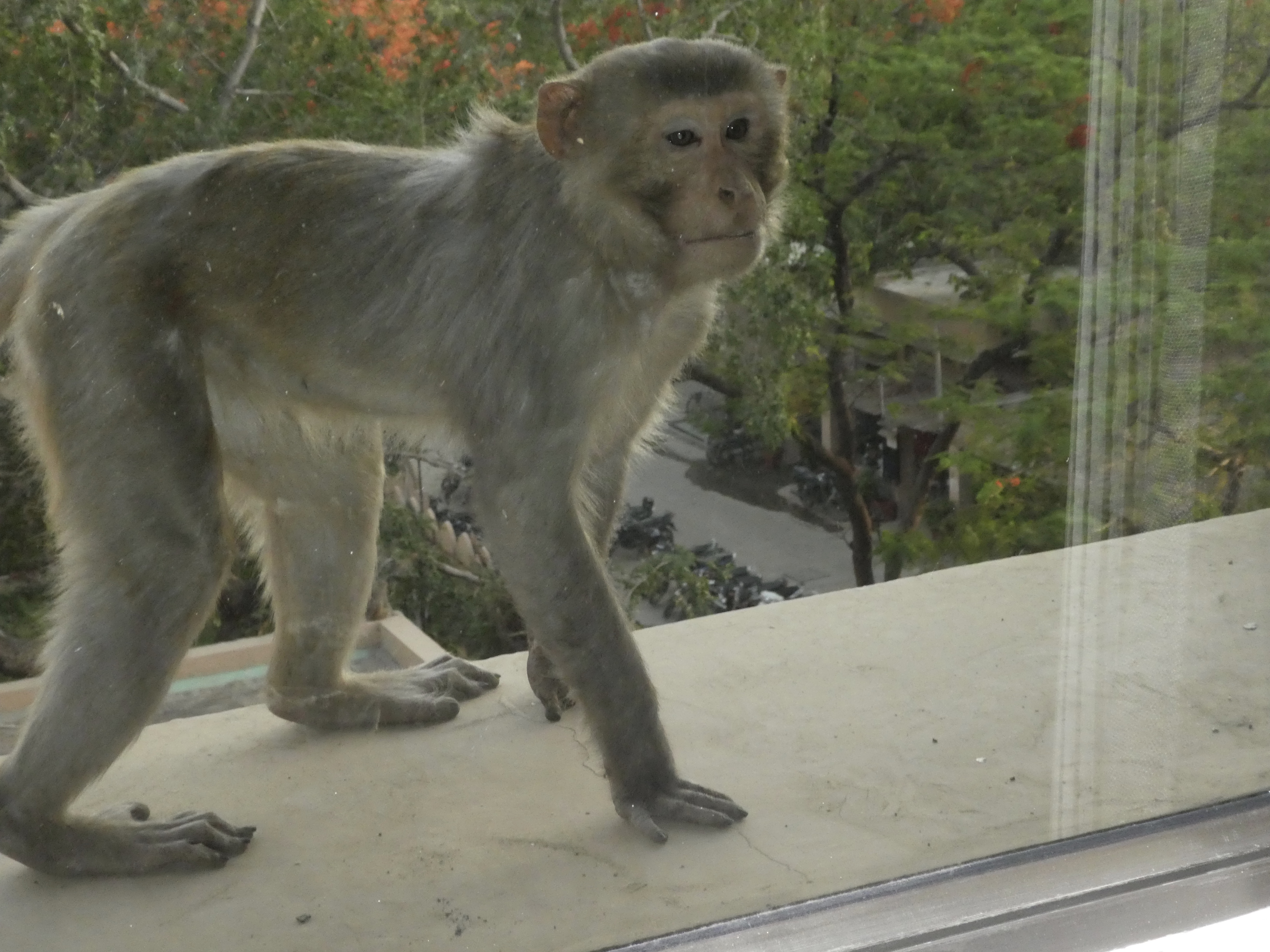
He likes watching us?

One, the smaller monkey, left, while the larger stood up to look at us.
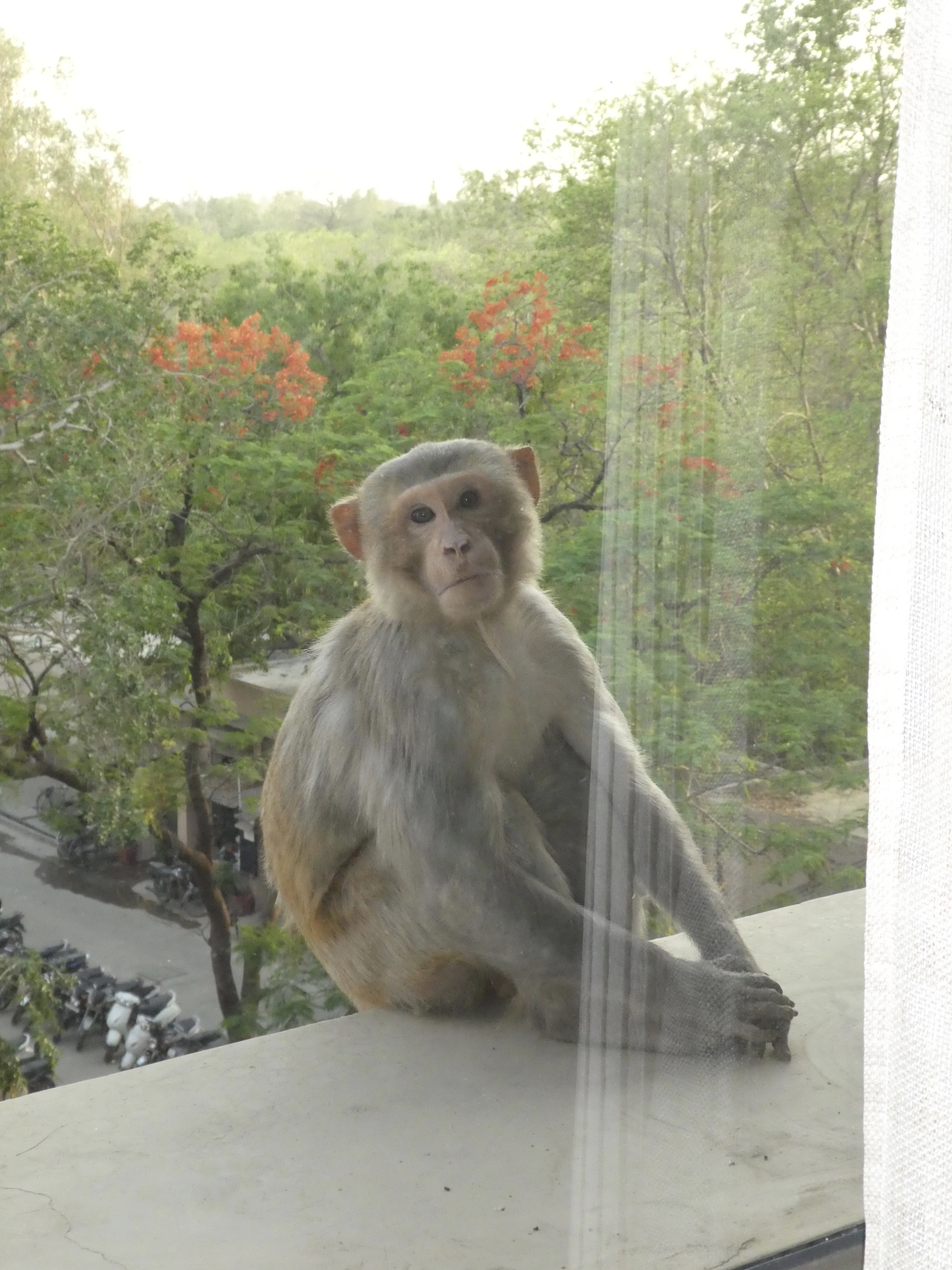
We ducks think he wants to come inside

Now sitting, is he asking to come in and visit with us?  Or does he know we have a Kit Kat candy bar in here?   Today our bus leaves Agra, heading for Jaipur, with a stop between.   As we go through Agra, we take some photos from the bus.   There is really no story here, just wanted you to see the variety of Agra.

Street scene of Agra

So many types of transportation.
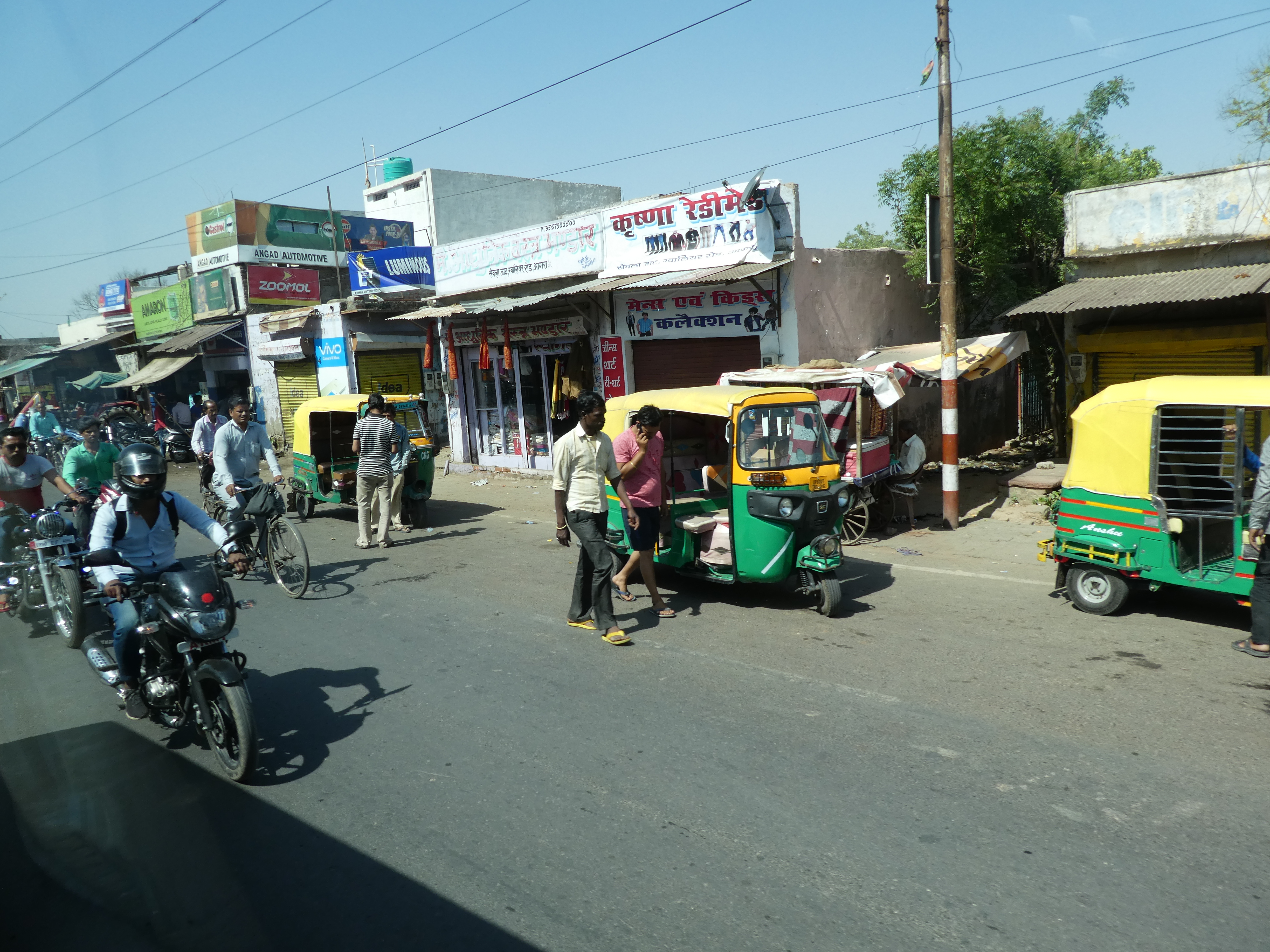
Street of Agra

Scenes from the streets of everyday life in Agra.
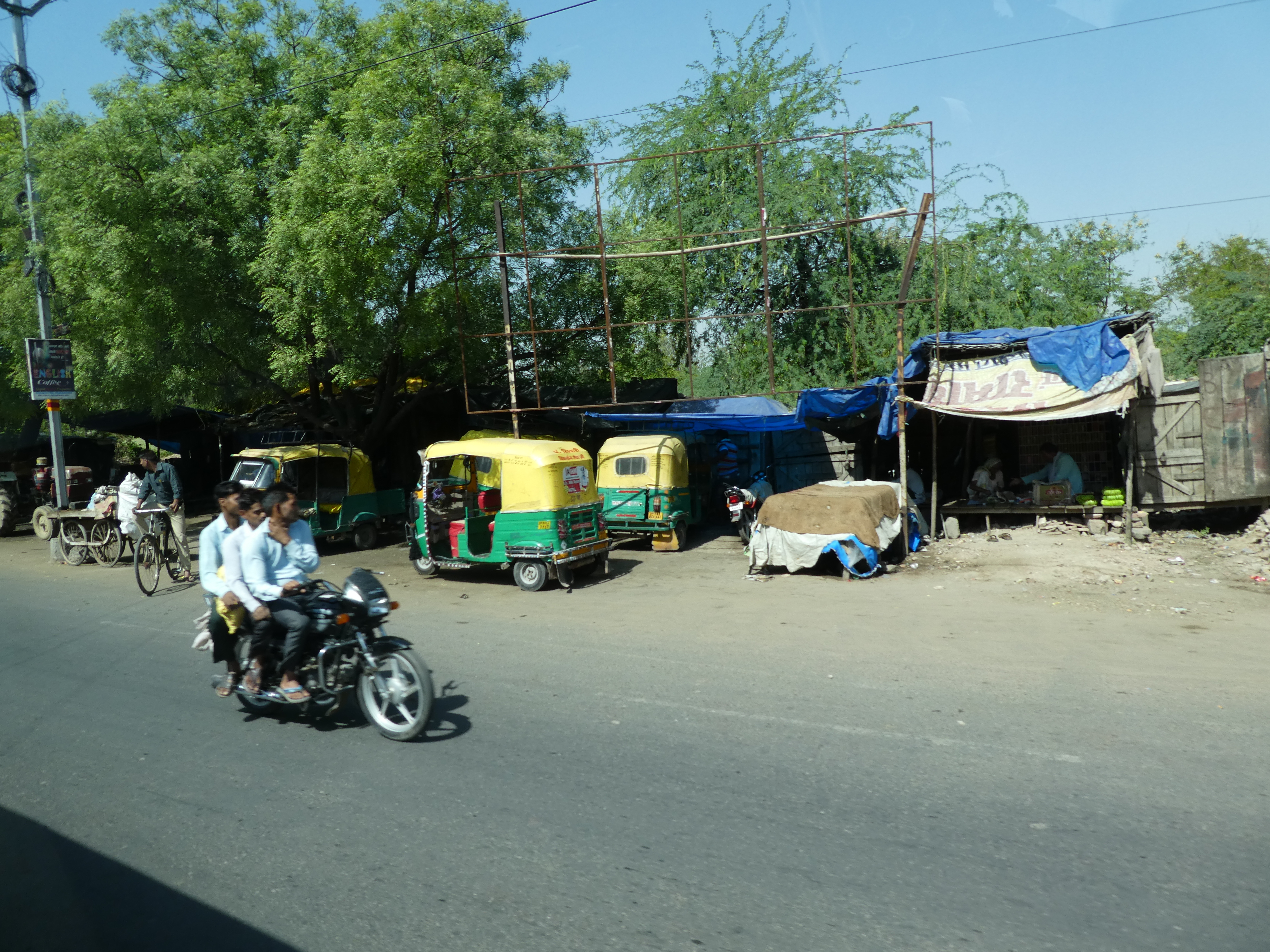
Three on a motorcycle in Agra

Riding is faster and easier than walking, so three on a motorcycle is logical.

Tractor on street in Agra

Tractors are not just for the fields and farms.   When we entered Agra, from Delhi, we did see a few cows on the street, but not here.   Not today.   When mom was here in 2004, she said there were many more cows in the cities.
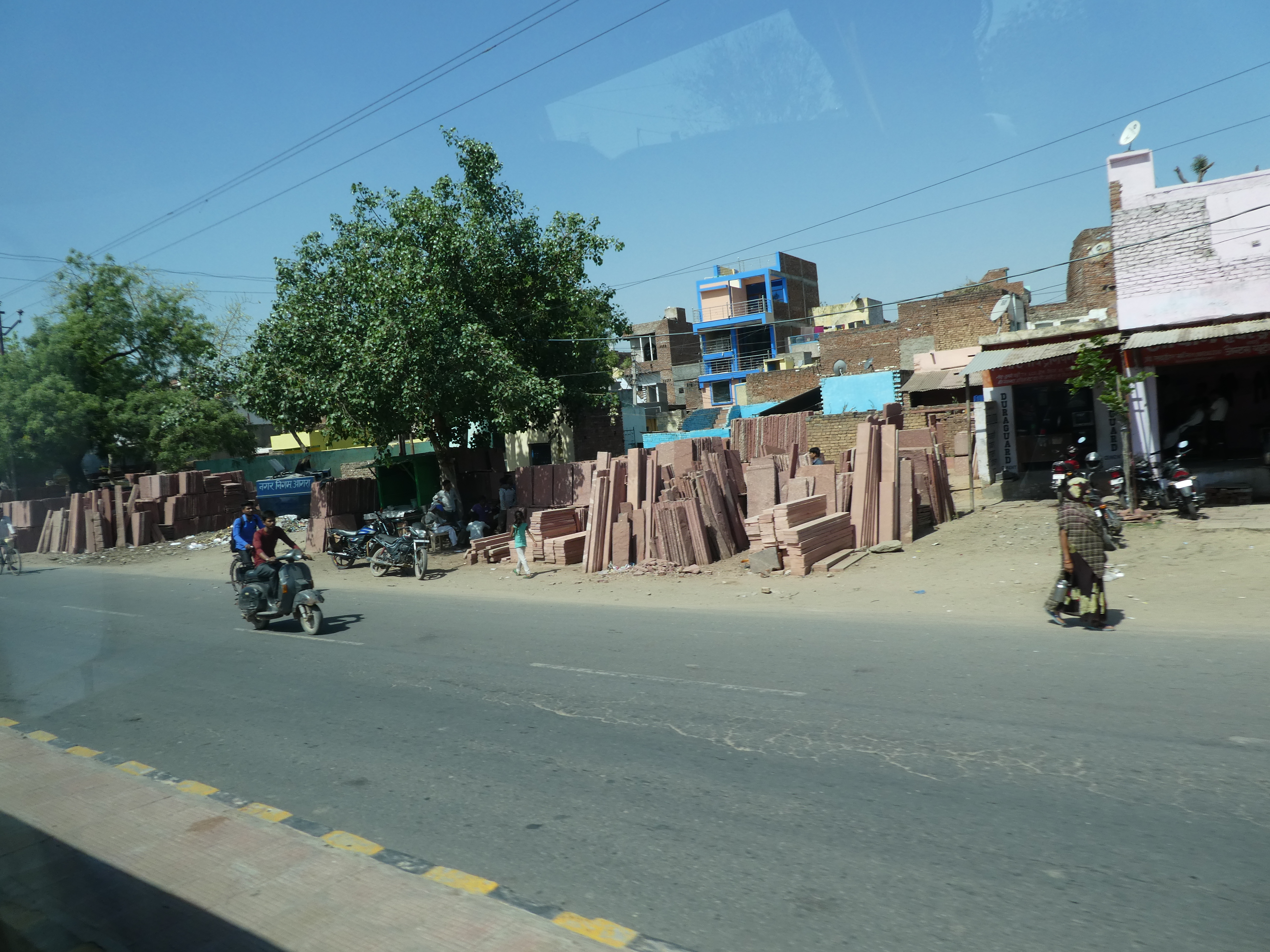
Building material

Much material for construction.
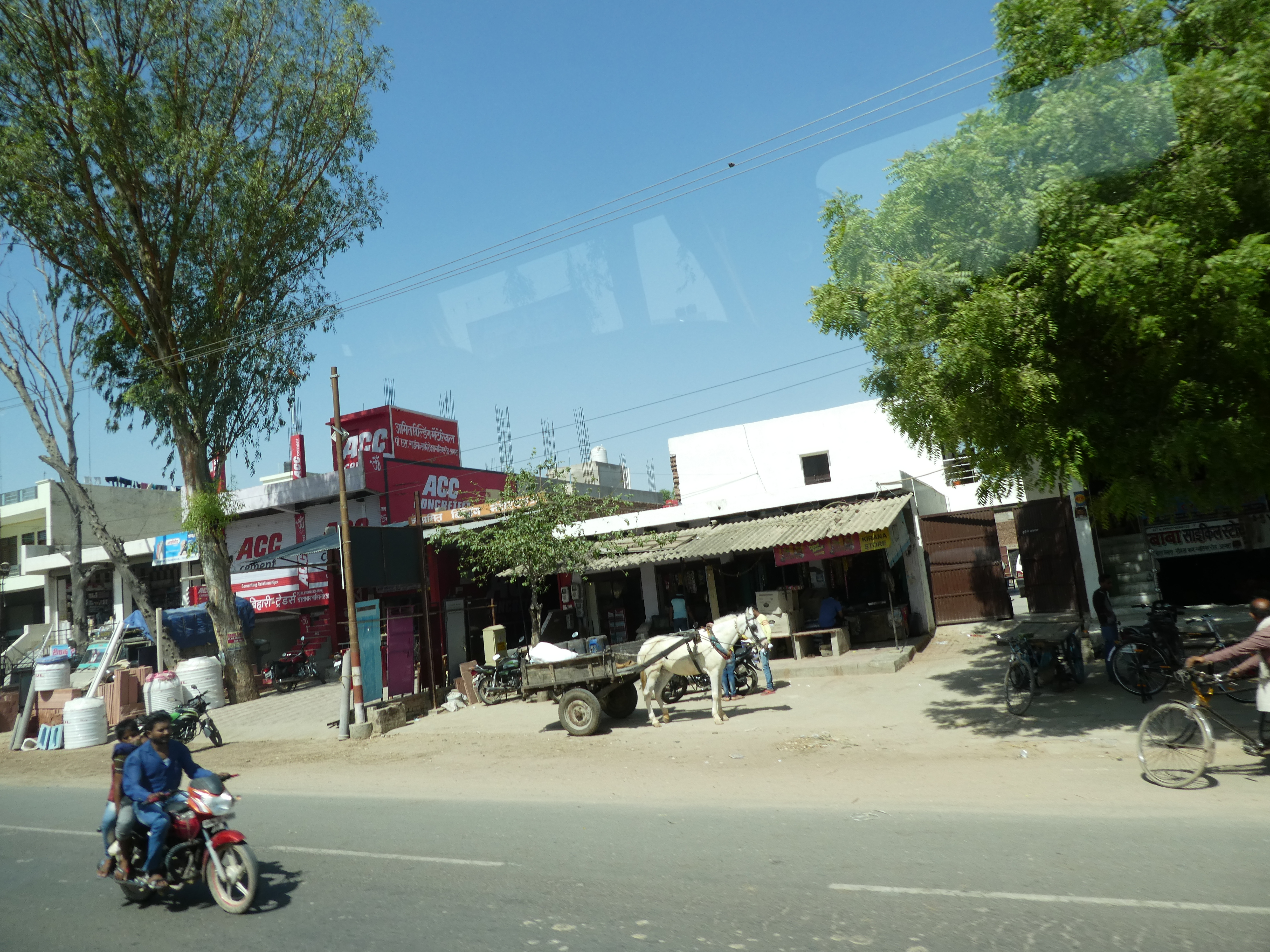
Horse cart

Horse can pull the cart.

Large trucks here also

Also large trucks available.   Leaving Agra, there are many open fields.
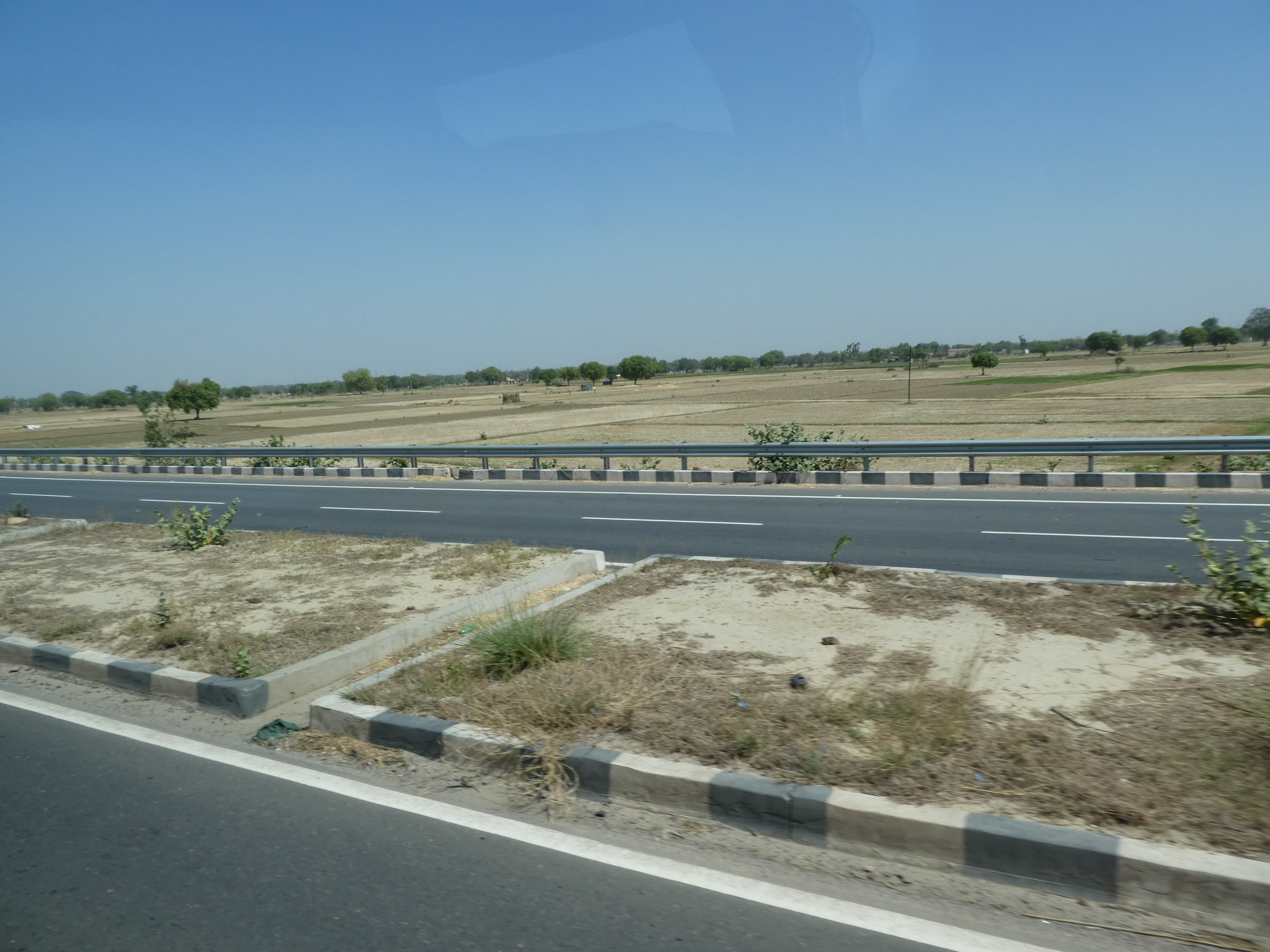
Fields outside Agra

Jesse, our guide, says wheat and mustard are main crops, but this is not the growing season. Local market for local people.
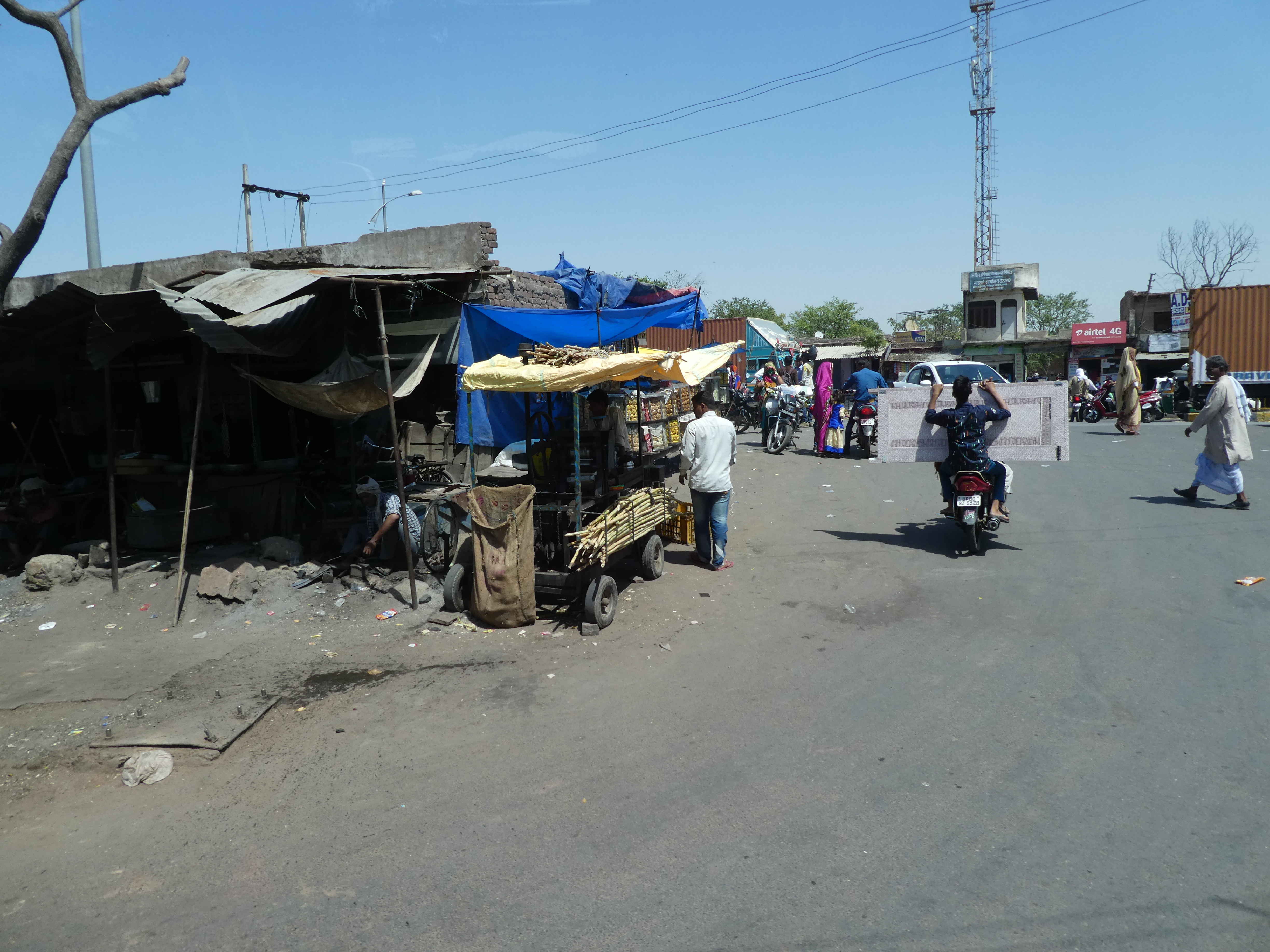
Local shopping here

Not a tourist market.
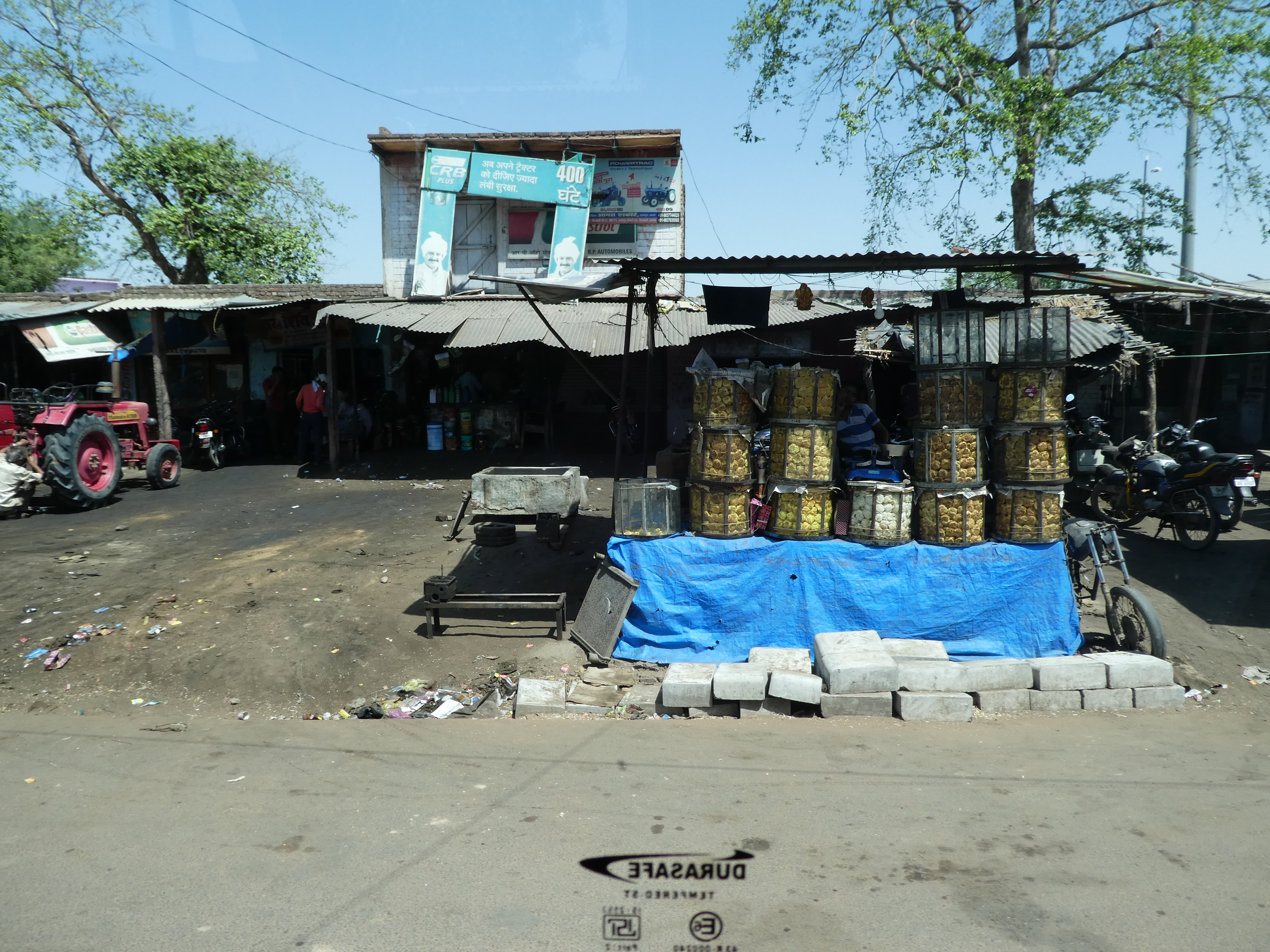
Local shopping. Not for tourists

We found these photos interesting and very different than street scenes in our city of Denver, Colorado.   We hope you saw something new here, also.

Shah Jahan Under House Arrest in Agra Fort, India

Agra Fort, across the Yamuna River originally was a military structure.   Construction began in 1565 by Emperor Akbar.   Emperor Akbar was the grandfather of Shah Jahan, the builder of the Taj Mahal.   From early construction, additions occurred, and by the time of Shah Jahan, it was a palace.   This is Amar Singh Gate, to the south of Agra Fort, and now the only entrance.

Ready to enter Amar Singh Gate to Agra Fort

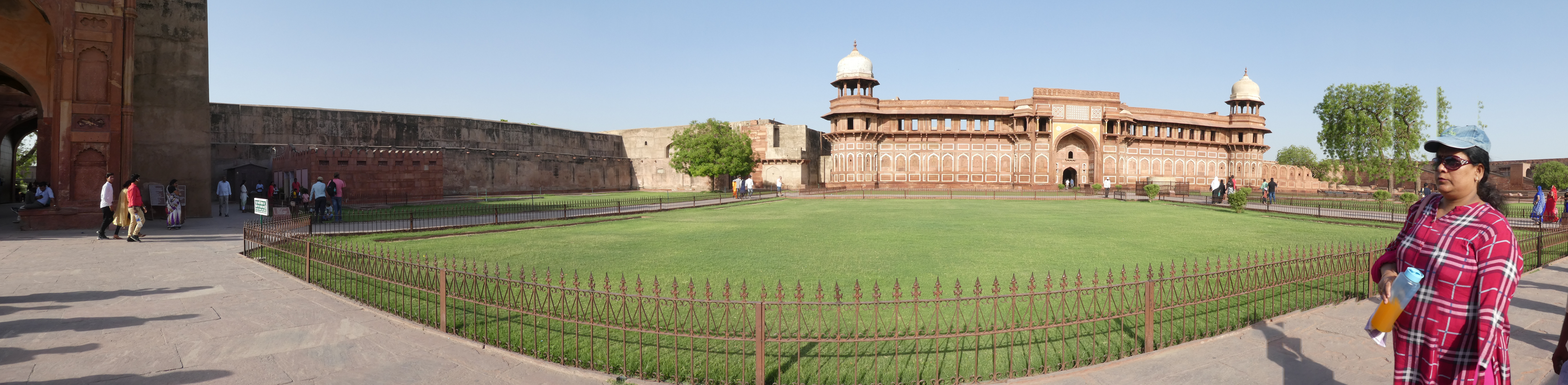
This was really a city behind walls.   We tried a panorama photo of the main building.

Panorama of main building and lawn

Ornate buildings and manicured lawns.   Like most temples and old buildings, there are many monkeys.

Monkey on roof

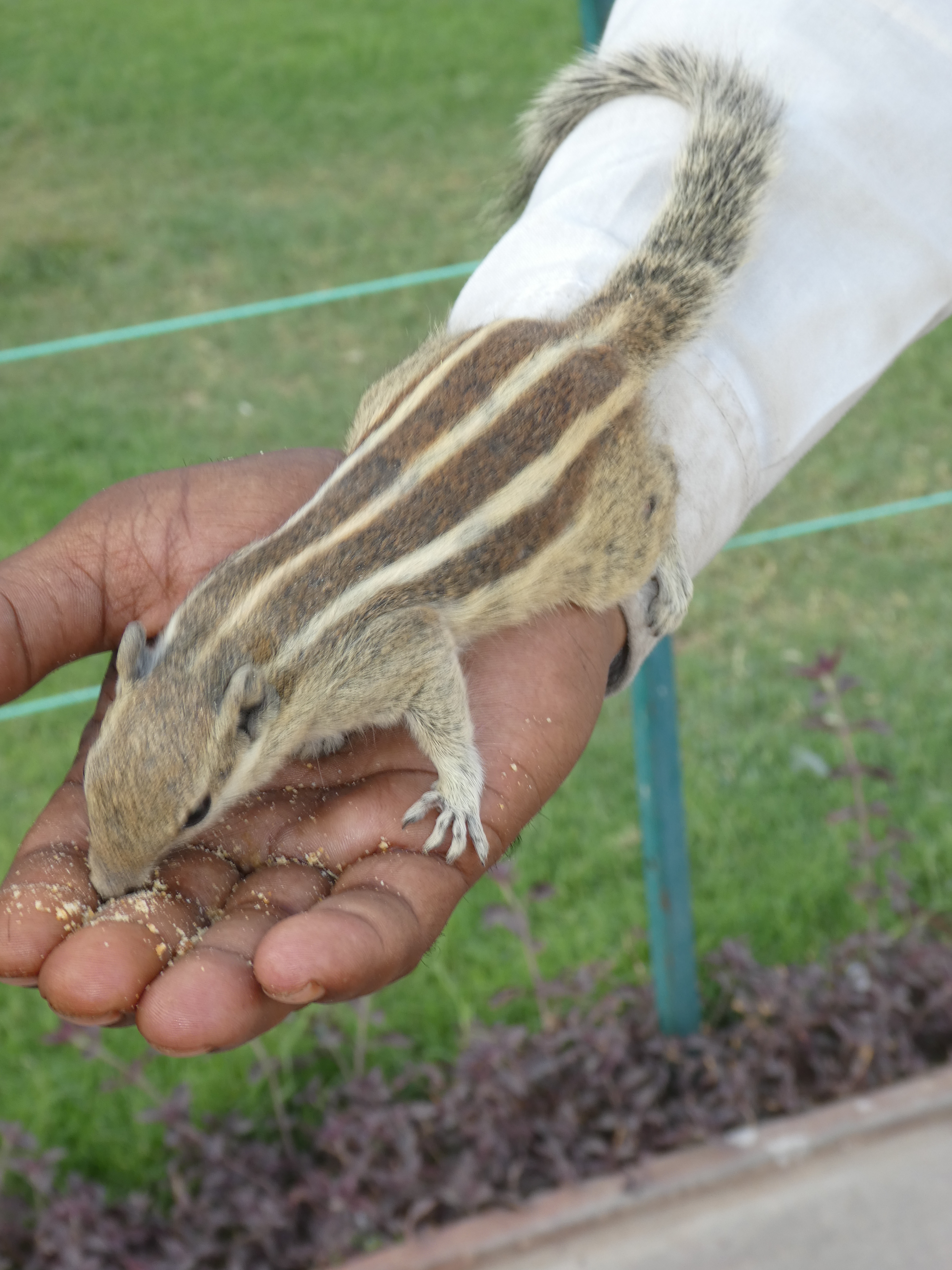
This one on the roof was joined by some monkey friends and we were fascinated watching them run and jump across the roofs.   Our moms were happy to see a chipmunk.

Chipmunk

We have chipmunks in our Colorado mountains.   While we were watching the chipmunk, a man picked him up so we could get a photo.   Wasn’t that nice?  We walked around the complex and saw many buildings.
Wandering between buildings

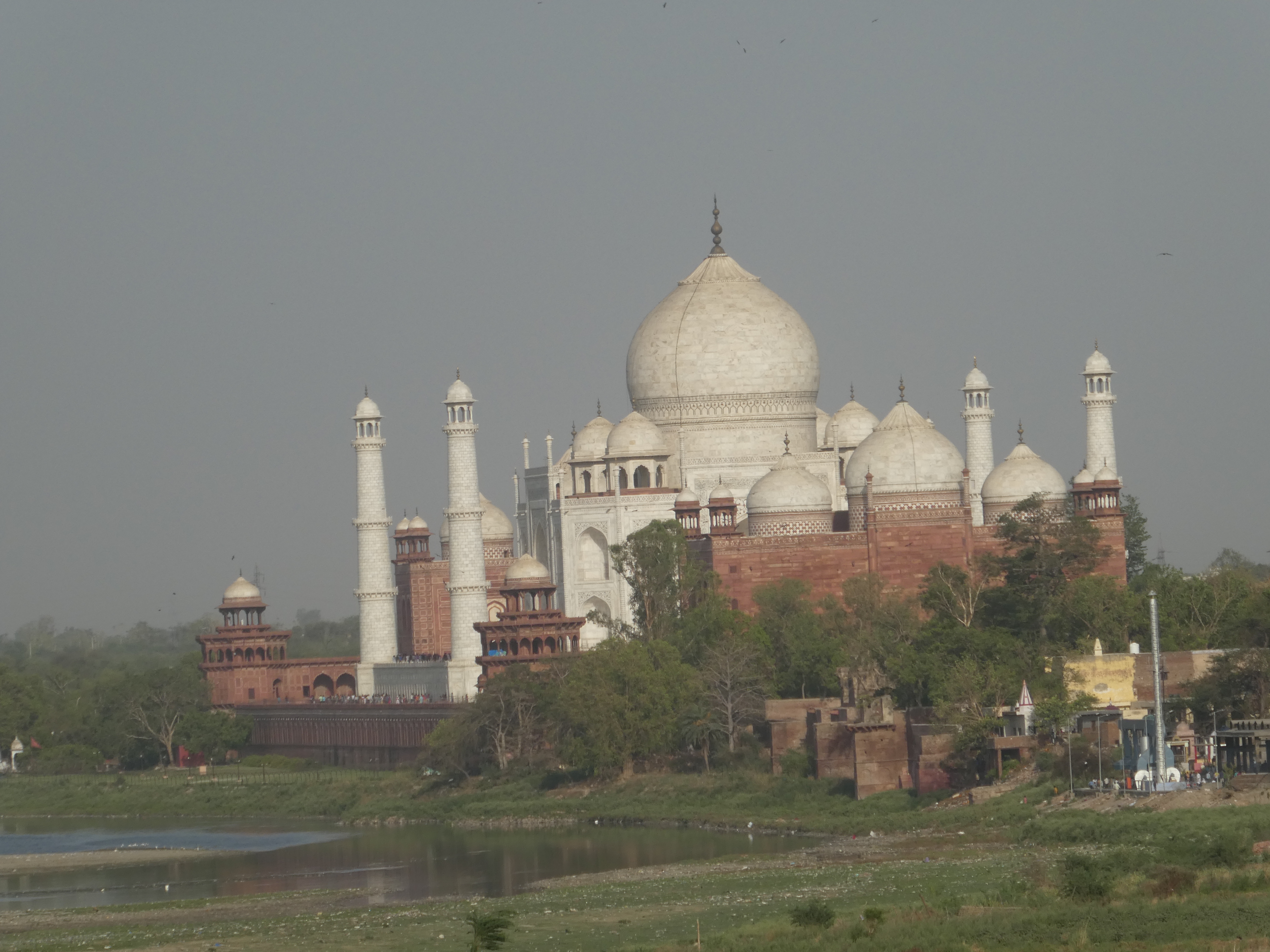
Everything is so old, and much of it is still in good repair.   From Agra Fort, the view across the river shows Taj Mahal.

Taj Mahal from Agra Fort

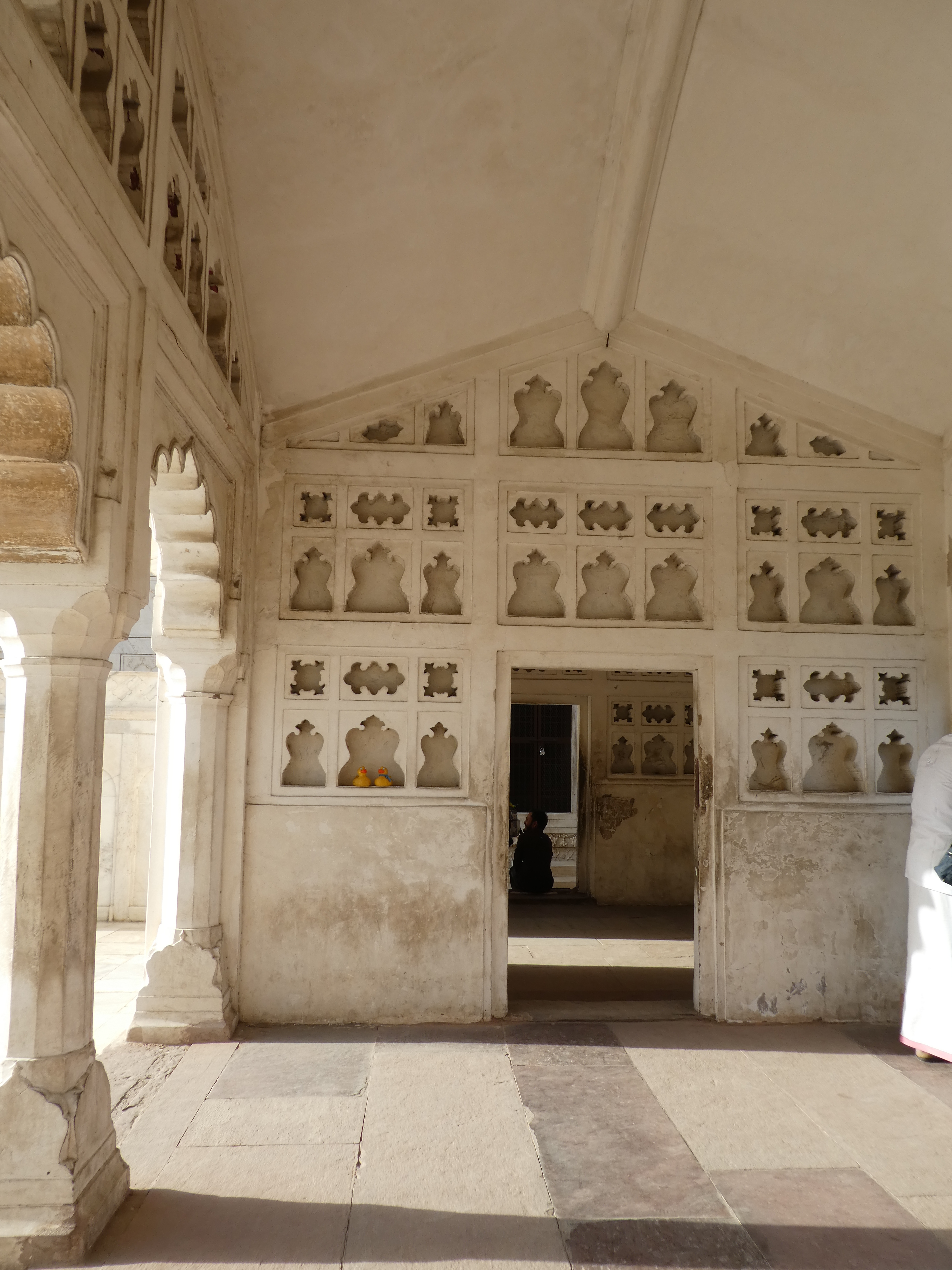
Such a beautiful building.   Shah Jahan, adored his daughters, and they each had a room like this.

Room for daughter

These are beautiful rooms with a great view of the Yamuna River.   And another non human resident.

A bat lives here at Agra Fort

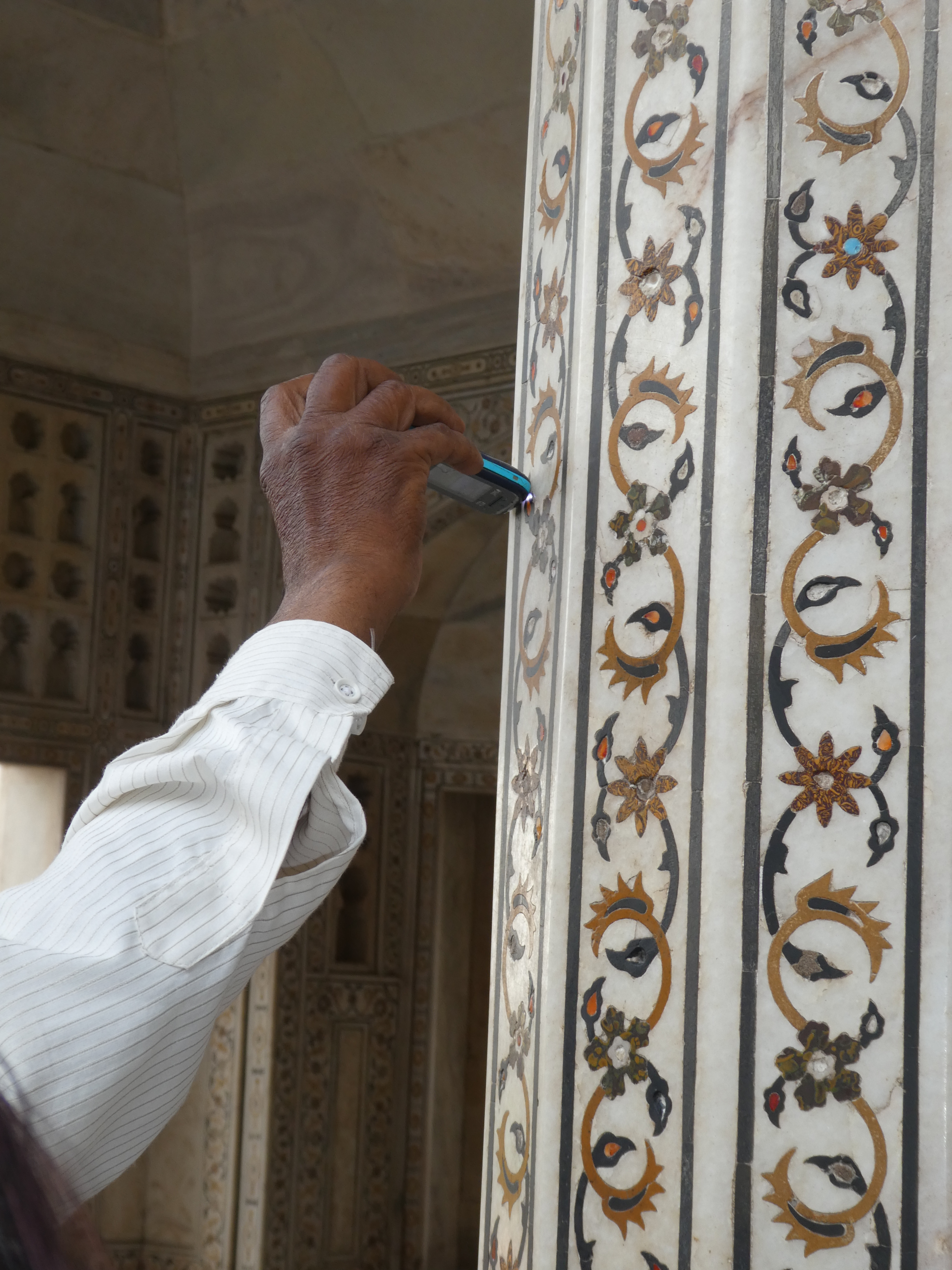
This bat seems to be at home in Agra Fort.   This guide is shining a light on the marble.

White marble with inlaid gems

The light accentuates the gems inlaid in the marble.   Great craftsmanship everywhere.   You may remember that the Taj Mahal, was built as a tomb for Shah Jahan’s favorite wife, Mumtaz. The Taj Mahal was completed in 1653.   In 1659, Shah Jahan was deposed by his son, Aurangzeb.   Aurangzeb kept his father, the former Shah, under house arrest at Agra Fort.   This is the room, in Musamman Burj, the Octagonal Tower, in Agra Fort where Shah Jahan died.

Room where Shah Jahan died

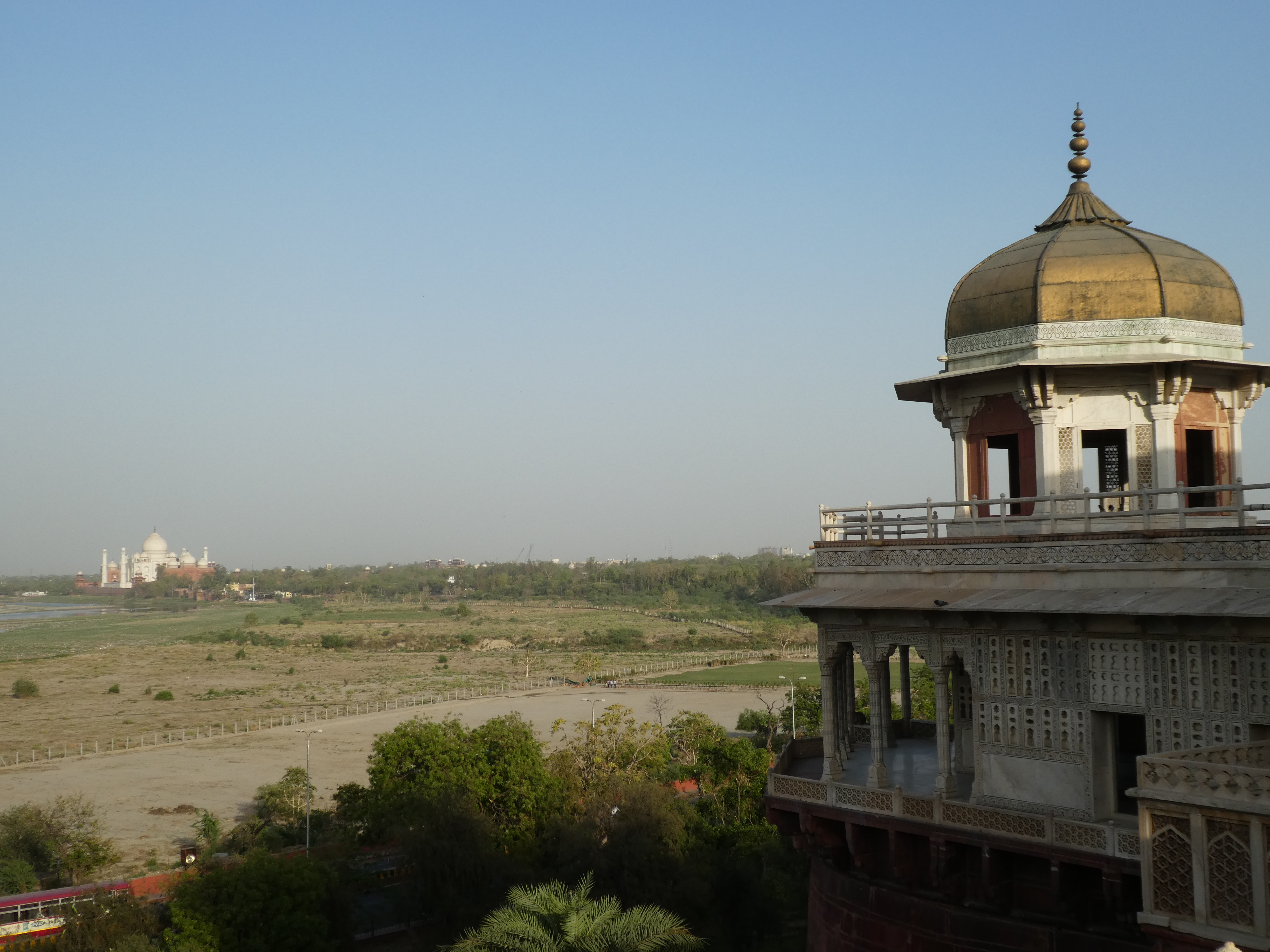
He was imprisoned here for seven years, before his death.   From his tower, he could see the Taj Mahal, built for his beloved wife, Mumtaz.

View of Taj Mahal from his prison

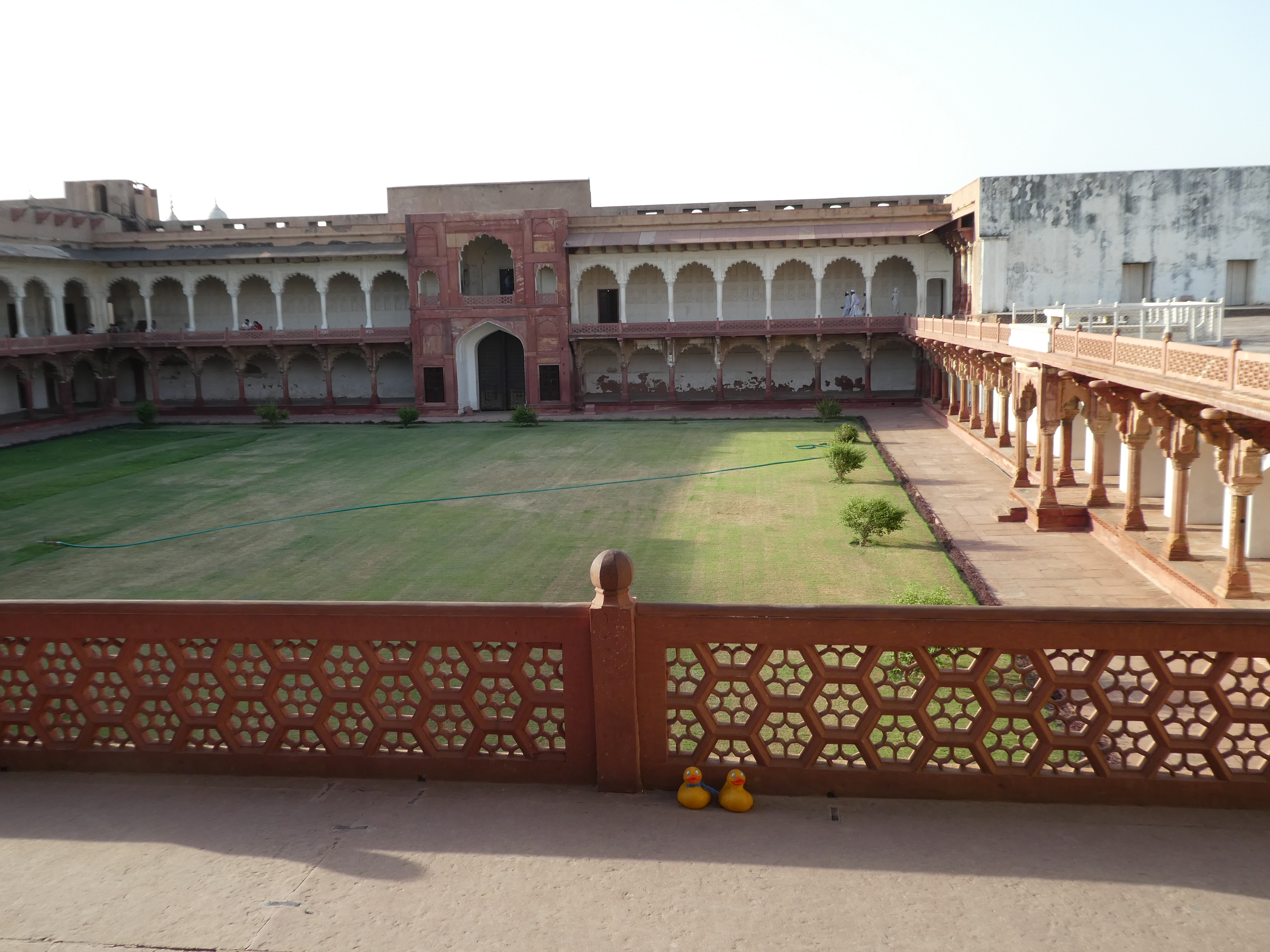
So close, but out of reach for him.   This lawn was the Ladies’ Bazaar.

Ladies’ Bazaar

Female merchants were allowed to come here, on market day, to sell goods to the ladies of the Mughal court.   Men were not allowed.   We really like visiting Agra Fort, and loved the views of the Taj Mahal.

Taj Mahal from Agra Fort

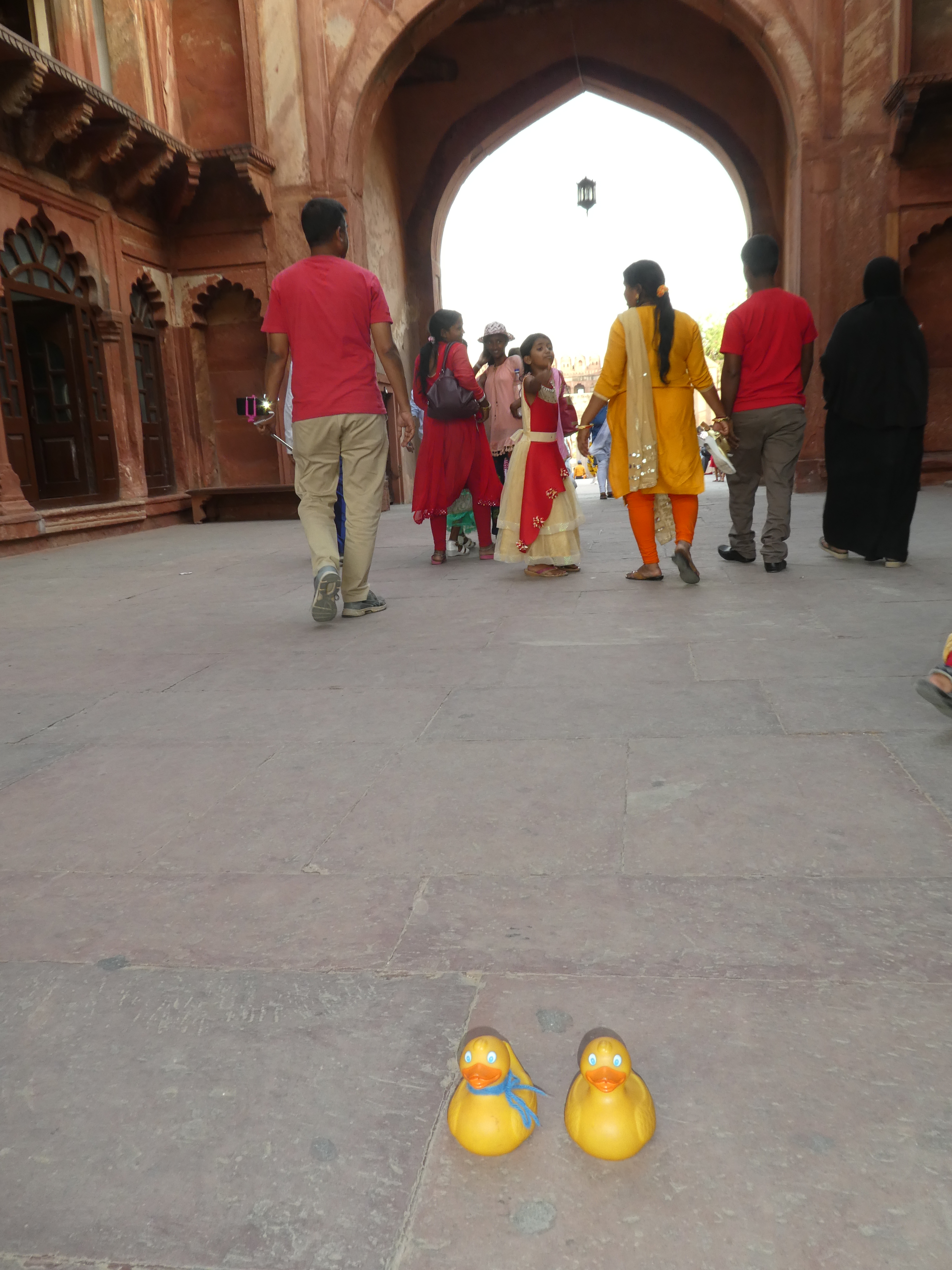
The Taj Mahal with a mosque on each side.   But, it was time for us to leave.   More people were passing through Amar Singh Gate, coming to visit Agra Fort.

Leaving Agra Fort. That cute little girl is watching us.

That cute little girl is watching us.   Sometimes little children try to take us home with them.   We like children, but we want to stay with our moms.  We like this little girl.   Isn’t her dress pretty?  If you go to Agra, India, please visit the Taj Mahal and also Agra Fort.   We think you will enjoy them both.

The Taj Mahal Without Zeb and Soapy

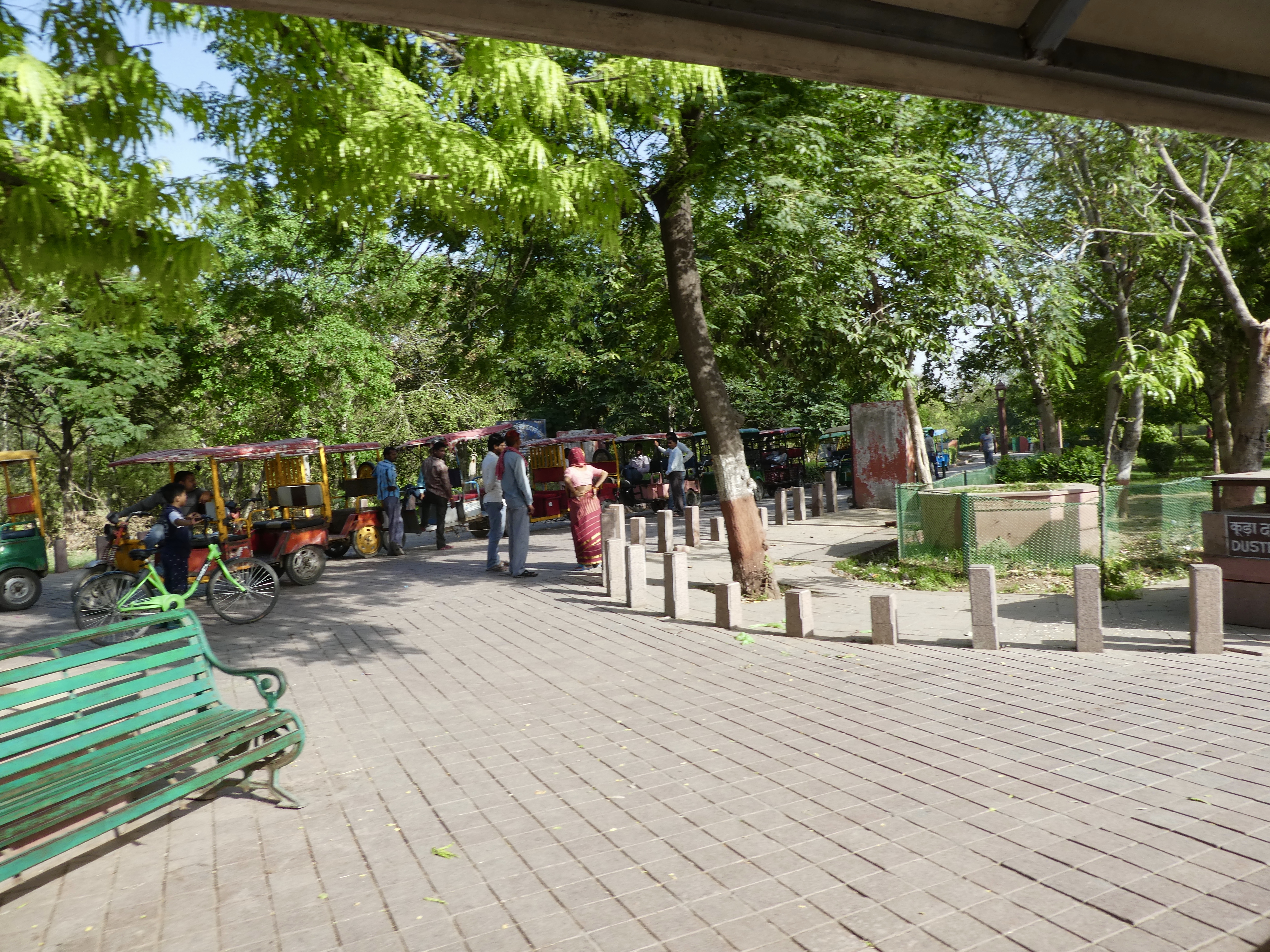
We are now in Agra, India.   Agra is famous for the Taj Mahal.   This is as far as our bus can go.
Buses cannot go closer to Taj Mahal

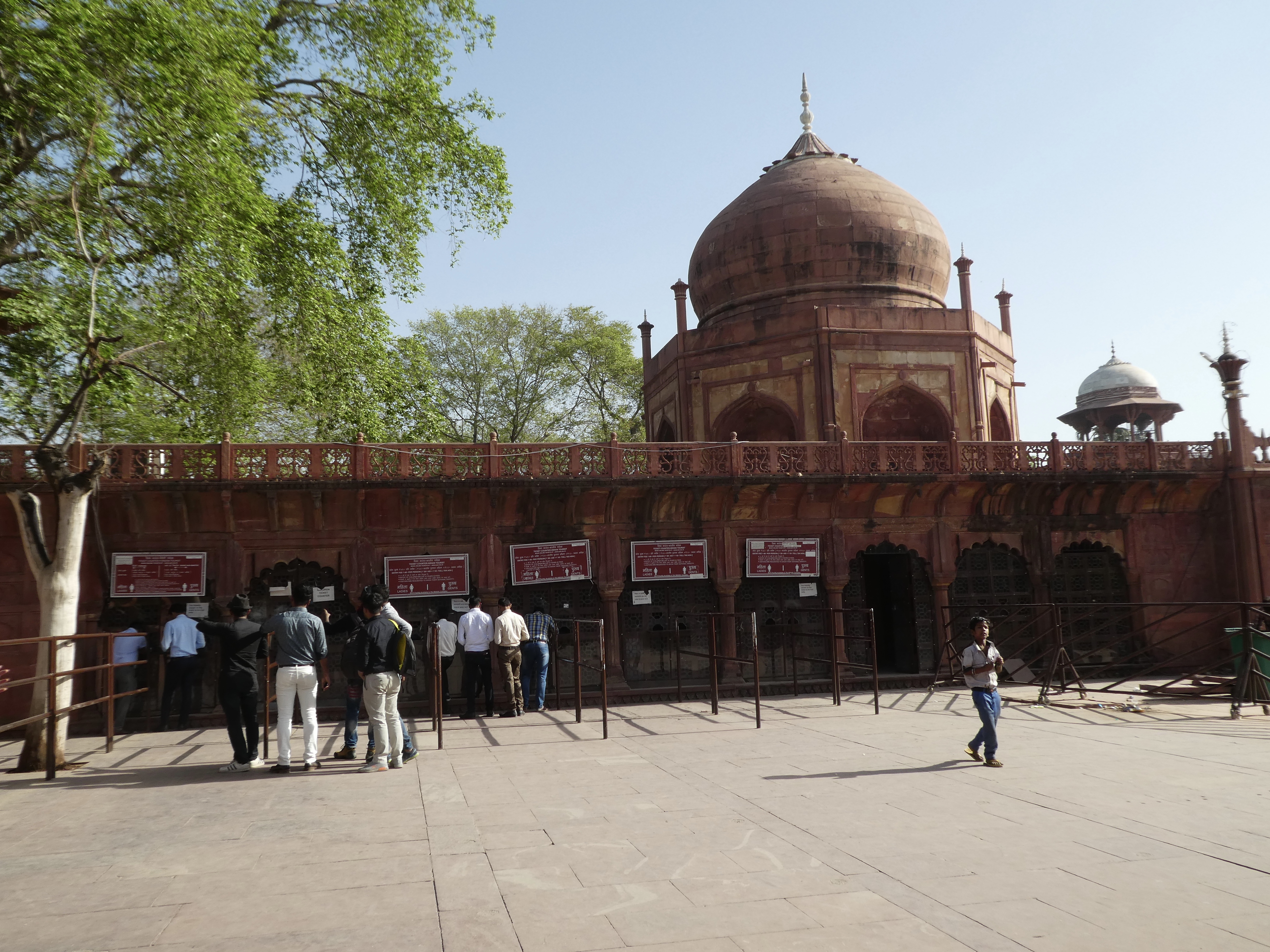
From here, it is either walk or ride in one of those carts.   But wait a minute.   Humans cannot take much near the Taj Mahal.   Ducks are not allowed in the Taj Mahal area.   Oh no!!   But it is OK.  Our moms said we will be able to see the Taj Mahal from other areas, including the restaurant of our hotel, Clarks Shiraz Hotel.  Zeb and Soapy Smith Duck stayed on the bus.   The humans rode in a cart.   Here is the ticket purchasing area.

Purchase tickets here

Jesse, our guide, purchased the tickets.

Prices for Taj Mahal. Foreigners and Indians pay different prices

Tickets are different prices for foreigners than they are for Indians.   That is fine.   The people that live here should be able to enjoy this beautiful building.

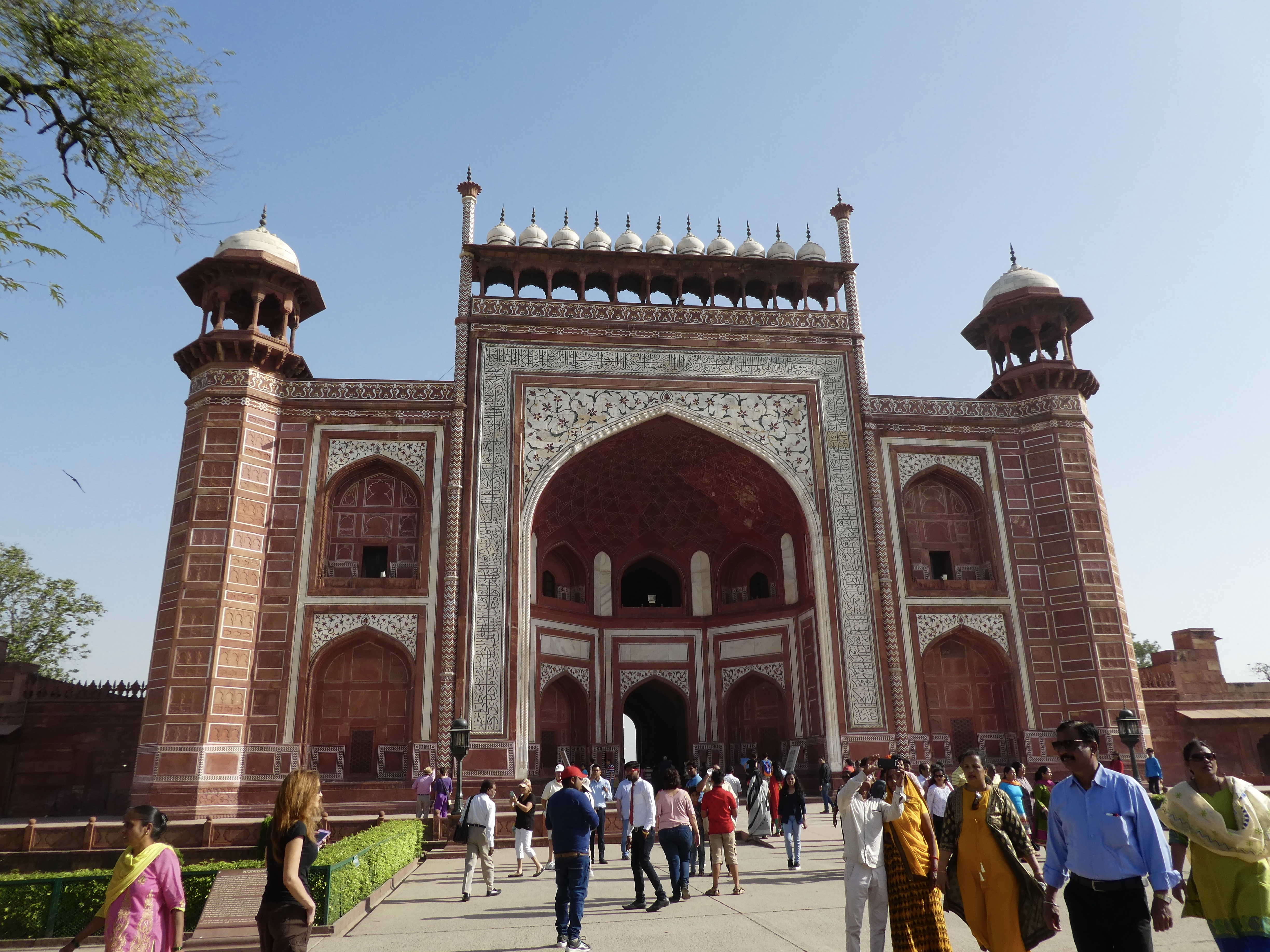
Enter through this building

Humans walked through this building, and this is what they saw.

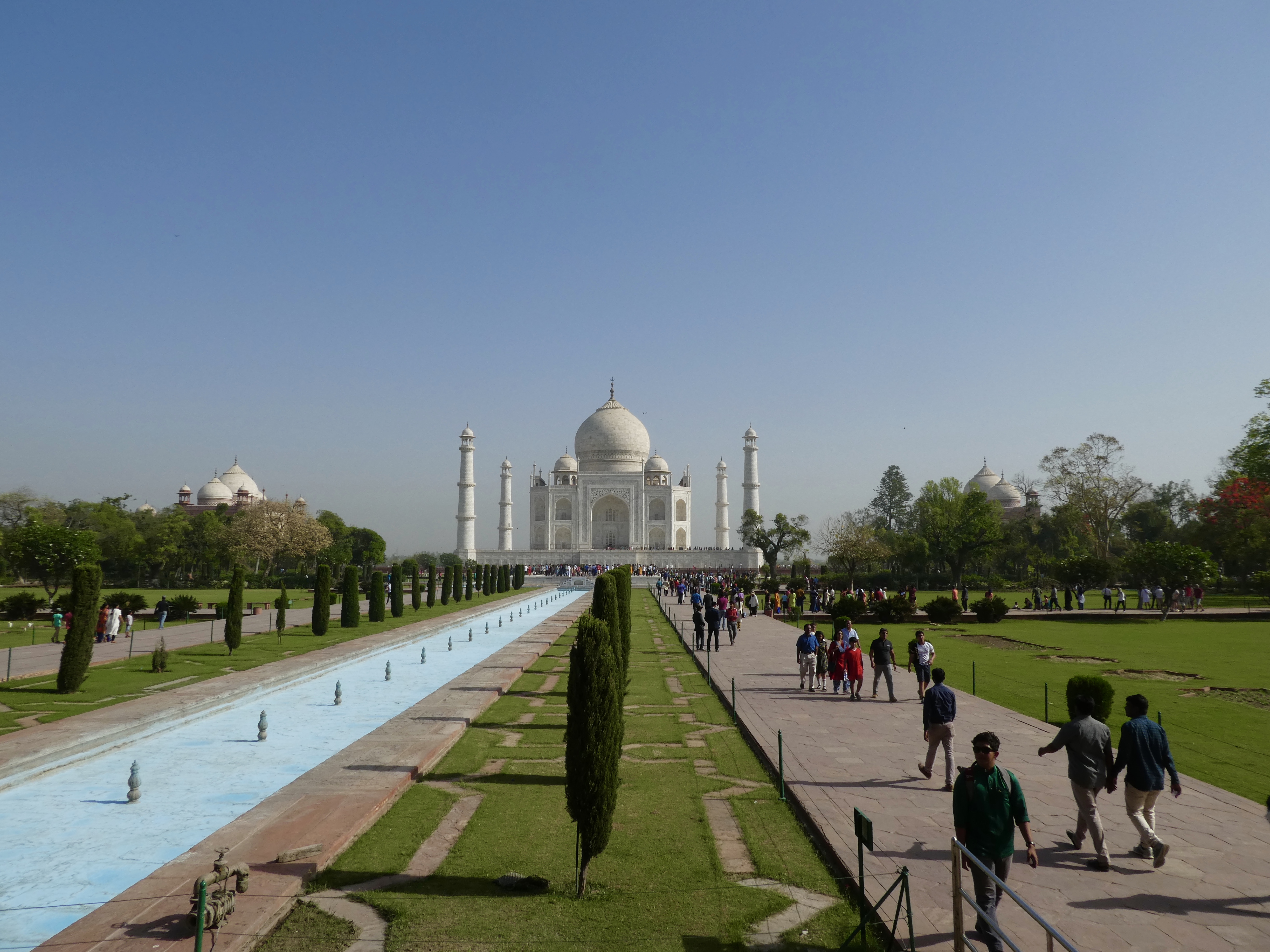
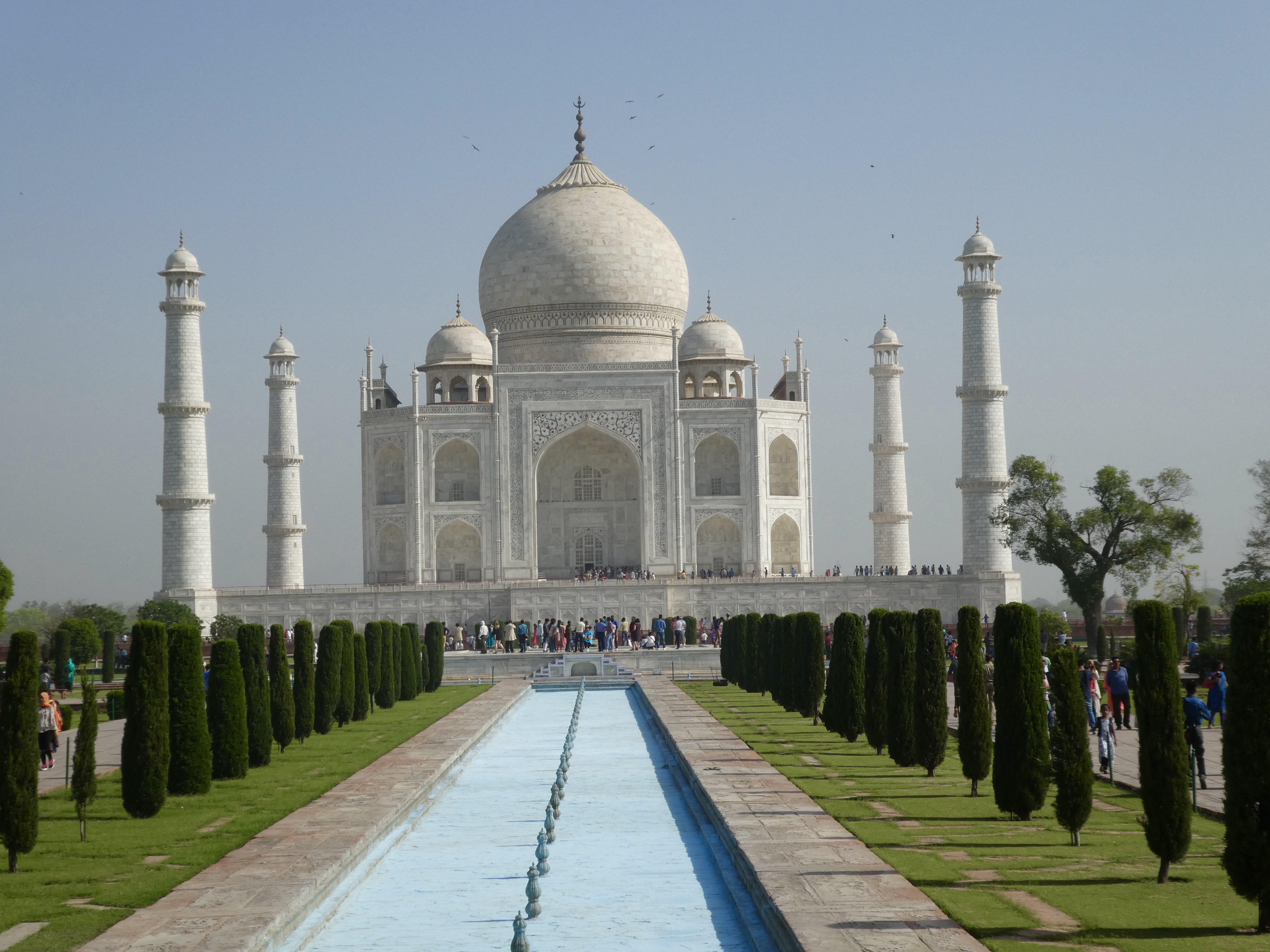
Wow! Here is the Taj Mahal

The Taj Mahal is symmetrical.   A mosque was constructed on one side of the Taj Mahal, so another mosque was built on the other side.   Must be symmetrical.  Jesse, our guide, had humans sit on a platform and explained a little about the Taj Mahal.   This building was commissioned by Shah Jahan to enshrine the mortal remains of his Queen Mumtaz Mahal.   This was built from love.   Isn’t that romantic.   We love that love was so strong.   She died during childbirth.   They were married 17 years.   There were other wives, but Mumtaz was the favorite.   We like this photo.

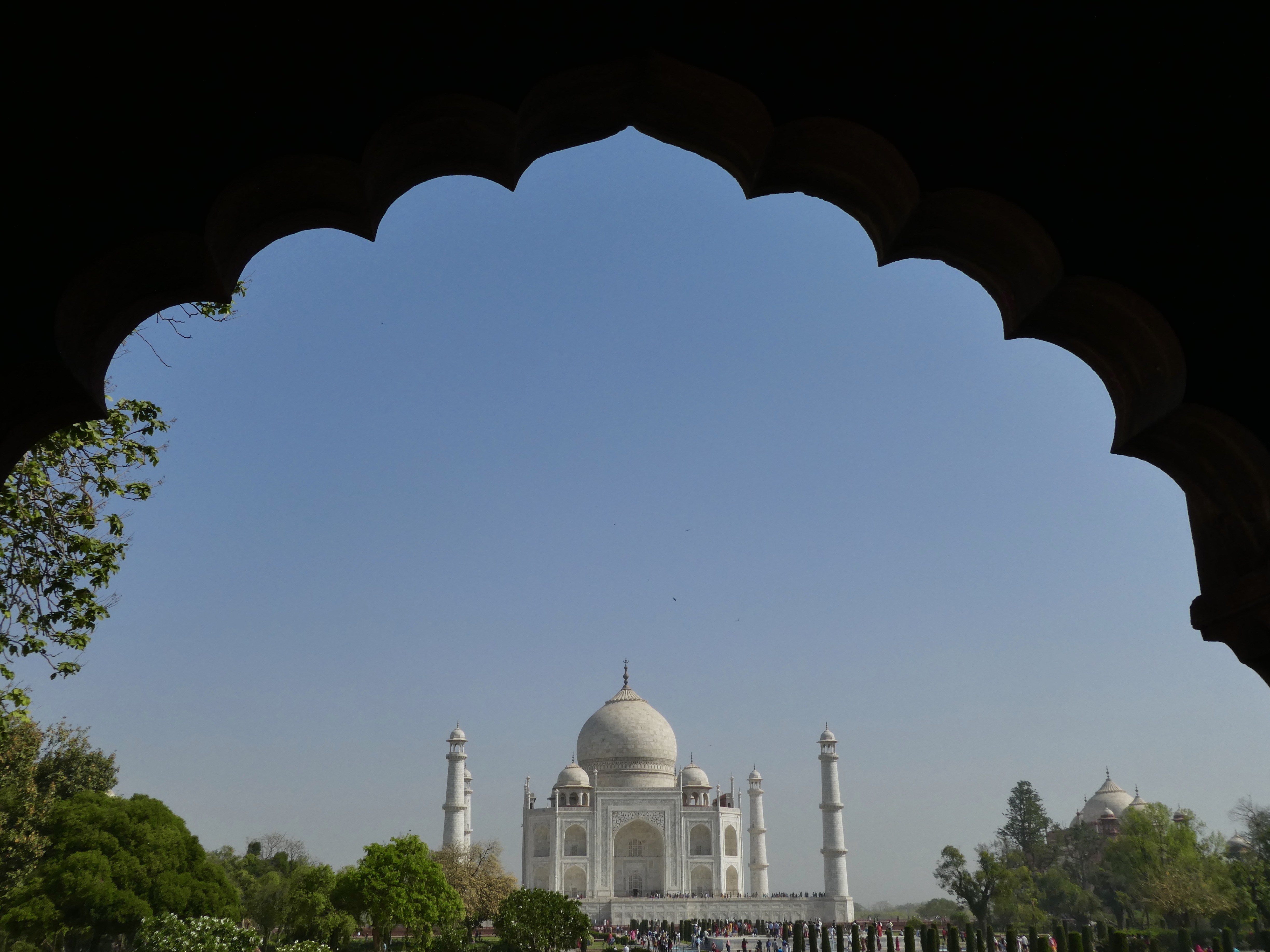
Taj Mahal through arch

This was taken from the platform the humans sat on while Jesse explained things.   Walking closer, we can see the craftsmanship of inlaid jasper in the white marble.

Marble inlaid with Jasper

This marble is from India.   In 1631 Mumtaz died and the construction of the Taj Mahal began.   The beautiful building built of love, was completed in 1653.   There is a bench in front of the Taj Mahal called the Princess Di (Diana) bench.

Soapy’s mom at Princess Diana Bench

Soapy’s mom is by the bench.   Our photographer told her how to pose.   She was not swimming in the reflecting pools.   Inside, visitors are only allowed in the center area of the main floor.   The tombs here are empty.   The real tombs are in the lower level.   Pictures of the tombs are not allowed and this structure surrounds the tombs.

Inside Taj Mahal. Empty Tombs behind this structure

Looking through, we could see two tombs.   Shah Jahan built this for his Queen Mumtaz.   Her tomb is in the center.   He wanted another smaller building across the river for his memorial.   His was to be of black marble and a bridge was to be built connecting the two memorials.   However, that did not happen.   He was disposed by his son in 1659 and upon his death, his body was placed next to Mumtaz.   While viewing the Taj Mahal, there are many photographers eager to take your photos.   Our moms hired a photographer and had fun with him.

Soapy’s mom with our photographer

Here he is with Soapy’s mom.  We won’t tell you how many photos were purchased, but our moms had a great time.   This a beautiful building and a wonderful memorial to love.   We hope you visit Agra, India to see the Taj Mahal.

Mahatma Gandhi with Zeb and Soapy Smith Duck in Delhi, India

Born Mohandas Karamchand Gandhi, October 2, 1869 in Porbandar, India, he became the most famous Indian activist and leader of the Indian Independence movement against the British.   There are three museums in Delhi honoring Gandhi.   We visited Ghandi Smriti Museum.

Gandhi Smriti Museum, Delhi

Gandhi left India to study law in London.   After completing his studies, he went to South Africa in April 1893.   Ghandi remained there for 21 years fighting for civil rights for the Indian community in South Africa.   In 1914 in South Africa he was referred to as “Mahatma”, a title of honor meaning High Souled.   The world knows him as Mahatma Gandhi.   During the independence negotiations with England, part of India became Pakistan, the home for the Muslims of India.   The remainder of India was for the Hindus.   This caused many problems with people being asked to leave their homes and move to another area.   Gandhi was concerned about this.   This museum, formerly Birla House, was where Gandhi spent the last 144 days of his life.   Here is the path Gandhi walked for the last time.

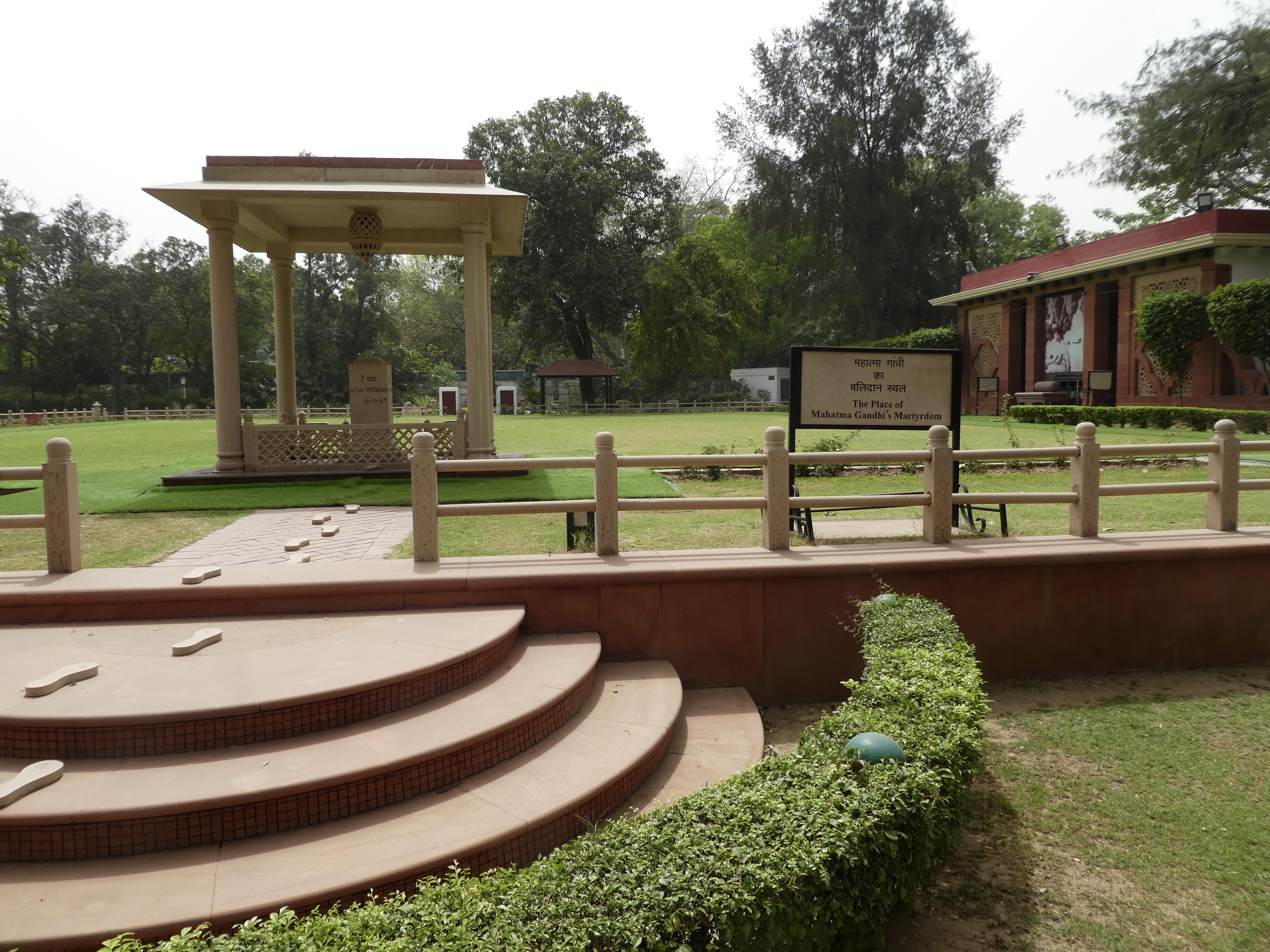
Path with raised footprints

This was his nightly public walk.   He was in prayer here, when Nathuram Godse, a Hindu nationalist, shot three bullets into his chest.

Footprints leading to site of assassination

Gandhi died instantly.  His assassin did not approve of Gandhi’s ways with the Muslims and Hindus during this time in India.   Mahatma Gandhi died January 30, 1948.   Walkways on the grounds contain many signs with Gandhi’s quotes.

Quotes by Gandhi

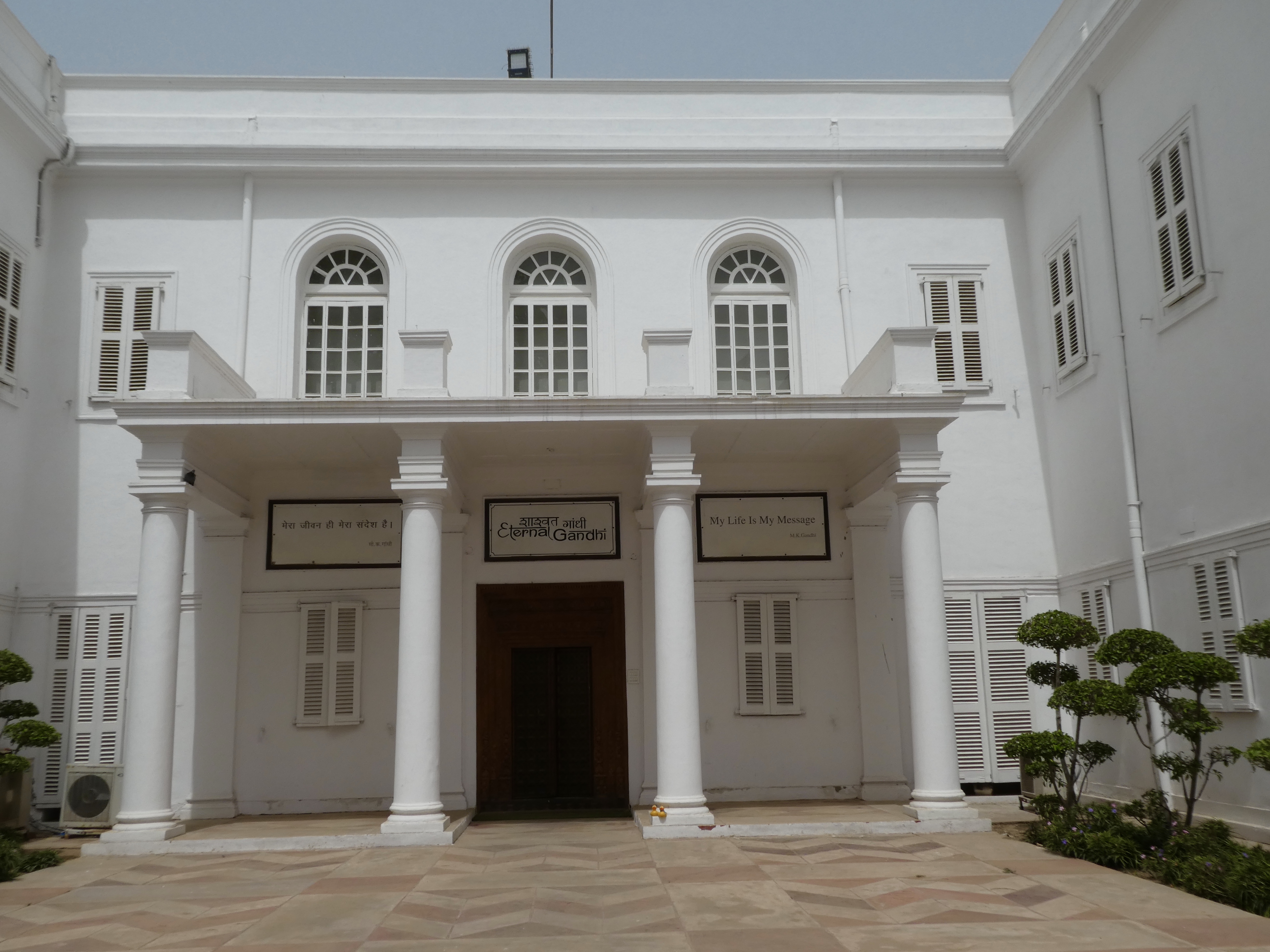
After strolling through the grounds, we entered the main building, now a museum.

Entrance to home, now museum

Many quotes, artifacts and dioramas highlighted the life of Mahatma Gandhi.

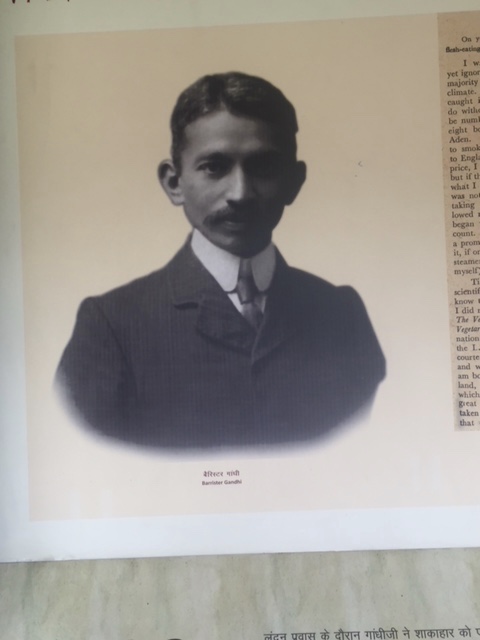
Matama Gandhi during younger years

We enjoyed this photo of Gandhi in his younger days.  Gandhi believed in equality and freedom for all.   We even saw his thoughts regarding women’s rights.   He believed men and women were to complement each other and be respected equally by each other.   Zeb and Soapy liked this statue.

Gandhi with children and Colorado Traveling Ducks

Gandhi, with children and the Colorado Traveling Ducks.   Nearby is Raj Ghat, the black marble memorial to Mahatma Gandhi.

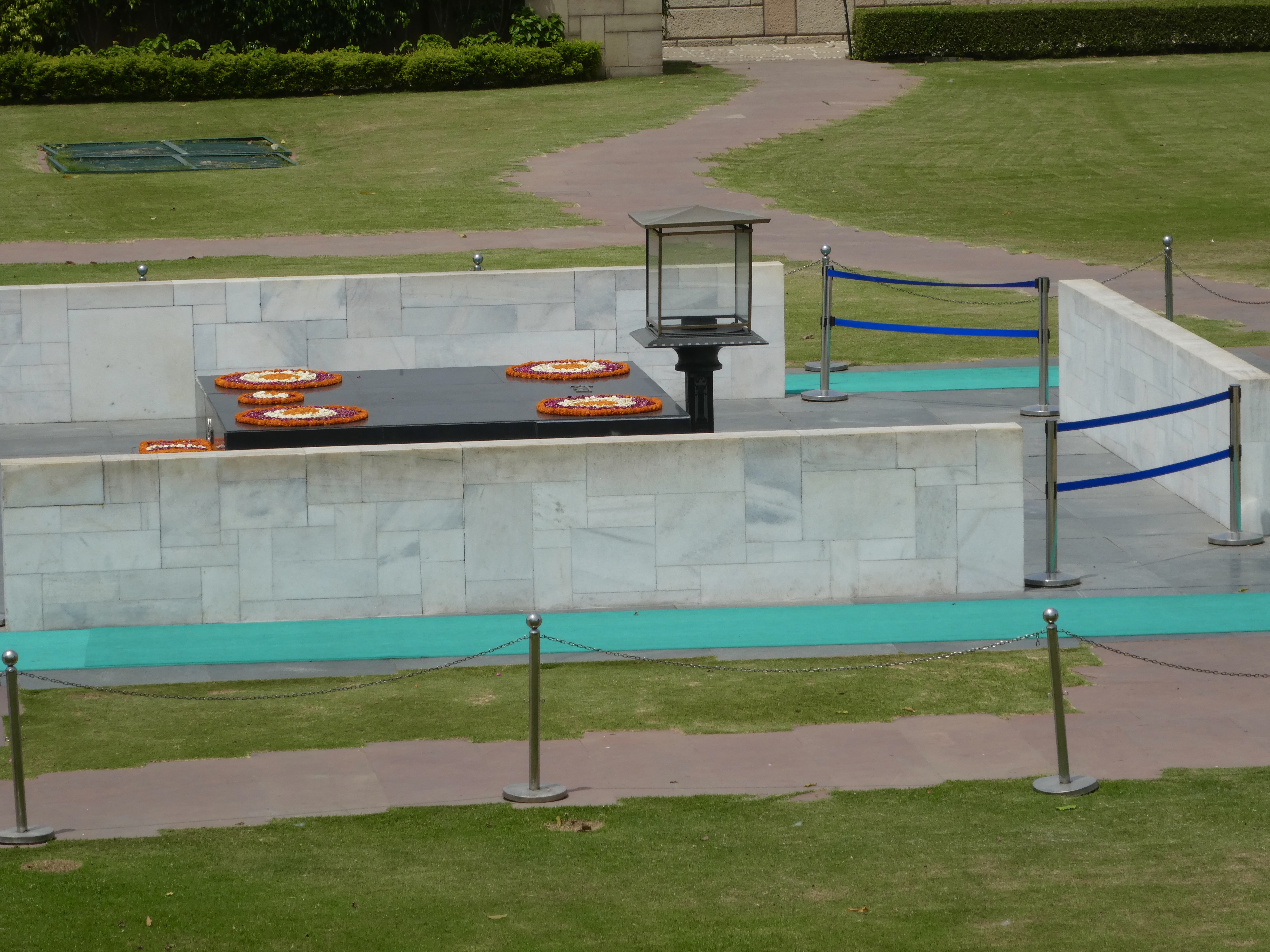
Black Marble Memorial where Gandhi was cremated

This marks the location, on the Yamuna River, where Gandhi was cremated.

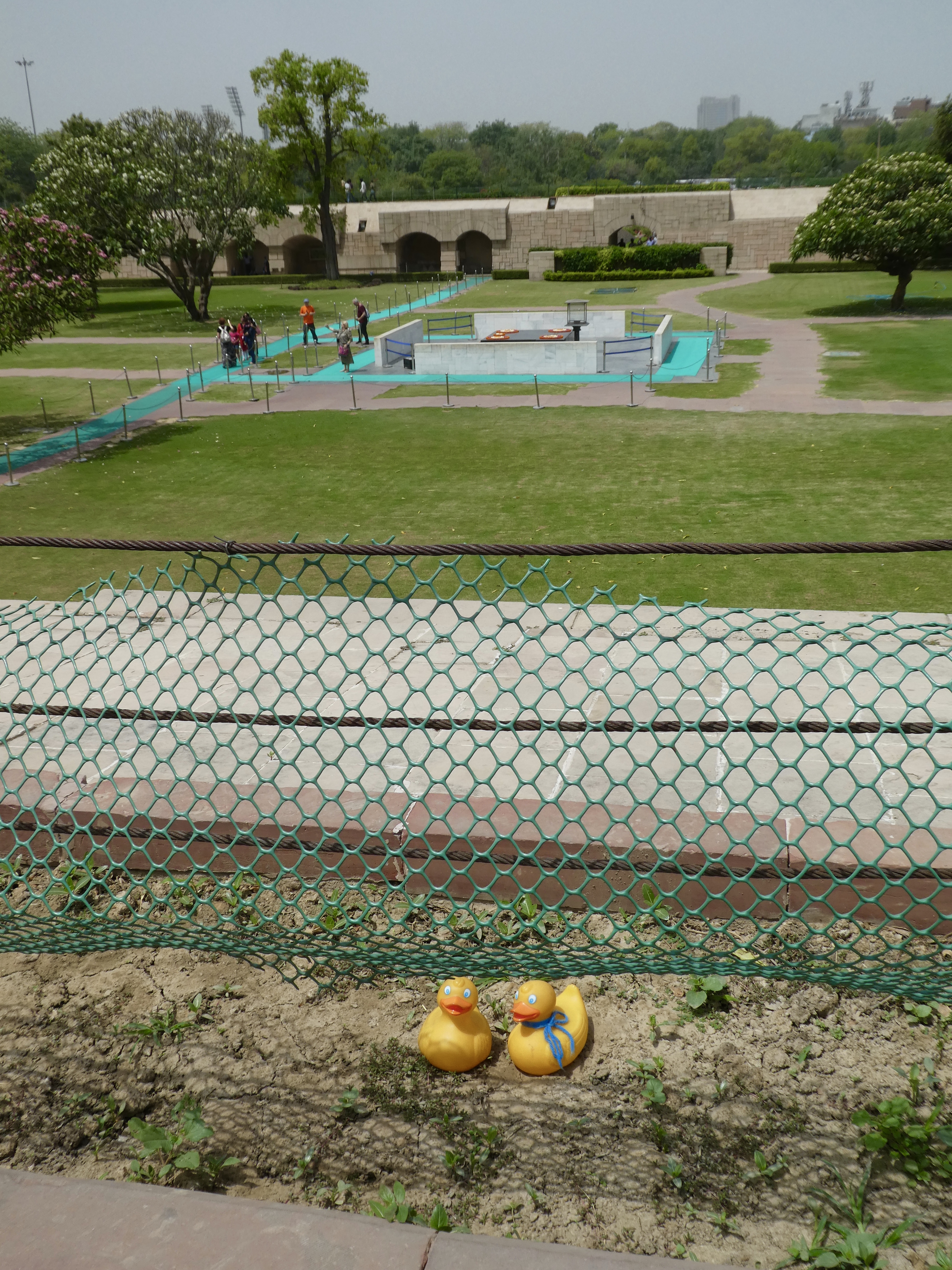
Memorial with Zeb and Soapy

It is a calm, peaceful parklike location.   The walkways here are also lined with quotes of Mahatma Gandhi.

Many quotes of Gandhi

We particularly liked this wall.

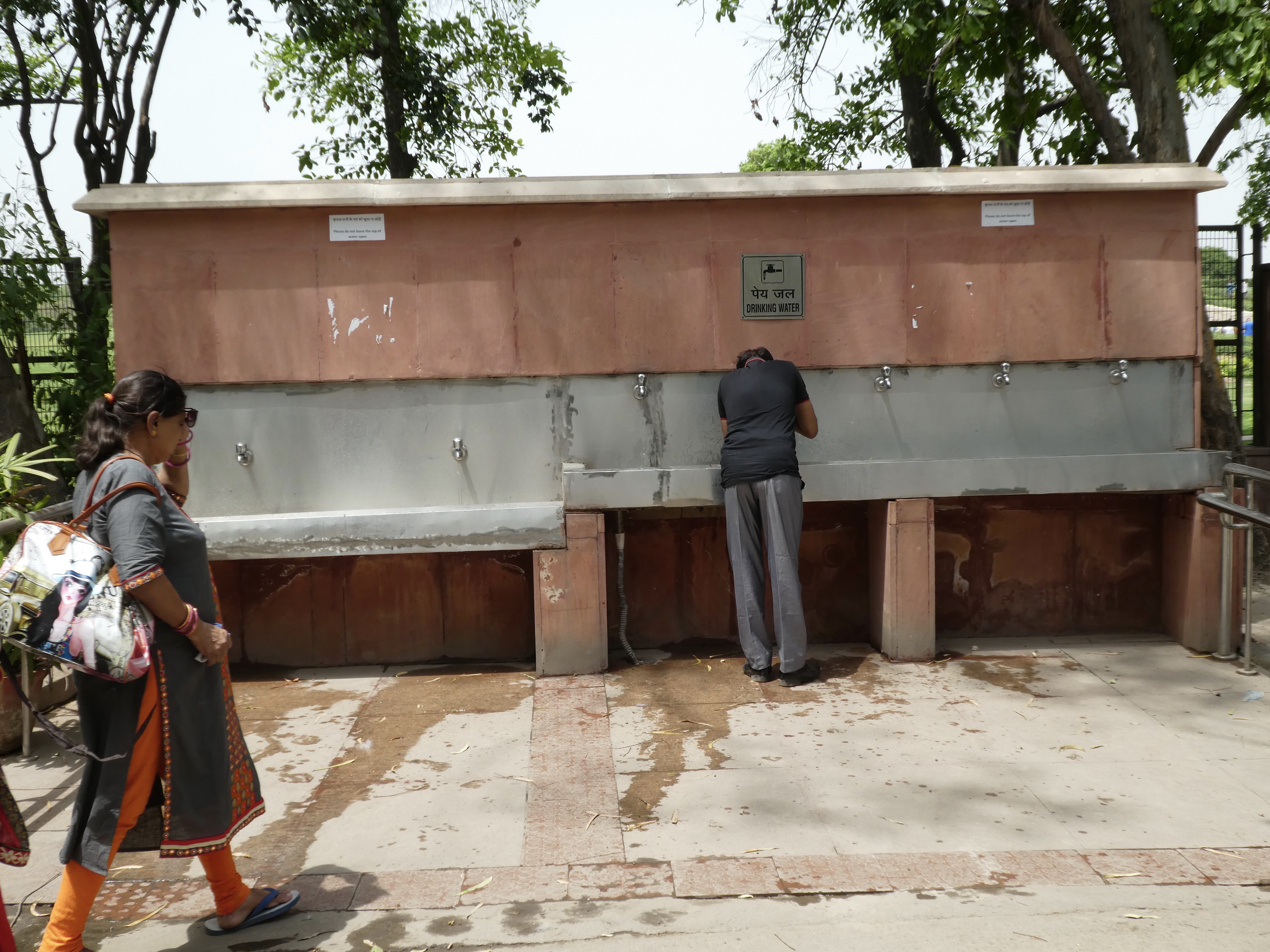
Public drinking water wall at Raj Ghat, Delhi

Drinking water is provided here for visitors to Raj Ghat.   We hope you will visit some memorials to Gandhi when you are in Delhi.

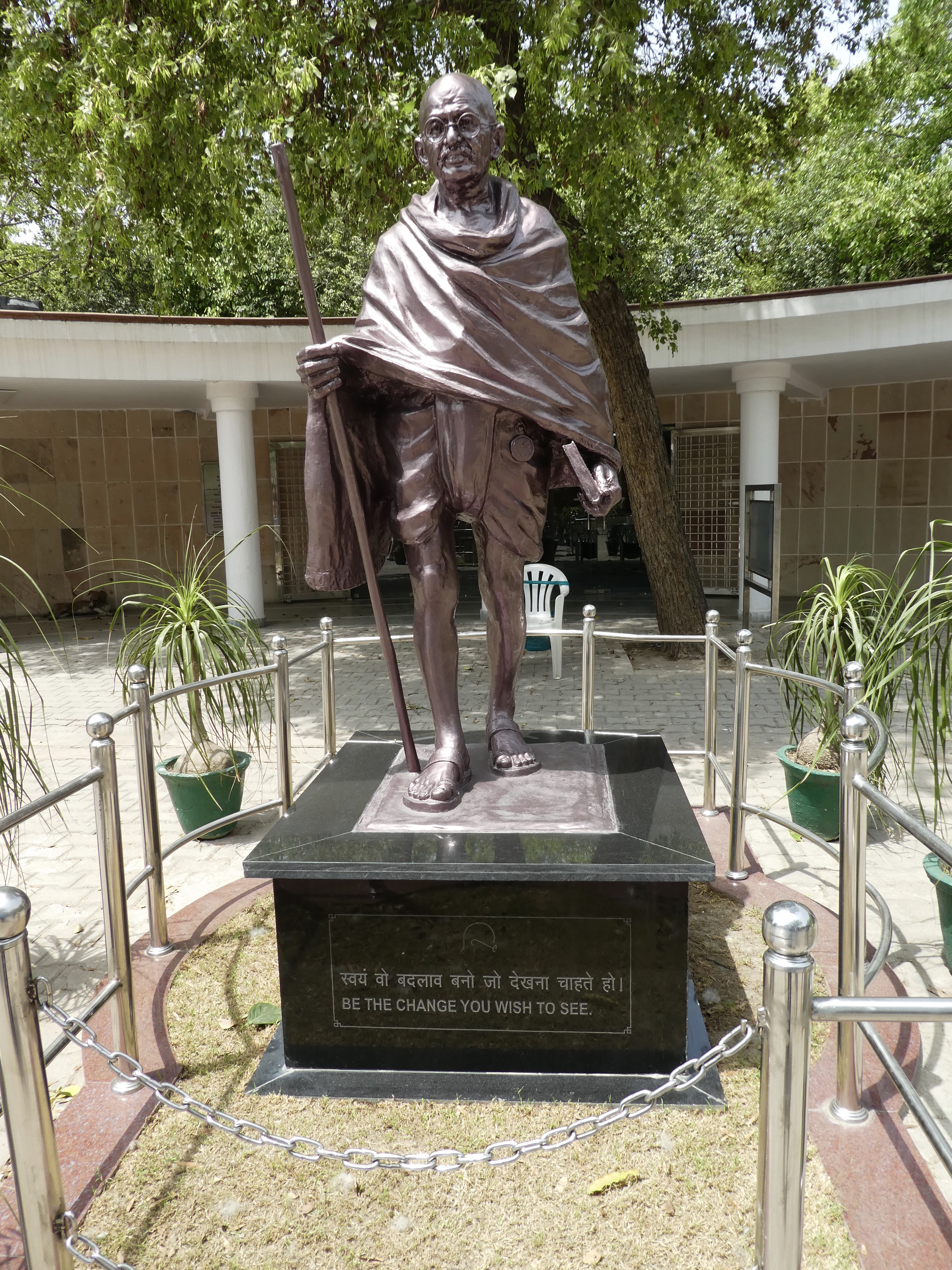
Statue of Mahatma Gandhi

It is informative and offers tranquility in a city of 17-18 million people.

Delhi’s India Gate and a Little More

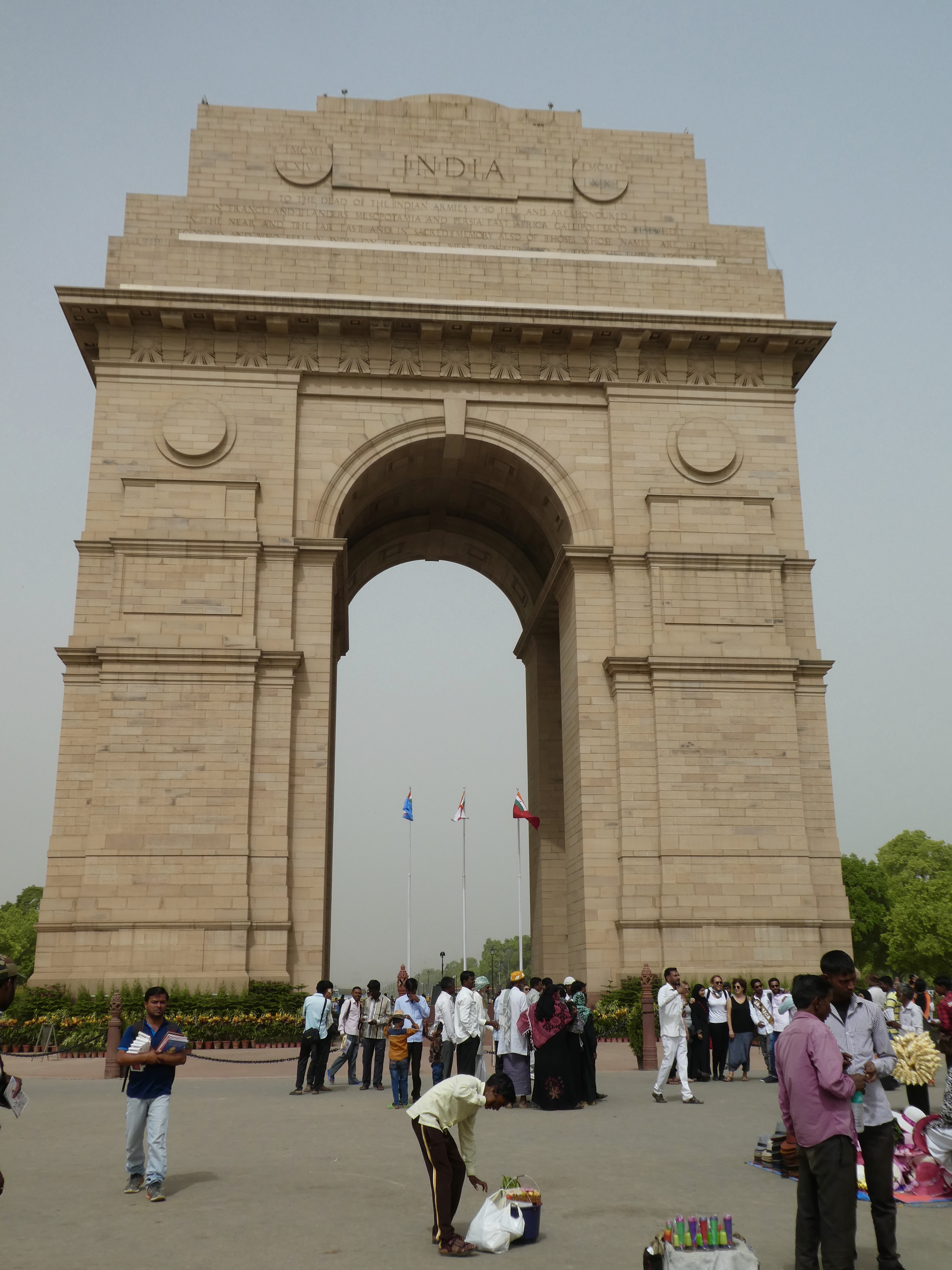
Here we are at India Gate.

India Gate

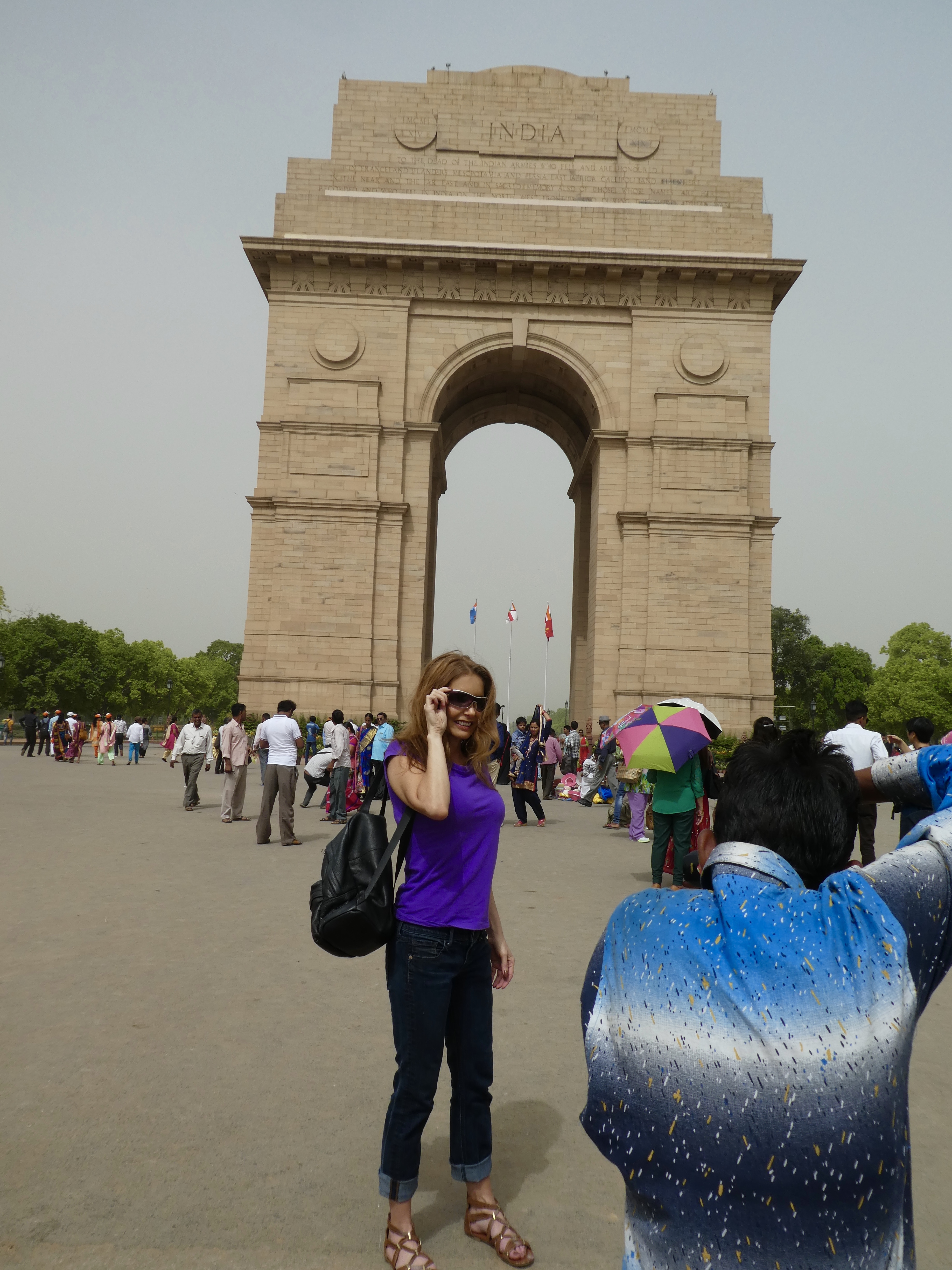
This is a 42 meter high stone arch of triumph and is officially known as All Inda War Memorial.   This gate bears the names of 90,000 Indian Army soldiers that perished in World War I, the North-West Frontier war of the same time, and the 1919 Afghan war.   At several tourist places, we met people of all ages, working as professional photographers.   Here a photographer is directing Soapy Smith Duck’s mom how to pose for his photo.

India Gate. Photographer directing Soapy Smith Duck’s mom on posing.

We were only here for a short time, but this photographer arranged the poses, took the photos, and printed them before our tour bus left.   Very impressive.   This is his photo.

Soapy’s mom

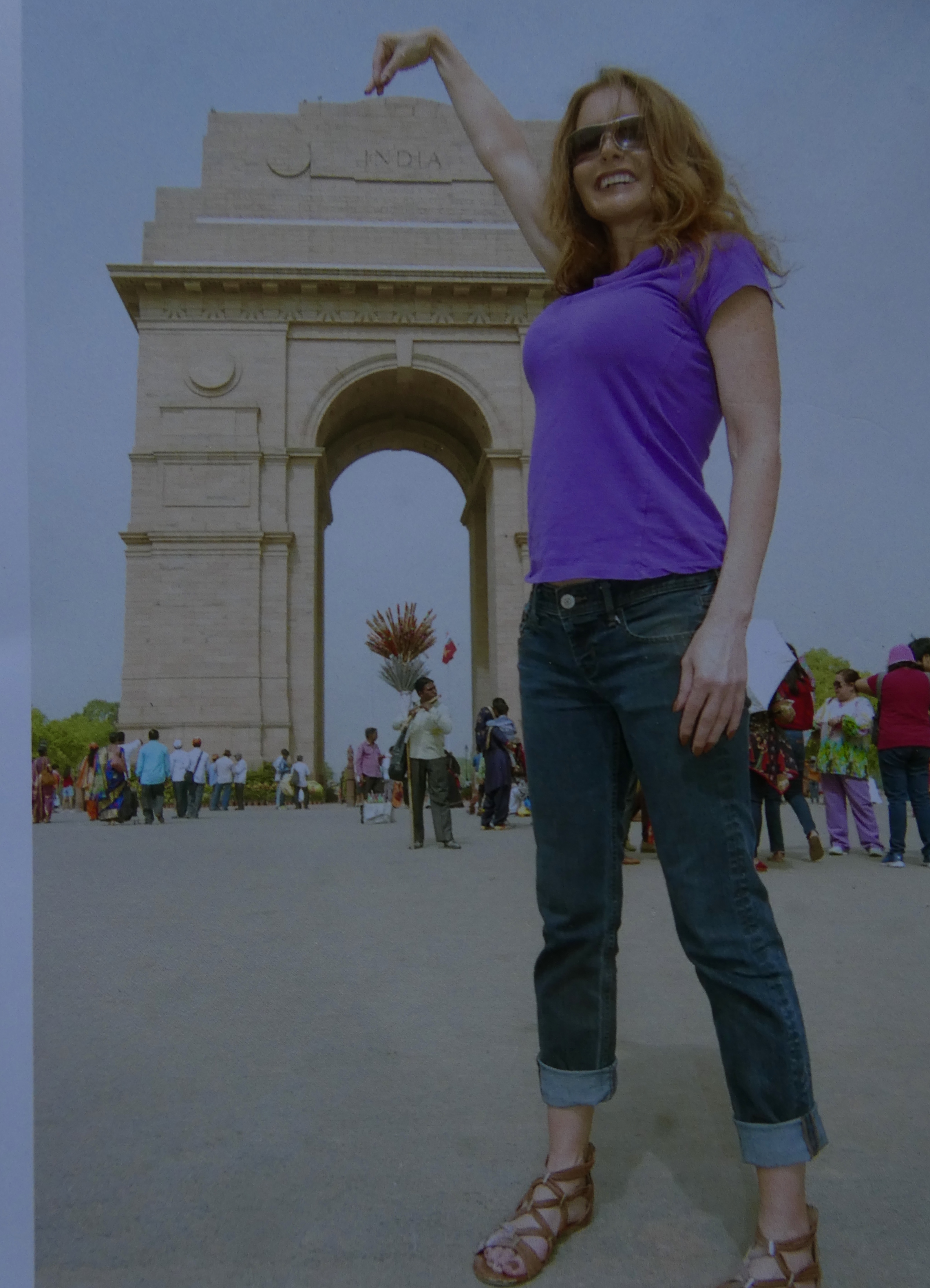
This is the photographer’s photo from a lower angel.   Is Soapy’s mom really as tall as India Gate?    Can she reach the top??   We did purchase these photos from the photographer.

Soapy’s mom. Tall as India Gate??

There is a fountain to the side of India Gate.

Fountain and pool by India GateI

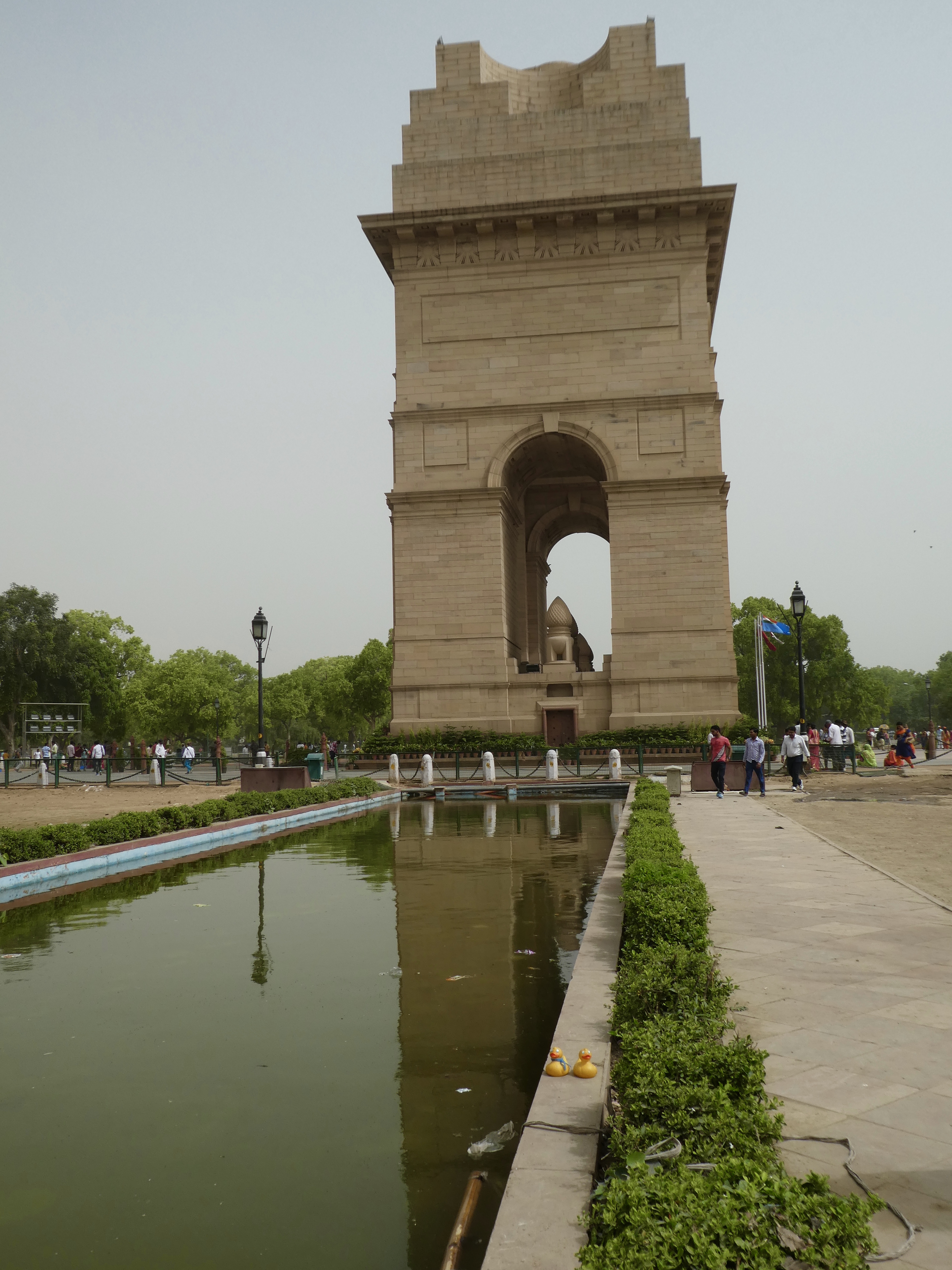
We love water, but you know that, we are ducks.   The reflecting pool at the side of the gate is nice.

Side view of India Gate with reflecting pool

As always we like water around monuments.  Of course, any photo is enhanced by including the Colorado Traveling Ducks.  Many residents of Delhi come here in the evenings.   Venders are here and the atmosphere is rather festive.   Leaving India gate, we rode past the Presidential Palace.

Presidential Palace

This is the official residence of India’s president.   The mansion has 4 floors and 340 rooms, in 200,000 square feet (19,000 square meters).   One billion bricks were used in the construction.  The Presidential Palace is also known as Rashtrapati Bhavan.     Nearby, is the Parliament  building.

Parliament Building

This building has three main chambers, the Lower House of Parliament, the Upper House of Parliament, and the Library.   Now, Zeb and Soapy would like to show you a couple more street scenes in Delhi.

Delhi streets. Moving 17-18 million people daily

And another street scene.

Delhi street

When Zeb’s mom was here in 2004, this was a photo of Delhi’s streets.

Delhi streets 2004

This time, we did not see cows in the streets of Delhi, but we did see cows near the edges of Delhi.   Maybe the cows felt uncomfortable with so many people here now.   Next time we will show you a national hero of India.   We hope you will join us.

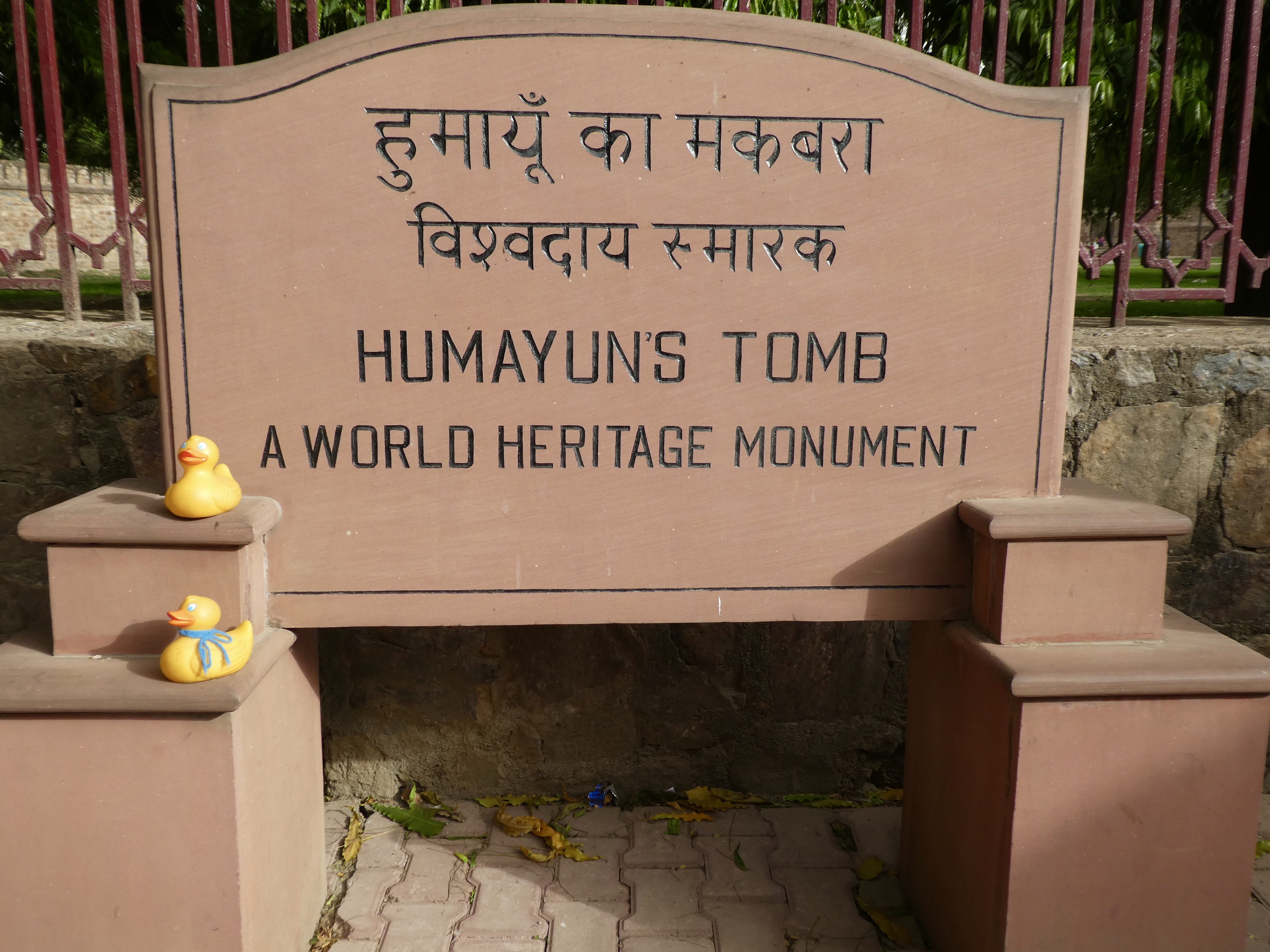
Humayun’s Tomb in Delhi with Zeb and Soapy Smith Duck

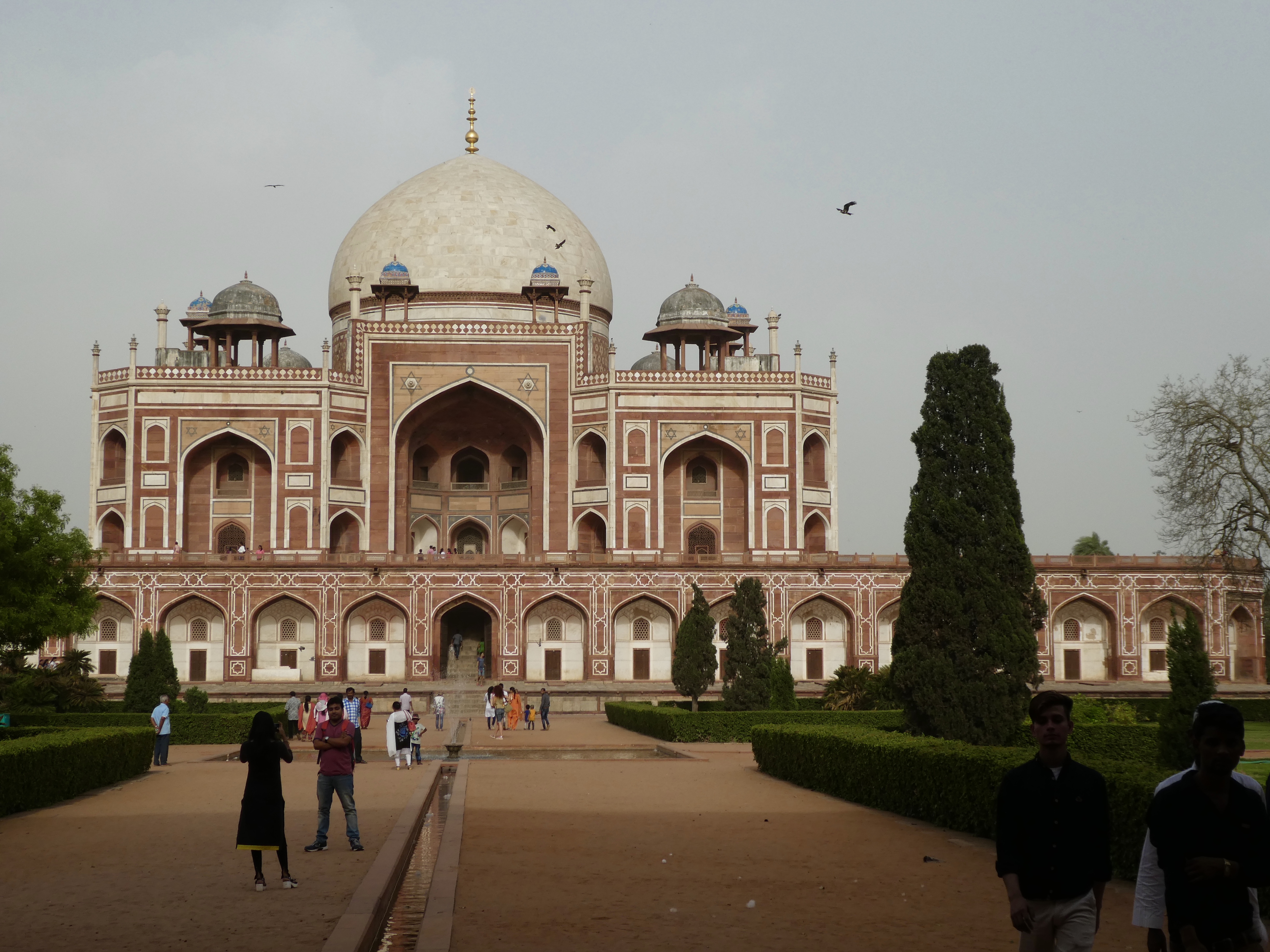
Humayun’s tomb was built in the mid 16th century.

Humayun’s Tomb

It was commissioned by Haji Begum, the senior wife of the second Mughal emperor.   During this time in history, the Muslim emperors were very strong and had much power.   This tomb was the first important example of Mughal architecture in India.

Beautiful building

Many believe this building inspired the design for the Taj Mahal in Agra.   Walking through the garden and past the fountain, we head to the platform and building that contains Humayun’s tomb.

Up all those stairs? Carry us?

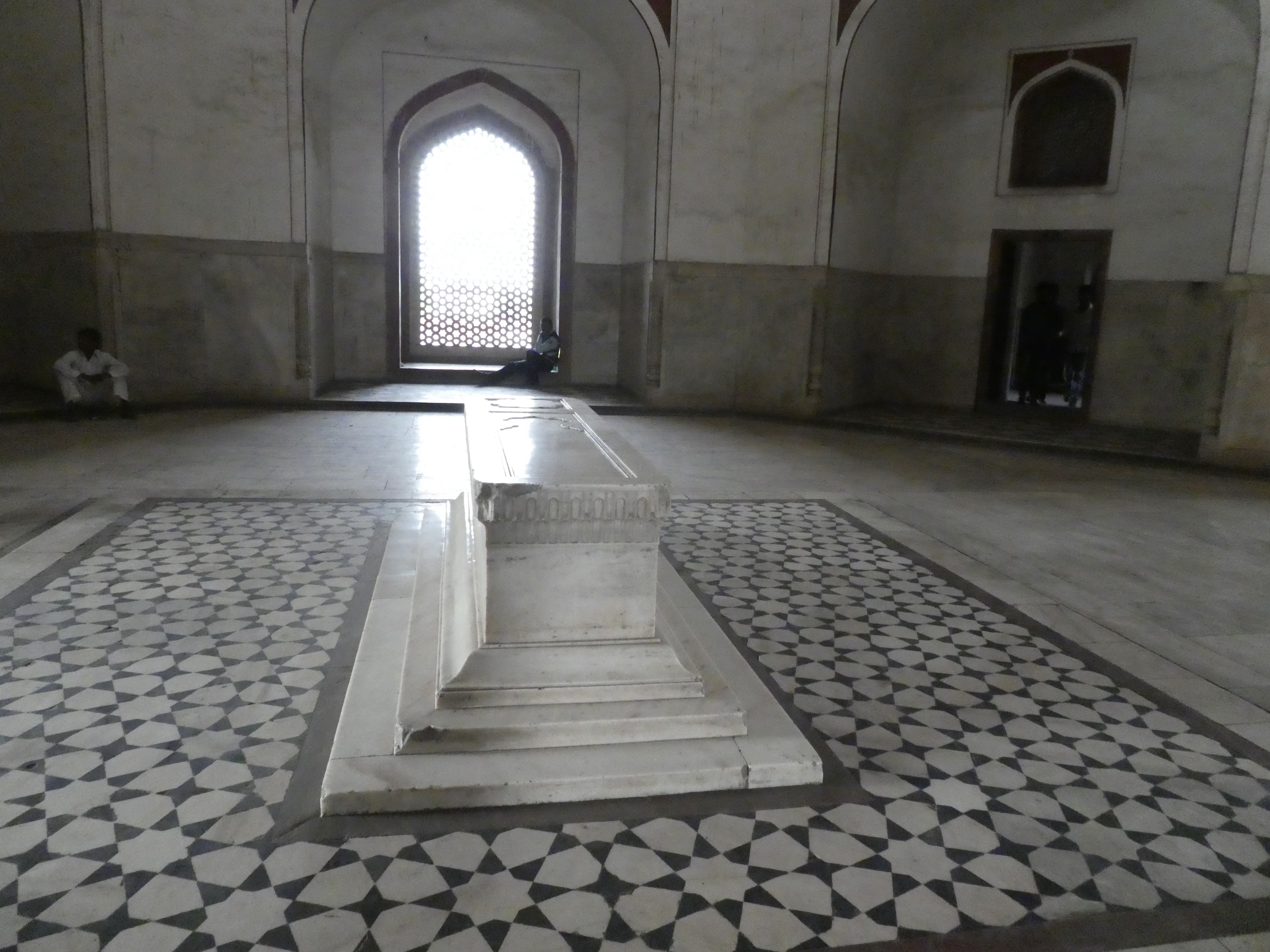
Let’s climb the stairs.   Inside we see the tomb.

Public tomb

However, we are told that the real tomb is in the basement level.   We  believe that people are not to totally walk around the real tomb.   The building is tall and beautiful.   All this beautiful marble is from India.

Morning sun comes through these windows and lights tomb

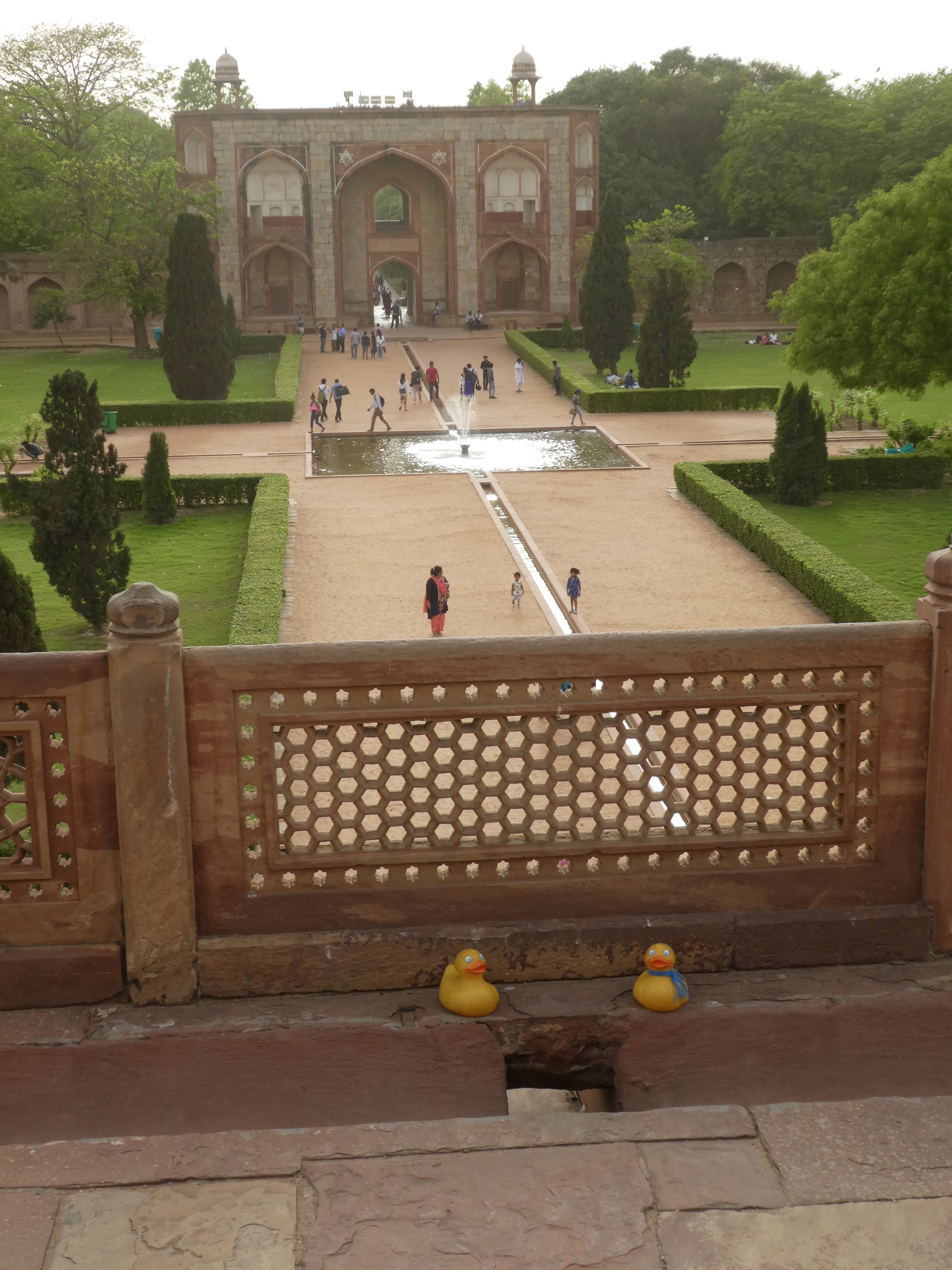
The morning sun comes through these windows and lights the tomb.   Leaving the building, but staying on the balcony, we look across the fountain and toward the entrance to this World Heritage Site.

From tomb platform toward entrance

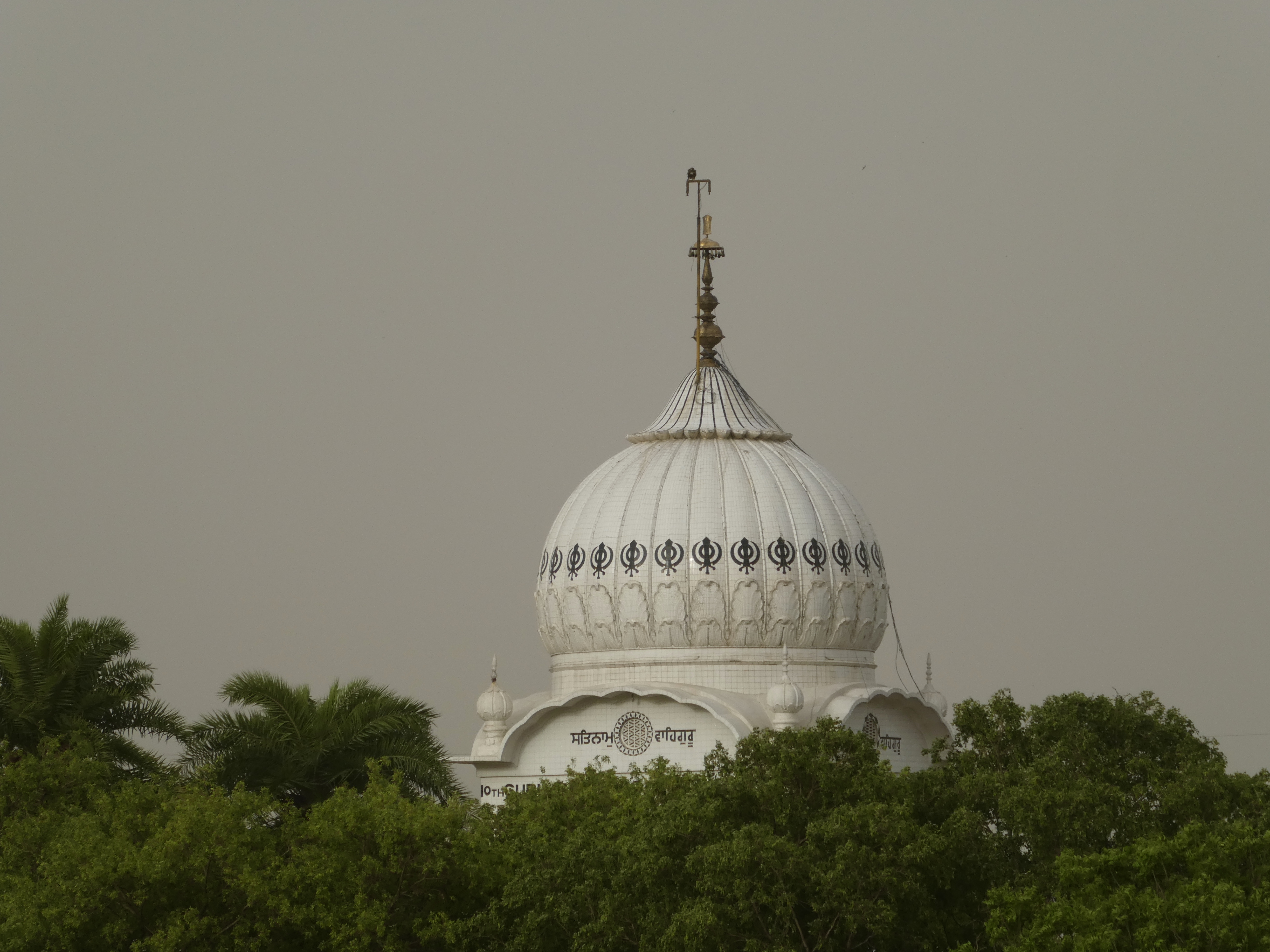
The grounds are beautiful.   We see this dome.

Dome of mosque from tomb platform

We think the domes of mosques are really pretty.  Oh ducks.

Going back down the stairs. Ducks have short legs.

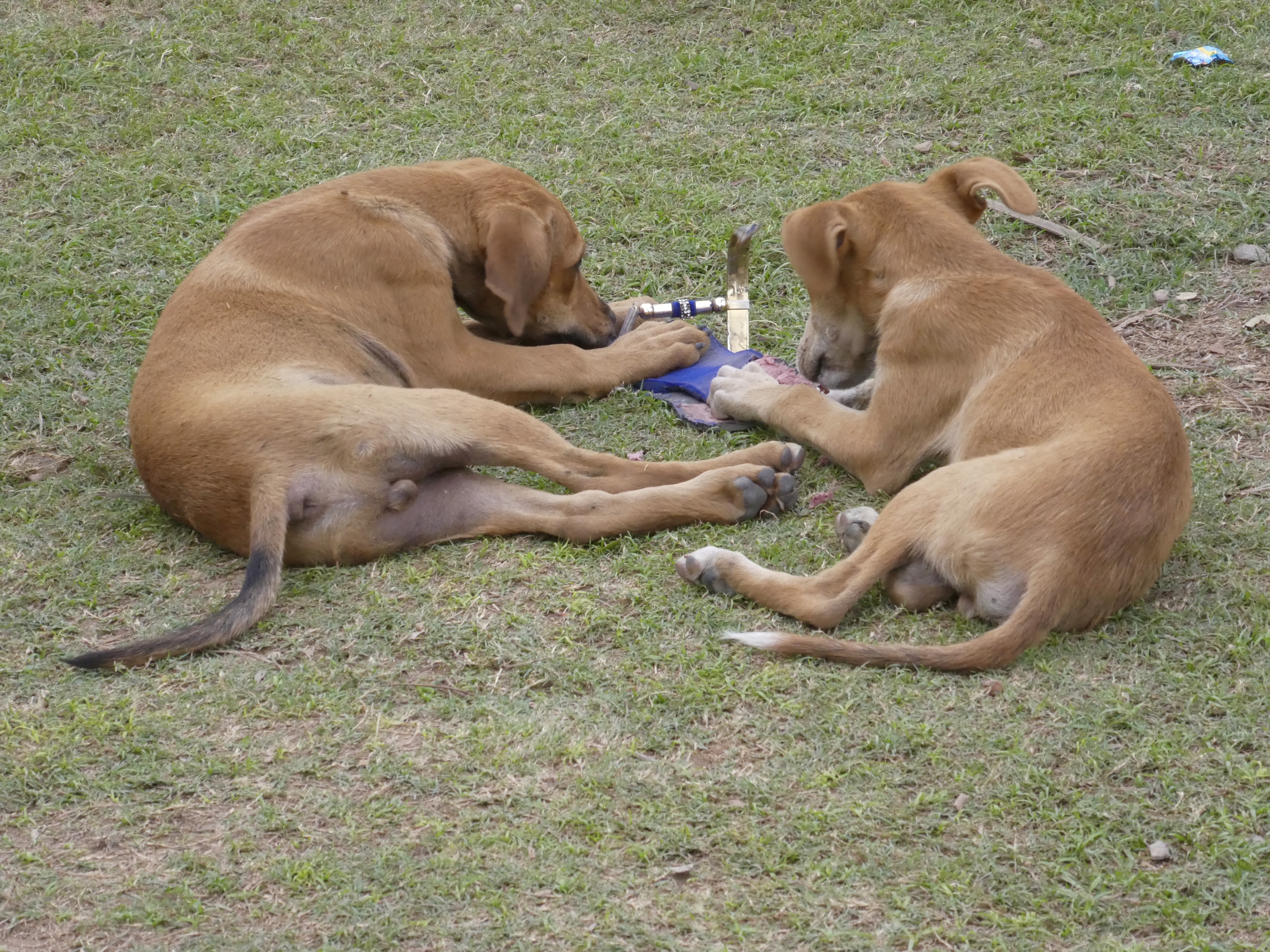
Time to walk down these steps again.   You can do it.   On the way back to our bus, we see these two dogs.

Dogs sharing a shoe

They seem to be sharing a shoe to chew.   This is a very beautiful and peaceful place.   When in Delhi, we hope you visit Humayun’s Tomb.

A Little of Delhi with the Colorado Traveling Ducks

No traffic here at the moment.

Love the old arches

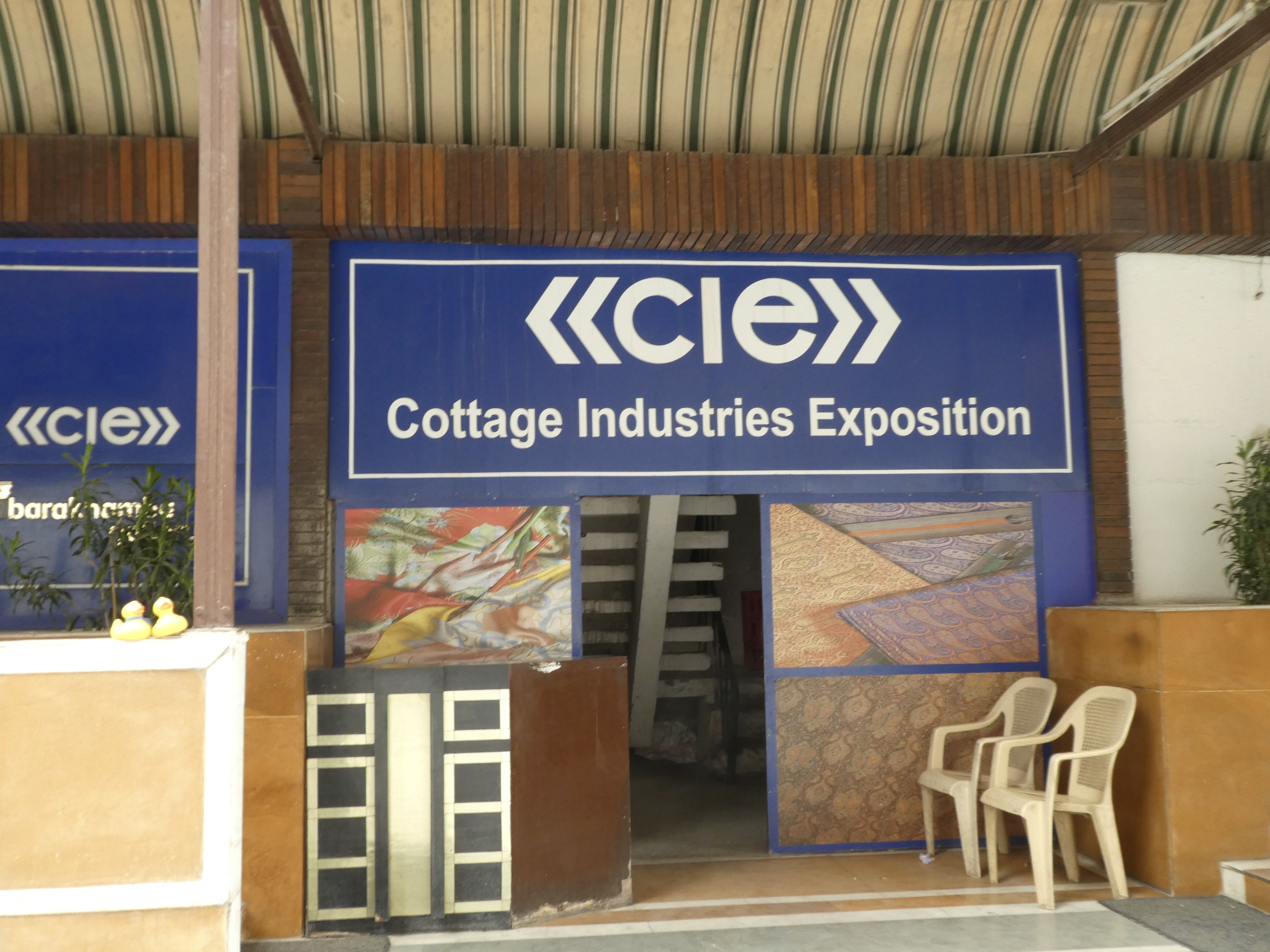
Aren’t these old arches beautiful and sturdy?  We will visit the Cottage Industries.

Cottage Industries

Inside we viewed handcrafted items from the Kashmir region of India.   Hand knotted rugs and carpets are the main items for us today.   These required years to make and are truly beautiful.

Hand knotted carpet

As the carpets are turned, the intensity of the colors change.  While we shown many carpets, snacks were provided.

Our snacks

All were tasty and we really enjoyed the banana.  The tea was also delicious.  Mom loves tea.   This circular rug has long fringe.

Circular hand knotted rug

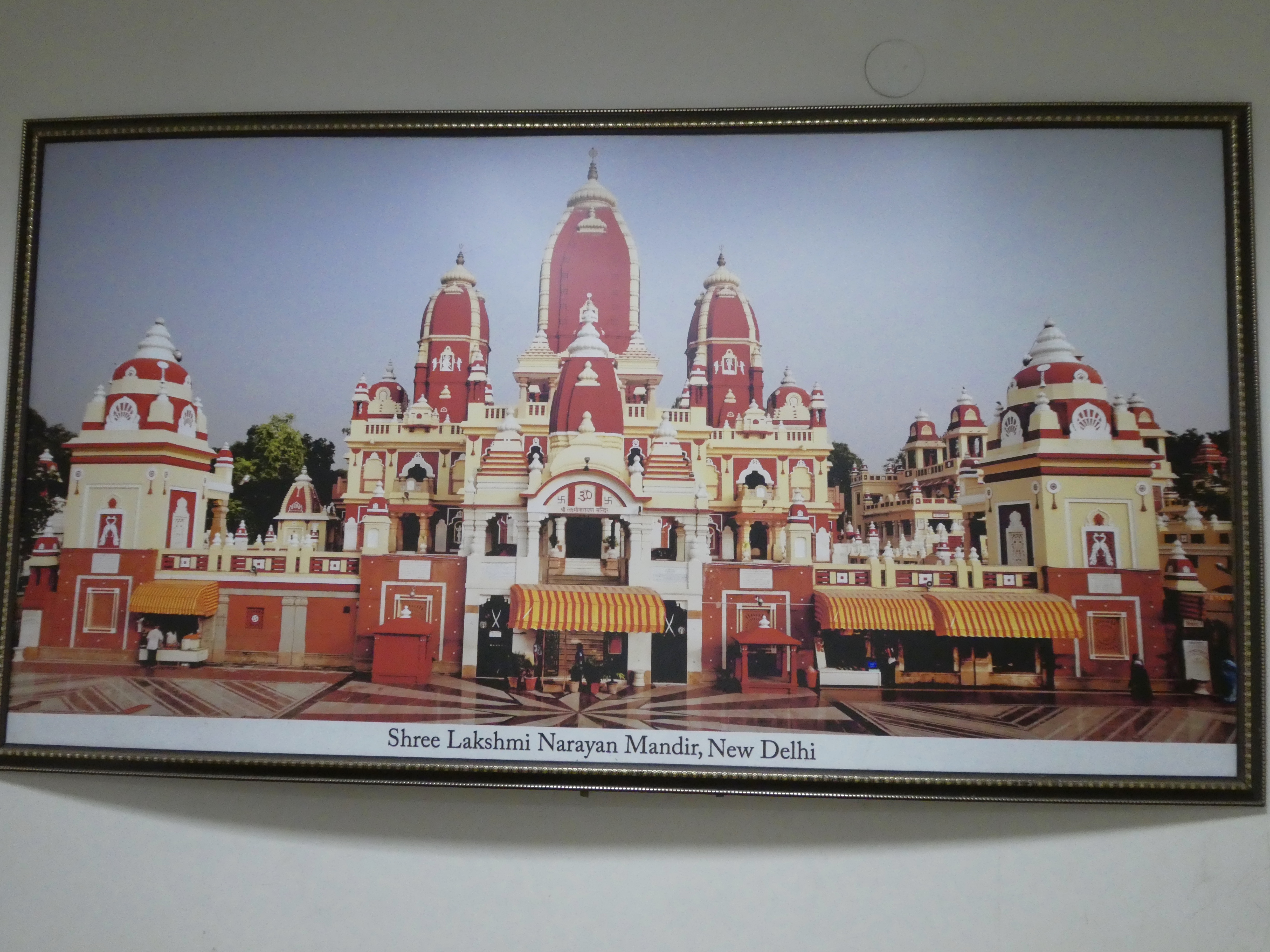
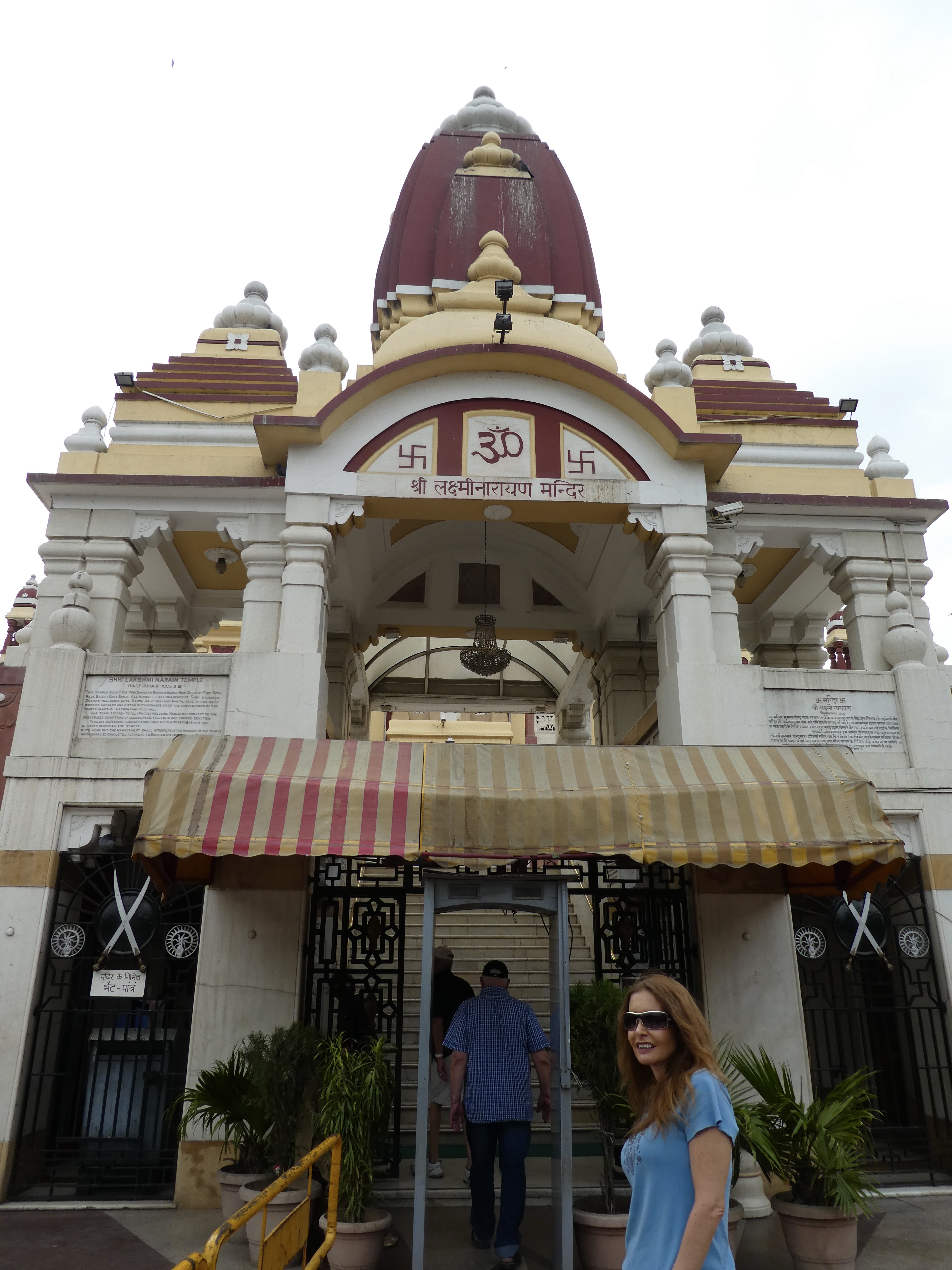
We did not purchase any carpets.   When mom was here in 2004, she did have one sent home.   She said she did not need any more.   Our next stop was Shree Lakshmi  Narayan Mandir.  This temple is to honor Lakshmi, the wife of Vishnu, goddess of wealth and prosperity.

Photos not allowed inside, but we could photograph this photo.

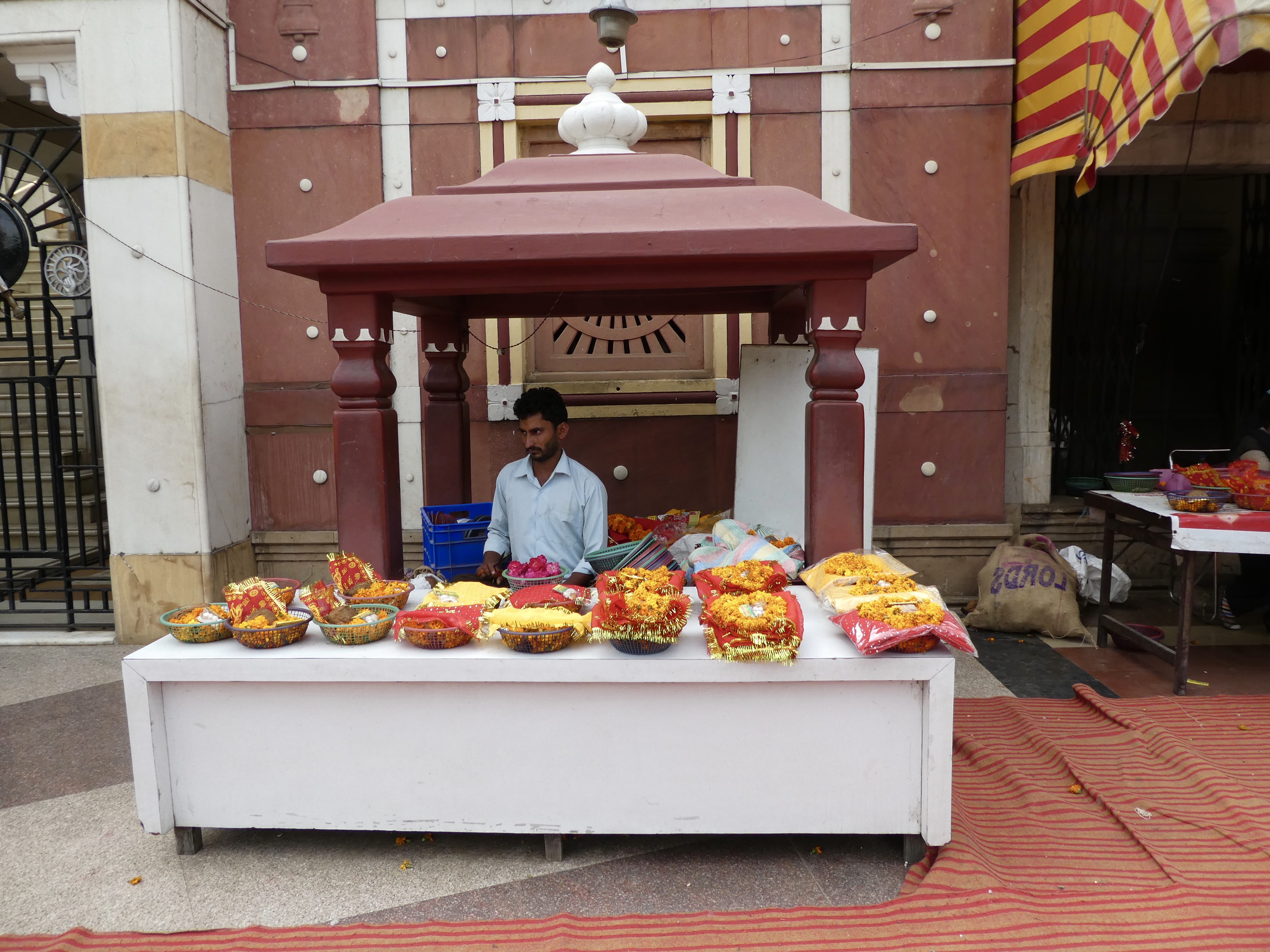
Before entering this temple, humans must remove their shoes.   Some enjoyed walking barefoot on the cool white marble floor.   Also, no photos are allowed inside.   Before entering humans may purchase fresh flowers to place in the temple.

Purchase flowers for the temple

We did not purchase any flowers.   Soapy’s mom is ready to go inside.

Ready to enter temple

The swastika on the temple is a Hindu (and Buddhist) symbol of peace.   This symbol has been important to Hindus and Buddhists for thousands of years.   Unfortunately, Adolf Hitler used this symbol (turned around) for non peaceful purposes.   We then walked around Connaught Place, a nice shopping area of Delhi, close to our hotel.

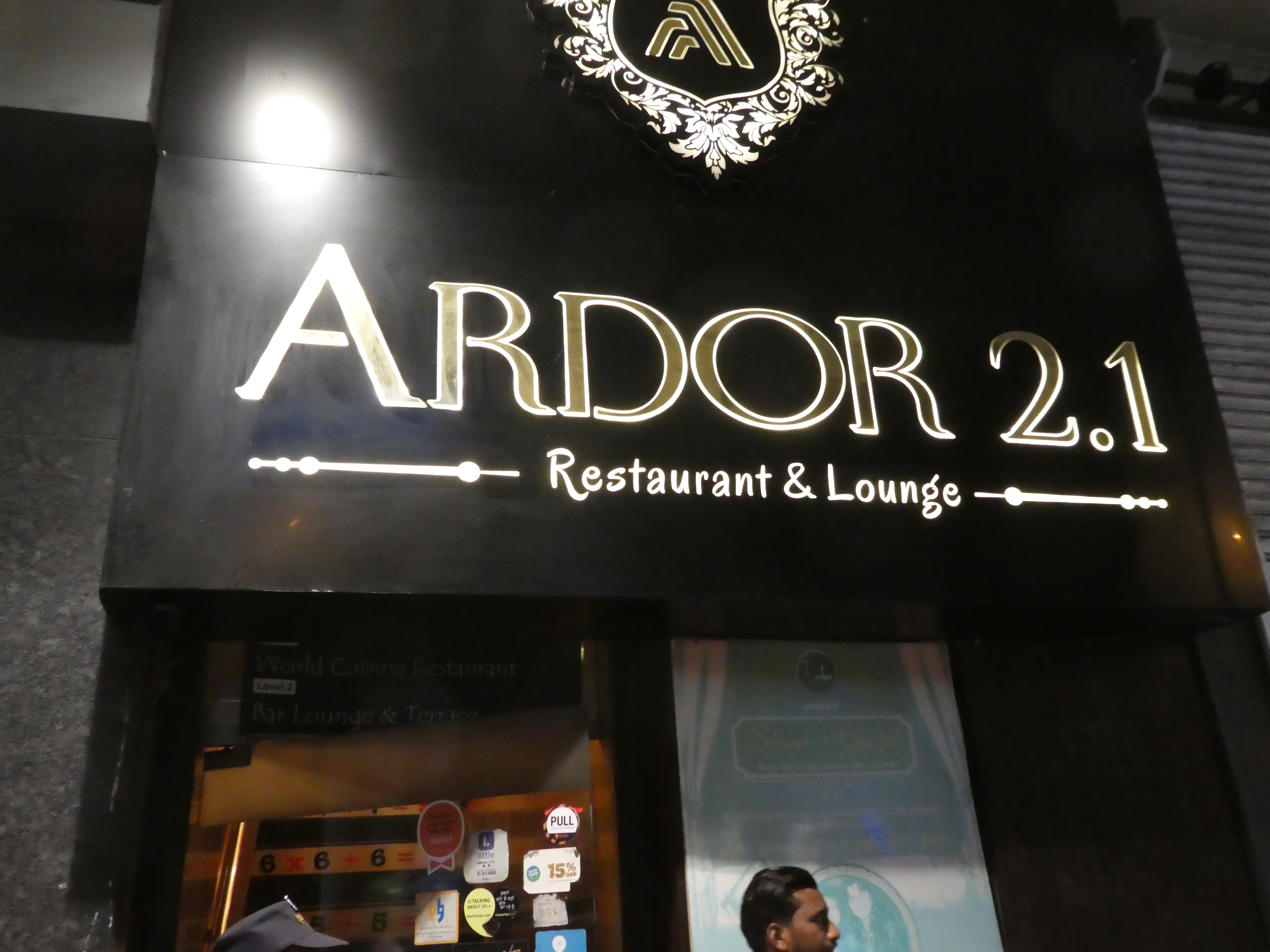
Ardor 2.1 for dinner

Together we had a nice dinner at Ardor 2.1.   Soapy’s mom tried something new for dinner.

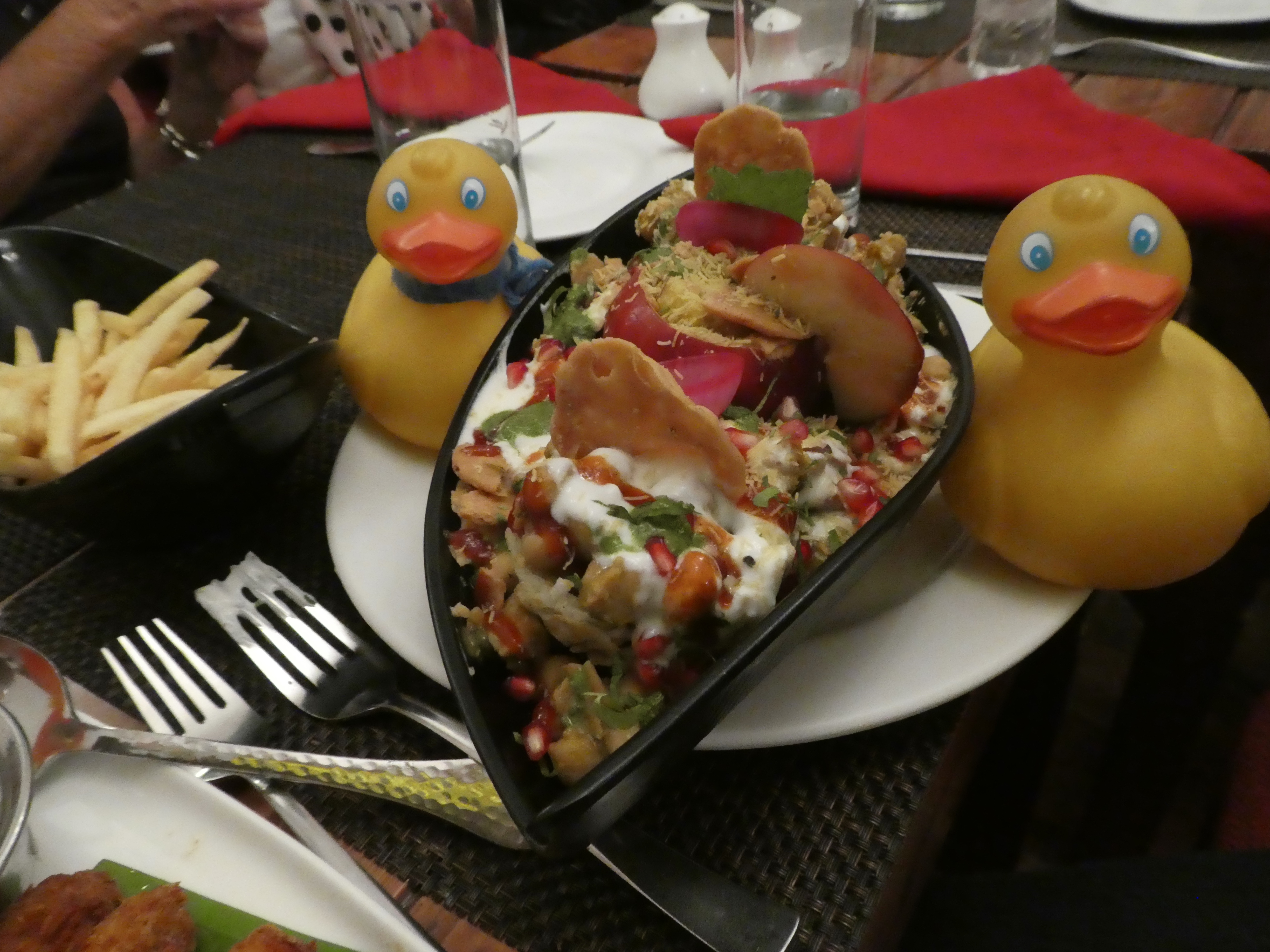
She said it tasted as good as it looked. Yum

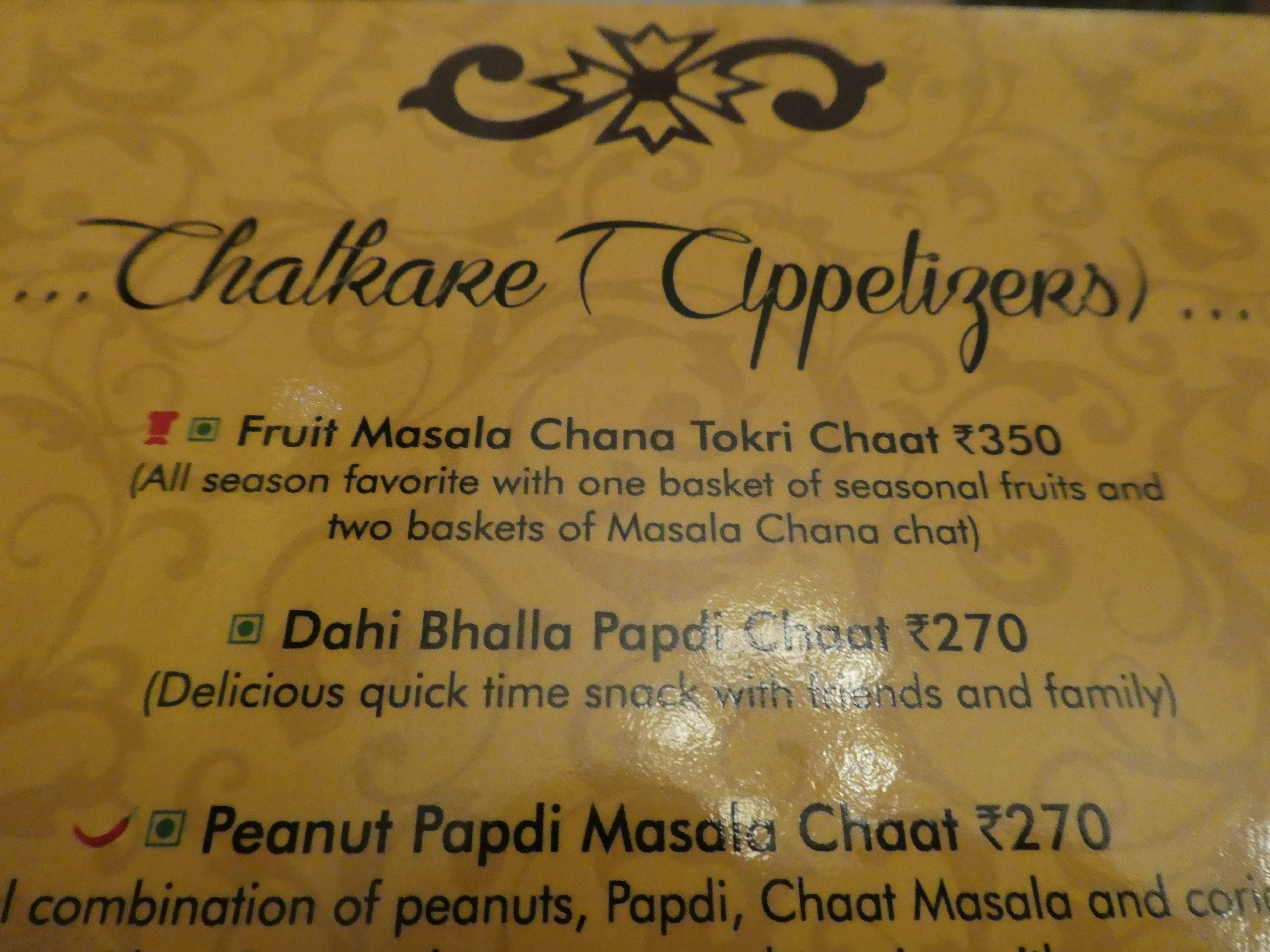
Doesn’t it look delicious?  Of course, our moms ordered a side of French Fries.   They were perfect and our entire group enjoyed some.    Soapy’s mom’s dinner is Fruit Masala Chana Tokri Chaat.   Similar to fruit in yogurt.

Official description of Soapy’s mom’s dinner.

After dinner and a short walk, we arrived back in our hotel, ready to rest after a full day.   Next, a little more exploring of Delhi.   We hope you will join us.

Delhi’s Chandni Chowk Market with Zeb and Soapy Smith Duck

Near Jama Masjid, the Friday Mosque, we ventured into Chandni Chowk Market, one of the busiest in Old Delhi.   Our group of seven human tourists, Jesse, our leader, and two ducks walked down the street.   There were other options to see the market.

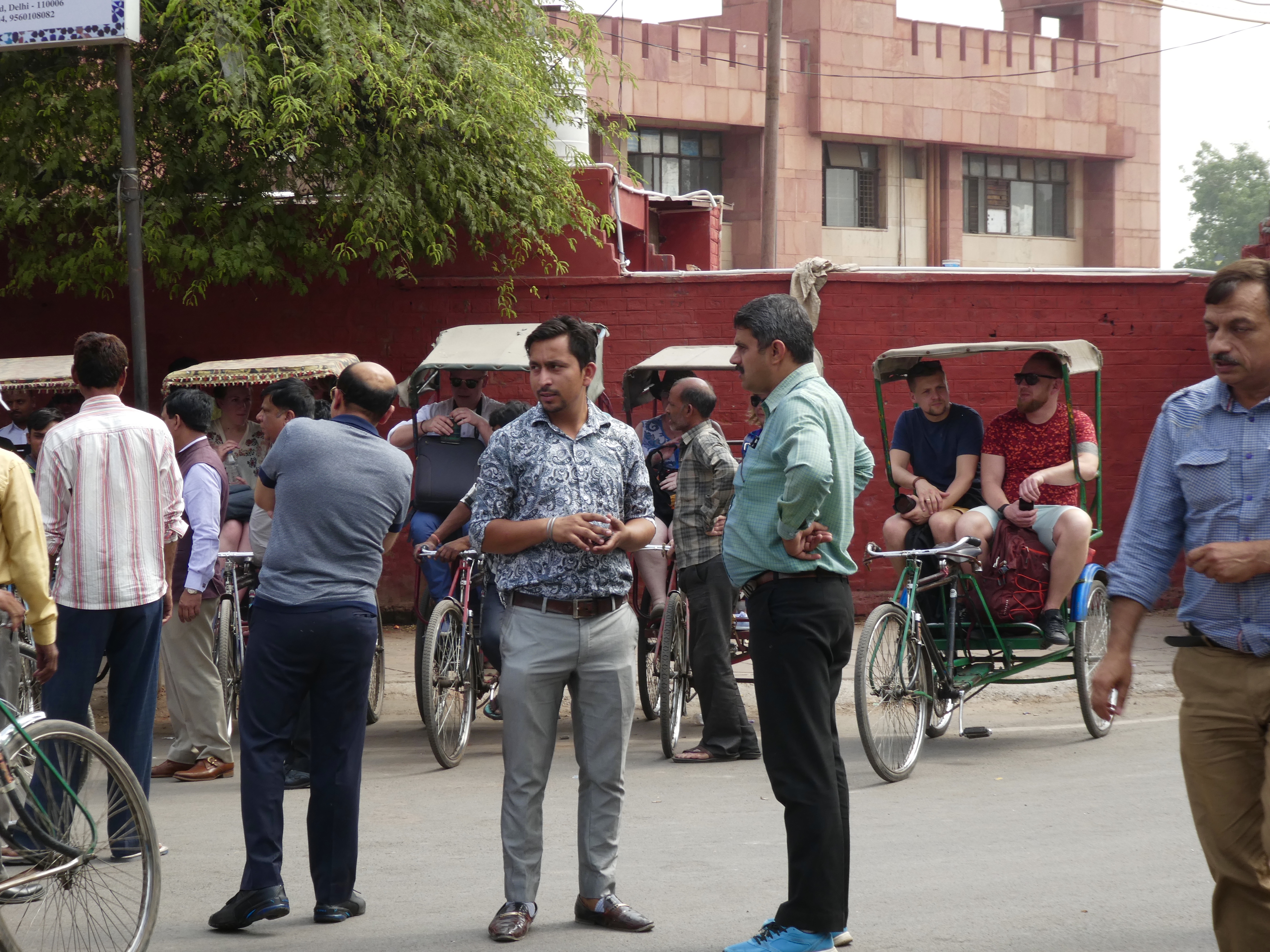
Walk through the market or go by pedicab?

But walking was our choice.   This market has some of Delhi’s best street food, but we were told not to eat any.

Delhi street food

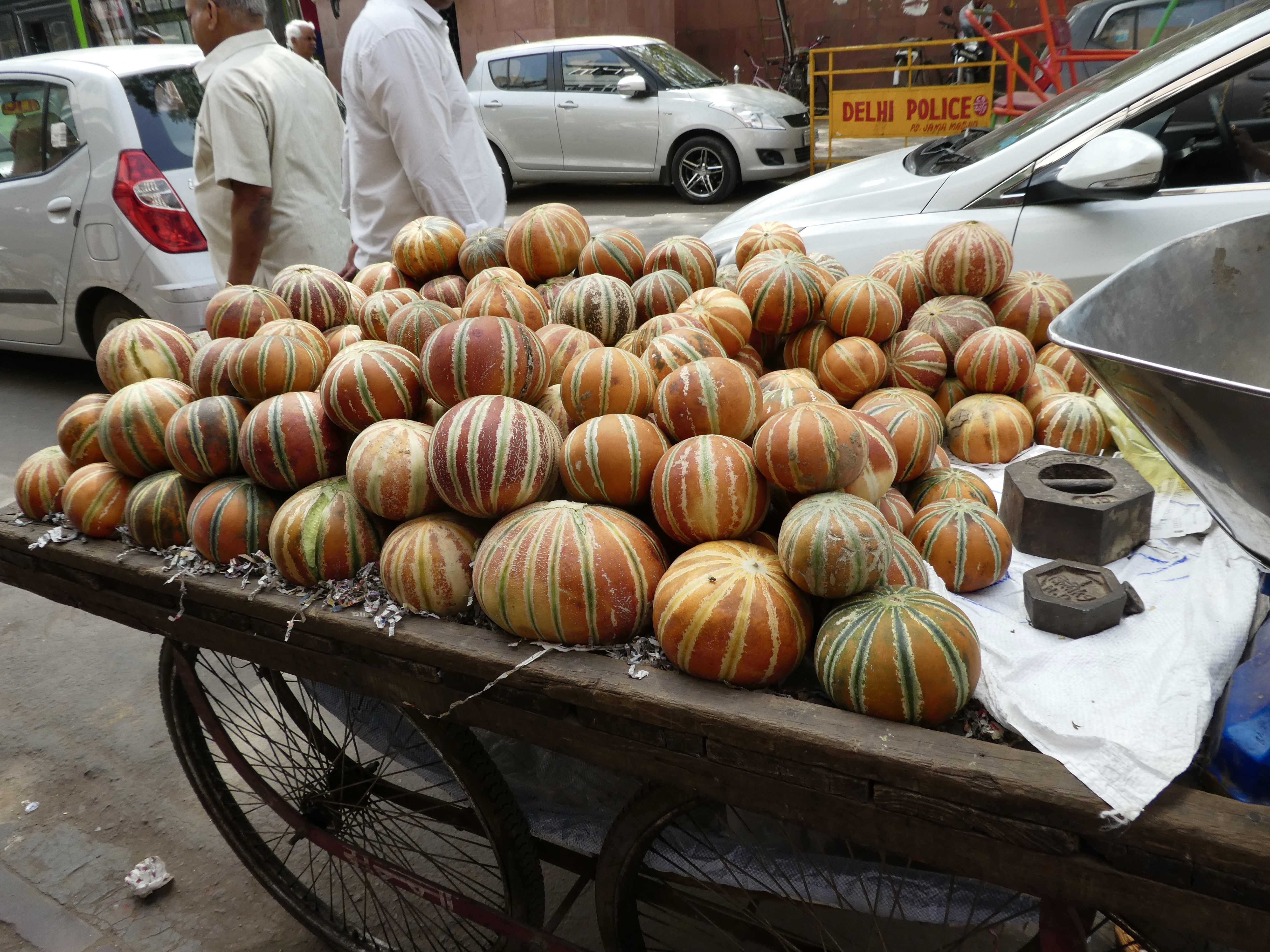
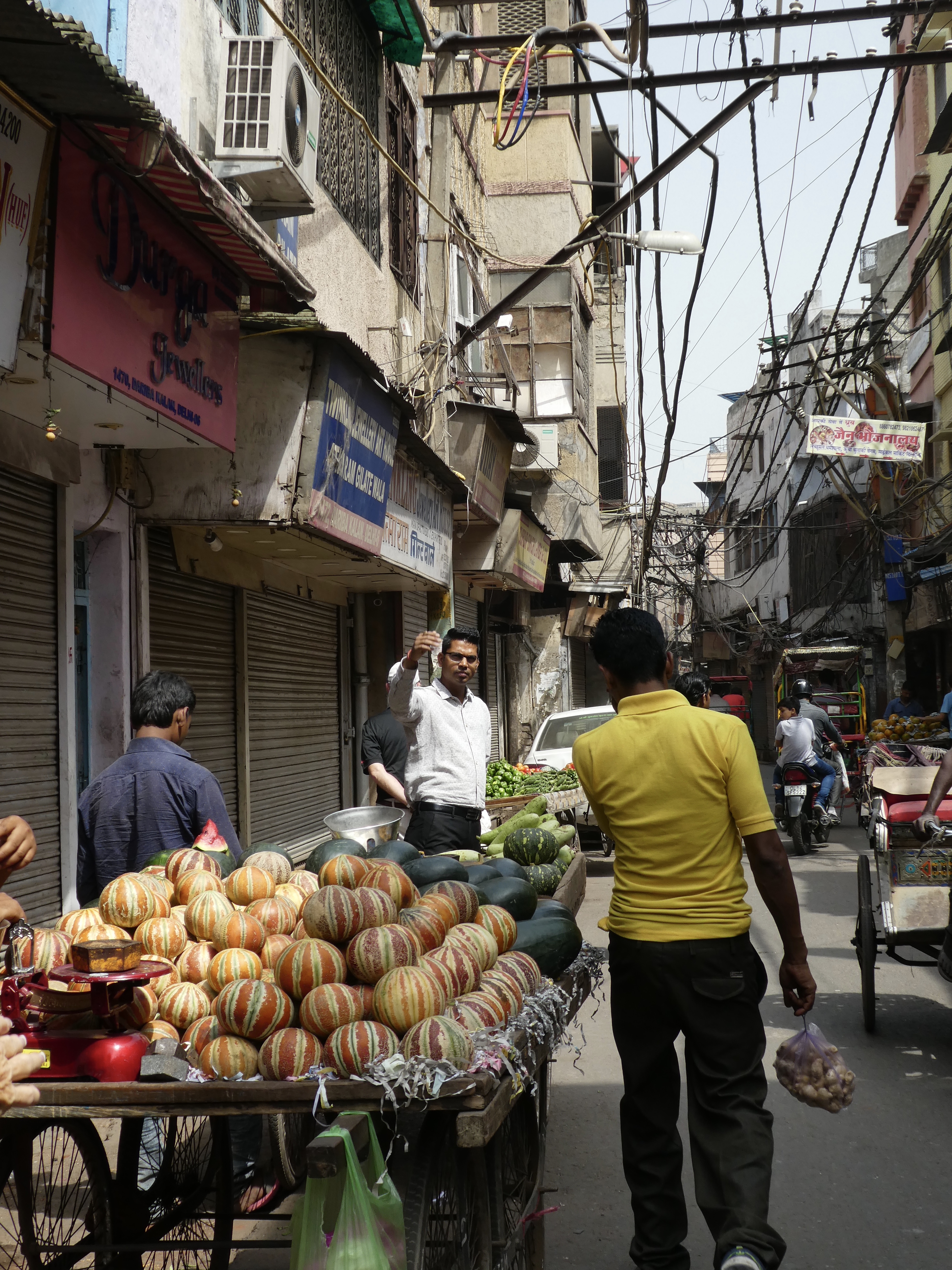
Our American stomachs might not be happy with it.  But it smelled great.   Zeb and Soapy are not sure what type of melons these are, but they look pretty.

Melons

We were here rather early in the morning, before it got crowded.

Hectic but fascinating

The produce venders are here but not all the shops are open yet.   Look at all the power lines overhead.

Many overhead power lines

This is quite a maze of electrical lines.   That is Jesse in the white shirt.   He is trying to keep us all together.   And so many fresh fruit and vegetable selections.   At Chandni Chowk you can find many things.

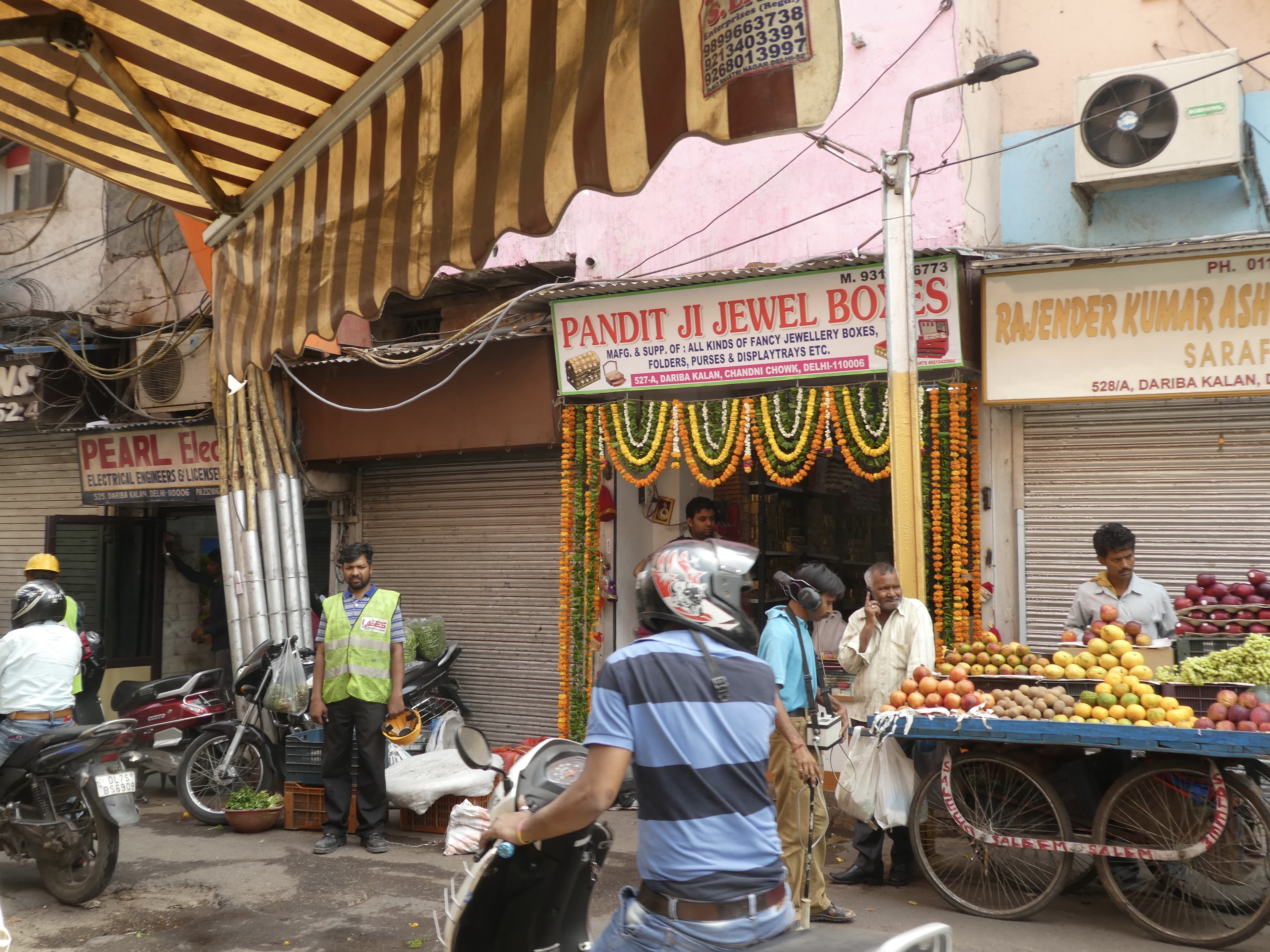
Such a variety available

Here we see colorful produce, Pandit Ji Jewel Boxes and Pearl Electric.   The street is not very wide.

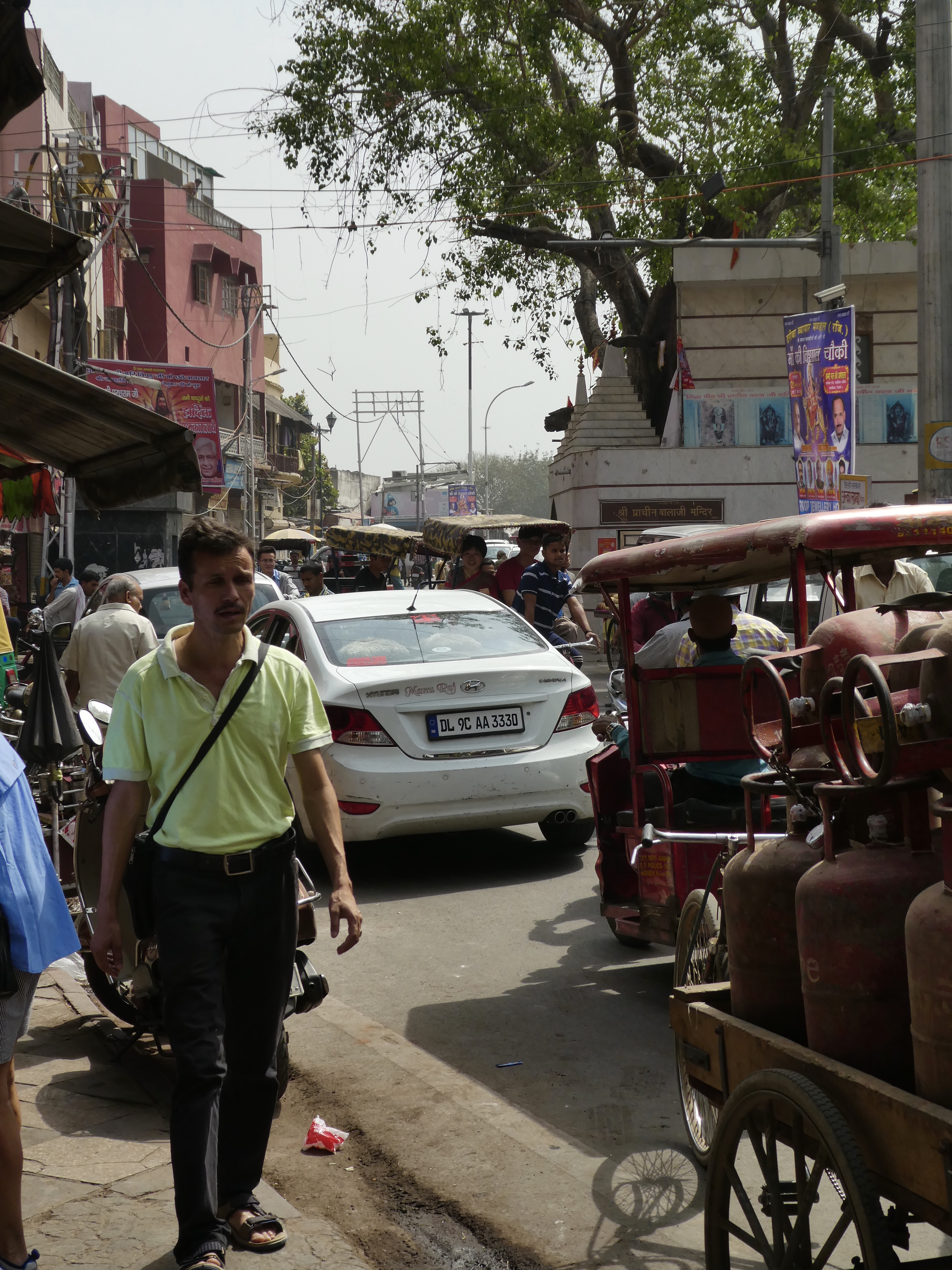
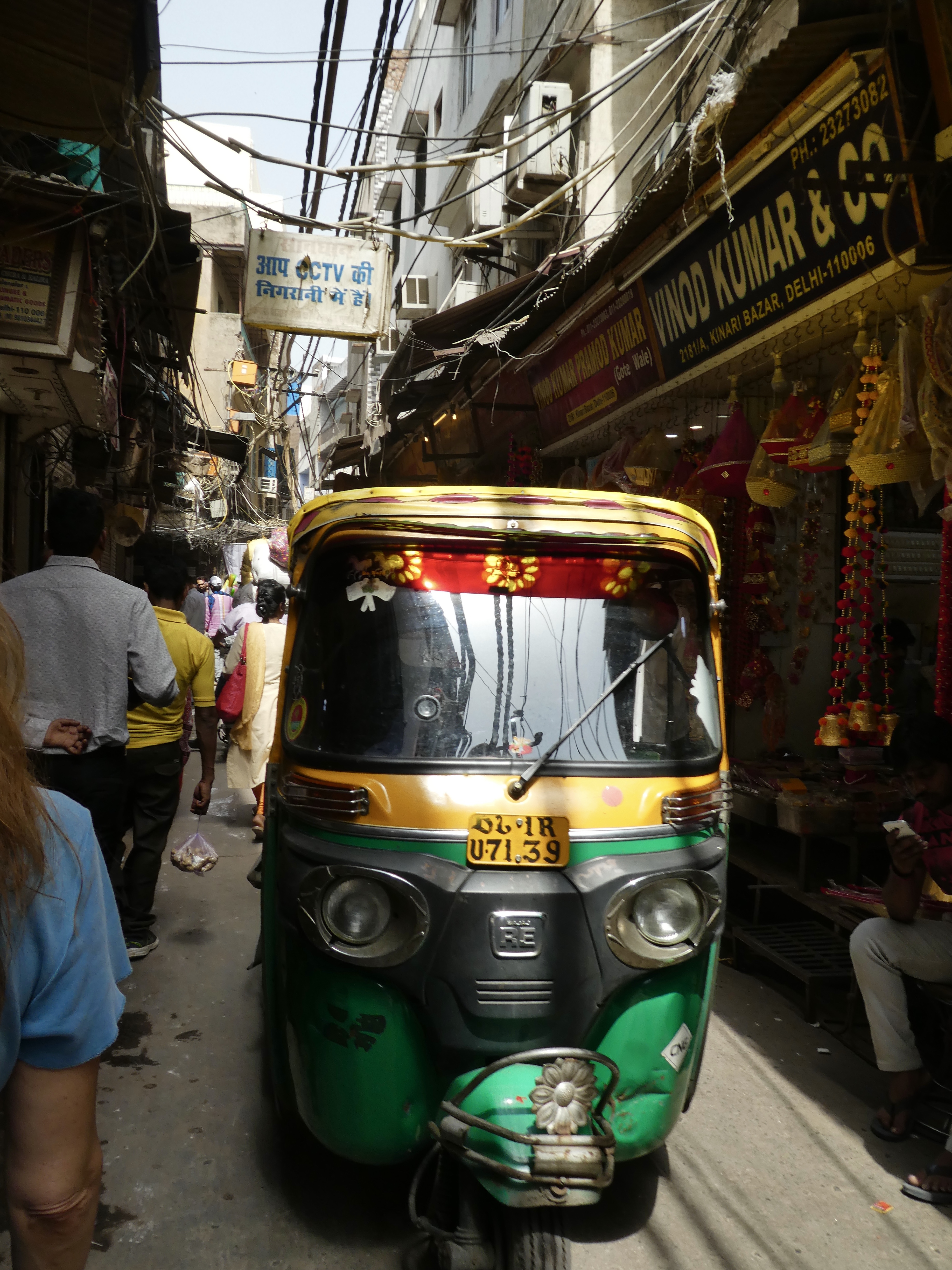
Tuk Tuk Taxi fills the road

This Tuk Tuk Taxi takes almost all the room.   Mingling with taxis, pedicabs, and pedestrians, it was safer for we ducks to stay in our traveling bags.   But we did get to look around one shop.

What a shop

Isn’t this a great place to look and purchase items to remember Chandni Chowk Market?  These huge sacks offer grains and flour.

Grains and flour

All without being covered and nobody bothers anything.   Hungry?

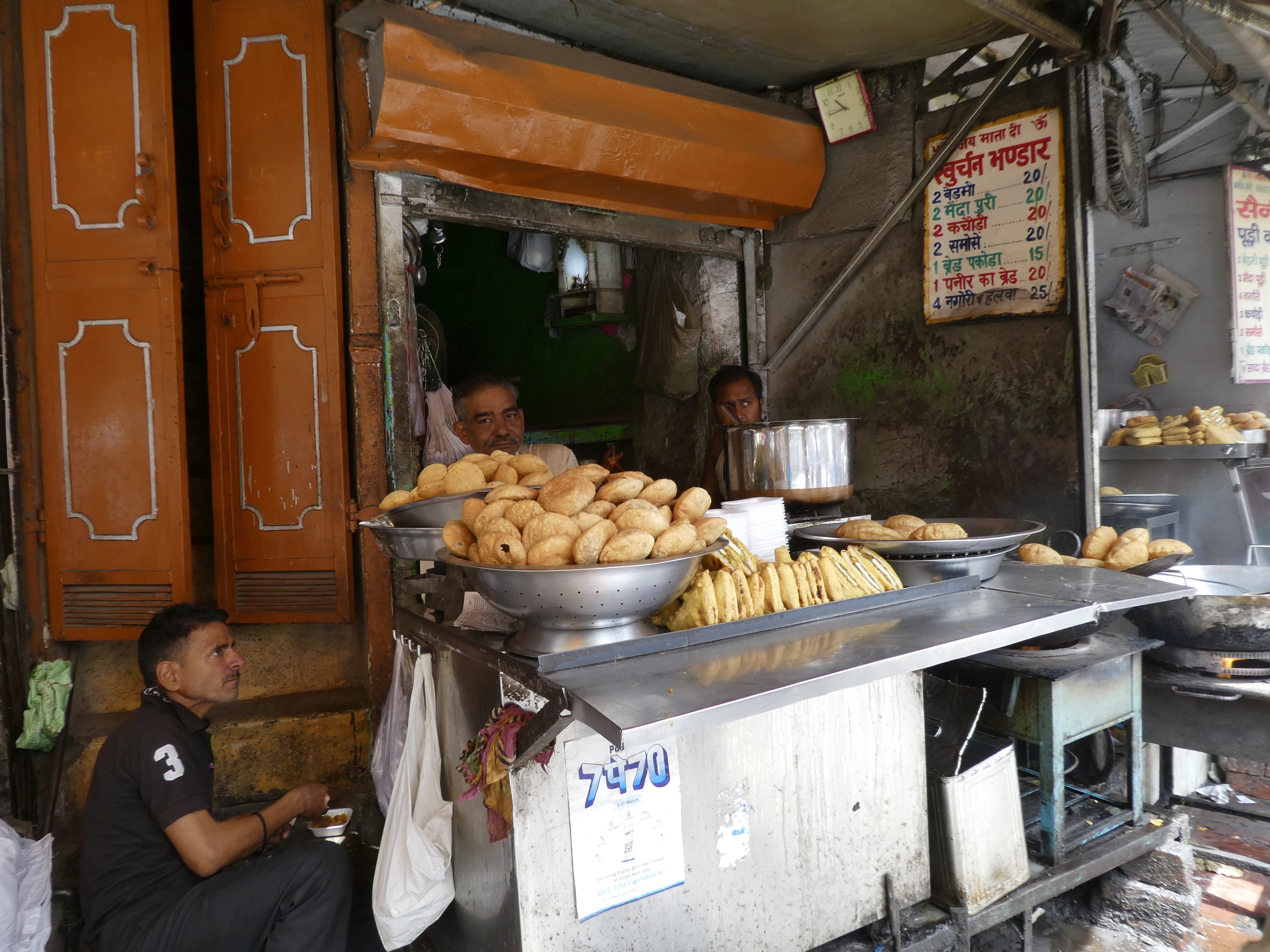
A snack?

More snacks available.   We love street food, but did not buy anything.   We don’t want to get what Jesse called, Delhi Belly.   Singing bowls.

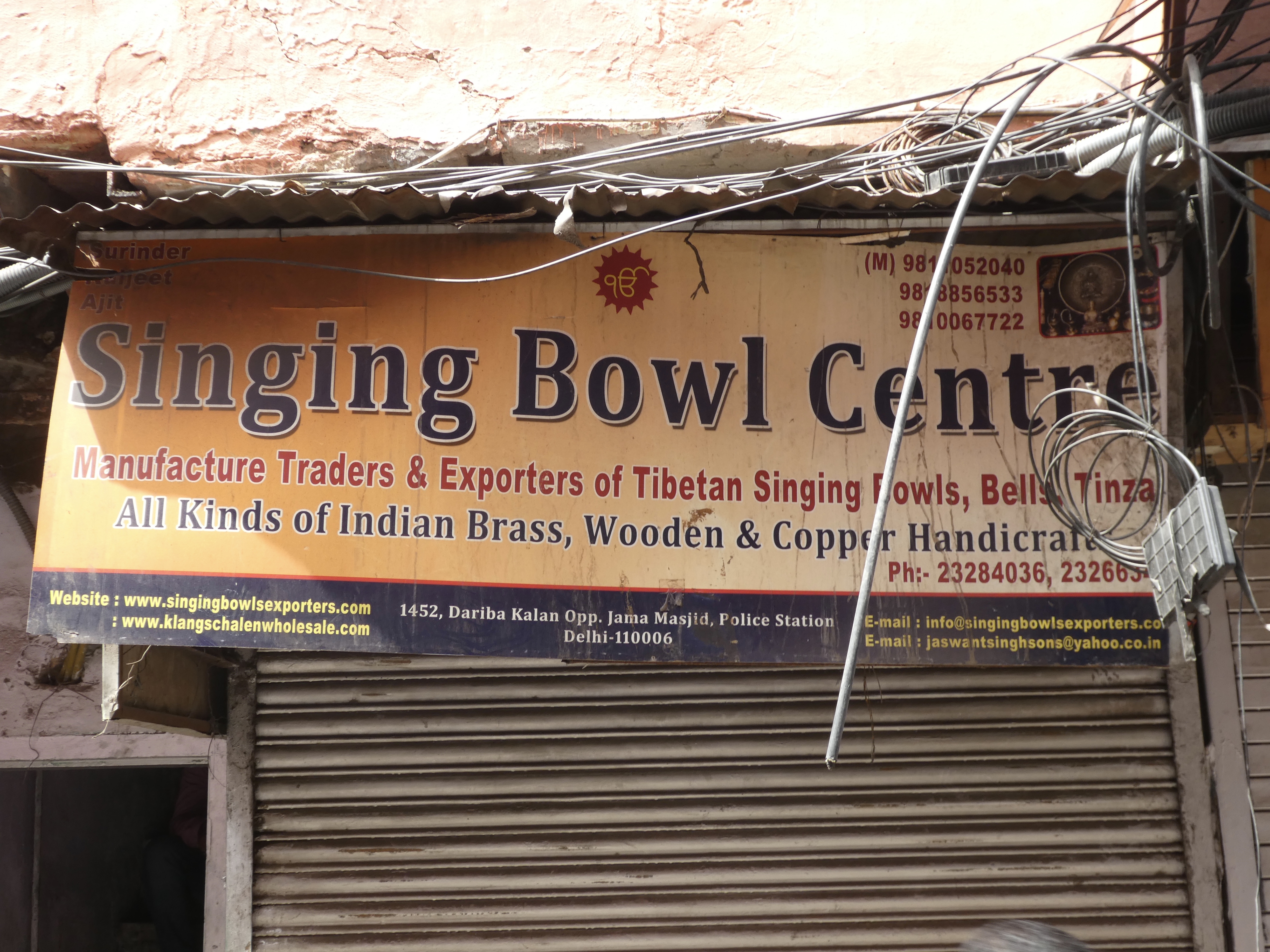
Place for singing bowls

We love singing bowls, but this shop is not open yet.   Mom brought one back from Nepal several years ago.   Look inside this shop.

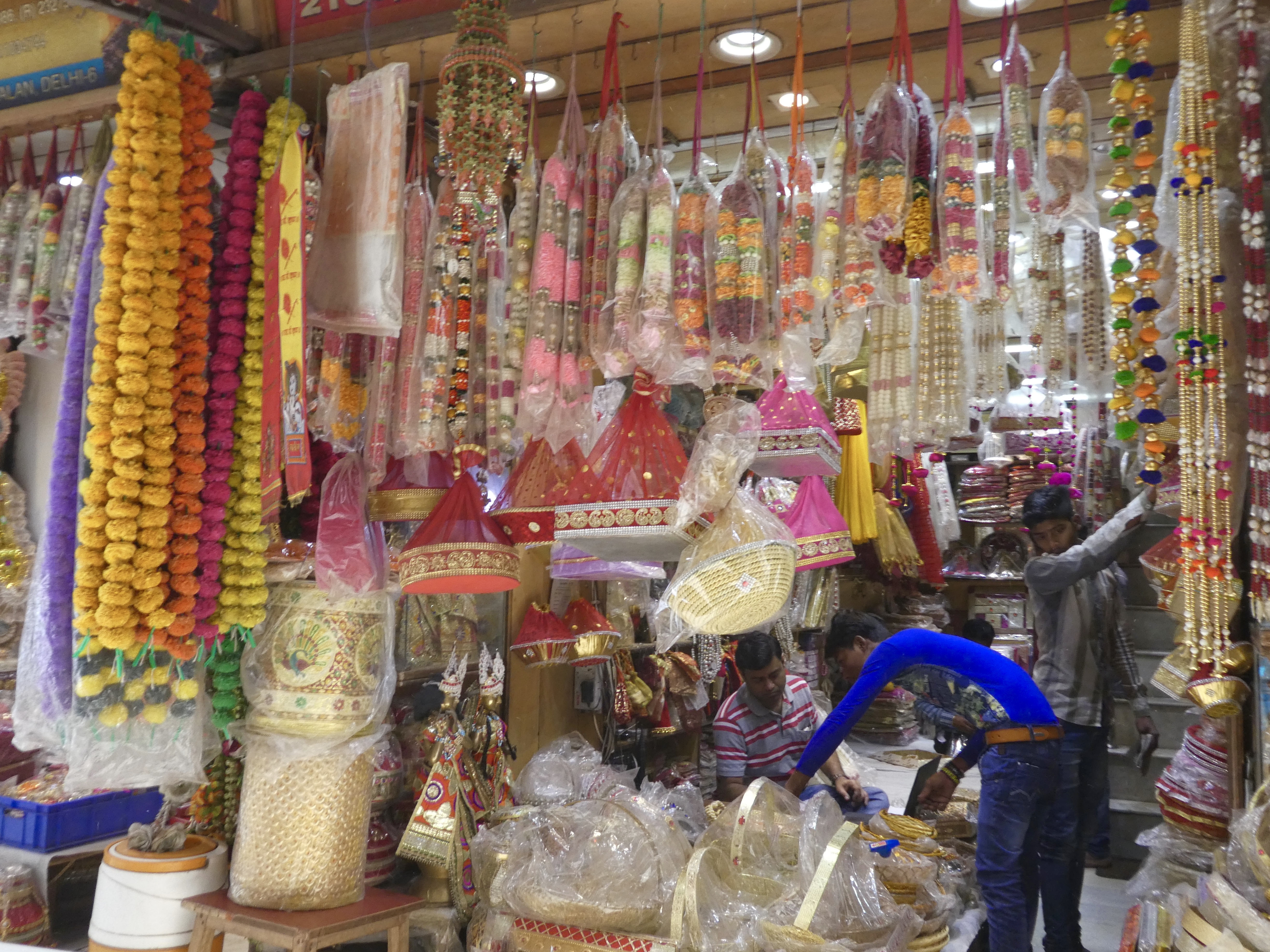
A shop. On the left are ropes of flowers.

On the left those ropes are made of real flowers.   So nice.  We saw a few content dogs on our walk.

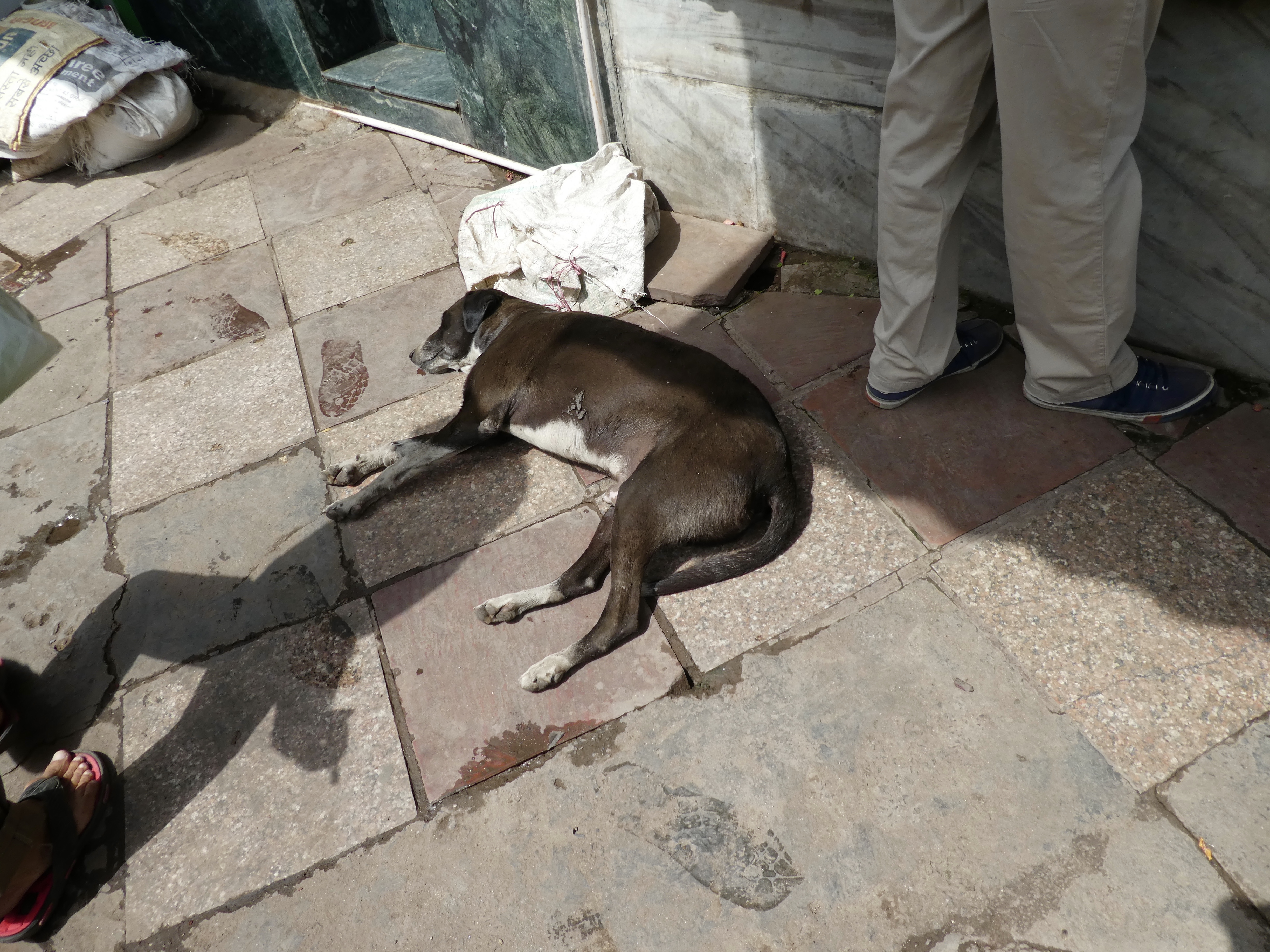
Dog, enjoying life

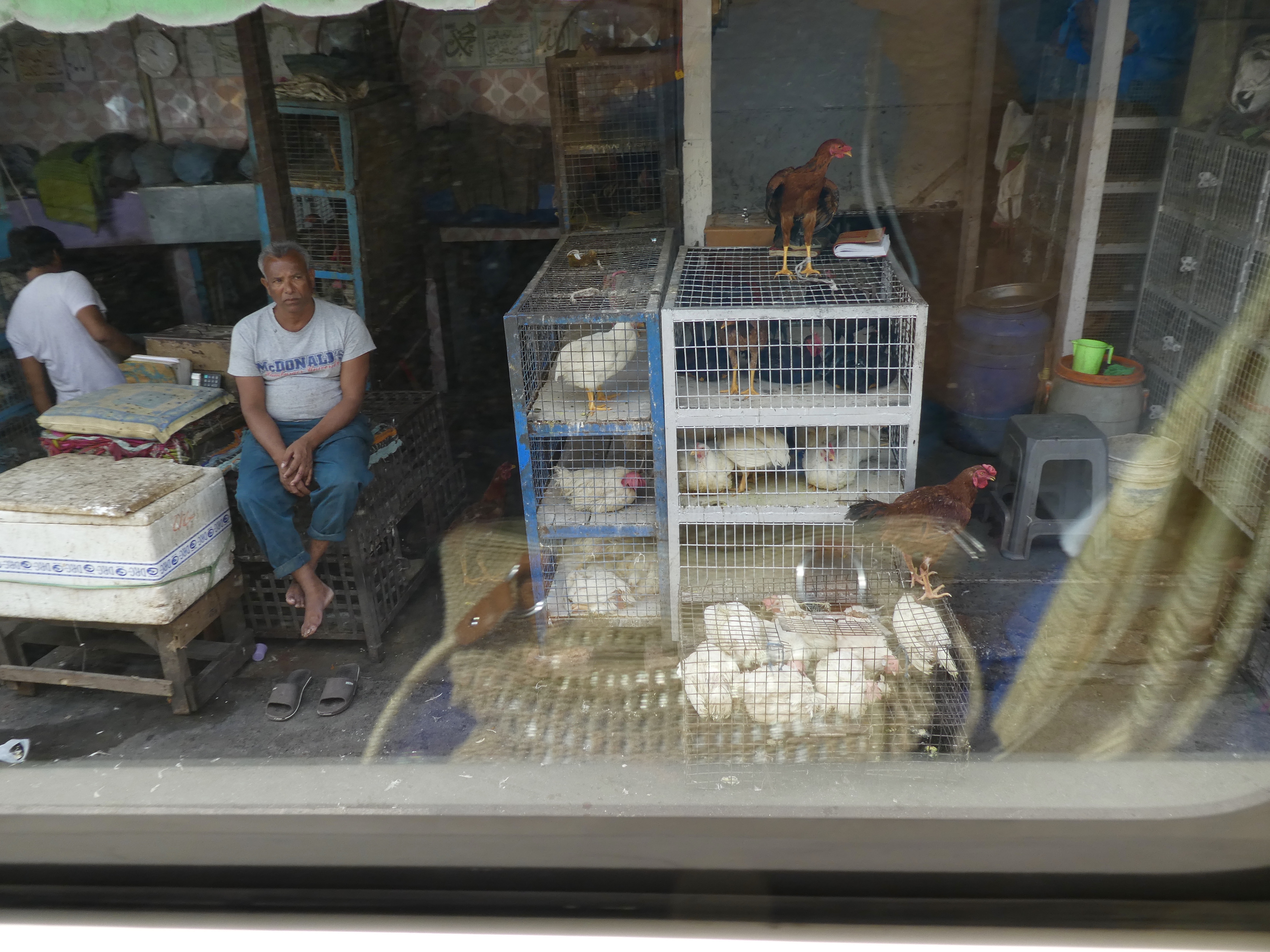
These dogs seem well fed and cared for.   The Hindu religion respects all things in nature, so street dogs are well cared for.  Live chickens are available here.

Live chickens for sale

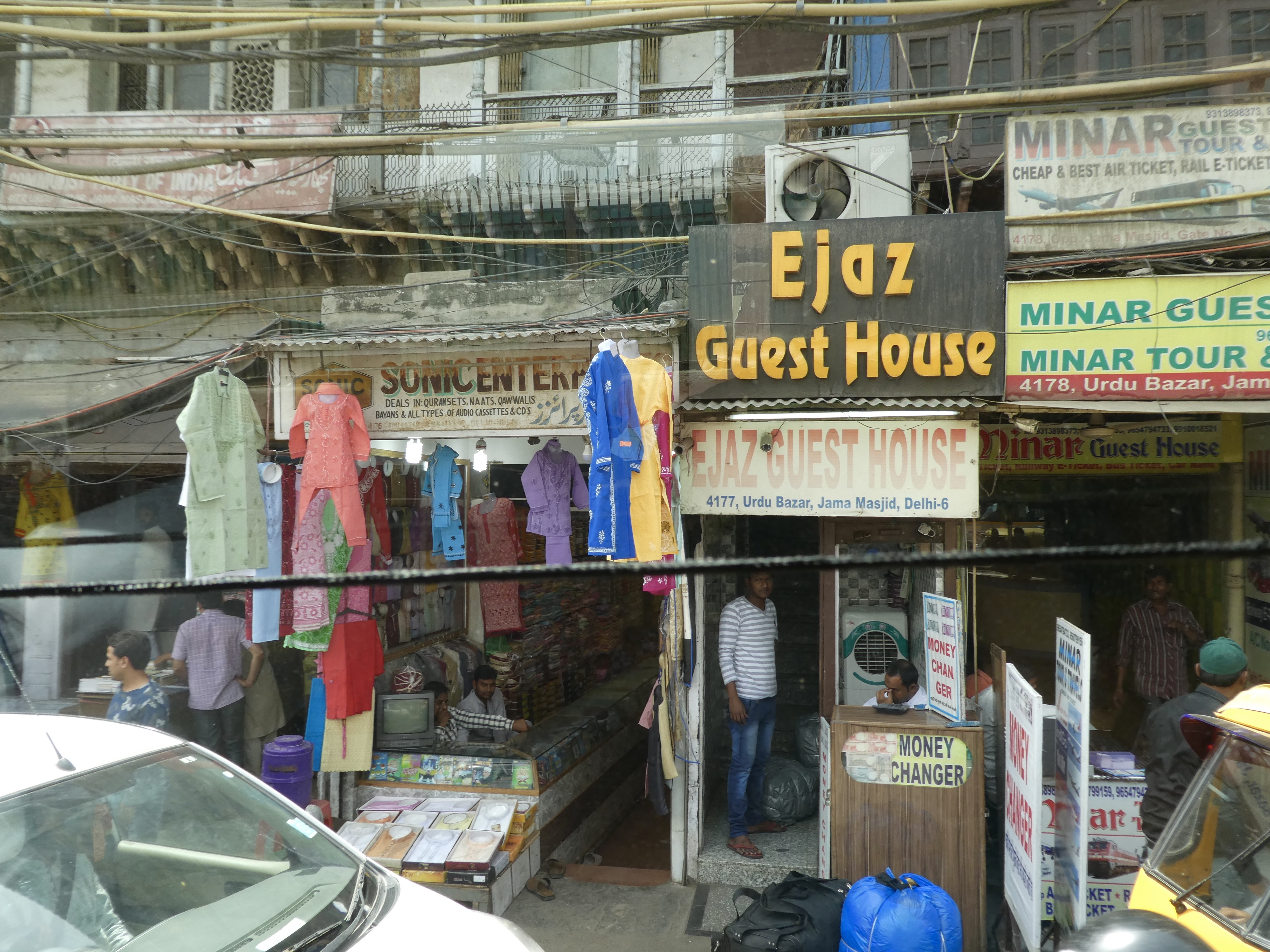
Everything is here.   Even Ejaz Guest House, Minar Tours and money changers.

Guest house and money changer

This is just a short stroll from the market street.   Traffic is building up now.

Traffic building up here.

We are not going to drive here, but we never saw an accident while we were in India, and no sign of road rage.   India has over 1.25 billion people, and things just seem to work.   We like India.

Delhi’s Jama Masjid with Zeb and Soapy Smith Duck

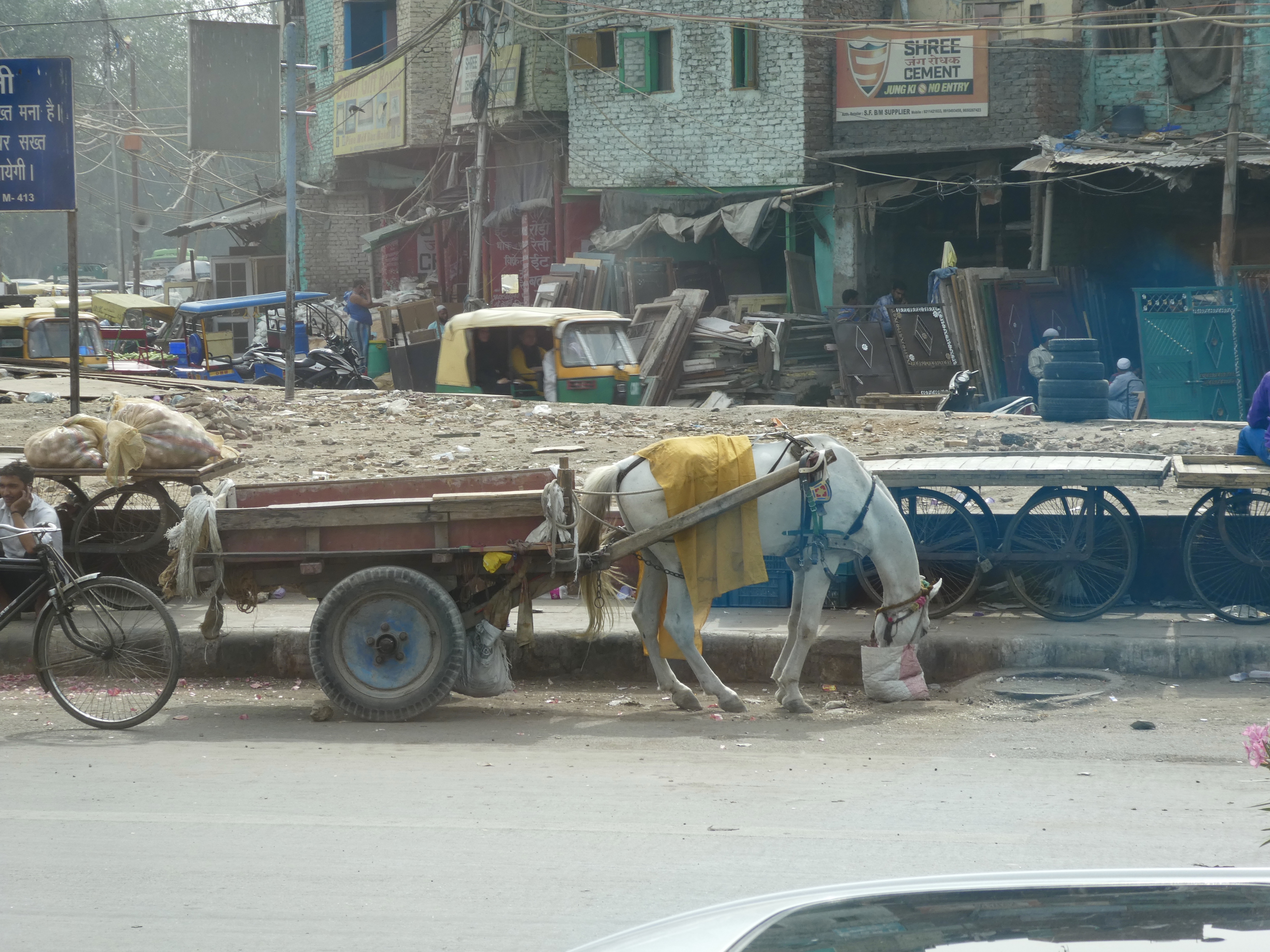
Leaving the serenity of our hotel, we humans and ducks, get on the bus and drive toward Jama Masjid, or Friday Mosque.   Fridays, this mosque, the largest in India, is open to non Muslims.   Along the way, we take many photos of the activity on the street.   This white horse seems to ignore all the activity and concentrate on his food.

Horse pulling wagon. Snack time

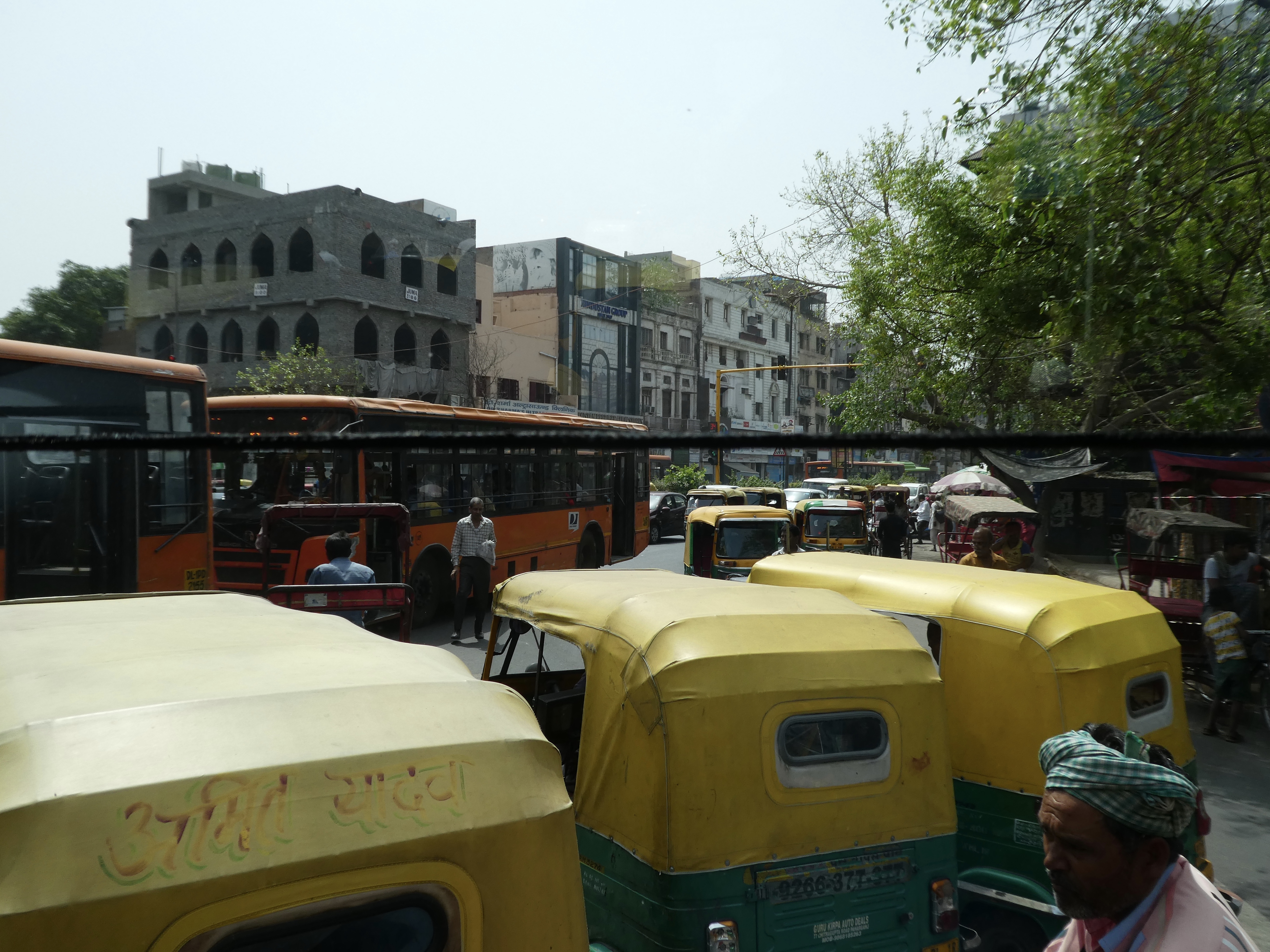
We like white horses.   The wide street of Delhi are used by all.   The green and yellow taxis, called Tuk Tuks, are plentiful.

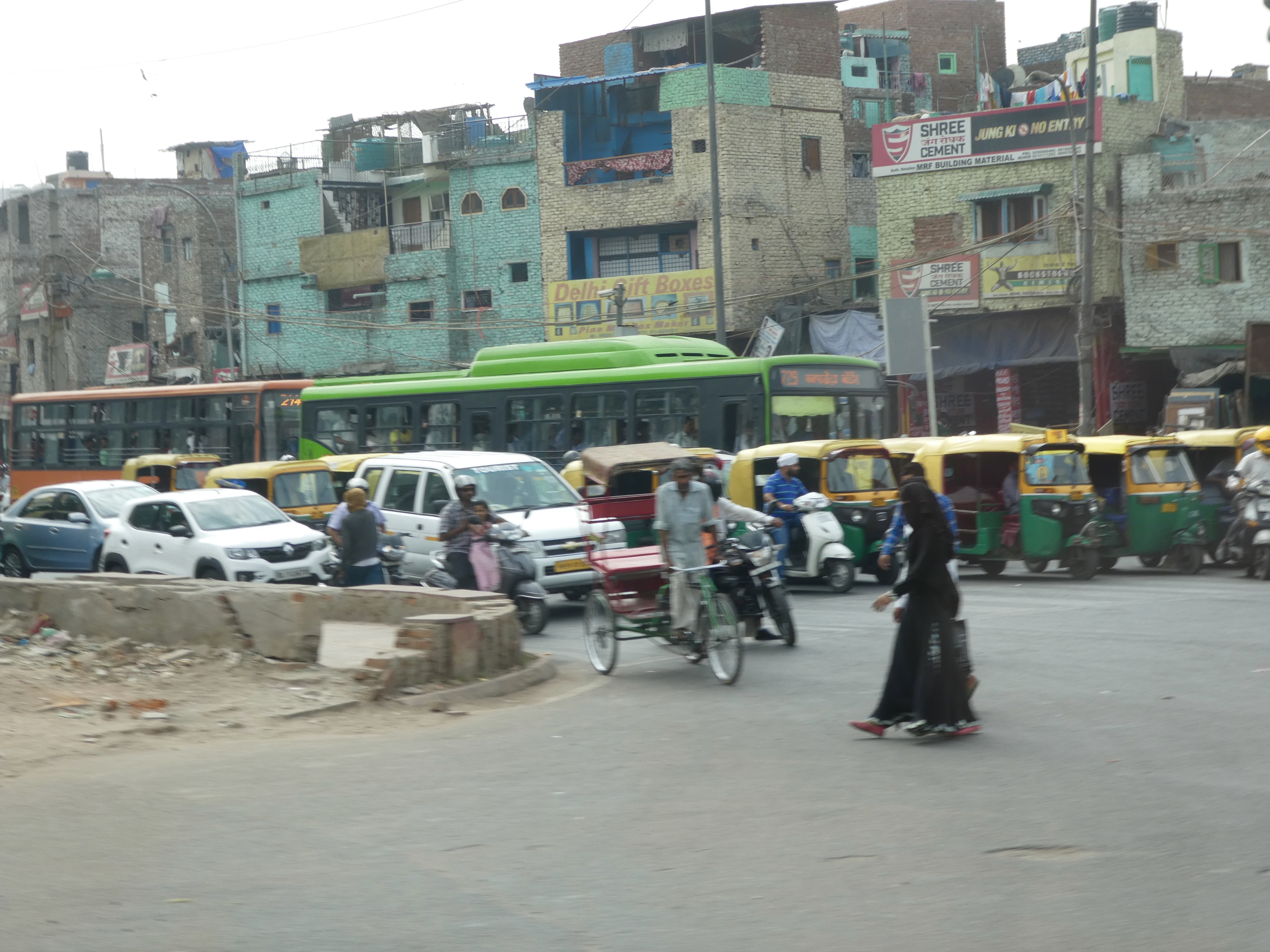
Streets are for everyone

Bicycle powered rickshaws, motorcycles, buses, and pedestrians all travel together on the busy streets.  Lady on the street.

Lady

Mom was here, in India, in 2004.   She is surprised to see this McDonald’s.

McDonald’s

She said in 2004 there were no familiar restaurants.   McDonald’s features Veggie Burgers.   Here is the mosque.

Stairs to Jama Masjid

That is a lot of stairs for short duck legs, so our moms carry us up.   Admission is free, but we pay to take any cameras, including cell phones.   Each mom has a camera, so money is given to the attendant.   We are inside.

Soapy’s mom at the mosque

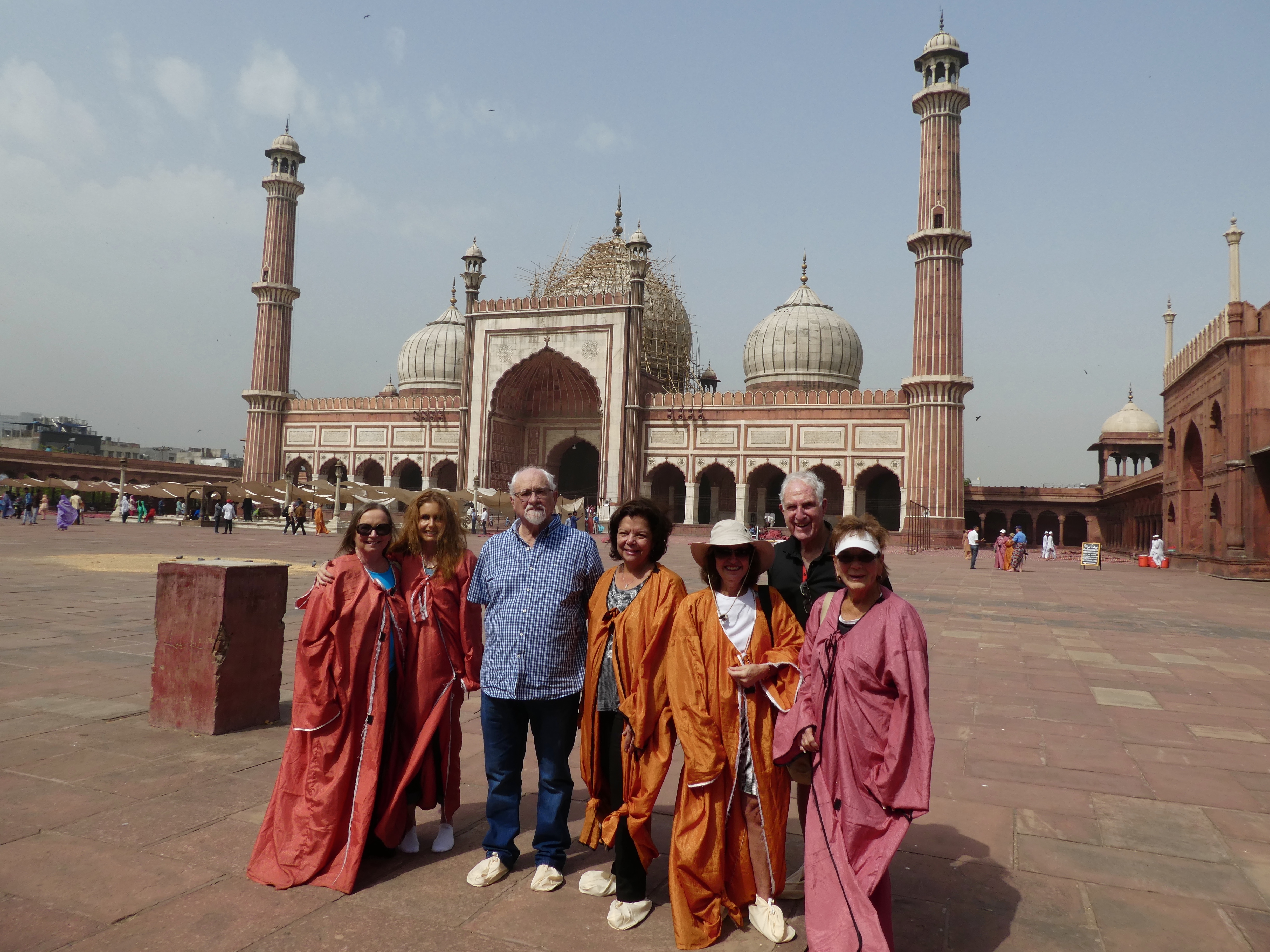
Soapy’s mom is wearing the gown the ladies must wear, and also the shoe covers that all humans, male and female, must wear.   In the courtyard we see the building, other ladies in blue gowns, and birds enjoying birdseed.

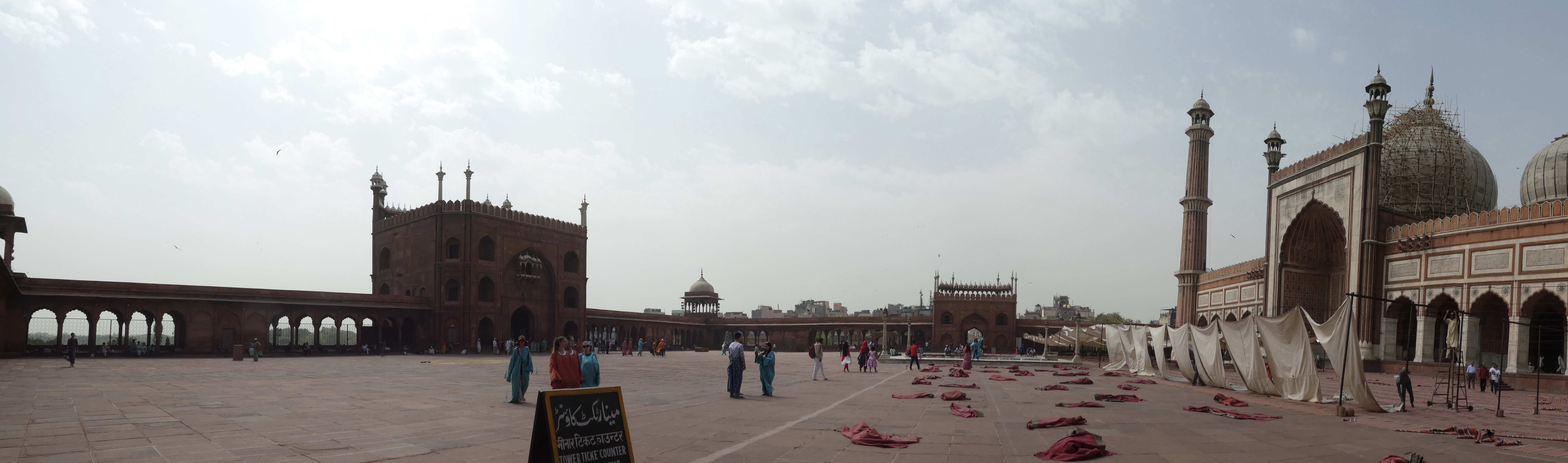
Looking across courtyard

This courtyard can accommodate 25,000 people.   That is a lot of humans.   The birds are enjoying the food and we see the canopy for shade (temperatures exceed 100 degrees F (38 degrees C) for part of the year.

Looking across courtyard

Prayer rugs are also scattered here.   Seven humans and two ducks make up our group for our exploration of India.

Our human group

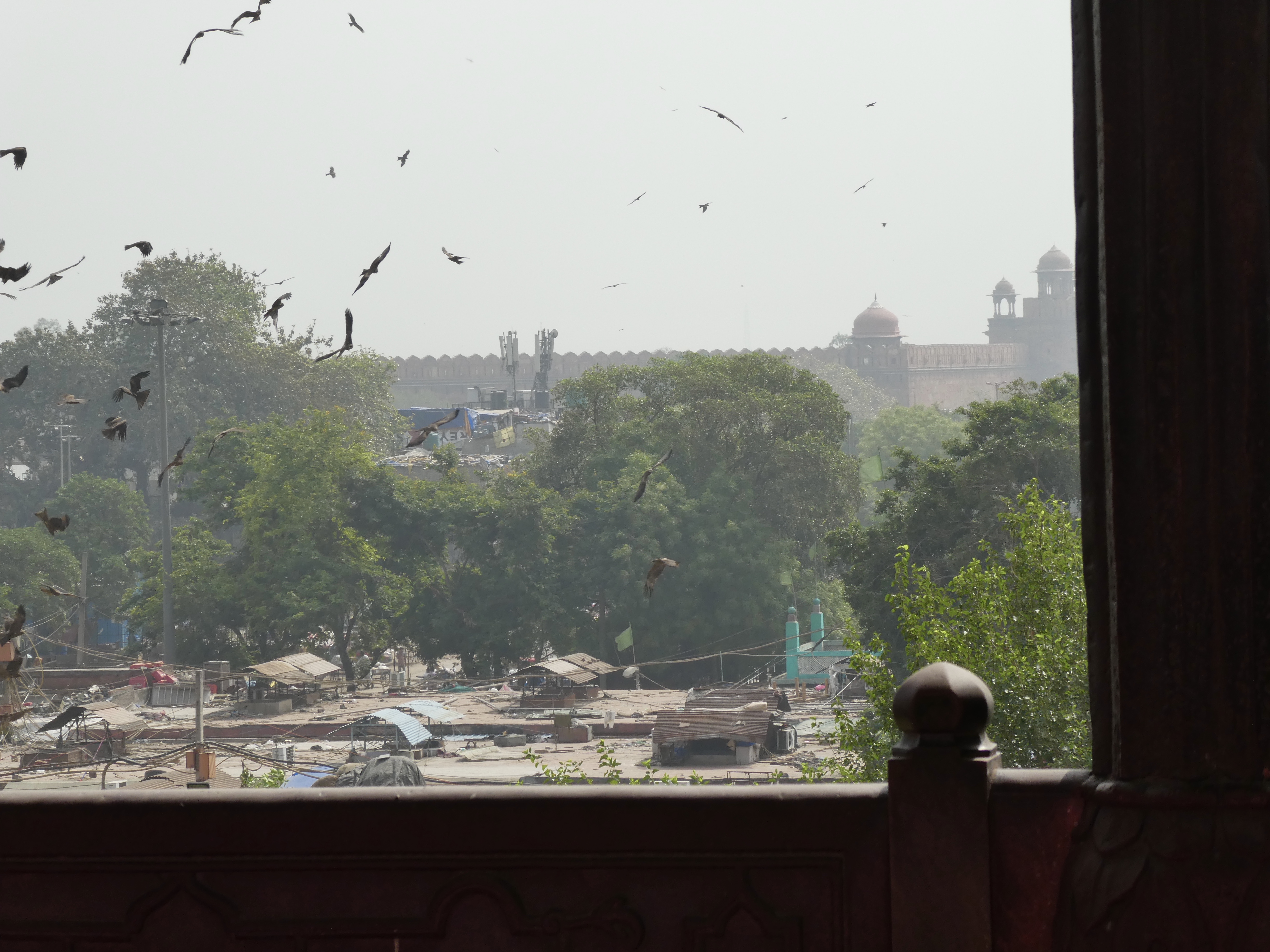
These are our humans.   The ladies have gowns and all humans have shoe covers.   Looking over the side of the mosque,

Many birds

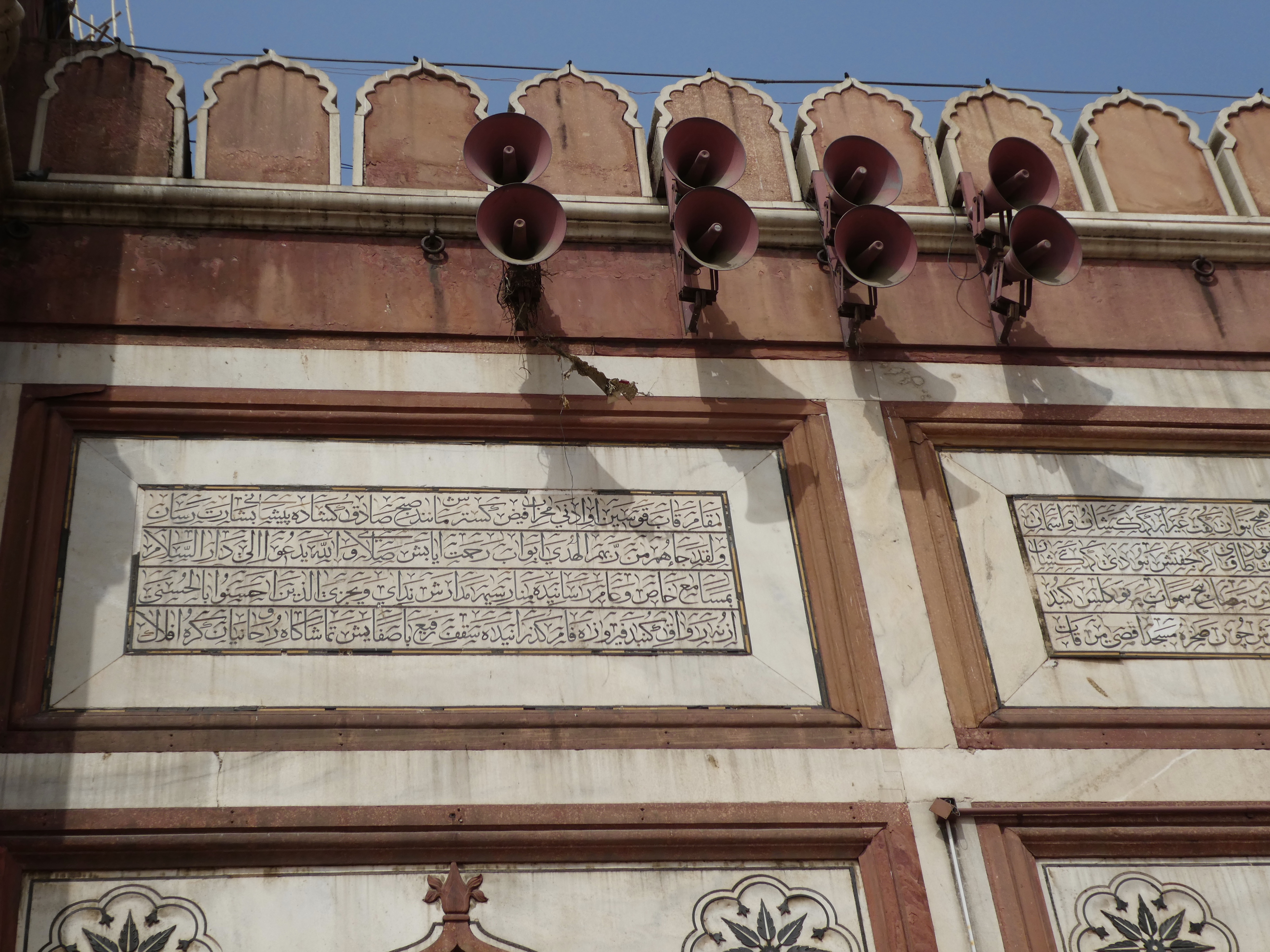
more birds are arriving for the birdseed.   The mosque, made of white marble and red sandstone, was commissioned by Shah Jahan from 1644-1658.   Shah Jahan was the man that had the Taj Mahal built from 1631-1653.   Here we see the speakers for the call to prayer.

Speakers. Notice black marble inlaid in white marble

Also black marble has been inlaid in the white marble.   Great craftsmen worked in India during this time.   This marble alcove is very nice.

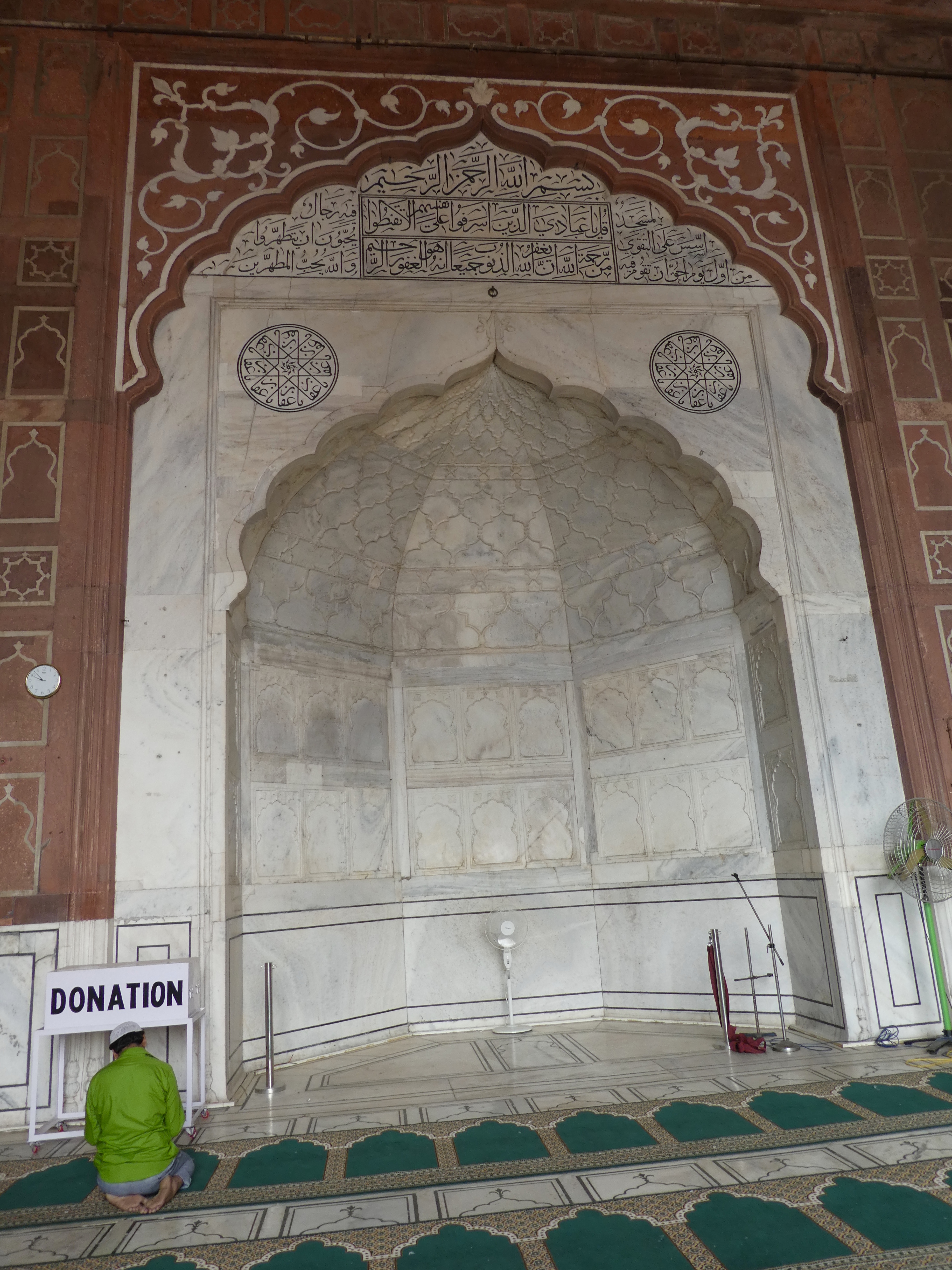
Marble alcove

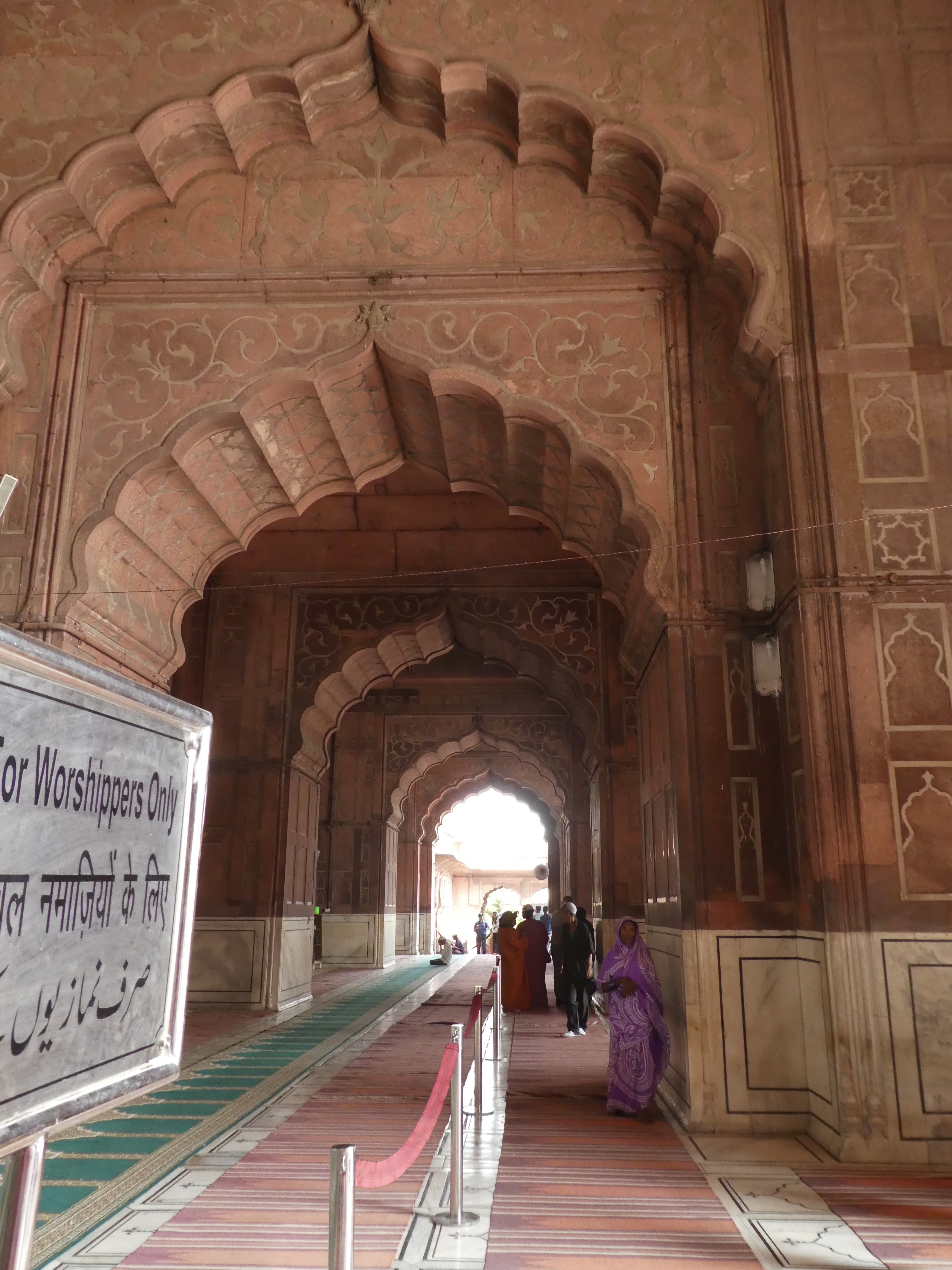
Looking down the hallway, we love the arches.

Looking through the arches

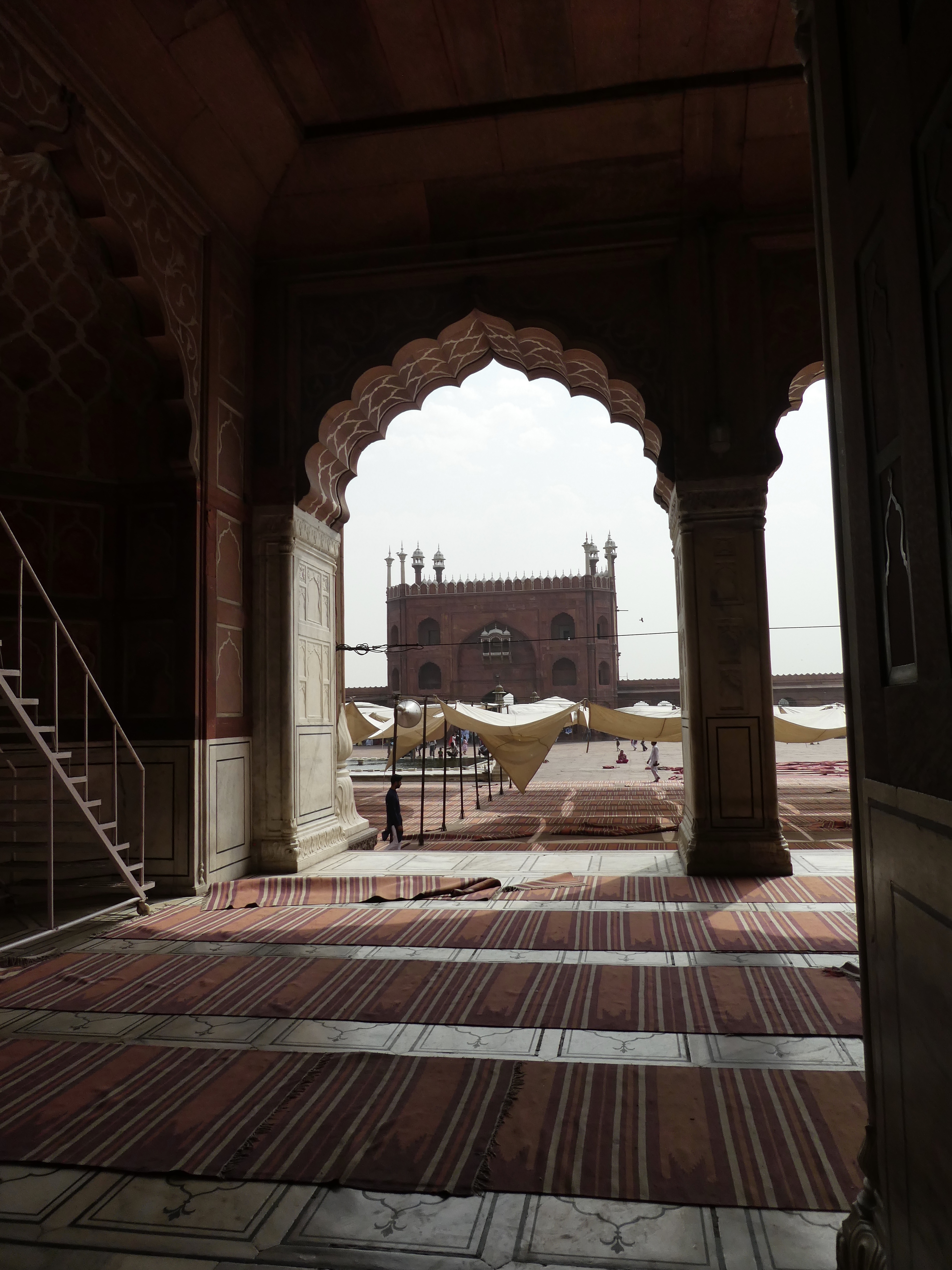
From the walkway we look out to the courtyard.

Looking into courtyard

We enjoy the beauty of the buildings and the peacefulness of the area.   Before we leave, let’s try to get a panorama photo of the courtyard.

Courtyard of Jama Masjid

Well, she tried.   Next time we will take you through a street market near this Jama Masjid, or Friday Mosque.   We hope you will join us for the market experience.

Zeb and Soapy Smith Duck Fly to Delhi, India

Here we go.   With suitcases, passports, visas, flight schedules, and malaria pills…  Wait mom.   Malaria pills?  Yes ducks, just for prevention.   Get in the car and let’s go to the airport.   Off we go.   I, Zeb the Duck, and Soapy Smith Duck, with our moms will fly to New York City first.   Then another airplane, and the 14 hours and 15 minute flight to Delhi, India.   That is a long time to be in airplanes.   Delhi, India, the 3rd largest city in India, has between 17 and 18 million people.   So many new friends for us.   We landed in Delhi, cleared customs and immigration, gathered our luggage and met our tour guide.   Let’s explore our hotel, The Park.

The Park. New Delhi, India

It looks nice and there seems to be a lot of activity on the street.   We are comfortable in our lobby.   A buffet breakfast will be served in the restaurant behind us.

Hotel lobby with restaurant in background

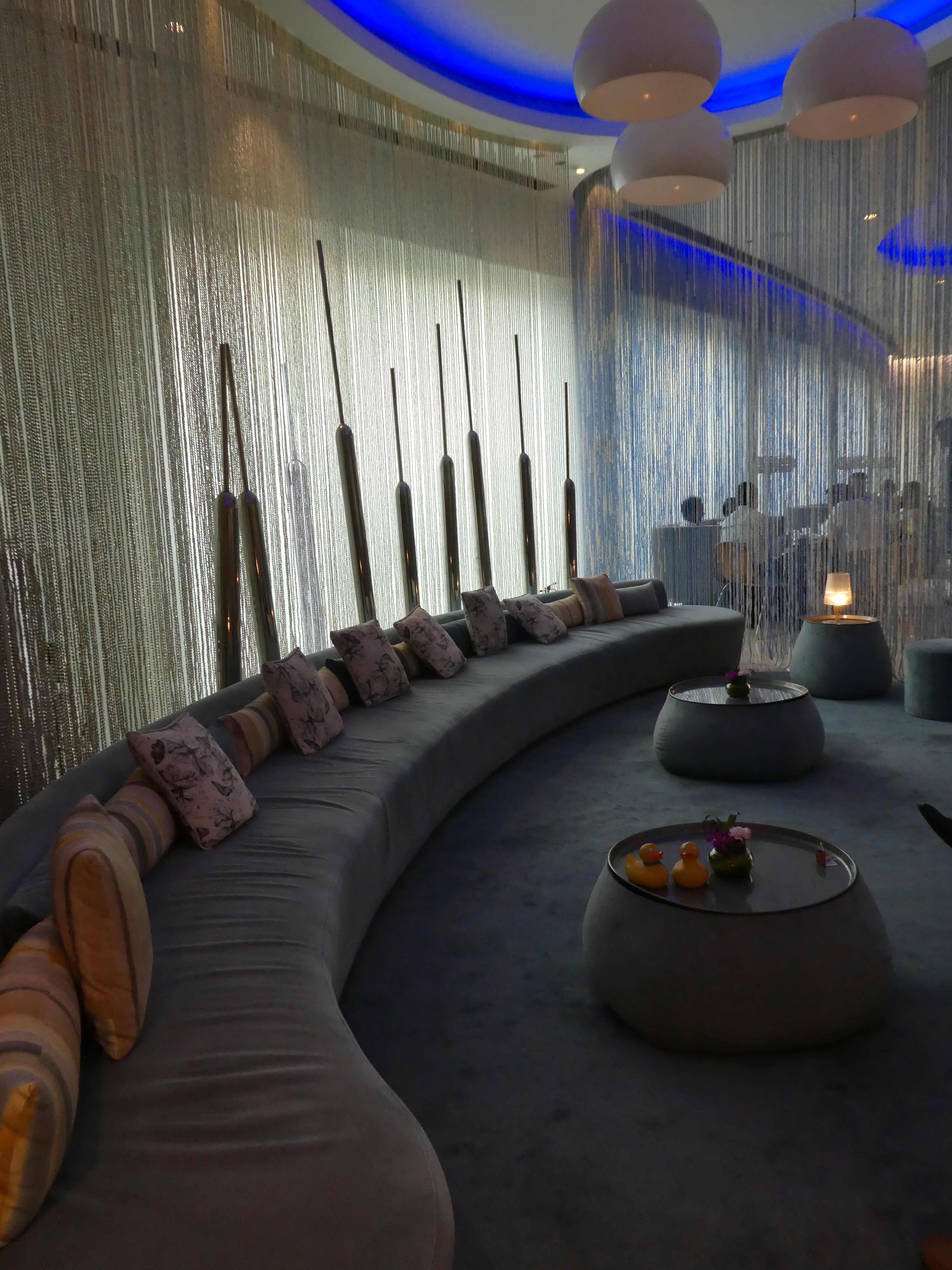
Buffet breakfasts are great for us.   Always so many choices.   Another lobby lounge area by the Fire Restaurant.

Lounge near Fire Restaurant

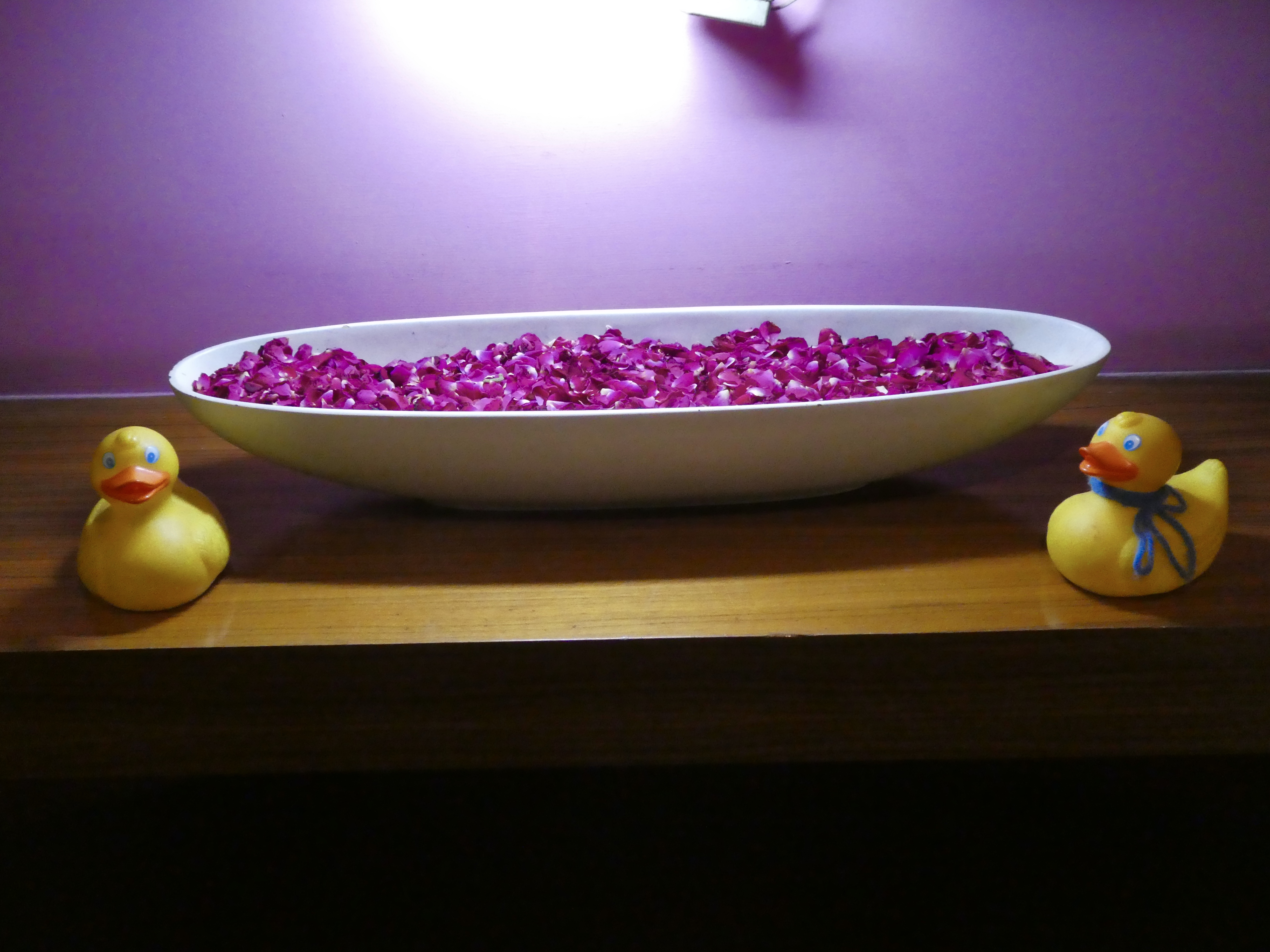
We can enjoy authentic traditional food from different parts of India here.   Fire Restaurant is open for lunch and dinner.   We like the flower petals floating in water.

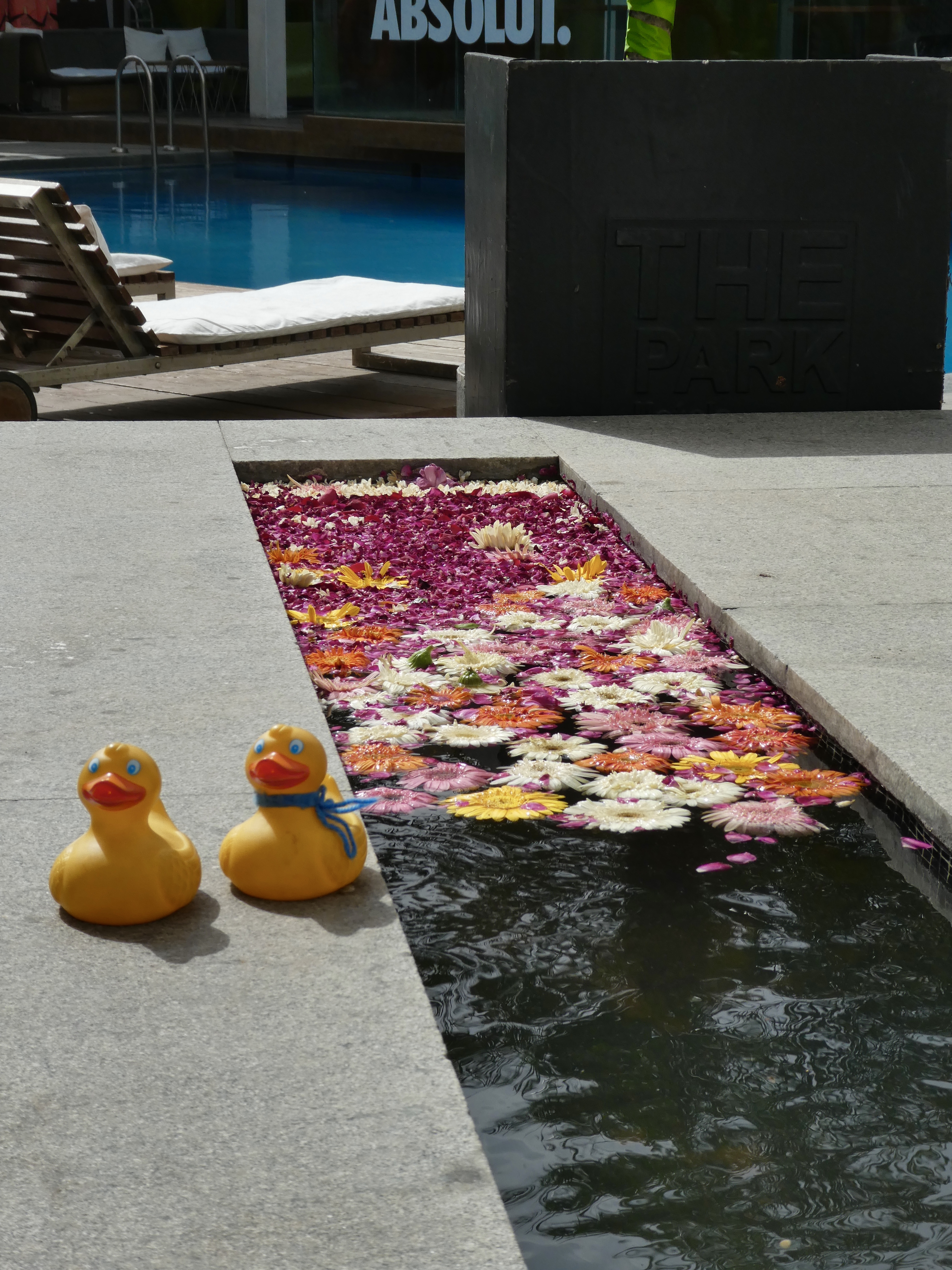
Flower petals floating

Floating flowers are enjoyed on vacations for us.   We don’t do it at home.   The vases of flowers are nice as we check in and receive our room keys.

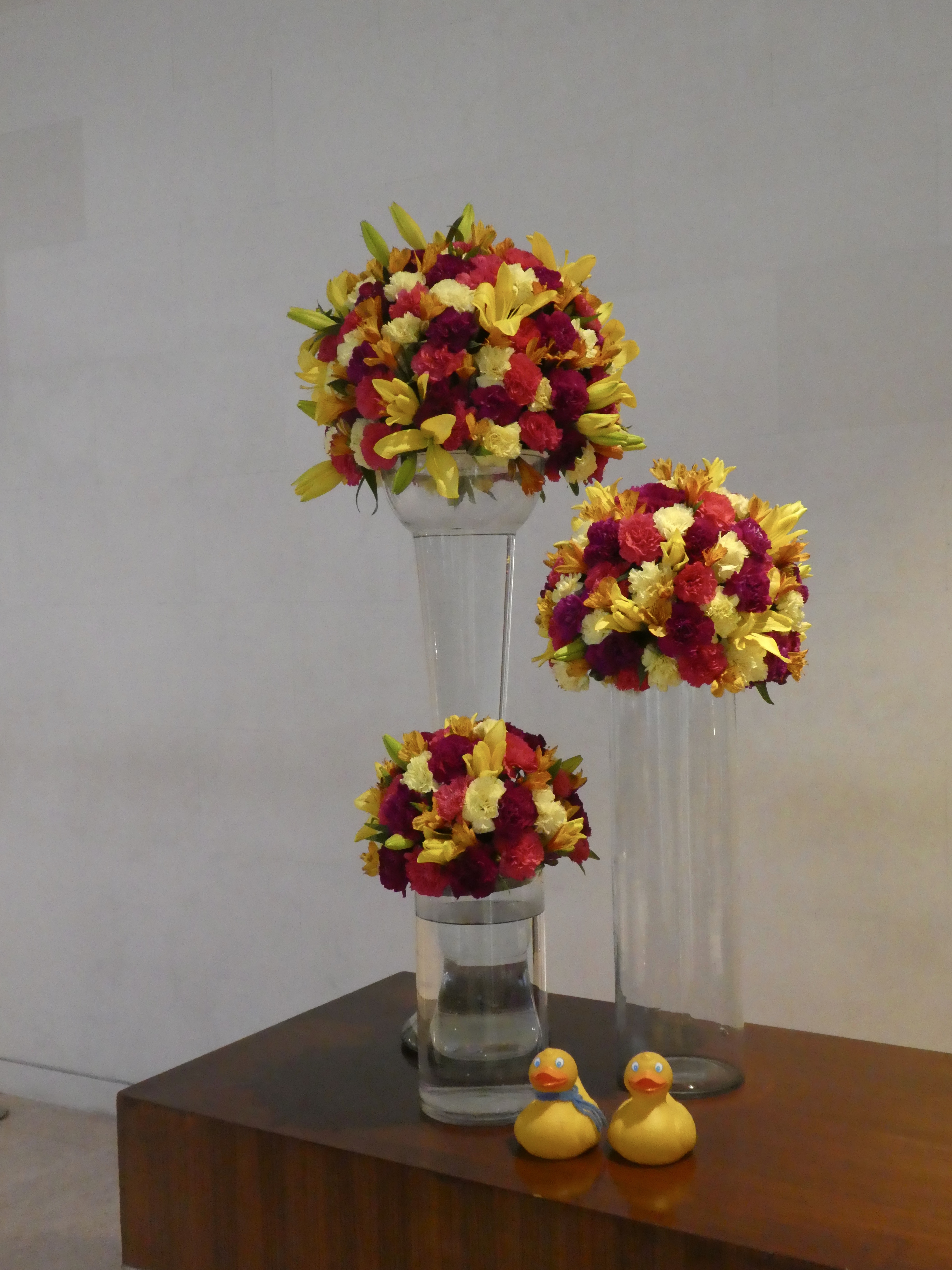
Vases near check in location

We ducks want to see the swimming pool.   It is hot here, so a pool sounds nice.   More flowers floating as we approach the pool.

Floating flowers as we approach pool

We like this pool.

We love swimming pools

But we’re not sure if we will have time to swim.   Looks like there will be a beach party at our pool tonight.

Pool party tonight

We were told to go to our rooms and rest, but we want to see our neighborhood.   We two ducks and humans took a walk round our hotel.   Of course our moms are always looking for Diet Pepsi or Diet Coke.   We found some.   Continuing around our hotel, we found a small market area with a Hindu Temple partly visible.

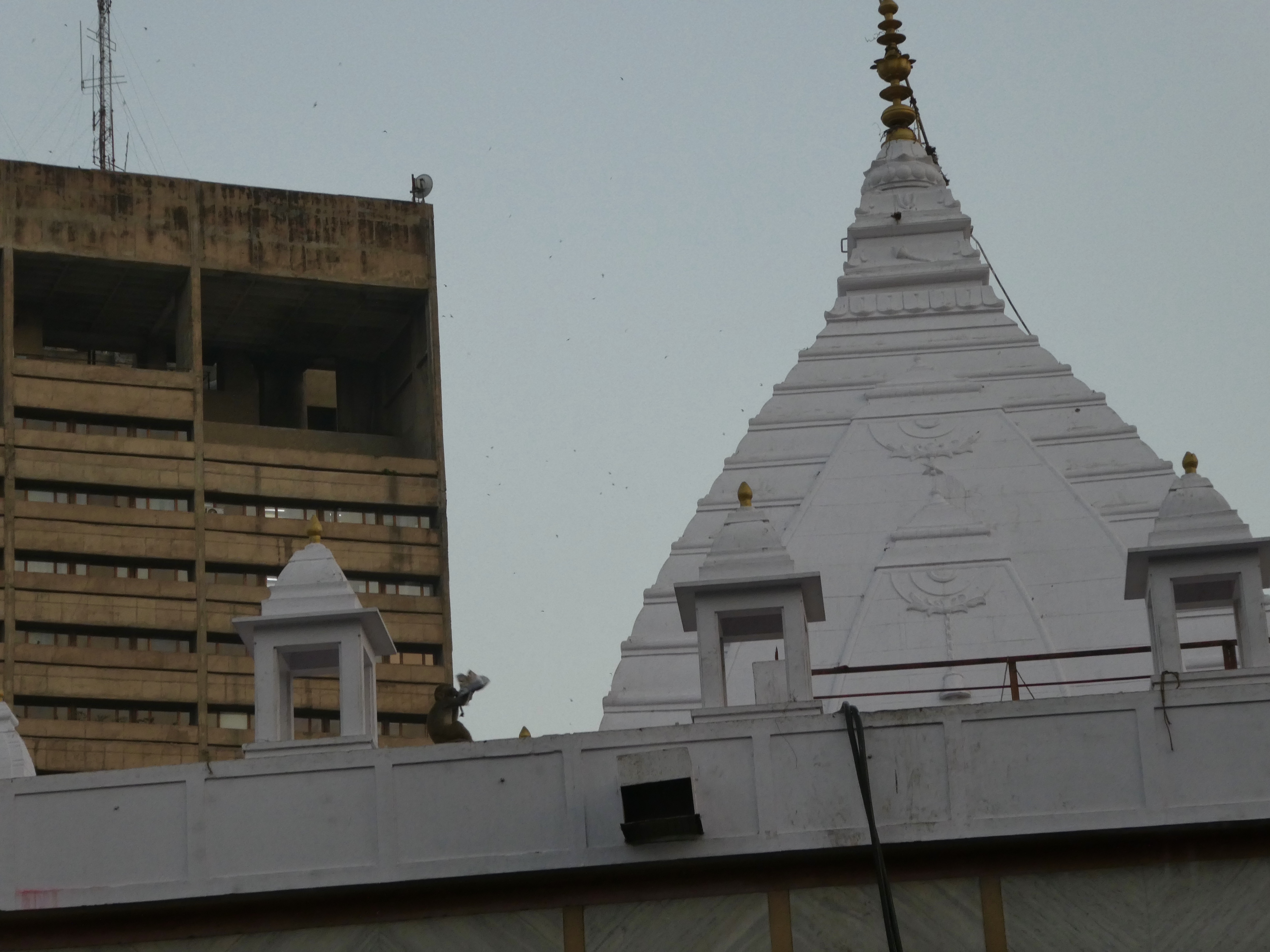
Hindu temple with monkeys

Yes, those are monkeys on the temple.   This monkey is walking there and waiting for us to take a picture.

monkey

In this market area, humans can buy bananas to feed the monkeys.

Monkey enjoying a banana

Doesn’t she look happy with her banana.   Our moms were afraid to put us on the ground.   Some people said the monkeys might take us.   I think we will be spending a lot of time in our traveling bag.   More about Delhi next time.